
Testosterone Cypionate (Depo-Testosterone)
On this page
Quick Reference Card
Attribute
Brand Name(s)
- Value
- Depo-Testosterone (US), various generics
Attribute
Generic Name
- Value
- Testosterone Cypionate
Attribute
Drug Class / Type
- Value
- Androgen, Testosterone Ester
Attribute
DEA Schedule
- Value
- Schedule III Controlled Substance
Attribute
FDA-Approved Indications
- Value
- Replacement therapy in males with conditions associated with deficiency or absence of endogenous testosterone (primary hypogonadism, hypogonadotropic hypogonadism)
Attribute
Common Doses
- Value
- 50-200 mg every 1-2 weeks (commonly 100-200 mg weekly or split twice weekly)
Attribute
Route(s) of Administration
- Value
- Intramuscular (IM), Subcutaneous (SubQ, off-label but increasingly common)
Attribute
Dosing Schedule
- Value
- Weekly, biweekly, or more frequent (twice weekly, EOD, daily)
Attribute
Half-Life
- Value
- Approximately 8 days (IM)
Attribute
Available Strengths
- Value
- 100 mg/mL, 200 mg/mL
Attribute
Oil Vehicle
- Value
- Cottonseed oil
Attribute
Key Monitoring Requirements
- Value
- Hematocrit (threshold >54%), PSA, testosterone levels (trough), estradiol (if symptomatic), lipid panel, CBC
Overview / What Is Testosterone Cypionate?
The Basics
Testosterone cypionate is one of the most commonly prescribed forms of testosterone replacement therapy in the United States. Sold under the brand name Depo-Testosterone and available from multiple generic manufacturers, it is an injectable medication used to treat men whose bodies do not produce enough testosterone on their own, a condition called hypogonadism.
If you have been diagnosed with low testosterone, you have probably encountered a confusing landscape of treatment options: gels, patches, pellets, nasal sprays, and injections. Testosterone cypionate falls in the injection category, and it has been a workhorse of TRT for decades. It is one of the oldest and most well-studied testosterone formulations available.
The medication works by providing your body with testosterone in a form that releases slowly over days after injection. This means you typically inject once or twice a week rather than needing daily application like gels. For many men, the combination of effectiveness, cost, and dosing convenience makes it a preferred choice.
It is important to understand that testosterone cypionate is a prescription medication classified as a Schedule III controlled substance. It is not available over the counter, and it requires a diagnosis of hypogonadism confirmed by blood tests showing consistently low testosterone levels along with symptoms. The FDA has not approved it for treating age-related testosterone decline in otherwise healthy men, though it is sometimes prescribed for this purpose off-label.
The Science
Testosterone cypionate (TC) is a synthetic ester prodrug of testosterone, classified as a 17-beta-ester derivative of the endogenous androgen testosterone. The cypionate ester consists of a cyclopentylpropionate side chain attached at the 17-beta hydroxyl position of the testosterone molecule, increasing its lipophilicity and enabling depot formulation in an oil vehicle for intramuscular injection [1].
First introduced in the 1950s, testosterone cypionate was developed to address the pharmacokinetic limitations of unesterified testosterone, which has a plasma half-life of only 10-100 minutes and would require impractical multiple daily injections. The cypionate ester extends the effective half-life to approximately 8 days following intramuscular administration, allowing practical dosing intervals of 1-4 weeks [1][2].
Testosterone cypionate is approved by the FDA (NDA 085635) for testosterone replacement therapy in males with conditions associated with a deficiency or absence of endogenous testosterone, specifically primary hypogonadism (testicular failure) and hypogonadotropic hypogonadism (pituitary-hypothalamic dysfunction). The prescribing information explicitly notes that safety and efficacy in men with "age-related hypogonadism" have not been established [1].
Medical / Chemical Identity
Generic Name: Testosterone Cypionate (Testosterone 17-beta-cyclopentylpropionate)
Brand Names:
- United States: Depo-Testosterone (Pfizer), multiple ANDA generics (Hikma, Sandoz, Perrigo, others)
- Canada: Depo-Testosterone
- Note: Testosterone cypionate is predominantly used in North America. Most other regions use testosterone enanthate or undecanoate as the primary injectable formulations.
Chemical Class: Androgen, Anabolic Steroid, Testosterone Ester (17-beta-ester derivative)
Ester Group: Cyclopentylpropionate (cyclopentyl-1-oxopropoxy at the 17-beta position)
- Carbon chain: 8-carbon ester side chain
- The ester group increases lipophilicity, slowing absorption from the intramuscular depot and extending the duration of action
Chemical Name: Androst-4-en-3-one, 17-(3-cyclopentyl-1-oxopropoxy)-, (17-beta)-
Molecular Formula: C27H40O3
Molecular Weight: 412.61 g/mol
CAS Number: 58-20-8
Physical Properties: White or creamy white crystalline powder, odorless or nearly so, stable in air. Insoluble in water, freely soluble in alcohol, chloroform, dioxane, ether, and soluble in vegetable oils.
FDA Approval: NDA 085635 (Depo-Testosterone, Pfizer). Multiple ANDA generics approved.
DEA Classification: Schedule III Controlled Substance under the Anabolic Steroid Control Act
Formulations Available:
- 100 mg/mL in cottonseed oil with benzyl benzoate and benzyl alcohol (preservative)
- 200 mg/mL in cottonseed oil with benzyl benzoate and benzyl alcohol (preservative)
- Available in 1 mL and 10 mL multi-dose vials
Mechanism of Action
The Basics
Testosterone is often called the primary male sex hormone, but that description barely scratches the surface. Testosterone plays a role in far more than sexual function. Your body uses it to maintain bone density, build and preserve muscle tissue, regulate mood and energy levels, support cognitive function, produce red blood cells, and influence cardiovascular and metabolic health. When your body does not produce enough testosterone, the effects can show up across nearly every system.
Testosterone cypionate works by providing your body with testosterone in a form that releases gradually after injection. Once injected into muscle tissue, the oil-based solution creates a small reservoir. Your body's enzymes slowly clip off the cypionate "tail" (the ester), releasing free testosterone into your bloodstream. From that point forward, it works exactly like the testosterone your body produces naturally.
Some of the released testosterone gets converted to dihydrotestosterone (DHT), which is a more potent androgen responsible for some of TRT's effects on hair, skin, and prostate tissue. Some gets converted to estradiol, a form of estrogen that men also need in appropriate amounts for bone health, brain function, and cardiovascular protection. The balance between testosterone, DHT, and estradiol is part of what your provider monitors during treatment.
One important consequence of taking testosterone from an outside source: your brain detects the higher testosterone levels and tells your body to stop producing its own. This feedback loop (called the HPG axis) means that your natural testosterone production shuts down while you are on TRT. This also means your testes stop receiving the signals they need to produce sperm, which is why fertility is a major consideration before starting TRT.
The Science
Testosterone cypionate functions as a prodrug of testosterone. Following intramuscular injection in a cottonseed oil vehicle, the lipophilic ester is deposited in muscle tissue where it undergoes slow first-order absorption into systemic circulation. Non-specific esterases in plasma and tissues hydrolyze the ester bond at the C-17 position, liberating free testosterone [1][2].
Free testosterone exerts its biological effects primarily through binding to the intracellular androgen receptor (AR), a member of the nuclear receptor superfamily. The classical genomic pathway involves ligand-AR binding, receptor dimerization, nuclear translocation, and interaction with androgen response elements (AREs) in target gene promoters, modulating transcription over hours to days. Non-genomic signaling through membrane-associated AR and SHBG receptor complexes activates rapid second messenger cascades (MAPK/ERK, PI3K/Akt, intracellular calcium) within seconds to minutes [3].
Testosterone undergoes two primary metabolic conversions with clinical significance:
- 5-alpha reductase (types I and II) irreversibly converts testosterone to 5-alpha-dihydrotestosterone (DHT), which has approximately 2-3 times greater AR binding affinity. DHT mediates androgenic effects in skin, hair follicles, and prostate tissue, contributing to both therapeutic effects and side effects such as acne and male pattern baldness [3].
- Aromatase (CYP19A1), expressed predominantly in adipose tissue, brain, and bone, converts testosterone to 17-beta-estradiol (E2). In men, estradiol is essential for bone mineral density maintenance (via ER-alpha-mediated osteoblast regulation), epiphyseal plate closure, negative feedback on GnRH/LH secretion, and neuroprotective functions [4].
The HPG axis suppression by exogenous testosterone is mediated through both hypothalamic (reduced GnRH pulse frequency and amplitude) and pituitary (reduced LH and FSH synthesis and secretion) mechanisms. Intratesticular testosterone concentrations, normally maintained at 40-100 times serum levels by LH-stimulated Leydig cell production, decline to near-serum levels on exogenous TRT, resulting in impaired Sertoli cell function and spermatogenic arrest [5][6].
Androgens also stimulate erythropoiesis through enhanced production of erythropoietic stimulating factors, which is clinically relevant as the mechanism underlying polycythemia, the most common dose-limiting side effect of TRT [1].
Pathway & System Visualization
Pharmacokinetics / Hormone Physiology
The Basics
Understanding how testosterone cypionate moves through your body helps explain why injection schedules matter and why you might feel different at various points between injections.
After injection into muscle tissue, the oil-based solution creates a depot (a small reservoir) that releases testosterone gradually. Think of it like a time-release mechanism. Without the cypionate ester attached, injected testosterone would spike and disappear within hours. The ester gives each injection a working life of roughly one to two weeks.
Here is what happens after a typical injection:
- Hours 0-48: Testosterone levels rise as the ester is cleaved, reaching peak levels usually within 24-48 hours
- Days 2-7: Levels gradually decline as the depot is depleted
- Days 7-10: Trough levels are reached. Many men notice decreased energy or mood at this point, which is why some providers recommend more frequent injections
Your body binds about 98% of circulating testosterone to proteins (mostly SHBG and albumin), with only about 2% circulating as "free" testosterone. It is this free fraction that is biologically active. Your liver processes testosterone and its metabolites, with about 90% ultimately excreted through the kidneys and about 6% through the bowel.
The practical takeaway: more frequent, smaller injections (such as twice weekly instead of once every two weeks) tend to produce more stable levels with fewer peaks and troughs. Many men report fewer side effects and more consistent symptom relief with this approach, though clinical guidelines have not yet formally incorporated these more frequent protocols.
The Science
Testosterone cypionate exhibits the following pharmacokinetic profile following intramuscular injection:
Absorption: Slow first-order absorption from the intramuscular lipid depot. The cyclopentylpropionate ester confers sufficient lipophilicity for sustained release from the oil vehicle. Bioavailability approaches 100% via IM route, though absorption rate varies with injection site, oil volume, and individual tissue characteristics [1][2].
Peak concentrations: Cmax of approximately 800-1200 ng/dL is typically reached 24-48 hours following a standard 100-200 mg IM injection. Trough concentrations at 7-10 days post-injection typically range from 300-600 ng/dL depending on dose and individual metabolism [6].
Distribution: In plasma, testosterone is approximately 44% bound to sex hormone-binding globulin (SHBG), approximately 54% bound to albumin, and approximately 2% circulates as free (unbound) testosterone. The free and albumin-bound fractions constitute bioavailable testosterone. SHBG-bound testosterone is generally considered biologically inactive [1].
Metabolism: Inactivation occurs primarily in the liver via two pathways:
- 5-alpha reduction to DHT (primarily in prostate, skin, hair follicles)
- Aromatization to estradiol (primarily in adipose tissue, brain, bone)
- Further metabolism to various 17-keto steroids
- Conjugation via glucuronidation and sulfation
Elimination: Terminal half-life is approximately 8 days following IM injection. Approximately 90% of a dose is excreted in urine as glucuronic and sulfuric acid conjugates; approximately 6% is excreted in feces, mostly in unconjugated form [1][2].
Population PK modeling from a randomized trial of 31 healthy men receiving 100, 250, or 500 mg/week found population mean clearance of 2.6 kL/day and volume of distribution of 14.4 kL, with weight and albumin identified as significant covariates [6].
Parameter
Half-life (IM)
- Value
- ~8 days
Parameter
Time to Cmax
- Value
- 24-48 hours
Parameter
Protein binding (SHBG)
- Value
- ~44%
Parameter
Protein binding (albumin)
- Value
- ~54%
Parameter
Free fraction
- Value
- ~2%
Parameter
Urinary excretion
- Value
- ~90%
Parameter
Fecal excretion
- Value
- ~6%
Parameter
Primary metabolism
- Value
- Hepatic
Understanding how testosterone cypionate moves through your body helps explain why injection schedules matter and why you might feel different at various points between injections.
After injection into muscle tissue, the oil-based solution creates a depot (a small reservoir) that releases testosterone gradually. Doserly lets you log every injection with ester-specific detail, building a clear record of your testosterone protocol over time.
Whether you're on cypionate twice weekly, enanthate every 3.5 days, or undecanoate every ten weeks, the app tracks your schedule and flags when your next dose is due. When your provider asks how your protocol has been going, you'll have a precise answer instead of a best guess.
See how each compound fits into the whole protocol.
Doserly organizes compounds, supplements, peptides, medications, and hormone protocols together so overlapping routines are easier to understand.
Stack view
Connected protocol
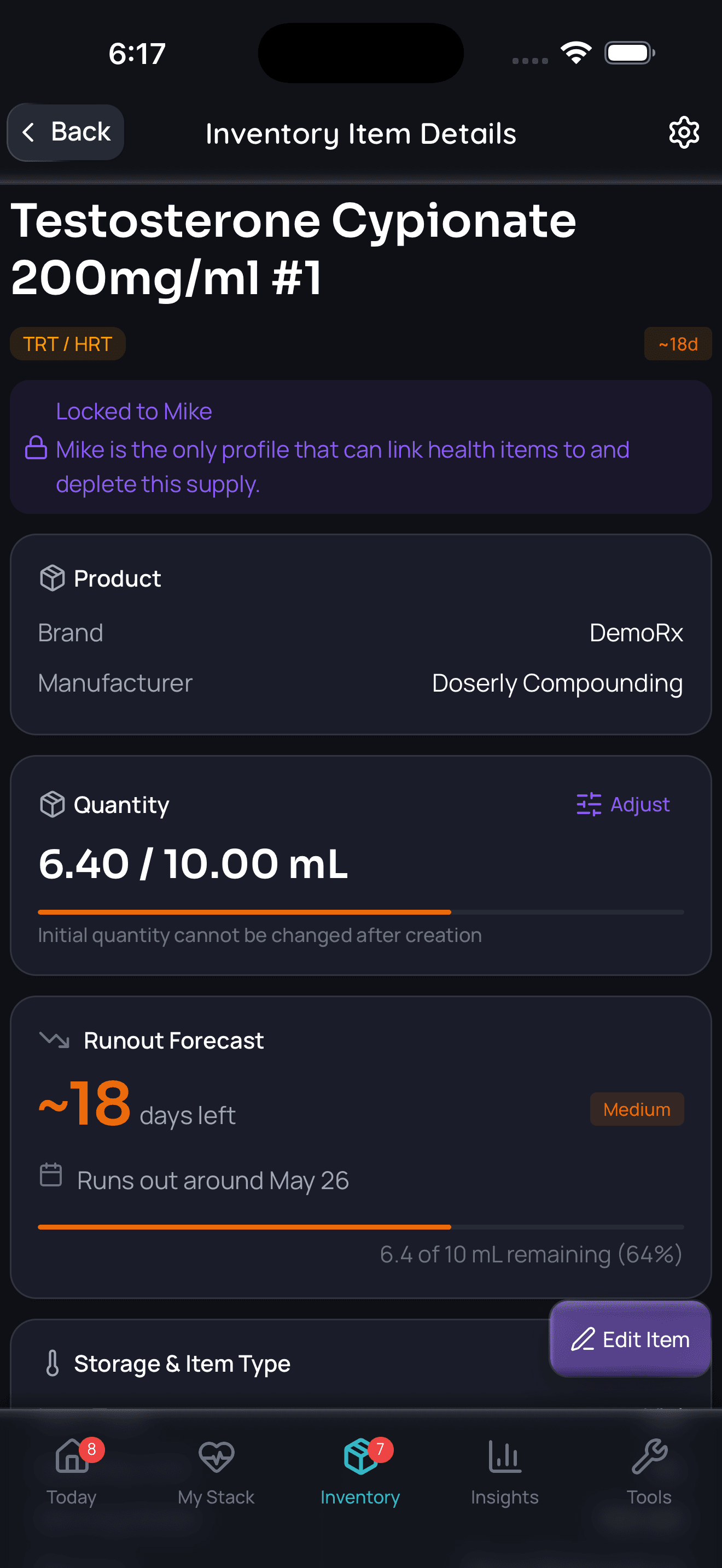
Stack views improve organization; they do not determine compatibility.
Research & Clinical Evidence
The Basics
The evidence base for testosterone replacement therapy has grown substantially in recent years, with several landmark studies helping to clarify both the benefits and risks. Here is what the major research tells us about testosterone cypionate and TRT more broadly.
Cardiovascular Safety: For years, conflicting study results left both patients and providers uncertain about whether TRT increases heart risk. The TRAVERSE trial, published in 2023, was specifically designed to answer this question. It enrolled over 5,200 men with low testosterone who already had heart disease risk factors. After following them for nearly three years, the study found that testosterone therapy did not significantly increase heart attacks, strokes, or cardiovascular deaths compared to placebo. This was reassuring, though the study also found slightly higher rates of atrial fibrillation and pulmonary embolism in the testosterone group, which means ongoing monitoring remains important.
Sexual Function: The TTrials (Testosterone Trials) and multiple other studies have consistently shown that testosterone therapy improves libido, erectile function, and sexual activity in men with hypogonadism. Sexual function improvement is typically one of the earliest and most reliably reported benefits.
Body Composition and Strength: Research consistently demonstrates that testosterone therapy increases lean muscle mass and decreases fat mass in hypogonadal men. These changes are measurable and clinically meaningful, though they require concurrent physical activity for optimal results.
Bone Health: The TTrials bone trial showed significant improvements in bone mineral density at the spine and hip with testosterone therapy. This is particularly relevant for older hypogonadal men at risk of osteoporosis.
Mood and Cognition: Evidence for mood improvement is moderate, with some studies showing benefits for depressive symptoms and overall well-being, particularly in men with more severe baseline symptoms. Cognitive effects remain less clear, with limited evidence for clinically meaningful improvements.
The Science
TRAVERSE Trial (2023)
The TRAVERSE trial (Testosterone Replacement Therapy for Assessment of Long-term Vascular Events and Efficacy Response in Hypogonadal Men) is the definitive cardiovascular safety trial for testosterone replacement therapy [7].
- Design: Phase 4, randomized, double-blind, placebo-controlled, noninferiority trial at 316 sites
- Population: 5,246 men aged 45-80 with hypogonadism (serum testosterone <300 ng/dL on two morning measurements) and preexisting cardiovascular disease or high cardiovascular risk
- Intervention: Testosterone 1.62% gel vs placebo gel
- Follow-up: Mean treatment duration 21.7 months, mean follow-up 33.0 months
- Primary endpoint: MACE composite (cardiovascular death, nonfatal MI, nonfatal stroke)
Results:
- Testosterone group: 182/2,601 (7.0%) experienced MACE
- Placebo group: 190/2,645 (7.3%) experienced MACE
- Hazard ratio: 0.96 (95% CI: 0.78-1.17), P<0.001 for noninferiority
- Safety signals: higher incidence of atrial fibrillation, pulmonary embolism, and acute kidney injury in the testosterone group [7]
TTrials (Testosterone Trials)
Seven coordinated, placebo-controlled trials in men aged 65+ with testosterone levels <275 ng/dL:
- Sexual Function Trial: significant improvement in sexual desire and erectile function [8]
- Physical Function Trial: modest improvement in walking distance [8]
- Vitality Trial: modest improvement in vitality [8]
- Bone Trial: significant increase in volumetric BMD of spine and hip [8]
- Cardiovascular Trial: increased coronary artery plaque volume (noncalcified) [8]
- Cognitive Function Trial: no significant improvement in cognitive function [8]
- Anemia Trial: significant increase in hemoglobin in men with unexplained anemia [8]
Endocrine Society Clinical Practice Guideline (2018)
The Endocrine Society guideline represents the foundational clinical practice recommendation for testosterone therapy. Key evidence-based recommendations [9]:
- Testosterone therapy is recommended for men with symptomatic hypogonadism to induce and maintain secondary sex characteristics (Grade 1, moderate quality evidence)
- Against routinely prescribing testosterone to all men >65 with low T (Grade 1, low quality evidence)
- Against testosterone therapy in men planning fertility
- Monitoring: hematocrit at baseline, 3-6 months, then annually. If hematocrit >54%, stop therapy until resolved
Evidence & Effectiveness Matrix
Category
Sexual Function & Libido
- Evidence Strength
- 9
- Reported Effectiveness
- 8
- Evidence Summary
- TTrials and multiple RCTs demonstrate significant improvement in libido, sexual desire, and erectile function. Community reports strongly positive. One of the most reliably improved outcomes with TRT.
Category
Energy & Vitality
- Evidence Strength
- 7
- Reported Effectiveness
- 8
- Evidence Summary
- TTrials showed modest improvement in vitality scores. Community reports strongly positive, though honeymoon phase bias inflates early reports. Long-term users report sustained but more moderate improvement.
Category
Mood & Emotional Wellbeing
- Evidence Strength
- 6
- Reported Effectiveness
- 7
- Evidence Summary
- Moderate RCT evidence for improvement in depressive symptoms. Stronger effects in men with more severe baseline symptoms. Community reports positive with caveats about initial adjustment.
Category
Anxiety & Stress Response
- Evidence Strength
- 4
- Reported Effectiveness
- 6
- Evidence Summary
- Limited RCT data specifically on anxiety endpoints. Community reports mixed, with some improvement and some initial worsening.
Category
Cognitive Function
- Evidence Strength
- 4
- Reported Effectiveness
- 6
- Evidence Summary
- TTrials Cognitive Function Trial showed no significant improvement. Limited and conflicting evidence. Community reports modest improvement, likely secondary to mood/energy changes.
Category
Muscle Mass & Strength
- Evidence Strength
- 8
- Reported Effectiveness
- 8
- Evidence Summary
- Consistent RCT evidence for increased lean mass and strength. DXA-measured improvements well-documented. Community reports strongly positive.
Category
Body Fat & Composition
- Evidence Strength
- 7
- Reported Effectiveness
- 7
- Evidence Summary
- Consistent evidence for fat mass reduction in hypogonadal men. Waist circumference improvements documented. Concurrent exercise amplifies effect.
Category
Bone Health
- Evidence Strength
- 7
- Reported Effectiveness
- N/A
- Evidence Summary
- TTrials demonstrated significant increases in volumetric BMD at spine and hip. Community data not yet collected (not a perceptible outcome).
Category
Cardiovascular Health
- Evidence Strength
- 6
- Reported Effectiveness
- N/A
- Evidence Summary
- TRAVERSE demonstrated noninferiority for MACE. Safety signals for AFib and PE. Prior observational data conflicting. Community data not yet collected.
Category
Metabolic Health
- Evidence Strength
- 5
- Reported Effectiveness
- N/A
- Evidence Summary
- Moderate evidence for improved insulin sensitivity and metabolic markers in obese hypogonadal men. Community data not yet collected.
Category
Sleep Quality
- Evidence Strength
- 4
- Reported Effectiveness
- 5
- Evidence Summary
- Limited evidence. May improve subjective sleep quality but potential to worsen OSA. Community reports mixed.
Category
Fertility & Reproductive
- Evidence Strength
- 9
- Reported Effectiveness
- 2
- Evidence Summary
- Strong evidence for spermatogenesis suppression (40-60% azoospermia by 6 months). HPG axis suppression well-characterized. Community accurately reflects clinical evidence. Score reflects negative impact on fertility.
Category
Polycythemia & Hematologic
- Evidence Strength
- 8
- Reported Effectiveness
- 3
- Evidence Summary
- Well-documented dose-dependent erythrocytosis. Hematocrit monitoring mandatory. Score reflects negative side effect reporting.
Category
Prostate Health
- Evidence Strength
- 6
- Reported Effectiveness
- N/A
- Evidence Summary
- Current evidence does not support increased prostate cancer risk at physiological levels (saturation model). PSA monitoring recommended. Community data insufficient.
Category
Skin & Hair
- Evidence Strength
- 6
- Reported Effectiveness
- 3
- Evidence Summary
- DHT-mediated androgenic effects well-characterized. Acne and hair loss commonly reported. Dose-dependent.
Category
Gynecomastia & Estrogen
- Evidence Strength
- 6
- Reported Effectiveness
- 4
- Evidence Summary
- Aromatization to estradiol documented. Clinical significance depends on dose and individual aromatase activity. Community reports moderate concern.
Category
Fluid Retention & Edema
- Evidence Strength
- 5
- Reported Effectiveness
- 4
- Evidence Summary
- Sodium and water retention documented, particularly in early treatment. Dose-dependent. Community reports mostly transient.
Category
Overall Quality of Life
- Evidence Strength
- 7
- Reported Effectiveness
- 8
- Evidence Summary
- Multiple validated instruments show improvement (SF-36, AMS scale). Community reports strongly positive across demographics and duration.
Benefits & Therapeutic Effects
The Basics
For men with confirmed hypogonadism, testosterone cypionate can provide meaningful improvements across several areas of health and well-being. It is not a miracle drug, and results vary considerably from person to person, but the benefits are real and well-documented.
Sexual function tends to improve first and most reliably. Many men notice increased libido, improved erectile quality, and return of morning erections within the first few weeks. This is one of the primary reasons men seek treatment and one of the most consistently satisfied expectations.
Energy and motivation improvements are commonly reported, often described as moving from feeling "basically dead" to having sustained energy throughout the day. The afternoon crash that many low-T men experience often resolves. Long-term users describe the benefit as feeling like themselves again rather than feeling superhuman.
Mood and emotional stability frequently improve, though the timeline can be longer and the path less smooth than with energy or libido. Some men experience initial mood instability during the adjustment period before settling into a more stable emotional baseline. Depression and irritability often decrease.
Body composition changes develop over months rather than weeks. With consistent exercise and adequate nutrition, men on TRT typically gain lean muscle mass and lose body fat. These changes are measurable and visible, though they require effort. Testosterone does not build muscle while you sit on the couch.
Bone density improvements are documented but not something you feel. For older hypogonadal men at risk of osteoporosis, this is a clinically significant benefit that your provider can track via DEXA scans.
It is worth noting that the FDA approves testosterone only for treating diagnosed hypogonadism, not for age-related testosterone decline or lifestyle optimization. The benefits described above are best established in men with genuinely low testosterone levels and corresponding symptoms.
The Science
The therapeutic effects of testosterone cypionate in hypogonadal men are mediated through androgen receptor activation across multiple target tissues [1][3]:
Sexual Function: Testosterone is essential for both central (libido, arousal) and peripheral (erectile function, ejaculatory function) sexual health. The TTrials Sexual Function Trial demonstrated significant improvement in sexual desire (P<0.001), erectile function (P=0.009), and sexual activity (P=0.001) in men >65 with testosterone <275 ng/dL [8]. Effects are typically observed within 3-6 weeks of treatment initiation, with maximum benefit at 3-6 months.
Body Composition: Testosterone exerts anabolic effects through AR-mediated transcription in skeletal muscle satellite cells, promoting myogenesis and inhibiting adipogenesis via pluripotent mesenchymal stem cell commitment. Meta-analyses demonstrate consistent increases in lean mass (+1.6-3.0 kg) and decreases in fat mass (-1.6-2.0 kg) with testosterone therapy in hypogonadal men [10].
Bone Health: Testosterone supports bone health through both direct AR activation on osteoblasts and indirect effects via aromatization to estradiol, which inhibits osteoclast activity. The TTrials Bone Trial demonstrated significant increases in volumetric bone mineral density at the spine (+7.5%) and hip (+1.2%) over 12 months [8].
Erythropoiesis: Testosterone stimulates erythropoietin production and directly stimulates erythroid progenitor cells. The TTrials Anemia Trial demonstrated significant hemoglobin increases in men with unexplained anemia of aging [8]. This mechanism underlies both the therapeutic benefit in anemic hypogonadal men and the risk of polycythemia with treatment.
Risks, Side Effects & Safety
The Basics
Every medication involves trade-offs, and testosterone cypionate is no exception. Understanding the risks helps you and your provider make informed decisions and monitor appropriately.
Common side effects that many men experience to some degree:
- Acne and oily skin (dose-dependent, often manageable with skin care or dose adjustment)
- Injection site reactions (soreness, redness, swelling at the injection site)
- Fluid retention (puffiness, water weight gain, particularly in early treatment)
- Mood changes during adjustment (irritability, emotional lability, usually settling within weeks)
- Testicular atrophy (shrinking of the testicles, because they are no longer producing testosterone)
- Increased body hair growth
Serious risks that require monitoring:
Cardiovascular events: The TRAVERSE trial, the largest cardiovascular safety study of testosterone therapy (5,246 men with existing heart disease risk), found that testosterone did not significantly increase heart attacks, strokes, or cardiovascular death compared to placebo (hazard ratio 0.96, 95% CI: 0.78-1.17) over 33 months of follow-up. This means that in this high-risk population, approximately 7 out of every 100 men in both the testosterone and placebo groups experienced a major cardiovascular event. However, the testosterone group had higher rates of atrial fibrillation and pulmonary embolism, so cardiovascular monitoring remains important. The FDA requires cardiovascular risk labeling on all testosterone products, and blood pressure monitoring is recommended [7].
Polycythemia (elevated red blood cells): This is the most common dose-limiting side effect of testosterone therapy. Testosterone stimulates red blood cell production, and if hematocrit (the percentage of blood volume occupied by red blood cells) rises above 54%, the risk of blood clots increases significantly. Hematocrit monitoring is mandatory. If levels exceed 54%, standard management includes dose reduction, switching to a transdermal route (which tends to cause less erythrocytosis than injections), or therapeutic phlebotomy (blood removal). Injectable testosterone tends to produce higher hematocrit elevations than transdermal formulations due to higher peak levels [1][9].
Fertility suppression: Exogenous testosterone shuts down the signals (LH and FSH) that tell your testes to produce sperm. Approximately 40-60% of men on TRT achieve azoospermia (zero sperm count) by 6 months, with the remainder typically showing severely reduced sperm counts. This is discussed in detail in Section 14.
Prostate considerations: Current evidence does not support a causal link between testosterone replacement therapy at physiological levels and prostate cancer initiation. The saturation model suggests that the androgen receptor in prostate tissue becomes saturated at relatively low testosterone levels, and increasing testosterone beyond this point does not further stimulate growth. However, PSA monitoring is standard practice, and testosterone is contraindicated in men with active prostate cancer [9].
Sleep apnea: Testosterone therapy may worsen obstructive sleep apnea (OSA), particularly at higher doses. Screening for OSA is recommended before starting TRT, and monitoring should continue during treatment.
Gynecomastia: Testosterone is converted to estradiol by the aromatase enzyme. If estrogen levels rise excessively, breast tissue growth (gynecomastia) and nipple sensitivity can occur. This is discussed further in Section 19.
Contraindications (absolute): breast cancer in males, known or suspected prostate cancer, pregnancy (in a female partner, due to transfer risk with topical formulations), hematocrit >54% at baseline, uncontrolled heart failure, desire for near-term fertility, untreated severe obstructive sleep apnea [1][9].
The Science
Cardiovascular Risk:
The TRAVERSE trial (n=5,246) established noninferiority of testosterone therapy for MACE (HR 0.96, 95% CI: 0.78-1.17, P<0.001 for noninferiority) in men aged 45-80 with hypogonadism and preexisting or high risk of cardiovascular disease. The prespecified noninferiority margin was 1.20. In absolute terms, 182/2,601 (7.0%) in the testosterone group and 190/2,645 (7.3%) in the placebo group experienced MACE over a mean follow-up of 33 months [7].
However, TRAVERSE identified concerning secondary signals: higher incidence of atrial fibrillation, pulmonary embolism, and acute kidney injury in the testosterone group. These findings warrant continued monitoring and caution [7].
Polycythemia/Erythrocytosis:
Testosterone stimulates erythropoiesis through enhanced erythropoietin production and direct stimulation of erythroid progenitor cells. Hematocrit elevations are dose-dependent and route-dependent (injectable > transdermal). The Endocrine Society guideline recommends checking hematocrit at baseline, 3-6 months after starting treatment, and annually thereafter. If hematocrit rises above 54%, testosterone should be stopped until hematocrit decreases to a safe level. The provider should evaluate for hypoxia and sleep apnea before reinitiating at a lower dose [9].
Hepatotoxicity:
Clinically significant hepatotoxicity is primarily associated with 17-alpha-alkylated oral androgens (methyltestosterone, oxandrolone), not with testosterone esters including cypionate. The FDA label includes hepatotoxicity warnings as a class effect, but testosterone cypionate at therapeutic doses carries minimal hepatic risk [1].
Being informed about potential risks is important. Being able to track and document any side effects you actually experience is what turns awareness into safety. Doserly lets you log side effects as they happen, with timestamps and severity ratings, so nothing falls through the cracks between appointments.
If you're noticing acne, water retention, mood changes, or any other shift, having a documented timeline helps your provider distinguish between expected adjustment effects and signals that warrant a protocol change. The app also tracks your hematocrit and PSA values over time, alerting you when levels approach thresholds that need attention.
Connect protocol changes to labs and health markers.
Doserly can keep lab results, biomarkers, symptoms, and dose history close together so follow-up conversations have better context.
Insights
Labs and trends
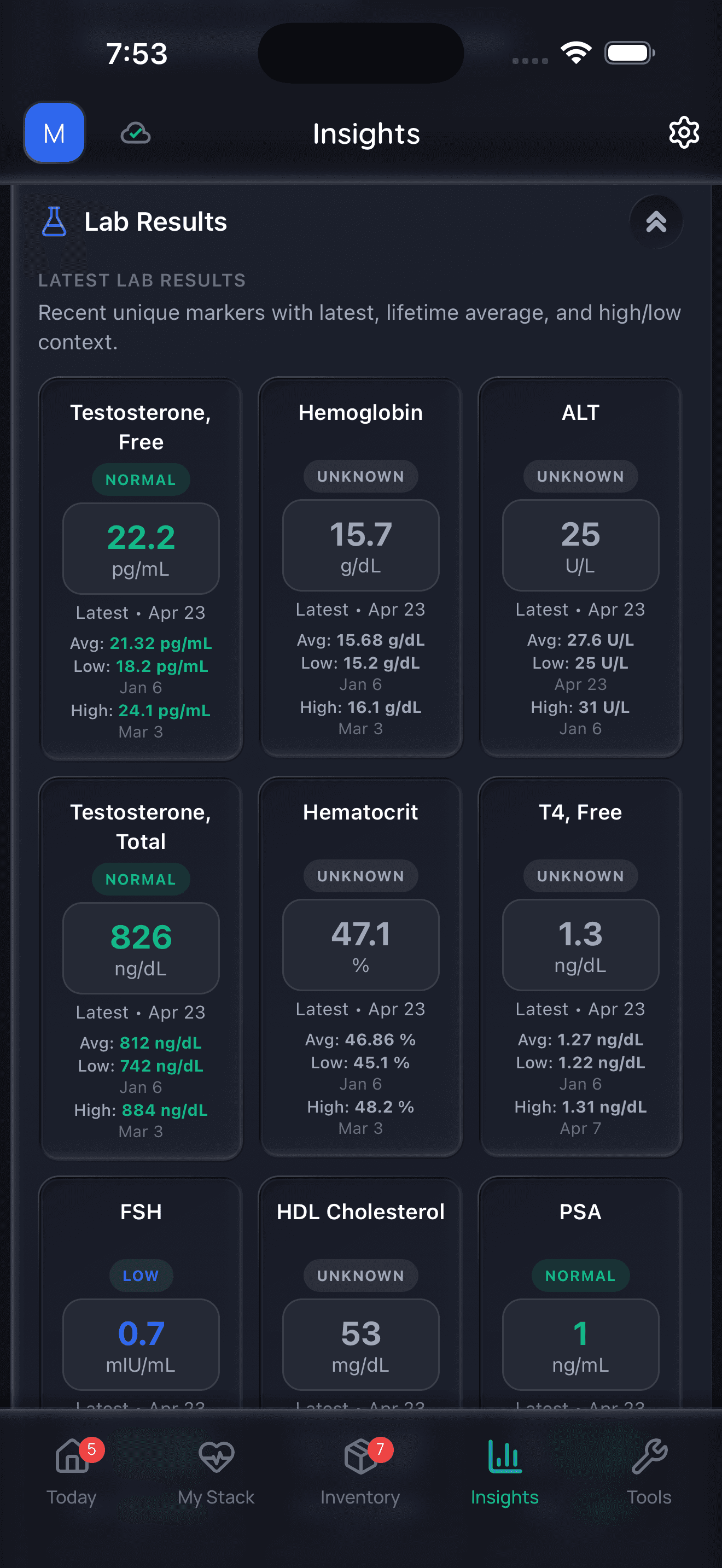
Doserly organizes data; it does not diagnose or interpret labs for you.
Dosing & Treatment Protocols
The Basics
Testosterone cypionate dosing is not one-size-fits-all. Your provider will start you at a dose based on your testosterone levels, symptoms, and health profile, then adjust based on how you respond and what your lab results show.
Here is a general overview of common approaches:
Standard starting protocols:
- 100 mg once weekly (IM or SubQ): a common moderate starting point
- 200 mg every two weeks (IM): the traditional protocol, though increasingly viewed as suboptimal due to significant peak-trough fluctuation
- 50-80 mg twice weekly (IM or SubQ): gaining popularity for more stable levels
Dose range: The FDA-approved range is 50-400 mg every two to four weeks. In practice, most providers prescribe 100-200 mg per week, divided into one or two injections.
How dosing is adjusted: Your provider will check trough testosterone levels (drawn just before your next injection is due) at 4-12 weeks. The goal is typically to reach trough levels in the mid-normal range (roughly 400-700 ng/dL, though targets vary). If levels are too low or symptoms persist, the dose may be increased. If levels are too high or side effects develop, the dose is reduced.
The injection frequency question: There is an ongoing shift in clinical practice and patient preference toward more frequent, smaller injections. The rationale is straightforward: more frequent dosing produces flatter testosterone curves with smaller peaks and troughs. Many men report fewer side effects (less acne, less mood swings, less estrogen conversion) with twice-weekly or even daily micro-dose protocols. Clinical guidelines have not yet formally endorsed these more frequent protocols, but the practice is widespread and many providers support it.
The Science
Pharmacokinetic Basis for Dosing:
Testosterone cypionate's terminal half-life of approximately 8 days means that steady-state concentrations are reached after approximately 4-5 half-lives (roughly 5-6 weeks of consistent dosing). The peak-to-trough ratio with weekly 100 mg IM dosing is typically 2:1 to 3:1, producing peak concentrations of 800-1200 ng/dL and trough concentrations of 300-600 ng/dL [6].
More frequent dosing (e.g., 50 mg twice weekly) reduces the peak-to-trough ratio, producing flatter pharmacokinetic curves. This may reduce peak-related side effects (acne, mood lability, excessive aromatization to estradiol) while maintaining adequate trough levels [6].
Dose-Response Relationships:
Population PK modeling from a randomized trial demonstrated dose-proportional increases in testosterone exposure across 100, 250, and 500 mg/week groups. Importantly, even the 100 mg/week group showed significant suppression of LH and spermatogenesis, confirming that HPG axis suppression occurs at all therapeutic doses [6].
Protocol
Standard weekly
- Dose
- 100-200 mg
- Frequency
- Weekly IM
- Peak T
- 800-1200 ng/dL
- Trough T
- 300-600 ng/dL
- Notes
- Most commonly prescribed
Protocol
Biweekly (traditional)
- Dose
- 200-400 mg
- Frequency
- Every 2 weeks IM
- Peak T
- >1200 ng/dL
- Trough T
- 200-400 ng/dL
- Notes
- Significant fluctuation, less favored
Protocol
Split dose
- Dose
- 50-100 mg
- Frequency
- Twice weekly IM/SubQ
- Peak T
- 600-900 ng/dL
- Trough T
- 450-700 ng/dL
- Notes
- More stable levels, growing preference
Protocol
Daily micro-dose
- Dose
- 14-28 mg
- Frequency
- Daily SubQ
- Peak T
- 500-800 ng/dL
- Trough T
- 450-700 ng/dL
- Notes
- Flattest curve, limited formal study
Getting the dosing right often takes time and fine-tuning with your provider. Keeping an accurate record of what you're actually injecting, doses, frequency, and any adjustments, makes that process smoother. Doserly tracks your testosterone doses alongside everything else in your health stack, so your full protocol is always in one place.
Never wonder whether you drew up the right amount or when your last injection was. The app logs every dose with a timestamp and sends reminders when your next one is due, helping you maintain the consistency that makes testosterone therapy most effective and keeps your levels stable between injections.
Turn symptom and safety notes into a clearer timeline.
Doserly helps you log doses, symptoms, and safety observations side by side so patterns are easier to discuss with a qualified clinician.
Pattern view
Logs and observations

Pattern visibility is informational and should be reviewed with a clinician.
What to Expect (Timeline)
After starting testosterone cypionate, improvements generally follow a predictable sequence, though individual timelines vary considerably. Set realistic expectations: some benefits take weeks, others take months, and not all symptoms may fully resolve with TRT alone.
Days 1-7: You may notice improved energy or mood within the first few days. Some of this is likely placebo effect. Injection site soreness is common. Some men report feeling "off" for the first day or two (fatigue, mild dizziness), which is normal.
Weeks 2-4: Libido changes are often the first noticeable improvement. Energy levels may begin to stabilize. You may notice improved motivation and mental clarity. Some men experience mood instability during this adjustment period (irritability, emotional sensitivity). Minor side effects like oily skin or acne may begin.
Months 1-3: Sexual function improvements become more consistent (erectile quality, desire, performance). Mood stabilization progresses. Early body composition changes may begin if exercising. Hematocrit begins to rise; your provider will check this. Testicular atrophy may become noticeable.
Months 3-6: Body composition changes become more apparent (visible fat loss, increased muscle definition with training). Strength improvements measurable in the gym. The honeymoon phase of initial euphoria typically normalizes to a sustained, stable improvement. Mood and energy settle into a new, more consistent baseline. Bone density improvements begin (not perceptible, measurable by DEXA).
Months 6-12: Full sexual function benefits realized. Significant body composition changes if training and nutrition are consistent. Bone density improvements continue. Annual monitoring should include hematocrit, PSA, lipid panel, and testosterone levels.
Ongoing maintenance: Annual review of continued need and benefit-risk balance. Dose adjustments may be needed as your body changes with age, weight, and health status. Hematocrit monitoring continues indefinitely.
Fertility Preservation & HPG Axis
This section addresses one of the most important considerations for any man starting testosterone cypionate. Exogenous testosterone profoundly affects fertility, and this impact must be understood before treatment begins.
How testosterone suppresses fertility: When you take testosterone from an outside source, your brain detects the elevated levels and reduces production of two key hormones: luteinizing hormone (LH) and follicle-stimulating hormone (FSH). LH normally tells your testes to produce testosterone; FSH tells them to produce sperm. When both signals drop, your testes effectively shut down both testosterone production and sperm production.
Intratesticular testosterone concentrations, which are normally 40-100 times higher than blood levels, fall to near-blood levels on exogenous TRT. This environment cannot sustain normal spermatogenesis [5][6].
Timeline and severity:
- Sperm count decline typically begins within 2-3 months of starting TRT
- Approximately 40-60% of men on TRT achieve azoospermia (zero sperm count) by 6 months
- The remainder typically show severe oligospermia (very low sperm counts)
- Duration of use, dose, and individual factors affect the degree of suppression [6]
Fertility preservation options:
- Sperm banking before TRT: Recommended for any man of reproductive age who may want biological children in the future. This is the most reliable preservation strategy.
- HCG co-administration: Human chorionic gonadotropin (250-500 IU 2-3 times weekly) can maintain intratesticular testosterone and partial spermatogenesis during TRT. Evidence is supportive but not universal. Not all men maintain fertility with HCG co-therapy.
- Clomiphene citrate or enclomiphene: SERMs that stimulate LH and FSH production by blocking estrogen feedback at the pituitary. These can raise endogenous testosterone without suppressing spermatogenesis and may be appropriate alternatives to exogenous testosterone for men who prioritize fertility. Used off-label for this purpose.
Recovery after discontinuation:
- HPG axis recovery is variable: 6-24+ months, and full recovery is not guaranteed
- Factors affecting recovery: duration of TRT use (longer = slower recovery), age, pre-TRT hormonal status, whether HCG was used during TRT
- Primary hypogonadism: testicular capacity to respond may be permanently limited
- Secondary hypogonadism: generally better prognosis for recovery, especially with SERM support
Clinical importance: Fertility counseling should be part of every TRT initiation conversation for men of reproductive age. The Endocrine Society recommends against starting testosterone therapy in men planning fertility in the near term [9].
Interactions & Compatibility
Drug-Drug Interactions:
- Anticoagulants (warfarin, DOACs): Testosterone may enhance anticoagulant effect. INR monitoring and potential dose reduction of anticoagulant required [1].
- Insulin and diabetes medications: Testosterone may improve insulin sensitivity and decrease blood glucose. Diabetes medication doses may need adjustment [1].
- Corticosteroids: Additive fluid retention potential. Use with caution in patients with cardiac, renal, or hepatic disease.
- 5-alpha reductase inhibitors (finasteride, dutasteride): Block conversion of testosterone to DHT. May reduce androgenic side effects (acne, hair loss, prostate stimulation) but also reduce some therapeutic effects. See Estrogen Management on TRT.
- Aromatase inhibitors (anastrozole): Block conversion of testosterone to estradiol. Controversial routine use; see Section Section 18.
- Opioids: Chronic opioid use suppresses the HPG axis and may be an underlying cause of low testosterone. Opioid taper should be considered before attributing low T to hypogonadism. See Opioid-Induced Androgen Deficiency.
- Oxyphenbutazone: May result in elevated serum levels when co-administered with androgens [1].
Supplement Interactions:
- DHEA: Additive androgenic effects. May increase estradiol conversion. Generally unnecessary during TRT.
- Boron: May modestly increase free testosterone by reducing SHBG. Limited evidence for clinical significance during TRT.
- Zinc: Supports endogenous testosterone production and aromatase inhibition. May complement TRT in zinc-deficient individuals.
- Vitamin D: Associated with testosterone levels. Supplementation for deficiency is reasonable during TRT.
Lifestyle Factors:
- Alcohol: Suppresses testosterone production and increases aromatization. Moderate to heavy consumption undermines TRT efficacy.
- Sleep: Critical for hormonal health. TRT may worsen obstructive sleep apnea; CPAP should be optimized.
- Exercise: Resistance training is synergistic with TRT for body composition and strength outcomes.
- Body composition: Weight loss may normalize testosterone in obese men, potentially reducing or eliminating the need for TRT.
Decision-Making Framework
When TRT may be appropriate:
The Endocrine Society requires two morning total testosterone measurements below the lower limit of normal (commonly defined as <264-300 ng/dL, depending on the assay and laboratory) plus consistent symptoms of testosterone deficiency before making a diagnosis of hypogonadism [9]. The AUA uses 300 ng/dL as its threshold. The EAU uses 12.1 nmol/L (~350 ng/dL).
When to investigate underlying causes first:
- Obesity: weight loss alone may normalize testosterone levels
- Obstructive sleep apnea: CPAP optimization should precede or accompany TRT
- Opioid use: tapering opioids may restore testosterone production
- Pituitary pathology: MRI if secondary hypogonadism is suspected
- Thyroid dysfunction: can affect testosterone levels
- Depression: some overlap with low-T symptoms
Questions to ask your provider:
- What type of hypogonadism do I have (primary vs secondary)?
- What are my treatment options besides testosterone?
- How will starting TRT affect my fertility?
- What monitoring schedule will we follow?
- What are the costs, and does my insurance cover TRT?
- What would happen if I stop treatment?
Finding a qualified provider: Endocrinologists, urologists with andrology expertise, and men's health specialists are generally best equipped to manage TRT. Primary care providers can also manage TRT effectively with appropriate monitoring.
Telehealth TRT clinics: The telehealth TRT landscape has expanded significantly. Benefits include convenience and access, particularly in areas with limited specialists. Concerns include variable quality of monitoring, potential for cookie-cutter protocols without adequate individualization, and cost (many operate outside insurance). Look for clinics that require comprehensive blood work before prescribing, use evidence-based monitoring protocols, and have physician oversight.
Administration & Practical Guide
Intramuscular (IM) Injection:
- Sites: Vastus lateralis (outer thigh, most common for self-injection), ventrogluteal (upper outer buttock), deltoid (upper arm, for smaller volumes)
- Needle gauge: Typically 22-25G, 1-1.5 inches for IM
- Technique: Clean site with alcohol, insert needle at 90 degrees, aspirate briefly (debated), inject slowly, withdraw and apply gentle pressure
- Site rotation: Alternate between left and right sides and between injection sites to prevent tissue damage
Subcutaneous (SubQ) Injection:
- Growing evidence supports SubQ administration of testosterone cypionate
- Needle gauge: 27-30G, 0.5 inches (insulin syringe)
- Sites: Abdomen (periumbilical fat), thigh
- Advantages: Less painful, smaller needle, potentially more stable levels with smaller frequent doses
- Note: SubQ administration is technically off-label for testosterone cypionate but increasingly used in clinical practice
Self-Injection Education:
- Your provider or pharmacist should demonstrate the first injection
- Overcoming needle anxiety is common; starting with SubQ and small needles can help
- Proper sharps disposal in approved containers is legally required
- Never share needles or vials
Storage: Store at room temperature (20-25 degrees C / 68-77 degrees F). Protect from light. Warming the vial slightly before injection (e.g., holding in your hand for a few minutes) can make the oil flow more easily and reduce injection discomfort. If crystals form at lower temperatures, warm and shake the vial to redissolve.
Important: This section provides general educational information about injection techniques. It does not replace the instructions from your pharmacy or prescriber. Always follow your provider's specific guidance for your prescribed protocol.
Monitoring & Lab Work
Pre-TRT Baseline Labs:
- Total testosterone (two morning draws, before 10 AM)
- Free testosterone (calculated or equilibrium dialysis)
- LH and FSH (to distinguish primary vs secondary hypogonadism)
- Estradiol
- SHBG
- Prolactin (if secondary hypogonadism suspected)
- CBC with hematocrit (baseline for polycythemia monitoring)
- PSA (age-appropriate baseline for prostate monitoring)
- Lipid panel
- Comprehensive metabolic panel
- DEXA scan if osteoporosis risk factors present
Initial Follow-Up (4-12 weeks):
- Trough testosterone level (drawn just before next injection is due)
- Hematocrit
- Symptom assessment
- Side effect evaluation
- Dose adjustment as needed based on trough T and clinical response
Ongoing Monitoring Schedule:
- Hematocrit: Every 6-12 months. If >54%, stop therapy until resolved. Evaluate for hypoxia and sleep apnea.
- PSA: Per age-appropriate screening guidelines, typically annually for men >40
- Testosterone levels: Trough levels for injectables, at steady state
- Estradiol: Only if symptomatic (gynecomastia, fluid retention, mood changes), not routine per guidelines
- Lipid panel: Annually
- Bone density (DEXA): If osteoporosis was an indication, repeat per clinical protocol
- Semen analysis: If fertility is a concern
Annual Review Checklist: Symptom reassessment, continued indication assessment, risk-benefit discussion, dose optimization review.
Estrogen Management on TRT
Testosterone is converted to estradiol by the aromatase enzyme (CYP19A1), expressed primarily in adipose tissue, brain, and bone. This is a normal and necessary physiological process. Men need estradiol for bone health, cardiovascular protection, libido, and cognitive function.
When estrogen management becomes relevant: Only when clinical symptoms or clearly elevated estradiol levels are present. The Endocrine Society and AUA guidelines do not recommend routine aromatase inhibitor (AI) use during TRT [9].
Aromatase inhibitor use: Anastrozole (typically 0.25-0.5 mg 2-3 times weekly) is the most commonly used AI. It should be viewed as a tool for specific clinical situations, not a routine co-prescription.
When NOT to use an AI: Most men on TRT do not need an aromatase inhibitor. Suppressing estradiol too aggressively causes joint pain/stiffness, mood disturbance, decreased libido (paradoxically), fatigue, depression, and bone density loss. Low estradiol symptoms can be worse than high estradiol symptoms.
High estradiol symptoms: Gynecomastia (breast tissue growth), excessive fluid retention, emotional lability, nipple sensitivity.
Low estradiol symptoms: Joint pain/stiffness, low libido, dry skin, fatigue, depression, bone density loss.
The estrogen debate: The online men's health community places heavy emphasis on estradiol management, often targeting specific number ranges (commonly cited as 20-35 pg/mL on sensitive assay). Clinical guidelines do not specify a target E2 range for men on TRT; they recommend treating symptoms, not numbers. The evidence suggests that many men do better when estradiol is allowed to rise proportionally with testosterone rather than being artificially suppressed.
Alternative approaches: More frequent testosterone injections (reducing peak-to-trough fluctuation) often reduce aromatization and estrogen-related symptoms without the need for an AI. This is the recommended first-line approach before considering AI use.
Stopping TRT / Post-Cycle Considerations
What happens when you stop: When exogenous testosterone is discontinued, your HPG axis (the feedback loop between brain and testes) needs to recover. LH and FSH production, suppressed during TRT, gradually restarts, and your testes need to resume their own testosterone production.
Recovery timeline: This is variable and not guaranteed. Most men experience some degree of recovery within 6-24 months, but full return to pre-TRT testosterone levels is not certain. Factors affecting recovery include:
- Duration of TRT use (longer use = potentially slower recovery)
- Age at discontinuation
- Pre-TRT hormonal status (was endogenous T already very low?)
- Whether HCG was used during TRT (may preserve testicular function)
- Whether you have primary vs secondary hypogonadism
Post-cycle therapy (PCT) protocols: These are community-derived protocols adapted from anabolic steroid use and should be approached with appropriate caution:
- HCG taper: 1000-2000 IU every other day for 2-4 weeks, then taper. Stimulates testicular testosterone production.
- Clomiphene citrate: 25-50 mg daily for 4-8 weeks. Stimulates LH and FSH recovery via estrogen receptor blockade at the pituitary.
- Enclomiphene: Newer SERM with potentially fewer side effects than clomiphene.
These PCT protocols are not standardized in clinical guidelines for TRT discontinuation. They are community practices with limited formal study in the TRT context.
Is TRT lifelong? For many men with primary hypogonadism (testicular failure), yes. For secondary hypogonadism, addressing underlying causes (weight loss, sleep apnea treatment, opioid cessation) may restore endogenous production. For age-related decline, the answer is individualized.
Symptom management during recovery: Expect return of low-T symptoms (fatigue, low libido, mood changes). SERMs can help bridge the gap. Exercise, sleep optimization, and stress management provide supportive benefit.
Special Populations & Situations
Obese Men
Weight loss alone may normalize testosterone levels in obese men. Adipose tissue aromatizes testosterone to estradiol, potentially lowering T levels. Lifestyle intervention (diet, exercise, sleep) should be considered before or alongside TRT. If TRT is initiated, higher aromatization may occur, and estradiol monitoring may be warranted. Metabolic benefits of TRT in obese hypogonadal men are documented, including improved insulin sensitivity and body composition.
Men with Sleep Apnea
TRT may exacerbate obstructive sleep apnea (OSA). CPAP optimization should precede or accompany TRT initiation. Screening for OSA (sleep study) is recommended before starting TRT, particularly in obese men or those with suggestive symptoms. The Endocrine Society considers untreated severe OSA a contraindication to TRT [9].
Men with Prostate Cancer History
Historically an absolute contraindication. The saturation model suggests that exogenous testosterone may not further stimulate prostate tissue at physiological replacement levels, as androgen receptors are already saturated. Active surveillance patients are being studied. This remains controversial and requires specialized urological consultation. TRT is absolutely contraindicated in men with active, untreated prostate cancer [9].
Cardiovascular Disease History
The TRAVERSE trial provides reassurance of noninferiority for MACE in men with existing cardiovascular disease or risk factors (HR 0.96, 95% CI: 0.78-1.17) [7]. Transdermal testosterone may be preferred to injectable for hematocrit management. Blood pressure monitoring is recommended. Hematocrit monitoring is critical in this population.
Type 2 Diabetes
TRT may improve insulin sensitivity, HbA1c, and metabolic parameters in hypogonadal diabetic men. Diabetes medication doses may require adjustment. However, the Endocrine Society recommends against prescribing testosterone solely to improve glycemic control [9].
Adolescents and Young Men
Constitutional delay of puberty vs true hypogonadism must be carefully distinguished. Klinefelter syndrome is an important consideration. Growth plate closure risk with exogenous androgens must be monitored via bone age assessment. Fertility implications are especially critical for young men.
Transgender Men (FTM)
Testosterone cypionate is commonly used for masculinizing hormone therapy. Dosing goals differ from hypogonadism replacement (typically targeting male-range testosterone for masculinization). Voice changes are permanent. Fertility counseling (oocyte preservation) should occur before starting testosterone. Monitoring parameters differ from cis male TRT protocols.
Older Men (>65)
The Endocrine Society suggests against routinely prescribing testosterone to all men >65 with low T [9]. Age-related decline is not the same as hypogonadism. TRAVERSE and TTrials data were primarily from this population, providing the best evidence base. Lower starting doses are often appropriate. Increased polycythemia risk. Prostate monitoring importance is heightened.
Regulatory, Insurance & International
United States (FDA/DEA):
- Schedule III controlled substance (DEA)
- FDA-approved for primary and hypogonadotropic hypogonadism only (NDA 085635)
- NOT approved for age-related testosterone decline
- FDA 2015 labeling changes required cardiovascular risk statement on all testosterone products
- 2025 label update added blood pressure monitoring recommendation
- Generic testosterone cypionate widely available (ANDA generics)
- Cost: Generic 200mg/mL 10mL vial typically $30-80 without insurance; $10-30 with insurance copay
- Insurance: Prior authorization common. Typically requires documented low testosterone levels on lab work. Step therapy may be required (trying gel first).
Compounded Testosterone Cypionate:
- Available from compounding pharmacies (503A and 503B)
- Common for custom concentrations or oil vehicles (grape seed oil vs cottonseed oil for allergy considerations)
- Quality and consistency vary between compounding pharmacies
International Availability:
- Testosterone cypionate is predominantly a North American formulation
- United Kingdom: Testosterone enanthate (Sustanon 250) and undecanoate (Nebido) are more commonly used. Cypionate is available but less standard.
- Canada: Depo-Testosterone available, covered under some provincial formularies
- Australia: Testosterone undecanoate (Reandron) is more commonly used. Cypionate has limited availability.
- European Union: Testosterone enanthate and undecanoate are standard. Cypionate is less commonly prescribed.
Travel Considerations:
- Carry original prescription documentation when traveling with testosterone
- Schedule III classification affects international travel (some countries have strict controlled substance import laws)
- Check destination country regulations before travel
- Consider using a transdermal formulation for travel convenience
Frequently Asked Questions
Q: How long does it take for testosterone cypionate to start working?
Many men notice initial changes in energy and libido within 2-4 weeks, though some effects (body composition, bone density) take months to develop fully. Individual responses vary considerably. It typically takes 5-6 weeks for blood levels to reach steady state.
Q: Is testosterone cypionate the same as steroids?
Testosterone cypionate is a testosterone ester, which is classified as an anabolic-androgenic steroid. However, when used at prescribed replacement doses to treat hypogonadism, TRT restores testosterone to normal physiological levels. This is fundamentally different from supraphysiological steroid abuse for performance enhancement. TRT is a legitimate medical treatment for a diagnosed condition.
Q: Will TRT make me permanently infertile?
In most cases, fertility is recoverable after discontinuing testosterone, but recovery is not guaranteed and may take 6-24+ months. Approximately 40-60% of men on TRT achieve azoospermia by 6 months. Sperm banking before starting TRT is recommended for men who may want biological children in the future.
Q: Does testosterone cause heart attacks?
The TRAVERSE trial, the largest cardiovascular safety study of TRT (5,246 men followed for 33 months), found no significant increase in heart attacks, strokes, or cardiovascular death with testosterone vs placebo (HR 0.96, 95% CI: 0.78-1.17). However, slightly higher rates of atrial fibrillation and pulmonary embolism were observed, so cardiovascular monitoring remains important.
Q: Does testosterone cause prostate cancer?
Current evidence does not support a causal link between testosterone replacement therapy at physiological levels and prostate cancer initiation. The saturation model suggests that androgen receptors in prostate tissue are saturated at relatively low testosterone levels. However, PSA monitoring is standard practice, and testosterone is contraindicated in men with active prostate cancer.
Q: How often do I need to inject?
The traditional protocol is every 1-2 weeks. Many providers now recommend more frequent injections (twice weekly or even daily) to produce more stable testosterone levels and fewer side effects. Your provider will determine the best schedule for you.
Q: Can I inject testosterone subcutaneously instead of intramuscularly?
Subcutaneous injection of testosterone cypionate is increasingly common and supported by growing clinical evidence, though it is technically off-label. Many providers prescribe SubQ injections with insulin syringes for patient comfort and convenience.
Q: What blood tests do I need while on TRT?
At minimum: testosterone levels (trough), hematocrit/CBC, and PSA at baseline and 3-6 months, then annually. Estradiol, lipid panel, and metabolic panel are also commonly monitored. Your provider may order additional tests based on your health profile.
Q: How much does testosterone cypionate cost?
Generic testosterone cypionate is relatively affordable. A 10 mL vial of 200 mg/mL typically costs $30-80 without insurance. With insurance, copays are often $10-30. The primary costs are often in provider visits and lab work rather than the medication itself.
Q: Can I stop TRT once I start?
Yes, you can stop, but your body needs time to restart its own testosterone production. Recovery takes 6-24+ months and is not guaranteed. The decision to stop should be made in consultation with your healthcare provider. For men with primary hypogonadism, TRT may need to be lifelong.
Q: What happens if I miss an injection?
Take it as soon as you remember, then resume your regular schedule. Missing a single dose will cause your levels to drop but will not cause harm. If you frequently miss doses, consider setting reminders or discussing a different formulation with your provider.
Q: Will my insurance cover testosterone cypionate?
Many insurance plans cover testosterone cypionate for diagnosed hypogonadism, though prior authorization is often required. You will typically need documented low testosterone levels on at least two morning blood draws plus symptoms. Some plans require step therapy (trying a gel first). Contact your insurance provider for specific coverage details.
Myth vs. Fact
Myth: TRT causes heart attacks and strokes.
Fact: The TRAVERSE trial (5,246 men, 33-month follow-up) found no significant increase in major adverse cardiovascular events with testosterone therapy compared to placebo in men with hypogonadism and cardiovascular risk factors (HR 0.96, 95% CI: 0.78-1.17). Earlier observational studies raised concerns, but the strongest available evidence (a prospective RCT) does not support increased MACE risk at replacement doses. The testosterone group did show higher rates of atrial fibrillation and pulmonary embolism, supporting the need for continued monitoring [7].
Myth: TRT causes prostate cancer.
Fact: Current evidence does not support a causal link between testosterone replacement therapy at physiological levels and prostate cancer initiation. The androgen saturation model demonstrates that prostate tissue androgen receptors are saturated at relatively low testosterone levels, and increasing testosterone beyond this point does not further stimulate growth. PSA monitoring is recommended as standard practice, and testosterone is contraindicated in men with active prostate cancer [9].
Myth: TRT is just steroids.
Fact: TRT uses the same compound (testosterone) that your body naturally produces, but at replacement doses designed to restore levels to the normal physiological range (typically 450-700 ng/dL). This is fundamentally different from supraphysiological anabolic steroid abuse (often 500-2000+ mg/week, 3-10 times replacement doses). TRT treats a medical condition; steroid abuse pursues performance enhancement beyond normal physiology.
Myth: Once you start TRT, you can never stop.
Fact: You can stop TRT, but recovery is not instant or guaranteed. Your HPG axis (the feedback loop controlling testosterone production) was suppressed during treatment and needs time to restart. Most men experience some degree of recovery within 6-24 months. Factors affecting recovery include duration of use, age, and underlying cause of hypogonadism. Men with primary hypogonadism (testicular failure) may have limited recovery potential regardless [5][6].
Myth: TRT will make me permanently infertile.
Fact: Fertility suppression during TRT is significant (40-60% azoospermia by 6 months), but it is usually reversible after discontinuation. Recovery takes time (typically 6-24+ months) and is not guaranteed in every case. Sperm banking before starting TRT is recommended for men who may want biological children. HCG co-administration during TRT can help preserve partial spermatogenesis [6][9].
Myth: All men over 40 need testosterone.
Fact: Age-related testosterone decline is a normal physiological process, and it is not the same as hypogonadism. Many men with lower testosterone levels have no symptoms and do not need treatment. The Endocrine Society recommends against routinely prescribing testosterone to all men >65 with low T. TRT is appropriate for men with a confirmed diagnosis of hypogonadism (low testosterone + symptoms), not for reversing normal aging [9].
Myth: Higher testosterone doses are always better.
Fact: The goal of TRT is to restore testosterone to the normal physiological range, not to maximize levels. Higher doses increase the risk of side effects including polycythemia, acne, mood instability, and excessive estrogen conversion without proportionally increasing benefit. The dose-response curve for most benefits plateaus within the normal range.
Myth: All TRT clinics are the same quality.
Fact: There is significant quality variance among TRT providers. Red flags include prescribing without adequate blood work, using one-size-fits-all protocols, not monitoring hematocrit and PSA, and aggressive marketing that overpromises results. Look for providers who require comprehensive baseline labs, follow evidence-based monitoring protocols, and individualize treatment.
Sources & References
Clinical Guidelines
[1] DailyMed. Testosterone Cypionate Injection, USP Prescribing Information. National Library of Medicine. https://dailymed.nlm.nih.gov/dailymed/drugInfo.cfm?setid=a34023dc-fc54-4f66-bab0-9596502c23a3
[2] FDA. Depo-Testosterone (testosterone cypionate injection, USP CIII) Prescribing Information. NDA 085635, revised 2025. https://www.accessdata.fda.gov/drugsatfda_docs/label/2025/085635s028lbl.pdf
[9] Bhasin S, Brito JP, Cunningham GR, et al. Testosterone Therapy in Men with Hypogonadism: An Endocrine Society Clinical Practice Guideline. J Clin Endocrinol Metab. 2018;103(5):1715-1744. doi:10.1210/jc.2018-00229
Landmark Trials
[7] Lincoff AM, Bhasin S, Flevaris P, et al. Cardiovascular Safety of Testosterone-Replacement Therapy. N Engl J Med. 2023;389(2):107-117. doi:10.1056/NEJMoa2215025
[8] Snyder PJ, Bhasin S, Cunningham GR, et al. Effects of Testosterone Treatment in Older Men. N Engl J Med. 2016;374(7):611-624. doi:10.1056/NEJMoa1506119
Pharmacokinetic Studies
[6] Surampudi P, Swerdloff RS, Engel JM, et al. Population Pharmacokinetic/Pharmacodynamic Modeling of Depot Testosterone Cypionate in Healthy Male Subjects. CPT Pharmacometrics Syst Pharmacol. 2018;7(4):259-269. doi:10.1002/psp4.12279
Mechanistic & Review Articles
[3] Handelsman DJ. Androgen Physiology, Pharmacology, Use and Misuse. In: Feingold KR, et al., eds. Endotext. South Dartmouth (MA): MDText.com, Inc.; 2000-.
[4] Finkelstein JS, Lee H, Burnett-Bowie SA, et al. Gonadal steroids and body composition, strength, and sexual function in men. N Engl J Med. 2013;369(11):1011-1022.
[5] Liu PY, Swerdloff RS, Christenson PD, et al. Rate, extent, and modifiers of spermatogenic recovery after hormonal male contraception: an integrated analysis. Lancet. 2006;367(9520):1412-1420.
Government/Institutional Sources
[10] Corona G, Giagulli VA, Maseroli E, et al. Testosterone supplementation and body composition: results from a meta-analysis of observational studies. J Endocrinol Invest. 2016;39(9):967-981.
Related Guides & Cross-Links
Same Category (Injectable Testosterone)
- Testosterone Enanthate (Delatestryl)
- Testosterone Undecanoate Injectable (Aveed / Nebido)
- Testosterone Propionate
- Testosterone Cypionate Auto-Injector (Azmiro)
- Testosterone Enanthate Auto-Injector (Xyosted)
- Sustanon 250
Related Treatment Options
- Testosterone Injections Guide
- Testosterone Gels & Topicals Guide
- TRT for Beginners
- Fertility Preservation on TRT
- Estrogen Management on TRT
- TRT Blood Work Guide
Ancillary Medications
- Human Chorionic Gonadotropin (HCG)
- Anastrozole (Arimidex)
- Clomiphene Citrate (Clomid)
- Enclomiphene Citrate
Conditions
Educational
- The TRAVERSE Trial Explained
- TRT Myths vs Facts
- Low Testosterone Master Guide
- Stopping TRT & Post-Cycle Recovery
- Natural Testosterone Optimization