
Fertility Preservation on TRT: Fertility, Recovery, Risks, and Monitoring
On this page
Quick Reference Card
Attribute
Guide Topic
- Value
- Fertility Preservation Strategies During and After TRT
Attribute
Category
- Value
- Treatment Overview Guide
Attribute
Core Issue
- Value
- Exogenous testosterone suppresses spermatogenesis via HPG axis feedback
Attribute
Suppression Timeline
- Value
- Significant impact as early as 10 weeks; 65% azoospermia by 4-6 months
Attribute
Recovery Timeline
- Value
- Variable: 3-24+ months after cessation; not guaranteed
Attribute
AUA Recommendation
- Value
- Do NOT prescribe exogenous testosterone to men interested in fertility (Strong Recommendation)
Attribute
Preservation Options
- Value
- HCG co-administration, SERM monotherapy (clomiphene, enclomiphene), sperm banking
Attribute
Recovery Agents
- Value
- HCG (3,000 IU EOD), clomiphene (25-50 mg daily), enclomiphene (12.5-25 mg daily), rFSH
Attribute
Key Predictors of Recovery
- Value
- Age at cessation, duration of TRT, baseline testicular function
Attribute
Recovery After Stopping
- Value
- Common but variable; can take months to more than a year and may be incomplete
Attribute
DEA Schedule
- Value
- All testosterone products are Schedule III
Attribute
Key Monitoring
- Value
- Semen analysis (not just hormones), FSH, LH, total testosterone, estradiol
Current Clinical Notes
TRT ancillary medicines have different regulatory statuses. Many male uses of hCG, clomiphene, anastrozole, tamoxifen, enclomiphene, or gonadorelin are off-label or non-approved even when specialists use them in selected cases (AUA guideline, FDA compounding Q&A).
Men actively trying to conceive generally should avoid starting exogenous testosterone; sperm banking is the most reliable preservation step, and hCG/SERM/FSH strategies require semen-analysis follow-up (AUA guideline, Liu recovery analysis, Hsieh TRT+hCG study).
Fertility cannot be inferred from a normal testosterone level. Semen analysis is required when the ability to conceive is a meaningful outcome, and no add-on medicine guarantees preservation during exogenous testosterone use (AUA guideline, Liu spermatogenic recovery analysis).
Overview / What Is Fertility Preservation on TRT?
The Basics
Testosterone replacement therapy can be life-changing for men with hypogonadism. It can restore energy, improve mood, bring back sexual function, and help you feel like yourself again. But there is a catch that too many men learn about too late: exogenous testosterone suppresses your body's ability to produce sperm.
This is not a rare side effect or something that only happens at high doses. It happens to the vast majority of men on TRT, regardless of formulation. Injectable, topical, oral, nasal, or pellet, all forms of testosterone therapy suppress the hormonal signals your testes need to produce sperm. For many men, sperm counts drop to zero within months of starting treatment.
There are strategies that may preserve or recover fertility while managing low testosterone, but none is guaranteed. These range from banking sperm before starting TRT (the most reliable option) to using medications like human chorionic gonadotropin (HCG) or selective estrogen receptor modulators (SERMs) that can maintain or restart sperm production. Short-acting formulations such as intranasal testosterone may cause less gonadotropin suppression in some studies, but they still require semen analysis rather than assumptions when fertility matters.
This guide covers the full landscape of fertility preservation in the context of TRT: how testosterone suppresses sperm production, what you can do before starting TRT, what options exist during treatment, and how fertility can be recovered if you have already been on TRT. If you are a man of reproductive age considering TRT, currently on TRT, or trying to conceive after TRT use, this information is directly relevant to your situation.
It is worth stating clearly: fertility preservation should be part of every TRT initiation conversation for men who may want biological children, now or in the future. The American Urological Association explicitly recommends against prescribing exogenous testosterone to men interested in current or future fertility. That recommendation exists because the risk is real, significant, and not always reversible.
The Science
Exogenous testosterone administration suppresses the hypothalamic-pituitary-gonadal (HPG) axis through negative feedback mechanisms at both the hypothalamic and pituitary levels. Testosterone, and its aromatized metabolite estradiol, inhibit pulsatile secretion of gonadotropin-releasing hormone (GnRH) from the hypothalamus. This results in decreased secretion of both luteinizing hormone (LH) and follicle-stimulating hormone (FSH) from the anterior pituitary.
The consequences for spermatogenesis are profound. FSH is required for Sertoli cell function, which supports the maturation of spermatogonia through spermatogenesis. LH stimulates Leydig cell production of testosterone within the testis. Intratesticular testosterone (ITT) concentrations are normally maintained at levels far higher than serum levels and are essential for spermatogenesis. When exogenous testosterone replaces the LH signal, ITT drops dramatically, and without adequate FSH and local testosterone, spermatogenesis ceases.
The timeline of suppression is clinically significant. In WHO-sponsored male contraceptive trials, exogenous testosterone induced azoospermia or severe oligospermia in approximately 65% of men within 4-6 months and up to 97% with prolonged use. All forms of exogenous testosterone suppress the HPG axis, though longer-acting formulations (injectable cypionate, enanthate, undecanoate) may cause more rapid and complete suppression compared to short-acting formulations (intranasal, topical gel).
Recovery after TRT cessation is variable and not guaranteed. In the WHO male-contraceptive cohorts, a pooled analysis of 30 studies involving more than 1,500 men reported recovery to a 20 million/mL sperm concentration in 67% by 6 months, 90% by 12 months, 96% by 16 months, and 100% by 24 months; those data came from mostly eugonadal men with limited-duration exposure, so they should not be treated as a promise for older or long-term TRT patients (Liu recovery analysis).
Medical / Chemical Identity
Primary Topic: Fertility preservation strategies in the context of testosterone replacement therapy
Relevant Medications:
Medication
Human Chorionic Gonadotropin (HCG)
- Class
- Gonadotropin (LH analog)
- FDA Approval Status (Fertility Indication)
- FDA-approved for hypogonadotropic hypogonadism
Medication
Clomiphene Citrate (Clomid)
- Class
- Selective Estrogen Receptor Modulator
- FDA Approval Status (Fertility Indication)
- Off-label for male hypogonadism/infertility
Medication
Enclomiphene Citrate
- Class
- SERM (trans-isomer of CC)
- FDA Approval Status (Fertility Indication)
- Not FDA-approved; investigational
Medication
Anastrozole (Arimidex)
- Class
- Aromatase Inhibitor
- FDA Approval Status (Fertility Indication)
- Off-label for male infertility
Medication
Letrozole (Femara)
- Class
- Aromatase Inhibitor
- FDA Approval Status (Fertility Indication)
- Off-label for male infertility
Medication
Recombinant FSH (Gonal-F)
- Class
- Gonadotropin
- FDA Approval Status (Fertility Indication)
- FDA-approved for specific indications
All testosterone formulations (Schedule III controlled substances) suppress spermatogenesis:
- Testosterone cypionate (Depo-Testosterone)
- Testosterone enanthate (Delatestryl)
- Testosterone undecanoate (Aveed, Nebido, Jatenzo, Kyzatrex, Tlando)
- Testosterone gel (AndroGel, Testim, Fortesta)
- Testosterone patch (Androderm)
- Testosterone nasal gel (Natesto)
- Testosterone pellets (Testopel)
- Compounded testosterone cream
Mechanism of Action / Pathophysiology
The Basics
To understand why TRT affects fertility, it helps to understand how your body normally produces sperm.
Your brain and testes are in constant communication through a feedback loop called the HPG axis. When your brain (specifically the hypothalamus) detects that testosterone levels are appropriate, it sends a carefully calibrated signal to the pituitary gland, which releases two hormones: LH and FSH. LH tells the Leydig cells in your testes to produce testosterone locally. FSH acts on the Sertoli cells, which nurture and support developing sperm cells through the approximately 74-day process of spermatogenesis.
Here is the critical point: the testosterone concentration inside your testes needs to be 40 to 100 times higher than what is circulating in your blood for sperm production to work properly. When you inject, apply, or swallow testosterone, your blood levels go up, but the signal to produce testosterone inside the testes goes down. Your brain detects the incoming testosterone and essentially tells the pituitary, "we have enough, stop signaling the testes." LH and FSH drop to near zero. Without LH, local testosterone production in the testes plummets. Without FSH, the Sertoli cells cannot support sperm maturation. The result: sperm production slows dramatically or stops entirely.
Think of it like a thermostat in reverse. The external testosterone "heats up" the system, so the thermostat (your brain) turns off the furnace (your testes). The blood levels look fine, but the factory floor is idle.
The Science
The HPG axis operates through a hierarchical neuroendocrine cascade. Hypothalamic GnRH neurons secrete GnRH in a pulsatile fashion (approximately every 60-120 minutes), stimulating gonadotrope cells in the anterior pituitary to synthesize and secrete LH and FSH.
LH binds to LH receptors on Leydig cells, stimulating steroidogenesis via the cAMP-PKA pathway, producing testosterone at concentrations of 200-800 ng/dL intratesticular (compared to 3-10 ng/dL serum). FSH binds to FSH receptors on Sertoli cells, activating multiple downstream pathways (MAPK, PI3K/Akt) essential for blood-testis barrier maintenance, nutritional support of developing germ cells, and anti-Mullerian hormone production.
Exogenous testosterone suppresses GnRH pulse frequency and amplitude through both direct androgen receptor-mediated hypothalamic feedback and indirect feedback via aromatization to estradiol, which acts on ER-alpha receptors in the hypothalamus and pituitary. The resulting suppression of LH reduces ITT by up to 94% from baseline, creating an intratesticular environment incompatible with spermatogenesis. Simultaneously, FSH suppression eliminates the critical Sertoli cell support required for germ cell differentiation.
The degree of HPG axis suppression varies by testosterone formulation. Longer-acting esters (cypionate, enanthate, undecanoate injectable) produce sustained serum testosterone elevations and more complete gonadotropin suppression. Shorter-acting formulations (intranasal Natesto, topical gel) may produce intermittent peaks that allow partial recovery of GnRH pulsatility between doses, potentially preserving some degree of gonadotropin secretion.
Visual guide
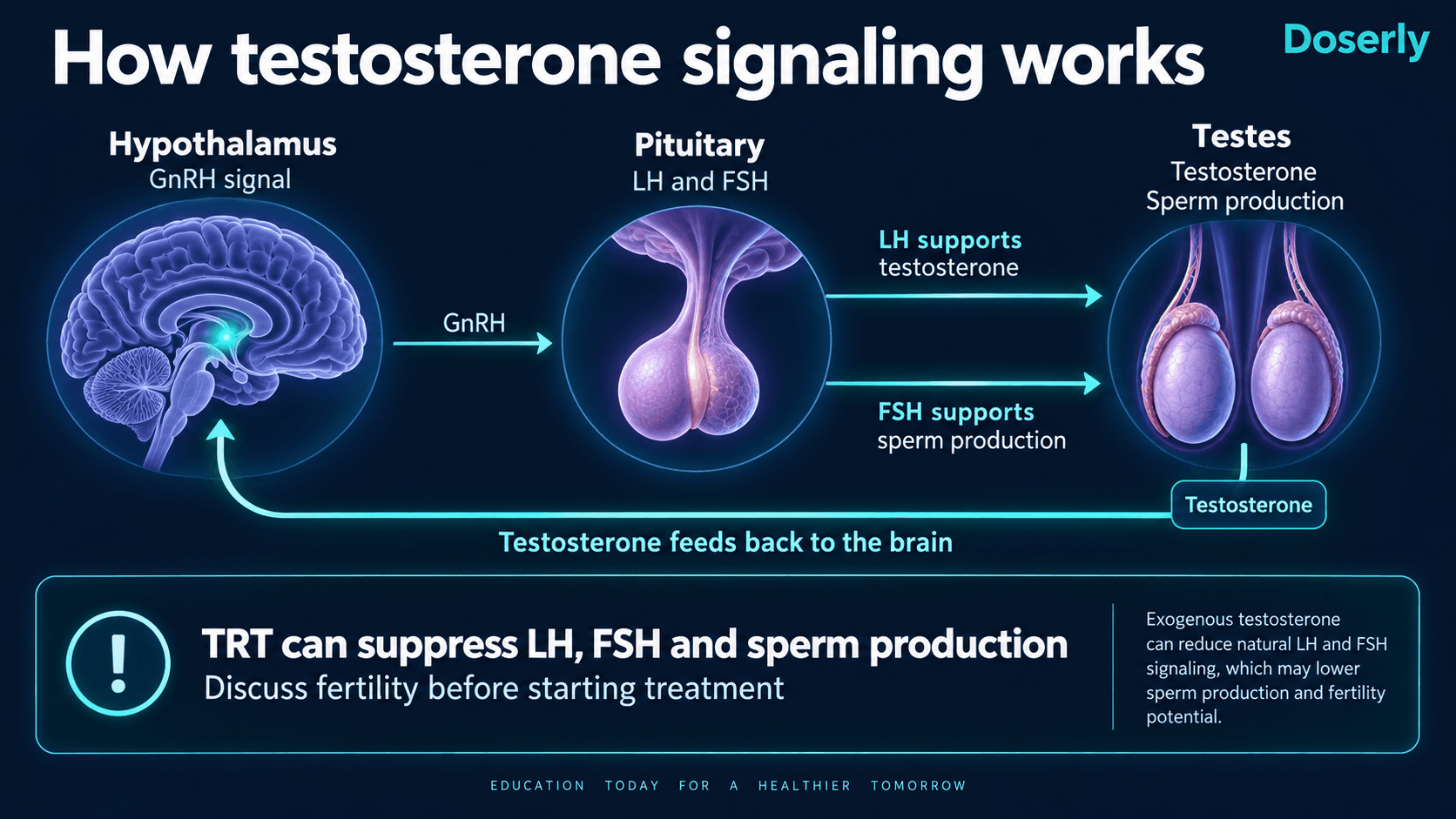
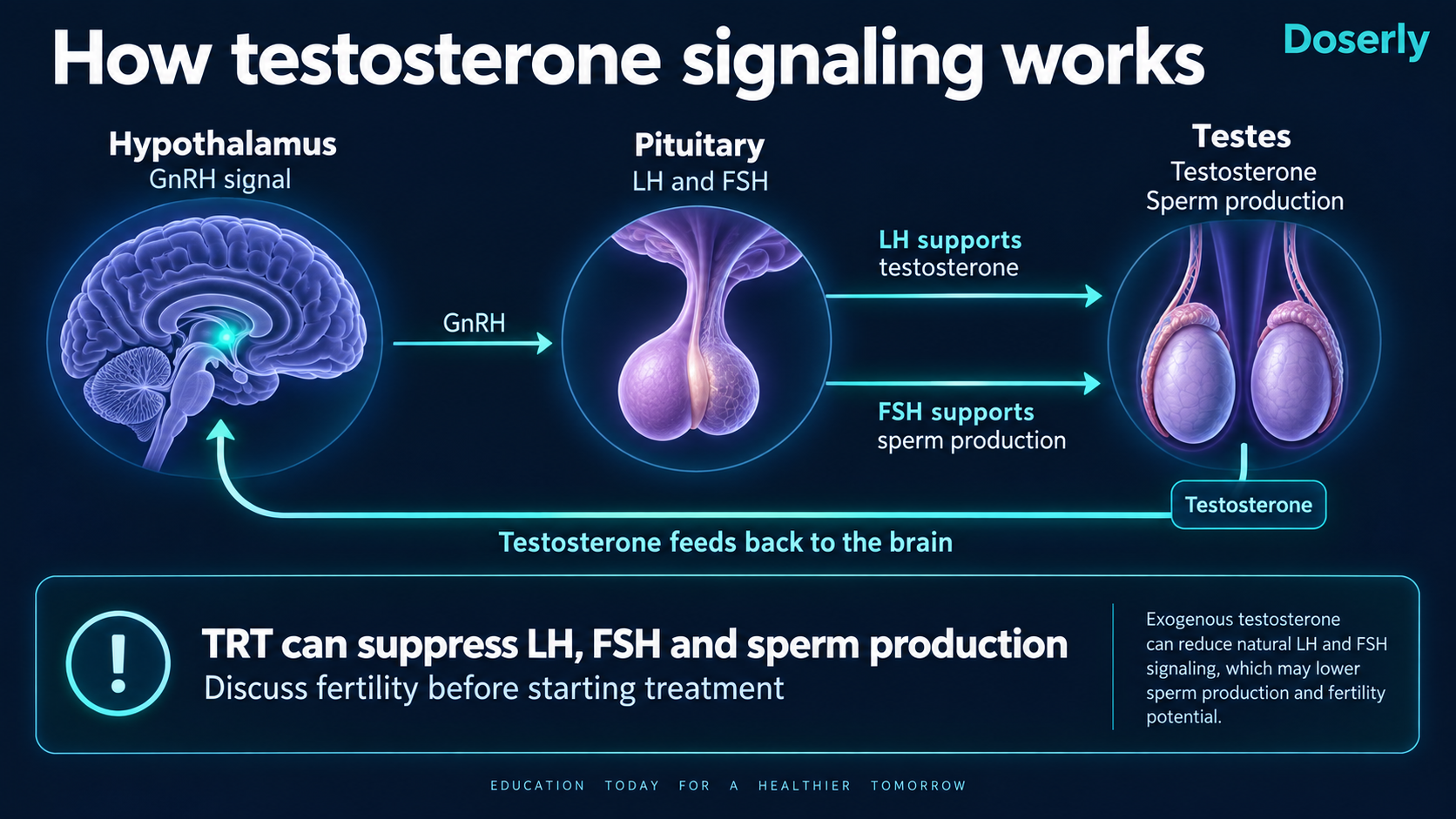
LH supports testicular testosterone production; FSH and testosterone support sperm production. Exogenous testosterone can suppress this signaling. Fertility treatment depends on the cause and requires a separate assessment.
Endocrine Society testosterone guideline.
Pharmacokinetics / Hormone Physiology
The Basics
Different testosterone formulations affect fertility differently because of how they deliver testosterone to your body. The key concept is this: formulations that create sustained high blood levels cause more complete shutdown of the HPG axis than those that allow levels to fluctuate.
Traditional injectable testosterone (cypionate, enanthate) creates a peak in the first day or two after injection, then gradually declines over one to two weeks. During that entire window, the sustained elevation suppresses LH and FSH. Long-acting injectable undecanoate (Aveed, Nebido) maintains levels for 10 to 14 weeks, causing profound and extended suppression.
Topical gels and intranasal testosterone (Natesto) work differently. They produce a shorter burst of testosterone that rises and falls within hours. Natesto, for example, has a half-life of approximately one hour. This may allow windows where the hypothalamus partially recovers GnRH pulsatility, potentially preserving some degree of LH and FSH secretion. Early clinical data suggests that some men on Natesto maintain measurable sperm counts, though this is not guaranteed for every individual.
The practical implication is that if fertility preservation is a concern, shorter-acting formulations may offer a theoretical advantage over long-acting injectables. However, no testosterone formulation is reliably "fertility safe," and the AUA does not distinguish between formulations in its recommendation against testosterone use in men desiring fertility.
The Science
Pharmacokinetic profiles of testosterone formulations directly influence the degree and duration of HPG axis suppression:
Formulation
T cypionate (IM)
- Tmax
- Multi-day injection curve
- Half-life
- Long enough for weekly or longer intervals
- HPG Suppression Degree
- High; sustained LH/FSH suppression
Formulation
T enanthate (IM)
- Tmax
- Multi-day injection curve
- Half-life
- Long enough for weekly or longer intervals
- HPG Suppression Degree
- High; sustained LH/FSH suppression
Formulation
T undecanoate (IM, Aveed)
- Tmax
- 7 days
- Half-life
- ~21 days
- HPG Suppression Degree
- Very high; prolonged suppression
Formulation
T gel 1% (AndroGel)
- Tmax
- 4-8 hours
- Half-life
- ~2-4 hours (skin depot)
- HPG Suppression Degree
- Moderate; daily application maintains steady state
Formulation
T nasal gel (Natesto)
- Tmax
- ~40 min
- Half-life
- ~1 hour
- HPG Suppression Degree
- Potentially low; intermittent GnRH recovery possible
Formulation
Oral T undecanoate (Jatenzo)
- Tmax
- 4-5 hours
- Half-life
- ~6-7 hours
- HPG Suppression Degree
- Potentially lower; hepatic lymphatic absorption
Masterson et al. (2021) demonstrated that shorter-acting testosterone preparations produced less suppression of FSH and LH compared to longer-acting formulations, providing a pharmacokinetic rationale for their potential fertility-preserving properties. Kavoussi et al. (2022) published proof-of-concept data showing that direct conversion from long-acting injectable TRT to Natesto allowed resumption of spermatogenesis in previously suppressed men.
However, even transdermal and intranasal formulations can suppress spermatogenesis in some individuals, and the degree of suppression is not reliably predictable from formulation choice alone. Individual variation in androgen receptor sensitivity, aromatase activity, and baseline HPG axis robustness all contribute to the heterogeneity of response.
Research & Clinical Evidence
The Basics
The research on fertility and TRT tells a consistent story: exogenous testosterone reliably suppresses sperm production, but the suppression is usually reversible if appropriate steps are taken. The challenge is that "usually" is not "always," and the timeline for recovery can be long and unpredictable.
The largest body of evidence comes from studies that explored testosterone as a male contraceptive. In pooled data from over 1,500 men, sperm production recovered to 20 million per milliliter (the threshold often cited for normal fertility) within 12 months in 90% of men, and within 24 months in essentially all men. These studies involved relatively young, healthy men on testosterone for short periods (usually less than 18 months).
Real-world TRT patients present a different picture. A study from Baylor College of Medicine followed 66 men who developed infertility after testosterone use. Using a combined protocol of HCG and a SERM after stopping testosterone, 70% achieved sperm counts sufficient for intrauterine insemination within 12 months. Age and duration of testosterone use were the strongest predictors of recovery: younger men with shorter TRT duration recovered faster and more completely.
Research on HCG co-administration during TRT is encouraging but not definitive. A landmark study by Coviello et al. showed that low-dose HCG (250-500 IU every other day) maintained intratesticular testosterone at near-normal levels in men receiving concurrent testosterone, suggesting spermatogenesis could potentially be preserved. Hsieh et al. demonstrated that concomitant HCG preserves semen parameters in some men on TRT. However, preserving intratesticular testosterone does not guarantee sperm production, and the absence of FSH remains a limiting factor.
The Science
Recovery after TRT cessation:
Liu et al. (2006) conducted the most comprehensive analysis of spermatogenic recovery, pooling 30 WHO-sponsored contraceptive studies encompassing 1,549 men. The median time to recovery to 20 million/mL was 3.4 months (95% CI: 2.7-4.2). Predictors of slower recovery included older age, Asian ethnicity, longer duration of testosterone treatment, lower baseline sperm count, and injectable testosterone formulation. The probability of recovery to 20 million/mL was 67% at 6 months, 90% at 12 months, 96% at 16 months, and 100% at 24 months.
Kohn et al. (2017) examined 66 men with testosterone-associated infertility treated with TTh cessation plus 3,000 IU hCG subcutaneously three times weekly combined with clomiphene or tamoxifen. At 12 months, 69.7% achieved TMC >5 million. Multivariate regression identified age (coefficient -0.0171, p=0.015) and TTh duration (coefficient -0.0306, p=0.017) as significant negative predictors. The probability of TMC >5 million at 12 months was approximately 90% for a 30-year-old with 1 year of TTh, but only approximately 30% for a 50-year-old with 10 years of TTh.
Benefits & Therapeutic Effects
The Basics
The "benefit" of fertility preservation on TRT is straightforward: maintaining or recovering the ability to have biological children while treating testosterone deficiency. For many men, this is not an abstract concern. It is a deeply personal priority that affects life decisions, relationships, and emotional wellbeing.
Successfully preserved fertility means you do not have to choose between treating your low testosterone symptoms and having a family. Strategies like sperm banking, HCG co-administration, SERM monotherapy, and newer short-acting testosterone formulations can, for many men, make it possible to manage both goals.
The therapeutic benefits of the preservation strategies themselves include not only fertility maintenance but also symptom relief. HCG raises testosterone endogenously and can alleviate hypogonadal symptoms. Clomiphene and enclomiphene similarly raise testosterone through the natural HPG axis pathway, providing symptom relief while preserving or enhancing sperm production. For some men, these alternatives provide adequate testosterone levels and symptom improvement without the fertility trade-off of exogenous testosterone.
The Science
The therapeutic benefit profile of fertility-preserving TRT alternatives varies by modality:
HCG monotherapy raises total testosterone by 50-100% from suppressed baseline, with maintained ITT and potential preservation of spermatogenesis. A retrospective analysis of 28 men transitioned from TRT to HCG monotherapy found no significant change in mean testosterone levels with a significant decrease in hematocrit (45.3% to 44.2%, p<0.05), suggesting HCG may offer a more favorable safety profile for some parameters.
Clomiphene citrate monotherapy at 25-50 mg daily raises total testosterone to 450-850 ng/dL in most hypogonadal men while maintaining or improving FSH and spermatogenesis. The testosterone elevation is endogenous, produced through HPG axis stimulation rather than exogenous replacement.
Enclomiphene citrate at 12.5-25 mg daily produces similar testosterone elevation with fewer estrogenic side effects than racemic clomiphene, though long-term safety data is still evolving.
Risks, Side Effects & Safety
The Basics
The biggest risk discussed in this guide is one that many men do not fully appreciate until it affects them personally: exogenous testosterone can make sperm production fall sharply, sometimes to azoospermia, and recovery after stopping can be slow or incomplete.
Many men on exogenous testosterone develop severe oligospermia or azoospermia within months. Most recover some sperm production after stopping, but the timeline can range from months to more than a year, and recovery to a person’s pre-treatment baseline is not guaranteed. Longer exposure, older age, baseline fertility problems, and other health factors can slow or limit recovery.
The fertility-preserving alternatives carry their own side effects. HCG can increase estradiol levels through intratesticular aromatization, potentially causing breast tenderness, fluid retention, or mood changes. Clomiphene citrate is associated with mood disturbance (including depression and irritability in some men), visual changes, weight gain, and gastrointestinal symptoms. These mood effects can be significant and are a common reason for discontinuation. Enclomiphene may have a different side-effect profile, but comparative and long-term safety data remain limited.
Aromatase inhibitors (anastrozole, letrozole), sometimes used alongside recovery protocols to manage estradiol, carry risks including decreased bone mineral density, joint pain, and elevated liver enzymes with prolonged use.
Beyond the direct pharmacological risks, there is a significant risk of inadequate counseling. Survey data from the AUA found that in 2010, 25% of urologists incorrectly believed that testosterone therapy would improve male fertility. Men may begin TRT through telehealth clinics or primary care providers who do not adequately discuss fertility implications.
The Science
Spermatogenesis suppression:
The rate and completeness of spermatogenesis suppression by exogenous testosterone has been documented across multiple study designs. In controlled male contraceptive trials, testosterone enanthate 200 mg weekly induced azoospermia in approximately 65% of men and severe oligospermia (<3 million/mL) in an additional 32%, for a total suppression rate of 97%. The effect begins within 10 weeks of TRT initiation and can persist for months to years after cessation.
Risk of incomplete recovery: recovery is variable rather than predictable from a single percentage. Age, duration of testosterone exposure, baseline semen parameters, and the recovery protocol all affect the chance and timing of sperm-count improvement; semen analysis is needed to know the individual result.
Cardiovascular context:
The TRAVERSE trial (n=5,246, men aged 45-80 with hypogonadism and cardiovascular risk factors) demonstrated non-inferiority of testosterone gel versus placebo for the primary composite endpoint of major adverse cardiovascular events (MACE) with a hazard ratio of 0.96 (95% CI: 0.78-1.17) over mean follow-up of 33 months. TRAVERSE also noted increased incidence of atrial fibrillation and pulmonary embolism in the testosterone group. For men considering testosterone cessation for fertility, the cardiovascular implications of treatment changes should be discussed with the treating provider.
Polycythemia:
All testosterone formulations increase hematocrit, with injectable formulations carrying higher polycythemia risk than transdermal. The threshold for clinical intervention is hematocrit >=54%. Notably, HCG monotherapy may offer a more favorable hematocrit profile; one study found a significant decrease in hematocrit with transition from TRT to HCG monotherapy. This is a relevant consideration for men transitioning protocols.
Dosing & Treatment Protocols
The Basics
There is no single "best" protocol for fertility preservation on TRT. The right approach depends on your individual situation: whether you are planning to start TRT, already on it, or trying to conceive after TRT use. Here are the main strategies, organized by scenario.
Before starting TRT (proactive preservation):
The simplest and most reliable step is sperm banking. This involves providing one or more semen samples that are frozen and stored at a cryopreservation facility. Even if you never need them, banked sperm serve as an insurance policy against the possibility of permanent fertility suppression. Costs vary but are generally modest compared to the emotional and financial cost of fertility treatment later.
Beyond sperm banking, your provider should discuss alternatives to exogenous testosterone if fertility is a priority. Options may include clomiphene or enclomiphene, hCG, and sometimes FSH under reproductive-urology or endocrinology care. Dosing varies by diagnosis, semen-analysis results, and treatment goal; these medications raise testosterone through your body's own pathways rather than replacing it from outside.
During TRT (concurrent preservation):
If you and your provider decide that exogenous testosterone is necessary, adding low-dose HCG (250-500 IU every other day, or 500-1,000 IU two to three times weekly) may help maintain some intratesticular testosterone and partially preserve spermatogenesis. This is not guaranteed to work for every man, and periodic semen analysis is essential to verify that sperm production is actually being maintained.
After TRT (recovery):
If you have been on TRT and want to restore fertility, the typical protocol involves stopping testosterone and beginning a recovery regimen. A commonly described protocol from the clinical literature includes HCG at 3,000 IU every other day combined with clomiphene citrate at 25-50 mg daily. Some providers add anastrozole (0.5-1 mg twice weekly) if estradiol rises excessively. Recovery is monitored with semen analyses every 2-3 months and hormone panels (testosterone, FSH, LH, estradiol).
The Science
SERM monotherapy dosing:
Clomiphene citrate 25-50 mg daily or every other day is the most studied SERM protocol for male hypogonadism with fertility preservation. The AUA/ASRM 2024 guideline endorses SERMs, hCG, and AIs (or combinations) for infertile males with low testosterone (Conditional Recommendation, Grade C).
Enclomiphene citrate 12.5-25 mg daily has demonstrated efficacy in raising total testosterone while preserving spermatogenesis in a Phase II RCT. Sperm counts remained above 20 million/mL in the enclomiphene group compared to significant decline in the topical testosterone comparator.
HCG protocols (concurrent with TRT):
Based on Coviello et al. (2005), the following dose-response relationship for ITT preservation during concurrent testosterone and hCG administration has been established:
HCG Dose (EOD)
Placebo
- ITT Preserved (% of baseline)
- 7%
HCG Dose (EOD)
125 IU
- ITT Preserved (% of baseline)
- 25%
HCG Dose (EOD)
250 IU
- ITT Preserved (% of baseline)
- 93%
HCG Dose (EOD)
500 IU
- ITT Preserved (% of baseline)
- 102%
Clinical protocols for concurrent HCG during TRT typically use 500-1,000 IU two to three times weekly.
Recovery protocols after TRT cessation:
Kohn et al. (2017) protocol: HCG 3,000 IU subcutaneously three times weekly + clomiphene or tamoxifen. Mean TMC at 12 months: 40.0 million in recovery group.
Wenker et al. (2015): HCG 3,000 IU every other day + CC/tamoxifen/anastrozole/FSH. 95.9% recovery rate with mean density 22 million/mL at mean 4.6 months.
Dose timing and injection frequency should be individualized with product labeling, timed labs, symptoms, hematocrit, blood pressure, and clinician supervision. More frequent off-label schedules need the same monitoring discipline as labeled schedules.
Getting the dosing right often takes time and fine-tuning with your provider. Keeping an accurate record of what you're actually injecting, doses, frequency, and any adjustments, makes that process smoother. Doserly tracks your testosterone doses alongside everything else in your health stack, so your full protocol is always in one place.
Never wonder whether you drew up the right amount or when your last injection was. The app logs every dose with a timestamp and sends reminders when your next one is due, helping you maintain the consistency that makes testosterone therapy most effective and keeps your levels stable between injections.
What to Expect (Timeline)
Starting TRT without fertility preservation:
- Weeks 1-4: Hypogonadal symptoms begin to improve (energy, mood, libido). LH and FSH begin declining.
- Weeks 4-10: LH and FSH approach zero. Sperm production begins to decline significantly.
- Months 3-6: 65% of men develop azoospermia. Testicular volume may decrease. Ejaculate volume may decrease.
- Months 6-12: Suppression continues and deepens. Recovery timeline lengthens with each additional month on TRT.
- Beyond 12 months: Prolonged suppression. Recovery after cessation becomes slower and less certain.
Starting fertility recovery after TRT cessation (with HCG/SERM):
- Weeks 1-4: Testosterone levels may drop initially as exogenous T clears. HCG and SERM begin to raise endogenous production. Mood and energy may decline temporarily.
- Months 1-3: Testicular volume begins to increase. FSH and LH begin to rise. Semen analysis may still show azoospermia or severe oligospermia.
- Months 3-6: Sperm production begins to return in most men. First repeat semen analysis may show improvement. Some men achieve sperm counts sufficient for IUI or natural conception.
- Months 6-12: Continued improvement in sperm counts and motility. 70% of men achieve TMC >5 million by 12 months.
- Months 12-24: Additional recovery possible. Men who have not recovered by 12 months may still improve.
Individual variation is significant. Younger men with shorter exposure often recover faster than older men with years of exposure, but individual prediction is imprecise. Semen analysis before treatment and during recovery is more useful than relying on a fixed percentage estimate.
Fertility Preservation & HPG Axis
This is the central section of this guide. Fertility preservation in the context of TRT encompasses three strategic phases: pre-treatment planning, concurrent preservation during TRT, and recovery after TRT cessation.
Pre-Treatment: Before Starting TRT
Costs vary widely by pharmacy, insurance, region, coupon programs, and visit/lab fees; verify current pricing before relying on a range.
Baseline semen analysis: A pre-TRT semen analysis serves two purposes. First, it documents baseline fertility status, which is essential for interpreting any future decline. Second, it identifies men with pre-existing fertility issues (which would be attributed to TRT if discovered later).
Informed consent: The AUA explicitly states: "For the male interested in current or future fertility, clinicians should not prescribe exogenous testosterone or testosterone products" (Strong Recommendation). This does not mean TRT is absolutely contraindicated, but it does mean that the fertility risk must be clearly communicated and alternatives discussed before any prescription.
During TRT: Concurrent Preservation
HCG co-administration: Adding HCG (250-500 IU every other day or 500-1,000 IU 2-3x weekly) during TRT maintains intratesticular testosterone and may preserve partial spermatogenesis. Coviello et al. demonstrated that 250 IU EOD maintains 93% of baseline ITT. Hsieh et al. showed semen parameter preservation with concurrent HCG. However, FSH remains suppressed by exogenous testosterone, and HCG cannot fully replace the FSH signal. Periodic semen analysis (every 4-6 months) is essential to verify actual sperm production.
Short-acting formulations: Intranasal testosterone (Natesto) may cause less HPG suppression due to its short half-life (~1 hour), potentially allowing intermittent recovery of GnRH pulsatility. Kavoussi et al. published proof-of-concept data showing spermatogenesis resumption after switching from long-acting TRT to Natesto. This is promising but preliminary.
Limitations of concurrent preservation: No concurrent strategy guarantees fertility maintenance. Men relying on concurrent HCG should monitor semen parameters, not just hormone levels. A normal testosterone level does not mean normal sperm production. The only way to know is through semen analysis.
After TRT: Recovery
Cessation + pharmacological recovery: The standard approach involves stopping exogenous testosterone and initiating medications to stimulate the HPG axis:
- HCG: 1,500-3,000 IU subcutaneously or intramuscularly every other day. Acts as an LH analog to stimulate Leydig cells and raise ITT.
- Clomiphene citrate: 25-50 mg orally daily. Blocks estrogen negative feedback at the hypothalamus, raising GnRH, LH, and FSH.
- Enclomiphene citrate: 12.5-25 mg orally daily. Pure estrogen receptor antagonist with fewer estrogenic side effects than clomiphene.
- Recombinant FSH: Added in refractory cases where FSH stimulation alone (via SERMs) is insufficient.
- Anastrozole: 0.5-1 mg orally twice weekly, added if estradiol rises excessively during recovery.
Recovery monitoring: Semen analysis every 2-3 months. Hormone panels (total T, FSH, LH, estradiol) every 4-6 weeks initially. Goal is TMC >5 million for IUI candidacy or >20 million/mL for natural conception.
Recovery predictors (Kohn et al. 2017): Age at cessation and duration of TRT are the strongest predictors. For each additional year of age, probability of recovery decreases by 1.7%. For each additional year of TRT, probability decreases by 3.1% (at 12 months).
Primary vs secondary hypogonadism implications: Men with primary hypogonadism (testicular failure) have limited recovery potential regardless of intervention, as the underlying testicular capacity to respond to gonadotropin stimulation is impaired. Men with secondary hypogonadism (hypothalamic-pituitary dysfunction) have better recovery prognosis, especially with SERM or gonadotropin support.
Interactions & Compatibility
Drug-drug interactions relevant to fertility preservation protocols:
- HCG + exogenous testosterone: HCG mitigates testosterone's suppression of ITT but cannot overcome FSH suppression. Combined use is common but not FDA-validated for fertility preservation.
- Clomiphene + testosterone: Contradictory mechanisms. Clomiphene stimulates LH/FSH release while exogenous T suppresses them. Co-administration is generally not recommended; one or the other is preferred.
- Aromatase inhibitors + HCG/SERMs: AIs may be added to recovery protocols to manage estradiol elevations. Long-term AI use carries bone density risks. AUA 2024 guideline endorses AI use in select men with elevated estradiol.
- 5-alpha reductase inhibitors (finasteride, dutasteride): Block conversion of testosterone to DHT. May affect spermatogenesis independently. Men on concurrent finasteride for hair loss should discuss fertility implications.
- Opioids: Suppress HPG axis independently. May be an underlying or contributing cause of low testosterone. Opioid taper should be considered before attributing infertility solely to TRT.
Supplement interactions:
- Zinc: Supports testosterone production and spermatogenesis. Often recommended as adjunctive support during fertility recovery.
- CoQ10 (Ubiquinol): Antioxidant with preliminary evidence for improving sperm parameters.
- L-Carnitine: Some evidence for improved sperm motility.
- D-Aspartic Acid: May transiently raise testosterone but clinical significance for fertility is unclear.
Cross-links to related Doserly guides:
- HCG Guide
- Clomiphene Guide
- Enclomiphene Guide
- Anastrozole Guide
- Testosterone Cypionate
- Natesto (Intranasal Testosterone)
- Estrogen Management on TRT
Decision-Making Framework
Making informed decisions about fertility and TRT requires understanding your personal risk profile and the available options. This framework organizes the key decision points.
Decision Point 1: Do you want biological children now or in the future?
If yes (or even "maybe"), fertility must be a primary consideration in your TRT decision. If the answer is definitively no (and you are confident in this), the fertility implications of TRT become less urgent, though sperm banking is still worth considering as a low-cost precaution.
Decision Point 2: Have you been offered alternatives to exogenous testosterone?
Per AUA guidelines, men desiring fertility should not receive exogenous testosterone. Alternatives include clomiphene citrate, enclomiphene citrate, and HCG monotherapy, all of which can raise testosterone while preserving or improving sperm production. If your provider has not discussed these options, consider seeking a second opinion from a reproductive urologist or endocrinologist.
Decision Point 3: Have you banked sperm?
If you are starting TRT despite fertility concerns, sperm banking before the first dose is the single most impactful step you can take. It costs relatively little, involves minimal inconvenience, and provides peace of mind regardless of what happens to your fertility on TRT.
Decision Point 4: Are you already on TRT and concerned about fertility?
Get a semen analysis. This is the only way to know your current fertility status. If sperm are present, discuss adding HCG or transitioning to a fertility-preserving protocol. If azoospermic, discuss cessation and recovery protocols with a fertility specialist.
Questions to ask your provider:
- Has testosterone replacement been shown to affect sperm production?
- What alternatives to testosterone are available that would preserve my fertility?
- Should I bank sperm before starting treatment?
- If I start TRT, can HCG be added to help maintain fertility?
- How will my fertility be monitored during treatment?
- If I need to stop TRT for fertility, what recovery protocol do you recommend?
- Should I see a reproductive urologist or endocrinologist?
Finding the right provider: Reproductive urologists and andrologists have the most specialized training in managing the intersection of testosterone deficiency and male fertility. Endocrinologists with expertise in male reproductive health are also well-suited. TRT-focused telehealth clinics may not always have the fertility expertise needed for comprehensive counseling.
The best TRT decisions happen when you walk into your appointment prepared. Doserly helps you organize your symptom data, lab results, and questions ahead of time, so you can make the most of your consultation time and ensure nothing important gets forgotten.
The app generates appointment-ready summaries of your recent symptom trends, current protocol, hematocrit and PSA values, and any side effects you've logged. Instead of trying to recall three months of experience in a ten-minute appointment, you have a clear, organized record to share with your provider.
Administration & Practical Guide
HCG administration:
- Subcutaneous injection using an insulin syringe (27-30G, 0.5")
- Common injection sites: abdomen (periumbilical), thigh
- Reconstituted HCG must be refrigerated and used within 30-60 days
- Rotate injection sites to minimize injection site reactions
Clomiphene/Enclomiphene administration:
- Oral tablet taken daily or every other day
- No special administration requirements
- Best taken at the same time each day for consistency
Sperm banking logistics:
- Samples are collected via ejaculation (at clinic or with home collection kits)
- Abstinence of 2-5 days before collection is recommended for optimal sample quality
- Multiple samples (2-3) are preferred for adequate reserves
- Initial analysis and cryopreservation fee: typically current local pricing
- Annual storage: typically current local pricing/year
- Samples can be stored indefinitely with proper cryopreservation
Semen analysis monitoring:
- During fertility preservation: every 4-6 months while on TRT + HCG
- During recovery: every 2-3 months after TRT cessation
- Key parameters: concentration (million/mL), total count, motility (%), morphology (% normal), volume
- Spermatogenesis cycle is approximately 74 days; allow at least 2-3 months between protocol changes and repeat analysis
Monitoring & Lab Work
Pre-TRT baseline (fertility-focused):
- Semen analysis (volume, concentration, motility, morphology)
- Total testosterone (two morning draws)
- Free testosterone
- FSH, LH
- Estradiol
- Inhibin B (optional; correlates with Sertoli cell function and spermatogenic activity)
- SHBG, prolactin
- CBC with hematocrit
- PSA (age-appropriate)
During TRT with concurrent HCG (fertility monitoring):
- Semen analysis every 4-6 months (the only way to verify sperm production)
- Total testosterone, free testosterone, FSH, LH: every 3-6 months
- Estradiol: if symptomatic (breast tenderness, fluid retention, mood changes)
- Hematocrit: every 6-12 months (threshold 54% or higher for intervention)
- PSA: annually for men >40
During fertility recovery (post-TRT cessation):
- Semen analysis: every 2-3 months
- Total testosterone, FSH, LH, estradiol: every 4-6 weeks initially, then every 3 months
- CBC with hematocrit: at baseline and 3-6 months
- Adjust protocol based on hormone trends and semen analysis results
Key monitoring principle: Hormone levels alone do not predict fertility status. A normal testosterone level does not mean sperm production has been preserved. Semen analysis is the gold standard for assessing fertility.
Estrogen Management on TRT
Estrogen management is particularly relevant in the context of fertility preservation because HCG directly stimulates intratesticular aromatization, potentially increasing estradiol levels beyond what exogenous testosterone alone would produce.
Why estradiol rises with HCG: HCG stimulates Leydig cells to produce testosterone locally, and the intratesticular environment has high aromatase activity. This means HCG can raise estradiol disproportionately to systemic testosterone levels.
When to intervene: Clinical guidelines (Endocrine Society, AUA) recommend estradiol management only when symptoms are present (gynecomastia, significant fluid retention, mood disturbance), not based on lab numbers alone. Many TRT communities advocate for target estradiol ranges (20-35 pg/mL on sensitive assay), but this approach is not supported by clinical guidelines and aggressive estradiol suppression has documented harms including joint pain, mood disturbance, decreased libido, and bone density loss.
AI use in fertility protocols: Anastrozole (0.5-1 mg twice weekly) is sometimes added to recovery protocols if estradiol rises excessively. However, prolonged AI use carries risks to bone mineral density and should be used at the lowest effective dose for the shortest duration. Letrozole (2.5 mg daily) is an alternative that has shown efficacy in improving sperm parameters in subfertile men, potentially through both estradiol reduction and indirect FSH elevation.
Aromatase inhibitors are not routine TRT add-ons. If they are used, the goal is symptom relief while avoiding low-estradiol adverse effects such as joint pain, sexual dysfunction, mood changes, and bone risk.
Stopping TRT / Post-Cycle Considerations
Stopping TRT for fertility recovery is one of the most challenging transitions men face in their hormonal health journey. Understanding what to expect can help manage expectations and maintain compliance with recovery protocols.
What happens when TRT stops:
- Exogenous testosterone clears from the body over days to weeks (depending on formulation and ester half-life)
- Endogenous LH and FSH remain suppressed for weeks to months after testosterone clearance
- Symptoms of hypogonadism return: fatigue, low mood, decreased libido, erectile dysfunction, brain fog
- Testicular function gradually recovers as gonadotropin secretion resumes
Recovery protocols (see Section Section 11 for dosing):
- HCG bridges the gap by providing LH-like stimulation to Leydig cells, raising testosterone while the pituitary recovers
- SERMs (clomiphene, enclomiphene) stimulate pituitary LH/FSH secretion by blocking estrogen negative feedback
- Combination therapy (HCG + SERM) is the most commonly used clinical approach
Is TRT lifelong?
For men with primary hypogonadism (testicular failure), TRT is often lifelong because the underlying capacity to produce testosterone is permanently impaired. For men with secondary hypogonadism, addressing underlying causes (weight loss, sleep apnea treatment, opioid cessation, pituitary pathology treatment) may restore endogenous production sufficiently to discontinue TRT. For men on TRT for age-related decline, the answer is individualized.
Symptom management during recovery:
- Expect fatigue, mood decline, and decreased libido during the first 2-4 weeks
- HCG can mitigate some symptoms by maintaining testosterone production
- Exercise, sleep optimization, and stress management are supportive
- Communicate with your partner about what to expect
- Regular follow-up with your provider to adjust protocols based on symptom burden and lab results
Realistic expectations:
- Not everyone recovers fully. Some men return to pre-TRT levels, some recover partially, some do not recover meaningfully.
- Recovery timeline is unpredictable: may be 3 months, may be 24+ months
- The decision to attempt fertility recovery should be made with clear-eyed understanding of both the potential and the limitations
Special Populations & Situations
Young Men (Under 35)
Men under 35 represent the highest-stakes population for fertility preservation on TRT. They are most likely to desire future biological children, and they also tend to have the best recovery prognosis. However, the growing availability of TRT through telehealth clinics and social media promotion means more young men are starting TRT without adequate fertility counseling. Every man under 35 starting TRT should be strongly encouraged to bank sperm and should be offered alternatives to exogenous testosterone (clomiphene, enclomiphene, HCG) as first-line options.
Men Trying to Conceive Now
Men who are actively trying to conceive should not be on exogenous testosterone. If currently on TRT, immediate cessation and initiation of a recovery protocol (HCG + SERM) is the standard recommendation. Semen analysis should be performed to assess current status. If azoospermic, referral to a reproductive urologist is warranted. If time is critical (partner's age, IVF cycle timing), surgical sperm retrieval (micro-TESE) may be an option in men with persistent azoospermia.
Men with Primary Hypogonadism
Men with primary testicular failure (Klinefelter syndrome, prior orchidectomy, cryptorchidism, testicular trauma) face the most challenging fertility preservation scenario. Their testes have limited capacity to respond to gonadotropin stimulation, and TRT cessation may not yield meaningful spermatogenic recovery. Sperm banking before TRT is especially critical in this population. Micro-TESE may be offered in select cases.
Transgender Men (FTM)
Transgender men on masculinizing testosterone therapy face unique fertility considerations. Testosterone suppresses the HPG axis similarly, with cessation and ovarian stimulation as the primary fertility preservation pathway. This guide focuses on cisgender male fertility; transgender-specific fertility counseling should involve specialists in reproductive medicine and gender-affirming care.
Obese Men
Obesity increases aromatase activity, potentially elevating estradiol and further suppressing the HPG axis. Weight loss may independently improve testosterone levels and spermatogenesis, reducing or eliminating the need for TRT. For obese men on TRT who desire fertility, weight loss is a valuable adjunctive strategy alongside pharmacological recovery.
Men with Sleep Apnea
Untreated obstructive sleep apnea independently suppresses testosterone production. CPAP optimization may improve endogenous testosterone sufficiently to reduce or discontinue TRT. Sleep apnea treatment should be optimized before and during fertility recovery protocols.
Regulatory, Insurance & International
United States:
- All testosterone formulations are Schedule III controlled substances (DEA classification)
- HCG: FDA-approved for hypogonadotropic hypogonadism; increasingly difficult to obtain since FDA reclassification in 2020 (compounded HCG restricted)
- Clomiphene, enclomiphene: Off-label use for male hypogonadism; not FDA-approved for this indication
- Costs vary widely by pharmacy, insurance, region, coupon programs, and visit/lab fees; verify current pricing before relying on a range.
- AUA/ASRM guidelines recommend against exogenous testosterone in men desiring fertility
United Kingdom:
- Testosterone is a controlled drug (Class C). HCG is available through NHS and private clinics.
- UK HCG supply shortages have been reported (2025-2026), with some clinics substituting clomiphene.
International considerations:
- Traveling with HCG or testosterone requires appropriate documentation (prescription, medical letter)
- HCG availability varies by country; some jurisdictions restrict it or require special import permits
- Sperm banking services are available in most developed countries
Frequently Asked Questions
Q: Will TRT make me infertile?
A: TRT can severely suppress sperm production, sometimes to azoospermia within months. The suppression is often reversible after stopping, but recovery is variable, can take months to more than a year, and is not guaranteed. Fertility counseling and sperm banking should be discussed before starting TRT.
Q: Can I take HCG with testosterone to stay fertile?
A: Adding HCG during TRT can help maintain intratesticular testosterone and may partially preserve sperm production in some men. However, it is not a guarantee. FSH remains suppressed by exogenous testosterone, which limits spermatogenesis. If fertility is a priority, semen analysis (not just hormone levels) is the only way to verify that sperm production is actually being maintained.
Q: How long does it take to recover fertility after stopping TRT?
A: Recovery varies widely. Younger men with shorter TRT duration often recover faster, while older men or men with years of exposure may need 12-24 months or longer. Some men do not recover fully, so semen analysis is the only way to know where recovery stands.
Q: Should I bank sperm before starting TRT?
A: Yes. Sperm banking before TRT is the single most reliable fertility preservation strategy. It is a low-cost insurance policy that removes the uncertainty about future fertility. Every man of reproductive age considering TRT should be offered this option.
Q: Is clomiphene a good alternative to TRT if I want to preserve fertility?
A: Clomiphene citrate raises testosterone through your body's natural hormonal pathways and preserves or improves sperm production. Many men achieve meaningful symptom improvement on clomiphene. However, some men find that clomiphene does not raise testosterone as effectively as TRT, and mood side effects (depression, irritability) can be significant for some users. Enclomiphene may have fewer of these side effects.
Q: Can I get my wife/partner pregnant while on TRT?
A: It is possible but unlikely for most men on TRT without concurrent fertility-preserving medications. Some men remain fertile on TRT, but this is the exception, not the rule. TRT should never be relied upon as contraception, and it should never be assumed to be compatible with fertility goals without semen analysis confirmation.
Q: What is the difference between HCG and clomiphene for fertility?
A: HCG acts as an LH analog, directly stimulating the testes to produce testosterone and (potentially) support spermatogenesis. Clomiphene blocks estrogen feedback at the brain level, causing the pituitary to release more LH and FSH naturally. Clomiphene's advantage is that it stimulates both LH and FSH, while HCG primarily stimulates LH. They are often used together in recovery protocols.
Q: Is there a testosterone formulation that doesn't affect fertility?
A: No testosterone formulation has been proven to reliably preserve fertility. However, shorter-acting formulations (intranasal Natesto, topical gels) may cause less HPG suppression than long-acting injectables. Natesto in particular has preliminary data suggesting potential fertility preservation, but this is not yet established as reliable.
Q: How much does sperm banking cost?
Costs vary widely by pharmacy, insurance, region, coupon programs, and visit/lab fees; verify current pricing before relying on a range.
Q: If I've been on TRT for 5+ years, can I still recover fertility?
A: Recovery is possible but less likely and takes longer with prolonged TRT use. Kohn et al. found that each additional year of TRT reduces the probability of recovery by approximately 3% at 12 months. Working with a reproductive urologist who specializes in male fertility is recommended for men with prolonged TRT history seeking to conceive.
Myth vs. Fact
Myth: "HCG on TRT guarantees you'll stay fertile."
Fact: HCG during TRT helps maintain intratesticular testosterone and can partially preserve sperm production in some men, but it is not a guarantee. FSH remains suppressed by exogenous testosterone, and some men develop azoospermia despite concurrent HCG. Semen analysis is the only way to verify fertility status.
Myth: "TRT will make you permanently infertile."
Fact: Many men recover sperm production after stopping TRT, but the timeline is variable and recovery to the pre-treatment baseline is not guaranteed. Risk depends on age, duration of use, baseline fertility, and other health factors. This is why sperm banking and semen analysis should be discussed before treatment when fertility may matter.
Myth: "If my testosterone levels are normal, my fertility must be fine."
Fact: Testosterone levels and sperm production are regulated by different but interconnected pathways. Exogenous testosterone can normalize blood testosterone levels while completely shutting down sperm production. The only way to assess fertility is through semen analysis.
Myth: "You can't get anyone pregnant while on TRT."
Fact: While TRT dramatically reduces sperm production in most men, a small percentage remain fertile. TRT should never be relied upon as a method of contraception. Conversely, men desiring fertility should not assume they are safe just because they have been on TRT.
Myth: "Young men don't need to worry about fertility when starting TRT."
Fact: Young men are actually the highest-risk group for fertility-related consequences of TRT because they are most likely to want children in the future. The AUA recommends alternatives to exogenous testosterone for all men interested in current or future fertility, regardless of age.
Myth: "Testosterone causes heart attacks, so stopping for fertility is actually healthier."
Fact: The TRAVERSE trial (n=5,246) demonstrated non-inferiority of testosterone therapy versus placebo for major adverse cardiovascular events (HR 0.96, 95% CI: 0.78-1.17) in men aged 45-80 with cardiovascular risk factors. Stopping TRT for fertility should be a planned medical decision, not a reaction to cardiovascular fear.
Myth: "Clomiphene is just as good as testosterone for treating low T."
Fact: Clomiphene raises testosterone endogenously and preserves fertility, making it a valuable option for hypogonadal men who desire fertility. However, some men do not achieve adequate testosterone levels or symptom relief on clomiphene, and mood side effects can be a limiting factor. It is an alternative, not a universal replacement.
Myth: "Once you stop TRT, fertility comes back within a few weeks."
Fact: Spermatogenesis takes approximately 74 days per cycle. Even with pharmacological support (HCG, SERMs), recovery typically requires 3-12 months, and may take up to 24 months in some cases. Planning ahead is essential.
Sources & References
[1] U.S. Food and Drug Administration. Testosterone Information. Current page covering testosterone product labeling, safety communications, and the June 2026 requested label updates. https://www.fda.gov/drugs/postmarket-drug-safety-information-patients-and-providers/testosterone-information
[2] U.S. Food and Drug Administration. FDA issues class-wide labeling changes for testosterone products. Feb. 28, 2025; canonical FDA page for the blood-pressure and TRAVERSE labeling action. https://www.fda.gov/drugs/drug-alerts-and-statements/fda-issues-class-wide-labeling-changes-testosterone-products
[3] U.S. Department of Health and Human Services / FDA. HHS Announces Requested Updates to Testosterone Therapy Product Labels. June 18, 2026; requested removal of the age-related-hypogonadism limitation and prostate/BPH revisions. https://www.hhs.gov/press-room/fda-requests-updates-testosterone-therapy-labeling.html
[4] Endocrine Society. Statement on Testosterone Replacement Therapy. July 16, 2026; interpretation of the FDA/HHS label request and TRAVERSE limits. https://www.endocrine.org/news-and-advocacy/news-room/2026/statement-on-testosterone-replacement-therapy
[5] Bhasin S, Brito JP, Cunningham GR, et al. Testosterone Therapy in Men With Hypogonadism: An Endocrine Society Clinical Practice Guideline. J Clin Endocrinol Metab. 2018;103(5):1715-1744. PubMed: 29562364. DOI: 10.1210/jc.2018-00229.
[6] Mulhall JP, Trost LW, Brannigan RE, et al. Evaluation and Management of Testosterone Deficiency: AUA Guideline. J Urol. 2018;200(2):423-432. PubMed: 29601923. DOI: 10.1016/j.juro.2018.03.115.
[7] Lincoff AM, Bhasin S, Flevaris P, et al. Cardiovascular Safety of Testosterone-Replacement Therapy. N Engl J Med. 2023;389(2):107-117. PubMed: 37326322. DOI: 10.1056/NEJMoa2215025.
[8] Snyder PJ, Bauer DC, Ellenberg SS, et al. Testosterone Treatment and Fractures in Men with Hypogonadism. N Engl J Med. 2024;390(3):203-211. PubMed: 38231621. DOI: 10.1056/NEJMoa2308836.
[9] Bhasin S, Travison TG, Pencina KM, et al. Prostate Safety Events During Testosterone Replacement Therapy in Men With Hypogonadism: A Randomized Clinical Trial. JAMA Netw Open. 2023;6(12):e2348692. PubMed: 38150256. DOI: 10.1001/jamanetworkopen.2023.48692.
[10] Snyder PJ, Bhasin S, Cunningham GR, et al. Effects of Testosterone Treatment in Older Men. N Engl J Med. 2016;374(7):611-24. PubMed: 26886521. DOI: 10.1056/NEJMoa1506119.
[11] Liu PY, Swerdloff RS, Christenson PD, et al. Rate, extent, and modifiers of spermatogenic recovery after hormonal male contraception: an integrated analysis. Lancet. 2006;367(9520):1412-20. PubMed: 16650651. DOI: 10.1016/S0140-6736(06)68614-5.
[12] Coviello AD, Matsumoto AM, Bremner WJ, et al. Low-dose human chorionic gonadotropin maintains intratesticular testosterone in normal men with testosterone-induced gonadotropin suppression. J Clin Endocrinol Metab. 2005;90(5):2595-602. PubMed: 15713727. DOI: 10.1210/jc.2004-0802.
[13] Hsieh TC, Pastuszak AW, Hwang K, et al. Concomitant intramuscular human chorionic gonadotropin preserves spermatogenesis in men undergoing testosterone replacement therapy. J Urol. 2013;189(2):647-50. PubMed: 23260550. DOI: 10.1016/j.juro.2012.09.043.
[14] Kohn TP, Louis MR, Pickett SM, et al. Age and duration of testosterone therapy predict time to return of sperm count after human chorionic gonadotropin therapy. Fertil Steril. 2017;107(2):351-357.e1. PubMed: 27855957. DOI: 10.1016/j.fertnstert.2016.10.004.
[15] American Urological Association / American Society for Reproductive Medicine. Diagnosis and Treatment of Infertility in Men: AUA/ASRM Guideline. https://www.auanet.org/guidelines-and-quality/guidelines/male-infertility
Related Guides & Cross-Links
Same Category (Treatment Overview Guides)
- Testosterone Injections Guide
- Testosterone Gels & Topicals Guide
- Oral Testosterone Guide
- Estrogen Management on TRT
- TRT Blood Work Guide
- TRT for Beginners
- Stopping TRT & Post-Cycle Recovery
Related Medications
- HCG (Human Chorionic Gonadotropin)
- Clomiphene Citrate (Clomid)
- Enclomiphene Citrate
- Gonadorelin
- Anastrozole (Arimidex)
- Natesto (Intranasal Testosterone)
- Testosterone Cypionate
- Testosterone Enanthate