
Testosterone Propionate
On this page
Quick Reference Card
Attribute
Brand Name(s)
- Value
- Testoviron (historical, international); no current US branded product
Attribute
Generic Name
- Value
- Testosterone propionate
Attribute
Drug Class / Type
- Value
- Testosterone ester (short-acting), androgen
Attribute
DEA Schedule
- Value
- Schedule III (CIII)
Attribute
FDA-Approved Indications
- Value
- Testosterone replacement therapy in adult males with conditions associated with deficiency or absence of endogenous testosterone
Attribute
Common Doses
- Value
- 10-50 mg every 1-3 days (IM or SubQ)
Attribute
Route(s) of Administration
- Value
- Intramuscular injection, subcutaneous injection
Attribute
Dosing Schedule
- Value
- Daily, every other day, or 2-3 times per week
Attribute
Key Monitoring Requirements
- Value
- Hematocrit, PSA, testosterone trough levels, estradiol if symptomatic
Attribute
Unique Considerations
- Value
- Shortest-acting injectable testosterone ester; no longer commercially manufactured in US (compounding pharmacy only); may preserve HPG axis function better than longer-acting esters
Overview / What Is Testosterone Propionate?
The Basics
Testosterone propionate is the original injectable testosterone, and it holds a unique place in the history of hormone therapy. First introduced in 1937 under the brand name Testoviron, it was the very first testosterone ester made available for medical use. For over two decades, it was the standard form of testosterone replacement before longer-acting options like cypionate and enanthate arrived in the 1950s and gradually took its place.
What makes propionate different from the testosterone injections most people use today is how quickly it works and how fast it leaves your body. While testosterone cypionate stays active for roughly a week after injection, propionate peaks within a day and is largely gone within two to three days. This means it needs to be injected much more frequently, typically every day or every other day, which is the main reason it fell out of routine clinical use.
So why is anyone still interested in it? Because that same short-acting property comes with potential advantages that some men and their providers find compelling. The rapid rise and fall may more closely mirror the body's natural pattern of testosterone production, where levels peak in the early morning and decline through the day. For some individuals, particularly those who have struggled with side effects or suboptimal results on cypionate or enanthate, propionate offers a different pharmacokinetic profile that may work better for their physiology.
Today, testosterone propionate is no longer commercially manufactured in the United States but remains available through compounding pharmacies. It is also a component of Sustanon 250, a testosterone blend used widely outside the US that contains propionate along with three other esters.
The Science
Testosterone propionate (TP) is the 17-beta-propanoate ester of testosterone, featuring a 3-carbon propionic acid side chain at the C17 hydroxyl position. This short ester chain creates a prodrug with relatively low lipophilicity compared to longer-chain esters, resulting in rapid absorption from the intramuscular depot and a correspondingly short duration of action [1].
TP was the first synthetic testosterone ester, developed in 1936 when researchers found that esterification at the 17-beta position dramatically improved the potency and duration of injectable testosterone compared to unmodified testosterone (which has a half-life of approximately 10 minutes when injected) [2]. The propionate ester was selected for commercialization due to its superior potency among the esters initially synthesized [3].
The compound was introduced by Schering AG in Germany in 1937 and became the dominant form of testosterone used in medicine until the late 1950s, when the development of testosterone enanthate (7-carbon ester, 1954) and testosterone cypionate (8-carbon cyclopentylpropionate ester) provided longer-acting alternatives that reduced injection frequency from every 1-2 days to every 1-4 weeks [2][3].
Despite being largely superseded for routine TRT, TP remains pharmacologically relevant. Its short half-life creates a unique pharmacokinetic profile that has attracted renewed interest in contexts where rapid dose adjustment, fertility preservation, or more physiological testosterone delivery patterns are priorities [4].
Medical / Chemical Identity
Property
Generic Name
- Detail
- Testosterone propionate
Property
Chemical Name
- Detail
- 4-Androsten-17-beta-ol-3-one 17-beta-propanoate
Property
Molecular Formula
- Detail
- C22H32O3
Property
Molecular Weight
- Detail
- 344.495 g/mol
Property
CAS Number
- Detail
- 57-85-2
Property
Ester Chain
- Detail
- 3-carbon propionic acid (propanoate)
Property
Ester Type
- Detail
- Straight-chain fatty acid
Property
Relative Testosterone Content
- Detail
- 84% by weight (vs 100% for unesterified testosterone)
Property
Vehicle (typical)
- Detail
- Grapeseed oil, sesame oil, or cottonseed oil
Property
DEA Schedule
- Detail
- Schedule III (CIII)
Property
Original Manufacturer
- Detail
- Schering AG (Germany, 1937)
Property
US Availability
- Detail
- Compounding pharmacy only (no current FDA-approved branded product)
Brand Names (Historical and International)
Region
International
- Brand Name
- Testoviron
- Status
- Historical/limited availability
Region
International
- Brand Name
- Perandren
- Status
- Discontinued
Region
International
- Brand Name
- Synandrol
- Status
- Discontinued
Region
United States
- Brand Name
- Oreton (buccal tablets)
- Status
- Discontinued
Region
Component of Sustanon 250
- Brand Name
- 30 mg per 1 mL ampoule
- Status
- Available outside US
Ester Chemistry
Testosterone propionate is the shortest commercially used testosterone ester. The 3-carbon propionic acid chain attached at the C17-beta hydroxyl position creates a prodrug with moderate lipophilicity (logP 3.7-4.9), significantly less than longer esters like enanthate (logP 3.6-7.0) or undecanoate (logP 6.7-9.2). This lower lipophilicity results in faster release from the intramuscular oil depot, faster ester hydrolysis, and a shorter duration of action.
Comparative ester chain lengths:
Ester
Propionate
- Carbon Chain
- 3 carbons
- IM Half-Life
- ~0.8-2 days
- Duration of Action
- 3-4 days
- Relative T Content
- 84%
Ester
Enanthate
- Carbon Chain
- 7 carbons
- IM Half-Life
- ~4.5 days
- Duration of Action
- 14-28 days
- Relative T Content
- 72%
Ester
Cypionate
- Carbon Chain
- 8 carbons
- IM Half-Life
- ~8 days
- Duration of Action
- 14-28 days
- Relative T Content
- 70%
Ester
Undecanoate
- Carbon Chain
- 11 carbons
- IM Half-Life
- ~33.9 days
- Duration of Action
- ~100 days
- Relative T Content
- 63%
Mechanism of Action
The Basics
Testosterone propionate works the same way as every other form of testosterone replacement. The propionate ester is simply a chemical "tag" attached to testosterone that controls how quickly the medication is released after injection. Once injected into muscle tissue, the oily solution creates a small depot. Your body's enzymes clip off the propionate tag within hours, releasing free testosterone into your bloodstream. From that point forward, it behaves exactly like the testosterone your body produces naturally.
The key difference is timing. Because the propionate ester is short (only 3 carbon atoms long), the clipping happens fast. Within about 24 hours of injection, testosterone levels reach their peak. By 48 hours, levels are declining significantly. By 72 hours, most of the injected testosterone has been used up. This is very different from testosterone cypionate, where levels peak around day 4-5 and take about two weeks to return to baseline.
This rapid rise and fall has practical implications. On one hand, it means you need to inject frequently (daily or every other day). On the other hand, it means your body experiences testosterone in a pattern that may be closer to natural production, where levels peak in the early morning and decline through the day. Some providers and patients believe this more physiological pattern contributes to fewer side effects and better outcomes for certain individuals, though this remains an area of clinical investigation rather than established consensus.
The Science
Following intramuscular injection in an oil vehicle, testosterone propionate is deposited as a lipophilic depot in muscle tissue. First-order absorption kinetics govern the release of the intact ester into systemic circulation. Non-specific esterases in plasma and peripheral tissues then hydrolyze the ester bond at the C17-beta position, liberating free testosterone [1][5].
Pharmacokinetic studies using deuterium-labeled testosterone propionate (25 mg IM) demonstrated that plasma levels of the intact ester were maintained at 2-4 ng/mL between 3 and 36 hours post-injection, with the active metabolite (free testosterone) maintained above physiological levels for approximately 48 hours [1].
Free testosterone exerts biological effects through binding to the intracellular androgen receptor (AR), a nuclear receptor superfamily member. The classical genomic pathway involves ligand-AR binding, receptor dimerization, nuclear translocation, and interaction with androgen response elements (AREs) in target gene promoters, modulating transcription over hours to days. Non-genomic signaling through membrane-associated AR activates rapid second messenger cascades (MAPK/ERK, PI3K/Akt) within seconds to minutes [5].
Testosterone undergoes two primary metabolic conversions: (1) 5-alpha reductase (types I and II) irreversibly converts testosterone to dihydrotestosterone (DHT), with approximately 2-3 times greater AR binding affinity, mediating androgenic effects in skin, hair follicles, and prostate tissue; (2) aromatase (CYP19A1), expressed in adipose tissue, brain, and bone, converts testosterone to 17-beta-estradiol, essential for bone mineral density, cardiovascular protection, and neuroendocrine feedback [5].
Exogenous testosterone suppresses the hypothalamic-pituitary-gonadal (HPG) axis via negative feedback on GnRH pulse frequency, reducing LH and FSH secretion. However, the degree of HPG suppression may vary by formulation. Preclinical evidence suggests that short-acting testosterone preparations (including propionate) may cause less sustained HPG axis suppression than long-acting formulations, potentially preserving pulsatile GnRH release patterns and gonadotropin secretion to a greater degree than continuous-release formulations [4].
Pathway & System Visualization
Pharmacokinetics / Hormone Physiology
The Basics
Understanding how quickly testosterone propionate enters and leaves your body is essential for making sense of why it requires more frequent injections but may offer certain advantages over longer-acting options.
After injection, the oil-based solution sits in your muscle tissue. Your body's enzymes start breaking down the propionate ester almost immediately. Testosterone levels begin rising within a few hours, reach their peak roughly 24 hours after injection, and return close to baseline within 48-72 hours. Compare this to testosterone cypionate, where levels peak around day 4-5 and take about two weeks to fully decline.
This rapid cycle means you need to inject daily or every other day to maintain stable levels. If you inject once a week, you will experience significant highs and lows that can affect mood, energy, and other symptoms. The tradeoff for the inconvenience of frequent injection is a more predictable, more controllable testosterone level. If a dose is too high or too low, you can adjust and see the effect within days, not weeks.
One interesting pharmacokinetic detail: because propionate delivers 84% of its weight as free testosterone (compared to 70% for cypionate and 63% for undecanoate), a given milligram dose of propionate provides slightly more active testosterone than the same milligram dose of a longer-acting ester. This is simply because the propionate "tag" is lighter, leaving more of the molecule as actual testosterone.
The Science
Testosterone propionate exhibits biphasic pharmacokinetics following intramuscular injection:
- Absorption phase (t1/2-alpha): Approximately 1.20 hours, reflecting release from the intramuscular oil depot and ester hydrolysis [1][6]
- Elimination phase (t1/2-beta): Approximately 19-22 hours (terminal elimination half-life), representing clearance of free testosterone from the bloodstream [4][6]
- Mean residence time (MRT): 1.5 days [6]
- Duration of action: 3-4 days (as oil solution) [6]
The short 3-carbon ester chain produces rapid ester cleavage compared to longer esters. Comparative absorption half-lives: propionate 1.20 hours; enanthate 3.04 hours; undecanoate 4.90 hours [6].
Pharmacokinetic Comparison Table:
Parameter
Ester carbons
- Propionate
- 3
- Enanthate
- 7
- Cypionate
- 8
- Undecanoate (IM)
- 11
Parameter
IM half-life
- Propionate
- 0.8-2 days
- Enanthate
- 4.5 days
- Cypionate
- ~8 days
- Undecanoate (IM)
- 33.9 days
Parameter
Time to peak
- Propionate
- ~24 hours
- Enanthate
- 36-48 hours
- Cypionate
- 4-5 days
- Undecanoate (IM)
- 7 days
Parameter
Duration
- Propionate
- 3-4 days
- Enanthate
- 14-28 days
- Cypionate
- 14-28 days
- Undecanoate (IM)
- ~100 days
Parameter
Free T content
- Propionate
- 84%
- Enanthate
- 72%
- Cypionate
- 70%
- Undecanoate (IM)
- 63%
Parameter
Injection frequency
- Propionate
- Daily to EOD
- Enanthate
- Weekly to biweekly
- Cypionate
- Weekly to biweekly
- Undecanoate (IM)
- Every 10-14 weeks
Distribution: Testosterone in plasma is approximately 98% protein-bound. Approximately 44% binds to sex hormone-binding globulin (SHBG) with high affinity, approximately 54% binds to albumin with low affinity, and approximately 2% circulates as free (bioavailable) testosterone. The free fraction determines biological activity [5].
Metabolism: Primary hepatic metabolism via two pathways: (1) 5-alpha reductase to DHT; (2) aromatase (CYP19A1) to estradiol. Approximately 90% excreted in urine as glucuronic and sulfuric acid conjugates; approximately 6% in feces [5].
Steady-state considerations: Given the 19-22 hour half-life, steady-state is achieved within approximately 4-5 days of daily dosing (5 half-lives). This allows rapid protocol optimization compared to cypionate (5-6 weeks to steady state) or undecanoate (several months).
Knowing the pharmacokinetics is the foundation. Seeing how your own body responds to your specific ester and injection frequency turns that knowledge into actionable insight. Doserly correlates your dosing schedule with how you feel day to day, helping you and your provider identify whether your current protocol is delivering stable levels or causing peak-and-trough swings.
The app's analytics can surface patterns you might not notice on your own, like whether symptoms correlate with the trough day before your next injection or whether switching from biweekly to twice-weekly dosing smoothed out your energy and mood. Data like this makes protocol adjustments more precise and less guesswork.
Keep multi-step protocols organized from start to finish.
Use Doserly to map compounds, timing, cycle windows, notes, and review points so complex protocols stay readable in one place.
Plan view
Protocol schedule
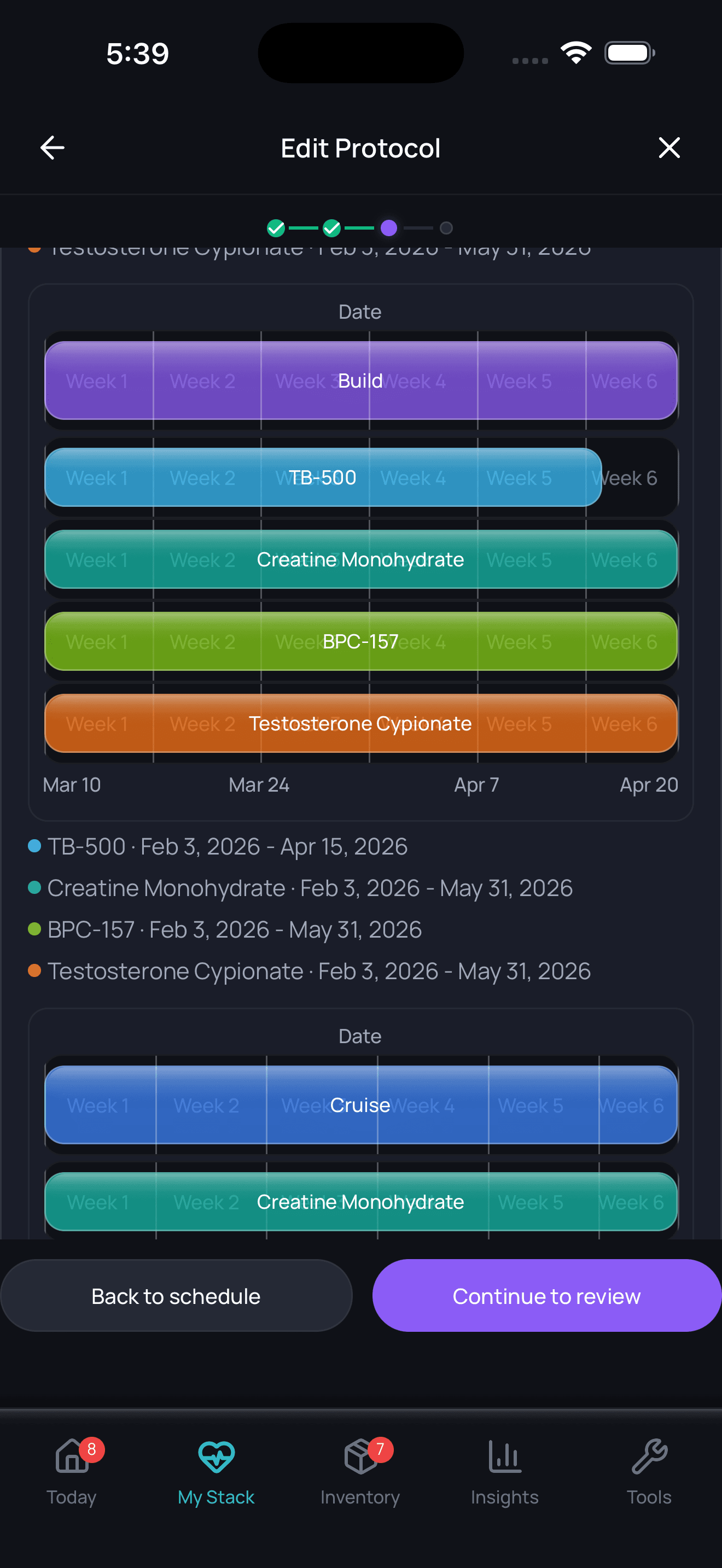
Planning views are organizational and should be aligned with professional guidance.
Research & Clinical Evidence
The Basics
Testosterone propionate has a long history of clinical use dating back to 1937, but most modern clinical research focuses on longer-acting esters like cypionate, enanthate, and undecanoate. This means that while propionate is well-understood pharmacologically, the evidence base for its specific clinical outcomes is thinner than for the testosterone formulations used more commonly today.
What we do know is that all testosterone esters produce the same free testosterone once the ester is cleaved. The clinical differences between esters are primarily about pharmacokinetics (how quickly levels rise and fall) and the secondary effects of those kinetic differences on side effects, compliance, and potentially fertility.
The most compelling modern research involving propionate comes from fertility studies. A 2020 mouse study found that short-acting testosterone (using propionate) caused significantly less suppression of reproductive hormones compared to long-acting formulations, preserving fertility potential to a degree similar to untreated animals. While this is preclinical data (mice, not humans), it aligns with emerging clinical evidence from short-acting intranasal testosterone suggesting that rapid-acting testosterone delivery may spare the HPG axis.
The Science
Pharmacokinetic Studies:
Shinohara et al. (1986) conducted the definitive PK study of testosterone propionate in normal men using deuterium-labeled TP (25 mg IM). Plasma levels of intact TP were maintained at 2-4 ng/mL between 3-36 hours, with active metabolite levels above physiological testosterone for 48 hours [1].
Fertility and HPG Axis Preservation:
Chu et al. (2020) compared short-acting testosterone propionate (0.2 mg/kg MWF, mouse model) vs long-acting testosterone pellets. Key findings: (a) LH levels were preserved at control levels in the short-acting group (0.348 vs 0.403 IU/L, ns) but nearly undetectable in the long-acting group (0.017 IU/L, p < 0.01); (b) testicular weight was preserved in the short-acting group (0.097 vs 0.115g, ns) but reduced in the long-acting group (0.083g, p < 0.01); (c) time to pregnancy was similar to wild-type in the short-acting group (26 vs 23 days, ns) but significantly prolonged in the long-acting group (33 days, p < 0.05) [4].
Cardiovascular Safety (Class-Level):
The TRAVERSE trial (n=5,246, Lincoff et al., 2023) is the definitive cardiovascular safety study for testosterone therapy, though it used transdermal testosterone gel rather than injectable formulations. The trial demonstrated non-inferiority of testosterone vs placebo for the primary composite MACE endpoint (HR 0.96, 95% CI: 0.78-1.17) over a mean 33-month follow-up in men aged 45-80 with cardiovascular risk factors or established cardiovascular disease [7]. While TRAVERSE did not specifically study propionate, the cardiovascular safety data applies at the class level, as the biological endpoint is circulating free testosterone regardless of the delivery ester.
Comparative TRT Pharmacology:
Shoskes et al. (2016) reviewed all FDA-approved TRT preparations, noting that testosterone propionate requires injections of 25-50 mg at 1-2 day intervals due to its brief duration of action, making it impractical for standard TRT but potentially valuable in specific clinical contexts [2].
Evidence & Effectiveness Matrix
Category
Sexual Function & Libido
- Evidence Strength
- 7/10
- Reported Effectiveness
- 8/10
- Summary
- Consistent community reports of superior libido improvement vs longer esters. Evidence-based on general testosterone replacement data plus propionate-specific community signal.
Category
Energy & Vitality
- Evidence Strength
- 6/10
- Reported Effectiveness
- 6/10
- Summary
- General TRT evidence supports energy improvement. Propionate-specific reports are positive but mixed; daily dosing appears to produce more stable energy.
Category
Mood & Emotional Wellbeing
- Evidence Strength
- 6/10
- Reported Effectiveness
- 7/10
- Summary
- General TRT evidence supports mood improvement. Community reports consistent mood stability on propionate with dose-dependent effects.
Category
Anxiety & Stress Response
- Evidence Strength
- 5/10
- Reported Effectiveness
- N/A
- Summary
- General TRT evidence; insufficient propionate-specific community data.
Category
Cognitive Function
- Evidence Strength
- 5/10
- Reported Effectiveness
- N/A
- Summary
- General TRT evidence from TTrials cognitive domain; insufficient propionate-specific data.
Category
Muscle Mass & Strength
- Evidence Strength
- 7/10
- Reported Effectiveness
- N/A
- Summary
- Well-established for testosterone class; insufficient propionate-specific community data.
Category
Body Fat & Composition
- Evidence Strength
- 7/10
- Reported Effectiveness
- 6/10
- Summary
- Well-established for testosterone class. Some community reports of improved body composition on propionate.
Category
Bone Health
- Evidence Strength
- 6/10
- Reported Effectiveness
- N/A
- Summary
- Established for testosterone class at 12+ months; no propionate-specific data.
Category
Cardiovascular Health
- Evidence Strength
- 8/10
- Reported Effectiveness
- N/A
- Summary
- TRAVERSE trial (class-level): HR 0.96 (95% CI: 0.78-1.17) for MACE. No propionate-specific CV data.
Category
Metabolic Health
- Evidence Strength
- 6/10
- Reported Effectiveness
- N/A
- Summary
- General TRT evidence supports metabolic improvement in hypogonadal men.
Category
Sleep Quality
- Evidence Strength
- 5/10
- Reported Effectiveness
- 6/10
- Summary
- Mixed community reports. Some improvement, some worsening. Injection timing may matter.
Category
Fertility & Reproductive
- Evidence Strength
- 7/10
- Reported Effectiveness
- N/A
- Summary
- Unique preclinical data suggests short-acting T may preserve fertility better than long-acting. Clinical data not yet available for propionate specifically.
Category
Polycythemia & Hematologic
- Evidence Strength
- 7/10
- Reported Effectiveness
- 7/10
- Summary
- Class-level monitoring required. Limited community reports suggest fewer hematocrit issues on propionate, possibly due to lower peak levels with daily dosing.
Category
Prostate Health
- Evidence Strength
- 6/10
- Reported Effectiveness
- N/A
- Summary
- Standard PSA monitoring applies. No propionate-specific prostate data.
Category
Skin & Hair
- Evidence Strength
- 6/10
- Reported Effectiveness
- 5/10
- Summary
- DHT conversion expected. Mixed community reports: less shedding in some, acne in others.
Category
Gynecomastia & Estrogen
- Evidence Strength
- 6/10
- Reported Effectiveness
- 7/10
- Summary
- Community consistently reports lower aromatization on propionate. May be confounded by daily dosing frequency rather than ester-specific effect.
Category
Fluid Retention & Edema
- Evidence Strength
- 5/10
- Reported Effectiveness
- 7/10
- Summary
- Community reports less bloating on propionate. Limited clinical evidence.
Category
Overall Quality of Life
- Evidence Strength
- 6/10
- Reported Effectiveness
- 7/10
- Summary
- High satisfaction among those who commit to the daily injection protocol. Injection burden is a significant QoL consideration.
Benefits & Therapeutic Effects
The Basics
Testosterone propionate delivers the same fundamental benefits as any testosterone replacement therapy. When testosterone levels are restored to the normal physiological range, most men experience improvements across several areas of health and daily functioning. These improvements are well documented from decades of clinical research on testosterone therapy generally, though they are not unique to the propionate ester.
What may be unique to propionate is the pharmacokinetic profile that some individuals find produces a different quality of response. The rapid daily peak and decline may create a testosterone pattern that feels subjectively better for certain people, particularly for libido and sexual function. Community reports consistently describe propionate as the best ester for sexual function among men who have tried multiple formulations, though clinical trials comparing esters head-to-head for subjective outcomes are limited.
The core benefits of testosterone replacement, applicable across all formulations including propionate, include improvement in sexual desire and function, reduction in fatigue and improved energy, improvement in mood and reduction in depressive symptoms, increase in lean muscle mass and reduction in fat mass, improvement in bone mineral density over 12+ months, and potential improvements in cognitive function and metabolic parameters.
The Science
The therapeutic effects of testosterone replacement have been characterized through multiple large-scale studies, including the TTrials (Snyder et al., 2016) and the TRAVERSE trial (Lincoff et al., 2023). While these studies used testosterone gel and longer-acting injectable formulations, the biological effects of restoring circulating free testosterone are expected to be consistent across ester types [7][8].
Onset of therapeutic effects follows a general timeline that applies to all testosterone formulations: sexual function improvements are typically observed within 3-6 weeks; mood and energy improvements within 3-12 weeks; body composition changes within 12-16 weeks; and bone density improvements at 6-12 months [9]. Propionate's faster achievement of steady-state (4-5 days vs 5-6 weeks for cypionate) theoretically allows for earlier symptom assessment, though the underlying tissue-level adaptations follow the same biological timeline.
Risks, Side Effects & Safety
The Basics
Testosterone propionate carries the same fundamental risks as all testosterone replacement therapy, plus a few considerations specific to its short-acting nature. The risks fall into two broad categories: the expected effects of having testosterone in your system (which apply to all TRT formulations) and the practical considerations of frequent injection.
The most important safety concern with any TRT is polycythemia, an increase in red blood cell count that makes blood thicker and potentially increases the risk of blood clots. Your provider will monitor your hematocrit (the percentage of blood made up of red blood cells) regularly. If it exceeds 54%, dose reduction, route changes, or therapeutic phlebotomy (blood donation) may be recommended. Some community users report fewer hematocrit issues on propionate compared to cypionate, which could be related to the lower peak testosterone levels achieved with daily micro-dosing rather than an intrinsic property of the ester itself.
One side effect more commonly associated with propionate specifically is injection site pain. The short ester chain makes the compound more irritating to tissue than longer esters, and frequent injection means more opportunities for soreness. Many users mitigate this by using subcutaneous injection with small insulin needles (27-31 gauge) rather than intramuscular injection.
The Science
Common Side Effects:
- Injection site pain and inflammation (more common with propionate than longer esters, attributed to the short ester chain)
- Acne and oily skin (androgenic, dose-dependent)
- Fluid retention (typically mild, may be less pronounced with propionate due to lower peak levels)
- Testicular atrophy (from HPG axis suppression, though potentially less severe with propionate)
- Mood changes (dose-dependent; irritability reported at higher daily doses)
Serious Risks (with absolute risk context):
Cardiovascular Events (MACE): The TRAVERSE trial (n=5,246) demonstrated non-inferiority of testosterone therapy vs placebo for MACE (HR 0.96, 95% CI: 0.78-1.17) over 33 months in men aged 45-80 with cardiovascular risk factors. This translates to no statistically significant increase in heart attacks, strokes, or cardiovascular death at the population level. TRAVERSE also noted increased incidence of atrial fibrillation, pulmonary embolism, and acute kidney injury in the testosterone group, warranting continued cardiovascular monitoring [7]. No propionate-specific cardiovascular data exists; class-level data applies.
Polycythemia/Erythrocytosis: Testosterone stimulates erythropoiesis. Hematocrit >54% is the threshold for clinical intervention (dose reduction, route change, or therapeutic phlebotomy). Rates vary by route: intramuscular injection generally produces higher rates of erythrocytosis than transdermal formulations due to higher peak levels. Daily propionate dosing, which produces lower individual peaks than weekly cypionate, may theoretically reduce erythrocytosis risk, though no controlled comparative data exists [2][10].
Prostate Effects: Current evidence based on the androgen receptor saturation model does not support a causal link between physiological-dose TRT and prostate cancer initiation. PSA monitoring remains standard practice per Endocrine Society and AUA guidelines. Men with active or untreated prostate cancer should not receive TRT [10].
Fertility Suppression: All exogenous testosterone suppresses the HPG axis and spermatogenesis. However, preclinical evidence (Chu et al., 2020) suggests testosterone propionate may cause less HPG axis suppression than long-acting formulations, potentially preserving LH secretion and spermatogenesis to a greater degree (see Section Section 13) [4].
Sleep Apnea: TRT may exacerbate obstructive sleep apnea. Screening is recommended before initiation, particularly in obese men [10].
Hepatotoxicity: Minimal concern with injectable testosterone esters. Hepatotoxicity is primarily associated with 17-alpha-alkylated oral formulations (e.g., methyltestosterone), which are structurally distinct from 17-beta-esterified injectable testosterone [2].
Contraindications:
- Known or suspected prostate cancer (active, untreated)
- Male breast cancer
- Hematocrit >54% at baseline
- Uncontrolled heart failure
- Desire for near-term fertility (discuss alternatives; see Section Section 13)
- Untreated severe obstructive sleep apnea
- Women who are or may become pregnant
Understanding your personal risk profile isn't a one-time calculation; it evolves as your treatment progresses. Doserly helps you see the bigger picture by analyzing side effect patterns over time, showing whether issues are resolving, persisting, or emerging as your body adjusts to testosterone therapy.
The app's analytics can reveal connections between side effects and specific aspects of your protocol, like whether hematocrit creep correlates with a recent dose increase, or whether splitting your weekly dose into two injections reduced estrogen-related symptoms. This kind of insight helps you and your provider make informed adjustments based on your actual experience, not just population-level averages.
Capture changes while they are still fresh.
Log symptoms, energy, sleep, mood, and other observations alongside protocol events so patterns do not live only in memory.
Trend view
Symptom timeline
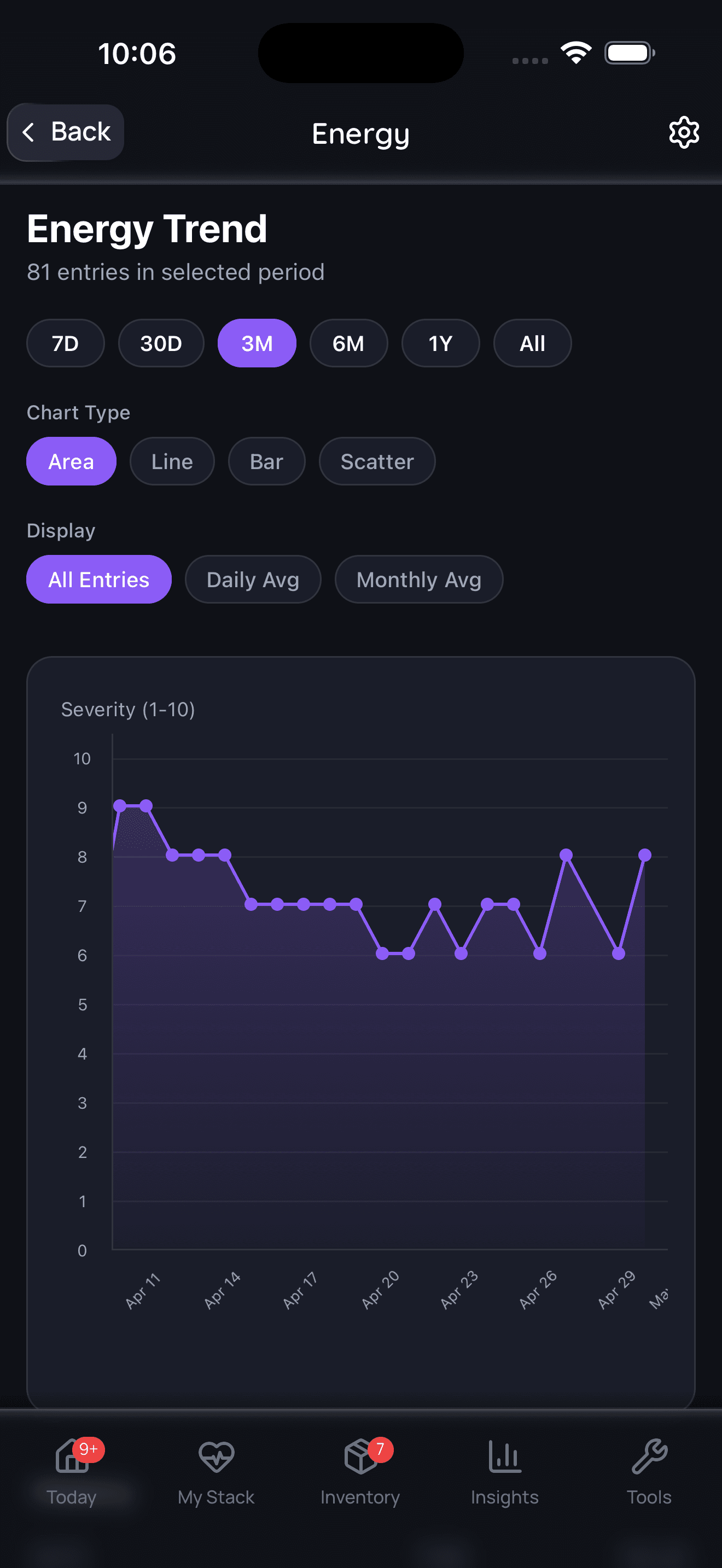
Symptom tracking is informational and should be interpreted with a qualified clinician.
Dosing & Treatment Protocols
The Basics
Dosing testosterone propionate is different from dosing cypionate or enanthate because of the short half-life. Rather than one injection every week or two, propionate protocols typically involve daily or every-other-day injections of small amounts. This frequent dosing is both the main disadvantage (more needlework) and a key advantage (more stable levels, faster adjustability) of using propionate.
Common approaches include 10-20 mg injected daily (subcutaneously or intramuscularly) or 20-30 mg every other day. Total weekly doses in TRT range from 70-140 mg per week, though some providers start lower and titrate based on lab results and symptom response. Because propionate delivers 84% of its weight as free testosterone (compared to 70% for cypionate), a weekly dose of 100 mg propionate delivers roughly the same amount of active testosterone as 120 mg of cypionate.
Subcutaneous injection using insulin syringes (27-31 gauge, 1/2 inch) has become the preferred method for many propionate users, as it reduces injection pain and allows for comfortable daily self-injection. The smaller injection volumes used with daily dosing (typically 0.1-0.2 mL) are well-suited to subcutaneous delivery.
It is important to emphasize that all TRT dosing is by prescription only. The information here is educational reference material, not dosing instructions. Your healthcare provider will determine the appropriate dose based on your individual lab values, symptoms, and health status.
The Science
Historical Clinical Dosing:
Traditional prescribing information specifies 10-50 mg IM every 1-3 days [3][6]. This reflects the era when propionate was administered as a standard IM injection using larger needles and higher individual doses.
Modern TRT Protocols:
Contemporary usage, primarily through compounding pharmacies, favors lower daily doses:
- Daily SubQ: 8-20 mg/day (most common modern protocol)
- Every other day (EOD): 20-30 mg
- Three times weekly (TIW): 25-50 mg per injection
Cypionate/Propionate Blends:
Some compounding pharmacies offer blends (e.g., 160 mg/mL cypionate + 40 mg/mL propionate). The propionate component provides a rapid initial peak while the cypionate provides sustained release, potentially combining the benefits of both kinetic profiles [11].
Dose Adjustment:
One of propionate's clinical advantages is rapid dose optimization. Because steady-state is achieved within 4-5 days (vs 5-6 weeks for cypionate), the clinical effects of dose adjustments are apparent much sooner. Labs drawn 24 hours after injection reflect near-peak levels; labs at 48 hours reflect trough levels.
Monitoring Schedule (Propionate-Specific):
- Baseline labs before initiation (total T, free T, LH, FSH, estradiol, SHBG, CBC, PSA, lipids, metabolic panel)
- Follow-up labs at 1-2 weeks (faster than cypionate due to rapid steady-state)
- Draw trough levels: approximately 24 hours after last injection for daily dosing
- Subsequent monitoring per standard TRT guidelines (hematocrit every 6-12 months, PSA per age guidelines)
Dosing protocols often change over the course of treatment. Doserly maintains a complete history of every protocol change, giving you and your provider a clear picture of what's been tried and how each adjustment affected your symptoms and lab values.
The app's adherence analytics show your consistency patterns and can highlight whether missed doses or timing variations correlate with symptom changes. When your provider is considering a dose adjustment based on your trough levels, having this data available makes the conversation more productive and the decision more informed.
Track injection timing, draw notes, and site rotation.
Doserly helps keep syringe-related notes, injection site history, reminders, and reconstitution context together for easier review.
Injection log
Site rotation
Injection logs support record-keeping; follow clinician instructions for administration.
What to Expect (Timeline)
Days 1-7: Testosterone levels reach steady state within 4-5 days of daily dosing, significantly faster than with cypionate or enanthate. Some individuals report subjective improvements in energy and mood within the first few days, though this may be partly placebo or honeymoon effect. Injection site soreness is common initially as injection technique is refined.
Weeks 2-4: Libido changes are often the first noticeable effect. Energy improvements may become apparent. Mood may begin to stabilize. Some initial fluid retention is possible. Acne may appear in those predisposed. First follow-up labs can be drawn as early as 1-2 weeks (a significant advantage of propionate's fast steady-state).
Months 1-3: Sexual function improvements continue to develop. Body composition changes begin (these take time regardless of ester type). Hematocrit may begin to rise; first CBC monitoring check. Dose adjustments, if needed, show effects within days rather than weeks.
Months 3-6: Body composition changes become more apparent (fat loss, lean mass increase). Strength improvements. Bone density changes beginning. Full sexual function benefits typically established by this point. If hematocrit is trending upward, dose or route adjustment may be discussed with your provider.
Months 6-12: Continued body composition improvements. Measurable bone density improvement (if DEXA was performed at baseline). Ongoing monitoring for hematocrit, PSA, and lipid changes.
Ongoing Maintenance: Annual review with provider. Continued hematocrit monitoring (every 6-12 months). PSA per age-appropriate screening guidelines. Dose reassessment based on symptom stability and lab values.
Important: individual response varies widely. Not all symptoms resolve with TRT alone. Lifestyle factors (sleep, exercise, nutrition, stress management) remain important contributors to hormonal health.
Fertility Preservation & HPG Axis
Exogenous testosterone, including testosterone propionate, suppresses the hypothalamic-pituitary-gonadal (HPG) axis through negative feedback on GnRH pulse frequency. This leads to reduced LH and FSH secretion, decreased intratesticular testosterone concentrations, and impaired spermatogenesis. Approximately 40-60% of men on conventional TRT achieve azoospermia (zero sperm count) by 6 months, with the remainder typically showing severe oligospermia [10].
However, testosterone propionate may represent a unique case among testosterone esters with respect to fertility. Preclinical research (Chu et al., 2020) using a mouse model found that short-acting testosterone propionate (administered on a Monday-Wednesday-Friday schedule) preserved LH levels at near-control levels (0.348 vs 0.403 IU/L), maintained testicular weight comparable to untreated animals, and produced time-to-pregnancy similar to wild-type controls. In contrast, long-acting testosterone pellets nearly eliminated LH (0.017 IU/L), significantly reduced testicular weight, and prolonged time to pregnancy [4].
The proposed mechanism is that the pulsatile testosterone delivery pattern of short-acting propionate (rapid rise and decline within hours) mimics endogenous GnRH pulsatility, whereas long-acting formulations provide continuous suppression. This hypothesis is supported by emerging clinical data from intranasal testosterone (Natesto), another short-acting delivery method, which has shown preservation of gonadotropin levels and spermatogenesis in clinical trials [4].
Important caveats:
- The Chu et al. data is from mice, not humans. While murine reproductive physiology is comparable to human physiology, direct extrapolation requires caution.
- No human clinical trials have specifically evaluated testosterone propionate's effect on spermatogenesis.
- Fertility preservation is not guaranteed with any exogenous testosterone formulation. Until human data confirms HPG axis preservation with propionate, standard fertility counseling applies.
Fertility preservation strategies (applicable to all TRT):
- Sperm banking before TRT initiation for men who may want biological children
- HCG co-administration (250-500 IU 2-3 times weekly) to maintain intratesticular testosterone and support spermatogenesis
- Clomiphene/enclomiphene as alternative therapies that raise endogenous testosterone without suppressing the HPG axis
- If fertility is desired in the near term, discuss whether propionate or intranasal testosterone may be preferable to long-acting formulations, in consultation with a reproductive urologist
Recovery after discontinuation: Variable timeline (6-24+ months). Factors affecting recovery include duration of TRT, age, pre-TRT hormonal status, and whether HCG was used concurrently. Recovery is not guaranteed.
Interactions & Compatibility
Drug-Drug Interactions:
- Anticoagulants (warfarin, DOACs): Testosterone may enhance anticoagulant effect; monitor INR closely
- Insulin and diabetes medications: Testosterone may improve insulin sensitivity, potentially requiring dose adjustment of diabetes medications
- Corticosteroids: Additive fluid retention risk
- 5-alpha reductase inhibitors (finasteride, dutasteride): Blocks DHT conversion; affects both efficacy (reduced androgenic effects) and side effect profile (less hair loss, potentially less libido benefit)
- Aromatase inhibitors (anastrozole): Community reports suggest less need for AI on propionate due to lower aromatization; see Estrogen Management on TRT
- Opioids: Suppress HPG axis; may be an underlying cause of low testosterone
Supplement Interactions:
- DHEA (additive androgenic effects)
- Boron (may increase free testosterone by lowering SHBG)
- Zinc (supports testosterone production and 5-alpha reductase activity)
- Saw Palmetto (5-alpha reductase inhibition)
Lifestyle Factors:
- Alcohol (suppresses testosterone production, increases aromatization)
- Sleep (critical for testosterone production; TRT may improve or worsen sleep apnea)
- Exercise (resistance training synergistic with TRT for muscle and body composition)
- Body composition (weight loss may normalize testosterone, reducing need for TRT)
Decision-Making Framework
Testosterone propionate is not typically a first-line TRT option. Most providers begin with testosterone cypionate or enanthate due to their convenient weekly or biweekly dosing. Propionate tends to be considered in specific clinical scenarios:
When propionate may be worth discussing with your provider:
- Persistent libido issues on standard cypionate or enanthate protocols despite adequate testosterone levels
- Estrogen management difficulties (high E2 symptoms, need for AI) on longer esters
- Desire for rapid dose optimization (propionate reaches steady state in days, not weeks)
- Interest in a fertility-sparing TRT approach (based on preclinical evidence, pending human data)
- Preference for more physiological testosterone delivery patterns
Diagnostic criteria reminders: The Endocrine Society requires two morning total T measurements below the lower limit of normal (typically < 264-300 ng/dL, varies by lab) plus symptoms. The AUA uses a 300 ng/dL threshold. Address reversible causes (obesity, sleep apnea, opioid use) before initiating any TRT.
Availability considerations: Testosterone propionate is not available at standard retail pharmacies in the US. It must be obtained through a compounding pharmacy, which may not be covered by insurance. Discuss availability and cost with your provider.
Administration & Practical Guide
Subcutaneous Injection (preferred for daily propionate):
- Needle: 27-31 gauge, 1/2 inch (insulin syringe)
- Sites: Abdomen (periumbilical area), anterior thigh, deltoid
- Volume: Typically 0.1-0.2 mL per injection
- Technique: Pinch skin fold, insert needle at 45-90 degree angle, inject slowly, release skin
- Rotation: Rotate sites to prevent lipohypertrophy
Intramuscular Injection (shallow IM):
- Needle: 25-29 gauge, 1/2 to 1 inch
- Sites: Deltoid, vastus lateralis, ventrogluteal
- Volume: 0.1-0.3 mL per injection
- Technique: Clean skin, insert needle, inject slowly, withdraw
Practical Tips for Daily Injection:
- Establish a consistent daily routine (same time each day)
- Some users prefer evening injection (before bed) to align with natural morning testosterone peak
- Keep injection supplies organized and accessible
- Use a sharps container for needle disposal
- Allow oil to warm to room temperature before injection to improve flow and reduce discomfort
- Inject slowly to reduce injection site pain (propionate is known for more injection site irritation than longer esters)
This section never replaces pharmacy instructions or prescriber guidance. All administration details should be confirmed with your healthcare provider and pharmacist.
Monitoring & Lab Work
Pre-TRT Baseline Labs:
Total testosterone (two morning draws), free testosterone, LH, FSH, estradiol, SHBG, prolactin (if secondary hypogonadism suspected), CBC with hematocrit, PSA (age-appropriate), lipid panel, comprehensive metabolic panel, DEXA if osteoporosis risk.
Initial Follow-Up (1-2 weeks for propionate):
Because propionate reaches steady state in 4-5 days (vs 5-6 weeks for cypionate), initial follow-up labs can be drawn sooner. Measure trough testosterone (approximately 24 hours after last injection for daily dosing), hematocrit, and symptom assessment.
Ongoing Monitoring:
- Hematocrit: Every 6-12 months; threshold >54% for intervention
- PSA: Per age-appropriate screening guidelines, annually for men >40
- Testosterone levels: Trough for injectables (24 hours after last daily injection)
- Estradiol: Only if symptomatic (gynecomastia, fluid retention, mood); guidelines do not recommend routine E2 monitoring
- Lipid panel: Annually
- Annual review: Symptom reassessment, continued indication review, risk-benefit discussion
Estrogen Management on TRT
Testosterone aromatizes to estradiol via the aromatase enzyme, primarily in adipose tissue. This is a normal and necessary process. Estradiol is important for bone health, cardiovascular health, libido, and cognitive function in men.
Community reports consistently describe lower aromatization and fewer estrogen-related side effects on testosterone propionate compared to cypionate or enanthate. Multiple users report being able to discontinue aromatase inhibitor (AI) use after switching to propionate. However, this observation may be confounded by the switch from weekly high-dose injection (producing supraphysiological peaks that drive aromatization) to daily micro-dosing (producing lower, more stable peaks), rather than being an intrinsic property of the propionate ester.
When estrogen management matters: Only when clinical symptoms or clearly elevated E2 levels are present. Routine AI use is not recommended by Endocrine Society or AUA guidelines.
AI use with propionate: Given the community-reported lower aromatization profile, AI is even less likely to be needed with propionate than with standard cypionate protocols. If AI was required on cypionate, switching to daily propionate may eliminate the need entirely.
For a comprehensive discussion, see Estrogen Management on TRT.
Stopping TRT / Post-Cycle Considerations
If testosterone propionate is discontinued, the HPG axis will need time to recover endogenous testosterone production. The recovery timeline is generally similar to discontinuing any TRT formulation (6-24+ months, not guaranteed), though the speed at which exogenous testosterone clears the system is much faster with propionate (days, not weeks).
Potential advantage of propionate for discontinuation: Because propionate clears the system within 3-4 days, the transition to endogenous recovery begins sooner after the last injection compared to cypionate (which may take 2-4 weeks to fully clear). This could theoretically allow for a faster start to PCT protocols, though no controlled studies have confirmed a clinical benefit.
PCT protocols (community-derived, not standardized in guidelines):
- HCG taper: 1000-2000 IU every other day for 2-4 weeks
- Clomiphene citrate: 25-50 mg daily for 4-8 weeks
- Enclomiphene: newer SERM, may have fewer side effects
- Given propionate's short clearance, PCT can begin within days of last injection rather than weeks
Recovery factors: Duration of TRT, age, pre-TRT hormonal status, concurrent HCG use, and whether the underlying cause was primary or secondary hypogonadism.
For detailed coverage, see Stopping TRT & Post-Cycle Recovery.
Special Populations & Situations
Men Seeking Fertility Preservation
Testosterone propionate may be of particular interest to hypogonadal men who want to preserve fertility, based on preclinical evidence suggesting less HPG axis suppression. This remains investigational. See Section Section 13 for detailed coverage.
Men with Estrogen Management Difficulties
Those who experience high estrogen symptoms (gynecomastia, fluid retention) on standard TRT protocols may benefit from propionate's potentially lower aromatization profile associated with daily micro-dosing.
Men Requiring Rapid Protocol Optimization
Propionate's 4-5 day steady-state allows for faster dose titration. This is valuable during initial TRT setup or when troubleshooting suboptimal responses.
Older Men (>65)
Lower starting doses are generally appropriate. The rapid dose adjustment capability of propionate may be an advantage in this population where cautious titration is important. TRAVERSE trial data applies to this age group.
Transgender Men (FTM)
While longer-acting esters are more commonly prescribed for masculinizing therapy, propionate could be used for initial dose finding or in situations requiring rapid dose adjustment. The daily injection burden may be a consideration for long-term use.
Regulatory, Insurance & International
United States:
- Schedule III controlled substance (DEA classification)
- No currently FDA-approved branded testosterone propionate product
- Available only through compounding pharmacies (503A and 503B)
- Not covered by most insurance plans (compounded medications often excluded)
- Typical cost: varies by compounding pharmacy ($30-100+ per vial)
- Included as a component of some compounded testosterone blends (e.g., cypionate/propionate blends)
Canada: Schedule IV controlled substance. Limited availability.
International: Testosterone propionate remains available under the brand name Testoviron in some countries. Also available as a component of Sustanon 250 (30 mg propionate + 60 mg phenylpropionate + 60 mg isocaproate + 100 mg decanoate per 1 mL ampoule), which is widely used in Europe, UK, and Australia.
Travel considerations: Carrying controlled substances internationally requires documentation (prescription, letter from provider). Schedule III classification (US) means additional scrutiny at borders. Propionate's need for daily injection and refrigeration may create additional travel logistics.
Frequently Asked Questions
Why would someone choose testosterone propionate over cypionate?
The most common reason is libido improvement. A subset of men who have tried cypionate or enanthate without adequate libido improvement report better results on propionate. The short half-life also allows for faster dose adjustment, and some men experience fewer estrogen-related side effects. The tradeoff is the need for daily or every-other-day injection.
Is testosterone propionate still available?
In the United States, testosterone propionate is not commercially manufactured as a branded product. It is available through compounding pharmacies with a valid prescription. Internationally, it may still be available under brand names like Testoviron, and it is a component of Sustanon 250.
How often do I need to inject testosterone propionate?
Most protocols call for daily or every-other-day injection. Some users inject three times per week, but this may result in significant peak-trough fluctuation. Daily injection with small insulin needles (subcutaneously) is the most common modern approach.
Is testosterone propionate more painful to inject?
Testosterone propionate is known for causing more injection site pain than longer esters, attributed to the short ester chain. Many users mitigate this by using subcutaneous injection with small-gauge insulin needles rather than intramuscular injection with larger needles.
Does testosterone propionate aromatize less than cypionate?
Community reports consistently describe lower estrogen-related side effects on propionate. However, this may be due to the daily micro-dosing protocol (which avoids the supraphysiological peaks that drive aromatization) rather than an intrinsic property of the ester itself.
Can testosterone propionate preserve fertility?
Preclinical research (mouse model) suggests that short-acting testosterone may cause less HPG axis suppression and preserve fertility potential better than long-acting formulations. However, no human clinical trials have confirmed this for propionate specifically. Standard fertility counseling and precautions apply until human data is available.
How does testosterone propionate compare to Sustanon 250?
Sustanon 250 contains testosterone propionate (30 mg) along with three other esters (phenylpropionate, isocaproate, decanoate). The propionate component provides a rapid initial testosterone rise, while the longer esters sustain levels over 2-3 weeks. Sustanon is widely used outside the US but not FDA-approved in the US.
What labs should I get on testosterone propionate?
The same labs as for any TRT: total and free testosterone, estradiol, CBC with hematocrit, PSA, lipid panel. The key difference is timing: trough levels should be drawn approximately 24 hours after the last injection for daily dosing. Initial follow-up labs can be drawn as early as 1-2 weeks (vs 4-6 weeks for cypionate).
Is testosterone propionate covered by insurance?
Usually not. Because propionate is only available through compounding pharmacies in the US, most insurance plans do not cover it. Out-of-pocket costs vary by pharmacy. Discuss cost considerations with your provider when evaluating TRT options.
Can I switch from cypionate to propionate?
Yes, with your provider's guidance. A common approach is to stop cypionate and begin propionate the next day. Because propionate reaches steady state quickly, you will be at therapeutic levels within a few days. Your provider may adjust the weekly testosterone dose to account for the different testosterone content per milligram (propionate delivers 84% active testosterone vs 70% for cypionate).
Myth vs. Fact
Myth: "Testosterone propionate is outdated and inferior to newer esters."
Fact: Propionate was superseded primarily because of the inconvenience of frequent injection, not because of inferior efficacy. All testosterone esters produce identical free testosterone once the ester is cleaved. Propionate's short half-life, once considered a disadvantage, is now recognized as having potential benefits including more physiological testosterone patterns, faster dose adjustment, potentially lower aromatization with daily dosing, and possible fertility preservation.
Myth: "TRT causes heart attacks."
Fact: The TRAVERSE trial (n=5,246), the largest cardiovascular safety RCT for testosterone therapy, found no increased risk of major cardiovascular events with testosterone vs placebo (HR 0.96, 95% CI: 0.78-1.17) over 33 months in men with cardiovascular risk factors [7]. This applies to all testosterone formulations including propionate.
Myth: "TRT causes prostate cancer."
Fact: Current evidence based on the androgen receptor saturation model does not support a causal relationship between TRT at physiological doses and prostate cancer initiation. PSA monitoring remains standard practice, and men with active prostate cancer should not receive TRT.
Myth: "Once you start TRT, you can never stop."
Fact: Whether TRT is lifelong depends on the underlying cause. Men with primary testicular failure typically require lifelong replacement. Men with secondary hypogonadism may recover endogenous production if underlying causes are addressed. Recovery after TRT discontinuation is possible but not guaranteed (6-24+ months). Propionate's rapid clearance may facilitate a faster transition to endogenous recovery compared to longer esters.
Myth: "TRT will make you permanently infertile."
Fact: TRT suppresses spermatogenesis, but fertility is usually recoverable after discontinuation. Preclinical data suggests short-acting testosterone (propionate) may cause less fertility suppression than long-acting formulations. Sperm banking before TRT initiation is recommended for men who may want biological children [4].
Myth: "Daily injection is unsustainable for long-term TRT."
Fact: Many propionate users sustain daily injection protocols for years. The use of small-gauge insulin needles (27-31 gauge) for subcutaneous injection makes daily dosing minimally burdensome. The community of long-term propionate users reports high satisfaction, particularly regarding stable mood, libido, and reduced side effects.
Myth: "All men over 40 need TRT."
Fact: Age-related testosterone decline is a normal physiological process. Only men with confirmed hypogonadism (two morning total T measurements below normal plus symptoms) are candidates for TRT. Lifestyle factors (weight management, sleep, exercise) should be addressed first.
Myth: "Higher testosterone doses are always better."
Fact: Therapeutic replacement aims for the normal physiological range (typically 300-1000 ng/dL). Supraphysiological levels increase risks without proportionally greater benefit. Propionate's daily dosing naturally produces lower individual peaks, which aligns well with physiological replacement goals.
Sources & References
Clinical Guidelines
- Shinohara Y, Fujioka M, Baba S. Pharmacokinetic properties of testosterone propionate in normal men. J Clin Endocrinol Metab. 1986;63(6):1361-1364. PMID: 3782423.
- Shoskes JJ, Wilson MK, Spinner ML. Pharmacology of testosterone replacement therapy preparations. Transl Androl Urol. 2016;5(6):834-843. doi:10.21037/tau.2016.07.10. PMID: 28078214.
- Kicman AT. Pharmacology of anabolic steroids. Br J Pharmacol. 2008;154(3):502-521. doi:10.1038/bjp.2008.165. PMID: 18500378.
Landmark Trials
- Chu KY, Kulandavelu S, Masterson TA, Ibrahim E, Arora H, Ramasamy R. Short-acting testosterone appears to have lesser effect on male reproductive potential compared to long-acting testosterone in mice. F S Sci. 2020;1(1):46-52. doi:10.1016/j.xfss.2020.03.002. PMID: 32914138.
- Mooradian AD, Morley JE, Korenman SG. Biological actions of androgens. Endocr Rev. 1987;8(1):1-28.
Systematic Reviews & Meta-Analyses
- Behre HM, Abshagen K, Oettel M, Hubler D, Nieschlag E. Intramuscular injection of testosterone undecanoate for the treatment of male hypogonadism: phase I studies. Eur J Endocrinol. 1999;140(5):414-419. (Comparative PK data across esters)
- Lincoff AM, Bhasin S, Flevaris P, et al. Cardiovascular Safety of Testosterone-Replacement Therapy. N Engl J Med. 2023;389(2):107-117. doi:10.1056/NEJMoa2215025. (TRAVERSE trial)
Observational Studies
- Snyder PJ, Bhasin S, Cunningham GR, et al. Effects of testosterone treatment in older men. N Engl J Med. 2016;374(7):611-624. (TTrials)
- Saad F, Aversa A, Isidori AM, et al. Onset of effects of testosterone treatment and time span until maximum effects are achieved. Eur J Endocrinol. 2011;165(5):675-685.
Government/Institutional Sources
- Bhasin S, Cunningham GR, Hayes FJ, et al. Testosterone therapy in men with androgen deficiency syndromes: an Endocrine Society clinical practice guideline. J Clin Endocrinol Metab. 2010;95(6):2536-2559.
- Empower Pharmacy. Testosterone Cypionate/Testosterone Propionate Injection compounding reference. 2025.
Related Guides & Cross-Links
Same Category (Injectable Testosterone)
- Testosterone Cypionate (Depo-Testosterone)
- Testosterone Enanthate (Delatestryl)
- Testosterone Undecanoate Injectable (Aveed / Nebido)
- Testosterone Cypionate Auto-Injector (Azmiro)
- Testosterone Enanthate Auto-Injector (Xyosted)
- Sustanon 250
Related Treatment Options
Ancillary Medications
- Human Chorionic Gonadotropin (HCG)
- Anastrozole (Arimidex)
- Clomiphene Citrate (Clomid)
- Enclomiphene Citrate