
Late-Onset Hypogonadism: Diagnosis, Treatment, Fertility, and Safety
On this page
Quick Reference Card
Attribute
Definition
- Value
- A clinical and biochemical syndrome associated with advancing age, characterized by symptoms of testosterone deficiency and low serum testosterone levels
Attribute
ICD-10 Code(s)
- Value
- E29.1 (Testicular hypofunction); E29.8 (Other testicular dysfunction)
Attribute
Also Known As
- Value
- Age-related testosterone decline, testosterone deficiency syndrome (TDS), andropause, male menopause (misnomer), PADAM, ADAM
Attribute
Prevalence
- Value
- 2% (strict EMAS criteria) to 10-25% (biochemical only) of men over 40
Attribute
Typical Age Range
- Value
- Onset after age 40, increasing prevalence with each decade
Attribute
Rate of Decline
- Value
- Total testosterone: approximately 1-2% per year after age 30-40; Free testosterone: approximately 2-3% per year
Attribute
Diagnostic Criteria (Endocrine Society)
- Value
- Symptoms of testosterone deficiency AND two morning total testosterone measurements consistently below laboratory lower limit of normal
Attribute
Diagnostic Criteria (AUA)
- Value
- Symptoms AND two morning total testosterone measurements below 300 ng/dL
Attribute
Diagnostic Criteria (EMAS Strict)
- Value
- Three sexual symptoms (ED, reduced morning erections, reduced sexual thoughts) AND total T <11 nmol/L (<317 ng/dL) AND free T <220 pmol/L
Attribute
Primary Treatment Options
- Value
- Lifestyle modification (first-line for functional hypogonadism), testosterone replacement therapy (various formulations), alternatives for fertility preservation (HCG, clomiphene, enclomiphene)
Attribute
Key Biomarkers / Lab Tests
- Value
- Total testosterone (morning, fasting), free testosterone, LH, FSH, SHBG, hematocrit/CBC, PSA, estradiol, lipid panel, metabolic panel
Attribute
When to Seek Help
- Value
- Persistent fatigue, erectile dysfunction, loss of libido, depressed mood, reduced muscle mass, or unexplained bone density loss
Current Clinical Notes
The June 18, 2026 HHS/FDA request changes the U.S. label context for age-related hypogonadism, but it does not make normal aging alone an automatic indication; the Endocrine Society 2026 statement still emphasizes confirmed hypogonadism and careful patient selection.
The TRAVERSE cardiovascular trial is reassuring for MACE in its studied high-risk gel population, but it remains limited by formulation, age range, and follow-up; the TRAVERSE fracture substudy and FDA Testosterone Information keep fracture, BP, atrial fibrillation, pulmonary embolism, and acute kidney injury signals visible.
Late-onset hypogonadism still requires symptoms plus repeated low morning testosterone and evaluation for reversible causes; the Endocrine Society 2026 statement says the June 2026 label request should not turn normal aging alone into an automatic indication.
Overview / What Is Late-Onset Hypogonadism?
The Basics
Late-onset hypogonadism is a condition in which an aging man's testosterone levels drop below what his body needs to function well, and that decline causes symptoms. It is not the same as menopause in women, despite the popular but misleading term "male menopause." In women, reproductive hormones decline sharply over a short period. In men, testosterone production decreases gradually, typically about 1% per year after age 40, and many men maintain normal levels well into their 70s and beyond.
The important thing to understand is that having lower testosterone than you did at 25 does not automatically mean you have LOH. Testosterone naturally declines with age, and most men's levels remain within a functional range. LOH is only diagnosed when testosterone falls below a critical threshold and causes specific symptoms, particularly sexual symptoms like erectile dysfunction, reduced morning erections, and decreased sexual desire. When a major European study (the European Male Aging Study, or EMAS) applied strict diagnostic criteria requiring both low testosterone and these three specific sexual symptoms, only about 2% of men aged 40-80 qualified.
This matters because testosterone has become a heavily marketed treatment. Not every man who feels tired at 50 has LOH. Fatigue, low energy, and mood changes can stem from dozens of other causes, including poor sleep, untreated sleep apnea, depression, obesity, or medication side effects. A responsible diagnostic process rules out these other causes first before considering testosterone therapy.
For men who genuinely have LOH, though, the condition is real and its effects are not trivial. Low testosterone affects energy, mood, sexual function, muscle mass, bone density, and metabolic health. Acknowledging these symptoms as a legitimate medical concern rather than dismissing them as "just getting older" is an important first step toward getting appropriate evaluation.
The Science
Late-onset hypogonadism (LOH) is formally defined as a clinical and biochemical syndrome associated with advancing age, characterized by symptoms and a deficiency in serum testosterone levels below the young healthy adult male reference range. The condition was first formally described by ISSAM in 2002, and the diagnostic framework has been refined through successive guideline updates from the Endocrine Society (2018), AUA (2018), EAU, and ISSAM (2015).
The European Male Ageing Study (EMAS), a cross-sectional survey of 3,369 community-dwelling men aged 40-79 years across eight European centers, established the most rigorous diagnostic criteria to date. Wu et al. (2010) demonstrated that only three symptoms (erectile dysfunction, reduced frequency of morning erections, and reduced sexual thoughts) were consistently associated with biochemically low testosterone, and that the simultaneous presence of all three symptoms with total testosterone <11 nmol/L (317 ng/dL) and free testosterone <220 pmol/L identified LOH with a prevalence of approximately 2% in the study population.
The disconnect between biochemical and symptomatic definitions is clinically significant. Approximately 20% of men over 60 have testosterone levels below the reference range for young men, yet 20-40% of unselected aging men report symptoms compatible with hypogonadism regardless of testosterone levels. These symptoms and low testosterone often do not coincide in the same individual, suggesting that many cases of age-related symptoms have etiologies other than testosterone deficiency.
The nomenclature remains debated. Multiple terms have been used, including andropause, male menopause, partial androgen deficiency of the aging male (PADAM), androgen deficiency in the aging male (ADAM), and testosterone deficiency syndrome (TDS). The AUA has explicitly moved away from the term "hypogonadism" in favor of "testosterone deficiency" to emphasize that diagnosis requires both biochemical and symptomatic criteria. LOH remains the most widely used term in international literature.
Medical / Chemical Identity
Condition Name: Late-Onset Hypogonadism (LOH)
Synonyms:
- Testosterone Deficiency Syndrome (TDS)
- Age-Related Hypogonadism
- Andropause (discouraged by most guidelines)
- Male Menopause (misnomer, discouraged)
- Partial Androgen Deficiency of the Aging Male (PADAM)
- Androgen Deficiency in the Aging Male (ADAM)
- Functional Hypogonadism (when due to reversible causes)
ICD-10 Codes:
- E29.1: Testicular hypofunction
- E29.8: Other testicular dysfunction
- N46.8: Other male infertility (when fertility impact is primary concern)
Diagnostic Criteria by Guideline:
Guideline
Endocrine Society (2018)
- Total Testosterone Threshold
- Consistently below laboratory lower limit of normal
- Additional Requirements
- Symptoms of T deficiency; two morning fasting measurements; LH/FSH to distinguish primary vs secondary
Guideline
AUA (2018)
- Total Testosterone Threshold
- Below 300 ng/dL
- Additional Requirements
- Symptoms and/or signs; two early morning measurements on separate occasions
Guideline
EMAS (Wu et al. 2010)
- Total Testosterone Threshold
- <11 nmol/L (317 ng/dL) AND free T <220 pmol/L
- Additional Requirements
- Requires 3 sexual symptoms (ED, reduced morning erections, reduced sexual thoughts)
Guideline
ISSAM (2015)
- Total Testosterone Threshold
- <8 nmol/L (230 ng/dL) clear deficiency; 8-12 nmol/L (230-346 ng/dL) gray zone
- Additional Requirements
- Symptoms plus biochemistry; measure free T in gray zone
Guideline
ACP (2020)
- Total Testosterone Threshold
- Below normal range
- Additional Requirements
- Recommends treatment only for men with sexual dysfunction who want improvement
Classification:
- Organic hypogonadism: Proven structural pathology affecting the HPG axis (permanent). Requires lifelong testosterone therapy.
- Functional hypogonadism: No structural HPG axis alteration; caused by reversible conditions (obesity, sleep apnea, medications, chronic illness) suppressing gonadotropin and testosterone production. Potentially reversible with lifestyle modification and treatment of underlying conditions.
- Mixed: Many cases of LOH involve both age-related testicular decline and functional suppression from comorbidities.
Mechanism of Action / Pathophysiology
The Basics
To understand late-onset hypogonadism, it helps to understand how your body produces testosterone in the first place. Testosterone production is controlled by a feedback loop involving three key players: the hypothalamus (a part of your brain), the pituitary gland (a small gland at the base of your brain), and the testes.
Here is how the loop works in a younger man: the hypothalamus releases a hormone called GnRH, which signals the pituitary gland to release LH (luteinizing hormone) and FSH (follicle-stimulating hormone). LH travels through the bloodstream to the testes, where it tells specialized cells (Leydig cells) to produce testosterone. When testosterone levels rise high enough, the brain detects this and reduces the GnRH signal, slowing production. This keeps testosterone within a healthy range.
In late-onset hypogonadism, this system gradually becomes less efficient. Two things tend to happen with aging: the testes become less responsive to LH signals (producing less testosterone per unit of stimulation), and the brain's ability to compensate by sending stronger signals may also diminish. The result is a slow, steady decline in testosterone production.
But age is only part of the story. Research has shown that obesity, type 2 diabetes, metabolic syndrome, chronic illness, medications (particularly opioids), and sleep apnea can all suppress testosterone production through the brain-pituitary pathway. In fact, the European Male Aging Study found that obesity and poor general health were more strongly associated with low testosterone than age alone. This is why many experts recommend addressing these underlying conditions before starting testosterone therapy, since fixing the cause can sometimes restore testosterone levels naturally.
The Science
The pathophysiology of LOH involves a combination of primary testicular failure and secondary hypothalamic-pituitary dysfunction, distinguishing it from classical forms of hypogonadism where the etiology is typically unilateral.
Primary testicular component: Leydig cell number and secretory capacity decline with age, resulting in reduced testosterone synthesis per unit of LH stimulation. Seminiferous tubule function also deteriorates, contributing to reduced spermatogenesis. The EMAS data demonstrated that primary hypogonadism (low T with elevated LH) was present in 2.0% of men aged 40-79 and was predominantly associated with advancing age (relative risk ratio 3.04, p<0.001).
Secondary hypothalamic-pituitary component: GnRH pulse frequency and amplitude decrease with aging, resulting in inadequate LH secretion relative to the degree of testosterone deficiency. The EMAS study found secondary hypogonadism (low T with low or inappropriately normal LH) in 11.8% of men, primarily associated with obesity (BMI ≥30; RRR 8.74, p<0.001) rather than age.
Compensated hypogonadism: A third distinct category identified by EMAS involves men with normal testosterone but elevated LH (9.5% of men). These men maintain normal T through increased pituitary drive, representing an early or compensated stage of testicular decline associated with aging (RRR 2.41).
SHBG dynamics: Sex hormone-binding globulin increases approximately 1.2% per year with aging, resulting in a disproportionate decline in free and bioavailable testosterone compared to total testosterone. A longitudinal study documented total testosterone decline of 1.4% per year between ages 55-68, while free testosterone declined 2.7% per year and SHBG increased 2.7% per year.
Comorbidity-driven functional suppression: The hypothalamic-pituitary component is frequently amplified by metabolic comorbidities. Obesity suppresses GnRH pulsatility through increased aromatization of testosterone to estradiol in adipose tissue, creating a negative feedback signal that further reduces gonadotropin secretion. Insulin resistance, chronic inflammation (elevated IL-6, TNF-alpha), and opioid use independently suppress the HPG axis. The EMAS analysis concluded that obesity and impaired general health are more common causes of low testosterone than chronological age per se.
Visual guide
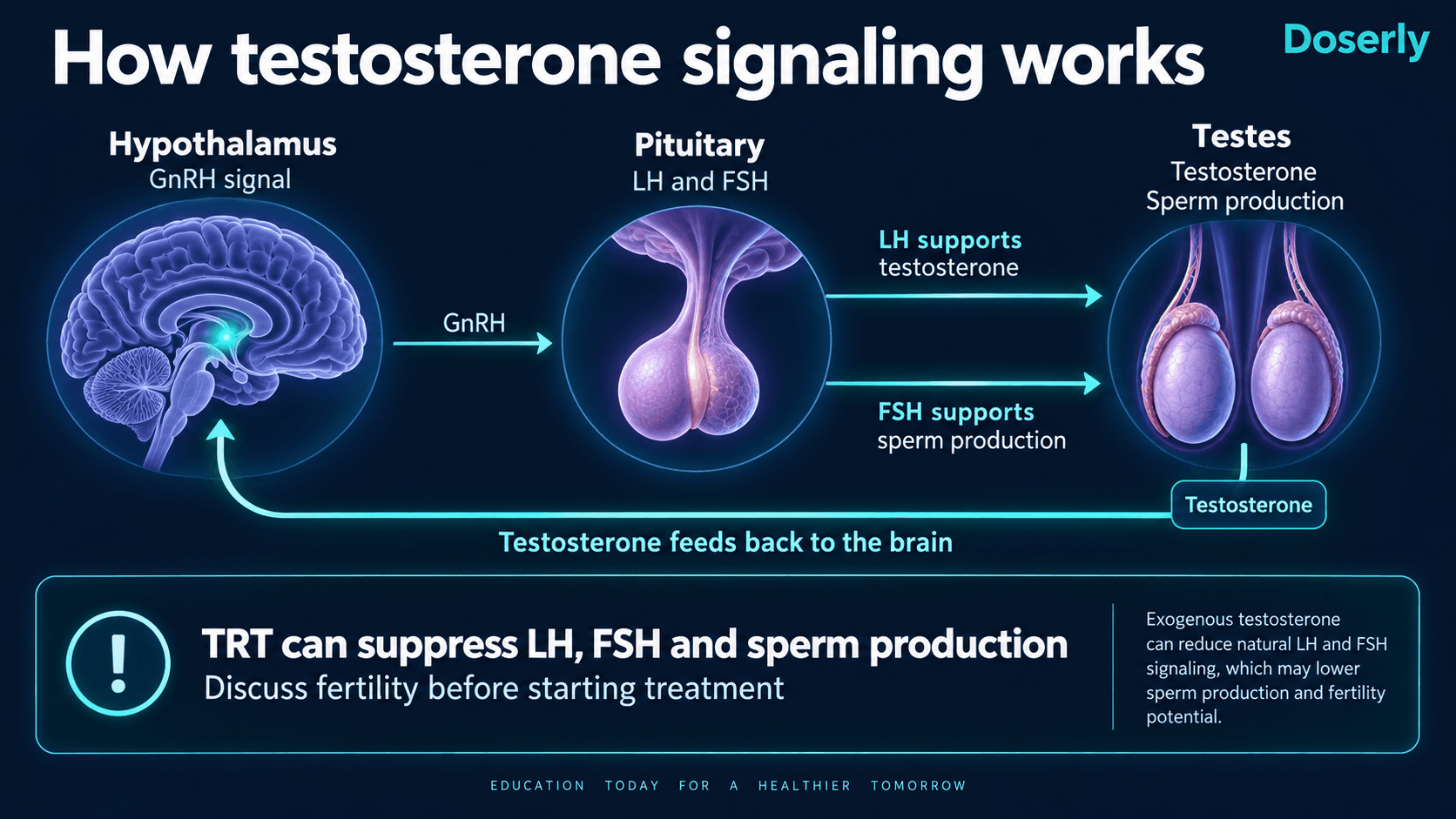
LH supports testicular testosterone production; FSH and testosterone support sperm production. Exogenous testosterone can suppress this signaling. Fertility treatment depends on the cause and requires a separate assessment.
Endocrine Society testosterone guideline.
Pharmacokinetics / Hormone Physiology
The Basics
Testosterone is the primary androgen in men, produced predominantly (about 95%) by the Leydig cells of the testes, with a small contribution from the adrenal glands. In healthy young men, testosterone production follows a daily rhythm: levels peak in the early morning (typically around 8 AM) and reach their lowest point in the late afternoon and evening. This is why diagnostic blood tests should be drawn in the morning.
Your body does not use all the testosterone it produces equally. About 44% is bound tightly to a protein called SHBG (sex hormone-binding globulin) and is essentially inactive. About 54% is loosely bound to albumin, and only about 2% circulates freely. The free and albumin-bound fractions are considered "bioavailable" because they can enter cells and exert biological effects. As men age, SHBG levels tend to increase, which means a larger proportion of total testosterone is bound up and unavailable, even if total testosterone levels appear adequate on a blood test. This is one reason why some providers measure free testosterone in addition to total testosterone, particularly in older men.
Once testosterone enters cells, it can be converted into two other important hormones: DHT (dihydrotestosterone) by the enzyme 5-alpha reductase, and estradiol (a form of estrogen) by the enzyme aromatase. Both of these metabolites play important roles. DHT is more potent at androgen receptors and drives effects on hair, skin, and prostate tissue. Estradiol is essential for bone health, cardiovascular protection, and brain function in men.
The Science
Normal testosterone physiology in men involves a pulsatile GnRH-driven release of LH approximately every 60-90 minutes, stimulating Leydig cell steroidogenesis. Daily testosterone production in eugonadal young men is approximately 5-7 mg/day, with serum total testosterone typically ranging from 300-1000 ng/dL (10.4-34.7 nmol/L). The circadian variation results in peak levels approximately 25-50% higher in the early morning compared to evening nadirs.
Age-related hormonal changes:
- Total testosterone declines approximately 1.0-1.6% per year after age 30-40
- Free testosterone declines approximately 2.0-3.0% per year (accelerated by rising SHBG)
- SHBG increases approximately 1.2-2.7% per year
- LH increases slightly with age, reflecting declining testicular reserve, but the increase is often inadequate relative to the degree of T decline
- Diurnal variation attenuates with aging, potentially reducing the reliability of morning-only testing
Reference ranges by age: No universally accepted age-specific reference ranges exist. Mohr et al. proposed age-specific lower thresholds (2.5th percentile): 251 ng/dL (40s), 216 ng/dL (50s), 196 ng/dL (60s), 156 ng/dL (70s). However, the Endocrine Society and AUA recommend using population-derived lower limits without age adjustment, as age-adjusted ranges risk normalizing pathological decline.
Research & Clinical Evidence
The Basics
The question of whether age-related testosterone decline is a treatable medical condition or simply part of normal aging has been debated for decades. Several landmark studies have helped clarify the picture.
The European Male Aging Study (EMAS) followed over 3,000 men across eight European countries and established that genuine LOH, defined by both symptoms and low testosterone, affects only about 2% of men aged 40-80. This was much lower than expected, and it showed that most men who feel tired or have low libido as they age do not have clinically significant testosterone deficiency.
The Testosterone Trials (TTrials), completed in 2016, studied 790 men aged 65 and older with testosterone below 275 ng/dL. Treatment with testosterone gel for one year improved sexual function, walking distance, and mood compared to placebo, though the improvements were modest and varied by individual. Physical function improvements were inconsistent, and cognitive benefits were limited.
The TRAVERSE trial, published in 2023, was the largest and most important study on testosterone safety. It enrolled 5,246 men aged 45-80 who had hypogonadism and either existing cardiovascular disease or high cardiovascular risk. Over 33 months of follow-up, testosterone gel did not increase the risk of major heart events (heart attack, stroke, or cardiovascular death) compared to placebo, with a hazard ratio of 0.96. This was reassuring because earlier observational studies had raised concerns about cardiovascular risk with testosterone therapy. However, TRAVERSE did note increased rates of atrial fibrillation, pulmonary embolism, acute kidney injury, and, in a separate fracture analysis, clinical fractures in the testosterone group, so monitoring remains important.
The Science
European Male Aging Study (EMAS): This cross-sectional, population-based study (n=3,369, men aged 40-79, 8 European centers) remains the most rigorous epidemiological investigation of LOH. Key findings: (1) Only three symptoms (erectile dysfunction, reduced morning erections, reduced sexual thoughts) were syndromically associated with decreased testosterone; (2) Strict LOH prevalence was 2.1% (36 moderate, 27 severe); (3) Men with LOH had demonstrable end-organ deficits including lower muscle mass, lower estimated bone mineral density, lower hemoglobin, poorer physical function (SF-36), slower gait speed, higher insulin resistance (beta=2.81), and markedly higher metabolic syndrome prevalence (OR 9.94 for severe LOH); (4) Obesity (RRR 8.74) was the strongest predictor of secondary hypogonadism, while age (RRR 3.04) was the strongest predictor of primary hypogonadism.
Testosterone Trials (TTrials): Seven coordinated placebo-controlled trials (n=790, men ≥65 years, T <275 ng/dL) evaluating testosterone gel over 12 months. Sexual function improved significantly (assessed by the Psychosexual Daily Questionnaire). Walking distance improved modestly (mean increase of 6.0 meters in 6-minute walk test, p<0.05). Depressive symptoms improved (PHQ-9 scores). However, physical function assessed by other measures showed inconsistent benefits. Cognitive function showed no significant improvement over 12 months. Volumetric bone mineral density of the spine and hip increased. Coronary artery plaque volume (noncalcified) increased in the testosterone group, raising cardiovascular questions that were subsequently addressed by TRAVERSE.
TRAVERSE Trial: Multicenter, randomized, double-blind, placebo-controlled, noninferiority trial (n=5,246, men 45-80, hypogonadism with preexisting or high risk of cardiovascular disease, two fasting T <300 ng/dL). Men received daily transdermal 1.62% testosterone gel (dose-adjusted to maintain T 350-750 ng/dL) or placebo. Mean treatment duration was 21.7 months; mean follow-up was 33.0 months. Primary endpoint: first occurrence of composite MACE (cardiovascular death, nonfatal MI, nonfatal stroke). Results: HR 0.96 (95% CI: 0.78-1.17), demonstrating noninferiority (upper CI bound 1.17, below prespecified noninferiority margin of 1.20). Secondary endpoints showed no significant difference in individual MACE components. Notably, the testosterone group had increased incidence of atrial fibrillation, pulmonary embolism, and acute kidney injury compared to placebo.
Benefits & Therapeutic Effects
The Basics
When testosterone therapy is appropriate for a man with genuine late-onset hypogonadism, the potential benefits span multiple areas of health. Research consistently shows improvements in several key domains, though the magnitude varies by individual and not every man experiences the same benefits.
Expected benefits vary by diagnosis, baseline health, route, dose, and follow-up. Improvements in energy, libido, mood, or body composition should be judged alongside labs and safety markers.
Energy and mood improvements are commonly reported but harder to quantify clinically. Many men describe a lifting of persistent fatigue and a return of motivation within the first month or two. Depression scores have improved in clinical trials, though testosterone should not be considered a standalone treatment for clinical depression.
Body composition changes follow a longer timeline. Lean muscle mass tends to increase and fat mass tends to decrease over 6-12 months of treatment. These changes are more pronounced in men who combine testosterone therapy with resistance training. Bone mineral density also improves, which is clinically significant for older men at risk of osteoporosis and fractures.
It is worth emphasizing what testosterone therapy does not do: it does not reverse all effects of aging, it does not guarantee dramatic results, and it does not work as well (or at all) for men whose symptoms stem from other causes like depression, sleep apnea, or chronic stress.
The Science
The established benefits of testosterone therapy in hypogonadal men are supported by RCTs, meta-analyses, and systematic reviews:
Sexual function: TTrials Sexual Function Trial (n=470) demonstrated that testosterone gel significantly increased sexual activity (mean increase 0.58 activities/day vs 0.15 for placebo, p<0.001), sexual desire (PDQ desire domain increase of 0.41 vs 0.17, p<0.001), and erectile function. A Cochrane review of 35 RCTs confirmed improvement in sexual quality of life and erectile function with testosterone therapy.
Body composition: Meta-analyses consistently demonstrate that testosterone therapy increases lean body mass (mean +1.6 kg) and decreases fat mass (mean -2.0 kg) over 6-12 months. Waist circumference reductions of 2-3 cm have been documented. These changes are dose-dependent and enhanced by concurrent exercise.
Bone mineral density: TTrials Bone Trial showed significant increases in estimated volumetric bone mineral density of the spine by 7.5% and hip by 3.2% after 12 months of testosterone gel in men ≥65 with T <275 ng/dL. However, long-term fracture reduction data remain limited.
Mood and depression: TTrials Vitality Trial reported improvements in PHQ-9 depression scores. However, the Endocrine Society recommends against using testosterone as sole treatment for major depressive disorder.
Anemia: TTrials Anemia Trial demonstrated correction of unexplained anemia in 58.3% of testosterone-treated men vs 22.2% for placebo (p<0.001), with hemoglobin increases of approximately 1 g/dL.
Metabolic parameters: Small to moderate improvements in insulin sensitivity, fasting glucose, and HbA1c have been reported in observational studies and small RCTs. However, the Endocrine Society recommends against testosterone therapy as a means of improving glycemic control in men with type 2 diabetes.
Benefits don't always arrive all at once. Libido may improve in weeks while body composition changes take months. Doserly's analytics help you see the full picture by correlating your treatment timeline with changes across every symptom you're tracking, surfacing patterns that are easy to miss when you're living through the adjustment period day by day.
The app can help you understand which benefits came first, whether improvements plateau or continue building, and how different aspects of your health connect to each other. When you can see the trajectory clearly, it's easier to stay the course through the initial weeks and to share meaningful updates with your provider.
Risks, Side Effects & Safety
The Basics
Testosterone therapy carries real risks that need to be weighed against the benefits on an individual basis. The most important thing to understand is that risk varies depending on the route of administration, the dose, your age, your baseline health, and your individual biology. A blanket statement that "TRT is risky" or "TRT is safe" misses the nuance.
The most common dose-limiting side effect is polycythemia, an increase in red blood cells that makes the blood thicker. Testosterone stimulates red blood cell production, and when hematocrit (the percentage of blood volume occupied by red blood cells) rises above 54%, the risk of blood clots and stroke increases. This is why regular blood monitoring is mandatory on TRT. Injectable testosterone causes more hematocrit elevation than gels or patches, and higher doses cause more elevation than lower doses. If hematocrit rises too high, management options include reducing the dose, switching from injections to a topical formulation, or therapeutic phlebotomy (blood donation).
Cardiovascular risk has been the most debated topic in TRT. The TRAVERSE trial, the largest randomized controlled trial ever conducted on testosterone safety, enrolled 5,246 men aged 45-80 with hypogonadism and high cardiovascular risk. Over nearly three years of follow-up, testosterone gel did not increase the rate of major adverse cardiovascular events (heart attack, stroke, or cardiovascular death) compared to placebo, with a hazard ratio of 0.96. In absolute terms, primary endpoint events occurred in 7.0% of the testosterone group versus 7.3% of the placebo group, a difference of approximately 3 fewer events per 1,000 patient-years. However, TRAVERSE did find increased rates of atrial fibrillation, pulmonary embolism, and acute kidney injury in the testosterone group, underscoring the need for continued monitoring.
Fertility suppression is an expected and important consequence. Exogenous testosterone suppresses the HPG axis, leading to reduced or absent sperm production in most men. This is discussed in detail in Section 14.
Other common side effects include acne, oily skin, fluid retention (usually mild), and acceleration of male pattern baldness in genetically susceptible men. These are generally dose-dependent and manageable.
The Science
Polycythemia/erythrocytosis: Testosterone can raise hematocrit, especially with higher-dose or injectable regimens. Current guidelines recommend hematocrit monitoring at baseline, after initiation, and periodically thereafter; hematocrit at or above 54% warrants intervention such as dose reduction, holding therapy, route change, or phlebotomy depending on clinical context.
Cardiovascular safety: TRAVERSE (n=5,246, HR 0.96, 95% CI 0.78-1.17) is the definitive cardiovascular safety RCT. Primary composite MACE: 182/2,601 (7.0%) testosterone vs 190/2,597 (7.3%) placebo. Individual MACE components were nonsignificant. Secondary findings included increased atrial fibrillation (HR not formally reported but statistically significant), pulmonary embolism, and acute kidney injury in the testosterone group. FDA/HHS requested label updates on June 18, 2026 after reassessing testosterone evidence, while individual product labels may update on different timelines.
Prostate safety: TRAVERSE and other RCTs have not demonstrated increased prostate cancer incidence with testosterone therapy. PSA typically increases 0.3-0.5 ng/mL in the first 6-12 months, then stabilizes. Current guidelines recommend PSA monitoring at baseline, 3-12 months after initiation, then per age-appropriate screening guidelines. Urological referral is recommended for PSA increase >1.4 ng/mL from baseline within 12 months or confirmed PSA >4.0 ng/mL.
Venous thromboembolism: An FDA-mandated label update warns about possible VTE risk. The evidence is mixed, with some observational studies suggesting increased risk in the first 6 months and TRAVERSE showing increased pulmonary embolism. Patients with thrombophilia are contraindicated.
Sleep apnea: Testosterone may exacerbate untreated severe obstructive sleep apnea. Monitoring for OSA symptoms is recommended. Untreated severe OSA is a contraindication to TRT initiation.
Absolute contraindications for testosterone therapy:
- Breast or prostate cancer (active)
- Elevated hematocrit (≥54%)
- Untreated severe obstructive sleep apnea
- Uncontrolled heart failure
- MI or stroke within the last 6 months
- Thrombophilia
- Desire for near-term fertility
- PSA >4 ng/mL without urological evaluation
- Severe lower urinary tract symptoms (IPSS >19)
Dosing & Treatment Protocols
The Basics
Treatment for late-onset hypogonadism begins with a fundamental question: does this man need testosterone replacement, or can his testosterone levels be restored by addressing underlying causes? For men whose low testosterone is driven primarily by obesity, sleep apnea, medications (especially opioids), or chronic illness, treating the underlying condition is the recommended first step. Weight loss of 10% can increase testosterone by 2-3 nmol/L (approximately 60-90 ng/dL), and bariatric surgery can produce even larger increases.
For men with confirmed LOH who proceed to testosterone therapy, multiple formulations are available. The choice depends on patient preference, cost, insurance coverage, and individual response. Common options include injectable testosterone (cypionate or enanthate, typically 100-200 mg every 1-2 weeks), transdermal gel (applied daily), transdermal patches, oral capsules, intranasal gel, and subcutaneous pellets.
The goal of therapy is not to maximize testosterone levels but to restore them to the mid-normal range (approximately an individualized mid-normal range per AUA, or 14-17.5 nmol/L per ISSAM) while relieving symptoms. Starting doses are typically conservative, with adjustments made based on testosterone levels timed to formulation and schedule and symptom response at follow-up visits.
The Science
Lifestyle-first approach for functional hypogonadism:
Weight loss and exercise can normalize testosterone in men with obesity-related functional hypogonadism. A 10% reduction in body weight increases testosterone by approximately 2-3 nmol/L. Bariatric surgery produces greater increases (mean +8.73 nmol/L in meta-analysis). The European Academy of Andrology (EAA) and ISSAM recommend lifestyle modification as first-line treatment for functional hypogonadism.
Testosterone formulations and typical dosing:
Formulation
Testosterone cypionate (IM)
- Starting Dose
- 100 mg weekly
- Typical Range
- 50-200 mg weekly
- Schedule
- Weekly or biweekly
Formulation
Testosterone enanthate (IM)
- Starting Dose
- 100 mg weekly
- Typical Range
- 50-200 mg weekly
- Schedule
- Weekly or biweekly
Formulation
Testosterone undecanoate (IM)
- Starting Dose
- 750 mg initial, 750 mg at 4 weeks
- Typical Range
- 750 mg every 10 weeks
- Schedule
- Every 10-14 weeks
Formulation
Testosterone gel 1% (topical)
- Starting Dose
- 50 mg daily
- Typical Range
- 50-100 mg daily
- Schedule
- Daily
Formulation
Testosterone patch
- Starting Dose
- 4 mg daily
- Typical Range
- 2-6 mg daily
- Schedule
- Daily (nightly)
Formulation
Testosterone undecanoate (oral)
- Starting Dose
- 158 mg twice daily
- Typical Range
- 158-396 mg twice daily
- Schedule
- Twice daily with food
Dose timing and injection frequency should be individualized with product labeling, timed labs, symptoms, hematocrit, blood pressure, and clinician supervision. More frequent off-label schedules need the same monitoring discipline as labeled schedules.
Monitoring and dose adjustment:
Testosterone should be measured 3-6 months after initiation or dose change at the time recommended for the formulation and regimen. For cypionate or enanthate injections, many guidelines use a mid-interval draw; long-acting undecanoate products often use a pre-dose level; transdermal gels use product-specific post-application timing. Dose adjustments target an individualized mid-normal range (AUA) or mid-normal range (Endocrine Society).
What to Expect (Timeline)
Testosterone therapy produces effects on different body systems at different rates. Understanding this timeline helps set realistic expectations and reduces the temptation to increase doses prematurely because "nothing is happening yet."
Weeks 1-3:
- Libido and sexual desire may begin to improve
- Some men notice a subtle increase in energy and motivation
- Mood may begin to stabilize, though this can be variable initially
Weeks 3-6:
- Sexual function improvements become more noticeable
- Erectile function begins to improve (full improvement may take 3-6 months)
- Energy levels continue to improve
- Sleep quality may improve
Months 1-3:
- Mood and depressive symptoms typically improve within this window
- Body composition changes begin (early fat loss, initial lean mass increase)
- Insulin sensitivity begins to improve
- Hematocrit starts to rise; first monitoring blood work typically drawn at 3 months
Months 3-6:
- Erythropoiesis peaks; hematocrit monitoring is critical during this period
- Body composition changes become more visible
- Muscle mass and strength gains become noticeable, especially with resistance training
- PSA may increase 0.3-0.5 ng/mL; this initial rise typically stabilizes
Months 6-12:
- Bone mineral density begins to improve measurably
- Body composition changes continue to progress
- Full erectile function improvement typically achieved
- Metabolic parameters (lipids, glucose) show measurable changes
- Waist circumference reduction becomes apparent
12+ months (ongoing maintenance):
- Benefits typically plateau at a new baseline
- Continued monitoring of hematocrit, PSA, testosterone levels, symptoms
- Annual comprehensive review with provider
This timeline is based on aggregate data from clinical trials and guideline documents, particularly the ISSAM time-dependent onset of effects. Individual variation is substantial; some men notice improvements faster, others slower. The timeline above represents typical response patterns, not guarantees.
Timelines in clinical literature describe averages. Your own timeline is what matters. Doserly's trend analysis turns your daily symptom entries into visual trajectories, showing you how each outcome is progressing over weeks and months of testosterone therapy.
The app helps you see patterns that day-to-day experience can obscure, like a gradual improvement in energy that started two weeks after a protocol adjustment, or libido steadily building even when individual off days make it feel like nothing has changed. These insights give both you and your provider a clearer picture of treatment response.
Fertility Preservation & HPG Axis
The Basics
If you are a man considering testosterone therapy and there is any possibility you may want to have children in the future, this section is essential reading. Exogenous testosterone (testosterone from an outside source) suppresses your body's own testosterone production by shutting down the signals from your brain to your testes. When those signals stop, your testes stop producing sperm.
This is not a rare side effect; it is an expected pharmacological consequence. Most men on TRT experience significant reductions in sperm count, and many can reach azoospermia. While sperm production often recovers after stopping TRT, recovery is not guaranteed, may take months to more than a year, and may be incomplete compared with baseline.
For men with LOH who want to preserve fertility, alternatives to exogenous testosterone exist. HCG (human chorionic gonadotropin) stimulates the testes to produce testosterone naturally, preserving both testosterone levels and spermatogenesis. Clomiphene citrate and enclomiphene citrate stimulate the pituitary gland to produce more LH and FSH, which in turn stimulates testicular function. These alternatives are particularly relevant for men with secondary hypogonadism (the more common form in LOH), where the brain-pituitary signaling is the primary problem.
If you are already on TRT and fertility becomes a priority, discuss with your provider about transitioning to HCG or clomiphene. Sperm banking before initiating TRT is recommended for any man who thinks he may want biological children in the future.
The Science
Exogenous testosterone suppresses the HPG axis through negative feedback on GnRH pulsatility and LH/FSH secretion. Intratesticular testosterone, normally maintained at levels far higher than serum levels, declines to near-serum levels, resulting in impaired Sertoli cell function and spermatogenic arrest. Exogenous testosterone can suppress sperm production enough to cause azoospermia or severe oligospermia within months; semen analysis is needed to know an individual response (Liu spermatogenic recovery analysis, AUA guideline).
Recovery after discontinuation: Spermatogenesis typically recovers within 6-12 months of TRT cessation, but recovery timelines are highly variable. A systematic review found median time to recovery of normal sperm concentration was 6 months (range: 3-24+ months). Recovery is influenced by duration of TRT use, age, pre-TRT testicular function, and whether the underlying hypogonadism is primary or secondary. Men with primary hypogonadism have poorer recovery prognoses.
Fertility preservation strategies:
- Sperm banking before TRT initiation (recommended for all men desiring future fertility)
- HCG co-administration (250-500 IU 2-3 times weekly with TRT) maintains intratesticular testosterone and spermatogenesis in most men
- Clomiphene citrate (25-50 mg daily or every other day) stimulates endogenous LH/FSH; alternative to exogenous T for secondary hypogonadism
- Enclomiphene citrate (selective estrogen receptor modulator) emerging alternative with fewer estrogenic side effects
- Gonadorelin (pulsatile GnRH analog) can stimulate endogenous gonadotropin release
Cross-reference: HCG Guide, Clomiphene Guide, Enclomiphene Guide, Gonadorelin Guide
Interactions & Compatibility
Drug-Drug Interactions:
SYNERGISTIC:
- Phosphodiesterase-5 inhibitors (sildenafil, tadalafil): May enhance erectile function improvement beyond either therapy alone in hypogonadal men with ED
- Vitamin D supplementation: May support bone density benefits of testosterone therapy
CAUTION:
- Anticoagulants (warfarin, heparin): Testosterone may increase anticoagulant effect; monitor INR closely
- Insulin and oral hypoglycemics: Testosterone may improve insulin sensitivity, potentially requiring dose adjustment of diabetes medications
- Corticosteroids: Concurrent use may enhance fluid retention and edema risk
- 5-alpha reductase inhibitors (finasteride, dutasteride): May reduce DHT-mediated effects of testosterone (hair loss protection but may also reduce some androgenic benefits)
AVOID:
- Opioids: Suppress HPG axis and worsen testosterone deficiency; if possible, address opioid use as a reversible cause of low T before initiating TRT
- Anabolic steroids: Not to be combined with TRT; carry additional cardiovascular and hepatic risks at supraphysiological doses
Supplement Interactions:
- DHEA: May increase total androgen exposure; generally not recommended alongside TRT
- Zinc: Supports testosterone synthesis; supplementation may be beneficial if deficient but unlikely to replace TRT in men with genuine LOH
- Saw palmetto: May modestly reduce DHT-mediated prostate effects; limited evidence
- Boron: Some evidence suggests modest increase in free testosterone; unlikely to be clinically significant alongside TRT
Lifestyle Factors:
- Alcohol: Chronic heavy use suppresses testosterone production and may counteract TRT benefits
- Sleep: Adequate sleep (7-9 hours) supports hormonal health; sleep deprivation independently suppresses testosterone
- Exercise: Resistance training enhances the body composition benefits of TRT; recommended as concurrent intervention
- Body composition: Weight loss can independently improve testosterone levels and may reduce the dose of TRT needed
Cross-references: Testosterone Cypionate, Testosterone Enanthate, Testosterone Gel (AndroGel), HCG, Anastrozole
Decision-Making Framework
Deciding whether testosterone therapy is right for you involves several steps. This framework is not prescriptive; it is designed to help you organize your thinking and prepare for productive conversations with your healthcare provider.
Step 1: Do you have symptoms?
The most specific symptoms of testosterone deficiency are reduced sexual desire, erectile dysfunction, and decreased morning erections. Less specific symptoms include fatigue, low energy, depressed mood, poor concentration, reduced muscle mass, and increased body fat. If you are experiencing these symptoms, it is reasonable to discuss testosterone testing with your provider. If you have no symptoms, routine screening is not recommended by any major guideline.
Step 2: Have you been properly tested?
Diagnosis requires at least two morning (before 10 AM), fasting total testosterone measurements below 300 ng/dL (AUA) or below your laboratory's lower limit of normal (Endocrine Society), taken on separate days. If total testosterone is borderline (230-350 ng/dL), free testosterone should also be measured. LH and FSH should be checked to distinguish primary from secondary hypogonadism.
Step 3: Have reversible causes been evaluated?
Before starting testosterone therapy, your provider should evaluate for conditions that can reversibly lower testosterone: obesity (weight loss of 10% can increase T by 60-90 ng/dL), untreated sleep apnea, opioid or corticosteroid use, excessive alcohol consumption, and acute illness or stress. Addressing these causes is the recommended first-line approach for functional hypogonadism.
Step 4: Shared decision-making
If your testosterone is confirmed low and reversible causes have been addressed or are not present, discuss the risks and benefits of testosterone therapy with your provider. Key discussion points include cardiovascular risk profile, fertility goals, prostate health, hematologic parameters, and expected timeline for symptom improvement.
Finding a qualified provider:
- Endocrinologists, urologists, and men's health specialists typically have the most expertise in LOH management
- Primary care physicians can manage straightforward cases but may refer for complex presentations
- Telehealth TRT clinics vary widely in quality; look for clinics that require proper diagnostic workup (two morning T measurements, LH/FSH, baseline labs) before prescribing
- Red flags: clinics that prescribe without proper baseline labs, do not require follow-up monitoring, or promote "hormone optimization" at supraphysiological levels
Questions to ask your provider:
- What is my total and free testosterone level, and how does it compare to age-matched norms?
- Is my hypogonadism primary or secondary?
- Are there reversible causes that should be addressed first?
- What are the risks specific to my health profile (cardiovascular, prostate, hematologic)?
- Which formulation do you recommend and why?
- What monitoring schedule will we follow?
- How will we assess whether therapy is working?
- What happens if I want to stop therapy in the future?
Shared decision-making works best when both you and your provider have good data. Doserly gives you a personalized health picture that makes treatment discussions more meaningful: your symptoms, their severity, how they've changed over time, and how they connect to your current protocol and lab values.
Whether you're evaluating whether to start TRT, considering a switch from gel to injections, or discussing whether it's time to adjust your dose based on trough levels, having your own tracked data alongside the clinical evidence puts you in a stronger position to make decisions that reflect your individual experience and goals.
Administration & Practical Guide
For men with LOH who begin testosterone therapy, the route of administration depends on individual preference, cost, and clinical factors. The most common options:
Intramuscular injection (testosterone cypionate or enanthate):
- Most common sites: ventrogluteal (preferred), vastus lateralis (outer thigh), deltoid (smaller volumes only)
- Typical needle gauge: 22-25G for drawing, 25-27G for injection
- Volume: typically 0.5-1.0 mL per injection
- Self-injection is common and safe with proper training
- Rotate injection sites to prevent tissue damage
- Store at room temperature; do not freeze
Subcutaneous injection (off-label but increasingly common):
- Smaller needle (27-30G insulin syringe)
- Injection into abdominal or thigh subcutaneous fat
- Smaller, more frequent doses (e.g., 25-50 mg every 3.5 days)
- May produce more stable levels than less frequent IM injections
- Not formally FDA-approved for subcutaneous use but widely practiced
Transdermal gel:
- Apply to dry, intact skin of shoulders, upper arms, or abdomen
- Allow to dry completely before dressing
- Critical: avoid skin-to-skin contact with women and children until gel has dried; wash hands thoroughly
- Apply at the same time daily for consistent levels
- Absorption varies between individuals; some men require dose adjustments
Transdermal patch:
- Apply nightly to clean, dry skin on back, abdomen, upper arms, or thighs
- Rotate application site with 7-day intervals between same site
- Skin irritation is the most common side effect
Travel with testosterone:
- Testosterone is a Schedule III controlled substance; carry a copy of your prescription when traveling domestically
- For international travel, check the destination country's controlled substance regulations in advance
- Carry medication in original pharmacy packaging
Sharps disposal:
- Use a puncture-resistant sharps container for all needles and syringes
- Most pharmacies and some fire stations accept full sharps containers
- Never dispose of needles in regular household trash
Monitoring & Lab Work
Regular monitoring is a non-negotiable component of testosterone therapy. The following schedule reflects consensus from the Endocrine Society, AUA, and ISSAM guidelines:
Baseline labs (before starting TRT):
- Total testosterone (two morning, fasting measurements)
- Free testosterone (if total T is borderline or SHBG abnormality suspected)
- LH and FSH (to distinguish primary vs secondary hypogonadism)
- Complete blood count with hematocrit
- PSA (prostate-specific antigen)
- Lipid panel
- Metabolic panel (fasting glucose, HbA1c if diabetic)
- Estradiol (optional, baseline reference)
- DEXA bone density scan (if indicated by risk factors)
3-month follow-up:
- Testosterone level timed to the formulation and regimen
- Hematocrit/CBC
- Symptom assessment
- PSA
6-month follow-up:
- Testosterone level
- Hematocrit/CBC
- PSA
- Lipid panel
- Symptom assessment
- Assess for side effects (acne, edema, sleep apnea symptoms, mood changes)
12-month follow-up:
- Comprehensive labs: testosterone, hematocrit/CBC, PSA, lipid panel, metabolic panel
- DRE (digital rectal exam) per age-appropriate guidelines
- DEXA bone density (if indicated)
- Comprehensive symptom and side effect review
- Assessment of treatment goals and whether therapy should continue
Annual monitoring (ongoing):
- Hematocrit every 6-12 months (PRIMARY SAFETY METRIC)
- PSA per age-appropriate screening guidelines
- Testosterone levels annually (or with dose changes)
- Lipid panel annually
- Estradiol if symptoms suggest elevated or low estrogen
- Annual review of treatment goals, side effects, and continued appropriateness
Hematocrit action thresholds:
- ≥54%: Requires intervention. Reduce dose, switch route, or initiate therapeutic phlebotomy. Consider temporary discontinuation if persistent.
Estrogen Management on TRT
Testosterone aromatizes to estradiol via the aromatase enzyme (CYP19A1), predominantly in adipose tissue. Some estradiol is beneficial and necessary in men for bone health, cardiovascular protection, libido, and cognitive function. The goal is not to eliminate estrogen but to maintain appropriate balance.
When estradiol may be elevated:
- Higher testosterone doses (more substrate for aromatization)
- Higher body fat percentage (more aromatase enzyme activity)
- Symptoms of elevated E2: gynecomastia, nipple sensitivity, water retention, emotional lability, erectile dysfunction
When estradiol may be too low (often from excessive AI use):
- Joint pain and stiffness
- Fatigue and low mood
- Decreased libido (paradoxically)
- Bone density loss
- Depression
The aromatase inhibitor debate:
Clinical guidelines (Endocrine Society, AUA) do not recommend routine AI use during TRT. Estradiol monitoring is recommended only if symptoms suggest imbalance. In contrast, some TRT clinics and online communities routinely co-prescribe anastrozole (typically 0.25-0.5 mg 2-3 times weekly) to target specific E2 levels (often 20-35 pg/mL on sensitive assay). The clinical evidence suggests that aggressive estradiol suppression is harmful: low estradiol in men is associated with decreased bone density, joint pain, adverse mood effects, and paradoxically decreased libido.
Recommended approach: Most men on properly dosed TRT at therapeutic levels do not need an aromatase inhibitor. If symptoms suggest elevated estradiol, first consider dose reduction or more frequent dosing (which produces lower peak levels and less aromatization) before adding an AI. If an AI is used, the lowest effective dose should be employed with regular estradiol monitoring.
Cross-reference: Anastrozole Guide, Estrogen Management on TRT
Stopping TRT / Post-Cycle Considerations
Not every man who starts testosterone therapy will continue it indefinitely. Understanding what happens when TRT is discontinued is important for informed decision-making.
When stopping may be considered:
- Fertility desire (planned or unexpected)
- Resolved reversible cause (e.g., significant weight loss normalized T levels)
- Intolerable side effects (persistent polycythemia, sleep apnea exacerbation)
- Patient preference after informed discussion
- Discovery of a contraindication (new prostate cancer diagnosis)
What happens when TRT is discontinued:
- Exogenous testosterone clears the body within 2-4 weeks (depending on formulation)
- HPG axis recovery begins but is variable: some men recover endogenous testosterone production within 1-3 months; others may take 6-12 months or longer
- Symptom recurrence is common during recovery (fatigue, low mood, sexual dysfunction)
- Men with primary hypogonadism may have limited or no recovery of endogenous production
HPG axis recovery protocols:
Some providers use a tapering approach or HPTA restart protocols to facilitate recovery:
- HCG taper (2,000-5,000 IU weekly for 4-6 weeks) to stimulate testicular function before full discontinuation
- Clomiphene citrate (25-50 mg daily for 4-8 weeks) to stimulate pituitary LH/FSH release
- Tamoxifen (10-20 mg daily) as an alternative SERM
Recovery medications such as hCG or SERMs are not standardized in major TRT discontinuation guidelines. Any stop or restart plan should be supervised with repeat labs and fertility goals in view.
Realistic expectations:
- Recovery is not guaranteed, particularly after prolonged TRT use
- Men who used TRT for less than 1-2 years generally have better recovery prospects
- Baseline pre-TRT testosterone level is the best predictor of what post-cessation levels will eventually reach
- Monitoring during and after discontinuation (monthly T, LH, FSH for 6-12 months) is recommended
Cross-reference: Stopping TRT & Post-Cycle Recovery
Special Populations & Situations
Obese Men
Obesity is the single strongest predictor of secondary hypogonadism in aging men (EMAS: RRR 8.74 for BMI ≥30). Adipose tissue produces aromatase, which converts testosterone to estradiol, creating a negative feedback loop that further suppresses the HPG axis. Weight loss of 10% can increase testosterone by 2-3 nmol/L, and bariatric surgery can increase testosterone by a mean of 8.73 nmol/L. Current guidelines recommend lifestyle modification and weight loss as first-line treatment for obese men with low testosterone before considering TRT. If TRT is initiated, obese men may require higher doses due to increased aromatization and volume of distribution.
Men with Sleep Apnea
Untreated severe obstructive sleep apnea is a contraindication to TRT. OSA independently suppresses testosterone production through disrupted sleep architecture and intermittent hypoxia. CPAP treatment can improve testosterone levels by approximately 3 nmol/L. For men with treated, controlled OSA, TRT can be cautiously initiated with monitoring for OSA exacerbation. Testosterone may transiently worsen OSA; the clinical significance of this effect is debated.
Men Over 65
The Endocrine Society recommends against routinely prescribing testosterone to all men ≥65 with low T. However, for symptomatic men with confirmed low T, individualized treatment is suggested after explicit discussion of risks and benefits. TRAVERSE enrolled men up to 80 years of age and demonstrated cardiovascular safety in this older population. Polycythemia risk increases with age, making hematocrit monitoring particularly important.
Men with Cardiovascular Disease
TRAVERSE specifically enrolled men with preexisting or high-risk CVD, demonstrating noninferiority for MACE (HR 0.96). Men with recent MI or stroke (within 6 months) remain contraindicated. For men with stable CVD, TRT can be considered with careful cardiovascular monitoring. The increased AF, PE, and AKI signals from TRAVERSE warrant attention.
Men with Type 2 Diabetes
Low testosterone is highly prevalent in men with T2DM (up to 50%). Testosterone therapy may improve insulin sensitivity, body composition, and metabolic markers. However, the Endocrine Society recommends against TRT as a means of improving glycemic control. Treatment should target testosterone deficiency symptoms, not glycemic targets. Diabetes medication doses may require adjustment if insulin sensitivity improves on TRT.
Men with Depression
Testosterone therapy is not a replacement for antidepressant medication or psychotherapy. However, in men with confirmed LOH and co-existing depressive symptoms, TRT may provide additive benefit to conventional treatments. The TTrials showed modest improvement in PHQ-9 depression scores. Psychiatric medications (particularly SSRIs) can themselves lower libido, making it important to distinguish medication-induced sexual dysfunction from hypogonadism.
Men Desiring Fertility
Exogenous testosterone is contraindicated in men who desire near-term fertility. Alternatives include clomiphene, enclomiphene, HCG, and gonadorelin. If a man with LOH prioritizes both symptom relief and fertility preservation, these alternatives should be discussed before initiating TRT. See Section Section 13 for detailed discussion.
Transgender and Gender-Diverse Individuals
Testosterone therapy for gender-affirming hormone therapy (GAHT) in transgender men involves different dosing goals, monitoring parameters, and clinical considerations than TRT for hypogonadal cisgender men. Transgender men should be managed according to gender-affirming care guidelines (Endocrine Society, WPATH). This guide focuses on cisgender male hypogonadism; cross-reference to dedicated GAHT resources is recommended.
Regulatory, Insurance & International
United States:
- Testosterone is classified as a Schedule III controlled substance under the DEA
- FDA-approved indications: replacement therapy in males with conditions associated with deficiency or absence of endogenous testosterone (primary hypogonadism, hypogonadotropic hypogonadism)
- The FDA has not approved testosterone for age-related decline in otherwise healthy men
- FDA labeling was revised in 2025 after blood-pressure studies and TRAVERSE; HHS/FDA requested further testosterone-label updates on June 18, 2026
- Insurance coverage varies; many plans require prior authorization with documented low T levels and symptoms
- Costs vary widely by pharmacy, insurance, region, coupon programs, and visit/lab fees; verify current pricing before relying on a range.
- Compounded testosterone is available from 503A (patient-specific) and 503B (outsourcing facility) pharmacies; AUA recommends commercially manufactured products
- Telehealth TRT clinics have proliferated; quality and oversight vary significantly
United Kingdom:
- Testosterone is a prescription-only medication regulated by the MHRA
- Available through NHS for men with confirmed hypogonadism (typically requires endocrinology or urology referral)
- Private TRT clinics available but not covered by NHS
- Sustanon 250 and Nebido are the most commonly prescribed formulations
- BSSM provides UK-specific guidelines on testosterone deficiency
Canada:
- Regulated by Health Canada; available by prescription
- Depo-Testosterone (cypionate), Delatestryl (enanthate), and Andriol (oral undecanoate) are available
- Provincial formulary coverage varies
- CMAJ 2015 guidelines provide Canadian-specific recommendations
Australia:
- Regulated by TGA; Schedule 4 (prescription only)
- Reandron (testosterone undecanoate) is the most commonly prescribed injectable
- PBS listing available for confirmed hypogonadism with specific criteria
- Healthy Male (Andrology Australia) provides patient education resources
European Union:
- Regulated by EMA (centrally) and national authorities
- Nebido (testosterone undecanoate) and Sustanon 250 are widely available
- EAU guidelines provide European-specific recommendations
- Prescribing practices and insurance coverage vary by country
FAQ
Q: Is "male menopause" a real thing?
A: The term "male menopause" is misleading. Unlike female menopause, where hormone production drops dramatically and ovulation ceases, testosterone decline in men is gradual (approximately 1% per year after age 40) and most men maintain normal levels throughout life. Late-onset hypogonadism is a real clinical condition, but it affects a relatively small percentage of aging men (approximately 2% by strict criteria, 10-25% by biochemical criteria alone). Consult your healthcare provider if you have symptoms.
Q: At what testosterone level should I start TRT?
A: There is no single threshold. The AUA uses 300 ng/dL as a cut-off, while the EMAS study used 317 ng/dL with strict symptom criteria. More importantly, treatment decisions should be based on the combination of confirmed low levels AND symptoms, not numbers alone. Some men function well at levels that would be considered low, while others experience symptoms at levels within the normal range. This is an individual decision to be made with your healthcare provider.
Q: Will testosterone therapy make me more aggressive?
A: "Roid rage" is primarily associated with supraphysiological doses (bodybuilding doses of 300-500+ mg/week), not therapeutic TRT doses (typically 75-200 mg/week). At physiological replacement levels, most men report improved mood stability, reduced irritability, and better emotional regulation. The goal of TRT is to restore normal levels, not exceed them.
Q: Can I raise my testosterone naturally instead of using TRT?
A: For men with functional hypogonadism (low T driven by obesity, sleep apnea, medications, or lifestyle), lifestyle modifications can meaningfully increase testosterone. Weight loss, resistance training, improved sleep, stress reduction, and addressing underlying conditions are all evidence-based approaches. However, for men with organic hypogonadism or T levels significantly below normal despite optimized lifestyle, these approaches may not be sufficient.
Q: Will TRT make me infertile?
A: Exogenous testosterone can suppress sperm production enough to cause azoospermia or severe oligospermia within months; semen analysis is needed when fertility matters. Recovery after stopping can take months to more than a year and is not guaranteed, so discuss sperm banking or fertility-preserving options before starting TRT (Liu spermatogenic recovery analysis, AUA guideline).
Q: Does TRT cause heart attacks?
A: The TRAVERSE trial (n=5,246, 2023), the largest cardiovascular safety RCT for testosterone therapy, found no increase in major adverse cardiac events (heart attack, stroke, cardiovascular death) with testosterone gel compared to placebo in men with high cardiovascular risk (HR 0.96, 95% CI 0.78-1.17). Earlier observational studies had raised concerns, but the controlled trial design of TRAVERSE provides more reliable evidence. However, TRAVERSE did note increased atrial fibrillation, pulmonary embolism, and acute kidney injury, so cardiovascular monitoring remains important.
TRAVERSE prostate data did not show a higher rate of high-grade prostate cancer or major prostate events during follow-up in carefully screened men with hypogonadism, but those findings do not prove safety for men with active or untreated prostate cancer or for unsupervised higher-dose use. PSA/prostate monitoring remains standard, and known or suspected prostate cancer requires specialist evaluation before testosterone is considered.
Q: How long do I need to stay on TRT?
A: It depends on the underlying cause. Men with irreversible primary hypogonadism (testicular failure) typically require lifelong therapy. Men with functional hypogonadism may be able to discontinue if the underlying cause is resolved (significant weight loss, cessation of opioids, treatment of sleep apnea). Discuss the expected duration of therapy with your provider, and never stop TRT abruptly without medical guidance.
Q: What's the difference between a TRT clinic and seeing my regular doctor?
A: TRT clinics (often telehealth-based) specialize in hormone management and may provide faster access to treatment. However, quality varies significantly. Red flags include clinics that prescribe without proper diagnosis (two morning T measurements, LH/FSH), do not require follow-up monitoring, or promote "optimization" at supraphysiological levels. Endocrinologists, urologists, and experienced primary care physicians provide the most evidence-based care but may have longer wait times.
Q: Is it safe to take testosterone if I'm over 65?
A: The Endocrine Society suggests against routinely prescribing testosterone to all men ≥65 with low T, but recommends individualized treatment for symptomatic men with confirmed low levels after explicit discussion of risks and benefits. TRAVERSE enrolled men up to 80 years old and demonstrated cardiovascular safety. Age alone is not a contraindication, but monitoring (especially hematocrit) becomes more important with age.
Myth vs. Fact
Myth: "Low testosterone is just a normal part of aging. You should accept it."
Fact: While testosterone levels do naturally decline with age, late-onset hypogonadism is a recognized clinical condition with documented effects on bone density, muscle mass, metabolic health, and quality of life. The Endocrine Society, AUA, and ISSAM all recognize LOH as a treatable condition when symptoms and confirmed low testosterone are present. Dismissing symptomatic hypogonadism as "just aging" can leave men suffering unnecessarily from a condition that has effective treatments.
Myth: "TRT causes heart attacks."
Fact: The TRAVERSE trial (n=5,246, published NEJM 2023) found no increase in major adverse cardiac events with testosterone therapy compared to placebo (HR 0.96, 95% CI 0.78-1.17) over 33 months in men with high cardiovascular risk. Earlier observational studies raised concerns, but these were limited by confounding and healthy user bias. TRAVERSE did identify increased atrial fibrillation, pulmonary embolism, and acute kidney injury, reinforcing the need for monitoring, but major cardiac events were not increased.
Myth: "TRT is just steroids."
Fact: TRT and anabolic steroid abuse are fundamentally different in dose and intent. TRT aims to restore testosterone to the normal physiological range (approximately an individualized mid-normal range), while anabolic steroid use for bodybuilding involves supraphysiological doses (often many times higher than replacement dosing). The risk profile, side effects, and health consequences are dramatically different. Testosterone is a Schedule III controlled substance precisely because it has both legitimate medical uses and potential for abuse.
Myth: "Once you start TRT, you can never stop."
Fact: This is nuanced. While the HPG axis is suppressed during TRT, most men recover endogenous testosterone production after discontinuation, typically within 6-12 months. However, recovery is not guaranteed, particularly after prolonged use (5+ years), and some men (especially those with primary hypogonadism) may not recover. Men with functional hypogonadism who resolve the underlying cause (weight loss, stopping opioids) may successfully discontinue TRT with restored natural production.
Myth: "All men over 40 need testosterone therapy."
Fact: The majority of men maintain adequate testosterone levels throughout life. By strict EMAS criteria, only about 2% of men aged 40-80 have genuine LOH. By broader biochemical criteria, 10-25% may have low levels, but many of these men have no symptoms. Routine screening is not recommended by any major guideline. TRT should only be considered for men with confirmed low levels AND symptoms, after reversible causes have been evaluated.
Myth: "Higher testosterone is always better."
Fact: The goal of TRT is to restore testosterone to the mid-normal physiological range, not to maximize it. Supraphysiological levels do not produce proportionally greater benefits and instead increase the risk of polycythemia, cardiovascular events, and hormonal imbalance. The dose-response curve for therapeutic effects plateaus within the normal range, while the dose-response curve for side effects continues to rise. Working with your provider to find the lowest effective dose is the safest approach.
Myth: "TRT permanently destroys fertility."
Fact: While exogenous testosterone suppresses spermatogenesis, the effect is usually reversible after discontinuation. Most men recover sperm production within 6-12 months, though recovery can take longer and is not guaranteed in all cases. Fertility preservation strategies (sperm banking, HCG co-administration, clomiphene alternatives) are available for men who want both symptom relief and preserved fertility.
Sources & References
[1] U.S. Food and Drug Administration. Testosterone Information. Current page covering testosterone product labeling, safety communications, and the June 2026 requested label updates. https://www.fda.gov/drugs/postmarket-drug-safety-information-patients-and-providers/testosterone-information
[2] U.S. Food and Drug Administration. FDA issues class-wide labeling changes for testosterone products. Feb. 28, 2025; canonical FDA page for the blood-pressure and TRAVERSE labeling action. https://www.fda.gov/drugs/drug-alerts-and-statements/fda-issues-class-wide-labeling-changes-testosterone-products
[3] U.S. Department of Health and Human Services / FDA. HHS Announces Requested Updates to Testosterone Therapy Product Labels. June 18, 2026; requested removal of the age-related-hypogonadism limitation and prostate/BPH revisions. https://www.hhs.gov/press-room/fda-requests-updates-testosterone-therapy-labeling.html
[4] Endocrine Society. Statement on Testosterone Replacement Therapy. July 16, 2026; interpretation of the FDA/HHS label request and TRAVERSE limits. https://www.endocrine.org/news-and-advocacy/news-room/2026/statement-on-testosterone-replacement-therapy
[5] Bhasin S, Brito JP, Cunningham GR, et al. Testosterone Therapy in Men With Hypogonadism: An Endocrine Society Clinical Practice Guideline. J Clin Endocrinol Metab. 2018;103(5):1715-1744. PubMed: 29562364. DOI: 10.1210/jc.2018-00229.
[6] Mulhall JP, Trost LW, Brannigan RE, et al. Evaluation and Management of Testosterone Deficiency: AUA Guideline. J Urol. 2018;200(2):423-432. PubMed: 29601923. DOI: 10.1016/j.juro.2018.03.115.
[7] Lincoff AM, Bhasin S, Flevaris P, et al. Cardiovascular Safety of Testosterone-Replacement Therapy. N Engl J Med. 2023;389(2):107-117. PubMed: 37326322. DOI: 10.1056/NEJMoa2215025.
[8] Snyder PJ, Bauer DC, Ellenberg SS, et al. Testosterone Treatment and Fractures in Men with Hypogonadism. N Engl J Med. 2024;390(3):203-211. PubMed: 38231621. DOI: 10.1056/NEJMoa2308836.
[9] Bhasin S, Travison TG, Pencina KM, et al. Prostate Safety Events During Testosterone Replacement Therapy in Men With Hypogonadism: A Randomized Clinical Trial. JAMA Netw Open. 2023;6(12):e2348692. PubMed: 38150256. DOI: 10.1001/jamanetworkopen.2023.48692.
[10] Snyder PJ, Bhasin S, Cunningham GR, et al. Effects of Testosterone Treatment in Older Men. N Engl J Med. 2016;374(7):611-24. PubMed: 26886521. DOI: 10.1056/NEJMoa1506119.
[11] Liu PY, Swerdloff RS, Christenson PD, et al. Rate, extent, and modifiers of spermatogenic recovery after hormonal male contraception: an integrated analysis. Lancet. 2006;367(9520):1412-20. PubMed: 16650651. DOI: 10.1016/S0140-6736(06)68614-5.
[12] Finkelstein JS, Lee H, Burnett-Bowie SA, et al. Gonadal steroids and body composition, strength, and sexual function in men. N Engl J Med. 2013;369(11):1011-22. PubMed: 24024838. DOI: 10.1056/NEJMoa1206168.
[13] Corona G, Giagulli VA, Maseroli E, et al. Testosterone supplementation and body composition: results from a meta-analysis of observational studies. J Endocrinol Invest. 2016;39(9):967-81. PubMed: 27241317. DOI: 10.1007/s40618-016-0480-2.
Related Guides & Cross-Links
Same Category (Conditions & Causes)
- Primary Hypogonadism
- Secondary Hypogonadism
- Obesity-Related Hypogonadism
- Opioid-Induced Androgen Deficiency
Related Medications
- Testosterone Cypionate (Depo-Testosterone)
- Testosterone Enanthate (Delatestryl)
- Testosterone Gel (AndroGel)
- Testosterone Undecanoate Injectable (Aveed/Nebido)
Fertility Preservation
Estrogen Management
Treatment Overviews
Educational
- The TRAVERSE Trial Explained
- TRT Myths vs Facts
- Low Testosterone Master Guide
- Stopping TRT & Post-Cycle Recovery