
Ashwagandha: The Complete Supplement Guide
On this page
Quick Reference Card
Attribute
Common Name
- Detail
- Ashwagandha
Attribute
Other Names / Aliases
- Detail
- Withania somnifera, Winter Cherry, Indian Ginseng, King of Ayurveda
Attribute
Category
- Detail
- Herbal Adaptogen (Solanaceae family)
Attribute
Primary Forms & Variants
- Detail
- KSM-66 (root-only extract, >5% withanolides, most studied), Sensoril (root and leaf extract, more sedating profile), Shoden (root and leaf extract, high withanolide glycoside concentration), whole root powder (traditional form, lower potency)
Attribute
Typical Dose Range
- Detail
- 150-600 mg/day of standardized extract; up to 1,250 mg/day in some studies
Attribute
RDA / AI / UL
- Detail
- No established RDA, AI, or UL (herbal supplement, not an essential nutrient)
Attribute
Common Delivery Forms
- Detail
- Capsule, tablet, powder, liquid extract, tea
Attribute
Best Taken With / Without Food
- Detail
- Can be taken with or without food. Taking with food (particularly milk, per traditional Ayurvedic practice) may improve tolerability and potentially bioavailability.
Attribute
Key Cofactors
- Detail
- Black pepper (piperine) may enhance absorption; often combined with L-Theanine for synergistic calming effects
Attribute
Storage Notes
- Detail
- Store in a cool, dry place away from direct sunlight and moisture. No refrigeration required.
Overview
The Basics
Ashwagandha is one of the most widely used herbs in Ayurvedic medicine, with a tradition spanning thousands of years. Its name translates from Sanskrit as "smell of horse," referring both to the root's distinctive scent and to the traditional belief that it can confer the strength and vitality of a horse [1].
In modern wellness, ashwagandha has become one of the most popular herbal supplements worldwide. It belongs to a class of herbs called adaptogens, which are loosely defined as compounds that help the body resist and adapt to various forms of stress. Its primary appeal lies in its ability to reduce perceived stress and anxiety, which has been supported by multiple clinical trials [2][3].
Beyond stress reduction, ashwagandha has been studied for its potential effects on sleep quality, testosterone levels, physical performance, and cognitive function. While the evidence for stress and anxiety reduction is the most robust, the research landscape continues to expand. Ashwagandha is generally well tolerated in the short term (up to about 3 months), though long-term safety data remain limited and certain populations should exercise caution [1][4].
The Science
Withania somnifera (L.) Dunal is an evergreen shrub of the Solanaceae family, cultivated in tropical and subtropical regions of Asia, Africa, and Europe [1]. The plant has been classified as rasayana (rejuvenating tonic) in the Ayurvedic system and as an adaptogen in modern pharmacological terminology, defined as a compound that increases nonspecific resistance to biological, physical, or chemical stressors [1][2].
The primary bioactive constituents are withanolides, a group of steroidal lactones structurally similar to steroids. These include withaferin A, withanolide D, withanolide IV, and withanoside IV, among over 40 identified withanolides [5]. Alkaloids, saponins, and polysaccharides are also present and may contribute to the herb's biological activities [4][5]. The chemical composition differs between root and leaf tissue, and most commercial supplements contain root extracts, though some include both root and leaf [1].
Research has expanded significantly in the past decade, with a 2022 taskforce created by the World Federation of Societies of Biological Psychiatry (WFSBP) and the Canadian Network for Mood and Anxiety Treatments (CANMAT) provisionally recommending ashwagandha root extract (300-600 mg/day, standardized to 5% withanolides) for the treatment of generalized anxiety disorder [6]. This represents one of the few formal clinical recommendations for an herbal supplement in psychiatric treatment.
Chemical & Nutritional Identity
Property
Chemical Name
- Value
- Withania somnifera root extract
Property
Plant Family
- Value
- Solanaceae
Property
Active Compounds
- Value
- Withanolides (steroidal lactones), alkaloids, saponins, polysaccharides
Property
Key Withanolides
- Value
- Withaferin A, Withanolide D, Withanolide IV, Withanoside IV
Property
CAS Number
- Value
- 90147-43-6 (Withania somnifera extract)
Property
Category
- Value
- Herbal adaptogen
Property
Part Used
- Value
- Root (most common), root and leaf (some extracts)
Property
Standardization
- Value
- Typically to withanolide content: 1.5%-35% depending on extract type
Common Supplement Forms
Extract
KSM-66
- Plant Part
- Root only
- Standardization
- >5% withanolides
- Profile
- Most studied; balanced anxiolytic/energizing
Extract
Sensoril
- Plant Part
- Root and leaf
- Standardization
- >10% withanolide glycosides, >32% oligosaccharides
- Profile
- More sedating; higher withanolide concentration
Extract
Shoden
- Plant Part
- Root and leaf
- Standardization
- 35% withanolide glycosides (21 mg per 60 mg capsule)
- Profile
- Highest concentration; lower required dose
Extract
Witholytin
- Plant Part
- Root
- Standardization
- 1.5% withanolides
- Profile
- Sustained-release formulation
Extract
Whole root powder
- Plant Part
- Root
- Standardization
- Unstandardized
- Profile
- Traditional form; requires higher doses
Mechanism of Action
The Basics
Ashwagandha works through several interconnected pathways in your body, with stress reduction at the center of its effects.
The best-understood mechanism involves the stress hormone cortisol. When you encounter stress, your body activates the hypothalamic-pituitary-adrenal (HPA) axis, which triggers cortisol release. Ashwagandha appears to help modulate this response, resulting in lower cortisol levels and a reduced perception of stress [7][8].
Ashwagandha also interacts with GABA receptors in the brain. GABA is your nervous system's primary calming neurotransmitter, and ashwagandha appears to enhance signaling through GABA-A receptors in a way that promotes relaxation and sleep [4][5]. This is why ashwagandha can produce a calming effect without the sedation associated with pharmaceutical sleep aids at moderate doses.
The herb also has anti-inflammatory properties, acting in ways comparable to mild corticosteroids in laboratory studies. It reduces the activity of inflammatory signaling molecules, which may explain some of its benefits for joint health and general wellbeing [4].
The Science
The pharmacological activity of ashwagandha is attributed to multiple compounds acting through several molecular pathways:
HPA Axis Modulation: Ashwagandha extracts demonstrate dose-dependent reduction of serum cortisol levels. A systematic review of clinical trials found consistent reductions in salivary and serum cortisol across multiple study designs, with effects becoming apparent within 30-60 days of supplementation [7][8]. The mechanism likely involves modulation of cortisol synthesis and release at the adrenal level, though the precise molecular target remains under investigation.
GABAergic Activity: Withanolides enhance signaling through GABA-A receptors, and this effect is abolished by GABA-A antagonists and potentiated by GABA-A agonists in preclinical models [4][5]. Triethylene glycol, isolated from ashwagandha leaves, has been identified as an active sleep-inducing component in murine models and may act through this same GABAergic pathway [4].
Anti-inflammatory Pathways: Ashwagandha represses proinflammatory gene expression including IL-6, IL-1beta, IL-8, Hsp70, and STAT-2, and induces p38/MAPK expression [4]. Anti-arthritic effects are attributed to cyclooxygenase (COX) inhibition. In animal studies, anti-inflammatory activity was comparable to hydrocortisone [4].
Neuroprotection: Ashwagandha root extracts demonstrate antioxidant properties in the central nervous system and inhibit amyloid-beta fibril formation in vitro [4]. Brain antioxidant effects contribute to CNS tranquilizing properties.
Hormonal Effects: Ashwagandha has been shown to increase testosterone levels in some populations, though the mechanism is not fully elucidated [9]. It may also affect thyroid hormones, with clinical evidence showing small increases in T3 and T4 levels and decreases in TSH in individuals with subclinical hypothyroidism [10].
CYP450 Interactions: In vitro data suggest ashwagandha is a moderate inducer of CYP3A4 and an inhibitor of CYP2B6. No significant interactions with CYP3A4 or CYP2D6 were found in human liver microsomes at typical supplemental doses [4].
Absorption & Bioavailability
The Basics
The bioavailability of ashwagandha depends substantially on the extract type and formulation used. Standardized extracts, which concentrate the active withanolides, are absorbed more efficiently than whole root powder, which is why lower doses of extracts can be effective compared to traditional preparations.
Taking ashwagandha with food may improve its tolerability, and traditional Ayurvedic practice recommends taking it with warm milk. The addition of piperine (black pepper extract) to some formulations is intended to enhance absorption, and at least one clinical trial has used ashwagandha with piperine successfully [11].
Whether ashwagandha is taken with milk or water could potentially affect its bioavailability, though direct comparative studies are limited.
The Science
Withanolides are lipophilic steroidal lactones, and their absorption follows typical patterns for lipid-soluble compounds: enhanced by co-administration with dietary fat and potentially reduced in fasted states. The exact oral bioavailability of individual withanolides in humans has not been definitively established, though standardized extracts demonstrate clinically meaningful effects at the doses used in trials.
The variation in extract standardization (from 1.5% to 35% withanolides across different commercial extracts) means that the absolute amount of bioactive compounds delivered per milligram of extract varies significantly between products. This is an important consideration when comparing dosing across different studies and products.
Research & Clinical Evidence
The Basics
The evidence base for ashwagandha is strongest for stress and anxiety reduction, where multiple well-designed clinical trials have shown consistent benefits. Sleep improvement has moderate support, while evidence for testosterone enhancement, physical performance, and cognitive effects is emerging but less conclusive.
Most clinical studies have been relatively small (50-150 participants) and short in duration (6-12 weeks), which is typical for herbal supplement research. The majority of studies have been conducted in India, where ashwagandha has a long history of traditional use.
The Science
Stress and Anxiety (Strong Evidence): A 2021 systematic review of seven RCTs (491 adults) found that ashwagandha significantly reduced stress and anxiety levels as measured by validated rating scales, with concurrent reductions in serum cortisol [2]. Benefits appeared greater at doses of 500-600 mg/day. A 2022 systematic review and dose-response meta-analysis confirmed these findings [3]. The WFSBP/CANMAT taskforce provisionally recommends 300-600 mg/day of root extract standardized to 5% withanolides for generalized anxiety disorder [6].
Sleep (Moderate Evidence): A 2021 meta-analysis of five RCTs (372 adults) found that ashwagandha had a small but significant effect on improving sleep compared with placebo [12]. Benefits were more pronounced at 600 mg/day, with treatment duration of at least 8 weeks, and in participants with insomnia. Sleep efficiency, total sleep time, and sleep onset latency all showed improvement [12][13].
Testosterone and Reproductive Health (Emerging Evidence): A 2021 systematic review examining herbal effects on testosterone found that ashwagandha supplementation (600-5,000 mg/day for 8-12 weeks) produced increases in testosterone levels in male participants [9]. Effects on semen quality parameters have also been reported in infertile men [4]. However, this testosterone-increasing effect also raises safety concerns for individuals with hormone-sensitive conditions.
Physical Performance (Limited Evidence): Studies in both trained and untrained adults using 120-1,250 mg/day have reported modest improvements in strength, endurance, and exercise capacity, though study quality varies [14].
Cognitive Function (Preliminary Evidence): Preliminary findings suggest improvements in cognitive function measures, including in patients with bipolar disorder [4] and in healthy stressed adults reporting improved memory and focus [11]. More research is needed.
Evidence & Effectiveness Matrix
The matrix below combines clinical evidence strength with community-reported effectiveness to provide a balanced view of ashwagandha's profile across health domains.
Category
Stress Tolerance
- Evidence Strength
- 8/10
- Community-Reported Effectiveness
- 8/10
- Confidence
- High
Category
Anxiety
- Evidence Strength
- 7/10
- Community-Reported Effectiveness
- 7/10
- Confidence
- High
Category
Sleep Quality
- Evidence Strength
- 6/10
- Community-Reported Effectiveness
- 7/10
- Confidence
- High
Category
Mood & Wellbeing
- Evidence Strength
- 4/10
- Community-Reported Effectiveness
- 5/10
- Confidence
- Medium
Category
Emotional Regulation
- Evidence Strength
- 3/10
- Community-Reported Effectiveness
- 6/10
- Confidence
- Medium
Category
Energy Levels
- Evidence Strength
- 4/10
- Community-Reported Effectiveness
- 5/10
- Confidence
- Medium
Category
Libido
- Evidence Strength
- 4/10
- Community-Reported Effectiveness
- 6/10
- Confidence
- Medium
Category
Sexual Function
- Evidence Strength
- 4/10
- Community-Reported Effectiveness
- 5/10
- Confidence
- Low
Category
Focus & Mental Clarity
- Evidence Strength
- 3/10
- Community-Reported Effectiveness
- 5/10
- Confidence
- Low
Category
Hormonal Symptoms
- Evidence Strength
- 4/10
- Community-Reported Effectiveness
- 5/10
- Confidence
- Low
Category
Physical Performance
- Evidence Strength
- 3/10
- Community-Reported Effectiveness
- Not Scored
- Confidence
- Low
Category
Joint Health
- Evidence Strength
- 3/10
- Community-Reported Effectiveness
- Not Scored
- Confidence
- Low
Category
Immune Function
- Evidence Strength
- 2/10
- Community-Reported Effectiveness
- Not Scored
- Confidence
- Low
Evidence Strength reflects the quality and volume of clinical trial data. Community-Reported Effectiveness reflects scored sentiment from community discussions. Confidence reflects the reliability of the combined assessment.
Key Observations:
- Stress tolerance and anxiety have the strongest alignment between clinical evidence and community reports
- Sleep quality community scores slightly exceed evidence scores, likely reflecting the pronounced subjective experience
- Emotional regulation scores are notably higher in community reports than in clinical evidence, reflecting the widely discussed "calming" effect that has not been a primary clinical endpoint
- Mood & Wellbeing receives a mixed score due to the polarized community response (some report significant mood improvement, others report anhedonia)
- Community data not yet collected for: Physical Performance, Joint Health, Immune Function
Benefits
The Basics
Ashwagandha's most well-supported benefit is its ability to help your body manage stress more effectively. People who take ashwagandha regularly often describe feeling calmer, more resilient to daily stressors, and better able to cope with demanding situations without feeling overwhelmed [2][3].
The second major benefit area is sleep. Ashwagandha can help you fall asleep faster, sleep more deeply, and feel more rested upon waking. These effects appear to be most pronounced for people who already struggle with sleep, rather than those who sleep well at baseline [12][13].
Beyond stress and sleep, ashwagandha may offer modest benefits for physical performance, testosterone levels in men, and general feelings of vitality. However, these effects tend to be subtler and less consistent than the stress and sleep benefits.
The Science
Stress and Cortisol Reduction: Multiple RCTs demonstrate 15-30% reductions in serum cortisol levels with ashwagandha supplementation compared to placebo. A study using NooGandha (225 mg/day) showed lower salivary cortisol within 30 days [15]. A 90-day trial with Prolanza (300 mg/day) showed significant cortisol reduction alongside improvements in stress, sleep quality, and psychological wellbeing [16].
Sleep Architecture Improvement: The Shoden extract (120 mg/day) improved sleep efficiency, total sleep time, and reduced sleep onset latency as measured by actigraphy in a 6-week RCT of 150 adults with self-reported sleep problems [13]. KSM-66 (600 mg/day) produced improvements in sleep quality in both healthy adults and insomnia patients over 8 weeks [17].
Anti-inflammatory and Joint Support: Ashwagandha formulations have shown benefits in osteoarthritis and rheumatoid arthritis, with analgesic, anti-inflammatory, and chondroprotective effects documented in clinical settings [4].
Sexual Health: Women (ages 18-64) taking 300 mg of ashwagandha root extract twice daily reported improvements in sexual function [18]. Men taking 600-5,000 mg/day for 8-12 weeks showed increases in testosterone and improvements in semen quality parameters [9].
Side Effects & Safety
The Basics
Most people who take ashwagandha at recommended doses experience few or no side effects. When they do occur, the most common are mild digestive issues such as stomach upset, loose stools, and nausea. Some people also experience drowsiness, which is why many choose to take ashwagandha in the evening [1][4].
However, there are several important safety considerations that go beyond the typical mild side effects:
Emotional blunting: A notable number of users report a flattening of emotions with prolonged use. While ashwagandha effectively reduces stress and anxiety, it may also dampen positive emotions, motivation, and general emotional responsiveness. This effect appears to be dose-dependent and more common with continuous use beyond 4-8 weeks without cycling breaks.
Liver concerns: Rare cases of liver injury have been associated with ashwagandha use. While the overall incidence appears to be low relative to the supplement's widespread use, the reports are serious enough that monitoring liver function (particularly ALT and AST levels) before and during use is a prudent precaution [19][20].
Thyroid effects: Ashwagandha can affect thyroid hormone levels, with clinical evidence showing increases in T3 and T4 and decreases in TSH. This can be beneficial for people with subclinical hypothyroidism but potentially dangerous for those with hyperthyroidism or thyrotoxicosis [10][21].
Rebound effects: Some users report worsened anxiety or mood disturbance when stopping ashwagandha abruptly, particularly after extended use. Gradual tapering rather than abrupt discontinuation may be advisable.
The Science
Common Adverse Effects (from clinical trials): Mild to moderate and transient drowsiness, upper GI discomfort, loose stools [4]. Less commonly reported: giddiness, vertigo, nasal congestion, decreased appetite, nausea, constipation, dry mouth, hyperactivity, nocturnal cramps, blurred vision, hyperacidity, skin rash, and weight gain [4].
Hepatotoxicity: Case reports of liver injury have been documented in multiple countries [19][20]. Five cases involved supplements containing 450-1,350 mg/day over 1 week to 4 months, presenting with jaundice, pruritus, nausea, lethargy, and hyperbilirubinemia. All cases resolved after discontinuation. The contents of the products were not independently verified in all cases, and some were combination products [1][19]. Denmark banned ashwagandha in 2023 and the French Agency ANSES recommended against use in certain populations in 2024, partly due to these liver safety concerns [1].
Thyroid Function: A clinical trial in 50 participants with subclinical hypothyroidism found that 600 mg/day of root extract for 8 weeks lowered TSH and increased T3 and T4 levels [10]. Three case reports describe thyrotoxicosis in women taking ashwagandha [21]. These findings suggest that ashwagandha should be avoided or used with caution by individuals with thyroid disorders or those taking thyroid medications.
Pregnancy: Some experts advise against use during pregnancy due to potential abortifacient effects at high doses [1][4]. The American Herbal Pharmacopoeia has stated that reports of abortifacient effects have been misrepresented, but a cautious approach remains warranted [1].
Prostate Cancer: Due to potential testosterone-increasing effects, ashwagandha may not be safe for men with hormone-sensitive prostate cancer [4][9].
Cardiac Effects: Two cases of ventricular tachycardia were possibly associated with herbomineral preparations containing ashwagandha [4]. Increased heart rate variability has also been reported [1].
Knowing the possible side effects is the first step. Catching them early in your own experience is what keeps a supplement routine safe. Doserly lets you log any symptoms as they arise, tagging them with severity, timing relative to your dose, and whether they resolve on their own or persist.
The app's interaction checker cross-references everything in your stack, supplements and medications alike, flagging known interactions before they become a problem. It also monitors your total intake against established upper limits, alerting you if your combined sources of a nutrient are approaching thresholds where risk increases. Think of it as a safety net that works quietly in the background while you focus on the benefits.
Capture changes while they are still fresh.
Log symptoms, energy, sleep, mood, and other observations alongside protocol events so patterns do not live only in memory.
Trend view
Symptom timeline
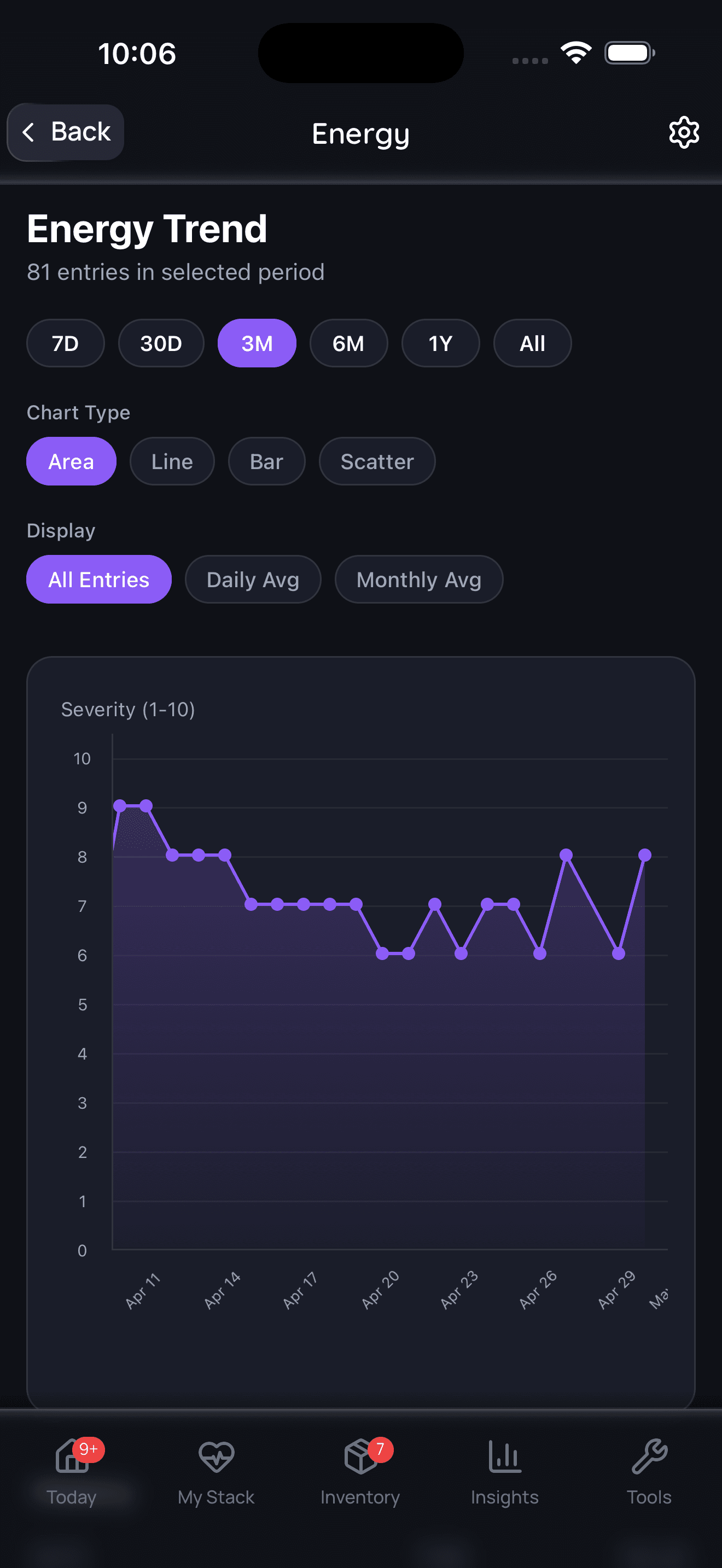
Symptom tracking is informational and should be interpreted with a qualified clinician.
Dosing & Usage
The Basics
Ashwagandha dosing varies significantly depending on the extract type used. This is because different extracts concentrate the active withanolides to different degrees, meaning you need less of a highly concentrated extract to achieve similar effects.
For most purposes, the commonly studied dose range falls between 300 and 600 mg per day of a standardized root extract. This can be taken as a single dose or split into two doses (morning and evening). The WFSBP/CANMAT taskforce specifically recommends this range for anxiety [6].
Higher doses (up to 1,250 mg/day of extract) have been used in some studies, particularly those examining physical performance effects, but higher is not necessarily better and may increase the risk of side effects.
The Science
By Extract Type:
Extract
KSM-66
- Typical Daily Dose
- 300-600 mg
- Withanolide Content
- >5% withanolides
- Study Context
- Stress, anxiety, sleep, cognition
Extract
Sensoril
- Typical Daily Dose
- 125-250 mg
- Withanolide Content
- >10% withanolide glycosides
- Study Context
- Stress, anxiety (lower dose due to higher concentration)
Extract
Shoden
- Typical Daily Dose
- 120-240 mg
- Withanolide Content
- 35% withanolide glycosides
- Study Context
- Sleep (potent at low doses)
Extract
Witholytin
- Typical Daily Dose
- 400 mg
- Withanolide Content
- 1.5% withanolides
- Study Context
- Stress, fatigue (sustained-release)
Extract
Whole root powder
- Typical Daily Dose
- 3,000-6,000 mg
- Withanolide Content
- Unstandardized
- Study Context
- Traditional dosing (granules or powder)
By Use Case:
- Stress and Anxiety: 300-600 mg/day root extract for 6-12 weeks [2][3][6]
- Sleep: 300-600 mg/day root extract, or 120 mg/day Shoden, for 6-8+ weeks [12][13]
- Testosterone/Sexual Health (Men): 600-5,000 mg/day for 8-12 weeks [9]
- Sexual Health (Women): 300 mg twice daily [18]
- Physical Performance: 300-1,250 mg/day for 8-12 weeks [14]
- Cognition: 300-600 mg/day for 8+ weeks [22]
Cycling Recommendations: Long-term continuous use data are limited to approximately 3 months [1]. Many practitioners and experienced users recommend cycling protocols (e.g., 8 weeks on, 4-8 weeks off) to maintain effectiveness and reduce the risk of emotional blunting. Whether ashwagandha loses potency with chronic daily use has not been formally studied, but its effects on neurotransmitter systems suggest that tolerance development is plausible.
Getting the dose right matters more than most people realize. Too little may be ineffective, too much wastes money or introduces risk, and inconsistency undermines both. Doserly tracks every dose you take, across every form, giving you a clear record of what you're actually consuming versus what you planned.
The app helps you compare RDA recommendations against therapeutic ranges discussed in the research, so you can see exactly where your intake falls. If you switch forms, say from a standard capsule to a liposomal liquid, Doserly adjusts your tracking to account for different bioavailabilities. Pair that with smart reminders that keep your timing consistent, and the precision that makes a real difference in outcomes becomes effortless.
Track injection timing, draw notes, and site rotation.
Doserly helps keep syringe-related notes, injection site history, reminders, and reconstitution context together for easier review.
Injection log
Site rotation
Injection logs support record-keeping; follow clinician instructions for administration.
What to Expect (Timeline)
Ashwagandha is not a fast-acting supplement for most people. Unlike caffeine or melatonin, which produce effects within hours, ashwagandha's benefits typically develop gradually over weeks.
Week 1-2: Most people notice little to no change during the first two weeks. Some may experience mild GI effects as the body adjusts. A subtle sense of calm may begin to emerge toward the end of this period, though many report no perceptible effects yet.
Week 2-4: This is when the stress-reduction effects typically become noticeable. Reduced reactivity to stressors, improved ability to manage daily pressures, and a general sense of calm are commonly reported. Sleep improvements may begin to appear, particularly for those with significant baseline sleep issues.
Week 4-8: Peak effects for stress and anxiety reduction tend to occur in this window. Sleep quality improvements become more pronounced. Some users report improved energy levels (secondary to better sleep and lower stress). Physical performance and testosterone effects, if present, typically emerge during this period.
Week 8-12: Continued benefits for most users. This is also the window where some individuals begin to notice emotional blunting or diminishing returns, which is a signal to consider a cycling break. Clinical trials generally assess outcomes at this timepoint.
Beyond 12 weeks: Long-term safety data are limited. The NIH ODS notes that ashwagandha "appears to be well tolerated for up to about 3 months of use, but its long-term safety is not known" [1]. Cycling (e.g., 8 weeks on, 4-8 weeks off) is commonly recommended by practitioners.
Timelines in the research give you a general idea of when to expect results, but your body has its own schedule. Doserly tracks your progress against those benchmarks, letting you see whether your experience aligns with typical response curves or whether something in your protocol might need adjusting.
By logging biomarkers and subjective outcomes alongside your supplement intake, you build a personal timeline that shows exactly when changes started appearing and how they've progressed. The app's trend analysis highlights inflection points, weeks where things shifted for better or worse, so you have concrete data when deciding whether to continue, adjust your dose, or try a different form.
Connect protocol changes to labs and health markers.
Doserly can keep lab results, biomarkers, symptoms, and dose history close together so follow-up conversations have better context.
Insights
Labs and trends
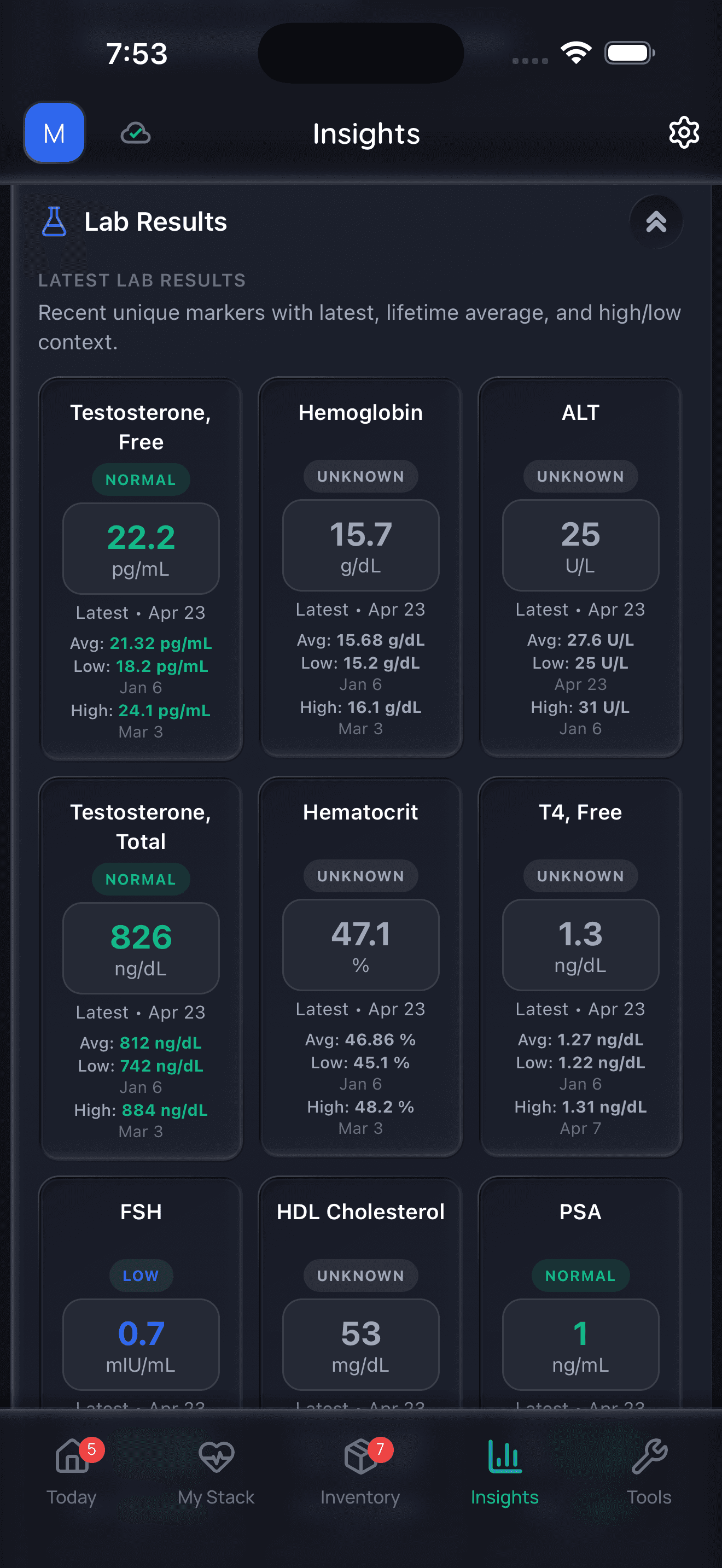
Doserly organizes data; it does not diagnose or interpret labs for you.
Interactions & Compatibility
Synergistic Combinations
- L-Theanine: A frequently used pairing for enhanced calming effects. L-theanine provides GABA and serotonin modulation that complements ashwagandha's cortisol reduction, and the combination has been anecdotally reported as more effective for anxiety than either compound alone.
- Magnesium: Particularly magnesium glycinate. Both compounds support GABA signaling and sleep quality. Magnesium may enhance ashwagandha's relaxation effects. Often used together in evening stacks.
- Rhodiola Rosea: A complementary adaptogen. Rhodiola tends to be more stimulating and focus-oriented, while ashwagandha is more calming. Some practitioners recommend rhodiola in the morning and ashwagandha in the evening.
- Vitamin D3: General wellness pairing. Some evidence suggests ashwagandha may affect vitamin D metabolism; adequate vitamin D status supports the immune and hormonal systems that ashwagandha also influences.
- Black pepper (piperine): Enhances bioavailability of many herbal compounds. At least one ashwagandha trial successfully combined 500 mg root extract with 5 mg piperine [11].
- Holy Basil: Another Ayurvedic adaptogen with complementary stress-reduction mechanisms. Can be combined for broader adaptogenic support.
Caution / Avoid
- Benzodiazepines, anticonvulsants, barbiturates: Ashwagandha has sedative and GABAnergic properties and may produce additive CNS-depressant effects [4].
- Thyroid medications (levothyroxine, liothyronine): Ashwagandha may affect thyroid hormone levels (increasing T3/T4, decreasing TSH). This interaction could alter medication efficacy or cause thyrotoxicosis [10][21].
- Immunosuppressants: Ashwagandha has immunostimulant properties that may counteract immunosuppressive therapy. A case of kidney transplant rejection was reported in a patient taking ashwagandha [4].
- Antidiabetes medications: Ashwagandha may lower blood glucose levels, potentially increasing hypoglycemia risk when combined with antidiabetic drugs [1][4].
- Antihypertensive medications: May produce additive blood pressure-lowering effects [1].
- Sedatives and sleep medications: Additive drowsiness risk due to ashwagandha's GABAnergic and sleep-promoting properties [4].
- CYP3A4 substrates: Ashwagandha is a moderate inducer of CYP3A4 in vitro, which could theoretically reduce the efficacy of drugs metabolized by this enzyme [4]. Clinical relevance has not been established.
- CYP2B6 substrates: Ashwagandha inhibits CYP2B6 in vitro, potentially increasing levels of drugs metabolized by this enzyme [4].
- Digoxin (lab interaction): Ashwagandha may cause false elevation in digoxin immunoassay [4].
How to Take (Administration Guide)
Oral Administration (Capsule/Tablet): The most common and convenient method. Standardized extract capsules are the form used in most clinical trials. Take with a glass of water. Can be taken with or without food, though taking with food may reduce GI side effects.
Powder Form: Traditional Ayurvedic preparation. Can be mixed into warm milk (traditional), smoothies, or food. Requires higher doses than standardized extracts due to lower withanolide concentration. Taste is earthy and slightly bitter.
Liquid Extract/Tincture: Allows flexible dosing. Place drops under the tongue or mix with water or juice. Absorption may be faster than capsules.
Timing:
- For stress/anxiety: Can be taken morning or evening, or split between both. Morning dosing pairs well with KSM-66 (more energizing profile); evening dosing pairs well with Sensoril (more sedating profile).
- For sleep: Take 1-2 hours before bedtime.
- Consistency matters more than timing. Daily use at the same time each day optimizes results.
Cycling:
- Recommended cycle: 8 weeks on, 4-8 weeks off
- No established clinical guidelines for cycling, but practitioners and experienced users widely recommend it to maintain efficacy and minimize the risk of emotional blunting
- If discontinuing after extended use, consider gradual tapering rather than abrupt cessation to reduce rebound anxiety risk
Stacking Guidance:
- Morning stack: KSM-66 + Rhodiola Rosea + L-Tyrosine (energy and focus)
- Evening stack: Sensoril or KSM-66 + Magnesium Glycinate + L-Theanine (relaxation and sleep)
- Avoid combining with pharmaceutical sedatives or anxiolytics without medical supervision
Choosing a Quality Product
Third-Party Certification: Look for products tested by USP, NSF International, ConsumerLab, or Informed Sport. These certifications verify identity, potency, purity, and absence of contaminants.
Extract Standardization: Choose products standardized to a specific withanolide percentage. This ensures consistent dosing across batches. The three major standardized extracts (KSM-66, Sensoril, Shoden) all have clinical trial support.
Root vs. Root-and-Leaf: Most clinical evidence supports root-only or root-and-leaf extracts. Be cautious of products using leaf-only extracts, as the leaf contains higher concentrations of withaferin A, which has cytotoxic properties at higher doses [4].
Red Flags:
- Products not disclosing which plant part is used
- Proprietary blends that obscure the actual ashwagandha dose
- Products combining ashwagandha with many other ingredients at unknown doses
- Claims of "mega-dose" formulations exceeding 1,500 mg without clinical justification
- Products not specifying the type of extract or standardization method
Heavy Metal Considerations: As a root extract from plants grown in soil, ashwagandha supplements should be tested for heavy metals (lead, arsenic, cadmium, mercury). A case of hemolytic anemia and abdominal pain was reported following ingestion of ashwagandha/mucuna pills containing high amounts of lead [4].
Form Considerations:
- If you want balanced stress/anxiety relief with some energizing qualities: KSM-66
- If you want stronger sedation and sleep promotion: Sensoril
- If you want a low-dose, high-potency option: Shoden
- If you prefer traditional whole-food supplementation: whole root powder (higher dose needed)
Storage & Stability
Store ashwagandha supplements in a cool, dry place away from direct sunlight, heat, and moisture. Keep containers tightly sealed. No refrigeration is required for most forms. Powder forms are more susceptible to moisture degradation than capsules or tablets. Check expiration dates and discard if the product develops an unusual odor, color change, or clumping.
Lifestyle Factors
Diet: A balanced diet supports the stress-reduction benefits of ashwagandha. Adequate protein intake supports the hormonal pathways ashwagandha influences. Traditional Ayurvedic practice recommends taking ashwagandha with warm milk, which provides both protein and fat to support absorption of lipophilic withanolides.
Exercise: Regular physical activity amplifies the stress-reduction and sleep-improvement benefits of ashwagandha. Exercise itself modulates cortisol and improves sleep architecture, creating synergy with ashwagandha's mechanisms. For physical performance goals, combining ashwagandha with a structured training program is more effective than supplementation alone.
Sleep Hygiene: Ashwagandha supports sleep but is most effective when combined with good sleep practices: consistent sleep/wake times, limited blue light exposure in the evening, cool and dark sleeping environment, and reduced caffeine intake (especially in the afternoon and evening).
Stress Management: Ashwagandha is a supplement to, not a replacement for, healthy stress management practices. Meditation, breathing exercises, social connection, and workload management all contribute to the cortisol regulation that ashwagandha supports.
Caffeine: High caffeine intake can counteract ashwagandha's calming effects by elevating cortisol and stimulating the sympathetic nervous system. If taking ashwagandha for stress or sleep, moderating caffeine intake may improve outcomes.
Regulatory Status & Standards
United States: Ashwagandha is sold as a dietary supplement under DSHEA. It is not evaluated by the FDA for efficacy in treating any disease. The FDA has issued no specific warnings or bans on ashwagandha as of the current date.
European Union: Regulatory status varies by member state. Denmark banned the sale of ashwagandha-containing supplements in 2023 following a risk assessment by the Technical University of Denmark that highlighted potential effects on thyroid and sex hormones [1]. France's ANSES issued a 2024 statement recommending against use by pregnant and breastfeeding women and people with endocrine disorders [1].
Canada: Available as a licensed Natural Health Product (NHP) with an NPN number.
Australia: Available through the Therapeutic Goods Administration (TGA) as a listed medicine.
India: Ashwagandha is recognized in the Ayurvedic Pharmacopoeia of India and regulated under the Ministry of Ayush. In 2024, the Ministry of Ayush released a safety report on ashwagandha [4].
Athlete & Sports Regulatory Status
WADA: Ashwagandha is NOT on the World Anti-Doping Agency (WADA) Prohibited List. It is permitted for use by athletes in competition and out-of-competition.
GlobalDRO: Listed as permitted in all participating countries (US, UK, Canada, Australia, Japan, Switzerland, NZ).
NCAA: Ashwagandha is not on the NCAA banned substance list. However, athletes should ensure products carry NSF Certified for Sport or Informed Sport certification to verify absence of undeclared banned substances.
Professional Leagues: No known restrictions in NFL, NBA, MLB, NHL, or other major professional leagues.
Athlete Certification Programs: Athletes should prioritize products certified by Informed Sport, NSF Certified for Sport, Cologne List, or BSCG to minimize the risk of inadvertent contamination with prohibited substances.
Important Note for Athletes: While ashwagandha itself is not prohibited, its potential to increase testosterone levels means that athletes should be aware of its hormonal effects and discuss use with their team physicians, particularly if they are subject to hormone ratio testing.
FAQ
Q: How long does it take for ashwagandha to work?
Based on available research, most clinical trials show noticeable effects within 2-4 weeks for stress and anxiety reduction, with sleep improvements often requiring 4-8 weeks. Individual responses vary, and some people may notice subtle effects sooner while others may need a full 8-week trial.
Q: Should I take ashwagandha in the morning or at night?
This depends on your goals and the extract type. For stress management during the day, morning dosing (particularly with KSM-66) is common. For sleep support, evening dosing (1-2 hours before bed) is typically recommended. Some people split their dose between morning and evening.
Q: Can I take ashwagandha every day?
Clinical trials have used daily dosing for up to 12 weeks. However, because long-term safety data beyond 3 months are limited, many practitioners recommend cycling (e.g., 8 weeks on, 4-8 weeks off). Cycling may also help maintain effectiveness and reduce the risk of emotional blunting.
Q: What is KSM-66 and how is it different from other ashwagandha extracts?
KSM-66 is a branded root-only extract standardized to contain at least 5% withanolides. It is the most widely studied ashwagandha extract. It differs from Sensoril (root and leaf, more sedating) and Shoden (root and leaf, highest withanolide concentration, effective at lower doses). The choice between them depends on your primary goals.
Q: Can ashwagandha cause emotional numbness or anhedonia?
A notable number of users report emotional blunting with prolonged continuous use. This appears to be related to ashwagandha's cortisol-lowering and GABAergic effects dampening emotional responsiveness broadly, not selectively. This is more commonly reported with continuous use beyond 4-8 weeks and is one reason why cycling is recommended.
Q: Is ashwagandha safe for my liver?
Rare cases of liver injury have been associated with ashwagandha supplements, though the overall incidence appears low relative to widespread use. Some cases involved combination products or pre-existing liver conditions. As a precaution, monitoring liver function (ALT, AST) before starting and periodically during use is reasonable, especially for those with liver disease or taking other hepatotoxic medications.
Q: Can I take ashwagandha with my thyroid medication?
Ashwagandha can affect thyroid hormone levels (increasing T3/T4, decreasing TSH). Based on available data, it is advisable to consult a healthcare provider before combining ashwagandha with thyroid medications, as the interaction could alter medication efficacy.
Q: Is ashwagandha safe during pregnancy?
Based on available data, most health authorities recommend avoiding ashwagandha during pregnancy due to potential abortifacient effects at higher doses. This recommendation is echoed by the French ANSES and reflected in Denmark's regulatory action. Consult a healthcare provider for personalized guidance.
Q: Does ashwagandha increase testosterone?
Research suggests that ashwagandha may modestly increase testosterone levels, particularly in men with lower baseline levels or under stress conditions. A 2021 systematic review found testosterone increases across multiple studies. However, this effect also means it should be avoided by men with hormone-sensitive prostate cancer.
Q: What happens when I stop taking ashwagandha?
Some users report rebound anxiety or mood disturbance when stopping abruptly, particularly after extended use. While this has not been extensively studied in clinical trials, it is commonly discussed in user communities. Gradual tapering rather than abrupt cessation may help minimize any rebound effects.
Myth vs. Fact
Myth: Ashwagandha works like a pharmaceutical anti-anxiety medication.
Fact: While ashwagandha has demonstrated anxiolytic properties in clinical trials, its mechanism and potency differ from pharmaceutical anxiolytics like benzodiazepines or SSRIs. Ashwagandha modulates cortisol and GABA signaling over weeks of use, producing a gradual calming effect rather than the immediate relief of pharmaceutical agents. It is provisionally recommended for generalized anxiety disorder by the WFSBP/CANMAT taskforce, but as a complementary approach rather than a first-line treatment [6].
Myth: Higher doses of ashwagandha produce better results.
Fact: Clinical evidence does not support a simple "more is better" relationship. The WFSBP/CANMAT recommendation is for 300-600 mg/day of standardized root extract [6]. The highly concentrated Shoden extract demonstrates sleep benefits at just 120 mg/day [13]. Higher doses may increase the risk of side effects including drowsiness, GI issues, and emotional blunting without proportional benefits.
Myth: All ashwagandha supplements are the same.
Fact: There is significant variation between ashwagandha products. Different extracts (KSM-66, Sensoril, Shoden) use different plant parts, extraction methods, and standardization targets, resulting in different bioactive profiles and clinical effects. Unstandardized whole root powder requires much higher doses than concentrated extracts. The specific product matters.
Myth: Ashwagandha is completely safe because it is natural.
Fact: While ashwagandha has a long history of traditional use and is generally well tolerated in the short term, it is not without risks. Documented concerns include liver injury (rare but serious), thyroid hormone disruption, potential drug interactions, and emotional blunting with chronic use. Denmark has banned its sale, and France has issued formal cautions [1]. Natural does not equate to risk-free.
Myth: Ashwagandha is a testosterone booster comparable to hormonal therapies.
Fact: Ashwagandha may modestly increase testosterone levels, particularly in stressed or infertile men. However, the magnitude of increase is much smaller than pharmacological testosterone replacement therapy. It should not be considered a substitute for medical hormonal treatment, and its testosterone-elevating properties are a reason for caution in individuals with hormone-sensitive conditions [9].
Myth: Ashwagandha needs to be taken with milk to work.
Fact: Traditional Ayurvedic practice recommends taking ashwagandha with warm milk, and the fat content in milk may enhance absorption of lipophilic withanolides. However, clinical trials demonstrating efficacy have used ashwagandha with water, and the supplement is effective regardless of the vehicle used. Taking with food (any food) may improve tolerability.
Myth: You can take ashwagandha indefinitely without breaks.
Fact: Clinical safety data extend only to approximately 3 months of continuous use. Long-term effects on the HPA axis, thyroid function, and neurotransmitter systems are unknown. Reports of diminishing returns and emotional blunting with prolonged use support the practice of periodic cycling breaks.
Sources & References
Clinical Trials & RCTs
- NIH Office of Dietary Supplements. Ashwagandha: Is it helpful for stress, anxiety, or sleep? Health Professional Fact Sheet. Updated May 2, 2025.
- Speers AB, et al. Effects of Withania somnifera on Stress and the Stress-Related Neuropsychiatric Disorders Anxiety, Depression, and Insomnia. Curr Neuropharmacol. 2021;19:1468-95.
- Akhgarjand C, et al. Does Ashwagandha supplementation have a beneficial effect on the management of anxiety and stress? A systematic review and meta-analysis of RCTs. Phytother Res. 2022;36:4115-4124.
- Memorial Sloan Kettering Cancer Center. Ashwagandha. About Herbs Database. Updated April 24, 2024.
- Mikulska P, et al. Ashwagandha (Withania somnifera): Current Research on the Health-Promoting Activities: A Narrative Review. Pharmaceutics. 2023;15.
- Sarris J, et al. Clinician guidelines for the treatment of psychiatric disorders with nutraceuticals and phytoceuticals: The WFSBP and CANMAT Taskforce. World J Biol Psychiatry. 2022;23:424-55.
- Della Porta M, et al. Effects of Withania somnifera on Cortisol Levels in Stressed Human Subjects: A Systematic Review. Nutrients. 2023;15:5015.
- Lopresti AL, et al. An investigation into the stress-relieving and pharmacological actions of an ashwagandha extract. Medicine (Baltimore). 2019;98:e17186.
Systematic Reviews & Meta-Analyses
- Smith SJ, et al. Examining the Effects of Herbs on Testosterone Concentrations in Men: A Systematic Review. Adv Nutr. 2021;12:744-65.
- Sharma AK, et al. Efficacy and Safety of Ashwagandha Root Extract in Subclinical Hypothyroid Patients. J Altern Complement Med. 2018;24:243-8.
- Majeed M, et al. A Standardized Withania somnifera Root Extract with Piperine Alleviates Anxiety and Depression. J Integr Complement Med. 2024;30:459-68.
- Cheah KL, et al. Effect of Ashwagandha extract on sleep: A systematic review and meta-analysis. PLoS One. 2021;16:e0257843.
- Deshpande A, et al. A randomized, double blind, placebo controlled study to evaluate the effects of ashwagandha extract on sleep quality. Sleep Med. 2020;72:28-36.
- Lopresti AL, Smith SJ. Ashwagandha for the treatment and enhancement of mental and physical conditions: A systematic review. J Herbal Medicine. 2021;28:100434.
Individual Clinical Trials
- Pandit S, et al. Effects of Withania somnifera Extract in Chronically Stressed Adults. Nutrients. 2024;16.
- Majeed M, et al. A standardized Ashwagandha root extract alleviates stress, anxiety, and improves quality of life. Medicine (Baltimore). 2023;102:e35521.
- Langade D, et al. Clinical evaluation of ashwagandha root extract on sleep. J Ethnopharmacol. 2021;264:113276.
- Ajgaonkar A, et al. Efficacy and Safety of Ashwagandha Root Extract for Improvement of Sexual Health in Healthy Women. Cureus. 2022;14:e30787.
Safety & Toxicology
- Philips CA, et al. Ashwagandha-induced liver injury: A case series from India. Hepatol Commun. 2023;7.
- Bjornsson HK, et al. Ashwagandha-induced liver injury: A case series from Iceland and the US DILIN. Liver Int. 2020;40:825-9.
- Kamal HI, et al. Ashwagandha as a Unique Cause of Thyrotoxicosis. Cureus. 2022;14:e23494.
Government/Institutional Sources
- Gopukumar K, et al. Efficacy and Safety of Ashwagandha Root Extract on Cognitive Functions. Evid Based Complement Alternat Med. 2021;2021:8254344.
Related Supplement Guides
Same Category (Adaptogens)
Common Stacks / Pairings
Related Health Goal
- Valerian Root (sleep support)
- Passionflower (anxiety support)
- Lemon Balm (calming)
- Bacopa Monnieri (cognitive + adaptogenic)
- 5-HTP (mood support)
- Tongkat Ali (testosterone support)