
Human Chorionic Gonadotropin (HCG)
On this page
Quick Reference Card
Attribute
Brand Name(s)
- Value
- Pregnyl (US), Novarel (US), Chorex (US), Profasi (US/Canada), Ovidrel (recombinant)
Attribute
Generic Name
- Value
- Human Chorionic Gonadotropin (hCG)
Attribute
Drug Class / Type
- Value
- Gonadotropin, LH receptor agonist
Attribute
DEA Schedule
- Value
- Not scheduled (prescription only)
Attribute
FDA-Approved Indications
- Value
- Hypogonadotropic hypogonadism in males; prepubertal cryptorchidism; induction of ovulation
Attribute
Common Doses (TRT adjunct)
- Value
- 250-500 IU every other day (fertility preservation); 1,500 IU weekly (testicular maintenance)
Attribute
Common Doses (Monotherapy)
- Value
- 1,500-5,000 IU 2-3 times weekly
Attribute
Common Doses (Recovery)
- Value
- 3,000 IU every other day for 3+ months
Attribute
Route(s) of Administration
- Value
- Intramuscular (IM), Subcutaneous (SubQ)
Attribute
Half-Life
- Value
- ~36 hours
Attribute
Key Monitoring Requirements
- Value
- Testosterone, estradiol, LH/FSH, semen analysis (if fertility concern), hematocrit
Attribute
FDA Approval Date
- Value
- October 20, 1976 (Pregnyl, BLA017692)
Attribute
Manufacturer
- Value
- Merck Sharp & Dohme LLC (Organon USA Inc.)
Attribute
Unique Considerations
- Value
- LH analog that stimulates endogenous testosterone; does not suppress HPG axis at lower doses; fertility-preserving; subject to FDA compounding restrictions
Overview / What Is Human Chorionic Gonadotropin (HCG)?
The Basics
Human chorionic gonadotropin, commonly known as HCG, is a hormone that plays a central role in men's health even though it's best known as a pregnancy hormone. In women, HCG is produced by the placenta during pregnancy. In men, it serves a fundamentally different purpose: it acts as a stand-in for luteinizing hormone (LH), the brain signal that tells the testes to produce testosterone.
This matters because when a man takes testosterone replacement therapy, his brain recognizes the incoming testosterone and stops sending the LH signal. Without LH, the testes go quiet. They stop producing their own testosterone, they shrink, and sperm production drops or stops entirely. For many men, these are acceptable trade-offs for the symptom relief that TRT provides. But for men who want to preserve their fertility or simply want to avoid testicular atrophy, HCG offers a solution.
By mimicking LH, HCG keeps the testes working even while a man is on TRT. The testes continue producing their own testosterone internally (intratesticular testosterone), which is essential for sperm production. They maintain their size. And in many cases, fertility is preserved or can be recovered.
HCG has been FDA-approved since 1976 for the treatment of hypogonadotropic hypogonadism in males, prepubertal cryptorchidism, and induction of ovulation in women. Its use alongside TRT for fertility preservation is clinically well-established, though it represents an off-label application of the medication. The American Urological Association recommends HCG for testosterone-deficient men who wish to preserve their fertility [1].
The Science
Human chorionic gonadotropin is a heterodimeric glycoprotein hormone with a molecular weight of approximately 36.7 kDa. It consists of an alpha subunit (92 amino acids) that is structurally identical to the alpha subunits of LH, FSH, and TSH, and a unique beta subunit (145 amino acids) that confers receptor specificity. The beta subunit shares approximately 85% sequence homology with the beta subunit of LH, which explains HCG's ability to bind and activate the LH/hCG receptor (LHCGR) [2].
Urinary-derived HCG (u-hCG) preparations such as Pregnyl and Novarel are purified from the urine of pregnant women. Recombinant HCG (r-hCG, choriogonadotropin alfa, marketed as Ovidrel) is produced using recombinant DNA technology in Chinese hamster ovary (CHO) cells. Both forms activate the LHCGR on Leydig cells in the testis, stimulating the enzymatic cascade from cholesterol to pregnenolone to testosterone via the steroidogenic acute regulatory protein (StAR) and cytochrome P450 enzymes (CYP11A1, CYP17A1, and 17-beta-HSD) [3].
A critical distinction from exogenous testosterone: HCG stimulates endogenous testosterone production rather than replacing it. When used at lower doses (250-500 IU every other day), HCG maintains intratesticular testosterone concentrations at levels sufficient for Sertoli cell function and spermatogenesis, without fully suppressing hypothalamic-pituitary feedback. At higher doses used as monotherapy, some degree of HPG axis suppression does occur through testosterone-mediated negative feedback [4][5].
Medical / Chemical Identity
Property
Generic Name
- Detail
- Human Chorionic Gonadotropin (hCG)
Property
Brand Names (US)
- Detail
- Pregnyl, Novarel, Chorex, Profasi
Property
Recombinant Form
- Detail
- Ovidrel (choriogonadotropin alfa)
Property
Chemical Class
- Detail
- Glycoprotein hormone, gonadotropin
Property
Alpha Subunit
- Detail
- 92 amino acids (shared with LH, FSH, TSH)
Property
Beta Subunit
- Detail
- 145 amino acids (unique, 85% homology with LH-beta)
Property
Molecular Weight
- Detail
- ~36.7 kDa
Property
CAS Number
- Detail
- 9002-61-3
Property
Source (urinary)
- Detail
- Purified from urine of pregnant women
Property
Source (recombinant)
- Detail
- CHO cells via recombinant DNA technology
Property
FDA Approval Date
- Detail
- October 20, 1976 (Pregnyl, BLA017692)
Property
Manufacturer (Pregnyl)
- Detail
- Merck Sharp & Dohme LLC (Organon USA Inc.)
Property
Regulatory Status
- Detail
- Prescription only; not a controlled substance itself, but subject to FDA compounding restrictions since 2020
Property
Storage (unreconstituted)
- Detail
- Room temperature 15-30°C
Property
Storage (reconstituted)
- Detail
- Refrigerated 2-8°C, use within 60 days
Mechanism of Action / Pathophysiology
The Basics
To understand how HCG works, it helps to understand the communication system that controls testosterone production. Your brain has a feedback loop with your testes. The hypothalamus releases GnRH, which tells the pituitary gland to release LH. LH travels through the bloodstream to the testes, where it tells specialized cells called Leydig cells to produce testosterone.
When you take external testosterone (TRT), your brain detects the incoming testosterone and reduces its LH signal. Without LH, the Leydig cells go dormant. The testes shrink. Sperm production, which depends on very high local testosterone concentrations inside the testes, slows down or stops.
HCG works by stepping into the role of LH. It binds to the same receptor on Leydig cells and tells them to keep producing testosterone, even though the brain has stopped sending its own LH signal. Think of it as a backup battery for your testes: when TRT shuts off the main power supply (LH from the pituitary), HCG keeps the testes running.
This is why HCG can do something that exogenous testosterone cannot: it maintains testosterone production inside the testes themselves. Internal testicular testosterone (intratesticular testosterone) needs to be 40 to 100 times higher than blood levels for sperm production to work properly. Exogenous testosterone increases blood levels but actually decreases the concentration inside the testes. HCG reverses that problem.
The Science
HCG exerts its effects through binding to the LH/hCG receptor (LHCGR), a G-protein-coupled receptor (GPCR) expressed primarily on testicular Leydig cells in males. Upon ligand binding, the LHCGR activates the Gs-alpha subunit, stimulating adenylyl cyclase and increasing intracellular cyclic adenosine monophosphate (cAMP). This cAMP surge activates protein kinase A (PKA), which phosphorylates the steroidogenic acute regulatory protein (StAR), facilitating cholesterol transport from the outer to the inner mitochondrial membrane, the rate-limiting step in steroidogenesis [3][6].
The steroidogenic cascade proceeds through CYP11A1 (cholesterol side-chain cleavage to pregnenolone), 3-beta-HSD (pregnenolone to progesterone), CYP17A1 (17-alpha-hydroxylase and 17,20-lyase activities), and 17-beta-HSD (androstenedione to testosterone). HCG also upregulates expression of steroidogenic enzymes through PKA-mediated CREB transcription factor activation [6].
HCG has a significantly longer half-life than endogenous LH (approximately 36 hours vs 30 minutes), attributed to its higher sialic acid content and greater molecular weight, which reduce renal clearance. This pharmacokinetic advantage allows less frequent dosing while maintaining sustained Leydig cell stimulation [2].
In the context of concurrent TRT, HCG maintains intratesticular testosterone (ITT) concentrations. Coviello et al. demonstrated in a randomized, placebo-controlled trial that men receiving testosterone enanthate 200 mg/week plus HCG showed dose-dependent preservation of ITT: placebo resulted in 94% ITT suppression, 125 IU HCG every other day reduced suppression to 25%, 250 IU every other day reduced suppression to only 7%, and 500 IU every other day increased ITT 26% above baseline [4].
Pathway & System Visualization
Pharmacokinetics / Hormone Physiology
The Basics
HCG works differently from injectable testosterone esters like cypionate or enanthate. Those medications deliver synthetic testosterone directly into your body. HCG instead tells your testes to make testosterone themselves.
After an injection (either into muscle or under the skin), HCG enters your bloodstream and reaches the testes within hours. Peak blood levels of HCG itself occur within about 6-16 hours after injection. The medication stays active for roughly 36 hours (its half-life), which means it takes about one and a half days for half the dose to be cleared from your body.
The testosterone response to HCG isn't immediate. After an injection, testosterone begins rising within a few hours, typically peaks at 24 to 72 hours, and then gradually declines as the HCG is cleared. This is why most protocols call for injections every other day or three times per week: it keeps the stimulation relatively consistent.
One important difference from exogenous testosterone: HCG produces more modest blood testosterone increases. A man on standard TRT might see peak testosterone levels of 800-1200 ng/dL. HCG monotherapy typically produces levels in the 300-700 ng/dL range, depending on the dose and individual response. This is because HCG can only stimulate what the testes are capable of producing, not supplement beyond that capacity.
The Science
Absorption: Following intramuscular or subcutaneous injection, HCG is absorbed into the systemic circulation with peak serum HCG concentrations (Cmax) achieved at approximately 6-16 hours post-injection. Subcutaneous administration shows comparable bioavailability to intramuscular injection, supporting the increasingly common SubQ route in clinical practice [7].
Distribution: HCG distributes primarily to gonadal tissues via receptor-mediated uptake at the LHCGR. The volume of distribution is approximately 5.4 L for recombinant hCG (Ovidrel) [7].
Metabolism: HCG is metabolized via proteolytic degradation, primarily in the liver and kidneys. The intact molecule and its beta subunit (beta-hCG) are detectable in serum and urine. Urinary excretion of intact hCG and beta-hCG fragments accounts for a significant portion of elimination [2].
Elimination: The terminal elimination half-life is approximately 36 hours for urinary-derived HCG and approximately 26-30 hours for recombinant hCG (Ovidrel). This is substantially longer than endogenous LH (half-life ~30 minutes), attributed to higher sialic acid content providing resistance to hepatic and renal clearance [2][7].
Testosterone Response Kinetics: Following a single IM dose of 5,000 IU HCG in hypogonadal men, serum testosterone rises within 2-4 hours, peaks at approximately 48-72 hours, and returns toward baseline by 96-120 hours. The magnitude of testosterone response is dose-dependent and varies with underlying testicular reserve (Leydig cell mass and function) [5].
Knowing the pharmacokinetics is the foundation. Seeing how your own body responds to your specific ester and injection frequency turns that knowledge into actionable insight. Doserly correlates your dosing schedule with how you feel day to day, helping you and your provider identify whether your current protocol is delivering stable levels or causing peak-and-trough swings.
The app's analytics can surface patterns you might not notice on your own — like whether symptoms correlate with the trough day before your next injection or whether switching from biweekly to twice-weekly dosing smoothed out your energy and mood. Data like this makes protocol adjustments more precise and less guesswork.
See where a dose, cycle, or change fits in time.
Doserly gives each protocol a timeline so dose changes, pauses, restarts, and observations are easier to compare later.
Timeline
Cycle history
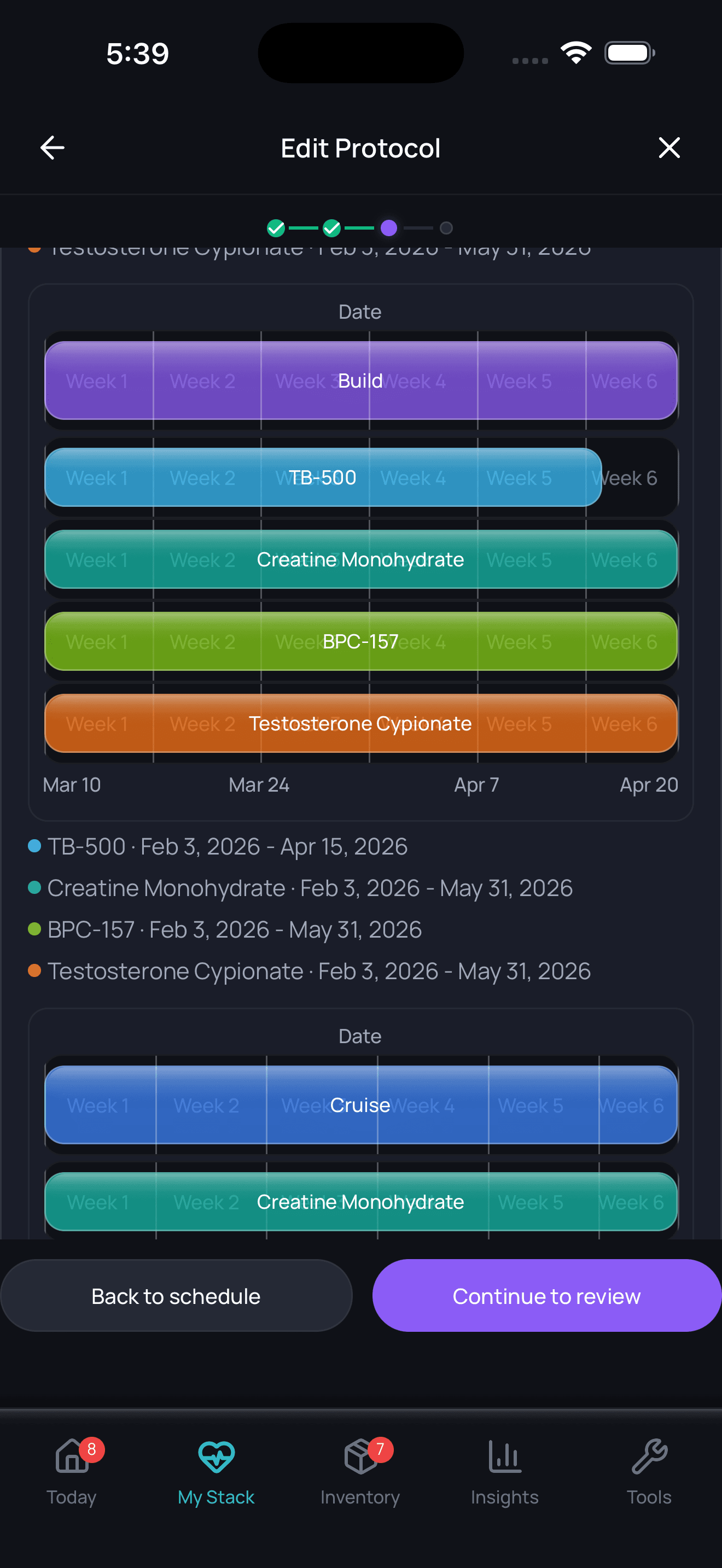
Timeline tracking helps with recall; it is not a treatment recommendation.
Research & Clinical Evidence
The Basics
The strongest evidence for HCG in men centers on two applications: treating hypogonadotropic hypogonadism and preserving fertility during testosterone therapy.
For fertility preservation, the landmark study by Coviello and colleagues (2005) showed that even a low dose of HCG (250 IU every other day) maintained 93% of intratesticular testosterone in men receiving exogenous testosterone. This was a randomized, controlled trial, which is the gold standard for medical evidence. It demonstrated that the testicular shutdown caused by TRT could be almost entirely prevented with a small amount of HCG [4].
A follow-up study by Hsieh and colleagues (2013) went further by tracking 26 men on TRT who also received 500 IU of HCG every other day. None of them became azoospermic (completely lacking sperm) over more than a year of follow-up, and 9 of the 26 contributed to pregnancies. Their sperm parameters stayed stable throughout [8].
For HCG as monotherapy (without concurrent testosterone), the evidence is smaller but growing. A 2022 study of 31 men treated with weekly HCG found that 86% improved their erectile function and 80% improved their libido, with no concerning changes to hematocrit, PSA, or other safety markers [9].
The overall picture from the research is that HCG is effective at what it's primarily used for (maintaining testicular function and fertility during TRT) and appears reasonably safe, though large-scale, long-term safety data remain limited.
The Science
Fertility Preservation During TRT:
Coviello et al. (2005) conducted a randomized, placebo-controlled trial in 29 healthy men receiving testosterone enanthate 200 mg/week with co-administered HCG at 0 (saline), 125, 250, or 500 IU every other day for 3 weeks. Intratesticular testosterone (ITT) suppression was 94% with placebo, 25% with 125 IU, 7% with 250 IU, and ITT increased 26% above baseline with 500 IU. This dose-response relationship established the minimum effective dose for ITT maintenance at approximately 250 IU every other day [4].
Hsieh et al. (2013) retrospectively studied 26 hypogonadal men (mean age 35.9 years) on TRT (19 injectable testosterone, 7 transdermal gel) with concurrent HCG 500 IU every other day. Over a mean follow-up of 6.2 months (range >1 year), no significant changes in semen parameters were observed (pretreatment: volume 2.9 mL, density 35.2 million/mL, motility 49.0%). No patient became azoospermic. Nine of 26 men (35%) contributed to pregnancy during follow-up. Serum testosterone increased from 207.2 to 1,055.5 ng/dL (p < 0.0001) [8].
Spermatogenesis Recovery After TRT:
Stocks et al. (2024) studied 77 men with history of testosterone use treated with 3,000 IU HCG plus 75 IU FSH three times weekly. Among the full cohort, 74% demonstrated improvements in sperm concentration. Concurrent testosterone therapy during HCG/FSH treatment did not impede spermatogenic recovery (74% improved in both groups: n=50 without concurrent TRT and n=27 with concurrent TRT) [10].
HCG Monotherapy:
Zucker et al. (2022) retrospectively reviewed 31 men with hypogonadal symptoms and baseline testosterone >300 ng/dL treated with weekly HCG monotherapy. Subjective improvement was reported in 86% for erectile dysfunction (19/22) and 80% for libido (20/25). No significant changes were observed in FSH, LH, estradiol, hematocrit, HbA1c, or PSA. No thromboembolic events or cases of gynecomastia occurred [9].
Comparative Efficacy:
Habous et al. (2018) randomized 282 hypogonadal men to clomiphene citrate 50 mg (n=95), HCG 5,000 IU twice weekly (n=94), or combination CC + HCG (n=94). All three groups showed equivalent testosterone increases (mean baseline 2.31 nmol/L to mean 5.17 nmol/L, 223% increase). The combination group showed significantly better symptom improvement on the qADAM questionnaire (P < 0.01) compared to either monotherapy [11].
Evidence & Effectiveness Matrix
Category
Fertility & Reproductive
- Evidence Strength
- 9/10
- Reported Effectiveness
- 9/10
- Summary
- RCT and retrospective data consistently show HCG preserves spermatogenesis during TRT and can recover sperm production after TRT-induced azoospermia. AUA guideline-recommended.
Category
Sexual Function & Libido
- Evidence Strength
- 5/10
- Reported Effectiveness
- 6/10
- Summary
- Limited monotherapy data (Zucker et al.: 86% ED improvement, 80% libido). Effects difficult to isolate from concurrent TRT.
Category
Energy & Vitality
- Evidence Strength
- 3/10
- Reported Effectiveness
- 5/10
- Summary
- Minimal direct evidence. Energy improvements in monotherapy users may reflect testosterone normalization rather than HCG-specific effects.
Category
Mood & Emotional Wellbeing
- Evidence Strength
- 3/10
- Reported Effectiveness
- 5/10
- Summary
- Limited data. Some community reports of improved wellbeing, possibly related to intratesticular testosterone maintenance and psychological benefit of preserved testicular function.
Category
Gynecomastia & Estrogen
- Evidence Strength
- 4/10
- Reported Effectiveness
- 4/10
- Summary
- HCG increases endogenous testosterone which aromatizes to estradiol. Higher doses associated with E2 elevation. Zucker monotherapy study showed no significant E2 change at lower doses.
Category
Overall Quality of Life
- Evidence Strength
- 4/10
- Reported Effectiveness
- 7/10
- Summary
- Community consensus that HCG adds meaningful value to TRT protocols. Quality of life benefits include psychological comfort of fertility preservation and testicular volume maintenance.
Category
Polycythemia & Hematologic
- Evidence Strength
- 5/10
- Reported Effectiveness
- 5/10
- Summary
- HCG monotherapy shows no significant hematocrit changes (Zucker). When used as TRT adjunct, hematocrit effects attributed primarily to the exogenous testosterone.
Category
Muscle Mass & Strength
- Evidence Strength
- 2/10
- Reported Effectiveness
- 4/10
- Summary
- No direct evidence for HCG-specific muscle effects. Any anabolic effects are mediated by the testosterone HCG stimulates, which is typically more modest than exogenous TRT doses.
Category
Fluid Retention & Edema
- Evidence Strength
- 3/10
- Reported Effectiveness
- 3/10
- Summary
- Prescribing information notes fluid retention via androgen-mediated effects. Dose-dependent.
Category
Skin & Hair
- Evidence Strength
- 2/10
- Reported Effectiveness
- 3/10
- Summary
- Minimal data. Androgenic side effects (acne, hair loss) possible via testosterone and DHT produced by HCG stimulation.
Category
Anxiety & Stress Response
- Evidence Strength
- N/A
- Reported Effectiveness
- N/A
- Summary
- Community data not yet collected.
Category
Cognitive Function
- Evidence Strength
- N/A
- Reported Effectiveness
- N/A
- Summary
- Community data not yet collected.
Category
Body Fat & Composition
- Evidence Strength
- N/A
- Reported Effectiveness
- N/A
- Summary
- Insufficient data. HCG has no known effect on fat mobilization (per FDA labeling).
Category
Bone Health
- Evidence Strength
- N/A
- Reported Effectiveness
- N/A
- Summary
- Insufficient data for HCG-specific effects.
Category
Cardiovascular Health
- Evidence Strength
- N/A
- Reported Effectiveness
- N/A
- Summary
- Insufficient data for HCG-specific cardiovascular effects.
Category
Metabolic Health
- Evidence Strength
- N/A
- Reported Effectiveness
- N/A
- Summary
- Insufficient data.
Category
Sleep Quality
- Evidence Strength
- N/A
- Reported Effectiveness
- N/A
- Summary
- Insufficient data.
Category
Prostate Health
- Evidence Strength
- N/A
- Reported Effectiveness
- N/A
- Summary
- Zucker study showed no PSA changes. Insufficient data for comprehensive scoring.
Categories scored: 10
Categories with community data: 10
Categories not scored (insufficient data): 8 (Anxiety, Cognitive Function, Body Fat, Bone Health, Cardiovascular, Metabolic, Sleep, Prostate)
Benefits & Therapeutic Effects
The Basics
The primary benefit of HCG for men on TRT is straightforward: it keeps the testes working when testosterone therapy would otherwise shut them down. This translates into three practical benefits that matter to most men.
First, fertility preservation. For men who want children in the future (or even in the present), HCG can maintain sperm production while they receive the symptom relief of testosterone therapy. Without HCG, approximately 40-60% of men on TRT become completely azoospermic (zero sperm) within six months. With low-dose HCG (250-500 IU every other day), studies show semen parameters can remain stable [4][8].
Second, testicular volume. Testicular shrinkage is one of the most common and visible side effects of TRT. Many men find it psychologically distressing. HCG prevents or reverses this atrophy by maintaining Leydig cell activity and intratesticular testosterone levels.
Third, some men report an enhanced sense of wellbeing when HCG is added to their TRT protocol. This may be related to the maintenance of intratesticular testosterone and the downstream neurosteroids it produces, or it may reflect the psychological comfort of knowing fertility and testicular function are preserved.
As a standalone treatment (monotherapy), HCG can raise testosterone levels and improve symptoms of hypogonadism, though the testosterone increase is typically more modest than what exogenous TRT provides. For younger men with secondary hypogonadism who want to treat symptoms without sacrificing fertility, HCG monotherapy can be an appropriate first-line approach.
The Science
Intratesticular Testosterone Maintenance: The primary therapeutic benefit of HCG in the TRT context is maintenance of ITT at levels sufficient for spermatogenesis (typically 40-100x serum levels). Coviello et al. demonstrated dose-dependent ITT preservation with as little as 250 IU HCG every other day during concurrent TRT [4]. This preserves Sertoli cell function and the spermatogenic process through paracrine testosterone signaling within the seminiferous tubules.
Spermatogenesis Preservation: Hsieh et al. showed that 500 IU HCG every other day maintained all semen parameters (count, motility, morphology) over >1 year of concurrent TRT. Nine of 26 subjects (35%) contributed to pregnancy during the study period, confirming functional fertility preservation [8].
Spermatogenesis Recovery: For men who develop TRT-induced azoospermia, HCG-based recovery protocols (typically 3,000 IU EOD with or without clomiphene citrate or FSH) restore spermatogenesis in 74% of men (Stocks et al., 2024). Recovery timeline is typically 3-6 months, with some men requiring up to 12 months [10].
Testosterone Elevation (Monotherapy): HCG stimulates Leydig cell steroidogenesis, producing physiological testosterone increases. In hypogonadotropic hypogonadism, testosterone normalization is expected because the Leydig cells are intrinsically functional. In primary hypogonadism with compromised Leydig cell mass, response is limited. Zucker et al. found symptomatic improvement even without statistically significant testosterone elevation [9].
Risks, Side Effects & Safety
The Basics
HCG is generally well-tolerated, and its side effect profile is milder than many TRT medications. However, it's not without risks, and understanding them helps you have better conversations with your provider.
The most common side effects are related to the injection itself: pain, redness, and swelling at the injection site. Some men experience headache, fatigue, or irritability. These are typically mild and transient.
Because HCG stimulates testosterone production, and some of that testosterone converts to estradiol (estrogen), men on higher HCG doses may experience estrogen-related side effects. These can include fluid retention, mood changes, and in rare cases, breast tissue tenderness or gynecomastia. The risk is generally lower than with exogenous testosterone because the testosterone increases from HCG are more modest and more physiological.
One important safety note: the Zucker et al. monotherapy study (2022) found no significant changes in hematocrit, PSA, or hemoglobin A1c in men treated with HCG, and zero thromboembolic events occurred [9]. This suggests that HCG monotherapy may carry a lower hematocrit risk than exogenous testosterone, though the study was small and short-term.
Regarding cardiovascular safety, there are no HCG-specific cardiovascular outcome trials comparable to the TRAVERSE trial for testosterone. The TRAVERSE trial (n=5,246) demonstrated non-inferiority of testosterone gel versus placebo for major adverse cardiovascular events (HR 0.96, 95% CI: 0.78-1.17) in men aged 45-80 with cardiovascular risk factors. Since HCG produces testosterone through endogenous pathways rather than exogenous supplementation, the cardiovascular implications may differ, but this has not been directly studied [12].
For polycythemia (elevated hematocrit), the standard TRT threshold of hematocrit >54% requiring intervention applies when HCG is used as a TRT adjunct, since the exogenous testosterone is the primary driver of erythrocytosis. With HCG monotherapy, hematocrit elevation appears less concerning based on available data [9].
Allergic reactions, including rare anaphylaxis, have been reported with urinary-derived HCG products. Recombinant HCG (Ovidrel) may carry a lower immunogenicity risk.
The Science
Common Adverse Effects (from Pregnyl prescribing information and clinical studies):
- Injection site reactions: pain, bruising, redness, swelling, itching
- Headache
- Irritability, restlessness, depression (psychiatric)
- Edema, fatigue
- Gynecomastia (sporadic, dose-dependent via aromatization of HCG-stimulated testosterone)
- Water and sodium retention (with high dosages, as result of excessive androgen production) [2]
Estradiol Elevation: HCG-stimulated testosterone undergoes aromatization via CYP19A1 (aromatase), particularly in adipose tissue. Higher HCG doses produce greater testosterone elevations and consequently greater estradiol production. Clinical significance varies by dose and individual aromatase activity. Zucker et al. found no significant estradiol change with weekly HCG monotherapy in men with baseline T >300 ng/dL [9].
Hematologic Safety: In contrast to exogenous testosterone (which stimulates erythropoietin-mediated erythropoiesis, particularly at supraphysiological peak levels after IM injection), HCG monotherapy produces more modest and physiological testosterone fluctuations. The Zucker study demonstrated no significant hematocrit changes [9]. When used as TRT adjunct, the primary hematocrit concern arises from the concurrent exogenous testosterone.
Contraindications (per Pregnyl prescribing information):
- Tumors of the hypothalamus, pituitary gland, breast, or prostate in males
- Presence of uncontrolled non-gonadal endocrinopathies
- Prior hypersensitivity to human gonadotropins or HCG
- Precocious puberty (pediatric consideration) [2]
Precautions: HCG should be used with caution in patients with cardiac disease, renal disease, hypertension, epilepsy, migraine, or asthma due to potential fluid retention from androgen-mediated sodium and water retention [2].
Understanding your personal risk profile isn't a one-time calculation — it evolves as your treatment progresses. Doserly helps you see the bigger picture by analyzing side effect patterns over time, showing whether issues are resolving, persisting, or emerging as your body adjusts to testosterone therapy.
The app's analytics can reveal connections between side effects and specific aspects of your protocol — like whether hematocrit creep correlates with a recent dose increase, or whether splitting your weekly dose into two injections reduced estrogen-related symptoms. This kind of insight helps you and your provider make informed adjustments based on your actual experience, not just population-level averages.
Keep side effects, flags, and follow-up notes visible.
Doserly helps you document safety observations, side effects, medication changes, and follow-up questions so important context is not scattered.
Safety log
Flags and notes
Safety notes are not emergency guidance; seek medical help when appropriate.
Dosing & Treatment Protocols
The Basics
HCG dosing varies widely depending on the clinical goal. There is no single "correct" dose, because the right amount depends on whether you're using HCG alongside testosterone for fertility preservation, as monotherapy to treat low testosterone, or to recover fertility after testosterone use.
For men on TRT who want to preserve fertility, the most commonly prescribed dose is 250 to 500 IU every other day (or three times per week). This is based on the Coviello study showing that 250 IU every other day maintains 93% of intratesticular testosterone even during full-dose TRT [4]. Many providers consider 500 IU every other day the standard "fertility preservation" dose.
For men who want to maintain testicular size but aren't actively trying to conceive, a lower dose of 1,000 to 1,500 IU per week (split into 2-3 injections) is often sufficient.
For men recovering from TRT-induced azoospermia, higher doses are typically used: 3,000 IU every other day, often combined with clomiphene citrate (25 mg daily) or FSH (75 IU three times weekly). Recovery protocols usually last 3 to 6 months or longer [10].
For HCG monotherapy (without concurrent TRT), dosing ranges from 1,500 to 5,000 IU two to three times weekly. The FDA-approved dosing for hypogonadotropic hypogonadism is 4,000 USP units three times weekly for 6 to 9 months [2].
The Science
FDA-Approved Dosing for Hypogonadotropic Hypogonadism:
- 4,000 USP units IM 3 times weekly for 6-9 months, then reduced to 2,000 USP units 3 times weekly for additional 3 months
- 500-1,000 USP units IM 3 times weekly for 3 weeks, then same dose twice weekly for 3 weeks [2]
Evidence-Based TRT Adjunct Dosing:
Clinical Goal
ITT maintenance (minimum)
- Dose
- 250 IU
- Frequency
- Every other day
- Evidence
- Coviello et al. 2005 (RCT) [4]
Clinical Goal
Fertility preservation
- Dose
- 500 IU
- Frequency
- Every other day
- Evidence
- Hsieh et al. 2013 [8]
Clinical Goal
Testicular volume only
- Dose
- 1,500 IU
- Frequency
- Weekly (split doses)
- Evidence
- Clinical practice
Clinical Goal
Fertility recovery (no concurrent TRT)
- Dose
- 3,000 IU
- Frequency
- Every other day
- Evidence
- Ramasamy et al. 2015 [5]
Clinical Goal
Fertility recovery (with FSH)
- Dose
- 3,000 IU hCG + 75 IU FSH
- Frequency
- 3x weekly
- Evidence
- Stocks et al. 2024 [10]
Route: Both intramuscular and subcutaneous injection are used clinically. Subcutaneous is increasingly preferred for patient convenience (smaller needle, self-injection at home).
Titration: Adjust based on serum testosterone, estradiol, semen analysis (if fertility is the goal), and symptoms. Monitor estradiol if doses exceed 500 IU EOD, as aromatization increases with higher testosterone production.
Dosing protocols often change over the course of treatment — starting doses get adjusted, injection frequencies get split, esters get switched. Doserly maintains a complete history of every protocol change, giving you and your provider a clear picture of what's been tried and how each adjustment affected your symptoms and lab values.
The app's adherence analytics show your consistency patterns and can highlight whether missed doses or timing variations correlate with symptom changes. When your provider is considering a dose adjustment based on your trough levels, having this data available makes the conversation more productive and the decision more informed.
Build reminders around the routine, not just the compound.
Doserly can keep timing, skipped doses, and schedule changes organized so the plan you read about becomes easier to follow and review.
Today view
Upcoming reminders

Reminder tracking supports consistency; it does not select a protocol for you.
What to Expect (Timeline)
Days 1-7: After starting HCG, you may notice increased testicular fullness within a few days (if they had atrophied on TRT). Some men report subtle improvements in mood or energy, though this may be partly a placebo or expectation effect. Injection site soreness is possible.
Weeks 2-4: Testosterone levels should be measurably increasing. Some men report improved libido and energy, particularly if starting from very low baseline testosterone. Testicular size should be noticeably increasing if atrophy was present.
Months 1-3: If using HCG for fertility recovery, sperm may begin appearing in semen analysis. Testosterone levels should be stable. Estradiol should be monitored if on higher doses. Side effects (if any) usually manifest during this period.
Months 3-6: Spermatogenesis typically reaches meaningful recovery if HCG is being used for fertility restoration. Sperm counts often continue improving. If using as TRT adjunct, semen parameters should be stable. Testicular volume restoration is typically complete.
Months 6-12: Full spermatogenic recovery for most men who were previously azoospermic from TRT (though some require up to 24 months). Long-term testicular function maintenance if on stable protocol.
Ongoing: Annual review of testosterone, estradiol, semen analysis (if fertility is a concern), and safety labs. Protocol adjustments as needed.
Individual response varies significantly. Some men feel effects within days; others may take months to notice meaningful changes. If fertility recovery is the goal, patience is essential, as the spermatogenic cycle is approximately 74 days.
Fertility Preservation & HPG Axis
This section is particularly relevant for HCG because fertility preservation is its primary use case in the TRT context.
Exogenous testosterone suppresses the hypothalamic-pituitary-gonadal (HPG) axis through negative feedback. Testosterone and its metabolite estradiol act on the hypothalamus and pituitary to reduce GnRH pulse frequency, LH secretion, and FSH secretion. Without adequate LH and FSH, two critical processes fail:
- Intratesticular testosterone production drops (Leydig cells become quiescent without LH stimulation). ITT, normally 40-100 times higher than serum levels, drops to near-serum concentrations.
- Spermatogenesis arrests (Sertoli cells require high local testosterone and FSH signaling to support spermatogenic progression). Approximately 40-60% of men on TRT achieve azoospermia by 6 months, with the remainder typically showing severe oligospermia (<1 million/mL) [5][13].
HCG's role in fertility preservation:
HCG directly stimulates Leydig cells via the LH/hCG receptor, bypassing the suppressed pituitary. This maintains ITT at levels compatible with spermatogenesis even during concurrent TRT. The Hsieh et al. study confirmed that 500 IU HCG every other day maintained all semen parameters with zero cases of azoospermia over >1 year of TRT [8].
Fertility recovery protocols:
For men who have already developed TRT-induced azoospermia:
- Discontinue exogenous testosterone
- Begin HCG 3,000 IU every other day
- Often combined with clomiphene citrate 25 mg daily (to support FSH/LH recovery) or FSH 75 IU three times weekly
- Monitor semen analysis every 2-3 months
- Recovery typically occurs within 3-6 months; some men require 12-24 months
- Recovery is not guaranteed in all cases, particularly with very prolonged TRT use or pre-existing primary testicular dysfunction [5][10]
Sperm banking recommendation: Men starting TRT who may want biological children in the future should strongly consider banking sperm before initiating therapy. While HCG can preserve or restore fertility in most cases, outcomes are not guaranteed, and having banked sperm provides a safety net.
Primary vs secondary hypogonadism: Recovery prospects differ. Men with secondary hypogonadism (pituitary/hypothalamic dysfunction) generally respond well to HCG because their testes are intrinsically functional. Men with primary hypogonadism (testicular failure) have limited Leydig cell capacity and may respond poorly to HCG stimulation [5].
Interactions & Compatibility
Drug-Drug Interactions:
- Exogenous testosterone (all formulations): HCG is commonly co-prescribed with TRT. The interaction is the therapeutic intent: HCG maintains testicular function that TRT would suppress. No pharmacokinetic interaction; the interaction is pharmacodynamic (HPG axis modulation).
- Aromatase inhibitors (anastrozole): Commonly co-prescribed with HCG to manage estradiol elevation from HCG-stimulated testosterone production. Clinical guidelines do not recommend routine AI use; symptom-based management is preferred.
- Clomiphene citrate / enclomiphene: Frequently combined with HCG for fertility recovery protocols. SERMs enhance FSH/LH secretion while HCG directly stimulates Leydig cells. Complementary mechanisms. See Clomiphene Citrate (Clomid) and Enclomiphene Citrate.
- FSH (follitropin alfa / Gonal-F): Combined with HCG for spermatogenesis recovery when HCG alone is insufficient. FSH acts on Sertoli cells; HCG acts on Leydig cells.
- Anticoagulants: HCG may increase fluid retention; thromboembolic events have been reported rarely with urinary-derived HCG products.
Supplement Interactions:
- DHEA: Additive androgenic effects possible since both HCG and DHEA increase testosterone/androgen levels
- Zinc: Supports testosterone production and spermatogenesis; may be synergistic with HCG
- Vitamin D: Associated with testosterone levels; supportive in HCG monotherapy
Lifestyle Factors:
- Obesity: Higher body fat increases aromatase activity, potentially increasing estradiol from HCG-stimulated testosterone. Weight management supports better HCG response.
- Heat exposure: Testicular heat (hot tubs, saunas, laptop use) impairs spermatogenesis independently. If using HCG for fertility, minimize heat exposure.
- Exercise: Resistance training may synergize with HCG's testosterone-stimulating effect.
Related Guides:
- Gonadorelin (GnRH analog, alternative to HCG)
- Clomiphene Citrate (Clomid) (SERM alternative)
- Enclomiphene Citrate (SERM alternative)
- Fertility Preservation on TRT
- Anastrozole (Arimidex)
Decision-Making Framework
Deciding whether HCG is right for you depends on your clinical situation and goals. Here are the main scenarios where HCG is commonly considered:
Scenario 1: You're on TRT and want to preserve fertility. HCG 250-500 IU every other day is the most evidence-supported approach. Discuss with your prescriber. A baseline semen analysis before starting is strongly recommended.
Scenario 2: You're on TRT and have developed azoospermia. Recovery protocols using HCG 3,000 IU EOD (often with clomiphene or FSH) can restore sperm production in approximately 74% of men. Your reproductive urologist or endocrinologist can guide this process.
Scenario 3: You have secondary hypogonadism and want to treat symptoms without exogenous testosterone. HCG monotherapy may be appropriate, as it stimulates your testes to produce testosterone naturally. This preserves HPG axis function and fertility. The trade-off is that testosterone levels may not reach as high as with exogenous TRT.
Scenario 4: You're on TRT and want to prevent testicular atrophy. A lower dose of HCG (1,000-1,500 IU weekly) can maintain testicular volume even without fertility as a priority.
Questions to ask your provider:
- Is HCG appropriate given my type of hypogonadism (primary vs secondary)?
- What dose and frequency do you recommend based on my goals?
- Should I get a baseline semen analysis?
- How will we monitor estradiol levels?
- What is the cost, and does my insurance cover it?
- Is compounded HCG available, and from what type of pharmacy (503A vs 503B)?
Finding a qualified provider: Reproductive urologists and endocrinologists are most experienced with HCG protocols. Men's health specialists and some TRT clinics also prescribe HCG. Verify that your provider is familiar with the fertility preservation literature, not just using HCG as a general supplement.
Administration & Practical Guide
HCG is administered by injection, either intramuscularly (IM) or subcutaneously (SubQ). Many patients and clinicians now prefer the subcutaneous route for convenience.
Preparation (lyophilized HCG, e.g., Pregnyl):
- Reconstitute: Withdraw sterile air from the powder vial and inject into the solvent vial. Remove the appropriate amount of solvent and add to the powder vial. Swirl gently (do not shake) until dissolved.
- Solution should be clear and colorless. Do not use if cloudy or contains particles.
- Reconstituted solution stable for 60 days refrigerated (2-8°C). Do not freeze.
Subcutaneous injection (preferred by many patients):
- Needle: 27-31 gauge, 0.5 inch
- Sites: Abdominal fat (alternating sides), anterior thigh
- Volume: Typically 0.25-0.5 mL per injection depending on concentration
- Technique: Pinch skin, insert at 45-90 degree angle, inject slowly, release skin
Intramuscular injection:
- Needle: 22-25 gauge, 1-1.5 inch
- Sites: Vastus lateralis (outer thigh), deltoid
- Volume: Same as above
- Per FDA labeling, Pregnyl is indicated for IM use only; SubQ is an accepted off-label route
Storage tips:
- Unreconstituted powder: room temperature (15-30°C)
- Reconstituted solution: refrigerate (2-8°C)
- Protect from light
- Mark the vial with reconstitution date; discard after 60 days
- Some compounded HCG preparations may have different storage requirements; follow pharmacy instructions
Injection scheduling: Most protocols call for every-other-day or three-times-weekly injections. Many men coordinate HCG injection days with their TRT injection schedule. Consistency in timing helps maintain stable hormone levels.
Monitoring & Lab Work
Pre-Treatment Baseline Labs:
- Total testosterone (two morning draws)
- Free testosterone (calculated or equilibrium dialysis)
- LH and FSH (critical for distinguishing primary from secondary hypogonadism)
- Estradiol (sensitive assay)
- Semen analysis (strongly recommended if fertility is a concern)
- Hematocrit/CBC
- PSA (age-appropriate)
Initial Follow-Up (4-8 weeks after starting HCG):
- Testosterone level (to assess response)
- Estradiol (especially if on higher doses or symptomatic)
- Clinical symptom assessment
- Semen analysis if fertility recovery is the goal (may be too early for significant changes)
Ongoing Monitoring:
- Testosterone and estradiol: every 3-6 months until stable, then annually
- Semen analysis: every 2-3 months if actively pursuing fertility recovery
- Hematocrit: if on concurrent TRT, monitor per standard TRT guidelines (>54% threshold)
- PSA: per age-appropriate screening guidelines
- LH/FSH: periodically if on monotherapy, to assess HPG axis status
Monitoring Notes Specific to HCG:
- HCG can cross-react with LH in some immunoassays, producing falsely elevated LH results. Inform your lab that you are taking HCG if gonadotropin levels are requested [2].
- Monitor estradiol more closely at HCG doses above 500 IU EOD, as higher testosterone production increases aromatization substrate.
- If using HCG for fertility, semen analysis is the most important monitoring test, as it directly measures the outcome of interest.
Estrogen Management on TRT
When used alongside TRT, HCG adds an additional source of testosterone production (via Leydig cell stimulation), and a portion of that testosterone aromatizes to estradiol. This means adding HCG to a TRT protocol can increase estradiol levels above what testosterone alone would produce.
For most men on standard TRT adjunct doses (250-500 IU EOD), the additional estradiol elevation is modest and clinically insignificant. The Zucker monotherapy study showed no significant estradiol changes with weekly HCG dosing [9].
At higher doses (particularly >1,000 IU three times weekly), estradiol elevation becomes more likely and may require management. Symptoms of elevated estradiol include nipple sensitivity, fluid retention, mood changes, and in persistent cases, gynecomastia.
The approach to managing estradiol on HCG mirrors the broader TRT community debate: clinical guidelines (Endocrine Society, AUA) do not recommend routine aromatase inhibitor use and favor symptom-based management. Some clinics and online communities advocate for target E2 ranges (often 20-35 pg/mL on sensitive assay), but this number-chasing approach is not supported by clinical evidence and carries risks of excessive E2 suppression.
If estradiol symptoms do arise with HCG use, options include:
- Reducing HCG dose
- Adjusting TRT dose (the primary source of aromatizable substrate)
- Adding low-dose anastrozole (0.25-0.5 mg 2-3 times weekly) if symptoms persist
- Weight loss (reduces adipose aromatase activity)
Stopping HCG / Post-Cycle Considerations
Stopping HCG is generally straightforward and does not require the kind of post-cycle therapy (PCT) associated with stopping exogenous testosterone.
If stopping HCG while continuing TRT: The testes will return to the suppressed state they were in before HCG was added. Testicular atrophy will resume. Spermatogenesis will decline. No additional PCT is needed because TRT continues to provide exogenous testosterone.
If stopping HCG monotherapy: The HPG axis should recover, as HCG monotherapy typically causes less axis suppression than exogenous testosterone. Endogenous LH production should resume within weeks. Some men experience a transient drop in testosterone during the transition. Monitor symptoms and testosterone levels.
If stopping both HCG and TRT simultaneously: This is the most challenging scenario. The HPG axis needs to recover from both exogenous testosterone suppression and the absence of HCG stimulation. Recovery protocols (HCG taper, clomiphene, or enclomiphene) are typically employed. See the Stopping TRT & Post-Cycle Recovery guide for detailed recovery protocols.
Important consideration: If HCG was being used for fertility preservation during TRT and you stop both HCG and TRT, spermatogenesis will be doubly impacted. Have a clear plan with your provider before making any changes.
Special Populations & Situations
Men with Secondary Hypogonadism
HCG is particularly well-suited for men with secondary (hypogonadotropic) hypogonadism, where the testes are capable of producing testosterone but lack the LH signal. HCG directly replaces the missing LH, producing physiological testosterone levels. This is an FDA-approved indication [2].
Men with Primary Hypogonadism
Men with primary (hypergonadotropic) hypogonadism have impaired testicular function. HCG response will be limited by the remaining Leydig cell capacity. In partial primary hypogonadism, some testosterone response may occur. In complete primary hypogonadism (e.g., bilateral orchiectomy), HCG will be ineffective.
Younger Men Planning Families
HCG is a cornerstone of fertility-preserving TRT protocols for men of reproductive age. The AUA recommends against exogenous testosterone in men planning fertility in the near term. HCG monotherapy or HCG + SERM therapy provides testosterone elevation while maintaining spermatogenesis [1].
Men with Testicular Atrophy from TRT
HCG can reverse TRT-induced testicular atrophy. Testicular size restoration typically occurs within 4-12 weeks of starting HCG, depending on the degree of atrophy and the dose used.
Post-Anabolic Steroid Use
Men recovering from anabolic steroid-induced hypogonadism often use HCG as part of post-cycle therapy. The principles are the same as TRT recovery: HCG stimulates Leydig cells to restart testosterone production while SERMs support pituitary recovery of LH/FSH secretion.
Transgender Men (FTM)
HCG is generally not used in transgender male hormone therapy, as the goal is feminization suppression and masculinization via exogenous testosterone, not preservation of ovarian function.
Regulatory, Insurance & International
United States (FDA/DEA):
- HCG is FDA-approved (BLA017692, approved 1976) for hypogonadotropic hypogonadism, cryptorchidism, and ovulation induction
- Not a DEA-scheduled controlled substance (unlike testosterone, which is Schedule III)
- Subject to significant FDA regulatory action since 2020: FDA determined that HCG is a biologic product (not a drug), moving its regulation under the Public Health Service Act. This effectively restricted compounding pharmacies from producing HCG unless they hold a biologics license, significantly reducing availability and increasing cost
- Brand-name HCG (Pregnyl, Novarel) remains available but is more expensive than previously available compounded versions
- Insurance coverage varies; many plans do not cover HCG for TRT adjunct use (considered off-label). Coverage more likely when prescribed for hypogonadotropic hypogonadism or fertility treatment
Alternatives to traditional HCG post-FDA action:
- Gonadorelin (GnRH analog): Some clinics have switched to gonadorelin as an HCG alternative. It works upstream by stimulating the pituitary to release LH, rather than mimicking LH directly. Evidence base is less robust than HCG.
- Recombinant HCG (Ovidrel/choriogonadotropin alfa): Available but expensive and primarily marketed for female fertility
- Some 503B outsourcing facilities continue to produce HCG under different regulatory pathways
International:
- HCG is widely available internationally. Availability and prescribing patterns vary by country.
- Generic urinary-derived HCG preparations are available in many markets
- Travel with HCG generally requires a valid prescription and documentation
Frequently Asked Questions
Q: What is HCG and why is it used with TRT?
A: HCG (human chorionic gonadotropin) is a hormone that mimics LH, the brain signal that tells testes to produce testosterone. When TRT suppresses natural LH production, HCG replaces that signal, keeping the testes active. This preserves fertility and prevents testicular shrinkage.
Q: Can I get pregnant while my partner is on TRT with HCG?
A: Clinical evidence and substantial community experience indicate that many men maintain fertility on concurrent TRT + HCG. However, this is not guaranteed. A semen analysis is the only way to confirm sperm production. Sperm banking before starting TRT provides additional security.
Q: How long does HCG take to work?
A: Testosterone response begins within days. Testicular size restoration typically takes 4-12 weeks. Spermatogenesis recovery (from azoospermia) typically takes 3-6 months, as the sperm production cycle is approximately 74 days.
Q: Can I use HCG instead of testosterone?
A: HCG monotherapy is an option for men with secondary hypogonadism. It can raise testosterone levels and improve symptoms while preserving fertility. However, the testosterone increase is typically more modest than exogenous TRT, and not all men achieve adequate symptom relief with HCG alone. Discuss with your provider.
Q: Does HCG raise estrogen levels?
A: HCG stimulates testosterone production, and some testosterone converts to estradiol via aromatase. Higher HCG doses produce more testosterone and consequently more estradiol. At standard TRT adjunct doses (250-500 IU EOD), estradiol elevation is usually modest. Monitor if symptoms arise.
Q: Why is HCG harder to get than it used to be?
A: In 2020, the FDA reclassified HCG as a biologic product, restricting compounding pharmacies from producing it unless they hold a biologics license. This significantly reduced availability and increased cost. Brand-name products (Pregnyl, Novarel) remain available but are more expensive. Some clinics have switched to gonadorelin as an alternative.
Q: Is HCG a steroid?
A: No. HCG is a glycoprotein hormone, not a steroid hormone. It does not directly provide testosterone. Instead, it signals the testes to produce their own testosterone. It is not a controlled substance in the US (unlike testosterone, which is Schedule III).
Q: What are the side effects of HCG?
A: The most common side effects are injection site reactions, headache, and irritability. At higher doses, fluid retention and estradiol elevation (leading to potential gynecomastia) can occur. Allergic reactions, including rare anaphylaxis, have been reported with urinary-derived products. Overall, HCG is generally well-tolerated.
Q: How much does HCG cost?
A: Cost varies significantly depending on the source. Brand-name HCG (Pregnyl) typically costs $100-300+ per vial (10,000 IU). Compounded HCG (where still available) may cost less. Insurance coverage is variable and often does not cover HCG for TRT adjunct use. International pharmacies may offer lower prices.
Q: Should I start HCG when I start TRT, or add it later?
A: Starting HCG concurrently with TRT is generally easier than adding it after testicular atrophy has occurred. However, HCG can be added at any time and will typically reverse atrophy and potentially restore spermatogenesis. Your provider can help determine the best timing based on your fertility goals.
Q: Can HCG be injected subcutaneously?
A: Yes. Although FDA labeling indicates intramuscular injection, subcutaneous administration is widely used in clinical practice and appears to have comparable efficacy. Many patients prefer SubQ for its smaller needle and ease of self-injection.
Q: Does HCG work for primary hypogonadism?
A: Limited. HCG stimulates Leydig cells to produce testosterone. If Leydig cell function is impaired (primary hypogonadism), the response will be reduced. Men with complete primary hypogonadism (e.g., bilateral orchiectomy) will not respond to HCG. Men with partial primary hypogonadism may have a variable response.
Myth vs. Fact
Myth: HCG is a weight loss supplement.
Fact: The FDA explicitly states that HCG has "no known effect on fat mobilization, appetite or sense of hunger, or body fat distribution." HCG-based weight loss programs are not supported by evidence and are marketed illegally when sold without prescription. The FDA has issued warnings against these products [2].
Myth: HCG is the same as testosterone.
Fact: HCG is a glycoprotein hormone that signals the testes to produce testosterone. It is not testosterone itself, not a steroid, and not a controlled substance. It works by mimicking LH, not by directly providing testosterone.
Myth: All men on TRT need HCG.
Fact: HCG is most important for men who want to preserve fertility or prevent testicular atrophy while on TRT. Men who have completed their families and are not concerned about testicular size may not need HCG. It adds complexity, cost, and injection burden to a TRT protocol.
Myth: HCG guarantees fertility on TRT.
Fact: While HCG significantly improves the odds of maintaining fertility on TRT, it is not a guarantee. Some men may still experience reduced sperm counts despite HCG. Semen analysis is the only way to confirm fertility status. Sperm banking before TRT provides the strongest safety net.
Myth: HCG is no longer available since the FDA crackdown.
Fact: The 2020 FDA reclassification restricted compounding pharmacy production of HCG but did not ban the medication itself. Brand-name HCG products (Pregnyl, Novarel) remain FDA-approved and available by prescription. Some 503B outsourcing facilities also continue production. Cost has increased, but the medication is still accessible.
Myth: HCG monotherapy is as effective as TRT for treating low testosterone.
Fact: HCG monotherapy can raise testosterone levels and improve symptoms in men with secondary hypogonadism, but the testosterone increase is typically more modest than exogenous TRT. In the Habous et al. study, HCG produced a 223% increase from very low baselines, but absolute levels remained below what most exogenous TRT protocols achieve. HCG monotherapy works best for men with functional testes who want to avoid HPG axis suppression [11].
Myth: You can't take HCG and clomid at the same time.
Fact: HCG and clomiphene citrate are frequently combined in clinical protocols, particularly for fertility recovery. They work through complementary mechanisms: HCG directly stimulates Leydig cells (LH analog), while clomiphene stimulates pituitary LH/FSH release (SERM). The combination may produce better symptom improvement than either alone [5][11].
Myth: HCG causes cancer.
Fact: There is no established evidence that therapeutic HCG use causes cancer in men. HCG is contraindicated in men with existing prostate or breast cancer because it stimulates androgen production, which could theoretically promote growth of androgen-sensitive tumors. But this is a precaution about pre-existing tumors, not a cancer-causing effect [2].
Sources & References
Clinical Guidelines
[1] Mulhall JP, Trost LW, Brannigan RE, et al. Evaluation and Management of Testosterone Deficiency: AUA Guideline. J Urol. 2018;200:423-432.
Pharmacology & Prescribing Information
[2] Pregnyl (chorionic gonadotropin) for injection. Prescribing Information. Merck Sharp & Dohme LLC. Revised March 2023. DailyMed. https://dailymed.nlm.nih.gov/dailymed/
[3] Zirkin BR, Papadopoulos V. Leydig cells: formation, function, and regulation. Biol Reprod. 2018;99(1):101-111.
Landmark Studies
[4] Coviello AD, Matsumoto AM, Bremner WJ, et al. Low-dose human chorionic gonadotropin maintains intratesticular testosterone in normal men with testosterone-induced gonadotropin suppression. J Clin Endocrinol Metab. 2005;90:2595-2602.
[5] Ramasamy R, Armstrong JM, Lipshultz LI. Preserving fertility in the hypogonadal patient: an update. Asian J Androl. 2015;17(2):197-200.
Clinical Studies
[6] Stocco DM, Wang X, Jo Y, Manna PR. Multiple signaling pathways regulating steroidogenesis and steroidogenic acute regulatory protein expression. Mol Cell Endocrinol. 2005;227(1-2):55-65.
[7] Ovidrel (choriogonadotropin alfa) Prescribing Information. EMD Serono, Inc.
[8] Hsieh TC, Pastuszak AW, Hwang K, Lipshultz LI. Concomitant intramuscular human chorionic gonadotropin preserves spermatogenesis in men undergoing testosterone replacement therapy. J Urol. 2013;189:647-650.
[9] Zucker I, Rainer Q, Pai RK, Ramasamy R, Masterson TA. Efficacy and Safety of Human Chorionic Gonadotropin Monotherapy for Men With Hypogonadal Symptoms and Normal Testosterone. Cureus. 2022;14(5):e25543.
[10] Stocks BT, et al. Optimal restoration of spermatogenesis after testosterone therapy using human chorionic gonadotropin and follicle-stimulating hormone. Fertil Steril. 2024.
[11] Habous M, Giona S, Tealab A, et al. Clomiphene citrate and human chorionic gonadotropin are both effective in restoring testosterone in hypogonadism. BJU Int. 2018;122(5):889-897.
Safety & Cardiovascular Data
[12] Lincoff AM, Bhasin S, Flevaris P, et al. Cardiovascular Safety of Testosterone-Replacement Therapy. N Engl J Med. 2023;389(2):107-117. (TRAVERSE Trial)
[13] WHO Task Force on Methods for the Regulation of Male Fertility. Contraceptive efficacy of testosterone-induced azoospermia in normal men. Lancet. 1990;336:955-959.
Related Guides & Cross-Links
Same Category (Ancillary: Fertility & HPG Axis)
- Gonadorelin — GnRH analog, alternative to HCG for testicular stimulation
- Clomiphene Citrate (Clomid) — SERM for endogenous testosterone stimulation
- Enclomiphene Citrate — Purified trans-isomer SERM, fewer side effects than clomid
Related Treatment Options
- Fertility Preservation on TRT — Comprehensive guide to maintaining fertility during TRT
- Estrogen Management on TRT — Managing estradiol with HCG and TRT
- Anastrozole (Arimidex) — Aromatase inhibitor sometimes co-prescribed with HCG
Injectable Testosterone (commonly used with HCG)
- Testosterone Cypionate (Depo-Testosterone) — Most common US injectable
- Testosterone Enanthate (Delatestryl) — Common injectable
- Testosterone Undecanoate Injectable (Aveed/Nebido) — Long-acting injectable
Educational Guides
- TRT for Beginners — Comprehensive starting guide
- TRT Blood Work Guide — Understanding your lab results
- Stopping TRT & Post-Cycle Recovery — Recovery protocols including HCG