
DHEA: The Complete Supplement Guide
On this page
Quick Reference Card
Attribute
Common Name
- Detail
- DHEA
Attribute
Other Names / Aliases
- Detail
- Dehydroepiandrosterone, prasterone, androstenolone, DHEAS (sulfated circulating form)
Attribute
Category
- Detail
- Steroid hormone precursor / adrenal androgen prohormone
Attribute
Primary Forms & Variants
- Detail
- Oral capsules or tablets, sublingual tablets, topical creams or gels, prescription vaginal prasterone inserts
Attribute
Typical Dose Range
- Detail
- Clinical studies commonly use 25-50 mg/day in physiologic replacement settings; broader study ranges extend to 25-200 mg/day
Attribute
RDA / AI / UL
- Detail
- No established RDA, AI, or UL
Attribute
Common Delivery Forms
- Detail
- Capsule, tablet, sublingual tablet, topical cream, gel, vaginal insert
Attribute
Best Taken With / Without Food
- Detail
- No universally established rule; use the same timing consistently and follow clinician guidance if monitoring labs
Attribute
Key Cofactors
- Detail
- None firmly established; lab monitoring matters more than pairing DHEA with a specific nutrient
Attribute
Storage Notes
- Detail
- Store tightly closed in a cool, dry place away from heat, moisture, and children
Overview
The Basics
DHEA, short for dehydroepiandrosterone, is one of the main raw materials your body uses to make sex hormones. Your adrenal glands produce most of it, and smaller amounts come from the gonads and brain. On its own, DHEA is not the same thing as testosterone or estrogen. It is better understood as an upstream hormone precursor that tissues can convert into active androgens or estrogens when the local enzyme machinery allows it [1][4].
That basic biology explains why DHEA attracts so much attention. Levels peak in early adulthood and then decline with age, so supplement marketing often frames DHEA as a way to "restore youth," raise libido, improve energy, improve mood, build muscle, or protect bones. The problem is that the evidence does not support such broad confidence. Some clinical contexts show possible benefit, especially hormone-deficient states and local vaginal use of prescription prasterone, but many systemic oral DHEA claims remain mixed or underwhelming [1][2][4].
The most useful way to think about DHEA is not as a general wellness vitamin. It is closer to an over-the-counter hormone precursor. That means the upside, if there is one, depends heavily on who is taking it, why they are taking it, and what their baseline hormone environment looks like. It also means side effects can look a lot like hormone side effects, because that is exactly the pathway DHEA feeds [1][4][6].
The Science
DHEA and its sulfated counterpart DHEAS are the most abundant circulating steroid-hormone precursors in humans. DHEA is produced primarily in the zona reticularis of the adrenal gland, while DHEAS serves as a larger circulating reservoir with a longer half-life and more stable daily levels [1][4]. In target tissues, DHEA can be converted to androstenedione, testosterone, dihydrotestosterone, and estradiol, which is why systemic supplementation can produce both androgenic and estrogenic effects [1].
Age-related decline in DHEA and DHEAS led to decades of interest in supplementation for aging, sexual function, cognition, body composition, mood, and bone health. However, the best reviews consistently conclude that benefits are selective at best and frequently inconsistent in healthy or hormone-replete adults [1][2][4]. The distinction between systemic DHEA and local vaginal prasterone is especially important. Vaginal DHEA has clearer evidence for genitourinary syndrome of menopause, while systemic oral DHEA does not reliably reproduce those outcomes across broader populations [1][2].
Chemical & Nutritional Identity
Property
Scientific name
- Value
- Dehydroepiandrosterone
Property
Common synonym
- Value
- Prasterone
Property
Functional class
- Value
- Adrenal androgen prohormone
Property
Major circulating partner
- Value
- Dehydroepiandrosterone sulfate (DHEAS)
Property
Primary physiologic role
- Value
- Precursor for tissue-level testosterone and estradiol synthesis
Property
Main production sites
- Value
- Adrenal glands, with smaller contribution from gonads and brain
Property
Nutrient status
- Value
- Not an essential nutrient
Property
RDA / AI / UL
- Value
- Not established
DHEA is not a vitamin, mineral, or amino acid with an established dietary requirement. It is an endogenous steroid precursor. That matters because the usual supplement logic of "more deficiency equals more benefit" does not apply as neatly here. A person can feel poorly, have low-normal DHEA levels, and still fail to benefit from supplementation. A second person with genuine adrenal androgen deficiency may feel a meaningful difference at a modest dose [1][4].
The supplement market also blurs the line between true DHEA, DHEAS testing, and prescription prasterone. DHEAS is a blood biomarker and storage form, not simply another retail version of DHEA. Vaginal prasterone is a prescription local-use product, not proof that oral over-the-counter DHEA is broadly effective for systemic anti-aging goals [1][6].
Mechanism of Action
The Basics
DHEA works mainly by giving the body more precursor material for hormone synthesis. In plain terms, it is a hormone "building block." Some tissues convert that block mainly into testosterone-like activity, others into estrogen-like activity, and some effects may come from DHEA or its metabolites acting more directly in the nervous system or immune system [1][4].
This is why DHEA can feel unpredictable compared with a standard nutrient supplement. If you take magnesium, you are not expecting it to raise estrogen in one person and testosterone in another. With DHEA, those downstream shifts are part of the story. The same dose that feels mildly helpful for one person can feel overstimulating, acne-provoking, or hormonally messy in another.
Researchers have also explored whether DHEA has neurosteroid and immune-modulating effects beyond simple hormone conversion. Those pathways are biologically plausible, but they do not rescue the evidence for broad consumer claims. The clinical question is still whether these mechanisms translate into consistent patient-important benefits, and the answer remains mixed [1][4].
The Science
Wierman's 2022 review emphasizes that DHEA and DHEAS are prohormones rather than active androgens themselves. Their biologic relevance comes from intracrine conversion within target tissues to testosterone and estradiol, together with possible central nervous system and immune effects that have not been fully mapped to a specific high-affinity physiologic DHEA receptor [1]. Rutkowski's 2014 review similarly describes DHEA's appeal as partly rooted in neurosteroid, immune, cardiovascular, and anti-inflammatory hypotheses, but notes that organ-specific differences and inconsistent study findings limit strong general conclusions [4].
From a practical perspective, two mechanisms matter most for users. First, DHEA can raise downstream sex-hormone exposure. Second, it can do so in ways that are not fully predictable from label dose alone because baseline endocrine status, sex, age, route of administration, and tissue-specific conversion all matter [1][4]. That is why the same supplement can be marketed simultaneously for libido, mood, menopause, skin aging, and performance, while still disappointing large numbers of users in controlled trials.
Absorption & Bioavailability
The Basics
Oral DHEA is absorbed well enough to change hormone levels, but the important downstream question is what it becomes after absorption. DHEA itself is relatively short-lived compared with DHEAS, which is the more stable circulating storage form. After supplementation, the body can shift some of that exposure toward testosterone and estradiol, especially at higher doses [1].
In real-world terms, this means bioavailability is not just about how much DHEA gets into the bloodstream. It is also about what the body then does with it. For some people, the most obvious "bioavailability signal" is not feeling more energetic, it is acne, oily skin, breast tenderness, sleep disturbance, or lab changes in testosterone, estradiol, and lipids.
Route matters too. Local vaginal prasterone is designed to act mainly in vaginal tissue and is not equivalent to taking an oral capsule for general anti-aging or performance goals. That distinction matters because some of the most favorable DHEA headlines come from local vaginal use, not systemic supplementation [1][2][6].
The Science
Wierman notes that DHEA is released in an episodic fashion, has a shorter half-life than DHEAS, and is more sensitive to stress and glucocorticoid exposure, whereas DHEAS is longer-lived and more stable across the day [1]. Oral DHEA supplementation has repeatedly been shown to raise downstream testosterone and estradiol in women, and higher-dose regimens make those increases more likely [1]. The endocrine consequence is straightforward: more DHEA availability often means more substrate for sex-steroid production.
Bioavailability questions are complicated further by product inconsistency. Wierman explicitly highlights quality-control problems in U.S. over-the-counter DHEA products, meaning the dose on the label is not always the best predictor of physiologic effect [1]. For guide purposes, that makes consistency of product choice and follow-up lab interpretation more important than fine-grained claims about one brand's superior absorption.
Research & Clinical Evidence
DHEA in Adrenal Insufficiency and Other DHEA-Deficient States
The Basics
This is one of the few settings where DHEA makes intuitive clinical sense. If a person has primary or secondary adrenal insufficiency, their body may produce little or no DHEA. In that context, replacing some DHEA is more like filling a real physiologic gap than chasing a vague anti-aging theory [1].
Even here, the results are not dramatic or uniform. Some studies show modest improvement in mood, fatigue, or sexual interest. Others show little or no benefit, or benefit offset by androgenic side effects. The cleanest summary is that DHEA may help selected hormone-deficient individuals, but it is not a guaranteed fix even in the population most likely to benefit [1].
The Science
Wierman's 2022 review concludes that women with primary or secondary adrenal insufficiency may see small improvements in quality of life and mood with DHEA replacement, but not consistent improvements in anxiety or sexual function [1]. Typical study doses in these settings cluster around 25 to 50 mg/day, with lower physiologic dosing generally preferred to reduce excess androgenic effects [1].
DHEA in Normal Postmenopausal Women and Anti-Aging Use
The Basics
This is where the marketing story runs ahead of the evidence. Because DHEA declines with age, it is easy to assume that replacing it should improve libido, energy, mood, body composition, and bone health in otherwise normal aging adults. That sounds neat. The research does not support that neatness [1][2][4].
In healthy postmenopausal women with normal adrenal function, systemic oral DHEA has not reliably improved libido, sexual function, body weight, glucose, or most lipid outcomes. Some studies show small changes in spinal bone density or subjective wellbeing, but the overall evidence remains low-confidence and inconsistent [2].
The Science
Elraiyah's 2014 systematic review and meta-analysis included 23 randomized controlled trials involving 1,188 postmenopausal women. DHEA was not associated with significant improvement in libido or sexual function, and it did not significantly improve serum lipids, glucose, body weight, body mass index, or most bone-mineral-density outcomes [2]. The evidence quality was judged low because of risk of bias, imprecision, and inconsistency [2].
Rutkowski's review explains why DHEA retained its "superhormone" reputation anyway: animal data, plausible biology, and a handful of positive human signals were repeatedly generalized into broad anti-aging claims [4]. That historical context matters because many current marketing narratives are still recycling the old optimism without the old caveats.
DHEA, Mood, and Cognition
The Basics
DHEA is often sold as a mood, resilience, or brain-aging supplement. The evidence here is better than "nothing," but much weaker than the sales copy usually implies. Some studies and reviews support small mood benefits in selected populations, especially hormone-deficient states. Reliable cognitive benefit has not been established [1][4].
The Science
Wierman's review states that data support small mood and quality-of-life benefits in certain deficient states, but no consistent beneficial effects for cognition or overall wellbeing in normal women [1]. Rutkowski's 2014 review also presents mood and neurosteroid hypotheses as interesting but still limited by inconsistent and condition-specific human data [4].
DHEA and Cardiometabolic Markers
The Basics
One of the subtler safety issues with DHEA is that it can look hormonally "positive" while still being metabolically unhelpful. The best current example is HDL cholesterol. DHEA does not appear to meaningfully improve total cholesterol, LDL, or triglycerides overall, but it may lower HDL, which is not an attractive tradeoff for people using it as a general health supplement [3].
The Science
The 2020 dose-response meta-analysis found no significant change in total cholesterol, LDL-C, or triglycerides with DHEA supplementation, but a significant reduction in HDL-C overall, with a stronger HDL-lowering effect in women [3]. That finding does not prove DHEA is cardiotoxic, but it weakens the simplistic idea that it is a broadly cardiometabolic "support" hormone.
Local Vaginal Prasterone Versus Systemic Oral DHEA
The Basics
This distinction deserves emphasis because it causes real confusion. Vaginal prasterone has a cleaner evidence story for genitourinary syndrome of menopause than oral DHEA has for generalized anti-aging or sexual-function claims. A person reading about DHEA helping vaginal atrophy is often reading about a local prescription product, not proof that an oral capsule will recreate that result [1][2][6].
The Science
Both Wierman 2022 and Elraiyah 2014 note that local vaginal DHEA shows benefit for vulvovaginal atrophy and related symptoms, while systemic DHEA in normal postmenopausal women has not shown consistent benefit across libido, sexual function, and metabolic outcomes [1][2]. USADA also notes that the one FDA-recognized medical use in the U.S. context is a prescription vaginal prasterone product, not a broad endorsement of over-the-counter oral DHEA for general use [6].
Evidence & Effectiveness Matrix
Category
Energy Levels
- Evidence Strength
- 5/10
- Reported Effectiveness
- 7/10
- Summary
- Some benefit signal exists in hormone-deficient states, and community feedback is moderately positive, but generalized anti-fatigue benefit is not well established.
Category
Libido
- Evidence Strength
- 4/10
- Reported Effectiveness
- 7/10
- Summary
- Anecdotal libido benefit is common, but systemic trial evidence in normal postmenopausal women is mixed and often disappointing.
Category
Sexual Function
- Evidence Strength
- 6/10
- Reported Effectiveness
- 6/10
- Summary
- Local vaginal prasterone has stronger evidence than systemic oral DHEA, so the overall category is mixed rather than uniformly positive.
Category
Mood & Wellbeing
- Evidence Strength
- 5/10
- Reported Effectiveness
- 6/10
- Summary
- Small clinical benefit is plausible in selected low-DHEA states; community reports are moderately positive.
Category
Sleep Quality
- Evidence Strength
- 2/10
- Reported Effectiveness
- 5/10
- Summary
- User reports are mixed and controlled evidence is thin.
Category
Hormonal Symptoms
- Evidence Strength
- 6/10
- Reported Effectiveness
- 6/10
- Summary
- DHEA clearly changes hormone exposure, but symptom relief depends strongly on baseline status and route of use.
Category
Daily Functioning
- Evidence Strength
- 4/10
- Reported Effectiveness
- 6/10
- Summary
- Some users feel more functional or resilient, usually downstream of better energy or mood.
Category
Hair Health
- Evidence Strength
- 2/10
- Reported Effectiveness
- 3/10
- Summary
- Community signal is mostly negative, with scalp hair issues and unwanted body or facial hair.
Category
Skin Health
- Evidence Strength
- 4/10
- Reported Effectiveness
- 4/10
- Summary
- Some aging-skin optimism exists, but acne and oily skin are at least as common in real-world reports.
Category
Physical Performance
- Evidence Strength
- 2/10
- Reported Effectiveness
- 4/10
- Summary
- Government and review sources do not support meaningful performance enhancement.
Category
Side Effect Burden
- Evidence Strength
- 6/10
- Reported Effectiveness
- 5/10
- Summary
- Side effects are common enough to matter and often look androgenic or estrogenic, especially at higher doses.
Categories scored: 11Categories with community data: 11Categories not scored (insufficient data): Fat Loss, Muscle Growth, Weight Management, Appetite & Satiety, Food Noise, Focus & Mental Clarity, Memory & Cognition, Anxiety, Stress Tolerance, Motivation & Drive, Emotional Aliveness, Emotional Regulation, Joint Health, Inflammation, Pain Management, Recovery & Healing, Gut Health, Digestive Comfort, Nausea & GI Tolerance, Heart Health, Blood Pressure, Heart Rate & Palpitations, Temperature Regulation, Fluid Retention, Body Image, Immune Function, Bone Health, Longevity & Neuroprotection, Cravings & Impulse Control, Social Connection, Treatment Adherence, Withdrawal Symptoms, Other
Benefits & Potential Effects
The Basics
The most defensible DHEA benefits are conditional, not universal. If someone has documented adrenal androgen deficiency or a very relevant hormone-deficient state, DHEA may modestly improve mood, energy, or sexual wellbeing. If someone is a healthy adult hoping for a broad anti-aging lift, the odds of a clear win are much lower [1][2][4].
A second benefit area belongs mostly to local vaginal use rather than oral supplementation. DHEA can be clinically useful for vaginal atrophy and genitourinary symptoms when used as prescription prasterone, but that should not be generalized to "DHEA works for everything hormone-related" [1][2][6].
The third real benefit is diagnostic clarity. Some people do feel better on DHEA, but the pattern tends to be most meaningful when there is a reason they were likely to be low or functionally deficient in the first place. DHEA is less impressive as a speculative self-experiment layered on top of otherwise normal labs.
Reading about possible benefits gives you context. Knowing whether those benefits are actually showing up for you requires data. Doserly lets you track the labs, symptoms, and recovery patterns that matter to this supplement so you're not left guessing whether a protocol is helping or just making you hopeful.
The app's health-profile analytics connect your dose history to your outcomes over time. If your energy improves only after a dose increase, or your libido improves while your lipids worsen, Doserly helps surface that pattern so you can make better decisions with your clinician.
Capture changes while they are still fresh.
Log symptoms, energy, sleep, mood, and other observations alongside protocol events so patterns do not live only in memory.
Trend view
Symptom timeline
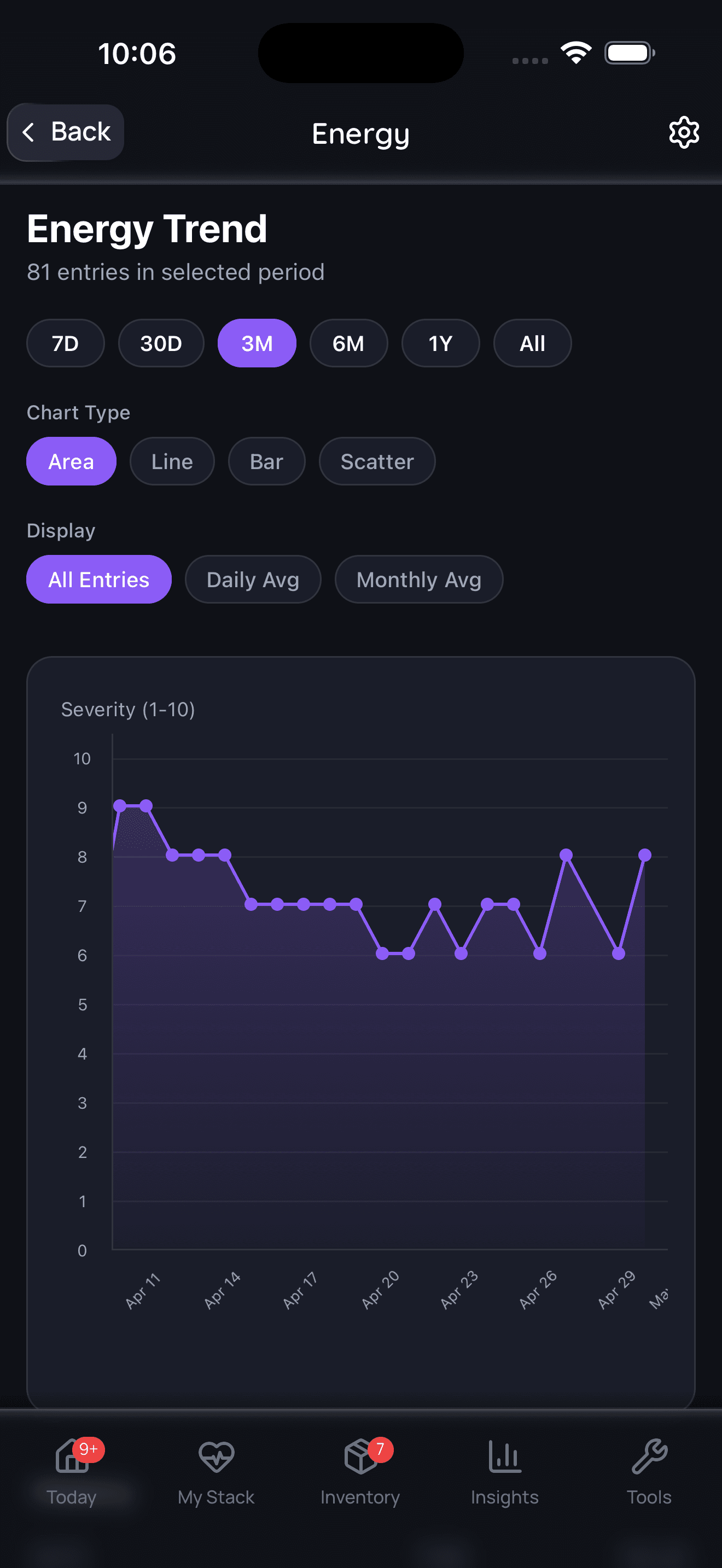
Symptom tracking is informational and should be interpreted with a qualified clinician.
The Science
Wierman's review supports small benefits in quality of life and mood in women with primary or secondary adrenal insufficiency, but not consistent benefit for anxiety or sexual function [1]. Rutkowski's review frames DHEA as a compound with plausible but uneven evidence across mood, fertility, vaginal symptoms, and wellbeing, while warning against inflated anti-aging conclusions [4]. Elraiyah's meta-analysis argues strongly against overselling oral DHEA for normal postmenopausal women, particularly for libido, weight, glucose, and lipids [2].
The practical benefit summary is therefore selective:
- potentially useful in specific deficiency states,
- more convincing for local vaginal use than for oral anti-aging use,
- weak for athletic performance,
- mixed for broad menopause symptom relief unless the use case is specifically vaginal GSM [1][2][5][6].
Side Effects & Safety
The Basics
DHEA side effects look exactly like what you would expect from a hormone precursor that can feed both androgen and estrogen pathways. The most common real-world complaints are acne, oily skin, unwanted facial or body hair, scalp hair shedding, sleep disruption, irritability, and hormone-sensitive symptom flare-ups. In some users the problem is not that DHEA "does nothing." It is that it clearly does something, just not something they wanted.
There is also a dosage illusion with DHEA. Because it is sold as a supplement, many people assume 25 mg or 50 mg must be modest. That is not a safe assumption. A modest-looking oral dose can still materially change testosterone, estradiol, skin oil production, libido, and lipid markers depending on the user [1][3][6].
The higher-risk groups are the ones you would expect: people with hormone-sensitive cancers or strong cancer risk concerns, pregnant or breastfeeding individuals, adolescents, athletes subject to anti-doping rules, and anyone already on hormone therapy or juggling multiple endocrine medications.
Knowing the possible side effects is useful. Catching them early in your own body is what keeps a hormone-support routine from drifting into a hormone-problem routine. Doserly lets you log symptoms by severity, timing, and likely trigger, so you can tell whether the breakouts, irritability, palpitations, or sleep changes started after the supplement or before it.
The app also cross-references your entire stack and helps you spot patterns that are easy to miss when you're relying on memory. When a symptom appears only on higher-dose days or after adding a second hormone-oriented compound, Doserly gives you a cleaner signal before the problem grows.
Connect protocol changes to labs and health markers.
Doserly can keep lab results, biomarkers, symptoms, and dose history close together so follow-up conversations have better context.
Insights
Labs and trends
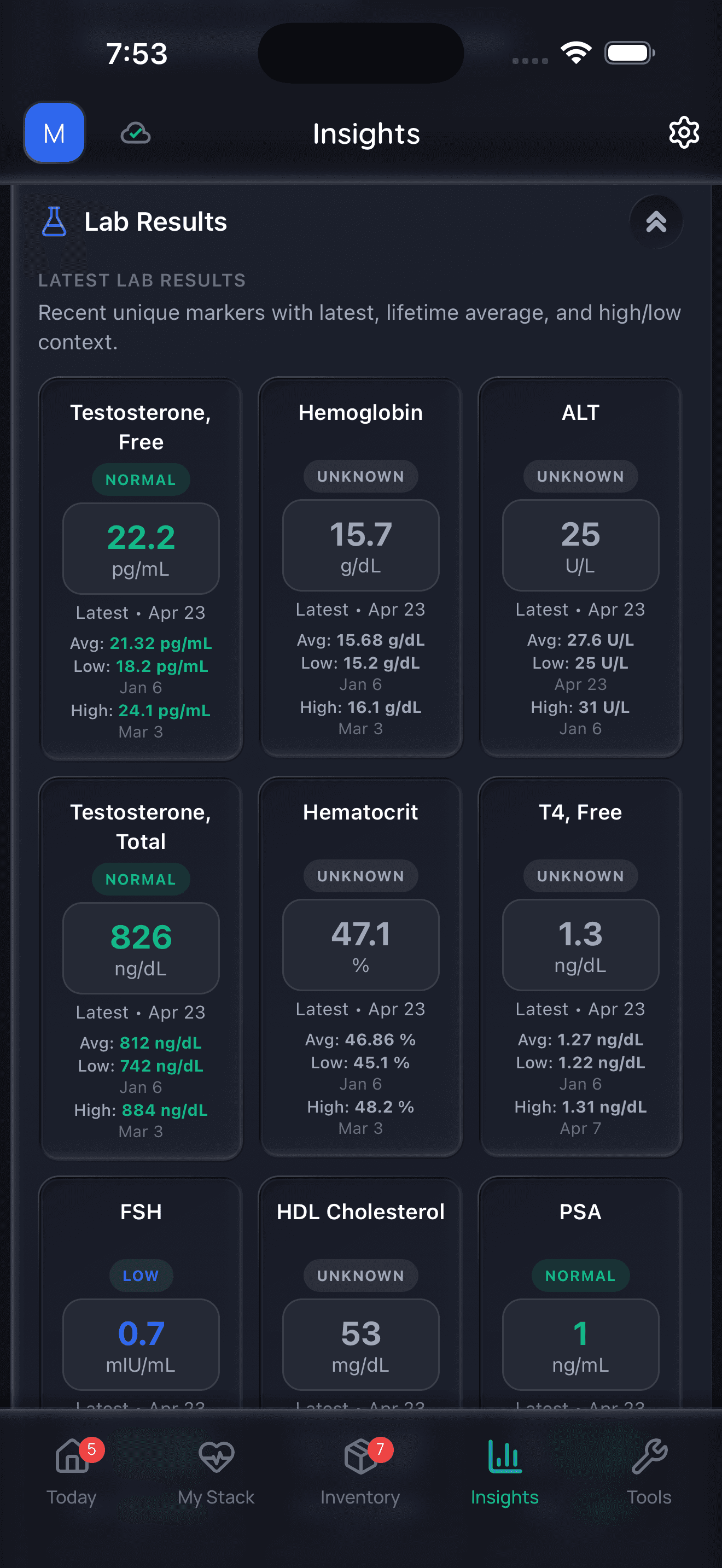
Doserly organizes data; it does not diagnose or interpret labs for you.
The Science
Wierman's 2022 review highlights androgenic adverse effects such as acne and hirsutism, and emphasizes that DHEA raises testosterone and estradiol enough to create long-term concern in women at risk for hormone-sensitive conditions [1]. Elraiyah's meta-analysis found that most systemic oral DHEA trials did not show major serious adverse events, but androgenic and dermatologic symptoms were the most common recurring complaint pattern, and adverse-effect reporting was generally sparse [2]. The lipid meta-analysis adds a cardiometabolic caution by showing that DHEA may reduce HDL-C, especially in women [3].
USADA's athlete guidance adds another practical safety layer: DHEA is a high-risk supplement category because it is commonly found in prohibited or mislabeled products, and it is banned in sport at all times [6]. For users outside sport, the takeaway is not only doping risk, it is product-quality risk. If a supplement category is famous for hormone-like effects and labeling variability, caution should be the default.
Dosing & Usage Protocols
The Basics
There is no universal "good DHEA dose." The best-supported answer is that the right dose depends on why it is being used and whether the person actually has a low-DHEA state worth correcting. If that sounds less exciting than the marketing, it is because it is closer to the truth.
For women in physiologic replacement discussions, the literature reviewed by Wierman points toward about 25 mg/day as a more physiologic target, with 50 mg/day often pushing some users toward higher androgen or estrogen exposure than intended [1]. Broader study literature has used 25 to 200 mg/day, with 50 to 100 mg/day common in older anti-aging or performance-oriented trials, but those higher ranges did not consistently produce better outcomes [1][4][5].
A practical rule matters more than any single number: if you are not tracking labs or symptoms, you are dosing blind. That is especially true with DHEA because some users feel nothing until side effects appear.
Getting the dose right matters more than most people realize. Too little may be ineffective, too much may create unwanted hormonal effects, and inconsistency makes interpretation harder. Doserly keeps a clean record of the exact amount, form, and timing you used, so you can match symptom changes or lab shifts to what you actually took rather than what you think you took.
The app also makes form changes easier to interpret. If you move from a 5 mg sublingual tablet to a 25 mg capsule, or from occasional use to daily use, Doserly keeps the protocol history intact and makes it obvious when a dose change coincides with a benefit or a side effect.
Turn symptom and safety notes into a clearer timeline.
Doserly helps you log doses, symptoms, and safety observations side by side so patterns are easier to discuss with a qualified clinician.
Pattern view
Logs and observations

Pattern visibility is informational and should be reviewed with a clinician.
The Science
Wierman reports that clinical trials in women commonly used 25 to 50 mg/day, while some studies used pharmacologic doses far above that range [1]. Examine's visible dose summary, used only as a secondary monograph cross-check within this KB, similarly notes a study range of 25 to 200 mg/day with 50 to 100 mg/day commonly examined, but the strongest guide references still point to the physiologic replacement literature rather than supplement marketing [1].
Reasonable dosing principles for systemic oral DHEA are:
- use only with a clear rationale,
- favor the lowest dose likely to answer the clinical question,
- allow time for reassessment,
- check for side effects and lipid changes,
- do not stack with multiple other hormone-oriented supplements if you want interpretable feedback.
For vaginal prasterone, follow the prescription-specific dosing instructions rather than oral DHEA assumptions [1][6].
What to Expect
Systemic DHEA is usually not an immediate-feeling supplement. If a person is going to notice a benefit, it often appears over days to weeks rather than hours. Side effects, however, may show up earlier than benefits.
Days 1-7: Some users notice nothing at all. Others notice earlier warning signs first, such as oily skin, acne, irritability, sleep disruption, or a subtle increase in drive or stimulation.
Weeks 2-6: If the supplement is helping, this is when energy, libido, or general wellbeing are most likely to begin shifting. In hormone-deficient users, the effect may feel like "more normal" rather than "supercharged."
Weeks 6-12: This is a reasonable reassessment window. By now, the pattern is usually clearer. Either the supplement is producing a meaningful, tolerable effect, or it is creating side effects, lab drift, or mostly placebo-level ambiguity.
Beyond 3 months: Long-term use only makes sense if there is a clear benefit signal and a clear reason to continue. If the main change is acne, oily skin, hair changes, or worse lipids, the experiment is probably not paying for itself.
Interactions & Compatibility
Potentially Complementary, Usually Only With Clinician Oversight
- Pregnenolone: Another upstream steroid precursor. Sometimes discussed in the same clinical conversations as DHEA, but stacking the two increases interpretive noise and may amplify downstream hormone shifts.
- Deficiency-directed support such as Vitamin D3, Magnesium, or Zinc: These are not direct DHEA cofactors, but they are commonly part of broader fatigue or endocrine workups when deficiencies are present.
Caution / Avoid
- 7-Keto DHEA: Not interchangeable with DHEA. Combining them rarely improves clarity and may make hormone or body-composition experiments harder to interpret.
- Tongkat Ali, Tribulus Terrestris, and D-Aspartic Acid: These androgen-oriented supplements may increase the chance of acne, irritability, hair changes, or other unwanted endocrine effects when stacked casually.
- Prescription testosterone, estrogen, fertility protocols, or HRT/TRT: These combinations may be clinically appropriate in some cases, but they are not good self-experiment territory.
- Hormone-sensitive conditions: Extra caution is warranted if there is a history of breast, ovarian, or prostate cancer risk concerns.
- Sport participation under anti-doping rules: DHEA is prohibited at all times and should be treated as incompatible with tested sport [6].
How to Take
If DHEA is being tried at all, the cleanest approach is to use one form, one dose, and one consistent schedule long enough to judge it properly. Switching products every few days or stacking DHEA with multiple other hormone-support compounds makes it almost impossible to know what is helping or hurting.
For oral use, consistency matters more than chasing a perfect meal-timing rule. Many users prefer morning or earlier-day dosing because DHEA is linked to adrenal hormone rhythms, but the stronger evidence point is not "morning is magic." It is "use it the same way every time if you want interpretable results" [1].
For topical products, follow the label or clinician instructions closely and avoid assuming that a cream marketed for skin, libido, or "balance" is equivalent to a standardized clinical protocol. For vaginal prasterone, use the prescription-specific instructions rather than oral DHEA logic [1][6].
Choosing a Quality Product
DHEA is exactly the kind of supplement where sloppy manufacturing matters. The category is hormone-active, quality control has been reported as inconsistent, and sports authorities treat it as a high-risk class because labels and contents are not always trustworthy [1][6].
What to look for:
- a single-ingredient label with exact DHEA milligrams,
- no vague "test booster" or "anti-aging matrix" blends,
- third-party testing or reputable manufacturing disclosure,
- clear lot or batch information,
- conservative dose options, not only 50 mg and 100 mg products.
What to avoid:
- proprietary blends,
- aggressive bodybuilding branding,
- products bundled with multiple prohormone-like compounds,
- products that make disease-treatment promises.
For athletes, the practical answer is even simpler: certified-for-sport branding does not override the fact that DHEA itself is prohibited [6].
Storage & Handling
Store DHEA in a cool, dry place with the container tightly closed. Avoid leaving it in hot cars, humid bathrooms, or direct sunlight for prolonged periods. Keep hormone-active supplements away from children and pets, and do not transfer them into unlabeled organizers if someone else in the home might mistake them for ordinary vitamins.
If you use topical DHEA products, wash hands after application unless the product directions say otherwise. Avoid casual skin-to-skin transfer to partners or children immediately after use.
Lifestyle & Supporting Factors
DHEA works best as a monitored experiment, not as a substitute for basic health work. If fatigue, low mood, low libido, or poor recovery are the reasons for trying it, the surrounding context still matters:
- sleep quality,
- calorie intake,
- protein intake,
- stress load,
- resistance training and activity level,
- alcohol use,
- iron, thyroid, and vitamin status,
- baseline and follow-up hormone labs.
The most useful lab conversation often includes some combination of DHEAS, total and free testosterone, estradiol, SHBG, lipid markers, and the specific symptom target that prompted the trial in the first place. If no one can say what success would look like in measurable terms, DHEA is probably being used too casually.
Regulatory Status & Standards
United States: DHEA is sold as a dietary ingredient in the U.S. supplement market. USADA also notes that one prescription vaginal prasterone product is used medically for certain menopause-related symptoms, which is a separate regulatory situation from over-the-counter oral DHEA [6].
Canada and many non-U.S. jurisdictions: USADA states that in almost all countries except the United States, DHEA is treated as a controlled anabolic steroid [6]. That statement is a useful warning, but not a substitute for checking current country-specific rules before purchase, import, or travel.
Athletes and anti-doping: DHEA is prohibited at all times under WADA category S1, Anabolic Agents [6]. ODS also states that the minimal research on DHEA for athletic performance shows no evidence of benefit [5]. This is one of the clearest supplement cases where legal retail availability in the U.S. does not mean acceptable use in sport.
Clinical-trial picture: The current dossier is built mostly on older randomized trials and review literature rather than a strong contemporary trial pipeline. That fits the overall theme of DHEA: large consumer interest, but a much thinner modern evidence base than the marketing implies.
FAQ
Does DHEA increase testosterone?
It can. DHEA is a precursor to testosterone and estradiol, so supplementation can raise downstream sex hormones, especially at higher doses or in sensitive users [1].
Is DHEA the same as pregnenolone?
No. Both sit upstream in steroid synthesis, but they are different molecules with different downstream pathways and different supplementation logic.
Is DHEA the same as 7-Keto DHEA?
No. 7-Keto DHEA is a distinct metabolite that is specifically marketed as non-converting with respect to sex hormones. Parent DHEA can convert downstream into sex hormones.
How long does DHEA usually take to work?
If it is going to help, the first meaningful pattern often appears over 2 to 6 weeks. Side effects may appear sooner than benefits.
Can women take DHEA?
Women do use DHEA, especially in adrenal-insufficiency or menopause-related contexts, but the benefits are not uniform and androgenic side effects are a real concern [1][2].
Is vaginal prasterone the same thing as oral DHEA?
Not in practical terms. Vaginal prasterone is a local prescription therapy with a more specific evidence base, whereas oral DHEA is a systemic supplement experiment [1][2][6].
Can DHEA help with fatigue?
Sometimes, especially if low-DHEA physiology is part of the picture. But DHEA is not a reliable general anti-fatigue supplement for every tired person.
Can DHEA cause acne or hair loss?
Yes. Acne, oily skin, unwanted facial or body hair, and scalp hair changes are among the more common community and clinical side-effect themes [1][2][3][6].
Should athletes use DHEA?
No. It is prohibited at all times under anti-doping rules, and performance benefits are not supported by the limited evidence [5][6].
Should I take DHEA if my labs are normal?
That is where the benefit story becomes least convincing. DHEA is most defensible when there is a clear low-DHEA or adrenal-androgen rationale, not simply because a person wants a general anti-aging edge.
Myth vs. Fact
Myth: DHEA is a harmless anti-aging hormone everyone should take after 40.Fact: DHEA declines with age, but replacing it has not produced reliable anti-aging benefits in healthy adults, and it can create real hormone-like side effects [1][2][4].
Myth: Because DHEA is sold over the counter, it is basically a vitamin.Fact: DHEA behaves like a hormone precursor, not like a standard nutrient. That is why both benefits and side effects can look endocrine rather than nutritional [1][4].
Myth: More DHEA means more benefit.Fact: Higher doses are more likely to raise testosterone and estradiol, but not more likely to guarantee better outcomes. They may simply create more side effects [1][2][3].
Myth: DHEA and 7-Keto DHEA are interchangeable.Fact: They are distinct compounds with different downstream hormone implications and different use cases.
Myth: If vaginal DHEA helps sexual symptoms, oral DHEA should do the same.Fact: The evidence for local vaginal prasterone is stronger and more targeted than the evidence for systemic oral DHEA [1][2][6].
Myth: DHEA is a smart performance supplement for athletes.Fact: It is banned by anti-doping rules and has not shown convincing performance benefit in the limited research reviewed by NIH ODS [5][6].
Sources & References
- Wierman ME, Kiseljak-Vassiliades K. Should Dehydroepiandrosterone Be Administered to Women? J Clin Endocrinol Metab. 2022;107(6):1679-1685. https://pmc.ncbi.nlm.nih.gov/articles/PMC9113789/
- Elraiyah T, Sonbol MB, Wang Z, et al. The Benefits and Harms of Systemic Dehydroepiandrosterone (DHEA) in Postmenopausal Women With Normal Adrenal Function: A Systematic Review and Meta-analysis. J Clin Endocrinol Metab. 2014;99(10):3536-3542. https://pmc.ncbi.nlm.nih.gov/articles/PMC5393492/
- Asbaghi O, Ghanbari N, Shekari M, et al. Effects of dehydroepiandrosterone (DHEA) supplementation on the lipid profile: A systematic review and dose-response meta-analysis of randomized controlled trials. PubMed PMID: 32675010. https://pubmed.ncbi.nlm.nih.gov/32675010/
- Rutkowski K, Sowa P, Rutkowska-Talipska J, Kuryliszyn-Moskal A, Rutkowski R. Dehydroepiandrosterone (DHEA): hypes and hopes. Drugs. 2014. https://pubmed.ncbi.nlm.nih.gov/25022952/
- National Institutes of Health Office of Dietary Supplements. Dietary Supplements for Exercise and Athletic Performance - Health Professional Fact Sheet. https://ods.od.nih.gov/factsheets/ExerciseAndAthleticPerformance-HealthProfessional/
- U.S. Anti-Doping Agency. What Should Athletes Know about DHEA? https://www.usada.org/spirit-of-sport/athletes-know-about-dhea/
Related Supplement Guides
Same Category
Common Stacks / Comparison Points
Related Health Goal