
In this guide
Can you increase testosterone naturally?
Often, yes, if something in your life is pushing it down. Losing excess weight is the best-studied way: it raised total testosterone by about 2.5 nmol/L (72 ng/dL) on average after dieting, and more after weight-loss surgery. Guidelines call this kind of low testosterone potentially reversible. It does not work when the testes or pituitary gland are damaged. [3], [1], [2]
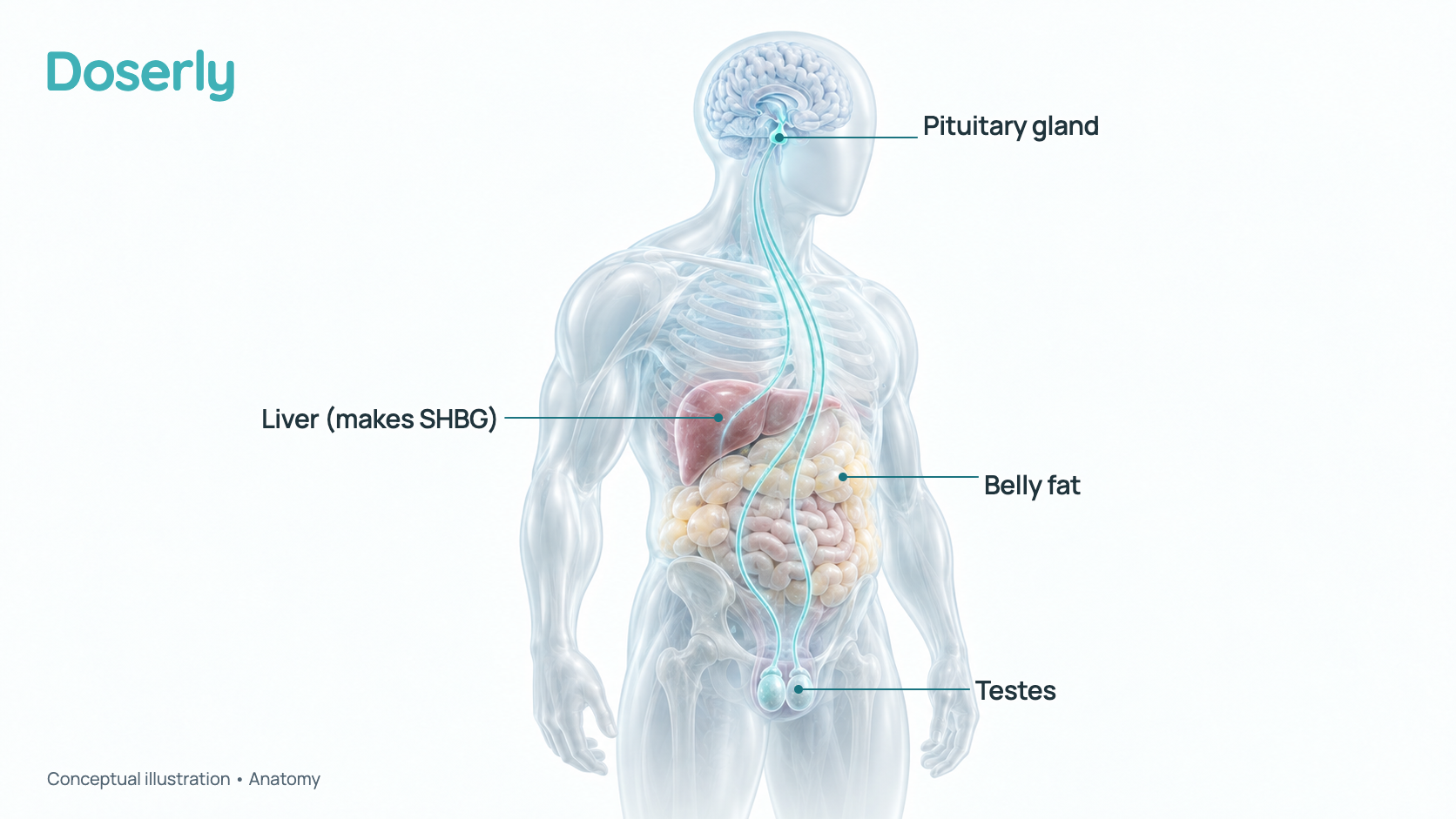
Doctors split low testosterone into two broad kinds. Organic low testosterone comes from a disease or injury of the testes or the pituitary gland, the pea-sized gland under the brain that sends the testes their signal. Functional low testosterone has no such damage: the system is intact but is being turned down by something else, most often obesity, and also opioid painkillers, steroid medicines, serious illness, severe dieting, extreme exercise, heavy drinking or sleep problems. Only the functional kind can be reversed by lifestyle change. [1], [19], [20]
The rise is usually modest, and it is larger the more weight a man loses and the heavier he was to start with. [3], [21] As a worked example, not a study result: a man at 10 nmol/L (about 288 ng/dL) who gained the average 2.5 nmol/L would reach 12.5 nmol/L, above every guideline line in the table below. A man starting at 5 nmol/L would still be well below all of them.
This guide is about men. It covers what raises testosterone without prescription testosterone, and what the evidence says about each popular method. It does not restate supplement doses; each supplement has its own Doserly guide, linked below. If you are looking for testosterone for women, see testosterone therapy for women.
Raising testosterone naturally: the key numbers
This table shows what each major clinical guideline counts as low testosterone, how it wants the test done, and what it says about weight loss and lifestyle change. Checked September 2026.
| Guideline (version, year) | Low testosterone line | How it is measured | What it says about lifestyle and weight loss |
|---|---|---|---|
| Endocrine Society statement (July 2026) | Near 300 ng/dL (about 10.4 nmol/L) | At least two early-morning fasting tests | For low testosterone caused by overweight or obesity (a BMI over 27) with no other cause, weight loss is typically the first treatment |
| Endocrine Society guideline (2018) | 264 ng/dL (9.2 nmol/L), the lower limit in healthy young men | Two morning fasting tests | Functional causes such as obesity, opioids or illness "might be reversible by treating the underlying condition"; check for eating disorders, excessive exercise, sleep disorders and drug use first |
| AUA, American Urological Association (2018) | Below 300 ng/dL | Two early-morning tests | Counsel every man with low testosterone on lifestyle change; overweight men on weight-loss programs alongside testosterone therapy |
| EAU, European Association of Urology (2026) | 12 nmol/L (about 350 ng/dL) | Two morning fasting tests, 7–10 am | Improve lifestyle and lose weight, stop medicines that interfere and treat other illnesses before starting testosterone (strong recommendation) |
| EAA, European Academy of Andrology (2020) | Borderline 8–12 nmol/L: add a free testosterone test | Morning fasting tests on two days | Recommends exercise and weight loss for overweight men with functional low testosterone; recommends against testosterone as a weight-loss treatment |
| BSSM, British Society for Sexual Medicine (2023) | 12 nmol/L, or free testosterone below 225 pmol/L | Two morning tests | Evidence does not support lifestyle change alone as first-line treatment; endorses lifestyle change together with testosterone for men with symptoms |
| CUA, Canadian Urological Association (2021) | 10 nmol/L | Two morning tests, 7–11 am | Look for and manage reversible causes, then retest (strong recommendation); lifestyle change may help (weak); "T-boosters cannot be recommended" |
| ESA, Endocrine Society of Australia (2016) | No single number | Repeated morning fasting tests | Put exercise and weight loss first; a 10% weight loss raises testosterone by 2–3 nmol/L; if it stays low after successful weight loss, look again for another cause |
| Society for Endocrinology, UK (2022) | Benefit of treatment shown below 8 nmol/L; little evidence above 12 | Morning fasting tests | Obesity-related low testosterone is reversible, and the rise is proportional to the weight lost |
| VA, US Department of Veterans Affairs (January 2026) | 264 ng/dL | Early morning (6–10 am), fasting, at least two tests | Do not test during a short-term calorie deficit, opioid use or acute illness; low total testosterone from obesity may return to normal with weight loss |
| AACE, American Association of Clinical Endocrinology, obesity guideline (2016) | Not stated | Not stated | Treatment should include weight loss; more than 5–10% weight loss is needed for a meaningful rise. Men with true hypogonadism and obesity who are not seeking fertility should be considered for testosterone together with lifestyle change |
| Brazilian societies' joint statement (2026) | Not stated here | Not stated here | Strongly recommends lifestyle change (weight loss, exercise) as first-line therapy for men with overweight and functional low testosterone |
| ICSM, International Consultation on Sexual Medicine (2024) | 12 nmol/L (about 350 ng/dL) | Fasting morning tests, 7–11 am, repeated at least twice | Lifestyle wording not reviewed; notes a possible role for GLP-1 weight-loss medicines in obesity-related low testosterone |
| Australia's PBS (subsidy rule, not a guideline; checked September 2026) | Under 6 nmol/L, or 6–15 nmol/L with a high LH, for men 40 and older without a known testicular or pituitary disorder | At least two morning samples on different days | Does not subsidize testosterone when the low level is due to age, obesity, heart disease, infertility or drugs |
[6], [1], [22], [5], [2], [7], [19], [4], [23], [17], [24], [25], [26], [27]
Most bodies put weight loss and other reversible causes first for men whose low testosterone comes with overweight or obesity: the Endocrine Society, the European urology and andrology guidelines, the Canadian urologists, the Australian endocrinologists and the VA. The BSSM is the clear exception: for men with bothersome symptoms it pairs lifestyle change with testosterone from the start. The AUA sits between the two, counseling lifestyle change for everyone and weight loss alongside testosterone for overweight men. The AACE obesity guideline also supports testosterone alongside lifestyle change for men with true hypogonadism and obesity. [6], [5], [2], [7], [22], [24]
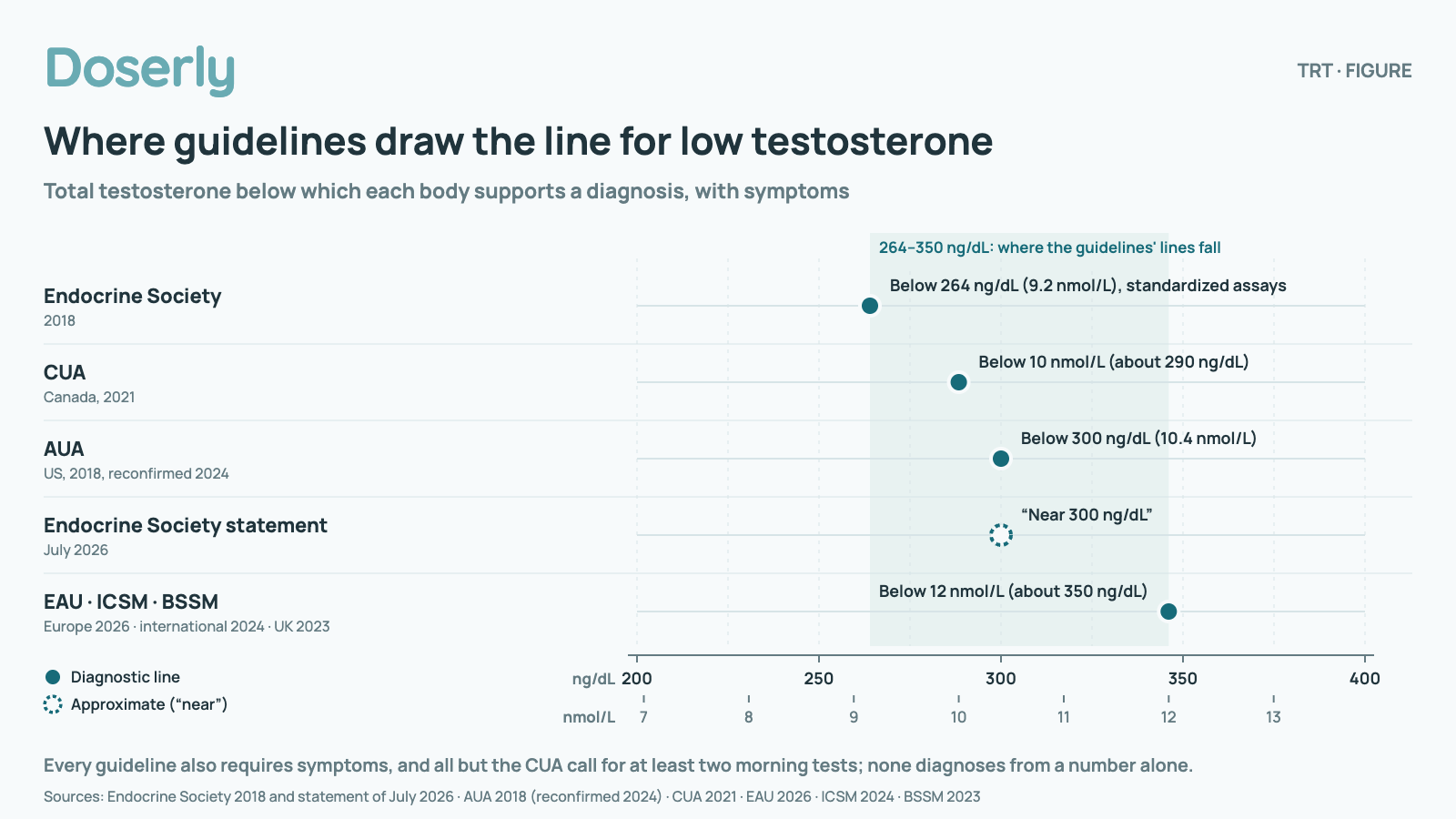
Where guidelines draw the line for low testosterone
Total testosterone below which each body supports a diagnosis, with symptoms.
Each line runs from 200 ng/dL (7 nmol/L, left) to 400 ng/dL (14 nmol/L, right); the shaded part is 264–350 ng/dL, where the guidelines' lines fall. A dashed circle means an approximate line.
- Endocrine Society (2018)
- Below 264 ng/dL (9.2 nmol/L), standardized assays
- CUA (Canada, 2021)
- Below 10 nmol/L (about 290 ng/dL)
- AUA (US, 2018, reconfirmed 2024)
- Below 300 ng/dL (10.4 nmol/L)
- Endocrine Society statement (July 2026)
- “Near 300 ng/dL”
- EAU · ICSM · BSSM (Europe 2026 · international 2024 · UK 2023)
- Below 12 nmol/L (about 350 ng/dL)
Every guideline also requires symptoms, and all but the CUA call for at least two morning tests; none diagnoses from a number alone.
Why do guidelines disagree?
Because the rise from lifestyle change is real but small, and it often fades. Three findings drive the split:
- The average gain is modest. Pooled studies found about 2.5–2.9 nmol/L after a low-calorie diet. The European urology guideline calls the gain from diet and physical activity "small (1-2nmol)". [3], [21], [5]
- Weight comes back. The same guideline notes that 60–86% of lost weight is regained after three years. In a large diabetes trial, the testosterone gain from an intensive lifestyle program at one year had shrunk by four years. [5], [28]
- Numbers and symptoms do not always move together. In the European Male Ageing Study (EMAS), 42.9% of men with secondary low testosterone returned to normal levels over 4.3 years, more often after losing weight. But "symptoms did not show significant concurrent improvement". A 2020 review, by contrast, concluded that weight loss and exercise improve obesity-related low testosterone and its sexual symptoms. [18], [29]
The lifestyle-first guidelines weigh the long-term health benefits of weight loss and the absence of drug side effects. The BSSM weighs the time a man may spend with symptoms while trying. Both views are shown in what guidelines say to do.
What gains can you expect?
| Change | Average rise in total testosterone | Where the number comes from |
|---|---|---|
| Diet-based weight loss | About 2.5 nmol/L (72 ng/dL) | Meta-analysis of 44 studies, 1,774 men, median follow-up 26 weeks [3] |
| Weight-loss (bariatric) surgery | About 7.2 nmol/L (208 ng/dL) | Same meta-analysis [3] |
| Each kilogram lost | About 0.6% | Men followed for 36 months after diet or surgery [30] |
| A 10% weight loss | 2–3 nmol/L (58–87 ng/dL) | Endocrine Society of Australia estimate [4] |
| An intensive lifestyle program in type 2 diabetes | 14% at 1 year, smaller by 4 years | Look AHEAD, 890 men [28] |
| More exercise during a small calorie deficit | 2.06 vs 0.79 nmol/L (200–300 vs under 150 minutes a week) | Randomized trial, 90 men with obesity [31] |
| Exercise alone, men with normal levels | No change | Meta-analysis of 11 randomized trials, 421 men [8] |
These averages come from different study designs and are not additive. The testosterone unit converter switches between nmol/L and ng/dL (1 nmol/L is 28.84 ng/dL).
Where these numbers come from
Each guideline row comes from that body's current document: the Endocrine Society statement of 16 July 2026, the Endocrine Society guideline (2018), the AUA testosterone deficiency guideline (2018), the EAU guidelines on sexual and reproductive health (2026 edition), the EAA functional hypogonadism guideline (2020), the BSSM guidelines (2023), the CUA guideline (2021), the Endocrine Society of Australia position statement (2016), the Society for Endocrinology guideline (2022), the VA recommendations (January 2026), the AACE obesity guideline (2016), the Brazilian joint position statement (2026) and the ICSM 2024 recommendations (published 2025). The Australian row is the Pharmaceutical Benefits Scheme (PBS) restriction for testosterone undecanoate injection, a subsidy rule rather than a clinical guideline. [6], [1], [22], [5], [2], [7], [19], [4], [23], [17], [24], [25], [26], [27]
The average gains come from the meta-analyses and trials named in the table. The 2024 meta-analysis reports its results as pooled changes in nmol/L; we converted them to ng/dL at 28.84 ng/dL per nmol/L. [3]
Not used: a claim that natural changes typically add 100–200 ng/dL, a claim that effective supplements raise testosterone by 10–15%, and age-band "normal ranges" such as 400–900 ng/dL. We found no primary source for any of them. The ICSM row gives its threshold and testing rules only, because we could not read its lifestyle wording directly.
Why do weight, sleep and diet change testosterone?
Because they act on the chain of signals that makes testosterone, and on the protein that carries it in the blood. The effects of weight and sleep on testosterone levels are measured in people; some of the explanations for them are still proposed rather than proven.
The signal chain. The hypothalamus in the brain signals the pituitary gland, which releases LH (luteinizing hormone). LH tells the Leydig cells in the testes to make testosterone. In functional low testosterone, this chain is turned down without being damaged. [1]
Body fat. Excess weight lowers SHBG (sex hormone-binding globulin), the protein that carries most testosterone in the blood, so total testosterone falls. Excess weight also dampens the brain's LH signal, so LH and FSH are often in the normal range but low for the testosterone level. Because SHBG is low too, the VA notes that free testosterone, the unbound part, "may remain within normal limits" while total testosterone is low. [4], [32], [17], [19] When men lose weight, the reverse happens. Total testosterone and SHBG rise in proportion to the weight lost, and in pooled studies LH and FSH rose and estradiol fell. [33], [21]
Sleep. "The majority of the daily testosterone release in men occurs during sleep," as one research team put it, which may explain why cutting sleep short lowers testosterone (see sleep). No trial has tested whether sleeping longer raises testosterone in men who sleep too little. [34]
Very low energy intake. Severe calorie restriction can shut testosterone production down. In soldiers on an 8-week US Army Ranger course, with a daily energy deficit of 1,000–1,200 calories plus little sleep, testosterone in the group with the larger deficit approached castrate levels (an average of 4.5 nmol/L, about 130 ng/dL). It recovered promptly once they ate normally again. A short spell is different: 4 days of low energy availability did not change testosterone in 6 exercising men. [15], [35], [36]
Stress. Stress is often blamed, through the stress hormone cortisol. No trial has shown that reducing stress raises resting testosterone in the blood, and in the one-week sleep study testosterone fell without cortisol rising. Stress may still matter through sleep, alcohol and eating habits. [34]
What does the research show?
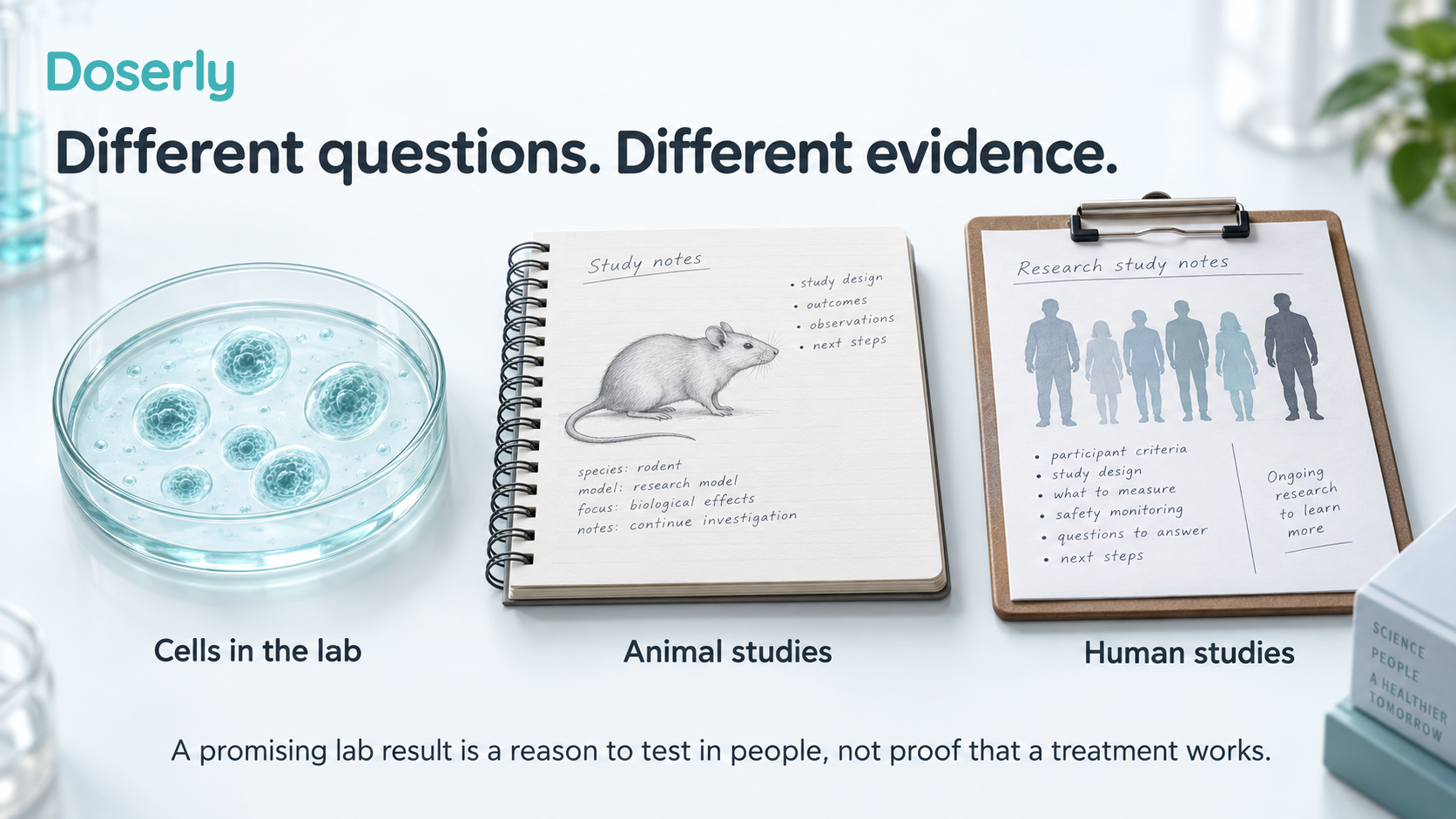
Weight loss has the strongest evidence for raising testosterone, from large pooled studies and randomized trials. Sleep loss and heavy drinking clearly lower it. Exercise helps mainly when it comes with weight loss, and many popular claims (cold plunges, sunlight, abstinence, most supplements) have little or no support. [3], [34], [8], [11]
Does losing weight raise testosterone?
Yes, and the more weight lost, the bigger the rise.
- Pooled studies. A 2024 meta-analysis of 44 studies (1,774 men, median follow-up 26 weeks) found total testosterone rose by about 2.5 nmol/L after a low-calorie diet and 7.2 nmol/L after weight-loss surgery. Free testosterone rose by 19.9 pmol/L and 58.0 pmol/L. Men who started heavier, or with lower SHBG or testosterone, gained more. An earlier meta-analysis of 24 studies found the same pattern (about 2.9 and 8.7 nmol/L) and named the amount of weight lost as the best predictor of the rise. [3], [21]
- Randomized trials. In a 52-week trial of 118 men with overweight or obesity, total testosterone, SHBG, free testosterone and erection scores all rose with weight loss, with no difference between a high-protein and a high-carbohydrate diet. In 890 men with type 2 diabetes in the Look AHEAD trial, an intensive lifestyle program raised testosterone by 14% at one year, and the effect faded over four years. [37], [28]
- Belly fat. In 246 men in the Diabetes Prevention Program, losing fat around the organs (visceral fat) and the fat layer beneath the skin were each linked with higher testosterone and SHBG. [38]
- Very low-calorie diets. In 13 men with severe obesity (median BMI 42.7), 12 weeks of strict calorie restriction took testosterone from 6.97 to 13.21 nmol/L (201 to 381 ng/dL). There was no comparison group. [39]
- Free testosterone needs more. In 2,395 EMAS men followed for 4.4 years, total testosterone rose in proportion to weight lost, but free testosterone changed clearly only in men who lost (or gained) 15% or more of their weight. [33]
How much weight counts? The AACE obesity guideline says more than 5–10% weight loss is needed for a meaningful rise, and men followed for three years after diet or surgery gained about 0.6% in total testosterone for each kilogram lost. [24], [30]
Does exercise raise testosterone?
Not much on its own, in men whose testosterone is already normal. It helps most when it comes with weight loss.
- Healthy men. A 2021 meta-analysis of 11 randomized trials in 421 inactive but healthy men (median 12 weeks of aerobic, resistance or combined training) found no effect on resting total testosterone (standardized mean difference 0.00). The type of exercise, age and weight made no difference. [8]
- Older men. In a meta-analysis of 22 studies in men aged 60 and over, resistance training did not change testosterone, while aerobic and interval training gave small rises, but 13 of the studies had no comparison group. In one such study, 22 lifelong inactive men aged about 62 raised total testosterone by about 17% with interval training. [40], [41]
- Men with obesity or diabetes. Pooled studies found a moderate rise with aerobic training in 62 men with obesity or type 2 diabetes. In a 24-week randomized trial, 90 men with abdominal obesity all ate about 400 calories a day less than they needed. Men who exercised 200–300 minutes a week gained 2.06 nmol/L, against 0.79 nmol/L in men exercising under 150 minutes, and lost twice as much weight (6.2% vs 3.0%). In a Japanese lifestyle program, the rise in testosterone tracked the number of steps men took. [42], [31], [43], [44]
Do post-workout testosterone spikes build muscle? No. Testosterone rises briefly after heavy lifting, but in two training studies (12 and 56 young men), those short rises did not predict or add to gains in muscle size or strength. [45], [46]
Can too much exercise lower it? Yes, in a small group. Years of heavy endurance training can lower testosterone, a pattern researchers call the exercise-hypogonadal male condition, but a review found it "not a highly prevalent occurrence". The CUA lists extreme exercise among the reversible causes to check before treatment. [47], [19]
Does sleep affect testosterone?
Yes. Cutting sleep short lowers testosterone, and a full night without sleep lowers it more.
- One week of short nights. In 10 healthy young men, one week of 5-hour nights after three rested nights lowered daytime testosterone from 18.4 to 16.5 nmol/L (531 to 476 ng/dL), a 10–15% fall. It was a small lab study in which each man was compared with himself, not a randomized trial. The CUA cites a similar 10–15% figure. [34], [19]
- Pooled sleep-loss studies. A 2021 meta-analysis of 18 studies (252 men) found that a short spell of partial sleep loss had no clear effect, while a full night or more without sleep lowered testosterone. [48]
- Population surveys conflict. In one US survey, testosterone was 5.85 ng/dL lower for each hour less sleep and 6.18 ng/dL lower for each extra BMI unit. Another analysis of the same survey found that young men sleeping 6 hours or less were more likely to have high testosterone. Surveys show links, not causes. [49], [50]
Does treating sleep apnea raise testosterone?
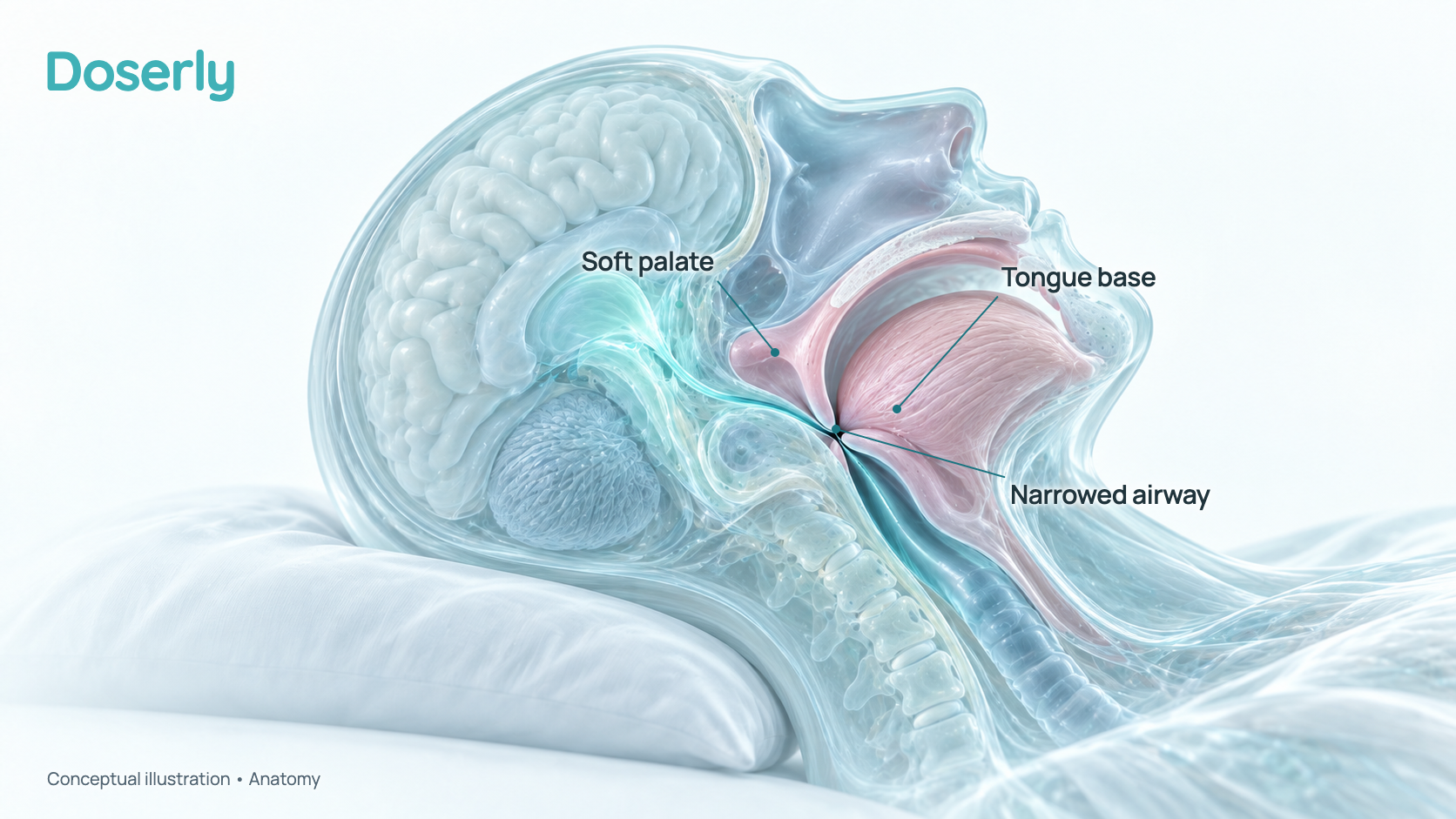
Not on its own, according to the pooled evidence. In obstructive sleep apnea, the airway keeps closing during sleep.
- CPAP. Pooled studies of 388 men found that CPAP (a bedside machine that keeps the airway open with air pressure) did not significantly change total testosterone (an average change of 1.08 nmol/L, with a range from −0.48 to 2.64). [9]
- Weight seems to explain the link. In 623 Australian men aged 41–86 tested with sleep studies and an accurate lab method, the link between sleep apnea and lower testosterone disappeared once age, weight and SHBG were taken into account. [51]
- Weight loss helped. In a randomized trial of 89 men with obesity and moderate to severe sleep apnea, an 8-week weight-loss and lifestyle program raised testosterone by 77.6 ng/dL (about 2.7 nmol/L) more than usual care. At 6 months the difference was 90.4 ng/dL. [52]
Sleep apnea is still worth treating for its own sake. It also matters for TRT: testosterone injections temporarily worsened night-time oxygen drops in men with severe sleep apnea. In a later survey of 599 of the 1,007 men in the T4DM trial (316 who had been on testosterone, 283 on placebo), self-reported new sleep apnea diagnoses during the trial were more common on testosterone (3.0% vs 0.4%). [53], [54]
Does what you eat change testosterone?
Less than most online advice suggests. The amount of weight you lose matters more than the type of diet.
- Very low-fat diets. Pooled studies (6 studies, 206 men) found total testosterone slightly lower on low-fat diets than on higher-fat diets. [55]
- Protein. Very high-protein, low-carbohydrate diets (protein at 35% or more of calories) lowered resting testosterone in pooled studies; moderate-protein, low-carbohydrate diets did not. A later commentary put the problem level above 3.4 g of protein per kg of body weight a day. In the 52-week weight-loss trial, a high-protein diet did no better or worse than a high-carbohydrate one. [56], [57], [37]
- Soy. Two meta-analyses, the larger covering 41 studies, found that soy protein and soy isoflavones do not change testosterone, free testosterone or estrogen in men. [58], [59]
- Keto. In 20 resistance-trained men eating fewer calories than they needed, a ketogenic diet had the same effect on hormones as a non-ketogenic low-carbohydrate diet. [60]
- Time-restricted eating. In 34 resistance-trained men eating within an 8-hour window for 8 weeks, testosterone fell compared with a normal eating pattern with the same calories. [61]
Do alcohol, cannabis and smoking lower testosterone?
- Alcohol, yes. In a randomized crossover study, 10 men drinking 40 g of alcohol a day for 3 weeks had testosterone 6.8% lower than when drinking alcohol-free beer. A meta-analysis of 21 studies found lower total and free testosterone and higher estradiol with regular drinking, but not after a single drinking session. The Endocrine Society lists alcohol abuse among the functional causes of low testosterone. [62], [63], [1]
- Cannabis, not clearly. In 1,577 US men, testosterone was the same in men who had ever used cannabis and men who never had (3.69 vs 3.70 ng/mL). [64]
- Smoking, no, but that is not a reason to smoke. Smokers had slightly higher testosterone than non-smokers (by 1.53 nmol/L) in pooled observational studies, and in EMAS, men who quit had a larger fall unrelated to weight. Smoking's harms far outweigh this. [65], [33]
Do NoFap, cold plunges, sunlight or saunas raise testosterone?
There is no good evidence that any of them raises resting testosterone.
- Abstinence ("NoFap"). The popular claim that testosterone peaks on day 7 of abstinence comes from a 2003 study of 28 men that was later retracted. A separate study of 10 men found higher testosterone after 3 weeks of abstinence, without reporting how much higher. [12], [66]
- Cold plunges. In 11 trained men, sitting in cold water after lifting blunted the usual post-workout rise in free testosterone, which was 10.4% below its starting level an hour later. No study has tested resting testosterone. [67]
- Saunas. In 27 men, a sauna on its own brought a short 15% rise, measured straight afterwards. A sauna after exercise did not add to the rise from the exercise. No study has tested resting levels. [68]
- Sunlight. In a pilot study of 6 older men, ultraviolet light after exercise did not change testosterone. [69]
- Plastics and chemicals. In a US survey, men aged 40–60 with more phthalate chemicals in their urine had lower testosterone. No study has tested whether avoiding them raises it. [70]
Has men's testosterone really halved in 50 years?
No source supports "halved". Studies do show a decline, but they disagree on why.
- In 1,532 Boston men followed from 1987 to 2004, testosterone fell more than ageing alone would explain, and the measured factors did not account for it. [71]
- In 5,350 Danish samples from 1982 to 2001, the fall disappeared once rising body weight was taken into account, and free testosterone did not fall. [72]
- In 4,045 young US men surveyed from 1999 to 2016, average testosterone fell, including among men with a normal BMI, although lab methods changed over the period. [73]
The low testosterone guide covers age and population trends in more detail.
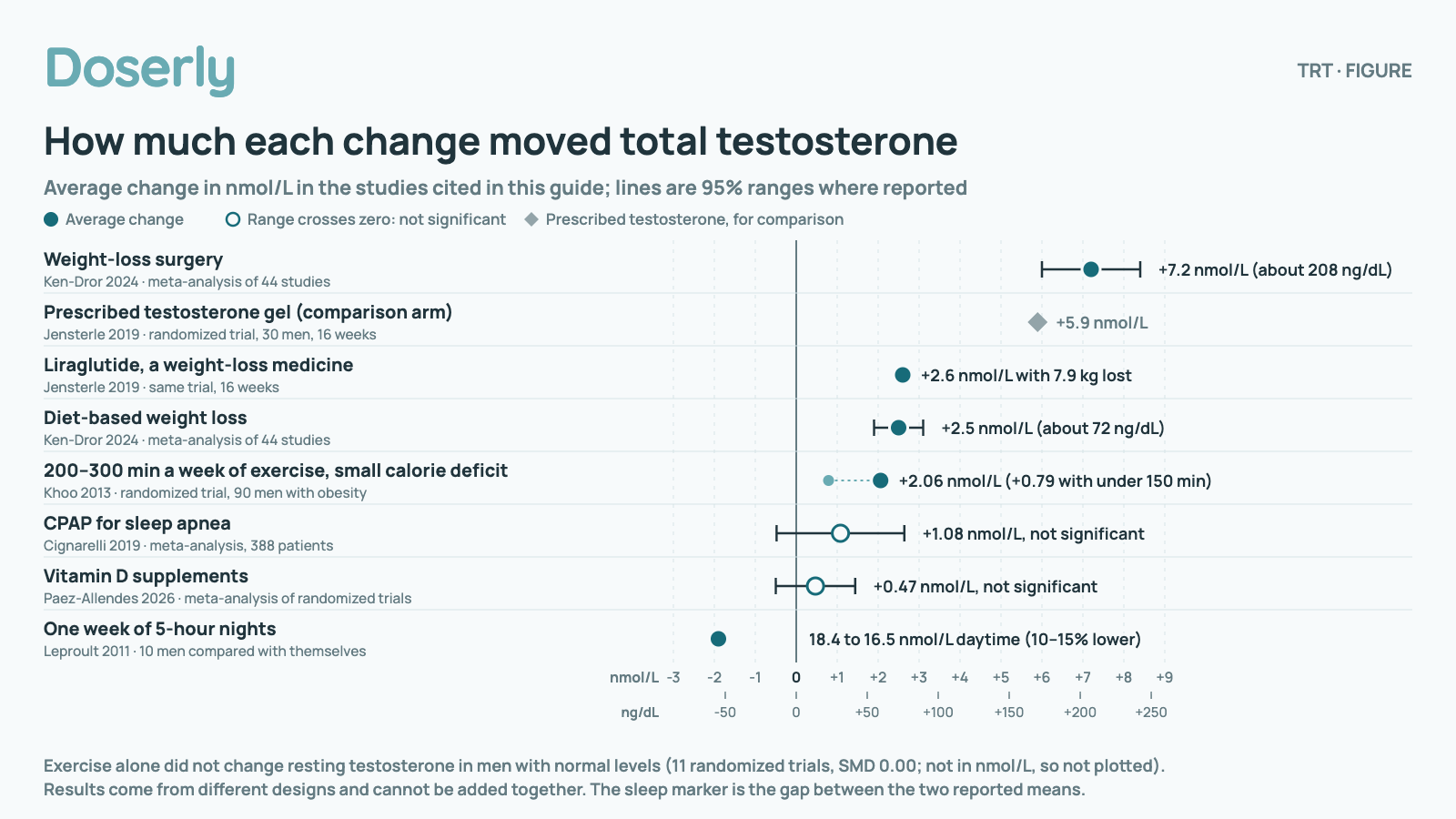
How much each change moved total testosterone
Average change in nmol/L in the studies cited in this guide; lines are 95% ranges where reported.
Each strip runs from −3 (left) to +9 nmol/L (right); the darker line is zero. A hollow dot means the range crosses zero. 1 nmol/L is 28.84 ng/dL.
- Weight-loss surgery
- +7.2 nmol/L (about 208 ng/dL)Ken-Dror 2024 · meta-analysis of 44 studies
- Prescribed testosterone gel (comparison arm)
- +5.9 nmol/LJensterle 2019 · randomized trial, 30 men, 16 weeks
- Liraglutide, a weight-loss medicine
- +2.6 nmol/L with 7.9 kg lostJensterle 2019 · same trial, 16 weeks
- Diet-based weight loss
- +2.5 nmol/L (about 72 ng/dL)Ken-Dror 2024 · meta-analysis of 44 studies
- 200–300 min a week of exercise, small calorie deficit
- +2.06 nmol/L (+0.79 with under 150 min)Khoo 2013 · randomized trial, 90 men with obesity
- CPAP for sleep apnea
- +1.08 nmol/L, not significantCignarelli 2019 · meta-analysis, 388 patients
- Vitamin D supplements
- +0.47 nmol/L, not significantPaez-Allendes 2026 · meta-analysis of randomized trials
- One week of 5-hour nights
- 18.4 to 16.5 nmol/L daytime (10–15% lower)Leproult 2011 · 10 men compared with themselves
Exercise alone did not change resting testosterone in men with normal levels (11 randomized trials, SMD 0.00; not plotted because it is not in nmol/L). Results come from different designs and cannot be added together.
Do testosterone booster supplements work?
Mostly not. A systematic review of 52 studies covering 27 supplements sold as testosterone boosters found that "most fail to increase total testosterone". A few ingredients show a small rise in some trials, and none has been shown to improve symptoms of low testosterone. The CUA says "T-boosters cannot be recommended by health practitioners". [11], [74], [19]
- Herbs. Of 32 randomized trials of 13 herbs, 9 found a significant rise and 6 were judged at low risk of bias. [75]
- Products on the shelf. A review of 50 booster products found that only 24.8% of their ingredients had any data showing a rise and 10.1% had data suggesting a fall. 13 products went over a safe upper intake limit for a vitamin or mineral. In the five most popular online boosters, 30% of 37 human studies of their ingredients showed a rise, 46% no effect and 3% a fall. [76], [77]
- Real benefit. A 2022 review concluded that the effects of non-drug approaches on testosterone "are modest and hence do not directly translate into clinical benefits". [74]
What does the evidence show for each popular supplement?
Results below are for total testosterone in the blood unless stated. A standardized mean difference (SMD) is a unit-free size of effect, used when studies measure differently; it cannot be converted to nmol/L. Doses are covered in each supplement guide.
| Supplement | Best human evidence | What it showed |
|---|---|---|
| Vitamin D | 2026 meta-analysis of randomized trials; 12-week trial in 100 men with low testosterone and low vitamin D | No clear effect (+0.47 nmol/L, range −0.50 to 1.44, low certainty). The trial in men with both low levels found no effect. An older meta-analysis found a small rise [10], [78], [79] |
| Zinc | 9 older men with mild zinc deficiency, no comparison group; a trial in men with normal zinc | A rise in the deficient men (8.3 to 16.0 nmol/L over six months); no change with a zinc-magnesium product in men with normal zinc [80], [81] |
| Magnesium | One 4-week controlled study in athletes and inactive men | Reported a rise; the abstract gives no size [82] |
| Ashwagandha | 2026 meta-analysis of 23 randomized trials; two further trials | A rise of 57.43 ng/dL (about 2 nmol/L) in men, with results that varied a lot between trials. In 43 men with overweight, saliva testosterone rose 14.7% more than on placebo, with no difference in fatigue, vigor or sexual well-being; in another trial the rise was not significant against placebo [83], [84], [85] |
| Tongkat ali (Eurycoma longifolia) | Meta-analysis of 5 small randomized trials | A rise (SMD 1.35), in healthy men and men with low testosterone [86] |
| Fenugreek | 2026 meta-analysis of 6 randomized trials | A small rise (SMD 0.25) with very low certainty; the authors say current evidence "does not support clinical or commercial testosterone-boosting claims" [87] |
| Tribulus | Randomized trial in 21 young men; review of 10 studies | No change in the trial. In the review, 8 of 10 studies (in men with normal levels) found no change; 2 found small within-group rises (60–70 ng/dL) in men with low testosterone [88], [89] |
| D-aspartic acid | Review of 4 human studies; 12-week trial in 22 trained men | Inconsistent; no change in the trial [90], [91] |
| Boron | 7-week randomized trial in 19 bodybuilders | No change [92] |
| Maca | 12-week randomized trial in healthy men | No effect on any hormone measured [93] |
| Shilajit | One 90-day randomized trial of a branded extract | Reported a rise in total and free testosterone; the abstract gives no size [94] |
| Fadogia agrestis | Rat studies only | Signs of harm to rat testes; no human data [95] |
| DHEA | Meta-analysis of 42 publications; meta-analysis of 25 trials in 1,353 older men | A rise of 21.36 ng/dL in men; no benefit for sexual function or quality of life. Prohibited in sport [96], [97], [98] |
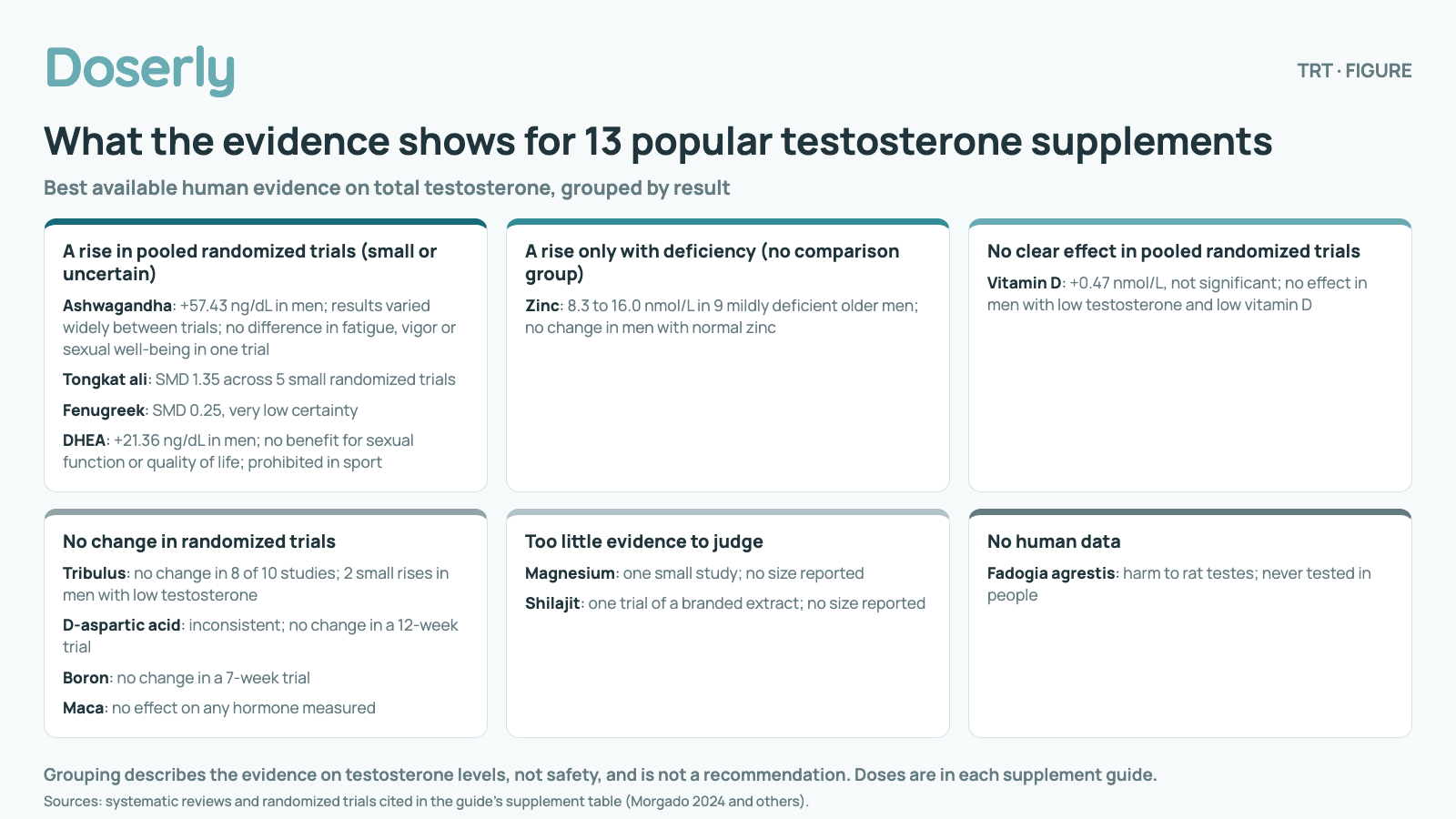
What the evidence shows for 13 popular testosterone supplements
Best available human evidence on total testosterone, grouped by result.
A rise in pooled randomized trials (small or uncertain)
- Ashwagandha
- +57.43 ng/dL in men; results varied widely between trials; no difference in fatigue, vigor or sexual well-being in one trial
- Tongkat ali
- SMD 1.35 across 5 small randomized trials
- Fenugreek
- SMD 0.25, very low certainty
- DHEA
- +21.36 ng/dL in men; no benefit for sexual function or quality of life; prohibited in sport
A rise only with deficiency (no comparison group)
- Zinc
- 8.3 to 16.0 nmol/L in 9 mildly deficient older men; no change in men with normal zinc
No clear effect in pooled randomized trials
- Vitamin D
- +0.47 nmol/L, not significant; no effect in men with low testosterone and low vitamin D
No change in randomized trials
- Tribulus
- no change in 8 of 10 studies; 2 small rises in men with low testosterone
- D-aspartic acid
- inconsistent; no change in a 12-week trial
- Boron
- no change in a 7-week trial
- Maca
- no effect on any hormone measured
Too little evidence to judge
- Magnesium
- one small study; no size reported
- Shilajit
- one trial of a branded extract; no size reported
No human data
- Fadogia agrestis
- harm to rat testes; never tested in people
Grouping describes the evidence on testosterone levels, not safety, and is not a recommendation. Doses are in each supplement guide.
Should you take vitamin D or zinc if you are low?
Correcting a real deficiency is reasonable for general health, but it is not a proven way to raise testosterone. The trial in men with both low testosterone and low vitamin D found no effect. In another trial, run during a weight-loss program, men taking vitamin D rose from 10.7 to 13.4 nmol/L while the placebo group showed no significant change. The two groups were not compared directly, so this is weak evidence. The zinc rise was seen only in a handful of men with deficiency. [78], [99], [80]
The Endocrine Society's 2024 vitamin D guideline suggests against routine vitamin D blood tests for people without a specific reason. It did not set a target level, so the "30–50 ng/mL target" you may see online is out of date. [100]
How are supplements regulated, and what can go wrong?
Checked September 2026. In the United States, "the FDA does not approve dietary supplements for safety and effectiveness". Unlike medicines, supplements do not have to be proven safe and effective before they are sold. [13], [101]
- Hidden drugs. The FDA warns that products sold for sexual enhancement, including male enhancement supplements and male energy or stamina pills, "are likely to be contaminated with dangerous hidden ingredients". [102]
- Too much of a mineral. 13 of 50 booster products went over a safe upper intake limit for zinc, niacin or magnesium. [76]
- Liver injury. In a case series of 5 people who took ashwagandha supplements, liver injury with jaundice and itching appeared after 2–12 weeks; liver tests returned to normal within 1–5 months in the four who were followed. [14]
- Unknown safety. Fadogia agrestis harmed rat testes and has never been tested in people. [95]
Is it safe to try raising testosterone naturally?
For most men, yes: gradual weight loss, regular exercise, more sleep and less alcohol are low-risk changes that guidelines recommend for general health. The risks come from going too far (crash diets and overtraining), from supplements, and from using lifestyle change to put off checking for a medical cause. [5], [15], [76]
- Crash dieting can backfire. Severe energy deficits pushed testosterone close to castrate levels in soldiers. The International Olympic Committee describes a pattern of health and performance harms in male as well as female athletes who eat too little for their training (REDs). [15], [103]
- Delaying a diagnosis. Testosterone that stays low after successful weight loss should prompt a new look for another cause, according to the Endocrine Society of Australia. The VA refers men to an endocrinologist when testosterone is below 150 ng/dL with low or normal LH and FSH, and the AUA advises a pituitary scan in that situation. [4], [17], [22]
- Supplement risks (see how supplements are regulated).
Unlike TRT, lifestyle change does not switch off sperm production. Prescribed testosterone suppresses it: weekly 200 mg testosterone enanthate made 157 of 271 healthy men (a cumulative 65%) produce no sperm within 6 months in a contraception trial, and product labels warn that reduced fertility may be irreversible. [16], [104]
Who should be especially cautious?
- Men with very low testosterone or other warning signs. A very low level with low or normal LH and FSH needs a medical workup before any lifestyle experiment. [17]
- Men trying to conceive. Lifestyle change is compatible with fertility, but testosterone therapy is not: the AUA and the American Society for Reproductive Medicine advise against prescribing testosterone to men who want children now or later. See the TRT and fertility guide. [105]
- Men who are underweight, dieting hard or training for endurance events. More restriction or more training can lower testosterone further. [15], [47]
- Men taking opioids or steroid medicines. These lower testosterone, and guidelines list them as reversible causes, but never stop a prescribed medicine without your prescriber. [19]
- Men with liver disease or on several medicines who are considering supplements (see interactions). [14]
- Drug-tested athletes. DHEA is prohibited in sport, and supplements can contain undeclared drugs. [98], [102]
- Under-18s. Low testosterone in teenagers belongs in specialist care, not self-treatment.
- Women. This guide is written for men. See testosterone therapy for women.
Do supplements interact with medicines?
Some can, and most have never been tested with common medicines. In pooled trials, ashwagandha raised the thyroid hormone T4 slightly (by 0.61 µg/dL), which may matter for people treated for a thyroid condition. Products sold for sexual enhancement may contain undeclared drugs. Bring a complete list of what you take, including supplements, to a pharmacist or prescriber. Checked September 2026. [83], [102]
Is it legal, and is it allowed in sport?
Checked September 2026. Rules differ by country and change often.
- United States. Dietary supplements are sold without FDA approval for safety or effectiveness. Testosterone itself is a Schedule III controlled substance, prescription only. [13], [106]
- European Union. Rules on supplement ingredients vary by country. Denmark, for example, has made it illegal to sell products containing ashwagandha. [107]
- United Kingdom. Testosterone is a Class C controlled drug. [108]
- Canada. Testosterone is a Schedule IV controlled substance. [109]
- Australia. Testosterone is a Schedule 4 prescription-only medicine. [110]
- Sport. The World Anti-Doping Agency (WADA) prohibits testosterone and DHEA at all times, and its 2027 list keeps testosterone banned. A therapeutic use exemption for testosterone is granted only for organic low testosterone, not for functional causes such as obesity, overtraining or ageing. [98], [111], [20]
What do guidelines say to do about low testosterone before TRT?
Confirm it with proper tests, look for reversible causes and treat them, then retest. For men whose low testosterone comes with overweight or obesity, most guidelines make weight loss the first step; the BSSM pairs it with testosterone for men with bothersome symptoms. This section describes the choices clinicians weigh; it is not a personal plan. [19], [6], [7]
How should low testosterone be confirmed first?
With at least two early-morning fasting blood tests, not one. The VA advises against testing during a short-term calorie deficit, opioid use or acute illness, because each can lower the result. The Endocrine Society says symptoms alone do not make the diagnosis and there is not enough evidence to screen men without symptoms. [17], [6] The low testosterone guide and the TRT blood work guide explain the test rules.
Which causes do guidelines check before treatment?
The CUA lists acute illness, obesity, opioid or steroid medicines, extreme nutritional deficiency or anorexia, extreme exercise, sleep apnea, high prolactin, iron overload (hemochromatosis) and pituitary disorders, and asks clinicians to manage them and retest. The Endocrine Society adds eating disorders, sleep disorders and recreational drugs. [19], [1]
Should you try lifestyle change first or start TRT with it?
It depends on which guideline your clinician follows, and on how bothersome your symptoms are.
- Lifestyle first. The EAU strongly recommends improving lifestyle, losing weight, stopping interfering medicines and treating other illnesses before starting testosterone. The Endocrine Society's 2026 statement calls weight loss typically the first treatment when obesity is the only cause. The EAA, the Australian endocrinologists and the Brazilian societies take the same line. [5], [6], [2], [4], [25]
- Both together. The BSSM says "current evidence does not support the recommendation for lifestyle intervention alone as first-line therapy" and endorses lifestyle change together with testosterone in men with symptoms. The AUA counsels weight loss alongside testosterone for overweight men. The AACE obesity guideline says men with true hypogonadism and obesity who are not seeking fertility should be considered for testosterone in addition to lifestyle change. [7], [22], [24]
No guideline sets a fixed trial period, such as "3–6 months of lifestyle change", before TRT. The Endocrine Society of Australia's test is whether testosterone stays low despite successful weight loss. [4] For men already on TRT, the VA adds that a big change in weight can prompt earlier blood tests. [17] The starting TRT guide covers what happens if treatment is the next step.
Is testosterone better than weight loss for men with obesity?
It raises the testosterone number more, but it does not replace the health benefits of weight loss, and guidelines advise against using it to lose weight.
- Testosterone adds lean mass. In 100 men with obesity on a very low-calorie diet, testosterone injections led to 2.9 kg more fat loss and 3.4 kg less lean-mass loss than placebo over 56 weeks. [112]
- But it did not add function. In 83 older men with obesity in an intensive lifestyle program, adding testosterone did not improve physical performance (17% vs 16%), raised hematocrit more (5% vs 1%) and blunted the rise in "good" HDL cholesterol. [113], [114]
- In diabetes prevention, the T4DM trial enrolled 1,007 men aged 50–74 with a large waist, prediabetes or new type 2 diabetes, and testosterone of 14 nmol/L or lower but no disease of the testes or pituitary. With a lifestyle program, fewer men had diabetes at 2 years on testosterone (55 of 443 men, 12%, against 87 of 413, 21%, on placebo). But hematocrit went above 54% in 106 of 491 men on testosterone (22%), against 6 of 484 on placebo (1%). Weight loss, not testosterone, was linked with better mental quality of life. [115], [116]
- Across 23 trials, a 2026 network meta-analysis found no single strategy clearly best for obesity-related low testosterone, and the certainty of the evidence was often low. [117]
The EAA recommends against testosterone as a weight-loss treatment. The EAU advises against it for weight loss or heart and metabolic health, and the Brazilian societies do not recommend it for those purposes. Obesity Canada finds insufficient evidence for hormonal treatments of obesity. [2], [5], [25], [118] The AACE's 2016 obesity guideline takes a different view: it says testosterone in men with true hypogonadism and obesity "results in weight loss, decreased waist circumference, and improvements in metabolic parameters". [24] The muscle and fat loss guide covers testosterone's effects on body composition, and the TRT and heart health guide covers its heart safety, including the full TRAVERSE trial results.
Do weight-loss medicines raise testosterone?
Yes, mainly through the weight they take off. In a 16-week trial of men with obesity, liraglutide raised testosterone by 2.6 nmol/L with 7.9 kg of weight loss, against 5.9 nmol/L and 0.9 kg with testosterone gel. Reviews of small, short studies found rises of about 2.5–5.2 nmol/L with GLP-1 medicines and tirzepatide, which, unlike testosterone, keep LH and FSH working. The ICSM notes a possible role for them in obesity-related low testosterone. [119], [120], [121], [26] See TRT and GLP-1 medicines.
What about fertility-sparing medicines?
For men who want to keep their fertility and still have low testosterone after addressing the cause, clinicians may use medicines that raise the body's own testosterone, such as hCG or clomiphene. These are prescription medicines with their own risks, covered in the clomiphene, enclomiphene and hCG guides. [22], [105]
If you are already on TRT, can weight loss let you stop?
Sometimes. The EAA says stopping testosterone "may be considered following weight reduction". Stopping is not simple, because the body's own production takes time to restart; the stopping TRT guide covers what happens. In a follow-up email survey about five years after T4DM, answered by 599 of its 1,007 men, 6% of those who had been on testosterone said they had restarted it, against 2.8% of the placebo group. [2], [54]
How long does it take, and how do you know it is working?
How long does it take to raise testosterone naturally?
Months, not days. The pooled weight-loss studies had a median follow-up of 26 weeks, the exercise trial that raised testosterone ran 24 weeks, and Look AHEAD measured its gain at one year. No trial gives a week-by-week timeline. Short-term changes can go the other way quickly: one week of 5-hour nights lowered testosterone. [3], [31], [28], [34]
How should you test before and after?
Compare like with like. Use early-morning fasting samples, ideally at the same lab and with the same method, and repeat a result before acting on it. Avoid testing just after a crash diet, an illness or a heavy night of drinking. [17], [19] Free testosterone matters when SHBG is unusual, which is common with obesity: in EMAS, men whose total testosterone fell but whose free testosterone stayed normal did not develop new sexual symptoms. [122]
Does it work for young, lean men?
There is less room to improve. Exercise did not raise resting testosterone in men with normal levels, and a lean man cannot lose much fat. For young men with low testosterone and no obvious cause, the guidelines' first step is a medical workup, not a lifestyle experiment. [8], [1]
Can you recover from secondary hypogonadism without TRT?
If it is functional, often. In EMAS, 42.9% of men with secondary low testosterone (low testosterone with normal or low LH) returned to normal over 4.3 years. Recovery was more likely in men who were not obese, lost weight, had a normal waist or were under 60. Organic causes, such as a pituitary tumor, need medical treatment. [18] The primary vs secondary hypogonadism guide explains the difference.
What do people report when they try to raise testosterone naturally?
Public forums are full of men deciding between lifestyle change and TRT, and of men who tried both. The threads below are public Reddit discussions from the past year, read with their replies. They show what people experience, not how often it happens.
What does a success story look like?
Usually a large weight loss plus several other changes at once. One man in his 30s lost 42 kg, added cardio and lifting, changed his diet and took zinc and ashwagandha; his readings went from 9.9 nmol/L in mid-2024 to 14.1 a year later and then 19.8 nmol/L, and he did not start TRT. An earlier finger-prick test had read even lower. [123] Another went from 377 to 625 after losing about 20 lb in two months, but the tests were at different labs. [124] A man in his 50s reported 295, then 590, then 615 over two years of diet changes and daily exercise, while still sleeping five to six hours most nights. [125]
Each of these posters changed several things together, so none can say which change mattered.
What if the number rises but you still feel bad?
This is one of the most common stories. A man in his 40s lost about 9 kg, began treating his sleep apnea and briefly used a weight-loss medicine; his testosterone went from 11.9 to 21.9 nmol/L in about a month, but severe fatigue and low libido remained. [126] Another lost 10 kg over a year on his endocrinologist's advice; testosterone barely moved and his symptoms did not change, and he later started a supervised trial of treatment. [127] A third rose from about 200 to 300 ng/dL with weight loss, diet changes and supplements but still had the erection problems and low mood he started with. [128] This matches EMAS, where levels recovered without symptoms improving at the same time. [18]
What if nothing changes?
Some men do everything and see little. One man in his 30s reported testosterone stuck around 3 ng/mL (300 ng/dL) since 2019 despite weight loss, exercise, better sleep and diet changes. [129] Another lost about 33 lb on a weight-loss medicine, started CPAP for severe sleep apnea and raised his vitamin D, yet his three results stayed between 330 and 423 ng/dL. [130] A man in his 20s changed his diet, sleep and exercise and cut heavy drinking over 18 months; his testosterone went from 411 to 425, and his symptoms persisted. [131] Replies in these threads usually pointed toward a medical workup rather than another supplement.
What do people report from supplements?
Mixed results, often with other changes happening at the same time. One man took tongkat ali while losing about 20 kg; his total testosterone went from 14.4 to 25.3 nmol/L during use and was 17.6 six months after stopping, so the weight loss may explain much of it. [132] A man about to start TRT at 340 took vitamin D and iron after tests showed both were low, improved his sleep timing and cut caffeine; 14 weeks later he reported 510, better energy and a partial return of libido. [133] Another credited a zinc, magnesium and vitamin D product with a 150 ng/dL rise but gave no dates, and replies asked whether normal day-to-day variation could explain it. [134]
Boron comes up often. One man saw his testosterone numbers rise on boron but felt worse, with fatigue and low mood; another saw no change in SHBG; a third had a headache and trouble sleeping after his first large dose. [135], [136], [137]
What happens when men eat too little or train too much?
Several threads describe low readings after long calorie deficits. One man running 60–70 km a week after losing 15 kg in a long deficit had a low finger-prick result and planned to eat more after his race. [138] Another, whose weight had fallen from 83 to 63 kg during appetite problems, reported a rise from 7.6 and 8.0 to 18 nmol/L after regaining weight and eating more, with his LH rising too, although some symptoms remained. [139]
Can one test mislead?
Yes. One man tested on purpose after three days of heavy drinking and poor sleep, followed by one good night, and got a testosterone reading above the lab's upper limit. [140] Another measured 393 ng/dL after a holiday of heavy drinking, then 685 and 816 after cutting alcohol, although he had also started a hair-loss medicine at the same time. [141] Single results bounce around; the trend is what matters.
How can you judge a "raised it naturally" story?
Ask: Were both tests early-morning, fasting, from a vein and at the same lab? What else changed at the same time, especially weight, sleep apnea treatment, alcohol or medicines? Did free testosterone and SHBG change, or only total testosterone? Did symptoms improve, not just the number? And what did the next test show?
These selected discussions show what people experience and the questions research has not answered. They are not a survey of all men, a success rate or a substitute for the studies above.
What should you track?
Your testosterone on repeat morning tests, plus the things most likely to move it: weight or waist, sleep, alcohol and your symptoms. Use this summary to prepare for a conversation with your clinician; it is not a personal testing plan.
| What to track | Why it matters | Tracking category |
|---|---|---|
| Total testosterone (with free testosterone and SHBG where needed) | Two early-morning fasting tests confirm a low level; a retest after a change, such as successful weight loss, shows whether it helped | Blood work |
| Weight and waist | Weight loss drives most of the rise, and a normal waist predicted recovery in EMAS | Weight Management, Fat Loss |
| Sleep, snoring and daytime sleepiness | Short sleep lowers testosterone; possible sleep apnea is worth a clinician's check | Sleep Quality |
| Alcohol | Regular drinking lowers testosterone | Cravings & Impulse Control |
| Libido, erections, energy and mood | Numbers can recover without symptoms improving | Libido, Sexual Function, Energy Levels, Mood & Wellbeing |
| Supplements and medicines | Some lower testosterone, some interact, and changing several at once hides what worked | Other |
Common questions about raising testosterone naturally
What is the fastest way to increase testosterone naturally?
There is no fast way that lasts. For men with excess weight, losing it is the most effective step, and the rise builds over months. Getting enough sleep and cutting heavy drinking remove two things that push testosterone down within days to weeks. No supplement has been shown to beat weight loss. [3], [34], [62] See the key numbers.
What is the best natural testosterone booster?
Weight loss, if you carry excess weight. Among supplements, ashwagandha and tongkat ali showed rises in pooled small trials, of uncertain size, but neither has been shown to improve symptoms, and most boosters do not raise testosterone at all. The CUA advises against testosterone boosters. [3], [83], [86], [11], [19] See the supplement evidence.
Does lifting weights increase testosterone?
Not your resting level, if it is already normal. A meta-analysis of 11 randomized trials found no effect of training on resting testosterone, and short post-workout rises do not add to muscle growth. Training still helps weight loss, muscle and health, and more exercise alongside a calorie deficit raised testosterone in men with obesity. [8], [45], [31] See exercise.
Does masturbation or NoFap raise testosterone?
There is no good evidence that it does. The study behind the popular day-7 peak was retracted, and the only other study (10 men) found higher testosterone after 3 weeks without reporting how much higher. [12], [66] See popular claims.
How much can lifestyle raise testosterone?
About 2.5 nmol/L (72 ng/dL) on average after diet-based weight loss, and 2–3 nmol/L for a 10% weight loss, according to one position statement. Men who start heavier or lower gain more, and weight-loss surgery gives larger rises. [3], [4] See what gains to expect.
When should you consider TRT instead?
When low testosterone is confirmed on repeat tests, symptoms are present, and it stays low after reversible causes are treated, or when the cause is organic. Some guidelines (the BSSM, the AUA for overweight men and the AACE for men with true hypogonadism and obesity) pair lifestyle change with testosterone from the start. TRT suppresses sperm production, so fertility plans matter. [4], [7], [22], [105] See what guidelines do.
Does sleep apnea treatment raise testosterone?
Not by itself in pooled studies: CPAP did not significantly change testosterone. Weight loss in men with sleep apnea did raise it. Sleep apnea is still worth treating for its own sake. [9], [52] See sleep apnea.
Glossary
Plain explanations of the medical, lab and research terms used in this guide. Underlined terms in the text link here.
- BMI (body mass index)
- Weight in kilograms divided by height in meters squared. A BMI of 25–29.9 counts as overweight and 30 or more as obesity.
- Cohort study (population study)
- A study that follows a group of people, or looks back at their records, without assigning treatments. It can show links but not prove that one thing caused another.
- Controlled trial
- A study that compares people who receive a treatment with a similar group who do not, often receiving a placebo instead. Randomly assigning people to each group makes the comparison fairer.
- Cortisol
- A stress hormone made by the adrenal glands. It is often blamed for low testosterone, but no trial has shown that lowering stress raises resting testosterone.
- CPAP
- Continuous positive airway pressure: a bedside machine that blows air through a mask to keep the airway open during sleep. It is the standard treatment for obstructive sleep apnea.
- EMAS (European Male Ageing Study)
- A study that followed more than 3,000 men aged 40–79 in eight European centers for about four years, measuring their hormones and symptoms.
- Estradiol
- The main form of estrogen. In men it is made mostly from testosterone, and it fell when men lost weight in pooled studies.
- Free testosterone
- The small part of testosterone in the blood that is not bound to proteins. It is measured or calculated when SHBG is unusually high or low.
- FSH (follicle-stimulating hormone)
- A pituitary hormone that acts on the Sertoli cells in the testicles and the follicles in the ovaries. It is needed for sperm production.
- Functional hypogonadism
- Low testosterone caused by something that turns the hormone system down without damaging it, such as obesity, severe dieting, opioids or serious illness. It can reverse when the cause is treated.
- Clinical guideline
- Recommendations written by a medical society or health system, based on its review of the evidence and expert judgment. Different guidelines can reach different conclusions.
- Hypothalamus
- A small area at the base of the brain that sends the pituitary gland its signal to release LH and FSH.
- Leydig cells
- Cells in the spaces between the testicle's tubules that make testosterone when LH reaches them.
- LH (luteinizing hormone)
- A pituitary hormone that tells the testicles to make testosterone and triggers ovulation in women.
- Meta-analysis and systematic review
- A systematic review gathers all studies on a question in a planned way. A meta-analysis combines their results statistically. A network meta-analysis compares several treatments at once, even ones never tested head to head.
- nmol/L and ng/dL
- The two units labs use for testosterone. Most countries use nanomoles per liter; the US uses nanograms per deciliter. 1 nmol/L is 28.84 ng/dL, so 10 nmol/L is about 288 ng/dL.
- Organic hypogonadism
- Low testosterone caused by disease or damage of the testes, pituitary gland or hypothalamus, such as a genetic condition, injury or tumor. Lifestyle change does not reverse it.
- Pituitary gland
- A pea-sized gland under the brain that releases LH and FSH, the signals that tell the testes to make testosterone and sperm.
- Placebo
- A dummy treatment with no active ingredient, used as a comparison in studies.
- REDs (relative energy deficiency in sport)
- Health and performance problems caused by eating too little for the amount of training. The International Olympic Committee describes it in men as well as women.
- Secondary hypogonadism
- Low testosterone with normal or low LH and FSH, meaning the brain's signal to the testes is low. It can be functional (for example from obesity) or organic (for example from a pituitary tumor).
- SHBG (sex hormone-binding globulin)
- A protein made by the liver that carries most testosterone in the blood. It is lower with obesity, which lowers total testosterone, and rises with weight loss.
- Obstructive sleep apnea
- Repeated blocking of the airway during sleep, causing pauses in breathing and drops in oxygen. Loud snoring and daytime sleepiness are common signs.
- Standardized mean difference (SMD)
- A unit-free measure of effect size used when studies measure an outcome in different ways. Roughly, 0.2 is small, 0.5 moderate and 0.8 large; it cannot be converted into nmol/L.
- Total testosterone
- All the testosterone in a blood sample, bound and unbound. It is the standard first test for low testosterone.
- TRT (testosterone replacement therapy)
- Prescribed testosterone, by injection, gel or other forms, for men with low testosterone. It switches off the brain's LH and FSH signals and with them sperm production.
- Visceral fat
- Fat stored deep in the belly around the organs, as opposed to the fat layer beneath the skin. A large waist usually means more of it.
- WADA
- The World Anti-Doping Agency, which publishes the list of substances banned in sport. Testosterone and DHEA are prohibited at all times.
How this guide was researched
This guide is built from a thorough review of the sources cited throughout it: clinical guidelines from medical societies in several countries, randomized trials, meta-analyses, population studies, regulatory documents on supplements and sport. We also reviewed public online forums where men describe their own attempts to raise testosterone without treatment.
The guide cites 141 sources, including 58 original studies in people and animals, 35 systematic reviews and other reviews, 16 clinical guidelines and position statements, 13 laws, regulator pages and anti-doping documents, and 19 public community discussions. Each type of source answers a different question. Guidelines show what clinicians are told to do. Trials and studies show what was measured. Personal accounts show what individual people experienced. Every numbered citation links to its entry below, labeled by source type.
How this guide was made
Research and drafting were AI-assisted. Every cited source was checked against the original, and the guide was reviewed and edited by Doserly before publication. It has not had an independent clinical review, and Doserly does not currently have medical reviewers. Doserly makes a medication and health-tracking app and runs Doserly Academy, both of which are promoted in this guide. Read our editorial policy for how guides are researched, updated and corrected.
This guide is for educational purposes. It summarizes what the reviewed sources report so the research is easier to understand; it is not medical advice. For a deeper dive, or to check any point for yourself, go straight to the cited sources.
Explore the sources
These are the documents cited in this guide. Guidelines, studies, regulator pages and personal accounts answer different questions. A source being listed does not mean every statement on its page is endorsed.
Showing 141 sources
- 01
Testosterone Therapy in Men With Hypogonadism: An Endocrine Society Clinical Practice Guideline ↗
Clinical guideline (US)
Full guideline reviewed.
Detail: Functional causes such as obesity, opioids or illness 'might be reversible by treating the underlying condition'; lower limit 264 ng/dL (9.2 nmol/L).
- 02
European Academy of Andrology (EAA) guidelines on investigation, treatment and monitoring of functional hypogonadism in males ↗
Clinical guideline (Europe)
Full text reviewed.
Detail: Recommends exercise and weight reduction in overweight men with functional hypogonadism (#6); against testosterone for weight reduction (#11); stopping may be considered after weight loss.
- 03
Meta-analysis and construction of simple-to-use nomograms for approximating testosterone levels gained from weight loss in obese men ↗
Systematic review
Original abstract reviewed.
Detail: 44 studies, 1,774 men, median 26 weeks: total testosterone +2.5 nmol/L after diet and +7.2 nmol/L after bariatric surgery; free testosterone +19.9 and +58.0 pmol/L.
- 04
Endocrine Society of Australia position statement on male hypogonadism (part 1): assessment and indications for testosterone therapy ↗
Position statement (Australia)
Full text reviewed.
Detail: A 10% weight loss raises testosterone by 2–3 nmol/L; low testosterone that persists after successful weight loss should prompt reassessment for a pathological cause.
- 05
EAU Guidelines on Sexual and Reproductive Health: Male Hypogonadism (2026 edition) ↗
Clinical guideline (Europe)
Full chapter reviewed.
Detail: Improve lifestyle and reduce weight before starting testosterone (strong); the rise after diet and activity is 'small (1-2nmol)'; 60–86% of lost weight regained after three years.
- 06
Statement on Testosterone Replacement Therapy ↗
Society statement (US)
Full statement reviewed.
Detail: For low testosterone due to overweight or obesity (BMI over 27) with no other cause, weight loss is typically first-line; no population screening; threshold near 300 ng/dL.
- 07
The British Society for Sexual Medicine Guidelines on Male Adult Testosterone Deficiency, with Statements for Practice ↗
Clinical guideline (UK)
Full text reviewed.
Detail: Evidence 'does not support ... lifestyle intervention alone as first-line therapy'; endorses lifestyle change together with testosterone in men with symptoms (LoE 2, Grade A).
- 08
Effects of Exercise Training on Resting Testosterone Concentrations in Insufficiently Active Men: A Systematic Review and Meta-Analysis ↗
Systematic review
Original abstract reviewed.
Detail: 11 randomized trials, 421 inactive healthy men: no effect of exercise training on resting total testosterone (SMD 0.00).
- 09
Effects of CPAP on Testosterone Levels in Patients With Obstructive Sleep Apnea: A Meta-Analysis Study ↗
Systematic review
Original abstract reviewed.
Detail: 388 patients: CPAP did not significantly change total testosterone (+1.08 nmol/L, −0.48 to 2.64).
- 10
Vitamin D Supplementation, Total Testosterone, and Androgen Bioavailability Markers in Adult Men: A Systematic Review and Meta-Analysis of Randomized Controlled Trials ↗
Systematic review
Original abstract reviewed.
Detail: Randomized trials in adult men: no clear effect of vitamin D on total testosterone (+0.47 nmol/L, −0.50 to 1.44); low certainty.
- 11
Do 'testosterone boosters' really increase serum total testosterone? A systematic review ↗
Systematic review
Original abstract reviewed.
Detail: 52 studies, 27 supplements: most fail to raise total testosterone.
- 12
A research on the relationship between ejaculation and serum testosterone level in men [Retracted] ↗
Human study (retracted)
Original abstract reviewed.
Detail: Source of the 'day 7 abstinence peak' claim; PubMed lists this paper as retracted (2021). Cited only to note the retraction.
- 13
Is It Really 'FDA Approved'? ↗
Regulator page (US)
Full text reviewed.
Detail: 'By statute, the FDA does not approve dietary supplements for safety and effectiveness.' Checked September 2026.
- 14
Ashwagandha-induced liver injury: A case series from Iceland and the US Drug-Induced Liver Injury Network ↗
Human study (case series)
Original abstract reviewed.
Detail: 5 cases of liver injury after ashwagandha supplements; jaundice after 2–12 weeks; liver tests normalized in 1–5 months.
- 15
Endocrine markers of semistarvation in healthy lean men in a multistressor environment ↗
Human study
Original abstract reviewed.
Detail: US Army Ranger training with 1,000–1,200 kcal daily deficits: in the group with the 1,200 kcal deficit, testosterone 'approached castrate levels' (4.5 nmol/L); it recovered promptly with refeeding.
- 16
Contraceptive efficacy of testosterone-induced azoospermia in normal men ↗
Human study
Original abstract reviewed.
Detail: 271 healthy fertile men on weekly 200 mg testosterone enanthate: 157 became azoospermic (cumulative rate at 6 months 65%).
- 17
Evaluation for and Management of Males with Low Testosterone: Recommendations for Use (January 2026) ↗
Clinical recommendations (US)
Full document reviewed.
Detail: Test 6–10 am fasting on two occasions, not during a calorie deficit, opioid use or acute illness; obesity-related low total testosterone may normalize with weight loss.
- 18
Development of and Recovery from Secondary Hypogonadism in Aging Men: Prospective Results from the EMAS ↗
Human study
Original abstract reviewed.
Detail: EMAS, 3,369 men over 4.3 years: 42.9% of men with secondary hypogonadism recovered; weight loss predicted recovery (OR 2.24); symptoms did not improve at the same time.
- 19
Canadian Urological Association guideline on testosterone deficiency in men: Evidence-based Q&A ↗
Clinical guideline (Canada)
Full text reviewed.
Detail: Manage reversible causes and retest (strong); sleep restriction lowers testosterone about 10–15%; 'T-boosters cannot be recommended by health practitioners' (strong).
- 20
TUE Physician Guidelines: Male Hypogonadism, Version 9 ↗
Anti-doping guidance
Full document reviewed.
Detail: A therapeutic use exemption for testosterone is granted only for organic hypogonadism; functional causes such as obesity, overtraining, stress or ageing do not qualify.
- 21
Body weight loss reverts obesity-associated hypogonadotropic hypogonadism: a systematic review and meta-analysis ↗
Systematic review
Original abstract reviewed.
Detail: 24 studies: total testosterone +2.87 nmol/L after a low-calorie diet and +8.73 after bariatric surgery; estradiol fell and LH and FSH rose; weight lost was the best predictor.
- 22
Evaluation and Management of Testosterone Deficiency: AUA Guideline ↗
Clinical guideline (US)
Full guideline reviewed.
Detail: Counsel all men with low testosterone on lifestyle change (Statement 21, conditional); overweight men on weight loss alongside testosterone therapy; diagnostic line 300 ng/dL.
- 23
Society for Endocrinology guidelines for testosterone replacement therapy in male hypogonadism ↗
Clinical guideline (UK)
Full text reviewed.
Detail: The rise in testosterone after lifestyle change or bariatric surgery is proportional to the weight lost.
- 24
AACE/ACE Comprehensive Clinical Practice Guidelines for Medical Care of Patients with Obesity ↗
Clinical guideline (US)
Full text reviewed.
Detail: Treatment of low testosterone with obesity should include weight loss; more than 5–10% weight loss is needed for a significant rise (R52, Grade D); men with true hypogonadism and obesity not seeking fertility should be considered for testosterone in addition to lifestyle change (R54, Grade A).
- 25
Care of Patients with Male Hypogonadism: A Joint Position Statement from SBEM, SBU and ABEMSS ↗
Position statement (Brazil)
Full text reviewed.
Detail: Recommendation 23: lifestyle change strongly recommended as first-line for overweight men with functional hypogonadism; Recommendation 24: testosterone not recommended for weight loss alone.
- 26
Male hypogonadism: recommendations from the Fifth International Consultation on Sexual Medicine (ICSM 2024) ↗
Consensus recommendations
Full text reviewed by the shared evidence review; lifestyle wording not reviewed for this guide.
Detail: Notes a possible role for GLP-1 receptor agonists in obesity-related functional low testosterone.
- 27
PBS item 10205D testosterone undecanoate 1 g/4 mL injection and restrictions 6910 and 6324 ↗
Subsidy rule (Australia)
Full restriction text reviewed.
Detail: For men without an established pituitary or testicular disorder: aged 40 or over, not due to age, obesity, cardiovascular disease, infertility or drugs; testosterone under 6 nmol/L, or 6–15 nmol/L with high LH, on at least two morning samples.
- 28
Weight Loss Differentially Impacts Sex Hormones in Women and Men With Type 2 Diabetes: Look AHEAD Sex Hormone Study ↗
Randomized trial (ancillary study)
Original abstract reviewed.
Detail: Look AHEAD, 890 men with type 2 diabetes: intensive lifestyle raised testosterone 14% and SHBG 18% at 1 year; attenuated over 4 years.
- 29
Treatment of Functional Hypogonadism Besides Pharmacological Substitution ↗
Review
Original abstract reviewed.
Detail: Weight loss and exercise improve obesity-associated functional hypogonadism and its sexual symptoms.
- 30
Sex-differential testosterone response to long-term weight loss ↗
Human study
Original abstract reviewed.
Detail: Over 36 months after diet or bariatric surgery, men's total testosterone rose about 0.6% per kilogram lost.
- 31
Comparing effects of low- and high-volume moderate-intensity exercise on sexual function and testosterone in obese men ↗
Randomized trial
Original abstract reviewed.
Detail: 90 men with abdominal obesity, 24 weeks with a calorie deficit: 200–300 min/week of exercise raised testosterone 2.06 vs 0.79 nmol/L with under 150 min.
- 32
Approach to the Patient: Low Testosterone Concentrations in Men With Obesity ↗
Review
Original abstract reviewed.
Detail: Clinical review describing low SHBG and total testosterone in obesity; diet and lifestyle work better than testosterone for reversible causes.
- 33
Age-associated changes in hypothalamic-pituitary-testicular function in middle-aged and older men are modified by weight change and lifestyle factors: longitudinal results from the European Male Ageing Study ↗
Human study
Original abstract reviewed.
Detail: EMAS, 2,395 men over 4.4 years: weight loss raised total testosterone and SHBG in proportion; free testosterone moved only with 15% or more weight change.
- 34
Effect of 1 week of sleep restriction on testosterone levels in young healthy men ↗
Human study
Full text reviewed (author manuscript).
Detail: 10 young men: one week of 5-hour nights lowered daytime testosterone from 18.4 to 16.5 nmol/L (10–15%).
- 35
Physiological consequences of U.S. Army Ranger training ↗
Human study
Original abstract reviewed.
Detail: 50 soldiers in Ranger training: total testosterone and IGF-I fell significantly.
- 36
Low energy availability in exercising men is associated with reduced leptin and insulin but not with changes in other metabolic hormones ↗
Randomized crossover trial
Original abstract reviewed.
Detail: 6 exercising men: 4 days of low energy availability did not change testosterone.
- 37
Long-Term Effects of a Randomised Controlled Trial Comparing High Protein or High Carbohydrate Weight Loss Diets on Testosterone, SHBG, Erectile and Urinary Function in Overweight and Obese Men ↗
Randomized trial
Original abstract reviewed.
Detail: 118 men, 52 weeks: testosterone, SHBG, free testosterone and erection scores rose with weight loss, no difference between high-protein and high-carbohydrate diets.
- 38
Changes in Visceral Adiposity, Subcutaneous Adiposity, and Sex Hormones in the Diabetes Prevention Program ↗
Randomized trial (secondary analysis)
Original abstract reviewed.
Detail: 246 men in the Diabetes Prevention Program: loss of visceral and subcutaneous fat each linked with higher testosterone and SHBG.
- 39
Caloric restriction increases serum testosterone concentrations in obese male subjects by two distinct mechanisms ↗
Human study
Original abstract reviewed.
Detail: 13 men with severe obesity, 12-week very low-calorie diet: total testosterone 6.97 to 13.21 nmol/L; no comparison group.
- 40
Short-Term Exercise Training Inconsistently Influences Basal Testosterone in Older Men: A Systematic Review and Meta-Analysis ↗
Systematic review
Original abstract reviewed.
Detail: 22 studies in men aged 60+: resistance training no effect; aerobic and interval training small rises; 13 studies uncontrolled.
- 41
Exercise training improves free testosterone in lifelong sedentary aging men ↗
Human study
Original abstract reviewed.
Detail: 22 inactive men aged about 62: total testosterone rose about 17% with interval training; no comparison group.
- 42
The Effects of Aerobic Exercise Training on Testosterone Concentration in Individuals Who are Obese or Have Type 2 Diabetes: A Systematic Review and Meta-Analysis ↗
Systematic review
Original abstract reviewed.
Detail: 7 studies, 62 men with obesity or type 2 diabetes: aerobic training moderately raised testosterone (g = 0.565).
- 43
Lifestyle modification increases serum testosterone level and decrease central blood pressure in overweight and obese men ↗
Human study
Original abstract reviewed.
Detail: 44 men with overweight: a 12-week lifestyle program raised total testosterone and lowered central blood pressure; no comparison group.
- 44
Increased physical activity has a greater effect than reduced energy intake on lifestyle modification-induced increases in testosterone ↗
Human study
Original abstract reviewed.
Detail: 41 men: the rise in testosterone during a lifestyle program correlated with step count.
- 45
Elevations in ostensibly anabolic hormones with resistance exercise enhance neither training-induced muscle hypertrophy nor strength of the elbow flexors ↗
Human study
Original abstract reviewed.
Detail: 12 young men: acute post-exercise hormone rises did not enhance muscle growth or strength.
- 46
Associations of exercise-induced hormone profiles and gains in strength and hypertrophy in a large cohort after weight training ↗
Human study
Original abstract reviewed.
Detail: 56 young men: post-exercise hormone rises did not predict gains in lean mass or strength.
- 47
Effects of endurance exercise on the reproductive system of men: the 'exercise-hypogonadal male condition' ↗
Review
Original abstract reviewed.
Detail: Low testosterone from endurance training is limited to years of chronic training and 'not a highly prevalent occurrence'.
- 48
Effect of partial and total sleep deprivation on serum testosterone in healthy males: a systematic review and meta-analysis ↗
Systematic review
Original abstract reviewed.
Detail: 18 studies, 252 men: partial sleep loss had no clear effect (SMD −0.22); total sleep deprivation lowered testosterone (SMD −0.64).
- 49
Impaired sleep is associated with low testosterone in US adult males: results from the National Health and Nutrition Examination Survey ↗
Human study
Original abstract reviewed.
Detail: NHANES, 2,295 men: testosterone 5.85 ng/dL lower per hour less sleep and 6.18 ng/dL lower per BMI unit.
- 50
Association of sleep duration and quality with serum testosterone concentrations among men and women: NHANES 2011-2016 ↗
Human study
Original abstract reviewed.
Detail: NHANES 2011–2016, 8,748 adults: 6 hours of sleep or less linked with high testosterone in young men.
- 51
Obstructive sleep apnea is not an independent determinant of testosterone in men ↗
Human study
Original abstract reviewed.
Detail: 623 men with home sleep studies: the link between sleep apnea and testosterone disappeared after adjusting for age, BMI and SHBG.
- 52
Impact of an interdisciplinary weight loss and lifestyle intervention on testosterone ... men with obesity and obstructive sleep apnea: secondary analyses of the INTERAPNEA randomized trial ↗
Randomized trial (secondary analysis)
Original abstract reviewed.
Detail: 89 men with obesity and sleep apnea: a weight-loss program raised testosterone 77.6 ng/dL more than usual care at 8 weeks and 90.4 ng/dL at 6 months.
- 53
Effects of testosterone therapy on sleep and breathing in obese men with severe obstructive sleep apnoea: a randomized placebo-controlled trial ↗
Randomized trial
Original abstract reviewed.
Detail: Testosterone injections worsened night-time oxygen drops at 7 weeks but not at 18 weeks.
- 54
Long-term Outcomes of Testosterone Treatment in Men: A T4DM Postrandomization Observational Follow-up Study ↗
Human study (trial follow-up)
Original abstract reviewed.
Detail: Email survey a median 5.1 years after the last injection, answered by 599 of 1,007 men (316 testosterone, 283 placebo): self-reported new sleep apnea diagnoses during the trial 3.0% vs 0.4%; 6% vs 2.8% had resumed prescribed testosterone.
- 55
Low-fat diets and testosterone in men: Systematic review and meta-analysis of intervention studies ↗
Systematic review
Original abstract reviewed.
Detail: 6 studies, 206 men: total testosterone slightly lower on low-fat diets (SMD −0.38).
- 56
Low-carbohydrate diets and men's cortisol and testosterone: Systematic review and meta-analysis ↗
Systematic review
Original abstract reviewed.
Detail: 27 studies, 309 men: high-protein (35% or more), low-carbohydrate diets lowered resting testosterone (SMD −1.08); moderate-protein ones did not.
- 57
High-protein diets and testosterone ↗
Commentary
Original abstract reviewed.
Detail: Very high protein intake (over 3.4 g/kg/day) appears to lower testosterone; 1.25–3.4 g/kg/day does not.
- 58
Clinical studies show no effects of soy protein or isoflavones on reproductive hormones in men: results of a meta-analysis ↗
Systematic review
Original abstract reviewed.
Detail: 15 placebo-controlled groups: no effect of soy protein or isoflavones on testosterone, SHBG or free testosterone.
- 59
Neither soy nor isoflavone intake affects male reproductive hormones: An expanded and updated meta-analysis of clinical studies ↗
Systematic review
Original abstract reviewed.
Detail: 41 studies (total testosterone in 1,753 men): soy and isoflavones did not change testosterone or estrogen.
- 60
Effects of calorie restricted low carbohydrate high fat ketogenic vs. non-ketogenic diet on strength, body-composition, hormonal and lipid profile in trained middle-aged men ↗
Randomized trial
Original abstract reviewed.
Detail: 20 trained men in a calorie deficit: ketogenic and non-ketogenic low-carbohydrate diets had the same hormonal effects.
- 61
Effects of eight weeks of time-restricted feeding (16/8) on basal metabolism, maximal strength, body composition, inflammation, and cardiovascular risk factors in resistance-trained males ↗
Randomized trial
Original abstract reviewed.
Detail: 34 resistance-trained men, 8 weeks of 16/8 time-restricted eating: testosterone fell compared with a normal diet.
- 62
Effect of moderate alcohol consumption on plasma dehydroepiandrosterone sulfate, testosterone, and estradiol levels in middle-aged men and postmenopausal women ↗
Randomized crossover trial
Original abstract reviewed.
Detail: 10 men, 40 g alcohol a day for 3 weeks: testosterone 6.8% lower than on alcohol-free beer.
- 63
The chronic alcohol consumption influences the gonadal axis in men: Results from a meta-analysis ↗
Systematic review
Original abstract reviewed.
Detail: 21 studies, 10,199 people: regular drinking linked with lower total and free testosterone and higher estradiol; not seen after acute intake.
- 64
Marijuana use and serum testosterone concentrations among U.S. males ↗
Human study
Original abstract reviewed.
Detail: 1,577 US men: testosterone the same in ever and never cannabis users (3.69 vs 3.70 ng/mL).
- 65
Cigarette smoking and testosterone in men and women: A systematic review and meta-analysis of observational studies ↗
Systematic review
Original abstract reviewed.
Detail: 22 studies, 13,317 men: smokers had testosterone 1.53 nmol/L higher than non-smokers.
- 66
Endocrine response to masturbation-induced orgasm in healthy men following a 3-week sexual abstinence ↗
Human study
Original abstract reviewed.
Detail: 10 men: higher testosterone after 3 weeks of abstinence, without an effect size.
- 67
Cold-water immersion blunts and delays increases in circulating testosterone and cytokines post-resistance exercise ↗
Randomized crossover trial
Original abstract reviewed.
Detail: 11 trained men: cold-water immersion after lifting blunted the rise in free testosterone; 10.4% below baseline at 60 minutes.
- 68
Acute Neuromuscular and Hormonal Responses to Different Exercise Loadings Followed by a Sauna ↗
Human study
Original abstract reviewed.
Detail: 27 men: a sauna on its own raised testosterone 15% immediately afterwards; a sauna after exercise did not further change the hormone response to exercise; no resting data.
- 69
Acute Ultraviolet Light Exposure and Post-Resistance Exercise Serum Testosterone: A Pilot Study in Older Men ↗
Human study
Original abstract reviewed.
Detail: 6 older men: ultraviolet light after exercise did not change testosterone or vitamin D.
- 70
Urinary phthalate metabolites are associated with decreased serum testosterone in men, women, and children from NHANES 2011-2012 ↗
Human study
Original abstract reviewed.
Detail: NHANES 2011–2012: urinary phthalates linked with lower testosterone only in men aged 40–60.
- 71
A population-level decline in serum testosterone levels in American men ↗
Human study
Original abstract reviewed.
Detail: 1,532 Boston men, 1987–2004: an age-independent decline in testosterone not explained by measured factors.
- 72
Secular decline in male testosterone and sex hormone binding globulin serum levels in Danish population surveys ↗
Human study
Original abstract reviewed.
Detail: 5,350 Danish samples, 1982–2001: the decline disappeared after adjusting for rising BMI; free testosterone did not fall.
- 73
Decline in Serum Testosterone Levels Among Adolescent and Young Adult Men in the USA ↗
Human study
Original abstract reviewed.
Detail: 4,045 US males aged 15–39, 1999–2016: testosterone declined, also at normal BMI; assay changes are a caveat.
- 74
Nonpharmacological Interventions for the Management of Testosterone and Sperm Parameters: A Scoping Review ↗
Review
Original abstract reviewed.
Detail: Effects of non-drug interventions on testosterone are 'modest and hence do not directly translate into clinical benefits'.
- 75
Examining the Effects of Herbs on Testosterone Concentrations in Men: A Systematic Review ↗
Systematic review
Original abstract reviewed.
Detail: 32 randomized trials of 13 herbs: 9 showed a significant rise; 6 had a low risk of bias.
- 76
'Testosterone Boosting' Supplements Composition and Claims Are not Supported by the Academic Literature ↗
Product review
Original abstract reviewed.
Detail: 50 booster products: 24.8% of ingredients had data showing a rise, 10.1% a fall; 13 products exceeded upper intake limits.
- 77
Testosterone Imposters: An Analysis of Popular Online Testosterone Boosting Supplements ↗
Product review
Original abstract reviewed.
Detail: Top 5 online boosters: of 37 human studies of their ingredients, 30% showed a rise, 3% a fall and 46% no effect.
- 78
Effects of vitamin D supplementation on androgens in men with low testosterone levels: a randomized controlled trial ↗
Randomized trial
Original abstract reviewed.
Detail: 100 men with low testosterone and low vitamin D, 12 weeks: no effect on total testosterone.
- 79
The Impact of Vitamin D on Androgens and Anabolic Steroids among Adult Males: A Meta-Analytic Review ↗
Systematic review
Original abstract reviewed.
Detail: 15 randomized trials: a small rise in total testosterone with vitamin D (WMD 0.38), with high heterogeneity.
- 80
Zinc status and serum testosterone levels of healthy adults ↗
Human study
Original abstract reviewed.
Detail: 9 older men with marginal zinc deficiency: testosterone 8.3 to 16.0 nmol/L after 6 months of zinc; no comparison group.
- 81
Serum testosterone and urinary excretion of steroid hormone metabolites after administration of a high-dose zinc supplement ↗
Human study
Original abstract reviewed.
Detail: 14 zinc-replete men: no change in total or free testosterone with a zinc-magnesium supplement.
- 82
Effects of magnesium supplementation on testosterone levels of athletes and sedentary subjects at rest and after exhaustion ↗
Human study
Original abstract reviewed.
Detail: 4 weeks of magnesium: reported rises in free and total testosterone; no numbers in the abstract.
- 83
Hormonal Modulation with Withania somnifera: Systematic Review and Meta-Analysis of Randomized-controlled Trials ↗
Systematic review
Original abstract reviewed.
Detail: 23 randomized trials: ashwagandha raised testosterone in men (MD 57.43 ng/dL), raised T4 (0.61 µg/dL) and lowered cortisol; heterogeneous.
- 84
A Randomized, Double-Blind, Placebo-Controlled, Crossover Study Examining the Hormonal and Vitality Effects of Ashwagandha in Aging, Overweight Males ↗
Randomized crossover trial
Original abstract reviewed.
Detail: 43 men aged 40–70 with overweight completed: saliva testosterone 14.7% higher than placebo; no difference in fatigue, vigor or sexual well-being.
- 85
An investigation into the stress-relieving and pharmacological actions of an ashwagandha extract: A randomized, double-blind, placebo-controlled study ↗
Randomized trial
Original abstract reviewed.
Detail: 60 stressed adults: testosterone rose in men but not significantly against placebo.
- 86
Eurycoma longifolia (Jack) Improves Serum Total Testosterone in Men: A Systematic Review and Meta-Analysis of Clinical Trials ↗
Systematic review
Original abstract reviewed.
Detail: 5 randomized trials: total testosterone rose with Eurycoma longifolia (SMD 1.352).
- 87
Effects of oral fenugreek-derived preparations on testosterone-related outcomes in adult men: a systematic review and meta-analysis of randomized placebo-controlled trials ↗
Systematic review
Original abstract reviewed.
Detail: 6 randomized trials: small rise (SMD 0.25), very low certainty; evidence 'does not support' boosting claims.
- 88
The aphrodisiac herb Tribulus terrestris does not influence the androgen production in young men ↗
Randomized trial
Original abstract reviewed.
Detail: 21 young men, 4 weeks: no difference in testosterone between tribulus and control.
- 89
Effects of Tribulus terrestris Supplementation on Erectile Dysfunction and Testosterone Levels in Men: A Systematic Review of Clinical Trials ↗
Systematic review
Original abstract reviewed.
Detail: 10 studies, 483 men: 8 found no change in androgens (in men with normal levels at baseline); 2 found small within-group rises (60–70 ng/dL) in men with hypogonadism.
- 90
The putative effects of D-Aspartic acid on blood testosterone levels: A systematic review ↗
Systematic review
Original abstract reviewed.
Detail: 4 human studies of D-aspartic acid gave inconsistent results.
- 91
The effects of d-aspartic acid supplementation in resistance-trained men over a three month training period: A randomised controlled trial ↗
Randomized trial
Original abstract reviewed.
Detail: 22 trained men, 12 weeks: no change in total or free testosterone with D-aspartic acid.
- 92
The effect of boron supplementation on lean body mass, plasma testosterone levels, and strength in male bodybuilders ↗
Randomized trial
Original abstract reviewed.
Detail: 19 bodybuilders, 7 weeks: no effect of boron on testosterone, lean mass or strength.
- 93
Effect of Lepidium meyenii (Maca) ... on serum reproductive hormone levels in adult healthy men ↗
Randomized trial
Original abstract reviewed.
Detail: Healthy men, 12 weeks: maca had no effect on any hormone measured compared with placebo.
- 94
Clinical evaluation of purified Shilajit on testosterone levels in healthy volunteers ↗
Randomized trial
Original abstract reviewed.
Detail: Men aged 45–55, 90 days: one branded shilajit extract raised total and free testosterone vs placebo; no size given in the abstract.
- 95
Effects of oral administration of aqueous extract of Fadogia agrestis stem on some testicular function indices of male rats ↗
Animal study
Original abstract reviewed.
Detail: Male rats: fadogia extract caused adverse changes in testicular function.
- 96
A dose-response and meta-analysis of dehydroepiandrosterone (DHEA) supplementation on testosterone levels ↗
Systematic review
Original abstract reviewed.
Detail: 42 publications: DHEA raised testosterone by 21.36 ng/dL in men.
- 97
Dehydroepiandrosterone supplementation in elderly men: a meta-analysis study of placebo-controlled trials ↗
Systematic review
Original abstract reviewed.
Detail: 25 trials, 1,353 older men: DHEA did not improve sexual function or quality of life compared with placebo.
- 98
World Anti-Doping Code International Standard: Prohibited List 2026 ↗
Anti-doping list
Full list reviewed.
Detail: Testosterone and prasterone (DHEA) are anabolic agents prohibited at all times (S1).
- 99
Effect of vitamin D supplementation on testosterone levels in men ↗
Randomized trial (subgroup)
Original abstract reviewed.
Detail: 54 men with low vitamin D in a weight-loss program: total testosterone 10.7 to 13.4 nmol/L on vitamin D and no significant change on placebo (within-group changes; groups not compared directly).
- 100
Vitamin D for the Prevention of Disease: An Endocrine Society Clinical Practice Guideline ↗
Clinical guideline (US)
Original abstract reviewed.
Detail: Suggests against routine 25(OH)D testing and does not set target vitamin D levels for the general population.
- 101
Questions and Answers on Dietary Supplements ↗
Regulator page (US)
Full text reviewed.
Detail: FDA does not approve dietary supplements before they are marketed; unlike drugs, they need not be proven safe and effective first. Checked September 2026.
- 102
Sexual Enhancement and Energy Product Notifications ↗
Regulator page (US)
Full text reviewed.
Detail: Male enhancement supplements and energy or stamina pills 'are likely to be contaminated with dangerous hidden ingredients'. Checked September 2026.
- 103
2023 International Olympic Committee's (IOC) consensus statement on Relative Energy Deficiency in Sport (REDs) ↗
Consensus statement
Original abstract reviewed.
Detail: International Olympic Committee consensus on Relative Energy Deficiency in Sport, covering male and female athletes.
- 104
Xyosted (testosterone enanthate) subcutaneous autoinjector prescribing information ↗
Product label (US)
Full label reviewed.
Detail: Large doses of androgens suppress sperm production; reduced fertility in some men on testosterone may be irreversible.
- 105
Diagnosis and Treatment of Infertility in Men: AUA/ASRM Guideline (2020; Amended 2024) ↗
Clinical guideline (US)
Full guideline reviewed.
Detail: Do not prescribe testosterone to men interested in current or future fertility; hCG, SERMs or aromatase inhibitors may be used in infertile men with low testosterone.
- 106
21 CFR 1308.13(f): Schedule III anabolic steroids ↗
Regulation (US)
Full text reviewed.
Detail: Testosterone and its esters are Schedule III controlled substances.
- 107
Ashwagandha i kosttilskud og drikkevarer (Ashwagandha in food supplements and drinks) ↗
Regulator page (Denmark)
Full page reviewed (in Danish).
Detail: It is illegal to sell products containing ashwagandha in Denmark. Page in Danish; checked September 2026.
- 108
Misuse of Drugs Act 1971, Schedule 2 Part III (Class C drugs) ↗
Law (UK)
Full text reviewed.
Detail: Testosterone is a Class C controlled drug.
- 109
Controlled Drugs and Substances Act (S.C. 1996, c. 19), Schedule IV ↗
Law (Canada)
Full text reviewed.
Detail: Anabolic steroids including testosterone are listed in Schedule IV.
- 110
Therapeutic Goods (Poisons Standard—June 2026) Instrument 2026 ↗
Regulation (Australia)
Full text reviewed.
Detail: Testosterone is Schedule 4, prescription only, with extra possession controls.
- 111
World Anti-Doping Code International Standard: Prohibited List 2027 ↗
Anti-doping list
Full list reviewed.
Detail: Keeps testosterone prohibited at all times.
- 112
Effects of testosterone treatment on body fat and lean mass in obese men on a hypocaloric diet: a randomised controlled trial ↗
Randomized trial
Original abstract reviewed.
Detail: 100 men on a very low energy diet: testosterone gave 2.9 kg more fat loss and 3.4 kg less lean-mass loss than placebo over 56 weeks.
- 113
Testosterone Replacement Therapy Added to Intensive Lifestyle Intervention in Older Men With Obesity and Hypogonadism ↗
Randomized trial
Original abstract reviewed.
Detail: 83 men aged 65+: physical performance +17% vs +16% (no difference); hematocrit +5% vs +1%.
- 114
Metabolic Effects of Testosterone Added to Intensive Lifestyle Intervention in Older Men With Obesity and Hypogonadism ↗
Randomized trial (secondary analysis)
Original abstract reviewed.
Detail: Adding testosterone gave no extra fall in HbA1c and blunted the rise in HDL cholesterol (0.2 vs 5.4 mg/dL).
- 115
Testosterone treatment to prevent or revert type 2 diabetes in men enrolled in a lifestyle programme (T4DM): a randomised, double-blind, placebo-controlled, 2-year, phase 3b trial ↗
Randomized trial
Original abstract reviewed.
Detail: 1,007 men aged 50–74 with a large waist, prediabetes or new type 2 diabetes and testosterone of 14 nmol/L or lower (no pathological hypogonadism), in a lifestyle program: diabetes at 2 years in 55 of 443 (12%) on testosterone vs 87 of 413 (21%) on placebo; hematocrit above 54% in 106 of 491 (22%) vs 6 of 484 (1%).
- 116
Testosterone Treatment, Weight Loss, and Health-related Quality of Life and Psychosocial Function in Men: A 2-year Randomized Controlled Trial ↗
Randomized trial (substudy)
Original abstract reviewed.
Detail: In T4DM, weight loss rather than testosterone was linked with better quality of life.
- 117
Treatment strategies for functional hypogonadism in obese men: a systematic review and network meta-analysis ↗
Systematic review
Original abstract reviewed.
Detail: 23 randomized trials, 1,899 participants: no single strategy clearly best; testosterone raised lean mass and hematocrit; certainty often low.
- 118
Canadian Adult Obesity Clinical Practice Guideline: Pharmacotherapy for obesity management in adults (2025 update) ↗
Clinical guideline (Canada)
Full text reviewed.
Detail: Insufficient evidence to support hormonal treatments such as testosterone for managing obesity.
- 119
Effects of liraglutide on obesity-associated functional hypogonadism in men ↗
Randomized trial
Original abstract reviewed.
Detail: 16 weeks, 30 men: liraglutide +2.6 nmol/L and −7.9 kg vs testosterone gel +5.9 nmol/L and −0.9 kg.
- 120
Effects of Incretin-Based Therapies on Testosterone Levels and Incretin Response in Men with Hypogonadism: A Systematic Literature Review ↗
Systematic review
Original abstract reviewed.
Detail: GLP-1 medicines and tirzepatide raised total testosterone by about 2.5–5.2 nmol/L in small, short studies.
- 121
Effects of glucagon-like peptide-1 receptor agonists on male reproductive hormones, semen parameters, and metabolic outcomes: a systematic review ↗
Systematic review
Original abstract reviewed.
Detail: 10 studies, 639 men: GLP-1 medicines raised total testosterone while keeping LH and FSH working.
- 122
Symptomatic androgen deficiency develops only when both total and free testosterone decline in obese men who may have incident biochemical secondary hypogonadism: Prospective results from the EMAS ↗
Human study
Original abstract reviewed.
Detail: Over 4.3 years, only men whose total and free testosterone both fell developed new sexual symptoms.
- 123
You might not need TRT - lifestyle changes DO work ↗
Community account
Public thread reviewed: opening post and 43 comments.
Detail: Lost 42 kg with training, diet changes, zinc and ashwagandha; readings rose from 9.9 to 14.1 and then 19.8 nmol/L without TRT.
- 124
I increased my Testosterone 66% naturally ↗
Community account
Public thread reviewed: opening post and 48 comments.
Detail: Total testosterone 377 before and 625 after losing about 20 lb in two months; tests at different labs.
- 125
I increased my testosterone naturally from 295 to 615 ↗
Community account
Public thread reviewed: opening post and 24 comments.
Detail: A man in his 50s reported 295, 590 and then 615 over two years of diet changes and daily exercise.
- 126
41M – massively improved metabolic health + testosterone naturally, but still exhausted with no drive. Would TRT still help? ↗
Community account
Public thread reviewed: opening post and 3 comments.
Detail: About 9 kg lost with sleep apnea treatment: testosterone 11.9 to 21.9 nmol/L, but severe fatigue and low libido remained.
- 127
Low Libido, Always Exhausted, Terrible Sleep [My Journey So Far] ↗
Community account
Public thread reviewed: opening post and 3 comments.
Detail: Lost 10 kg over a year on an endocrinologist's advice; testosterone barely changed and symptoms persisted.
- 128
33M with Low Testosterone and ED - Lifestyle changes or TRT ? ↗
Community account
Public thread reviewed: opening post and 3 comments.
Detail: Readings of 207 and 194 ng/dL rose to 300 ng/dL with weight loss and diet changes, without the symptom relief he wanted.
- 129
Test values have not improved since 2019 despite lifestyle changes ↗
Community account
Public thread reviewed: opening post and 3 comments.
Detail: Testosterone stayed at 2.8–3.1 ng/mL since 2019 despite weight loss, exercise, sleep and diet changes.
- 130
Lost 30+ lbs but testosterone is barely improving. Natural advice only. ↗
Community account
Public thread reviewed: opening post and 7 comments.
Detail: Lost about 33 lb on a weight-loss medicine, started CPAP and raised vitamin D; testosterone 330, 423, then 380 ng/dL.
- 131
Incredibly disappointed with natural results. Please help ↗
Community account
Public thread reviewed: opening post and 16 comments.
Detail: 18 months of diet, sleep and exercise changes and less drinking: testosterone 411 to 425, symptoms unchanged.
- 132
Experiment on myself. Trying to increase naturally. ↗
Community account
Public thread reviewed: opening post and 8 comments.
Detail: Tongkat ali during a 20 kg weight loss: total testosterone 14.4, then 25.3, then 17.6 nmol/L six months after stopping.
- 133
Almost went on TRT for life when half my problems were a £40 vitamin D supplement ↗
Community account
Public thread reviewed: opening post and 34 comments.
Detail: Vitamin D and iron for low levels, better sleep timing and less caffeine: 340 to 510 after 14 weeks, libido partly back.
- 134
Zinc and Magnesium is a testosterone game changer ↗
Community account
Public thread reviewed: opening post and 51 comments.
Detail: Credited a zinc, magnesium and vitamin D product with a 150 ng/dL rise but gave no dates or starting value.
- 135
Boron makes my Free T increases but E2 decreasing. Feel a lot of fatigue ↗
Community account
Public thread reviewed: opening post and 19 comments.
Detail: Three months of boron: total testosterone 15.17 to 20.21 nmol/L, yet fatigue and low mood.
- 136
High shbg - boron didnt do nuttin ↗
Community account
Public thread reviewed: opening post and 19 comments.
Detail: 10 mg of boron daily did not change SHBG (78 after 77 and 80).
- 137
Started taking 3mg boron ↗
Community account
Public thread reviewed: opening post and 29 comments.
Detail: Headache and trouble sleeping after a first 9 mg dose of boron; no testosterone results.
- 138
Low testosterone despite trying every natural remedy- Anyone else have experience of this ↗
Community account
Public thread reviewed: opening post and 34 comments.
Detail: Low finger-prick result after losing 15 kg in a long deficit while running 60–70 km a week.
- 139
Recovered naturally from 7.6 to 18 nmol/L ↗
Community account
Public thread reviewed: opening post and 1 comments.
Detail: After weight fell from 83 to 63 kg, eating more took total testosterone from 7.6 and 8.0 to 18 nmol/L; LH rose from 1.6 to 2.9.
- 140
HIGH LH, TESTOSTERONE, CHOLESTEROL & ESTROGEN after 3 days Bender SpringBreak Partying and disastrous sleep : What are your thoughts on this ? ↗
Community account
Public thread reviewed: opening post and 4 comments.
Detail: Tested on purpose after three days of heavy drinking and poor sleep; total testosterone above the lab's upper limit.
- 141
Can topical finasteride increase total T this much or is it just my lifestyle ? ↗
Community account
Public thread reviewed: opening post and 3 comments.
Detail: 393 ng/dL after a holiday of heavy drinking, then 685 and 816 after cutting alcohol, while also starting topical finasteride.
No matching sources
Try a different term or show the full list.
Updates and corrections
Published September 28, 2026. This guide replaces our earlier guide to natural testosterone optimization and corrects several of its statements: CPAP for sleep apnea has not been shown to raise testosterone on its own; no guideline sets a fixed 3–6 month lifestyle trial before TRT; vitamin D showed no clear effect in pooled randomized trials, and the 30–50 ng/mL vitamin D target is out of date; the study behind the day-7 abstinence peak was retracted; and cannabis was not linked with lower testosterone in a large US survey. Unsourced figures from the earlier guide (typical gains of 100–200 ng/dL, supplement gains of 10–15%, age-band normal ranges and supplement doses) were removed; supplement doses now live in the supplement guides. The date describes this version, not a fresh check of every source.
Found an error or a relevant study we missed? Report a correction with the guide title, the specific passage and a supporting source if available. Please leave out personal health records. See our editorial policy for how we handle attribution, evidence limits and corrections.