
In this guide
What happens when you stop TRT?
When you stop testosterone replacement therapy (TRT), the testosterone you were taking leaves your body first, and then your own production has to restart. Most men's testosterone settles back near where it was before treatment, and the symptoms that led to treatment often return within months. How long this takes depends on the form you used, how long you used it and what caused your low testosterone in the first place. [4], [5], [19], [8]
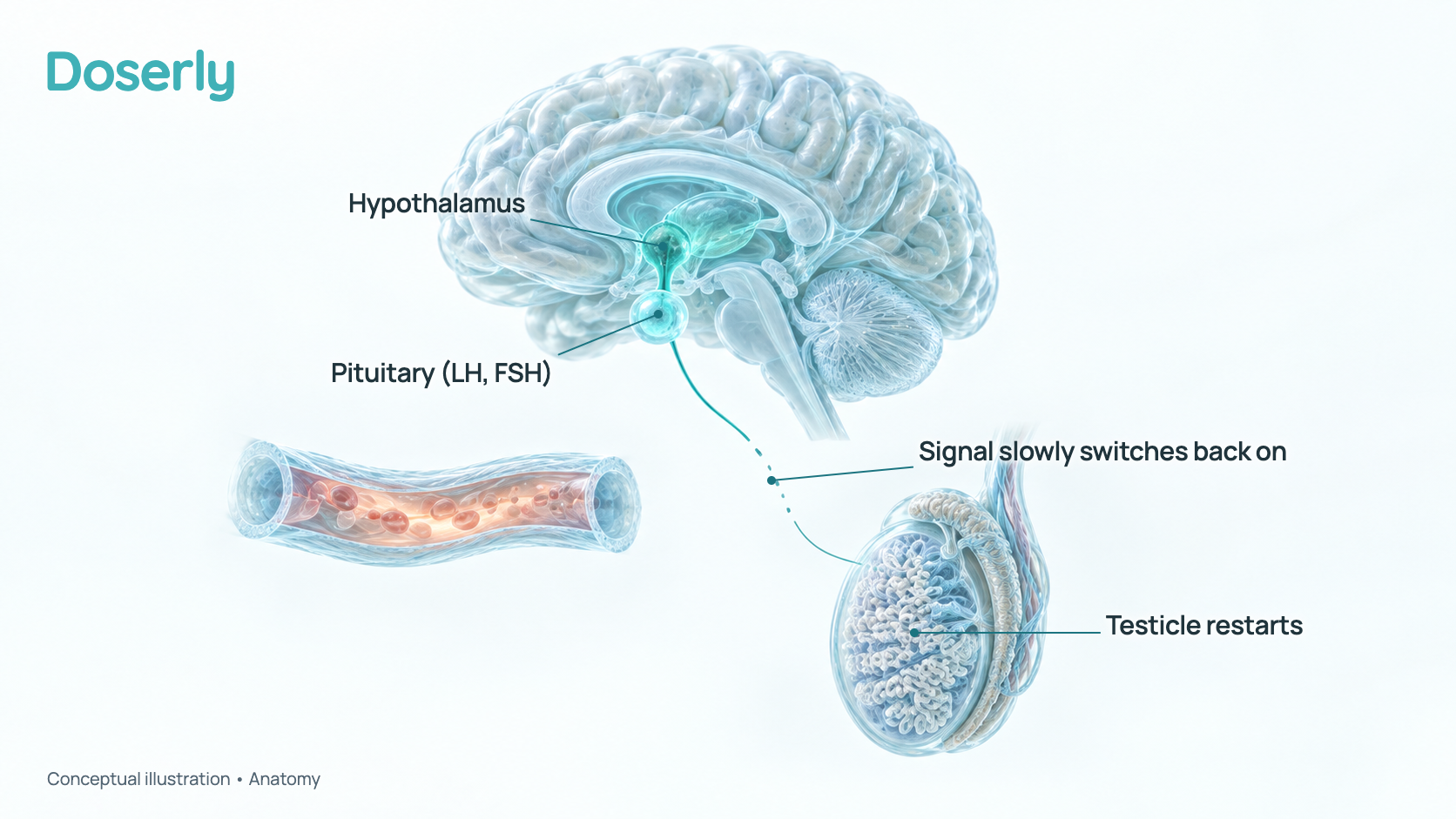
Testosterone from outside the body tells the brain there is plenty, so the pituitary gland turns down its two signals to the testicles: LH (luteinizing hormone), which tells them to make testosterone, and FSH (follicle-stimulating hormone), which works with testosterone inside the testicles to make sperm. This chain is called the HPG axis. After the last dose it needs time to wake up, and in men whose low testosterone had a lasting cause, it may never make enough on its own. [15], [20], [21]
At replacement doses there is no documented dependence: US labels say it has not been documented in men using approved doses for approved uses. What men notice is the return of low testosterone, sometimes with a dip below their old level while the body catches up. [15], [22]
Men stop for many reasons: it did not help, a side effect such as a high hematocrit, plans for children, cost or access, or a doctor wanting to recheck the original diagnosis. Each reason leads to a different plan, from a short pause to stopping for good. [23], [10]
Stopping TRT: the key numbers
This table shows what each major clinical guideline and the US product labels say about stopping, checked in September 2026. Several say when to stop; almost none say how.
| Guideline (version, year) | When it says to stop | How to stop | What it says happens after |
|---|---|---|---|
| AUA, American Urological Association (2018, validity confirmed 2024) | Discuss stopping 3–6 months after starting if testosterone is normal but symptoms have not improved | Not addressed | Sperm can take up to two years to return, and some men never regain it |
| Endocrine Society (2018; its July 2026 statement adds no stopping rule) | No stop-if-no-benefit window stated; pause for high hematocrit | Not addressed | Low testosterone from causes such as obesity or opioids may reverse when the cause is treated |
| EAU, European Association of Urology (2026) | No stop-if-no-benefit window stated; for high hematocrit, stopping for good is usually not required | Not addressed; long-acting undecanoate cannot be withdrawn quickly | No testosterone for men who want to father children |
| BSSM, British Society for Sexual Medicine (2023) | No benefit within 6 months: stop and look for other causes | Not addressed | Stopping led to relapse within 6 months in trials, so treatment is likely lifelong; fertility may take 12 months to recover |
| CUA, Canadian Urological Association (2021) | No improvement after about 3 months despite normal levels, or significant side effects | No taper needed (graded high level of evidence, strong recommendation, for its whole statement on stopping) | Not addressed |
| VA, US Department of Veterans Affairs (January 2026) | No improvement after 6–12 months despite in-range testosterone | Men without a documented diagnosis, under 1 year of use: stop for 3–6 months, then test | Longer use raises the risk of dependence on TRT |
| Society for Endocrinology, UK (2022) | Rejects time-limited trials; expects lifelong treatment for a confirmed diagnosis | Not addressed; long-acting undecanoate cannot be withdrawn quickly | No randomized studies of restart medicines for steroid withdrawal |
| EAA, European Academy of Andrology (2020, functional hypogonadism) | No significant improvement after 6 months: stop and seek another diagnosis. Stopping may also be considered after weight loss or when opioids can be stopped or swapped | Not addressed; temporary treatment "holidays" can be used to recheck the HPG axis (no length given) | Stopping opioids usually brings testosterone back within 1 month |
| ICSM, International Consultation on Sexual Medicine (2024) | No stop-if-no-benefit window stated | Not addressed | No testosterone for men seeking to father children |
| AUA/ASRM male infertility guideline (2020, amended 2024) | No testosterone for men interested in current or future fertility | Not addressed | Sperm returns in most men, but it can take months or rarely years |
| US product labels (checked September 2026) | Suspected blood clot; raised hematocrit (Xyosted: stop for good if it rises again after restarting) | Not addressed | Gels clear in 2 to 5 days; dependence not documented at approved doses; several newer labels, such as Xyosted and AndroGel, warn that reduced fertility may be irreversible |
[7], [24], [25], [26], [8], [6], [10], [11], [9], [27], [16], [15], [14], [1], [28]
Five guidelines set a stop-if-no-benefit window of 3 to 12 months: the CUA about 3 months, the AUA 3–6, the BSSM and EAA 6 and the VA 6–12. The UK Society for Endocrinology rejects time-limited trials. Only the CUA says how to stop (no taper needed), and no guideline gives a restart-medicine schedule for men coming off TRT. [6], [7], [8], [9], [10], [11]
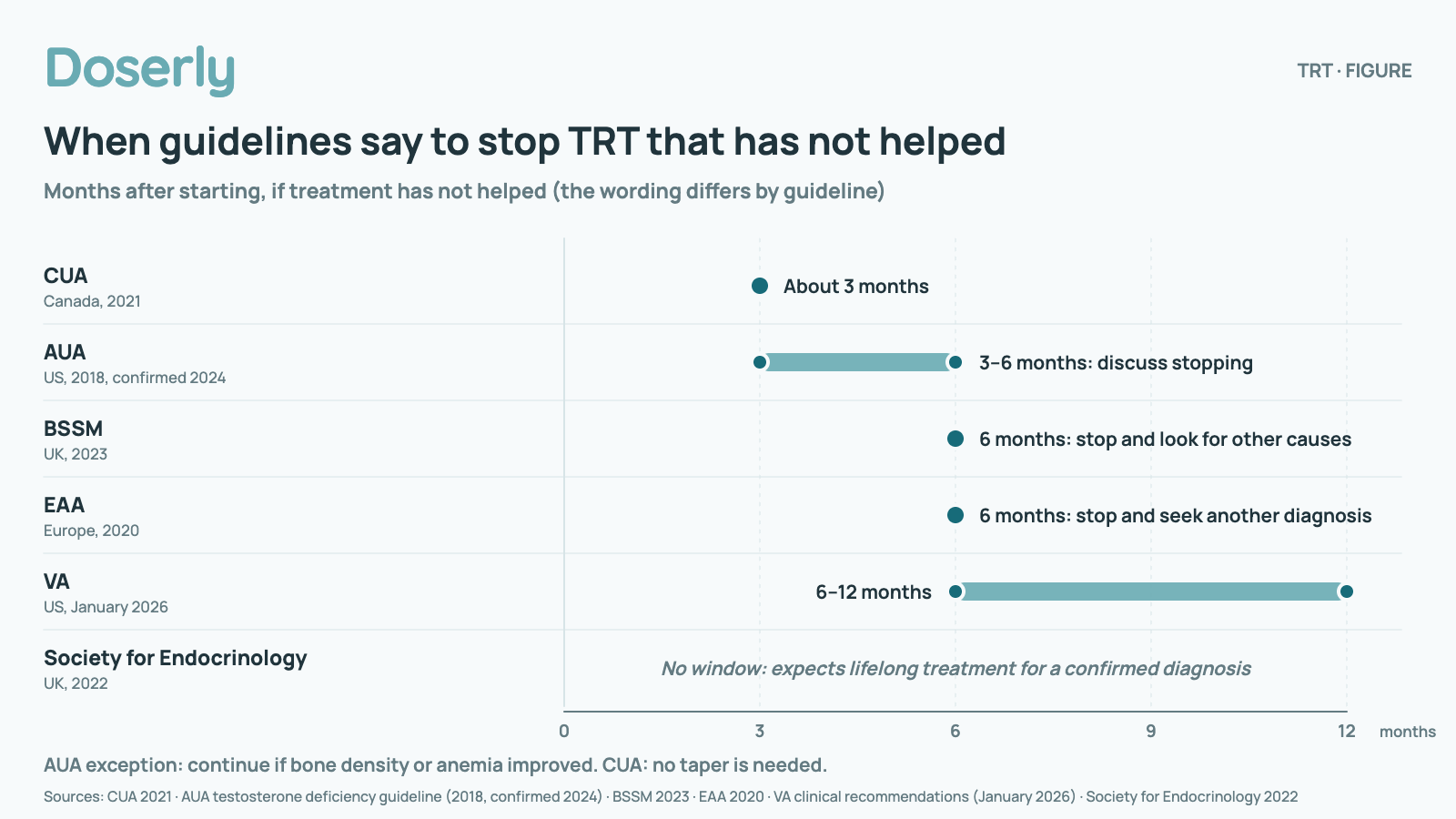
When guidelines say to stop TRT that has not helped
Months after starting, if treatment has not helped (the wording differs by guideline).
Each bar runs from 0 (left) to 12 months (right) after starting.
- CUA (Canada, 2021)
- About 3 months
- AUA (US, 2018, confirmed 2024)
- 3–6 months: discuss stopping
- BSSM (UK, 2023)
- 6 months: stop and look for other causes
- EAA (Europe, 2020)
- 6 months: stop and seek another diagnosis
- VA (US, January 2026)
- 6–12 months
- Society for Endocrinology (UK, 2022)
- No window: expects lifelong treatment for a confirmed diagnosis
AUA exception: continue if bone density or anemia improved. CUA: no taper is needed.
Why do guidelines disagree about when to stop?
Because they disagree about what the first months of TRT are for. The AUA, CUA, BSSM, EAA and VA treat them as a test of whether testosterone helps you; the Society for Endocrinology treats a confirmed diagnosis as a reason for lifelong replacement. The AUA adds an exception for men whose bone density or anemia improved on treatment. See is TRT for life? [7], [6], [8], [9], [10], [11]
How long does each form take to leave your body?
Days for gels, about two weeks after a single short-acting injection, and months for long-acting undecanoate injections and pellets. These times describe the medicine clearing, not your own production returning.
| Form | What the label or study says | Source type |
|---|---|---|
| AndroGel 1.62% and generic 1.62% gels | Back to about the starting level within 48–72 hours after the last dose | US label |
| AndroGel 1% and generic 1% gels | Stays in the normal range for 24–48 hours, then back to the pretreatment level by the fifth day | US label |
| Testosterone 2% topical solution | Back to the pretreatment level in 7–10 days | US label |
| Testosterone cypionate injection | Half-life about 8 days; after one 200 mg injection in 11 men, levels were back to their starting values by days 13–14 | US label; human study |
| Testosterone enanthate injection | Half-life 2–3 days in the blood (UK label) or 4–5 days (EAU table); after one 125 mg injection in 9 men, testosterone on day 14 was below the men's own starting level | UK label; guideline; human study |
| Testosterone undecanoate injection (Nebido, Aveed) | Release from the depot has a half-life of 90 ± 40 days (UK label), about 53 days (Australian label) or 34 days (EAU table). In the T4DM trial follow-up, testosterone in former users took about 6 months after the last 1,000 mg injection to settle | UK and Australian labels; guideline table; trial follow-up |
| Pellets (Testopel) | Implanted every 3–6 months; in one records study they kept testosterone above 300 ng/dL for about 4–6 months | US label; records study |
[1], [29], [28], [30], [31], [15], [2], [32], [26], [22], [3], [33], [21], [34], [35]
The multi-day half-lives of injections describe how slowly the oil depot releases testosterone; testosterone itself has a half-life of only 10 to 100 minutes in the blood. The EAU, the Society for Endocrinology and the BSSM all point out the practical side of this: long-acting undecanoate injections cannot be withdrawn quickly if a side effect appears. [36], [26], [11], [8]
A blood test taken soon after the last dose shows leftover medicine or a body that has not yet restarted, which is why the VA's retesting rule waits 3–6 months (see retesting). [10]
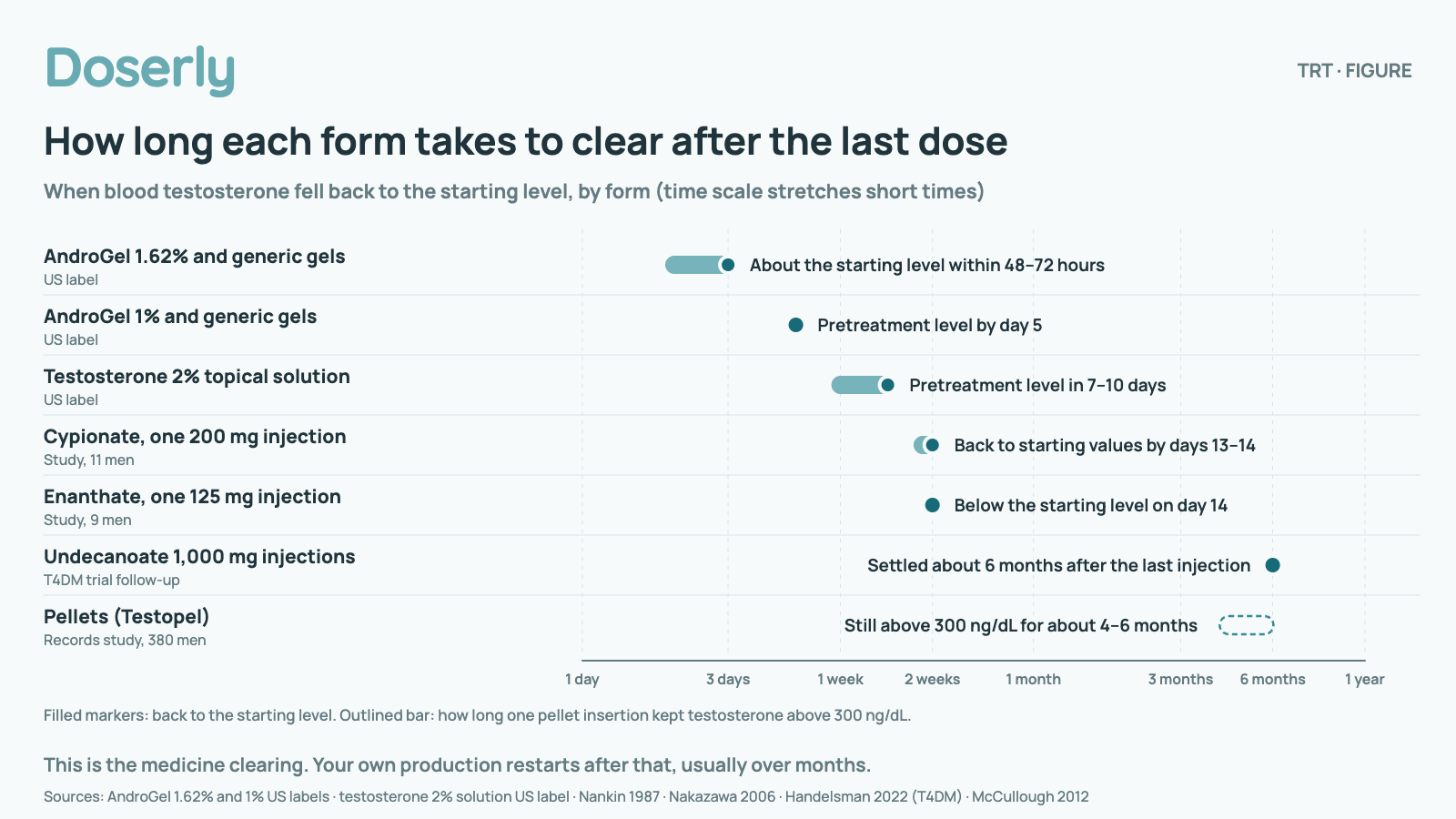
How long each form takes to clear after the last dose
- 48–72 hours
AndroGel 1.62% and generic gels: about the starting level within 48–72 hours.
US label
- By day 5
AndroGel 1% and generic gels: pretreatment level by day 5.
US label
- 7–10 days
Testosterone 2% topical solution: pretreatment level in 7–10 days.
US label
- Days 13–14
Cypionate, one 200 mg injection: back to starting values by days 13–14.
Study, 11 men
- Day 14
Enanthate, one 125 mg injection: below the starting level on day 14.
Study, 9 men
- About 6 months
Undecanoate 1,000 mg injections: settled about 6 months after the last injection.
T4DM trial follow-up
- 4–6 months (still working)
Pellets (Testopel): still above 300 ng/dL for about 4–6 months.
Records study, 380 men
This is the medicine clearing. Your own production restarts after that, usually over months.
How do the units work?
Testosterone is reported in ng/dL in the US and in nmol/L in most other countries; divide ng/dL by 28.84 to convert, so 300 ng/dL is about 10.4 nmol/L. The testosterone unit converter does the arithmetic, and the testosterone level visualizer shows how each form rises and falls between doses.
Where these numbers come from
Each guideline row comes from that body's current document: the AUA testosterone deficiency guideline (published 2018, validity confirmed 2024), the Endocrine Society guideline (2018) and its July 2026 statement, the EAU guidelines on sexual and reproductive health (2026 edition), the BSSM guidelines (2023), the CUA guideline (2021), the VA clinical recommendations (January 2026, including Table 2 on men already on TRT), the Society for Endocrinology guideline (2022), the EAA guideline (2020), the ICSM 2024 recommendations (published 2025) and the AUA/ASRM male infertility guideline (2020, amended 2024). [7], [24], [25], [26], [8], [6], [10], [11], [9], [27], [16]
The label row and the clearance table come from the current US labels for AndroGel 1.62% and 1% and their generics, a generic 2% topical solution, Depo-Testosterone, Xyosted and Testopel, the UK testosterone enantate and Nebido summaries of product characteristics, and the Australian Reandron 1000 product information. The single-injection figures come from studies of one 200 mg cypionate injection in 11 men and one 125 mg enanthate injection in 9 men; the undecanoate figure comes from the T4DM follow-up. [1], [28], [31], [15], [14], [34], [32], [3], [33], [2], [22], [21]
Not used: tables of "time to significant decline" and "expected low point" for each form, and week-by-week recovery timelines, that circulate online without a traceable source; a 33-day half-life for undecanoate injections, which circulates without a source (the EAU table gives 34 days, the UK label 90 ± 40 days and the Australian label about 53 days); and a sentence attributed to the ICSM about stopping "completely and rapidly" to recover sperm, which we could not check against the full text.
Why does stopping bring low testosterone back?
Because TRT replaces testosterone without fixing the reason it was low, and it switches off your own production while you take it. When it stops, you are left with the original cause plus a slow restart. [15], [24]
- The signal switches off. The labels explain that testosterone given from outside holds down the body's own release through feedback on the pituitary's LH. [15], [2]
- Testosterone inside the testicles falls. In healthy men, the level inside the testicles (intratesticular testosterone) was about 80 times the blood level (1,174 vs 14.1 nmol/L), and 3 weeks of weekly enanthate injections (200 mg) cut it by 94%. That is why sperm production falls even while blood testosterone looks normal on TRT. [20]
- The testicles shrink, then usually recover. In a contraceptive study of 39 healthy men, weekly or every-2-week enanthate injections shrank the testicles by about a fifth (19.0% and 16.5% at 4 months), and they returned to normal size after the men stopped. [37]
- The restart takes months. In the T4DM trial, men without a testosterone disorder stopped 2 years of long-acting undecanoate injections; their own LH and FSH recovered slowly over 12 months, and full recovery may take longer than a year after the last injection. [21]
Why does the original cause matter so much?
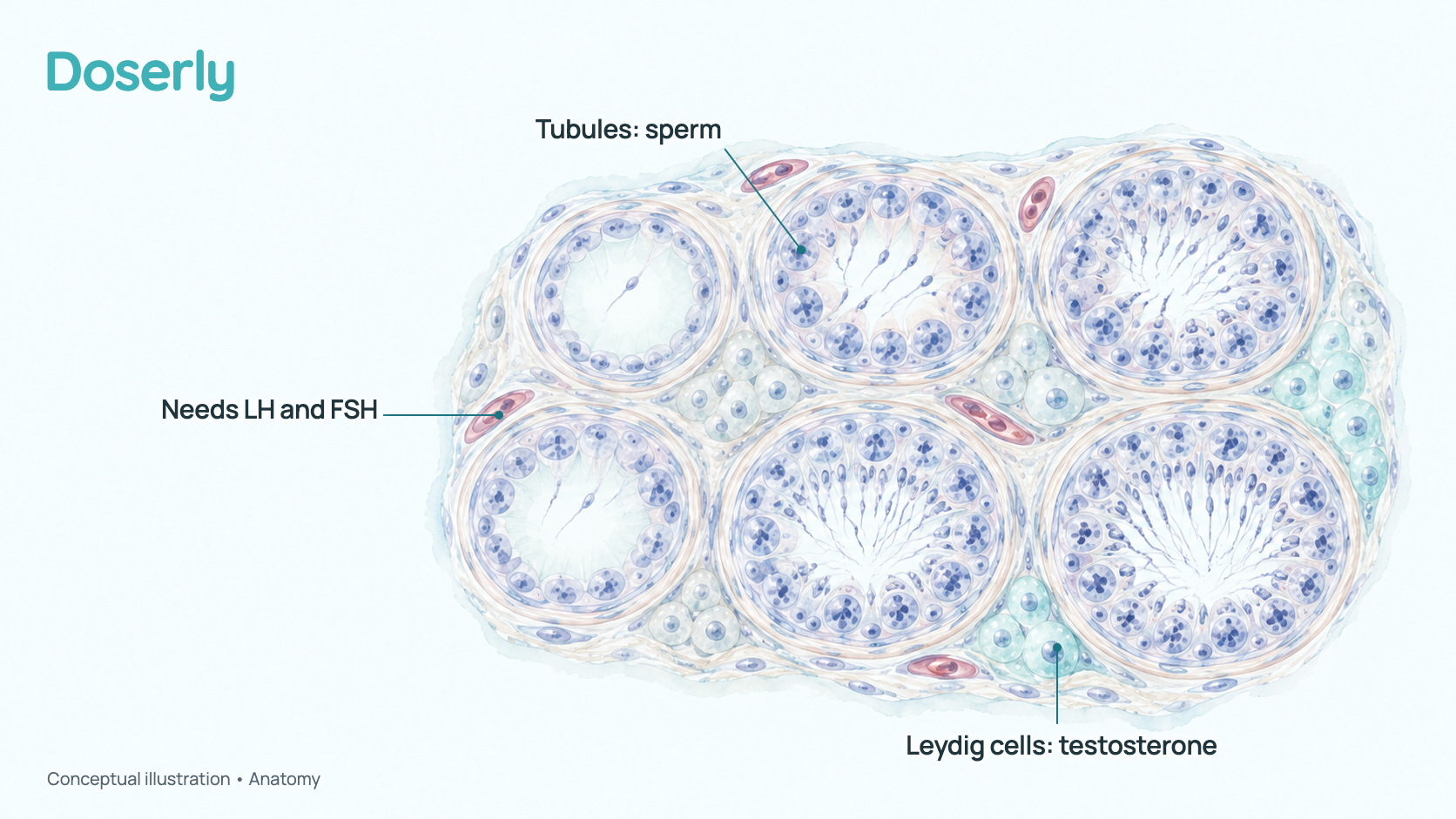
Because it decides what your body can do on its own once the medicine is gone. Guidelines group the causes of low testosterone like this:
- A lasting problem in the testicles (primary hypogonadism). The testicles cannot make enough testosterone however hard the pituitary pushes, so low testosterone returns when treatment stops. The Society for Endocrinology expects lifelong treatment once such a diagnosis is confirmed. [11]
- A lasting problem in the pituitary or brain (secondary hypogonadism). The signals stay low without treatment. Reversal is uncommon but real: among men with congenital GnRH deficiency (a lifelong shortage of the brain's starting signal), 5 of 50 made their own testosterone again after a short break in treatment, which led the researchers to call a brief break to check "reasonable". [38], [39]
- A cause that can change (functional hypogonadism), such as obesity, opioid painkillers or some other medicines. The Endocrine Society says these causes "might be reversible by treating the underlying condition or discontinuing the offending medication". The EAA says stopping opioids usually brings testosterone back within 1 month, and that stopping TRT may be considered after weight loss or when opioids can be stopped or swapped. In a European study of 3,369 men aged 40–79 followed for 4.3 years, 42.9% of untreated men with secondary low testosterone recovered, more often if they were not obese or lost weight. [24], [9], [40]
So "Will my natural testosterone come back?" has no single answer. It comes back to whatever your body makes without help, which is usually close to where you started unless the cause has changed. [4], [19]
What does the research show?
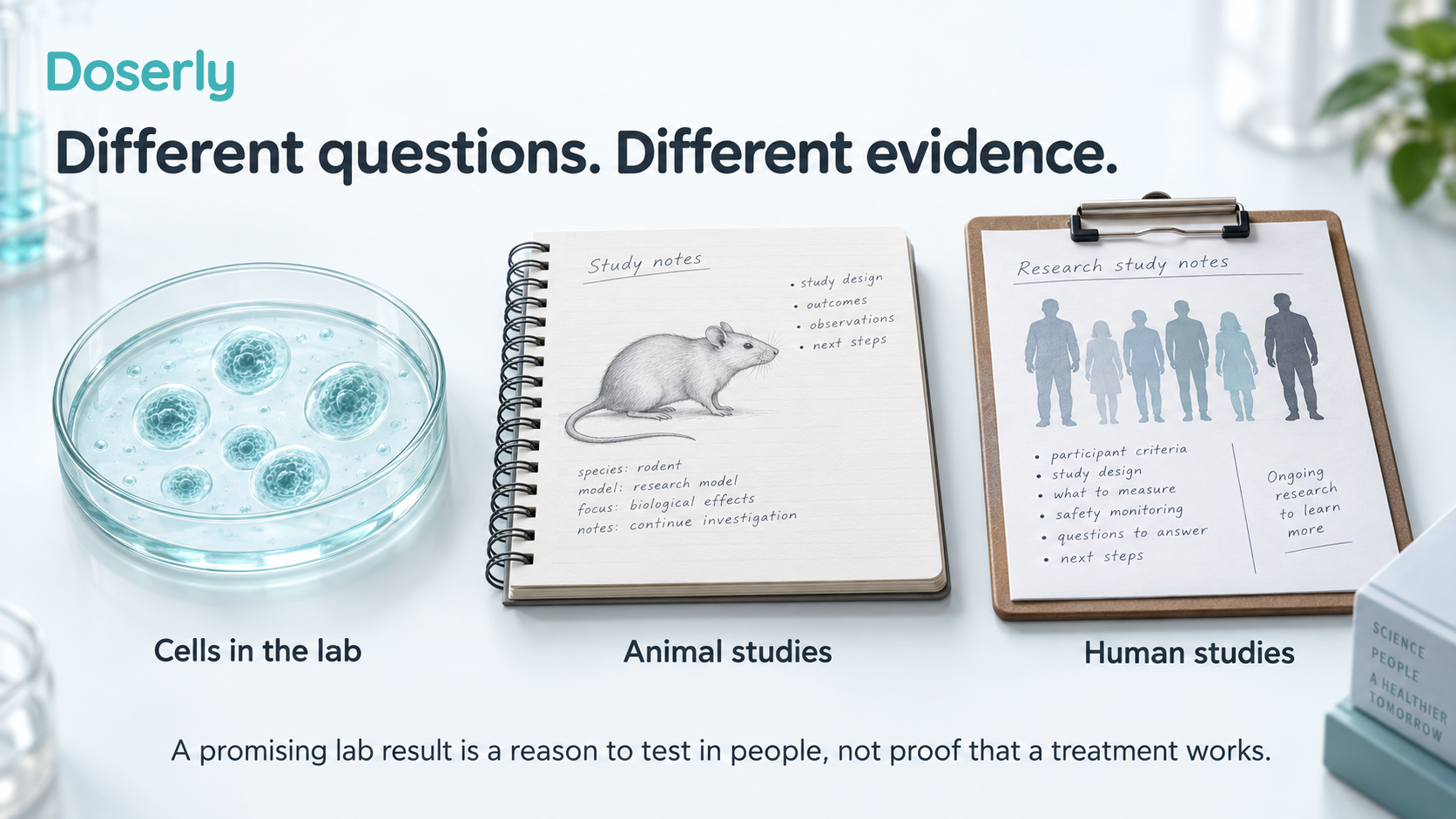
Direct evidence on men with diagnosed low testosterone who stop replacement doses is thin: a handful of small studies, the largest with 274 men, mostly followed for 3 to 6 months. Most "recovery" numbers quoted online come from two other groups, healthy volunteers in contraceptive trials and men who used anabolic steroids outside medical care, so this section labels every number with the group it comes from. [41], [42]
Does testosterone go back to where it was before?
Mostly yes, within months. These are the studies that followed men after they stopped:
| Study | Who and what | What happened after stopping | What it cannot show |
|---|---|---|---|
| Tsujimura 2008 (follow-up study) | 25 men with late-onset hypogonadism who had benefited from treatment | Testosterone back to pretreatment levels 3 months after stopping; the improvement in an overall symptom score held at 3 months | Selected responders; product not stated in the summary [4] |
| O'Connell 2011 (controlled trial) | 274 frail men aged 65–90 with low testosterone, gel or placebo for 6 months | Testosterone 11.1 nmol/L (about 320 ng/dL) at the start, 18.4 (about 530) on gel and 10.5 (about 300) 6 months after stopping | Frail older men; short treatment [5] |
| Francomano 2014 (pilot study) | 24 severely obese men with low testosterone on diet and exercise; 12 also had undecanoate injections for 54 weeks, then all 24 had 24 weeks of diet and exercise alone | In the treated men, "a return back to hypogonadism within 6 months"; heart and hormone measures returned to baseline, while fat-mass and blood-pressure improvements were maintained | Tiny (12 treated); open-label (everyone knew who got testosterone) [19] |
| Krysiak 2021 (pilot study) | 28 men on oral testosterone undecanoate who had to stop | Total testosterone fell 42% (men also taking metformin) and 52% (men who were not) by 4 months; sexual function worsened | Small; not randomized [43] |
| Cho 2017 (pilot randomized trial of exercise) | 50 inactive men with erection problems and low testosterone, gel for 12 weeks, then 8 weeks off | Testosterone and symptom scores fell in both groups; the exercise group kept more benefit | Small; exercise was the treatment tested [44] |
| German registry (three reports from one urology registry) | 262 men on undecanoate injections; 147 had to stop for an average of 16.9 months when insurance stopped paying | Testosterone fell back to low levels; weight, blood sugar, cholesterol, blood pressure and symptom scores worsened, then improved again on restarting | Observational; one group of men reported three times; one author linked to the manufacturer [45], [46], [47] |
| T4DM follow-up (controlled trial follow-up) | 303 men with raised blood sugar (glucose intolerance) and low-normal testosterone, not diagnosed low testosterone, after 2 years of undecanoate injections | Testosterone fell by 12 weeks and settled about 11% below the former placebo group, with SHBG 13% lower; symptom questionnaires did not differ after 18 weeks | Men without a testosterone disorder [21] |
No study has tracked men's own testosterone month by month after years of cypionate or enanthate in men with diagnosed low testosterone. The closest data are single-injection studies, in which levels were back at or below the men's starting values about 2 weeks after one dose, and the T4DM follow-up of long-acting injections. [2], [22], [21]
Do the benefits last after stopping?
Usually not for long, although some men keep part of them.
- About 4 in 10 responders kept their benefit for 6 months. In 151 men who had responded to TRT, 59 still had their improvement 6 months after stopping and 92 did not. Those who kept it had been treated longer (10.7 vs 5.2 months on average), had reached higher peak testosterone (713.7 vs 546.1 ng/dL) and more often exercised regularly (45.8% vs 9.8%). The study was observational, so it cannot show that exercise caused the difference. [48]
- Muscle gained on gel faded. In the frail older men above, gel added 1.2 kg of lean mass at 6 months, and none of the differences in muscle, function or symptoms remained 6 months after stopping. [5]
- The body-composition advantage disappeared. Obese men who had testosterone with a weight-loss program for 56 weeks lost their extra fat loss and lean-mass protection about 82 weeks after stopping, and during that time the former testosterone group lost 3.7 kg more lean mass than the former placebo group (64 men followed). [49]
- One exception. In 13 men with spinal cord injury who used a patch for 12 months, lean mass rose from 50.2 to 52.9 kg and was still 52.2 kg 6 months after stopping. This is a small, special group. [50]
- Some gains held in one small study. In the Italian pilot above (12 treated men), fat-mass loss and blood-pressure improvements were still present 24 weeks after stopping, while lean mass and the heart and hormone measures had returned to baseline. The German registry found that blood-pressure improvements were lost during the break. Both studies are small or observational. [19], [45]
- Mood. In a tiny study of depressed men with low testosterone, 3 of 4 began to relapse when their injections were secretly swapped for placebo. We found no study of suicidal thoughts after stopping prescribed TRT. [51]
How long until sperm comes back?
For most men within a year, but not for everyone. In 1,549 healthy men in contraceptive trials, sperm returned to 20 million per mL in a median of 3.4 months: 67% within 6 months, 90% within 12, 96% within 16 and 100% within 24. On average, counts levelled off at about 85% of the men's own starting level. [13], [52]
Longer use and long-acting products can slow recovery: the contraceptive trials found recovery was somewhat slower after longer treatment and with longer-acting testosterone preparations, although the effects were small. In one clinic, 8 men with infertility who had used long-acting undecanoate injections for a median of 8 months regained normal sperm counts a median of 8.5 months after stopping (range 7–10). The AUA says return can take up to two years, "with some men never experiencing return of sperm", and several US labels, such as Xyosted and AndroGel, warn that reduced fertility on TRT may be irreversible. [13], [53], [7], [16], [14], [1]
The studies disagree about age. In the contraceptive trials, older men recovered faster; in a fertility-clinic series of 66 men treated with hCG and a clomiphene-type medicine, older age and longer testosterone use slowed recovery. The groups were very different (healthy volunteers versus men with infertility), so both findings can be true. The TRT and fertility guide covers recovery and treatment in detail. [13], [54]
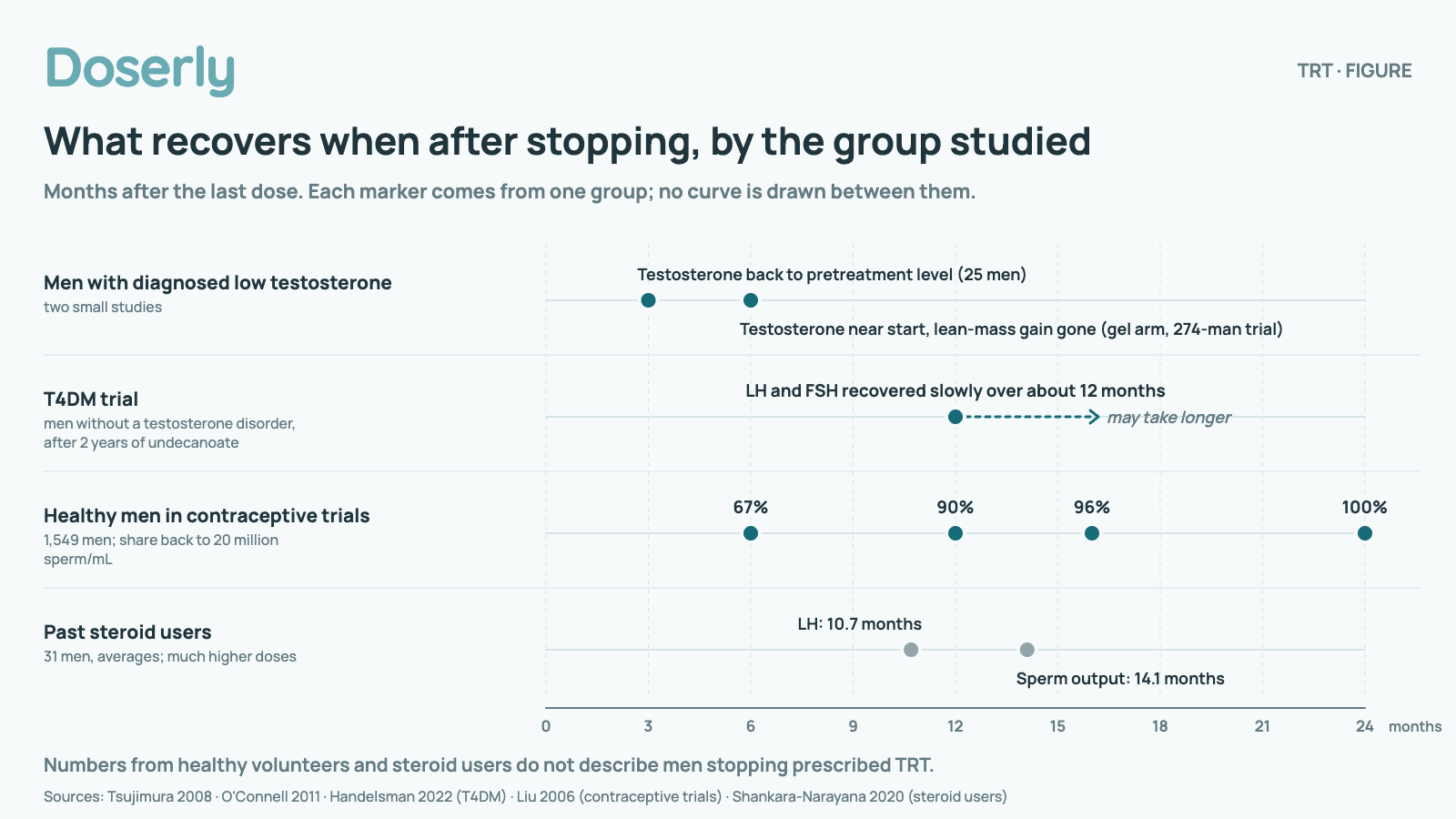
What recovers when after stopping, by the group studied
Months after the last dose, by the group studied.
Men with diagnosed low testosterone
Two small studies.
- 3 months
Testosterone back to its pretreatment level (25 men who had benefited).
- 6 months
Testosterone near its starting level and the lean-mass gain gone (frail older men on gel; the trial had 274 men).
T4DM trial
Men without a testosterone disorder, after 2 years of undecanoate.
- About 12 months
LH and FSH recovered slowly; full recovery may take longer.
Healthy men in contraceptive trials
1,549 men; share back to 20 million sperm/mL.
- 6 months
67% back to 20 million sperm/mL.
- 12 months
90%.
- 16 months
96%.
- 24 months
100%.
Past steroid users
31 men, averages; much higher doses.
- 10.7 months
LH recovered, on average.
- 14.1 months
Sperm output recovered, on average.
Numbers from healthy volunteers and steroid users do not describe men stopping prescribed TRT.
Why do so many men stop TRT?
Stopping is common:
- Most gel users stop within a year. Of 15,435 US men who started a gel in 2009, 34.7% were still using it at 6 months and 15.4% at 12; about half of those who stopped later restarted. In older Ontario men, the median time to stopping was 319 days on gels and 283 on injections. [55], [56], [57]
- Reasons given. Of 154 Korean men who stopped in their first year, 29.9% named inconvenience, 23.4% cost, 23.4% worry about side effects, 16.2% lack of effect and 7.1% that their symptoms had improved. At one US practice, 26.8% of men stopped because treatment did not help. [23], [58]
- In trials too. About 61% of men in the TRAVERSE heart-safety trial stopped their study gel early. [59]
How is coming off TRT different from coming off steroids?
Men who use anabolic steroids outside medical care usually take far higher doses, often several drugs at once, and most recovery numbers quoted online come from them.
| Study | Who | What happened after stopping |
|---|---|---|
| HAARLEM (2021) | 100 amateur athletes followed through one steroid cycle | Testosterone back to its starting level 3 months after the cycle for most; 1 year after the cycle began, 9 men (11% of those assessed) still had low testosterone and 25 (34%) a sperm count below 40 million [60] |
| Shankara-Narayana 2020 | 31 past users (a median 300 days since last use) and 21 non-users | Past users looked like non-users except for smaller testicles and SHBG; on average LH took 10.7 months and sperm output 14.1 months to recover; sperm output, but not hormones, recovered more slowly after longer use [61] |
| Grant 2023 | 641 men tested once within 36 months of stopping, at one Glasgow clinic | 48.2% had fully normal reproductive hormones; using more steroid compounds lowered the odds [62] |
| Rasmussen 2016 | Former users about 2.5 years after stopping, and non-users | 27% of 33 former users still had testosterone below 12.1 nmol/L (about 350 ng/dL), against none of 30 non-users [63] |
| Kanayama 2015 and a 2023 survey | 24 former long-term users; 306 men who had tried stopping | 7 of 24 had major depression during withdrawal; in the survey, 95.1% had symptoms, most often low mood (72.9%) [64], [65] |
The UK Society for Endocrinology's 2026 position statement on non-medical use says most men recover their hormone levels within about 12 months, that symptoms can continue after blood tests recover, and that the evidence for drugs to speed recovery "remains limited and of low quality". [66]
Figures such as "14 months for sperm" or "a quarter still low years later" describe steroid users, not men stopping prescribed doses. The TRT vs steroids guide covers steroid recovery in full.
Is it safe to stop TRT?
Yes, in the sense that stopping replacement doses does not cause a dangerous withdrawal, and the CUA says no taper is needed. The real costs are the return of low testosterone and its symptoms, the loss of gains made on treatment and, for men who want children, sperm recovery that can be slow or incomplete. [15], [6], [5], [7]
Is TRT addictive? Is there a withdrawal syndrome?
Not at replacement doses, according to the labels. Since 2016, every US testosterone label has carried a section on abuse and dependence. It says people taking supratherapeutic (above-treatment) doses may get withdrawal symptoms lasting weeks or months, including depressed mood, major depression, fatigue, craving, restlessness, irritability, poor appetite, insomnia, low sex drive and suppressed natural testosterone, and that dependence "has not been documented" in people using approved doses for approved uses. [15], [67]
The VA takes a slightly different view in its advice on men already on TRT: "Longer durations of TRT use increases the risk of dependence on TRT." Most of the symptoms on the label list are also symptoms of low testosterone, which is what returns when replacement stops. [10]
What can go wrong when you stop?
- Symptoms come back, often within 3–6 months, sometimes with a dip below your old level while your own signal is still switched off. [8], [43], [22]
- Mood can drop. The evidence is thin (the tiny placebo-swap study above, plus steroid users, among whom low mood was the most common symptom after stopping). Severe low mood, or any thoughts of self-harm, needs prompt medical help. [51], [64], [65]
- Gains fade, including muscle and blood sugar improvements, and fertility may not fully return (see sperm recovery). Blood pressure is less clear: the German registry found the improvements were lost, but a small Italian pilot found them still present 24 weeks after stopping. Both studies are small or observational. [5], [45], [19], [14]
What does the largest heart-safety trial show?
Some men stop over heart worries, so the facts matter. In TRAVERSE, 5,204 men aged 45–80 at high heart risk used testosterone gel or placebo. A heart attack, stroke or death from cardiovascular causes occurred in 182 of 2,596 men on testosterone (7.0%) and 190 of 2,602 on placebo (7.3%). The hazard ratio (the risk on testosterone compared with placebo, where 1.0 means no difference) was 0.96, with a 95% confidence interval of 0.78 to 1.17. The top of that range was below the trial's safety limit of 1.5, so it met its safety goal. Some problems were more common on testosterone, in groups of about 2,600 men each: atrial fibrillation (an irregular heartbeat) 3.5% vs 2.4%, acute kidney injury (a sudden drop in kidney function) 2.3% vs 1.5% and pulmonary embolism (a blood clot in the lungs) 0.9% vs 0.5%. Blood clots in a vein of any kind, including pulmonary embolism, occurred in 44 of 2,596 men on testosterone and 30 of 2,602 on placebo. In its fracture substudy, clinical fractures occurred in 91 of 2,601 men on testosterone (3.50%) and 64 of 2,603 on placebo (2.46%; hazard ratio 1.43, 95% confidence interval 1.04 to 1.97), so testosterone did not prevent fractures. [68], [69], [59], [70]
Its limits matter: it tested only a daily gel, men used it for an average of 21.7 months, about 61% stopped their study gel early, and it enrolled men already at high heart risk. The labels say to stop testosterone and investigate if a blood clot is suspected. The TRT and heart health guide covers the trial in full. [68], [59], [15]
Who should be especially cautious?
- Men with a confirmed lasting cause, such as testicular or pituitary disease. Low testosterone will return, and the Society for Endocrinology expects lifelong treatment. [11]
- Men whose bone density or anemia improved on TRT. The AUA names these as reasons to continue even when symptoms have not changed. [7]
- Men with a history of depression. Plan the stop with the clinician who knows that history. [51]
- Men who want children in the next year. Stopping alone may not bring sperm back quickly enough; the Endocrine Society advises against testosterone for men with pituitary-type low testosterone who want children in the next 6–12 months. See the fertility guide. [24], [13]
- Men on long-acting undecanoate injections or pellets. Undecanoate injections cannot be withdrawn quickly, and pellets keep releasing testosterone for months, so a side effect can last a long time after the decision to stop. [26], [11], [35]
- Men who used doses above replacement, or other steroids. Recovery can take longer. [9], [61]
- Men taking warfarin or diabetes medicines (see the next question). [1]
- Drug-tested athletes. Testosterone is prohibited in sport at all times. [18]
- Under-18s. Testosterone for teenagers belongs only in specialist care.
- Women. This guide is written for men. Testosterone for women uses different doses and products; see testosterone therapy for women.
Which medicines are affected when testosterone stops?
- Warfarin and similar blood thinners. Testosterone changes how strongly they work, so the US labels recommend more frequent INR checks (a blood-clotting test) "especially at the initiation and termination of androgen therapy". [1], [59]
- Diabetes medicines. The labels say testosterone can lower blood sugar and insulin needs in men with diabetes, so tell whoever manages those medicines before you stop or restart. [1]
- Restart medicines have their own risks. The EAU notes that clomiphene-type medicines (SERMs) and aromatase inhibitors are off-label with poor evidence, that SERMs may raise the risk of blood clots and that long-term use can lower bone density; the VA does not generally recommend aromatase inhibitors. [26], [10]
Bring a complete list of what you take, including supplements, to a pharmacist or prescriber. Checked September 2026.
Is testosterone legal, and is it allowed in sport?
Checked September 2026. Rules differ by country and change often.
- United States. Testosterone and its esters are Schedule III controlled substances, prescription only. No proposal to change that has been published. The temporary rules that let clinicians prescribe it by telehealth without an in-person visit run through December 31, 2026; the Drug Enforcement Administration's permanent rule was under White House review and had not been published. Men whose prescription depends on telehealth may want to plan ahead rather than face an unplanned stop. [17], [71], [72]
- United Kingdom. Testosterone is a Class C controlled drug, in Schedule 4 Part II of the Misuse of Drugs Regulations. [73]
- Canada. Testosterone is a Schedule IV controlled substance. [74]
- Australia. Testosterone is a Schedule 4 prescription-only medicine. [75]
- Sport. The World Anti-Doping Agency (WADA) prohibits testosterone at all times, and its 2027 list, published in September 2026, keeps the ban. Clomiphene-type medicines, aromatase inhibitors and, in men, hCG are also prohibited. [18], [76]
What do guidelines say about stopping?
They tie the decision to the reason. Some reasons call for stopping for good, others for a pause and a restart at a lower dose, and one calls for a planned break to recheck the diagnosis. This section describes the choices clinicians weigh; it is not a personal plan.
| Reason | What guidelines and labels say | Stop for good or pause? |
|---|---|---|
| No benefit after a fair trial | CUA about 3 months, AUA 3–6 months (discuss stopping), BSSM 6 months (stop and look for other causes), EAA 6 months (stop and seek another diagnosis), VA 6–12 months | Stop, unless bone density or anemia improved (AUA) |
| High hematocrit | Endocrine Society and EAA: stop until safe, check for sleep apnea, restart lower. EAU: stopping for good is usually not required. AUA: lower the dose or stop for a while. Xyosted label: stop for good if it rises again after restarting | Usually a pause (hematocrit guide) |
| Trying for a child now or soon | AUA, AUA/ASRM, EAU, ICSM and CUA: no testosterone for men trying to conceive. Endocrine Society: not appropriate if children are wanted within 6–12 months | Stop, or a specialist fertility plan (fertility guide) |
| PSA rise or prostate concern | EAU: follow local prostate cancer guidelines. CUA: investigate whether or not testosterone stops. AUA, for men treated for prostate cancer whose PSA rises on testosterone: the discussion about stopping should include that PSA may fall | Case by case (prostate guide) |
| Suspected blood clot | US labels: stop and investigate | Stop |
| Cholesterol or blood pressure changes | US labels: cholesterol changes may require a dose change or stopping; testosterone can raise blood pressure | Case by case |
| The cause has gone away | EAA: stopping TRT may be considered after weight loss or when opioids can be stopped or swapped, and temporary treatment "holidays" let the HPG axis be rechecked. Endocrine Society: such causes may reverse | A trial off treatment |
| Unclear original diagnosis | VA: on TRT under 1 year without a documented diagnosis, stop for 3–6 months, then test; over 1 year, stop if not improved and consider continuing case by case if improved | A planned break, then retest |
[6], [7], [8], [9], [10], [24], [26], [14], [16], [27], [15], [1]
Do you need to taper off TRT?
No, according to the only guideline that addresses it. The CUA says: "There is no need for tapered dose titration when discontinuing of testosterone therapy", graded as a strong recommendation with a high level of evidence. The CUA gives that one grade for its whole statement on stopping, so the grade may not refer to tapering alone. We found no study, in any group of men on prescribed TRT, that compared tapering with stopping at once. [6]
The only taper in the guidelines reviewed is the VA's option for men misusing anabolic steroids: testosterone at replacement doses for a limited time, "followed by its gradual taper". Long-acting undecanoate injections and pellets fade over months by design, but no study shows that this slow fall makes recovery easier. [10], [21]
In the public accounts reviewed for this guide, men who tapered and men who stopped at once both described easy and hard courses (see what people report).
Do you need PCT, hCG or clomiphene after TRT?
No trial shows that they help men coming off TRT, and no guideline gives a restart schedule for this purpose. Post-cycle therapy (PCT) is a steroid-user term for medicines taken to speed the return of natural testosterone, usually clomiphene-type tablets and sometimes hCG.
- No completed randomized trial exists, in any group. The only placebo-controlled trial found (letrozole plus hCG in steroid users) stopped after enrolling 8 men, with no results. The Society for Endocrinology says no randomized studies show whether such treatment helps steroid withdrawal, and the Endocrine Society called for trials in 2014. [12], [11], [77]
- Non-randomized studies in steroid users point both ways. In 520 steroid users who chose whether to be treated, testosterone at 12 months averaged 14.4 nmol/L with treatment and 9.0 without. In 79 men with 6 months or less of steroid use (the abstract does not give each group's size), hormones were normal in every group by 6 months, while normal semen at 12 months was more common with clomiphene plus hCG (87.5%) than with clomiphene alone (69.2%) or no treatment (58.6%). In the Glasgow clinic study, self-reported PCT went with normal hormones only in men tested within 3 months of stopping. [78], [79], [62]
- For men coming off prescribed TRT, only two single case reports describe switching to clomiphene. [80], [81]
- Where guidelines use these medicines, it is for fertility. The AUA says hCG, alone or with a SERM, has been shown to help sperm recovery (hCG is the only one FDA-approved for men), and the BSSM says men usually respond to hCG. [7], [8], [16]
- Cautions. The Endocrine Society says clomiphene's effectiveness and safety have not been shown in randomized trials, the EAU calls SERMs and aromatase inhibitors off-label with poor evidence, and the VA keeps hCG for specialists. For steroid users, the EAU suggests waiting 6–12 months after stopping before trying SERMs or gonadotropins for fertility. Enclomiphene is not approved anywhere: the EU refused it in 2018, it sits in an FDA compounding category under evaluation (not an approval), and the BSSM does not recommend it for routine use. [24], [26], [10], [82], [83], [84], [85]
An Australian men's health body puts the steroid-user evidence bluntly: "Ad hoc treatment with anti-estrogens, aromatase inhibitors or hCG lacks any sound evidence for safety and efficacy." This guide gives no restart schedules. The clomiphene, enclomiphene, tamoxifen and anastrozole guides and the hCG guide cover each medicine, and the hCG, gonadorelin and enclomiphene comparison explains how they differ. [86]
Can you stop TRT for a few weeks to get retested?
Only the VA gives a timed rule, and it is months, not weeks. The EAA says temporary treatment "holidays" can be used to recheck the HPG axis and decide whether TRT is still needed, without giving a length. For men on TRT without a documented diagnosis of low testosterone, it says: under 1 year of use, "Discontinue TRT for 3-6 months, followed by biochemical testing for hypogonadism"; over 1 year, stop if symptoms have not improved and consider continuing case by case if they have. [10], [9]
No guideline gives a form-by-form waiting time before a retest. A test taken 2 weeks after the last injection can catch leftover medicine or a body whose signal has not yet restarted, so it may not show your true starting level. Researchers studying men with congenital GnRH deficiency used breaks averaging about 6 weeks to check whether the condition had reversed. [2], [22], [38] The starting TRT guide covers how low testosterone is diagnosed with repeat morning tests.
Is TRT for life?
For a confirmed lasting cause, usually yes. The Society for Endocrinology expects lifelong treatment for a confirmed diagnosis, and the BSSM, although it sets a 6-month test, notes that in trials of 447 men stopping led to relapse "within 6 months, so therapy is likely to be required life-long". Guidelines differ for men whose cause is unclear or can change: the AUA, CUA, BSSM, EAA and VA all set a point to stop if treatment has not helped, and the EAA also allows a trial off treatment after weight loss or when opioids stop. [11], [8], [7], [6], [10], [9]
Many men who stop come back: about half of US gel users who stopped later restarted, and about 5 years after the T4DM trial (men without a testosterone disorder), 6% of 316 former testosterone users surveyed had restarted, against 2.8% of 283 former placebo users. [55], [87]
What happens after the last dose?
When will I feel the drop after stopping TRT?
No study has measured a week-by-week course after stopping prescribed TRT. The clearance times set the earliest point: days after a gel, about 2 weeks after a single cypionate or enanthate injection, and months after undecanoate injections or pellets. After that, how you feel depends on how low your own level is and how fast your signal restarts. [1], [2], [22], [21]
The timelines shared online, such as "normal for 1–2 weeks, a crash at weeks 3–4 and a low point at weeks 4–8", do not come from studies. Public accounts range from no noticeable drop at 7–8 weeks to a hard first month (see what people report).
Will I lose my muscle after stopping TRT?
Some of what testosterone added, yes, over months. In frail older men, the 1.2 kg of lean mass gained on gel was gone 6 months after stopping; in obese men, the former testosterone group lost 3.7 kg more lean mass than the former placebo group after stopping. Men with spinal cord injury kept most of their gain, and exercise was linked with keeping benefits in two studies, although neither proves exercise was the reason. [5], [49], [50], [48], [44] The muscle and fat loss guide covers what TRT adds in the first place.
Will my testicles go back to normal size?
Usually. In healthy men in a contraceptive study, testicles that had shrunk by about a fifth on enanthate injections returned to normal size after stopping. In steroid users, testicles were still smaller on average about 10 months after their last use. [37], [61]
What happens to hematocrit, PSA and blood pressure after stopping?
- Hematocrit falls back. In the frail older men, hematocrit was back to its starting level 6 months after stopping gel. In a records study of 49 trans men with high hematocrit, a 3-month break from cypionate injections every 2 or 3 weeks lowered it from 51.57% to 46.34% on average (35 measurements). The hematocrit guide covers pausing versus lowering the dose. [5], [88]
- PSA falls back. PSA was back to its starting level 6 months after stopping in the frail older men, For men treated for prostate cancer whose PSA rises on testosterone, the AUA says the discussion about stopping should include that PSA may fall. [5], [7]
- Blood pressure: we found no study showing that stopping lowers it. In the German registry, the blood pressure improvements men had made on treatment were lost during the break, but in a small Italian pilot they were still present 24 weeks after stopping. The US labels say testosterone can raise blood pressure, so a change is worth rechecking after stopping. [45], [19], [1]
Can you get someone pregnant on TRT, or soon after stopping?
Yes, it is possible. TRT is not reliable birth control: in a World Health Organization contraceptive study of 271 men, weekly 200 mg enanthate injections stopped sperm completely in 157 of them (a cumulative rate of 65% by 6 months), and pregnancies still occurred in a later study of 399 men, among those whose counts were low but not zero (4 pregnancies in 49.5 person-years, or 8.1 per 100 person-years). After stopping, sperm returns over months. [89], [90] See is TRT birth control?.
What if you want to restart TRT?
Restarting usually brings the benefits back: in the German registry, weight, blood sugar, blood pressure and symptom scores improved again when injections resumed. [45], [46] Three practical points:
- A new diagnosis may be needed. A test taken soon after stopping may not show your true starting level (see retesting), and prescribers usually diagnose low testosterone with repeat morning tests. [10]
- High hematocrit can come back. The Xyosted label says to stop for good if hematocrit rises again after restarting. [14]
- Restarting ends any fertility recovery. Testosterone switches the testicles' signals off again. [15]
What do people report after stopping TRT?
Public forums are full of men planning to stop and men describing the weeks after. The threads below are recent public Reddit discussions, read with their replies; they show what people experience, not how often it happens.
What do the first weeks feel like?
Anything from barely noticeable to very hard. One man who stopped about 15 weeks of cypionate (50 mg a week, which he raised to 100 mg himself) without restart medicine described steadier mood and erections and no "crash" 7–8 weeks later, while also changing his sleep, diet and training. [91] A man in his early 50s whose gel ran out after more than 2 years felt little change at 2 weeks, then a brief dip in sex drive around weeks 3–4; he had a testosterone result of 175 at 8 weeks, against 275 before treatment, while he felt well. [92]
Others had a rough start. A man in his 50s who stopped cypionate abruptly when his hematocrit reached 54% had strong joint aches in week 1, easing by week 3, with lower sex drive. [93] Another, told to pause 100 mg a week while he waited for a sleep study, described panic attacks and low mood 6 days after his last injection, while also changing his diet and weight. [94]
What do blood tests show months later?
Often something close to where the man started, and not always matching how he feels. A 32-year-old who stopped after 3 years because it had not helped (with a brief restart in between) had 220 ng/dL at 2 weeks, 392 at about 6 months with LH and FSH back, and 311 at 6.5 months, against 223 before treatment. He was still tired, and replies pointed to untreated sleep apnea and weight gain. [95] A man in his 50s who stopped after 7 years, with a short course of hCG afterwards, measured 164 ng/dL at about 3 months, with LH and FSH both high: the signals had returned but his testosterone had not. He had also started a new blood pressure medicine. [96]
Some results rose above the old baseline. One man had 889 ng/dL 8 weeks after stopping 9 months of cypionate, against 290 before treatment; replies questioned his original low reading. [97] Another, whose endocrinologist stopped his treatment to recheck the diagnosis, had a result of 604 at 10 weeks (below 200 ng/dL before treatment) after losing more than 100 pounds, yet his fatigue, low mood and weak erections had returned. [98] A third felt severely tired and flat at 8 weeks despite results of 573 and 491 at weeks 4 and 6. [99]
Did tapering or restart medicines make it easier?
The accounts point in every direction. A man who had used a higher self-sourced dose for a time, then tapered from 150 to 25 mg a week over about 4 months to try for a child, said his testosterone was back near its old level about 2 months after the last injection, with a sperm concentration of 62 million per mL; he had also switched an epilepsy medicine, started a ketogenic diet and lost about 70 pounds. [100] A man who tapered over 2 weeks after 4.5 years of self-sourced injections slept and ran better at 2 weeks off, then said morning erections returned after he started enclomiphene. [101]
Others felt worse on the medicines. A man who stopped after 18 months for fertility used hCG and then enclomiphene for 7 weeks under his physician, yet about 3 months off he felt markedly worse, with testosterone around 300 despite high LH and FSH, and his physician restarted hCG. [102] Another, who had started TRT with a pre-treatment level of 498 ng/dL, tapered for 2 weeks, then used hCG and enclomiphene for fertility; he felt worse on enclomiphene (headache, low sex drive, emotional flatness) and said life off TRT felt worse than before he started. [103] One man who stopped abruptly over blood pressure had a testosterone result of 86 with LH and FSH still switched off; two weeks into hCG and enclomiphene from a clinic, he still had anxiety and palpitations, with a normal heart tracing. [104]
Who felt better after stopping?
Mostly men who stopped because of side effects. One man who had high hematocrit (55%), very low iron stores (ferritin 10), severe anxiety and poor sleep on 160 mg a week said those symptoms cleared 3–4 weeks after stopping, and his ferritin rose to 127; he also reported an inherited iron-related gene variant. [105] Another, who had stopped after 2 years because of acne, tension and mood swings, felt emotionally steadier at 8 weeks, with some brain fog and less drive to train. [106] A man whose repeated courses ended in erection problems and exhaustion as his ferritin fell said erections, sleep and clarity improved in his first month off, though his energy stayed low. [107]
Not everyone did. Four months after stopping 3 years of TRT and a course of hCG and enclomiphene, one man still had severe brain fog and loss of enjoyment, symptoms he had also had on treatment, although his blood tests were reported as back in range. [108]
What about stopping to have children?
Recovery was not guaranteed. After 6 years on TRT, one man stopped and started hCG, adding a second fertility medicine a month later, but his semen analysis at about 3 months still showed no sperm; before TRT, his count had been only 3 million per mL. [109] Another stopped for a year to have a child and then felt as poorly as before treatment, but worried that a testosterone result of 660 would make restarting hard. [110]
What happens when a doctor asks you to stop for retesting?
These threads show real friction. One man 2 months into telehealth TRT was asked by a urologist to stop for about a month before a prescription would be considered. [111] Another said a new endocrinologist wanted him off for 6 months after a result of 307 taken only 2 weeks after his last injection; a previous 6-month break had brought fatigue, low sex drive and brain fog. [112] A man whose prescription lapsed was 67 days off, felt much worse and was deciding whether to restart or wait for a retest. [113] In the UK, a man who could no longer afford private treatment after 4 months asked how to come off with what he had left. [114]
How can you judge a stopping story?
Ask: Why did he stop, and was the original diagnosis based on repeat morning tests? Which form was he on, and how long ago was the last dose? Were his results drawn after the medicine had cleared, and did they include LH and FSH? Did anything else change at the same time, such as weight, sleep apnea treatment, alcohol, other medicines or restart medicines? And what did the next test show?
These selected discussions show what people experience and the questions research has not answered. They are not a survey of all men who stop TRT, a success rate or a substitute for the studies above.
What should you track after stopping?
How you feel, a morning testosterone test once the medicine has cleared, and whichever marker was the reason for stopping. No guideline sets a monitoring schedule for men coming off TRT, so use this summary to prepare questions for your prescriber; it is not a personal testing plan. [10], [16]
| What | What guidelines and studies say | Tracking category |
|---|---|---|
| Energy, mood, sex drive and sleep | Benefits faded within about 3–6 months of stopping in the studies above; decisions about restarting rest on symptoms plus repeat tests | Energy & Vitality; Mood & Mental Health; Sexual Health |
| Morning total testosterone, after the medicine has cleared | The VA retests after 3–6 months off for men without a documented diagnosis; see the clearance table for each form | Hormonal & Reproductive |
| LH and FSH | Show whether the pituitary signal has restarted; after long-acting injections in T4DM (men without a testosterone disorder), they recovered over about 12 months | Hormonal & Reproductive |
| Semen analysis, if fertility is the reason | The only direct test of sperm production; in healthy men, 67% had recovered by 6 months and 90% by 12 | Hormonal & Reproductive |
| Hematocrit or PSA, if either was the reason | Both were back to their starting levels 6 months after stopping gel in older men | Cardiovascular; Other |
| Blood pressure and weight | Improvements made on treatment faded during a break in the German registry, but blood-pressure and fat-mass improvements held for 24 weeks in a small Italian pilot | Cardiovascular; Body Composition |
[5], [4], [10], [21], [13], [16], [45], [19]
Draw each test at a similar time of morning, note how long it has been since your last dose, and keep your pre-treatment results beside the new ones, because the question after stopping is usually "compared with what?". The TRT blood work guide covers when to draw each test.
Common questions about stopping TRT
How long does it take for testosterone to come back after stopping TRT?
Usually a few months, to about where it was before treatment. In small studies of men with diagnosed low testosterone, levels were back to pretreatment values within 3–6 months. In the T4DM trial (men without a testosterone disorder), LH and FSH took about 12 months or more to recover after long-acting undecanoate injections. If the original cause has changed, for example after weight loss, your level may settle higher. [4], [19], [21], [40] See the research.
Can I stop TRT cold turkey?
Yes. The Canadian Urological Association says no taper is needed, and no study has shown that tapering works better. Stopping is not dangerous at replacement doses, but symptoms of low testosterone usually return, so plan the timing with your prescriber, especially if you take warfarin or diabetes medicines. [6], [15], [1] See do you need to taper?.
Do I need PCT after TRT?
No guideline recommends it for men simply coming off TRT, and no randomized trial shows that restart medicines help. Guidelines use hCG and clomiphene-type medicines when fertility is the goal, usually under a specialist. For steroid users, the Society for Endocrinology describes the evidence for these drugs as limited and of low quality. [12], [7], [16], [66] See PCT, hCG and clomiphene.
Will I lose my gains if I stop TRT?
Mostly, over months. In trials, lean mass, body-composition and symptom gains were gone 6 to 19 months after stopping, although men who exercised regularly kept their benefit more often in one observational study. [5], [49], [48] See do the benefits last?.
Is TRT addictive?
Not at replacement doses, according to US labels, which say dependence has not been documented at approved doses. Withdrawal symptoms such as depressed mood, fatigue and craving are described in people taking doses above the treatment range. The VA notes that longer use raises the risk of dependence on TRT. [15], [10] See is there a withdrawal syndrome?.
How long after stopping TRT does sperm come back?
For most men within a year. In contraceptive trials of healthy men, 67% recovered within 6 months, 90% within 12 and 100% within 24. After years of TRT it can take longer, and the AUA notes that some men never regain sperm. [13], [7] See sperm recovery and the fertility guide.
Can I stop TRT and restart later?
Yes, and many men do: about half of gel users who stopped later restarted in one large US study, and benefits came back on restarting in a German registry. A prescriber may want repeat tests first, because a test taken soon after stopping may not show your real starting level. [55], [45], [10] See restarting.
Glossary
Plain explanations of the medical, lab and research terms used in this guide. Underlined terms in the text link here.
- Acute kidney injury
- A sudden drop in how well the kidneys work, often found on a blood test. It was more common on testosterone gel than on placebo in the TRAVERSE trial.
- Anabolic steroids
- Testosterone and related drugs used at doses far above replacement, usually to build muscle. Recovery after stopping them is slower and less certain than after prescribed TRT.
- Aromatase inhibitor
- A medicine, such as anastrozole or letrozole, that blocks the enzyme that turns testosterone into estradiol.
- Atrial fibrillation
- An irregular, often fast heartbeat that starts in the upper chambers of the heart. It was more common on testosterone gel than on placebo in the TRAVERSE trial.
- Azoospermia
- No sperm at all in a semen sample.
- Cohort study (records study)
- A study that follows a group of people, or looks back at their records, without assigning treatments. It can show links but not prove that one thing caused another.
- Confidence interval (CI)
- The range in which the true result probably lies, given how many people were studied. A 95% confidence interval is the usual way to show it.
- Controlled trial
- A study that compares people who receive a treatment with a similar group who do not, often receiving a placebo instead. Randomly assigning people to each group makes the comparison fairer.
- Dependence
- A pattern in which a person keeps using a drug despite harm, finds it hard to stop, or has withdrawal symptoms when stopping. US labels say it has not been documented at approved testosterone doses.
- Depot
- A pool of medicine left in the body, such as oil in a muscle or a pellet implanted in the hip, that releases the drug slowly over days, weeks or months.
- FSH (follicle-stimulating hormone)
- A pituitary hormone that acts on the testicles' sperm-making tubules. TRT switches it down, and it has to recover before sperm production can.
- Functional hypogonadism
- Low testosterone caused by something that can change, such as obesity or opioid painkillers, rather than by damage to the testicles or pituitary gland. It may improve when the cause is treated.
- Clinical guideline
- Recommendations written by a medical society or health system, based on its review of the evidence and expert judgment. Different guidelines can reach different conclusions.
- Half-life
- The time it takes for the level of a substance in the blood to fall by half. For injected testosterone esters it reflects slow release from the oil depot, about 8 days for cypionate on the US label. It is not the same as how long an effect lasts.
- Hazard ratio
- The risk of an event on a treatment compared with the comparison group over time. A ratio of 1.0 means no difference; 0.96 means slightly lower on treatment, and 1.43 means higher.
- hCG (human chorionic gonadotropin)
- A hormone medicine that acts like the pituitary signal LH and makes the testicles produce their own testosterone. It is used to restart sperm production, usually under a specialist.
- Hematocrit
- The share of the blood made up of red blood cells. Testosterone therapy can raise it, which is why it is checked, and it falls back after stopping.
- HPG axis
- The hormone chain from the hypothalamus in the brain to the pituitary gland to the gonads (testicles). Testosterone from outside the body turns it down, and it restarts slowly after stopping.
- Intratesticular testosterone
- The testosterone level inside the testicles, which is many times higher than in the blood and supports sperm production. TRT lowers it sharply even when blood levels are normal.
- Product label (prescribing information)
- The official document approved by a medicines regulator for a product, describing its approved uses, doses, warnings and monitoring. In the UK it is called the summary of product characteristics, and in Canada the product monograph.
- LH (luteinizing hormone)
- A pituitary hormone that tells the testicles to make testosterone. TRT switches it down; after stopping, testosterone cannot recover until LH does.
- Observational study
- A study that watches what happens to people without assigning them a treatment. It can show links but cannot prove that one thing caused another.
- Open-label
- A study in which everyone, including the researchers, knows who received the treatment. This can bias how people report symptoms.
- Post-cycle therapy (PCT)
- Drugs taken after an anabolic-steroid cycle to try to speed the return of the body's own testosterone, usually SERM tablets and sometimes hCG. The schedules used online have not been tested in trials.
- Placebo
- A dummy treatment with no active ingredient, used as a comparison in studies.
- Primary hypogonadism
- Low testosterone because the testicles themselves do not work well, even though the pituitary sends plenty of LH and FSH. It does not go away when TRT stops.
- PSA (prostate-specific antigen)
- A blood test for a protein made by the prostate. It rises slightly on testosterone and falls back after stopping.
- Pulmonary embolism
- A blood clot that blocks an artery in the lungs. It can be an emergency and was more common on testosterone gel than on placebo in the TRAVERSE trial.
- Secondary hypogonadism
- Low testosterone because the pituitary gland or brain does not send enough signal (LH) to the testicles, rather than because the testicles themselves fail. Also called hypogonadotropic hypogonadism.
- Semen analysis
- A lab test of a semen sample that measures volume, sperm concentration, total number, movement and shape. It is the only direct test of sperm production.
- SERM (selective estrogen receptor modulator)
- A tablet, such as clomiphene, enclomiphene or tamoxifen, that blocks estrogen's feedback in the brain so the pituitary releases more LH and FSH. Used off-label in men.
- SHBG (sex hormone-binding globulin)
- A blood protein that carries testosterone. A change in SHBG can move total testosterone without changing how much is free to act.
- Taper
- Lowering a dose in steps before stopping, instead of stopping at once. For TRT, the Canadian Urological Association says it is not needed.
- TRT (testosterone replacement therapy)
- Prescribed testosterone, by injection, gel or other forms, for men with low testosterone. It switches off the brain's LH and FSH signals while it is used.
- WADA
- The World Anti-Doping Agency, which publishes the list of substances banned in sport. Testosterone is prohibited at all times.
- Washout
- The time it takes for a medicine to leave the body after the last dose. For TRT it ranges from days for gels to months for long-acting injections and pellets.
How this guide was researched
This guide is built from a thorough review of the sources cited throughout it: clinical guidelines from 11 medical bodies, product labels from the US, UK and Australia, published trials, follow-up studies and clinic records, and laws and regulatory documents. We also reviewed public online forums where men describe coming off TRT.
The guide cites 114 sources, including 48 studies in people, 16 clinical guidelines and position statements, 24 labels, laws and regulatory documents, and 24 public community discussions. Each type of source answers a different question. Guidelines and labels show what clinicians are told to do. Trials and studies show what was measured, and in whom. Personal accounts show what individual people experienced. Every numbered citation links to its entry below, labeled by source type.
How this guide was made
Research and drafting were AI-assisted. Every cited source was checked against the original, and the guide was reviewed and edited by Doserly before publication. It has not had an independent clinical review, and Doserly does not currently have medical reviewers. Doserly makes a medication and health-tracking app and runs Doserly Academy, both of which are promoted in this guide. Read our editorial policy for how guides are researched, updated and corrected.
This guide is for educational purposes. It summarizes what the reviewed sources report so the research is easier to understand; it is not medical advice. For a deeper dive, or to check any point for yourself, go straight to the cited sources.
Explore the sources
These are the documents cited in this guide. Guidelines, labels, studies, laws and personal accounts answer different questions. A source being listed does not mean every statement on its page is endorsed.
Showing 114 sources
- 01
ANDROGEL (testosterone gel) 1.62% ↗
Product label (US)
Full label reviewed.
Detail: AndroGel 1.62%: back to about the starting level within 48–72 hours after the last dose; the impact on fertility may be irreversible; INR checks especially when androgens start or stop; cholesterol changes may require stopping.
- 02
Hormone kinetics after intramuscular testosterone cypionate ↗
Human study
Original abstract reviewed.
Detail: One 200 mg cypionate injection in 11 men: peak at days 2–5, back to starting values by days 13–14; LH suppressed.
- 03
Nebido 1000 mg/4 ml solution for injection: summary of product characteristics ↗
Product information (UK)
Full product information reviewed.
Detail: Release from the depot has a half-life of 90 ± 40 days.
- 04
Is discontinuation of hormone replacement therapy possible for patients with late-onset hypogonadism? ↗
Human study
Original abstract reviewed.
Detail: 25 men who had benefited: testosterone back to pretreatment levels 3 months after stopping; overall symptom improvement held.
- 05
Do the effects of testosterone on muscle strength, physical function, body composition, and quality of life persist six months after treatment in intermediate-frail and frail elderly men? ↗
Human trial (randomized)
Original abstract reviewed.
Detail: 274 frail men randomized to gel or placebo: testosterone 11.1, 18.4 on gel and 10.5 nmol/L 6 months after stopping; lean-mass, PSA and hematocrit changes gone.
- 06
Canadian Urological Association guideline on testosterone deficiency in men: Evidence-based Q&A ↗
Clinical practice guideline (Canada)
Original full text reviewed.
Detail: No taper needed when stopping (strong recommendation); stop if no improvement after about 3 months.
- 07
Evaluation and Management of Testosterone Deficiency: AUA Guideline ↗
Clinical practice guideline (US)
Original full text reviewed.
Detail: Discuss stopping at 3–6 months if symptoms do not improve; sperm recovery can take up to two years and may not happen; in men treated for prostate cancer whose PSA rises on testosterone, the discussion about stopping should include that PSA may fall.
- 08
The British Society for Sexual Medicine Guidelines on Male Adult Testosterone Deficiency, with Statements for Practice ↗
Clinical practice guideline (UK)
Original full text reviewed.
Detail: Stop if no benefit within 6 months; in trials, stopping led to relapse within 6 months, so treatment is likely lifelong.
- 09
European Academy of Andrology (EAA) guidelines on investigation, treatment and monitoring of functional hypogonadism in males ↗
Clinical practice guideline
Original full text reviewed.
Detail: Functional hypogonadism guideline: TRT withdrawal may be considered after weight loss or when opioids can be stopped or swapped; if no significant improvement after 6 months, stop and seek another diagnosis; temporary treatment holidays can reassess the HPG axis. Steroid suppression may last up to 12 months or more; stopping opioids usually restores testosterone within 1 month.
- 10
Evaluation for and Management of Males with Low Testosterone: Recommendations for Use (January 2026) ↗
Health-system clinical recommendations (US)
Original full text reviewed.
Detail: Stop if no improvement after 6–12 months; aromatase inhibitors not generally recommended; hCG for specialists.
- 11
Society for Endocrinology guidelines for testosterone replacement therapy in male hypogonadism ↗
Clinical practice guideline
Original full text reviewed.
Detail: Expects lifelong treatment for a confirmed diagnosis; no randomized studies of hCG or SERMs for steroid withdrawal.
- 12
LUCAS: letrozole and hCG versus placebo in male hypogonadism induced by illicit anabolic steroid use (NCT05205837) ↗
Registered study (terminated, no results)
Registry record reviewed.
Detail: The only placebo-controlled restart-drug trial found: terminated after 8 enrolled, no results posted.
- 13
Rate, extent, and modifiers of spermatogenic recovery after hormonal male contraception: an integrated analysis ↗
Human study (pooled analysis)
Original abstract reviewed.
Detail: 1,549 healthy men: sperm back to 20 million per mL in 67% within 6 months, 90% within 12 and 100% within 24.
- 14
Xyosted (testosterone enanthate) subcutaneous autoinjector 50, 75, 100 mg/0.5 mL prescribing information ↗
Product label (US)
Relevant label section reviewed.
Detail: Xyosted label: raised hematocrit: stop, and stop for good if it rises again after restarting; the impact on fertility may be irreversible.
- 15
DEPO-Testosterone (testosterone cypionate) injection, USP CIII ↗
Product label (US)
Full label reviewed.
Detail: Section 9.3: withdrawal symptoms described with above-treatment doses; dependence not documented at approved doses. Suspected clot: stop.
- 16
Diagnosis and Treatment of Infertility in Men: AUA/ASRM Guideline ↗
Clinical practice guideline (US)
Original full text reviewed.
Detail: No testosterone for men wanting current or future fertility; recovery can take months or rarely years, and some never fully recover.
- 17
21 CFR 1308.13 Schedule III (anabolic steroids) ↗
Regulation (US)
Original page reviewed.
Detail: Testosterone and its esters are Schedule III anabolic steroids.
- 18
World Anti-Doping Code International Standard: Prohibited List 2026 ↗
Anti-doping list
Full list reviewed.
Detail: Testosterone prohibited at all times (S1.1).
- 19
Effects of testosterone undecanoate replacement and withdrawal on cardio-metabolic, hormonal and body composition outcomes in severely obese hypogonadal men: a pilot study ↗
Human study (pilot)
Original abstract reviewed.
Detail: 24 severely obese men on diet and exercise, 12 of them also on undecanoate injections for 54 weeks: the treated men were back to low testosterone within 6 months of stopping; fat-mass and blood-pressure improvements were kept 24 weeks after stopping, lean mass was not.
- 20
Low-dose human chorionic gonadotropin maintains intratesticular testosterone in normal men with testosterone-induced gonadotropin suppression ↗
Human trial
Original abstract reviewed.
Detail: Testosterone inside the testicles was about 80 times the blood level; weekly enanthate cut it by 94% in 3 weeks.
- 21
Recovery of male reproductive endocrine function after ceasing prolonged testosterone undecanoate injections ↗
Human trial
Original abstract reviewed.
Detail: After 2 years of undecanoate injections, LH and FSH recovered over 12 months; testosterone settled about 11% below placebo with lower SHBG.
- 22
Hormone profiles after intramuscular injection of testosterone enanthate in patients with hypogonadism ↗
Human study
Original abstract reviewed.
Detail: One 125 mg enanthate injection in 9 men: testosterone on day 14 below the men's starting level.
- 23
Compliance with Testosterone Replacement Therapy in Patients with Testosterone Deficiency Syndrome: A 10-Year Observational Study in Korea ↗
Human study (records)
Original full text reviewed.
Detail: 640 men: 75.9% still on at 1 year; first-year stoppers cited inconvenience, cost, side-effect worries, no effect or symptom recovery.
- 24
Testosterone Therapy in Men With Hypogonadism: An Endocrine Society Clinical Practice Guideline ↗
Clinical practice guideline (US)
Original full text reviewed.
Detail: Hematocrit above 54%: stop until safe, restart lower; functional causes may reverse; clomiphene not proven in randomized trials.
- 25
Statement on Testosterone Replacement Therapy ↗
Position statement
Original page reviewed.
Detail: July 2026 statement; adds no rule on stopping.
- 26
EAU Guidelines on Sexual and Reproductive Health: Male Hypogonadism ↗
Clinical practice guideline (Europe)
Original full text reviewed.
Detail: In most cases stopping is not required for high hematocrit; long-acting undecanoate cannot be withdrawn quickly; half-life table lists 4–5 days for enanthate and 34 days for undecanoate; SERMs and aromatase inhibitors off-label.
- 27
Male hypogonadism: recommendations from the Fifth International Consultation on Sexual Medicine (ICSM 2024) ↗
Consensus recommendations
Full text reviewed.
Detail: Keep hematocrit below 54%; no testosterone for men seeking to father children.
- 28
ANDROGEL (testosterone gel) 1% ↗
Product label (US)
Full label reviewed.
Detail: Normal for 24–48 hours after stopping, pretreatment levels by the fifth day.
- 29
Testosterone gel 1.62% metered pump (Xiromed) ↗
Product label (US)
Full label reviewed.
Detail: Generic 1.62% gel: same return-to-baseline wording as AndroGel 1.62%.
- 30
Testosterone gel 1% (generic, Encube) prescribing information ↗
Product label (US)
Official page reviewed.
Detail: Generic 1% gel: same return-to-baseline wording as AndroGel 1%.
- 31
Testosterone topical solution USP, 30 mg/1.5 mL per actuation (Lupin) ↗
Product label (US)
Full label reviewed.
Detail: Pretreatment levels 7–10 days after the last dose.
- 32
Testosterone Enantate 250 mg/ml solution for injection ampoules SmPC ↗
Product information (UK)
Full SmPC reviewed.
Detail: Half-life in the blood of 2 to 3 days.
- 33
Reandron 1000 (testosterone undecanoate 1000 mg/4 mL) Australian PI ↗
Product information (Australia)
Full product information reviewed.
Detail: After one 1,000 mg injection, testosterone fell with a half-life of about 53 days.
- 34
TESTOPEL (testosterone pellets) for subcutaneous implantation ↗
Product label (US)
Full label reviewed.
Detail: Pellets implanted every 3–6 months.
- 35
A multi-institutional observational study of testosterone levels after testosterone pellet (Testopel) insertion ↗
Records study
Abstract reviewed.
Detail: 380 men: pellets kept testosterone above 300 ng/dL for about 4 to 6 months.
- 36
Testosterone enanthate injection USP 200 mg/mL (generic, Hikma) prescribing information ↗
Product label (US)
Full label reviewed.
Detail: Testosterone itself has a half-life of 10 to 100 minutes in the blood.
- 37
Effect of testosterone enanthate on testis size ↗
Human study
Original abstract reviewed.
Detail: 39 healthy men: testicles shrank 16.5–19.0% on enanthate and returned to normal size after stopping.
- 38
Reversal of idiopathic hypogonadotropic hypogonadism ↗
Human study
Original abstract reviewed.
Detail: Congenital GnRH deficiency: 5 of 50 men made their own testosterone again after a short break (about 6 weeks) in treatment.
- 39
Classes and predictors of reversal in male patients with congenital hypogonadotropic hypogonadism: a cross-sectional study of six international referral centres ↗
Human study (cross-sectional)
Original abstract reviewed.
Detail: 195 men with congenital hypogonadotropic hypogonadism: reversal occurs, but the design cannot give how often.
- 40
Development of and Recovery from Secondary Hypogonadism in Aging Men: Prospective Results from the EMAS ↗
Human study
Original abstract reviewed.
Detail: 3,369 men aged 40–79: 42.9% of untreated men with secondary low testosterone recovered over 4.3 years, more often without obesity or with weight loss.
- 41
Understanding and managing the suppression of spermatogenesis caused by testosterone replacement therapy (TRT) and anabolic-androgenic steroids (AAS) ↗
Review
Original abstract reviewed.
Detail: Natural sperm recovery after TRT is documented only in observational studies; timing varies.
- 42
Recovery of spermatogenesis following testosterone replacement therapy or anabolic-androgenic steroid use ↗
Review
Original abstract reviewed.
Detail: Stopping often lets sperm return with enough time, but not in every man.
- 43
Hypothalamic-pituitary-gonadal axis and sexual functioning in metformin-treated men after discontinuation of testosterone replacement therapy: A pilot study ↗
Human study (pilot)
Original abstract reviewed.
Detail: 28 men on oral undecanoate: total testosterone fell 42–52% 4 months after stopping; sexual function worsened.
- 44
Exercise improves the effects of testosterone replacement therapy and the durability of response after cessation of treatment: a pilot randomized controlled trial ↗
Human trial (pilot, randomized)
Original abstract reviewed.
Detail: 50 men: 8 weeks after stopping gel, testosterone and symptoms worsened; the exercise group kept more benefit.
- 45
Effects of intermission and resumption of long-term testosterone replacement therapy on body weight and metabolic parameters in hypogonadal in middle-aged and elderly men ↗
Human study (registry)
Original abstract reviewed.
Detail: 147 men had to stop injections for an average of 16.9 months; weight, blood sugar, cholesterol and blood pressure gains reversed, then returned on restarting.
- 46
Effects of testosterone replacement therapy withdrawal and re-treatment in hypogonadal elderly men upon obesity, voiding function and prostate safety parameters ↗
Human study (registry)
Original abstract reviewed.
Detail: Same registry: stopping brought testosterone back to low levels and worsened symptom, urinary and erection scores.
- 47
Voiding function improves under long-term testosterone treatment (TTh) in hypogonadal men, independent of prostate size ↗
Human study (registry)
Original abstract reviewed.
Detail: Same registry: urinary and aging-male symptom scores worsened during the break.
- 48
Predictive Factors of Efficacy Maintenance after Testosterone Treatment Cessation ↗
Human study (follow-up)
Original abstract reviewed.
Detail: 59 of 151 responders kept their benefit 6 months after stopping; linked with longer treatment, higher peak testosterone and regular exercise.
- 49
The effects of testosterone on body composition in obese men are not sustained after cessation of testosterone treatment ↗
Human trial (follow-up)
Original abstract reviewed.
Detail: Obese men: the extra fat loss and lean-mass protection were gone about 82 weeks after stopping; former users lost 3.7 kg more lean mass.
- 50
Lean tissue mass and energy expenditure are retained in hypogonadal men with spinal cord injury after discontinuation of testosterone replacement therapy ↗
Human study (open-label)
Original abstract reviewed.
Detail: 13 men with spinal cord injury: lean mass 50.2 kg, 52.9 kg on the patch, 52.2 kg 6 months after stopping.
- 51
Testosterone replacement therapy for hypogonadal men with SSRI-refractory depression ↗
Human case series
Original abstract reviewed.
Detail: 3 of 4 depressed men began to relapse when testosterone was swapped for placebo (tiny study).
- 52
Rates of suppression and recovery of human sperm output in testosterone-based hormonal contraceptive regimens ↗
Human study (model)
Original abstract reviewed.
Detail: Model of contraceptive-trial data: 13.6 weeks on average to 20 million per mL; recovery levels off at about 85% of baseline.
- 53
Reversible infertility associated with testosterone therapy for symptomatic hypogonadism in infertile couple ↗
Human report (case series)
Original abstract reviewed.
Detail: 8 men with infertility after long-acting undecanoate injections (median 8 months of use, range 4–12): normal sperm and FSH a median 8.5 months (7–10) after stopping.
- 54
Age and duration of testosterone therapy predict time to return of sperm count after human chorionic gonadotropin therapy ↗
Human study (cohort or case series)
Original abstract reviewed.
Detail: 66 men treated with hCG and a SERM: 70% recovered within 12 months; older age and longer use slowed recovery.
- 55
Medication adherence and treatment patterns for hypogonadal patients treated with topical testosterone therapy: a retrospective medical claims analysis ↗
Human study (records)
Original abstract reviewed.
Detail: 15,435 gel starters: 34.7% still on at 6 months, 15.4% at 12; about half of stoppers restarted.
- 56
Long-term treatment patterns of testosterone replacement medications ↗
Human study (claims data)
Original abstract reviewed.
Detail: Among eventual stoppers, 52% of gel users and 31% of injection users were still on at 3 months.
- 57
The appropriateness and persistence of testosterone replacement therapy in Ontario ↗
Human study (records)
Original abstract reviewed.
Detail: 4,797 Ontario men aged 66 or older: median 319 days on gels and 283 days on injections before stopping.
- 58
Symptomatic response rates to testosterone therapy and the likelihood of completing 12 months of therapy in clinical practice ↗
Human study (records)
Original abstract reviewed.
Detail: 34 of 127 men (26.8%) stopped in the first year because treatment did not help.
- 59
KYZATREX (testosterone undecanoate) capsules: prescribing information (TRAVERSE results) ↗
Product label (US)
Full label reviewed.
Detail: TRAVERSE class text: atrial fibrillation, kidney injury and clot rates; about 61% stopped study gel; INR checks at the start and end of therapy.
- 60
Disruption and recovery of testicular function during and after androgen abuse: the HAARLEM study ↗
Human study
Original abstract reviewed.
Detail: 100 athletes after one cycle: testosterone back at 3 months for most; at 1 year, 11% still low and 34% low sperm counts.
- 61
Rate and Extent of Recovery from Reproductive and Cardiac Dysfunction Due to Androgen Abuse in Men ↗
Human study
Original abstract reviewed.
Detail: Past steroid users: LH recovered in about 10.7 months and sperm output in about 14.1 months on average; longer use slowed sperm-output recovery only; testicles stayed smaller.
- 62
Factors predicting normalization of reproductive hormones after cessation of anabolic-androgenic steroids in men: a single center retrospective study ↗
Human study
Original abstract reviewed.
Detail: 641 former steroid users tested once: 48.2% had normal hormones; PCT linked with normal hormones only within 3 months of stopping.
- 63
Former Abusers of Anabolic Androgenic Steroids Exhibit Decreased Testosterone Levels and Hypogonadal Symptoms Years after Cessation: A Case-Control Study ↗
Human study
Original abstract reviewed.
Detail: About 2.5 years after stopping steroids, 27% of 33 former users had testosterone below 12.1 nmol/L; none of 30 non-users did.
- 64
Prolonged hypogonadism in males following withdrawal from anabolic-androgenic steroids: an under-recognized problem ↗
Human study
Original abstract reviewed.
Detail: 7 of 24 former long-term steroid users had major depression during withdrawal.
- 65
The use of post-cycle therapy is associated with reduced withdrawal symptoms from AAS use: a survey of 470 men ↗
Human study (survey)
Original abstract reviewed.
Detail: Survey of steroid users: 95.1% of those who tried stopping had symptoms, most often low mood (72.9%).
- 66
Management of non-medical androgen use: a position statement by the Society for Endocrinology ↗
Position statement (UK)
Original abstract reviewed.
Detail: Most men recover hormone levels within about 12 months after non-medical use; evidence for recovery drugs limited and low quality.
- 67
ANDRODERM supplement approval letter S-034 (abuse and dependence labeling) ↗
FDA approval letter
Original document reviewed.
Detail: FDA's 2016 safety-labeling request added abuse and dependence warnings to all testosterone labels.
- 68
Cardiovascular Safety of Testosterone-Replacement Therapy ↗
Human trial
Original abstract reviewed.
Detail: Heart attack, stroke or cardiovascular death in 182 of 2,596 men on testosterone gel (7.0%) vs 190 of 2,602 on placebo (7.3%); hazard ratio 0.96 (95% CI 0.78 to 1.17), within the safety limit of 1.5.
- 69
TRAVERSE: A Study to Evaluate the Effect of Testosterone Replacement Therapy (TRT) on the Incidence of Major Adverse Cardiovascular Events (MACE) and Efficacy Measures in Hypogonadal Men (ClinicalTrials.gov results record) ↗
Trial registry results
Registry results record reviewed.
Detail: Registry results: vein blood clots in 44 of 2,596 on testosterone vs 30 of 2,602 on placebo.
- 70
Testosterone Treatment and Fractures in Men with Hypogonadism ↗
Human trial
Original abstract reviewed.
Detail: Fracture substudy: clinical fractures in 91 of 2,601 on testosterone (3.50%) vs 64 of 2,603 on placebo (2.46%); hazard ratio 1.43 (95% CI 1.04 to 1.97).
- 71
Fourth Temporary Extension of COVID-19 Telemedicine Flexibilities for Prescription of Controlled Medications ↗
Regulation (US)
Original page reviewed.
Detail: Telemedicine prescribing of controlled medicines without an in-person visit extended through 31 Dec 2026.
- 72
OIRA review record: Special Registrations for Telemedicine (RIN 1117-AB40), final rule stage ↗
Regulatory record (US)
Original page reviewed.
Detail: Final special-registration rule received for White House review on 25 Aug 2026; not published (checked Sep 2026).
- 73
Misuse of Drugs Act 1971, Schedule 2 Part III (Class C drugs) ↗
Legislation (UK)
Original page reviewed.
Detail: Testosterone is a Class C controlled drug.
- 74
Controlled Drugs and Substances Act (S.C. 1996, c. 19), Schedule IV ↗
Legislation (Canada)
Original page reviewed.
Detail: Testosterone is in Schedule IV.
- 75
Therapeutic Goods (Poisons Standard, June 2026) Instrument 2026 ↗
Legislation (Australia)
Original page reviewed.
Detail: Testosterone is a Schedule 4 prescription-only medicine.
- 76
World Anti-Doping Code International Standard: Prohibited List 2027 (and explanatory note) ↗
Anti-doping list
Full list reviewed.
Detail: 2027 list keeps testosterone, hCG in males, aromatase inhibitors and SERMs prohibited.
- 77
Adverse health consequences of performance-enhancing drugs: an Endocrine Society scientific statement ↗
Scientific statement
Original abstract reviewed.
Detail: Calls for randomized trials of treatments for anabolic steroid withdrawal.
- 78
The deleterious effects of anabolic androgenic steroid abuse on sexual and reproductive health and comparison of recovery between treated and untreated patients: Single-center prospective randomized study ↗
Human study (non-randomized groups)
Original full text reviewed.
Detail: 520 steroid users who chose their group: 12-month testosterone 14.4 nmol/L with treatment vs 9.0 without.
- 79
Post-cycle therapy after short-term AAS use: comparative outcomes in recreational bodybuilders ↗
Human study (records)
Original abstract reviewed.
Detail: 79 men after short steroid use (group sizes not given in the abstract): hormones normal in all groups by 6 months; normal semen at 12 months 87.5%, 69.2% and 58.6%.
- 80
Clomiphene for hypogonadism complicated by polycythemia ↗
Case report
Original abstract reviewed.
Detail: Case report: a man with high red cells on injections switched to clomiphene.
- 81
Switch to restoration therapy in a testosterone treated central hypogonadism with erythrocytosis ↗
Case report
Original abstract reviewed.
Detail: Case report: a man with high red cells on gel switched to clomiphene.
- 82
EAU Guidelines on Sexual and Reproductive Health: Male Infertility ↗
Clinical practice guideline (Europe)
Original full text reviewed.
Detail: For steroid users: wait 6–12 months after stopping before SERMs or gonadotropins for fertility (weak recommendation).
- 83
EnCyzix (enclomifene): refusal of marketing authorisation ↗
Regulatory decision (EU)
Original page reviewed.
Detail: EU refused marketing authorisation for enclomiphene in January 2018.
- 84
Bulk Drug Substances Nominated for Use in Compounding Under Section 503A (categories list) ↗
Regulator list (US)
Full list reviewed.
Detail: Enclomiphene is in Category 1 (under evaluation) on the 14 May 2026 list; not an approval.
- 85
British Society of Sexual Medicine: Position Statement for the Potential Use of Enclomiphene in the Treatment of Male Hypogonadism ↗
Position statement
Original full text reviewed.
Detail: Enclomiphene is unlicensed and not recommended for routine use outside specialist settings.
- 86
How to recognise and respond to androgen misuse and abuse ↗
Clinician guidance (Australia)
Full article reviewed.
Detail: For steroid users: fertility often recovers within 6–18 months; ad hoc restart drugs lack sound evidence.
- 87
Long-term Outcomes of Testosterone Treatment in Men: A T4DM Postrandomization Observational Follow-up Study ↗
Human study (trial follow-up)
Original abstract reviewed.
Detail: Median 5.1 years later, in men without a testosterone disorder, 6% of 316 former testosterone users surveyed and 2.8% of 283 former placebo users had restarted testosterone.
- 88
Comparison of different testosterone formulations discontinuation and dose spacing on hematocrit and testosterone levels in transgender individuals with erythrocytosis ↗
Human study (records)
Original abstract reviewed.
Detail: 49 trans men with erythrocytosis (104 tests): a 3-month break from cypionate every 2 or 3 weeks lowered hematocrit from 51.57% to 46.34% (35 measurements).
- 89
Contraceptive efficacy of testosterone-induced azoospermia in normal men (WHO Task Force) ↗
Human trial
Original abstract reviewed.
Detail: 271 healthy men on weekly 200 mg enanthate: 157 became azoospermic (cumulative rate 65% at 6 months).
- 90
Contraceptive efficacy of testosterone-induced azoospermia and oligozoospermia in normal men (WHO Task Force) ↗
Human trial
Original abstract reviewed.
Detail: 399 men: 4 pregnancies in 49.5 person-years (8.1 per 100 person-years) among those with low but not zero counts.
- 91
Quit TRT after ~15 weeks — now 6–7 weeks off and still no “crash”. When did withdrawal symptoms hit you? ↗
Community account
Public thread reviewed: opening post and 58 comments.
Detail: After about 15 weeks of cypionate (50 then 100 mg a week), the poster stopped without restart medicine and reported no crash 7–8 weeks later.
- 92
Quit cold turkey or taper? ↗
Community account
Public thread reviewed: opening post and 41 comments.
Detail: A man in his early 50s whose gel ran out after 2 years felt little change, then a brief libido dip; testosterone 175 at 8 weeks versus 275 before treatment.
- 93
Quit trt cold turkey, need advice ↗
Community account
Public thread reviewed: opening post and 51 comments.
Detail: Stopped cypionate abruptly at hematocrit 54%: joint aches in week 1 easing by week 3, lower libido and gym performance.
- 94
Sleep apnea , urologist told me to stop TRT till results…. 😳 ↗
Community account
Public thread reviewed: opening post and 59 comments.
Detail: Told to pause 100 mg a week pending a sleep study; panic and low mood 6 days after the last injection amid diet and weight changes.
- 95
32/M: Quit TRT after 3 years due to no results ↗
Community account
Public thread reviewed: opening post and 60 comments.
Detail: Stopped after 3 years with no benefit: 220 ng/dL at 2 weeks, 392 at about 6 months, 311 at 6.5 months (223 before); untreated sleep apnea noted.
- 96
Stopped TRT after 7 years... ↗
Community account
Public thread reviewed: opening post and 73 comments.
Detail: After 7 years of cypionate and a short hCG course: testosterone 164 ng/dL with high LH and FSH about 3 months off.
- 97
How long after stopping trt to go back to normal? ↗
Community account
Public thread reviewed: opening post and 38 comments.
Detail: After 9 months of cypionate with little benefit: 889 ng/dL 8 weeks off, versus 290 before treatment.
- 98
Was taken off TRT for a sometime per endo, and my T is still high, my natural before was sub 200 from when i started ↗
Community account
Public thread reviewed: opening post and 10 comments.
Detail: Taken off cypionate to recheck the diagnosis: 604 at 10 weeks after losing over 100 pounds, but symptoms returned.
- 99
Eight Weeks Off TRT and Not Doing Well (Total T 573) ↗
Community account
Public thread reviewed: opening post and 15 comments.
Detail: Severe fatigue and loss of enjoyment 8 weeks after stopping, despite results of 573 and 491 at weeks 4 and 6.
- 100
Weenies off TRT after 2.5 years for fertility ↗
Community account
Public thread reviewed: opening post and 2 comments.
Detail: Tapered over about 4 months for fertility; near-baseline testosterone and 62 million sperm per mL at 2 months, alongside major weight loss.
- 101
Coming off TRT after 4.5 years ↗
Community account
Public thread reviewed: opening post and 26 comments.
Detail: Tapered over 2 weeks after 4.5 years; better sleep and cardio at 2 weeks; later enclomiphene with returning morning erections.
- 102
Quitting trt and recovering ↗
Community account
Public thread reviewed: opening post and 24 comments.
Detail: Stopped for fertility after 18 months; hCG then enclomiphene; markedly worse at 3 months with testosterone around 300 despite high LH and FSH.
- 103
My TRT Journey Log (includes coming off) ↗
Community account
Public thread reviewed: opening post and 25 comments.
Detail: Tapered for 2 weeks, then hCG and enclomiphene for fertility; felt worse on enclomiphene and worse off TRT than before starting.
- 104
Crashed my hormones after stopping TRT — how long until I feel normal? ↗
Community account
Public thread reviewed: opening post and 40 comments.
Detail: Abrupt stop over blood pressure: testosterone 86 with LH and FSH suppressed; anxiety and palpitations 2 weeks into hCG and enclomiphene.
- 105
I’ve been off TRT for 7 weeks. Here are the numbers ↗
Community account
Public thread reviewed: opening post and 51 comments.
Detail: High hematocrit, very low ferritin, anxiety and poor sleep on 160 mg a week; symptoms cleared 3–4 weeks after stopping.
- 106
Quitting TRT isn’t a death sentence so far… ↗
Community account
Public thread reviewed: opening post and 26 comments.
Detail: Stopped abruptly after 2 years because of acne and mood swings; emotionally steadier at 8 weeks, with some brain fog.
- 107
While coming off of TRT, I feel better for about a month…? ↗
Community account
Public thread reviewed: opening post and 37 comments.
Detail: Repeated courses with falling ferritin; erections, sleep and clarity improved in the first month off, energy stayed low.
- 108
4 Months Post-PCT: Still struggling with extreme mental burnout and anhedonia. Does it just take longer? ↗
Community account
Public thread reviewed: opening post and 3 comments.
Detail: Four months after stopping 3 years of TRT and a restart course, severe brain fog and loss of enjoyment persisted.
- 109
3 months on HCG after quitting TRT - still azoospermic. ↗
Community account
Public thread reviewed: opening post and 88 comments.
Detail: After 6 years on TRT, still no sperm about 3 months into hCG and a second fertility medicine; low count before TRT.
- 110
Not sure what's going on with my test?? ↗
Community account
Public thread reviewed: opening post and 18 comments.
Detail: Stopped for a year to have a child, then felt as before treatment; worried a result of 660 would block restarting.
- 111
Worth coming off for 6 weeks to get Urologist TRT? ↗
Community account
Public thread reviewed: opening post and 61 comments.
Detail: A urologist asked for about a month off TRT before considering a prescription.
- 112
New endo wants me to hop off TRT for 6 months. I already tried that before and it sucked. What do I do? ↗
Community account
Public thread reviewed: opening post and 93 comments.
Detail: An endocrinologist wanted 6 months off after a result of 307 taken 2 weeks after the last injection.
- 113
67 days off TRT — wait for October labs or restart now? ↗
Community account
Public thread reviewed: opening post and 22 comments.
Detail: Off for 67 days after a prescription lapsed, feeling much worse and weighing a restart against a retest.
- 114
Need advice getting off TRT as I can’t afford it anymore. ↗
Community account
Public thread reviewed: opening post and 79 comments.
Detail: UK man who could no longer afford private treatment after 4 months asking how to come off.
No matching sources
Try a different term or show the full list.
Updates and corrections
Published September 28, 2026. This guide replaces the earlier page "Stopping TRT: Fertility, Recovery, Risks, and Monitoring" and corrects several of its statements: guidelines do address stopping (the Canadian guideline says no taper is needed, and several set stop-if-no-benefit windows); recovery times measured in steroid users and contraceptive volunteers are now labeled as such instead of being applied to men on TRT; the week-by-week recovery timeline, the per-form "expected low point" table and the restart-medicine doses were removed because no study supports them; half-lives now come from current labels; and a reported TRAVERSE fertility substudy was removed because it could not be found. The date describes this version, not a fresh check of every source.
Found an error or a relevant study we missed? Report a correction with the guide title, the specific passage and a supporting source if available. Please leave out personal health records. See our editorial policy for how we handle attribution, evidence limits and corrections.