
D-Aspartic Acid: The Complete Supplement Guide
On this page
Quick Reference Card
Attribute
Common Name
- Detail
- D-Aspartic Acid (DAA)
Attribute
Other Names / Aliases
- Detail
- D-Asp, D-AA, (2R)-2-aminobutanedioic acid, D-Aspartate, Sodium D-Aspartate
Attribute
Category
- Detail
- Amino Acid (D-enantiomer of Aspartic Acid)
Attribute
Primary Forms & Variants
- Detail
- D-Aspartic Acid (free acid form, most common); Sodium D-Aspartate (sodium salt, used in clinical studies); D-Aspartic Acid Calcium Chelate (DAA-CC, marketed as having improved absorption, limited comparative data)
Attribute
Typical Dose Range
- Detail
- 2,000-3,000 mg per day (most commonly studied); 6,000 mg studied but associated with adverse hormonal effects in trained men
Attribute
RDA / AI / UL
- Detail
- Not established. D-Aspartic Acid is not classified as an essential nutrient. No formal dietary reference values exist.
Attribute
Common Delivery Forms
- Detail
- Powder, capsule
Attribute
Best Taken With / Without Food
- Detail
- Can be taken with or without food. No evidence that food significantly affects absorption. Some users report taking it in the morning.
Attribute
Key Cofactors
- Detail
- Zinc (supports testosterone synthesis), Vitamin D3 (supports hormonal health), Vitamin B6 (involved in amino acid metabolism)
Attribute
Storage Notes
- Detail
- Store in a cool, dry place away from direct sunlight and moisture. No refrigeration required.
Overview
The Basics
D-Aspartic Acid is a specific form of the amino acid aspartate. To understand what makes it special, it helps to know that amino acids come in two mirror-image forms, labeled "D" and "L." Most of the amino acids in your food and body are the L-form. D-Aspartic Acid is the less common D-form, and while it looks nearly identical to regular aspartate at the molecular level, your body treats it very differently.
Rather than building proteins like its L-form cousin, D-Aspartic Acid acts primarily as a signaling molecule. It concentrates in specific areas of the body, particularly the brain, pituitary gland, and testes, where it plays a role in hormone regulation and nerve cell communication. The highest concentrations are found in the pineal gland (which regulates melatonin and sleep cycles) and in the testes (where it is involved in sperm production).
D-Aspartic Acid gained popularity as a supplement around 2009 after a single study showed it could increase testosterone levels by about 42% in sedentary men over 12 days. This result generated enormous interest in the fitness community. However, subsequent research painted a more complicated picture. Multiple studies in resistance-trained men found no testosterone increase at the same dose, and one study found that doubling the dose actually decreased testosterone. The current evidence suggests DAA may help normalize low testosterone in certain populations but does not boost testosterone in men who already have normal or high levels.
The Science
D-Aspartic Acid (D-Asp, CAS 1783-96-6) is the D-enantiomer of aspartic acid, an endogenous amino acid found in neuroendocrine tissues across vertebrate and invertebrate species. Unlike L-aspartate, which is incorporated into protein structures, D-aspartate functions primarily as a signaling molecule in the central nervous and endocrine systems [1][2].
Endogenous D-aspartate is synthesized from L-aspartate via the enzyme aspartate racemase and is degraded by D-amino acid oxidase (DAO) [2]. In humans, D-aspartate concentrations range from 20-40 nmol/g wet tissue in the brain, with substantially higher accumulation in the pituitary gland (120-140 nmol/g in rats), pineal gland (650-3,000 nmol/g in rats), and elongate spermatids of the testes, where D-aspartate can constitute up to 60% of total aspartate [2].
D-aspartate functions as an endogenous neurotransmitter, released from neurons in a calcium-dependent manner upon depolarization [2]. It acts on NMDA (N-methyl-D-aspartate) receptors with potency similar to NMDA itself, as D-aspartate can also serve as a substrate for methylation to produce NMDA via the enzyme D-aspartic acid methyltransferase using S-adenosyl methionine (SAMe) as the methyl donor [2].
The neuroendocrine significance of D-aspartate lies in its accumulation at key nodes of the hypothalamic-pituitary-gonadal (HPG) axis, where it can stimulate release of gonadotropin-releasing hormone (GnRH) from the hypothalamus, luteinizing hormone (LH) and follicle-stimulating hormone (FSH) from the anterior pituitary, and testosterone from the Leydig cells of the testes [1][3].
Chemical & Nutritional Identity
Property
Chemical Name
- Value
- (2R)-2-aminobutanedioic acid
Property
Synonyms
- Value
- D-Aspartate, D-Asp, D-AA, Sodium D-Aspartate (salt form)
Property
Molecular Formula
- Value
- C₄H₇NO₄
Property
Molecular Weight
- Value
- 133.10 g/mol
Property
CAS Number
- Value
- 1783-96-6
Property
PubChem CID
- Value
- 71082
Property
Category
- Value
- D-amino acid; neuroendocrine signaling molecule
Property
L-enantiomer
- Value
- L-Aspartic Acid (common dietary form, incorporated into proteins)
Property
RDA / AI / UL
- Value
- Not established (not an essential nutrient)
D-Aspartic Acid is one of two enantiomers (mirror-image forms) of aspartic acid. The "D" and "L" designations refer to the direction the molecule rotates plane-polarized light: D-enantiomers rotate light to the right (dextrorotatory), while L-enantiomers rotate light to the left (levorotatory). Despite identical chemical formulas, these two forms have distinct biological activities.
D-Aspartate is found naturally in dietary protein sources, though typically at low levels. The proportion of aspartate in the D-form varies by food source: zein (corn protein) contains approximately 40% D-aspartate, casein approximately 31%, and soy protein approximately 9% [2]. Heating and cooking can racemize L-aspartate into D-aspartate; for example, pasteurization can approximately double the D-aspartate content of milk from 1.5% to 3% [2].
Supplemental D-Aspartic Acid is available primarily as the free acid form or as its sodium salt (Sodium D-Aspartate). The brand name DADAVIT has been used in several clinical studies. A calcium chelate form (D-Aspartic Acid Calcium Chelate, or DAA-CC) is also marketed but lacks comparative bioavailability data.
Mechanism of Action
The Basics
D-Aspartic Acid works through two main pathways in the body. First, it acts on the brain's signaling system. When D-Aspartic Acid builds up in specific brain regions, particularly the hypothalamus and pituitary gland, it triggers the release of hormones that tell the testes to produce testosterone. Think of it as pulling a lever at the top of a chain of command: the brain signals the pituitary gland, which signals the testes.
Second, D-Aspartic Acid can work directly in the testes themselves. When it accumulates in the Leydig cells (the testosterone-producing cells), it increases the activity of a key protein called StAR, which acts as a gatekeeper controlling how much raw material (cholesterol) reaches the enzymes that convert it into testosterone. By making this gatekeeper more active, more cholesterol gets processed into testosterone.
However, the body has built-in checks to prevent testosterone from rising too high. One of those checks involves an enzyme called D-amino acid oxidase (DAO), which breaks down D-Aspartic Acid. Research in trained men has shown that this enzyme can nearly double its activity during supplementation, essentially neutralizing the extra D-Aspartic Acid before it can keep boosting testosterone.
The Science
D-Aspartic Acid influences steroidogenesis and hormone release through several documented mechanisms:
Hypothalamic-Pituitary Signaling: D-Aspartate accumulates in the anterior pituitary at concentrations approximately seven-fold higher than in the posterior pituitary [2]. At the hypothalamic level, D-aspartate activates NMDA receptors in the preoptic area, stimulating release of GnRH, growth hormone-releasing hormone (GHRH), and prolactin-releasing factors [1][2]. This triggers downstream release of LH, FSH, growth hormone (GH), and prolactin from the anterior pituitary [1][3].
Testicular Steroidogenesis: In Leydig cells, D-aspartate upregulates the steroidogenic acute regulatory protein (StAR) gene expression. StAR mediates the rate-limiting step in steroidogenesis: the transport of cholesterol from the outer to the inner mitochondrial membrane [2][4]. In vitro studies demonstrate that D-aspartate increases hCG-induced StAR mRNA by 3.5-fold and protein content by 1.9-fold, while increasing intracellular cAMP by 3.1- to 5.25-fold in a concentration-dependent manner [2].
Aromatase Modulation: D-Aspartate has been shown to upregulate aromatase enzyme activity in boar and lizard testes, potentially increasing localized estrogen production [2]. However, human studies have not demonstrated significant increases in circulating estrogen at typical supplemental doses [5][6].
Negative Feedback: The enzyme D-amino acid oxidase (DAO), which degrades D-aspartate, appears to be upregulated during supplementation. One study in resistance-trained men found a near-doubling of serum DAO activity after 28 days of 3 g/day supplementation, suggesting a homeostatic mechanism that limits the sustained efficacy of exogenous D-aspartate [5].
Maximum Effective Dose: Animal research has identified a maximum effective dose of approximately 1 micromol/g body weight, beyond which hormonal responses plateau or diminish [3]. This finding may be relevant to the dose-dependent responses observed in human studies, where 6 g/day was associated with testosterone reductions rather than increases [6].
Absorption & Bioavailability
The Basics
D-Aspartic Acid is absorbed through the gastrointestinal tract and distributed to various tissues, with a particular affinity for the brain, pituitary gland, and testes. After oral supplementation, D-aspartate levels increase in these target tissues within days. One animal study showed hippocampal D-aspartate levels increasing by 2.7-fold after 18 days of oral supplementation [2].
The details of how quickly or completely D-Aspartic Acid is absorbed from a standard oral dose in humans have not been thoroughly studied. There are no head-to-head comparisons of absorption between the free acid form and the sodium salt form. Food does not appear to significantly affect absorption based on available data, and most study participants have taken DAA in the morning with or without breakfast.
The Science
Pharmacokinetic data for oral D-aspartate in humans are limited. The compound is absorbed from the gastrointestinal tract, and supplemental doses of 2-6 g/day are sufficient to produce measurable changes in serum hormone levels within 6-12 days in responsive populations [1][6].
In animal models, oral administration of sodium D-aspartate at 0.19 mg/g body weight for 12-18 days produced significant increases in brain D-aspartate concentrations, with hippocampal levels increasing 2.7-fold [2]. This demonstrates effective absorption and distribution to central nervous system tissues.
D-Aspartate accumulation has been documented in the anterior pituitary, pineal gland, and testes following systemic administration, though specific human tissue distribution data after oral supplementation is lacking [2].
The degradation of D-aspartate by DAO represents a key metabolic pathway that influences effective bioavailability over time. The upregulation of DAO during sustained supplementation may functionally reduce the bioavailable pool of D-aspartate even as intake remains constant [5].
Research & Clinical Evidence
The Basics
The research on D-Aspartic Acid has produced some of the most striking contradictions in the supplement world. The initial 2009 study generated enormous excitement by showing a 42% testosterone increase in just 12 days. But when other researchers tried to replicate this result in men who exercised regularly, the testosterone boost consistently failed to appear. Even more concerning, one study found that doubling the dose actually lowered testosterone instead of raising it.
Here is the clearest summary of the human evidence: D-Aspartic Acid appears to raise testosterone only in men who start with below-normal levels, such as sedentary individuals or men with fertility issues. In men with normal or higher testosterone (which includes most regular exercisers), the body's self-regulating mechanisms neutralize or reverse the effect. This does not mean DAA is useless, but it does mean the popular claim that it is an effective testosterone booster for healthy, active men is not supported by the available data.
The most promising application for D-Aspartic Acid may actually be male fertility. One study found that men with abnormal sperm profiles experienced 50-100% improvements in sperm motility and concentration after 90 days of supplementation, along with higher fertility rates.
The Science
Testosterone and Hormonal Effects:
The landmark study by Topo et al. (2009) remains the primary positive finding for testosterone enhancement. In this trial, 23 healthy but sedentary male IVF patients (ages 27-37, baseline testosterone approximately 4.55 ng/mL) received sodium D-aspartate (DADAVIT, approximately 3.12 g/day) for 12 days. LH increased by 33.3% and testosterone increased by 42% relative to baseline. Testosterone declined to 22% above baseline three days after cessation [1].
Subsequent studies in resistance-trained men have consistently failed to replicate the Topo et al. findings:
Willoughby and Leutholtz (2013) found no change in testosterone, LH, GnRH, or estradiol after 28 days of 3 g/day in resistance-trained men (baseline testosterone approximately 7.96 ng/mL). Notably, serum D-aspartate oxidase (DAO) activity nearly doubled, suggesting an adaptive negative feedback mechanism [5].
Melville et al. (2015) compared 3 g/day, 6 g/day, and placebo in resistance-trained men over 14 days. The 3 g/day group showed no hormonal changes. The 6 g/day group demonstrated a statistically significant 12.5% reduction in total testosterone (5.9 to 5.1 ng/mL, P=0.03) and 15.3% reduction in free testosterone (P=0.005 vs. placebo) [6].
Melville et al. (2017) conducted the longest RCT to date: a 12-week double-blind placebo-controlled trial of 6 g/day in resistance-trained men. No significant changes were observed in total testosterone, free testosterone, body composition, muscle thickness, or strength measures. A 16% reduction in estradiol was observed but was judged likely to be a false positive due to multiple comparisons without correction [7].
Ploszczyca et al. (2023) found that 6 g/day for 14 days had no effect on testosterone, cortisol, LH, or the testosterone/cortisol ratio in male boxers [8].
Male Fertility:
D-Aspartic Acid appears more promising for male fertility than for testosterone boosting. A study using 2.66 g/day (DADAVIT) for 90 days in men with asthenozoospermia and oligoasthenozoospermia found 50-100% improvements in sperm motility and concentration, with higher fertility rates and significantly elevated seminal D-aspartate concentrations. No adverse effects on blood chemistry were observed [1][2].
Animal studies support a direct role in spermatogenesis: oral D-aspartate improved sperm quality, capacitation, acrosome reaction, and fertilizing capability in mice regardless of age [9].
Body Composition and Performance:
No human study has demonstrated significant effects on lean mass, fat mass, or strength measures with DAA supplementation [5][6][7].
Neurological Effects:
Animal research suggests potential cognitive effects: oral D-aspartate enhanced memory in rats (Morris Maze performance) correlated with hippocampal D-aspartate accumulation [2]. Aspartate racemase knockout studies have shown that loss of endogenous D-aspartate production leads to reduced dendritic length (40% of controls) and increased neuronal death (up to 50%) [2]. However, no human studies have investigated cognitive effects of DAA supplementation.
Evidence & Effectiveness Matrix
Category
Libido
- Evidence Strength
- 4/10
- Reported Effectiveness
- 7/10
- Summary
- Limited clinical evidence specifically for libido, but community reports consistently describe increased libido as the most noticeable short-term effect of DAA.
Category
Sexual Function
- Evidence Strength
- 3/10
- Reported Effectiveness
- 6/10
- Summary
- One fertility study showed improved semen parameters. Community reports describe improved erectile function, but controlled evidence is sparse.
Category
Hormonal Symptoms
- Evidence Strength
- 5/10
- Reported Effectiveness
- 4/10
- Summary
- Six human trials examined testosterone effects with mixed results. Positive findings only in sedentary/subfertile men. Null or negative findings in trained populations.
Category
Muscle Growth
- Evidence Strength
- 7/10
- Reported Effectiveness
- 2/10
- Summary
- Multiple well-designed RCTs demonstrate no effect on lean mass or muscle thickness. Strong negative evidence base.
Category
Physical Performance
- Evidence Strength
- 6/10
- Reported Effectiveness
- 3/10
- Summary
- Multiple RCTs show no improvement in strength (bench press, leg press 1-RM). Consistent null findings across studies.
Category
Energy Levels
- Evidence Strength
- 2/10
- Reported Effectiveness
- 4/10
- Summary
- No clinical data specifically on energy. Community reports describe transient energy improvement followed by rebound lethargy. Mixed direction.
Category
Mood & Wellbeing
- Evidence Strength
- 2/10
- Reported Effectiveness
- 4/10
- Summary
- NMDA receptor involvement suggests plausible mood effects, but no human clinical data. Community reports are mixed.
Category
Recovery & Healing
- Evidence Strength
- 2/10
- Reported Effectiveness
- 4/10
- Summary
- No clinical data. Sparse community reports of improved recovery during the initial supplementation period.
Category
Side Effect Burden
- Evidence Strength
- 5/10
- Reported Effectiveness
- 5/10
- Summary
- Generally well-tolerated at 2-3 g/d. Hormonal rebound and body odor changes are the primary concerns. High doses (6g+) may reduce testosterone.
Category
Treatment Adherence
- Evidence Strength
- 4/10
- Reported Effectiveness
- 3/10
- Summary
- Cycling requirement (2 weeks on/off) and diminishing returns make long-term adherence impractical. Community discontinuation rate appears high.
Categories not scored (insufficient data): Fat Loss, Weight Management, Appetite & Satiety, Food Noise, Sleep Quality, Focus & Mental Clarity, Memory & Cognition, Anxiety, Stress Tolerance, Motivation & Drive, Emotional Aliveness, Emotional Regulation, Joint Health, Inflammation, Pain Management, Gut Health, Digestive Comfort, Nausea & GI Tolerance, Skin Health, Hair Health, Heart Health, Blood Pressure, Heart Rate & Palpitations, Temperature Regulation, Fluid Retention, Body Image, Immune Function, Bone Health, Longevity & Neuroprotection, Cravings & Impulse Control, Social Connection, Withdrawal Symptoms, Daily Functioning
Benefits & Potential Effects
The Basics
D-Aspartic Acid is marketed primarily as a testosterone booster and muscle-building supplement, but the evidence supports only a narrow set of potential benefits, mostly unrelated to the gym.
The clearest benefit suggested by the research is for male fertility. In men with below-normal sperm quality, DAA supplementation over a period of months has been associated with meaningful improvements in sperm motility and concentration. This is the area where the clinical evidence is most encouraging.
For testosterone, the picture is nuanced. Men with low baseline testosterone may experience a temporary increase, but this effect appears to be self-limiting. The body's regulatory mechanisms tend to catch up, and the boost typically fades within weeks. For men who already have healthy testosterone levels, the data does not support any increase, and higher doses may actually be counterproductive.
Some users report increased libido and sexual drive during the initial supplementation period. While this could be related to a transient testosterone increase, it could also reflect DAA's role as a neurotransmitter acting on NMDA receptors in the brain.
The Science
Male Fertility Enhancement: The most robust evidence for DAA supplementation supports improvements in male reproductive parameters. In men with asthenozoospermia and oligoasthenozoospermia, 90 days of 2.66 g/day supplementation produced improvements of 50-100% in sperm motility and concentration, accompanied by a 96-100% increase in seminal D-aspartate concentration [1][2]. Animal studies confirm direct effects on spermatogenesis, including improved capacitation, acrosome reaction, and fertilizing capability [9].
Transient Testosterone Elevation in Hypogonadal or Sedentary Men: The Topo et al. (2009) data suggest a clinically meaningful but transient testosterone increase in men with below-normal levels. However, this benefit is limited by: (a) the short duration of the effect, (b) upregulation of DAO, and (c) failure to replicate in populations with normal testosterone levels [1][5][6][7][8].
Neuroendocrine Signaling: D-aspartate's role as an endogenous neurotransmitter and its high concentrations in the pituitary and pineal glands suggest potential effects on growth hormone secretion, prolactin release, and melatonin regulation. In vitro and animal data support these mechanisms, but human supplementation studies have not specifically investigated these outcomes [2][3].
Side Effects & Safety
The Basics
At commonly studied doses of 2-3 grams per day, D-Aspartic Acid appears to be well-tolerated in the short to medium term. The longest safety data comes from a 90-day study that found no abnormalities in liver enzymes, kidney function markers, blood cells, or electrolytes.
The most commonly discussed concern in community reports is a "rebound" effect: users often describe feeling worse after stopping DAA than they did before starting it. This may relate to the body's testosterone-regulating mechanisms overshooting after the DAA stimulus is removed. Some users report temporary lethargy, reduced libido, and mood changes during the rebound period.
At the higher dose of 6 grams per day, one study found that testosterone was actually reduced by about 12.5% in resistance-trained men. This is an important safety consideration for anyone contemplating higher doses.
Body odor changes and increased sweating are reported by some users in online communities, though these are not documented in the clinical literature.
In animal studies, very high doses (equivalent to approximately 7-14 grams for a 200-pound person) caused oxidative stress in testicular tissue, with increased markers of cellular damage and reduced testicular weight. These doses are well above the range used in human studies, but they establish a potential toxicity ceiling.
The Science
Human Safety Data:
No serious adverse events have been reported in published human clinical trials at doses up to 6 g/day for periods up to 12 weeks [5][6][7][8]. The 90-day study of 2.66 g/day in subfertile men found no abnormalities in serum electrolytes, liver enzymes (AST, ALT), glucose, urea, creatinine, or hematological parameters [1][2].
Hormonal Disruption: The most clinically significant safety concern is the potential for testosterone reduction at higher doses. Melville et al. (2015) demonstrated a statistically significant 12.5% decrease in total testosterone and 15.3% decrease in free testosterone with 6 g/day over 14 days in resistance-trained men [6]. While the clinical significance of this reduction within normal physiological ranges is uncertain, it represents an iatrogenic hormonal disruption that runs counter to the supplement's intended purpose.
DAO Induction: The near-doubling of D-aspartate oxidase (DAO) activity observed during supplementation [5] represents a compensatory mechanism that may have consequences beyond simply neutralizing DAA. The long-term effects of sustained DAO upregulation are not known.
Testicular Oxidative Stress (Animal Data): In rats, doses of 500 mg/kg and 1 g/kg body weight caused oxidative stress in the testes over 7 days, with an 11-13% decrease in testicular weight, 74-85% increases in mitochondrial oxidative markers, and 30-46% increases in cytosolic markers. The 50 mg/kg dose did not cause these effects [2]. The human equivalent of 500 mg/kg is approximately 80 mg/kg, or about 7.2 grams for a 200-pound individual.
Aromatase Upregulation: D-aspartate upregulates aromatase in animal models, which could theoretically increase estrogen production [2]. However, human studies have not shown clinically meaningful increases in circulating estrogen at doses up to 6 g/day [5][6][7].
Knowing the possible side effects is the first step. Catching them early in your own experience is what keeps a supplement routine safe. Doserly lets you log any symptoms as they arise, tagging them with severity, timing relative to your dose, and whether they resolve on their own or persist.
The app's interaction checker cross-references everything in your stack, supplements and medications alike, flagging known interactions before they become a problem. It also monitors your total intake against established upper limits, alerting you if your combined sources of a nutrient are approaching thresholds where risk increases. Think of it as a safety net that works quietly in the background while you focus on the benefits.
Capture changes while they are still fresh.
Log symptoms, energy, sleep, mood, and other observations alongside protocol events so patterns do not live only in memory.
Trend view
Symptom timeline
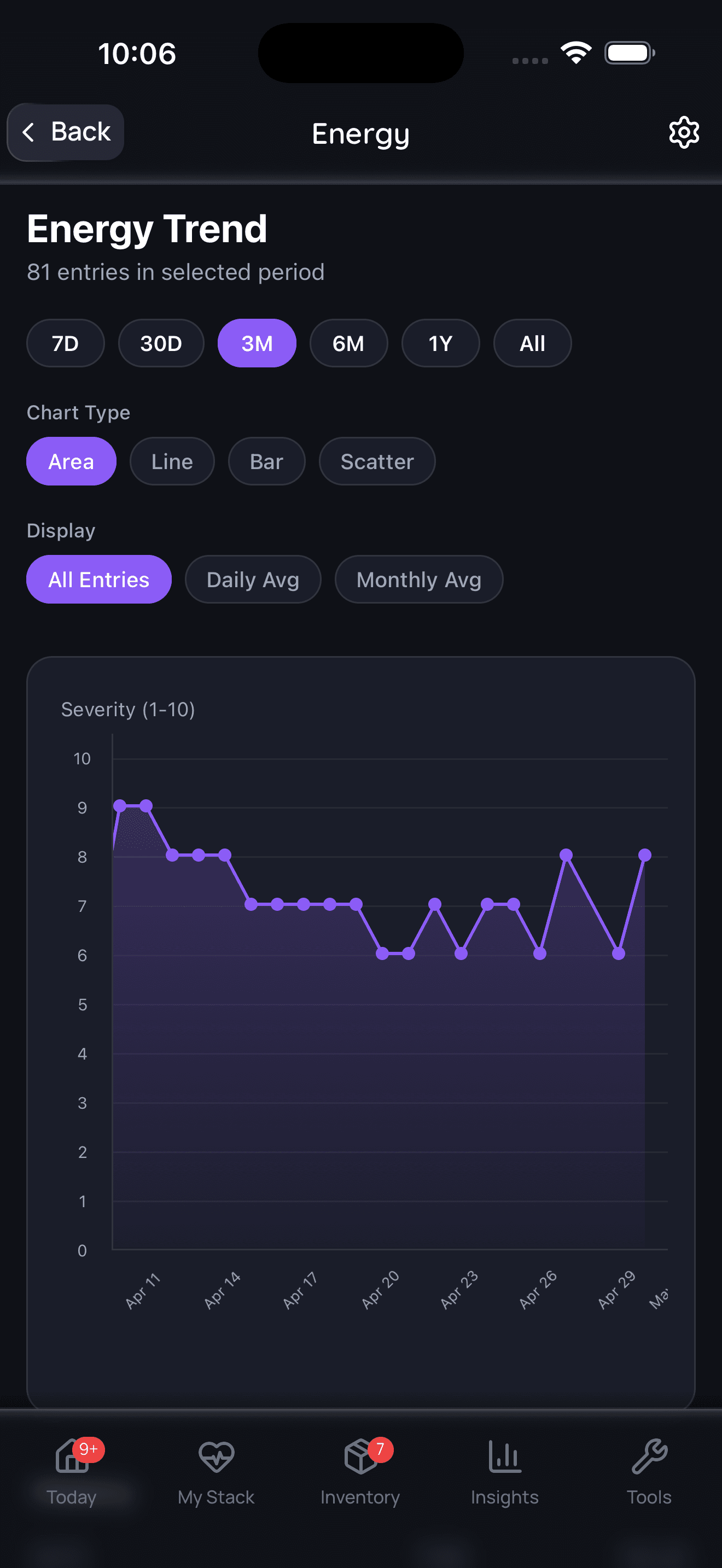
Symptom tracking is informational and should be interpreted with a qualified clinician.
Dosing & Usage Protocols
The Basics
The most commonly studied dose of D-Aspartic Acid is 3 grams per day. This is also the dose where the original positive testosterone findings came from. Higher doses (6 grams per day) have been studied but produced either no benefit or, in one case, actually reduced testosterone. Based on the available research, more is not better with this particular supplement.
The cycling question is one area where clinical data and community experience diverge. The fertility study used continuous daily supplementation for 90 days without apparent issues, while the fitness community overwhelmingly favors a 2-weeks-on, 1-2-weeks-off cycling approach. This cycling practice is based on the common observation that effects seem to fade after about two weeks, consistent with the DAO enzyme upregulation found in clinical research.
The Science
Studied Dosing Protocols:
Protocol
Topo et al. 2009
- Dose
- ~3.12 g/d (sodium D-aspartate)
- Duration
- 12 days + 7 days off
- Population
- Sedentary men, low T
- Outcome
- +42% testosterone
Protocol
Willoughby & Leutholtz 2013
- Dose
- 3 g/d
- Duration
- 28 days continuous
- Population
- Resistance-trained men
- Outcome
- No effect
Protocol
Melville et al. 2015
- Dose
- 3 g/d
- Duration
- 14 days
- Population
- Resistance-trained men
- Outcome
- No effect
Protocol
Melville et al. 2015
- Dose
- 6 g/d
- Duration
- 14 days
- Population
- Resistance-trained men
- Outcome
- -12.5% total T
Protocol
Melville et al. 2017
- Dose
- 6 g/d
- Duration
- 12 weeks
- Population
- Resistance-trained men
- Outcome
- No effect
Protocol
Ploszczyca et al. 2023
- Dose
- 6 g/d
- Duration
- 14 days
- Population
- Male boxers
- Outcome
- No effect
Protocol
D'Aniello fertility
- Dose
- 2.66 g/d
- Duration
- 90 days continuous
- Population
- Subfertile men
- Outcome
- +30-60% testosterone; improved semen
The commonly cited supplemental dose of 2,000-3,000 mg/day has the most favorable risk-benefit profile. Doses of 6,000 mg/day have produced either null or adverse hormonal effects in multiple studies and are not supported by the available evidence for any indication [6][7][8].
In rat models, a maximum effective dose of 1 micromol/g body weight has been identified, beyond which hormonal responses diminish [3]. This aligns with the human data suggesting diminishing or adverse returns at higher doses.
Getting the dose right matters more than most people realize. Too little may be ineffective, too much wastes money or introduces risk, and inconsistency undermines both. Doserly tracks every dose you take, across every form, giving you a clear record of what you're actually consuming versus what you planned.
The app helps you compare RDA recommendations against therapeutic ranges discussed in the research, so you can see exactly where your intake falls. If you switch forms, say from a standard capsule to a liposomal liquid, Doserly adjusts your tracking to account for different bioavailabilities. Pair that with smart reminders that keep your timing consistent, and the precision that makes a real difference in outcomes becomes effortless.
Track injection timing, draw notes, and site rotation.
Doserly helps keep syringe-related notes, injection site history, reminders, and reconstitution context together for easier review.
Injection log
Site rotation
Injection logs support record-keeping; follow clinician instructions for administration.
What to Expect (Timeline)
Based on the clinical data and community reports, here is what users typically describe when supplementing with D-Aspartic Acid at 3 g/day:
Days 1-3: Most users report no noticeable effects. The compound needs time to accumulate in target tissues (pituitary, testes). Some users report a subtle increase in energy or mood, but this is not consistently observed and may reflect placebo expectation.
Days 4-7: This is when many users report the first noticeable effects. Increased libido and sexual interest are the most commonly described changes. Some users report improved mood or a general sense of increased "drive." The Topo et al. study measured a 15% testosterone increase at 6 days [1].
Days 7-14: The peak window. Testosterone levels in the Topo et al. population reached their maximum (42% above baseline) at 12 days [1]. This is the period where community reports of libido increase, improved recovery, and increased energy are most common. Multiple users describe this as the "sweet spot" of DAA supplementation.
Days 14-21: Diminishing returns begin. Community reports describe effects "plateauing" or "fading" during this window. This timing coincides with the upregulation of DAO enzyme activity documented in clinical research [5]. Some users report no change; others report a return to baseline.
Days 21-28+: For users who continue past two weeks, reports become predominantly negative. Several community accounts describe feeling "lethargic," "underpowered," or having lower libido than before starting. The Melville et al. (2015) study found testosterone was reduced by 12.5% at the 14-day mark with 6 g/day [6]. The Willoughby study showed no testosterone change at 28 days with 3 g/day but did show significant DAO induction [5].
After Cessation: The Topo et al. study showed testosterone remained 22% above baseline 3 days after stopping [1]. Community reports suggest a variable recovery period of 1-4 weeks before returning to baseline, with some users experiencing a temporary dip below baseline.
Long-term (90 days, fertility context): In the fertility study using 2.66 g/day continuously, testosterone remained elevated by 30-60% at the 90-day mark in subfertile men, suggesting the tolerance/DAO effect may be less pronounced in men with lower baseline testosterone [1][2].
Timelines in the research give you a general idea of when to expect results, but your body has its own schedule. Doserly tracks your progress against those benchmarks, letting you see whether your experience aligns with typical response curves or whether something in your protocol might need adjusting.
By logging biomarkers and subjective outcomes alongside your supplement intake, you build a personal timeline that shows exactly when changes started appearing and how they've progressed. The app's trend analysis highlights inflection points, weeks where things shifted for better or worse, so you have concrete data when deciding whether to continue, adjust your dose, or try a different form.
Connect protocol changes to labs and health markers.
Doserly can keep lab results, biomarkers, symptoms, and dose history close together so follow-up conversations have better context.
Insights
Labs and trends
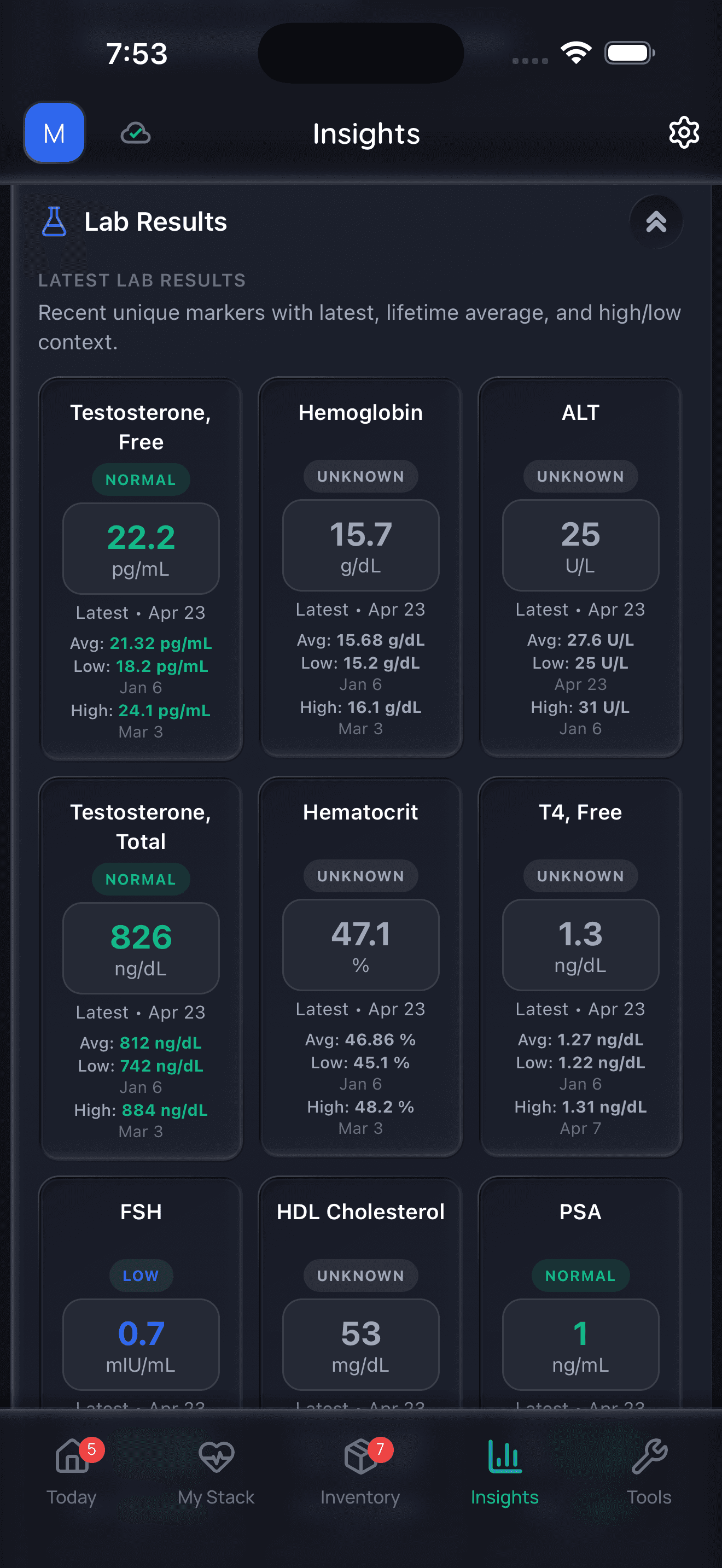
Doserly organizes data; it does not diagnose or interpret labs for you.
Interactions & Compatibility
SYNERGISTIC
- Zinc — Zinc is an essential cofactor for testosterone synthesis and spermatogenesis. Commonly paired with DAA in community protocols for hormonal support.
- Vitamin D3 — Vitamin D deficiency is associated with low testosterone. Correcting deficiency may improve hormonal baseline, potentially supporting DAA's mechanism.
- Vitamin B6 — Involved in amino acid metabolism. May support the enzymatic processing of D-aspartate.
- L-Carnitine — ALCAR/LCLT forms have independent evidence for supporting androgen receptor density and male fertility.
- NAC — N-Acetyl Cysteine provides antioxidant support that may help protect against the testicular oxidative stress observed with D-aspartate at higher doses in animal models.
- Ashwagandha — Some community users combine DAA with ashwagandha for a multi-pathway approach to hormonal support. Ashwagandha has more consistent evidence for testosterone support across populations.
CAUTION / AVOID
- SSRIs and other serotonergic medications — D-Aspartic Acid has NMDA receptor activity. While direct interactions with SSRIs have not been studied, caution is warranted given the neurological activity of DAA. Consult a healthcare provider before combining.
- Aromatase Inhibitors — D-Aspartate may upregulate aromatase (shown in animal testes). Combining with aromatase inhibitors could create opposing pharmacological effects. The clinical significance is uncertain but warrants awareness.
- Other testosterone-modulating supplements or medications — Stacking DAA with multiple testosterone boosters (Tongkat Ali, Tribulus, Fenugreek, DHEA) or with TRT creates unpredictable hormonal interactions. The limited evidence for DAA alone makes combination effects impossible to predict.
- High-dose melatonin — D-Aspartate has been shown to suppress melatonin synthesis in the pineal gland via Gi-coupled receptor inhibition in animal models [2]. While the clinical significance in humans is unknown, awareness of this interaction is warranted for users taking melatonin supplements.
How to Take / Administration Guide
D-Aspartic Acid supplements are available primarily as powder or capsules. Here are the practical considerations:
Recommended forms: Both the free acid powder and capsule forms are commonly used. The sodium D-aspartate salt form was used in the clinical studies that produced positive results (DADAVIT brand). D-Aspartic Acid Calcium Chelate (DAA-CC) is marketed as having superior absorption, but no comparative bioavailability data exist to support this claim.
Timing considerations: Most study protocols had participants take the full daily dose in the morning. There is no clinical data comparing morning vs. evening dosing. Given D-aspartate's potential to suppress melatonin synthesis (demonstrated in animal models), morning dosing may be preferable to avoid potential sleep disruption.
Taste: The free acid powder has a sour, slightly bitter taste that many users describe as unpleasant. Mixing with juice or flavored beverages is common. Capsules avoid this issue.
Cycling guidance: Based on the convergence of clinical data (DAO upregulation, diminishing returns) and community experience, a cycling protocol of 2 weeks on and 1-2 weeks off is the most commonly practiced approach. The fertility study used continuous dosing for 90 days without reported issues, suggesting that cycling may not be strictly necessary at lower doses (2.66 g/day), but the evidence base is limited to one study in a subfertile population.
Stacking with an aromatase inhibitor: Some community protocols include an aromatase inhibitor alongside DAA to manage potential estrogen increases. However, human studies have not shown clinically significant estrogen increases with DAA supplementation, making this practice unsupported by the available evidence.
Choosing a Quality Product
Third-party certifications: D-Aspartic Acid supplements are available from numerous manufacturers. Look for products tested by third-party organizations such as USP, NSF, or Informed Sport. Because DAA is not a widely regulated compound, third-party verification of identity and purity is particularly important.
Active vs. cheap forms: Ensure the product contains D-Aspartic Acid specifically, not L-Aspartic Acid or a racemic (DL) mixture. The D-enantiomer is the bioactive form studied in clinical trials. Some cheaper products may use L-Aspartic Acid or undifferentiated "aspartic acid," which does not have the same neuroendocrine activity.
Red flags:
- Products claiming to be "D-Aspartic Acid" but listing only "aspartic acid" on the supplement facts panel
- Proprietary blends that hide the actual DAA dose
- Claims of massive testosterone increases (the clinical data does not support this for most users)
- Products combining DAA with undisclosed quantities of multiple other "testosterone boosters"
- Marketing language suggesting DAA is comparable to anabolic steroids
Excipient considerations: DAA products are generally simple formulations with few excipient concerns. Capsule products may contain standard binders and flow agents. Powder products are typically unflavored and additive-free.
Brand transparency: Favor brands that provide a Certificate of Analysis (COA) and specify the enantiomeric purity (the proportion of D-form vs. L-form) of their product.
Storage & Handling
D-Aspartic Acid is a stable amino acid derivative that does not require special storage conditions. Store in a cool, dry place away from direct sunlight and excessive moisture. No refrigeration is required for either powder or capsule forms. Reseal containers tightly after use. The powder is hygroscopic (absorbs moisture) and may clump if exposed to humidity, but this does not typically affect potency. Shelf life is generally 2-3 years when stored properly.
Lifestyle & Supporting Factors
Diet: D-Aspartate is found naturally in protein-rich foods, particularly those subjected to heat processing. Corn-derived proteins (zein) contain the highest proportion of D-aspartate, followed by casein. A protein-sufficient diet supports the overall hormonal environment that DAA is intended to influence.
Exercise: Resistance training is one of the most well-documented natural methods for supporting healthy testosterone levels. The clinical data on DAA shows that resistance-trained men, who already have higher baseline testosterone, do not benefit from supplementation. Consistent training may be a more effective and sustainable approach to hormonal health than DAA supplementation.
Sleep: Adequate sleep (7-9 hours) is critical for testosterone production, as most testosterone release occurs during sleep. D-Aspartate's potential interaction with melatonin synthesis (via pineal gland signaling) adds another reason to prioritize good sleep hygiene while using this supplement.
Micronutrient status: Correcting deficiencies in zinc, magnesium, and vitamin D is generally considered a prerequisite before considering testosterone-supporting supplements. These micronutrient deficiencies are common and can independently suppress testosterone levels. Addressing them may produce larger and more sustainable hormonal improvements than DAA supplementation.
Stress management: Chronic stress elevates cortisol, which can suppress testosterone production. The HPG axis, which DAA targets, is sensitive to cortisol-mediated downregulation. Stress management practices may improve the hormonal environment independently of supplementation.
Regulatory Status & Standards
United States (FDA): D-Aspartic Acid is sold as a dietary supplement under DSHEA. It is not classified as a drug and has not been evaluated by the FDA for efficacy in treating any medical condition. It has GRAS (Generally Recognized As Safe) status as a food-grade amino acid, though this applies primarily to the L-form used in food processing.
Canada (Health Canada): D-Aspartic Acid is available as a natural health product but does not have a specific NPN monograph. Products containing DAA may be sold under general amino acid classifications.
European Union (EFSA): D-Aspartic Acid does not appear to have a specific Novel Food authorization or approved health claim. Its status varies by member state.
Australia (TGA): D-Aspartic Acid may be available as a listed medicine or complementary medicine ingredient, subject to TGA regulations.
Athlete & Sports Regulatory Status:
D-Aspartic Acid is not listed on the current WADA Prohibited List. It is a naturally occurring amino acid and is not classified as a performance-enhancing substance by any major anti-doping agency (USADA, UKAD, Sport Integrity Canada, Sport Integrity Australia, NADA Germany).
However, athletes should exercise caution with DAA supplements as with all dietary supplements. The risk of contamination with prohibited substances exists with any supplement product. Athletes should verify the current status via GlobalDRO (globaldro.com) and consider using products certified by Informed Sport (sport.wetestyoutrust.com), NSF Certified for Sport (nsfsport.com), or Cologne List (koelnerliste.com) to minimize contamination risk.
No major professional sports leagues (NFL, NBA, MLB, NHL, MLS, NCAA) currently prohibit D-Aspartic Acid. NCAA institutions providing supplements to athletes should still use NSF Certified for Sport or Informed Sport certified products per NCAA guidelines.
Regulatory status and prohibited substance classifications change frequently. Athletes should always verify the current status of any supplement with their sport's governing body, their national anti-doping agency, and a qualified sports medicine professional before use. Third-party certification (Informed Sport, NSF Certified for Sport) reduces but does not eliminate the risk of contamination with prohibited substances.
Frequently Asked Questions
Does D-Aspartic Acid actually boost testosterone?
Based on the available evidence, DAA may temporarily increase testosterone in men who start with below-normal levels (such as sedentary individuals or men with fertility issues), with one study showing a 42% increase over 12 days in this population. However, five subsequent studies in men who exercise regularly have found no testosterone increase at the standard 3g dose, and one study found that 6g actually reduced testosterone. The consensus in the research community is that DAA does not function as a reliable testosterone booster for healthy, active men.
How should D-Aspartic Acid be cycled?
There is no definitive clinical answer to this question. Community practice generally favors 2 weeks on followed by 1-2 weeks off, based on the observation that effects appear to diminish after about two weeks. The longest continuous use study (90 days, 2.66g/day in subfertile men) reported no adverse effects without cycling, but this was in a specific population. Consulting a healthcare professional before establishing a cycling protocol is recommended.
Is D-Aspartic Acid safe for long-term use?
The longest human safety data covers 90 days at 2.66g/day with no reported adverse effects on blood chemistry in subfertile men. However, long-term studies in healthy populations are lacking. Animal data suggests that very high doses can cause testicular oxidative stress. The upregulation of DAO enzyme activity during supplementation and potential rebound effects after cessation raise questions about the advisability of chronic use.
Can D-Aspartic Acid help with fertility?
This is arguably the most promising application supported by the current evidence. One human study found improvements of 50-100% in sperm motility and concentration after 90 days in men with abnormal semen profiles, and animal studies support a direct role in spermatogenesis. Anyone considering DAA for fertility should discuss this option with a reproductive endocrinologist.
What is the difference between D-Aspartic Acid and L-Aspartic Acid?
They are mirror-image forms (enantiomers) of the same amino acid. L-Aspartic Acid is the common dietary form used in protein synthesis. D-Aspartic Acid is the less common form that functions as a neuroendocrine signaling molecule. Only the D-form has the hormonal activity studied in clinical trials. Supplements labeled simply as "aspartic acid" without the D- prefix may contain the L-form, which does not have the same biological effects.
Does D-Aspartic Acid increase estrogen?
Animal studies show that D-aspartate can upregulate aromatase enzyme activity, which could theoretically increase estrogen. However, human studies at doses up to 6g/day have not shown clinically significant increases in circulating estrogen or estradiol levels. The common practice of combining DAA with an aromatase inhibitor is not supported by the human data.
Is D-Aspartic Acid better than Tongkat Ali or Ashwagandha for testosterone?
Based on the current evidence, D-Aspartic Acid has a weaker and less consistent evidence base for testosterone support compared to either Tongkat Ali or Ashwagandha, both of which have demonstrated effects in broader populations including physically active men. Many community sources and recent expert reviews rank DAA below these alternatives for testosterone support.
Can women take D-Aspartic Acid?
D-Aspartate has been detected in female follicular fluid and may play a role in female reproductive function. However, no clinical studies have investigated DAA supplementation in women. Most DAA products carry warnings against female use due to the lack of safety data and the hormonal activity of the compound. Women considering DAA should consult a healthcare provider.
Does D-Aspartic Acid affect sleep?
D-Aspartate has been shown to suppress melatonin synthesis in the pineal gland in animal models by inhibiting norepinephrine-stimulated melatonin production. Whether supplemental DAA affects sleep in humans has not been studied. Taking DAA in the morning rather than the evening may be a prudent precaution.
What are the side effects of D-Aspartic Acid?
At studied doses (2-6g/day), D-Aspartic Acid appears well-tolerated in short-term use. The primary concerns from the clinical literature are potential testosterone reduction at 6g/day and DAO enzyme upregulation. Community reports additionally describe body odor changes, increased sweating, and a "rebound" effect (temporary lethargy and reduced libido) after stopping supplementation.
Myth vs. Fact
Myth: D-Aspartic Acid is a powerful testosterone booster for all men.
Fact: The original 42% testosterone increase was observed in a single study of sedentary men with below-normal testosterone. Five subsequent studies in resistance-trained or physically active men found no testosterone increase at the same dose, and one study found that a higher dose actually decreased testosterone [1][5][6][7][8]. The evidence does not support DAA as a universal testosterone booster.
Myth: Higher doses of DAA produce better results.
Fact: The opposite appears to be true. The only positive human findings used approximately 3 g/day. A dose of 6 g/day was associated with a significant reduction in testosterone in one 14-day study [6], and no beneficial effect in a 12-week study [7] or a 14-day study in boxers [8]. In animal models, hormonal responses diminish above a maximum effective dose [3].
Myth: DAA is a natural alternative to TRT (testosterone replacement therapy).
Fact: DAA does not produce sustained testosterone elevation in men with normal levels and is not a substitute for medically supervised TRT in men with clinically diagnosed hypogonadism. The transient, self-limiting nature of any testosterone increase makes it fundamentally different from TRT, which provides continuous exogenous testosterone [5][6][7].
Myth: You need to take an aromatase inhibitor with DAA to prevent estrogen increases.
Fact: While D-aspartate upregulates aromatase in animal testes, human studies at doses up to 6 g/day have not shown clinically significant increases in circulating estrogen levels [5][6][7]. Adding an aromatase inhibitor is not supported by the human evidence and introduces additional risks.
Myth: DAA builds muscle and increases strength.
Fact: Multiple well-designed RCTs with resistance training components have found no effect of DAA on lean mass, muscle thickness, fat mass, or strength (bench press and leg press 1-RM) [5][6][7]. Even the temporary testosterone fluctuations observed are too small and too brief to produce measurable muscle or strength gains.
Myth: DAA is the same as regular aspartic acid found in food.
Fact: D-Aspartic Acid is a specific enantiomer with distinct biological activity from L-Aspartic Acid, the form predominantly found in dietary protein. Only the D-form has documented neuroendocrine activity affecting the HPG axis and steroidogenesis [2]. Supplements labeled simply as "aspartic acid" may contain the inactive L-form.
Myth: DAA works the same for everyone regardless of fitness level.
Fact: The clinical evidence strongly suggests that DAA's effects are population-dependent. Positive testosterone findings have only been observed in sedentary men with low baseline testosterone and in subfertile men. All studies in resistance-trained men with normal testosterone found no benefit or adverse effects [1][5][6][7][8]. This is consistent with the proposed mechanism of action: DAA may help normalize deficient testosterone but cannot push levels above the body's normal range due to homeostatic feedback mechanisms.
Sources & References
Clinical Trials & RCTs
[1] Topo E, Soricelli A, D'Aniello A, Ronsini S, D'Aniello G. The role and molecular mechanism of D-aspartic acid in the release and synthesis of LH and testosterone in humans and rats. Reproductive Biology and Endocrinology. 2009;7:120. doi:10.1186/1477-7827-7-120
[2] D'Aniello A. D-Aspartic acid: an endogenous amino acid with an important neuroendocrine role. Brain Research Reviews. 2007;53(2):215-234. doi:10.1016/j.brainresrev.2006.08.005
[3] D'Aniello A, Di Cosmo A, Di Cristo C, Annunziato L, Petrucelli L, Fisher G. Involvement of D-aspartic acid in the synthesis of testosterone in rat testes. Life Sciences. 1996;59(2):97-104. doi:10.1016/0024-3205(96)00266-4
[4] Nagata Y, Homma H, Lee JA, Imai K. D-Aspartate stimulation of testosterone synthesis in rat Leydig cells. FEBS Letters. 1999;444(2-3):160-164. doi:10.1016/S0014-5793(99)00045-9
[5] Willoughby DS, Leutholtz B. D-Aspartic acid supplementation combined with 28 days of heavy resistance training has no effect on body composition, muscle strength, and serum hormones associated with the hypothalamo-pituitary-gonadal axis in resistance-trained men. Nutrition Research. 2013;33(10):803-810. doi:10.1016/j.nutres.2013.07.010
[6] Melville GW, Siegler JC, Marshall PWM. Three and six grams supplementation of d-aspartic acid in resistance trained men. Journal of the International Society of Sports Nutrition. 2015;12:15. doi:10.1186/s12970-015-0078-7
[7] Melville GW, Siegler JC, Marshall PWM. The effects of d-aspartic acid supplementation in resistance-trained men over a three month training period: A randomised controlled trial. PLoS One. 2017;12(8):e0182630. doi:10.1371/journal.pone.0182630
[8] Ploszczyca K, Czuba M, Zakrzeska A, et al. The Effects of Six-Gram D-Aspartic Acid Supplementation on the Testosterone, Cortisol, and Hematological Responses of Male Boxers Subjected to 11 Days of Nocturnal Exposure to Normobaric Hypoxia. Nutrients. 2023;16(1):76. doi:10.3390/nu16010076
Observational Studies & Mechanistic Research
[9] Raspa M, et al. Oral D-Aspartate Treatment Improves Sperm Fertility in Both Young and Adult B6N Mice. Animals. 2022;12(11):1350. doi:10.3390/ani12111350
[10] D'Aniello A, Di Fiore MM, Fisher GH, et al. Occurrence of D-aspartic acid and N-methyl-D-aspartic acid in rat neuroendocrine tissues and their role in the modulation of luteinizing hormone and growth hormone release. FASEB Journal. 2000;14(5):699-714.
[11] Nagata Y, Homma H, Matsumoto M, Imai K. Stimulation of steroidogenic acute regulatory protein (StAR) gene expression by D-aspartate in rat Leydig cells. FEBS Letters. 1999;454(3):317-320.
Government/Institutional Sources
[12] U.S. Food and Drug Administration. Dietary Supplement Health and Education Act of 1994. https://www.fda.gov/food/dietary-supplements
[13] World Anti-Doping Agency. The 2026 Prohibited List. https://www.wada-ama.org/en/prohibited-list
Related Supplement Guides
Same Category (Amino Acids)
Common Stacks / Pairings
- Zinc — Commonly paired for hormonal support
- Vitamin D3 — Foundational for testosterone support
- Ashwagandha — Often combined for multi-pathway hormonal support
- Vitamin B6 — Cofactor for amino acid metabolism
- NAC — Antioxidant support for testicular health
Related Health Goal (Testosterone / Male Fertility Support)
- Ashwagandha — Better-supported evidence for testosterone in active populations
- Maca Root — Traditional use for fertility and libido
- Mucuna Pruriens — Dopaminergic support, L-DOPA content
- Boron — May reduce SHBG, increasing free testosterone
- Shilajit — Ayurvedic mineral complex, some testosterone support evidence