
Menopause: Symptoms, Stages, Treatment, and HRT
On this page
Quick Reference Card
Attribute
Definition
- Value
- Permanent cessation of menstruation for 12 consecutive months due to loss of ovarian follicular activity
Attribute
ICD-10 Code
- Value
- N95.1 (Menopausal and female climacteric states)
Attribute
STRAW+10 Stage
- Value
- Stage 0 (Final Menstrual Period); postmenopause = Stages +1a through +2
Attribute
Prevalence
- Value
- Affects all women; ~1.3 million women reach menopause annually in the US
Attribute
Typical Age Range
- Value
- 45-56 years; median age 51 in the United States
Attribute
Menopausal Transition Duration
- Value
- 2-8 years (average 4 years of perimenopause)
Attribute
First-Line Treatments
- Value
- Systemic HRT for vasomotor symptoms; local vaginal estrogen for GSM; non-hormonal options (fezolinetant, SSRIs/SNRIs, gabapentin)
Attribute
Key Biomarkers
- Value
- FSH >30 mIU/mL (suggestive), FSH >40 IU/L (postmenopause); Estradiol <20 pg/mL (suggestive); AMH (declining)
Attribute
When to Seek Medical Help
- Value
- Bleeding after 12 months of amenorrhea; symptoms significantly affecting quality of life; menopause symptoms before age 40 (possible POI)
Overview / What Is Menopause?
The Basics
Menopause is a natural transition, not a disease, but it can profoundly affect how you feel in your body and your daily life. It marks the point when your ovaries have stopped releasing eggs and have significantly reduced their production of estrogen and progesterone. Clinically, menopause is diagnosed in hindsight: once you have gone 12 consecutive months without a menstrual period, you have reached menopause.
Most women reach menopause between the ages of 45 and 56, with the average age in the United States being 51. But the lead-up to that point, called perimenopause or the menopausal transition, can begin years earlier. Perimenopause typically lasts about four years, though it can range from two to eight years. During this time, your ovaries produce estrogen in increasingly unpredictable amounts, and your periods may become shorter, longer, heavier, lighter, or simply irregular before they stop altogether.
The effects of declining estrogen go far beyond your menstrual cycle. Estrogen receptors are found throughout your body, in your brain, bones, heart, skin, joints, bladder, and vaginal tissue. When estrogen levels fall, the ripple effects can show up across all of these systems. Hot flashes and night sweats are the symptoms most people associate with menopause, but you might also experience sleep disruption, brain fog, mood changes, joint pain, vaginal dryness, urinary problems, and changes to your skin and hair.
Not every woman experiences menopause the same way. About 80% of women have at least some symptoms, but severity, duration, and which symptoms predominate vary considerably. Genetics, ethnicity, body composition, lifestyle, and overall health all play a role. Research from the Study of Women's Health Across the Nation (SWAN) has shown that Black women tend to experience vasomotor symptoms more frequently and for longer (median 10.1 years) compared to White women (median 6.5 years) [1].
What matters most is that effective treatments exist. Hormone therapy remains the most effective option for vasomotor symptoms, and newer non-hormonal medications have expanded the choices available. The years after menopause make up roughly 40% of a woman's life, and there is no reason this stage should be spent enduring symptoms in silence.
The Science
Menopause is defined as the permanent cessation of menstruation resulting from the loss of ovarian follicular activity, confirmed retrospectively after 12 months of amenorrhea not attributable to other pathological or physiological causes [1]. The Stages of Reproductive Aging Workshop + 10 (STRAW+10) staging system, published in 2012 and endorsed by all major menopause societies, designates the final menstrual period (FMP) as Stage 0, with reproductive stages preceding it (Stages -5 through -1) and postmenopausal stages following it (Stages +1a through +2) [2].
The underlying process is the progressive depletion of ovarian follicles through atresia and ovulation across the reproductive lifespan. At birth, the ovaries contain approximately one million follicles; by puberty, 250,000 to 400,000 remain. The decline accelerates in the late reproductive years. As granulosa cell mass diminishes, production of estradiol and inhibin B decreases, releasing the hypothalamic-pituitary-ovarian axis from negative feedback. Follicle-stimulating hormone (FSH) and luteinizing hormone (LH) levels rise accordingly [3][4].
During the menopausal transition, estradiol levels do not simply decline in a straight line. They fluctuate substantially before the final decline, and those swings help explain unpredictable menstrual patterns, vasomotor episodes, sleep disruption, and mood instability [2].
Epidemiologically, approximately 1.3 million women in the United States reach menopause each year. About 5% experience early natural menopause (ages 40-45), and 1% experience premature ovarian insufficiency (before age 40). Black and Hispanic women have higher rates of premature and early menopause compared to White women (3.7-4.1% vs 2.9% for early menopause), though confounding factors account for much of this disparity at the individual level [5][6].
The SWAN study, a landmark longitudinal study following over 3,000 women of diverse ethnic backgrounds through the menopausal transition, has demonstrated that vasomotor symptoms persist for a median of 7.4 years, with significant racial/ethnic variation in duration and severity [7].
Medical / Chemical Identity
Property
ICD-10-CM Code
- Value
- N95.1 (Menopausal and female climacteric states)
Property
Related ICD-10 Codes
- Value
- N95.0 (Postmenopausal bleeding), N95.2 (Postmenopausal atrophic vaginitis), E28.31 (Premature menopause), N95.8 (Other specified menopausal/perimenopausal disorders)
Property
STRAW+10 Classification
- Value
- Standard research and clinical staging framework; 10 stages across reproductive, transition, and postmenopause phases
Property
Diagnostic Criteria (NICE NG23)
- Value
- Age >45 + amenorrhea >=12 months = clinical diagnosis; no routine blood tests required
Property
Diagnostic Criteria (under 45)
- Value
- Do not rely on routine labs in people over 45. Under 45, evaluation is individualized; suspected POI before 40 uses disordered cycles for at least 4 months plus FSH >25 IU/L, repeated after 4-6 weeks if diagnostic uncertainty persists
Property
Key Hormones Affected
- Value
- Estradiol (primary decline), progesterone (cessation with anovulation), inhibin B (decline), AMH (decline), FSH (elevation), LH (elevation)
Property
Testosterone Note
- Value
- Does not change significantly with menopause; declines with age rather than menopausal status
Mechanism of Action / Pathophysiology
The Basics
To understand menopause, it helps to think of your ovaries as having a finite supply of eggs, each housed in a tiny structure called a follicle. You are born with all the follicles you will ever have, roughly one million. By the time you reach puberty, that number has dropped to about 300,000. Throughout your reproductive years, follicles are used up through both ovulation and a natural process of reabsorption (called atresia). Eventually, too few functional follicles remain to sustain regular cycles.
The follicles are not just egg containers. The cells surrounding each follicle (granulosa cells) are the primary producers of estradiol, the most potent form of estrogen. As follicle numbers dwindle, so does the capacity to produce estradiol. Your brain senses this decline and responds by sending stronger signals (via FSH and LH) to the ovaries, trying to coax them to produce more estrogen. This is why FSH levels rise during menopause.
The effects are systemic because estrogen receptors exist throughout your body. In the hypothalamus, declining estrogen narrows the thermoneutral zone (the temperature range your body can tolerate without triggering a cooling response), which is why hot flashes occur. In the brain's mood centers, reduced estrogen affects serotonin and noradrenaline pathways, contributing to mood changes and sleep disruption. In bone, estrogen loss shifts the balance toward bone breakdown. In the vaginal and urinary tract tissues, the loss of estrogen causes thinning, dryness, and increased susceptibility to infection.
Importantly, menopause is not an overnight event. The transition unfolds over years, with estrogen levels fluctuating unpredictably before the final decline. This fluctuation phase (perimenopause) is often when symptoms are most intense and most confusing.
The Science
The pathophysiology of menopause centers on the depletion of the ovarian follicular reserve and the consequent decline in estradiol (E2) synthesis. As the pool of primordial follicles diminishes, granulosa cell mass decreases, reducing production of estradiol, inhibin A, and inhibin B. The loss of negative feedback at the hypothalamic-pituitary level results in increased secretion of FSH (typically the first measurable hormonal change) and subsequently LH [3][4].
The ovarian stroma continues to produce androgens (primarily androstenedione and testosterone) even after follicular depletion, as the theca and stromal compartments are relatively spared. Peripheral aromatization of these androgens in adipose tissue produces estrone (E1), the predominant circulating estrogen in postmenopausal women. However, estrone has approximately one-tenth the biological activity of estradiol at estrogen receptors [8].
The thermoregulatory dysfunction underlying vasomotor symptoms involves the kisspeptin/neurokinin B/dynorphin (KNDy) neuron population in the hypothalamic infundibular (arcuate) nucleus. Declining estradiol leads to hypertrophy of KNDy neurons and increased neurokinin B signaling, which narrows the thermoneutral zone from approximately 0.4 degrees C to near zero. This means that minimal core temperature fluctuations trigger inappropriate heat dissipation responses (peripheral vasodilation, sweating, and subjective flushing) [9].
In bone, estrogen deficiency accelerates osteoclastic activity through altered OPG/RANKL signaling via ER-alpha on osteoblasts and osteocytes. The rate of bone loss accelerates from the baseline 0.3-0.5% per year (beginning at age 40) to 3-5% per year during the first 5-7 years postmenopause, primarily affecting trabecular bone [10].
In the genitourinary tract, estrogen receptors (predominantly ER-alpha) in the vaginal epithelium, urethra, and bladder trigone mediate tissue maintenance. Estrogen withdrawal causes epithelial thinning, decreased vascularity, increased vaginal pH (from 3.5-4.5 to 6.0-7.5), and loss of lactobacillus colonization, predisposing to urogenital atrophy, dyspareunia, and recurrent urinary tract infections [11].
Visual guide
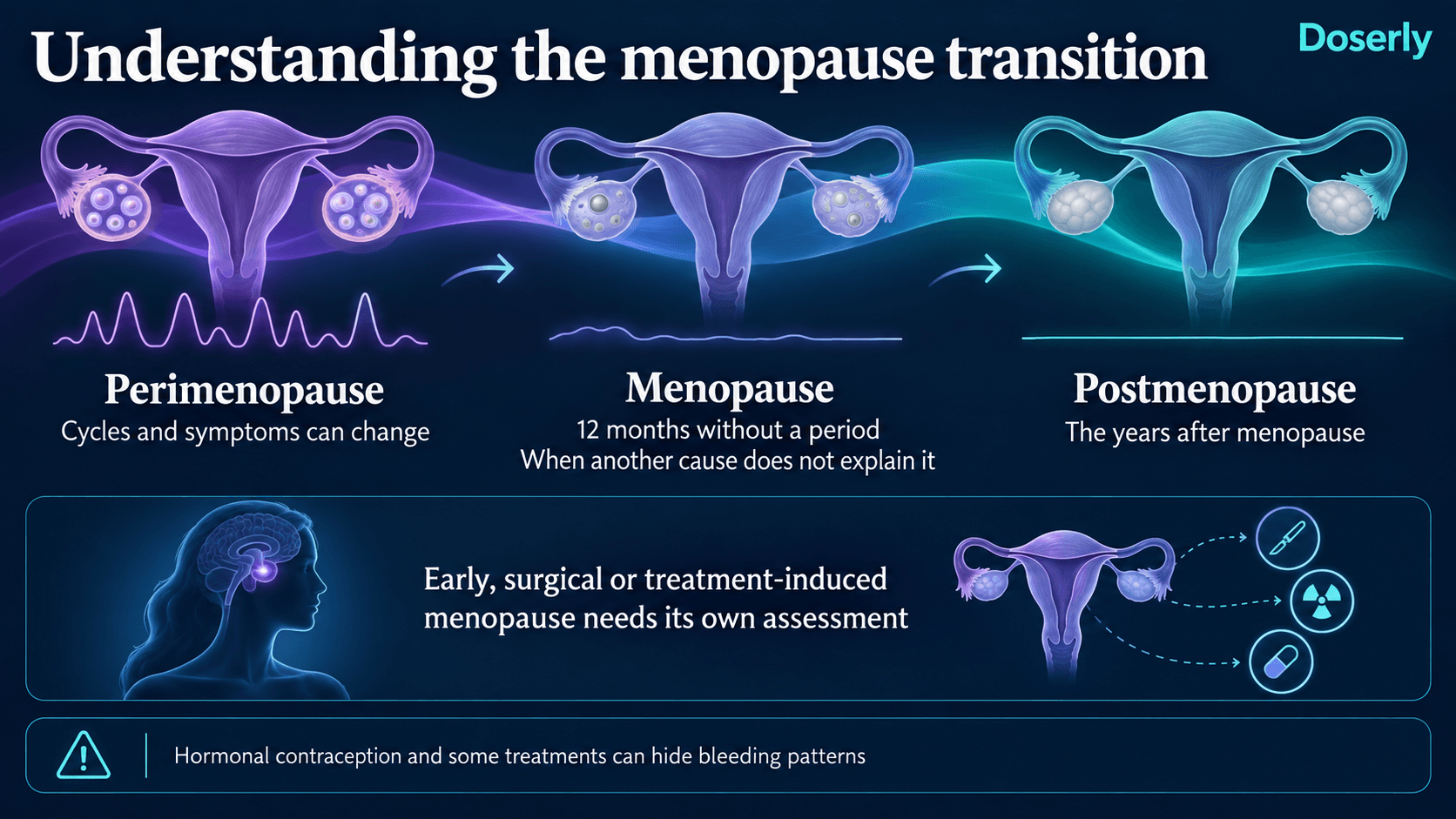
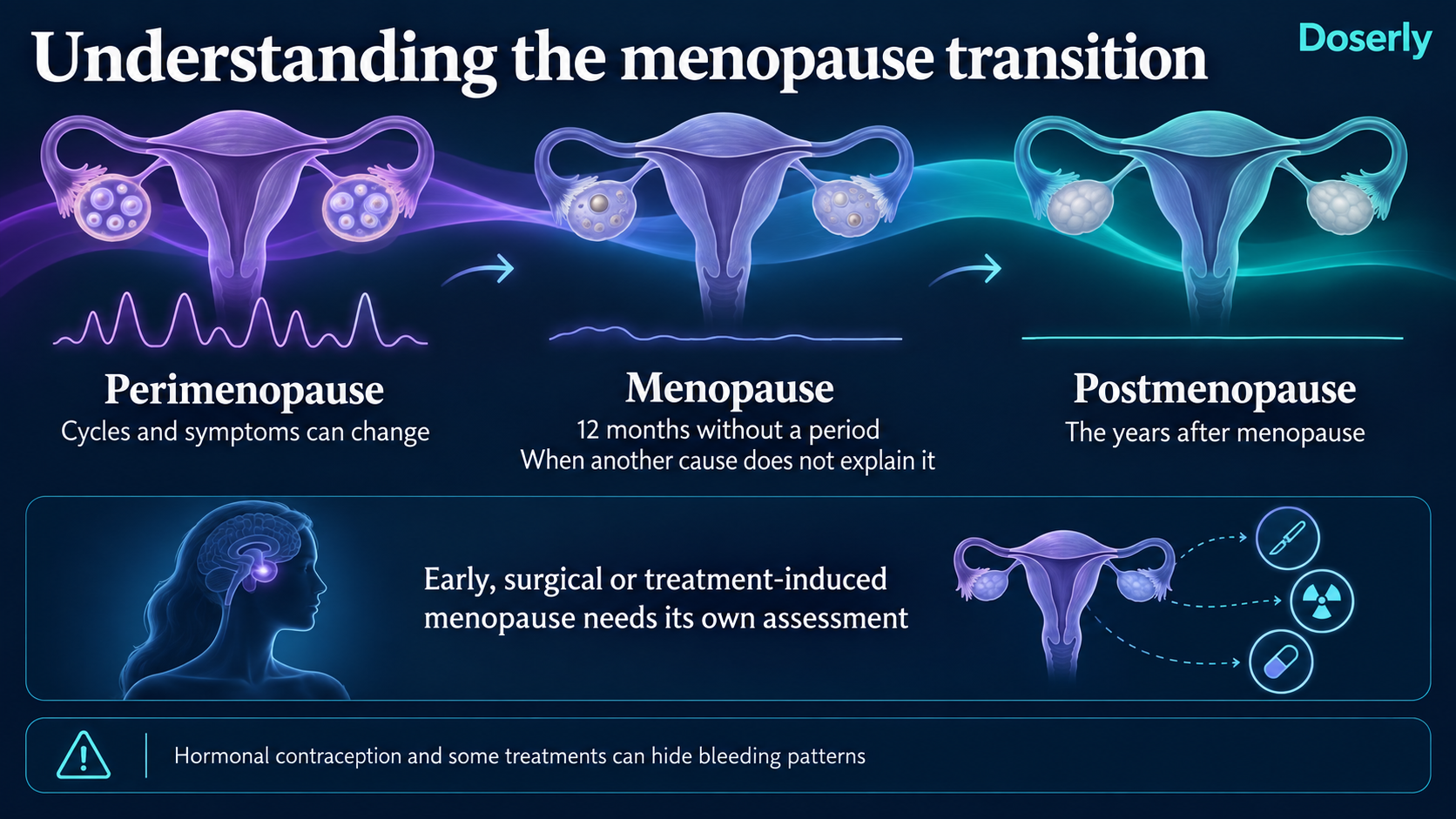
The timeline is conceptual, not a hormone-level graph. The 12-month definition applies when bleeding patterns can be interpreted and no other cause explains absent periods. POI, surgery, contraception and cancer treatments require different diagnostic considerations.
NICE menopause recommendations.
Pharmacokinetics / Hormone Physiology
The Basics
Before menopause, your ovaries are the primary producers of estradiol, the most biologically active form of estrogen. During your reproductive years, estradiol levels cycle predictably, peaking before ovulation and then declining. These cyclical fluctuations are what drive your menstrual cycle.
During perimenopause, this orderly pattern breaks down. Estradiol levels swing unpredictably, sometimes surging higher than your peak reproductive levels and then crashing. These wild fluctuations are why perimenopause often feels worse than menopause itself; your body is not just losing estrogen, it is being whipsawed by erratic levels.
After menopause, estradiol production from the ovaries drops to very low levels. However, your body does not become entirely estrogen-free. A weaker form of estrogen called estrone continues to be produced, primarily by conversion of adrenal androgens in your fat tissue. This is one reason why body composition influences menopausal symptoms; women with more adipose tissue may produce more estrone, which can partially offset some (but not all) of the effects of estradiol loss.
Your adrenal glands also continue producing testosterone and DHEA after menopause. The common perception that testosterone "drops at menopause" is not quite accurate. Testosterone levels decline gradually with age, starting in the 20s and 30s, but this decline is not specifically tied to menopause itself.
The Science
Premenopausal estradiol production follows a biphasic pattern during the menstrual cycle: follicular phase levels of 30-120 pg/mL, a preovulatory peak of 150-400 pg/mL, and luteal phase levels of 60-150 pg/mL. Production is primarily by aromatization of androstenedione in granulosa cells of the dominant follicle [3].
During the late menopausal transition (STRAW Stage -1), estradiol levels become erratic, with levels sometimes exceeding premenopausal peaks. This reflects the irregular recruitment and growth of remaining follicles under elevated FSH stimulation. The variability makes single-point hormone measurements unreliable for diagnosis during perimenopause [2].
In postmenopause, ovarian estradiol production drops to <20 pg/mL. The predominant circulating estrogen becomes estrone (E1), produced by peripheral aromatization of adrenal androstenedione in adipose tissue. E1 levels in postmenopausal women range from 10-60 pg/mL, with higher levels in women with greater body mass. The E1:E2 ratio reverses from approximately 1:2 premenopausally to approximately 2-4:1 postmenopausally [8].
FSH levels rise progressively: >25 IU/L in late menopausal transition, stabilizing at >40 IU/L in early postmenopause (STRAW Stage +1c), typically 3-6 years after the FMP. LH also rises but to a lesser degree, as LH has faster plasma clearance than FSH [4].
Testosterone levels do not undergo a menopausal decline per se. Rather, total and free testosterone decline linearly with age from the mid-20s onward. However, the relative ratio of testosterone to estradiol increases postmenopausally, which can manifest clinically as androgenic symptoms (facial hair growth, acne) in some women [12].
Research & Clinical Evidence
The Basics
The research on menopause and its treatment is vast, and it has undergone dramatic shifts in interpretation over the past two decades. The Women's Health Initiative (WHI), launched in 1991 and reporting its first results in 2002, fundamentally changed how the medical community viewed hormone therapy. Its initial findings were widely interpreted as showing that HRT was dangerous, leading to a dramatic drop in prescriptions and leaving millions of women without effective treatment for menopausal symptoms.
In the years since, a more nuanced picture has emerged. Re-analysis of the WHI data and subsequent studies (KEEPS, ELITE, and the Danish Osteoporosis Prevention Study) have shown that the risks and benefits of hormone therapy depend heavily on when it is started, what type is used, and how it is delivered. For women who begin HRT within 10 years of menopause onset or before age 60, the benefits generally outweigh the risks. This is known as the "timing hypothesis" or "window of opportunity."
What the research consistently shows: HRT is the most effective treatment for hot flashes and night sweats. It prevents bone loss and reduces fracture risk. It improves genitourinary symptoms. The risks, including blood clots, stroke, and breast cancer, are real but their magnitude varies substantially based on the type of HRT (estrogen alone vs combined), the route of delivery (transdermal vs oral), and the type of progestogen used (micronized progesterone vs synthetic progestins).
The Science
Women's Health Initiative (WHI): The WHI comprised two randomized controlled trials: the estrogen-plus-progestin (E+P) arm (n=16,608, women with intact uteri, conjugated equine estrogens 0.625 mg + medroxyprogesterone acetate 2.5 mg daily) and the estrogen-alone (E) arm (n=10,739, hysterectomized women, CEE 0.625 mg daily). The E+P arm was stopped early in 2002 after a mean 5.6 years of follow-up due to an increased breast cancer signal; the E arm continued until 2004 (mean 7.2 years) [13].
Critical context: the average age of WHI participants was 63 years (range 50-79), and the majority were more than 10 years past menopause onset. This population does not represent the typical woman seeking HRT for menopausal symptoms [14].
Post-WHI reanalyses demonstrated markedly different risk-benefit profiles by age and time since menopause. In women aged 50-59 or within 10 years of menopause, the WHI data showed a trend toward reduced coronary heart disease, reduced all-cause mortality, and minimal breast cancer risk increase with estrogen alone [14].
KEEPS (Kronos Early Estrogen Prevention Study): Randomized 727 recently menopausal women (age 42-58, within 36 months of FMP) to oral CEE 0.45 mg/day, transdermal estradiol 50 mcg/day, or placebo, all with cyclic progesterone. After 4 years, neither formulation significantly affected coronary artery calcium progression. Both were well-tolerated with favorable effects on VMS, mood, and sexual function [15].
ELITE (Early vs Late Intervention Trial with Estradiol): Randomized 643 postmenopausal women to oral estradiol 1 mg/day or placebo, stratified by time since menopause (<6 years vs >10 years). In early-menopause women, estradiol significantly reduced carotid intima-media thickness progression. In late-menopause women, it did not. This provided direct support for the timing hypothesis [16].
Danish Osteoporosis Prevention Study (DOPS): An open-label trial of 1,006 recently menopausal women randomized to HRT vs no treatment, followed for 16 years. HRT initiated within 2 years of menopause was associated with a significantly reduced risk of mortality, heart failure, and myocardial infarction, without an increased risk of cancer, VTE, or stroke [17].
Cochrane Systematic Review (2026 update): Based on 24 studies (45,660 participants), concluded that risk profiles vary between combined and estrogen-only therapy. Estrogen-only therapy probably makes little to no difference to coronary events or breast cancer risk, probably increases stroke and gallbladder disease risk, and reduces fracture risk. The review emphasized that virtually all trial evidence derives from oral formulations [18].
Benefits & Therapeutic Effects
The Basics
The benefits of treating menopause symptoms with hormone therapy extend well beyond just stopping hot flashes, though that alone can be transformative for women who experience dozens of episodes per day.
For many women, HRT brings back a sense of normalcy that they feared was gone permanently. Sleep improves, not just because night sweats stop, but because estrogen and progesterone directly influence sleep architecture. Brain fog lifts. The joint pain that seemed to come out of nowhere eases or disappears. Mood stabilizes. The constant background anxiety settles. Vaginal and urinary symptoms that were making everyday activities uncomfortable begin to resolve.
Bone protection is one of the most well-established long-term benefits. Estrogen is the single most important factor in maintaining bone density in women, and HRT is FDA-approved for the prevention of osteoporosis. This protection is particularly important for women who experienced early or premature menopause, where the longer duration of estrogen deficiency puts bones at greater risk.
There is also growing evidence that the timing of HRT initiation matters for cardiovascular health. Women who begin HRT within 10 years of menopause onset appear to have a more favorable cardiovascular risk profile than those who start later. This is an active area of research and not yet a settled question, but the evidence is encouraging for younger menopausal women.
Not every woman will experience all of these benefits, and some women do not respond well to HRT. Individual variation is significant, and finding the right formulation, dose, and route of delivery often requires patience and close collaboration with a knowledgeable provider.
The Science
Vasomotor symptom relief: HRT reduces hot flash frequency by 75-95% and severity by a similar margin, according to meta-analyses of RCTs. This is the primary FDA-approved indication and the most robust evidence base for any menopause treatment [19].
Bone protection: The WHI demonstrated a 34% reduction in hip fractures (HR 0.66, 95% CI 0.45-0.98) and a 24% reduction in total fractures with combined HRT. The estrogen-alone arm showed similar fracture protection. HRT is the only treatment proven to reduce fracture risk at all skeletal sites in women without established osteoporosis [13].
Genitourinary health: Vaginal estrogen reverses atrophic changes, restores vaginal pH to premenopausal levels (3.5-4.5), promotes lactobacillus recolonization, and reduces recurrent UTI incidence by approximately 50% in observational studies. Improvements are typically evident within 2-3 months of treatment [11].
Mood and depression: Transdermal estradiol has demonstrated efficacy for perimenopausal depression in RCTs, with effect sizes comparable to SSRIs. The evidence is stronger for depression during perimenopause than for postmenopausal depression [20].
Cardiovascular effects (timing-dependent): In the Danish Osteoporosis Prevention Study, women randomized to HRT within 2 years of menopause showed significant reductions in mortality (HR 0.57), heart failure (HR 0.28), and myocardial infarction (HR 0.49) over 16 years of follow-up [17]. The ELITE trial demonstrated reduced carotid intima-media thickness progression with estradiol in early-menopausal but not late-menopausal women [16].
Timelines in clinical literature describe averages. Your own timeline is what matters. Doserly's trend analysis turns your daily symptom entries into visual trajectories, showing you how each symptom is progressing over weeks and months of treatment.
The app helps you see patterns that day-to-day experience can obscure, like a gradual improvement in sleep quality that started two weeks after a dose increase, or hot flash frequency dropping steadily even when individual bad days make it feel like nothing has changed. These insights give both you and your provider a clearer picture of treatment response.
Risks, Side Effects & Safety
The Basics
Hormone therapy is effective, but it is not risk-free. The good news is that for most healthy women who start HRT within 10 years of menopause onset or before age 60, the risks are small in absolute terms. The less good news is that "small" is not "zero," and understanding these risks in context is essential for making an informed decision with your healthcare provider.
Common side effects that many women experience, especially in the first few months, include breast tenderness, bloating, headache, nausea (more common with oral estrogen), and mood changes. Breakthrough bleeding or spotting is also common, particularly with combined regimens. Most of these side effects improve or resolve within the first three months as your body adjusts.
Blood clot risk is one of the most frequently discussed concerns, and the route of delivery matters here. Oral estrogen passes through the liver, where it stimulates production of clotting factors and increases the risk of venous thromboembolism (deep vein thrombosis and pulmonary embolism). In the WHI, oral conjugated equine estrogens were associated with approximately 18 additional VTE events per 10,000 women per year (HR 2.06, 95% CI 1.57-2.70). Transdermal estrogen (patches, gels, sprays) bypasses first-pass liver metabolism, and observational studies show a lower VTE signal than with oral estrogen. The ESTHER study found an adjusted odds ratio of 0.9 (95% CI 0.4-2.1) for transdermal estrogen, but personal clot risk still needs individual assessment [21].
Stroke risk is modestly increased with oral HRT, primarily at higher doses and in older women. The absolute risk increase is small: approximately 1 additional stroke per 10,000 women per year in the WHI estrogen-alone arm. Transdermal estrogen at standard doses does not appear to increase stroke risk [22].
Breast cancer is the risk that generates the most fear, and the nuance here is critically important. In the WHI estrogen-alone arm (women without a uterus, taking CEE only), there was no increase in breast cancer risk; in fact, there was a non-significant trend toward reduced risk (HR 0.77, 95% CI 0.59-1.01) over 7.2 years [13]. The increased risk was seen in the combined E+P arm, corresponding to approximately 8 additional breast cancer cases per 10,000 women per year (38 vs 30 per 10,000). The type of progestogen matters: the French E3N cohort study (n=80,377) found no significant increase in breast cancer risk with estrogen plus micronized progesterone over 8.1 years (HR 1.00, 95% CI 0.83-1.22), while estrogen plus synthetic progestins showed a significant increase (HR 1.69, 95% CI 1.50-1.91) [23].
Endometrial cancer risk increases with unopposed estrogen in women with an intact uterus (the rate of endometrial hyperplasia reaches approximately 30% within one year of unopposed estrogen use). This is why progestogen is mandatory whenever systemic estrogen is prescribed to a woman with a uterus [24].
Gallbladder disease risk is increased with oral estrogen. Transdermal estrogen appears to carry less risk.
The Science
Venous thromboembolism: Oral estrogen increases hepatic synthesis of coagulation factors (factors VII, X, fibrinogen) and activated protein C resistance through first-pass hepatic metabolism. In a meta-analysis of observational studies, oral HRT was associated with a 2-fold increase in VTE risk (RR 2.05, 95% CI 1.44-2.92). Transdermal estrogen avoids first-pass metabolism and has less effect on coagulation parameters. The ESTHER study (case-control, n=271 cases) found a lower VTE signal with transdermal estrogen than with oral estrogen (OR 0.9, 95% CI 0.4-2.1) [21].
To contextualize: baseline VTE risk in postmenopausal women is approximately 5 per 10,000 women per year. Oral HRT approximately doubles this to 10 per 10,000. By comparison, obesity increases VTE risk 2-3 fold, and combined oral contraceptives in younger women increase risk 3-4 fold [22].
Stroke: The WHI E+P arm showed a hazard ratio of 1.31 (95% CI 1.02-1.68) for stroke, corresponding to approximately 8 additional strokes per 10,000 women-years. In age-stratified analyses, the risk was concentrated in women aged 60-79, with minimal excess risk in women aged 50-59. The ESE 2025 guideline favors transdermal estradiol in several higher-risk situations because route affects the risk-benefit discussion; migraine with aura and stroke risk should be assessed individually [22].
Breast cancer: The WHI E+P arm reported HR 1.26 (95% CI 1.00-1.59) for invasive breast cancer after 5.6 years, corresponding to 8 additional cases per 10,000 women per year (absolute risk: 38 vs 30 per 10,000). The E-alone arm showed HR 0.77 (95% CI 0.59-1.01) after 7.2 years, suggesting estrogen alone may not increase (and might decrease) breast cancer risk [13]. Long-term WHI follow-up (cumulative 20-year data) confirmed a significant reduction in breast cancer mortality in the E-alone arm.
The E3N French cohort study (n=80,377, median follow-up 8.1 years) found that the type of progestogen is a critical variable: estrogen combined with micronized progesterone showed no increased breast cancer risk (HR 1.00, 95% CI 0.83-1.22), while synthetic progestins (particularly norethisterone acetate) showed significantly increased risk (HR 1.69, 95% CI 1.50-1.91) [23].
Absolute risk in context: For a 50-year-old woman, the baseline 5-year risk of breast cancer is approximately 2.3%. Combined HRT with MPA increases this to approximately 2.6%, an absolute increase of 0.3 percentage points. For comparison, regular alcohol consumption (2+ drinks/day) increases breast cancer risk by a similar magnitude, and obesity increases it by more [25].
Contraindications (absolute): Undiagnosed vaginal bleeding, active or recent arterial thromboembolic disease, active or suspected breast cancer, active liver disease, known thrombophilic disorder with prior VTE, porphyria cutanea tarda [19].
Dosing & Treatment Protocols
The Basics
HRT is not a single medication; it is a family of options with different hormones, different doses, and different ways of getting them into your body. The approach your provider recommends will depend on your symptoms, your medical history, whether you still have your uterus, your personal preferences, and your individual risk factors.
The guiding principle across all major guidelines is to start with the lowest effective dose and adjust upward based on symptom response. There is no standardized "correct" dose for everyone.
If you still have your uterus, you will need both estrogen and a progestogen (either progesterone or a synthetic progestin). The progestogen protects the uterine lining from the overgrowth that unopposed estrogen can cause. If you have had a hysterectomy, estrogen alone is typically sufficient.
Treatment regimens include continuous combined (both hormones taken daily, no planned bleeding), cyclic/sequential (estrogen daily, progestogen for 12-14 days per cycle, with planned withdrawal bleeding), and estrogen-only (for women without a uterus).
The route of delivery is an important clinical decision. Transdermal options (patches, gels, sprays) bypass the liver, avoiding the increase in clotting factors and inflammatory markers associated with oral estrogen. Current guidelines, including the 2025 European Society of Endocrinology guidelines, increasingly favor transdermal estradiol as first-line, particularly for women with cardiovascular risk factors, migraine with aura, or VTE risk factors.
The Science
Estrogen formulations and commonly prescribed ranges:
Route
Oral
- Formulation
- Estradiol
- Common Range
- 0.5-2 mg/day
Route
Transdermal patch
- Formulation
- Estradiol
- Common Range
- 0.025-0.1 mg/day (25-100 mcg)
Route
Transdermal gel
- Formulation
- Estradiol (Estrogel)
- Common Range
- 0.75-1.5 mg/day (1-2 pumps)
Route
Transdermal spray
- Formulation
- Estradiol (Evamist)
- Common Range
- 1.53 mg/spray, 1-3 sprays/day
Route
Vaginal ring (systemic)
- Formulation
- Estradiol acetate (Femring)
- Common Range
- 0.05-0.1 mg/day
Route
Vaginal (local only)
- Formulation
- Estradiol
- Common Range
- 10-25 mcg (cream, tablet, ring)
Progestogen options:
Agent
Micronized progesterone (Prometrium)
- Route
- Oral
- Common Range
- 100-200 mg/day (continuous) or 200 mg/day for 12 days/cycle
- Notes
- Preferred by NAMS; favorable breast safety profile (E3N data)
Agent
Medroxyprogesterone acetate (Provera)
- Route
- Oral
- Common Range
- 2.5-5 mg/day (continuous) or 5-10 mg/day for 12-14 days/cycle
- Notes
- Most studied (WHI); associated with higher breast cancer risk vs progesterone
Agent
Norethindrone acetate
- Route
- Oral
- Common Range
- 0.5-1 mg/day
- Notes
- Available in combination products
Agent
Levonorgestrel IUD (Mirena)
- Route
- Intrauterine
- Common Range
- 52 mg device
- Notes
- Used off-label for endometrial protection; not FDA-approved for this indication
Agent
Dydrogesterone
- Route
- Oral
- Common Range
- 10 mg/day for 14 days/cycle
- Notes
- Available outside the US; used in KEEPS
All dosing information represents ranges from clinical guidelines and published literature. Individual prescribing decisions require clinical evaluation by a qualified healthcare provider.
What to Expect (Timeline)
Days 1-7: Initial adjustment period. Some women notice immediate improvement in vasomotor symptoms (hot flashes may begin reducing within 24-48 hours for some, particularly with transdermal delivery). Common early side effects include breast tenderness, mild nausea (oral formulations), bloating, and headache. These typically resolve within 2-4 weeks.
Weeks 2-4: Vasomotor symptoms continue to improve in most women. Sleep often begins improving, partly due to reduced night sweats and partly due to direct effects of progesterone on sleep architecture. Mood stabilization may begin. Some women in perimenopause may notice temporary worsening as exogenous hormones interact with their own fluctuating levels.
Months 1-3: Most women experience significant vasomotor symptom relief by this point. Joint and musculoskeletal pain often improves. Brain fog and cognitive complaints begin resolving. Vaginal dryness starts to improve with local estrogen (full benefit takes 2-3 months). Breakthrough bleeding or spotting may occur, particularly with combined regimens, and typically settles by month 3.
Months 3-6: Full therapeutic effect for most symptoms. Vaginal and urinary symptoms continue improving. Bone density stabilization begins. Mood and anxiety typically reach a stable baseline. Any dose adjustments should be evaluated at this point.
Ongoing maintenance: Annual review with your healthcare provider is recommended to reassess symptoms, review risks, consider dose adjustment (the lowest effective dose principle), and evaluate whether to continue, reduce, or discontinue HRT. There is no mandatory stopping age; the decision to continue should be individualized based on ongoing benefit, risk profile, and personal preference.
Community experience aligns closely with clinical timelines but adds important nuance: many women report that it took 6-12 months of dose adjustment to find their optimal regimen, particularly those who began during perimenopause rather than after established menopause.
Timing Hypothesis & Window of Opportunity
The timing hypothesis is one of the most important concepts in modern menopause medicine. It proposes that the risks and benefits of HRT depend critically on when treatment is initiated relative to menopause onset.
The core concept: HRT started within 10 years of menopause onset or before age 60 appears to have a more favorable risk-benefit profile than HRT initiated later. This applies particularly to cardiovascular outcomes and possibly to cognitive outcomes.
Supporting evidence:
- WHI age subgroup analyses: Women aged 50-59 in the WHI showed trends toward reduced coronary heart disease and all-cause mortality with HRT, while women aged 60-69 and 70-79 showed neutral or adverse cardiovascular trends [14].
- KEEPS: Recently menopausal women (within 36 months of FMP) showed no adverse cardiovascular effects with either oral or transdermal estrogen after 4 years [15].
- ELITE: Directly tested the timing hypothesis. Estradiol significantly reduced carotid intima-media thickness progression in women <6 years from menopause but had no effect in women >10 years from menopause [16].
- Danish Osteoporosis Prevention Study: Women starting HRT within 2 years of menopause showed significant reductions in mortality, heart failure, and MI over 16 years, without increased cancer or VTE risk [17].
What the timing hypothesis does NOT establish: No RCT has been specifically designed and adequately powered to definitively prove the timing hypothesis for hard cardiovascular endpoints (heart attacks and cardiovascular deaths). The evidence comes from subgroup analyses of the WHI, the ELITE trial (which used a surrogate endpoint), the DOPS (open-label design), and observational studies. The hypothesis is well-supported but should be considered evolving evidence, not settled science.
Clinical relevance: All major menopause societies (NAMS, IMS, BMS, Endocrine Society, NICE, EMAS, ESE) incorporate the timing hypothesis into their clinical guidelines. The practical implication is that women experiencing bothersome menopausal symptoms should not delay seeking treatment, as the window of greatest potential benefit may narrow with time.
Interactions & Compatibility
Drug-drug interactions:
- Thyroid medications: Estrogen increases thyroxine-binding globulin (TBG). Women on levothyroxine may require dose adjustments when starting or stopping estrogen, particularly oral formulations. Monitor TSH 6-8 weeks after starting/changing estrogen therapy.
- Anticoagulants (warfarin): Estrogen may alter warfarin metabolism. More frequent INR monitoring is recommended during HRT initiation.
- SSRIs/SNRIs: Generally compatible with HRT. Some SSRIs are used alongside HRT for residual symptoms. However, paroxetine and fluoxetine should not be used with tamoxifen (CYP2D6 inhibition).
- Diabetes medications: Estrogen may improve insulin sensitivity, potentially requiring dose adjustment of diabetes medications. Monitor blood glucose.
- CYP3A4 inducers (rifampin, carbamazepine, phenytoin): Can reduce estrogen levels by accelerating hepatic metabolism. Higher estrogen doses or transdermal delivery may be needed.
- Lamotrigine: Estrogen significantly reduces lamotrigine levels through glucuronidation induction. Dose adjustment of lamotrigine may be required.
Supplement interactions:
- Calcium and Vitamin D: Complementary to HRT for bone protection. No interaction concerns; recommended as co-therapy. See Calcium and Vitamin D.
- Black cohosh: Sometimes used for VMS. Limited evidence of efficacy. No major interactions with HRT, but concurrent use lacks study data. See Black Cohosh.
- St. John's Wort: A potent CYP3A4 inducer that can reduce estrogen levels. Avoid concurrent use or use with awareness that HRT efficacy may be reduced.
- Phytoestrogen supplements (soy isoflavones, red clover): Theoretically additive estrogenic effects. Clinical significance unclear but generally considered safe in food-level quantities.
Lifestyle factors:
- Smoking: Dramatically increases VTE and cardiovascular risk with oral HRT. Smoking also accelerates estrogen metabolism, reducing HRT efficacy. Smoking cessation is strongly recommended before or concurrent with HRT initiation.
- Alcohol: Modest interaction with liver metabolism. Moderate alcohol consumption (>1 drink/day) independently increases breast cancer risk, which should be considered in the overall risk-benefit assessment of combined HRT.
- Grapefruit: Inhibits CYP3A4 and may increase estrogen levels when consumed with oral estrogen formulations. Clinical significance is generally modest.
Related guides: Perimenopause | Post-Menopause | Getting Started with HRT | Transdermal HRT | Fezolinetant (Veozah)
Decision-Making Framework
Shared decision-making is not just a buzzword in menopause care; it is the clinical standard endorsed by every major menopause society. Because HRT involves balancing individual symptoms against individual risk factors, no algorithm can replace the conversation between you and your healthcare provider. What shared decision-making means in practice is that your provider brings clinical expertise, and you bring knowledge of your symptoms, your priorities, and your values.
Assessment factors that influence candidacy:
- Symptom severity and impact on quality of life
- Age and time since menopause onset (the timing hypothesis)
- Personal and family history of breast cancer, VTE, stroke, and cardiovascular disease
- Presence of absolute contraindications
- Uterine status (hysterectomy vs intact uterus)
- Personal preferences regarding route of delivery, risk tolerance, and treatment goals
Questions to discuss with your provider:
- What are my individual risk factors, and how do they affect the risk-benefit balance for me?
- Which route of delivery (transdermal vs oral) would be most appropriate for my risk profile?
- Do I need progestogen, and if so, which type?
- What monitoring schedule do you recommend?
- How long should I plan to take HRT, and how will we reassess over time?
- What non-hormonal alternatives might be appropriate if I cannot or choose not to use HRT?
Finding a menopause specialist: Many primary care providers received minimal menopause training. If your provider is unfamiliar with current menopause guidelines or dismisses your symptoms, consider seeking a provider who is a NAMS Certified Menopause Practitioner (NCMP). The Menopause Society maintains a searchable directory at menopause.org. Telehealth menopause clinics have also expanded access in recent years.
Self-advocacy: If your symptoms are affecting your quality of life and your provider suggests only antidepressants or "waiting it out," it is reasonable to ask specifically about hormone therapy, request a referral to a menopause specialist, or seek a second opinion. You are the expert on how you feel.
Shared decision-making works best when both you and your provider have good data. Doserly gives you a personalized health picture that makes treatment discussions more meaningful: your symptoms, their severity, how they have changed over time, and how they connect to your current protocol.
Whether you are evaluating whether to start HRT, considering a switch to a different route, or discussing whether it is time to adjust your dose, having your own tracked data alongside the clinical evidence puts you in a stronger position to make decisions that reflect your individual experience and goals.
Administration & Practical Guide
Menopause is a condition rather than a medication, so administration guidance here focuses on the general practical considerations for the treatments most commonly used.
Transdermal patches: Apply to clean, dry skin on the lower abdomen or buttock. Rotate application sites to prevent skin irritation. Replace per schedule (typically twice weekly or weekly depending on product). Avoid placing over skin folds, waistband areas, or breasts. If a patch falls off, reapply or apply a new one and continue your regular schedule.
Gels and sprays: Apply to arms, inner wrists, or inner thighs per product instructions. Allow to dry completely (typically 2-5 minutes) before dressing. Avoid skin-to-skin contact with others until dry (to prevent hormone transfer). Apply sunscreen after the gel/spray has been absorbed, not before.
Oral tablets: Take at the same time each day. Progesterone taken at bedtime may help with sleep due to its mild sedative properties. Consistency in timing helps maintain steady hormone levels.
Vaginal estrogen: Available as cream, tablet (Vagifem), ring (Estring), or insert (Imvexxy). Follow product-specific instructions for insertion. Typically used nightly for 2 weeks initially, then twice weekly for maintenance.
This section provides general educational information only and does not replace the specific instructions provided by your pharmacist or prescriber.
Monitoring & Lab Work
Pre-treatment baseline (recommended):
- Mammogram (per screening guidelines; typically annual from age 40 or 50 depending on jurisdiction and risk)
- Lipid panel
- Blood pressure
- Body weight and BMI
- Bone density (DEXA scan) if risk factors present
- Thyroid function (TSH) if symptoms overlap
- Pelvic ultrasound is not routinely required but may be indicated if abnormal bleeding is present
Note on hormone level testing: Routine measurement of estradiol and FSH levels is NOT recommended for diagnosing menopause in women over 45 with typical symptoms (NICE NG23, NAMS guidelines). Hormone levels fluctuate dramatically during perimenopause, making single measurements unreliable. FSH may be useful in specific scenarios: women aged 40-45 with atypical symptoms, women under 40 with suspected POI, or women over 50 on progestogen-only contraception.
Initial follow-up (4-12 weeks after starting HRT):
- Symptom assessment and side effect evaluation
- Blood pressure check
- Discussion of dose adjustment if symptoms are not adequately controlled
- Assessment of bleeding pattern (if applicable)
Ongoing monitoring schedule:
- Annual review: Symptom reassessment, risk factor review, dose evaluation (lowest effective dose principle), discussion of continuation vs discontinuation
- Mammography: Per national screening guidelines. Women on combined HRT should be aware that HRT may increase mammographic density, which can affect sensitivity
- DEXA scan: Baseline and follow-up per osteoporosis screening guidelines (typically every 2 years if at risk)
- Lipid panel: Per cardiovascular risk guidelines (typically annually or biennially)
- Endometrial monitoring: Transvaginal ultrasound is NOT routine during HRT use but should be performed if unexpected or heavy bleeding occurs
- TSH: Recheck 6-8 weeks after starting oral estrogen (due to TBG effects on thyroid medication requirements)
- Blood pressure: Regular monitoring, particularly with oral HRT
Complementary Approaches & Lifestyle
Exercise: One of the most evidence-based complementary approaches. Weight-bearing exercise (walking, jogging, stair climbing) supports bone health. Resistance training helps maintain muscle mass and counteract the shift toward visceral fat distribution. Regular cardiovascular exercise improves cardiovascular risk markers. Balance training reduces fall risk. Aim for 150 minutes of moderate-intensity cardiovascular exercise and 2-3 sessions of resistance training per week.
Diet: The Mediterranean dietary pattern is associated with fewer menopausal symptoms in observational studies. Key elements include high intake of fruits, vegetables, whole grains, fish, and olive oil, with limited red meat and processed foods. Adequate calcium intake (1,200 mg/day from diet plus supplements if needed) and vitamin D (600-800 IU/day, higher if deficient) are important for bone health. Phytoestrogen-rich foods (soy, flaxseed) show modest evidence for VMS reduction in some studies.
CBT for vasomotor symptoms: Cognitive behavioral therapy is recommended by NICE (NG23) as an option for managing vasomotor symptoms and is one of the few non-pharmacological interventions with RCT support. The MENOS trials demonstrated significant improvements in VMS problem ratings with nurse-led group CBT.
Pelvic floor therapy: For urinary incontinence and GSM symptoms, pelvic floor physiotherapy can be an effective complementary approach alongside vaginal estrogen.
Sleep hygiene: Temperature management (cooling bedding, fan, lower room temperature), consistent sleep schedule, limiting caffeine and alcohol. Progesterone's sedative properties make bedtime dosing advantageous for women also using HRT.
Supplements: Vitamin D and Calcium for bone health. Magnesium may support sleep and muscle relaxation. Omega-3 fatty acids for cardiovascular support. Evidence for supplements specifically treating VMS is limited.
Non-hormonal prescription alternatives: For women who cannot or prefer not to use HRT: Fezolinetant (Veozah) and Elinzanetant (Lynkuet) (NK3R antagonists), Paroxetine (Brisdelle) (the only FDA-approved SSRI for VMS), venlafaxine, Gabapentin, Clonidine.
The research is clear that lifestyle factors and HRT work together. But knowing that in general and seeing it in your own data are two different things. Doserly's cross-factor analytics reveal how your exercise, nutrition, sleep, and stress patterns interact with your hormone therapy outcomes.
The app can surface insights you might not connect on your own, like whether your hot flash frequency drops during weeks when you hit your exercise targets, or whether sleep quality improvements correlate with consistent magnesium supplementation alongside your HRT. These personalized patterns help you and your provider build a truly holistic treatment approach.
Stopping HRT / Discontinuation
When to consider discontinuation: There is no universal rule about when to stop HRT. The outdated "5-year maximum" guideline has been replaced by individualized duration assessment. The NAMS 2022 Position Statement explicitly states that HRT does not need to be routinely discontinued at age 60 or 65. A retrospective analysis presented at the 2024 Menopause Society annual meeting showed that some women continue to benefit from HRT into their 80s.
Reasons to reassess: Changing risk factors (new cancer diagnosis, VTE event, cardiovascular event), desire to see if symptoms have resolved, emerging contraindications, personal preference.
Tapering strategies: Gradual dose reduction over weeks to months is generally preferred over abrupt cessation, though evidence directly comparing the two approaches is limited. Common approaches include reducing dose by 50% for 1-3 months, then to lowest available dose for 1-3 months before stopping. Some women taper by extending the interval between patch changes or reducing gel pumps.
Symptom recurrence: Approximately 50% of women experience some degree of symptom recurrence after stopping HRT, regardless of whether they taper or stop abruptly. Recurrence severity is typically similar to pre-treatment levels, though the common fear that "symptoms come back worse" is not well-supported by evidence.
Transition options: Women who stop systemic HRT may continue low-dose vaginal estrogen for persistent GSM symptoms indefinitely. Non-hormonal alternatives can be considered for residual vasomotor symptoms.
What to monitor during discontinuation: Symptom diary (track VMS frequency, sleep quality, mood), bone density follow-up (DEXA scan if bone protection was an indication), cardiovascular risk reassessment.
Restarting HRT: If symptoms return and are significantly affecting quality of life, restarting HRT is an option. Reassessment of the risk-benefit balance should include current age, time since menopause, and any new risk factors.
Special Populations & Situations
Premature Ovarian Insufficiency (POI)
Women who experience menopause before age 40 face a longer duration of estrogen deficiency and consequently higher risks of cardiovascular disease, osteoporosis, cognitive decline, and all-cause mortality. For these women, HRT is not optional supplementation; it is physiologic replacement of hormones that should still be present. Guidelines recommend continuing HRT at least until the typical age of natural menopause (51). See Premature Ovarian Insufficiency.
Surgical Menopause / Oophorectomy
Bilateral oophorectomy causes immediate menopause with an abrupt drop in estrogen, progesterone, and testosterone (since the ovaries produce approximately 50% of circulating testosterone). Symptoms can be more severe than natural menopause due to the sudden rather than gradual hormone decline. Higher initial HRT doses may be needed. Testosterone therapy may be particularly relevant for this population. See Surgical Menopause.
Early Menopause (Ages 40-45)
Like POI, early menopause confers increased long-term health risks from prolonged estrogen deficiency. HRT is recommended unless contraindicated, with continuation until at least the typical age of menopause. See Early Menopause.
Breast Cancer History
Systemic HRT is generally contraindicated in women with a personal history of estrogen receptor-positive breast cancer. Vaginal estrogen at very low doses may be considered for severe GSM symptoms after discussion with the treating oncologist. Non-hormonal alternatives (fezolinetant, SSRIs, gabapentin) are first-line for VMS in this population.
Cardiovascular Disease History
Transdermal estrogen is the preferred route if HRT is considered. Timing is critical: HRT should not be initiated solely for cardiovascular protection, and initiation in women more than 10 years past menopause or over age 60 is associated with a less favorable cardiovascular risk-benefit ratio.
Migraine with Aura
Transdermal estrogen is preferred to maintain stable estrogen levels and avoid the fluctuations that can trigger migraines. The ESE 2025 guidelines strongly recommend transdermal over oral estrogen for this population due to the higher baseline stroke risk associated with migraine with aura.
History of VTE
Transdermal estrogen is strongly preferred because it avoids the prothrombotic effects of first-pass hepatic metabolism. Individual risk assessment should include evaluation of inherited thrombophilia. Shared decision-making with a hematologist or thrombosis specialist may be appropriate.
BRCA Carriers (Without Breast Cancer)
Women who undergo risk-reducing bilateral salpingo-oophorectomy (typically before age 40-45) experience surgical menopause. Current evidence suggests that HRT use in BRCA carriers without a personal history of breast cancer does not significantly increase breast cancer risk and is generally recommended until the typical age of natural menopause.
Regulatory, Insurance & International
United States (FDA):
- Systemic HRT: FDA-approved for treatment of moderate-to-severe vasomotor symptoms, prevention of osteoporosis, and treatment of vulvovaginal atrophy (GSM)
- Black box warning on systemic HRT products (cardiovascular disease, breast cancer); removed from low-dose vaginal estrogen products in November 2025
- Multiple FDA-approved formulations: oral, transdermal patch, gel, spray, vaginal ring, vaginal cream/tablet/insert
- Compounded bioidentical HRT is NOT FDA-approved; ACOG and NAMS recommend FDA-approved products when available
- Insurance coverage varies; many plans cover generic oral estradiol and progesterone; patches and brand-name products may require prior authorization
United Kingdom (MHRA/NHS):
- NICE NG23 provides clinical guidance for menopause management
- HRT available on NHS prescription; HRT Prepayment Certificate available (annual or monthly) to reduce prescription costs
- Range of formulations available on NHS formulary including patches, gel, tablets, and vaginal preparations
Canada (Health Canada):
- Similar regulatory framework to US; multiple approved HRT products
- Provincial coverage varies; some provinces cover HRT under drug benefit programs
Australia (TGA):
- HRT products available on the Pharmaceutical Benefits Scheme (PBS)
- AMS provides clinical guidelines for Australian practitioners
European Union (EMA):
- Variation in approved products and availability across member states
- ESE 2025 guidelines emphasize transdermal estradiol as preferred delivery route
Frequently Asked Questions
Q: How do I know if I'm in menopause?
A: If you are over 45 and have not had a menstrual period for 12 consecutive months, you have most likely reached menopause. Blood tests are not routinely needed for diagnosis in this age group. If you are under 45, your healthcare provider may use FSH testing to help with diagnosis.
Q: Is menopause a disease?
A: No. Menopause is a natural biological transition that all women experience. However, the symptoms and health consequences of estrogen decline can significantly affect quality of life and long-term health, and effective treatments are available.
Q: Will my symptoms go away on their own?
A: Vasomotor symptoms typically improve over time, but the median duration is about 7 years. Some women experience symptoms for more than a decade. Genitourinary symptoms (vaginal dryness, urinary problems) tend to worsen over time without treatment rather than improving.
Q: Does HRT cause cancer?
A: The relationship between HRT and cancer is nuanced. Estrogen-only HRT does not appear to increase breast cancer risk and may slightly decrease it. Combined HRT (estrogen plus a progestogen) is associated with a small increase in breast cancer risk (approximately 8 additional cases per 10,000 women per year in the WHI), and the type of progestogen matters. Unopposed estrogen increases endometrial cancer risk, which is why progestogen is required for women with a uterus. Individual risk assessment with a healthcare provider is essential.
Q: Is HRT safe?
A: For most healthy women under 60 or within 10 years of menopause onset, the benefits of HRT generally outweigh the risks. Safety depends on individual risk factors, the type and route of HRT used, and timing of initiation. This is a discussion to have with your healthcare provider.
Q: How long can I take HRT?
A: There is no mandatory stopping point. The previous "5-year rule" is outdated. Current guidelines recommend periodic reassessment of the risk-benefit balance, but continuation past age 60 or 65 is appropriate for many women. The decision should be individualized.
Q: Are bioidentical hormones safer than synthetic ones?
A: FDA-approved "bioidentical" hormones (such as estradiol and micronized progesterone) are available and widely prescribed. The term "bioidentical" simply means the molecule is chemically identical to what the body produces. Compounded bioidentical hormones are not FDA-approved, are not subject to the same quality controls, and are not recommended when FDA-approved alternatives exist.
Q: Should I get my hormone levels tested?
A: For most women over 45 with typical symptoms, hormone testing is not necessary or helpful for diagnosis. Hormone levels fluctuate significantly during perimenopause, making single measurements unreliable. Testing may be useful in specific situations: suspected POI (under 40), atypical symptoms in women 40-45, or monitoring in certain clinical scenarios.
Q: Can I still get pregnant during perimenopause?
A: Yes. Ovulation can still occur sporadically during perimenopause. Contraception is recommended until menopause is confirmed (12 months without a period) or until age 50-55, depending on the method used.
Q: Will HRT make me gain weight?
A: Current evidence does not support the claim that HRT causes weight gain. Some evidence suggests HRT may modestly attenuate the shift toward visceral (abdominal) fat distribution that can occur with menopause, but HRT is not a weight-loss treatment. Weight gain during midlife is primarily related to aging, lifestyle, and metabolic changes rather than HRT use.
Q: What if my doctor will not prescribe HRT?
A: If your symptoms are significantly affecting your quality of life and your provider is reluctant to discuss HRT, consider asking specifically about the NAMS 2022 Position Statement or current NICE guidelines, requesting a referral to a menopause specialist or NAMS Certified Menopause Practitioner, or seeking a second opinion. Access to evidence-based menopause care is something you deserve.
Myth vs. Fact
Myth: HRT causes breast cancer.
Fact: This oversimplifies a complex picture. Estrogen-only HRT showed no increased breast cancer risk in the WHI (and a non-significant trend toward reduction: HR 0.77). Combined HRT with MPA showed a small absolute increase of approximately 8 additional cases per 10,000 women per year. The French E3N study found no increased risk with estrogen plus micronized progesterone (HR 1.00) but significant risk with synthetic progestins (HR 1.69). The type of progestogen, duration, and individual factors all matter [13][23].
Myth: You should only take HRT for 5 years maximum.
Fact: This "rule" is outdated and not supported by any current menopause society guideline. The NAMS 2022 Position Statement states HRT does not need to be routinely discontinued at any specific age. Duration should be individualized based on ongoing benefit, risk assessment, and personal preference [19].
Myth: Bioidentical HRT is always safer than synthetic HRT.
Fact: FDA-approved bioidentical hormones (estradiol, micronized progesterone) have favorable safety profiles. However, "bioidentical" is often used as a marketing term for compounded preparations that lack FDA oversight, standardized testing, and quality controls. ACOG, NAMS, and the Endocrine Society advise against routine use of compounded HRT when FDA-approved alternatives exist [26].
Myth: HRT is only for hot flashes.
Fact: While vasomotor symptom relief is the most well-known benefit, HRT also protects bone density, treats genitourinary symptoms (vaginal dryness, recurrent UTIs), may improve mood and sleep, and shows potential cardiovascular benefits when started early. It is a systemic therapy with wide-ranging effects [19].
Myth: Natural remedies are just as effective as HRT for menopause symptoms.
Fact: No herbal or dietary supplement has been shown to match HRT's efficacy for vasomotor symptoms in rigorous clinical trials. Black cohosh, phytoestrogens, and other supplements show inconsistent results and are generally no more effective than placebo for moderate-to-severe symptoms [27].
Myth: HRT causes weight gain.
Fact: Clinical evidence does not support this claim. Menopause-related weight gain is primarily related to aging and metabolic changes, not HRT. Some evidence suggests estrogen therapy may help prevent the redistribution of body fat from hips and thighs to the abdomen that occurs during menopause [19].
Myth: Compounded HRT is better because it is custom-made for you.
Fact: While compounding serves a legitimate role in rare situations (true allergy to an excipient, need for a dose/formulation not commercially available), compounded HRT is not monitored for potency, purity, or consistency. Studies have found significant variation in actual hormone content among compounded products. FDA-approved products undergo rigorous testing and quality controls [26].
Myth: Once you stop HRT, symptoms always come back worse than before.
Fact: Approximately 50% of women experience some symptom recurrence after stopping HRT. However, evidence does not support the idea that symptoms return with greater severity than before treatment. Recurrence severity is typically comparable to pre-treatment levels.
Myth: Menopause is just a natural process, and you should not need medication for it.
Fact: Menopause is natural, and so is the suffering it can cause. Estrogen affects virtually every organ system, and its decline can significantly impair quality of life and long-term health. Effective, evidence-based treatments exist, and choosing to use them is a personal decision, not a failure to cope with a natural process.
Myth: The WHI proved that HRT is dangerous.
Fact: The WHI was a landmark study, but its results have been frequently misinterpreted. The study population (average age 63) does not represent the typical woman seeking HRT for menopausal symptoms. Age-stratified reanalyses show a more favorable profile for younger women. Post-WHI studies (KEEPS, ELITE, DOPS) support the timing hypothesis: HRT initiated early in menopause has a different risk profile than late initiation [13][14][15][16][17].
Sources & References
Clinical Guidelines
[1] Carlson K, Vadakekut ES. Menopause. . 2026. PubMed: 29939603.
[2] Harlow SD, Gass M, Hall JE, et al. Executive summary of the Stages of Reproductive Aging Workshop +10: addressing the unfinished agenda of staging reproductive aging. Climacteric. 2012;15(2):105-14. PubMed: 22338612. DOI: 10.3109/13697137.2011.650656.
[3] Hall JE. Endocrinology of the Menopause. Endocrinol Metab Clin North Am. 2015;44(3):485-96. PubMed: 26316238. DOI: 10.1016/j.ecl.2015.05.010.
[4] Tanbo TG, Fedorcsak PZ. Can time to menopause be predicted?. Acta Obstet Gynecol Scand. 2021;100(11):1961-1968. PubMed: 34546564. DOI: 10.1111/aogs.14253.
[5] Williams M, Richard-Davis G, et al. A review of African American women's experiences in menopause. Menopause. 2022 Nov;29(11):1331-1337.
[6] Talaulikar V. Menopause transition: Physiology and symptoms. Best Pract Res Clin Obstet Gynaecol. 2022 May;81:3-7.
Landmark Trials
[7] El Khoudary SR, Greendale G, Crawford SL, et al. The menopause transition and women's health at midlife: a progress report from the Study of Women's Health Across the Nation (SWAN). Menopause. 2019;26(10):1213-1227. PubMed: 31568098. DOI: 10.1097/GME.0000000000001424.
[8] Davis SR, Baber RJ. Treating menopause - MHT and beyond. Nat Rev Endocrinol. 2022 Aug;18(8):490-502.
[9] Crandall CJ, Mehta JM, Manson JE. Management of Menopausal Symptoms: A Review. JAMA. 2023 Feb 07;329(5):405-420.
[10] Wu D, Cline-Smith A, et al. T-Cell Mediated Inflammation in Postmenopausal Osteoporosis. Front Immunol. 2021;12:687551. PMC8278518.
[11] Shifren JL. Genitourinary Syndrome of Menopause. Clin Obstet Gynecol. 2018;61(3):508-516. PubMed: 29787390. DOI: 10.1097/GRF.0000000000000380.
[12] Voedisch AJ, Ariel D. Perimenopausal contraception. Curr Opin Obstet Gynecol. 2020 Dec;32(6):399-407.
[13] Rossouw JE, Anderson GL, Prentice RL, et al. Risks and benefits of estrogen plus progestin in healthy postmenopausal women: principal results From the Women's Health Initiative randomized controlled trial. JAMA. 2002;288(3):321-33. PubMed: 12117397. DOI: 10.1001/jama.288.3.321.
[14] Manson JE, Chlebowski RT, Stefanick ML, et al. Menopausal Hormone Therapy and Health Outcomes During the Intervention and Extended Poststopping Phases of the Women's Health Initiative Randomized Trials. JAMA. 2013;310(13):1353-1368.
[15] Harman SM, Black DM, Naftolin F, et al. Arterial imaging outcomes and cardiovascular risk factors in recently menopausal women: a randomized trial (KEEPS). Ann Intern Med. 2014;161(4):249-260.
[16] Hodis HN, Mack WJ, Henderson VW, et al. Vascular Effects of Early versus Late Postmenopausal Treatment with Estradiol (ELITE). N Engl J Med. 2016;374(13):1221-1231.
[17] Schierbeck LL, Rejnmark L, Tofteng CL, et al. Effect of hormone replacement therapy on cardiovascular events in recently postmenopausal women: randomised trial. BMJ. 2012;345:e6409.
Systematic Reviews & Meta-Analyses
[18] Bofill Rodriguez M, Yong LN, Mirkov S, Bekos C, Lethaby A, Farquhar C. Long-term hormone therapy for perimenopausal and postmenopausal women. Cochrane Database Syst Rev. 2026;2026(9):CD004143. doi:10.1002/14651858.CD004143.pub7.
[19] The 2022 Hormone Therapy Position Statement of The North American Menopause Society. Menopause. 2022;29(7):767-794.
[20] Soares CN. Depression and Menopause: An Update on Current Knowledge and Clinical Management. Med Clin North Am. 2019 Jul;103(4):651-667.
Observational Studies
[21] Canonico M, Oger E, Plu-Bureau G, et al. Hormone therapy and venous thromboembolism among postmenopausal women: impact of the route of estrogen administration and progestogens: the ESTHER study. Circulation. 2007;115(7):840-845.
[22] European Society of Endocrinology. Clinical practice guideline for evaluation and management of menopause and the perimenopause. Eur J Endocrinol. 2025.
[23] Fournier A, Berrino F, Clavel-Chapelon F. Unequal risks for breast cancer associated with different hormone replacement therapies: results from the E3N cohort study. Breast Cancer Res Treat. 2008;107(1):103-111.
Government/Institutional Sources
[24] National Institute for Health and Care Excellence (NICE). Menopause: identification and management. NG23. Last updated April 15, 2026.
[25] US Preventive Services Task Force, Mangione CM, Barry MJ, et al. Hormone Therapy for the Primary Prevention of Chronic Conditions in Postmenopausal Persons: US Preventive Services Task Force Recommendation Statement. JAMA. 2022;328(17):1740-1746. PubMed: 36318127. DOI: 10.1001/jama.2022.18625.
[26] American College of Obstetricians and Gynecologists. Compounded Bioidentical Menopausal Hormone Therapy. Clinical Consensus No. 6. November 2023.
[27] The 2023 Nonhormone Therapy Position Statement of The North American Menopause Society. Menopause. 2023 Jun;30(6):573-590.
Related Guides & Cross-Links
Same Category (Conditions & Stages)
- Perimenopause
- Post-Menopause
- Premature Ovarian Insufficiency (POI)
- Early Menopause
- Surgical Menopause
- Induced Menopause
- Genitourinary Syndrome of Menopause (GSM)
Related Treatment Options
- Getting Started with HRT
- Transdermal HRT (Patches, Gels, Sprays)
- Vaginal Estrogen Therapy
- Compounded & Bioidentical HRT
- Non-Hormonal Menopause Treatments
- 17B-Estradiol (Bioidentical)
- Micronized Progesterone (Prometrium)
- Fezolinetant (Veozah)
Symptom & System Guides
- Menopause and Mental Health
- Sexual Health During Menopause
- Menopause, Heart & Bone Health
- Weight, Body Composition & Menopause