
In this guide
What is perimenopause?
Perimenopause is the transition toward menopause, when ovarian hormone patterns and periods change and symptoms can begin. You can have hot flashes, disturbed sleep or other menopause-associated symptoms while you still have periods. You may also ovulate and become pregnant. Menopause is usually identified retrospectively after 12 months without a period when hormonal contraception does not explain the absence; perimenopause is the period leading toward that point. [1], [2], [5]
The practical question is not whether you have passed a particular hormone-number threshold. It is what has changed, how much it affects you, whether another condition needs investigation, and which treatment fits your history and priorities. Symptoms can deserve help before your periods stop. Equally, being in midlife does not make every new symptom hormonal. [1], [2], [3]
This guide concerns the menopause transition. Premature ovarian insufficiency, surgical removal of the ovaries and menopause induced by cancer treatment need their own assessment. If you are under 45, say so early in the consultation: age changes the investigation and longer-term replacement discussion. See early menopause and premature ovarian insufficiency. [1]
How is perimenopause identified?
| Your situation | What helps the assessment | What a result cannot settle |
|---|---|---|
| Otherwise healthy, age 45 or older, typical symptoms and changing periods | NICE usually identifies perimenopause clinically from the symptom and menstrual history. | A single normal estradiol or FSH result does not rule out the transition. [1], [8] |
| Age 40–45 with menopause-associated symptoms and cycle change | NICE allows consideration of FSH to help confirm the diagnosis. | This is an age-specific decision, not a requirement for every person with insomnia or fatigue. [1] |
| Under 40 with suspected ovarian insufficiency | A separate diagnostic and replacement-care pathway is needed. | Do not substitute a generic perimenopause checklist for that assessment. [1] |
| Hormonal contraception, hysterectomy or treatment affecting bleeding | Describe the medicine, operation, symptoms and previous periods. | The absence of bleeding may not identify the stage or mean contraception can stop. [1], [5] |
Tell the story before requesting a panel. Bring the approximate dates and pattern of recent periods, your main symptoms, contraception, operations and medicines. Mention whether symptoms interrupt sleep or work, and what you want to improve. If you cannot remember exact dates, a rough pattern is more useful than abandoning the conversation because your record is imperfect. That preparation is an editorial suggestion for organizing information, not a diagnostic test. [1], [2], [3]
NICE recommends identifying typical perimenopause in otherwise healthy people aged 45 or older without laboratory testing. Its exceptions for younger people matter. It also advises against using FSH to identify menopause during combined estrogen/progestogen contraception or high-dose progestogen use. Ask what a requested test is intended to answer and whether the current medicine makes it interpretable. [1]
Hormone levels fluctuate during the transition. The June 2026 Women's Health Concern information explains why a single estradiol or FSH measurement usually cannot tell you how severe symptoms are, how long they will last or the HRT dose you need. Your own estradiol and prescribed estradiol also cannot be separated by an ordinary blood measurement. “Normal” on a report and “feeling well” are different questions. [8]
That does not mean blood tests are never useful. Another symptom, heavy bleeding or a suspected condition may warrant an investigation for a different reason. For example, NICE's heavy-menstrual-bleeding guideline recommends a full blood count for people with heavy menstrual bleeding; it does not recommend a routine female-hormone panel for that problem. The clinician should explain the question being investigated rather than ordering a standard menopause shopping list. [10]
A clinical history before a hormone number
Age, symptoms, periods and current medicines change the question.
45 or older, typical pattern
NICE usually identifies perimenopause without laboratory tests in otherwise healthy people.
40–45 or under 40
Age-specific FSH or ovarian-insufficiency assessment may be relevant; there is no universal panel.
Bleeding affected by treatment
Contraception and surgery can obscure the stage. Absence of periods does not settle every question.
Conceptual decision map, not a diagnostic algorithm. Sources: NICE NG 23 §1.3/1.7 [1]; WHC June 2026 [8].
Which symptoms should you describe?
Period changes are often an early clue: cycles can become closer together or farther apart, and bleeding can become lighter or heavier. Hot flashes and night sweats are vasomotor symptoms. They may occur alongside sleep disturbance, low mood, changes in concentration, vaginal dryness or discomfort during sex. Some people have a large effect on daily life; others have few symptoms. There is no required number of complaints that proves perimenopause. [2], [3]
Describe the experience rather than assigning every symptom a cause. For sleep, distinguish waking drenched in sweat from lying awake without a hot flash. For concentration, explain whether it is occasional forgetfulness or a change that makes work difficult. For vaginal symptoms, mention dryness, irritation, pain, discharge or urinary complaints separately. This helps the clinician match treatment and consider other explanations. [1], [3], [4]
Mood deserves its own discussion. NICE distinguishes depressive symptoms associated with menopause from diagnosed depression. Menopause-specific cognitive behavioural therapy can be an option for some associated symptoms; depression still needs appropriate assessment and treatment. Severe distress, thoughts of self-harm or feeling unsafe calls for urgent support rather than waiting to see whether changing hormones helps. [1]
Palpitations, headaches, joint discomfort and tiredness can occur in the symptom picture, but a new or concerning symptom should not be dismissed as an adjustment to aging. Tell the clinician about its timing, severity and associated features. A symptom list is a starting point for assessment, not permission to diagnose chest pain, severe weakness or persistent urinary pain through a menopause label. [3]
What treatments can help during perimenopause?
| Main problem or goal | Options to discuss | Important distinction |
|---|---|---|
| Disruptive hot flashes and night sweats | Menopause HRT, menopause-specific CBT and suitable nonhormonal options | The choice depends on symptoms, history, preferences and local product instructions. [1], [4] |
| Vaginal dryness or discomfort | Low-dose vaginal estrogen, moisturizers and lubricants | Local treatment can be used without systemic HRT or alongside it; assess the actual symptom. [1], [4] |
| Sleep disturbed by menopause symptoms | Treat the contributing symptoms; discuss menopause-specific CBT and other relevant sleep assessment | HRT is not a guarantee that every cause of insomnia will resolve. [1], [4] |
| Depressive symptoms or diagnosed depression | Assess the timing and diagnosis; discuss appropriate psychological and medical care | Menopause-associated symptoms and a depressive disorder are not interchangeable labels. [1] |
| Heavy or troublesome periods | Assessment and period-specific treatment, with contraception and menopause care considered together | Do not assume systemic estrogen alone treats heavy bleeding or protects the uterine lining. [5], [10] |
You do not have to wait for the final menstrual period to discuss HRT. For a person with a uterus, systemic estrogen usually needs adequate progestogen protection. Sequential combined treatment supplies estrogen through the cycle and progestogen on specified days; continuous combined treatment supplies both continuously. The stage, bleeding history and product help determine which schedule is appropriate. This condition page does not assemble a medicine regimen or tell you which days to choose. [1], [4], [6]
Approved estrogen and progesterone medicines may be described as bioidentical because their molecules match hormones made by the body. That does not make them risk-free or establish that a compounded preparation is equivalent. In particular, progesterone cream applied to the skin should not be assumed to supply adequate protection with systemic estrogen. If prescribed progesterone is difficult to tolerate, ask for a review rather than omitting it. [6]
The uterus and ovaries are different organs. Removing the ovaries does not remove the uterine lining; removing the uterus can change the need for a progestogen and the usefulness of period history. Tell the clinician exactly which operation you had, including a partial hysterectomy or history of endometriosis. A medicine plan should follow that actual history rather than the general phrase “I had everything removed.” [1], [6]
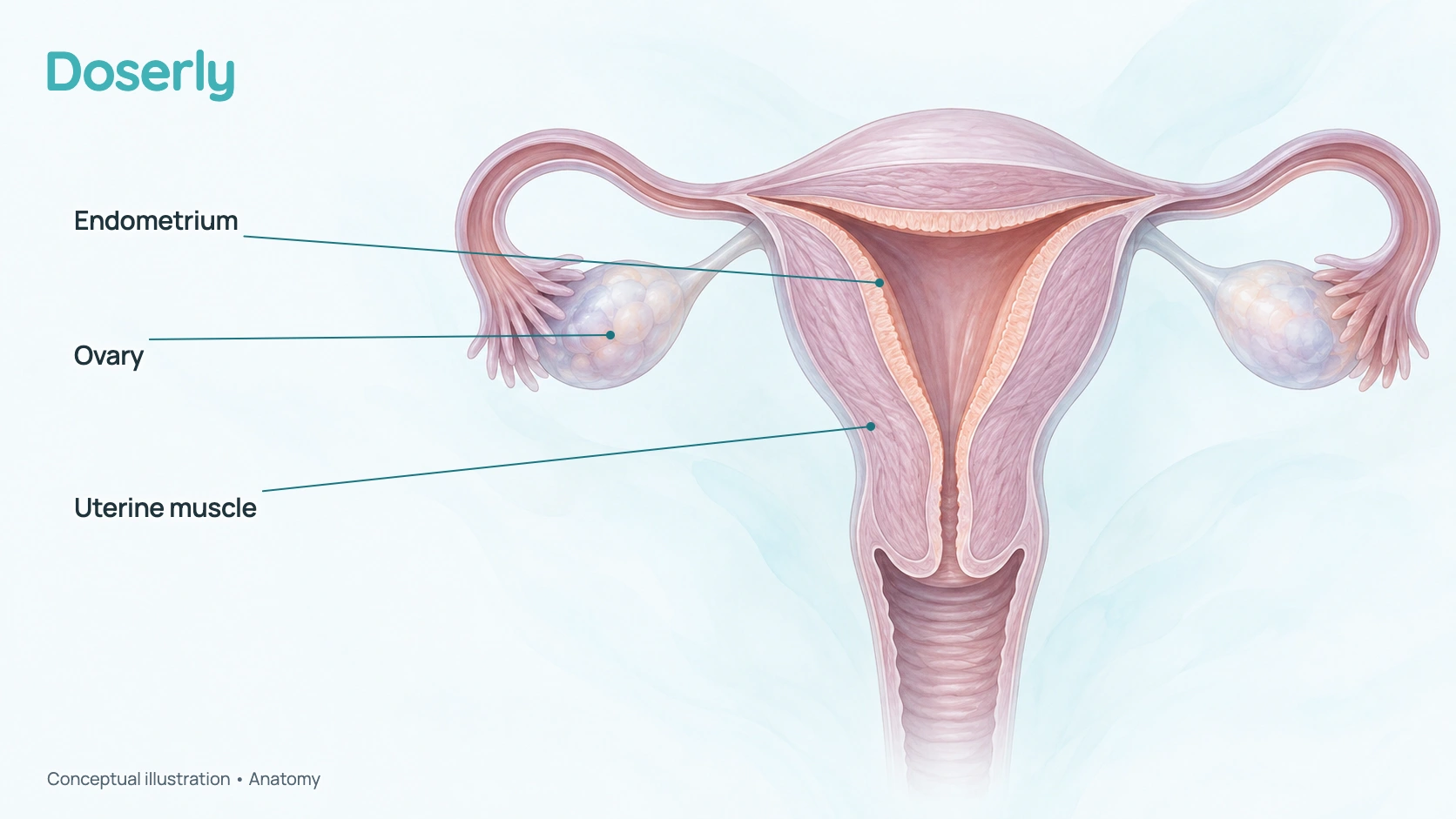
Low-dose vaginal estrogen addresses local genitourinary symptoms. It can be useful even if you do not need systemic treatment, and can be added when systemic HRT has not sufficiently relieved those symptoms. A history of breast cancer, especially current aromatase-inhibitor treatment, needs a separate conversation rather than applying general local-treatment reassurance without qualification. Check the named product: the vaginal route alone does not establish that a preparation acts only locally. [1]
Nonhormonal does not mean one type of care. CBT, a prescription medicine, a vaginal moisturizer and a lifestyle change have different purposes and evidence. Some medicines also require their own safety checks. Ask which symptom the option is expected to help, what improvement to look for and when it should be reviewed. The nonhormonal treatment guide explains those choices in more detail. [1], [4]
Choose by the problem being treated
The treatment goal comes before selecting a product.
Hot flashes and night sweats
Discuss systemic HRT, menopause-specific CBT or suitable nonhormonal options.
Local vaginal discomfort
Discuss local treatment and assess the actual symptom; systemic treatment may not be needed.
Pregnancy prevention and bleeding
Contraception, period care and uterine protection need to be reconciled; HRT is not contraception.
Conceptual options, no doses or comparative efficacy scale. Sources: NICE [1]; NHS [4]; FSRH [5].
What risks and limits should you discuss?
Before systemic treatment, discuss previous breast or other hormone-sensitive cancer, clots, stroke, cardiovascular disease, unexplained bleeding and other significant medical history. Bring current medicines and contraception, because the full regimen matters. A relevant history can change the options or make specialist advice appropriate; choosing a skin route does not override every product contraindication. NICE advises considering transdermal rather than oral HRT where venous-clot risk is increased. [1], [4]
Risk discussions should distinguish estrogen-only from combined treatment, the intended route, duration and your baseline risk. Combined HRT is associated with increased breast-cancer risk under NICE guidance; the size and practical meaning of a risk are not identical for every person. Low-dose local vaginal treatment is a separate decision from systemic treatment. Ask which outcome is being discussed, with which preparation, compared with what, over what time, and how your history changes the starting risk. [1]
Balance that discussion with what the treatment is intended to improve. HRT is not offered solely to prevent cardiovascular disease or dementia, and it does not promise weight loss, restored fertility or resolution of every mood and sleep problem. Periodically reassess meaningful benefit and unwanted effects. If the plan is difficult to tolerate, ask about alternatives rather than taking more estrogen or removing needed uterine protection on your own. [1], [6]
How do contraception and changing periods fit together?
Perimenopause does not mean infertility, and menopausal HRT is not contraception. If pregnancy is possible and you wish to avoid it, discuss pregnancy prevention as part of the treatment plan. Age, bleeding history and the contraceptive method affect when contraception can be stopped; a skipped period or an HRT prescription does not settle that question. The FSRH over-40 guideline makes this distinction explicit. [5]
Some contraceptive methods can be used alongside HRT. In eligible people, combined hormonal contraception may instead be used as an alternative for symptom management and contraception. Do not add systemic HRT to a combined contraceptive on your own, or assume a progestogen-only pill or implant supplies the uterine protection needed with estrogen. A method's contraceptive purpose and its evidence for HRT protection are separate. [5]
A suitable 52 mg levonorgestrel IUD can sometimes cover contraception and the progestogen component of HRT. Confirm the device name, insertion date and intended use. FSRH supports up to five years of endometrial protection with estrogen for a 52 mg device; the contraceptive lifespan can be different. This is UK guidance, not a universal license for all hormonal IUDs or all countries. [5], [6]
Contraception can also change or suppress bleeding and make the transition harder to identify from periods alone. The goal is a safe, understandable combined plan, not proving a precise menopause date before any symptom can be treated. Bring the packet or a photograph of its name if you are unsure which method you use. [1], [5]
Which bleeding needs assessment?
Changing periods are common during perimenopause, but heavy, prolonged or unexpected bleeding still deserves assessment. Record the pattern and its effect on you: repeated flooding, bleeding between periods, bleeding after sex or a change that is difficult to manage. The assessment can consider other causes and consequences, including anemia, rather than assuming hormone fluctuation explains everything. NICE's heavy-bleeding guidance emphasizes quality of life and the actual bleeding history. [3], [10]
If you use sequential HRT, an expected withdrawal bleed is different from bleeding outside the agreed pattern. Tell the prescriber about unexpected bleeding, missed doses and treatment changes. The cause cannot be established from a forum suggestion that estrogen is “too high” or progesterone “too low.” Assessment includes the regimen, adherence, examination and individual risk factors. [6], [7]
NICE's 2026 advice describes bleeding as common in the first six months of systemic HRT or within three months of changing its dose or preparation; it advises prompt medical help beyond those windows. The BMS guideline also identifies heavy or prolonged bleeding and certain risk factors as reasons for earlier investigation. Those timeframes are not permission to wait while concerning bleeding continues. Very heavy bleeding with faintness, severe pain or feeling acutely unwell needs urgent medical assessment. [1], [7]
Routine review and bleeding assessment
Concerning bleeding follows its own assessment pathway.
Routine symptom review
At 3 months, then annually; sooner for difficulties under NICE.
Systemic HRT bleeding context
NICE describes the first 6 months after starting or 3 months after a change; seek prompt help beyond.
Earlier assessment
Heavy, prolonged or higher-risk bleeding can warrant assessment sooner. Very heavy bleeding with faintness or acute illness needs urgent care.
Timing is context, not a wait instruction. Sources: NICE §1.8.4/1.9.2 [1]; BMS May 2026 [7].
How long does the transition last?
There is no blood test or symptom calendar that predicts your final period or the day all symptoms will stop. Symptoms can change during the transition and continue after menopause. Separating the date-based stage from the symptom experience helps: reaching 12 months without a period is not a promise that sleep, hot flashes or vaginal symptoms immediately return to their previous state. [2], [3], [8]
One original SWAN observational study followed the menopause transition across seven US sites. Its duration analysis included 1,449 participants who reported frequent hot flashes or night sweats, defined as symptoms on at least six days in the previous two weeks. Median total duration of those frequent symptoms was 7.4 years. That is the middle value in this selected symptomatic group, not the duration of perimenopause itself or a prediction for every person. [9]
The finding helps explain why support should not depend on a short universal countdown. It does not establish how long a medicine should be taken, prove that HRT caused improvement, or determine whether your symptoms have another cause. Treatment duration and ongoing need should be reviewed with benefit, adverse effects, preferences and health changes. A long symptom history is a reason for thoughtful follow-up rather than an automatic dose increase. [1], [9]
What should you review after treatment starts?
NICE recommends reviewing menopause symptom treatment at three months, then annually, with earlier review for difficulties. Agree on the main goals and a way to make contact before starting. At the review, compare what improved with what remains troublesome, and discuss bleeding, adverse effects, correct use and whether the current plan still fits. A review is not simply a prescription renewal or a blood-number check. [1]
For systemic HRT, revisit uterine protection and contraception whenever a component changes. Ask about product-specific missed-dose advice and application problems. If the pharmacy supplies a replacement product, confirm the instructions rather than assuming the same patch-change interval or amount of gel. The monitoring guide explains clinical follow-up and when a test answers a particular question. [1], [5], [6]
What do public experiences add?
Public discussions show why the appointment can feel confusing. One publicly indexed thread asks how symptoms and irregular periods can coexist with “normal” blood results; another describes severe sleep difficulties and the challenge of getting help. These are selected accounts, not confirmation of a diagnosis, evidence of a particular treatment's success or a representative estimate of how often clinicians respond. [11], [12]
The useful questions are concrete: does a test answer the question being asked, what else might explain the symptom, and what treatment or follow-up could help? Some comments make sweeping claims that hormone tests are never useful. That is broader than the age-specific exceptions in NICE guidance. Other comments suggest personal drug or supplement routines; they are not prescribing instructions here. [1], [11], [12]
Bring a discussion to the consultation as a concern rather than a demanded regimen. You can ask to have the symptom impact documented, the investigation explained and the next review made clear. Recognizing another person's experience may help you feel less alone, but it cannot determine your uterus protection, bleeding assessment or contraceptive need. [1], [5], [7]
What is useful to track?
Keep a manageable record of period dates, unusual bleeding, your most disruptive symptoms and their effect on sleep or daily life. Add the exact medicines, contraception, treatment changes and missed doses. A few consistent notes can be more useful than a long list of scores collected differently each day. This is practical preparation, not a validated perimenopause severity test. [1], [5], [7]
Track benefit and unwanted effects together. For a cyclical treatment, note when each component is taken; for sleep, distinguish sweating from other awakenings. Bring a brief summary to follow-up and keep concerning symptoms out of the wait-for-review routine. Doserly tracks the schedule you and your clinician choose. It does not recommend doses. [1], [7]
Common questions about perimenopause
Can I be in perimenopause if I still have regular periods?
Symptoms can appear while periods continue, and the overall history matters. A clinician can assess the pattern and other possible causes rather than waiting for complete period cessation. Regular periods alone do not establish whether a sleep or mood symptom is hormonal. Bring the changes that affect your daily life, how they relate to your cycle and the medicines you use. The discussion can begin with those observations; you do not need to fit every symptom on a checklist. See diagnosis. [1], [2], [3]
Does normal bloodwork rule it out?
Not usually in an otherwise healthy person aged 45 or older with typical symptoms. A single hormone value does not capture the fluctuating transition. Younger age, an atypical presentation or another suspected illness can justify a different investigation. Ask what the test was meant to answer and whether its result changes the next step. A normal result and a difficult symptom experience can coexist; neither should be interpreted without the clinical history. See how the transition is identified. [1], [8]
Do I have to wait until menopause to use HRT?
No. Treatment can be discussed during perimenopause. The clinician should assess the symptom goal, history, uterus, bleeding and contraception, then select a complete product-specific plan. This does not mean every symptom requires HRT or that a friend’s schedule is appropriate for you. Be clear about the problem you most want to improve and any practical difficulty with the proposed treatment. Contraception and uterine protection remain separate parts of that discussion. See treatment options. [1], [4], [5]
Will HRT stop pregnancy or my own hormone fluctuations?
Menopausal HRT is not contraception, and conventional HRT does not usually suppress the underlying perimenopausal fluctuations. Pregnancy prevention and symptom treatment need to be reconciled separately. Do not stop contraception because a period is skipped. Give the clinician the exact contraceptive method as well as every hormone product you use, so the purposes and schedules can be reviewed together. A treatment that helps hot flashes does not, by that benefit alone, establish pregnancy protection. See contraception. [5], [8]
Can I use only vaginal treatment?
Yes, low-dose vaginal estrogen can be used for local menopausal symptoms without systemic HRT, where appropriate. It will not provide systemic hot-flash treatment. Discuss unexplained pain, discharge, bleeding or a breast-cancer history rather than assuming every vaginal symptom has the same treatment. Name the actual product and the symptom you want to address: route alone does not tell the clinician everything about a preparation. Local comfort and systemic symptoms can require different plans. See treatment options. [1], [4]
Are heavy periods just part of the transition?
They can occur during the transition, but that does not remove the need to assess their impact and possible causes. Tell the clinician about heavy, prolonged, between-period or after-sex bleeding. Describe what changed from your usual pattern and any hormonal treatment or contraception involved. Those details help the assessment; they do not establish a cause on their own. Seek urgent help for very heavy bleeding with faintness, severe pain or acute illness. See bleeding assessment. [7], [10]
Does perimenopause explain every symptom on an online list?
No. A symptom can occur around menopause without proving that hormones caused it. Describe its timing and impact, and allow assessment of other causes. Depression, persistent urinary symptoms or serious warning symptoms should not be managed solely by adjusting HRT. A useful appointment starts with the problems that matter most to you, rather than an assumption that one explanation accounts for every change. Treatment can then address the relevant problem and be reviewed for benefit. See symptoms and other causes. [1], [3]
Will everything settle when I reach 12 months without a period?
There is no guaranteed symptom finish line at 12 months without a period. Some symptoms improve, some persist and others need different care. The stage helps organize treatment and assessment, while follow-up addresses the experience you actually have. Keep the practical goal visible: better sleep, fewer disruptive sweats or improved local comfort may not change together. Tell the clinician what remains difficult instead of assuming that reaching a calendar milestone means you should no longer need support. See follow-up. [2], [3], [9]
Glossary
Terms used in assessment and treatment.
- Perimenopause
- The transition toward menopause, with changing ovarian hormone patterns and possible symptoms.
- Menopause
- Usually identified after 12 months without a period when hormonal contraception does not explain the absence.
- Postmenopause
- The stage after menopause; symptoms can continue.
- Estrogen
- A hormone class that includes estradiol.
- Estradiol
- An estrogen made by the body and used in certain prescribed medicines.
- Progesterone
- A hormone and one member of the progestogen family.
- Progestogen
- A family of progesterone-like medicines; some provide uterine protection with estrogen.
- Endometrium
- The lining inside the uterus.
- Endometrial hyperplasia
- Excessive growth of the uterine lining; distinct from a cancer diagnosis.
- HRT / MHT
- Hormone replacement therapy; menopausal hormone therapy in this guide.
- Systemic treatment
- Treatment reaching the wider body through the circulation.
- Local vaginal estrogen
- A low-dose product intended mainly for genitourinary symptoms.
- Vasomotor symptoms
- Hot flashes and night sweats.
- Genitourinary syndrome of menopause
- A group of menopause-associated vaginal, sexual and urinary symptoms.
- FSH
- Follicle-stimulating hormone; interpretation depends on age, stage and medicines.
- Premature ovarian insufficiency
- Loss or disturbance of ovarian activity before age 40, requiring its own assessment.
- Hysterectomy
- Surgical removal of the uterus; the extent of surgery matters.
- Oophorectomy
- Surgical removal of one or both ovaries.
- Sequential combined HRT
- Estrogen through the cycle with progestogen on specified days.
- Continuous combined HRT
- Estrogen and progestogen supplied continuously.
- Withdrawal bleeding
- Bleeding that can follow completion of a scheduled progestogen course.
- Unscheduled bleeding
- Bleeding outside the expected pattern of the agreed treatment.
- Contraception
- A method intended to prevent pregnancy; menopausal HRT is not one.
- IUD
- Intrauterine device; type and indication determine its role.
- CBT
- Cognitive behavioural therapy; menopause-specific approaches address particular symptoms.
- Bioidentical
- Chemically identical to a hormone made by the body; not a guarantee of safety.
- Compounded preparation
- A specially prepared medicine, not automatically equivalent to an approved product.
- Anemia
- A low hemoglobin or red-cell-related problem; heavy bleeding can prompt investigation.
- Median
- The middle value of a set of observations, not a personal prediction.
- Observational study
- A study observing people without randomly assigning the treatment being examined.
How was this guide researched?
Source selection and limits
We checked original NICE recommendations, current NHS information, FSRH contraception guidance, May 2026 BMS protection and bleeding advice, and the June 2026 WHC hormone-testing information. The SWAN duration example uses the original observational study’s sample and outcome definition, not a treatment trial or a personal prediction. Public discussions were checked through accessible search-indexed text; direct opening failed and that limit is disclosed. [1], [2], [3], [4], [5], [6], [7], [8], [9], [10], [11], [12]
This is an AI-assisted Doserly editorial guide, checked October 2, 2026. No independent clinician review is claimed. Doserly develops a commercial tracking app. Practical preparation and tracking suggestions are editorial advice, not a validated diagnostic scale. New guidance, labels or meaningful safety information trigger an earlier source review.
Sources
Original sources checked October 2, 2026; access limitations and population scope stay attached.
Showing 12 sources
- 01
Recommendations | Menopause: identification and management | Guidance | NICE ↗
Full official guideline recommendations
Sections 1.3 diagnosis,1.5 symptoms,1.7 POI,1.8 treatment/bleeding and 1.9 review. UK guidance, not worldwide authorization.
- 02
What are menopause and perimenopause? ↗
Full official patient-information page
Definition, usual age range, diagnosis and exceptions. No precise individual symptom countdown.
- 03
Symptoms of menopause and perimenopause ↗
Full official patient-information page
Period changes, vasomotor, sleep, mood, genitourinary and other symptoms; variability and daily-life impact.
- 04
Treatment for menopause and perimenopause ↗
Full official patient-information page
HRT, vaginal treatment, CBT and other options. Product-specific instructions are not reconstructed from this overview.
- 05
FSRH Guideline: Contraception for Women Aged Over 40 Years ↗
Original guideline PDF, relevant sections
Summary, sections 6–7 and table 9: contraception/HRT;52 mg IUD protection up to 5 years differs from contraception lifespan. UK scope retained.
- 06
Progestogens and endometrial protection ↗
Full original guidance PDF
Key points; uterine protection, sequential/continuous contexts, vaginal limitations, IUD and compounded preparations. No separate examples assembled into a prescription.
- 07
Management of unscheduled bleeding on hormone replacement therapy (HRT) ↗
Official current guideline key-message page
Assessment, adherence, risk factors and earlier investigation for heavy/prolonged bleeding. No ultrasound cutoff or self-triage algorithm reproduced.
- 08
Hormone blood tests in the menopause transition ↗
Full original patient-information PDF
Key points and hormone-testing sections: fluctuating levels, poor relation to symptoms, oral/transdermal interpretation and younger-age exceptions.
- 09
Duration of Menopausal Vasomotor Symptoms Over the Menopause Transition ↗
Original study abstract and article excerpts
SWAN observational analysis:1449 with frequent VMS (at least 6 days/previous 2 weeks), median duration 7.4 years. The article was retrieved through Exa; this guide uses the abstract-level sample/outcome, not a treatment effect.
- 10
Heavy menstrual bleeding: assessment and management (NG88): Recommendations ↗
Full official guideline recommendations
Sections 1.1–1.3; full blood count for heavy bleeding, no routine female-hormone test and thyroid testing only with other suggestive symptoms. Used for a different investigation question, not a universal menopause panel.
- 11
Symptoms but normal bloodwork? ↗
Public search-indexed opening post and comments
Public search text checked October 2, 2026; direct open failed. Selected questions about symptoms/normal results, not representative survey or clinical authority. No usernames retained.
- 12
No sleep and no HRT- what helps ↗
Public search-indexed opening post and comments
Opening post and accessible indexed comments datedOctober 2 checked; direct open failed. Sleep/access difficulties, not validated treatment stories. Later-dated comments excluded; no source doses or supplement routine adopted.
No matching sources
Try a different term or show the full list.