
GSM: Vaginal, Urinary, and Sexual Symptoms
On this page
Quick Reference Card
Attribute
Definition
- Value
- A syndrome of bothersome genital, sexual, and urinary symptoms and signs associated with lower estrogen and other sex-steroid levels during or after menopause, after other causes are considered
Attribute
Coding note
- Value
- There is no single ICD-10 code that equals GSM. N95.2 may be used for postmenopausal atrophic vaginitis; cystitis, vaginitis, urinary symptoms, or pain codes should be used only when those conditions are actually present
Attribute
Previous Terminology
- Value
- Vulvovaginal atrophy (VVA), atrophic vaginitis, urogenital atrophy
Attribute
Prevalence
- Value
- Common after menopause, but estimates vary widely by population, definition, and whether studies use symptoms, exam findings, or both
Attribute
Typical Age Range
- Value
- Can begin in perimenopause (40s); most common in postmenopausal women (50+)
Attribute
STRAW+10 Relevance
- Value
- Symptoms typically emerge in late menopausal transition (stage -1) and progress through postmenopause
Attribute
First-Line Treatments
- Value
- Vaginal moisturizers and lubricants (mild symptoms); low-dose vaginal estrogen, vaginal DHEA (prasterone), or ospemifene (moderate to severe)
Attribute
Diagnostic approach
- Value
- Symptoms with or without related physical findings, after ruling out infection, dermatoses, pelvic pain disorders, malignancy, and other causes; vaginal pH/VMI/VHI can support research or selected clinical assessment but are not required for routine diagnosis
Attribute
When to Seek Medical Help
- Value
- Persistent vaginal dryness, burning, or irritation; painful intercourse; recurrent UTIs; urinary urgency, frequency, or incontinence; any postmenopausal bleeding
Overview / What Is Genitourinary Syndrome of Menopause?
The Basics
Genitourinary syndrome of menopause, commonly called GSM, is a condition that develops when declining hormone levels cause the tissues of your vagina, vulva, urethra, and lower urinary tract to become thinner, drier, and less resilient. Studies report a wide range of prevalence estimates after menopause because symptoms, examination findings, and research definitions differ, but GSM is consistently described as common and undertreated.
The term GSM was introduced in 2014 by the International Society for the Study of Women's Sexual Health (ISSWSH) and The North American Menopause Society (now The Menopause Society) to replace older terms like "vulvovaginal atrophy" and "atrophic vaginitis." Those names only described part of the picture. GSM captures the full range of what happens: vaginal dryness, burning, and irritation; pain during intercourse; urinary urgency, recurrent urinary tract infections, and incontinence. It acknowledges that this is not simply a vaginal problem but a condition that affects the entire genitourinary system.
GSM often behaves differently from hot flashes and night sweats. Vasomotor symptoms often improve with time, while GSM symptoms commonly persist or worsen when the underlying tissue changes are not treated. That pattern is common enough that persistent dryness, burning, pain with sex, urinary urgency, or recurrent UTIs deserve evaluation rather than dismissal. Effective treatments can improve symptoms and tissue health, even when symptoms have been present for years.
Perhaps most concerning is the silence around GSM. Surveys consistently show that many women with symptoms do not discuss them with a healthcare provider. Many assume the changes are simply an inevitable part of aging. Others feel embarrassed. And too often, when women do raise the issue, their providers either dismiss the symptoms or are uncertain about treatment options. This guide is designed to help bridge that gap.
The Science
Genitourinary syndrome of menopause (GSM) describes the constellation of genital symptoms (dryness, burning, irritation), urinary symptoms (urgency, dysuria, recurrent UTIs, incontinence), and sexual symptoms (dyspareunia, decreased lubrication, impaired arousal) that result from estrogen deficiency in the genitourinary tract [1]. The term was adopted by consensus in 2014 to replace vulvovaginal atrophy, which failed to encompass the urinary tract involvement or the association with the hypoestrogenic state [2].
Prevalence estimates vary widely because studies define GSM differently. Some count only bothersome symptoms, while others use examination findings or pH/maturation measures. The AGATA study found high rates of objective vaginal atrophy findings in postmenopausal gynecology settings, and the VIVA survey found that many postmenopausal women with vaginal symptoms reported meaningful quality-of-life impact [7][8]. These studies support that GSM is common and undertreated, but a single prevalence number should not be treated as universal.
A useful clinical distinction is persistence. Vasomotor symptoms often lessen over time, but GSM can persist because the underlying tissue environment remains hypoestrogenic. Symptoms are not identical for everyone, and some fluctuate, so the practical message is to reassess persistent or bothersome symptoms rather than assuming they are an unavoidable part of aging [1][9].
The 2025 AUA/SUFU/AUGS guideline, endorsed by ISSWSH and The Menopause Society, represents the first major multidisciplinary guideline for GSM, integrating perspectives from urology, urogynecology, and menopause medicine. It emphasizes shared decision-making as a clinical principle and calls for increased outreach to marginalized and underserved populations [3].
Medical / Chemical Identity
Property
Condition Name
- Value
- Genitourinary Syndrome of Menopause (GSM)
Property
Previous Terminology
- Value
- Vulvovaginal atrophy (VVA), atrophic vaginitis, urogenital atrophy
Property
Terminology Consensus
- Value
- ISSWSH/NAMS consensus, 2014
Property
Coding note
- Value
- No single ICD-10 code captures GSM. N95.2 can describe postmenopausal atrophic vaginitis; acute vaginitis, cystitis, urinary incontinence, dysuria, pelvic pain, or dyspareunia codes should reflect a separately assessed diagnosis or symptom
Property
Affected Structures
- Value
- Vagina, vulva, labia majora and minora, clitoris, urethra, bladder trigone, pelvic floor
Property
Primary Hormonal Driver
- Value
- Estrogen deficiency (primarily estradiol decline)
Property
Contributing Hormonal Factor
- Value
- Androgen deficiency (DHEA, testosterone)
Property
Receptor Involvement
- Value
- Estrogen and androgen signaling contribute to genitourinary tissue health, but receptor details are not needed for routine diagnosis
Property
Key Diagnostic Tools
- Value
- Clinical history and physical exam (primary); VHI, VMI, vaginal pH (supplementary)
Mechanism of Action / Pathophysiology
The Basics
GSM starts with a simple tissue problem: the vulva, vagina, urethra, and lower urinary tract become less supported by estrogen and other sex steroids after menopause or ovarian suppression. The tissues can become thinner, drier, less elastic, and more easily irritated. The vaginal environment can also become less acidic, which may change the balance of bacteria and contribute to recurrent urinary or vaginal symptoms in some people.
That biology explains why GSM symptoms often cluster. Dryness, burning, tearing, pain with penetration, urinary urgency, burning with urination when infection is absent, and recurrent UTIs can share the same hormonal background. It also explains why symptom care has to rule out other causes. Infection, vulvar skin disease, pelvic floor pain, bladder conditions, and malignancy can overlap with GSM symptoms and need different treatment.
DHEA and androgen signaling are part of the tissue picture, but they should not be oversold. Vaginal prasterone can help dyspareunia due to menopause in appropriately selected patients, while systemic testosterone is not a first-line GSM treatment.
The Science
Current guideline language is clinical rather than highly mechanistic. The 2025 AUA/SUFU/AUGS guideline describes GSM as symptoms and physical changes associated with declining estrogen and androgen concentrations in the genitourinary tract, diagnosed from symptoms with or without exam findings after ruling out other etiologies or coexisting conditions [3]. The 2014 terminology consensus similarly defined GSM by bothersome genital, sexual, and urinary symptoms/signs related to lower estrogen and other sex steroids, not by a single lab value or ICD code [2].
The tissue changes commonly discussed in GSM include reduced epithelial maturation, dryness, irritation, higher vaginal pH, altered lactobacillus-dominant flora, dyspareunia, and urinary symptoms. These mechanisms are useful for explaining why local therapy can work, but routine care does not depend on receptor-density maps, exact epithelial cell-layer counts, or a single serum estradiol threshold.
Visual guide
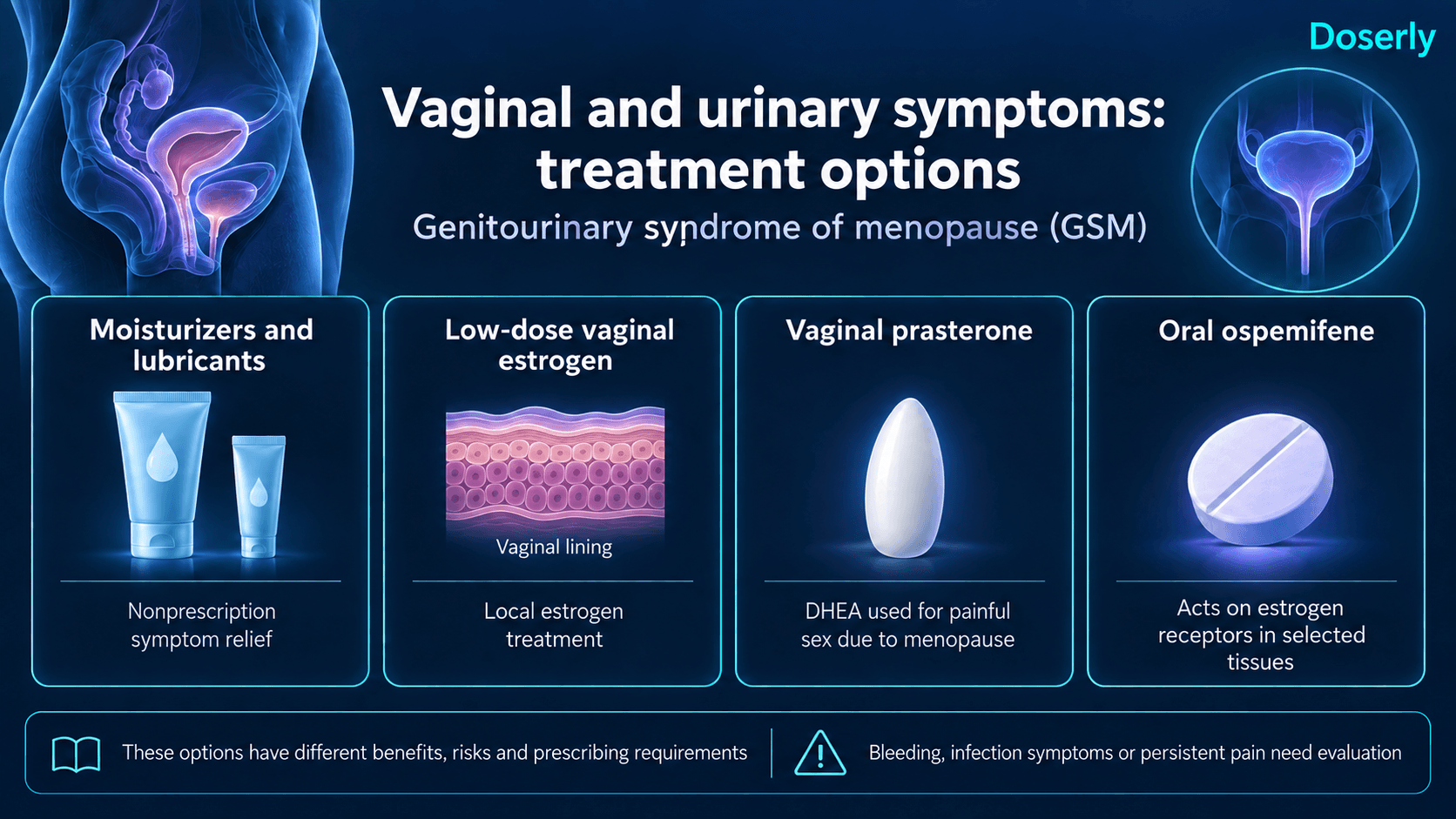
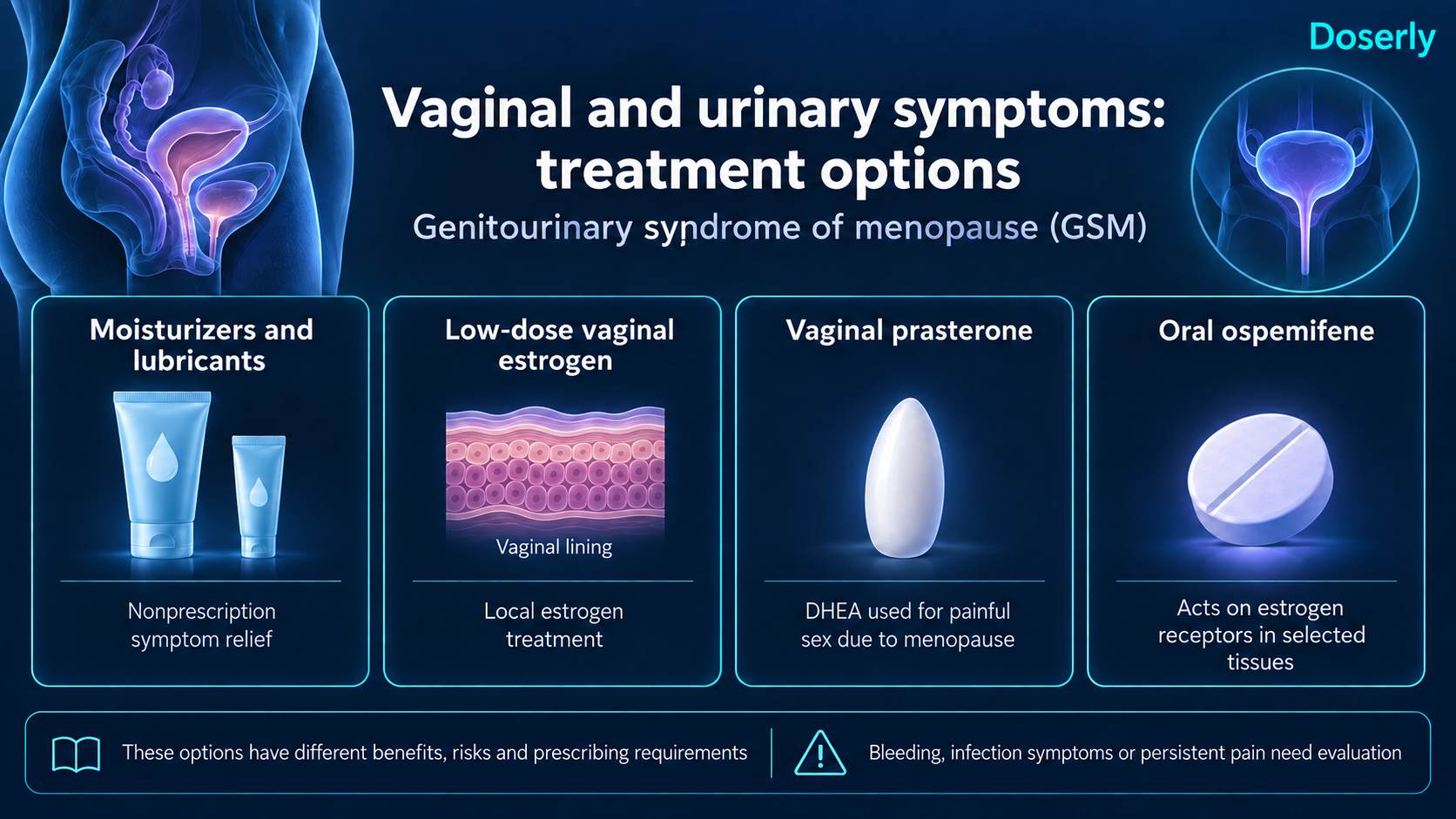
The options differ in indication, evidence and contraindications. Prasterone is a vaginal hormone precursor; ospemifene is an oral estrogen-receptor modulator. The diagram is not a head-to-head efficacy comparison or a recommendation to combine treatments.
Pharmacokinetics / Hormone Physiology
The Basics
Low-dose vaginal estrogen is designed to treat tissues close to where it is applied. Creams, inserts, tablets, and rings differ in dose, placement, leakage, convenience, cost, and labeling, but the clinical aim is local improvement in GSM symptoms rather than whole-body estrogen replacement.
This local-versus-systemic distinction is central to safety counselling. Low-dose vaginal products generally produce much lower systemic exposure than systemic HRT. That does not make them identical, risk-free, or interchangeable: current product labeling, dose, formulation, breast-cancer history, unexplained bleeding, and patient goals still matter.
Vaginal prasterone works differently. It provides DHEA locally, which vaginal cells can convert into active sex steroids within the tissue. It is used for dyspareunia related to menopause in selected patients and has its own label cautions.
The Science
The 2025 AUA/SUFU/AUGS guideline and 2022 Menopause Society hormone therapy statement both distinguish low-dose vaginal therapy from systemic HRT. Serious adverse events are described as very rare in the NICE guidance, and NICE explains that low-dose vaginal estrogen is absorbed locally with minimal systemic absorption compared with systemic HRT [3][5][4].
Pharmacokinetic studies support low systemic exposure with many low-dose vaginal products, but serum values vary by product, dose, assay, and timing after insertion. This guide therefore avoids using a single estradiol number as a universal promise. Serum estradiol is not a routine test for diagnosing GSM or for monitoring response to low-dose vaginal estrogen in typical care.
Research & Clinical Evidence
The Basics
The strongest evidence-backed treatment for bothersome GSM is low-dose vaginal estrogen. The 2025 AUA/SUFU/AUGS guideline states that local low-dose vaginal estrogen has the most robust evidence base among hormonal and nonhormonal options, while also emphasizing shared decision-making because no single hormonal option should be forced into a stepwise sequence for every patient [3].
Nonhormonal lubricants and moisturizers can help mild dryness and pain with sex and can be used with prescription therapies. Vaginal prasterone and oral ospemifene are additional prescription options for selected patients. Energy-based devices such as vaginal lasers remain an area of study; current guidance should not present them as proven alternatives to vaginal estrogen.
For people with a breast cancer history, the evidence is more nuanced than a simple yes or no. A large 2024 cohort study found no increase in breast-cancer-specific mortality among vaginal estrogen users, but observational mortality data do not prove no recurrence risk in every subgroup. Aromatase inhibitor use, receptor status, symptom severity, and oncology input remain important [10].
The Science
The 2025 AUA/SUFU/AUGS guideline was based on a systematic review that included 68 publications, plus an evidence map of 46 nonhormonal interventions [3]. It supports diagnosis based on symptoms with or without physical findings after considering other causes, and it identifies local low-dose vaginal estrogen as the best-supported treatment evidence base.
The 2016 Cochrane review included 30 randomized trials with 6,235 participants and found low-to-moderate quality evidence across vaginal estrogen formulations. It did not justify ranking one local estrogen formulation as universally superior; product choice should reflect symptoms, anatomy, tolerance, cost, application preference, and label considerations [6].
NICE NG23 recommends offering vaginal estrogen for genitourinary symptoms associated with menopause, including for people already using systemic HRT, and reviewing treatment regularly. NICE also states that serious adverse effects are very rare and that symptoms often return when treatment is stopped [4].
For energy-based therapies, NICE recommends not offering vaginal laser to treat GSM except as part of a randomized controlled trial. FDA has also warned against unproven marketing claims for energy-based vaginal procedures. This guide therefore treats vaginal laser as investigational for GSM rather than established care [4][11].
Benefits & Therapeutic Effects
The Basics
The benefits of treating GSM can be wide-ranging. For many women, the most immediate goal is relief from vaginal dryness, burning, irritation, tearing, and pain with sex. Improvement often builds over weeks rather than overnight, and the response depends on symptom severity, product choice, consistency, and whether another condition is also present.
GSM treatment is about more than sexual function. In postmenopausal women with recurrent UTIs and signs or symptoms of GSM, vaginal estrogen is recommended by urology guidance to reduce future UTI risk when there is no contraindication. It is not a substitute for evaluating active infection, hematuria, fever, flank pain, or complicated urinary symptoms.
Urinary urgency, burning without infection, and daily vulvar discomfort may improve when GSM is a driver. Stress incontinence, pelvic floor dysfunction, bladder pain syndrome, dermatologic disease, and vulvodynia may need additional evaluation and treatment.
Relief can also help confidence, intimacy, and daily comfort. These benefits should be discussed as quality-of-life outcomes, while avoiding promises that any one treatment will resolve every sexual, urinary, or relationship concern.
The Science
The therapeutic effects of GSM treatment are best documented for vulvovaginal dryness, burning, irritation, and dyspareunia [1][3][6]. Local estrogen improves clinical signs such as epithelial maturation and pH in many studies, but routine practice should focus on symptom response and safety review rather than chasing a specific pH or maturation-index target.
Dyspareunia and dryness: Low-dose vaginal estrogen, vaginal prasterone, and ospemifene all have evidence for selected GSM-related sexual pain or dryness outcomes. Choice depends on symptom pattern, contraindications, route preference, cost, and labeling.
Recurrent UTIs: Urology guidance recommends vaginal estrogen for peri- and postmenopausal women with recurrent UTIs when appropriate, while noting that systemic estrogen is not recommended for recurrent UTI prevention.
Urinary symptoms: Urgency and burning may improve when GSM contributes to symptoms. Persistent hematuria, recurrent culture-positive infection, severe pain, fever, or new incontinence warrants broader evaluation.
Benefits don't always arrive all at once. Some symptoms respond in days, others take weeks or months to shift. Doserly's analytics help you see the full picture by correlating your treatment timeline with changes across every symptom you're tracking, surfacing patterns that are easy to miss when you're living through the transition day by day.
The app can help you understand which benefits came first, whether improvements plateau or continue building, and how different aspects of your health connect to each other. When you can see the trajectory clearly, it's easier to stay the course through the adjustment period and to share meaningful updates with your provider.
Risks, Side Effects & Safety
The Basics
One reassuring aspect of GSM treatment is that low-dose vaginal estrogen works mainly locally and has much lower systemic exposure than systemic hormone therapy. That supports a different risk conversation, but it does not remove the need to check the specific product label, evaluate bleeding, and individualize care for breast cancer history or other major risk factors.
Common side effects of vaginal estrogen are generally mild and localized: some women experience vaginal irritation, spotting, or discharge when starting treatment. These usually resolve as the tissues heal. Breast tenderness is uncommon with low-dose local formulations but can occur.
Available evidence and guidelines do not show a systemic-HRT-like risk profile for low-dose vaginal estrogen. The safest wording is still precise: risk depends on product, dose, medical history, and the limits of available long-term data.
A progestogen is not required when using low-dose vaginal estrogen, even in women with an intact uterus. This is an important distinction from systemic estrogen therapy, where progestogen is mandatory to protect the endometrium. However, endometrial safety data for vaginal estrogen extends only to approximately 1 year in most clinical trials, and any unexpected vaginal bleeding should prompt evaluation.
For ospemifene, hot flashes are a common side effect and the drug has its own contraindications and warnings, including for unexplained vaginal bleeding, estrogen-dependent neoplasia, and thromboembolic or stroke history in U.S. labeling. It should not be treated as a risk-free “nonhormonal” shortcut.
The Science
Local estrogen safety data: Guidelines distinguish low-dose vaginal estrogen from systemic HRT because systemic absorption is minimal compared with whole-body therapy. Progestogen is not routinely indicated with low-dose local vaginal estrogen or vaginal DHEA in guideline-based care, but unexplained bleeding still needs evaluation [1][3][4].
Venous thromboembolism: Low-dose vaginal estrogen has not shown the same VTE signal as oral systemic estrogen in available evidence. Avoid overstating this as “zero risk”; use the patient’s clot history, product label, and overall risk profile.
Breast cancer: The McVicker et al. cohort included 49,237 females with breast cancer and found no evidence of increased breast-cancer-specific mortality among vaginal estrogen users [10]. This supports a more nuanced discussion, but mortality data are not the same as recurrence data for every subgroup. Oncology involvement remains appropriate, especially with aromatase inhibitors.
Endometrial safety: Routine progestogen is not required for low-dose local vaginal estrogen, but any postmenopausal bleeding or unexpected bleeding pattern requires assessment.
Ospemifene safety: Ospemifene can help selected GSM symptoms but has its own label warnings and contraindications. It should be reviewed separately from local vaginal estrogen.
Dosing & Treatment Protocols
The Basics
GSM treatment follows a simple principle: start with the least invasive option and escalate if needed. For mild symptoms (occasional dryness, minor discomfort), over-the-counter vaginal moisturizers and lubricants may be sufficient. For moderate to severe symptoms, prescription treatments are available in several forms.
Vaginal estrogen comes as creams, tablets, suppositories, and rings. All are similarly effective, so the choice often comes down to personal preference and convenience. Creams offer flexibility in application but can be messy. Tablets and suppositories are cleaner to use. The vaginal ring is inserted once and left in place for three months, offering the least maintenance.
Most vaginal estrogen regimens follow a similar pattern: daily use for the first 2 weeks (the "loading" phase) to restore the tissues, then twice-weekly maintenance. Some women need more frequent maintenance than others, and your provider can help you find the right schedule. It is important to understand that GSM treatment is ongoing. Stopping treatment will eventually allow symptoms to return, as the underlying hormonal cause persists.
Vaginal DHEA (prasterone/Intrarosa) is used as a nightly insert. Ospemifene is a once-daily oral pill. Both are prescription-only and are typically considered when vaginal estrogen is not preferred or not sufficient.
For women who also have vasomotor symptoms (hot flashes, night sweats), systemic HRT may address both sets of symptoms, though many women find that systemic therapy alone does not fully resolve local genitourinary symptoms and need vaginal estrogen as an adjunct.
The Science
FDA-approved vaginal estrogen formulations and dosing (from AUA 2025 guideline) [3]:
Formulation
17-beta-estradiol cream 0.01%
- Starting Dose
- 0.5-1 g daily x 2 weeks
- Maintenance Dose
- 0.5-1 g 1-3x/week
- Typical Serum E2
- Variable, 3-5 pg/mL
Formulation
Conjugated estrogen cream 0.625 mg/g
- Starting Dose
- 0.5-1 g daily x 2 weeks
- Maintenance Dose
- 0.5 g 1-3x/week
- Typical Serum E2
- Variable
Formulation
Estradiol vaginal tablet 10 mcg
- Starting Dose
- 1 tablet daily x 2 weeks
- Maintenance Dose
- 1 tablet 2x/week
- Typical Serum E2
- ~4.6 pg/mL
Formulation
Estradiol vaginal suppository 4 or 10 mcg
- Starting Dose
- Daily x 2 weeks
- Maintenance Dose
- 1 insert 2x/week
- Typical Serum E2
- 3.6 (4 mcg) to 4.6 (10 mcg) pg/mL
Formulation
Estradiol vaginal ring (Estring)
- Starting Dose
- 7.5 mcg/day continuously
- Maintenance Dose
- Replace every 90 days
- Typical Serum E2
- ~8 pg/mL
Vaginal DHEA: Prasterone 6.5 mg vaginal insert, administered nightly. It is a prescription option for moderate to severe dyspareunia due to menopause/GSM in selected patients [1][3].
Ospemifene: 60 mg orally once daily with food. Indicated for moderate to severe dyspareunia and moderate to severe vaginal dryness due to GSM [3].
Clinical guidance notes:
- Symptom improvement often begins within a few weeks, but some people need 1-3 months or longer for the full practical benefit [1][3]
- Treatment duration is indefinite; discontinuation leads to symptom recurrence
- The minimum effective dose principle applies: use the lowest dose that controls symptoms
- Progestogen is not routinely required with low-dose vaginal estrogen preparations [1][3]
- Any postmenopausal vaginal bleeding requires evaluation regardless of treatment
What to Expect (Timeline)
Treatment for GSM is not an overnight fix, but most women begin to notice meaningful changes within the first few weeks. Understanding what to expect at each stage can help you stay the course through the initial adjustment period.
Days 1-7: During the initial daily loading phase with vaginal estrogen, you may notice increased moisture and reduced dryness relatively quickly. Some women experience mild irritation, spotting, or discharge as the tissues begin to respond. This is a normal part of the healing process. Vaginal DHEA users may notice similar early effects.
Weeks 2-4: By the end of the loading phase, many women report meaningful improvement in dryness, burning, and irritation. The vaginal tissues are beginning to thicken and regain their protective lining. Urinary urgency may start to ease. Some women attempt comfortable intercourse during this period, though full tissue restoration takes longer.
Months 1-3: This is when the most significant changes typically become apparent. Vaginal pH normalizes, Lactobacillus populations recover, and the vaginal epithelium continues to mature. Dyspareunia generally improves substantially. UTI frequency typically decreases. Many women describe this period as "turning a corner."
Months 3-6: Full therapeutic effect for most symptoms. Vaginal elasticity improves further, introital stenosis may begin to reverse (dilators can help), and the full benefit for urinary symptoms becomes apparent. Women who have experienced clitoral atrophy may notice some return of sensitivity, though this varies considerably and may require testosterone adjunct.
Ongoing maintenance: GSM treatment is a long-term commitment. Once symptoms are well-controlled (typically at twice-weekly vaginal estrogen or nightly DHEA), the maintenance regimen continues indefinitely. Annual review with your provider is recommended to reassess symptom control, adjust dosing if needed, and ensure no new concerns have developed.
Realistic expectations are important: treatment can improve symptoms and tissue signs, but response is not identical for everyone. People with severe, long-standing symptoms, pelvic floor pain, vulvar skin disease, or overlapping bladder conditions may need additional evaluation and combined treatment.
Timelines in clinical literature describe averages. Your own timeline is what matters. Doserly's trend analysis turns your daily symptom entries into visual trajectories, showing you how each symptom is progressing over weeks and months of treatment.
The app helps you see patterns that day-to-day experience can obscure, like a gradual improvement in urinary urgency that started two weeks after beginning vaginal estrogen, or dryness scores dropping steadily even when individual bad days make it feel like nothing has changed. These insights give both you and your provider a clearer picture of treatment response.
Timing Hypothesis & Window of Opportunity
The timing hypothesis for systemic HRT (the concept that initiating hormone therapy within 10 years of menopause onset or before age 60 has a more favorable risk-benefit profile) is less directly relevant to GSM treatment than to systemic hormone therapy. This is because low-dose vaginal estrogen can be initiated at any age and at any time after menopause, with no evidence of increased risk from late initiation.
However, there is a clinical argument for early intervention. GSM is progressive, and the structural changes to the genitourinary tissues worsen over time. Women who begin treatment earlier in the course of the condition generally experience faster and more complete tissue restoration. Women with severe, long-standing atrophy may require longer treatment periods and may achieve less complete reversal.
The 2022 NAMS position statement explicitly states: "For women with GSM, vaginal estrogen (and systemic if required) or other nonestrogen therapies may be used at any age and for extended duration, if needed" [5]. This is a key distinction from the age-related cautions that apply to systemic HRT initiation.
For people who are considering systemic HRT for vasomotor symptoms and also have GSM, the age and timing discussion applies to the systemic component. Systemic HRT should be prescribed for appropriate symptom, ovarian-insufficiency, or bone-related indications rather than for primary cardiovascular prevention. Local vaginal estrogen for GSM does not use the same initiation-window framework [5].
Interactions & Compatibility
GSM treatments have relatively few clinically significant interactions compared to systemic HRT:
Drug-drug interactions:
- Aromatase inhibitors (anastrozole, letrozole, exemestane): Vaginal estrogen is generally contraindicated or used with extreme caution in women on aromatase inhibitors, as even small amounts of local estrogen could theoretically counteract the intended estrogen suppression. This remains an area of active research and individual clinical judgment [3][10]
- Tamoxifen: Vaginal estrogen has been used with tamoxifen, as tamoxifen has partial estrogen-agonist activity in vaginal tissue. Vaginal DHEA may also be considered. Oncologist consultation is essential [3]
- Warfarin: Vaginal estrogen at low doses is unlikely to affect anticoagulation, but monitoring is reasonable when initiating any estrogen-containing product
- CYP3A4 interactions: Ospemifene undergoes hepatic metabolism via CYP3A4, CYP2C9, and CYP2C19. Strong CYP3A4 inhibitors (ketoconazole) or inducers (rifampin) may alter ospemifene levels
Supplement interactions:
- Vitamin D and calcium: No interaction with GSM treatments; both are recommended for general bone health in postmenopausal women
- Cranberry supplements: Commonly used alongside vaginal estrogen for UTI prevention; no known interaction
- Probiotics (vaginal Lactobacillus): May complement vaginal estrogen therapy by supporting microbiome restoration; no adverse interaction
Lifestyle factors:
- Smoking: While smoking does not directly interact with vaginal estrogen, it accelerates estrogen metabolism and is associated with earlier menopause and more severe GSM
- Sexual activity: Regular sexual activity promotes epithelial turnover and blood flow to genitourinary tissues, complementing the effects of treatment
Cross-references to related guides:
- Estradiol (vaginal estrogen formulations)
- Vaginal Estrogen Therapy
- DHEA / Prasterone (Intrarosa)
- Ospemifene (Osphena)
Decision-Making Framework
Making decisions about GSM treatment involves understanding your symptoms, your risk factors, and the available options. Because GSM is a clinical diagnosis based on symptoms and examination findings (not lab tests), your own experience is central to the decision-making process.
When to consider treatment:
- Persistent vaginal dryness, burning, or irritation that affects daily comfort
- Pain during intercourse that has changed your sexual activity or relationship
- Recurrent UTIs (two or more in 6 months, or three or more in 12 months)
- Urinary urgency, frequency, or incontinence that affects quality of life
- Visible changes to vulvar or vaginal tissues that concern you
Questions to ask your provider:
- "Could my symptoms be related to menopause? Have you considered GSM?"
- "What are my treatment options, and how do they differ in terms of how they work?"
- "Is vaginal estrogen safe for me given my health history?"
- "How long will it take to see improvement, and how long will I need to continue treatment?"
- "Do I need to add vaginal estrogen even though I'm already on systemic HRT?"
- "Are there OTC options I should try first?"
Finding a specialist: If your primary care provider is unfamiliar with GSM management, consider seeking a provider certified by The Menopause Society (NAMS Certified Menopause Practitioner) or a member of ISSWSH. Urogynecologists and urologists with menopause expertise are increasingly involved in GSM care, as reflected by the 2025 AUA guidelines. Telehealth menopause clinics have also expanded access to specialized care.
Self-advocacy: If your provider dismisses your symptoms or refuses to prescribe vaginal estrogen due to generalized concerns about "estrogen safety," you are within your rights to request a referral, seek a second opinion, or bring the 2025 AUA/SUFU/AUGS guidelines and the 2020 NAMS GSM position statement to your appointment. These are evidence-based resources that can help inform the conversation.
Administration & Practical Guide
Proper application technique matters for vaginal estrogen. Many women report better results when they learn the correct method, and some community members and pelvic floor therapists have shared practical tips that go beyond the package insert.
Vaginal estrogen cream (Estrace, Premarin, generics):
- Measure the prescribed amount (typically 0.5-1 gram) using the provided applicator or by squeezing onto your finger
- Insert approximately 2 cm (about 3/4 inch) into the vaginal canal and spread around the inner walls
- Apply an additional pea-sized amount externally to the vulvar vestibule, urethra, clitoris, and inner labia
- Apply at bedtime to minimize leakage and maximize tissue contact time
- The external application is important: the vulva, urethra, and clitoral tissues also need estrogenic support
Vaginal estrogen tablets/suppositories (Vagifem, Yuvafem, Imvexxy):
- Use the provided applicator to place the tablet approximately 2 inches into the vagina
- Apply at bedtime
- Some women find these cleaner and more convenient than creams
Vaginal ring (Estring):
- You or your provider inserts the soft, flexible ring into the upper third of the vagina
- It remains in place for 90 days, releasing a continuous low dose of estradiol
- Most women cannot feel the ring once positioned
- It can remain in place during intercourse (or be temporarily removed)
- Replace every 3 months
Vaginal DHEA/Prasterone (Intrarosa):
- Insert one suppository nightly using the provided applicator
- Apply at bedtime
General tips:
- Wash hands before and after application
- Consistency matters more than perfection. Twice-weekly maintenance is the typical schedule, and missing an occasional dose is not harmful
- If you experience irritation from one formulation, speak with your provider about switching to another. Different bases (coconut oil, polyethylene glycol) suit different women
- Vaginal dilators can be used alongside estrogen therapy to help reverse introital narrowing
Monitoring & Lab Work
GSM diagnosis and management are primarily clinical, meaning that routine lab work is generally not required for monitoring treatment.
Pre-treatment assessment:
- Comprehensive history (symptom onset, severity, impact on QOL and sexual function)
- Pelvic examination (assess tissue changes, rule out other causes)
- Urinalysis if urinary symptoms are present (rule out active infection)
- Mammogram (per standard screening guidelines; not specifically required for vaginal estrogen but recommended as part of routine care)
Ongoing monitoring:
- Symptom reassessment at 4-12 weeks after starting treatment
- Annual review to assess symptom control, adjust dosing, and screen for any new concerns
- Vaginal pH measurement (optional; useful in clinical trials but not essential in clinical practice)
- VMI (optional; not routinely needed for clinical management)
When to investigate further:
- Any vaginal bleeding after menopause (whether or not on vaginal estrogen) requires investigation (transvaginal ultrasound, possible endometrial biopsy)
- Persistent or worsening symptoms despite appropriate treatment (consider alternative diagnoses: lichen sclerosus, lichen planus, vulvodynia, infection)
- New symptoms not typical of GSM (suspicious lesions require biopsy)
Note on serum estradiol: Measuring serum estradiol is not useful for diagnosing GSM or monitoring treatment response. Current assays may be unreliable at very low postmenopausal levels, and routine symptom response is a better guide than a serum target [3].
Complementary Approaches & Lifestyle
Evidence-based strategies that complement medical treatment for GSM include:
Pelvic floor therapy:
Pelvic floor physical therapy can be valuable for women with GSM, particularly those with coexisting pelvic floor dysfunction, pain with intercourse, or urinary incontinence. A trained pelvic floor therapist can teach relaxation techniques, provide manual therapy, and guide the use of vaginal dilators for introital stenosis. This is not a replacement for hormonal treatment but an important adjunct [3].
Vaginal dilators:
For women with vaginal narrowing or stenosis, graduated vaginal dilators used regularly can help maintain or restore vaginal caliber. They are often recommended alongside vaginal estrogen and are especially important for women who are not sexually active.
Regular sexual activity:
Sexual activity, including solo sexual activity if desired, may help maintain comfort and blood flow for some people, but it should never be framed as required. Pain, trauma history, relationship context, pelvic floor dysfunction, and preference matter. Lubricants, moisturizers, dilators, pelvic floor therapy, and local medication are more clinically useful levers.
Moisturizers and lubricants:
These remain important even for women using prescription treatments. Water-based or silicone-based lubricants during sexual activity reduce friction and discomfort. Vaginal moisturizers (hyaluronic acid-based products like Replens, Hyalo GYN) provide ongoing moisture between estrogen applications. People who react to lubricants can try a different base, avoid fragranced products, and ask a clinician about products appropriate for sensitive vulvovaginal tissue.
Exercise:
While not directly studied for GSM outcomes, regular physical activity supports cardiovascular health, bone density, and mood, all of which contribute to overall wellbeing during the menopausal transition. Kegel exercises specifically target pelvic floor strength.
Dietary considerations:
- Phytoestrogen-rich foods (soy, flaxseed) have weak estrogenic activity but have not been shown to meaningfully improve GSM symptoms
- Adequate hydration supports mucosal health generally
- Cranberry products may complement UTI prevention strategies
Non-hormonal prescription alternatives:
For women who cannot or choose not to use hormonal treatments:
- Ospemifene (oral SERM, prescription)
- Pelvic floor physical therapy
- Vaginal dilators
- High-quality moisturizers and lubricants
- See Non-Hormonal Menopause Treatments
The research is clear that lifestyle factors and HRT work together. But knowing that in general and seeing it in your own data are two different things. Doserly's cross-factor analytics reveal how your exercise, nutrition, sleep, and stress patterns interact with your hormone therapy outcomes.
The app can surface insights you might not connect on your own, like whether your urinary urgency decreases during weeks when you hit your exercise targets, or whether sleep quality improvements correlate with consistent pelvic floor practice alongside your vaginal estrogen. These personalized patterns help you and your provider build a truly holistic treatment approach.
Stopping HRT / Discontinuation
GSM treatment differs from systemic HRT in an important way: there is generally no recommended duration limit and no need to taper or stop based on age or time since menopause.
Why discontinuation leads to symptom recurrence:
GSM symptoms often return after stopping effective local therapy because the underlying low-estrogen tissue environment persists. The timing and severity vary; some people relapse quickly, while others notice gradual return over months. Stopping can still be reasonable when side effects, preferences, cost, new diagnoses, or treatment goals change.
When stopping might be considered:
- If symptoms resolve completely and a trial off therapy is desired (with the understanding that monitoring and prompt reinstitution may be needed)
- If new contraindications develop
- At the patient's request, after discussion of likely symptom recurrence
The NAMS perspective:
The 2022 Menopause Society position statement supports vaginal estrogen use at any age and for extended duration when needed [5]. There is no automatic age cutoff; the decision should be reviewed periodically against symptoms, risks, preferences, and product tolerance.
Transitioning from systemic to local:
Women who discontinue systemic HRT and still have GSM symptoms can discuss local vaginal therapy rather than assuming all hormone-related care must stop. GSM symptoms can persist or become more noticeable after systemic therapy ends.
Special Populations & Situations
Breast Cancer Survivors
GSM management in breast cancer survivors requires careful consideration. Cancer treatments (chemotherapy, aromatase inhibitors, tamoxifen, ovarian suppression) frequently cause or worsen GSM, often at a younger age and with greater severity than natural menopause.
First-line approaches include nonhormonal options: vaginal moisturizers, lubricants, and pelvic floor therapy. When these are insufficient, the decision to use vaginal estrogen requires individualized risk-benefit discussion with the patient's oncologist.
The evidence has become more reassuring: the McVicker et al. 2024 JAMA Oncology cohort study found no increased mortality with vaginal estrogen use in breast cancer patients [10]. ACOG has endorsed its use when nonhormone therapy fails. However, U.S. labels and oncology practice remain cautious for known or suspected breast cancer, and practice varies by institution and oncologist.
Vaginal DHEA and ospemifene also require careful review in breast cancer survivors because trial populations and labels do not settle every survivorship scenario [3].
Premature Ovarian Insufficiency (POI)
Women with POI experience GSM at a younger age, often in their 20s or 30s, due to premature estrogen loss. Vaginal estrogen is important in this population, but systemic HRT is typically the primary treatment (to replace estrogen for cardiovascular and bone protection), and it often addresses GSM symptoms as well. When systemic HRT does not fully resolve local symptoms, vaginal estrogen is added.
See Premature Ovarian Insufficiency.
Surgical Menopause
Bilateral oophorectomy can cause abrupt estrogen loss and GSM symptoms may appear or worsen quickly. Both systemic HRT and vaginal estrogen may be considered when appropriate, and vaginal DHEA may be an option for selected dyspareunia cases.
See Surgical Menopause.
Transgender Men on Testosterone
Testosterone therapy in trans men and some nonbinary people can be associated with genital and urinary symptoms that overlap with GSM. Local vaginal estrogen is sometimes used alongside testosterone after individualized discussion, but language should acknowledge limited direct evidence and the need for gender-affirming, trauma-informed care.
Elderly Women
GSM in older women is common and undertreated. Recurrent UTIs can cause serious harm in frail or older adults, and vaginal estrogen may reduce UTI frequency in appropriate postmenopausal patients. Caregivers and long-term-care staff may need education about symptoms, hygiene, consent, privacy, and when medical evaluation is needed.
Regulatory, Insurance & International
United States (FDA):
- Multiple local estrogen products are FDA-approved for vulvovaginal atrophy, dyspareunia, or related menopausal vaginal indications; labels differ by product
- Prasterone (Intrarosa) FDA-approved for moderate to severe dyspareunia (2016)
- Ospemifene (Osphena) FDA-approved for moderate to severe dyspareunia (2013) and vaginal dryness (2019)
- Generic vaginal estradiol cream available and generally affordable
- Insurance coverage varies; some plans require prior authorization
- U.S. vaginal estrogen labeling is now product-specific. Estring is one of the six FDA-approved menopausal hormone therapy products with revised prescribing information approved on February 12, 2026; other vaginal estrogen products may still carry older systemic-estrogen warning language until their own labels are updated. Risk counselling should use the current product label plus current GSM guidance, not a blanket statement that all vaginal estrogen labels are the same.
United Kingdom (MHRA/NHS):
- Some vaginal estrogen products are pharmacy medicines in the UK (including Gina tablets and Ovesse cream), while other vaginal estrogen products remain prescription-only; eligibility and product availability should be checked with the pharmacist
- Prescription formulations also available on NHS
- HRT prepayment certificate covers prescription HRT products
- NICE NG23 recommends vaginal estrogen for urogenital atrophy
Canada (Health Canada):
- Vaginal estrogen products available by prescription
- Coverage varies by province
Australia (TGA):
- Vaginal estrogen products available; some listed on PBS
- The Australasian Menopause Society (AMS) provides guidance for clinicians
European Union (EMA):
- Product availability, prescription status, and reimbursement vary by EU member state; check national medicine registers and local pharmacy rules
Frequently Asked Questions
Q: Is vaginal estrogen safe?
A: Low-dose vaginal estrogen has a different safety profile from systemic HRT because exposure is mainly local and systemic absorption is minimal compared with pills, patches, or gels. It is still a prescription medication in many countries, and the safest decision uses your medical history, bleeding history, breast cancer history, and the current label for the exact product.
Q: Do I need progesterone if I'm using vaginal estrogen?
A: No. When using low-dose vaginal estrogen (cream, tablet, ring, or suppository), progesterone is not required, even if you have an intact uterus. This is different from systemic estrogen therapy, which does require progesterone for endometrial protection.
Q: How long does it take to see results?
A: Most women notice some improvement within 2-4 weeks of starting treatment. Full benefit typically takes 1-3 months. Some women with severe or long-standing atrophy may take up to 6 months. Consistency is more important than any single application.
Q: Will I need to use it forever?
A: Symptoms often return when effective treatment is stopped, but the timing varies. Many people continue long term with periodic review. There is no automatic age cutoff for low-dose vaginal estrogen in current menopause guidance.
Q: Can I use vaginal estrogen if I've had breast cancer?
A: This requires an individualized discussion with your oncologist. Growing evidence suggests that low-dose vaginal estrogen may be safe for many breast cancer survivors, particularly when nonhormonal options have been insufficient. ACOG has endorsed its use in this context. However, FDA labeling still lists breast cancer as a contraindication, and practice varies.
Q: Is GSM just about sex?
A: Absolutely not. While dyspareunia (painful sex) is one of the most distressing symptoms, GSM also causes daily discomfort (burning, irritation, itching), urinary problems (recurrent UTIs, urgency, incontinence), and emotional distress. Treatment benefits extend far beyond sexual function.
Q: I'm not sexually active. Should I still treat GSM?
A: Yes. GSM can affect urinary health, daily comfort, and quality of life regardless of sexual activity. Recurrent UTIs, burning, tearing, and irritation can matter even when sex is not a goal.
Q: Is vaginal dryness really just a normal part of aging?
A: Vaginal dryness is common after menopause, but "common" does not mean "something you have to live with." GSM is a medical condition with effective treatments. The fact that it is underdiagnosed does not make it normal or untreatable.
Q: My doctor won't prescribe vaginal estrogen. What should I do?
A: Ask what specific risk or diagnosis is driving the decision, and whether nonhormonal options, a different product, or referral to a menopause clinician, gynecologist, urologist, urogynecologist, or oncology team would help. Bringing the 2025 AUA/SUFU/AUGS guideline or NICE NG23 recommendation can support a more precise discussion.
Q: What's the difference between vaginal estrogen and systemic HRT?
A: Vaginal estrogen treats only the genitourinary tissues with minimal systemic absorption. Systemic HRT (pills, patches, gels) affects the whole body and treats vasomotor symptoms, bone health, and other menopausal effects. Many women need both.
Q: Can I buy vaginal estrogen over the counter?
A: In the UK, some products such as Gina tablets and Ovesse cream can be bought through a pharmacy suitability check, while other vaginal estrogen products remain prescription-only. In the US, vaginal estrogen currently requires a prescription. Moisturizers and lubricants are available over the counter.
Q: Are vaginal lasers effective for GSM?
A: Vaginal laser therapy (fractional CO2 and erbium-YAG) is under investigation, and some individual studies report improvement in symptoms. NICE recommends not offering vaginal laser for GSM except as part of a randomized controlled trial, and FDA warnings caution against unproven marketing claims for vaginal energy-based procedures.
Myth vs. Fact
Myth: "Vaginal dryness is just a normal part of aging that you have to accept."
Fact: Vaginal dryness is common after menopause, but bothersome dryness, burning, pain with sex, urinary urgency, or recurrent UTIs deserve evaluation. Treatments including moisturizers, lubricants, vaginal estrogen, vaginal DHEA, and ospemifene can improve symptoms for appropriately selected patients [1][3][4].
Myth: "Vaginal estrogen is dangerous and carries the same risks as hormone pills."
Fact: Low-dose vaginal estrogen has a different risk profile from systemic HRT because it is mainly local and has minimal systemic absorption compared with systemic therapy. Product labels, breast cancer history, unexplained bleeding, and personal risk factors still matter [1][3][4][10].
Myth: "You only need to treat GSM if you're sexually active."
Fact: GSM affects urinary health, daily comfort, and quality of life regardless of sexual activity. It can contribute to recurrent UTIs, urgency, burning, tearing, and pain with ordinary activities as well as sex [1][3].
Myth: "If I start vaginal estrogen, I'll have to take progesterone too."
Fact: Low-dose vaginal estrogen does not routinely require progestogen, even in women with an intact uterus. Unexpected postmenopausal bleeding still needs evaluation. Both the NAMS 2020 position statement and the 2025 AUA guideline support this approach [1][3].
Myth: "GSM only affects women in their 60s and 70s."
Fact: GSM is most common after menopause but can appear earlier with premature ovarian insufficiency, surgical menopause, ovarian suppression, chemotherapy, pelvic radiation, lactation, or other low-estrogen states. The exact prevalence before menopause depends on the population and definition used.
Myth: "Vaginal estrogen will cause cancer to come back in breast cancer survivors."
Fact: A 2024 cohort study of 49,237 females with breast cancer found no evidence of increased breast-cancer-specific mortality with vaginal estrogen use [10]. That is reassuring, but it does not answer every recurrence-risk question. Decisions should be individualized and often involve the oncology team, especially during aromatase inhibitor therapy.
Myth: "Natural remedies like herbal supplements can treat GSM just as well as estrogen."
Fact: Supplements and herbal products do not have strong evidence for treating GSM. Vaginal moisturizers and lubricants can help mild symptoms and can be combined with prescription therapy. For moderate or persistent symptoms, low-dose vaginal estrogen has the strongest evidence base, with vaginal DHEA or ospemifene as selected alternatives [1][3].
Myth: "Vaginal lasers are a proven alternative to estrogen for GSM."
Fact: While some studies report improvement in symptoms with vaginal laser therapy, current guidance does not treat laser as established GSM care. NICE recommends use only in randomized controlled trials, and the FDA has issued warnings about unproven marketing claims for vaginal energy-based procedures [4][11].
Sources & References
Verified guideline and consensus sources
[1] The NAMS 2020 GSM Position Statement Editorial Panel. The 2020 genitourinary syndrome of menopause position statement of The North American Menopause Society. Menopause. 2020;27(9):976-992. PubMed: 32852449. DOI: 10.1097/GME.0000000000001609.
[2] Portman DJ, Gass ML, Vulvovaginal Atrophy Terminology Consensus Conference Panel. Genitourinary syndrome of menopause: new terminology for vulvovaginal atrophy from the International Society for the Study of Women's Sexual Health and the North American Menopause Society. J Sex Med. 2014;11(12):2865-72. PubMed: 25155380. DOI: 10.1111/jsm.12686.
[3] Kaufman MR, Ackerman AL, Amin KA, et al. The AUA/SUFU/AUGS Guideline on Genitourinary Syndrome of Menopause. J Urol. 2025;214(3):242-250. PubMed: 40298120. DOI: 10.1097/JU.0000000000004589.
[4] NICE. Menopause: identification and management. NG23 recommendations. Last updated April 15, 2026. https://www.nice.org.uk/guidance/ng23/chapter/Recommendations
[5] “The 2022 Hormone Therapy Position Statement of The North American Menopause Society” Advisory Panel. The 2022 hormone therapy position statement of The North American Menopause Society. Menopause. 2022;29(7):767-794. PubMed: 35797481. DOI: 10.1097/GME.0000000000002028.
Verified studies and reviews
[6] Lethaby A, Ayeleke RO, Roberts H. Local oestrogen for vaginal atrophy in postmenopausal women. Cochrane Database Syst Rev. 2016;2016(8):CD001500. PubMed: 27577677. DOI: 10.1002/14651858.CD001500.pub3.
[7] Palma F, Volpe A, Villa P, et al. Vaginal atrophy of women in postmenopause. Results from a multicentric observational study: The AGATA study. Maturitas. 2016;83:40-4. PubMed: 26421474. DOI: 10.1016/j.maturitas.2015.09.001.
[8] Nappi RE, Kokot-Kierepa M. Vaginal Health: Insights, Views & Attitudes (VIVA) results from an international survey. Climacteric. 2012;15(1):36-44. doi:10.3109/13697137.2011.647840
[9] Avis NE, Crawford SL, Greendale G, et al. Duration of menopausal vasomotor symptoms over the menopause transition. JAMA Intern Med. 2015;175(4):531-539. doi:10.1001/jamainternmed.2014.8063
[10] McVicker L, Labeit AM, Coupland CAC, et al. Vaginal Estrogen Therapy Use and Survival in Females With Breast Cancer. JAMA Oncol. 2024;10(1):103-108. PubMed: 37917089. DOI: 10.1001/jamaoncol.2023.4508.
Regulatory and safety sources
[11] FDA. FDA warns about potential risks associated with energy-based devices marketed for vaginal rejuvenation. 2018. https://www.fda.gov/medical-devices/safety-communications/fda-warns-about-potential-risks-associated-energy-based-devices-marketed-vaginal-rejuvenation
Related Guides & Cross-Links
Same Category (Conditions & Stages)
Related Treatment Options
- Vaginal Estrogen Therapy
- DHEA / Prasterone (Intrarosa)
- Ospemifene (Osphena)
- Estradiol
- Conjugated Equine Estrogens
- Estriol
- Getting Started with HRT