
Surgical Menopause: Oophorectomy, Symptoms, and HRT
On this page
Quick Reference Card
Attribute
Definition
- Value
- Menopause caused by surgical removal of both ovaries (bilateral oophorectomy), with or without concurrent hysterectomy
Attribute
ICD-10 Code
- Value
- E89.40 (Asymptomatic postprocedural ovarian failure), E89.41 (Symptomatic postprocedural ovarian failure), N95.3 (States associated with artificial menopause)
Attribute
Prevalence
- Value
- Bilateral oophorectomy accounts for approximately 78% of premature menopause and 23% of early menopause cases
Attribute
Typical Age Range
- Value
- Can occur at any premenopausal age; most commonly performed between ages 35 and 50
Attribute
Key Distinction from Natural Menopause
- Value
- Abrupt, complete cessation of ovarian hormone production (estrogen, progesterone, testosterone) rather than gradual decline over years
Attribute
First-Line Treatments
- Value
- Systemic hormone therapy (estrogen-only if no uterus; estrogen plus progestogen if uterus intact); recommended even without symptoms for women under 45
Attribute
Key Biomarkers
- Value
- Post-surgical: Estradiol <20 pg/mL, FSH >40 IU/L (confirmatory not needed when both ovaries removed)
Attribute
Key Monitoring
- Value
- Lipid panel, hemoglobin A1C, blood pressure, bone density (DEXA), mammogram, cardiovascular risk assessment
Attribute
When to Seek Medical Help
- Value
- Any woman who has had bilateral oophorectomy and is not on HRT should discuss hormone therapy with a knowledgeable provider; urgent if experiencing severe vasomotor symptoms, mood disturbance, or bone loss
Overview / What Is Surgical Menopause?
The Basics
Surgical menopause happens when both ovaries are removed during surgery, a procedure called bilateral oophorectomy. This is fundamentally different from natural menopause. Instead of your body gradually adjusting to declining hormone levels over a period of several years, surgical menopause means your hormones drop to near-zero within hours. For many women, this feels like having a rug pulled out from under them.
Your ovaries do far more than release eggs. They produce estrogen, progesterone, and testosterone, hormones that influence nearly every system in your body, from your brain and bones to your heart and skin. When both ovaries are removed, all of these hormones decline abruptly. This is why the symptoms of surgical menopause tend to be more severe and more sudden than what women experience during natural menopause.
Women may undergo bilateral oophorectomy for a range of reasons. Some have it done during a hysterectomy for conditions like endometriosis or fibroids. Others choose risk-reducing surgery because they carry BRCA1 or BRCA2 genetic variants that significantly increase their risk of ovarian cancer. And some have their ovaries removed because of ovarian cysts, torsion, or cancer treatment.
Whatever the reason for the surgery, the hormonal consequences are the same, and they require attention. Current clinical guidelines are clear: hormone therapy should be strongly considered for women who undergo surgical menopause before the average age of natural menopause (around 51), even if they are not experiencing obvious symptoms. The long-term health risks of untreated premature estrogen deprivation, including cardiovascular disease, osteoporosis, and cognitive decline, are well-documented and significant.
Unfortunately, research shows that many women do not receive adequate hormone therapy after surgical menopause. A 2022 study examining over 61,000 women who underwent bilateral oophorectomy for benign reasons found that only 64.5% received estrogen therapy, and the rate has been declining over the past decade. The median duration of therapy was just 5.3 months, far short of the recommended continuation until at least age 52 [1]. Many clinicians and patients remain hesitant about hormone therapy because of fears stemming from the Women's Health Initiative study, despite the fact that the WHI findings do not apply to young women with surgical menopause.
The Science
Surgical menopause (bilateral oophorectomy, with or without concurrent hysterectomy) induces an abrupt and complete cessation of ovarian steroidogenesis, fundamentally distinct from the gradual hormonal transition that characterizes natural menopause [2]. Whereas natural menopause involves years of fluctuating estradiol levels with compensatory hypothalamic-pituitary-ovarian (HPO) axis adjustments, bilateral oophorectomy results in estradiol levels falling to postmenopausal ranges (typically <20 pg/mL) within 24 to 48 hours of surgery [3].
The abrupt nature of this hormonal withdrawal has significant clinical implications. Observational data from the Mayo Clinic Cohort Study of Oophorectomy and Aging demonstrate that premenopausal bilateral oophorectomy is associated with an accelerated accumulation of 18 chronic conditions related to aging, including cardiovascular disease, metabolic syndrome, mental health disorders, arthritis, and osteoporosis [4]. The Nurses' Health Study, following over 120,000 women, found that bilateral oophorectomy before natural menopause was associated with increased all-cause mortality (HR 1.12, 95% CI 1.03-1.21), driven primarily by increased coronary heart disease mortality, despite reduced ovarian cancer risk [5].
Epidemiologically, bilateral oophorectomy accounts for a substantial proportion of premature and early menopause. A Mayo Clinic population-based study found that approximately 10% of women experience premature or early menopause, with bilateral oophorectomy responsible for 78% of premature menopause cases (before age 40) and 23% of early menopause cases (ages 40-44) [6]. A 2021 BMJ population-based cohort study of over 200,000 women confirmed that bilateral salpingo-oophorectomy at non-malignant hysterectomy was associated with increased all-cause mortality in women aged under 50 years (HR 1.31, 95% CI 1.18-1.45 for women under 45) but not in women aged 50 or older [7].
Medical / Chemical Identity
Property
Condition Name
- Value
- Surgical Menopause (Bilateral Oophorectomy-Induced Menopause)
Property
ICD-10-CM Codes
- Value
- E89.40 (Asymptomatic postprocedural ovarian failure), E89.41 (Symptomatic postprocedural ovarian failure)
Property
Related ICD-10 Codes
- Value
- N95.3 (States associated with artificial menopause), Z90.72 (Acquired absence of ovaries, bilateral), Z87.39 (Personal history of other diseases of the genitourinary system)
Property
STRAW+10 Applicability
- Value
- STRAW+10 staging does not apply to surgical menopause (designed for natural reproductive aging); surgical menopause bypasses the transition stages entirely
Property
Diagnostic Criteria
- Value
- Confirmed bilateral oophorectomy; hormonal confirmation not clinically necessary when both ovaries are surgically confirmed removed
Property
Common Surgical Procedures
- Value
- Bilateral salpingo-oophorectomy (BSO), bilateral oophorectomy, risk-reducing salpingo-oophorectomy (RRSO)
Property
Common Concurrent Procedures
- Value
- Total abdominal hysterectomy (TAH), laparoscopic-assisted vaginal hysterectomy (LAVH), total laparoscopic hysterectomy (TLH), robotic-assisted hysterectomy
Property
Key Hormones Affected
- Value
- Estradiol (abrupt cessation), progesterone (cessation), testosterone (approximately 50% reduction), androstenedione (significant reduction), inhibin A and B (cessation)
Mechanism of Action / Pathophysiology
The Basics
To understand why surgical menopause affects your body so profoundly, consider what your ovaries do beyond reproduction. They are hormone-producing organs that communicate with virtually every system in your body through the hormones they release.
Your ovaries produce three major types of hormones: estrogens (primarily estradiol), progesterone, and androgens (including testosterone and androstenedione). Estrogen receptors exist throughout your body: in your brain (influencing mood, temperature regulation, memory, and sleep), your bones (maintaining density by keeping the balance between bone building and bone breakdown), your cardiovascular system (supporting blood vessel health), your skin (promoting collagen production), your joints (reducing inflammation), and your urogenital tissues (maintaining moisture and elasticity).
During natural menopause, these hormones decline gradually over several years, giving your body time to adapt. The remaining ovarian tissue and your adrenal glands can partially compensate, producing small amounts of hormones even after menstruation ends. Your body has years to adjust its thermostat, its bone metabolism, its cardiovascular regulation.
Surgical menopause eliminates this adjustment period entirely. When both ovaries are removed, estradiol levels plummet by approximately 80% within hours. Testosterone levels drop by about 50% as well, because the ovaries produce roughly half of a premenopausal woman's circulating testosterone. This sudden withdrawal hits every estrogen-sensitive system simultaneously, which is why symptoms can feel overwhelming and begin almost immediately after surgery.
The impact on testosterone is particularly significant and often overlooked. Testosterone contributes to energy, motivation, sexual desire, and bone and muscle health. Women who have a hysterectomy without oophorectomy may also experience reduced testosterone over time because the surgery can compromise blood flow to the ovaries, but the effect is much more dramatic when the ovaries themselves are removed.
The Science
The pathophysiology of surgical menopause is characterized by abrupt cessation of all ovarian steroidogenesis, in contrast to the years-long endocrine transition of natural menopause. Bilateral oophorectomy eliminates ovarian production of estradiol (E2), estrone (E1), progesterone, testosterone, androstenedione, and inhibins within hours of surgery [3][4].
Estradiol, the primary and most biologically active estrogen in premenopausal women, drops from typical premenopausal levels of 50-400 pg/mL (varying with cycle phase) to consistently below 20 pg/mL. The residual circulating estrogen in surgically menopausal women is estrone, produced via peripheral aromatization of adrenal androstenedione in adipose tissue. Estrone has approximately one-tenth the biological activity of estradiol at estrogen receptors [8].
The abrupt loss of estrogen-mediated negative feedback on the HPO axis results in a rapid and sustained elevation of FSH and LH. However, unlike natural menopause where erratic ovarian function produces hormonal fluctuations that drive many perimenopausal symptoms, surgical menopause produces a consistent, low-estrogen state from the outset.
In the thermoregulatory system, abrupt estrogen withdrawal leads to rapid narrowing of the thermoneutral zone in the hypothalamic preoptic area, mediated by hypertrophy and increased activity of kisspeptin/neurokinin B/dynorphin (KNDy) neurons. The thermoneutral zone narrows from approximately 0.4 degrees Celsius to near zero, triggering inappropriate heat dissipation responses (vasodilation, sweating, flushing) with minimal core temperature fluctuation [9].
Testosterone decline post-oophorectomy is clinically significant. While the adrenal glands continue to produce dehydroepiandrosterone (DHEA) and androstenedione, these precursors only partially compensate for the loss of direct ovarian testosterone production. Serum total testosterone levels decrease by approximately 50% after bilateral oophorectomy, and bioavailable testosterone may decline further due to the concurrent loss of ovarian androstenedione [10]. This testosterone deficit contributes to the fatigue, reduced libido, and potential musculoskeletal effects observed in surgical menopause.
In bone, the abrupt loss of estrogen shifts the RANKL/OPG balance toward net bone resorption, accelerating bone loss to 3-5% per year in the first 5-7 years, primarily affecting trabecular bone. Long-term follow-up data from the Mayo Clinic show that women who underwent premenopausal bilateral oophorectomy before age 46 had significantly increased odds of bone fractures (OR 2.86, 95% CI 1.17-6.98) at a median 22-year follow-up [11].
Visual guide
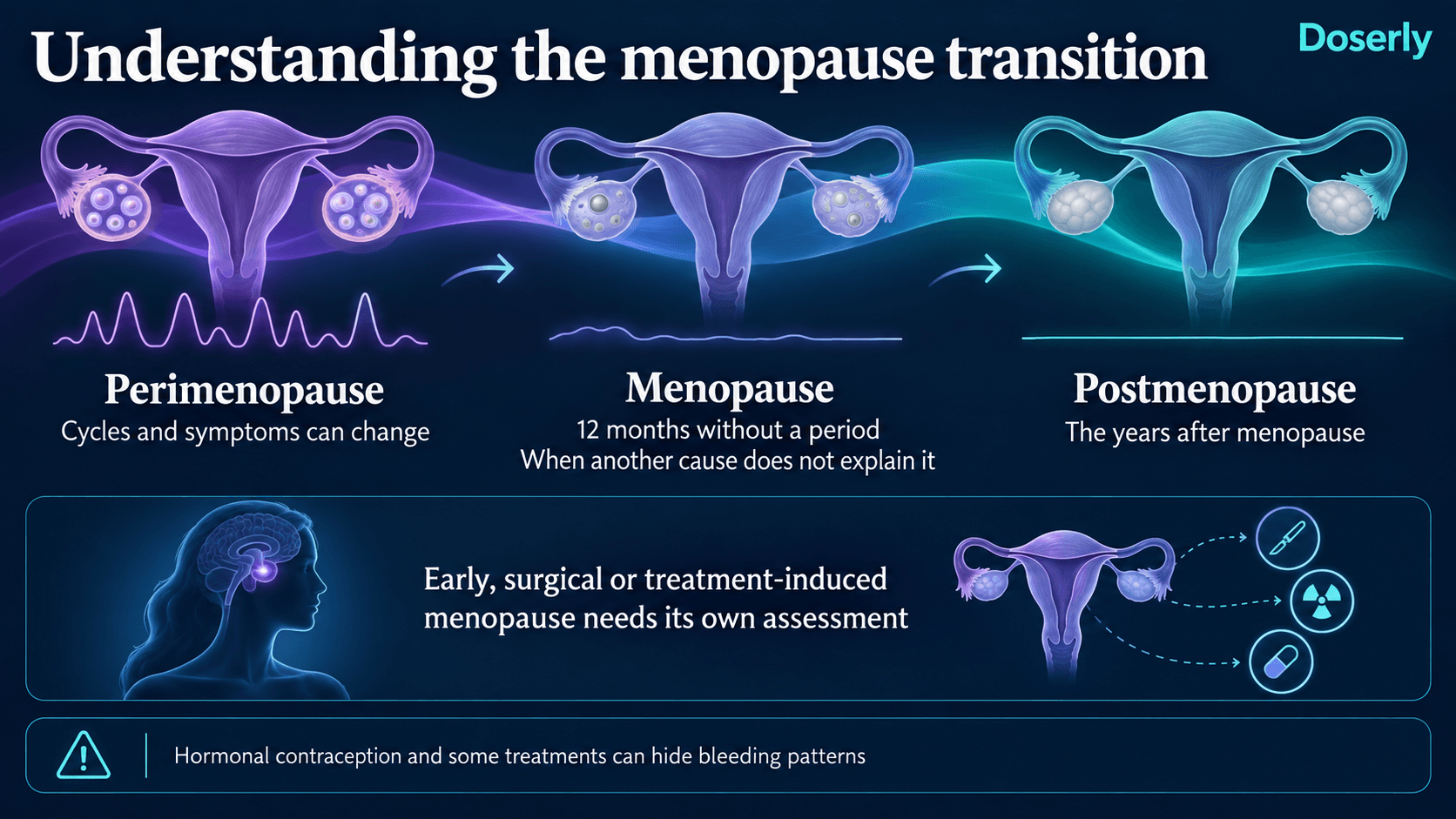
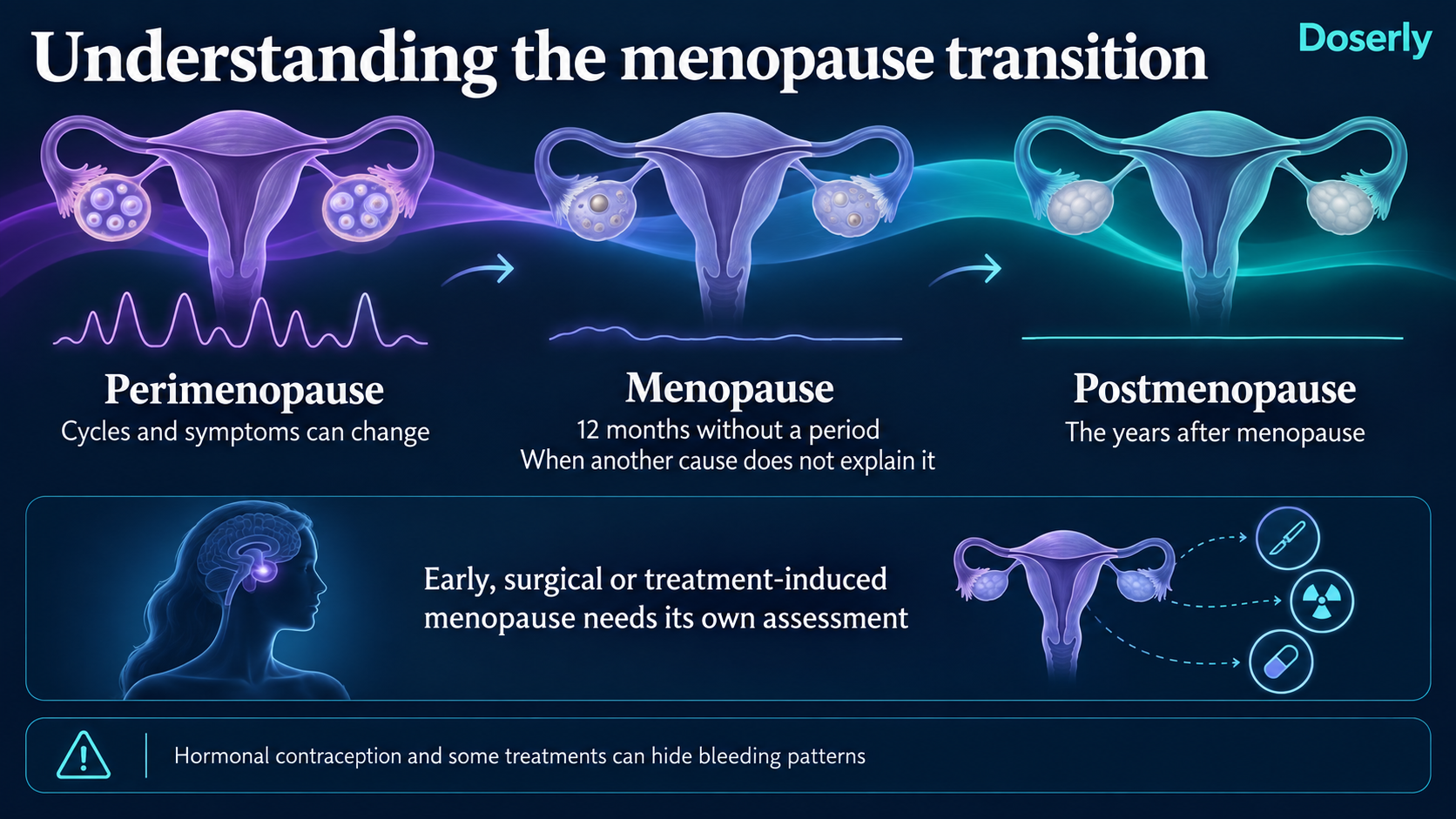
The timeline is conceptual, not a hormone-level graph. The 12-month definition applies when bleeding patterns can be interpreted and no other cause explains absent periods. POI, surgery, contraception and cancer treatments require different diagnostic considerations.
NICE menopause recommendations.
Pharmacokinetics / Hormone Physiology
The Basics
Before surgical menopause, your ovaries are the primary source of estradiol, the most potent form of estrogen. They produce it in a cyclical pattern that fluctuates throughout the menstrual cycle, ranging from lower levels during menstruation to peak levels around ovulation. This cyclical production is coordinated by a feedback loop between your brain (specifically the hypothalamus and pituitary gland) and your ovaries.
After both ovaries are removed, this feedback loop is disrupted entirely. Your brain senses the sudden drop in estrogen and responds by producing large amounts of FSH (follicle-stimulating hormone), essentially signaling the ovaries to work harder. But there are no ovaries to respond. FSH levels remain elevated.
The only remaining source of estrogen in your body is a process called peripheral aromatization, where adrenal androgens are converted to estrone (a weaker form of estrogen) in fat tissue. This produces much lower levels than your ovaries did, and estrone is roughly one-tenth as potent as estradiol.
This is why hormone therapy after surgical menopause often requires higher doses than what women going through natural menopause may need, at least initially. Your body has gone from full ovarian production to essentially nothing, and HRT needs to bridge that gap to support symptom control, bone health, and quality of life while clinicians also manage cardiovascular and cognitive risk factors directly.
The Science
In the premenopausal state, the ovaries produce approximately 70-500 micrograms of estradiol per day, varying with cycle phase (follicular vs luteal). Daily production of progesterone ranges from 1-2 mg in the follicular phase to 10-35 mg in the luteal phase. The ovaries also contribute approximately 25% of circulating testosterone and 50% of androstenedione [10].
Post-oophorectomy, endogenous estrogen production is limited to peripheral aromatization of adrenal androgens. The aromatase enzyme (CYP19A1) in adipose tissue, muscle, bone, and brain converts adrenal androstenedione and testosterone to estrone and estradiol, respectively. However, this peripheral conversion produces estradiol levels consistently below 20 pg/mL, insufficient to maintain premenopausal physiological functions in most tissues [8].
This physiological context informs MHT dosing. The Menopause Society (formerly NAMS) recommends that women with premature or early surgical menopause may require higher initial doses of systemic estrogen therapy compared with women initiating MHT near the natural age of menopause. Standard-dose transdermal estradiol (0.05 mg/day) achieves steady-state plasma concentrations of approximately 40-60 pg/mL, while higher doses (0.075-0.1 mg/day) may be needed for younger women with surgical menopause to achieve adequate symptom control and tissue protection [12][13].
Research & Clinical Evidence
Cardiovascular Outcomes
The Basics
One of the most important findings in surgical menopause research is the increased risk of heart disease. Your ovaries protect your cardiovascular system in ways that extend beyond what most people realize. When they are removed before natural menopause, this protection is lost abruptly.
Multiple large studies have demonstrated that bilateral oophorectomy before the natural age of menopause increases the risk of coronary heart disease. A 2024 study estimated that underuse of estrogen therapy after surgical menopause results in an additional 658 coronary heart disease cases and 881 stroke cases per cohort of women followed for 25 years after surgery [14]. Hormone therapy appears to substantially reduce this excess cardiovascular risk when started promptly after surgery.
The Science
The Nurses' Health Study (n>120,000) demonstrated that bilateral oophorectomy before age 45 was associated with increased coronary heart disease mortality, an effect partially mitigated by estrogen therapy [5]. The BMJ population cohort (Cusimano et al., 2021; n>200,000) confirmed increased all-cause mortality with BSO in women under 50 (HR 1.31, 95% CI 1.18-1.45 for women under 45) [7].
Ferris et al. (2024) developed Bayesian Markov models estimating that by 25 years after BSO with hysterectomy in women aged 45-49, underuse of estrogen therapy was associated with 658 additional coronary heart disease cases (95% CI 339-1025) and 380 additional coronary heart disease deaths (95% CI 114-792) per cohort [14].
However, the HARMOny study (2025, n=740) found that premenopausal risk-reducing salpingo-oophorectomy was not associated with long-term coronary artery calcification in women studied approximately 18 years post-surgery, suggesting that with appropriate management (including HRT), long-term cardiovascular outcomes may be more favorable than initial observational data suggested [15].
Bone Health
The Basics
Bone density begins declining after surgical menopause at an accelerated rate. Without estrogen, the balance between bone-building and bone-breakdown cells shifts dramatically toward breakdown. Women who undergo oophorectomy before age 46 have nearly three times the risk of bone fractures compared to women who retain their ovaries, based on a Mayo Clinic study following women for more than 20 years.
Hormone therapy is one of the most effective strategies for protecting bone after surgical menopause and is specifically indicated for this purpose.
The Science
Mielke et al. (2023) followed 274 women with premenopausal bilateral oophorectomy for a median of 22 years and found significantly increased odds of bone fractures (OR 2.86, 95% CI 1.17-6.98) in women with oophorectomy before age 46 compared with referents [11]. The HARMOny study (2025) confirmed that premenopausal RRSO was associated with significantly lower bone mineral density (BMD) Z-scores compared with postmenopausal RRSO, approximately 18 years after surgery [16].
Cognitive and Neurological Effects
The Basics
The relationship between surgical menopause and cognitive health is an area of active research. Some studies have found associations between early oophorectomy and increased risk of cognitive decline or parkinsonism, while more recent data, including from the HARMOny study, have not found significant differences in objective cognitive function in long-term follow-up. What is clear is that many women report brain fog and memory difficulties in the period immediately following surgery, and these symptoms typically improve with hormone therapy.
The Science
Rocca et al. (2018) documented associations between premenopausal bilateral oophorectomy and increased risk of parkinsonism and cognitive impairment, with effects partially modifiable by estrogen therapy [4]. However, the HARMOny study (2025) found no association between premenopausal RRSO and long-term objective cognitive function at approximately 18-year follow-up [15]. The Mielke et al. (2023) Mayo study similarly found no significant differences in cognitive status between women with premenopausal bilateral oophorectomy and referents at a median 22-year follow-up [11].
Mortality
The Basics
Several large studies have examined whether surgical menopause affects overall life expectancy. The evidence shows that bilateral oophorectomy before the natural age of menopause is associated with increased overall mortality, primarily driven by cardiovascular disease. This increased risk appears to be most significant in women who do not receive hormone therapy after surgery.
The Science
The BMJ cohort study (Cusimano et al., 2021) found increased all-cause mortality with BSO in women under 50 years (HR 1.31, 95% CI 1.18-1.45 for women under 45) but not in women 50 or older. The Nurses' Health Study confirmed that while BSO reduces breast and ovarian cancer mortality, it is associated with increased all-cause mortality due to excess cardiovascular and other causes [5][7].
Benefits & Therapeutic Effects
The Basics
Hormone therapy after surgical menopause is not merely about managing hot flashes; it addresses a fundamental hormonal deficit. When your ovaries are removed before the natural age of menopause, your body loses hormones it was designed to have for years or decades longer. Replacing those hormones has benefits that extend across virtually every body system.
The most immediate benefit is relief from vasomotor symptoms. Hot flashes and night sweats typically begin within days of surgery and can be severe. Most women notice significant improvement within two to four weeks of starting hormone therapy. For many, symptoms resolve entirely.
Beyond symptom relief, hormone therapy after surgical menopause can support bone health and quality of life for people who lose ovarian hormones before the usual age of menopause. Cardiovascular and cognitive outcomes should be discussed cautiously and managed with direct attention to standard risk factors, sleep, mood, vascular risk, and neurologic symptoms.
Quality of life improvements are consistently reported: better sleep, more stable mood, improved energy, and sustained sexual function when adequate estrogen (and sometimes testosterone) is provided. Many women describe feeling "like themselves again" once their hormone therapy is optimized.
The Science
The Menopause Society (formerly NAMS) recommends systemic hormone therapy for women with premature or early surgical menopause even in the absence of bothersome symptoms, citing Level II evidence for long-term health protection [12]. Observational data suggest that HRT mitigates the increased risks of coronary heart disease, osteoporosis, and possibly cognitive decline associated with premature estrogen deprivation [4][5].
In the WHI estrogen-alone arm (women with prior hysterectomy, mean age 63), conjugated equine estrogen was associated with a non-significant reduction in breast cancer incidence (HR 0.77, 95% CI 0.59-1.01) over 7.2 years [17]. While the WHI population was older than typical surgical menopause patients, these data support the safety of estrogen-only therapy in women without a uterus.
Risks, Side Effects & Safety
The Basics
Any medication, including hormone therapy, carries potential risks. Understanding these risks in the specific context of surgical menopause is important because the risk-benefit calculation is different for younger women with premature estrogen deprivation compared with older women starting HRT near the natural age of menopause.
Common side effects when starting HRT include breast tenderness, bloating, headaches, and mood changes. These are usually temporary and improve within the first few months. If a progestogen is part of your regimen (because you retained your uterus), breakthrough bleeding or spotting may occur initially.
The serious risks that receive the most attention are blood clots, stroke, and breast cancer. For women with surgical menopause, the context matters enormously. Most of the alarming statistics that circulated after the WHI study came from a population of women with an average age of 63, many of whom had not used hormones for over a decade since menopause. This is a fundamentally different situation from a 40-year-old woman replacing hormones lost to surgery.
The route of hormone delivery also matters. Transdermal estrogen (patches, gels, sprays) bypasses the liver and has a lower observed clot-risk signal than oral estrogen. For women with additional clot risk factors (obesity, smoking, personal or family history of blood clots), the transdermal route is often preferred after individual review.
The Science
Venous thromboembolism (VTE): Oral estrogen increases VTE risk through first-pass hepatic stimulation of clotting factor synthesis. The WHI reported an HR of 2.06 (95% CI 1.57-2.70) for VTE with oral CEE, corresponding to approximately 18 additional events per 10,000 women per year. Transdermal estrogen bypasses first-pass hepatic metabolism, and observational studies show a lower VTE signal than with oral estrogen. The ESTHER study reported an adjusted OR of 0.9 (95% CI 0.4-2.1) for transdermal estrogen [18]. For surgical menopause patients, particularly younger women, transdermal delivery is often preferred to reduce route-related clot risk after individualized review.
Breast cancer: In the context of surgical menopause, most women (those who have also had a hysterectomy) use estrogen-only therapy. The WHI estrogen-alone arm found no increase in breast cancer incidence during the trial period and showed a non-significant trend toward reduction (HR 0.77, 95% CI 0.59-1.01) [17]. For women with an intact uterus who require combined estrogen-progestogen therapy, the type of progestogen matters. The E3N French cohort study (n=80,377) found no significant increase in breast cancer risk with estrogen plus micronized progesterone (HR 1.00, 95% CI 0.83-1.22), whereas estrogen plus synthetic progestins showed a significant increase (HR 1.69, 95% CI 1.50-1.91) [19].
Cardiovascular risk: For women with surgical menopause before age 45, the cardiovascular risk of NOT taking HRT substantially exceeds the risks associated with HRT. The timing hypothesis data from KEEPS, ELITE, and WHI age subgroup analyses consistently show favorable cardiovascular profiles when HRT is initiated in younger women close to menopause onset [20].
Contraindications: Active breast cancer, active VTE or PE, active liver disease, undiagnosed vaginal bleeding, known thrombophilia (relative; transdermal estrogen may still be considered).
Dosing & Treatment Protocols
The Basics
Hormone therapy after surgical menopause often requires different approaches compared with treatment for natural menopause. Because the hormone loss is abrupt and complete, many women need higher starting doses, at least initially. Working with a knowledgeable provider to find the right type, dose, and route of hormone therapy is essential.
If your uterus was removed along with your ovaries, you will typically need only estrogen therapy. If your uterus remains intact, you will also need a progestogen to protect the endometrium from the effects of unopposed estrogen.
Estrogen can be delivered through several routes: transdermal patches (applied to the skin, changed once or twice weekly), gels or sprays (applied daily), oral tablets, or a vaginal ring that delivers systemic levels. Transdermal delivery is generally preferred because it avoids the liver's first-pass effect, which reduces the risk of blood clots and avoids changes in liver-produced proteins.
The goal is to find the lowest effective dose that relieves symptoms and provides tissue protection. However, for younger women with surgical menopause, "lowest effective dose" may be higher than what is typical for women going through natural menopause in their early 50s.
The Science
Kaunitz et al. (2021) provided recommended dosing for surgically menopausal women [13]:
Estrogen (Standard and Higher Doses):
Formulation
Oral micronized 17-beta-estradiol
- Standard Dose
- 0.5-1 mg/d
- Higher Dose (if standard inadequate)
- 2 mg/d
Formulation
Oral conjugated estrogens
- Standard Dose
- 0.625 mg/d
- Higher Dose (if standard inadequate)
- 0.9-1.25 mg/d
Formulation
Transdermal 17-beta-estradiol patch
- Standard Dose
- 0.0375-0.05 mg/d
- Higher Dose (if standard inadequate)
- 0.075-0.1 mg/d
Formulation
Vaginal ring (systemic)
- Standard Dose
- 0.05 mg/d
- Higher Dose (if standard inadequate)
- 0.1 mg/d
Progestogen (when uterus is intact):
Formulation
Oral micronized progesterone
- Standard Dose
- 100-200 mg/d
- Higher Dose
- ≥200 mg
Formulation
Oral medroxyprogesterone acetate
- Standard Dose
- 2.5-5 mg/d
- Higher Dose
- 10-20 mg/d
Formulation
Levonorgestrel IUD (52 mg)
- Standard Dose
- Standard device
- Higher Dose
- Sufficient for higher estrogen doses
The Menopause Society recommends that MHT should continue at least until age 52 (the average age of natural menopause) in women with premature or early surgical menopause, even without symptoms (Level II evidence). Beyond age 52, continuation should be based on individualized risk-benefit assessment through shared decision-making [12][13].
Testosterone supplementation may be considered for women with persistent low libido, fatigue, or reduced wellbeing despite adequate estrogen therapy. No testosterone formulations are FDA-approved for women, but off-label use of testosterone patches, gels, or compounded formulations is common clinical practice [2].
What to Expect (Timeline)
Days 1-7 after surgery: Most women focus on surgical recovery during the first week. Hormone symptoms may begin as early as day 2-3 post-operatively. Some women describe feeling flushed, warm, or anxious within the first few days. If HRT is initiated immediately (ideally the same day or within the first week of surgery), early symptoms may be minimal. Without HRT, hot flashes, night sweats, and mood changes typically escalate rapidly.
Weeks 2-4: If HRT was started, most women begin noticing improvement in hot flashes and night sweats during this period. Sleep quality often improves. Without HRT, this is when symptoms frequently become most disruptive, with multiple daily hot flashes, drenching night sweats, significant sleep disruption, and mood lability. Some women describe this as the most challenging period.
Months 1-3: With appropriate HRT, vasomotor symptoms are typically well-controlled. Energy begins to improve. Mood stabilizes for most women, though some may need dose adjustments. Breast tenderness and bloating (common HRT side effects) usually subside. This is a good time for a follow-up appointment to assess symptom response and consider dose adjustment.
Months 3-6: Most women feel substantially improved with optimized HRT. Joint pain and stiffness often resolve. Sleep quality stabilizes. Cognitive clarity improves. Vaginal health begins responding to estrogen. If libido remains low despite adequate estrogen, this is when testosterone supplementation may be discussed.
Months 6-12 and beyond: Long-term adaptation. Bone density stabilization with HRT. Cardiovascular risk profile improves. Many women describe feeling better than they did in the years before surgery, particularly if they were experiencing perimenopausal symptoms, endometriosis pain, or other gynecological conditions that prompted the surgery.
Important note: Finding the right HRT regimen is not always straightforward. Many women cycle through multiple formulations, doses, or routes before finding what works best for their body. This adjustment process can take weeks to months and requires patience and ongoing communication with a knowledgeable provider.
Timelines in clinical literature describe averages. Your own timeline is what matters. Doserly's trend analysis turns your daily symptom entries into visual trajectories, showing you how each symptom is progressing over weeks and months of treatment.
The app helps you see patterns that day-to-day experience can obscure, like a gradual improvement in sleep quality that started two weeks after a dose increase, or hot flash frequency dropping steadily even when individual bad days make it feel like nothing has changed. These insights give both you and your provider a clearer picture of treatment response.
Timing Hypothesis & Window of Opportunity
The timing hypothesis, which suggests that HRT initiated within 10 years of menopause onset or before age 60 has a more favorable risk-benefit profile, has particular relevance for surgical menopause. By definition, women undergoing bilateral oophorectomy who begin HRT promptly after surgery are initiating therapy at the time of menopause onset, placing them squarely within the favorable "window of opportunity."
The WHI age subgroup analyses showed that women aged 50-59 who initiated HRT had lower coronary heart disease risk compared with those who began at age 60 or older. The KEEPS trial (2012) and ELITE trial (2016) provided further support that early initiation of estrogen therapy is associated with favorable cardiovascular markers, while late initiation may not confer the same benefits [20].
For surgical menopause patients, this timing data reinforces the importance of starting HRT promptly after surgery rather than waiting. The clinical guidelines from NAMS and the Endocrine Society both recommend initiating HRT at the time of surgical menopause in appropriate candidates, without a "waiting period."
The practical implication is that women who undergo bilateral oophorectomy should discuss HRT before surgery and ideally have a prescription ready to begin in the immediate post-operative period. Delaying HRT by weeks or months means the body spends that time without the protective effects of estrogen on bone, cardiovascular, and neurological health.
Interactions & Compatibility
Drug-Drug Interactions:
- Thyroid medications: Estrogen increases thyroid-binding globulin (TBG), potentially requiring levothyroxine dose adjustment. Monitor TSH 6-8 weeks after starting or changing estrogen therapy
- Anticoagulants: Oral estrogen may affect coagulation factors; monitor INR for warfarin users. Transdermal estrogen has less impact on coagulation
- Lamotrigine: Estrogen significantly reduces lamotrigine levels; monitor and adjust dose accordingly
- CYP3A4 inducers (rifampin, phenytoin, carbamazepine): May reduce estrogen levels; dose adjustment or transdermal route may be needed
Supplement Interactions:
- St. John's Wort: CYP3A4 inducer; may reduce estrogen levels. Avoid concurrent use or adjust HRT dose
- Calcium and Vitamin D: Recommended concurrent supplementation for bone health. No negative interaction with HRT
- Black cohosh: May have mild estrogenic effects; not a substitute for HRT in surgical menopause. Can be used alongside HRT
Lifestyle Factors:
- Smoking: Dramatically increases VTE and cardiovascular risk with oral estrogen. Transdermal route strongly preferred for smokers. Smoking cessation should be prioritized
- Alcohol: Moderate interaction with liver metabolism of oral estrogen. Moderate intake generally acceptable
- Grapefruit: CYP3A4 inhibition may slightly increase oral estrogen levels
Related Guides:
Decision-Making Framework
Making decisions about hormone therapy after surgical menopause should be a collaborative process between you and your healthcare provider. Unlike HRT for natural menopause, where the decision is more nuanced, the clinical evidence for HRT after premenopausal surgical menopause is relatively clear: the benefits of replacing hormones that were lost prematurely generally outweigh the risks for most women without specific contraindications.
Questions to ask your provider before surgery:
- Will I need hormone therapy after my ovaries are removed?
- Can we have a prescription ready to start immediately after surgery?
- What type and route of HRT do you recommend, and why?
- How will we monitor my hormone levels and adjust my dose?
Questions to ask after surgery:
- Is my current dose adequate, or should we consider adjusting?
- Should I consider adding testosterone for persistent fatigue or libido concerns?
- What monitoring schedule do you recommend?
- When should we reassess my HRT plan?
Finding a menopause specialist:
- NAMS Certified Menopause Practitioners: searchable directory at menopause.org
- ISSWSH (International Society for the Study of Women's Sexual Health) for sexual health concerns
- Ask specifically about experience with surgical menopause, not just natural menopause
When your provider is not responsive:
Community forums are filled with accounts of women who were not offered HRT after oophorectomy or were given inadequate doses. If your provider is dismissive of your symptoms or reluctant to prescribe HRT for surgical menopause before age 45, you have every right to seek a second opinion. Current clinical guidelines support HRT in this population.
Shared decision-making works best when both you and your provider have good data. Doserly gives you a personalized health picture that makes treatment discussions more meaningful, your symptoms, their severity, how they have changed over time, and how they connect to your current protocol.
Whether you are evaluating whether to start HRT, considering a switch to a different route, or discussing whether it is time to adjust your dose, having your own tracked data alongside the clinical evidence puts you in a stronger position to make decisions that reflect your individual experience and goals.
Administration & Practical Guide
Transdermal Patches:
- Apply to clean, dry skin on the lower abdomen, upper buttock, or hip. Avoid the waistline and breast area
- Rotate application sites; do not apply to the same spot consecutively
- Change patches according to your prescription schedule (once or twice weekly depending on the brand)
- If a patch falls off, reapply it or apply a new one. Do not apply additional patches
- Patches can be worn during bathing and swimming
Gels and Sprays:
- Apply to clean, dry skin (inner arm, thigh, or as directed)
- Allow to dry completely (2-5 minutes) before dressing
- Avoid skin-to-skin contact with others at the application site until fully absorbed
- Apply sunscreen at least one hour before or after gel application
Oral Tablets:
- Take at the same time each day for consistent blood levels
- Can be taken with or without food (check specific product instructions)
- If a dose is missed, take it as soon as remembered unless it is nearly time for the next dose
Vaginal Products (for local symptoms):
- Vaginal estrogen cream, tablets, or inserts can be used alongside systemic HRT if vaginal symptoms persist
- Follow product-specific instructions for applicator use and insertion
Practical tips from clinical experience:
- Keep a backup patch available when traveling
- Store patches and gels according to product instructions (usually at room temperature)
- If switching routes (e.g., from oral to transdermal), work with your provider on timing to avoid gaps or overlaps
Monitoring & Lab Work
Pre-Surgery Baseline (when oophorectomy is planned):
- Lipid panel
- Hemoglobin A1C
- Blood pressure
- DEXA scan (bone density baseline)
- Mammogram (per age-appropriate screening)
- Thyroid function (TSH)
- Consider baseline cardiovascular risk assessment
Initial Follow-Up (4-12 weeks post-surgery):
- Symptom assessment: vasomotor, mood, sleep, energy, sexual function
- Side effect evaluation
- Blood pressure check
- Dose adjustment consideration based on symptom response
- Hormone level testing is not always necessary if symptoms are well-controlled; if checked, trough estradiol level can guide dose adjustment
Ongoing Monitoring:
- Mammography: Per national guidelines (typically annually from age 40 in the US, every 3 years from age 50 in the UK)
- DEXA scan: Baseline at time of oophorectomy, then every 2-5 years depending on results and risk factors
- Lipid panel: Annually or per cardiovascular risk profile
- Blood pressure: At each visit
- Thyroid function: 6-8 weeks after starting oral estrogen, then annually if on thyroid medication
- Endometrial monitoring: Not needed if uterus was removed; if uterus intact, investigate any unexpected bleeding with transvaginal ultrasound
Annual Review Checklist:
- Reassess symptom control and any new symptoms
- Review current HRT type, dose, and route
- Discuss any concerns about continuing, adjusting, or stopping HRT
- Review cardiovascular risk factors
- Confirm screening tests are up to date (mammogram, DEXA)
- Discuss bone health, cardiovascular health, and cognitive health
Complementary Approaches & Lifestyle
While hormone therapy is the cornerstone of managing surgical menopause, lifestyle approaches provide important complementary benefits. These strategies work alongside HRT, not as replacements for it, particularly in younger women with premature estrogen deprivation.
Exercise:
- Weight-bearing exercise (walking, jogging, dancing, stair climbing): Essential for bone health, recommended at least 150 minutes per week
- Resistance training: Protects bone density and lean muscle mass; aim for 2-3 sessions per week
- Balance training: Reduces fall risk, particularly important as bone density decreases
- Cardiovascular exercise: Supports heart health; especially important given the elevated cardiovascular risk
Nutrition:
- Calcium: 1,000-1,200 mg daily through diet and supplementation
- Vitamin D: 1,000-2,000 IU daily; monitor serum levels
- Mediterranean diet pattern: Associated with cardiovascular and bone health benefits
- Adequate protein: Supports muscle maintenance; particularly important post-surgery
Supplements with evidence:
- Calcium and Vitamin D: See dosing above; essential alongside HRT for bone protection
- Omega-3 fatty acids: May support cardiovascular health and reduce inflammation
- Magnesium: Supports bone health and sleep quality
Sleep Hygiene:
- Maintain consistent sleep schedule
- Keep bedroom cool (important for managing any residual hot flashes)
- Limit caffeine after noon
- Consider micronized progesterone at bedtime if using a progestogen (has mild sedative effect)
Mental Health Support:
- CBT (Cognitive Behavioral Therapy) has evidence for managing vasomotor symptoms and mood changes
- Mindfulness and stress reduction practices
- Support groups and communities (in-person and online) for women with surgical menopause
- Professional counseling if mood changes persist despite adequate HRT
The research is clear that lifestyle factors and HRT work together. But knowing that in general and seeing it in your own data are two different things. Doserly's cross-factor analytics reveal how your exercise, nutrition, sleep, and stress patterns interact with your hormone therapy outcomes.
The app can surface insights you might not connect on your own, like whether your hot flash frequency drops during weeks when you hit your exercise targets, or whether sleep quality improvements correlate with consistent magnesium supplementation alongside your HRT. These personalized patterns help you and your provider build a truly holistic treatment approach.
Stopping HRT / Discontinuation
The question of when and how to stop HRT after surgical menopause is different from the natural menopause context. For women who underwent oophorectomy before the average age of menopause, the current clinical consensus is that HRT should continue at least until age 52 (the average age of natural menopause). This is not elective supplementation; it is replacing hormones the body would have continued producing naturally.
After age 52, the decision to continue, taper, or stop HRT becomes an individualized risk-benefit discussion, similar to the conversation any postmenopausal woman on HRT would have with her provider. Factors to consider include:
- Current symptom burden (many women still have significant symptoms beyond age 52)
- Cardiovascular risk profile
- Bone density status
- Personal and family cancer history
- Quality of life on vs off HRT
Tapering strategies:
- Gradual dose reduction over 3-6 months is generally preferred over abrupt cessation
- Step down in dose increments (e.g., reduce patch strength by one step every 2-3 months)
- Monitor symptoms during each step-down period
- Consider switching to a lower-dose transdermal formulation before stopping completely
Symptom recurrence:
- Approximately 50% of women experience some symptom return when stopping HRT
- Symptoms are typically similar in severity to what was experienced before treatment; they do not usually come back "worse"
- Low-dose vaginal estrogen can continue even after stopping systemic HRT, to maintain genitourinary health
Restarting HRT:
- If symptoms return and significantly affect quality of life, restarting HRT is a reasonable option after reassessing the individual's risk profile
- There is no evidence-based arbitrary age limit or duration limit for HRT use; the decision should always be individualized
Special Populations & Situations
BRCA Carriers After Risk-Reducing Surgery
Women with BRCA1 or BRCA2 pathogenic variants who undergo risk-reducing salpingo-oophorectomy (RRSO) face a unique dilemma: balancing the need for HRT to protect against the adverse effects of premature surgical menopause against concerns about breast cancer risk.
Current NICE NG241 recommends offering HRT until the average age of menopause (around 51) for women who have had RRSO and have not had breast cancer. Available evidence, including the NICE systematic review, suggests that short-term HRT use in BRCA carriers post-RRSO does not significantly increase breast cancer risk above the baseline risk associated with the BRCA variant itself. For women who have also had a mastectomy, the concern is further reduced.
Endometriosis Patients
Women who undergo bilateral oophorectomy for severe endometriosis require careful HRT management. Estrogen-only therapy may reactivate residual endometriotic implants. Many providers add a progestogen to the HRT regimen even when the uterus has been removed, to suppress any residual endometriotic tissue. This practice is common but based on limited evidence; the decision should be individualized.
Women Under 40
Women who undergo bilateral oophorectomy before age 40 have the greatest need for prompt and adequate HRT. The health consequences of prolonged premature estrogen deprivation are more severe in this group. Higher initial HRT doses may be needed, and treatment should continue at minimum until the natural age of menopause (52). The Endocrine Society guidelines specifically recommend full physiological replacement in this population.
Breast Cancer Survivors
Systemic HRT is generally contraindicated after estrogen-receptor-positive breast cancer. For women with surgical menopause who cannot take systemic HRT, non-hormonal alternatives include fezolinetant (Veozah), low-dose SSRIs/SNRIs, gabapentin, and clonidine for vasomotor symptoms. Low-dose vaginal estrogen may be considered with oncology team input for severe genitourinary symptoms, as systemic absorption is minimal.
Cardiovascular Disease History
Transdermal estrogen is preferred for women with cardiovascular risk factors because it avoids the prothrombotic hepatic effects of oral estrogen. The timing of HRT initiation is particularly important: starting HRT promptly after surgical menopause (when blood vessels are healthy) is associated with a more favorable cardiovascular profile than delaying initiation.
Regulatory, Insurance & International
United States (FDA):
U.S. estrogen labeling is in transition and must be checked product by product. FDA requested broad menopausal hormone therapy label revisions in November 2025 and, on February 12, 2026, approved updated prescribing information for six products: Prometrium, Divigel, Cenestin, Enjuvia, Estring, and Bijuva. The update does not mean every systemic estrogen product has the same revised label, and it does not remove the need to discuss clot, stroke, breast, endometrial, and individual contraindication risks. For younger women with surgical menopause, WHI data from older postmenopausal participants should not be applied without context; FDA-approved generic estrogen options remain available, but insurance and prior authorization vary.
United Kingdom (MHRA/NHS):
HRT is available on NHS prescription. The HRT Prepayment Certificate reduces costs for women needing multiple prescriptions. NICE NG23 (last updated April 15, 2026) provides comprehensive guidance on HRT management, including specific considerations for surgical menopause. NICE NG241 addresses HRT after risk-reducing surgery for ovarian cancer risk.
Canada (Health Canada):
Multiple estrogen formulations are approved. Provincial coverage varies; most provinces cover generic formulations. The Society of Obstetricians and Gynaecologists of Canada (SOGC) provides clinical guidance aligned with international recommendations.
Australia (TGA):
HRT products are available through the Pharmaceutical Benefits Scheme (PBS) with appropriate indication. The Australasian Menopause Society provides clinical guidance. Costs are generally manageable with PBS listing.
European Union (EMA):
Availability varies by member state. Most EU countries have access to transdermal and oral estrogen formulations. EMAS (European Menopause and Andropause Society) guidelines support HRT for premature and early menopause.
Frequently Asked Questions
Q: Is surgical menopause the same as regular menopause?
A: Surgical menopause shares many of the same symptoms as natural menopause, but there are important differences. The primary distinction is the speed of hormone loss. Natural menopause involves a gradual decline over several years, allowing the body to partially adapt. Surgical menopause causes hormones to drop abruptly, which typically results in more severe and immediate symptoms. Additionally, surgical menopause involves loss of all ovarian hormones (estrogen, progesterone, and testosterone), while natural menopause involves a more gradual decline with some residual ovarian hormone production continuing for years.
Q: Will I need hormone therapy after having my ovaries removed?
A: Clinical guidelines recommend that hormone therapy should be strongly considered for women who undergo bilateral oophorectomy before the average age of natural menopause (around 51), even if they are not experiencing bothersome symptoms. This is because the long-term health risks of premature estrogen deprivation (including cardiovascular disease, osteoporosis, and possible cognitive effects) are significant. Your healthcare provider can help you weigh the benefits and risks based on your individual health profile.
Q: How soon after surgery should I start HRT?
A: Many experts recommend starting HRT as soon as clinically appropriate after surgery, ideally within the first week. Some providers prescribe HRT to begin the same day as surgery. Delaying HRT means the body spends time without the protective effects of estrogen. Discuss having a prescription ready before your surgery.
Q: Can I use HRT if I had my ovaries removed because of cancer risk (BRCA)?
A: For BRCA carriers who have had risk-reducing surgery and have not had breast cancer, current guidelines (including NICE NG241) recommend offering HRT until the average age of menopause. The available evidence suggests that short-term HRT use in this population does not significantly increase breast cancer risk above the baseline genetic risk. However, this is a decision that should involve your oncology team.
Q: Do I need a progestogen if I had a hysterectomy?
A: If your uterus was removed, you typically only need estrogen therapy. Progestogen is added to protect the uterine lining from the effects of unopposed estrogen. Without a uterus, this protection is not needed. However, if you have a history of endometriosis, your provider may still recommend adding a progestogen to suppress any residual endometriotic tissue.
Q: What about testosterone?
A: Your ovaries produce approximately half of your circulating testosterone. After bilateral oophorectomy, testosterone levels drop significantly. Some women experience persistent fatigue, reduced motivation, and low libido even with adequate estrogen therapy. Testosterone supplementation may help, though no testosterone formulations are currently FDA-approved for women. Discuss this option with your provider if these symptoms persist despite adequate estrogen replacement.
Q: How long should I stay on HRT?
A: For women with premature surgical menopause, HRT is generally recommended to continue at least until age 52 (the average age of natural menopause). After that, the decision to continue should be individualized through shared decision-making with your provider, considering your symptoms, health status, and personal preferences. There is no arbitrary time limit for HRT use.
Q: Will I gain weight after surgical menopause?
A: Weight gain and changes in body fat distribution (particularly increased abdominal fat) are common with menopause, whether natural or surgical. Hormone therapy may help prevent some of these body composition changes. Regular exercise, particularly resistance training, and a balanced diet are important complementary strategies.
Q: Is natural menopause "better" than surgical menopause?
A: From a physiological standpoint, the gradual hormonal transition of natural menopause is easier on the body than the abrupt cessation of surgical menopause. However, surgical menopause is performed for important medical reasons. With appropriate hormone therapy and monitoring, women with surgical menopause can achieve good health outcomes and quality of life.
Q: What if my doctor will not prescribe HRT?
A: If your provider is reluctant to prescribe HRT after bilateral oophorectomy before age 45, consider seeking a second opinion from a menopause specialist (NAMS Certified Menopause Practitioner). Current clinical guidelines from major menopause societies worldwide support HRT in this population. You deserve informed, evidence-based care.
Myth vs. Fact
Myth: "The WHI study proved that HRT is dangerous, so I should not take it after surgical menopause."
Fact: The WHI studied predominantly older women (average age 63) who were over a decade past menopause. These findings do not apply to younger women with surgical menopause who begin HRT promptly. In fact, the WHI estrogen-alone arm (most relevant to women without a uterus) found no increase in breast cancer and suggested possible cardiovascular benefit in younger women. Major menopause societies worldwide recommend HRT for women with premature surgical menopause [12][17].
Myth: "Surgical menopause is the same as natural menopause, just earlier."
Fact: Surgical menopause involves an abrupt, complete cessation of all ovarian hormones, including testosterone. Natural menopause is a gradual transition over years, with the ovaries continuing to produce small amounts of hormones even after periods stop. This qualitative difference means symptoms are typically more severe in surgical menopause, and the long-term health implications of untreated surgical menopause are more significant [2][3].
Myth: "You only need HRT for 5 years maximum."
Fact: The "5-year rule" was never an evidence-based guideline and does not apply to surgical menopause. For women who had their ovaries removed before the natural age of menopause, HRT is replacing hormones the body would have continued producing. Clinical guidelines recommend continuing HRT at least until age 52, with no arbitrary upper time limit [12][13].
Myth: "If I don't have hot flashes, I don't need HRT after oophorectomy."
Fact: Hot flashes are just one manifestation of estrogen deprivation. The Menopause Society recommends HRT for women with premature surgical menopause even without bothersome symptoms, because of the long-term health risks: increased cardiovascular disease, accelerated bone loss, and potential cognitive effects that occur silently over years [12].
Myth: "HRT after surgical menopause will give me breast cancer."
Fact: For women using estrogen-only therapy (the most common regimen after hysterectomy with oophorectomy), the WHI estrogen-alone arm found no increase in breast cancer risk; there was actually a trend toward reduction. For women needing combined therapy, the type of progestogen matters: micronized progesterone shows a more favorable breast cancer profile than synthetic progestins like MPA. Absolute risk remains low: the WHI combined arm found an additional 8 breast cancer cases per 10,000 women per year [17][19].
Myth: "My body will adjust to surgical menopause on its own if I just give it time."
Fact: Unlike natural menopause, where the body has time to partially adapt and where the adrenal glands and adipose tissue provide some compensatory hormone production, surgical menopause removes the primary hormone source completely. Without treatment, the adverse effects on bone, cardiovascular, and potentially cognitive health accumulate over time. The symptoms may lessen with time for some women, but the underlying tissue effects of estrogen deprivation continue [4][5].
Myth: "Compounded bioidentical hormones are always safer and more natural than FDA-approved HRT."
Fact: The term "bioidentical" refers to hormones that are chemically identical to those the body produces. Many FDA-approved products contain bioidentical hormones (e.g., oral and transdermal 17-beta-estradiol, micronized progesterone). Compounded formulations may be appropriate when a specific dose or combination is not commercially available, but they lack the standardized quality testing, consistent potency verification, and regulatory oversight of FDA-approved products [12].
Myth: "Transdermal and oral HRT are equally safe."
Fact: While both routes are effective for symptom relief, transdermal estrogen (patches, gels, sprays) bypasses first-pass liver metabolism and has a lower observed VTE signal than oral estrogen. The ESTHER study found an adjusted OR of 0.9 (95% CI 0.4-2.1) for VTE with transdermal estrogen, while oral estrogen showed significant VTE risk increase. Transdermal delivery is particularly preferred for women with obesity, metabolic syndrome, diabetes, or other VTE risk factors after individualized review [18].
Sources & References
Clinical Guidelines
[1] Suzuki Y, Huang Y, Melamed A, et al. Use of Estrogen Therapy After Surgical Menopause in Women Who Are Premenopausal. Obstet Gynecol. 2022;139(5):756-763. PubMed: 35576334. DOI: 10.1097/AOG.0000000000004762.
[2] Kingsberg SA, Larkin LC, Liu JH. Clinical effects of early or surgical menopause. Obstet Gynecol. 2020;135(4):853-868.
[12] The 2022 Hormone Therapy Position Statement of The North American Menopause Society. Menopause. 2022;29(7):767-794.
Landmark Trials & Key Studies
[5] Parker WH, Feskanich D, Broder MS, et al. Long-term mortality associated with oophorectomy compared with ovarian conservation in the Nurses' Health Study. Obstet Gynecol. 2013;121(4):709-716.
[7] Cusimano MC, Chiu M, Ferguson SE, et al. Association of bilateral salpingo-oophorectomy with all cause and cause specific mortality: population based cohort study. BMJ. 2021;375:e067528. PubMed: 34880044. DOI: 10.1136/bmj-2021-067528.
[17] Anderson GL, Chlebowski RT, Aragaki AK, et al. Conjugated equine oestrogen and breast cancer incidence and mortality in the Women's Health Initiative randomised placebo-controlled trial. Lancet Oncol. 2012;13:476-486.
[20] Hodis HN, Mack WJ, Henderson VW, et al. Vascular effects of early versus late postmenopausal treatment with estradiol (ELITE trial). N Engl J Med. 2016;374:1221-1231.
Systematic Reviews & Observational Studies
[4] Rocca WA, Gazzuola Rocca L, Smith CY, et al. Loss of ovarian hormones and accelerated somatic and mental aging. Physiology (Bethesda). 2018;33(6):374-383.
[11] Mielke MM, Kapoor E, Geske JR, et al. Long-term effects of premenopausal bilateral oophorectomy on physical and cognitive function. Menopause. 2023;30(11):1090-1097.
[14] Ferris JS, et al. Excess morbidity and mortality associated with underuse of estrogen replacement therapy in premenopausal women who undergo surgical menopause. Am J Obstet Gynecol. 2024.
[15] HARMOny Study Group. Long-term outcomes of surgical menopause after risk-reducing salpingo-oophorectomy. 2025. ClinicalTrials.gov NCT03835793.
[16] Beekman MJ, Terra L, Stuursma A, et al. Long-term effects of premenopausal risk-reducing salpingo-oophorectomy on bone mineral density. Osteoporos Int. 2025;36(11):2307-2317. PubMed: 41045325. DOI: 10.1007/s00198-025-07679-8.
[18] Canonico M, Oger E, Plu-Bureau G, et al. Hormone therapy and venous thromboembolism among postmenopausal women: impact of the route of estrogen administration and progestogens: the ESTHER study. Circulation. 2007;115:840-845.
[19] Fournier A, Berrino F, Clavel-Chapelon F. Unequal risks for breast cancer associated with different hormone replacement therapies: results from the E3N cohort study. Breast Cancer Res Treat. 2008;107(1):103-111.
Government / Institutional Sources
[3] StatPearls. Oophorectomy. Updated February 22, 2025. Lawson AA, Rentea RM. StatPearls Publishing.
[6] Rocca WA, et al. Mayo Clinic population-based study on premature and early menopause. Maturitas. Published online 2024.
[8] Peacock K, Carlson K, Ketvertis KM. Menopause. StatPearls. Updated December 21, 2023.
[9] Rance NE, Dacks PA, Mittelman-Smith MA, et al. Modulation of body temperature and LH secretion by hypothalamic KNDy (kisspeptin, neurokinin B and dynorphin) neurons. Brain Res. 2010;1364:116-128.
[10] Davison SL, Bell R, Donath S, et al. Androgen levels in adult females: changes with age, menopause, and oophorectomy. J Clin Endocrinol Metab. 2005;90(7):3847-3853.
[13] Kaunitz AM, Kapoor E, Faubion S. Treatment of Women After Bilateral Salpingo-oophorectomy Performed Prior to Natural Menopause. JAMA. 2021;326(14):1429-1430.
Related Guides & Cross-Links
Same Category (Conditions & Stages)
- Perimenopause
- Menopause
- Post-Menopause
- Premature Ovarian Insufficiency (POI)
- Early Menopause
- Induced Menopause
- Genitourinary Syndrome of Menopause (GSM)
Related Treatment Options
- Estradiol (17B-Estradiol)
- Micronized Progesterone (Prometrium)
- Transdermal HRT (Patches, Gels, Sprays)
- Getting Started with HRT
- Testosterone Therapy for Women
- Non-Hormonal Menopause Treatments