
Premature Ovarian Insufficiency: Diagnosis and HRT
On this page
Quick Reference Card
Attribute
Definition
- Value
- Loss of ovarian function before age 40, characterized by menstrual disturbance and elevated FSH
Attribute
ICD-10 Code
- Value
- E28.3 (Primary ovarian failure)
Attribute
Prevalence
- Value
- 1-3.7% of women (estimates vary by study)
Attribute
Typical Age Range
- Value
- Can occur at any age before 40; most commonly diagnosed in 20s-30s
Attribute
STRAW+10 Relevance
- Value
- POI can occur at any STRAW stage; bypasses the typical menopausal transition
Attribute
Diagnostic Criteria
- Value
- Disordered menstrual cycles for at least 4 months plus one FSH >25 IU/L in women under 40; repeat FSH after 4-6 weeks if diagnostic uncertainty remains
Attribute
First-Line Treatments
- Value
- Hormone replacement therapy (transdermal estradiol + cyclic progesterone) until the average age of natural menopause (~51)
Attribute
Key Biomarkers
- Value
- FSH (elevated, >25 IU/L), estradiol (low), AMH (low, but not diagnostic)
Attribute
When to Seek Medical Help
- Value
- Irregular or absent periods before age 40, menopausal symptoms (hot flashes, night sweats, vaginal dryness) in a young woman, difficulty conceiving
Overview / What Is Premature Ovarian Insufficiency?
The Basics
Premature ovarian insufficiency, or POI, is a condition where the ovaries stop working normally before age 40. This means they produce less estrogen and do not release eggs regularly. If you have been diagnosed with POI, you are not alone, and your experience is valid. Receiving this diagnosis can be deeply unsettling, especially if it comes unexpectedly or after years of being told that nothing is wrong.
POI is not the same as early menopause, even though the two terms are sometimes used interchangeably. In menopause, the ovaries have permanently stopped functioning. In POI, ovarian function can fluctuate. Some women with POI still have occasional periods, and a small number (around 5-15%) may even conceive naturally. The condition was previously called "premature ovarian failure," but that term has been replaced because it does not accurately reflect the variability of the condition.
The effects of POI extend well beyond fertility. Estrogen influences your bones, heart, brain, mood, sleep, skin, and urogenital tissues. When estrogen levels drop prematurely, these systems lose the protection that estrogen normally provides. This is why hormone replacement therapy is recommended for women with POI, not merely to relieve symptoms, but to protect long-term health. In this context, HRT is more accurately described as physiological hormone replacement, restoring what the body should be producing at this age.
The emotional impact of a POI diagnosis can be profound. Many women describe feelings of grief, isolation, and frustration. If you are experiencing these feelings, they are a normal response to a significant life change. Support from healthcare providers, counsellors, and peer communities can make a meaningful difference.
The Science
Premature ovarian insufficiency is a clinical condition characterized by loss of ovarian activity before age 40 years. The 2024 international guideline defines diagnosis as disordered menstrual cycles for at least four months plus an elevated FSH concentration above 25 IU/L; FSH should be repeated after 4-6 weeks if diagnostic uncertainty remains [1]. The condition encompasses a spectrum of ovarian dysfunction, from intermittent ovarian activity to complete cessation of function.
The 2024 ESHRE guideline, developed in collaboration with ASRM, IMS, and CRE-WHiRL, provides the most comprehensive evidence-based framework for POI management, containing 40 key questions with 145 recommendations [1]. This guideline replaced the 2016 version and reflects substantial advances in understanding the epidemiology, genetics, and management of POI.
Epidemiological estimates of POI prevalence have increased over time. The traditional estimate of approximately 1% of women under 40 [2] has been revised upward by recent meta-analyses. A 2022 systematic review and meta-analysis estimated the global prevalence at 3.5%, with higher rates associated with iatrogenic causes (11.2%) and autoimmune etiology (10.5%) [3]. The 2024 ESHRE guideline cites a prevalence of 3.7% [1]. These higher estimates likely reflect improved awareness and diagnosis rather than a true increase in incidence, though environmental factors may also contribute.
POI differs fundamentally from age-appropriate menopause. In POI, residual primordial follicles may still be present, and intermittent ovarian activity is common. This distinguishes POI from menopause, where follicular exhaustion is complete and irreversible [2]. The clinical implications are significant: spontaneous ovulation and natural conception remain possible in a subset of women with POI, and the long-term health consequences of premature estrogen deprivation are more severe due to the longer duration of deficiency.
Medical / Chemical Identity
Property
Condition Name
- Value
- Premature Ovarian Insufficiency (POI)
Property
Previous Terminology
- Value
- Premature Ovarian Failure (POF), Primary Ovarian Insufficiency
Property
ICD-10 Code
- Value
- E28.3 (Primary ovarian failure)
Property
Diagnostic Standard
- Value
- ESHRE 2024 Guideline (145 recommendations, 40 key questions)
Property
Diagnostic Criteria
- Value
- Disordered cycles for 4+ months plus FSH >25 IU/L in women <40; repeat FSH after 4-6 weeks if uncertainty remains
Property
Age Threshold
- Value
- Before 40 years of age
Property
Related Conditions
- Value
- Early menopause (ages 40-45), Turner syndrome, Fragile X premutation, autoimmune polyendocrine syndromes
Property
Key Endorsing Organizations
- Value
- ESHRE, ASRM, IMS, NAMS, ACOG (Committee Opinion No. 698), Endocrine Society, NICE, BMS
Mechanism of Action / Pathophysiology
The Basics
Your ovaries serve as both an egg reservoir and a hormone production center. Before you were born, your ovaries contained their peak number of eggs (around 6-7 million at 20 weeks of gestation). By the time you reached puberty, that number had already declined to roughly 300,000-400,000. Throughout your reproductive years, you use about 400-500 eggs through ovulation, while the rest gradually diminish through a natural process called atresia.
In POI, this process is disrupted. Either the eggs run out much earlier than expected (follicular depletion) or the eggs are present but do not respond normally to the hormones that should stimulate them (follicular dysfunction). In most cases, no clear cause can be identified, and the condition is described as idiopathic.
When the ovaries stop functioning, several things happen simultaneously. Estrogen production drops, which affects your thermoregulatory center (causing hot flashes), your bones (accelerating bone loss), your cardiovascular system (removing a layer of protection), your brain (affecting mood, cognition, and sleep), and your urogenital tissues (causing dryness and atrophy). FSH levels rise as the pituitary gland tries harder to stimulate the ovaries, but the ovaries cannot respond adequately.
One important distinction from typical menopause is that POI can fluctuate. The ovaries may intermittently produce estrogen and even release eggs unpredictably. This is why women with POI can sometimes conceive naturally, and why the old term "ovarian failure" was misleading.
The Science
The pathophysiology of POI is incompletely understood and likely heterogeneous. Two primary mechanisms are recognized: follicular depletion (accelerated loss of the primordial follicle pool) and follicular dysfunction (impaired response of existing follicles to gonadotropin stimulation) [2][4].
Oocyte development begins in utero, with peak numbers (6-7 million) at approximately 20 weeks of gestation. By birth, approximately 1-2 million remain; by puberty, 300,000-400,000. Only 400-500 are ovulated during a typical reproductive lifespan, with the remainder lost through atresia [2][4]. In POI, this timeline is dramatically compressed.
The etiology of POI is identified in only approximately 10% of cases [2]. Known causes include:
Genetic factors: Turner syndrome (45,X) causes early oocyte apoptosis and accelerated depletion. Fragile X premutation (FMR1 gene, 55-199 CGG repeats) significantly increases POI risk, with the highest risk at 80-100 repeats. Over 100 genes have been implicated in POI, though specific gene testing is not universally available [1][4].
Autoimmune mechanisms: Autoimmune disorders are more frequent in women with POI. Addison disease and autoimmune polyglandular syndrome are the most clinically significant associations. 21-hydroxylase antibodies have the highest diagnostic accuracy for autoimmune POI [1]. Thyroid autoimmunity (14-27% of POI cases), type 1 diabetes mellitus (2%), and myasthenia gravis (2%) are also associated [4].
Iatrogenic causes: Bilateral oophorectomy, chemotherapy (particularly alkylating agents and anthracyclines), and pelvic radiation can destroy healthy ovarian tissue. In children treated for malignancy, approximately 8% develop POI by age 18; with radiation plus alkylating agents, the risk rises to 30% [4].
Environmental factors: Smoking activates proapoptotic genes in ovarian granulosa cells and inhibits aromatase, decreasing circulating estradiol. Phthalates and bisphenol-A may also contribute through unclear mechanisms [4].
Visual guide
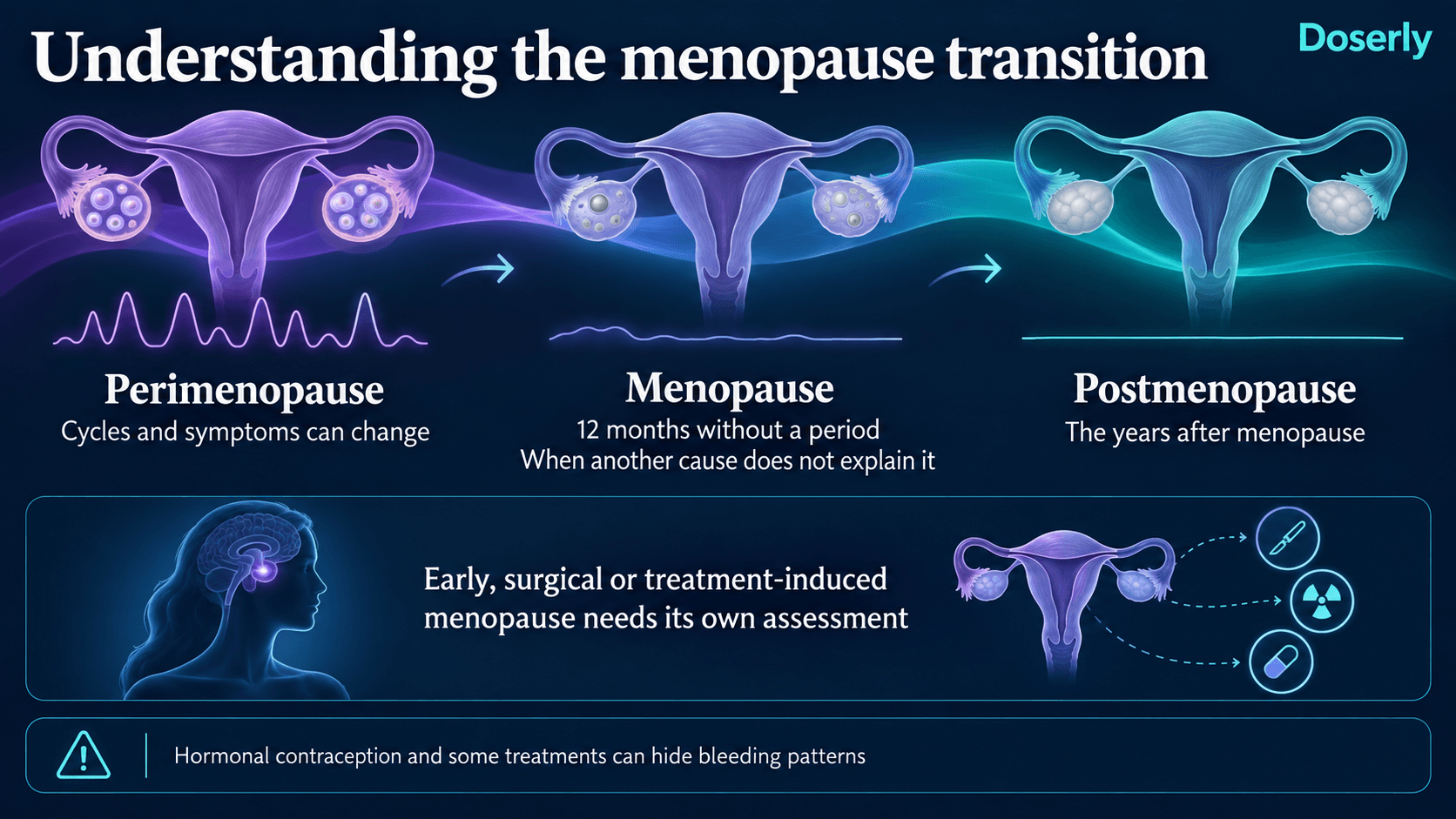
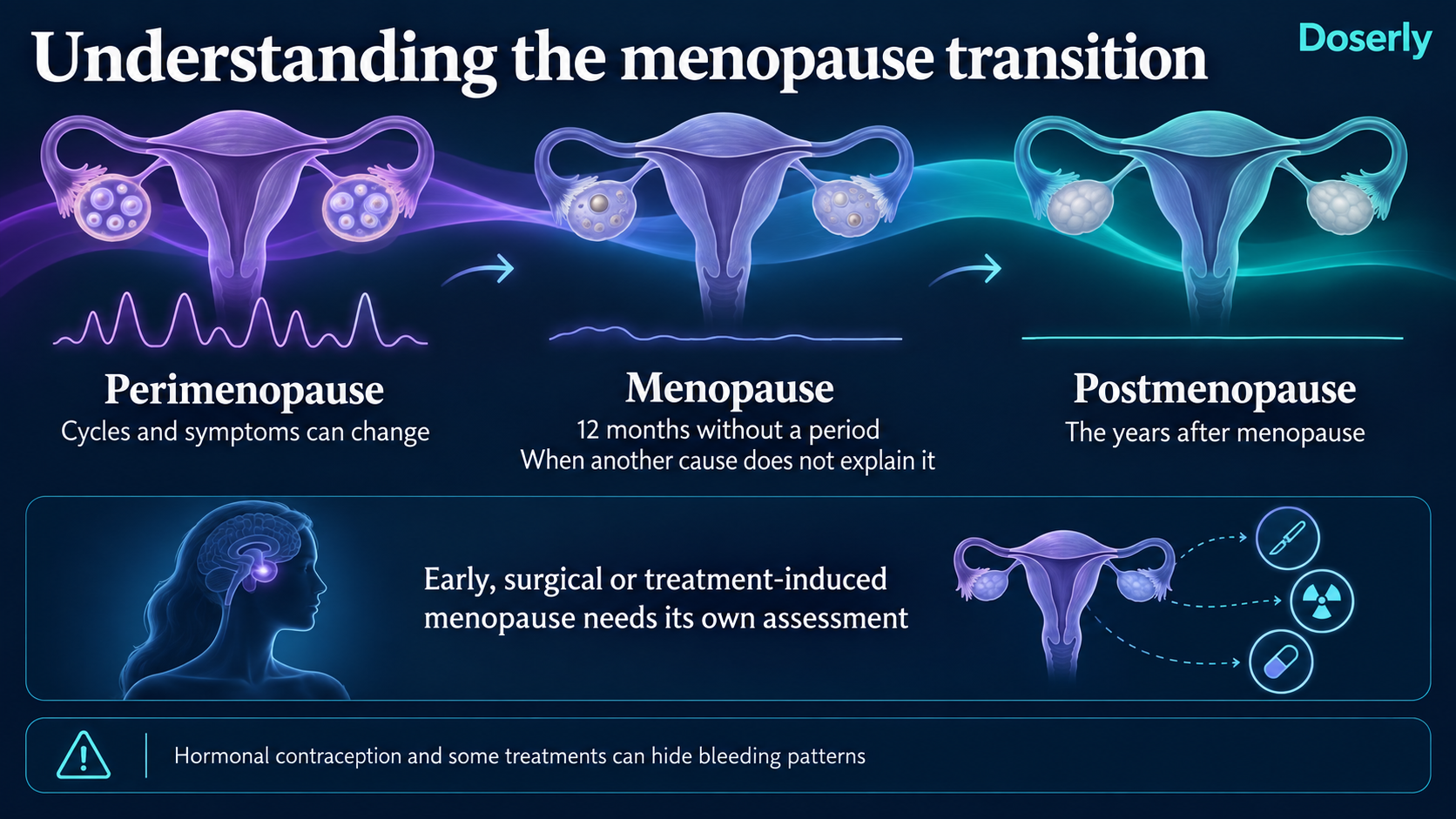
The timeline is conceptual, not a hormone-level graph. The 12-month definition applies when bleeding patterns can be interpreted and no other cause explains absent periods. POI, surgery, contraception and cancer treatments require different diagnostic considerations.
NICE menopause recommendations.
Pharmacokinetics / Hormone Physiology
The Basics
In a woman with normally functioning ovaries, the body produces estrogen in a cyclical pattern throughout each menstrual cycle. Estrogen levels rise in the first half of the cycle, peak around ovulation, and then give way to progesterone in the second half. This rhythm supports bone health, cardiovascular function, brain function, and the health of vaginal and urinary tissues.
When POI disrupts this pattern, the goal of hormone replacement is to restore estrogen levels to what a premenopausal woman would normally have (approximately 100 pg/mL of estradiol). This is fundamentally different from HRT in age-appropriate menopause, where the goal is to provide the minimum effective dose to relieve symptoms.
The way estrogen is delivered matters. Transdermal delivery (patches, gels, sprays) is generally preferred because it bypasses the liver, avoiding the increases in clotting factors and other proteins that can occur with oral estrogen. This is particularly relevant for younger women who may be on HRT for decades. The 2024 ESHRE guideline specifically notes that transdermal estradiol produces more physiological estrogen concentrations.
Importantly, POI often requires higher doses than standard menopause HRT. While typical menopause doses might be 25-50 mcg of transdermal estradiol, POI doses are often 75-100 mcg or more. This is because the goal is to replicate premenopausal physiology, not merely to relieve symptoms.
The Science
Hormone replacement in POI aims to achieve physiological estradiol levels comparable to premenopausal women (approximately 100 pg/mL). The 2024 ESHRE guideline provides specific dosing recommendations that distinguish "standard" menopause doses from higher "POI" doses [1]:
Transdermal estradiol: Standard 25-50 mcg/24h; POI dose 75-100 mcg/24h
Gel estradiol: Standard 0.5-1.0 mg/day; POI dose 1.5-2.0 mg/day
Oral estradiol: Standard 1.0-2.0 mg/day; POI dose 2.0-4.0 mg/day
Transdermal administration avoids first-pass hepatic metabolism, maintaining a physiological estradiol-to-estrone (E2:E1) ratio of approximately 1:1, compared to the 1:4-5 ratio seen with oral administration. This route does not significantly increase hepatic synthesis of coagulation factors, which is the basis for the lower venous thromboembolism risk compared to oral estrogen [4].
Progestogen is required for women with an intact uterus to prevent endometrial hyperplasia. Options include micronized progesterone (100-200 mg standard; 300-400 mg POI dose), dydrogesterone (10 mg standard; 20 mg POI), and MPA (5 mg standard; 10 mg POI) [1].
The combined oral contraceptive pill is an alternative but has limitations in POI: it does not provide continuous estrogen (typical regimens include 7 days of placebo per cycle), the estrogen dose may be inadequate for bone protection (particularly formulations containing only 20 mcg ethinyl estradiol or 1.5 mg estradiol), and it carries higher VTE risk than transdermal HRT [1][4]. The ESHRE guideline strongly recommends continuous or extended COC regimens if this route is chosen, to avoid cyclical estrogen deprivation [1].
Research & Clinical Evidence
The Basics
The understanding of POI has advanced significantly in recent years, driven by large-scale studies and the development of international guidelines. The 2024 ESHRE guideline represents the most comprehensive evidence review to date, developed by a collaboration of four international organizations (ESHRE, ASRM, IMS, and CRE-WHiRL) with input from women with lived experience.
Research consistently shows that untreated POI leads to serious long-term health consequences. Women with POI who do not receive HRT have increased risks of cardiovascular disease (the leading cause of reduced life expectancy), osteoporosis and fractures, cognitive decline and dementia, Parkinson's disease, and overall reduced life expectancy. These findings are consistent across multiple study designs and populations.
One of the most important findings for women with POI is that HRT in this context does not carry the same risk profile as HRT in older menopausal women. The WHI study, which raised concerns about HRT risks, enrolled women with an average age of 63, well beyond the typical POI population. For women with POI who are replacing hormones their bodies should be producing, the benefit-risk balance is strongly favorable.
The evidence also shows that HRT is often underused in POI. A 2026 retrospective chart review from three tertiary hospitals in Saudi Arabia screened 255,204 eligible patients, identified 1,132 POI cases among those tested, and found that only 35.6% of women with POI received hormone therapy. The study points to practice gaps, systemic barriers, limited local guidance, and clinician training needs; it should not be treated as a worldwide utilization estimate [13].
The Science
2024 ESHRE Guideline on POI Management: The most authoritative POI-specific guideline, containing 145 recommendations across 40 key questions. Key findings include: hormone therapy is recommended until the usual age of menopause for primary prevention to reduce morbidity and mortality, whether symptoms are present or not (STRONG recommendation); no evidence that HT increases breast cancer risk in POI compared to same-age women without POI (CONDITIONAL recommendation); transdermal estradiol produces more physiological estrogen concentrations; and POI-specific doses are typically higher than standard menopause doses [1].
NAMS 2022 Hormone Therapy Position Statement: Specifically addresses POI, noting that women with primary ovarian insufficiency and premature or early menopause have higher risks of bone loss, heart disease, and cognitive or affective disorders. Recommends HT until at least the mean age of menopause unless contraindicated [5].
ACOG Committee Opinion No. 698 (2017): Addresses hormone therapy specifically in primary ovarian insufficiency, endorsing HRT as standard of care [6].
Cardiovascular outcomes meta-analysis (2024): A systematic review and meta-analysis of 16 studies involving 40,549 women with POI found that the pooled adjusted hazard ratio for composite cardiovascular events was 1.35 (95% CI: 1.06-1.63) and for coronary heart disease was 1.42 (95% CI: 1.17-1.66) compared to women with menopause at age 50-54 [7].
Bone health evidence: POI is associated with decreased bone mineral density attributed to inadequate peak bone mass accrual and hypoestrogenism. HRT has been shown to improve lumbar spine BMD (1.088 to 1.109, p < 0.001) compared to pre-treatment levels. BMS guidelines recommend HRT as first-line for bone protection in POI [8].
Metabolic profile: A meta-analysis of 21 studies found that POI patients have significantly higher waist circumference, total cholesterol, LDL, triglycerides, and fasting glucose compared to controls. However, a cross-sectional study found that POI women on HRT had similar cardiometabolic profiles to age-matched controls, with higher HDL levels, suggesting HRT may normalize metabolic risk [9].
Benefits & Therapeutic Effects
The Basics
The benefits of HRT for women with POI are substantial and well-documented. Unlike HRT for age-appropriate menopause, where the primary goal is symptom relief, HRT in POI serves a dual purpose: relieving symptoms and preventing the long-term health consequences of premature estrogen deprivation.
The most immediate benefit most women notice is relief from vasomotor symptoms. Hot flashes and night sweats typically begin to improve within the first few weeks of treatment. Sleep quality often follows, especially when progesterone is taken in the evening (progesterone has a natural sedative effect through its metabolite allopregnanolone).
Beyond symptom relief, HRT protects your bones from the accelerated loss that occurs without estrogen. It supports cardiovascular health by maintaining favorable lipid profiles and protecting blood vessel function. It may protect cognitive function and reduce the risk of dementia and Parkinson's disease associated with early estrogen loss. It maintains the health and elasticity of vaginal and urinary tract tissues. And it can improve mood stability and overall quality of life.
A critical point that bears repeating: for women with POI, HRT is not adding hormones that the body would not otherwise have. It is replacing hormones that the body should be producing at this age. This is why the risk-benefit profile is fundamentally different from HRT in older women.
The Science
The 2024 ESHRE guideline provides a comprehensive assessment of HRT benefits in POI across multiple organ systems [1]:
Life expectancy and morbidity: Non-use of HT in POI is associated with increased cardiovascular events and mortality. The 2024 guideline strongly recommends HT until the usual age of menopause when not contraindicated to reduce morbidity and mortality, while still managing standard cardiovascular risk factors [1].
Skeletal health: HRT maintains bone mineral density and prevents osteoporosis. POI-specific studies demonstrate lumbar spine BMD improvement with treatment. The rate of trabecular bone loss in untreated POI can reach 2-3% per year [1][8].
Cardiovascular health: Estrogen has beneficial cardiometabolic effects including improved lipid profiles (increased HDL, decreased LDL), enhanced endothelial function, and reduced arterial stiffness. A cross-sectional study found POI women on HRT had similar cardiometabolic profiles to age-matched controls with normal ovarian function, including significantly higher HDL levels (56.3 vs 52 mg/dL, p = 0.03) [9].
Neurological function: HRT may protect neurological function even in the absence of menopausal symptoms (ESHRE recommendation). Untreated POI is associated with increased risk of cognitive impairment, dementia, and parkinsonism [1][2].
Breast cancer risk: The ESHRE guideline states that there is no evidence that HT use increases breast cancer risk in women with POI compared to women of the same age without POI (CONDITIONAL recommendation). This is a critical distinction from HRT in older women, where the WHI found a small absolute increase with combined HRT (8 additional cases per 10,000 women per year) [1].
Risks, Side Effects & Safety
The Basics
All medical treatments involve some degree of risk, and HRT is no exception. However, for women with POI, the risk-benefit balance is strongly in favor of treatment. The risks of not taking HRT (accelerated bone loss, increased cardiovascular disease, cognitive decline, reduced life expectancy) are well-documented and significant. The risks of taking HRT in this context are considerably lower than the risks associated with HRT in older menopausal women.
Common side effects when starting HRT include breast tenderness, bloating, headache, mood changes, and breakthrough bleeding. These are typically mild and often settle within the first three months of treatment. If side effects persist, adjusting the dose, route, or type of hormone can usually resolve them.
Regarding serious risks, the landscape is fundamentally different for POI compared to age-appropriate menopause. The WHI trial, which raised concerns about breast cancer, stroke, and blood clots with HRT, enrolled women with an average age of 63. These findings do not directly apply to younger women with POI who are replacing hormones their bodies should be producing. Current guidelines, including the 2024 ESHRE guideline, state that there is no evidence that HRT increases breast cancer risk in women with POI compared to women of the same age without POI.
The route of administration matters for safety. Transdermal estrogen (patches, gels) is often preferred over oral estrogen when clot risk matters because observational data show a lower VTE signal than with oral estrogen, and guidelines favor the transdermal route for people with VTE risk factors. That does not mean the risk is zero; personal VTE history, thrombophilia, migraine with aura, smoking, and other cardiovascular risks still need clinician review. The combined oral contraceptive pill carries a higher VTE risk than transdermal HRT and is contraindicated in women with migraine with aura or a history of VTE.
The Science
Common side effects: Breast tenderness, bloating, headache, mood fluctuations, and breakthrough bleeding occur in a subset of women initiating HRT. These effects typically resolve within 1-3 months and can be managed by dose adjustment or route change.
Venous thromboembolism: Oral estrogen increases VTE risk through first-pass hepatic stimulation of coagulation factor synthesis. In observational data, transdermal estrogen has not shown the same increase seen with oral estrogen; the ESTHER study reported an adjusted OR of 0.9 (95% CI: 0.4-2.1) for transdermal estrogen [10]. The 2024 ESHRE guideline recommends transdermal estrogen for POI patients with VTE risk factors, and notes that COC is contraindicated in women with prior VTE [1].
Breast cancer: The ESHRE 2024 guideline provides a CONDITIONAL recommendation that women with POI can be informed there is no evidence that HT increases their breast cancer risk compared to same-age women without POI [1]. This reflects the understanding that HRT in POI replaces physiological estrogen levels, not supplementing already-adequate levels. For BRCA1/2 carriers after risk-reducing bilateral salpingo-oophorectomy without personal breast cancer history, HRT can be considered, with estrogen-only HRT carrying lower risk than combined estrogen/progestogen [1].
Stroke: Oral HRT may increase stroke risk at standard menopause doses, though absolute risk is very low in young women. Transdermal estrogen is preferred, particularly for women with migraine with aura, who have higher baseline stroke risk [1].
Endometrial safety: Unopposed estrogen increases endometrial cancer risk. Progestogen opposition is mandatory for women with an intact uterus. Adequate progestogen dosing (12-14 days per cycle for sequential regimens) is essential [1].
Contraindications to HRT in POI:
- Active breast cancer (absolute contraindication)
- Hormone-dependent ovarian or uterine tumors
- Active VTE or untreated thrombophilia (transdermal may still be considered after haematology review)
- Undiagnosed vaginal bleeding
- Active liver disease (transdermal preferred)
Safety by comorbidity: The ESHRE guideline provides specific guidance for HRT prescribing in the presence of comorbidities including hypertension, diabetes, obesity, endometriosis, and migraine. In most cases, transdermal estrogen with micronized progesterone or dydrogesterone (TE/MP/DYD) is recommended [1].
Transdermal estrogen has beneficial cardiometabolic effects which can influence cardiovascular disease risk. Non-use of HT is associated with an increased risk of cardiovascular events and mortality. HT is therefore recommended until the usual age of menopause.
Doserly's safety monitoring features help you track side effects, flag potential interactions, and maintain a clear record of your HRT protocol. When you notice changes, whether expected side effects or something unexpected, having documented data makes conversations with your provider more productive and ensures nothing gets overlooked.
The app's medication tracking can alert you to missed doses and help maintain the consistency that is particularly important for transdermal delivery, where steady estrogen levels contribute to both effectiveness and safety.
Dosing & Treatment Protocols
The Basics
Dosing for POI differs from standard menopause HRT in an important way: the goal is to replicate premenopausal hormone levels, not merely to provide the minimum dose that relieves symptoms. This typically means higher doses than what would be prescribed for a woman going through menopause at the expected age.
Your healthcare provider will work with you to find the right combination of hormones and the best delivery route. The general approach includes estrogen (usually transdermal estradiol via patches or gel) plus progesterone (if you have a uterus) taken either cyclically (10-14 days per month, which produces a monthly bleed) or continuously. Some women with POI may also benefit from testosterone supplementation, particularly for low libido.
The treatment is intended to continue until the average age of natural menopause (approximately 50-51 years). At that point, your provider will reassess whether to continue based on your individual risk-benefit profile and current guidelines for age-appropriate menopause management.
If you are considering fertility, your HRT regimen does not prevent the small chance of natural conception. Contraception should be used if pregnancy is not desired. If you are pursuing fertility treatment, your specialist may adjust your hormone protocol accordingly.
The Science
The 2024 ESHRE guideline provides the most detailed POI-specific dosing recommendations available [1]:
Estrogen (POI-specific higher doses):
Route
Transdermal patch (mcg/24h)
- Standard Dose
- 25-50
- POI Dose
- 75-100
Route
Gel sachet (mg/day)
- Standard Dose
- 0.5-1.0
- POI Dose
- 1.5-2.0
Route
Gel pump (metered doses of 0.75 mg)
- Standard Dose
- 1-2 pumps
- POI Dose
- 3-4 pumps
Route
Spray (1.53 mg/spray)
- Standard Dose
- 1-2
- POI Dose
- 3-4
Route
Oral estradiol (mg/day)
- Standard Dose
- 1.0-2.0
- POI Dose
- 2.0-4.0
Progestogen (for women with intact uterus):
Agent
Micronized progesterone
- Standard Dose
- 100-200 mg
- POI Dose
- 300-400 mg
- Schedule
- Sequential: 10-14 days/month
Agent
Dydrogesterone
- Standard Dose
- 10 mg
- POI Dose
- 20 mg
- Schedule
- Sequential: 10-14 days/month
Agent
MPA
- Standard Dose
- 5 mg
- POI Dose
- 10 mg
- Schedule
- Sequential: 10-14 days/month
Agent
Norethisterone acetate
- Standard Dose
- 2.5-5.0 mg
- POI Dose
- 2.5-10 mg
- Schedule
- Sequential: 10-14 days/month
Agent
LNG-IUS
- Standard Dose
- 52 mcg
- POI Dose
- 52 mcg
- Schedule
- Continuous
The treatment target is to achieve circulating estradiol levels of approximately 100 pg/mL, consistent with normal premenopausal physiology [4].
What to Expect (Timeline)
For women with POI starting HRT, the timeline of response typically follows this pattern:
Days 1-7: Adjustment period. You may notice breast tenderness, mild bloating, or spotting. Some women report feeling slightly different but cannot pinpoint what has changed. Hot flashes may not yet improve.
Weeks 2-4: Vasomotor symptoms often begin to improve. Night sweats may lessen before daytime hot flashes. Sleep quality may start to improve, especially if progesterone is taken in the evening. Mood may begin to stabilize.
Months 1-3: Most women notice significant improvement in vasomotor symptoms, mood, and sleep. Energy levels may improve. Vaginal dryness may begin to improve, though this symptom often takes longer to fully resolve. Side effects like breast tenderness typically settle.
Months 3-6: Full therapeutic effect for most symptoms. Genitourinary symptoms continue to improve (additional local estrogen may be needed). Bone density stabilization begins. Mood and cognitive function continue to improve.
Months 6-12: Bone density should be stabilizing or improving. Cardiovascular risk markers normalize. Quality of life improvements are typically well established.
Ongoing (until average age of menopause): Annual review with your provider. Dose adjustment as needed based on symptoms and any changes in health status. Continued monitoring of bone density, cardiovascular risk factors, and psychological wellbeing.
Individual responses vary. Some women feel dramatically better within days; others need several weeks or dose adjustments. If you have not noticed improvement after 3 months, discuss with your provider whether a dose increase or route change may help.
Timelines in clinical literature describe averages. Your own timeline is what matters. Doserly's trend analysis turns your daily symptom entries into visual trajectories, showing you how each symptom is progressing over weeks and months of treatment.
The app helps you see patterns that day-to-day experience can obscure, like a gradual improvement in sleep quality that started two weeks after a dose increase, or hot flash frequency dropping steadily even when individual bad days make it feel like nothing has changed. These insights give both you and your provider a clearer picture of treatment response.
Timing Hypothesis & Window of Opportunity
The timing hypothesis, which proposes that HRT initiated within 10 years of menopause onset or before age 60 has a more favorable risk-benefit profile, has a unique application in POI.
For women with POI, the timing hypothesis is essentially irrelevant as a decision point because HRT initiation is recommended at diagnosis regardless of symptom severity. Women with POI are, by definition, well within the "window of opportunity." They are young, typically without significant cardiovascular disease, and their arteries have not yet developed the atherosclerotic changes that make late HRT initiation potentially problematic.
The key evidence supporting the timing hypothesis comes from studies including KEEPS (which showed benefits of early initiation in recently menopausal women), ELITE (which demonstrated that estradiol reduced atherosclerosis progression in women within 6 years of menopause but not in those 10+ years post-menopause), and WHI age subgroup analyses (which showed more favorable outcomes in women aged 50-59 compared to older age groups).
For POI specifically, the relevant question is not whether to start early (that is settled) but how long to continue. The ESHRE guideline recommends HRT until the usual age of natural menopause. At that point, the standard timing considerations apply for any decision about continuing HRT beyond that age.
Interactions & Compatibility
Drug-drug interactions relevant to POI HRT:
- Thyroid medications: Estrogen increases thyroxine-binding globulin (TBG). Women with hypothyroidism (common autoimmune comorbidity in POI, occurring in 14-27% of cases) may need levothyroxine dose adjustment after starting HRT. Monitor TSH 6-8 weeks after initiating or changing estrogen therapy.
- Anticoagulants: Oral estrogen may affect warfarin metabolism. Transdermal route preferred if anticoagulation is needed.
- SSRIs/SNRIs: May be used concurrently for mood symptoms. No significant pharmacokinetic interactions with HRT, though combined effects on mood should be monitored.
- Anticonvulsants: Lamotrigine levels are significantly reduced by estrogen. Dose adjustment may be needed when starting or stopping HRT. Carbamazepine and phenytoin (CYP3A4 inducers) may reduce estrogen levels.
- CYP3A4 inducers/inhibitors: Rifampin, St. John's Wort (CYP inducers) can reduce estrogen levels. Ketoconazole, grapefruit (CYP inhibitors) can increase levels.
Supplement interactions:
- Calcium and vitamin D: Essential complements to HRT for bone health. Recommended: 1,000 mg calcium/day, 800-1,000 IU vitamin D/day.
- Black cohosh: Sometimes used for VMS; limited evidence of benefit and should not replace HRT in POI.
- St. John's Wort: CYP3A4 inducer that reduces estrogen levels. Avoid concurrent use.
- Phytoestrogen supplements: Very weak estrogenic activity; should not be relied upon as estrogen replacement in POI.
Lifestyle factors:
- Smoking: Dramatically increases cardiovascular risk, accelerates bone loss, and is itself a risk factor for POI. Cessation is strongly recommended.
- Alcohol: Modest interaction with liver metabolism of oral estrogen. Moderate consumption is generally acceptable with transdermal delivery.
Cross-references:
- Estradiol (Bioidentical)
- Micronized Progesterone (Prometrium)
- Perimenopause
- Early Menopause
- Surgical Menopause
Decision-Making Framework
Receiving a POI diagnosis can feel overwhelming, and the decisions that follow may seem daunting. Understanding your options and feeling empowered to participate in treatment decisions can make a significant difference.
Shared decision-making in POI: Unlike age-appropriate menopause where HRT is one option among several, HRT in POI is strongly recommended by all major guidelines as physiological replacement. The decision is less about whether to take HRT and more about which type, route, and dose best suits your needs and circumstances.
Questions to discuss with your provider:
- What caused my POI, and does the cause affect treatment choices?
- Which route of estrogen delivery is best for me (patches, gel, oral)?
- Do I need higher "POI-specific" doses or standard menopause doses?
- How will my bone density and cardiovascular risk be monitored?
- Should I be tested for associated autoimmune conditions (thyroid, adrenal)?
- What are my fertility options, and does HRT affect them?
- Should I consider testosterone supplementation for libido?
- When should I have a bone density scan (DEXA)?
- How often should I have follow-up appointments?
Finding a specialist: POI is optimally managed by clinicians with specific expertise. Consider:
- NAMS Certified Menopause Practitioners (searchable directory at menopause.org)
- Reproductive endocrinologists with POI experience
- Endocrinologists familiar with POI management
- The ESHRE guideline recommends referral to a specialist or multidisciplinary team for women with complex medical histories
Self-advocacy: POI can be missed when symptoms are attributed to stress, weight change, contraception, or normal cycle variation. If your symptoms are being dismissed, you have the right to request appropriate evaluation, seek a second opinion, or ask for referral to a specialist. Younger women presenting with persistent menstrual irregularity deserve investigation, not dismissal.
Shared decision-making works best when both you and your provider have good data. Doserly gives you a personalized health picture that makes treatment discussions more meaningful, including your symptoms, their severity, how they've changed over time, and how they connect to your current protocol.
Whether you're evaluating whether to start HRT, considering a switch to a different route, or discussing whether it's time to adjust your dose, having your own tracked data alongside the clinical evidence puts you in a stronger position to make decisions that reflect your individual experience and goals.
Administration & Practical Guide
Transdermal patches (most commonly prescribed for POI):
- Apply to clean, dry skin on the lower abdomen, hip, or buttock
- Rotate application sites to avoid skin irritation
- Replace according to schedule (typically every 3-4 days for most patches)
- Swimming and bathing are generally fine; press patch firmly after
- If a patch falls off, apply a new one and continue your schedule
- Store at room temperature
Gels and sprays:
- Apply to clean, dry skin on the inner arm, thigh, or abdomen
- Allow to dry fully (typically 2-5 minutes) before dressing
- Avoid skin-to-skin contact with others (especially children) until fully absorbed
- Apply sunscreen after gel has dried if going outdoors
Oral progesterone/progestogen:
- Take at bedtime to leverage progesterone's natural sedative effect
- Take with food to improve absorption (for micronized progesterone)
- Follow sequential or continuous schedule as prescribed
- Do not stop abruptly without medical guidance
Important: These are general educational guidelines. Always follow your prescriber's specific instructions and your pharmacy's guidance for your particular formulation.
Monitoring & Lab Work
At diagnosis:
- FSH >25 IU/L as biochemical confirmation; repeat after 4-6 weeks if diagnosis remains uncertain
- Estradiol
- AMH (supplementary, not diagnostic)
- Karyotype analysis
- FMR1 premutation testing (recommended for all women with POI)
- 21-hydroxylase antibodies (to screen for autoimmune POI/Addison disease)
- Thyroid function (TSH)
- Bone density scan (DEXA) if indicated by risk factors
- Lipid profile and glucose screening
- Cardiovascular risk factor assessment (blood pressure, weight, smoking status)
Initial follow-up (4-12 weeks after starting HRT):
- Symptom assessment
- Side effect evaluation
- Blood pressure
- Dose adjustment consideration
Ongoing monitoring (annually or as clinically indicated):
- Adherence to HRT (ESHRE: STRONG recommendation that adherence is important)
- Estrogen deficiency symptoms including genitourinary
- Psychological health and quality of life screening
- Sexual health assessment
- Bone health risk factor assessment; DEXA if indicated
- Lipid profile and diabetes screening
- Cardiovascular risk factors (blood pressure, weight, smoking)
- Cervical cancer screening and mammography per national guidelines
At the usual age of menopause (~50-51):
- Personalised risk-benefit assessment for continued HRT
- Consideration of dose reduction or transition to standard menopause management
Complementary Approaches & Lifestyle
Evidence-based complementary strategies that support HRT in POI:
Supplements:
- Vitamin D: 800-1,000 IU/day (higher if blood levels are low). Essential for calcium absorption and bone health.
- Calcium: 1,000 mg/day (ages 19-50). Dietary sources preferred; supplement if intake is insufficient.
- Omega-3 fatty acids: May support cardiovascular health. Evidence modest but consistent with general health recommendations.
- Magnesium: May support sleep and bone health. Often low in Western diets.
Exercise:
- Weight-bearing exercise: Walking, jogging, dancing. Critical for bone health and fracture prevention.
- Resistance training: Supports bone density, lean muscle mass, and metabolic health. ESHRE notes decreased muscle mass and strength as a consequence of POI.
- Balance training: Important for fall prevention, particularly if bone density is reduced.
- Cardiovascular exercise: Supports heart health. At least 150 minutes moderate-intensity per week.
Diet:
- Mediterranean diet pattern: Associated with cardiovascular protection and anti-inflammatory effects.
- Calcium-rich foods: Dairy products, fortified plant milks, leafy greens, tinned fish with bones.
- Phytoestrogen-rich foods: Soy, flaxseed. These have very weak estrogenic activity and should not be relied upon as estrogen replacement in POI, but may complement HRT.
- Limit alcohol and caffeine: Alcohol can exacerbate bone loss; caffeine may trigger hot flashes.
Non-hormonal options (when HRT is contraindicated):
- CBT for vasomotor symptoms: Evidence supports effectiveness
- Fezolinetant (Veozah): FDA-approved for VMS, though not specifically studied in POI
- SSRIs/SNRIs: Can help with mood symptoms and may reduce hot flashes
- Gabapentin: May reduce VMS frequency
Important: The ESHRE guideline specifically states that complementary therapies should not replace HRT in women with POI [1]. Lifestyle modifications are valuable complements to, not substitutes for, hormone replacement.
The research is clear that lifestyle factors and HRT work together. But knowing that in general and seeing it in your own data are two different things. Doserly's cross-factor analytics reveal how your exercise, nutrition, sleep, and stress patterns interact with your hormone therapy outcomes.
The app can surface insights you might not connect on your own, like whether your hot flash frequency drops during weeks when you hit your exercise targets, or whether sleep quality improvements correlate with consistent magnesium supplementation alongside your HRT. These personalized patterns help you and your provider build a truly holistic treatment approach.
Stopping HRT / Discontinuation
Stopping HRT in POI is a fundamentally different conversation than stopping HRT in age-appropriate menopause. For women with POI, HRT is recommended until the average age of natural menopause (approximately 50-51 years). Stopping before this age reintroduces the health risks of premature estrogen deprivation.
When to consider stopping or reducing:
- When you reach the usual age of menopause (~50-51). At this point, your provider will conduct a personalised risk-benefit assessment.
- If a contraindication develops (e.g., new breast cancer diagnosis).
- If you experience intolerable side effects that cannot be managed by route or formulation changes.
Tapering approach (at age ~50-51):
- Gradual dose reduction over weeks to months is generally preferred over abrupt cessation.
- Step down to standard menopause doses first, then consider further reduction based on symptom response.
- Vaginal estrogen can continue even when systemic HRT is stopped, for persistent GSM symptoms.
Monitoring during discontinuation:
- Symptom diary to track any return of vasomotor symptoms
- Bone density follow-up (DEXA scan)
- Cardiovascular risk reassessment
- Psychological wellbeing check
If symptoms recur: Restarting HRT is an option, with reassessment using standard guidelines for age-appropriate menopausal HRT.
Special Populations & Situations
POI in Cancer Survivors
POI is common after gonadotoxic cancer treatment. Approximately 8% of children treated with chemotherapy develop POI by age 18; with radiation plus alkylating agents, this rises to 30%. HRT is recommended for most cancer survivors with POI, with important exceptions:
- Breast cancer survivors: HRT is generally contraindicated due to recurrence risk. Vaginal estrogen may be considered with oncologist approval for severe GSM.
- Cervical, endometrial, and epithelial ovarian cancer: HRT can be considered after risk assessment, with varying risk levels depending on tumor type.
- Hormone-dependent tumors: HRT is contraindicated.
- After hematopoietic stem cell transplantation: HRT is recommended.
POI with Turner Syndrome
Turner syndrome (45,X) is a major cause of POI. Specific considerations include:
- Echocardiogram and potentially cardiac MRI before pregnancy
- Pubertal induction protocol if diagnosed in adolescence
- Cardiovascular monitoring is essential
- Higher pregnancy risks if oocyte donation is pursued
BRCA Carriers After Risk-Reducing Surgery
Women with BRCA1/2 mutations who undergo prophylactic bilateral salpingo-oophorectomy (without personal breast cancer history) can consider HRT. Estrogen-only HRT carries lower risk than combined estrogen/progestogen in this context.
POI with Autoimmune Conditions
Women with autoimmune POI should be screened for associated conditions, particularly Addison disease (21-hydroxylase antibodies), thyroid disease, and type 1 diabetes. HRT can typically be used, with transdermal estrogen preferred.
POI and Fertility
Infertility is a significant source of distress. Key points:
- No proven treatments reliably increase ovarian activity or natural conception rates (ESHRE: STRONG recommendation).
- Natural conception occurs in <5-15% of women with POI.
- HRT does not prevent natural conception; contraception should be offered if pregnancy is not desired.
- Oocyte donation with IVF is the most reliable method: ~40% pregnancy rate per cycle, 70-80% with four cycles.
- Pre-pregnancy screening is essential, particularly for women with Turner syndrome or after radiation.
POI in Adolescents
Pubertal induction follows a specific protocol:
- Begin low-dose estrogen at age 11-12 if no spontaneous development
- Gradually increase over 2-3 years to adult dose
- Add progestogen after 2 years of estrogen or when breakthrough bleeding occurs
- COC should not be used for pubertal induction
- Transdermal estradiol produces more physiological concentrations
Regulatory, Insurance & International
United States (FDA):
- Estradiol patches, gels, and oral formulations are FDA-approved for estrogen deficiency symptoms and osteoporosis prevention.
- ACOG Committee Opinion No. 698 (2017) specifically addresses HRT in primary ovarian insufficiency, supporting treatment until the average age of menopause.
- Insurance coverage for HRT varies; some plans may cover DEXA scans earlier for documented POI.
United Kingdom (MHRA/NHS):
- NICE NG23 addresses menopause management, applicable to POI.
- BMS and RCOG provide specific POI management guidelines.
- HRT is available on NHS prescription. HRT prepayment certificate available to reduce costs.
Australia (TGA):
- Australasian Menopause Society provides guidelines applicable to POI.
- The ESHRE 2024 guideline was co-developed with Australian researchers (Monash University CRE-WHiRL).
European Union (EMA):
- ESHRE guideline widely adopted across European countries.
- Available HRT formulations vary by country.
Compounded vs. FDA-approved:
- FDA-approved formulations are recommended for POI due to standardized dosing and quality control.
- Compounding may be appropriate when specific doses or formulations are not commercially available, but should involve an accredited compounding pharmacy.
Frequently Asked Questions
Q: Is POI the same as early menopause?
A: Not exactly. POI refers to loss of ovarian function before age 40, while "early menopause" typically refers to menopause between ages 40 and 45. Unlike true menopause, POI does not necessarily mean permanent and complete loss of ovarian function. Some women with POI have intermittent ovarian activity and may even conceive naturally.
Q: Will I definitely need HRT if I have POI?
A: All major medical guidelines strongly recommend HRT for women with POI until the average age of natural menopause (~51), whether you have symptoms or not. The purpose is not only symptom relief but also prevention of long-term health consequences including osteoporosis, cardiovascular disease, and cognitive decline. Discuss any concerns about HRT with a healthcare provider experienced in POI management.
Q: Does HRT for POI increase my cancer risk?
A: The 2024 ESHRE guideline states there is no evidence that HRT increases breast cancer risk in women with POI compared to women of the same age without POI. You are simply replacing hormones your body should be producing at your age. This is fundamentally different from HRT in older postmenopausal women.
Q: Can I still get pregnant with POI?
A: Natural conception is possible in approximately 5-15% of women with POI. HRT does not prevent natural conception, so contraception should be used if pregnancy is not desired. For those actively trying to conceive, oocyte (egg) donation with IVF is the most reliable option, with pregnancy rates of approximately 40% per cycle.
Q: How is POI diagnosed?
A: POI is diagnosed when a woman under 40 has disordered menstrual cycles, such as oligomenorrhoea or amenorrhoea, for at least 4 months plus an elevated FSH level above 25 IU/L. FSH should be repeated after 4-6 weeks if uncertainty remains. Additional evaluation may include pregnancy exclusion, genetic testing such as FMR1 premutation and karyotype when indicated, and autoimmune assessment.
Q: Why does my doctor want me on higher doses than standard menopause HRT?
A: POI doses are often higher because the goal is to replicate premenopausal hormone levels (approximately 100 pg/mL estradiol), not simply to relieve symptoms. Standard menopause doses (designed for older women) may not provide adequate protection for bones and cardiovascular health in younger women with POI.
Q: Are patches better than pills for POI?
A: Transdermal delivery (patches, gels) is generally preferred because it bypasses the liver, producing more physiological estrogen levels and avoiding the increased VTE (blood clot) risk associated with oral estrogen. This is particularly important for women with POI who may take HRT for 20 or more years.
Q: What should I do when I reach age 50-51?
A: At the average age of natural menopause, your provider will conduct a personalised risk-benefit assessment. Some women transition to standard menopause management, while others may continue HRT based on individual circumstances. This decision should be made collaboratively with your healthcare provider.
Q: Should my family members be tested?
A: Female relatives of women with POI have a 3-18 times higher risk of developing POI (depending on degree of relationship). If a genetic cause is identified, testing of female and male relatives may be offered. Discuss family screening with a genetic counsellor.
Q: Can lifestyle changes alone manage POI?
A: No. While healthy lifestyle habits (exercise, diet, not smoking) are important complements to treatment, they cannot replace the estrogen your body is not producing. The ESHRE guideline specifically states that complementary therapies should not replace HRT in POI.
Q: Will I go through menopause again when I stop HRT at age 50?
A: You may experience a return of some symptoms when transitioning off HRT, similar to what women experience during natural menopause. Gradual dose reduction (tapering) is typically recommended rather than abrupt cessation. Some symptoms may not return, depending on individual factors.
Q: Is the combined oral contraceptive pill an acceptable alternative to HRT?
A: The COC is an option but has limitations: it may not provide adequate estrogen for bone protection (especially lower-dose formulations), it carries higher VTE risk than transdermal HRT, and standard regimens with placebo weeks create cyclical estrogen deficiency. If the COC is used, a continuous or extended regimen is strongly recommended.
Myth vs. Fact
Myth: POI means your ovaries have permanently failed and nothing can be done.
Fact: POI is a spectrum, not an on/off switch. The ovaries may have intermittent function, and natural conception occurs in approximately 5-15% of women with POI. Hormone replacement therapy effectively manages the consequences of reduced ovarian function [1][2].
Myth: HRT for young women with POI carries the same risks as HRT for older menopausal women.
Fact: The risk profile is fundamentally different. HRT in POI replaces hormones the body should be producing at that age. The 2024 ESHRE guideline states there is no evidence that HRT increases breast cancer risk in POI women compared to same-age peers without POI. The WHI study, which identified risks of HRT, enrolled women averaging age 63, a very different population [1][5].
Myth: You only need HRT if you have symptoms like hot flashes.
Fact: All major guidelines recommend HRT for women with POI whether symptoms are present or not. The primary purpose is to prevent long-term health consequences including osteoporosis, cardiovascular disease, cognitive decline, and reduced life expectancy [1][5].
Myth: POI is extremely rare.
Fact: Recent meta-analyses estimate global POI prevalence at 3.5-3.7%, meaning approximately 1 in 27 women are affected. Previous estimates of 1% likely underestimated the true prevalence [1][3].
Myth: The birth control pill is just as good as HRT for POI.
Fact: While the COC is an option, HRT is generally preferred. Standard COC regimens create 12 weeks of estrogen deficiency per year during placebo weeks, the estrogen dose in some COC formulations may be inadequate for bone protection, and the COC carries higher VTE risk than transdermal HRT [1][4].
Myth: If you have POI, you can never have children.
Fact: While most women with POI cannot conceive naturally, options exist. Natural conception occurs in 5-15% of cases. IVF with donor eggs has success rates of approximately 40% per cycle and 70-80% with four cycles [4].
Myth: POI is just early menopause and will happen to everyone eventually.
Fact: POI is a distinct clinical condition that occurs before the body would naturally undergo menopause. The prolonged period of estrogen deficiency creates health risks (cardiovascular, skeletal, neurological) that do not apply to women who experience menopause at the typical age. This is why treatment until the average menopause age is essential [1][2].
Myth: Taking HRT will prevent you from getting pregnant naturally.
Fact: HRT does not suppress the intermittent ovarian activity that can occur in POI. Spontaneous ovulation and natural conception remain possible. Contraception should be used if pregnancy is not desired [1][4].
Sources & References
Clinical Guidelines
[1] Panay N, Anderson RA, Bennie A, et al. Evidence-based guideline: premature ovarian insufficiency(). Hum Reprod Open. 2024;2024(4):hoae065. PubMed: 39660328. DOI: 10.1093/hropen/hoae065.
[5] The Menopause Society. The 2022 Hormone Therapy Position Statement of The Menopause Society. Menopause. 2022;29(7):767-794.
[6] American College of Obstetricians and Gynecologists. Committee Opinion No. 698: Hormone therapy in primary ovarian insufficiency. Obstetrics & Gynecology. 2017;129(5):e134-e141.
Research & Reviews
[2] De Vos M, Devroey P, Fauser BC. Primary ovarian insufficiency. Lancet. 2010;376(9744):911-921.
[3] Li M, Zhu Y, Wei J, et al. The global prevalence of premature ovarian insufficiency: a systematic review and meta-analysis. Quality of Life Research. 2023;32(1):19-36.
[4] Sopiarz N, Sparzak PB. Primary Ovarian Insufficiency. In: StatPearls [Internet]. Treasure Island (FL): StatPearls Publishing; 2026 Jan-. Updated 2023 Mar 6.
[7] Cardiovascular Events Among Women with Premature Ovarian Insufficiency: A Systematic Review and Meta-Analysis. Reviews in Cardiovascular Medicine. 2024;25(7).
[8] Meczekalski B, Niwczyk O, Bala G. Managing Early Onset Osteoporosis: The Impact of Premature Ovarian Insufficiency on Bone Health. Journal of Clinical Medicine. 2023;12(12):4042.
[9] Cai WY, Luo X, Wu W, et al. Metabolic differences in women with premature ovarian insufficiency: a systematic review and meta-analysis. Journal of Ovarian Research. 2022;15(1):109.
Landmark Trials (Context for HRT in POI)
[10] Canonico M, et al. Hormone therapy and venous thromboembolism among postmenopausal women: impact of the route of estrogen administration and progestogens: the ESTHER study. Circulation. 2007;115(7):840-845.
Government/Institutional Sources
[13] Malick SM, Alduhaimi G, Albreacan L, et al. Use of hormone therapy in patients with premature ovarian insufficiency in tertiary hospitals in Saudi Arabia. Menopause. 2026;33(7):835-840. PubMed: 41556851. DOI: 10.1097/GME.0000000000002739.
Related Guides & Cross-Links
Same Category (Conditions & Stages)
- Perimenopause
- Menopause
- Post-Menopause
- Early Menopause
- Surgical Menopause
- Induced Menopause
- Genitourinary Syndrome of Menopause (GSM)
Related Treatment Options
- 17B-Estradiol (Bioidentical)
- Micronized Progesterone (Prometrium)
- Getting Started with HRT
- Transdermal HRT (Patches, Gels, Sprays)
- Testosterone Therapy for Women