
Lynkuet (Elinzanetant): Uses, Dosing and Monitoring
On this page
Quick Reference Card
Attribute
Brand Name(s)
- Value
- Lynkuet (US, UK, Australia, Canada, Switzerland)
Attribute
Generic Name
- Value
- Elinzanetant
Attribute
Drug Class / Type
- Value
- Neurokinin 1 (NK1) and Neurokinin 3 (NK3) receptor antagonist (non-hormonal)
Attribute
FDA-Approved Indications
- Value
- Treatment of moderate to severe vasomotor symptoms (VMS) due to menopause
Attribute
Common Doses
- Value
- 120 mg once daily (two 60 mg capsules); 60 mg once daily with moderate CYP3A4 inhibitors
Attribute
Route(s) of Administration
- Value
- Oral (soft gel capsules)
Attribute
Dosing Schedule
- Value
- Once daily at bedtime
Attribute
Key Monitoring Requirements
- Value
- Baseline hepatic laboratory tests; repeat at 3 months; pregnancy testing before initiation
Attribute
Initial FDA Approval
- Value
- October 24, 2025 (NDA 219469)
Attribute
Key Differentiator
- Value
- First and only dual NK1/NK3 receptor antagonist; non-hormonal; also being studied for VMS from breast cancer endocrine therapy
Overview / What Is Elinzanetant (Lynkuet)?
The Basics
Elinzanetant, sold under the brand name Lynkuet, is a prescription medication designed to reduce moderate to severe hot flashes caused by menopause. It belongs to a new class of drugs that work entirely differently from hormone therapy, targeting specific pathways in the brain that control body temperature instead of replacing estrogen.
Hot flashes affect up to 80% of women going through menopause and can persist for seven to ten years or longer. For many, they significantly disrupt sleep, work productivity, and overall quality of life. While menopausal hormone therapy (MHT) remains the most effective treatment for hot flashes, not everyone can safely take hormones. Women with a history of certain cancers, blood clots, or other conditions may need an alternative. Others may simply prefer not to use hormones.
Elinzanetant works by blocking two types of receptors in the brain's temperature control center: NK1 and NK3 receptors. This dual action distinguishes it from fezolinetant (Veozah), which was approved in 2023 and blocks only the NK3 receptor. Researchers believe the additional NK1 blockade may provide benefits for sleep and mood beyond what single-receptor drugs can achieve, because Substance P (the molecule that binds to NK1 receptors) is involved in pathways that influence sleep regulation, anxiety, and pain perception.
Approved by the FDA on October 24, 2025 and available in the US from November 2025, Lynkuet was developed by Bayer HealthCare Pharmaceuticals. It also received approvals in the United Kingdom (July 2025), Australia, Canada, and Switzerland, with the European Medicines Agency recommending approval in September 2025.
As of September 13, 2026, Lynkuet is FDA-approved for moderate to severe vasomotor symptoms due to menopause, uses bedtime dosing with CYP3A4 dose modification, and requires hepatic testing without carrying the same boxed warning as fezolinetant. [15][16]
The Science
Elinzanetant (Lynkuet) is a non-hormonal, small-molecule neurokinin 1 (NK1) and neurokinin 3 (NK3) receptor antagonist indicated for the treatment of moderate to severe vasomotor symptoms (VMS) due to menopause [1]. It is the first approved dual-neurokinin-targeted therapy, inhibiting both Substance P and Neurokinin B signaling through antagonism of NK1 and NK3 receptors on kisspeptin/neurokinin B/dynorphin (KNDy) neurons in the hypothalamic thermoregulatory center [2].
The drug originated from a GlaxoSmithKline neurokinin antagonist program. NeRRe Therapeutics was founded in 2012 to develop these compounds, and KaNDy Therapeutics was subsequently spun out in 2017 specifically to advance elinzanetant. Bayer acquired KaNDy Therapeutics in September 2020, completing the drug's phase III development through the OASIS clinical trial program [3].
Regulatory approvals have been obtained in multiple jurisdictions: first in the United Kingdom (MHRA, July 10, 2025), followed by Australia (TGA), Canada (Health Canada), Switzerland (Swissmedic), and the United States (FDA, October 24, 2025; NDA 219469). The EMA's Committee for Medicinal Products for Human Use (CHMP) recommended approval in September 2025 for VMS associated with menopause or endocrine therapy for breast cancer, representing a broader indication than the initial menopause-specific approvals [3][4].
Medical / Chemical Identity
Property
Generic Name
- Value
- Elinzanetant
Property
Brand Name(s)
- Value
- Lynkuet (US, UK, Australia, Canada, Switzerland)
Property
Chemical Name
Property
Molecular Formula
- Value
- C33H35F7N4O3
Property
Molecular Weight
- Value
- 672.65 g/mol
Property
CAS Number
- Value
- Not yet assigned in public databases
Property
Drug Class
- Value
- NK1/NK3 receptor antagonist; non-hormonal
Property
WHO ATC Code
- Value
- G02C-X07
Property
FDA Approval Date
- Value
- October 24, 2025
Property
NDA Number
- Value
- 219469
Property
Manufacturer
- Value
- Bayer HealthCare Pharmaceuticals Inc.
Property
Alternative Names
- Value
- BAY3427080, GSK-1144814, GSK 1144814A, NT-814
Property
Physical Properties
- Value
- White to yellowish powder, practically insoluble in water, slightly soluble under acidic conditions
Property
Dosage Form
- Value
- 60 mg soft gel capsules
Inactive ingredients: all-rac-alpha-Tocopherol, caprylocaproyl macrogolglycerides, glycerol monocaprylocaprate, glycerol mono-oleate, and polysorbate 80. The capsule shell contains edible ink, ferric oxide red, ferric oxide yellow, gelatin, sorbitol special-glycerin, and titanium dioxide.
Mechanism of Action
The Basics
To understand how elinzanetant works, it helps to know why hot flashes happen in the first place. Deep in your brain sits a region called the hypothalamus, which functions as your body's thermostat. Within the hypothalamus, a group of nerve cells called KNDy neurons (pronounced "candy") help fine-tune your internal temperature by sending signals that trigger heat production or heat dissipation.
Before menopause, estrogen keeps these KNDy neurons calm and well-regulated. When estrogen levels drop during menopause, KNDy neurons can become overactive. They start producing too much of two chemical messengers: Neurokinin B (NKB) and Substance P. NKB binds to NK3 receptors and is believed to be the primary trigger for hot flashes. Substance P binds to NK1 receptors and appears to amplify the overactivity, potentially also contributing to sleep disturbances, mood changes, and the vasodilation (blood vessel widening) that causes the flushing sensation.
Elinzanetant blocks both NK1 and NK3 receptors on these overactive neurons. By shutting down both signaling pathways simultaneously, it helps restore more normal thermoregulatory function. Think of it like adjusting two dials on a malfunctioning thermostat instead of just one. The medication calms the neurons that are falsely telling your body it is overheating, reducing both the frequency and intensity of hot flashes.
This is fundamentally different from how hormone therapy works. HRT replaces the missing estrogen, addressing the upstream cause. Elinzanetant instead targets the downstream consequence in the brain, making it a viable option for women who cannot or prefer not to use hormones.
The Science
Elinzanetant is a selective antagonist of neurokinin 1 (NK1) and neurokinin 3 (NK3) receptors, with binding affinities of pKi 8.7-10.2 for NK1 and pKi 8.0-8.8 for NK3. It exhibits approximately 10-fold greater affinity for NK1 than for NK3 receptors and has minimal activity at NK2 receptors (pKi approximately 6.0). The selectivity profile shows greater than 300-fold selectivity for NK1 and greater than 100-fold selectivity for NK3 versus non-NK off-target receptors [2][5].
The pharmacological rationale centers on the kisspeptin/neurokinin B/dynorphin (KNDy) neuron hypothesis of menopausal VMS. In postmenopausal women, KNDy neurons in the hypothalamic infundibular (arcuate) nucleus undergo hypertrophy with increased gene expression of kisspeptin, NKB, and Substance P [6]. NKB, acting through NK3 receptors, is established as a key mediator in the pathophysiology of hot flashes through thermoregulatory center dysregulation. Substance P, acting through NK1 receptors, amplifies KNDy neuronal activity and modulates vasodilation, sleep architecture, and nociceptive pathways [7].
PET receptor-occupancy work with a related neurokinin antagonist supports the concept that plasma exposure can be linked with central NK1 target engagement [8]. For Lynkuet itself, clinical dosing, hepatic monitoring, and interaction decisions should follow the prescribing information and OASIS trial data rather than extrapolated occupancy estimates [2][10][13].
In a small phase I trial in healthy premenopausal women, elinzanetant lowered LH, estradiol and progesterone [10]. That finding concerns a specific population and study period; it does not establish long-term reproductive safety or a contraceptive effect. Lynkuet’s prescribing information sets out pregnancy precautions [2].
No clinically relevant QTc prolongation was observed at single oral doses up to 480 mg (four times the recommended dose) [2].
Visual guide
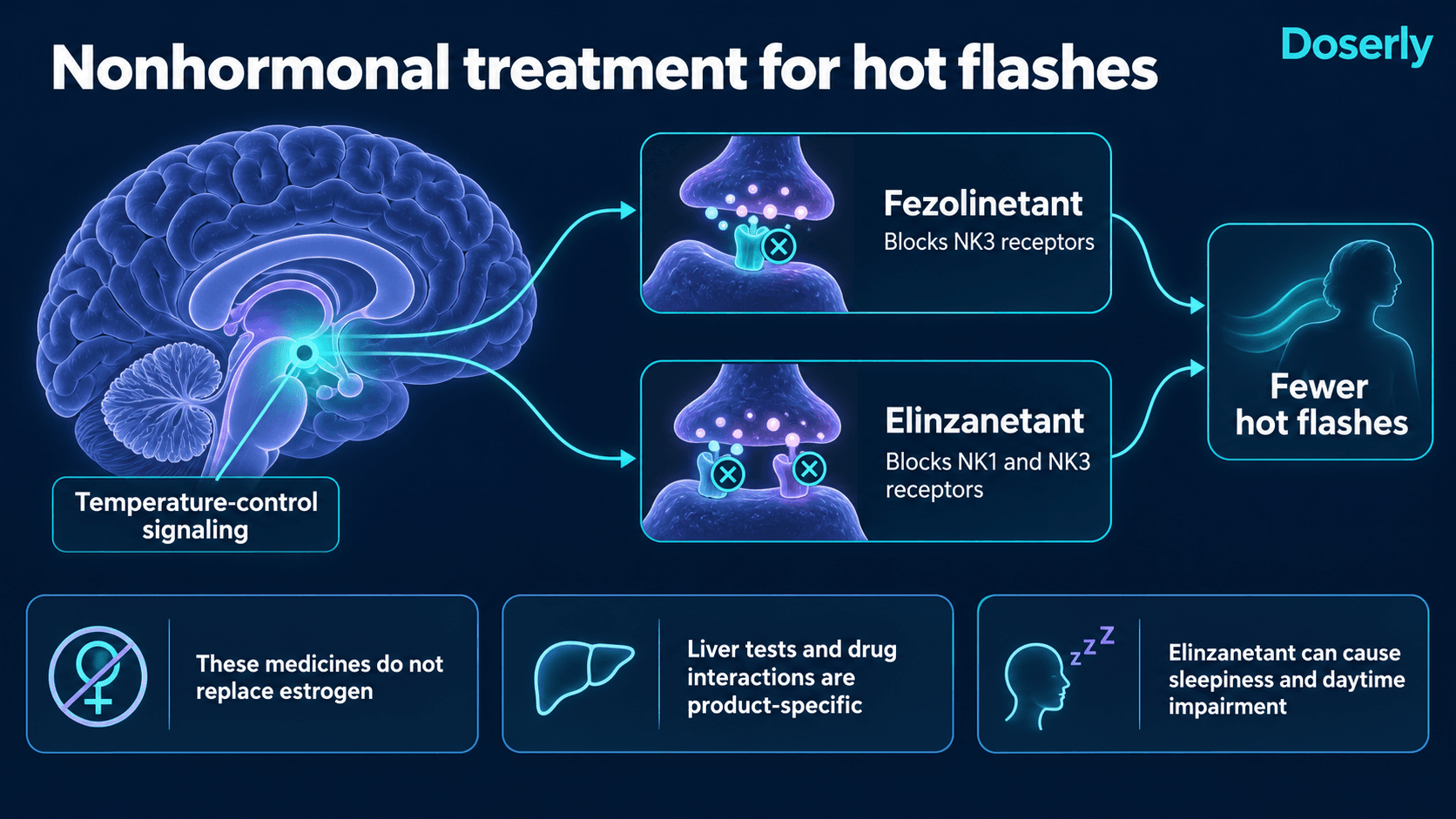
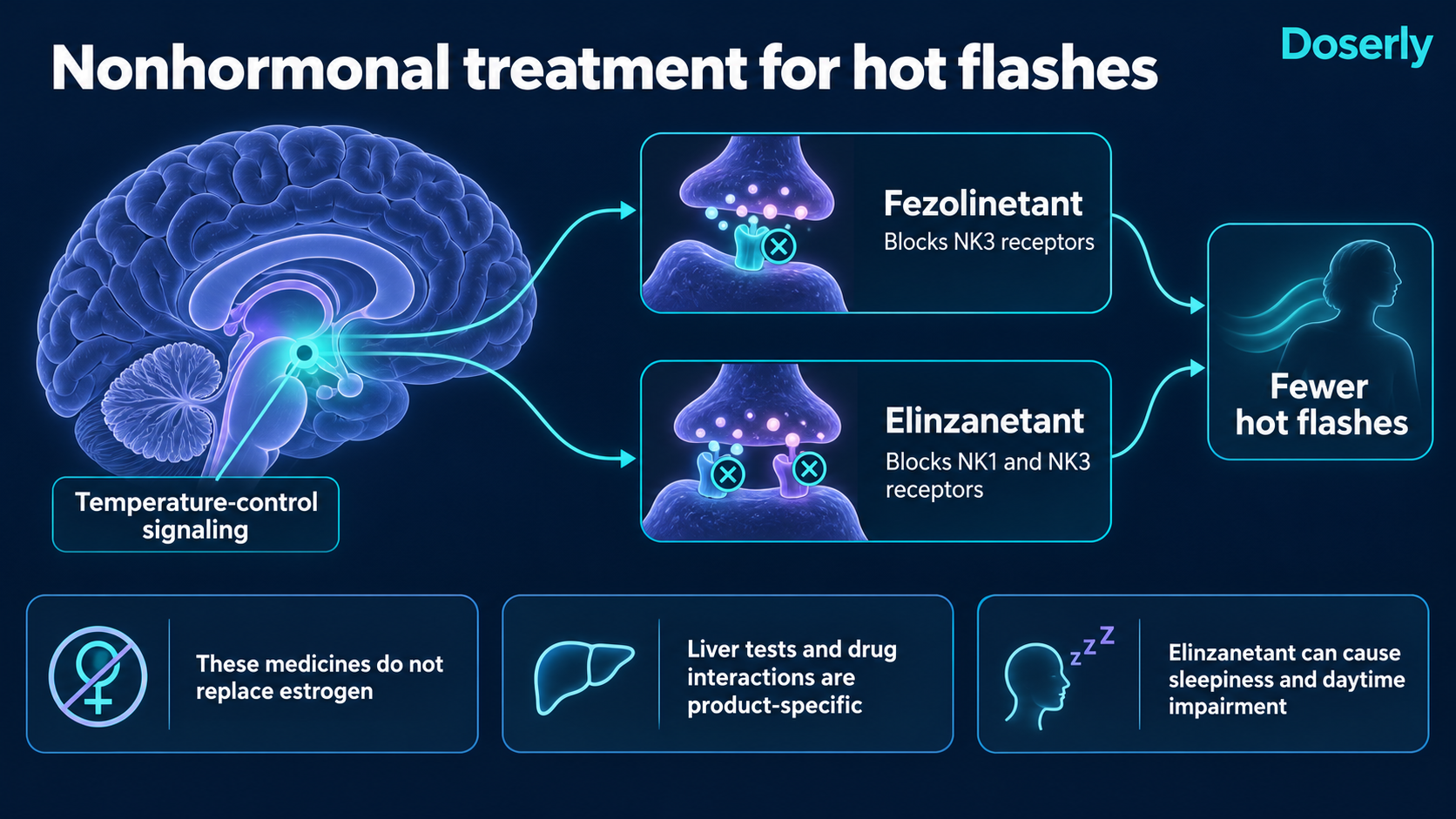
These are two neurokinin treatments, not the full range of nonhormonal options. Fezolinetant and elinzanetant have different liver-monitoring and interaction instructions; elinzanetant also carries daytime-impairment precautions. Neither replaces estrogen’s broader tissue effects.
FDA elinzanetant label; product-specific references below.
Pharmacokinetics / Hormone Physiology
The Basics
When you take elinzanetant at bedtime, the capsules are absorbed relatively quickly. Most people reach peak drug levels in their blood within about one hour. The medication does pass through the liver as it is processed, which is relevant because the liver is where it is broken down. Your body converts elinzanetant into three active breakdown products (metabolites) that work similarly to the parent drug, effectively extending the medication's therapeutic activity.
One of the most important pharmacokinetic features of elinzanetant is its long half-life of about 45 hours. This means the drug stays in your system for quite some time, which is why once-daily dosing is effective and why it takes about one to two weeks of daily dosing to reach stable blood levels. This also explains why missing a single dose does not require catching up: the drug already in your system provides ongoing coverage while your levels gradually rebuild.
Because elinzanetant is processed primarily by a liver enzyme called CYP3A4, anything that strongly speeds up or slows down this enzyme will affect how much drug is in your system. Strong inhibitors of CYP3A4 (like certain antifungal medications) can dramatically increase elinzanetant levels, which is why those combinations should be avoided entirely. Moderate inhibitors require a dose reduction to 60 mg. On the flip side, drugs that rev up CYP3A4 activity (like rifampin, an antibiotic used for tuberculosis) can reduce elinzanetant levels enough to make it ineffective. Grapefruit juice also inhibits CYP3A4 and should be avoided.
The medication can be taken with or without food, though a high-fat meal modestly increases absorption (by about 22-26%). This difference is not large enough to require food restrictions, but consistency in how you take it helps maintain stable levels.
The Science
Elinzanetant exhibits greater than dose-proportional pharmacokinetics, with Cmax and AUC increasing 20-50% more than expected across the 40-160 mg dose range (0.33 to 1.33 times the highest recommended dose). Steady-state plasma concentrations are achieved within 5-14 days of once-daily dosing, with an accumulation ratio of approximately 1.5-fold [2][5].
Absorption: Median Tmax is approximately 1 hour in the fasted state. Absolute oral bioavailability is 52%. A high-fat, high-calorie meal increases Cmax by approximately 26% and AUC by approximately 22%, considered not clinically significant [2].
Distribution: Mean volume of distribution at steady state (Vss) following intravenous administration is 137 L, indicating extensive tissue distribution. Plasma protein binding is 99.7%. Blood-to-plasma ratio is 0.6-0.7, indicating preferential distribution into plasma [2][3].
Metabolism: Primarily metabolized by CYP3A4 into three active metabolites with similar potency to the parent compound for both NK1 and NK3 receptors. Metabolites exist in plasma at a ratio of approximately 39% relative to the parent drug [2][3].
Elimination: Terminal half-life is approximately 45 hours. Systemic clearance following a single intravenous dose is 8.77 L/h. Approximately 90% of an oral dose is excreted in feces (mostly as metabolites), with less than 1% excreted in urine [2][3].
Clinical context — Half-life values.
Source: FDA prescribing information and PMC review: Half-life approximately 45 hours
Source: Expert Opinion on Pharmacotherapy review (Hager et al., 2024): Terminal elimination half-life approximately 15 hours
Context: The 15-hour value appears in earlier pre-approval literature and may reflect the parent compound only, while the 45-hour value from the FDA label likely incorporates the contribution of active metabolites to overall pharmacological activity. The FDA-approved 45-hour value is used throughout this guide.
Drug Interaction Pharmacokinetics:
Interacting Drug
Itraconazole (strong CYP3A4 inhibitor)
- Effect on Elinzanetant
- Cmax increased 3.3-fold; AUC increased 4.6- to 6.3-fold
Interacting Drug
Erythromycin (moderate CYP3A4 inhibitor, modeled)
- Effect on Elinzanetant
- Cmax increased 2.0-fold; AUC increased 3.0-fold
Interacting Drug
Cimetidine (weak CYP3A4 inhibitor, modeled)
- Effect on Elinzanetant
- Cmax increased 1.3-fold; AUC increased 1.5-fold
Interacting Drug
Rifampin (strong CYP3A4 inducer)
- Effect on Elinzanetant
- Cmax decreased 59%; AUC decreased 83%
Elinzanetant itself is a weak inhibitor of CYP3A4, increasing midazolam AUC by 1.4-fold [2].
Special Populations:
Population
Mild hepatic impairment (Child-Pugh A)
- Cmax Change
- 1.2-fold increase
- AUC Change
- 1.5-fold increase
Population
Moderate hepatic impairment (Child-Pugh B)
- Cmax Change
- 2.3-fold increase
- AUC Change
- 2.3-fold increase
Population
Moderate renal impairment (eGFR 30-59)
- Cmax Change
- 2.3-fold increase (unbound)
- AUC Change
- 2.2-fold increase (unbound)
Population
Severe renal impairment (eGFR <30)
- Cmax Change
- 1.9-fold increase (unbound)
- AUC Change
- 1.9-fold increase (unbound)
Understanding how your body absorbs and metabolizes this medication is one thing. Tracking your actual protocol, doses, and timing gives you the data to have more productive conversations with your prescriber. Doserly lets you log every dose with route-specific detail, building a clear record of your medication protocol over time.
Whether you are on elinzanetant alone or taking it alongside other medications, the app tracks your schedule and flags when doses are due. When your provider asks how your protocol has been going, you will have a precise answer instead of a best guess.
Research & Clinical Evidence
The Basics
The clinical evidence for elinzanetant comes from a robust program of trials called the OASIS studies, conducted by Bayer across multiple countries. Three key Phase III trials (OASIS 1, 2, and 3) and one Phase III trial focused on breast cancer patients (OASIS 4) have been completed, along with the earlier dose-finding SWITCH-1 trial.
The headline finding across all trials is clear: elinzanetant significantly reduces the frequency and severity of hot flashes compared to placebo. Women in the OASIS 1 and 2 trials experienced about three fewer moderate-to-severe hot flashes per day than those taking a placebo at both four weeks and twelve weeks of treatment. Improvements started as early as the first week. By twelve weeks, more than 70% of women saw at least a 50% reduction in how often their hot flashes occurred, and by 26 weeks, that figure rose to approximately 80%.
Beyond hot flashes, the trials showed significant improvements in sleep quality and menopause-related quality of life. These additional benefits may be related to the dual NK1/NK3 mechanism, as NK1 receptor blockade (through Substance P modulation) is thought to influence sleep and mood pathways independently of the thermoregulatory effects.
The OASIS 3 trial extended the study period to 52 weeks, demonstrating that the benefits of elinzanetant were maintained over one year of continuous use. Importantly, this longer study also confirmed no hepatotoxicity, no endometrial hyperplasia, and no meaningful changes in bone mineral density.
For women with breast cancer taking endocrine therapy, the OASIS 4 trial (published in the New England Journal of Medicine) showed elinzanetant reduced hot flash frequency by about 3.5 per day compared to placebo, with significant improvements in sleep and quality of life. Critically, elinzanetant did not appear to affect the pharmacokinetics of the endocrine therapy agents.
The Science
OASIS 1 and OASIS 2 (Phase III, pivotal trials):
Two similarly designed randomized, double-blind, placebo-controlled trials enrolled postmenopausal women aged 40-65 with moderate to severe VMS (at least 7 per day). OASIS 1 enrolled 396 participants across 77 sites (US, Europe, Israel); OASIS 2 enrolled 400 participants across 77 sites (US, Canada, Europe) [1].
Co-primary endpoints were mean change from baseline in VMS frequency and severity at weeks 4 and 12:
- VMS frequency reduction vs placebo at week 4: -3.3 VMS/day (95% CI: -4.5 to -2.1, p < 0.001) in OASIS 1; -3.0 VMS/day (95% CI: -4.4 to -1.7, p < 0.001) in OASIS 2
- VMS frequency reduction vs placebo at week 12: -3.2 VMS/day (95% CI: -4.8 to -1.6, p < 0.001) in OASIS 1; -3.2 VMS/day (95% CI: -4.6 to -1.9, p < 0.001) in OASIS 2
- VMS severity reduction (3-point scale) vs placebo: all timepoints p < 0.001 in both trials
Significant reduction in VMS frequency was observed as early as week 1 (p < 0.001 vs placebo in both trials). At week 12, significant improvements were reported for PROMIS Sleep Disturbance SF 8b total T-scores (p < 0.001 in both trials) and MENQOL total scores [1].
Completion rates were 78.0% (OASIS 1) and 81.0% (OASIS 2). Mean baseline VMS frequency was 13.4-16.2 episodes per 24 hours [1].
OASIS 3 (Phase III, 52-week safety and efficacy):
Randomized 628 postmenopausal women to elinzanetant 120 mg (n=313) or placebo (n=315) for 52 weeks at 83 sites globally. Primary endpoint: mean change in VMS frequency at week 12 versus placebo was -1.6 VMS/day (95% CI: -2.0 to -1.1, p < 0.001). VMS reduction and improvements in sleep disturbances and menopause-related quality of life were sustained through weeks 50-52. No hepatotoxic effects, endometrial hyperplasia, or meaningful bone mineral density changes were observed [11].
OASIS 4 (Phase III, breast cancer endocrine therapy):
Enrolled 474 women aged 18-70 receiving endocrine therapy for hormone receptor-positive breast cancer. At week 4: VMS frequency reduction -3.5/day (p < 0.001); week 12: -3.4/day (p < 0.001). Significant improvements in sleep disturbance and menopause-specific QoL at week 12. No apparent pharmacokinetic interaction with endocrine therapy agents. Published by Cardoso et al. in the New England Journal of Medicine [12].
SWITCH-1 (Phase IIb, dose-finding):
At the 120 mg dose: VMS frequency reduction of -3.93/day at week 4 (p < 0.001) and -2.95/day at week 12 (p = 0.01) versus placebo. This trial supported selecting 120 mg for subsequent development [13].
Benefits & Therapeutic Effects
The Basics
The primary benefit of elinzanetant is straightforward: it significantly reduces hot flashes. In clinical trials, women experienced about three fewer moderate-to-severe hot flashes per day compared to placebo. For someone having 13-16 hot flashes daily (the average in the trials), this reduction is meaningful and, for many, life-changing.
But the benefits extend beyond hot flash counting. Women in the trials also reported notably better sleep, which is significant because sleep disruption is one of the most quality-of-life-damaging aspects of menopause. The improvement in sleep may reflect both the direct reduction in night sweats (which wake many women multiple times per night) and potentially the independent effects of NK1 receptor blockade on sleep pathways.
Quality of life measurements improved across the board in the OASIS trials, including work productivity and the ability to carry out daily activities. These ripple effects of symptom reduction matter enormously: when hot flashes and sleep disruption improve, energy, mood, and cognitive function often follow, even if those are indirect effects rather than direct pharmacological actions.
Perhaps the most meaningful benefit for a specific population is the OASIS 4 finding: elinzanetant effectively reduced hot flashes in women taking endocrine therapy for breast cancer, without interfering with the cancer treatment itself. For these women, who often experience severe hot flashes but cannot use estrogen, having an effective non-hormonal option represents a genuine clinical advance.
It is important to note what elinzanetant does not do. It does not replace estrogen in the body. It does not protect bone density, improve vaginal dryness, or address genitourinary symptoms of menopause. It does not provide the cardiovascular, metabolic, or tissue-protective effects that estrogen replacement offers. For women who can safely take hormone therapy and need broad symptom management, HRT typically remains the more comprehensive treatment. Elinzanetant fills a specific and important niche: effective hot flash relief for those who need or want a non-hormonal approach.
The Science
The efficacy profile of elinzanetant across the OASIS clinical program demonstrates consistent and clinically meaningful reductions in VMS frequency and severity:
VMS Frequency Reduction (absolute, from baseline):
In OASIS 1, women on elinzanetant reduced from an average of 13.4 VMS/day at baseline to approximately 4.7/day at week 12 (absolute reduction of 8.7/day), compared to a reduction to approximately 8.9/day with placebo (absolute reduction of 4.4/day). The placebo-adjusted reduction was 3.2 VMS/day [1].
Response Rates:
At 12 weeks: greater than 70% of elinzanetant-treated women achieved at least a 50% reduction in VMS frequency. At 26 weeks: approximately 80% achieved this threshold [4].
Sleep Outcomes:
PROMIS Sleep Disturbance SF 8b total T-score improvements were statistically significant versus placebo at week 12 in OASIS 1 and 2 (p < 0.001 for both). In OASIS 3, sleep improvements were sustained through week 52 [1][11].
Menopause-Related Quality of Life:
MENQOL total scores improved significantly versus placebo at week 12 in OASIS 1 and 2. Exit interviews from the OASIS trials documented patient-reported improvements in mood and work/productivity domains [14].
Breast Cancer Population (OASIS 4):
In women receiving tamoxifen or aromatase inhibitors for hormone receptor-positive breast cancer, elinzanetant reduced VMS frequency by 3.5/day versus placebo at week 4 and 3.4/day at week 12 (both p < 0.001). Sleep disturbance and menopause-specific QoL also improved significantly. Concomitant endocrine therapy did not affect elinzanetant pharmacokinetics or vice versa [12].
Risks, Side Effects & Safety
The Basics
Elinzanetant has a generally favorable safety profile, especially compared to the well-known risk considerations of hormone therapy. Because it is not a hormone, it does not carry the risks of blood clots, stroke, or hormone-sensitive cancer associated with estrogen-containing therapies. This fundamental difference in risk profile is the primary reason non-hormonal treatments like elinzanetant exist.
The most common side effects in clinical trials were headache (affecting about 8 in 100 women, compared to about 6 in 100 on placebo) and fatigue (about 5 in 100). Other reported side effects included dizziness, drowsiness, stomach pain, diarrhea, rash, and muscle spasms, all occurring in fewer than 4 in 100 women. The medication is taken at bedtime partly because of its potential to cause drowsiness.
The most important safety concern involves the liver. While clinical trials did not identify cases meeting criteria for serious drug-induced liver injury (Hy's Law), a small number of women (about 6 in 1,000) developed liver enzyme elevations at least three times the upper limit of normal, compared to about 3 in 1,000 on placebo. Since the drug became available for general use, there have been postmarketing reports of drug-induced liver injury. For this reason, liver function tests are required before starting the medication and again three months later. If symptoms of liver problems develop (loss of appetite, nausea, dark urine, yellowing of the skin or eyes, upper right abdominal pain), the medication should be stopped immediately and a healthcare provider contacted.
Other important safety considerations include:
- Pregnancy: Elinzanetant is contraindicated in pregnancy. Animal studies showed pregnancy loss and stillbirth. Women of reproductive potential need a pregnancy test before starting and effective contraception during treatment and for at least two weeks after the last dose.
- Seizures: There is a potential risk of seizures, particularly in women with a history of seizure disorders.
- CNS effects: Drowsiness, dizziness, and somnolence can occur. Driving and hazardous activities should be avoided until the individual effects are known.
- Photosensitivity: Mild to moderate skin sensitivity to sunlight occurred in about 5 in 1,000 women.
The Science
Common Adverse Reactions (pooled OASIS 1, 2, 3 and SWITCH-1 data):
Adverse Reaction
Headache
- Elinzanetant
- 7.8%
- Placebo
- 5.7%
Adverse Reaction
Fatigue (including asthenia)
- Elinzanetant
- 5.0%
- Placebo
- 3.4%
Adverse Reaction
Dizziness
- Elinzanetant
- 3.8%
- Placebo
- NR
Adverse Reaction
Somnolence
- Elinzanetant
- 3.3%
- Placebo
- NR
Adverse Reaction
Abdominal pain
- Elinzanetant
- 2.6%
- Placebo
- NR
Adverse Reaction
Diarrhea
- Elinzanetant
- 2.3%
- Placebo
- NR
Adverse Reaction
Rash (including dermatitis, urticaria)
- Elinzanetant
- 2.0%
- Placebo
- NR
Adverse Reaction
Muscle spasms (including muscle tightness)
- Elinzanetant
- 1.7%
- Placebo
- NR
Adverse Reaction
Depression
- Elinzanetant
- Reported in OASIS-3 (>=1%)
- Placebo
- NR
NR = not separately reported
Hepatic Safety:
ALT and/or AST elevations at least 3 times the upper limit of normal (ULN) occurred in 0.6% of elinzanetant-treated patients versus 0.3% of placebo recipients. No cases met Hy's Law criteria in clinical trials [2]. Postmarketing reports of drug-induced liver injury have been documented, leading to warnings in the prescribing information. Baseline hepatic laboratory testing is mandatory before initiation, with repeat testing at 3 months [2].
Discontinuation due to adverse events: In OASIS-3, adverse reactions leading to treatment discontinuation at a rate of at least 1% (and greater than placebo) included abdominal pain, fatigue, depression, and headache [2].
Photosensitivity: Mild to moderate photosensitivity occurred in 0.5% of elinzanetant-treated patients, with onset ranging from day 1 to day 290 [2].
Comparative Safety Context:
Unlike oral estrogen therapy, elinzanetant does not carry venous thromboembolism (VTE) risk, as it does not stimulate hepatic synthesis of coagulation factors. Unlike all forms of systemic estrogen, it carries no known breast cancer risk. These distinguishing safety features make it particularly suitable for women with contraindications to hormone therapy, including those with a history of VTE, active cardiovascular disease, hormone receptor-positive breast cancer, or undiagnosed vaginal bleeding.
Being informed about potential risks is important. Being able to track and document any side effects you actually experience is what turns awareness into safety. Doserly lets you log side effects as they happen, with timestamps and severity ratings, so nothing falls through the cracks between appointments.
If you are experiencing headaches, fatigue, dizziness, or any other change after starting elinzanetant, having a documented timeline helps your provider distinguish between expected adjustment effects and signals that warrant a protocol change. The app also checks for interactions between your medications and any supplements you are taking.
Dosing & Treatment Protocols
The Basics
The prescribing of elinzanetant is straightforward compared to many hormone therapy regimens. The standard dose is 120 mg taken once daily at bedtime, which means swallowing two 60 mg capsules with water. The bedtime timing is intentional because the medication can cause drowsiness.
Capsules should be swallowed whole and never cut, crushed, or chewed, as the soft gel formulation requires intact delivery. The medication can be taken with or without food, but taking it at roughly the same time each night helps maintain consistent blood levels.
If you miss a dose, the guidance is simply to skip it and take the next one at your usual time the following evening. Do not double up. Because the drug has a long half-life (about 45 hours), missing a single dose will not dramatically change your blood levels.
A dose reduction to 60 mg (one capsule) daily is necessary if you are taking a moderate CYP3A4 inhibitor. Strong CYP3A4 inhibitors and grapefruit juice should be avoided entirely.
Before starting elinzanetant, your prescriber should:
- Order a pregnancy test (if applicable)
- Perform baseline liver function tests (ALT, AST)
- Repeat liver function tests at 3 months
The timeline to benefit is relatively quick: many women notice improvements in hot flash frequency within the first week, with continuing improvement through weeks 4-12. If the medication is effective, ongoing use is guided by symptom persistence and individual response. Clinical trial data supports safety and efficacy for at least 52 weeks of continuous use.
The Science
Recommended Dosage:
Elinzanetant 120 mg (two 60 mg capsules) orally once daily at bedtime. Dose was established through the SWITCH-1 Phase IIb dose-finding trial, which evaluated 40 mg, 80 mg, 120 mg, and 160 mg doses. The 120 mg dose demonstrated optimal efficacy-to-safety balance [13].
Dose Modifications:
Situation
Moderate CYP3A4 inhibitors
- Dose Modification
- Reduce to 60 mg (one capsule) once daily
Situation
Strong CYP3A4 inhibitors
- Dose Modification
- Contraindicated; avoid concomitant use
Situation
Strong/moderate CYP3A4 inducers
- Dose Modification
- Avoid concomitant use (reduced efficacy)
Situation
Mild hepatic impairment (Child-Pugh A)
- Dose Modification
- No dose adjustment required
Situation
Moderate/severe hepatic impairment (Child-Pugh B/C)
- Dose Modification
- Not recommended
Situation
Mild/moderate renal impairment
- Dose Modification
- No dose adjustment required
Situation
Severe renal impairment / ESRD
- Dose Modification
- Not recommended
Situation
Geriatric patients
- Dose Modification
- No dose adjustment based on age
Pre-treatment Evaluation:
- Exclude pregnancy in females of reproductive potential
- Perform baseline hepatic laboratory tests (ALT, AST)
- Evaluate hepatic function and check for pre-existing hepatic impairment
- Repeat hepatic laboratory tests at 3 months after initiation [2]
Getting the dosing right often takes time and fine-tuning with your provider. Keeping an accurate record of what you are actually taking, doses, timing, and any adjustments, makes that process smoother. Doserly tracks your doses alongside everything else in your health stack, so your full protocol is always in one place.
Never wonder whether you took your evening capsules or when you last refilled your prescription. The app logs every dose with a timestamp and sends reminders when your next one is due, helping you maintain the consistency that makes this medication most effective.
What to Expect (Timeline)
Days 1-7:
The medication begins working quickly. Many women in the clinical trials experienced measurable reductions in hot flash frequency within the first week. You may notice drowsiness or fatigue, particularly in the first few days, which is why the medication is taken at bedtime. Headache and mild dizziness are possible as your body adjusts.
Weeks 2-4:
Improvements in hot flash frequency become more noticeable. By week 4, clinical trials showed a reduction of about 3 additional hot flashes per day compared to placebo (on top of the placebo response). Sleep quality often begins to improve, both from the reduction in night sweats and potentially from direct NK1-mediated effects on sleep architecture. Side effects like drowsiness typically stabilize or diminish.
Months 1-3:
This is the period of maximal measured benefit in clinical trials. At 12 weeks, over 70% of women experienced at least a 50% reduction in hot flash frequency. Sleep disturbance scores and menopause-related quality of life scores reached their best improvements by this timepoint. Your prescriber will order repeat liver function tests at the 3-month mark.
Months 3-6:
Benefits continue and may further improve. At 26 weeks in the OASIS trials, approximately 80% of women had achieved at least a 50% reduction in hot flash frequency. If the medication is working well and liver tests are normal at 3 months, ongoing use can continue without additional mandatory monitoring (though annual check-ups with your prescriber are recommended).
Months 6-12 and beyond:
The OASIS 3 trial demonstrated sustained VMS reduction, sleep improvement, and quality-of-life benefits through 52 weeks of continuous use. No new safety signals emerged with longer-term use. No meaningful changes in bone mineral density or endometrial thickness were observed, confirming the drug's neutral safety profile on these measures.
It is important to set realistic expectations. While elinzanetant significantly reduces hot flashes, it does not eliminate them entirely for most women. Clinical trial data shows that hormone therapy generally provides greater VMS reduction. The medication addresses hot flashes and may improve sleep, but it does not treat other menopause symptoms such as vaginal dryness, bone loss, or genitourinary changes.
Timing Hypothesis & Window of Opportunity
This section addresses the timing hypothesis as it applies to HRT broadly. Elinzanetant itself is not subject to the timing hypothesis because it is a non-hormonal medication. Its efficacy and safety profile do not differ based on how many years have passed since menopause onset or the patient's age at initiation. This contrasts fundamentally with systemic estrogen therapy, where the timing of initiation relative to menopause has significant implications.
Why this matters for elinzanetant users: Many women considering elinzanetant are doing so specifically because they fall outside the "window of opportunity" for safe HRT initiation (generally within 10 years of menopause onset or before age 60). Women who are more than 10 years postmenopausal, over 60 years old, or who have cardiovascular risk factors that make late-initiation HRT inadvisable may find elinzanetant a particularly valuable option, as it provides VMS relief without the age- and timing-dependent cardiovascular and thrombotic concerns associated with systemic estrogen.
For a comprehensive discussion of the timing hypothesis and its supporting evidence (KEEPS, ELITE, WHI age subgroup analyses, Danish Osteoporosis Prevention Study), see the dedicated guides on Getting Started with HRT and Menopause.
Interactions & Compatibility
Drug-Drug Interactions:
The most clinically significant interactions involve the CYP3A4 enzyme system, which is the primary metabolic pathway for elinzanetant:
- Strong CYP3A4 inhibitors (e.g., ketoconazole, itraconazole, clarithromycin, ritonavir): Avoid concomitant use. These dramatically increase elinzanetant exposure (itraconazole increased AUC 4.6- to 6.3-fold), potentially increasing side effects.
- Moderate CYP3A4 inhibitors (e.g., erythromycin, diltiazem, verapamil, fluconazole): Reduce elinzanetant dose to 60 mg once daily. Erythromycin modeling showed AUC increase of 3.0-fold.
- Strong and moderate CYP3A4 inducers (e.g., rifampin, phenytoin, carbamazepine, St. John's Wort): Avoid concomitant use. Rifampin decreased elinzanetant AUC by 83%, potentially rendering it ineffective.
- CYP3A4 substrates with narrow therapeutic index (e.g., cyclosporine, certain statins, some anticoagulants): Consider dose reduction of these drugs when co-administered, as elinzanetant is a weak CYP3A4 inhibitor (1.4-fold increase in midazolam exposure).
- Grapefruit and grapefruit juice: Avoid. CYP3A4 inhibition can increase elinzanetant exposure.
Interactions with Menopause-Related Medications:
- Menopausal hormone therapy: No specific contraindication to co-use, though clinical utility of combining is unclear since both treat VMS.
- Endocrine therapy for breast cancer (tamoxifen, aromatase inhibitors): OASIS-4 data showed no pharmacokinetic interaction. Co-administration appears safe and effective [12].
- SSRIs/SNRIs used for hot flashes (paroxetine, venlafaxine): No specific interaction studies with elinzanetant. SSRIs that are CYP3A4 inhibitors (e.g., fluoxetine) could theoretically increase elinzanetant levels modestly.
- Fezolinetant (Veozah): No data on concurrent use; both target NK receptor pathways and concurrent use is not expected to be clinically useful.
- Gabapentin for menopause: No specific interaction data. Both have CNS depressant effects; additive drowsiness possible.
- Clonidine for menopause: No specific interaction data.
Supplement Interactions:
- St. John's Wort: Avoid. Strong CYP3A4 inducer that could significantly reduce elinzanetant efficacy.
- Vitamin D, calcium, omega-3: No known interactions.
- Black cohosh: No specific interaction data. Black cohosh does not significantly inhibit CYP3A4 at typical doses.
Lifestyle Factors:
- Alcohol: May enhance CNS depressant effects of elinzanetant, increasing drowsiness and dizziness.
- Grapefruit: Avoid (CYP3A4 inhibition).
Disease Interactions:
- Liver disease: Not recommended with moderate or severe hepatic impairment; use with caution in mild impairment
- End-stage renal disease: Not recommended
- Seizure history: Increased seizure risk; consider benefit-risk carefully
Decision-Making Framework
Who may benefit from elinzanetant:
Elinzanetant fills a specific niche in menopause management. It may be most appropriate for:
- Women with moderate to severe hot flashes who cannot safely take hormone therapy due to a history of breast cancer, blood clots, stroke, uncontrolled hypertension, or active liver disease
- Women who are beyond the recommended HRT initiation window (more than 10 years postmenopausal or over 60) and experiencing bothersome VMS
- Women taking endocrine therapy for breast cancer and experiencing treatment-related hot flashes (supported by OASIS-4 data)
- Women who prefer to avoid hormones for personal reasons, after a fully informed discussion of benefits and limitations
- Women in whom other non-hormonal options (SSRIs, SNRIs, gabapentin, clonidine, fezolinetant) have been ineffective or poorly tolerated
Who may not be the best candidate:
- Women seeking broad symptom relief beyond hot flashes (elinzanetant does not address vaginal dryness, bone loss, cardiovascular protection, or genitourinary symptoms)
- Women with moderate or severe liver disease
- Women with severe kidney disease or on dialysis
- Women currently taking strong CYP3A4 inhibitors who cannot switch to alternative medications
- Pregnant women or women planning pregnancy
Questions to discuss with your healthcare provider:
- Is my symptom profile primarily hot flashes and sleep disruption, or do I have a broader range of menopause symptoms that might benefit from hormone therapy?
- Am I a candidate for hormone therapy, and if not, why specifically?
- Have I tried other non-hormonal options, and how did they work?
- How does elinzanetant compare to fezolinetant (Veozah) for my situation?
- What liver monitoring will I need, and do I have any pre-existing liver conditions?
- Am I taking any medications that interact with CYP3A4?
- What will the cost be with my insurance?
Finding a menopause specialist:
If your current provider is unfamiliar with elinzanetant or newer non-hormonal options, consider consulting a menopause specialist. NAMS Certified Menopause Practitioners can be found through The Menopause Society's provider directory. Telehealth menopause clinics are increasingly available and may offer access to providers experienced with the latest treatment options.
Administration & Practical Guide
How to take elinzanetant:
- Take two 60 mg capsules together at bedtime, at about the same time each night
- Swallow capsules whole with water
- Do not cut, crush, or chew the capsules
- You may take them with or without food
- If you miss a dose, skip it and take the next one the following evening at your usual time
- Do not take two doses to make up for a missed one
Storage:
- Store at room temperature between 68 and 77 degrees Fahrenheit (20 to 25 degrees Celsius)
- Keep capsules in their original blister packaging until ready to take
- If using the reduced 60 mg dose (one capsule), partially peel back the foil and keep the remaining capsule in the original blister card until the next dose
Practical tips:
- Set a daily alarm or use an app to remind you to take the medication at bedtime
- Keep the medication on your nightstand or near your toothbrush to build the habit
- Avoid grapefruit and grapefruit juice while taking elinzanetant
- Tell your pharmacist about all other medications you take when filling the prescription, so they can check for CYP3A4 interactions
- If you experience drowsiness or dizziness, avoid driving in the morning until you understand how the medication affects you
- Use sun protection if you notice increased skin sensitivity to sunlight
Monitoring & Lab Work
Pre-treatment baseline tests:
- Liver function tests (ALT, AST): mandatory before starting elinzanetant
- Pregnancy test: recommended for women of reproductive potential
- Assessment of hepatic function and pre-existing liver conditions
- Review of current medications for CYP3A4 interactions
Follow-up monitoring:
- 3 months after starting: Repeat liver function tests (ALT, AST). This is a prescribing requirement, not optional.
- Ongoing: No mandatory routine laboratory monitoring is required after the 3-month check if values are normal. However, promptly evaluate any symptoms suggestive of liver injury at any time during treatment.
- Annual review: Discuss ongoing need for the medication, assess continued symptom severity, review any changes in other medications or health conditions.
When to contact your prescriber immediately:
- Loss of appetite, nausea, or vomiting
- Upper right abdominal pain
- Dark urine or clay-colored stools
- Yellowing of skin or eyes (jaundice)
- Unusual fatigue or itching
- Severe dizziness, vertigo, or loss of consciousness
- Seizure activity
Comparison to fezolinetant monitoring: Both elinzanetant and fezolinetant require liver function monitoring, reflecting a class-related concern with neurokinin receptor antagonists used for VMS. Fezolinetant requires ALT/AST at baseline, 3 months, 6 months, 9 months, and as clinically indicated thereafter. Elinzanetant's monitoring schedule is less intensive (baseline and 3 months only), though clinicians may opt for additional monitoring based on individual risk factors.
Complementary Approaches & Lifestyle
While elinzanetant specifically targets hot flashes and related sleep disruption, many menopause symptoms extend beyond what this medication addresses. Complementary strategies can help manage the broader symptom picture:
Evidence-based complementary strategies:
- Cognitive behavioral therapy (CBT) for VMS: Strong evidence supports CBT as an additional non-pharmacological approach to reducing the distress and impact of hot flashes, even when frequency reduction is modest. Can be used alongside elinzanetant.
- Exercise: Regular physical activity (both cardiovascular and resistance training) supports bone density, metabolic health, mood, and sleep quality during menopause, addressing domains that elinzanetant does not.
- Mediterranean diet pattern: Associated with lower VMS severity in observational studies and supports cardiovascular and metabolic health during the menopause transition.
- Sleep hygiene: Temperature management (cool bedroom, moisture-wicking bedding), consistent sleep schedule, and limiting caffeine and alcohol in the evening can complement elinzanetant's sleep benefits.
- Stress management: Mind-body practices such as mindfulness meditation and yoga may reduce the subjective impact of hot flashes.
Supplements:
- Vitamin D and calcium: Important for bone health during menopause, which elinzanetant does not address. No known interaction with elinzanetant. See Vitamin D guide for dosing evidence.
- Magnesium: May support sleep quality. No known interaction with elinzanetant. See Magnesium guide.
- Black cohosh: Mixed evidence for VMS relief. No significant CYP3A4 interaction at typical doses, so can likely be used alongside elinzanetant, though additive benefit is uncertain.
- St. John's Wort: Avoid while taking elinzanetant. It is a strong CYP3A4 inducer and will reduce elinzanetant blood levels.
Non-hormonal prescription alternatives:
For women who do not respond adequately to elinzanetant, other non-hormonal prescription options include:
- Fezolinetant (Veozah): NK3 receptor antagonist
- Paroxetine low-dose (Brisdelle): FDA-approved SSRI for VMS
- Gabapentin: Off-label, particularly helpful for nighttime VMS
- Clonidine: Off-label, modest VMS benefit
Stopping HRT / Discontinuation
Because elinzanetant is a non-hormonal medication rather than hormone therapy, the considerations around stopping it differ from those for HRT discontinuation. There is no "rebound" hormonal withdrawal effect, and no tapering protocol is necessary.
When to consider stopping:
- Hot flashes have resolved or become manageable without medication (this occurs naturally for many women over time)
- Intolerable side effects
- Development of liver abnormalities
- Pregnancy (stop immediately)
- The medication is not providing adequate benefit after a reasonable trial (typically 12 weeks)
What to expect when stopping:
- Hot flashes may return, typically at a similar frequency and severity to pre-treatment levels
- No gradual taper is required; the medication can be stopped abruptly
- Because the half-life is approximately 45 hours, drug levels will decline gradually over about a week
- Some women may notice a gradual return of VMS over the first 1-2 weeks after stopping
Transition options:
- If stopping elinzanetant due to inadequate response, discuss other non-hormonal options with your prescriber
- If menopause symptoms are broader than hot flashes (including vaginal dryness, bone concerns, mood changes), a conversation about whether hormone therapy might now be appropriate is worthwhile
- Low-dose vaginal estrogen can be added for genitourinary symptoms regardless of whether elinzanetant is continued or stopped
Special Populations & Situations
Breast Cancer Survivors and Patients on Endocrine Therapy
Elinzanetant represents a particularly important option for this population. The OASIS-4 Phase III trial specifically evaluated elinzanetant in women receiving endocrine therapy (tamoxifen or aromatase inhibitors) for hormone receptor-positive breast cancer. Results published in the New England Journal of Medicine demonstrated significant VMS reduction without pharmacokinetic interference with the endocrine therapy agents [12]. This is one of the few non-hormonal VMS treatments with robust RCT data in this specific population.
Women with Contraindications to Hormone Therapy
Women with active VTE, uncontrolled hypertension, active liver disease (note: elinzanetant also requires hepatic caution), or a history of hormone-sensitive cancers may benefit from elinzanetant as a non-hormonal alternative for VMS management.
Women Beyond the HRT Window
For women more than 10 years postmenopausal or over age 60 who experience persistent VMS but for whom late-initiation systemic HRT carries increased cardiovascular and thrombotic risk, elinzanetant offers VMS relief without age- or timing-dependent safety concerns.
Surgical Menopause
Women who have undergone bilateral oophorectomy often experience abrupt and severe hot flashes. While HRT is typically the first-line treatment for surgical menopause (especially in younger women who need estrogen replacement for bone and cardiovascular protection), elinzanetant may serve as an adjunct for VMS control or as a primary option when HRT is contraindicated. See the Surgical Menopause guide for comprehensive treatment information.
Hepatic Impairment
Elinzanetant is not recommended for women with moderate or severe hepatic impairment (Child-Pugh B or C). No dose adjustment is needed for mild hepatic impairment (Child-Pugh A), though monitoring is still required. Given the liver monitoring requirements and postmarketing liver injury reports, particular caution is warranted in any woman with pre-existing liver conditions.
Renal Impairment
No dose adjustment for mild to moderate renal impairment. Not recommended for severe renal impairment (eGFR < 30 mL/min/1.73 m2) or end-stage renal disease.
Seizure History
Elinzanetant carries a warning regarding seizure risk in patients with a history of seizures. The benefit-risk assessment should be carefully considered, and alternative treatments may be preferable for women with active seizure disorders.
Regulatory, Insurance & International
United States (FDA):
- Approved October 24, 2025 (NDA 219469)
- Non-hormonal; classified as a miscellaneous central nervous system agent
- No black box warning
- Available as 60 mg soft gel capsules; standard dose requires two capsules
- Bayer offers a savings program: eligible patients may pay as little as $25 per prescription (depending on insurance type)
- Generic availability: not yet available (patent-protected)
United Kingdom (MHRA):
- First global approval: July 10, 2025
- Approved for moderate to severe VMS associated with menopause
- Brand name: Lynkuet
- NHS formulary status and prescription details should be confirmed with local prescribers
Canada (Health Canada):
- Approved 2025
- Brand name: Lynkuet
Australia (TGA):
- Approved 2025
- Brand name: Lynkuet
- PBS listing status: check current formulary
European Union (EMA):
- CHMP positive opinion September 2025
- Recommended for VMS associated with menopause AND endocrine therapy for breast cancer (broader indication than US/UK approvals)
- EU authorization/status should be verified against current EMA and national product records before publication
Switzerland (Swissmedic):
- Approved 2025
Cost Considerations:
Elinzanetant, like fezolinetant, is a newer branded medication and may carry significant out-of-pocket costs depending on insurance coverage. Prior authorization may be required by some insurance plans. Bayer's patient savings program and co-pay assistance cards may be available. Check with your pharmacist and insurance provider for specific coverage details.
Frequently Asked Questions
Q: What is elinzanetant (Lynkuet)?
A: Elinzanetant is a non-hormonal prescription medication approved to treat moderate to severe hot flashes (vasomotor symptoms) caused by menopause. It works by blocking two brain receptors (NK1 and NK3) involved in body temperature regulation.
Q: How is elinzanetant different from hormone therapy?
A: Elinzanetant does not contain or replace hormones. It works in the brain's thermoregulatory center rather than replacing estrogen. It does not carry the risks of blood clots, stroke, or hormone-sensitive cancer associated with estrogen therapy, but it also does not provide the broader benefits of HRT (bone protection, genitourinary health, cardiovascular effects).
Q: How is elinzanetant different from fezolinetant (Veozah)?
A: Both are non-hormonal medications for hot flashes. Elinzanetant blocks two brain receptors (NK1 and NK3), while fezolinetant blocks only one (NK3). The additional NK1 blockade may provide benefits for sleep and mood. Both require liver monitoring.
Q: How quickly does elinzanetant work?
A: Many women notice improvement within the first week. Clinical trials showed statistically significant hot flash reduction at week 1, with continuing improvement through week 12.
Q: Can I take elinzanetant if I have had breast cancer?
A: This is a decision to make with your oncologist and menopause provider. The OASIS-4 trial showed elinzanetant was effective and did not interfere with endocrine therapy in women with hormone receptor-positive breast cancer. The EMA has recommended approval for this specific indication. The FDA approval is currently for menopause-related VMS only.
Q: What are the most common side effects?
A: Headache (about 8 in 100 women) and fatigue (about 5 in 100) were the most common. Other reported effects include dizziness, drowsiness, stomach pain, diarrhea, rash, and muscle spasms.
Q: Do I need blood tests while taking elinzanetant?
A: Yes. Liver function tests are required before starting and at 3 months. Additional testing may be done if symptoms of liver problems develop.
Q: Can I take elinzanetant with other medications?
A: It depends on the specific medications. Elinzanetant interacts significantly with drugs that affect the CYP3A4 liver enzyme. Strong CYP3A4 inhibitors must be avoided; moderate inhibitors require a dose reduction. Always tell your prescriber about all medications and supplements you take.
Q: Can I drink grapefruit juice while taking elinzanetant?
A: No. Grapefruit juice inhibits CYP3A4 and can increase elinzanetant levels, potentially leading to more side effects.
Q: Why is it taken at bedtime?
A: Elinzanetant can cause drowsiness and dizziness. Taking it at bedtime minimizes the impact of these side effects on daily activities and may also help with sleep quality.
Q: Is elinzanetant safe during pregnancy?
A: No. Elinzanetant is contraindicated in pregnancy. Animal studies showed pregnancy loss and stillbirth. Women of reproductive potential need effective contraception during treatment and for at least 2 weeks after the last dose.
Q: Should I take elinzanetant or start HRT?
A: This depends on your individual health profile, symptom picture, risk factors, and preferences. A conversation with a qualified healthcare provider is essential. For women with only hot flashes and sleep disruption, elinzanetant may be sufficient. For those with broader menopause symptoms (vaginal dryness, bone loss, mood changes), HRT typically provides more comprehensive relief. Some women may use elinzanetant because HRT is contraindicated for them.
Myth vs. Fact
Myth: "Non-hormonal hot flash treatments don't really work. Only estrogen can stop hot flashes."
Fact: Clinical trials demonstrate that elinzanetant reduces moderate to severe hot flash frequency by approximately 3 additional episodes per day compared to placebo, with more than 70% of women achieving at least a 50% reduction by 12 weeks [1]. While hormone therapy typically provides somewhat greater VMS reduction, the efficacy of neurokinin receptor antagonists is substantial and clinically meaningful.
Myth: "Elinzanetant is just the same as Veozah (fezolinetant) with a different name."
Fact: While both are neurokinin receptor antagonists for VMS, elinzanetant blocks two receptors (NK1 and NK3) while fezolinetant blocks only one (NK3). The dual mechanism may offer additional benefits for sleep and mood through Substance P (NK1) modulation, though direct head-to-head comparison trials have not been conducted.
Myth: "Since elinzanetant isn't a hormone, it has no side effects."
Fact: All medications have potential side effects. The most common with elinzanetant include headache (7.8%), fatigue (5.0%), dizziness (3.8%), and drowsiness (3.3%). Liver monitoring is required because of the small risk of liver enzyme elevation. Postmarketing reports of drug-induced liver injury have also been documented [2].
Myth: "If I take elinzanetant, I don't need to see a doctor about menopause."
Fact: Elinzanetant addresses hot flashes and may improve sleep, but it does not treat the full spectrum of menopause effects. Bone loss, cardiovascular risk changes, genitourinary symptoms, mood changes, and other menopause-related health shifts require ongoing medical attention regardless of hot flash treatment. A comprehensive menopause management plan with a qualified healthcare provider remains important.
Myth: "Non-hormonal treatments are always safer than HRT."
Fact: Safety depends on the individual. For women with specific contraindications to HRT (breast cancer history, active VTE, severe liver disease), non-hormonal options like elinzanetant may indeed be safer. However, for healthy women within the HRT initiation window (under 60, within 10 years of menopause), the well-established benefits of HRT on bone, cardiovascular health, and quality of life may offer a more favorable overall risk-benefit profile. Safety is always an individual assessment.
Myth: "Hot flashes are just a minor inconvenience. You don't need medication for them."
Fact: For many women, hot flashes are debilitating. In the OASIS clinical trials, participants averaged 13-16 moderate-to-severe hot flashes per day. This level of symptom burden significantly disrupts sleep, work productivity, and quality of life. Effective treatment is a legitimate medical intervention, not a luxury.
Myth: "Once you start elinzanetant, you have to take it forever."
Fact: Elinzanetant can be stopped at any time without tapering. Hot flashes may return after discontinuation, but the decision to continue treatment is based on ongoing symptom severity and individual needs. Regular reassessment with a healthcare provider is recommended.
Myth: "Elinzanetant cures menopause."
Fact: Nothing cures menopause; it is a natural biological transition. Elinzanetant treats one symptom category (vasomotor symptoms) effectively while leaving the underlying hormonal changes unaffected. It is a symptom management tool, not a cure.
Sources & References
Clinical Guidelines
[1] Pinkerton JV, Simon JA, Joffe H, et al. Elinzanetant for the Treatment of Vasomotor Symptoms Associated With Menopause: OASIS 1 and 2 Randomized Clinical Trials. JAMA. 2024;332(16):1343-54. PubMed: 39172446. DOI: 10.1001/jama.2024.14618.
Prescribing Information & Regulatory
[2] LYNKUET (elinzanetant) prescribing information. Bayer HealthCare Pharmaceuticals Inc., Whippany, NJ. Revised October 2025. https://dailymed.nlm.nih.gov/dailymed/drugInfo.cfm?setid=f42884ff-7dff-419c-8a0c-affe2ed73818
[3] Lee A. Elinzanetant: First Approval. Drugs. 2025;86(1):121-125. doi:10.1007/s40265-025-02244-3 PMC12799696.
[4] Bayer. Bayer's Lynkuet (elinzanetant), the first and only neurokinin 1 and neurokinin 3 receptor antagonist, receives FDA approval for moderate to severe hot flashes due to menopause. Press release. October 24, 2025. https://www.bayer.com/en/us/news-stories/lynkuet
Mechanism & Pharmacology
[5] Hager M, Goldstein T, Fitz V, et al. Elinzanetant, a new combined neurokinin-1/-3 receptor antagonist for the treatment of postmenopausal vasomotor symptoms. Expert Opin Pharmacother. 2024;25(7):783-789. PubMed: 38869992. DOI: 10.1080/14656566.2024.2358131.
[6] Rance NE, Dacks PA, Mittelman-Smith MA, Romanovsky AA, Krajewski-Hall SJ. Modulation of body temperature and LH secretion by hypothalamic KNDy (kisspeptin, neurokinin B and dynorphin) neurons: a novel hypothesis on the mechanism of hot flushes. Front Neuroendocrinol. 2013;34(3):211-227. doi:10.1016/j.yfrne.2013.07.003
[7] Hrabovszky E, Borsay BÁ, Rácz K, et al. Substance P immunoreactivity exhibits frequent colocalization with kisspeptin and neurokinin B in the human infundibular region. PLoS One. 2013;8(8):e72369. PubMed: 23977290. DOI: 10.1371/journal.pone.0072369.
[8] Ridler K, Gunn RN, Searle GE, et al. Characterising the plasma-target occupancy relationship of the neurokinin antagonist GSK1144814 with PET. J Psychopharmacol. 2014;28(3):244-53. PubMed: 24429221. DOI: 10.1177/0269881113517953.
Clinical Pharmacology
[9] DailyMed: LYNKUET (elinzanetant) prescribing information. https://dailymed.nlm.nih.gov/dailymed/drugInfo.cfm?setid=f42884ff-7dff-419c-8a0c-affe2ed73818. Accessed September 13, 2026.
[10] Pawsey S, Mills EG, Ballantyne E, et al. Elinzanetant (NT-814), a Neurokinin 1,3 Receptor Antagonist, Reduces Estradiol and Progesterone in Healthy Women. J Clin Endocrinol Metab. 2021;106(8):e3221-e3234. PubMed: 33624806. DOI: 10.1210/clinem/dgab108.
Clinical Trials
[11] Panay N, Joffe H, Maki PM, et al. Elinzanetant for the Treatment of Vasomotor Symptoms Associated With Menopause: A Phase 3 Randomized Clinical Trial. JAMA Intern Med. 2025;185(11):1319-1327. PubMed: 40920404. DOI: 10.1001/jamainternmed.2025.4421.
[12] Cardoso F, Parke S, Brennan DJ, et al. Elinzanetant for vasomotor symptoms from endocrine therapy for breast cancer. N Engl J Med. 2025. doi:10.1056/NEJMoa2415566
[13] Simon JA, Anderson RA, Ballantyne E, et al. Efficacy and safety of elinzanetant, a selective neurokinin-1,3 receptor antagonist for vasomotor symptoms: a dose-finding clinical trial (SWITCH-1). Menopause. 2023;30(3):239-246. PubMed: 36720081. DOI: 10.1097/GME.0000000000002138.
Patient Experience & Education
[14] Haberland C, Barclay M, Lehane A, et al. Exit Interviews Examining Changes to Mood and Work/Productivity Impacts Related to Vasomotor Symptoms: Perspectives of Postmenopausal Women Receiving Elinzanetant in Phase III Clinical Trials. Patient. 2025;18(6):687-697. PubMed: 40650860. DOI: 10.1007/s40271-025-00748-4.
Additional Regulatory and Guideline Sources
[15] DailyMed: LYNKUET prescribing information. https://dailymed.nlm.nih.gov/dailymed/drugInfo.cfm?setid=f42884ff-7dff-419c-8a0c-affe2ed73818. Accessed September 13, 2026.
[16] Bayer U.S. FDA approval announcement for Lynkuet. https://www.bayer.com/media/en-us/bayers-lynkuet-elinzanetant-first-and-only-dual-neurokinin-targeted-therapy-approved-by-the-us-fda-for-moderate-to-severe-hot-flashes-due-to-menopause/. Accessed September 13, 2026.
[17] New Collective Author. The 2023 nonhormone therapy position statement of The North American Menopause Society. Menopause. 2023;30(6):573-590. PubMed: 37252752. DOI: 10.1097/GME.0000000000002200.
Related Guides & Cross-Links
Same Category (Non-Hormonal Prescription Medications):
- Fezolinetant (Veozah) -- NK3-only receptor antagonist for VMS
- Paroxetine Low-Dose (Brisdelle) -- FDA-approved SSRI for VMS
- Ospemifene (Osphena) -- SERM for dyspareunia
- Gabapentin for Menopause -- Off-label for VMS
- Clonidine for Menopause -- Off-label for VMS
- Tibolone (Livial) -- Synthetic steroid (available outside US)
Related Treatment Options:
- Non-Hormonal Menopause Treatments -- Comprehensive overview
- Getting Started with HRT -- For those considering hormonal approaches
- Transdermal HRT (Patches, Gels, Sprays) -- Hormonal alternative
Conditions & Stages:
- Menopause -- Overview of the menopausal transition
- Surgical Menopause -- Specific considerations post-oophorectomy
- Premature Ovarian Insufficiency (POI) -- Early menopause
Complementary Approaches (Supplements):
- Vitamin D -- Bone health during menopause
- Magnesium -- Sleep and muscle support
- Black Cohosh -- Herbal VMS approach (note: check interactions)