
HRT Monitoring and Lab Work: What Actually Matters
On this page
Quick Reference Card
Attribute
Topic
- Value
- How HRT follow-up is usually monitored in routine menopause care
Attribute
Guide Type
- Value
- Educational guide
Attribute
Main Principle
- Value
- Symptoms, bleeding pattern, blood pressure, preventive screening status, and overall risk review usually matter more than routine hormone panels
Attribute
Standard Review Timing
Attribute
Labs That Sometimes Matter
Attribute
Labs That Usually Do Not Matter
Attribute
Imaging / Screening Follow-Up
Attribute
Key Red Flags
- Value
- Bleeding after 12 months of amenorrhea, heavy or prolonged bleeding, new severe side effects, suspected clot/stroke symptoms, unexplained breast change, or poor symptom control despite reasonable adherence
Attribute
Biggest Interpretation Limit
- Value
- A single hormone level often does not explain symptoms because dose, route, timing, assay method, and endogenous fluctuation all distort meaning [4]
Attribute
Medical Supervision Required
- Value
- Yes - systemic HRT should be prescribed and monitored with a qualified clinician
Overview / What Is HRT Monitoring and Lab Work?
The Basics
Many people assume that once HRT starts, the next step is repeated hormone blood tests. That is not how most mainstream menopause guidelines approach follow-up. In routine menopause care, clinicians usually monitor whether symptoms are improving, whether side effects are tolerable, whether bleeding patterns make sense for the regimen, whether blood pressure and major risk factors remain acceptable, and whether routine preventive screening is up to date. In other words, good HRT monitoring is usually clinical before it is laboratory-based [1][2][5][9].
This matters because modern menopause care is often distorted in two opposite directions. One is undertesting in the broad sense: symptoms are dismissed, bleeding is minimized, or no one checks whether the chosen route still fits the person's risk profile. The other is overtesting in the narrow sense: estradiol, progesterone, cortisol, saliva panels, or repeated FSH tests are ordered as if they can precisely "optimize" every regimen. Current guidance does not support that model for standard menopause treatment [1][4][6].
The most useful frame is simple. HRT follow-up asks:
- Is the treatment helping the symptoms it was meant to treat?
- Is the bleeding pattern expected for this stage and regimen?
- Has anything changed in the person's health or risk profile?
- Are routine screening and preventive care still current?
- Is there a specific reason a lab or imaging test would change management?
That last question is the real filter. When there is a specific reason, testing can be useful. When there is not, testing often adds cost, confusion, and false reassurance.
The Science
Current guidance from NICE, the British Menopause Society, and The Menopause Society converges on an individualized, periodically reevaluated model of menopausal hormone therapy rather than a lab-target model [1][2][5]. NICE recommends review at 3 months after starting treatment and annually thereafter, with earlier review for side effects, adverse events, or treatment ineffectiveness [1]. BMS practice standards similarly emphasize symptom control, weight and blood pressure checks, regimen adjustment, and routine breast/cervical screening discussions rather than serial hormone assays [2].
The reason is methodological as much as clinical. Hormone concentrations vary by route, assay, time since dose, endogenous ovarian activity, body composition, and metabolism. BMS's 2025 tool on serum estradiol specifically notes poor correlation between a single serum estradiol value and symptom relief, no universal threshold for bone protection or symptom control, and major interpretation problems in perimenopause because endogenous and exogenous estradiol cannot be cleanly separated [4]. ACOG makes the same broader point in compounded hormone care: estrogen and progesterone generally do not meet the criteria for routine therapeutic drug monitoring, and most patients should be titrated by symptom response rather than ancillary serum tests [6].
Historically, some of the confusion arose because post-WHI hormone therapy discussions became heavily risk-focused but not always practically follow-up-focused. That left a vacuum for clinics marketing lab-driven "balancing." The modern evidence base points back to a more rigorous middle ground: structured follow-up, careful bleeding review, route-aware risk assessment, and selective testing only when it would actually change the next clinical step [4][5][9].
Medical / Chemical Identity
Property
Topic Classification
- Value
- Educational guide covering monitoring and follow-up for menopausal hormone therapy
Property
Applies To
- Value
- Systemic oral and transdermal HRT, plus selected notes on vaginal estrogen and testosterone
Property
Core Monitoring Domains
- Value
- Symptom response, bleeding pattern, side effects, blood pressure/basic health checks, preventive screening adherence, evolving contraindications
Property
Common Non-Lab Measures
- Value
- Symptom diary, hot flash frequency, sleep quality, mood/function, patch/gel adherence, medication list review
Property
Lab Tests Sometimes Used
- Value
- FSH for diagnostic uncertainty or suspected POI; pregnancy test if indicated; CBC/ferritin for heavy bleeding; thyroid or metabolic labs when clinically suggested; testosterone levels when testosterone is used
Property
Imaging Sometimes Used
- Value
- Mammography by routine screening schedule; DXA by age/risk; transvaginal ultrasound or endometrial assessment when bleeding history or risk factors warrant it
Property
Common Misused Tests
- Value
- Routine estradiol, routine progesterone, saliva hormone panels, repeated FSH in people over 45 with typical symptoms
Property
Main Clinical Trigger For Escalation
- Value
- Unscheduled bleeding outside the expected settling window, especially after established menopause
Topic Note
This guide is about monitoring logic, not one single drug. The goal is to help patients understand what clinicians are generally trying to achieve during HRT follow-up, which tests are sometimes justified, and which commonly promoted tests are usually low value in standard care.
Mechanism of Action / Pathophysiology
The Basics
The reason symptoms matter more than a routine lab printout is that HRT is not trying to restore one perfect hormone number. It is trying to reduce symptom burden and, in some settings, support bone or genitourinary health while keeping risk acceptable. A person can feel much better on a regimen even though a single estradiol result looks lower than expected. Another person can have a "good" number and still feel poorly because the issue is sleep disruption, migraine sensitivity, thyroid disease, anxiety, iron deficiency, route fit, progesterone tolerance, or ongoing perimenopausal fluctuation.
Bleeding follows a similar logic. The endometrium responds to the balance between estrogen exposure and endometrial protection. That balance can be appropriate overall and still produce early spotting during regimen adjustment. On the other hand, reassuring-looking hormone numbers do not rule out a polyp, fibroid, hyperplasia, or simply a mismatched progestogen strategy. That is why bleeding pattern often matters more than routine estradiol values in follow-up.
The Science
Systemic HRT acts through receptor-mediated estrogenic and, when relevant, progestogenic effects across thermoregulatory, skeletal, vascular, urogenital, and central nervous system tissues [5][9]. The clinical target is therefore multidimensional: relief of vasomotor symptoms, improved sleep or mood where estrogen deficiency is contributing, maintenance of endometrial safety when a uterus is present, and reduction of bone loss in appropriate candidates [1][5].
Biochemical monitoring is limited because serum concentrations are not equivalent to tissue response. BMS notes major interindividual variation in serum estradiol at any given dose and route, route-specific metabolism differences, and lack of a consistent serum threshold that predicts benefit [4]. Oral estradiol is especially problematic for routine monitoring because first-pass metabolism shifts circulating estrogen fractions, weakening the usefulness of one measured number [4]. In perimenopause, endogenous ovarian production can still fluctuate sharply, further reducing interpretability [4].
Endometrial monitoring is also physiologic rather than formulaic. Bleeding on HRT is shaped by regimen type, timing since initiation/change, estrogen dose, adequacy of progestogen exposure, uterine pathology, and patient risk factors [3]. This is why modern bleeding guidance uses time windows and risk stratification rather than universal ultrasound or lab surveillance [3].
Visual guide
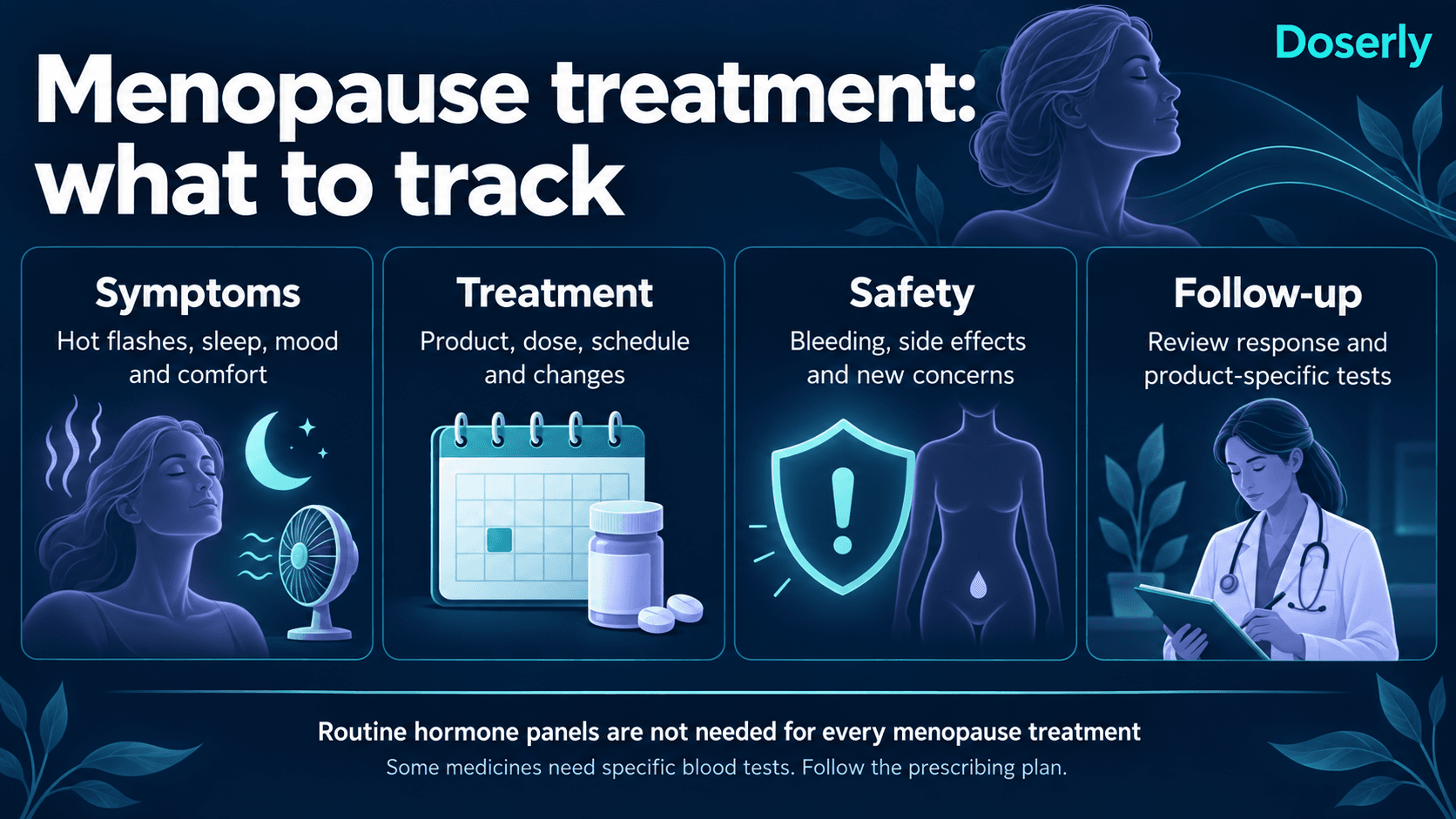
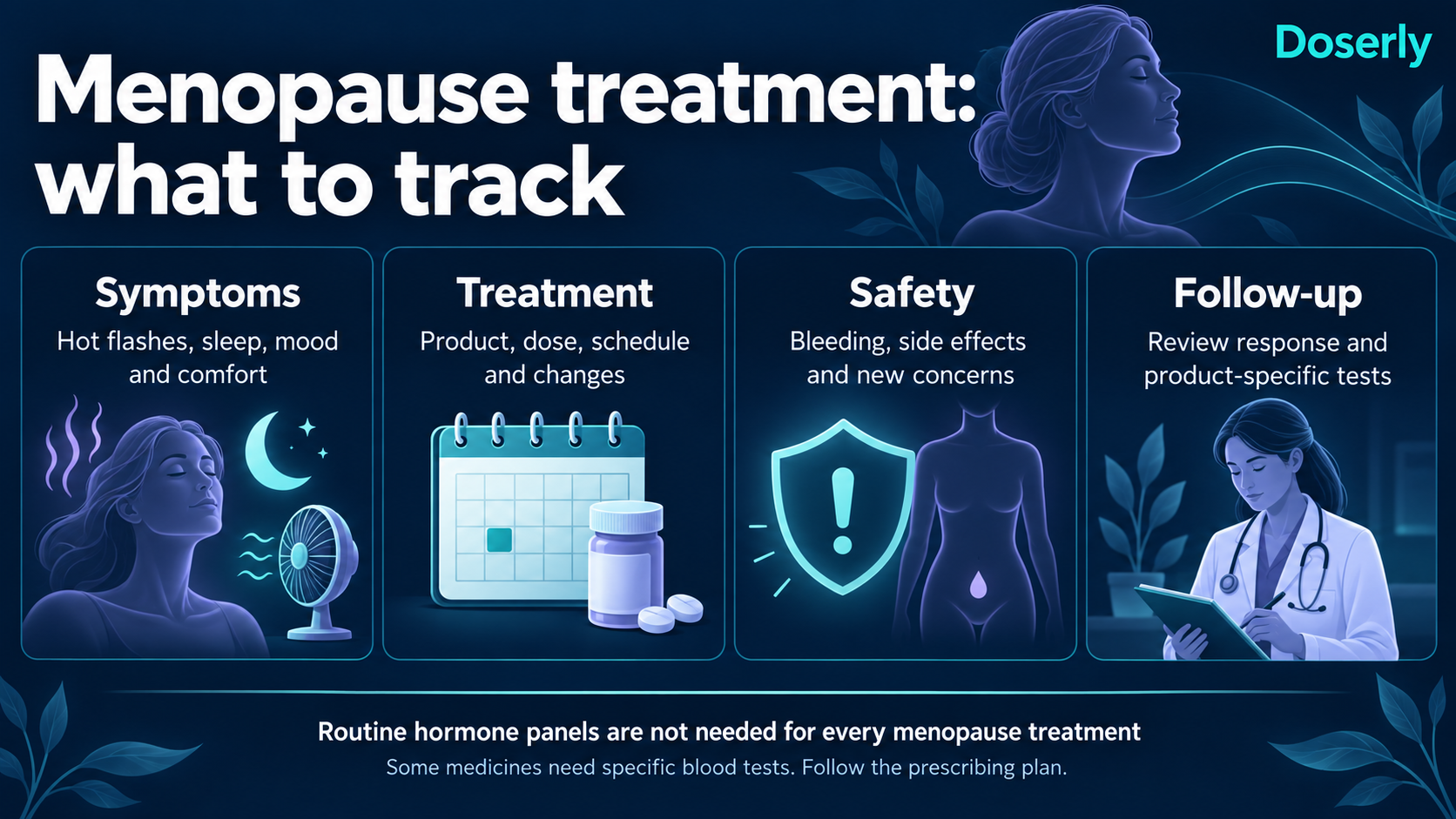
A useful treatment record includes symptoms, dates, treatment changes and new concerns. Routine menopause hormone panels are not a substitute for clinical review. Nonhormonal medicines have their own dosing, interaction and stopping precautions.
NICE menopause recommendations.
Pharmacokinetics / Hormone Physiology
The Basics
Different HRT routes create different hormone patterns in the body. Oral estrogen goes through the gut and liver first. Patches, gels, and sprays enter through the skin. Vaginal estrogen usually acts locally with much lower systemic exposure. Those route differences matter when people try to interpret labs.
A patch, gel, or spray does not produce one static number all day for every person. Absorption varies. Timing relative to application matters. Skin site, heat exposure, adherence problems, and even brand switches can change how the regimen feels in practice. In perimenopause, your own ovaries may still be producing unpredictable estrogen on top of the prescription. That means a single blood level may not explain very much.
The Science
BMS highlights several specific reasons serum estradiol is a weak universal monitoring tool: major interindividual variability at the same dose, pharmacokinetic and pharmacodynamic variation, assay limitations, and poor overall correlation with symptom response [4]. The same document also states there is no value in checking serum estradiol for patients taking oral estradiol because much of the hormone is metabolized to estrone, altering what the number means clinically [4].
Perimenopause is especially difficult because endogenous and exogenous estradiol cannot be reliably distinguished in standard testing unless the measured level is clearly very low [4]. ACOG reaches a related conclusion from a different angle: routine adjunct serum or saliva testing is not supported for standard dosing or titration of menopausal hormone therapy because steroid hormones do not behave like drugs with a narrow therapeutic window and reliable concentration-to-effect mapping [6].
Practical Implication
If a clinician is thinking about estradiol testing at all, the useful question is not "what is the level?" but "what decision would this result change?" If the answer is unclear, the test is usually low value.
Research & Clinical Evidence
Clinical Diagnosis and Follow-Up Structure
The Basics
The strongest guideline signal is that uncomplicated menopause care is mostly clinical. For typical patients aged 45 or over, diagnosis does not need routine hormone confirmation, and follow-up usually centers on symptom response plus safety review [1][2].
The Science
NICE recommends clinical identification of menopause/perimenopause in people aged 45 or older and formal review at 3 months, then annually [1]. BMS practice standards align with this and specify assessment of symptom control, basic health checks, screening discussions, and dosage/preparation changes when needed [2].
Routine Hormone Testing
The Basics
Routine estradiol, progesterone, or FSH testing is one of the least supported parts of modern menopause care for standard HRT users. Most people do not need these labs checked over and over to know whether their treatment is working [1][4][6].
The Science
BMS's 2025 estradiol guidance explicitly describes uncertainty in the meaning of a single estradiol value, poor symptom correlation, and lack of a universal therapeutic threshold [4]. ACOG similarly states that most individuals do not require ancillary serum testing and that symptoms should drive titration in standard menopausal hormone therapy care [6].
Bleeding Review and Endometrial Escalation
The Basics
Bleeding is the major exception to the "don't overtest" rule. It does not automatically mean something dangerous is happening, especially early after starting or changing HRT, but it does deserve structured review [1][3].
The Science
The BMS 2024 joint bleeding guideline separates low-risk early bleeding that can often be managed by regimen adjustment from persistent, heavy, late-onset, or risk-factor-associated bleeding that warrants urgent transvaginal ultrasound or further endometrial assessment [3]. That approach is more evidence-based than ordering routine ultrasound in everyone.
Preventive Screening vs HRT-Specific Surveillance
The Basics
Mammograms and DXA scans still matter during HRT use, but mostly because routine preventive screening still matters during midlife and beyond, not because every HRT user needs a special scan schedule [7][8].
The Science
USPSTF breast screening recommends biennial mammography for average-risk women aged 40 to 74 [7]. USPSTF osteoporosis screening recommends DXA for women 65 or older and for younger postmenopausal women at increased fracture risk [8]. These are preventive population/risk-based strategies, not universal HRT-monitoring tests.
Benefits & Therapeutic Effects
The Basics
Good monitoring does not mean more testing. It means better decisions. The benefit of a well-run HRT follow-up process is that it helps people stay on useful treatment safely, catch real problems sooner, and avoid being pushed into unnecessary labs or invasive investigations.
When follow-up is done well, patients usually understand what improvement should look like, what side effects are still within the settling-in range, when bleeding is expected to normalize, and when a symptom change really does justify earlier review. That structure is often more helpful than another hormone panel.
The Science
Guideline-based follow-up improves the match between treatment goals and treatment adjustments because it focuses on outcome domains HRT is actually meant to affect: vasomotor symptoms, sleep disruption linked to night sweats, mood changes linked to menopause, GSM symptoms, and bone-loss prevention where appropriate [1][5][9]. Periodic reevaluation also allows route changes, dose changes, or stopping decisions to be based on evolving benefit-risk balance rather than fixed time rules [1][5].
The other major benefit is diagnostic discipline. BMS and ACOG both discourage overinterpreting routine hormone levels, which helps reduce low-value testing and may prevent treatment changes based on misleading numbers alone [4][6].
Risks, Side Effects & Safety
The Basics
The biggest monitoring mistake in menopause care is not "failing to optimize a lab." It is missing the distinction between expected adjustment effects and true warning signs.
Common early issues include breast tenderness, bloating, headache, sedation or mood effects from progesterone, skin irritation from patches, and spotting or light bleeding after starting or changing a regimen. These issues are often reviewed first by timing, symptom pattern, and regimen details.
True safety follow-up is different. It focuses on abnormal bleeding, clot or stroke symptoms, new breast changes, significant blood pressure problems, or side effects severe enough that the current regimen no longer fits the patient. It also includes reviewing whether the person still has the same contraindications, migraine pattern, smoking status, immobility, or other vascular risks they had when treatment started [1][2][5].
The opposite mistake is false reassurance from "normal" labs. A normal estradiol level does not prove that unexplained bleeding is benign. A high FSH from the past does not cancel the need to evaluate postmenopausal bleeding. A saliva panel does not replace a proper clinical assessment.
The Science
NICE identifies vaginal bleeding as a common systemic HRT side effect in the first 3 months and recommends review at the scheduled follow-up [1]. The BMS bleeding guideline then refines that into a risk-based escalation pathway: early bleeding can often be managed conservatively, but persistent, heavy, late, or risk-factor-associated bleeding should move toward urgent ultrasound and possibly endometrial assessment [3].
The lab-related safety risk is overinterpretation. BMS states that one-off estradiol values correlate poorly with symptoms and are often inherently hard to interpret [4]. ACOG makes clear that most menopausal hormone therapy users do not need ancillary serum testing, and that symptom relief rather than a lab target should guide standard titration [6]. This does not mean "never test." It means testing should answer a specific clinical question.
Being informed about potential risks is important. Being able to track and document any side effects you actually experience is what turns awareness into safety. Doserly lets you log side effects as they happen, with timestamps and severity ratings, so nothing falls through the cracks between appointments.
If you're experiencing breakthrough bleeding, headaches, breast tenderness, or any other change, having a documented timeline helps your provider distinguish between expected adjustment effects and signals that warrant a protocol change. The app also checks for interactions between your HRT and any other medications or supplements you're taking.
Dosing & Treatment Protocols
The Basics
Monitoring expectations change with the regimen:
- Sequential or cyclical regimens can produce scheduled withdrawal bleeding.
- Continuous-combined regimens aim to avoid ongoing bleeding once the early settling period passes.
- Still-cycling perimenopausal patients are harder to interpret because their own hormones continue to fluctuate.
- Oral and transdermal regimens may feel different even when both are reasonable choices.
This matters because "the dose is wrong" is not the only explanation for symptoms or spotting. Sometimes the regimen type is the real issue.
The Science
NICE and BMS both treat HRT as individualized by uterus status, stage of menopause, route, and patient risk profile [1][2]. BMS's practical documents also note meaningful individual variation in absorption and metabolism, especially across transdermal preparations, and recommend that starting doses and increments be guided by symptom control and clinical background rather than fixed serum targets [4].
Practical Monitoring by Regimen
Regimen Type
Sequential systemic HRT
- What Often Matters Most
- Timing and volume of bleeding, symptom response, whether withdrawal bleeding matches the plan
Regimen Type
Continuous-combined systemic HRT
- What Often Matters Most
- Whether spotting settles over time, whether bleeding persists beyond the early window, symptom control, tolerability
Regimen Type
Transdermal estrogen
- What Often Matters Most
- Patch adhesion, brand changes, heat exposure, site rotation, symptom pattern across change days
Regimen Type
Oral estrogen
- What Often Matters Most
- Symptom response, side effects, blood pressure/risk review; routine estradiol levels are especially low value [4]
Regimen Type
Vaginal estrogen
- What Often Matters Most
- Symptom response for GSM, local irritation, whether systemic HRT is also being used
What to Expect (Timeline)
Before starting or changing HRT: Baseline work usually means symptom review, bleeding history, uterus status, medication list, cardiovascular/clot/breast risk review, and making sure routine preventive screening is not badly overdue. It does not usually mean a big hormone panel [1][2].
Weeks 1-4: Early side effects can include breast tenderness, bloating, headaches, skin irritation, sleepiness from progesterone, or light spotting. People often feel tempted to order labs here, but the more useful questions are whether the medication is being taken correctly and whether symptoms are moving in the right direction at all.
Weeks 5-8: A clearer response pattern often appears. This is when regimen-fit problems start to stand out: patch issues, poor progesterone tolerance, persistent vasomotor symptoms, or unexpected bleeding.
Around 3 months: This is the major formal review point in NICE and BMS guidance [1][2]. Revisit:
- symptom improvement,
- side effects,
- bleeding pattern,
- blood pressure/basic checks,
- whether the current route still fits the person's risk profile,
- whether any specific test would now change management.
Months 3-6: If bleeding began early but is settling, many patients continue observation or regimen adjustment. If it is persistent, heavy, newly late-onset, or linked to risk factors, investigation becomes more likely [3].
Annual review: The question is not "have you earned another year of the same prescription?" It is "does this treatment still make sense, at this dose, by this route, for this person, right now?" [1][5]
Knowing what to expect is helpful. Documenting your own journey week by week creates something even more valuable - a personal timeline that captures exactly how your treatment is unfolding. Doserly's symptom journal lets you record changes as they happen, building a detailed record from day one.
The early weeks of HRT can feel uncertain. Having a clear log of what's changing - and what hasn't shifted yet - helps you stay grounded in your actual progress rather than relying on memory. When you look back after three months, you'll see how far you've come in ways that are easy to forget without documentation.
Timing Hypothesis & Window of Opportunity
The Basics
The timing hypothesis is usually discussed as a treatment-risk issue, but it also matters for follow-up. Monitoring conversations are different when HRT is being started in early menopause for symptoms and bone-loss prevention than when it is being initiated much later with more competing vascular or cancer-risk questions.
The Science
The Menopause Society's 2022 statement continues to support the under-60 / within-10-years framing for a more favorable benefit-risk profile in appropriate candidates [5]. That does not create a lab protocol by itself, but it does change what follow-up emphasizes: younger, earlier users are more often reviewed around symptom control, bleeding, route, and long-term planning; later initiators generally need more careful risk-benefit reevaluation over time [5].
Interactions & Compatibility
SYNERGISTIC
- Symptom diary plus medication list review
- Preventive screening reminders
- Blood pressure follow-up in people with vascular risk factors
- Bone-health assessment in people with fracture risk
CAUTION
- Hepatic enzyme-inducing drugs that may alter regimen performance
- Thyroid disease or untreated anemia that can mimic HRT "failure"
- Anticoagulants or bleeding disorders that complicate bleeding interpretation
- Patch heat exposure or brand switching that may alter real-world experience
AVOID
- Saliva hormone testing as a routine dosing tool [6]
- Repeated FSH/estradiol testing in typical patients over 45 without a clear clinical question [1][4]
- Using "normal" hormone levels to dismiss postmenopausal bleeding [3]
Decision-Making Framework
Before a follow-up appointment, the most useful preparation is usually not more labs. It is better information.
Bring or track:
- the symptoms you wanted HRT to help,
- what improved,
- what did not improve,
- any side effects,
- any bleeding or spotting,
- current dose, route, and exact schedule,
- recent medication or supplement changes,
- last mammogram and other relevant screening dates,
- blood pressure or weight changes if relevant,
- questions about whether a specific test would change the plan.
Good follow-up questions include:
- Is my current bleeding pattern expected for this regimen and timing?
- If you want a lab, what decision would the result change?
- If symptoms returned, could this be perimenopause fluctuation, route fit, adherence, or another medical issue rather than simple underdosing?
- Am I due for routine mammography, DXA, cervical screening, or only a symptom-triggered investigation?
- Do we need to change the route, not just the dose?
The best HRT decisions happen when you walk into your appointment prepared. Doserly helps you organize your symptom data, treatment history, and questions ahead of time, so you can make the most of your consultation time and ensure nothing important gets forgotten.
The app generates appointment-ready summaries of your recent symptom trends, current protocol, and any side effects you've logged. Instead of trying to recall three months of experience in a ten-minute appointment, you have a clear, organized record to share with your provider.
Administration & Practical Guide
Practical monitoring often starts with practical use.
- For patches: record change days, site used, skin irritation, and whether symptoms worsen before the next scheduled change.
- For gels/sprays: note application timing, drying/transfer issues, shower timing, and whether missed or delayed applications line up with symptom flares.
- For oral therapy: note adherence, bedtime vs morning timing if relevant, nausea, and whether symptom response is stable.
- For progesterone: document sedation, mood effects, breast tenderness, cramps, and whether bleeding changed after a regimen change.
If a symptom flare appears suddenly, first check the basics:
- missed dose,
- patch adhesion failure,
- old patch not removed,
- brand substitution,
- new medication interaction,
- still-cycling hormonal fluctuation,
- illness, dehydration, thyroid or iron problems.
These details often matter more than a same-day estradiol number.
Monitoring & Lab Work
Baseline Assessment Before Starting or Changing HRT
Domain
Symptom baseline
- What Usually Matters
- Hot flashes, sleep, mood, GSM symptoms, migraines, quality-of-life impact
Domain
Gynecologic context
- What Usually Matters
- Uterus present or not, last menstrual period, still cycling or postmenopausal, bleeding history
Domain
Risk review
- What Usually Matters
- VTE/stroke history, breast or endometrial cancer history, liver disease, smoking, BMI, migraine with aura, cardiovascular disease
Domain
Medication review
- What Usually Matters
- Other hormones, anticoagulants, enzyme inducers, supplements, thyroid medications
Domain
Basic checks
- What Usually Matters
- Blood pressure and often weight/BMI [2]
Domain
Preventive care
Labs That Sometimes Matter
Situation
Diagnostic uncertainty age 40 to 45
- Possible Tests
- Serum FSH
- Why
- Helps confirm menopause or early menopause when symptoms alone are not enough [1]
Situation
Suspected POI / menopause under 40
- Possible Tests
- Repeated FSH, sometimes estradiol
- Why
- Diagnosis changes long-term treatment and bone/cardiovascular planning [1]
Situation
Pregnancy possible
- Possible Tests
- Pregnancy test
- Why
- Important before or during regimen changes in still-fertile patients
Situation
Heavy or prolonged bleeding
- Possible Tests
- CBC, ferritin as indicated
- Why
- Looks for anemia while bleeding workup proceeds
Situation
Symptoms suggesting another disorder
- Possible Tests
- TSH, metabolic labs, other targeted tests
- Why
- Thyroid disease, anemia, diabetes, and other conditions can mimic poor HRT response
Situation
Concern about unusual transdermal absorption or nonstandard therapy
- Possible Tests
- Selective estradiol testing
- Why
- Rarely useful, but may help in specific complex cases [4]
Situation
Testosterone therapy
- Possible Tests
- Baseline and follow-up testosterone
- Why
- Testosterone is the main menopause-hormone exception where monitoring levels remains important [6]
Labs That Usually Do Not Help
- Routine estradiol checks in standard regulated HRT users whose follow-up question is simply "is this working?" [4][6]
- Routine progesterone checks to confirm endometrial protection in otherwise standard care
- Repeated FSH testing in people aged 45 or over with typical symptoms [1]
- Saliva hormone panels marketed to fine-tune menopause treatment [6]
- Oral estradiol levels used as if they represent a universal clinical target [4]
Follow-Up Timing
Timing
Around 3 months
Timing
Earlier than 3 months
- Main Monitoring Tasks
- If severe side effects, heavy/new bleeding, or poor control develops [1]
Timing
Annual review
Imaging and Screening Follow-Up
Test / Screening
Mammography
- Routine for Everyone on HRT?
- No special HRT-only schedule
- Practical Rule
- Stay current with age/risk-based screening; for average-risk US adults, USPSTF recommends biennial screening ages 40 to 74 [7]
Test / Screening
DXA
- Routine for Everyone on HRT?
- No
- Practical Rule
- Use age/risk-based osteoporosis screening; routine for women 65+ and younger postmenopausal women at increased fracture risk [8]
Test / Screening
Transvaginal ultrasound
- Routine for Everyone on HRT?
- No
- Practical Rule
- Use when bleeding pattern or endometrial risk suggests it [3]
Test / Screening
Endometrial biopsy / hysteroscopy
- Routine for Everyone on HRT?
- No
- Practical Rule
- Consider after abnormal bleeding workup, not as routine surveillance [3]
Bleeding Review Checklist
Ask:
- Is this within 6 months of starting HRT?
- Did this begin within 3 months of a dose or regimen change?
- Is the regimen sequential or continuous-combined?
- Is the bleeding light settling-in spotting, or heavy/prolonged?
- Did bleeding begin after 12 months of amenorrhea?
- Are there endometrial cancer risk factors or progestogen-coverage concerns?
Lower-risk early bleeding may allow regimen adjustment first. Persistent, heavy, late-onset, or risk-factor-associated bleeding should move faster toward ultrasound and specialist review [3].
Interpretation Limits Patients Should Know
- One hormone level is a snapshot, not your whole month [4].
- In perimenopause, your own ovaries may still distort the number [4].
- A "normal" result does not prove symptoms are adequately treated.
- A "low" result does not automatically mean the dose is wrong.
- Bleeding decisions are usually not settled by estradiol or FSH.
- Preventive screening decisions are usually based on age and risk, not hormone-level targets.
Bottom Line
Routine HRT monitoring is mostly about the right questions at the right time. The highest-yield tools are symptom tracking, bleeding review, blood pressure/basic risk review, and staying current with preventive screening. Labs matter when they answer a specific question. They should not become the default substitute for clinical judgment.
Complementary Approaches & Lifestyle
Monitoring works better when the underlying health context is not ignored.
- Strength training, adequate protein, calcium sufficiency, and vitamin D matter for bone outcomes alongside HRT.
- Smoking cessation, blood pressure management, weight management, and exercise matter for cardiovascular risk review.
- Sleep hygiene, stress management, and treatment of iron deficiency, thyroid disease, or mood disorders may improve symptoms that are otherwise misattributed to "not enough estrogen."
- A symptom diary is often more informative than memory alone, especially for still-cycling perimenopause.
This section is not a substitute for HRT follow-up. It is what makes HRT follow-up easier to interpret.
Stopping HRT / Discontinuation
Stopping HRT also does not usually require routine hormone lab work. The main questions are whether symptoms recur, whether GSM needs local treatment even if systemic therapy stops, whether bone risk changes, and whether the person is stopping because of a side effect, a new contraindication, or simple preference [1][5].
If symptoms return after stopping, the clinically useful information is usually the symptom pattern itself. Routine FSH or estradiol testing does not usually decide whether restarting is appropriate in a typical over-45 menopause context.
Special Populations & Situations
- POI / menopause under 40: This is the clearest place where diagnostic hormone testing matters. Follow-up is also more attentive to bone and cardiovascular consequences of prolonged estrogen deficiency [1].
- Ages 40 to 45 with uncertainty: FSH may help when the diagnosis is unclear [1].
- Still-cycling perimenopause: Lab interpretation is hardest here because endogenous fluctuation continues [4].
- Known fibroids, polyps, or prior abnormal bleeding: Bleeding review thresholds may be lower and imaging may be needed sooner [3].
- Thyroid disease, iron deficiency, or other comorbidity: Symptoms may mimic HRT failure; targeted non-hormone labs matter more than routine estradiol.
- Migraine, obesity, clot risk, cardiovascular disease: Route choice and risk review become more important than hormone number chasing [2][5].
- Compounded or pellet therapy: Clinicians may use selective serum testing more often because potency/absorption are less predictable, but this is a special-case logic, not a model for standard regulated HRT [6].
- Testosterone use: Baseline and follow-up testosterone levels matter more than with standard estrogen/progestogen menopause treatment [6].
Regulatory, Insurance & International
Across current high-quality guidance, there is more agreement than disagreement on monitoring:
- United Kingdom: NICE emphasizes clinical diagnosis over routine hormone testing, review at 3 months and annually thereafter, and updated 2026 bleeding advice: bleeding is common during the first 6 months of systemic HRT or within 3 months after a dose/preparation change, but bleeding beyond those windows needs prompt assessment [1][2][3].
- United States: ACOG and The Menopause Society emphasize individualized treatment and periodic reevaluation, while USPSTF provides the age/risk-based mammography and DXA context [5][6][7][8].
- Canada, Australia, EU: Guidance varies by organization, but the same broad principles usually hold: symptom-led follow-up, route-aware risk review, and no routine hormone-panel surveillance for uncomplicated menopause care.
Insurance or private-clinic practices may still encourage more testing than guidelines support. That does not automatically mean the tests are evidence-based.
FAQ
1. Do I need routine estradiol blood tests while on HRT?
Usually no. Most standard menopause care is followed by symptoms, side effects, bleeding pattern, and risk review rather than routine estradiol testing [1][4][6].
2. Do I need FSH testing after age 45 to prove menopause?
Usually no. In most people aged 45 or over with typical symptoms, menopause is identified clinically [1].
3. When can estradiol testing be useful?
Mostly in narrower situations such as diagnostic uncertainty, suspected POI, or selected complex cases where absorption or nonstandard treatment is in question [1][4].
4. Is oral estradiol blood testing useful?
Generally not. BMS specifically says there is no value in checking serum estradiol in people taking oral estradiol because interpretation is poor [4].
5. If my symptoms return, does that mean my estrogen level is low?
Not necessarily. In perimenopause, your own hormones may fluctuate. Adherence issues, patch problems, brand changes, illness, stress, iron deficiency, thyroid issues, or regimen mismatch can also matter.
6. Is bleeding on HRT always dangerous?
No, but it should be taken seriously. Early spotting can be common after starting or changing treatment, while persistent, heavy, or late-onset bleeding needs structured review and sometimes ultrasound [1][3].
7. Do I need regular ultrasounds just because I am on HRT?
No. Transvaginal ultrasound is usually symptom-triggered, especially by bleeding, not a universal surveillance test [3].
8. Do I need more mammograms because I use HRT?
Not automatically. Stay current with routine age/risk-based breast screening. For average-risk US women, USPSTF recommends biennial mammography from ages 40 to 74 [7].
9. Should everyone on HRT get a DXA scan?
No. DXA is risk-based. It is routine at age 65 or older and earlier when fracture risk is elevated [8].
10. Are saliva hormone tests useful for personalizing menopause treatment?
No. ACOG states salivary testing does not provide accurate or precise steroid hormone assessment for this purpose [6].
11. What should happen at a 3-month HRT review?
Symptom review, side-effect review, bleeding review, basic health checks such as blood pressure, regimen/adherence discussion, and screening/risk update [1][2].
12. What is the most useful thing I can bring to a follow-up appointment?
Usually a structured record of symptoms, bleeding, side effects, route/dose timing, and any changes in other medications or supplements.
Myth vs. Fact
Myth: Every HRT user needs regular hormone bloodwork.
Fact: Mainstream guidance does not recommend routine hormone-panel monitoring for standard menopausal HRT [1][4][6].
Myth: A single estradiol result tells you whether your dose is correct.
Fact: One value often correlates poorly with symptom response and may be hard to interpret, especially in perimenopause [4].
Myth: FSH is the best way to diagnose menopause after age 45.
Fact: In most people over 45 with typical symptoms, diagnosis is clinical [1][2].
Myth: If labs are normal, unexplained bleeding is probably fine.
Fact: Bleeding decisions are driven by bleeding pattern and risk context, not reassuring hormone numbers [3].
Myth: Everyone on HRT needs regular pelvic ultrasounds.
Fact: Ultrasound is generally triggered by bleeding or other specific concerns, not used as routine surveillance [3].
Myth: Mammography becomes an HRT-specific monitoring test.
Fact: Breast screening remains age/risk based rather than universally intensified just because someone uses HRT [7].
Myth: DXA is mandatory for all HRT users.
Fact: Bone-density screening is risk based and age based [8].
Myth: Saliva testing can precisely individualize estrogen and progesterone therapy.
Fact: ACOG says these tests are not recommended for that purpose [6].
Myth: If symptoms flare, the only answer is more estrogen.
Fact: Symptom flares may reflect endogenous fluctuation, route issues, adherence problems, side effects, or another diagnosis.
Myth: Monitoring means chasing numbers.
Fact: Monitoring mainly means structured clinical follow-up, bleeding review, risk reassessment, and staying current with preventive screening [1][2][5].
Sources & References
[1] National Institute for Health and Care Excellence. Menopause: identification and management (NG23). Published November 12, 2015; last updated April 15, 2026. https://www.nice.org.uk/guidance/ng23.
[2] British Menopause Society, Royal College of Obstetricians and Gynaecologists, Society for Endocrinology, and partners. Menopause Practice Standards. July 2022.
[3] British Menopause Society and partner organizations. Management of unscheduled bleeding on hormone replacement therapy. November 2024.
[4] British Menopause Society. Measurement of serum estradiol in the menopause transition. July 2025.
[5] The North American Menopause Society Advisory Panel. The 2022 hormone therapy position statement of The North American Menopause Society. Menopause. 2022;29(7):767-794.
[6] American College of Obstetricians and Gynecologists. Compounded bioidentical menopausal hormone therapy. Clinical Consensus No. 6. November 2023.
[7] US Preventive Services Task Force. Breast Cancer: Screening. Final Recommendation Statement. April 30, 2024.
[8] US Preventive Services Task Force. Osteoporosis to Prevent Fractures: Screening. Final Recommendation Statement. January 14, 2025.
[9] Crandall CJ, Mehta JM, Manson JE. Management of Menopausal Symptoms: A Review. JAMA. 2023;329(5):405-420.
Related Guides & Cross-Links
Same Category
Related Conditions
- Perimenopause
- Menopause
- Premature Ovarian Insufficiency (POI)
- Genitourinary Syndrome of Menopause (GSM)
Related Treatment Approaches
- Transdermal HRT (Patches, Gels, Sprays)
- Vaginal Estrogen Therapy
- Menopause, Heart & Bone Health
- Menopause and Mental Health