
Post-Menopause: Symptoms, Risks, and Treatment Options
On this page
Quick Reference Card
Attribute
Definition
- Value
- The stage of life beginning 12 months after the final menstrual period (FMP), lasting for the remainder of life
Attribute
Prevalence
- Value
- Affects all women who reach natural or induced menopause; approximately 1.3 billion women worldwide are postmenopausal
Attribute
Typical Age of Onset
- Value
- Average age 52 (range: 40-58 for natural menopause)
Attribute
STRAW+10 Stage
- Value
- Early postmenopause: Stages +1a, +1b, +1c (approximately 5-8 years after FMP); Late postmenopause: Stage +2 (remainder of life)
Attribute
First-Line Treatments
- Value
- HRT for persistent vasomotor symptoms (within timing window); vaginal estrogen for GSM; calcium and vitamin D for bone health; lifestyle modifications
Attribute
Key Biomarkers
- Value
- FSH (elevated, >30 IU/L typical); estradiol (low, typically <20 pg/mL); AMH (very low or undetectable)
Attribute
When to Seek Medical Help
- Value
- Any vaginal bleeding after confirmed menopause; new or worsening symptoms; bone fracture; cardiovascular symptoms; significant mood changes
Overview / What Is Post-Menopause?
The Basics
Post-menopause is the chapter of life that begins once you have gone 12 consecutive months without a menstrual period. It is not a brief phase or a transition; it is the rest of your life after menopause. On average, women reach this stage around age 52, though the timeline varies widely depending on genetics, health history, and whether menopause occurred naturally or was induced by surgery or medical treatment.
For many women, entering post-menopause brings a sense of relief. The hormonal turbulence of perimenopause settles, and symptoms like irregular periods, mood swings, and the worst of the hot flashes may ease. But post-menopause is not simply the absence of menopause symptoms. It is a distinct hormonal state, one where estrogen, progesterone, and other reproductive hormones remain at consistently low levels for the rest of life. These low hormone levels carry real consequences for bone density, cardiovascular health, urogenital tissues, and overall wellbeing.
The experience of post-menopause varies enormously. Some women feel better than they have in years. Others continue to deal with persistent symptoms, sometimes for a decade or longer. Research has upended the old assumption that hot flashes and night sweats disappear quickly after menopause. Studies now show that up to 40% of women in their 60s still experience vasomotor symptoms, and the average duration of hot flashes is 7 to 11 years [1][2]. For some women, symptoms persist into their 70s and beyond.
Understanding post-menopause matters because the health decisions you make during this stage, from bone health to cardiovascular screening to whether hormone therapy makes sense for your situation, can significantly shape your quality of life and long-term health outcomes.
The Science
Post-menopause is defined by the Stages of Reproductive Aging Workshop +10 (STRAW+10) consensus criteria as the period following the final menstrual period (FMP). The STRAW+10 framework subdivides post-menopause into two major stages with distinct endocrine profiles [3].
Early post-menopause encompasses Stages +1a, +1b, and +1c. During Stages +1a and +1b (the first two years after the FMP), follicle-stimulating hormone (FSH) continues to rise and estradiol continues to decline, reflecting ongoing adjustment of the hypothalamic-pituitary-ovarian axis. Stage +1a, which spans the 12 months immediately after the FMP, is when vasomotor symptoms are most likely to be severe. FSH and estradiol levels stabilize by the end of Stage +1b, approximately 2 years post-FMP. Stage +1c represents the period of stabilized high FSH and low estradiol values, estimated to last 3 to 6 years. The entire early post-menopause phase lasts approximately 5 to 8 years [3].
Late post-menopause (Stage +2) represents the period in which further changes in reproductive endocrine function are more limited, and processes of somatic aging become the dominant health concern. Symptoms of vaginal dryness and urogenital atrophy become increasingly prevalent during this stage, as these tissues are particularly sensitive to sustained estrogen deprivation [3]. Interestingly, FSH levels have been observed to decline again many years after menopause in the very elderly, though the clinical significance of this finding remains unclear [3].
The STRAW+10 staging system was developed through analysis of data from multiple longitudinal cohorts, including the Study of Women's Health Across the Nation (SWAN, N=1,215). The pattern of FSH and estradiol change across the menopausal transition and into post-menopause is robust and predictable regardless of age, ethnicity, body size, or lifestyle characteristics [3].
Medical / Chemical Identity
ICD-10 Code: N95.1 (Menopausal and female climacteric states); Z78.0 (Asymptomatic menopausal state)
STRAW+10 Staging:
Stage
+1a
- Name
- Early postmenopause (first year)
- Duration
- ~1 year
- Key Features
- FMP determination, peak vasomotor symptoms, FSH rising, estradiol declining
Stage
+1b
- Name
- Early postmenopause (second year)
- Duration
- ~1 year
- Key Features
- FSH and estradiol stabilizing
Stage
+1c
- Name
- Early postmenopause (stabilization)
- Duration
- ~3-6 years
- Key Features
- Stable high FSH, stable low estradiol
Stage
+2
- Name
- Late postmenopause
- Duration
- Remainder of life
- Key Features
- Limited endocrine change, somatic aging predominates, GSM increasingly prevalent
Diagnostic Criteria:
- 12 consecutive months of amenorrhea (no menstrual bleeding) in women over 45 without other explanatory cause
- Elevated FSH may support diagnosis only in selected situations; routine FSH testing is usually unnecessary after typical menopause, and repeat testing is reserved for uncertain cases
- Low estradiol (typically <20 pg/mL)
- AMH very low or undetectable
Note: Hormonal testing is generally not required for diagnosis in women over 45 with characteristic symptoms and 12 months of amenorrhea. Testing may be useful for younger women or those with ambiguous presentations.
Mechanism of Action / Pathophysiology
The Basics
To understand post-menopause, it helps to understand what estrogen was doing before its levels dropped. Estrogen is not just a reproductive hormone. It acts throughout the body: in your bones, blood vessels, brain, skin, urinary tract, and joints. Think of it as a maintenance signal that keeps many different systems running smoothly.
During post-menopause, the ovaries have essentially stopped producing estradiol (the most active form of estrogen). The body does still make small amounts of estrogen, primarily a weaker form called estrone, produced in fat tissue. But this is a fraction of what the ovaries once supplied, and it is not potent enough to maintain the protective effects that estradiol provided.
The consequences unfold over different timescales. Vasomotor symptoms (hot flashes and night sweats) tend to be worst in early post-menopause and may gradually ease over years, though not for everyone. Bone loss accelerates immediately after menopause and continues at a rate of roughly 1 to 2% per year, with the most rapid losses occurring in the first 5 to 7 years [4]. Vaginal and urinary tract changes are progressive and, unlike hot flashes, typically worsen over time without treatment [3]. Cardiovascular risk increases as the protective effects of estrogen on blood vessels, cholesterol profiles, and inflammation diminish.
The timing of these changes matters for treatment decisions. The "window of opportunity" for certain interventions, particularly systemic hormone therapy for cardiovascular and bone protection, is closely tied to how recently menopause occurred.
The Science
The pathophysiology of post-menopause is driven by the near-complete cessation of ovarian estradiol production. Premenopausal ovaries produce 70 to 500 mcg of estradiol daily, depending on the menstrual cycle phase. In post-menopause, ovarian estradiol output drops to negligible levels, and the primary circulating estrogen shifts to estrone (E1), produced predominantly by peripheral aromatization of adrenal androstenedione in adipose tissue [5].
Estrone is approximately 10-fold less potent than estradiol at estrogen receptors, and circulating concentrations are insufficient to maintain the physiological functions previously supported by estradiol. The ratio of estrone to estradiol inverts: premenopausal E2:E1 ratio of approximately 2:1 becomes a postmenopausal ratio of approximately 1:2-3 [5].
Bone metabolism: Estrogen deficiency disrupts the coupling between osteoblast (bone formation) and osteoclast (bone resorption) activity. Estradiol normally suppresses osteoclast activity through OPG/RANKL regulation via ER-alpha. Without this suppression, osteoclast-mediated resorption accelerates, resulting in net bone loss. Trabecular bone is affected first and most severely, with losses of 2 to 3% per year in the first 5 to 7 years post-menopause [6]. A postmenopausal woman can lose up to 25% of her bone density in the decade following menopause [4].
Cardiovascular system: Estradiol promotes endothelial nitric oxide synthase (eNOS) activity, maintaining vasodilation and vascular health. It also favorably modulates lipid profiles (increasing HDL, decreasing LDL) and has anti-inflammatory effects on the vascular endothelium. Loss of these effects contributes to accelerated atherosclerosis in post-menopause. The timing hypothesis suggests that estrogen replacement may preserve cardiovascular health when administered to healthy vasculature (early post-menopause) but may not benefit, or may potentially destabilize, already-atherosclerotic vessels (late post-menopause) [7].
Genitourinary system: The vaginal epithelium, urethral mucosa, and bladder trigone are estrogen-dependent tissues that undergo progressive atrophy in the absence of estradiol. Vaginal epithelial thickness decreases, glycogen content drops, Lactobacillus populations decline, and vaginal pH rises from the premenopausal range of 3.5-4.5 to 6.0-7.5, increasing susceptibility to infection [8]. Unlike vasomotor symptoms, genitourinary changes are progressive and do not resolve spontaneously.
Thermoregulation: The narrowing of the thermoneutral zone in the hypothalamic preoptic area, which produces vasomotor symptoms, is a direct consequence of reduced estradiol signaling. While this thermoregulatory disruption is most acute during the menopausal transition, it persists in many postmenopausal women for years, reflecting individual variation in hypothalamic sensitivity to low estrogen states [9].
Visual guide
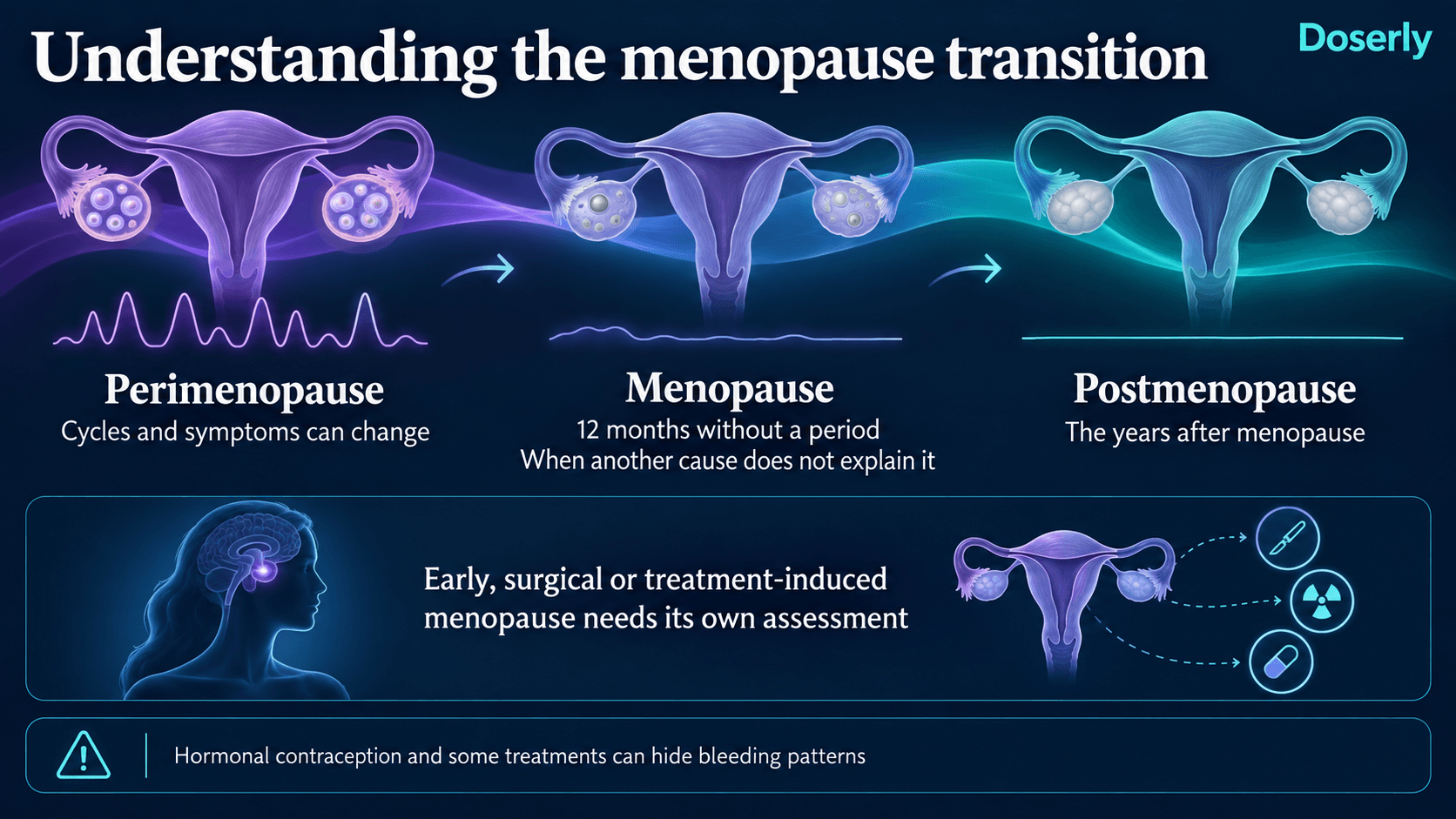
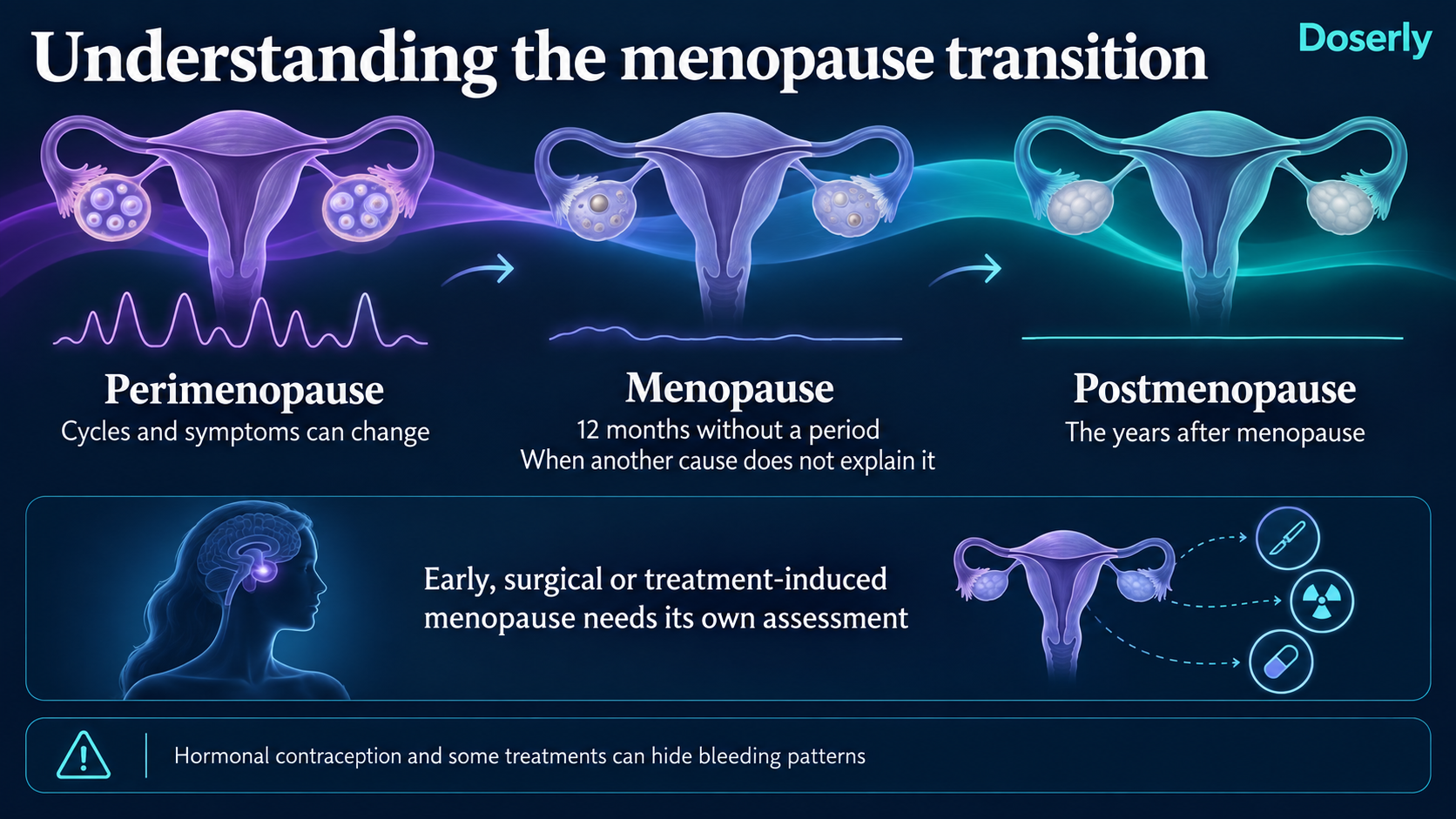
The timeline is conceptual, not a hormone-level graph. The 12-month definition applies when bleeding patterns can be interpreted and no other cause explains absent periods. POI, surgery, contraception and cancer treatments require different diagnostic considerations.
NICE menopause recommendations.
Pharmacokinetics / Hormone Physiology
The Basics
In post-menopause, your body's hormone production looks very different from what it was before. The ovaries, which were once the primary source of estradiol, have essentially retired. The small amounts of estrogen your body still produces come mainly from a different process: fat tissue converting adrenal hormones into a weaker form of estrogen called estrone.
This shift has practical implications. Women with more body fat tend to have slightly higher estrone levels in post-menopause, which can provide a modest buffer against some estrogen-deficiency symptoms but also carries its own implications (estrone can stimulate the uterine lining, and higher body fat is associated with increased breast cancer risk in postmenopausal women).
Progesterone production also drops to very low levels. The ovaries were the primary source during reproductive years, and without ovulation, meaningful progesterone production ceases. Adrenal glands produce small amounts, but not enough to have significant physiological effects.
If you are considering or using hormone therapy in post-menopause, the route of delivery and the type of hormones used become especially important. Transdermal estradiol (patches, gels, sprays) avoids the liver processing that oral tablets require, which means fewer effects on blood clotting factors and a more favorable safety profile, particularly as you get older.
The Science
Postmenopausal endocrine profile:
Hormone
Estradiol (E2)
- Premenopausal Range
- 30-400 pg/mL (varies by cycle phase)
- Postmenopausal Range
- <20 pg/mL (typically 5-15 pg/mL)
- Primary Source
- Peripheral aromatization
Hormone
Estrone (E1)
- Premenopausal Range
- 30-200 pg/mL
- Postmenopausal Range
- 15-55 pg/mL
- Primary Source
- Adipose tissue aromatization of adrenal androstenedione
Hormone
FSH
- Premenopausal Range
- 3-20 IU/L (follicular phase)
- Postmenopausal Range
- 30-120 IU/L
- Primary Source
- Anterior pituitary (loss of negative feedback)
Hormone
Progesterone
- Premenopausal Range
- 0.1-25 ng/mL (varies by cycle phase)
- Postmenopausal Range
- <0.5 ng/mL
- Primary Source
- Minimal adrenal production
Hormone
Testosterone
- Premenopausal Range
- 15-70 ng/dL
- Postmenopausal Range
- 10-40 ng/dL (gradual decline with age)
- Primary Source
- Adrenal glands, postmenopausal ovary
Hormone
AMH
- Premenopausal Range
- 1-10 ng/mL
- Postmenopausal Range
- <0.1 ng/mL (undetectable)
- Primary Source
- Granulosa cells (depleted)
Hormone
DHEA-S
- Premenopausal Range
- 65-380 mcg/dL
- Postmenopausal Range
- Progressively declining with age
- Primary Source
- Adrenal glands
The postmenopausal ovary continues to produce small quantities of testosterone and androstenedione, contributing to approximately 50% of circulating androgens [5]. This residual androgen production has clinical relevance for sexual function and body composition.
Aromatase activity in adipose tissue converts adrenal androstenedione to estrone, establishing a positive correlation between body mass index and postmenopausal estrone levels. This peripheral estrogen production is sufficient to maintain some estrogen-dependent functions at a reduced level but cannot replicate the tissue-specific, pulsatile delivery of ovarian estradiol [5].
Research & Clinical Evidence
The Basics
The research landscape for post-menopause has evolved dramatically over the past two decades. The 2002 Women's Health Initiative (WHI) findings initially caused many women and their doctors to abandon hormone therapy almost overnight. Since then, a much more nuanced picture has emerged, one that recognizes both the real benefits and the real risks of HRT, and that emphasizes timing, route, and formulation as key factors in the risk-benefit equation.
The key insight from post-WHI research is that when HRT is started matters as much as whether it is started. Women who begin hormone therapy within 10 years of menopause, or before age 60, appear to have a more favorable risk-benefit profile than those who start later. This is known as the "timing hypothesis," and it has reshaped how clinicians approach HRT decisions for postmenopausal women.
For women in early post-menopause with bothersome symptoms, current evidence supports HRT as the most effective treatment for vasomotor symptoms, with additional benefits for bone health, GSM, and possibly cardiovascular protection. For women further from menopause, the decision becomes more complex, and individualized risk-benefit assessment becomes essential.
Perhaps most importantly, recent large-scale research has challenged the idea that there is a fixed age at which HRT must stop. A study of 10 million Medicare women found that estrogen monotherapy beyond age 65 was associated with reduced risks of mortality, breast cancer, lung cancer, cardiovascular disease, and dementia, with the greatest benefits seen with low-dose, transdermal formulations [10].
The Science
Women's Health Initiative (WHI): The WHI remains the largest randomized controlled trial of menopausal hormone therapy. The estrogen-plus-progestin arm (n=16,608, mean age 63) was stopped early in 2002 due to increased breast cancer risk (HR 1.26, 95% CI: 1.00-1.59), corresponding to 8 additional breast cancer cases per 10,000 women per year. The estrogen-alone arm (n=10,739, hysterectomized women, mean age 64) showed a non-significant reduction in breast cancer (HR 0.77, 95% CI: 0.59-1.01) [11].
Critical WHI limitations for the post-menopause context: the average participant age was 63, with most women 10+ years past menopause at enrollment. This population does not represent women initiating HRT in early post-menopause.
WHI Age Subgroup Reanalyses: Women aged 50-59 in the WHI showed a trend toward reduced coronary heart disease with HRT (HR 0.76, 95% CI: 0.50-1.16), while women aged 70-79 showed increased risk (HR 1.26, 95% CI: 1.00-1.59). The estrogen-alone arm showed a significant reduction in coronary artery calcification in women aged 50-59 [12].
KEEPS (Kronos Early Estrogen Prevention Study): A smaller RCT (n=727) studying women aged 42-58, within 6-36 months of their FMP. KEEPS found that early initiation of low-dose HRT was safe and effective for vasomotor symptoms. Neither oral CEE (0.45 mg) nor transdermal estradiol (50 mcg) significantly affected carotid intima-media thickness or coronary artery calcification after 4 years, but both effectively relieved symptoms [13].
ELITE (Early vs Late Intervention Trial with Estradiol): Randomized 643 postmenopausal women to oral estradiol or placebo, stratified by time since menopause (<6 years vs >10 years). In early post-menopause, estradiol reduced carotid intima-media thickness progression (difference: -0.0044 mm/year, p=0.008). In late post-menopause, no benefit was observed [14]. This provided direct evidence supporting the timing hypothesis.
Medicare study (Baik et al., 2024): Analysis of 10 million senior Medicare women (2007-2020) found that estrogen monotherapy beyond age 65 was associated with significant risk reductions in mortality, breast cancer, cardiovascular events, and dementia. Risk reductions were greater with low doses, transdermal or vaginal rather than oral preparations, and with estradiol rather than conjugated estrogen. Combination therapy increased breast cancer risk but reduced endometrial and ovarian cancer risk [10].
Danish Osteoporosis Prevention Study (DOPS): Open-label RCT (n=1,006) randomizing recently postmenopausal women (mean age 50, within 7 months of last period) to HRT or no treatment. After 10 years, the HRT group showed significantly reduced mortality and heart failure, with no increase in cancer, VTE, or stroke [15].
Benefits & Therapeutic Effects
The Basics
The benefits of managing post-menopause proactively, whether through hormone therapy, lifestyle modifications, or both, span multiple body systems. For women who choose HRT, the most immediate and noticeable benefit is typically relief from vasomotor symptoms. Hot flashes and night sweats often improve within days to weeks of starting treatment.
Beyond symptom relief, there are protective benefits that are less visible but equally important. Estrogen therapy helps maintain bone density, reducing the risk of osteoporosis and fractures. It can improve or prevent genitourinary syndrome of menopause (vaginal dryness, urinary symptoms, and recurrent UTIs), a condition that worsens progressively without treatment. There is growing evidence that when started within the recommended timing window, HRT may also provide cardiovascular protection and reduce the risk of type 2 diabetes.
Quality-of-life improvements should not be underestimated. Being able to sleep through the night, feel comfortable in your own body, maintain intimate relationships without pain, and move with less stiffness are meaningful outcomes that clinical trial endpoints do not always capture. Joint and musculoskeletal symptoms deserve assessment, but HRT should not be presented as a primary joint-pain treatment.
Not every postmenopausal woman needs or wants hormone therapy. For those who do not use HRT, targeted interventions (vaginal estrogen for GSM, calcium and vitamin D for bones, weight-bearing exercise, cardiovascular risk factor management) remain important tools for maintaining health and quality of life during post-menopause.
The Science
Vasomotor symptoms: HRT reduces hot flash frequency by 75-95% in most women, with onset of improvement typically within 2-4 weeks [1]. The 2022 NAMS Position Statement affirms HRT as first-line therapy for bothersome vasomotor symptoms.
Bone health: The WHI demonstrated a 34% reduction in hip fractures (HR 0.66, 95% CI: 0.45-0.98) and a 24% reduction in total fractures with combined HRT [11]. Bone-protective effects persist as long as therapy continues, with bone loss resuming after discontinuation.
GSM: Vaginal estrogen is effective in 80-90% of women with GSM symptoms. Low-dose vaginal estrogen does not significantly increase systemic estrogen levels and is not associated with increased breast cancer risk [8]. The 2025 AUA guideline provides a strong recommendation for local low-dose vaginal estrogen for GSM.
Cardiovascular health: The DOPS trial showed that early HRT initiation (within 7 months of menopause) was associated with significantly reduced mortality and heart failure after 10 years of treatment, with no increase in adverse events [15]. The ELITE trial confirmed that early initiation slowed carotid intima-media thickness progression [14].
Metabolic health: Observational data suggest HRT may reduce the incidence of type 2 diabetes. The WHI found a 21% reduction in diabetes incidence in the combined HRT arm (HR 0.79, 95% CI: 0.67-0.93) [11].
When considering the benefits of HRT for post-menopause, it is essential to discuss individual risk factors, preferences, and health goals with a qualified healthcare provider. The benefit profile varies depending on a woman's age, time since menopause, health history, and symptom burden.
Tracking symptoms before and during any treatment helps both you and your provider understand what is working. Documenting hot flash frequency, sleep quality, mood, joint pain, and energy levels creates a personal record that makes follow-up conversations more productive and treatment adjustments more precise.
Risks, Side Effects & Safety
The Basics
Every medical decision involves weighing potential benefits against potential risks, and hormone therapy in post-menopause is no exception. The good news is that for most healthy women who start HRT within the recommended timing window and use appropriate formulations, the absolute risks are small. The less good news is that risks are not zero, and they vary depending on your individual health profile, the type and route of HRT, and how long you use it.
Common side effects when starting HRT include breast tenderness, bloating, headache, and irregular bleeding (particularly in the first 3 to 6 months of continuous combined therapy). These usually settle with time. Nausea is more common with oral formulations.
The serious risks that receive the most attention (and have historically caused the most fear) include blood clots, stroke, and breast cancer. It is crucial to understand these risks in context: what the actual numbers are, how they vary by formulation, and how they compare to everyday risks you may already accept.
What you take, how you take it, and when you start all influence your risk profile. Transdermal estradiol (patches, gels, sprays) has a lower observed clot-risk signal than oral estrogen. Micronized progesterone appears to carry less breast cancer risk than synthetic progestins like medroxyprogesterone acetate (MPA). Starting HRT within 10 years of menopause, or before age 60, is associated with a more favorable risk-benefit balance than starting later.
The Science
Common side effects:
- Breast tenderness (typically resolves within 1-3 months)
- Bloating and fluid retention (more common with oral estrogen)
- Headache (may improve or worsen; transdermal route preferred for migraine-prone women)
- Mood changes during initial adjustment
- Breakthrough bleeding (expected in first 3-6 months of continuous combined therapy; any bleeding after 6 months or any heavy bleeding requires evaluation)
Venous thromboembolism (VTE):
Baseline VTE risk in postmenopausal women is approximately 2 per 1,000 women per year. Oral estrogen increases this risk approximately 2-fold (absolute increase of approximately 2 additional cases per 1,000 women per year) [16]. Observational studies show a lower VTE signal with transdermal estrogen than with oral estrogen; the ESTHER study reported an adjusted OR of 0.9 (95% CI: 0.4-2.1) for transdermal estrogen [17]. For context, the VTE risk from oral estrogen is similar to the risk from obesity (approximately 2-3 fold increase) and substantially lower than the risk from oral contraceptive pills in younger women.
Stroke:
The WHI found a small increase in ischemic stroke with combined HRT (6 additional strokes per 10,000 women per year). Risk appears to be dose-dependent and lower with transdermal and low-dose formulations [11]. For women under 60 starting HRT, the absolute stroke risk increase is very small.
Breast cancer:
Combined HRT (estrogen + progestogen): the WHI found 8 additional cases of invasive breast cancer per 10,000 women per year with combined therapy (38 vs 30 per 10,000 per year) after approximately 5 years of use [11]. The risk is influenced by progestogen type: the E3N cohort study (n=80,377) found no significant increase in breast cancer risk with estrogen plus micronized progesterone over a median 8.1 years of follow-up (HR 1.00, 95% CI: 0.83-1.22), while estrogen plus synthetic progestins showed a significant increase (HR 1.69, 95% CI: 1.50-1.91) [18].
Estrogen-only HRT: the WHI estrogen-alone arm showed a non-significant reduction in breast cancer (HR 0.77, 95% CI: 0.59-1.01) [11]. A Medicare observational analysis reported lower breast cancer risk with estrogen monotherapy beyond age 65, but observational data should not be treated as a reason to start or continue estrogen solely for cancer prevention [10].
Endometrial cancer:
Unopposed estrogen increases endometrial cancer risk 2-10 fold depending on dose and duration. Adequate progestogen opposition (for women with an intact uterus) reduces this risk to baseline or below [11]. In post-menopause, continuous combined therapy is the standard regimen because it avoids the cyclical bleeding associated with sequential regimens.
Gallbladder disease:
Oral estrogen increases gallbladder disease risk. Transdermal estrogen carries less risk [11].
Contraindications (absolute):
- Undiagnosed vaginal bleeding
- Active or history of breast cancer (in most cases)
- Active venous thromboembolism or pulmonary embolism
- Active arterial thromboembolic disease
- Active liver disease
- Known or suspected pregnancy
Risk modifiers:
- BMI >30: increases VTE risk and potentially breast cancer risk
- Smoking: dramatically increases cardiovascular and VTE risk with oral HRT
- Family history of breast cancer: requires individualized assessment
- Prior VTE: transdermal route strongly preferred if HRT is considered
- BRCA carriers: individualized assessment needed
Safety comparison by route:
Risk Factor
VTE risk
- Oral Estrogen
- Increased (~2x)
- Transdermal Estrogen
- Not increased
- Vaginal Estrogen
- Not increased
Risk Factor
Stroke risk
- Oral Estrogen
- Slightly increased
- Transdermal Estrogen
- Lower risk than oral
- Vaginal Estrogen
- Not increased
Risk Factor
Breast cancer (E only)
- Oral Estrogen
- Possibly reduced
- Transdermal Estrogen
- Possibly reduced
- Vaginal Estrogen
- Not increased
Risk Factor
Gallbladder disease
- Oral Estrogen
- Increased
- Transdermal Estrogen
- Not increased
- Vaginal Estrogen
- Not applicable
Risk Factor
Liver effects
- Oral Estrogen
- Yes (first-pass)
- Transdermal Estrogen
- Minimal
- Vaginal Estrogen
- Minimal
All risk decisions should be made in consultation with a qualified healthcare provider who can assess your individual risk profile. These numbers represent population-level data; your individual risk depends on your specific health history, genetics, and other factors.
Dosing & Treatment Protocols
The Basics
If you and your healthcare provider decide that hormone therapy is right for your post-menopause situation, the general principle is to start with the lowest effective dose and adjust based on your symptom response and tolerability. "Lowest effective dose" means the smallest amount that adequately controls your symptoms.
For postmenopausal women, continuous combined therapy is the standard approach. This means taking both estrogen and a progestogen every day, without a break. (If you have had a hysterectomy, you generally do not need a progestogen and can take estrogen alone.) The continuous combined approach avoids the regular withdrawal bleeding that sequential regimens cause, which is appropriate for women who are well past their final menstrual period.
The route of administration (how you take the hormones) is an important consideration, particularly for older postmenopausal women. Transdermal delivery (patches, gels, sprays) is increasingly preferred because it avoids the liver processing that oral tablets require, resulting in a better safety profile for blood clots and cardiovascular risk.
Vaginal estrogen is a separate consideration. It treats local genitourinary symptoms (vaginal dryness, urinary symptoms, recurrent UTIs) and can be used alone or alongside systemic HRT. It is not a substitute for systemic therapy if you have significant vasomotor symptoms.
The Science
Commonly prescribed systemic HRT regimens in post-menopause:
Route
Transdermal patch
- Estrogen
- Estradiol
- Typical Starting Dose
- 0.025-0.05 mg/day
- Progestogen (if uterus intact)
- Micronized progesterone 100-200 mg oral nightly, or norethindrone acetate
Route
Transdermal gel
- Estrogen
- Estradiol
- Typical Starting Dose
- 0.5-1.0 mg/day (EstroGel, Sandrena)
- Progestogen (if uterus intact)
- Micronized progesterone 100-200 mg oral nightly
Route
Oral
- Estrogen
- Estradiol
- Typical Starting Dose
- 0.5-1.0 mg/day
- Progestogen (if uterus intact)
- Micronized progesterone 100-200 mg oral nightly
Route
Combined patch
- Estrogen
- Estradiol + norethindrone acetate
- Typical Starting Dose
- 0.05/0.14-0.25 mg/day (CombiPatch)
- Progestogen (if uterus intact)
- Included in patch
Vaginal estrogen regimens:
Product
Vaginal estradiol cream
- Dose
- 0.01% (0.1 mg/g)
- Typical Schedule
- 1 g intravaginally nightly x 2 weeks, then 1 g 2-3 times/week
Product
Vaginal estradiol tablet (Vagifem/Yuvafem)
- Dose
- 10 mcg
- Typical Schedule
- 1 tablet nightly x 2 weeks, then 1 tablet twice weekly
Product
Vaginal estradiol ring (Estring)
- Dose
- 7.5 mcg/day
- Typical Schedule
- Continuous; replace every 90 days
Product
Vaginal DHEA (Intrarosa)
- Dose
- 6.5 mg prasterone
- Typical Schedule
- 1 insert nightly
Duration considerations:
The NAMS 2022 Position Statement states there is no general rule for stopping HT based on age alone. For healthy women with persistent symptoms, continuing HRT beyond age 65 is a reasonable option with appropriate counseling and regular assessment of risks and benefits [1]. The decision to continue or discontinue should be individualized and reassessed at least annually.
HRT dosing and regimen decisions should always be made in partnership with a healthcare provider who is knowledgeable about menopausal hormone therapy. This section presents commonly used protocols as educational reference, not prescribing guidance.
What to Expect (Timeline)
For women entering post-menopause (whether or not they are using HRT), the experience typically unfolds over several distinct phases:
Year 1 Post-Menopause (STRAW Stage +1a):
- Vasomotor symptoms are often at their most intense
- Menstrual periods have stopped; any vaginal bleeding should be reported to a healthcare provider
- Bone loss accelerates (approximately 2-3% in first year)
- Sleep disruption may be significant
- Mood and cognitive changes may persist from perimenopause
- If starting HRT: initial adjustment period of 1-3 months with possible breast tenderness, bloating, and irregular spotting
Years 2-3 Post-Menopause (STRAW Stage +1b):
- FSH and estradiol levels stabilize
- For many women, vasomotor symptoms begin to ease (but not for all)
- Vaginal and urinary tract changes become more noticeable
- Bone density screening (DEXA) typically recommended around this time
- If on HRT: dosing usually stabilized, side effects resolved
Years 3-8 Post-Menopause (STRAW Stage +1c):
- Hormonal stabilization phase
- Vasomotor symptoms continue to improve for most (but 40% of women in their 60s still have them)
- GSM symptoms may worsen progressively without treatment
- Cardiovascular risk factors (cholesterol, blood pressure) require monitoring
- Bone density continues to decline without intervention
Years 8+ Post-Menopause (STRAW Stage +2 / Late Postmenopause):
- Somatic aging processes become the primary health concern
- GSM symptoms increasingly prevalent and progressive
- Cardiovascular disease risk continues to increase
- Osteoporosis risk cumulative; fracture risk increases with age
- If on long-term HRT: annual reassessment of risks and benefits recommended
- Some women experience additional FSH changes in very late post-menopause
Knowing what to expect at each phase helps you plan your healthcare, whether that means scheduling bone density scans, starting vaginal estrogen for emerging GSM symptoms, or having informed conversations with your provider about whether to continue, adjust, or stop systemic HRT.
Documenting your own journey through post-menopause creates something clinical timelines cannot: a personal record of how your body responds over time. Doserly's symptom journal lets you record changes as they happen, building a detailed timeline from the moment you begin tracking. When you look back after six months or a year, patterns emerge that are easy to miss when living through the experience day by day.
Timing Hypothesis & Window of Opportunity
The timing hypothesis is one of the most important concepts in postmenopausal hormone therapy. It proposes that the effects of HRT, particularly on the cardiovascular system, depend critically on when therapy is initiated relative to menopause onset.
The core concept: HRT initiated within 10 years of menopause onset, or before age 60, appears to have a more favorable risk-benefit profile than therapy initiated later. This timing window is sometimes called the "window of opportunity."
Supporting evidence:
- WHI age subgroup analyses: Women aged 50-59 showed a trend toward reduced coronary heart disease (HR 0.76), while women aged 70-79 showed increased risk (HR 1.26) [12]
- ELITE trial: Estradiol slowed carotid artery thickening in women <6 years past menopause but had no effect in women >10 years past menopause [14]
- DOPS: Recently postmenopausal women (mean age 50) randomized to HRT showed reduced mortality and heart failure after 10 years [15]
- KEEPS: Low-dose HRT in women within 3 years of menopause was safe and effective for symptom relief, though it did not significantly affect atherosclerosis measures over 4 years [13]
The biological rationale: Estrogen may maintain cardiovascular health when blood vessels are still relatively healthy (early post-menopause). In healthy arteries, estrogen promotes nitric oxide production, prevents oxidative damage, and maintains endothelial function. Once significant atherosclerosis has developed (potentially in late post-menopause), estrogen may destabilize existing plaques or promote thrombosis rather than providing protection [7].
Important caveats:
- No randomized controlled trial has been specifically designed and adequately powered to test the timing hypothesis definitively
- The timing hypothesis applies primarily to cardiovascular outcomes; effects on bone, vasomotor symptoms, and GSM are less timing-dependent
- Individual risk assessment remains more important than rigid adherence to a timing cutoff
- The recent Medicare study suggests that for estrogen monotherapy via transdermal route, some benefits may persist even beyond the traditional timing window [10]
- The timing hypothesis should inform but not dictate treatment decisions; some women benefit from starting HRT well beyond the 10-year window
Interactions & Compatibility
Drug-drug interactions relevant to post-menopause:
- Thyroid medications: Estrogen increases thyroid-binding globulin (TBG), which may require levothyroxine dose adjustment. Thyroid function should be rechecked 6-8 weeks after starting oral estrogen. Transdermal estrogen has less effect on TBG.
- Anticoagulants: Warfarin may require dose monitoring when starting or stopping estrogen. INR should be rechecked.
- Lamotrigine: Estrogen significantly reduces lamotrigine levels (up to 50% reduction). Dose adjustment may be necessary. Particularly relevant for women with epilepsy or bipolar disorder.
- SSRIs/SNRIs: Generally compatible with HRT. Some SSRIs (paroxetine, fluoxetine) inhibit CYP2D6 and may affect tamoxifen metabolism. Paroxetine (Brisdelle) is also used as a non-hormonal alternative for hot flashes.
- Diabetes medications: Estrogen may improve insulin sensitivity, potentially requiring dose adjustment of diabetes medications.
- CYP3A4 inducers (rifampin, carbamazepine, phenytoin, St. John's Wort): Reduce estrogen levels. May require dose adjustment of HRT.
- CYP3A4 inhibitors (ketoconazole, erythromycin, grapefruit juice): Increase estrogen levels.
- Bisphosphonates (alendronate, risedronate): Used for osteoporosis. Can be used concurrently with or instead of HRT for bone protection.
Supplement interactions:
- Calcium + Vitamin D: Recommended alongside HRT for bone protection in post-menopause. See Calcium and Vitamin D guides.
- Black cohosh: Sometimes used for vasomotor symptoms. Limited evidence for efficacy. Potential hepatotoxicity with prolonged use. See Black Cohosh guide.
- St. John's Wort: CYP3A4 inducer that reduces estrogen levels. Should not be used concurrently with HRT.
- Red clover / soy isoflavones: Phytoestrogens with weak estrogenic activity. Limited evidence for symptom relief. See Red Clover guide.
Lifestyle factors:
- Smoking: Dramatically increases cardiovascular and VTE risk with oral HRT. Transdermal route partially mitigates (but does not eliminate) the increased risk. Smoking cessation is strongly recommended for all postmenopausal women, especially those on HRT.
- Alcohol: Moderate alcohol consumption may slightly increase breast cancer risk independently. Combined with HRT, the risk may be additive.
- Grapefruit: CYP3A4 inhibitor; may increase estrogen levels with oral formulations.
Related Doserly guides:
- Estradiol | Micronized Progesterone | Menopause | Perimenopause | Getting Started with HRT | Transdermal HRT | Vaginal Estrogen Therapy
Decision-Making Framework
Post-menopause brings a set of health decisions that benefit from a shared decision-making approach. Whether the question is about starting HRT, continuing it, switching formulations, or managing post-menopause without hormones, the best outcomes come from informed conversations between you and a knowledgeable healthcare provider.
Factors that influence candidacy for HRT in post-menopause:
Factors that may favor HRT:
- Persistent bothersome vasomotor symptoms
- GSM symptoms affecting quality of life
- Elevated fracture risk or osteoporosis diagnosis
- Early menopause (before age 45) or surgical menopause
- Within 10 years of menopause onset or under age 60
- No personal history of breast cancer, VTE, or active liver disease
Factors that may warrant extra caution:
- More than 10 years since menopause, or over age 60 (late initiation)
- Personal history of breast cancer
- History of VTE or pulmonary embolism
- Active cardiovascular disease
- Strong family history of breast cancer or BRCA carrier status
- Elevated BMI with additional risk factors
Questions to ask your provider:
- "Given my health history and time since menopause, what does my individual risk-benefit picture look like?"
- "Would transdermal estrogen be appropriate for my situation?"
- "What type of progestogen would you recommend, and why?"
- "How often should we reassess whether I should continue HRT?"
- "What monitoring or screening should I have while on HRT?"
- "Are there non-hormonal options that might address my specific symptoms?"
- "Can I use vaginal estrogen even if I choose not to use systemic HRT?"
Finding a menopause specialist:
Many primary care providers have limited training in menopause management. If you feel your concerns are being dismissed or you want more specialized guidance:
- NAMS Certified Menopause Practitioners: Searchable directory at menopause.org
- ISSWSH members: For sexual health concerns related to menopause
- Menopause clinics: Growing number of dedicated menopause clinics in major medical centers
- Telehealth options: Several telehealth platforms now specialize in menopause care
Self-advocacy guidance:
If a provider tells you that you are "too old" for HRT or dismisses your symptoms as normal aging, you have the right to seek a second opinion. The NAMS 2022 Position Statement explicitly states there is no universal age limit for HRT. Your symptoms are valid, your quality of life matters, and evidence-based treatment options exist.
Making informed treatment decisions is easier when you have your own health data to reference. Doserly helps you organize your symptom history, treatment timeline, and questions before appointments, so you can make the most of your consultation time and ensure nothing important gets overlooked.
Administration & Practical Guide
For postmenopausal women using HRT, practical details of administration can significantly affect how well therapy works and how comfortable it feels.
Transdermal patches:
- Apply to clean, dry skin on lower abdomen, hip, or buttock
- Rotate application sites; do not use the same spot for at least 1-2 weeks
- If a patch falls off, replace it with a new one (do not reapply the same patch)
- Patches are generally waterproof for brief water exposure (showering, swimming) but prolonged soaking may loosen adhesive
- Do not apply to breasts
- Remove old patch before applying new one
Gels and sprays:
- Apply to upper arm, shoulder, or inner thigh (varies by product)
- Allow to dry completely before dressing (5-10 minutes)
- Avoid skin-to-skin contact with others at the application site for at least 1-2 hours after application
- Do not apply sunscreen to the application area for at least 25 minutes
- Apply at the same time each day for consistent levels
Oral tablets:
- Take at the same time each day
- Can be taken with or without food (food may reduce nausea)
- If a dose is missed, take it as soon as remembered unless it is nearly time for the next dose; do not double up
- Progesterone is typically taken at bedtime due to its sedative effect
Vaginal products:
- Vaginal cream: use applicator as directed; insertion is typically easiest while lying down
- Vaginal tablets: insert with applicator; no need to time around activities
- Vaginal ring: insert and position in the upper vagina; does not need to be in a precise position; replace every 90 days
These instructions are general educational information and do not replace the specific directions provided by your pharmacist or prescriber.
Monitoring & Lab Work
Pre-HRT baseline assessments:
- Symptom assessment and health history review
- Blood pressure measurement
- Mammogram (within past 12 months)
- Lipid panel (total cholesterol, LDL, HDL, triglycerides)
- Fasting glucose or HbA1c (if metabolic risk factors present)
- Bone density scan (DEXA) if risk factors for osteoporosis
- Thyroid function tests (TSH) if symptoms overlap
- Pelvic ultrasound (if any abnormal bleeding history)
Hormone level testing in post-menopause:
FSH and estradiol testing can confirm postmenopausal status but are generally not necessary for routine HRT monitoring. Once symptoms are controlled, hormone levels do not need to be routinely checked. Exceptions include: women on non-standard doses, suspected absorption problems with transdermal products, or women on testosterone therapy (to ensure levels remain in the physiological premenopausal range of 20-80 ng/dL).
Initial follow-up (4-12 weeks after starting HRT):
- Symptom assessment: are symptoms improving?
- Side effect evaluation: breast tenderness, bloating, headache, bleeding
- Blood pressure check
- Decision about dose adjustment
Ongoing monitoring schedule:
Assessment
Symptom review
- Frequency
- Every 6-12 months
- Notes
- Document symptom changes; reassess HRT need
Assessment
Blood pressure
- Frequency
- At each visit
- Notes
- Monitor for increase, especially with oral estrogen
Assessment
Mammography
- Frequency
- Per national guidelines (typically annual or biennial for women 50-74)
- Notes
- Discuss with provider; HRT may increase mammographic density
Assessment
DEXA scan
- Frequency
- Every 1-2 years initially; may extend to every 2-5 years
- Notes
- Baseline important; follow-up timing depends on results and risk factors
Assessment
Lipid panel
- Frequency
- Annually or per risk profile
- Notes
- Oral estrogen affects lipids; transdermal has minimal effect
Assessment
Thyroid function
- Frequency
- 6-8 weeks after starting oral estrogen; then annually if on thyroid medication
- Notes
- Oral estrogen increases TBG; may require levothyroxine dose adjustment
Assessment
Endometrial evaluation
- Frequency
- Only if abnormal bleeding occurs
- Notes
- Transvaginal ultrasound; endometrial biopsy if lining >4 mm
Assessment
Liver function
- Frequency
- Baseline; periodically with oral HRT
- Notes
- Not typically needed with transdermal route
Annual review checklist:
- Are symptoms adequately controlled?
- Have any new risk factors developed?
- Is the current dose still the lowest effective dose?
- Should the route of administration be changed?
- Is it time to consider tapering or stopping?
- Are screening tests up to date (mammogram, DEXA, lipids)?
- Has general health changed in ways that affect the HRT risk-benefit balance?
Complementary Approaches & Lifestyle
Post-menopause health is not solely about hormone therapy. Whether or not you use HRT, lifestyle and complementary approaches play a critical role in managing symptoms and protecting long-term health.
Exercise:
- Weight-bearing exercise (walking, jogging, dancing, stair climbing): essential for bone health. Aim for 150 minutes of moderate-intensity aerobic exercise per week.
- Resistance training (weights, resistance bands): helps maintain muscle mass, supports bone density, improves metabolic health. Recommended 2-3 sessions per week.
- Balance training (yoga, tai chi): reduces fall risk, which is important as fracture risk increases in post-menopause.
- Cardiovascular exercise: supports heart health; becomes more important as the cardiovascular protection of estrogen diminishes.
Nutrition:
- Mediterranean diet pattern: associated with reduced cardiovascular risk, better bone health, and possibly reduced vasomotor symptoms.
- Calcium-rich foods: dairy products, fortified plant milks, leafy greens, canned fish with bones. Target 1,200 mg/day from food and supplements combined. See Calcium guide.
- Vitamin D: important for calcium absorption and bone health. Many postmenopausal women are deficient. Target 800-1,000 IU/day, adjusted based on blood levels. See Vitamin D guide.
- Phytoestrogen-rich foods: soy products (tofu, edamame, tempeh), flaxseed. Contain isoflavones with weak estrogenic activity. May provide modest symptom relief for some women.
- Limit alcohol: associated with increased breast cancer risk; may worsen hot flashes and sleep disruption.
Supplements with evidence (variable quality):
- Magnesium: may support sleep quality and muscle function. See Magnesium guide.
- Omega-3 fatty acids: cardiovascular support; may help with joint stiffness. See Omega-3 guide.
- Vitamin K2: may support calcium metabolism and bone health. Limited but growing evidence.
Sleep hygiene:
- Keep bedroom cool (thermoregulation support for hot flash management)
- Consistent sleep and wake times
- Limit caffeine after midday
- Consider CBT-I (Cognitive Behavioral Therapy for Insomnia), which has evidence for postmenopausal insomnia
CBT for vasomotor symptoms:
Clinical trials have shown that Cognitive Behavioral Therapy can reduce the perceived bother of hot flashes, even without reducing their frequency. Available in group or individual format, and increasingly via digital platforms.
Pelvic floor therapy:
For urinary incontinence and GSM-related symptoms. Pelvic floor physiotherapy is evidence-based and often available on referral. Kegel exercises alone may not be sufficient for complex pelvic floor issues.
Non-hormonal prescription alternatives:
For women who cannot or choose not to use HRT, several non-hormonal prescription options exist for vasomotor symptoms:
- Fezolinetant (Veozah): NK3 receptor antagonist, FDA-approved for moderate to severe hot flashes. See Fezolinetant guide.
- Paroxetine low-dose (Brisdelle): the only SSRI FDA-approved for hot flashes. See Paroxetine guide.
- Gabapentin: off-label use for hot flashes, particularly useful when hot flashes disrupt sleep. See Gabapentin guide.
- Clonidine: alpha-2 agonist, modest effect on hot flashes. See Clonidine guide.
HRT works best when it is part of a broader health strategy. Tracking your exercise, nutrition, sleep, and stress alongside your hormone therapy helps you see which habits amplify the benefits of your treatment and which ones might be working against it.
Stopping HRT / Discontinuation
The decision to stop HRT is as individual as the decision to start it. There is no mandatory stopping point, but periodic reassessment is important.
When to consider stopping or tapering:
- Symptoms have resolved and quality of life is good without ongoing treatment
- New health conditions change the risk-benefit balance (e.g., breast cancer diagnosis, VTE event)
- Personal preference after an informed discussion with your provider
- Annual reassessment suggests that risks now outweigh benefits for your individual situation
Tapering strategies:
- Gradual dose reduction over weeks to months is generally preferred over abrupt cessation
- Common approach: reduce dose by half for 3-6 months, then reduce again or stop
- Some women transition to a lower-dose or transdermal formulation before stopping entirely
- No single tapering protocol has been proven superior in clinical trials
Symptom recurrence:
- Estimated 50% of women experience some return of vasomotor symptoms after stopping HRT
- Recurrence is more likely in women who had severe symptoms before starting therapy
- Symptom severity upon recurrence is typically similar to pre-treatment levels (not worse)
- For most women, recurrent symptoms gradually diminish over time
Transition options:
- Vaginal estrogen: can and often should continue even when systemic HRT is stopped, if GSM symptoms are present. Low-dose vaginal estrogen does not carry the systemic risks of oral or transdermal HRT.
- Non-hormonal alternatives: fezolinetant, paroxetine, gabapentin, or CBT for persistent vasomotor symptoms
- Lifestyle intensification: exercise, dietary optimization, stress management, and sleep hygiene become even more important after stopping HRT
What to monitor during discontinuation:
- Symptom diary (hot flashes, sleep, mood, joint pain)
- Bone density follow-up (DEXA scan recommended 1-2 years after stopping if bone health was a reason for HRT)
- Cardiovascular risk reassessment
- Mental health monitoring
Restarting HRT:
If symptoms recur significantly after stopping and your risk profile remains favorable, restarting HRT is a reasonable option. This decision should be made with your provider based on a fresh risk-benefit assessment.
Special Populations & Situations
Premature Ovarian Insufficiency (POI)
Women with POI (menopause before age 40) enter post-menopause decades earlier than typical and face heightened risks of osteoporosis, cardiovascular disease, cognitive decline, and sexual dysfunction. For these women, HRT is considered replacement therapy (not supplemental) and is recommended until at least the typical age of menopause (approximately 51) [19]. Standard contraceptive-dose hormones are not equivalent to menopausal HRT. See Premature Ovarian Insufficiency guide.
Surgical Menopause / Oophorectomy
Women who undergo bilateral oophorectomy experience abrupt, complete hormone withdrawal, unlike the gradual transition of natural menopause. This can result in more severe symptoms and typically requires higher initial HRT doses. Cardiovascular and bone health risks are particularly elevated in women who have oophorectomy before age 45. Testosterone therapy may be considered for persistent low libido. See Surgical Menopause guide.
Breast Cancer Survivors
Systemic HRT is generally contraindicated in women with a history of hormone receptor-positive breast cancer. Vaginal estrogen at very low doses may be considered in some cases after discussion with the oncology team. Non-hormonal alternatives (fezolinetant, SSRIs, gabapentin) are the primary options for vasomotor symptom management. Vaginal moisturizers and lubricants for GSM. Ospemifene may be an option for some women. See Non-Hormonal Menopause Treatments guide.
Cardiovascular Disease History
Women with established cardiovascular disease should generally not initiate systemic HRT. If HRT is considered, transdermal route is preferred (avoids first-pass hepatic effects). Low-dose, transdermal estradiol with micronized progesterone may be the safest option if benefits are judged to outweigh risks. Close cardiovascular monitoring is essential.
Type 2 Diabetes
HRT may improve insulin sensitivity and has been associated with reduced diabetes incidence in clinical trials. However, oral estrogen affects hepatic glucose metabolism. Transdermal route preferred for women with diabetes. Blood glucose monitoring may need adjustment when starting or stopping HRT.
Migraine with Aura
Oral estrogen is generally avoided due to stroke risk concerns. Transdermal estradiol at stable doses may be safer, as estrogen fluctuations (rather than stable levels) are the primary migraine trigger. Continuous rather than cyclic regimens preferred.
History of VTE
Transdermal route strongly preferred if HRT is considered. Oral estrogen should be avoided. Individual risk assessment essential, potentially including thrombophilia testing. Some women with a history of provoked VTE (e.g., post-surgical) may have a different risk profile than those with unprovoked VTE.
BRCA Carriers Without Breast Cancer
Women who undergo risk-reducing bilateral salpingo-oophorectomy may use HRT until the typical age of menopause. Current evidence does not suggest that short-term HRT significantly increases breast cancer risk in BRCA carriers who have had oophorectomy, though data are limited and individualized discussions are important.
Regulatory, Insurance & International
United States (FDA):
- Post-menopause is not separately regulated; HRT products are approved for menopausal symptoms and osteoporosis prevention
- FDA labeling is product-specific; FDA approved updated prescribing information for six menopausal hormone therapy products on February 12, 2026, and current counseling should check the exact product label
- Vaginal estrogen products carry a boxed warning but with clinical guidance noting that low-dose vaginal estrogen risks are minimal
- Insurance coverage varies; most commercial plans cover FDA-approved HRT. Medicare Part D covers HRT medications.
United Kingdom (MHRA/NHS):
- HRT Prepayment Certificate available (annual fee covers all HRT prescriptions at a flat rate)
- NICE NG23 guidelines recommend offering HRT to women with menopausal symptoms
- NHS access generally good; some regional variation in specialist menopause clinic availability
Canada (Health Canada):
- HRT products available by prescription
- Provincial coverage varies; some provinces cover certain HRT formulations
- Menopause Foundation of Canada provides patient resources
Australia (TGA):
- HRT products on the PBS (Pharmaceutical Benefits Scheme) for approved indications
- Australasian Menopause Society provides clinical guidelines
European Union (EMA):
- Country-by-country availability of HRT products varies
- EMAS (European Menopause and Andropause Society) guidelines largely align with NAMS
Frequently Asked Questions
Q: Is post-menopause a medical condition that requires treatment?
A: Post-menopause is a natural stage of life, not a disease. However, the hormonal changes associated with it can cause symptoms that significantly affect quality of life and can increase the risk of certain health conditions (osteoporosis, cardiovascular disease, GSM). Whether treatment is needed depends on your individual symptoms, risk factors, and quality of life. Many women benefit from some form of management, whether that is HRT, non-hormonal treatments, or lifestyle modifications.
Q: Can I start HRT if I am more than 10 years past menopause?
A: The timing hypothesis suggests that starting HRT within 10 years of menopause, or before age 60, has a more favorable risk-benefit profile. However, this is not an absolute cutoff. Some women start HRT later and benefit, particularly from vaginal estrogen for GSM and, in carefully selected cases, from low-dose systemic therapy. The decision should be made with a healthcare provider who can assess your individual risk profile. Recent research suggests that low-dose, transdermal estrogen may be safer for late initiation than oral formulations.
Q: How long can I take HRT?
A: There is no mandatory time limit. The NAMS 2022 Position Statement states there is no general rule for stopping HRT based on age alone. The decision to continue should be reassessed annually, weighing ongoing benefits against any changes in your risk profile. Some women safely continue HRT for 10, 20, or more years.
Q: Will my symptoms come back if I stop HRT?
A: Approximately 50% of women experience some return of vasomotor symptoms after stopping HRT. The severity is typically similar to what you experienced before starting (not worse). Gradual tapering over several months may reduce the likelihood and severity of symptom recurrence.
Q: Is vaginal estrogen safe for long-term use?
A: Low-dose vaginal estrogen is considered safe for long-term use. It delivers minimal systemic estrogen and is not associated with the risks of systemic HRT (breast cancer, VTE, stroke). Current guidelines support its use for as long as symptoms persist, including indefinitely.
Q: Do I still need a mammogram after menopause?
A: Yes. Mammography screening should continue per national guidelines. Most guidelines recommend mammograms at least every two years for women aged 50-74. Women on combined HRT should be aware that HRT can increase mammographic density, which may affect mammogram sensitivity.
Q: Does HRT cause weight gain?
A: Clinical evidence does not support a direct causal relationship between HRT and weight gain. Menopause-related weight gain is primarily attributable to aging and reduced physical activity. HRT may actually help redistribute body fat from a central (abdominal) pattern to a more peripheral distribution.
Q: Can I use HRT if I have a family history of breast cancer?
A: A family history of breast cancer does not automatically disqualify you from HRT, but it requires a more careful risk-benefit discussion with your provider. BRCA carrier status, first-degree relative history, and your personal risk level all factor into this decision. Some women with family history of breast cancer safely use HRT, particularly estrogen-only therapy or therapy with micronized progesterone.
Q: What is genitourinary syndrome of menopause (GSM)?
A: GSM is the umbrella term for the vaginal, urinary, and sexual symptoms caused by postmenopausal estrogen deficiency: vaginal dryness, irritation, painful intercourse, recurrent UTIs, urinary urgency, and incontinence. Unlike hot flashes, GSM is progressive and worsens over time without treatment. Vaginal estrogen is the most effective treatment.
Q: Should I take calcium and vitamin D supplements after menopause?
A: Most postmenopausal women benefit from ensuring adequate calcium (1,200 mg/day from food and supplements combined) and vitamin D (800-1,000 IU/day, adjusted based on blood levels). Your healthcare provider can help determine the right amounts based on your diet, bone density, and other health factors.
Myth vs. Fact
Myth: Once you are past menopause, your symptoms are over.
Fact: Research shows that vasomotor symptoms (hot flashes, night sweats) persist for an average of 7 to 11 years, and up to 40% of women in their 60s still experience them [1][2]. GSM symptoms actually worsen progressively in post-menopause without treatment [3]. The idea that menopause symptoms quickly disappear after the final period is not supported by current evidence.
Myth: HRT is too dangerous for women over 60.
Fact: The safety of HRT depends on individual risk factors, not simply age. The NAMS 2022 Position Statement explicitly states there is no universal age limit for HRT [1]. A study of 10 million Medicare women found that estrogen monotherapy beyond age 65 was associated with reduced mortality, breast cancer, cardiovascular events, and dementia, with the greatest benefits from low-dose, transdermal formulations [10]. For healthy women with persistent symptoms, continuing or even starting HRT after 60 may be reasonable with appropriate counseling and monitoring.
Myth: HRT causes breast cancer.
Fact: This oversimplifies a nuanced picture. Combined HRT (estrogen + progestogen) was associated with 8 additional breast cancer cases per 10,000 women per year in the WHI [11]. For context, this is a smaller increase in absolute risk than that associated with drinking two or more alcoholic drinks per day or being obese. Estrogen-only HRT showed a possible slight reduction in breast cancer risk [11]. The type of progestogen matters: micronized progesterone appears to carry less breast cancer risk than synthetic progestins [18]. Route (transdermal vs oral) and duration also influence risk.
Myth: Bioidentical HRT is always safer than synthetic HRT.
Fact: FDA-approved bioidentical hormones (estradiol, micronized progesterone) have undergone rigorous testing and have established safety profiles. "Bioidentical" simply means the molecule is identical to what the human body produces. Compounded bioidentical preparations, however, lack standardized FDA oversight, quality control testing, and proven pharmacokinetics. The Endocrine Society and ACOG do not recommend compounded bioidentical HRT when FDA-approved formulations are available [20].
Myth: You should only take HRT for 5 years maximum.
Fact: The "5-year rule" is outdated. Duration of HRT should be individualized based on ongoing symptom burden, risk factors, and quality-of-life considerations. Many women safely use HRT for 10, 15, or 20+ years with regular reassessment. The 2024 Canadian analysis found that the average duration of HRT use was 18 years among women still using it after age 65, with 42% having used it for more than 20 years [2].
Myth: Natural remedies are just as effective as HRT for menopause symptoms.
Fact: While some complementary approaches (phytoestrogens, CBT, exercise) may provide modest symptom relief, none have been shown to be as effective as HRT for moderate to severe vasomotor symptoms. Black cohosh, soy isoflavones, and evening primrose oil have shown inconsistent results in clinical trials. For women with significant symptom burden, evidence-based treatments (HRT or FDA-approved non-hormonal options like fezolinetant) offer more reliable relief.
Myth: HRT causes weight gain.
Fact: Clinical studies do not show that HRT causes weight gain. The weight gain commonly attributed to HRT is primarily related to aging and reduced physical activity. HRT may actually help redistribute body fat from the abdominal (android) pattern that develops after menopause to a more peripheral distribution [21].
Myth: Once you stop HRT, your symptoms come back worse than before.
Fact: Approximately 50% of women experience some symptom recurrence after stopping HRT. The severity of recurrent symptoms is generally similar to pre-treatment levels, not worse. Gradual tapering may reduce the intensity of symptom recurrence. Some women experience no symptom return at all.
Myth: Post-menopausal women do not need gynecological care.
Fact: Regular gynecological care remains important throughout post-menopause. This includes cervical cancer screening (per guidelines), mammography, bone density screening, pelvic exams, and monitoring for conditions like GSM, postmenopausal bleeding, and ovarian cancer. Any vaginal bleeding after confirmed menopause requires prompt medical evaluation.
Sources & References
Clinical Guidelines
[1] The Menopause Society (formerly NAMS). 2022 Hormone Therapy Position Statement. Menopause. 2022;29(7):767-794.
[2] NAMS Press Releases. "Ongoing Individualized Hormone Therapy Appears to Have No Age Limit." September 2024. "Initiation of Hormone Therapy After Age 65 Remains Risky but Still Works for Some Women." February 2026. https://menopause.org
[8] American Urological Association / The Menopause Society. 2025 GSM Guidelines. https://menopause.org
[19] Endocrine Society Clinical Practice Guideline. Management of Premature Ovarian Insufficiency. J Clin Endocrinol Metab. 2019.
[20] ACOG Clinical Consensus. Compounded Bioidentical Menopausal Hormone Therapy. November 2023.
Landmark Trials
[11] Rossouw JE, Anderson GL, Prentice RL, et al. Risks and benefits of estrogen plus progestin in healthy postmenopausal women: principal results from the Women's Health Initiative randomized controlled trial. JAMA. 2002;288(3):321-333.
[12] Manson JE, Allison MA, Rossouw JE, et al. Estrogen therapy and coronary-artery calcification. N Engl J Med. 2007;356(25):2591-2602.
[13] Harman SM, Black DM, Naftolin F, et al. Arterial imaging outcomes and cardiovascular risk factors in recently menopausal women: a randomized trial (KEEPS). Ann Intern Med. 2014;161(4):249-260.
[14] Hodis HN, Mack WJ, Henderson VW, et al. Vascular effects of early versus late postmenopausal treatment with estradiol (ELITE). N Engl J Med. 2016;374(13):1221-1231.
[15] Schierbeck LL, Rejnmark L, Tofteng CL, et al. Effect of hormone replacement therapy on cardiovascular events in recently postmenopausal women: randomised trial (DOPS). BMJ. 2012;345:e6409.
Systematic Reviews & Observational Studies
[18] Fournier A, Berrino F, Clavel-Chapelon F. Unequal risks for breast cancer associated with different hormone replacement therapies: results from the E3N cohort study. Breast Cancer Res Treat. 2008;107(1):103-111.
[10] Baik SH, Baye F, McDonald CJ. Use of menopausal hormone therapy beyond age 65 years and its effects on women's health outcomes by types, routes, and doses. Menopause. 2024;31(5):363-371.
Government/Institutional Sources
[3] Harlow SD, Gass M, Hall JE, et al. Executive summary of the Stages of Reproductive Aging Workshop + 10 (STRAW+10). Climacteric. 2012;15(2):105-114.
[4] Cleveland Clinic. Postmenopause: Signs, Symptoms & What To Expect. Last updated August 2024. https://my.clevelandclinic.org/health/diseases/21837-postmenopause
[5] Burger HG. The endocrinology of the menopause. J Steroid Biochem Mol Biol. 1999;69(1-6):31-35.
[6] Riggs BL, Khosla S, Melton LJ 3rd. Sex steroids and the construction and conservation of the adult skeleton. Endocr Rev. 2002;23(3):279-302.
[7] Manson JE, Kaunitz AM. Menopause management: getting clinical care back on track. N Engl J Med. 2016;374(9):803-806.
[9] Freedman RR. Menopausal hot flashes: mechanisms, endocrinology, treatment. J Steroid Biochem Mol Biol. 2014;142:115-120.
[16] Canonico M, Oger E, Plu-Bureau G, et al. Hormone therapy and venous thromboembolism among postmenopausal women: impact of the route of estrogen administration and progestogens. Circulation. 2007;115(7):840-845.
[17] Canonico M, Plu-Bureau G, Lowe GD, Scarabin PY. Hormone replacement therapy and risk of venous thromboembolism in postmenopausal women: systematic review and meta-analysis. BMJ. 2008;336(7655):1227-1231.
[21] Kapoor E, Collazo-Clavell ML, Faubion SS. Weight gain in women at midlife: a concise review of the pathophysiology and strategies for management. Mayo Clin Proc. 2017;92(10):1552-1558.
Related Guides & Cross-Links
Same Category (Conditions & Stages)
- Perimenopause
- Menopause
- Premature Ovarian Insufficiency (POI)
- Early Menopause
- Surgical Menopause
- Induced Menopause
- Genitourinary Syndrome of Menopause (GSM)
Related Treatment Options
- Getting Started with HRT
- Transdermal HRT (Patches, Gels, Sprays)
- Vaginal Estrogen Therapy
- Non-Hormonal Menopause Treatments
- Stopping & Tapering HRT
- HRT Monitoring & Lab Work Guide
Medications Commonly Used in Post-Menopause
- 17B-Estradiol (Bioidentical)
- Micronized Progesterone (Prometrium)
- Conjugated Equine Estrogens (Premarin)
- Fezolinetant (Veozah)
- DHEA / Prasterone (Intrarosa)