
Veozah (Fezolinetant): Uses, Liver Tests and Side Effects
On this page
Quick Reference Card
Attribute
Brand Name(s)
- Value
- Veozah (U.S.); Veoza (EU and some other international markets)
Attribute
Generic Name
- Value
- Fezolinetant
Attribute
Drug Class / Type
- Value
- Neurokinin 3 (NK3) receptor antagonist (non-hormonal)
Attribute
FDA-Approved Indications
- Value
- Treatment of moderate to severe vasomotor symptoms due to menopause
Attribute
Common Doses
- Value
- 45 mg once daily
Attribute
Route(s) of Administration
- Value
- Oral
Attribute
Dosing Schedule
- Value
- Once daily, with or without food
Attribute
Key Monitoring Requirements
- Value
- Hepatic laboratory tests (ALT, AST, ALP, total/direct bilirubin) before treatment, monthly for 3 months, then at 6 and 9 months
Attribute
Initial FDA Approval
- Value
- May 12, 2023
Attribute
NDA Number
- Value
- NDA216578
Attribute
Boxed Warning
- Value
- Risks of hepatotoxicity; current label revised February 26, 2026
Attribute
Key Differentiator
- Value
- First FDA-approved NK3 receptor antagonist; first-in-class non-hormonal treatment specifically targeting the thermoregulatory mechanism underlying hot flashes
Overview / What Is Fezolinetant (Veozah)?
The Basics
Fezolinetant, sold under the brand name Veozah, is a prescription medication designed specifically to reduce moderate to severe hot flashes caused by menopause. What makes it notable is that it is not a hormone. Unlike estrogen-based HRT, which replaces declining hormones to relieve symptoms across multiple body systems, fezolinetant works by targeting a specific circuit in the brain that controls body temperature regulation.
For many women, hot flashes are the most disruptive symptom of menopause. They can arrive without warning, drenching you in sweat during a work meeting or waking you multiple times each night. While HRT is the most effective treatment overall, not everyone can take hormones. Women with a history of breast cancer, blood clots, or certain other conditions may need a non-hormonal option. Until fezolinetant's approval in May 2023, the alternatives for these women were limited to medications originally developed for other purposes, like low-dose antidepressants or gabapentin, which often provided only partial relief.
Fezolinetant represents a different approach. Rather than replacing hormones, it targets the neurological pathway that becomes dysregulated when estrogen levels decline, essentially recalibrating the brain's thermostat. In clinical trials involving over 1,000 women, it reduced the frequency of moderate to severe hot flashes by approximately 2 to 3 episodes per day more than placebo, with many women experiencing relief within the first week.
The medication carries a Boxed Warning for hepatotoxicity (liver injury), which was added in December 2024 following a postmarketing report of serious liver injury. Regular liver monitoring is required before and during treatment.
As of September 13, 2026, Veozah’s February 26, 2026 label carries a boxed warning for hepatotoxicity and requires hepatic testing before treatment, monthly for the first 3 months, and at months 6 and 9. [15][16]
The Science
Fezolinetant (brand name Veozah) is a selective neurokinin 3 (NK3) receptor antagonist approved by the FDA on May 12, 2023, for the treatment of moderate to severe vasomotor symptoms (VMS) due to menopause [1]. It is the first drug in its class to receive regulatory approval, representing a novel mechanism of action distinct from both hormonal therapies and previously available non-hormonal alternatives such as SSRIs, SNRIs, and gabapentinoids [2].
The drug was developed by Astellas Pharma and emerged from an evolving understanding of the kisspeptin/neurokinin B/dynorphin (KNDy) neuronal network in the hypothalamic arcuate nucleus, which plays a central role in reproductive neuroendocrinology and thermoregulation [3]. Declining estrogen at menopause leads to disinhibition of KNDy neurons, resulting in increased neurokinin B (NKB) signaling through NK3 receptors. This excessive NK3 receptor activation narrows the thermoneutral zone, triggering inappropriate heat dissipation responses (vasodilation, sweating) perceived as hot flashes [4].
Fezolinetant's efficacy was established primarily in the SKYLIGHT 1 and SKYLIGHT 2 12-week placebo-controlled efficacy trials, with longer follow-up after placebo crossover. SKYLIGHT 4 was designed mainly as a 52-week safety study rather than a separate 52-week placebo-controlled efficacy trial [5][6][7].
Medical / Chemical Identity
Property
Generic Name
- Value
- Fezolinetant
Property
Brand Name (US)
- Value
- Veozah
Property
Chemical Name
Property
Molecular Formula
- Value
- C16H15FN6OS
Property
Molecular Weight
- Value
- 358.39 g/mol
Property
CAS Number
- Value
- 1629229-37-3
Property
Drug Class
- Value
- NK3 receptor antagonist (non-hormonal)
Property
Physical Properties
- Value
- White powder; very slightly soluble in water (0.29 mg/mL)
Property
NDA Number
- Value
- NDA216578
Property
Initial FDA Approval
- Value
- May 12, 2023
Property
Most Recent Label Revision
- Value
- February 2026
Property
Boxed Warning Added
- Value
- December 16, 2024
Property
Manufacturer
- Value
- Astellas Pharma US, Inc., Northbrook, IL
Property
API Manufacturers
- Value
- Fujimoto Chemicals Co., Ltd.; Juzen Chemical Corporation
Inactive Ingredients: Ferric oxide, hydroxypropyl cellulose, hypromellose, low-substituted hydroxypropyl cellulose, magnesium stearate, mannitol, microcrystalline cellulose, polyethylene glycol, talc, and titanium dioxide.
Tablet Description: 45 mg, round, light red, film-coated tablet debossed with the Astellas logo and '645' on the same side (7 mm diameter).
Mechanism of Action
The Basics
To understand how fezolinetant works, it helps to think about why hot flashes happen in the first place.
Your brain has a temperature control center, similar to a thermostat in your home. In premenopausal women, this thermostat maintains a comfortable range, meaning small changes in core body temperature do not trigger sweating or shivering. Estrogen helps keep this range wide and stable.
When estrogen levels drop during menopause, a group of specialized nerve cells in the brain (called KNDy neurons) become overactive. These neurons release a chemical called neurokinin B (NKB), which binds to NK3 receptors on neighboring cells and essentially narrows the thermostat's comfort zone to almost nothing. Even a tiny increase in body temperature can trigger your body's cooling response: blood vessels dilate, sweating begins, your heart rate increases, and you experience a hot flash.
Fezolinetant blocks the NK3 receptor, preventing neurokinin B from activating it. This widens the thermostat's comfort zone back toward normal, reducing both the frequency and intensity of hot flashes. The mechanism is precise: rather than replacing hormones throughout the body, fezolinetant acts specifically at the point in the brain where the temperature regulation problem originates.
Importantly, fezolinetant does not appear to affect estrogen, FSH, testosterone, or DHEA-S levels in menopausal women. It transiently reduces luteinizing hormone (LH) at peak drug concentrations, but this effect has not been associated with clinical consequences.
The Science
Fezolinetant is a selective NK3 receptor antagonist with high affinity for the NK3 receptor (Ki = 19.9-22.1 nmol/L) and more than 450-fold selectivity over NK1 and NK2 receptors [1]. Its mechanism centers on the kisspeptin/neurokinin B/dynorphin (KNDy) neuronal population in the hypothalamic infundibular (arcuate) nucleus.
KNDy neurons co-express kisspeptin, neurokinin B, and dynorphin and serve as the primary conduit between the reproductive neuroendocrine axis and the thermoregulatory center in the median preoptic area. In the premenopausal state, estrogen exerts tonic inhibition on KNDy neurons via estrogen receptor alpha (ER-alpha). With declining estrogen at menopause, this inhibition is lost, leading to hypertrophy of KNDy neurons and increased NKB release [4].
NKB acting on NK3 receptors within the KNDy circuit drives pulsatile GnRH release (contributing to elevated LH) and, critically, narrows the thermoneutral zone from approximately 0.4 degrees C to nearly zero. This narrowing means that trivial fluctuations in core body temperature trigger inappropriate heat dissipation effector responses: cutaneous vasodilation, perspiration, and the subjective experience of a hot flash [9].
By blocking NK3 receptors, fezolinetant reduces NKB-mediated activation of KNDy neurons, widening the thermoneutral zone without directly modulating estrogen receptor signaling. Pharmacodynamic studies confirm that treatment with fezolinetant does not produce clear trends in circulating sex hormones (FSH, estradiol, testosterone, DHEA-S), though transient decreases in LH are observed at peak fezolinetant concentrations [1].
At supratherapeutic doses (20 times the approved dose), fezolinetant does not prolong the QT interval to any clinically relevant extent [1].
Visual guide
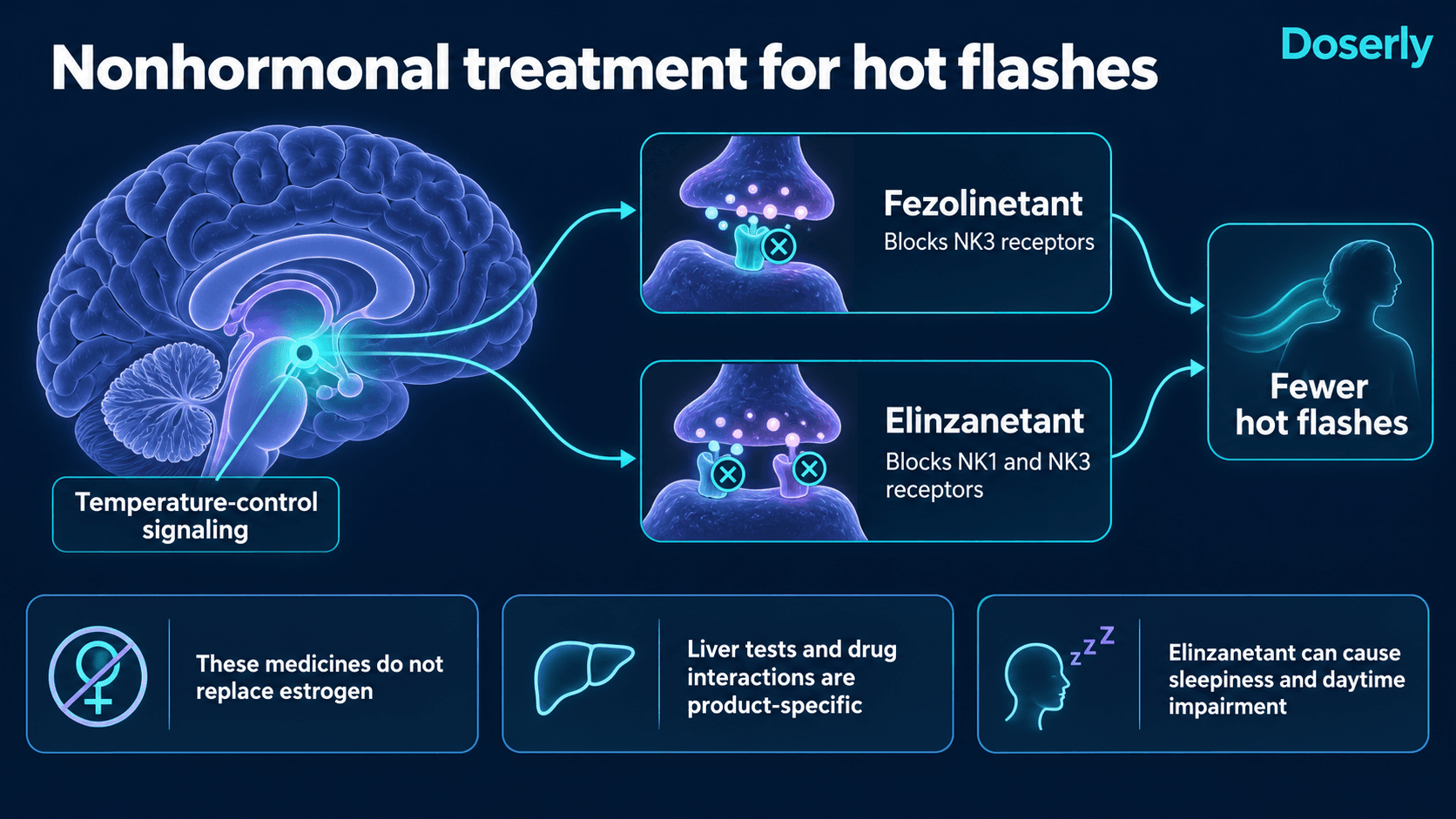
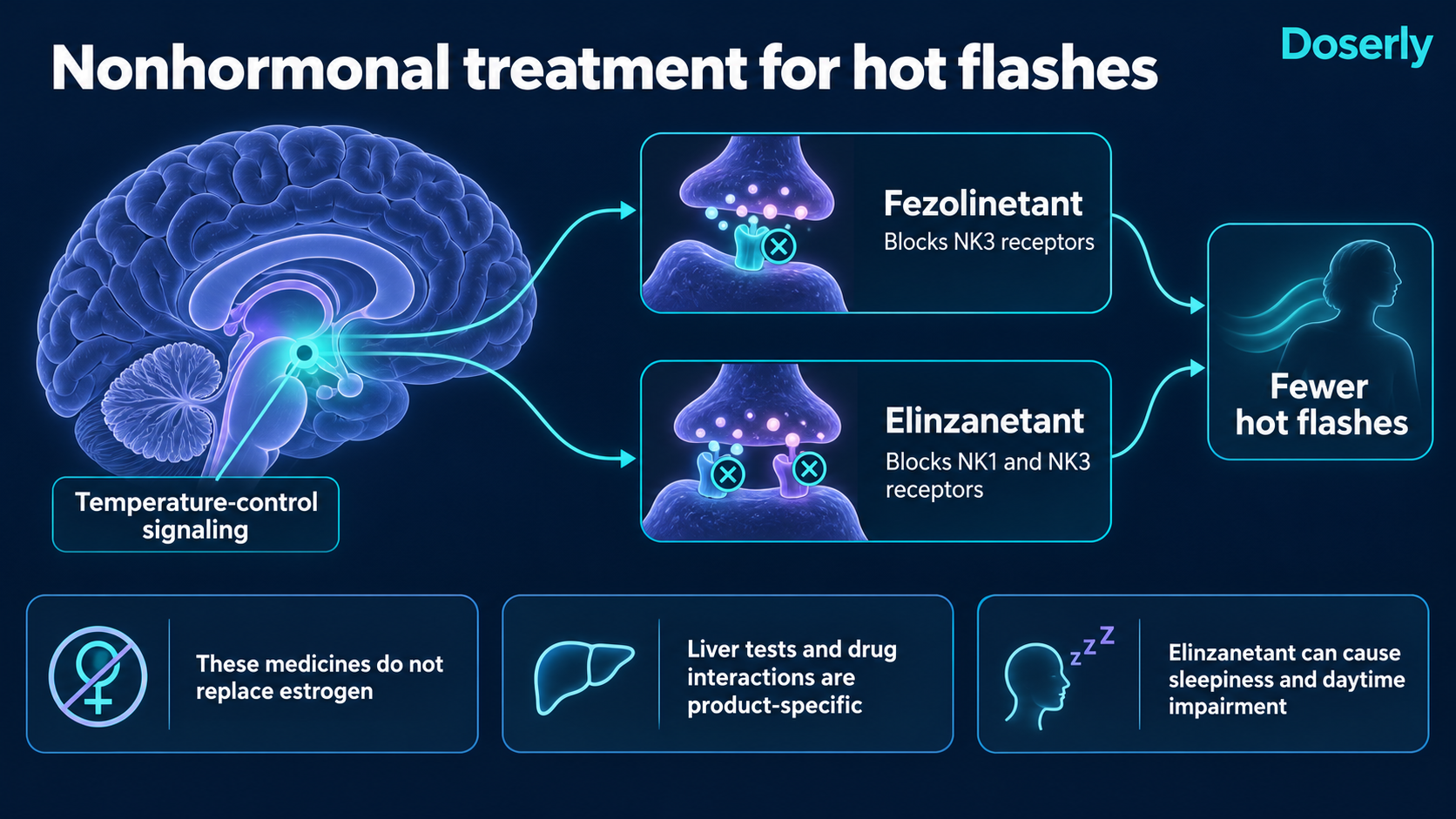
These are two neurokinin treatments, not the full range of nonhormonal options. Fezolinetant and elinzanetant have different liver-monitoring and interaction instructions; elinzanetant also carries daytime-impairment precautions. Neither replaces estrogen’s broader tissue effects.
FDA elinzanetant label; product-specific references below.
Pharmacokinetics / Hormone Physiology
The Basics
Fezolinetant is a straightforward once-daily oral tablet. When you take it, it reaches peak levels in your blood within about 1.5 hours. It can be taken with or without food; a high-fat meal does not meaningfully change how the drug is absorbed.
The drug has a half-life of about 9.6 hours, which means it clears your system relatively quickly compared to many medications. Steady-state concentrations are achieved after just two daily doses, with minimal accumulation. This pharmacokinetic profile supports the once-daily dosing schedule.
The important metabolic detail with fezolinetant is its primary dependence on a liver enzyme called CYP1A2. This enzyme is responsible for breaking down the drug, and anything that interferes with CYP1A2 activity can dramatically alter how much fezolinetant remains in your system. This is why concurrent use with CYP1A2 inhibitors (such as fluvoxamine, ciprofloxacin, or cimetidine) is contraindicated; the drug levels can increase many-fold, raising the risk of adverse effects. Notably, smoking (a moderate CYP1A2 inducer) does not appear to significantly reduce fezolinetant's effectiveness.
Most of the drug is excreted through the kidneys (about 77% of the dose), with a smaller portion eliminated in feces. Only about 1% of the drug appears unchanged in urine, meaning the liver does the vast majority of the processing work.
The Science
Absorption:
Fezolinetant exhibits dose-proportional pharmacokinetics over the 20-60 mg once-daily range. Median time to peak concentration (Tmax) is 1.5 hours (range: 1-4 hours). No clinically significant food effect was observed with a high-calorie, high-fat meal (approximately 1000 calories: 500-600 from fat, 250 from carbohydrates, 150 from protein) [1].
Distribution:
Mean apparent volume of distribution (Vz/F): 189 L. Plasma protein binding: 51%. Blood-to-plasma ratio: 0.9, indicating approximately equal distribution between plasma and blood cells [1].
Metabolism:
Fezolinetant is primarily metabolized by CYP1A2, with lesser contributions from CYP2C9 and CYP2C19. The major circulating metabolite, ES259564, is approximately 20-fold less potent than the parent compound at the NK3 receptor. The metabolite-to-parent ratio ranges from 0.7 to 1.8 [1].
The CYP1A2 dependence creates clinically significant drug-drug interaction potential:
CYP1A2 Inhibitor Strength
Strong
- Example
- Fluvoxamine
- Cmax Increase
- 80%
- AUC Increase
- 840%
CYP1A2 Inhibitor Strength
Moderate
- Example
- Mexiletine
- Cmax Increase
- 40%
- AUC Increase
- 360%
CYP1A2 Inhibitor Strength
Weak
- Example
- Cimetidine
- Cmax Increase
- 30%
- AUC Increase
- 100%
Fezolinetant and ES259564 do not inhibit or induce CYP1A2, CYP2B6, CYP2C8, CYP2C9, CYP2C19, CYP2D6, CYP3A4 in vitro, suggesting low potential for fezolinetant to affect the metabolism of other drugs [1].
Elimination:
Effective half-life: 9.6 hours. Apparent clearance at steady state: 10.8 L/h. Excretion: 76.9% in urine (1.1% unchanged) and 14.7% in feces (0.1% unchanged) [1].
Special Populations:
Population
Race, body weight (93-278 lbs)
- PK Effect
- No substantive differences
Population
Mild renal impairment (eGFR 60-90)
- PK Effect
- No effect on Cmax or AUC
Population
Moderate renal impairment (eGFR 30-60)
- PK Effect
- Parent unchanged; ES259564 AUC +75%
Population
Severe renal impairment (eGFR 15-30)
- PK Effect
- Parent unchanged; ES259564 AUC +380% (contraindicated)
Population
Mild hepatic impairment (Child-Pugh A)
- PK Effect
- Cmax +23%, AUC +56%
Population
Moderate hepatic impairment (Child-Pugh B)
- PK Effect
- Cmax -15%, AUC +96%
Population
Cirrhosis (any class)
- PK Effect
- Contraindicated
Population
Smokers (moderate CYP1A2 inducer)
- PK Effect
- No clinically significant difference
Knowing the pharmacokinetics is the foundation. Seeing how your own body responds to your specific protocol turns that knowledge into actionable insight. Doserly correlates your dosing schedule with how you feel day to day, helping you and your provider identify whether your current route, timing, and dose are working optimally.
The app's analytics can surface patterns you might not notice on your own, like whether symptoms correlate with the end of a patch cycle or whether splitting an oral dose changes how you feel in the afternoon. Data like this makes dose adjustments more precise and less guesswork.
Research & Clinical Evidence
The Basics
Fezolinetant's clinical evidence comes from the SKYLIGHT program. SKYLIGHT 1 and 2 were the main placebo-controlled efficacy trials; SKYLIGHT 4 provided longer-term safety data over 52 weeks. This distinction matters because the 52-week data are not a full year of placebo-controlled efficacy follow-up [5][6][7].
In the two efficacy trials (SKYLIGHT 1 and 2), women who took fezolinetant 45 mg daily experienced approximately 2 to 3 fewer moderate to severe hot flashes per day compared to women taking placebo. This may sound modest as a number, but for women averaging 10 to 12 episodes daily, it represented a meaningful reduction. Many women experienced much larger improvements. Relief often began within the first week and was sustained through 52 weeks without signs of the drug losing effectiveness in clinical trial settings.
A 2024 network meta-analysis provided particularly useful context. When researchers statistically compared fezolinetant with hormone therapy regimens across published studies, fezolinetant was not significantly different from any of 27 HT regimens for reducing hot flash frequency. It was significantly more effective than all other non-hormonal alternatives that were evaluated, including low-dose paroxetine, desvenlafaxine, and gabapentin. In practical terms, fezolinetant appears to be the most effective non-hormonal option currently available.
The Science
Pivotal Efficacy Trials:
SKYLIGHT 1 (NCT04003155) and SKYLIGHT 2 (NCT04003142) were identically designed, randomized, double-blind, placebo-controlled, 12-week phase 3 trials with 40-week active treatment extensions. Women aged 40-65 years with a minimum average of 7 moderate to severe VMS per day were randomized 1:1:1 to once-daily placebo, fezolinetant 30 mg, or fezolinetant 45 mg [5][6].
Coprimary endpoints: mean change from baseline to Weeks 4 and 12 in frequency and severity of moderate to severe VMS over 24 hours.
SKYLIGHT 1 Results (n=522, fezolinetant 45 mg vs placebo):
- VMS frequency reduction, Week 4: -5.4 vs -3.3 (difference -2.1, p<0.001)
- VMS frequency reduction, Week 12: -6.4 vs -3.9 (difference -2.6, p<0.001)
- VMS severity reduction, Week 4: difference -0.2 (p=0.002)
- VMS severity reduction, Week 12: difference -0.2 (p=0.007)
SKYLIGHT 2 Results (n=500, fezolinetant 45 mg vs placebo):
- VMS frequency reduction, Week 4: -6.3 vs -3.7 (difference -2.6, p<0.001)
- VMS frequency reduction, Week 12: -7.5 vs -5.0 (difference -2.5, p<0.001)
- VMS severity reduction, Week 4: difference -0.3 (p<0.001)
- VMS severity reduction, Week 12: difference -0.3 (p<0.001)
Improvement was observed as early as Week 1 in the efficacy trials and continued during active-treatment extensions; the 52-week SKYLIGHT 4 dataset is best described as longer-term safety follow-up rather than placebo-controlled efficacy maintenance [5][6][7].
Pooled Subgroup Analysis (SKYLIGHT 1 & 2):
A prespecified subgroup analysis demonstrated that none of the intrinsic or extrinsic factors analyzed (age, BMI, race, ethnicity, smoking status, baseline VMS severity, prior HRT use, surgical menopause status) substantially reduced the efficacy response to fezolinetant at either the 30 mg or 45 mg dose [10].
HT-Unsuitable Subpopulation:
A pooled analysis of participants deemed unsuitable for hormone therapy (n=341) demonstrated efficacy consistent with the overall study population, confirming fezolinetant's utility in the population for whom it fills the greatest unmet need [11].
Network Meta-Analysis (Menopause, 2024):
A systematic review and Bayesian network meta-analysis compared fezolinetant 45 mg with HT and non-HT options for VMS. Key findings [8]:
- VMS frequency: Fezolinetant 45 mg did not differ significantly from any of 27 HT regimens
- Fezolinetant 45 mg was significantly more effective than all non-HTs evaluated: paroxetine 7.5 mg (mean difference 1.66, 95% CrI 0.63-2.71), desvenlafaxine 50-200 mg (1.12-2.16), gabapentin ER 1800 mg (1.63, 95% CrI 0.48-2.81)
- For VMS severity, tibolone 2.5 mg (not available in the US) was significantly more effective than fezolinetant
- Only HT regimens with significantly greater efficacy than fezolinetant on any outcome are not currently available in the United States
Benefits & Therapeutic Effects
The Basics
Fezolinetant's primary benefit is straightforward: it reduces moderate to severe hot flashes. For the right patient, this single benefit can be transformative. Many women describe the experience of going from 10 to 15 debilitating episodes per day to near-complete relief within days of starting the medication.
The significance of this extends beyond the hot flash itself. Frequent hot flashes disrupt sleep, interfere with work and social activities, cause embarrassment and anxiety, and can contribute to a pervasive sense that your body is out of your control. When those episodes are reduced or eliminated, the secondary benefits cascade: better sleep, more energy, less anxiety about when the next episode will strike, and an improved sense of normalcy.
Fezolinetant fills a particularly important role for women who cannot take hormones. For breast cancer survivors on aromatase inhibitors (which can make hot flashes significantly worse), women with a history of blood clots, or those with other contraindications to HRT, the previous options were limited to off-label antidepressants and gabapentin, which many women find only partially effective or poorly tolerated. In clinical trials, fezolinetant demonstrated effectiveness comparable to many hormone therapy regimens specifically for hot flash reduction, though it does not provide the broader systemic benefits that estrogen offers for bone health, genitourinary health, cardiovascular protection, or mood regulation.
The Science
The therapeutic benefit profile of fezolinetant is narrow but well-established:
Primary Benefit: VMS Reduction
Across SKYLIGHT 1 and 2, fezolinetant 45 mg produced a mean reduction of 6.4-7.5 moderate to severe VMS per day from baseline at Week 12, compared to 3.9-5.0 with placebo. The placebo-adjusted reduction of approximately 2.1-2.6 VMS/day exceeded the threshold considered clinically meaningful (2 or more VMS/24 hours) [5][6].
Responder analyses support these findings. In the network meta-analysis, fezolinetant's efficacy for VMS frequency was statistically non-inferior to 27 HT regimens across published trials. For the subset of women deemed unsuitable for HT, the effect size was consistent with the overall population [8][11].
Onset and Duration:
Improvement was detectable as early as Week 1 in SKYLIGHT 1 and 2. Longer follow-up occurred after active-treatment extension/crossover, while SKYLIGHT 4 primarily supports 52-week safety rather than one full year of placebo-controlled efficacy maintenance [5][6][7].
Limitations:
Fezolinetant does not address the broader constellation of menopausal symptoms that respond to systemic HRT. It does not improve genitourinary syndrome of menopause (GSM), does not protect bone density, does not influence cardiovascular risk profiles, and does not directly affect mood, cognition, or sexual function. Its benefit is confined to the thermoregulatory pathway. For women whose primary complaint is hot flashes, particularly those who cannot use HRT, this focused efficacy represents a significant advancement. For women with multisystem menopausal symptoms, it does not replace the need for broader treatment strategies.
Risks, Side Effects & Safety
The Basics
Fezolinetant carries a Boxed Warning for hepatotoxicity, which is the most serious risk associated with the medication. The FDA added this warning in December 2024 after a postmarketing report of a patient who developed liver injury within 40 days of starting the medication. The patient experienced fatigue, nausea, itching, jaundice (yellowing of the skin and eyes), pale stools, and dark urine. After stopping the medication, the liver gradually recovered.
In the clinical trials, liver enzyme elevations (above 3 times the upper limit of normal) occurred in 2.3% of women taking fezolinetant versus 0.9% on placebo. These elevations were generally asymptomatic and resolved either on their own while continuing the drug or after stopping. No cases meeting the criteria for severe drug-induced liver injury (Hy's law) were observed in the trials themselves. The postmarketing case was more severe than what was seen in trials, which is why the FDA strengthened the warning.
Because of this risk, liver blood tests are required before starting fezolinetant and at regular intervals during treatment: monthly for the first 3 months, then at 6 and 9 months. If you notice symptoms like unusual tiredness, loss of appetite, nausea, vomiting, itching, yellowing of your skin or eyes, pale stools, or dark urine, you should stop taking the medication immediately and contact your healthcare provider.
The common side effects are relatively mild. In the 52-week safety trial, abdominal pain affected 4.3% of patients (vs. 2.1% placebo), diarrhea 3.9% (vs. 2.6%), insomnia 3.9% (vs. 1.8%), back pain 3.0% (vs. 2.1%), and (somewhat paradoxically) hot flushes 2.5% (vs. 1.6%).
The Science
Hepatotoxicity (Boxed Warning):
In pooled data from SKYLIGHT 1, 2, and 4, elevated hepatic transaminases (ALT and/or AST > 3x ULN) occurred in 25 of 1,100 women (2.3%, EAIR 2.7 per 100 person-years) receiving fezolinetant 45 mg versus 8 of 952 women (0.9%, EAIR 1.5 per 100 person-years) receiving placebo. No elevations in serum total bilirubin > 2x ULN occurred during clinical trials, and no cases of Hy's law were identified [1][7].
In the postmarketing setting, a case of serious drug-induced hepatotoxicity was reported within 40 days of treatment initiation. Laboratory findings included transaminases elevated up to 50x ULN at peak, alkaline phosphatase up to 4x ULN, and total bilirubin up to 5x ULN. The patient was symptomatic (fatigue, nausea, pruritus, jaundice, pale feces, dark urine). After discontinuation, abnormalities gradually resolved [12].
Adverse Reactions from Clinical Trials (SKYLIGHT 4, 52-week data):
Adverse Reaction
Abdominal pain
- Fezolinetant 45 mg (n=609)
- 4.3%
- Placebo (n=610)
- 2.1%
Adverse Reaction
Diarrhea
- Fezolinetant 45 mg (n=609)
- 3.9%
- Placebo (n=610)
- 2.6%
Adverse Reaction
Insomnia
- Fezolinetant 45 mg (n=609)
- 3.9%
- Placebo (n=610)
- 1.8%
Adverse Reaction
Back pain
- Fezolinetant 45 mg (n=609)
- 3.0%
- Placebo (n=610)
- 2.1%
Adverse Reaction
Hot flush
- Fezolinetant 45 mg (n=609)
- 2.5%
- Placebo (n=610)
- 1.6%
Adverse Reaction
Hepatic transaminase elevation
- Fezolinetant 45 mg (n=609)
- 2.3%
- Placebo (n=610)
- 0.8%
Pooled Safety (52-week, SKYLIGHT 1, 2, 4, n=1100 fezolinetant 45 mg):
- Upper respiratory tract infection: 7.7-8.3%
- Headache: 6.8-8.2%
- Back pain: 3.1-3.7%
- Arthralgia: 2.9-3.2%
- Urinary tract infection: 2.9-3.4%
- Insomnia: 2.0-3.0%
Drug-related serious TEAEs and associated treatment withdrawals were low. The incidence of treatment-emergent adverse events with fezolinetant (62.9-65.4%) was modestly higher than placebo (55.3%), but most events were mild to moderate [7].
Endometrial Safety:
Endometrial biopsy data from across the three trials identified one case of simple hyperplasia without atypia and one case of endometrial adenocarcinoma in the fezolinetant 45 mg group (n=350). The rate was within FDA acceptance criteria (upper bound of one-sided 95% CI <= 4%). Disordered proliferative endometrium EAIR was 1.4 per 100 person-years with fezolinetant versus 2.0 per 100 person-years with placebo [1].
Neoplasm Risk:
Analysis of benign and non-benign neoplasm events controlled for exposure demonstrated no increased risk versus placebo [7].
Contraindications:
- Known cirrhosis (any Child-Pugh class)
- Severe renal impairment (eGFR 15-30 mL/min/1.73 m2) or end-stage renal disease (eGFR < 15)
- Concomitant use with CYP1A2 inhibitors
Understanding your personal risk profile is not a one-time calculation; it evolves as your treatment progresses. Doserly helps you see the bigger picture by analyzing side effect patterns over time, showing whether issues are resolving, persisting, or emerging as your body adjusts to therapy.
The app's analytics can reveal connections between side effects and specific aspects of your protocol, like whether symptoms correlate with a particular point in your patch cycle or a recent dose change. This kind of insight helps you and your provider make informed adjustments based on your actual experience, not just population-level averages.
Dosing & Treatment Protocols
The Basics
Fezolinetant dosing is simple compared to many HRT regimens. There is one dose: 45 mg, once daily, taken as a single tablet. You can take it with or without food, at whatever time of day works best for you. The important thing is consistency: taking it at roughly the same time each day.
If you miss a dose, take it as soon as you remember, as long as there are at least 12 hours before your next scheduled dose. If less than 12 hours remain, skip the missed dose and resume your regular schedule the next day. Do not double up.
Before starting fezolinetant, your healthcare provider will order liver blood tests (ALT, AST, ALP, and bilirubin). You should not start the medication if your ALT or AST is already elevated above twice the upper limit of normal, or if your total bilirubin is similarly elevated. Once you begin, liver monitoring continues monthly for the first 3 months, then at 6 months and 9 months.
There are no dose adjustments for mild or moderate kidney impairment, or for mild hepatic impairment (though monitoring should be attentive). The medication is contraindicated in cirrhosis and severe renal impairment.
There is currently no established guidance on how long women should remain on fezolinetant. The clinical trials ran for 52 weeks. Duration is an individual decision made with your prescriber, weighing ongoing benefit against the need for continued liver monitoring.
The Science
Approved Dosing:
- 45 mg orally once daily, with or without food
- Swallow whole; do not cut, crush, or chew
- No dose titration required
Pre-Treatment Requirements:
Baseline hepatic laboratory panel: ALT, AST, ALP, total and direct bilirubin. Do not initiate if ALT or AST >= 2x ULN or total bilirubin >= 2x ULN [1].
Monitoring Schedule:
Timepoint
Baseline (pre-treatment)
- Test
- ALT, AST, ALP, total/direct bilirubin
Timepoint
Month 1
- Test
- Hepatic panel
Timepoint
Month 2
- Test
- Hepatic panel
Timepoint
Month 3
- Test
- Hepatic panel
Timepoint
Month 6
- Test
- Hepatic panel
Timepoint
Month 9
- Test
- Hepatic panel
Timepoint
If symptoms of liver injury occur
- Test
- Immediate hepatic panel; discontinue and seek medical attention
Discontinuation Criteria:
- Transaminases > 5x ULN: Discontinue immediately
- Transaminases > 3x ULN with total bilirubin > 2x ULN: Discontinue immediately
- Transaminases > 3x ULN (bilirubin normal): Increase monitoring frequency until resolution [1]
Clinical context — Duration of therapy.
Source: DailyMed prescribing information: No specific duration limit stated; clinical trials ran for 52 weeks maximum
Context: No long-term data beyond 52 weeks from RCTs. The question of optimal treatment duration, and whether some patients develop tolerance, remains unanswered.
Missed Dose:
Take as soon as possible on the same day if at least 12 hours before next scheduled dose. Otherwise, skip and resume regular schedule the following day [1].
No Dose Adjustment Required For:
- Mild renal impairment (eGFR 60-90)
- Moderate renal impairment (eGFR 30-60)
- Mild hepatic impairment (Child-Pugh A), though increased monitoring is prudent given the 56% increase in AUC
Dosing protocols often change over the course of treatment; starting doses get adjusted, routes get switched, timing gets refined. Doserly maintains a complete history of every protocol change, giving you and your provider a clear picture of what has been tried and how each adjustment affected your symptoms.
The app's adherence analytics show your consistency patterns and can highlight whether missed doses or timing variations correlate with symptom changes. When your provider is considering a dose adjustment, having this data available makes the conversation more productive and the decision more informed.
What to Expect (Timeline)
Days 1-3: Some people notice early improvement in hot flashes, while others take longer. Gastrointestinal symptoms, insomnia, and dizziness can occur; review severe or persistent symptoms with the prescriber.
Week 1: In clinical trials, improvement in VMS frequency was detectable by Week 1. If insomnia or gastrointestinal symptoms appear, track timing and severity and discuss persistent symptoms with the prescriber.
Weeks 2-4: By Week 4, the pivotal trials demonstrated statistically significant and clinically meaningful reductions in both VMS frequency and severity. The placebo-adjusted reduction was 2.1-2.6 fewer moderate to severe VMS per day. For many women, this translates to a profound improvement in daily quality of life.
Months 1-3: This is the period of mandatory monthly liver monitoring. Initial GI side effects, if present, typically resolve. Hot flash control should be well-established by now. If the medication has not produced meaningful improvement by 4-6 weeks, it may not be the right fit; discuss alternatives with your provider.
Months 3-6: Continue the required liver monitoring schedule: hepatic laboratory tests are due monthly for the first 3 months, then again at months 6 and 9. If symptoms return, review adherence, interacting medicines, alcohol use, liver-test results, and other treatment options with the prescriber rather than changing the fixed 45 mg dose independently.
Months 6-12 and Beyond: Liver monitoring at 9 months. The clinical trials demonstrated sustained efficacy through 52 weeks without evidence of tachyphylaxis. Long-term use beyond 12 months has not been studied in controlled trials but is part of clinical practice. The decision to continue is individualized, balancing ongoing symptom relief against the liver monitoring burden and cost.
Timing Hypothesis & Window of Opportunity
The timing hypothesis is a concept specific to systemic hormone therapy and does not directly apply to fezolinetant. Because fezolinetant is not a hormone and does not exert estrogenic effects on cardiovascular, bone, or other estrogen-responsive tissues, the considerations around early versus late initiation that apply to HRT (the "10-year window" or "age 60 threshold") are not relevant.
Fezolinetant can be initiated at any point after the onset of moderate to severe vasomotor symptoms, regardless of time since menopause or age, subject to its contraindications (cirrhosis, severe renal impairment, CYP1A2 inhibitor use). This is a practical advantage for women who are beyond the recommended HRT initiation window or who develop bothersome VMS late in the menopausal transition.
For women considering whether to use fezolinetant versus HRT, the timing hypothesis may influence that decision. Women within 10 years of menopause onset and under age 60 who are candidates for HRT may benefit from the broader systemic effects of estrogen (cardiovascular, bone, genitourinary, mood). Women outside this window, or with contraindications to HRT, may find fezolinetant an appropriate targeted option for VMS specifically.
Interactions & Compatibility
Drug-Drug Interactions:
The most critical interaction is with CYP1A2 inhibitors. Fezolinetant is primarily metabolized by CYP1A2, and concomitant use with CYP1A2 inhibitors is contraindicated because of the potential for dramatic increases in fezolinetant exposure [1]:
Contraindicated combinations:
- Strong CYP1A2 inhibitors: Fluvoxamine (840% AUC increase)
- Moderate CYP1A2 inhibitors: Mexiletine (360% AUC increase), ciprofloxacin
- Weak CYP1A2 inhibitors: Cimetidine (100% AUC increase)
This is clinically important because fluvoxamine is sometimes prescribed for menopause-related anxiety or depression. If a patient is on fluvoxamine, fezolinetant cannot be used. Alternative SSRIs that do not inhibit CYP1A2 (sertraline, escitalopram) do not share this contraindication.
Notable: Smoking is a moderate CYP1A2 inducer, but no clinically significant reduction in fezolinetant exposure was observed in smokers [1].
No significant interactions with:
- Fezolinetant does not inhibit or induce major CYP enzymes (CYP1A2, CYP2B6, CYP2C8, CYP2C9, CYP2C19, CYP2D6, CYP3A4)
- Not a P-glycoprotein substrate or inhibitor
Supplement Interactions:
- St. John's Wort: Not directly studied with fezolinetant; however, St. John's Wort is a CYP inducer and could theoretically reduce fezolinetant levels
- Black cohosh: No known interaction; sometimes used concurrently for complementary VMS relief
- Vitamin D, Calcium, Omega-3: No expected interactions
Lifestyle Factors:
- Alcohol: No formal interaction study. Given the hepatotoxicity risk, prudent clinical practice would suggest limiting alcohol consumption while on fezolinetant to reduce cumulative liver stress
- Grapefruit: No significant interaction expected (fezolinetant is CYP1A2-dependent, not CYP3A4)
Cross-Links to Related Guides:
- Paroxetine Low-Dose (Brisdelle) — Alternative non-hormonal VMS treatment
- Elinzanetant (Lynkuet) — Dual NK1/NK3 receptor antagonist
- Gabapentin for Menopause — Off-label non-hormonal option
- Clonidine for Menopause — Off-label non-hormonal option
- Non-Hormonal Menopause Treatments — Overview of all non-hormonal options
- 17B-Estradiol (Bioidentical) — First-line HRT for VMS
- Getting Started with HRT — For women considering HRT as alternative
Decision-Making Framework
The decision to use fezolinetant typically arises in specific clinical contexts:
Ideal candidates:
- Women with moderate to severe VMS (hot flashes) as their primary menopausal complaint
- Women who cannot take HRT due to: breast cancer history or active breast cancer treatment (aromatase inhibitors), history of VTE, hormone-sensitive conditions, or personal preference
- Women who have tried other non-hormonal options (SSRIs/SNRIs, gabapentin, clonidine) without adequate relief
- Women beyond the recommended HRT initiation window who develop or continue to have bothersome VMS
Less ideal candidates:
- Women with multisystem menopausal symptoms (VMS plus GSM, bone loss, mood changes, sexual dysfunction) who are HRT-eligible; these women may benefit more from systemic HRT
- Women with liver disease or elevated liver enzymes at baseline
- Women on CYP1A2 inhibitors who cannot switch to alternative medications
- Women with severe renal impairment or ESRD
Questions to discuss with your provider:
- Am I a candidate for HRT? If not, what makes fezolinetant preferable to other non-hormonal options?
- What will my liver monitoring schedule look like, and is it practical for my situation?
- What should I do if I notice signs of liver problems?
- How will we evaluate whether fezolinetant is working for me, and how long should I plan to take it?
- What are the cost and insurance considerations for this medication?
- If fezolinetant does not work adequately, what are my next options?
Finding a menopause specialist:
If your primary care provider is unfamiliar with fezolinetant or dismissive of your VMS symptoms, consider consulting a NAMS Certified Menopause Practitioner (searchable at menopause.org), a gynecologist with menopause expertise, or a telehealth menopause clinic. Self-advocacy is important: you deserve a provider who takes your symptoms seriously and is willing to discuss all available options.
Administration & Practical Guide
Fezolinetant administration is straightforward:
- Tablet: One 45 mg tablet daily (light red, round, small at 7 mm)
- Timing: Take at approximately the same time each day. The label allows dosing with or without food; ask the prescriber how to handle persistent gastrointestinal symptoms.
- Swallow whole: Do not cut, crush, or chew
- Food: Can be taken with or without food (no clinically significant food effect)
- Missed dose: Take as soon as possible; skip if less than 12 hours until next dose
- Storage: Room temperature, 68-77 degrees F (20-25 degrees C)
Practical tips to discuss with your prescriber:
- Insomnia is more commonly reported with evening dosing; some users prefer morning dosing for this reason
- The tablet is very small and easy to swallow
- Keep the medication in its original container, away from moisture
Liver monitoring logistics:
The monitoring schedule (baseline, months 1, 2, 3, 6, 9) requires 6 blood draws in the first 9 months. Many providers order these as standing lab orders so patients can visit a lab at their convenience without needing a separate appointment each time. Ask your provider about this option to reduce the logistical burden.
Monitoring & Lab Work
Pre-Treatment Baseline:
- ALT (alanine aminotransferase)
- AST (aspartate aminotransferase)
- ALP (alkaline phosphatase)
- Total and direct bilirubin
- Do not start if ALT or AST >= 2x ULN or total bilirubin >= 2x ULN
On-Treatment Monitoring Schedule:
Timepoint
Month 1
- Tests Required
- ALT, AST, ALP, total/direct bilirubin
Timepoint
Month 2
- Tests Required
- ALT, AST, ALP, total/direct bilirubin
Timepoint
Month 3
- Tests Required
- ALT, AST, ALP, total/direct bilirubin
Timepoint
Month 6
- Tests Required
- ALT, AST, ALP, total/direct bilirubin
Timepoint
Month 9
- Tests Required
- ALT, AST, ALP, total/direct bilirubin
Timepoint
Any time symptoms of liver injury occur
- Tests Required
- Immediate testing; discontinue medication
Action Thresholds:
- Transaminases > 5x ULN: Discontinue immediately
- Transaminases > 3x ULN + total bilirubin > 2x ULN: Discontinue immediately
- Transaminases > 3x ULN (bilirubin normal): Increase monitoring frequency until resolution; exclude alternative causes
Beyond Liver Monitoring:
Unlike systemic HRT, fezolinetant does not require monitoring of hormone levels, lipid panels, mammography beyond age-appropriate screening, DEXA scans, or endometrial surveillance. The monitoring burden is focused entirely on hepatic safety.
Complementary Approaches & Lifestyle
Fezolinetant addresses hot flashes specifically but does not replace comprehensive menopause wellness strategies. Women using fezolinetant may benefit from complementary approaches for the broader range of menopausal changes:
For remaining VMS (if fezolinetant provides partial but not complete relief):
- Layered clothing and temperature management: Keeping ambient temperature cool, using fans, wearing breathable fabrics
- CBT for vasomotor symptoms: Evidence supports cognitive behavioral therapy in reducing the bother and impact of hot flashes, even when frequency is unchanged
- Mind-body practices: Slow, deep breathing exercises during a hot flash; meditation and yoga for stress reduction
- Avoiding triggers: Alcohol, spicy foods, caffeine, and hot beverages may trigger hot flashes in some women
For bone health (not addressed by fezolinetant):
- Weight-bearing and resistance exercise
- Adequate calcium and vitamin D intake
- DEXA screening per age-appropriate guidelines
- Discussion with provider about bone-protective therapies if at risk
For mood and sleep:
- Sleep hygiene practices: consistent bedtime, cool sleeping environment, limiting screen time before bed
- Regular exercise (at least 150 minutes/week of moderate activity)
- Magnesium supplementation for sleep support (evidence modest)
- CBT for insomnia (CBT-I) if insomnia persists beyond initial fezolinetant side effects
For genitourinary symptoms (not addressed by fezolinetant):
- Vaginal moisturizers and lubricants
- Discussion with provider about vaginal estrogen therapy (low-dose local estrogen is often considered safe even when systemic HRT is contraindicated)
- Pelvic floor therapy for urinary symptoms
For general wellbeing:
- Mediterranean-style dietary pattern
- Omega-3 fatty acids for cardiovascular and anti-inflammatory support
- Stress management and social connection
Stopping HRT / Discontinuation
Because fezolinetant is not a hormone, discontinuation considerations differ from HRT:
When to consider stopping:
- If the medication is not providing adequate relief after 4-6 weeks
- If liver enzyme elevations warrant discontinuation (per the thresholds described in Sections 10 and 17)
- If cost or monitoring burden becomes unsustainable
- If vasomotor symptoms have naturally resolved (which can happen as women progress further into post-menopause)
- If symptoms of liver injury develop (stop immediately)
Tapering:
Fezolinetant does not require tapering. With a half-life of 9.6 hours, the drug clears the system within approximately 2 days of the last dose. There is no rebound phenomenon described in clinical trials, though individual experience may vary.
Symptom recurrence:
Hot flashes may return after fezolinetant is stopped because the drug blocks NK3 receptor signaling while present but does not change the underlying menopausal physiology. Discuss a stopping plan and alternative symptom-control options with the prescriber.
Alternatives after stopping:
- Reassess eligibility for HRT (particularly if the original contraindication may have changed)
- Consider elinzanetant (Lynkuet), a newer dual NK1/NK3 receptor antagonist
- Trial of SSRI/SNRI options (paroxetine 7.5 mg/Brisdelle, venlafaxine, escitalopram)
- Gabapentin or clonidine
- Non-pharmacological approaches (CBT for vasomotor symptoms, lifestyle modifications)
Special Populations & Situations
Breast Cancer Survivors
Fezolinetant was not studied in breast cancer patients (excluded from SKYLIGHT trials), but it is frequently used in this population in clinical practice. Its non-hormonal mechanism makes it an attractive option for women on aromatase inhibitors (anastrozole, letrozole, exemestane) or tamoxifen, which can cause or worsen hot flashes. Prescribers should be aware of the CYP interaction: tamoxifen is not a CYP1A2 inhibitor, but individual drug regimens should be reviewed.
History of VTE / Thrombotic Risk
Fezolinetant carries no known prothrombotic risk, making it appropriate for women with a history of deep vein thrombosis, pulmonary embolism, or factor V Leiden and other thrombophilias who cannot use oral estrogen. This is a common clinical reason to consider a nonhormonal option.
Liver Disease
Fezolinetant is contraindicated in cirrhosis of any severity. In women with mild hepatic impairment (Child-Pugh A), exposure increases by approximately 56% (AUC); in moderate impairment (Child-Pugh B), AUC increases by 96%. Given the Boxed Warning for hepatotoxicity, any pre-existing liver condition warrants careful evaluation before initiating treatment.
Renal Impairment
Mild to moderate renal impairment does not affect fezolinetant exposure, though metabolite (ES259564) levels increase significantly with moderate and severe impairment. Severe renal impairment (eGFR < 30) and ESRD are contraindications.
Older Women (>65)
There are insufficient data on women over 65 from the clinical trials. The real-world utilization study (TriNetX, 2026) highlights the need for postmarketing data in this group.
Surgical Menopause
Women who have undergone bilateral oophorectomy experience abrupt estrogen loss and often severe VMS. While HRT (estrogen-only, since no uterus) is generally first-line, fezolinetant offers an alternative when HRT is contraindicated.
Regulatory, Insurance & International
United States (FDA):
- Approved May 12, 2023 via Priority Review (NDA216578)
- Boxed Warning for hepatotoxicity added December 16, 2024
- Manufacturer: Astellas Pharma US, Inc.
- Available as 45 mg tablets (bottles of 30 or 90)
- Cost: approximately $500-600/month without insurance
- Insurance coverage variable; prior authorization often required
- Manufacturer savings programs: Veozah.com savings card (reported to reduce cost to $0-30/month for many patients); Sonexus Health Pharmacy program
- Medicare Part D coverage variable; not universally covered
European Union (EMA):
- Approved by EMA for moderate to severe vasomotor symptoms associated with menopause
- Available in several EU countries including Spain (reported at approximately 75 euros/month)
United Kingdom (MHRA):
- Approval status should be confirmed with current MHRA databases
Canada (Health Canada):
- Approval status should be confirmed with Health Canada Drug Product Database
Australia (TGA):
Clinical context — International availability timeline.
Source: Astellas corporate announcements: Approvals in US, EU, and Japan confirmed
Cost Mitigation Strategies:
- Check Veozah.com for manufacturer savings programs
- Ask your pharmacy about Sonexus Health Pharmacy or similar specialty pharmacy programs
- Request prior authorization appeal from your provider if initially denied
- Some patients have successfully obtained coverage through appeal with documented medical necessity (e.g., HRT contraindication diagnosis)
Frequently Asked Questions
Is Veozah a hormone?
No. Fezolinetant (Veozah) is not a hormone. It works by blocking the NK3 receptor in the brain's thermoregulatory center, targeting the neurological mechanism behind hot flashes rather than replacing estrogen.
How quickly does Veozah work?
In clinical trials, statistically significant reductions in hot flash frequency were observed by Week 1, though individual response varies. If you have not noticed improvement by 4-6 weeks, discuss next steps with your healthcare provider.
Does Veozah help with other menopause symptoms besides hot flashes?
Fezolinetant's primary benefit is for vasomotor symptoms (hot flashes and night sweats). It does not directly address vaginal dryness, bone loss, mood changes, cognitive symptoms, or other menopausal symptoms. Sleep may improve secondarily when night sweats decrease, but fezolinetant is not a treatment for mood symptoms or estrogen-deficiency effects outside vasomotor symptoms.
Can I take Veozah if I have had breast cancer?
Fezolinetant was not studied in breast cancer patients, but its non-hormonal mechanism makes it a commonly considered option for this population. Discuss with your oncologist whether fezolinetant is appropriate for your specific situation.
What about the liver warning?
The FDA added a Boxed Warning in December 2024 for rare but serious liver injury. Regular liver monitoring is required. Most liver enzyme elevations seen in clinical trials were asymptomatic and resolved. If you develop symptoms of liver problems (fatigue, nausea, yellowing skin/eyes, dark urine), stop the medication immediately and contact your provider.
Can I take Veozah with my antidepressant?
It depends on the specific antidepressant. Fluvoxamine (a strong CYP1A2 inhibitor) is contraindicated with Veozah. Other SSRIs like sertraline, escitalopram, and citalopram do not share this interaction. Always review your full medication list with your prescriber.
Why is Veozah so expensive?
Fezolinetant is a brand-name medication with no generic available. Cost and coverage vary by plan, pharmacy, and manufacturer assistance eligibility; check current coverage and patient assistance options directly.
Can I cut the tablet in half?
The prescribing information states that Veozah should be swallowed whole and not cut, crushed, or chewed.
What happens if Veozah stops working over time?
Clinical trials followed responders through 52 weeks, but individual symptoms can still change over time. If hot flashes begin returning, review adherence, timing, interacting medicines, liver-test status, and alternative treatments with your prescriber; do not adjust the fixed 45 mg dose on your own.
How long can I take Veozah?
Clinical trials lasted 52 weeks. There is no established maximum duration. Your provider will help you determine an appropriate treatment duration based on ongoing benefit and monitoring results.
Can I drink alcohol while taking Veozah?
There is no formal interaction, but given the hepatotoxicity risk, minimizing alcohol consumption is a prudent approach. Discuss your alcohol intake with your prescriber.
Is Veozah the same as Lynkuet (elinzanetant)?
No. Both are non-hormonal treatments for menopausal hot flashes, but they are different drugs. Veozah blocks only the NK3 receptor. Lynkuet (elinzanetant, FDA-approved October 24, 2025) blocks both NK1 and NK3 receptors, which may provide additional benefits for sleep and mood. They are manufactured by different companies (Astellas and Bayer, respectively).
Myth vs. Fact
Myth: Veozah is just another antidepressant repurposed for hot flashes.
Fact: Fezolinetant is not an antidepressant. It is the first drug specifically designed to target the NK3 receptor, the neurological mechanism directly responsible for hot flashes. Unlike SSRIs or SNRIs used off-label for VMS (which provide partial, indirect relief through serotonin modulation), fezolinetant acts on the thermoregulatory circuit itself. In a network meta-analysis, fezolinetant was significantly more effective than all non-hormonal alternatives including paroxetine, desvenlafaxine, and gabapentin [8].
Myth: Non-hormonal treatments are always less effective than HRT for hot flashes.
Fact: For overall menopausal symptom management, HRT remains more comprehensive. However, for the specific outcome of VMS frequency reduction, fezolinetant 45 mg was not significantly different from 27 evaluated HRT regimens in a network meta-analysis [8]. HRT provides broader benefits (bone, cardiovascular, GSM, mood) that fezolinetant does not, but for the targeted purpose of reducing hot flashes, fezolinetant's efficacy is substantial.
Myth: Veozah will damage your liver.
Fact: The Boxed Warning reflects a rare but serious risk. In clinical trials involving 1,100 women on fezolinetant 45 mg, liver enzyme elevations above 3x normal occurred in 2.3%, and no cases of Hy's law (severe liver injury) were observed [1]. One postmarketing case of serious liver injury has been reported, occurring within 40 days of starting treatment; the patient recovered after discontinuation [12]. The risk is managed through mandatory liver monitoring, which is why the testing schedule exists.
Myth: You cannot take Veozah if you have any liver issues.
Fact: Fezolinetant is contraindicated specifically in cirrhosis. Women with mild or moderate hepatic impairment (Child-Pugh A or B) can potentially use it with careful monitoring, though exposure is increased [1]. Women with normal baseline liver function who develop elevated enzymes during treatment are managed per the prescribing information thresholds.
Myth: Veozah works for all menopause symptoms, not just hot flashes.
Fact: Fezolinetant's mechanism targets the thermoregulatory circuit exclusively. It does not replace estrogen and does not address vaginal dryness, bone loss, urinary symptoms, skin changes, sexual dysfunction, or mood regulation. Women with multiple menopausal symptoms may need additional treatments alongside or instead of fezolinetant.
Myth: If Veozah does not work in the first few days, it will never work.
Fact: Clinical trial endpoints were measured at Weeks 4 and 12, and statistically significant improvement was observed by Week 1. Some patients may require several weeks to assess the full benefit. A reasonable trial period is 4-6 weeks before concluding the medication is not effective.
Myth: Veozah is only for women who cannot take HRT.
Fact: While fezolinetant is particularly valuable for women with HRT contraindications, it is approved for any woman with moderate to severe VMS due to menopause. Some women may prefer a non-hormonal option for personal or medical reasons, or may use it while exploring whether HRT is right for them.
Myth: You will need liver tests for the rest of your life on Veozah.
Fact: The current monitoring schedule requires liver tests before starting, monthly for the first 3 months, and at 6 and 9 months of treatment. After 9 months of normal results, routine monitoring per the prescribing information is complete, though your provider may recommend continued periodic testing based on clinical judgment [1].
Sources & References
Clinical Guidelines & Regulatory Sources
[1] Veozah (fezolinetant) Full Prescribing Information. Astellas Pharma US, Inc. Revised February 2026. DailyMed, National Library of Medicine. https://dailymed.nlm.nih.gov/dailymed/drugInfo.cfm?setid=cae9f798-24f9-4580-a4fc-e6c710cbda3c
[2] FDA Approves Novel Drug to Treat Moderate to Severe Hot Flashes Caused by Menopause. FDA Press Release. May 12, 2023. https://www.fda.gov/news-events/press-announcements/fda-approves-novel-drug-treat-moderate-severe-hot-flashes-caused-menopause
[12] FDA Drug Safety Communication: FDA adds warning about rare occurrence of serious liver injury with use of Veozah (fezolinetant) for hot flashes due to menopause. September 12, 2024; updated December 16, 2024. https://www.fda.gov/drugs/drug-safety-and-availability/fda-adds-warning-about-rare-occurrence-serious-liver-injury-use-veozah-fezolinetant-hot-flashes-due
Landmark Trials
[5] Lederman S, Ottery FD, Cano A, et al. Fezolinetant for treatment of moderate-to-severe vasomotor symptoms associated with menopause (SKYLIGHT 1): a phase 3 randomised controlled study. Lancet. 2023;401(10382):1091-1102. doi:10.1016/S0140-6736(23)00085-5
[6] Johnson KA, Martin N, Nappi RE, et al. Efficacy and safety of fezolinetant in moderate to severe vasomotor symptoms associated with menopause: a phase 3 RCT. J Clin Endocrinol Metab. 2023;108(8):1981-1997. doi:10.1210/clinem/dgad058
[7] Kagan R, Cano A, Nappi RE, et al. Safety of Fezolinetant for Treatment of Moderate to Severe Vasomotor Symptoms Due to Menopause: Pooled Analysis of Three Randomized Phase 3 Studies. Adv Ther. 2025;42(2):1147-1164. PubMed: 39739195. DOI: 10.1007/s12325-024-03073-8.
Systematic Reviews & Meta-Analyses
[8] Morga A, Ajmera M, Gao E, et al. Systematic review and network meta-analysis comparing the efficacy of fezolinetant with hormone and nonhormone therapies for treatment of vasomotor symptoms due to menopause. Menopause. 2024;31(1):68-76. PubMed: 38016166. DOI: 10.1097/GME.0000000000002281.
[3] Shaukat A, Mujeeb A, Shahnoor S, et al. "Veozah (Fezolinetant): A Promising Non-Hormonal Treatment for Vasomotor Symptoms in Menopause". Health Sci Rep. 2023;6(10):e1610. PubMed: 37808928. DOI: 10.1002/hsr2.1610.
Observational & Mechanistic Studies
[4] Depypere H, Lademacher C, Siddiqui E, Fraser GL. Fezolinetant in the treatment of vasomotor symptoms associated with menopause. Expert Opin Investig Drugs. 2021;30(7):681-694. doi:10.1080/13543784.2021.1893305
[9] Prague JK. Neurokinin 3 receptor antagonists for menopausal vasomotor symptoms. Lancet. 2023;401(10382):1055-1058. PubMed: 36924777. DOI: 10.1016/S0140-6736(23)00353-7.
[10] Santoro N, Nappi RE, Neal-Perry G, et al. Fezolinetant treatment of moderate-to-severe vasomotor symptoms due to menopause: effect of intrinsic and extrinsic factors in two phase 3 studies (SKYLIGHT 1 and 2). Menopause. 2024;31(4):247-257. PubMed: 38517210. DOI: 10.1097/GME.0000000000002340.
[11] Santoro N, et al. Fezolinetant effect on vasomotor symptoms due to menopause in women unsuitable for hormone therapy: pooled SKYLIGHT 1 and 2 analysis. Current Medical Research and Opinion. 2025. doi:10.1080/03007995.2025.2470752
Government/Institutional Sources
[13] Fezolinetant (oral route) - Description and drug information. Mayo Clinic. https://www.mayoclinic.org/drugs-supplements/fezolinetant-oral-route/description/drg-20549431
[14] Hsu CD, Carpenter RM, Richardson G, et al. Utilization of fezolinetant for the treatment of moderate-to-severe vasomotor symptoms of menopause in a real-world setting. Menopause. 2026;33(5):529-535. PubMed: 41493963. DOI: 10.1097/GME.0000000000002703.
Additional Regulatory and Guideline Sources
[15] DailyMed: VEOZAH prescribing information. https://dailymed.nlm.nih.gov/dailymed/drugInfo.cfm?setid=cae9f798-24f9-4580-a4fc-e6c710cbda3c. Accessed September 13, 2026.
[16] FDA Drug Safety Communication: Veozah liver injury warning. https://www.fda.gov/drugs/drug-safety-and-availability/fda-adds-warning-about-rare-occurrence-serious-liver-injury-use-veozah-fezolinetant-hot-flashes-due. Accessed September 13, 2026.
[17] New Collective Author. The 2023 nonhormone therapy position statement of The North American Menopause Society. Menopause. 2023;30(6):573-590. PubMed: 37252752. DOI: 10.1097/GME.0000000000002200.
Related Guides & Cross-Links
Same Category (Non-Hormonal Prescription)
- Elinzanetant (Lynkuet) — Dual NK1/NK3 receptor antagonist, FDA-approved October 24, 2025
- Paroxetine Low-Dose (Brisdelle) — FDA-approved low-dose SSRI for VMS
- Ospemifene (Osphena) — SERM for dyspareunia/GSM
- Gabapentin for Menopause — Off-label anticonvulsant for VMS
- Clonidine for Menopause — Off-label antihypertensive for VMS
- Tibolone (Livial) — Synthetic steroid with estrogenic, progestogenic, and androgenic activity (not available in US)
Related Treatment Options
- Non-Hormonal Menopause Treatments — Comprehensive overview
- Getting Started with HRT — For women considering hormonal alternatives
- 17B-Estradiol (Bioidentical) — First-line HRT for VMS
- Transdermal HRT — Lower thrombotic risk than oral HRT
Complementary Approaches
- Black Cohosh — Herbal supplement for VMS (limited evidence)
- Magnesium — Sleep and muscle support
- Vitamin D — Bone health support
- Omega-3 Fatty Acids — Anti-inflammatory support
Conditions & Stages
- Menopause — Overview of the menopausal transition
- Perimenopause — The transition period leading to menopause
- Surgical Menopause — Abrupt hormone loss after oophorectomy