
AndroGel Testosterone Gel: Dosing, Transfer Risk, Safety, and Monitoring
On this page
Quick Reference Card
Attribute
Brand Name(s)
- Value
- AndroGel (US, Canada); Testogel (UK, EU, Australia)
Attribute
Generic Name
- Value
- Testosterone (transdermal gel)
Attribute
Drug Class / Type
- Value
- Androgen, transdermal testosterone formulation
Attribute
DEA Schedule
- Value
- Schedule III (CIII)
Attribute
FDA-Approved Indications
- Value
- Testosterone replacement therapy in adult males with conditions associated with deficiency or absence of endogenous testosterone (primary and hypogonadotropic hypogonadism)
Attribute
Available Concentrations
- Value
- 1% gel (50 mg/5 g); 1.62% gel (40.5 mg/2.5 g)
Attribute
Common Doses
- Value
- 1%: 50-100 mg/day; 1.62%: 20.25-81 mg/day
Attribute
Route of Administration
- Value
- Transdermal (topical gel)
Attribute
Application Sites
- Value
- Upper arms and shoulders (1.62%); shoulders, upper arms, or abdomen (1%)
Attribute
Dosing Schedule
- Value
- Once daily, preferably in the morning
Attribute
Approximate Bioavailability
- Value
- ~10% of applied dose absorbed through skin
Attribute
Key Monitoring Requirements
- Value
- Hematocrit, PSA, testosterone levels, blood pressure, lipids
Attribute
Unique Considerations
- Value
- Boxed warning for secondary exposure to women/children; lower polycythemia risk vs injections; stable daily hormone levels
Current Clinical Notes
Read U.S. testosterone labels in transition: FDA's Feb. 28, 2025 class-wide label action removed the older MACE boxed-warning framing and added blood-pressure language, while the June 18, 2026 HHS/FDA request asks manufacturers to remove the age-related-hypogonadism limitation and revise prostate/BPH language. The FDA Testosterone Information page still frames the June 2026 step as a requested update, and the Endocrine Society 2026 statement still cautions against treating normal aging or nonspecific symptoms without confirmed hypogonadism.
TRAVERSE is most useful for cardiovascular context: the NEJM cardiovascular trial studied 1.62% testosterone gel in men 45-80 with confirmed low testosterone and pre-existing or high cardiovascular risk, and found noninferiority for MACE. It does not settle route-specific risks for injections, oral TU, pellets, buccal systems, nasal testosterone, or compounded products; the fracture substudy and FDA Testosterone Information page keep fracture, BP, atrial fibrillation, pulmonary embolism, and acute kidney injury signals visible.
Topical testosterone decisions should keep transfer prevention, application site, skin tolerance, BP, and hematocrit visible; use the product label/source for product-specific instructions and avoid extrapolating TRAVERSE beyond its gel protocol.
Exogenous testosterone can suppress LH, FSH, intratesticular testosterone, and sperm production, so fertility counseling belongs before treatment whenever future biological children are possible (Endocrine Society guideline, Liu spermatogenic recovery analysis).
Overview / What Is Testosterone Gel (AndroGel)?
The Basics
Testosterone gel is one of the most commonly prescribed forms of testosterone replacement therapy, and for good reason. Unlike injections that deliver a large dose of testosterone all at once and require waiting days or weeks before the next dose, testosterone gel provides a steady supply of the hormone through your skin every single day. This consistent delivery pattern avoids the hormonal peaks and valleys that some men experience with injections, potentially offering more stable energy, mood, and sexual function throughout the day.
AndroGel was among the first testosterone gels approved by the FDA, initially in a 1% formulation in 2000. A more concentrated 1.62% formulation followed in 2011, allowing the same therapeutic benefit with a smaller amount of gel. The medication was originally developed by Unimed Pharmaceuticals, later marketed by AbbVie, and is now distributed by ASCEND Therapeutics U.S.
Applying the gel is straightforward: you rub it onto your skin (typically the shoulders and upper arms) once each morning, let it dry, and cover the area with clothing. Your skin absorbs a portion of the testosterone, which then enters your bloodstream and circulates through your body just like the testosterone your body would produce naturally. For many men, this simple daily routine replaces what their bodies can no longer adequately produce on their own.
Not every man responds identically to gel, however. Approximately 10% of the applied dose is actually absorbed through the skin, and absorption rates can vary considerably between individuals. Some men achieve excellent testosterone levels with minimal doses, while others may struggle to reach adequate levels even at the maximum dose. Your provider will check your testosterone levels after starting and adjust accordingly.
The Science
Testosterone gel is a hydroalcoholic formulation that delivers unesterified testosterone transdermally. Unlike injectable testosterone esters (cypionate, enanthate, undecanoate), which require enzymatic hydrolysis to release free testosterone, topical testosterone is absorbed directly through the stratum corneum without ester modification. The stratum corneum acts as a reservoir, providing sustained release of testosterone into the dermal microcirculation over approximately 24 hours following a single application.
The 1.62% formulation (NDA022309, approved April 2011) was developed to achieve eugonadal testosterone concentrations with a reduced gel volume compared to the 1% formulation. Pharmacokinetic studies demonstrated that application to the upper arms and shoulders provides 30-40% higher bioavailability (based on AUC0-24) compared to abdominal application, which led to the more restricted application site recommendations for the 1.62% formulation.
Steady-state serum testosterone concentrations are typically achieved within 2-3 days of daily application. The pharmacokinetic profile differs markedly from injectable formulations: a crossover study in hypogonadal HIV-infected men found that mean peak-trough fluctuations in free testosterone were 2.7 +/- 10.7 pg/mL with daily gel versus 26.7 +/- 12.8 pg/mL with IM injections (P < 0.001), demonstrating the significantly more stable hormone delivery achieved with transdermal administration.
Importantly, different branded 1% testosterone gels are not bioequivalent. A randomized crossover study (n=29) comparing Testim and AndroGel at equivalent 50 mg testosterone doses found that Testim provided approximately 30% higher Cmax and 47% higher free testosterone AUC0-24 than AndroGel, attributable to differences in the gel excipients that influence skin penetration.
Medical / Chemical Identity
Property
Generic Name
- Detail
- Testosterone
Property
Chemical Name
- Detail
- 17-beta-hydroxyandrost-4-en-3-one
Property
Molecular Formula
- Detail
- C19H28O2
Property
Molecular Weight
- Detail
- 288.42 g/mol
Property
CAS Number
- Detail
- 58-22-0
Property
Ester
- Detail
- None (unesterified testosterone)
Property
Vehicle (1%)
- Detail
- Carbomer 980, ethyl alcohol 67.0%, isopropyl myristate, purified water, sodium hydroxide
Property
Vehicle (1.62%)
- Detail
- Carbopol 980, ethyl alcohol, isopropyl myristate, purified water, sodium hydroxide
Property
FDA Approval (1%)
- Detail
- 2000 (NDA021015)
Property
FDA Approval (1.62%)
- Detail
- April 29, 2011 (NDA022309)
Property
DEA Schedule
- Detail
- Schedule III (CIII)
Property
Original Manufacturer
- Detail
- Unimed Pharmaceuticals / Solvay Pharmaceuticals
Property
Current US Marketer
- Detail
- ASCEND Therapeutics U.S., LLC (since 2023; previously AbbVie Inc.)
Property
Canadian Authorization
- Detail
- February 6, 2002 (BGP Pharma ULC, licensed from Abbott Laboratories)
Brand Names
Region
United States
- Brand Name
- AndroGel
- Concentration
- 1% and 1.62%
- Status
- Active (ASCEND Therapeutics)
Region
United States
- Brand Name
- Testim
- Concentration
- 1%
- Status
- Active (Endo Pharmaceuticals)
Region
United States
- Brand Name
- Fortesta
- Concentration
- 2%
- Status
- Active (Endo Pharmaceuticals)
Region
United States
- Brand Name
- Vogelxo
- Concentration
- 1%
- Status
- Active (Upsher-Smith)
Region
Canada
- Brand Name
- AndroGel
- Concentration
- 1%
- Status
- Active (BGP Pharma ULC)
Region
UK / Europe
- Brand Name
- Testogel
- Concentration
- 1%
- Status
- Active
Region
Australia
- Brand Name
- Testogel / AndroForte
- Concentration
- 1% / 5%
- Status
- Active
Transdermal Delivery Characteristics
Unlike injectable testosterone esters, testosterone gel delivers unesterified (free) testosterone directly through the skin. The hydroalcoholic gel vehicle facilitates penetration through the stratum corneum. The alcohol component acts as a penetration enhancer and evaporates after application, leaving a testosterone-containing residue that acts as a dermal reservoir. This reservoir provides continuous release over 24 hours, mimicking (though not precisely replicating) the diurnal pattern of endogenous testosterone production, where levels peak in the early morning and decline through the afternoon and evening.
Mechanism of Action
The Basics
Testosterone gel works by supplementing what your body can no longer produce in adequate amounts. When you apply the gel to your skin each morning, the testosterone passes through your skin into your bloodstream. From there, it travels throughout your body doing exactly what naturally produced testosterone does: supporting muscle and bone strength, maintaining sexual function, influencing mood and cognitive sharpness, regulating energy levels, and managing the production of red blood cells.
What makes gel different from injections is not what the testosterone does once it reaches your blood, but how it gets there. The gel creates a thin layer on your skin that slowly releases testosterone over the course of the day. Think of it as a slow, steady supply line rather than a large delivery truck arriving once a week. This steady supply means your hormone levels stay relatively consistent from hour to hour and day to day, which some men find produces more stable energy and mood compared to the hormonal roller coaster that can accompany injectable forms.
Once the testosterone enters your bloodstream, your body processes it the same way it handles its own testosterone. Some of it is converted to dihydrotestosterone (DHT), a more potent form responsible for effects on hair, skin, and the prostate. Some is converted to estradiol, a form of estrogen that men also need in appropriate amounts for bone health, brain function, and cardiovascular protection. Your provider monitors these conversions through blood work to ensure everything stays in balance.
The Science
Testosterone absorbed transdermally enters the systemic circulation as unesterified free testosterone, bypassing first-pass hepatic metabolism (a significant advantage over oral formulations). Free testosterone exerts biological effects through binding to the intracellular androgen receptor (AR), a member of the nuclear receptor superfamily. The classical genomic pathway involves ligand-AR binding, receptor dimerization, nuclear translocation, and interaction with androgen response elements (AREs) in target gene promoters, modulating transcription of androgen-responsive genes over hours to days.
Non-genomic signaling through membrane-associated AR and SHBG receptor complexes activates rapid second messenger cascades (MAPK/ERK, PI3K/Akt, intracellular calcium) within seconds to minutes. These rapid effects are increasingly recognized as important mediators of testosterone's cardiovascular and neurological actions.
Testosterone undergoes two primary metabolic conversions: (1) 5-alpha reductase (types I and II) irreversibly converts testosterone to 5-alpha-dihydrotestosterone (DHT), which has approximately 2-3 times greater AR binding affinity and mediates androgenic effects in skin, hair follicles, and prostate tissue; and (2) aromatase (CYP19A1), expressed predominantly in adipose tissue, brain, and bone, converts testosterone to 17-beta-estradiol (E2), essential for bone mineral density maintenance, epiphyseal plate closure, negative feedback on GnRH/LH secretion, and neuroprotective functions.
Transdermal delivery has a distinctive metabolic profile compared to intramuscular injection. Because testosterone gel is applied to the skin (which contains 5-alpha reductase), there may be relatively greater local DHT production. Some clinical data suggest DHT:testosterone ratios may be modestly higher with transdermal versus IM administration, though the clinical significance of this difference remains debated.
Exogenous testosterone suppresses the hypothalamic-pituitary-gonadal (HPG) axis via negative feedback on GnRH pulse frequency, resulting in reduced LH and FSH secretion and consequent suppression of spermatogenesis, regardless of the delivery route.
Visual guide
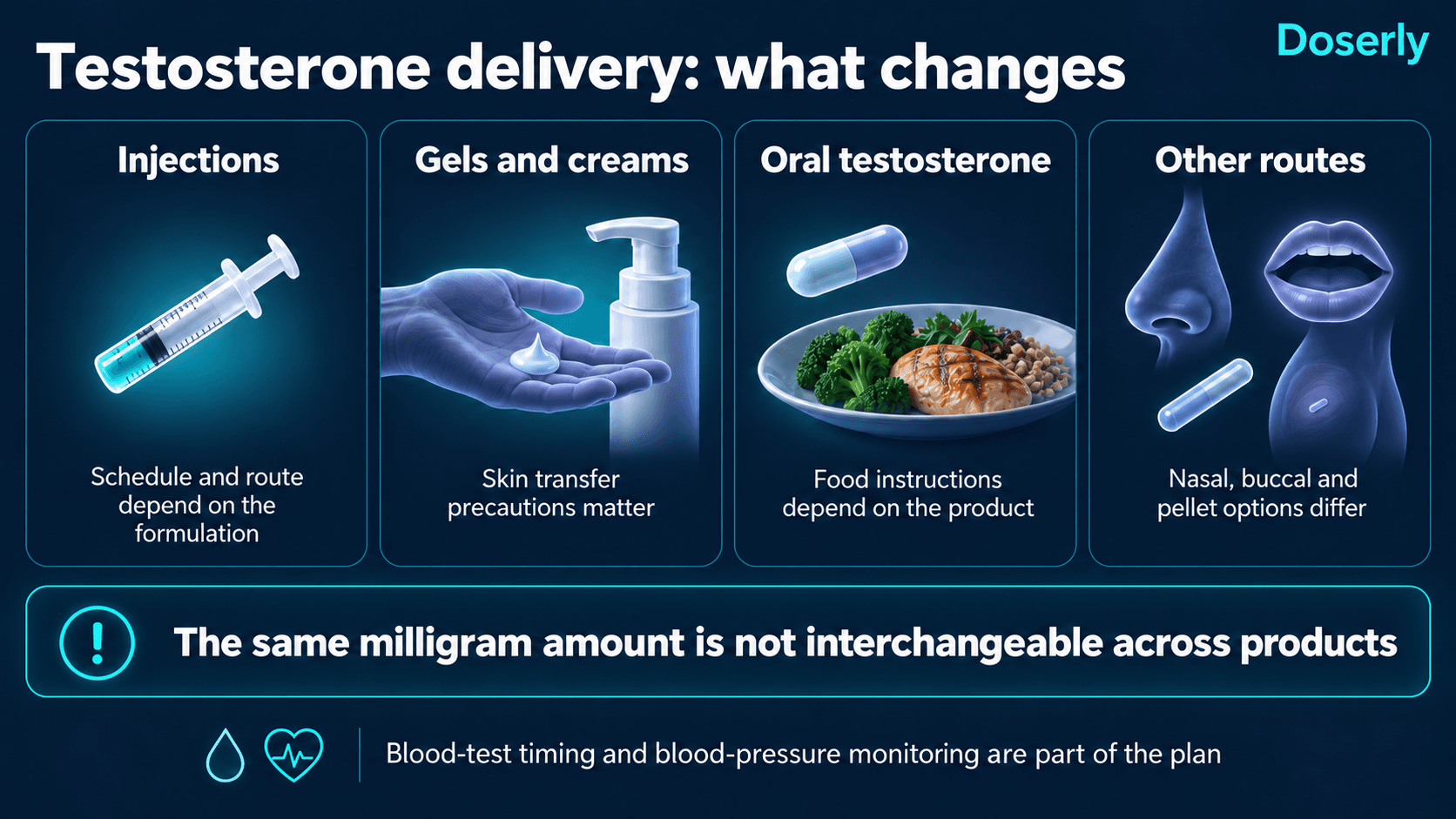
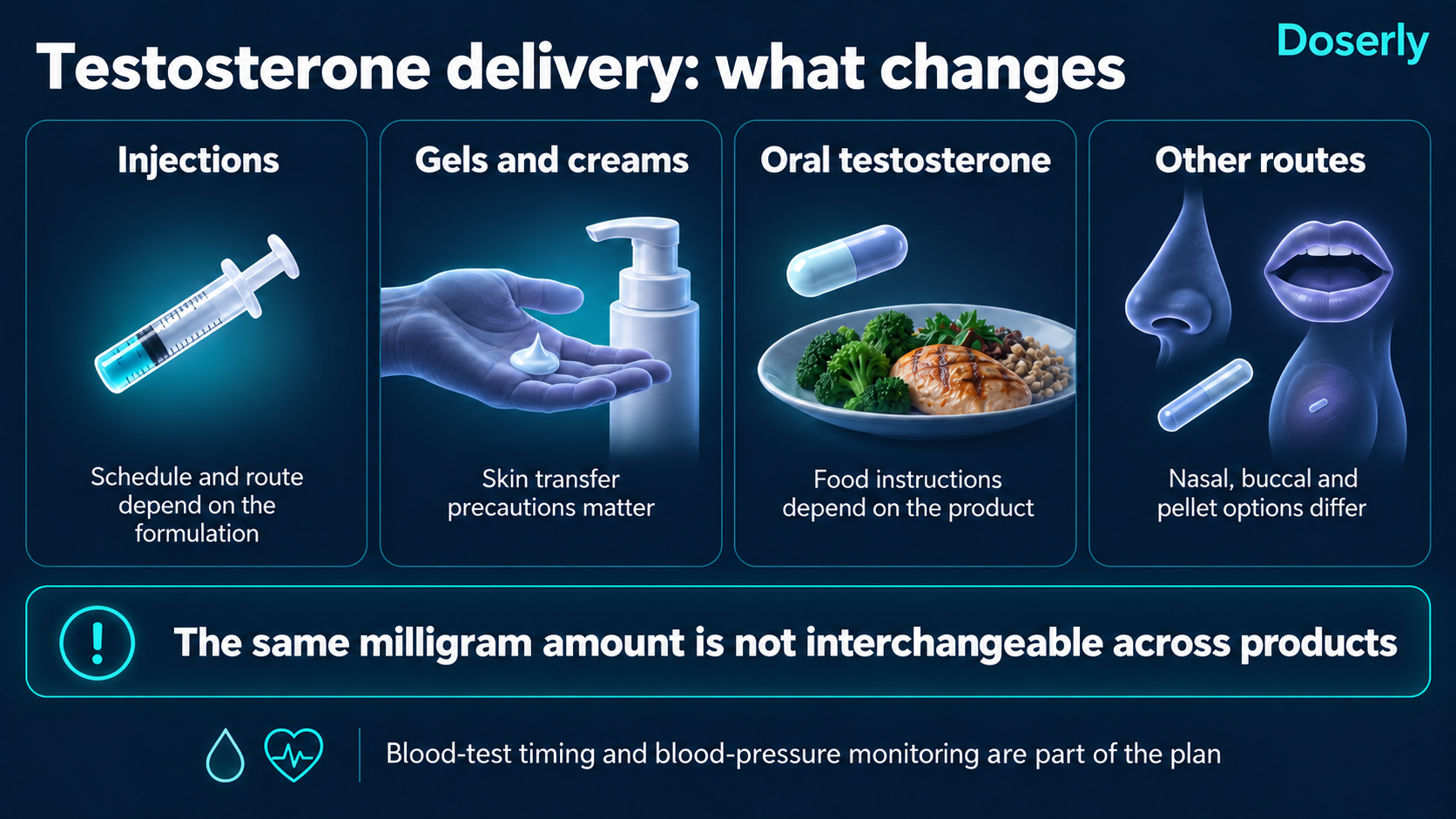
This is a route comparison, not a list of products currently sold in every country. Products differ in absorption, administration precautions, food requirements and blood-test timing; milligram doses cannot be exchanged across formulations.
Pharmacokinetics / Hormone Physiology
The Basics
Understanding how testosterone gel moves through your body helps explain both its advantages and its limitations compared to other TRT delivery methods.
When you apply testosterone gel to your skin, only about 10% of the testosterone actually makes it into your bloodstream. The rest stays on your skin surface or is lost during the absorption process. This may sound inefficient, but it is enough to maintain therapeutic testosterone levels for most men when the correct dose is used.
The gel works in two phases. First, the alcohol in the gel evaporates quickly (usually within 5-10 minutes), leaving a thin film of testosterone on your skin. Second, the testosterone slowly passes through your outer skin layer (the stratum corneum) into the blood vessels beneath. Your outer skin acts like a reservoir, gradually releasing testosterone throughout the day. This is why steady-state levels are typically reached within 2-3 days of starting daily application, rather than immediately.
Where you apply the gel matters significantly. Research shows that applying the 1.62% gel to your upper arms and shoulders delivers 30-40% more testosterone into your blood than applying it to your abdomen. This difference in absorption by body site is why the 1.62% formulation's label specifies application to the upper arms and shoulders only.
One practical consideration that many men learn over time: applying a moisturizing lotion about an hour after the gel has dried may enhance absorption. A study published in JAMA found that sunscreen or lotion application increased testosterone absorption by 14-18%.
The Science
Absorption: Following application to clean, dry, intact skin, testosterone from the hydroalcoholic gel partitions into the stratum corneum. Approximately 10% of the applied dose is systemically absorbed. The alcohol vehicle acts as a penetration enhancer, facilitating partitioning into the lipophilic stratum corneum. Following alcohol evaporation (5-10 minutes), the stratum corneum serves as a reservoir for sustained testosterone release into the dermal microcirculation.
Distribution: Circulating testosterone is approximately 44% bound to sex hormone-binding globulin (SHBG), 54% bound to albumin, and approximately 2% circulating as free (unbound) testosterone. Free testosterone and the loosely albumin-bound fraction constitute the bioavailable fraction that is available for tissue uptake and receptor binding.
Metabolism: Testosterone is metabolized primarily in the liver via oxidative pathways. The two key metabolic conversions are: 5-alpha reduction to DHT and aromatization to estradiol. Hepatic glucuronidation and sulfation produce inactive conjugates excreted renally. Unlike oral 17-alpha-alkylated androgens (methyltestosterone), transdermal testosterone does not undergo first-pass hepatic metabolism and carries minimal hepatotoxic risk.
Steady state: Achieved within 2-3 days of consistent daily application. Serum testosterone concentrations are relatively stable throughout the 24-hour dosing interval with daily application, with Cmax occurring approximately 4-8 hours post-application.
Application site pharmacokinetics (1.62% gel):
Application Site
Upper arms/shoulders
- Relative Bioavailability
- 100% (reference)
- Clinical Recommendation
- Recommended application site for 1.62%
Application Site
Abdomen
- Relative Bioavailability
- 60-70% of arms/shoulders
- Clinical Recommendation
- Approved for 1% formulation only
Application Site
Thighs/calves
- Relative Bioavailability
- Variable, generally lower
- Clinical Recommendation
- Not recommended for AndroGel
Route comparison:
Parameter
Dosing frequency
- Testosterone Gel
- Daily
- IM Testosterone Cypionate
- Weekly to biweekly
- IM Testosterone Enanthate
- Weekly to biweekly
Parameter
Peak-trough variation
- Testosterone Gel
- Minimal (2.7 pg/mL free T)
- IM Testosterone Cypionate
- Large (26.7 pg/mL free T)
- IM Testosterone Enanthate
- Large
Parameter
Time to steady state
- Testosterone Gel
- 2-3 days
- IM Testosterone Cypionate
- 4-6 weeks
- IM Testosterone Enanthate
- 4-6 weeks
Parameter
Polycythemia risk
- Testosterone Gel
- Lower (12.8% Hct >50%)
- IM Testosterone Cypionate
- Higher (66.7% Hct >50%)
- IM Testosterone Enanthate
- Higher
Parameter
Transfer risk
- Testosterone Gel
- Yes (skin-to-skin)
- IM Testosterone Cypionate
- No
- IM Testosterone Enanthate
- No
Parameter
Testosterone form
- Testosterone Gel
- Unesterified
- IM Testosterone Cypionate
- Ester (cypionate)
- IM Testosterone Enanthate
- Ester (enanthate)
Knowing the pharmacokinetics is the foundation. Seeing how your own body responds to your specific formulation and application routine turns that knowledge into actionable insight. Doserly correlates your dosing schedule with how you feel day to day, helping you and your provider identify whether your current protocol is delivering stable levels or causing subtle fluctuations you might not notice on your own.
The app's analytics can surface patterns you might not notice on your own, like whether symptoms correlate with a missed application day or whether switching application sites affected your energy and mood. Data like this makes protocol adjustments more precise and less guesswork.
Research & Clinical Evidence
The Basics
The evidence supporting testosterone gel for treating hypogonadism is substantial. The most important piece of evidence for anyone considering testosterone gel is the TRAVERSE trial, the largest cardiovascular safety study ever conducted on testosterone therapy. What makes TRAVERSE uniquely relevant to this guide is that it used 1.62% testosterone gel (AndroGel 1.62%) as the study drug, so its findings apply directly to the medication being discussed here.
TRAVERSE enrolled over 5,200 men aged 45-80 with confirmed low testosterone and either existing heart disease or high cardiovascular risk, and followed them for an average of nearly three years. The central finding: testosterone gel did not increase the rate of heart attacks, strokes, or cardiovascular death compared to placebo. For many men and their providers, this was reassuring news after years of conflicting and anxiety-inducing data from smaller studies.
Beyond cardiovascular safety, clinical trials of testosterone gel have demonstrated improvements in sexual function, mood, body composition, and bone density in hypogonadal men. The Testosterone Trials (TTrials), a set of seven coordinated studies in older hypogonadal men, found that testosterone gel improved sexual desire, erectile function, walking distance, and mood (particularly depressive symptoms) over 12 months.
It is worth noting that these benefits were demonstrated in men with confirmed low testosterone and symptoms. The same degree of benefit may not apply to men with normal or borderline testosterone levels. Clinical guidelines are clear that TRT is indicated for diagnosed hypogonadism, not as a general lifestyle enhancement.
The Science
TRAVERSE prostate data did not show a higher rate of high-grade prostate cancer or major prostate events during follow-up in carefully screened men with hypogonadism, but those findings do not prove safety for men with active or untreated prostate cancer or for unsupervised higher-dose use. PSA/prostate monitoring remains standard, and known or suspected prostate cancer requires specialist evaluation before testosterone is considered.
TTrials (Snyder et al., NEJM 2016):
Seven coordinated trials in 790 men aged ≥65 with testosterone <275 ng/dL. Testosterone gel (1%) vs placebo for 12 months. Sexual function: significant improvement in sexual activity and sexual desire (P<0.001). Physical function: improved walking distance. Mood: improvement in depressive symptoms (PHQ-9 score). Vitality: modest improvement in vitality measures. Bone: increased volumetric BMD. Anemia: improved hemoglobin in men with unexplained anemia.
Endocrine Society Clinical Practice Guideline (Bhasin et al., JCEM 2018):
Testosterone product labeling is in transition after the June 18, 2026 HHS/FDA request to remove the age-related-hypogonadism limitation and revise prostate/BPH language. Diagnosis, payer approval, and treatment decisions still require symptoms, repeated low morning testosterone, risk review, and product-specific label checks.
AUA Guidelines on Testosterone Deficiency (2018):
Aligns with Endocrine Society on diagnostic criteria (total T <300 ng/dL on two occasions) and treatment indications. Notes that transdermal gels are an appropriate first-line treatment option.
Benefits & Therapeutic Effects
The Basics
For men with confirmed low testosterone, testosterone gel can offer meaningful improvements across several areas of health and daily life. The benefits tend to emerge in a predictable pattern, with some appearing within days and others taking months to fully develop.
Sexual function is often the first area where men notice a change. Many report increased sexual thoughts and desire within the first 2-4 weeks, followed by improvements in erectile quality over 1-3 months. This is one of the most consistently reported benefits in both clinical trials and real-world use.
Energy and motivation frequently improve early, sometimes within the first week. The persistent fatigue, afternoon crashes, and difficulty getting out of bed that characterize low testosterone often ease noticeably. This improvement in daily energy is typically what men describe as the most life-changing aspect of treatment.
Mood stabilization develops more gradually. Depressive symptoms, irritability, and the feeling of "emotional flatness" that many hypogonadal men experience tend to improve over weeks to months. In clinical trials, testosterone gel produced measurable improvement in depression scores.
Body composition changes become apparent over 3-6 months: reduced body fat (particularly abdominal fat) and improved muscle mass and definition, even without changes in exercise routine. These changes are generally more modest with gel than with injectable testosterone, reflecting the lower peak testosterone levels achieved.
Bone density improvements occur over 12 or more months and are measured by DEXA scan rather than felt subjectively. For men with osteopenia or osteoporosis related to hypogonadism, this is a clinically important benefit.
A key advantage specific to testosterone gel is the stability of these benefits. Because hormone levels remain relatively constant from day to day, men on gel therapy often describe more consistent energy, mood, and sexual function compared to the peaks and valleys reported by some men on injection schedules.
The Science
The TTrials (n=790, men ≥65, testosterone <275 ng/dL, 12-month treatment with 1% testosterone gel) provide the most rigorous efficacy data for testosterone gel specifically:
Expected benefits vary by diagnosis, baseline health, route, dose, and follow-up. Improvements in energy, libido, mood, or body composition should be judged alongside labs and safety markers.
Regarding body composition, a meta-analysis of testosterone therapy (including transdermal formulations) found consistent reductions in fat mass and increases in lean body mass, with effect sizes of approximately 1.6 kg lean mass increase and 2.0 kg fat mass decrease over 6-12 months of treatment. However, comparative data suggest that injectable testosterone may produce greater lean mass increases than gel, potentially due to higher achievable peak testosterone concentrations and greater aromatization to estradiol (which contributes to bone and metabolic effects).
Risks, Side Effects & Safety
The Basics
Every medication involves trade-offs between benefits and risks, and testosterone gel is no exception. Understanding the risks in context, with real numbers rather than vague warnings, helps you and your provider make informed decisions.
Common side effects include application site reactions (skin redness or irritation where the gel is applied, usually mild), acne or oily skin, and changes in mood during the initial adjustment period. These are typically manageable and often improve over time.
Secondary exposure is a risk unique to topical testosterone. If a woman or child touches the area where gel was applied before it has been washed, they can absorb testosterone through their own skin. In children, this has caused premature puberty, enlarged genitalia, and aggressive behavior. This is serious enough to warrant a boxed warning on the label. The prevention is straightforward: cover the application site with clothing after the gel dries, wash your hands after applying, and wash the area with soap and water before any skin contact with others.
Cardiovascular safety was a major concern for years, but the TRAVERSE trial (which specifically used 1.62% testosterone gel in over 5,200 high-risk men) found no increase in heart attacks, strokes, or cardiovascular death compared to placebo over an average of 33 months. The hazard ratio was 0.96 (95% CI: 0.78-1.17). To put this in absolute numbers: 7.0% of men on testosterone experienced a major cardiovascular event versus 7.3% on placebo, a difference that was not statistically significant. TRAVERSE did find increased rates of atrial fibrillation (3.5% vs 2.4%), venous blood clots (1.7% vs 1.2%), and acute kidney injury (2.3% vs 1.5%) in the testosterone group.
Polycythemia (elevated red blood cell count) is one of the most common laboratory abnormalities with testosterone therapy, but gel carries meaningfully lower risk than injections. A comparative study found that erythrocytosis (hematocrit >50%) occurred in 12.8% of gel users versus 66.7% of injectable testosterone users. The threshold for concern is a hematocrit above 54%, at which point your provider will likely reduce the dose or temporarily stop therapy. Regular blood monitoring catches this before it becomes dangerous.
Testicular atrophy occurs because the external testosterone signals your brain to stop telling your testes to produce their own. This is expected and typically reversible if TRT is discontinued, though the timeline varies.
Fertility suppression is a critical consideration. All exogenous testosterone, including gel, suppresses sperm production. This is discussed in detail in Section 14.
The Science
Cardiovascular risk (TRAVERSE data):
In men aged 45-80 with hypogonadism and preexisting or high-risk cardiovascular disease, daily 1.62% testosterone gel was noninferior to placebo for the primary MACE composite (HR 0.96, 95% CI: 0.78-1.17). In absolute terms: 182/2,596 (7.0%) testosterone vs 190/2,602 (7.3%) placebo experienced MACE over a mean 33-month follow-up. Individual MACE components showed no significant differences. However, TRAVERSE identified concerning secondary signals:
- Atrial fibrillation: 91 (3.5%) vs 63 (2.4%), P=0.02
- Venous thromboembolism: 44 (1.7%) vs 30 (1.2%), 46% relative increase
- Acute kidney injury: 60 (2.3%) vs 40 (1.5%), P=0.04
- Pulmonary embolism: higher in testosterone group
These secondary findings warrant continued monitoring, particularly VTE history as a relative contraindication.
Polycythemia and hematocrit (route comparison):
A systematic review and Bayesian network meta-analysis found that testosterone gel increased hematocrit by approximately 3.0% (95% CI: 1.8-4.3%), compared to 4.0% (95% CI: 2.9-5.1%) for IM testosterone enanthate/cypionate. A retrospective comparative study found erythrocytosis (Hct >50%) in 12.8% of gel users versus 66.7% of injectable users (P<0.0001). The hematocrit threshold of 54% or higher requires dose reduction or temporary cessation per Endocrine Society guidelines. This lower polycythemia risk is a clinically significant advantage of transdermal over injectable delivery, particularly for men with cardiovascular risk factors or baseline hematocrit near the upper limit.
Contraindications (absolute):
- Breast cancer
- Known or suspected prostate cancer
- Pregnant women (testosterone is teratogenic)
- Hematocrit 54% or higher at baseline
- Uncontrolled heart failure
- Desire for near-term fertility
- Untreated severe obstructive sleep apnea
Safety comparison by route:
Risk Factor
Polycythemia risk
- Gel
- Lower
- IM Injection
- Higher
- Patch
- Lowest
Risk Factor
Peak-trough fluctuation
- Gel
- Minimal
- IM Injection
- Significant
- Patch
- Minimal
Risk Factor
Skin transfer risk
- Gel
- Yes
- IM Injection
- No
- Patch
- No
Risk Factor
Application site reactions
- Gel
- Mild
- IM Injection
- Injection site pain
- Patch
- Significant (up to 33%)
Risk Factor
Hepatotoxicity
- Gel
- None
- IM Injection
- None
- Patch
- None
Risk Factor
Cardiovascular (TRAVERSE)
- Gel
- Non-inferior to placebo
- IM Injection
- Limited RCT data
- Patch
- Limited RCT data
Understanding your personal risk profile isn't a one-time calculation; it evolves as your treatment progresses. Doserly helps you see the bigger picture by analyzing side effect patterns over time, showing whether issues are resolving, persisting, or emerging as your body adjusts to testosterone therapy.
The app's analytics can reveal connections between side effects and specific aspects of your protocol, like whether hematocrit creep correlates with a recent dose increase, or whether changing your application site affected your skin reactions. This kind of insight helps you and your provider make informed adjustments based on your actual experience, not just population-level averages.
Dosing & Treatment Protocols
The Basics
Testosterone gel dosing is straightforward in principle: apply the prescribed amount to your skin once daily, and your provider adjusts the dose based on blood work and symptom response. In practice, getting the right dose requires patience and follow-up.
AndroGel 1% (the original formulation):
- Starting dose: typically 50 mg per day (5 grams of gel), applied to the shoulders, upper arms, or abdomen
- Dose range: 25 mg to 100 mg per day
- Available as unit-dose packets or a metered-dose pump (12.5 mg per pump actuation)
AndroGel 1.62% (the concentrated formulation):
- Starting dose: 40.5 mg per day (2 pump actuations or one 40.5 mg packet), applied to the upper arms and shoulders only
- Dose range: 20.25 mg (1 pump) to 81 mg (4 pumps) per day
- Do NOT apply to the abdomen (lower absorption at this concentration)
Your provider will check your testosterone levels approximately 14 days after starting or changing the dose. The goal is to maintain testosterone levels within the normal range (typically 300-1,000 ng/dL, though many providers aim for the middle portion of this range). If levels are too low, the dose is increased; if too high, it is decreased.
Timing matters. Apply the gel in the morning after showering, to clean, dry skin. Let it dry completely (about 5-10 minutes) before dressing. Morning application helps approximate the body's natural pattern, where testosterone levels are highest in the early morning.
The Science
Dose titration protocol (per prescribing information):
Formulation
AndroGel 1%
- Starting Dose
- 50 mg/day (5 g gel)
- Dose Range
- 25-100 mg/day
- Titration Interval
- Check T at 14 days
- Target
- Normal range
Formulation
AndroGel 1.62%
- Starting Dose
- 40.5 mg/day (2 pumps)
- Dose Range
- 20.25-81 mg/day
- Titration Interval
- Check T at 14 days
- Target
- Normal range
Absorption optimization factors:
- Application site: arms/shoulders > abdomen (30-40% higher bioavailability)
- Skin condition: clean, dry, intact skin provides most consistent absorption
- Post-application lotion: studies suggest applying moisturizing lotion ~1 hour after gel may increase absorption by 14-18%
- Sunscreen: may also enhance absorption through occlusive effect
- Exercise/sweating: avoid vigorous exercise for 2-4 hours after application to prevent washing off
- Showering: wait at least 2 hours (1% gel) or 2 hours (1.62% gel) before showering or swimming after application
Dosing protocols often change over the course of treatment. Starting doses get adjusted, application sites get switched, and sometimes men transition between formulations. Doserly maintains a complete history of every protocol change, giving you and your provider a clear picture of what has been tried and how each adjustment affected your symptoms and lab values.
The app's adherence analytics show your consistency patterns and can highlight whether missed doses or timing variations correlate with symptom changes. When your provider is considering a dose adjustment based on your trough levels, having this data available makes the conversation more productive and the decision more informed.
What to Expect (Timeline)
Days 1-7:
- Gel application routine: initial adjustment to daily application process, learning technique
- Some men report subtle energy improvement within the first few days, though placebo contribution is likely
- Application site may feel slightly sticky or warm initially; this usually resolves as you develop your routine
- No significant hormonal changes expected in the first few days as testosterone builds in the system
Weeks 2-4:
- Steady-state testosterone levels typically achieved by day 2-3 of consistent daily application
- Sexual desire often the first noticeable improvement (increased sexual thoughts, interest)
- Energy improvements may become apparent: less fatigue, fewer afternoon crashes
- Some men notice mood shifts during this period (both positive and occasionally increased irritability during adjustment)
- First testosterone blood draw typically occurs around day 14 to assess dosing adequacy
Months 1-3:
- Sexual function improvements become more consistent: stronger erections, improved confidence
- Energy and motivation stabilize at a new baseline
- Mood improvement continues to develop; depressive symptoms may ease
- Body composition changes begin: subtle reduction in abdominal fat, modest increase in muscle firmness
- Hematocrit begins to rise (monitor at 3-6 months per guidelines)
- Testicular volume may begin to decrease as HPG axis suppression takes effect
Months 3-6:
- Body composition changes become more visible: noticeable fat loss, improved muscle tone
- Strength improvements may become apparent with consistent exercise
- Sexual function typically reaches its plateau of improvement
- Mood stabilization is generally established by this point
- Dose adjustments may be made based on 3-month blood work
Months 6-12:
- Full body composition benefits: significant fat mass reduction and lean mass increase
- Bone density changes begin to be measurable by DEXA scan
- Red blood cell production has typically stabilized (important to continue monitoring hematocrit)
- Long-term treatment satisfaction typically settles at this point
- Annual review with provider to assess continued benefit and risk-benefit balance
Ongoing maintenance:
- Annual lab work: testosterone, hematocrit, PSA, lipid panel
- Dose reassessment as needed
- Continued skin transfer precautions
- Regular discussion with provider about continued indication and goals
Individual responses vary considerably. Some men notice dramatic improvement within the first week; others require 2-3 months and dose adjustments before experiencing full benefit. If no meaningful symptomatic improvement occurs after 6 months of optimal testosterone levels, guidelines suggest reconsidering whether TRT is the appropriate treatment.
Fertility Preservation & HPG Axis
Testosterone gel, like all forms of exogenous testosterone, suppresses the hypothalamic-pituitary-gonadal (HPG) axis. This is not a minor side effect; it is an inherent pharmacological consequence that every man considering TRT must understand before starting treatment.
How suppression works: When you apply testosterone gel, the testosterone absorbed through your skin signals your hypothalamus and pituitary gland that circulating testosterone levels are adequate. In response, your brain reduces production of gonadotropin-releasing hormone (GnRH), which in turn reduces secretion of luteinizing hormone (LH) and follicle-stimulating hormone (FSH). Without adequate LH stimulation, Leydig cells in the testes reduce their own testosterone production. Without adequate FSH, Sertoli cells cannot adequately support spermatogenesis.
The fertility consequence: Intratesticular testosterone concentrations, normally maintained at levels far higher than serum levels by LH-stimulated Leydig cell production, decline dramatically on exogenous TRT. This leads to spermatogenic arrest. Exogenous testosterone can suppress sperm production enough to cause azoospermia or severe oligospermia within months; semen analysis is needed to know an individual response (Liu spermatogenic recovery analysis, AUA guideline). This occurs regardless of whether testosterone is delivered by gel, injection, patch, or pellet.
Fertility preservation strategies:
- Sperm banking before starting TRT: Recommended for any man of reproductive age who may want biological children in the future
- HCG co-administration (250-500 IU, 2-3 times weekly): Maintains intratesticular testosterone and may preserve spermatogenesis, though evidence is not universal
- Clomiphene/enclomiphene as alternatives: SERMs that stimulate LH/FSH production and raise endogenous testosterone without suppressing spermatogenesis; considered for men whose primary goal is fertility preservation alongside testosterone normalization (off-label for clomiphene)
Recovery after discontinuation: HPG axis recovery is variable and not guaranteed. Most men recover spermatogenesis within months to more than a year after stopping TRT, but some do not fully recover, particularly those who used TRT for extended periods. Factors affecting recovery include duration of TRT use, age, pre-TRT hormonal status, and whether HCG was used concurrently. StatPearls notes that 10% of men on testosterone replacement therapy will not recover spermatogenesis even after cessation.
Primary vs secondary hypogonadism implications: Men with primary hypogonadism (testicular failure) may have limited recovery potential regardless of TRT use. Men with secondary hypogonadism (hypothalamic-pituitary dysfunction) generally have a better prognosis for HPG axis recovery, especially with SERM support.
Clinical importance: Fertility counseling should be part of every TRT initiation conversation for men of reproductive age. This is not a side effect that can be monitored and managed retrospectively; by the time a man realizes he wants to conceive, spermatogenesis may already be severely suppressed.
Interactions & Compatibility
Drug-Drug Interactions
- Anticoagulants (warfarin, DOACs): Testosterone may enhance the anticoagulant effect. INR monitoring is recommended, with potential dose adjustment of the anticoagulant.
- Insulin and diabetes medications: Testosterone may improve insulin sensitivity, potentially requiring reduction in insulin or oral hypoglycemic doses. Blood glucose should be monitored more frequently when starting TRT.
- Corticosteroids: Concurrent use may increase fluid retention risk, particularly in patients with cardiac, renal, or hepatic disease.
- 5-alpha reductase inhibitors (finasteride, dutasteride): These block conversion of testosterone to DHT. Co-administration reduces DHT-mediated effects (hair loss, prostate stimulation) but may also reduce some androgenic benefits. See finasteride guide if available.
- Aromatase inhibitors (anastrozole): Sometimes co-prescribed to manage estradiol levels, though routine use is not recommended by Endocrine Society guidelines. See Section Section 18 for detailed discussion.
- Opioids: Chronic opioid use suppresses the HPG axis and is a common cause of secondary hypogonadism. Addressing opioid use (taper if possible) may reduce or eliminate the need for TRT.
Supplement Interactions
- DHEA: Additive androgenic effects; may increase estradiol levels through aromatization. Concurrent use should be discussed with a provider.
- Boron: May modestly increase free testosterone by reducing SHBG; generally considered compatible with TRT.
- Zinc: Supports endogenous testosterone production; not contraindicated with TRT but unlikely to provide additional benefit.
- Saw palmetto: Weak 5-alpha reductase inhibitor; may modestly reduce DHT conversion. See saw palmetto guide if available.
- Vitamin D: Associated with testosterone levels; supplementation recommended if deficient, compatible with TRT.
Lifestyle Factors
- Alcohol: Suppresses testosterone production and increases aromatization to estradiol. Moderation recommended.
- Sleep: Critical for testosterone production (endogenous). TRT may worsen obstructive sleep apnea; screening recommended before initiation.
- Exercise: Resistance training is synergistic with TRT for body composition improvements. Avoid vigorous exercise immediately after gel application (sweating may reduce absorption).
- Body composition: Weight loss, particularly visceral fat reduction, may normalize testosterone in obese men, potentially reducing or eliminating the need for TRT.
Cross-Links
- Testosterone Cypionate (Depo-Testosterone) — injectable alternative, different PK profile
- Testosterone Enanthate (Delatestryl) — injectable alternative
- Testosterone Gel (Testim) — alternative 1% gel formulation (not bioequivalent)
- Testosterone Gel (Fortesta) — 2% gel, applied to thighs
- Testosterone Patch (Androderm) — transdermal patch alternative
- Compounded Testosterone Cream — compounding pharmacy alternative
- HCG — fertility preservation co-therapy
- Anastrozole (Arimidex) — estrogen management
- Clomiphene (Clomid) — SERM alternative for fertility
- Enclomiphene — newer SERM alternative
Decision-Making Framework
Deciding whether testosterone gel (or any TRT formulation) is appropriate requires a systematic approach that begins with confirming the diagnosis and ruling out reversible causes.
Diagnostic criteria: The Endocrine Society requires at least two morning fasting total testosterone measurements below the lower limit of normal (typically <264-300 ng/dL, though lab ranges vary) plus symptoms consistent with testosterone deficiency. The AUA uses 300 ng/dL as its threshold. The EAU uses 12.1 nmol/L (~350 ng/dL). If SHBG abnormalities are suspected (obesity, liver disease), free or bioavailable testosterone should be calculated.
When to investigate underlying causes first: Low testosterone is a symptom, not always a diagnosis. Reversible causes should be evaluated before starting lifelong TRT:
- Obesity (weight loss alone may normalize testosterone)
- Obstructive sleep apnea (CPAP optimization may improve testosterone)
- Chronic opioid use (taper if clinically possible)
- Pituitary pathology (MRI if secondary hypogonadism suspected)
- Thyroid dysfunction
- Depression (which can both cause and mimic low testosterone symptoms)
When gel may be preferred over other formulations:
- Men who want stable daily hormone levels without peaks and troughs
- Men with cardiovascular risk factors (lower polycythemia risk vs injections)
- Men who want to avoid injections (needle anxiety, convenience)
- Older men (>65) where lower polycythemia risk is clinically preferred
- Men whose insurance covers gel but not other formulations
When gel may NOT be the best choice:
- Men who live with women or children (transfer risk may be difficult to manage)
- Men who cannot absorb gel adequately (15-25% of men)
- Men who prefer less frequent dosing (daily vs weekly/biweekly)
- Men with very low SHBG (may need higher peak levels achievable with injections)
- Men who are very active or sweat heavily (may wash off gel)
Questions to ask your provider:
- "What were my actual testosterone levels, and how do they compare to the reference range?"
- "Could anything else be causing my symptoms besides low testosterone?"
- "Given my health history, which TRT formulation would you recommend and why?"
- "How will we monitor for side effects, and how often will I need blood work?"
- "What happens if I decide I want to have children while on TRT?"
- "What is the cost, and does my insurance cover this medication?"
Finding a qualified provider: Endocrinologists, urologists with andrology interest, and men's health specialists are best equipped to manage TRT. Verify credentials and look for providers who follow evidence-based guidelines (Endocrine Society, AUA) rather than one-size-fits-all protocols.
Telehealth TRT clinics: The landscape of online TRT clinics has expanded significantly. Benefits include convenience and access. Concerns include cookie-cutter protocols, inadequate monitoring, potential for over-prescribing, and high costs for proprietary formulations. A balanced approach is to seek providers who require proper diagnosis (two morning testosterone draws plus symptom evaluation), follow published guidelines, and perform regular lab monitoring.
Administration & Practical Guide
Application technique for AndroGel 1.62%:
- Apply in the morning after showering, to clean, dry, intact skin
- Squeeze gel onto the palm of your hand
- Apply to the upper arms and shoulders only (not abdomen, chest, genitals, or knees)
- Spread gel thinly and evenly using the palm; avoid rubbing vigorously
- Allow to dry completely (approximately 5-10 minutes) before dressing
- Cover the application site with clothing (short-sleeve t-shirt coverage area)
- Wash hands thoroughly with soap and water after application
- Wait at least 2 hours before showering, swimming, or bathing
Application technique for AndroGel 1%:
- Same morning routine: clean, dry skin
- Apply to shoulders, upper arms, or abdomen
- Available as packets (squeeze entire contents onto skin) or pump (each actuation delivers 12.5 mg)
- Same drying, covering, and handwashing instructions
Pump priming (first use only):
- Before first use, prime the pump by fully depressing the actuator 3 times
- Discard gel from these first 3 actuations
- Priming is only needed before the very first dose
Preventing secondary exposure (critical):
- Always cover the application site with clothing after gel dries
- Always wash hands after applying
- Wash the application site with soap and water before any anticipated skin-to-skin contact
- If someone (especially a woman or child) touches the unwashed application site, they should wash the contact area immediately with soap and water
- Store the medication where children cannot access it
- Discard used packets in household trash in a manner that prevents access
Practical tips from clinical experience:
- Rotate between left and right arms/shoulders if irritation develops
- If you forget a dose, apply it as soon as you remember unless it is close to the next dose; do not double up
- The gel is alcohol-based and flammable; avoid fire, flames, or smoking until completely dry
- Applying moisturizing lotion approximately 1 hour after the gel has dried may enhance absorption
- If you consistently cannot achieve target testosterone levels on maximum dose, discuss alternative formulations with your provider
Monitoring & Lab Work
Pre-TRT baseline labs:
- Total testosterone (two morning draws, fasting, before 10 AM)
- Free testosterone (calculated or equilibrium dialysis) if SHBG abnormalities suspected
- LH and FSH (to distinguish primary vs secondary hypogonadism)
- Estradiol
- SHBG
- Prolactin (if secondary hypogonadism suspected)
- CBC with hematocrit
- PSA (age-appropriate, men >40)
- Lipid panel
- Comprehensive metabolic panel
- DEXA scan if osteoporosis risk present
Initial follow-up (14 days to 3 months):
- Testosterone level at 14 days after start or dose adjustment (timing: any time of day for gel, as levels are relatively stable)
- Repeat testosterone at 1-3 months to confirm steady-state dosing
- Hematocrit at 3-6 months
- Symptom assessment and side effect evaluation
Ongoing monitoring schedule:
- Hematocrit: every 6-12 months. Threshold 54% or higher requires dose reduction or temporary cessation
- PSA: annually for men >40, per age-appropriate screening guidelines
- Testosterone levels: periodically (any time of day for gel users at steady state); two levels recommended due to higher variability with gel vs injections
- Estradiol: only if symptomatic (gynecomastia, significant fluid retention, mood disturbance); not routine per guidelines
- Lipid panel: annually
- Blood pressure: periodically (2025 label update added or retained blood-pressure monitoring language; individual product labels should be checked because revisions landed on different dates)
- Bone density (DEXA): if osteoporosis was an indication, repeat per clinical protocol (1-2 years)
- Semen analysis: if fertility is a concern
Annual review checklist:
- Symptom reassessment: are benefits still present?
- Continued indication: does the patient still need TRT?
- Risk-benefit discussion: any new risk factors developed?
- Dose optimization: are levels in target range?
- Side effect review: any emerging concerns?
Estrogen Management on TRT
The conversion of testosterone to estradiol by the aromatase enzyme is a normal physiological process. In men, estradiol is important for bone health, cardiovascular protection, libido, and cognitive function. When you apply testosterone gel, some of the absorbed testosterone is converted to estradiol, primarily in adipose tissue.
When estrogen management matters: Only when clinical symptoms or clearly elevated estradiol levels are present. The Endocrine Society and AUA guidelines do NOT recommend routine aromatase inhibitor (AI) use during TRT. Estradiol monitoring should only occur if symptoms suggest elevated estrogen.
Aromatase inhibitor use: Anastrozole (typically 0.25-0.5 mg, 2-3 times weekly) is the most commonly used AI. It should be considered a tool for specific clinical situations (documented gynecomastia, significantly elevated E2 with symptoms), not a routine co-prescription.
When NOT to use an AI: Most men on TRT, particularly on gel (which produces lower peak testosterone levels than injections and therefore less aromatization), do not need an AI. Suppressing estradiol too aggressively causes joint pain, mood disturbance, decreased libido, dry skin, fatigue, depression, and bone density loss. Low estradiol symptoms can be more debilitating than high estradiol symptoms.
Major guidelines do not define a fixed estradiol target for men on TRT. Estradiol decisions should be based on symptoms, assay context, testosterone level, and avoidance of over-suppression.
Transdermal-specific note: Because testosterone gel delivers testosterone through the skin (which contains aromatase), there may be local estradiol production at the application site. However, overall estradiol levels tend to be lower with gel than with high-dose injectable testosterone, because the peak testosterone concentrations are lower. A comparative study found that estradiol increases were significant with injectable testosterone from 3 months onward, while gel-associated estradiol increases were more modest.
DIM (diindolylmethane) and other natural approaches: Some men use DIM or calcium d-glucarate to modulate estrogen metabolism. Evidence is limited and these supplements should not be considered equivalent to pharmaceutical AIs. Discuss with your provider before combining with TRT.
Stopping TRT / Post-Cycle Considerations
What happens when you stop testosterone gel: When you discontinue daily gel application, exogenous testosterone clears your system relatively quickly (within days, unlike long-acting injectable esters). However, your body's own testosterone production does not resume immediately. LH and FSH remain suppressed for weeks to months after cessation, and endogenous testosterone production may take months to more than a year to recover. Recovery to pre-TRT levels is not guaranteed.
Aromatase inhibitors are not routine TRT add-ons. If they are used, the goal is symptom relief while avoiding low-estradiol adverse effects such as joint pain, sexual dysfunction, mood changes, and bone risk.
Primary vs secondary hypogonadism recovery: Men with primary hypogonadism (testicular failure, Klinefelter syndrome) have limited capacity for endogenous recovery because the testes themselves are the problem, and exogenous therapy cannot repair that. Men with secondary hypogonadism (hypothalamic-pituitary causes) generally have a better prognosis for axis recovery.
Is TRT lifelong? For many men with classical primary hypogonadism, yes. For secondary hypogonadism, addressing underlying causes (weight loss, sleep apnea treatment, opioid cessation) may restore endogenous production, making TRT unnecessary. For age-related decline, the answer is highly individualized.
Factors affecting recovery: Duration of TRT use (longer use = slower recovery), age, pre-TRT hormonal status (was endogenous T already very low?), concurrent HCG use during TRT (may preserve testicular function), and genetic factors.
Realistic expectations: Not everyone recovers fully. Some men return to pre-TRT levels, some recover partially, and some do not recover meaningfully. This possibility should be discussed before starting TRT, especially in younger men.
Special Populations & Situations
Obese Men
Weight loss alone may normalize testosterone in obese hypogonadal men. Lifestyle intervention should be considered before committing to lifelong TRT. If TRT is initiated, obese men may experience higher aromatization (more estradiol production) and may absorb gel differently due to increased adipose tissue. Testosterone therapy in obese hypogonadal men has documented metabolic benefits including improved insulin sensitivity and body composition.
Men with Sleep Apnea
Testosterone may exacerbate obstructive sleep apnea. CPAP optimization should be in place before and during TRT. Sleep study recommended before initiation for men with risk factors (obesity, snoring, daytime somnolence). The lower peak testosterone levels achieved with gel (versus injections) may theoretically carry lower OSA exacerbation risk, though this has not been formally studied.
Cardiovascular Disease History
TRAVERSE provides the strongest reassurance for this population, as it specifically enrolled men with preexisting or high-risk CVD and used the same 1.62% testosterone gel. Gel may be preferred over injections in this population due to lower polycythemia risk. Hematocrit monitoring is critical.
Type 2 Diabetes
TRT may improve insulin sensitivity, HbA1c, and metabolic parameters in hypogonadal diabetic men. Diabetes medication doses may need adjustment. The Endocrine Society recommends against using TRT solely as a means of improving glycemic control.
Adolescents and Young Men
Not approved for males under 18. Constitutional delay of puberty must be distinguished from true hypogonadism. Fertility implications are especially critical in this age group; alternatives like clomiphene should be strongly considered.
Transgender Men (FTM)
Gel is an option for masculinizing hormone therapy, though IM injections are more commonly used due to the higher doses typically needed for masculinizing effects. Application technique and monitoring follow similar principles. Fertility counseling (oocyte preservation) is critical before initiation.
Older Men (>65)
The TRAVERSE trial and TTrials primarily enrolled this population. Gel may be preferred for older men due to lower polycythemia risk, more stable levels, and avoidance of injection complications. Lower starting doses are often appropriate. Prostate monitoring is heightened. The Endocrine Society recommends against routinely prescribing TRT to all men >65 with low T; individualized assessment is required.
Regulatory, Insurance & International
United States (FDA/DEA):
- Schedule III controlled substance (DEA classification)
- FDA-approved for classical hypogonadism only (primary and hypogonadotropic); NOT approved for "age-related hypogonadism" or "low T" without documented deficiency
- Boxed warning for secondary exposure to testosterone (unique to topical products)
- July 2025 label revision: cardiovascular risk warning removed from Warnings and Precautions, blood pressure monitoring warning added
- Insurance coverage: varies widely; prior authorization commonly required; lab documentation of low testosterone typically needed; step therapy may require trying lower-cost options first
- Costs vary widely by pharmacy, insurance, region, coupon programs, and visit/lab fees; verify current pricing before relying on a range.
- REMS: not required for gel formulations (unlike Aveed/testosterone undecanoate injectable)
Canada (Health Canada):
- AndroGel 1% authorized since February 2002
- Available through prescription; provincial drug plan coverage varies
- Latest product monograph revision: August 2025
United Kingdom (MHRA):
- Available as Testogel (1% gel)
- NHS prescribing available; also available through private clinics
- Classified as a controlled drug
Australia (TGA):
- Available as Testogel and AndroForte (5% cream)
- PBS listing with restrictions (specialist-initiated)
- Schedule 4 (prescription only)
European Union (EMA):
- Various testosterone gel products authorized across member states
- EAU guidelines align with Endocrine Society recommendations
Travel considerations:
- Carry a copy of your prescription and a letter from your provider when traveling internationally
- Controlled substance regulations vary by country; check destination country requirements
- Quantity limits may apply at border crossings; carry only a reasonable supply
- Gel in pump format may be easier to transport than packets
Cost and access tips:
- GoodRx and manufacturer coupons may significantly reduce out-of-pocket costs
- Generic 1% gel is substantially cheaper than branded AndroGel
- Costs vary widely by pharmacy, insurance, region, coupon programs, and visit/lab fees; verify current pricing before relying on a range.
- Insurance appeal strategies: ensure documentation includes two low testosterone levels plus documented symptoms
Frequently Asked Questions
Q: How long does it take for testosterone gel to start working?
A: Most men notice the first effects (improved energy, increased sexual thoughts) within 2-4 weeks. Body composition changes take 3-6 months. Full benefits may take 6-12 months. If no improvement after 6 months of documented adequate testosterone levels, your provider may recommend reassessing the treatment plan.
Q: Is testosterone gel as effective as injections?
A: For most men, yes. Gel produces adequate testosterone levels in the majority of users and has been shown in clinical trials to improve sexual function, mood, energy, and body composition. Some men (~15-25%) do not absorb gel well enough to achieve therapeutic levels and may need to switch to injections or another formulation. The trade-off is that gel provides more stable daily levels while injections may achieve higher peak levels.
Q: Can testosterone gel transfer to my partner or children?
A: Yes. This is a serious concern and the reason for the boxed warning. Cover the application site with clothing after it dries, wash your hands after applying, and wash the application site before skin-to-skin contact. If transfer occurs, the exposed person should wash the area immediately with soap and water.
Q: Will testosterone gel make me infertile?
A: All forms of exogenous testosterone suppress sperm production, often to very low levels or zero. This effect is usually reversible after stopping TRT, but recovery takes months and is not guaranteed in all cases. If you may want biological children in the future, discuss fertility preservation options (sperm banking, HCG, or SERM alternatives) before starting.
Q: Does testosterone gel cause heart problems?
A: The TRAVERSE trial, which used the same 1.62% testosterone gel as AndroGel, found no increase in heart attacks, strokes, or cardiovascular death compared to placebo in over 5,200 high-risk men followed for an average of nearly 3 years. The FDA removed its cardiovascular risk warning from the prescribing information in July 2025 based on this data. However, TRAVERSE did find higher rates of atrial fibrillation and blood clots, so monitoring remains important.
Q: What time of day should I apply testosterone gel?
A: Morning application is recommended (preferably after showering), which aligns with the body's natural pattern of highest testosterone levels in the early morning. Apply to clean, dry skin and allow to dry before dressing.
Q: Can I exercise after applying testosterone gel?
A: Wait at least 2 hours before vigorous exercise, as sweating may wash off the gel and reduce absorption. Swimming and showering should also wait at least 2 hours after application.
Q: Why is testosterone gel so expensive?
Costs vary widely by pharmacy, insurance, region, coupon programs, and visit/lab fees; verify current pricing before relying on a range.
Q: Does testosterone gel cause hair loss?
A: Testosterone (in any form) can accelerate male pattern baldness in men who are genetically predisposed. This is mediated by DHT, a testosterone metabolite. Some clinical data suggest that transdermal testosterone may produce slightly higher DHT:T ratios than injectable formulations, though the clinical impact of this difference on hair loss is not well established.
Q: Should I take an aromatase inhibitor with testosterone gel?
A: Most men on gel therapy do not need an aromatase inhibitor. Clinical guidelines recommend against routine AI use during TRT. Because gel produces lower peak testosterone levels than injections, aromatization tends to be less of a concern. AI use should only be considered if you develop symptoms of elevated estrogen (gynecomastia, significant fluid retention) confirmed by lab work.
Q: Can I switch from gel to injections (or vice versa)?
A: Yes, many men switch between formulations under medical guidance. Common reasons for switching include inadequate absorption with gel, cost considerations, lifestyle changes, or desire for different dosing frequency. Your provider will guide the transition and adjust monitoring accordingly.
Q: Is testosterone gel a steroid?
A: Testosterone is technically an anabolic-androgenic steroid. However, TRT doses are fundamentally different from the supraphysiological doses used for performance enhancement. TRT aims to restore testosterone to the normal physiological range (300-1,000 ng/dL), not to push it far above normal. At replacement doses, the risk profile is very different from steroid abuse.
Myth vs. Fact
Myth: Testosterone gel causes heart attacks.
Fact: The TRAVERSE trial (n=5,246), the largest cardiovascular safety trial of testosterone therapy, used 1.62% testosterone gel and found no increase in major adverse cardiovascular events compared to placebo (HR 0.96, 95% CI: 0.78-1.17). In absolute terms, 7.0% of the testosterone group experienced a cardiovascular event vs 7.3% of the placebo group over 33 months. The FDA removed its cardiovascular risk warning from the prescribing information in July 2025.
Myth: Gel doesn't work as well as injections.
Fact: Testosterone gel is effective for the majority of users and is recommended as a first-line treatment option by multiple guidelines. Clinical trials demonstrate comparable symptom improvement across formulations. However, approximately 15-25% of men do not absorb gel adequately and may need alternative delivery. For men who do absorb gel well, the stable daily levels may actually provide more consistent symptom control than the peaks and troughs of injectable testosterone.
Myth: TRT is just "taking steroids."
Fact: TRT restores testosterone to the normal physiological range (300-1,000 ng/dL) in men with documented deficiency. This is fundamentally different from the supraphysiological doses (doses often many times higher than replacement dosing) used in performance enhancement. The risk profile, monitoring requirements, and clinical rationale are entirely different.
Myth: Once you start testosterone gel, you can never stop.
Fact: Many men on TRT can discontinue with medical guidance. HPG axis recovery is possible, particularly in secondary hypogonadism. Recovery may take months to more than a year and can be supported with SERMs (clomiphene, enclomiphene). However, men with primary hypogonadism (testicular failure) are unlikely to recover adequate endogenous production. The decision is nuanced and individualized.
Myth: Testosterone gel will permanently damage your fertility.
Fact: While all exogenous testosterone suppresses spermatogenesis, this is usually reversible after discontinuation. Most men recover sperm production within months to more than a year. However, recovery is not guaranteed in all cases (approximately 10% may not recover), and fertility preservation strategies (sperm banking, HCG) should be discussed before starting TRT.
Myth: All men over 40 need testosterone replacement.
Testosterone product labeling is in transition after the June 18, 2026 HHS/FDA request to remove the age-related-hypogonadism limitation and revise prostate/BPH language. Diagnosis, payer approval, and treatment decisions still require symptoms, repeated low morning testosterone, risk review, and product-specific label checks.
Myth: You need to apply more gel if you're not getting results.
Fact: More gel is not always the answer. If you are not reaching target testosterone levels on maximum dose, the issue may be absorption rather than dose. Some men simply do not absorb transdermal testosterone well. In these cases, switching to a different formulation (injections, cream, patch) is more appropriate than exceeding the maximum recommended dose. Your provider should make dose decisions based on blood work, not symptoms alone.
Sources & References
[1] U.S. Food and Drug Administration. Testosterone Information. Current page covering testosterone product labeling, safety communications, and the June 2026 requested label updates. https://www.fda.gov/drugs/postmarket-drug-safety-information-patients-and-providers/testosterone-information
[2] U.S. Food and Drug Administration. FDA issues class-wide labeling changes for testosterone products. Feb. 28, 2025; canonical FDA page for the blood-pressure and TRAVERSE labeling action. https://www.fda.gov/drugs/drug-alerts-and-statements/fda-issues-class-wide-labeling-changes-testosterone-products
[3] U.S. Department of Health and Human Services / FDA. HHS Announces Requested Updates to Testosterone Therapy Product Labels. June 18, 2026; requested removal of the age-related-hypogonadism limitation and prostate/BPH revisions. https://www.hhs.gov/press-room/fda-requests-updates-testosterone-therapy-labeling.html
[4] Endocrine Society. Statement on Testosterone Replacement Therapy. July 16, 2026; interpretation of the FDA/HHS label request and TRAVERSE limits. https://www.endocrine.org/news-and-advocacy/news-room/2026/statement-on-testosterone-replacement-therapy
[5] Bhasin S, Brito JP, Cunningham GR, et al. Testosterone Therapy in Men With Hypogonadism: An Endocrine Society Clinical Practice Guideline. J Clin Endocrinol Metab. 2018;103(5):1715-1744. PubMed: 29562364. DOI: 10.1210/jc.2018-00229.
[6] Mulhall JP, Trost LW, Brannigan RE, et al. Evaluation and Management of Testosterone Deficiency: AUA Guideline. J Urol. 2018;200(2):423-432. PubMed: 29601923. DOI: 10.1016/j.juro.2018.03.115.
[7] Lincoff AM, Bhasin S, Flevaris P, et al. Cardiovascular Safety of Testosterone-Replacement Therapy. N Engl J Med. 2023;389(2):107-117. PubMed: 37326322. DOI: 10.1056/NEJMoa2215025.
[8] Snyder PJ, Bauer DC, Ellenberg SS, et al. Testosterone Treatment and Fractures in Men with Hypogonadism. N Engl J Med. 2024;390(3):203-211. PubMed: 38231621. DOI: 10.1056/NEJMoa2308836.
[9] Bhasin S, Travison TG, Pencina KM, et al. Prostate Safety Events During Testosterone Replacement Therapy in Men With Hypogonadism: A Randomized Clinical Trial. JAMA Netw Open. 2023;6(12):e2348692. PubMed: 38150256. DOI: 10.1001/jamanetworkopen.2023.48692.
[10] Snyder PJ, Bhasin S, Cunningham GR, et al. Effects of Testosterone Treatment in Older Men. N Engl J Med. 2016;374(7):611-24. PubMed: 26886521. DOI: 10.1056/NEJMoa1506119.
[11] Liu PY, Swerdloff RS, Christenson PD, et al. Rate, extent, and modifiers of spermatogenic recovery after hormonal male contraception: an integrated analysis. Lancet. 2006;367(9520):1412-20. PubMed: 16650651. DOI: 10.1016/S0140-6736(06)68614-5.
[12] DailyMed / National Library of Medicine. AndroGel Testosterone Gel: Dosing, Transfer Risk, Safety, and Monitoring prescribing information or medication guide page. https://dailymed.nlm.nih.gov/dailymed/drugInfo.cfm?setid=f4e8d29b-8707-4d47-e053-2a95a90aecee
[13] U.S. Food and Drug Administration. AndroGel Testosterone Gel: Dosing, Transfer Risk, Safety, and Monitoring prescribing information, approval review, or Drugs@FDA label material. https://www.accessdata.fda.gov/drugsatfda_docs/label/2025/021015s047lbl.pdf
Related Guides & Cross-Links
Same Category (Transdermal Testosterone)
- Testosterone Gel (Testim) — alternative 1% gel with different excipients (not bioequivalent to AndroGel)
- Testosterone Gel (Fortesta) — 2% gel, applied to thighs
- Testosterone Patch (Androderm) — transdermal patch, different delivery mechanism
- Compounded Testosterone Cream — compounding pharmacy formulation
Related Treatment Options (Other TRT Routes)
- Testosterone Cypionate (Depo-Testosterone) — most common injectable form
- Testosterone Enanthate (Delatestryl) — injectable alternative
- Testosterone Undecanoate Injectable (Aveed/Nebido) — long-acting injectable
- Intranasal Testosterone (Natesto) — nasal gel, may preserve fertility better
- Jatenzo (Oral Testosterone Undecanoate) — oral formulation
Complementary Approaches (Supplements)
- Vitamin D — associated with testosterone levels
- Zinc — supports testosterone production
- Ashwagandha — adaptogenic support
- Boron — may increase free testosterone
Ancillary TRT Medications
- HCG — fertility preservation during TRT
- Clomiphene (Clomid) — SERM alternative to TRT
- Enclomiphene — newer SERM option
- Anastrozole (Arimidex) — estrogen management
Treatment Overview Guides
- Testosterone Gels & Topicals Guide — comprehensive comparison of all topical formulations
- TRT for Beginners — starting TRT overview
- TRT Blood Work Guide — understanding lab results
- Fertility Preservation on TRT — detailed fertility guide
- Estrogen Management on TRT — E2 management deep dive