
Conjugated Estrogens: Premarin Uses, Dosing and Risks
On this page
Quick Reference Card
Attribute
Brand Name(s)
- Value
- Premarin (US, Canada, Australia); also available as Cenestin (synthetic A), Enjuvia (synthetic B)
Attribute
Generic Name
- Value
- Conjugated Estrogens, USP
Attribute
Drug Class / Type
- Value
- Estrogen (conjugated equine estrogens)
Attribute
FDA-Approved Indications
- Value
- Moderate-to-severe vasomotor symptoms; vulvar/vaginal atrophy; hypoestrogenism (hypogonadism, castration, primary ovarian failure); prevention of postmenopausal osteoporosis; palliative treatment of breast cancer; palliative treatment of prostate cancer
Attribute
Common Doses
- Value
- 0.3 mg, 0.45 mg, 0.625 mg, 0.9 mg, 1.25 mg (oral tablets); 0.625 mg/g (vaginal cream); 25 mg (IV/IM injection)
Attribute
Route(s) of Administration
- Value
- Oral, vaginal (cream), IV, IM
Attribute
Dosing Schedule
- Value
- Continuous daily or cyclic (25 days on/5 days off, or 3 weeks on/1 week off)
Attribute
Key Monitoring Requirements
- Value
- Mammogram, pelvic exam, lipid panel, liver function, blood pressure; endometrial monitoring if used with progestogen
Overview / What Is Conjugated Equine Estrogens?
The Basics
Conjugated equine estrogens (CEE), most widely known by the brand name Premarin, is one of the oldest and most studied estrogen medications in the world. First approved by the FDA in 1942, it has been used by millions of women over more than eight decades to manage menopausal symptoms, prevent bone loss, and treat conditions related to low estrogen levels.
Unlike some newer estrogen medications that contain a single type of estrogen, CEE is a mixture of multiple estrogen compounds derived from the urine of pregnant mares. This mixture includes at least ten different estrogenic substances, with sodium estrone sulfate and sodium equilin sulfate being the primary components. The name "Premarin" itself reflects this origin: PREgnant MARe urINe.
This unique composition has made CEE both historically important and somewhat controversial. It was the estrogen formulation used in the landmark Women's Health Initiative (WHI) trial, which means we have more long-term safety and efficacy data on CEE than on any other estrogen formulation. At the same time, the equine sourcing has raised ethical concerns for some people, and the broader medical community has increasingly moved toward prescribing bioidentical 17-beta estradiol as an alternative. Both remain valid therapeutic options.
For many people, CEE continues to provide effective relief from vasomotor symptoms, genitourinary symptoms, and bone loss. Understanding its unique pharmacology, the extensive clinical data behind it, and how it compares to alternatives can help inform meaningful conversations with a healthcare provider.
As of September 13, 2026, CEE/Premarin safety discussion should include FDA’s 2025/2026 warning-label transition while preserving WHI absolute-risk context and the need for endometrial protection when systemic estrogen is used by someone with a uterus. [14][15]
The Science
Conjugated estrogens USP is a complex pharmaceutical preparation comprising the sodium salts of water-soluble estrogen sulfates blended to represent the average composition of material derived from pregnant equine urine [1]. The mixture contains sodium estrone sulfate and sodium equilin sulfate as primary components, with additional constituents including 17-alpha-dihydroequilin, 17-alpha-estradiol, 17-beta-dihydroequilin, equilenin, 17-alpha-dihydroequilenin, 17-beta-dihydroequilenin, delta-8,9-dehydroestrone, and 17-beta-estradiol [1].
The pharmacological significance of CEE extends beyond simple estrogen replacement. The ring B unsaturated estrogens (equilin, equilenin, and their metabolites) present in CEE are formed through an alternate steroidogenic pathway unique to equine species and exhibit distinct receptor binding profiles compared to 17-beta-estradiol [3]. These unique components have been the subject of considerable research regarding their tissue-specific effects, including potential neuroprotective and antioxidant properties that differ from those of estradiol alone [3].
CEE holds a singular position in HRT evidence because it was the sole estrogen formulation studied in both arms of the WHI (CEE alone in 10,739 hysterectomized women; CEE combined with MPA in 16,608 women with intact uteri), making it the most rigorously evaluated estrogen preparation in terms of long-term clinical outcomes [4]. This extensive evidence base, spanning initial enrollment in 1993 through more than 20 years of follow-up, provides a degree of outcome certainty that is currently unavailable for any other estrogen formulation [5].
Synthetic conjugated estrogens (Cenestin, Enjuvia) are plant-derived alternatives that replicate the estrogenic composition of CEE without equine sourcing, containing 9 to 10 synthetic estrogenic substances. While pharmacologically similar, these products have less extensive clinical trial data than equine-derived CEE [1].
Medical / Chemical Identity
Generic Name: Conjugated Estrogens, USP
Brand Names:
- United States: Premarin (Pfizer/Wyeth), Cenestin (synthetic A, Teva), Enjuvia (synthetic B, Teva)
- Canada: Premarin (Pfizer), C.E.S. (generic)
- Australia: Premarin (Pfizer)
- United Kingdom: Premarin (limited availability)
Chemical Class: Conjugated estrogen mixture (sodium salts of water-soluble estrogen sulfates)
Primary Components:
- Sodium estrone sulfate (principal component)
- Sodium equilin sulfate
- 17-alpha-dihydroequilin
- 17-alpha-estradiol
- 17-beta-dihydroequilin
- Equilenin
- 17-alpha-dihydroequilenin
- 17-beta-dihydroequilenin
- Delta-8,9-dehydroestrone
- 17-beta-estradiol
Molecular Formula: Mixture (no single molecular formula)
CAS Number: 12126-59-9 (conjugated estrogens)
FDA Approval Date: 1942 (one of the earliest FDA-approved medications still in use)
NDA Number: 004782 (oral tablets), 020216 (vaginal cream)
Original Manufacturer: Wyeth Pharmaceuticals (now Pfizer subsidiary)
Current Manufacturers: Pfizer (Premarin brand); Teva (Cenestin, Enjuvia); various generic manufacturers
Mechanism of Action
The Basics
Your body naturally produces several types of estrogen, with estradiol being the most potent. After menopause, estradiol production drops dramatically, and your primary circulating estrogen becomes estrone, a weaker form. This decline affects multiple body systems because estrogen receptors exist not just in reproductive organs but throughout your body, including your brain, bones, heart, skin, and urinary tract.
CEE works by supplying a mixture of estrogens that can bind to these receptors and partially restore the signaling that diminished during menopause. What makes CEE different from bioidentical estradiol is its composition: it contains not just human-type estrogens (estrone and small amounts of estradiol) but also equine estrogens (equilin and its relatives) that are unique to horses.
These equine estrogens bind to the same receptors as human estrogens, but they interact with those receptors somewhat differently. Some research suggests the equine components may have distinct effects on the brain and blood vessels that differ from estradiol, though this remains an area of active study.
Because CEE is taken orally, it passes through the liver before reaching the rest of the body. This "first-pass" effect means the liver processes and modifies some of the estrogens, which affects the balance of circulating hormone types and triggers the liver to produce more of certain proteins, including clotting factors. This liver processing is the main reason oral estrogens carry different cardiovascular risks compared to transdermal estrogen, which bypasses the liver.
The Science
Endogenous estrogens mediate their effects through two nuclear receptor subtypes: estrogen receptor alpha (ER-alpha) and estrogen receptor beta (ER-beta). ER-alpha predominates in reproductive tissues, bone, liver, and cardiovascular endothelium, while ER-beta is more abundant in brain, lung, and gastrointestinal tissues [6]. The primary mechanism involves classical genomic signaling: estrogen binding induces receptor dimerization, nuclear translocation, and binding to estrogen response elements (EREs), modulating transcription of target genes.
CEE's constituent estrogens exhibit differential receptor binding. Estrone sulfate, the principal component, serves as a prodrug; following desulfation, estrone (E1) is converted to estradiol (E2) in target tissues via 17-beta-hydroxysteroid dehydrogenase. The ring B unsaturated equine estrogens (equilin, equilenin, and their reduced metabolites) demonstrate unique pharmacological properties [3]. In vitro studies have shown that equilin and 17-beta-dihydroequilin bind ER-alpha and ER-beta with affinities within an order of magnitude of estradiol, though with distinct transcriptional activation profiles [3].
Equine estrogens also exhibit potentially relevant non-genomic effects. Delta-8,9-dehydroestrone and equilenin have demonstrated antioxidant activity, inhibiting LDL and HDL oxidation in in vitro models [3]. Whether these specific antioxidant properties translate to clinically meaningful cardiovascular effects in vivo remains uncertain.
The first-pass hepatic metabolism of oral CEE has significant pharmacological consequences. Hepatic processing stimulates increased synthesis of sex hormone-binding globulin (SHBG), C-reactive protein, clotting factors (factors VII, X, fibrinogen), angiotensinogen, and triglycerides [7]. These hepatic effects underlie the differential thrombotic risk profile of oral versus transdermal estrogen administration and are a fundamental consideration in route selection for individual patients.
Visual guide
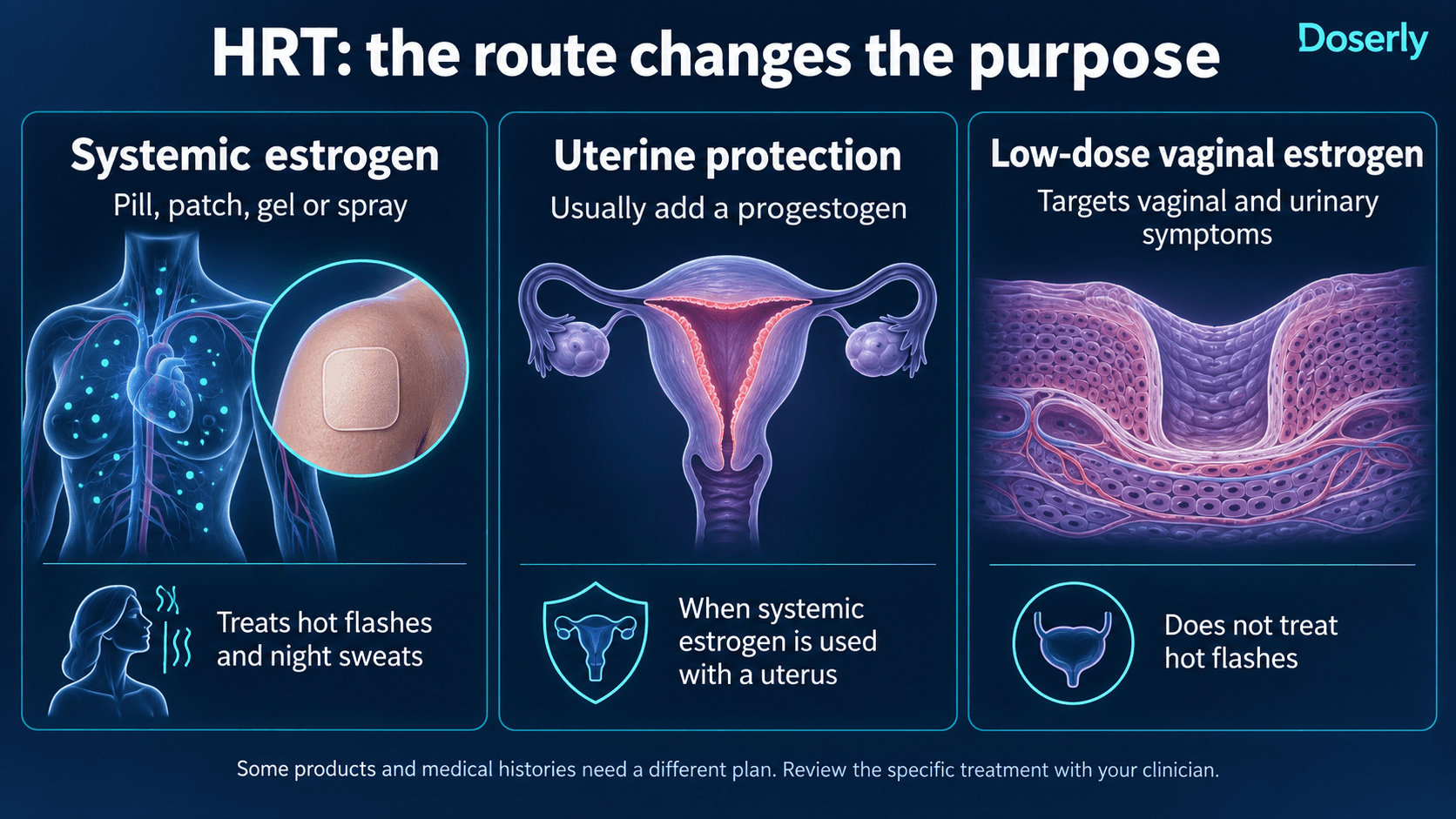
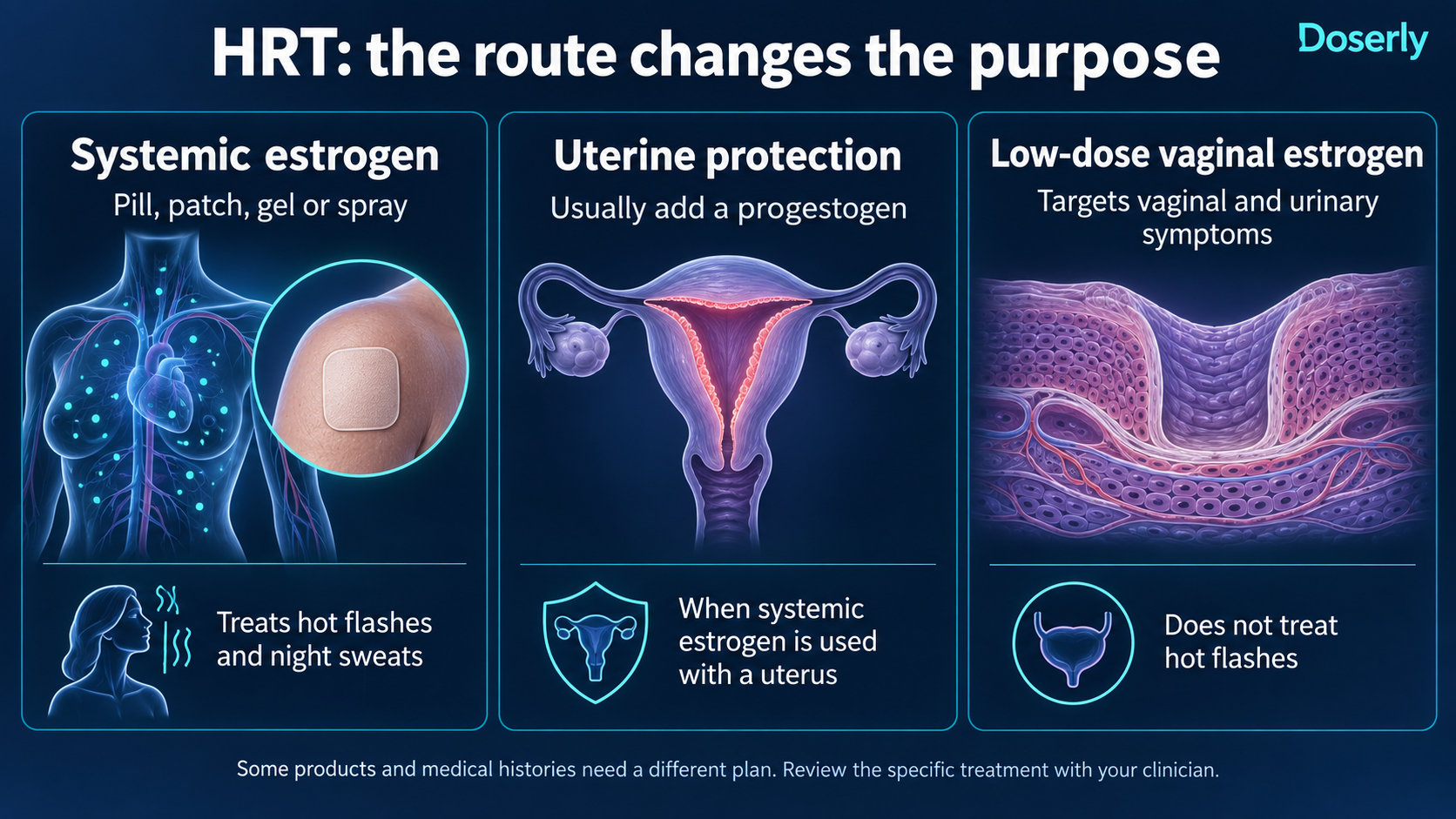
Systemic and low-dose local treatments serve different purposes. Systemic estrogen usually needs endometrial protection when a uterus is present; conjugated estrogens with bazedoxifene and tibolone are distinct approaches described in their guides. Patch placement must follow the specific product label.
NICE menopause recommendations.
Pharmacokinetics / Hormone Physiology
The Basics
When you take a Premarin tablet by mouth, the estrogen compounds are well absorbed from the digestive tract. However, before reaching the rest of your body, they first travel through the liver, which processes and modifies them extensively. This is called "first-pass metabolism," and it is the main reason oral estrogen has a different effect profile than estrogen delivered through patches or gels.
The liver converts many of the estrogen components and creates additional estrogen metabolites. It also responds to the influx of estrogens by producing more of certain proteins, including clotting factors and a carrier protein called SHBG (sex hormone-binding globulin). This is why oral CEE affects blood clotting risk more than transdermal estrogen does: the liver sees a concentrated bolus of estrogen with each dose.
Once in the bloodstream, the estrogens circulate bound to proteins (50-80% protein-bound) and are distributed widely throughout the body, with higher concentrations in tissues that have estrogen receptors, such as the uterus, bones, brain, and breast tissue.
The body eliminates conjugated estrogens primarily through the kidneys (in urine), but there is also a recycling pathway: some estrogens are secreted by the liver into bile, travel to the intestine, get reabsorbed, and return to the liver. This "enterohepatic recirculation" effectively extends the duration of the medication's effects. The overall half-life of conjugated estrogens ranges from approximately 10 to 28 hours, which supports once-daily dosing.
Premarin vaginal cream is absorbed through vaginal tissue and delivers estrogen primarily to local tissues. Some systemic absorption does occur, particularly during the initial loading dose phase when vaginal tissue is atrophic (thin and more permeable).
The Science
Absorption: Conjugated estrogens are well absorbed from the gastrointestinal tract. A high-fat meal does not significantly affect the extent of oral absorption [1]. Oral bioavailability is reduced by extensive first-pass hepatic metabolism, though specific bioavailability figures for the CEE mixture have not been precisely characterized due to the multi-component nature of the preparation.
Distribution: Following absorption and first-pass metabolism, conjugated estrogens are widely distributed throughout the body, with preferential accumulation in sex hormone target organs. Plasma protein binding ranges from 50-80%, primarily to SHBG and albumin [1].
Metabolism: The liver is the primary site of metabolic conversion, with CYP3A4 playing a significant role [1]. Key metabolic transformations include:
- Desulfation of sulfate conjugates to liberate active estrogens
- Interconversion of estrone and estradiol via 17-beta-hydroxysteroid dehydrogenase
- Conversion of both to estriol
- Hydroxylation at various positions (2-hydroxylation, 4-hydroxylation, 16-alpha-hydroxylation)
- Sulfate and glucuronide conjugation for excretion
Enterohepatic recirculation occurs via biliary secretion of conjugated metabolites, intestinal hydrolysis by gut bacteria, and reabsorption of liberated estrogens [1].
The first-pass hepatic effect of oral CEE produces measurable systemic consequences distinct from transdermal estrogen delivery:
- Increased hepatic synthesis of SHBG, C-reactive protein, and coagulation factors
- Elevated triglyceride production
- Altered estrogen metabolite ratios (E1:E2 ratio of approximately 4-5:1 with oral, compared to approximately 1:1 with transdermal estradiol) [7]
Elimination: Estrogens and their metabolites are excreted primarily in urine. The half-life of conjugated estrogens ranges from 10 to 28 hours [1].
Clinical context — Half-life values.
Knowing the pharmacokinetics is the foundation. Seeing how your own body responds to your specific protocol turns that knowledge into actionable insight. Doserly correlates your dosing schedule with how you feel day to day, helping you and your provider identify whether your current route, timing, and dose are working optimally.
The app's analytics can surface patterns you might not notice on your own, like whether symptoms correlate with the end of a patch cycle or whether splitting an oral dose changes how you feel in the afternoon. Data like this makes dose adjustments more precise and less guesswork.
Research & Clinical Evidence
Vasomotor Symptoms
The Basics
CEE is one of the most thoroughly studied treatments for hot flashes and night sweats. Clinical trials have consistently shown that it significantly reduces the frequency and severity of vasomotor symptoms. In practice, many people notice improvement within the first few weeks, and the effect strengthens over the first three months.
The WHI trial was not primarily designed to measure hot flash relief (most participants did not have severe symptoms at enrollment), but other clinical trials specifically examining vasomotor outcomes have demonstrated robust efficacy across multiple CEE dose levels.
The Science
CEE has demonstrated efficacy for VMS in double-blind RCTs and is FDA-approved as first-line therapy for moderate to severe vasomotor symptoms [8]. The NAMS 2022 Position Statement confirms that hormone therapy remains the gold standard for VMS relief and that meta-analysis shows no significant difference in VMS efficacy between oral CEE and transdermal estradiol [8].
Dose-response data show efficacy at doses as low as 0.3 mg daily, with incremental benefit at higher doses. The 0.625 mg dose used in the WHI was the standard clinical dose at the time of trial design [4].
Bone Health
The Basics
Estrogen plays a critical role in maintaining bone density. When estrogen levels decline during menopause, bone breakdown accelerates and outpaces bone building, leading to progressive bone loss. CEE has been shown to slow and even reverse this process, and it is FDA-approved for the prevention of postmenopausal osteoporosis.
In the WHI estrogen-alone arm, women taking CEE experienced significantly fewer hip fractures compared to those on placebo. The bone-protective effects appear across all measured skeletal sites.
The Science
In the WHI estrogen-alone substudy, CEE 0.625 mg daily significantly reduced hip fracture risk (HR 0.65, 95% CI 0.45-0.94; 12 vs 17 per 10,000 women-years) [9]. In the Premarin-specific bone density study, mean percent changes from baseline in lumbar spine BMD at 2 years were +3.5% (0.625 mg), +2.7% (0.45 mg), and +1.3% (0.3 mg), compared to -2.7% for placebo [1]. Total body BMD showed similar dose-dependent increases.
The WHI estrogen-plus-progestin arm also showed reduced hip fracture risk (HR 0.67, 95% CI 0.47-0.96; 11 vs 17 per 10,000 women-years) [4]. However, current guidelines recommend that if osteoporosis prevention is the sole indication for therapy, alternative pharmacological agents (bisphosphonates, denosumab, raloxifene) should be considered first, reserving CEE for women who also have VMS or other indications for HRT [8].
Cardiovascular Effects
The Basics
The relationship between CEE and heart health is nuanced and depends significantly on when treatment begins. The concept of a "window of opportunity" is central to understanding the cardiovascular evidence. Women who start HRT within 10 years of menopause onset or before age 60 appear to have a more favorable cardiovascular risk profile than those who start later.
In the WHI, the average participant was 63 years old, well past this window for most. When researchers later analyzed the results by age group, younger women showed a trend toward cardiovascular benefit, while older women showed increased risk.
The Science
In the WHI estrogen-alone substudy (CEE 0.625 mg daily), there was no significant overall effect on coronary heart disease events (HR 0.95, 95% CI 0.79-1.16; 53 vs 56 per 10,000 women-years) [4]. However, age-stratified analysis revealed a possible reduction in CHD events in women aged 50-59 years [10].
The WHI estrogen-plus-progestin substudy showed a non-significant increase in CHD events (HR 1.18, 95% CI 0.95-1.45; 39 vs 33 per 10,000 women-years), with the elevation primarily in the first year of use [4].
In women aged 50-59 at WHI randomization, pooled all-cause mortality was significantly reduced versus placebo (HR 0.69, 95% CI 0.51-0.94) [5]. After 18 years of follow-up, CEE alone did not increase cardiovascular mortality, and breast cancer mortality was significantly reduced (HR 0.55, 95% CI 0.33-0.92) [5].
Benefits & Therapeutic Effects
The Basics
CEE provides meaningful relief across multiple symptom domains for many people going through menopause. The most well-documented benefits include substantial reduction in hot flashes and night sweats, often within the first few weeks of treatment; significant improvement in vaginal dryness, painful intercourse, and recurrent urinary tract infections (especially with the vaginal cream formulation); and protection against bone loss and fracture.
Beyond these primary indications, quality-of-life changes may occur when vasomotor symptoms, sleep disruption, and genitourinary symptoms improve. These outcomes should be tracked alongside adverse effects and reviewed with the prescriber.
It is worth noting that CEE alone (without a progestogen) was associated with a non-significant reduction in breast cancer risk in the WHI, which is a finding that surprised researchers and remains unique among combined HRT data.
The Science
Vasomotor symptoms: CEE is FDA-approved and clinically proven to provide first-line relief of moderate-to-severe VMS. Meta-analysis confirms comparable efficacy to transdermal estradiol [8].
Bone protection: CEE 0.625 mg reduced hip fractures by 35% in the WHI estrogen-alone arm (HR 0.65, 95% CI 0.45-0.94) [9]. Lower doses (0.3 mg, 0.45 mg) demonstrate dose-dependent BMD improvements [1].
Genitourinary health: CEE vaginal cream (0.625 mg/g) is FDA-approved for atrophic vaginitis and kraurosis vulvae. Clinical data support improvements in vaginal dryness, dyspareunia, and urinary symptoms [1].
Metabolic effects: Both WHI arms showed reduced diabetes risk (ET arm HR 0.88, 95% CI 0.77-1.01; EPT arm HR 0.79, 95% CI 0.67-0.93) [4].
Breast cancer (CEE alone): In the WHI estrogen-alone arm, CEE 0.625 mg daily showed a non-significant reduction in invasive breast cancer (HR 0.80, 95% CI 0.62-1.04; 26 vs 33 per 10,000 women-years). After 20 years of follow-up, breast cancer mortality was significantly reduced (HR 0.55, 95% CI 0.33-0.92) [5]. This finding applies only to CEE without progestogen.
All-cause mortality: In women aged 50-59 at WHI randomization, pooled all-cause mortality was significantly reduced versus placebo (HR 0.69, 95% CI 0.51-0.94) after 18 years of follow-up [5].
Risks, Side Effects & Safety
The Basics
Like all medications, CEE carries risks alongside its benefits. Understanding these risks in context, including the absolute numbers, the factors that modify risk, and what can be done to minimize risk, is essential for making informed decisions with a healthcare provider.
Common side effects that many people experience, especially when starting CEE, include breast tenderness, bloating, headache, nausea, and mood changes. These often diminish within the first few months as the body adjusts. Breakthrough bleeding or spotting is also common in the initial months, particularly with combined CEE/progestogen regimens.
Serious risks exist but are statistically rare. The absolute numbers from the WHI help put these risks in perspective. For context, the threshold for a "rare" adverse drug reaction is fewer than 10 events per 10,000 people per year.
The most important thing to understand is that risk is not uniform. It varies significantly based on whether CEE is used alone or combined with a progestogen, your age and how long it has been since menopause, your individual medical history, and whether you smoke or have other risk factors.
The Science
Venous thromboembolism (VTE): Oral CEE increases VTE risk through first-pass hepatic stimulation of coagulation factor synthesis. In the WHI estrogen-alone arm, VTE rates were 30 vs 22 per 10,000 women-years (HR 1.47 for DVT, HR 1.37 for PE, neither individually statistically significant) [4]. In the estrogen-plus-progestin arm, VTE risk was significantly elevated: DVT 26 vs 13 per 10,000 women-years (HR 1.95, 95% CI 1.43-2.67) and PE 18 vs 8 per 10,000 women-years (HR 2.13, 95% CI 1.45-3.11) [4].
Route matters substantially: observational studies consistently show no significant VTE increase with transdermal estradiol, and the ESTHER study reported an adjusted OR of 0.9 (95% CI 0.4-2.1) for transdermal estrogen [8]. CEE is available only as oral tablets, vaginal cream, and injection; there is no transdermal CEE formulation. Women concerned about VTE risk may wish to discuss transdermal estradiol as an alternative with their provider.
Clinical context — VTE risk magnitude with CEE alone.
Stroke: CEE increased stroke risk in the WHI estrogen-alone arm (45 vs 33 per 10,000 women-years; HR 1.37, 95% CI 1.09-1.73) [4]. In the CEE+MPA arm, stroke was also elevated (33 vs 25 per 10,000 women-years; HR 1.31, 95% CI 1.02-1.68) [4]. The absolute excess is approximately 12 additional strokes per 10,000 women per year for CEE alone.
Breast cancer: CEE alone (without progestogen) did NOT increase breast cancer risk in the WHI and showed a non-significant trend toward reduction (HR 0.80, 95% CI 0.62-1.04; 26 vs 33 per 10,000 women-years) [4][5]. CEE combined with MPA did increase invasive breast cancer risk (HR 1.24, 95% CI 1.01-1.54; 41 vs 33 per 10,000 women-years), corresponding to approximately 8 additional cases per 10,000 women per year [4]. The type of progestogen matters: the E3N French cohort study (n=80,377) found no significant breast cancer risk increase with estrogen plus micronized progesterone over 8.1 years (HR 1.00, 95% CI 0.83-1.22), while synthetic progestins showed a significant increase (HR 1.69, 95% CI 1.50-1.91) [11].
Endometrial cancer: Unopposed CEE in women with a uterus increases endometrial cancer risk approximately 2- to 12-fold depending on dose and duration [1]. This risk is effectively mitigated by adequate progestogen co-administration. In the WHI CEE+MPA arm, endometrial cancer risk was similar to placebo (HR 0.81, 95% CI 0.48-1.36), with significant risk reduction after 13 years of follow-up (HR 0.67, 95% CI 0.49-0.91) [8].
Gallbladder disease: CEE increases the risk of gallbladder disease requiring surgery. This is primarily attributed to oral estrogen's first-pass hepatic effect on bile composition [1].
Probable dementia: In WHIMS (women 65 years and older), CEE alone increased probable dementia risk (37 vs 25 per 10,000 women-years). CEE+MPA also increased risk (45 vs 22 per 10,000 women-years) [1]. These findings apply to women initiating HRT after age 65 and may not apply to younger women starting HRT during the perimenopause or early menopause.
Contraindications: CEE is contraindicated in individuals with undiagnosed abnormal genital bleeding; known or suspected breast cancer (except palliation); estrogen-dependent neoplasia; active or history of DVT, PE, stroke, or MI; hepatic impairment or disease; known thrombophilic disorders (protein C, protein S, or antithrombin deficiency); known hypersensitivity to CEE; and pregnancy [1].
Understanding your personal risk profile isn't a one-time calculation; it evolves as your treatment progresses. Doserly helps you see the bigger picture by analyzing side effect patterns over time, showing whether issues are resolving, persisting, or emerging as your body adjusts to therapy.
The app's analytics can reveal connections between side effects and specific aspects of your protocol, like whether symptoms correlate with a particular point in your patch cycle or a recent dose change. This kind of insight helps you and your provider make informed adjustments based on your actual experience, not just population-level averages.
Dosing & Treatment Protocols
The Basics
CEE is available in multiple strengths, and the general principle across current guidelines is to start with the lowest effective dose and adjust based on symptom response. Many providers begin with 0.3 mg daily and increase if needed, rather than starting at the traditional 0.625 mg dose that was standard for decades.
The medication can be taken in different patterns. Continuous dosing means taking CEE every day. Cyclic dosing means taking it for 25 days, then stopping for 5 days (or 3 weeks on, 1 week off). Both approaches are effective; the choice often depends on individual preference and how the body responds.
For women with an intact uterus, a progestogen must be added to protect the uterine lining. This can be done in several ways: continuous combined (both estrogen and progestogen daily), cyclic sequential (estrogen daily plus progestogen for 12-14 days per month), or by using the CEE/bazedoxifene combination (Duavee), which provides endometrial protection without a progestogen.
The Science
Dosing by indication (from FDA-approved labeling) [1]:
Indication
Vasomotor symptoms
- Starting Dose
- 0.3 mg daily
- Range
- 0.3-1.25 mg
- Regimen
- Continuous or cyclic
Indication
Vulvar/vaginal atrophy
- Starting Dose
- 0.3 mg daily (oral) or 0.5-2 g cream
- Range
- 0.3-1.25 mg oral
- Regimen
- Continuous or cyclic
Indication
Osteoporosis prevention
- Starting Dose
- 0.3 mg daily
- Range
- 0.3-0.625 mg
- Regimen
- Continuous or cyclic
Indication
Hypogonadism
- Starting Dose
- 0.3-0.625 mg daily
- Range
- Per clinical response
- Regimen
- Cyclic (3 weeks on/1 off)
Indication
Castration/ovarian failure
- Starting Dose
- 1.25 mg daily
- Range
- Per clinical response
- Regimen
- Cyclic (3 weeks on/1 off)
Indication
Breast cancer (palliation)
- Starting Dose
- 10 mg three times daily
- Range
- Fixed
- Regimen
- Continuous, minimum 3 months
Indication
Prostate cancer (palliation)
- Starting Dose
- 1.25-2.5 mg three times daily
- Range
- Fixed
- Regimen
- Continuous
Progestogen co-administration requirements [8]:
Women with an intact uterus require endometrial protection:
- Continuous combined: CEE + MPA (e.g., Prempro 0.3/1.5 mg, 0.45/1.5 mg, 0.625/2.5 mg, 0.625/5 mg)
- Sequential/cyclic: CEE daily + MPA for days 15-28 (e.g., Premphase)
- TSEC alternative: CEE 0.45 mg + bazedoxifene 20 mg (Duavee)
- Off-label: levonorgestrel IUD for endometrial protection (limited clinical trial data)
Clinical context — Starting dose recommendations.
Dosing protocols often change over the course of treatment. Starting doses get adjusted, routes get switched, timing gets refined. Doserly maintains a complete history of every protocol change, giving you and your provider a clear picture of what has been tried and how each adjustment affected your symptoms.
The app's adherence analytics show your consistency patterns and can highlight whether missed doses or timing variations correlate with symptom changes. When your provider is considering a dose adjustment, having this data available makes the conversation more productive and the decision more informed.
What to Expect (Timeline)
Days 1-7: Your body begins adjusting to the new hormone supply. Common initial experiences include breast tenderness, mild bloating, nausea, and headache. These are typically transient. Some people notice spotting or breakthrough bleeding, particularly if starting a combined CEE/progestogen regimen. Hot flashes may begin to decrease in frequency, though full benefit takes longer.
Weeks 2-4: Many people notice the beginning of vasomotor symptom improvement. Hot flashes and night sweats may become less frequent or less severe. Initial side effects like breast tenderness and bloating often start to diminish. Sleep quality may begin to improve as night sweats decrease. Mood stabilization may become apparent.
Months 1-3: Vasomotor symptoms typically improve significantly by this point. Mood stabilization often solidifies. Energy levels may improve. With vaginal cream, local tissue improvements (reduced dryness, less pain during intercourse) become more noticeable. Breakthrough bleeding, if present, often settles within the first 3 months but should be reported to a healthcare provider if it persists beyond 6 months.
Months 3-6: Full therapeutic effects for most symptoms are typically achieved. Bone density stabilization begins. GSM symptoms continue to improve progressively with vaginal cream use. Dose adjustments may be considered at follow-up appointments if symptoms are not adequately controlled or if side effects persist.
Ongoing maintenance: Annual reviews with a healthcare provider are recommended to reassess the continuing benefit-risk balance. Dose reassessment, monitoring (mammogram, pelvic exam, lipid panel), and discussion of whether to continue, adjust, or transition therapy should occur at each review. There is no mandatory time limit on HRT duration; continuation decisions should be individualized.
Timing Hypothesis & Window of Opportunity
The "timing hypothesis" proposes that the cardiovascular effects of HRT depend critically on when therapy is initiated relative to menopause onset. Women who begin HRT within 10 years of menopause onset (or before age 60) appear to experience a neutral or potentially favorable cardiovascular effect, while women who start later may face increased cardiovascular risk.
This hypothesis is supported by several lines of evidence. In the WHI, age-stratified analyses showed a possible reduction in CHD events among women aged 50-59 years receiving CEE alone, while older women showed neutral or adverse trends [10]. The KEEPS trial (Kronos Early Estrogen Prevention Study) specifically enrolled women aged 42-58 within 36 months of their last menstrual period and found no significant adverse cardiovascular effects with either oral CEE 0.45 mg/day or transdermal estradiol, with some favorable effects on carotid intima-media thickness in the transdermal group [12].
The ELITE trial (Early versus Late Intervention Trial with Estradiol) demonstrated that estradiol started within 6 years of menopause slowed progression of subclinical atherosclerosis (carotid intima-media thickness), while late initiation (10+ years post-menopause) did not [13]. Although ELITE used estradiol rather than CEE, the findings are broadly consistent with the timing hypothesis.
The WHI 18-year follow-up data showing significantly reduced all-cause mortality in women aged 50-59 at randomization (HR 0.69, 95% CI 0.51-0.94) provides indirect support for early initiation benefit [5].
It is important to note that no RCT has been specifically designed and powered to definitively test the timing hypothesis. The evidence is compelling but not conclusive. Current NAMS guidelines recommend that the benefit-risk ratio is most favorable for women younger than 60 or within 10 years of menopause onset [8].
Interactions & Compatibility
Drug-Drug Interactions:
- Thyroid medications (levothyroxine): Oral estrogens increase thyroid-binding globulin (TBG), which may reduce free thyroid hormone levels. Women on thyroid replacement may need dose adjustments when starting or stopping CEE. Thyroid function should be monitored [1].
- Anticoagulants (warfarin): CEE may decrease anticoagulant effect. INR monitoring and potential warfarin dose adjustments are needed [1].
- Lamotrigine: Estrogens can significantly reduce lamotrigine levels through increased glucuronidation, potentially affecting seizure control [1].
- Diabetes medications: Estrogen may affect insulin sensitivity. Blood glucose monitoring may be warranted when initiating CEE in women with diabetes.
- CYP3A4 inducers (rifampin, phenobarbital, carbamazepine, phenytoin, St. John's Wort): May decrease plasma estrogen concentrations, reducing therapeutic effectiveness. Breakthrough bleeding may signal inadequate estrogen levels [1].
- CYP3A4 inhibitors (ketoconazole, itraconazole, clarithromycin, erythromycin, ritonavir): May increase plasma estrogen concentrations and potential for adverse effects [1].
- SSRIs/SNRIs: No significant pharmacokinetic interaction. Some SSRIs (paroxetine) and SNRIs (venlafaxine) are used as non-hormonal alternatives for VMS and can be used alongside CEE if indicated for depression or anxiety.
- Corticosteroids (hydrocortisone): Enhanced anti-inflammatory effects; monitor for signs of excessive corticosteroid activity [1].
Supplement Interactions:
- Calcium and Vitamin D: Complementary to CEE for bone health. Recommended as adjunctive therapy during osteoporosis prevention.
- Black cohosh: Sometimes used as complementary treatment for VMS. Limited evidence for efficacy. No known pharmacokinetic interaction with CEE, but limited study.
- St. John's Wort: CYP3A4 inducer that can significantly decrease estrogen levels. Should not be used concurrently with CEE without medical supervision. See supplements/st-johns-wort for more information.
- Phytoestrogen supplements (soy isoflavones, red clover): Theoretically additive estrogenic effects. Clinical significance unclear. See supplements/soy-isoflavones.
Lifestyle Factors:
- Smoking: Dramatically increases cardiovascular and VTE risk when combined with oral estrogen. Smoking is one of the strongest risk modifiers for thrombotic events on HRT. Cessation is strongly recommended.
- Alcohol: Modest interaction with liver metabolism. Heavy alcohol use may affect estrogen clearance and liver function.
- Grapefruit juice: CYP3A4 inhibitor that may increase plasma estrogen concentrations [1].
Related Doserly Guides:
- Estradiol (Bioidentical) — the most common alternative estrogen
- Micronized Progesterone (Prometrium) — commonly paired progestogen
- Medroxyprogesterone Acetate (Provera) — the progestogen used in WHI with CEE
- CE + MPA (Prempro) — fixed-combination CEE/MPA product
- CE + Bazedoxifene (Duavee) — CEE with SERM endometrial protection
Decision-Making Framework
Deciding whether CEE is the right choice involves weighing its extensive evidence base against individual risk factors, personal preferences, and available alternatives. A shared decision-making conversation with a knowledgeable provider is the cornerstone of this process.
Factors that may make CEE a reasonable option:
- Moderate-to-severe vasomotor symptoms requiring treatment
- Age under 60 or within 10 years of menopause
- No contraindications (VTE history, breast cancer, liver disease, etc.)
- Preference for an extensively studied formulation with long-term outcome data
- Tolerance of oral medication
- Need for concurrent GSM treatment (vaginal cream available)
- Previous unsuccessful trials with other estrogen formulations
Factors that may favor alternative estrogen formulations:
- Elevated VTE risk (transdermal estradiol avoids first-pass hepatic effect)
- Preference for bioidentical hormones (17-beta estradiol)
- Ethical concerns about equine sourcing
- Hypertriglyceridemia (oral estrogens can increase triglycerides)
- Cost concerns (generic estradiol patches/tablets may be less expensive)
Questions to discuss with a provider:
- "Given my age and time since menopause, what is my individual benefit-risk ratio for HRT?"
- "Are there reasons to prefer CEE over estradiol, or vice versa, in my situation?"
- "What progestogen option would best complement CEE for endometrial protection?"
- "What monitoring schedule do you recommend?"
- "How long should I plan to be on therapy, and when should we reassess?"
Finding a menopause specialist: NAMS-certified menopause practitioners can be found through the Menopause Society's provider directory at menopause.org. The International Society for the Study of Women's Sexual Health (ISSWSH) also maintains a provider directory for sexual health specialists.
Administration & Practical Guide
Oral Tablets:
- Take at approximately the same time each day for consistent blood levels
- May be taken with or without food (high-fat meals do not affect absorption)
- If a dose is missed, take it as soon as remembered unless it is close to the next scheduled dose; do not double up
- For cyclic regimens: 25 days on, 5 days off (or 3 weeks on, 1 week off)
Vaginal Cream (Premarin 0.625 mg/g):
- Typical loading dose: 0.5-1 g daily for 2 weeks
- Typical maintenance dose: 0.5 g 1-3 times per week
- Insert using the calibrated applicator; applicator marks increments up to 2 g
- Apply at bedtime to minimize leakage
- Wash the reusable applicator with warm soapy water after each use
- Some systemic absorption occurs, particularly during the loading phase when tissues are atrophic
- Note: Premarin vaginal cream may weaken latex condoms, diaphragms, or cervical caps
IV/IM Injection (Premarin Intravenous, 25 mg):
- Used for acute abnormal uterine bleeding
- Healthcare professional administration only
- Reconstitute with 5 mL sterile water; administer slowly IV to avoid flushing
- May repeat in 6-12 hours
Storage: Store tablets at 20-25 degrees C (68-77 degrees F). Store vaginal cream at room temperature.
This section provides general educational information only and does not replace the instructions provided by your pharmacist or prescriber.
Monitoring & Lab Work
Pre-HRT baseline assessment:
- Complete medical history and physical exam
- Mammogram
- Pelvic exam
- Blood pressure measurement
- Lipid panel (total cholesterol, LDL, HDL, triglycerides)
- Liver function tests (especially for oral administration)
- Thyroid function (TSH, free T4) if on thyroid replacement
- Bone density (DEXA scan) if osteoporosis prevention is an indication
- FSH and estradiol levels (may help confirm menopausal status but are not required for diagnosis in women over 45 with typical symptoms)
Initial follow-up (4-12 weeks):
- Symptom assessment (VMS improvement, side effects)
- Blood pressure check
- Discussion of any breakthrough bleeding
- Dose adjustment consideration if symptoms are not adequately controlled
Ongoing monitoring schedule:
- Mammography: per national guidelines (typically annual for women 40+; may be more frequent depending on risk factors and HRT use)
- Pelvic exam: annual
- Lipid panel: annually or per risk profile
- Liver function: periodically for oral CEE users
- Thyroid function: recheck 6-12 weeks after starting CEE if on thyroid replacement, then periodically
- Blood pressure: at each visit
- Bone density (DEXA): baseline and every 2-3 years if osteoporosis prevention is an indication
- Endometrial monitoring: transvaginal ultrasound if unscheduled bleeding occurs after the first 6 months of combined therapy
Annual review checklist:
- Reassess symptom control and treatment satisfaction
- Review risk factors (any new diagnoses, family history changes, lifestyle changes)
- Discuss whether to continue, adjust dose, switch formulation, or taper
- Update mammography and other screening
- Evaluate need for continued progestogen protection
Complementary Approaches & Lifestyle
Supplements:
- Calcium: 1,000-1,200 mg daily from diet and supplements combined for bone health
- Vitamin D: 600-1,000 IU daily (some guidelines recommend higher; check levels)
- Omega-3 fatty acids: May support cardiovascular and cognitive health; moderate evidence
- Magnesium: May support sleep quality and muscle relaxation; commonly used alongside HRT
See related supplement guides: Calcium, Vitamin D, Omega-3, Magnesium.
Exercise:
- Weight-bearing exercise (walking, jogging, dancing): supports bone density
- Resistance training: preserves lean muscle mass, supports metabolic health
- Cardiovascular exercise: complements HRT cardiovascular effects
- Balance training and yoga: reduces fall risk, supports joint health
Diet:
- Mediterranean dietary pattern: associated with cardiovascular health and reduced inflammation
- Phytoestrogen-rich foods (soy, flaxseed): may provide modest additional symptom relief
- Calcium-rich foods (dairy, leafy greens, fortified foods)
- Limit alcohol (affects liver metabolism and may increase breast cancer risk)
Sleep hygiene:
- Temperature management (cooling mattress pads, breathable fabrics) complements VMS treatment
- Consistent sleep schedule
- CBT-I (cognitive behavioral therapy for insomnia) has strong evidence for menopause-related sleep disruption
Pelvic floor therapy: Evidence-based for GSM-related urinary symptoms and may complement vaginal estrogen therapy.
Stress management: Chronic stress can worsen vasomotor and mood symptoms. Mind-body practices (meditation, yoga, deep breathing) may provide complementary benefit.
Stopping HRT / Discontinuation
When to consider stopping: There is no universal time limit for HRT use. The decision to continue or stop should be individualized and revisited at annual reviews. Common reasons to consider stopping include: resolution of symptoms, changes in risk profile (new cancer diagnosis, VTE event), patient preference, or transition to lower-dose or local-only therapy.
Tapering strategies: Gradual dose reduction over weeks to months is generally preferred over abrupt cessation. Options include stepping down through available strengths (e.g., 0.625 mg to 0.45 mg to 0.3 mg over 3-6 months), switching to an alternate-day schedule before stopping, or transitioning to transdermal estradiol at a lower dose before final discontinuation.
Symptom recurrence: Approximately 50% of women experience some return of vasomotor symptoms after stopping HRT, regardless of how long therapy was used. The severity of recurrent symptoms is typically comparable to pre-treatment levels, not worse. Recurrence is more likely in women who had severe symptoms before treatment and who stop abruptly.
Transition options: Low-dose vaginal estrogen (including Premarin vaginal cream) may be continued even after systemic HRT is stopped to manage persistent GSM symptoms. Non-hormonal alternatives for persistent vasomotor symptoms include fezolinetant (Veozah), paroxetine low-dose (Brisdelle), gabapentin, and clonidine. See non-hormonal alternatives.
What to monitor during discontinuation: Symptom diary (track VMS frequency, mood, sleep), bone density follow-up if osteoporosis prevention was an indication, and cardiovascular risk reassessment.
Special Populations & Situations
Premature Ovarian Insufficiency (POI)
For women experiencing premopause before age 40, HRT is considered replacement rather than supplemental therapy. CEE has been used in this population since the 1940s. Treatment is typically continued until the typical age of natural menopause (approximately 51) and is essential for cardiovascular and bone protection. Higher starting doses (0.625-1.25 mg) may be appropriate. See premature ovarian insufficiency guide.
Surgical Menopause / Oophorectomy
Women who undergo bilateral oophorectomy experience abrupt, complete estrogen withdrawal rather than the gradual decline of natural menopause. Symptoms are often more severe and of rapid onset. CEE alone (without progestogen) is appropriate for women who also undergo hysterectomy. Higher initial doses may be needed. The WHI CEE-alone arm specifically enrolled women with prior hysterectomy, making its data directly relevant to this population.
Breast Cancer Survivors
Systemic HRT, including CEE, is generally contraindicated in women with a history of breast cancer due to concern about estrogen-sensitive tumor recurrence. Low-dose vaginal estrogen may be considered for severe GSM symptoms after discussion with an oncologist, though this remains an area of clinical judgment. See non-hormonal menopause treatments.
Cardiovascular Disease History
Women with a history of cardiovascular disease require careful risk-benefit assessment. If HRT is considered appropriate, transdermal estradiol is generally preferred over oral CEE because it avoids the prothrombotic first-pass hepatic effects. Oral CEE is not recommended as first-line in women with established cardiovascular disease.
History of VTE
Women with a personal history of VTE should generally avoid oral estrogens, including CEE, due to the increased thrombotic risk. If HRT is medically warranted, transdermal estradiol is preferred. CEE is specifically contraindicated in women with active DVT, PE, or known thrombophilic disorders (protein C, protein S, or antithrombin deficiency) [1].
Migraine with Aura
Estrogen fluctuations can trigger migraines. If HRT is used, stable estrogen delivery is important. Transdermal estradiol provides more stable levels than oral CEE and is generally preferred. Cyclic CEE dosing (which creates periodic estrogen withdrawal) may worsen menstrual-type migraines.
Type 2 Diabetes
The WHI showed reduced diabetes incidence with both CEE alone and CEE+MPA. However, oral estrogens may affect insulin sensitivity, and blood glucose monitoring is recommended when initiating therapy. Dose adjustments of diabetes medications may be needed.
Regulatory, Insurance & International
United States (FDA):
- Premarin: NDA 004782 (oral tablets, approved 1942), NDA 020216 (vaginal cream)
- FDA black box warning regarding endometrial cancer, cardiovascular disorders, breast cancer, and probable dementia
- Cenestin (synthetic conjugated estrogens A): approved, manufactured by Teva
- Enjuvia (synthetic conjugated estrogens B): approved, manufactured by Teva
- Generic conjugated estrogens tablets available from multiple manufacturers
- Insurance coverage varies; some plans require prior authorization or step therapy (try estradiol first)
- Cost: Brand Premarin can be expensive ($100-300+/month); generic options and Cenestin/Enjuvia may be less costly
United Kingdom (MHRA):
- Premarin tablets available but less commonly prescribed than estradiol
- NHS formulary generally favors estradiol-based products
- Premarin vaginal cream not widely available in UK; estradiol vaginal products preferred
Canada (Health Canada):
- Premarin widely available
- Premarin vaginal cream is notably the only vaginal estrogen cream marketed in Canada (as of 2026)
- Generic conjugated estrogens (C.E.S.) available
- Provincial drug coverage varies
Australia (TGA):
- Premarin tablets and cream listed on the Australian Register of Therapeutic Goods
- PBS listing may apply depending on indication
- Estradiol products increasingly preferred by prescribers
Compounded vs. FDA-approved:
CEE is a defined pharmaceutical product with standardized composition and FDA quality controls. Compounded "conjugated estrogens" or "bioidentical estrogens" are distinct products that may vary in composition and quality. The NAMS and ACOG recommend FDA-approved products over compounded formulations unless there is a specific medical need (true allergy, unavailable dose/formulation) [8].
Frequently Asked Questions
Q: Is Premarin the same as estradiol?
A: No. Premarin contains conjugated equine estrogens, a mixture of multiple estrogen compounds, while estradiol (often marketed as Estrace, Climara, or Divigel) contains a single estrogen compound identical to what the human body produces. Both are FDA-approved for menopausal symptoms, but they have different compositions, metabolic profiles, and available routes of administration. A healthcare provider can help determine which is more appropriate for a specific situation.
Q: Does Premarin really come from horse urine?
A: Yes. Premarin (conjugated estrogens USP) is derived from the urine of pregnant mares. The name is an abbreviation of PREgnant MARe urINe. Synthetic alternatives (Cenestin, Enjuvia) contain similar estrogen mixtures manufactured from plant sources (soy and yams) without equine involvement.
Q: Is CEE safer or more dangerous than estradiol?
A: Neither is categorically "safer." CEE has more extensive clinical trial data because it was used in the WHI, providing precise risk estimates. However, CEE is only available orally (and as vaginal cream), while estradiol is available transdermally, which appears to carry lower VTE risk. Individual risk assessment with a healthcare provider is essential.
Q: Can I use Premarin vaginal cream without systemic HRT?
A: Yes. Low-dose vaginal estrogen cream is used specifically for genitourinary symptoms and delivers estrogen primarily to local tissues. Systemic absorption is minimal, especially after the initial loading phase. NAMS guidelines support its use even in many women for whom systemic HRT might not be appropriate [8].
Q: Do I need to take progesterone with Premarin?
A: If you have a uterus, yes. Unopposed estrogen significantly increases endometrial cancer risk. A progestogen (such as micronized progesterone or MPA) or the CEE/bazedoxifene combination (Duavee) should be used. Women without a uterus (after hysterectomy) can take CEE alone.
Q: How long can I take Premarin?
A: There is no mandatory time limit. Current guidelines recommend periodic reassessment of the benefit-risk balance with a healthcare provider. Some women use HRT for a few years during the most symptomatic period; others continue for decades. Duration should be individualized.
Q: Will Premarin cause weight gain?
A: Clinical studies have not shown that HRT, including CEE, causes significant weight gain. Menopausal weight changes are primarily related to aging, metabolic shifts, and changes in body composition rather than HRT itself. Body-composition changes during menopause are multifactorial and should be addressed with broader cardiometabolic risk assessment.
Q: Is Premarin being discontinued?
A: As of 2026, Premarin remains manufactured and marketed by Pfizer. However, some insurance plans have restricted coverage, and some prescribers have shifted toward estradiol products. Generic conjugated estrogens and synthetic alternatives (Cenestin, Enjuvia) remain available.
Q: Can I switch from Premarin to estradiol (or vice versa)?
A: Yes, with guidance from a healthcare provider. Switching between estrogen formulations is common. However, individuals may respond differently to different formulations, and dose equivalence is approximate. A transition period may be needed to optimize the new regimen.
Q: Does the WHI data apply to me if I'm in my 40s or 50s?
A: The WHI enrolled women aged 50-79, with an average age of 63. Many participants were more than 10 years past menopause. The absolute risks observed may be lower in younger women closer to menopause onset. Age-stratified WHI analyses and subsequent trials (KEEPS, ELITE) suggest a more favorable risk-benefit profile for women who initiate HRT early.
Myth vs. Fact
Myth: "Premarin causes breast cancer."
Fact: The evidence is more nuanced. In the WHI, CEE alone (without a progestogen) actually showed a non-significant reduction in breast cancer incidence (HR 0.80, 95% CI 0.62-1.04; 26 vs 33 cases per 10,000 women-years), and breast cancer mortality was significantly reduced after long-term follow-up (HR 0.55, 95% CI 0.33-0.92). CEE combined with MPA did show a small absolute increase (approximately 8 additional cases per 10,000 women per year). The type of progestogen matters: micronized progesterone appears to carry less breast cancer risk than MPA [4][5][11].
Myth: "Bioidentical estradiol is always safer than Premarin."
Fact: There is no comparative clinical trial data demonstrating that bioidentical estradiol is overall safer or more effective than CEE for the same indications at equivalent doses. Estradiol has potential advantages in terms of route flexibility (transdermal options that bypass liver) and lower VTE risk via transdermal delivery. CEE has the advantage of the most extensive long-term outcome data of any estrogen formulation. Safety depends on the individual clinical situation, not the source of the estrogen molecule [8].
Myth: "HRT is only for hot flashes."
Fact: While vasomotor symptom relief is the most common reason for initiating HRT, the documented benefits of CEE extend across multiple systems: bone fracture prevention, GSM symptom relief, reduced diabetes risk, and potential cardiovascular benefit when started early. Quality-of-life improvements may follow relief of vasomotor and genitourinary symptoms, but systemic estrogen should not be framed as a primary treatment for mood, sleep, or sexual function unless those goals are clinically assessed [4][5].
Myth: "You should only take HRT for 5 years maximum."
Fact: This outdated recommendation was an oversimplification that followed the initial WHI results. Current NAMS guidelines do not specify a mandatory duration limit. The decision to continue therapy should be individualized, based on ongoing symptom assessment, risk factor evaluation, and shared decision-making with a healthcare provider [8].
Myth: "Natural remedies are just as effective as Premarin for menopause."
Fact: While some supplements and lifestyle modifications provide modest symptom relief, no natural remedy has demonstrated efficacy comparable to HRT in rigorous clinical trials. Hormone therapy remains the gold-standard treatment for moderate-to-severe vasomotor symptoms [8].
Myth: "Premarin is dangerous because it comes from horses."
Fact: The equine origin does not inherently make CEE more or less safe than synthetic or plant-derived estrogens. The equine estrogens in CEE bind to the same estrogen receptors as human estrogens. The safety profile of CEE is defined by its extensive clinical trial data, not by its source material. Ethical concerns about equine sourcing are valid personal considerations but are separate from the pharmacological safety question.
Myth: "Compounded HRT is better because it's custom-made."
Fact: Compounded hormone preparations lack the standardized quality controls, consistency testing, and FDA oversight that apply to commercially manufactured products like Premarin. NAMS and ACOG recommend FDA-approved products as first-line therapy, with compounding reserved for situations where commercial products cannot meet a specific medical need (true allergy, unavailable dose) [8].
Myth: "Once you stop HRT, symptoms always come back worse than before."
Fact: Approximately 50% of women experience some symptom recurrence after stopping HRT, but the returning symptoms are typically comparable in severity to pre-treatment levels, not worse. Gradual tapering rather than abrupt cessation may ease the transition.
Sources & References
Clinical Guidelines
[1] Pfizer Inc. PREMARIN (conjugated estrogens) tablets, for oral use. Full Prescribing Information. Revised April 2025. Available from DailyMed: https://dailymed.nlm.nih.gov/dailymed/drugInfo.cfm?setid=258e1602-a3cf-4ccc-ca80-73dbbfb812ff
[3] Bhavnani BR, Stanczyk FZ. Pharmacology of conjugated equine estrogens: Efficacy, safety and mechanism of action. J Steroid Biochem Mol Biol. 2014;142:16-29. doi:10.1016/j.jsbmb.2013.10.011
[8] The 2022 Hormone Therapy Position Statement of The North American Menopause Society. Menopause. 2022;29(7):767-794. doi:10.1097/GME.0000000000002028
Landmark Trials
[4] Rossouw JE, Prentice RL, Manson JE, et al. Postmenopausal hormone therapy and risk of cardiovascular disease by age and years since menopause. JAMA. 2007;297(13):1465-77. PubMed: 17405972. DOI: 10.1001/jama.297.13.1465.
[5] Manson JE, Aragaki AK, Rossouw JE, et al. Menopausal Hormone Therapy and Long-term All-Cause and Cause-Specific Mortality: The Women's Health Initiative Randomized Trials. JAMA. 2017;318(10):927-938. PubMed: 28898378. DOI: 10.1001/jama.2017.11217.
[9] Jackson RD, Wactawski-Wende J, LaCroix AZ, et al. Effects of conjugated equine estrogen on risk of fractures and BMD in postmenopausal women with hysterectomy: results from the women's health initiative randomized trial. J Bone Miner Res. 2006;21(6):817-28. PubMed: 16753012. DOI: 10.1359/jbmr.060312.
[10] Hsia J, Langer RD, Manson JE, et al. Conjugated equine estrogens and coronary heart disease: the Women's Health Initiative. Arch Intern Med. 2006;166(3):357-65. PubMed: 16476878. DOI: 10.1001/archinte.166.3.357.
[12] Harman SM, Black DM, Naftolin F, et al. Arterial imaging outcomes and cardiovascular risk factors in recently menopausal women: a randomized trial. Ann Intern Med. 2014;161(4):249-60. PubMed: 25069991. DOI: 10.7326/M14-0353.
[13] Hodis HN, Mack WJ, Henderson VW, et al. Vascular Effects of Early versus Late Postmenopausal Treatment with Estradiol. N Engl J Med. 2016;374(13):1221-31. PubMed: 27028912. DOI: 10.1056/NEJMoa1505241.
Systematic Reviews & Meta-Analyses
[11] Fournier A, Berrino F, Riboli E, et al. Breast cancer risk in relation to different types of hormone replacement therapy in the E3N-EPIC cohort. Int J Cancer. 2005;114(3):448-54. PubMed: 15551359. DOI: 10.1002/ijc.20710.
Observational Studies
[6] Valdes A, Patel P, Bajaj T. Estrogen Therapy. StatPearls. Updated February 18, 2025. https://www.ncbi.nlm.nih.gov/books/NBK541051/
Government/Institutional Sources
[7] DailyMed. Premarin (conjugated estrogens) tablets, prescribing information. NDA 004782. Revised June 2026. https://dailymed.nlm.nih.gov/dailymed/drugInfo.cfm?setid=258e1602-a3cf-4ccc-ca80-73dbbfb812ff
Additional Regulatory and Guideline Sources
[14] DailyMed: PREMARIN tablets prescribing information. https://dailymed.nlm.nih.gov/dailymed/drugInfo.cfm?setid=258e1602-a3cf-4ccc-ca80-73dbbfb812ff. Accessed September 13, 2026.
[15] Anderson GL, Limacher M, Assaf AR, et al. Effects of conjugated equine estrogen in postmenopausal women with hysterectomy: the Women's Health Initiative randomized controlled trial. JAMA. 2004;291(14):1701-12. PubMed: 15082697. DOI: 10.1001/jama.291.14.1701.
[16] FDA menopausal hormone therapy drug-class information. https://www.fda.gov/drugs/information-drug-class/information-menopausal-hormone-therapy. Accessed September 13, 2026.
[17] FDA press announcement on menopausal hormone therapy boxed warning changes. https://www.fda.gov/news-events/press-announcements/fda-asks-companies-remove-black-box-warning-menopausal-hormone-therapy-products. Accessed September 13, 2026.
[18] “The 2022 Hormone Therapy Position Statement of The North American Menopause Society” Advisory Panel. The 2022 hormone therapy position statement of The North American Menopause Society. Menopause. 2022;29(7):767-794. PubMed: 35797481. DOI: 10.1097/GME.0000000000002028.
Related Guides & Cross-Links
Same Category (Estrogens)
- 17B-Estradiol (Bioidentical) — the most commonly prescribed alternative estrogen
- Estriol — weaker estrogen used in some international markets
- Estetrol (E4) — next-generation estrogen under investigation
- Esterified Estrogens (Menest) — another conjugated estrogen product
- Ethinyl Estradiol — synthetic estrogen primarily used in contraceptives
Related Treatment Options
- CE + MPA (Prempro) — fixed-combination product using CEE
- CE + Bazedoxifene (Duavee) — CEE with SERM endometrial protection
- Micronized Progesterone (Prometrium) — commonly paired progestogen
- Medroxyprogesterone Acetate (Provera) — the progestogen used in WHI
- Getting Started with HRT — overview for HRT beginners
- Non-Hormonal Menopause Treatments — alternatives for those who cannot use HRT
Complementary Approaches
Conditions
- Menopause
- Perimenopause
- Premature Ovarian Insufficiency
- Surgical Menopause
- Genitourinary Syndrome of Menopause (GSM)