
Bijuva: Uses, Dosing, Side Effects and Safety Updates
On this page
Quick Reference Card
Attribute
Brand Name(s)
- Value
- Bijuva (US); not widely available outside the US under this brand
Attribute
Generic Name
- Value
- Estradiol and progesterone capsules
Attribute
Drug Class / Type
- Value
- Combined bioidentical estrogen and progesterone
Attribute
FDA-Approved Indications
- Value
- Treatment of moderate to severe vasomotor symptoms due to menopause in women with a uterus
Attribute
Common Doses
- Value
- 0.5 mg estradiol/100 mg progesterone; 1 mg estradiol/100 mg progesterone
Attribute
Route(s) of Administration
- Value
- Oral (capsule, taken with food)
Attribute
Dosing Schedule
- Value
- Continuous combined (one capsule daily, evening)
Attribute
Key Monitoring Requirements
- Value
- Follow-up at 3-6 months; mammography per guidelines; reassess need at 3-6 month intervals
Attribute
Initial FDA Approval
- Value
- October 28, 2018 (NDA210132)
Attribute
Key Differentiator
- Value
- First FDA-approved combination of bioidentical 17-beta-estradiol and micronized progesterone in a single capsule; boxed warning removed February 2026
Overview / What Is Estradiol + Progesterone (Bijuva)?
The Basics
Bijuva is a prescription medication that combines two bioidentical hormones, estradiol and progesterone, in a single oral capsule designed for daily use. It treats moderate to severe hot flashes in menopausal women who still have their uterus.
The word "bioidentical" means the hormones in Bijuva are chemically identical to the estradiol and progesterone your body makes naturally. Estradiol is the primary estrogen your ovaries produce, and progesterone is the hormone that protects your uterine lining. When estrogen declines during menopause, the cascade of symptoms that follows (hot flashes, night sweats, sleep disruption, mood changes) reflects the wide-ranging role estrogen plays throughout your body. Bijuva replaces both hormones in a single daily dose.
What makes Bijuva noteworthy is its position in the HRT landscape. For years, women who wanted bioidentical combination therapy had two choices: take separate prescriptions for estradiol and progesterone, or use compounded bioidentical hormone preparations. Compounded preparations, while popular, raised safety and consistency concerns because they are not subject to the same rigorous FDA testing as approved medications. Bijuva was developed specifically to address this gap, offering an FDA-regulated bioidentical combination in a single capsule, studied in a large phase 3 clinical trial.
Bijuva’s current April 2026 label lists major February 2026 label changes, including removal of the boxed warning and updated dosage/administration language. The current label lists two strengths, 0.5 mg estradiol/100 mg progesterone and 1 mg estradiol/100 mg progesterone, and generally recommends starting with 0.5 mg/100 mg in the evening with food [3].
As of September 13, 2026, Bijuva is one of the FDA-listed products with updated menopausal hormone therapy labeling after the 2025 warning review, so stale blanket boxed-warning wording should be avoided while product-specific contraindications remain important. [17][18]
The Science
Bijuva (TX-001HR during clinical development) received FDA approval on October 28, 2018, based on the REPLENISH trial (NCT01942668), a phase 3, randomized, double-blind, placebo-controlled, multicenter study enrolling 1,835 postmenopausal women aged 40-65 with a uterus [1]. The trial evaluated four dose combinations (E2/P4 in mg: 1/100, 0.5/100, 0.5/50, 0.25/50) against placebo. The two highest doses met co-primary efficacy endpoints for reduction in vasomotor symptom frequency and severity at weeks 4 and 12, and all doses met the primary safety endpoint of no endometrial hyperplasia at 12 months [1][2].
The April 2026 DailyMed label records February 2026 changes that removed the boxed warning and revised dosing, contraindications, and warnings/precautions. It also added current label language to consider initiation in women younger than 60 or within 10 years of menopause onset [3].
Medical / Chemical Identity
Property
Generic Name
- Value
- Estradiol and progesterone
Property
Brand Name
- Value
- Bijuva
Property
Estradiol Chemical Name
- Value
- Estra-1,3,5(10)-triene-3,17-beta-diol
Property
Estradiol Molecular Formula
- Value
- C18H24O2
Property
Estradiol Molecular Weight
- Value
- 272.38 g/mol
Property
Progesterone Chemical Name
- Value
- Pregn-4-ene-3,20-dione
Property
Progesterone Molecular Formula
- Value
- C21H30O2
Property
Progesterone Molecular Weight
- Value
- 314.47 g/mol
Property
Drug Class
- Value
- Combined bioidentical estrogen + progesterone
Property
NDA Number
- Value
- NDA210132
Property
FDA Approval Date
- Value
- October 28, 2018
Property
Original Manufacturer
- Value
- TherapeuticsMD, Inc.
Property
Current Distributor
- Value
- Mayne Pharma LLC, Raleigh, NC
Dosage Forms:
- 0.5 mg estradiol/100 mg progesterone: oval, opaque, light pink/dark pink capsule printed "5C1"
- 1 mg estradiol/100 mg progesterone: oval, opaque, light pink/dark pink capsule printed "1C1"
Formulation Notes:
Estradiol is solubilized and progesterone is micronized and suspended in a mixture of medium chain mono and di-glycerides and lauroyl polyoxyl-32 glycerides. The capsule shell contains gelatin, glycerin, and titanium dioxide.
Mechanism of Action
The Basics
Bijuva works by replacing two hormones that decline during menopause: estradiol and progesterone. Each component has a distinct role, and understanding both helps explain why this combination exists.
Estradiol is your body's most potent natural estrogen. Before menopause, your ovaries produce it in varying amounts throughout each menstrual cycle. Estradiol does far more than regulate your reproductive system. It helps your body maintain its internal thermostat (which is why hot flashes happen when levels drop), supports bone density, protects cardiovascular health, influences mood and cognitive function, and maintains the health of vaginal and urinary tract tissues. When estradiol levels fall during menopause, the effects can ripple across all of these systems.
Progesterone serves a critical protective role. When estrogen is present in a woman who still has her uterus, it stimulates the uterine lining to grow. Without progesterone to counterbalance this growth, the lining can become overly thick, a condition called endometrial hyperplasia that can eventually lead to cancer. Progesterone transforms the lining from an actively growing state into a stable, organized state. This is why any woman with a uterus who takes estrogen therapy needs progesterone (or a progestogen) alongside it.
Beyond uterine protection, progesterone also has effects on the brain. It promotes sleep through its conversion to metabolites that interact with calming brain receptors, which is why bedtime dosing can cause drowsiness and may affect sleep continuity.
By combining both hormones in one capsule, Bijuva provides the symptom relief of estrogen with the uterine protection of progesterone in a single daily dose.
The Science
Estradiol component: 17-beta-estradiol (E2) is the most biologically active endogenous estrogen, with binding affinity for estrogen receptor alpha (ER-alpha) and estrogen receptor beta (ER-beta) approximately 10-fold greater than estrone (E1) [5]. ER-alpha predominates in reproductive tissues, bone, liver, and the cardiovascular endothelium; ER-beta is more abundant in the brain, lungs, and gastrointestinal tract [5].
Estradiol exerts effects through genomic and non-genomic pathways. The classical genomic pathway involves E2 binding to nuclear ERs, which dimerize and bind to estrogen response elements (EREs) in target gene promoters. Non-genomic signaling occurs through membrane-associated ERs and the G protein-coupled estrogen receptor (GPER/GPR30), activating MAPK/ERK, PI3K/Akt, and eNOS pathways within seconds to minutes [5][6].
In the thermoregulatory center (hypothalamic preoptic area), declining estradiol narrows the thermoneutral zone from approximately 0.4C to nearly zero, meaning minimal core temperature fluctuations trigger inappropriate heat dissipation responses perceived as hot flashes [7]. Estradiol replacement widens this zone back toward normal thresholds.
Progesterone component: Endogenous progesterone is secreted by the ovary, placenta, and adrenal gland. In the presence of adequate estrogen, progesterone transforms a proliferative endometrium into a secretory endometrium [3]. Progesterone enhances cellular differentiation and opposes estrogen's proliferative actions by decreasing estrogen receptor expression.
Oral micronized progesterone is metabolized to allopregnanolone, a neuroactive steroid that positively modulates GABA-A receptors, producing anxiolytic and sedative effects [8]. This accounts for the drowsiness many women experience when taking oral progesterone, an effect that can be therapeutic for sleep but problematic for daytime dosing.
Visual guide
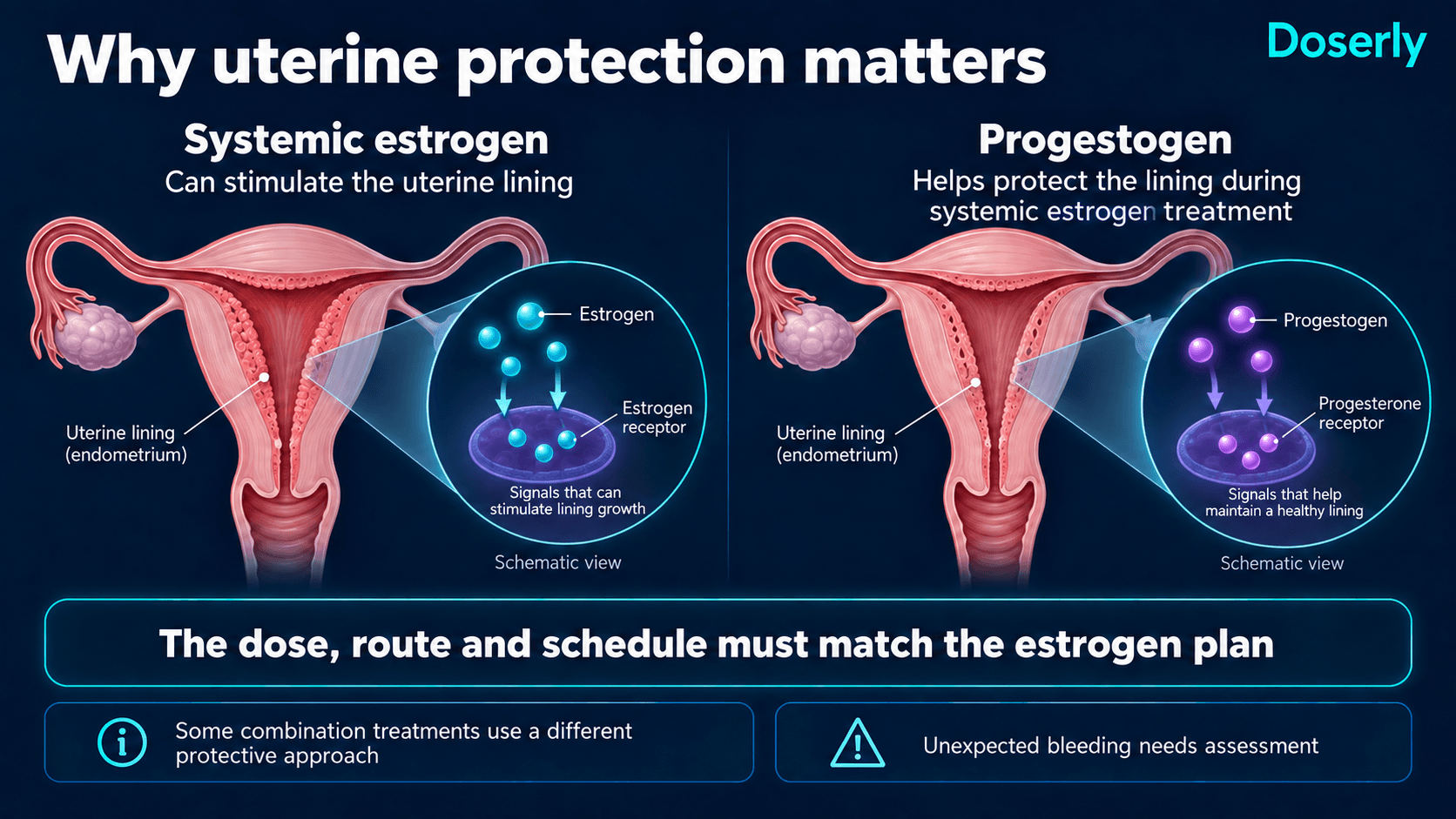
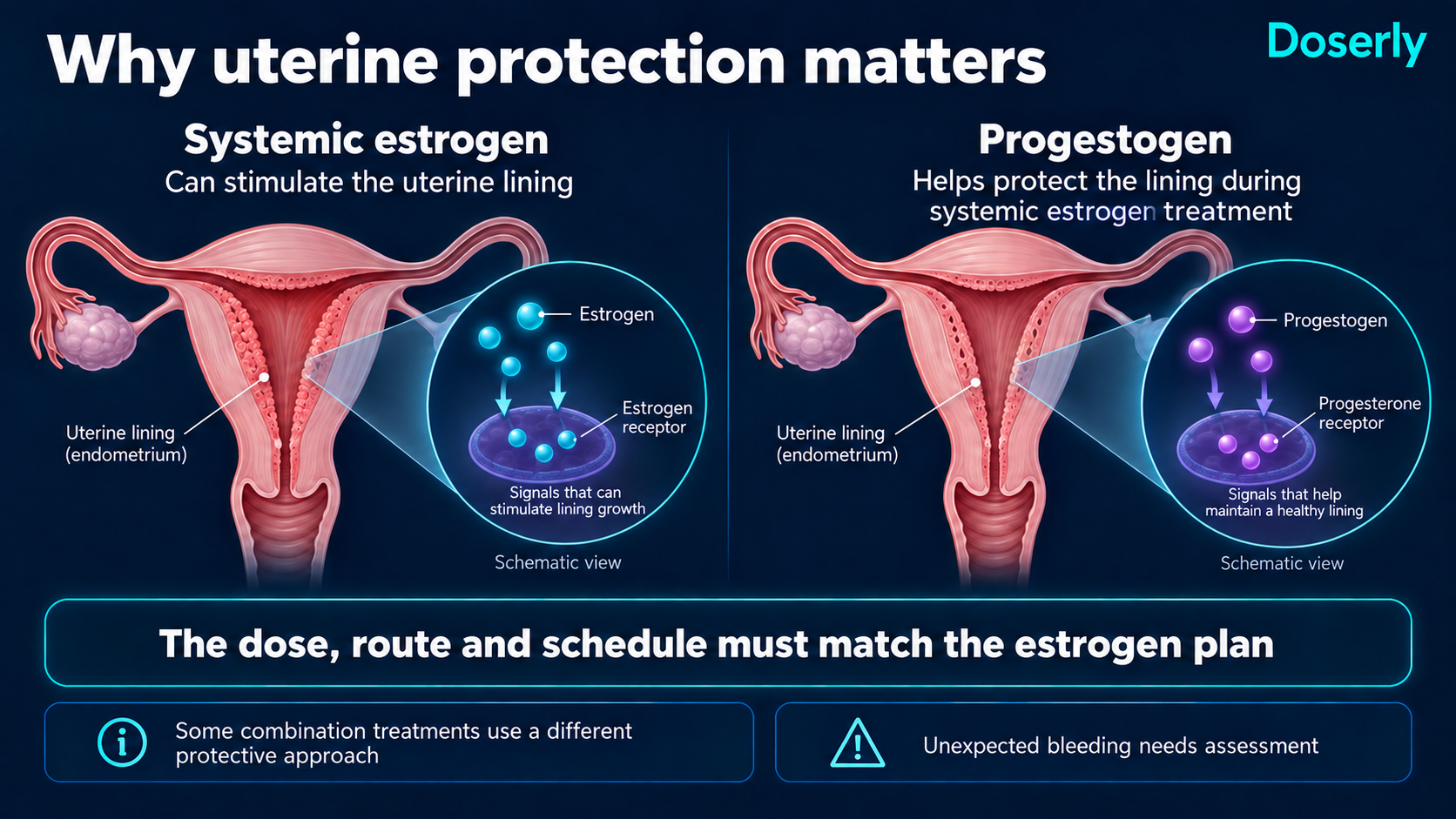
The illustration summarizes endometrial effects, not a dosing schedule or exact receptor structure. Progestogen dose, route and duration must provide protection for the estrogen regimen. Unexpected bleeding requires clinical assessment.
NICE menopause recommendations.
Pharmacokinetics / Hormone Physiology
The Basics
When you take a Bijuva capsule with food, both hormones are absorbed through your digestive system. Because it is an oral medication, both estradiol and progesterone pass through your liver before reaching the rest of your body. This "first-pass" liver processing significantly affects how the hormones work.
For estradiol, the liver converts much of it to estrone, a weaker form of estrogen. This means oral estradiol produces a different ratio of estrogen types in your blood compared to a patch or gel, which deliver estradiol directly into the bloodstream and bypass the liver entirely. The liver processing also stimulates production of certain proteins, including clotting factors, which is the primary reason oral estrogen carries a higher blood clot risk than transdermal estrogen.
For progesterone, first-pass metabolism produces allopregnanolone and other metabolites that act on brain receptors involved in sleep and relaxation. This is why taking Bijuva in the evening is recommended: the progesterone-related sedative effect can help with sleep rather than causing unwanted daytime drowsiness.
Taking Bijuva with food is essential. Food increases the absorption of both estradiol and progesterone significantly (approximately 2-3 fold). Taking it on an empty stomach would substantially reduce its effectiveness.
After you take a dose, estradiol levels peak at about 7-8 hours and remain in your system with a half-life of roughly 26-28 hours. Progesterone peaks earlier, around 4.5-5 hours, and has a shorter half-life of about 12 hours. Steady state for the primary estradiol metabolite (estrone) is typically reached within about seven days of consistent dosing.
The Science
Absorption: Both estradiol and progesterone undergo significant first-pass hepatic metabolism following oral administration. Steady-state pharmacokinetic parameters from the REPLENISH trial [3]:
Parameter
Estradiol Cmax (pg/mL)
- 0.5 mg E2/100 mg P4
- 26.1 +/- 22.3
- 1 mg E2/100 mg P4
- 48.7 +/- 36.9
Parameter
Estradiol AUC0-24h (pg*h/mL)
- 0.5 mg E2/100 mg P4
- 354 +/- 243
- 1 mg E2/100 mg P4
- 697 +/- 455
Parameter
Estradiol Tmax (h)
- 0.5 mg E2/100 mg P4
- 7.5
- 1 mg E2/100 mg P4
- 8.0
Parameter
Estradiol T1/2 (h)
- 0.5 mg E2/100 mg P4
- 28 +/- 10
- 1 mg E2/100 mg P4
- 26 +/- 15
Parameter
Progesterone Cmax (ng/mL)
- 0.5 mg E2/100 mg P4
- 22.3 +/- 19.9
- 1 mg E2/100 mg P4
- 21.9 +/- 22.9
Parameter
Progesterone AUC0-24h (ng*h/mL)
- 0.5 mg E2/100 mg P4
- 84.2 +/- 57.2
- 1 mg E2/100 mg P4
- 79.1 +/- 57.2
Parameter
Progesterone Tmax (h)
- 0.5 mg E2/100 mg P4
- 5.0
- 1 mg E2/100 mg P4
- 4.5
Parameter
Progesterone T1/2 (h)
- 0.5 mg E2/100 mg P4
- 11.9 +/- 6.2
- 1 mg E2/100 mg P4
- 11.7 +/- 4.1
A dose-dependent increase in estradiol Cmax and AUC was observed. Progesterone exposure was similar between dose levels, as both contain 100 mg progesterone [3].
Distribution: Estradiol circulates bound to SHBG and albumin. Progesterone is 96-99% bound to serum proteins (albumin 50-54%, transcortin 43-48%) [3].
Metabolism: Estradiol is metabolized via CYP3A4-mediated pathways, with reversible conversion to estrone and subsequent conversion to estriol. Estrogens undergo enterohepatic recirculation via conjugation, biliary secretion, intestinal hydrolysis, and reabsorption [3]. Progesterone is metabolized primarily in the liver to pregnanediol and pregnanolone, which are conjugated for renal excretion. The neuroactive metabolite allopregnanolone is produced during first-pass metabolism [8].
Food effect: Food significantly increases bioavailability of both components (approximately 2-3 fold for estradiol). BIJUVA must be taken with food [3].
Knowing the pharmacokinetics is the foundation. Seeing how your own body responds to your specific protocol turns that knowledge into actionable insight. Doserly correlates your dosing schedule with how you feel day to day, helping you and your provider identify whether your current route, timing, and dose are working optimally.
The app's analytics can surface patterns you might not notice on your own, like whether symptoms correlate with the end of a patch cycle or whether splitting an oral dose changes how you feel in the afternoon. Data like this makes dose adjustments more precise and less guesswork.
Research & Clinical Evidence
The Basics
The primary evidence for Bijuva comes from the REPLENISH trial, a large clinical study that tested this combination in over 1,800 menopausal women. The trial demonstrated that the two higher doses of Bijuva significantly reduced both the frequency and severity of hot flashes compared to placebo. These improvements were apparent as early as 4 weeks and sustained through 12 weeks of treatment.
Perhaps the most reassuring finding from REPLENISH was the endometrial safety data. Over the full 12-month study period, there were zero cases of endometrial hyperplasia at any dose level. This confirmed that the 100 mg progesterone component provided adequate protection against estrogen-stimulated uterine lining overgrowth.
Beyond hot flash relief, women in the trial also reported improvements in sleep quality and menopausal quality of life measures. The medication did not have clinically significant effects on vital signs, metabolic markers, coagulation parameters, or breast safety over the study period.
It is important to note that Bijuva's clinical evidence base is more limited than that of standalone estradiol or progesterone products, which have been studied across decades in multiple large trials. The REPLENISH trial was designed to demonstrate efficacy for vasomotor symptoms and endometrial safety; it was not designed or powered to evaluate cardiovascular outcomes, breast cancer risk, or bone density effects.
The Science
REPLENISH Trial (NCT01942668): Phase 3, randomized, double-blind, placebo-controlled, multicenter study in 1,835 healthy postmenopausal women aged 40-65 with a uterus [1][2].
VMS substudy (n=726) enrolled women with 7 or more moderate to severe hot flushes per day or 50 or more per week. Co-primary endpoints: VMS frequency and severity at weeks 4 and 12.
Efficacy results for the approved 1 mg/100 mg dose [1]:
- Mean daily VMS frequency reduction at Week 4: -6.4 vs -4.6 placebo (p<0.001)
- Mean daily VMS frequency reduction at Week 12: -7.2 vs -5.4 placebo (p<0.001)
- VMS severity significantly reduced at both time points
CGI-based clinical meaningfulness analysis [2]: At week 12, 56% (1/100 dose) and 48% (0.5/100 dose) met the clinically important difference (CID) severity threshold vs 29% placebo (p<0.05).
Endometrial safety (12 months, all doses): 0% incidence of endometrial hyperplasia [1].
Amenorrhea rates: 82.4% at cycle 13 for the 1 mg/100 mg dose [1].
Quality of life: MENQOL and MOS-Sleep instruments showed improvement with E2/P4 [1].
Safety: No clinically significant impact on vital signs, metabolic parameters, coagulation parameters, or breast safety measures [1].
Broader Context: While REPLENISH provides Bijuva-specific data, the individual components (17-beta-estradiol and micronized progesterone) have extensive independent evidence bases. The E3N French cohort study (n=80,377) found no significant increase in breast cancer risk with estrogen plus micronized progesterone over a median 8.1 years (HR 1.00, 95% CI 0.83-1.22), in contrast to estrogen plus synthetic progestins (HR 1.69, 95% CI 1.50-1.91) [9]. This distinction is a key rationale for preferring micronized progesterone over MPA when combined HRT is indicated.
Benefits & Therapeutic Effects
The Basics
The primary benefit of Bijuva is relief from moderate to severe hot flashes. In the REPLENISH trial, women taking the approved dose experienced a meaningful reduction in both the frequency and intensity of hot flashes. Many women noticed improvement within the first few weeks of treatment.
Beyond hot flash relief, women commonly report improved sleep quality. This is likely a dual benefit: reduced night sweats lead to fewer nighttime awakenings, and the progesterone component has a direct sedative effect through its brain-active metabolites.
Several women report improved mood stability and reduced brain fog while taking Bijuva.
The convenience of a single daily capsule containing both hormones is also a practical benefit. For women who prefer bioidentical hormones and value the simplicity of one prescription rather than two separate medications, Bijuva offers a streamlined option.
The endometrial safety data from REPLENISH is an important benefit in its own right. Zero cases of hyperplasia over 12 months across all dose levels confirms that the progesterone component provides effective uterine protection, addressing a key safety concern with estrogen therapy.
The Science
Vasomotor efficacy: The REPLENISH trial demonstrated mean reductions of 6.4 (week 4) and 7.2 (week 12) in daily VMS frequency for the 1 mg/100 mg dose versus placebo reductions of 4.6 and 5.4 respectively (p<0.001 for both) [1]. CGI-based analysis confirmed that 56% of women on the 1/100 dose met clinically important difference thresholds at week 12, versus 29% on placebo [2].
Endometrial protection: The 12-month endometrial safety data showed 0% endometrial hyperplasia incidence across all dose levels, with amenorrhea rates of 82.4% at cycle 13 for the 1 mg/100 mg dose [1]. This is consistent with the known protective effect of micronized progesterone at 100 mg daily or greater [10].
Sleep improvement: The MOS-Sleep instrument showed statistically significant improvement versus placebo in the REPLENISH trial [1]. Oral micronized progesterone produces allopregnanolone via first-pass metabolism, a positive allosteric modulator of GABA-A receptors that promotes sleep onset and maintenance [8].
Quality of life: MENQOL scores improved with Bijuva across multiple domains, reflecting broad symptom relief beyond VMS alone [1].
E3N cohort context for micronized progesterone: In the E3N French cohort (n=80,377, median follow-up 8.1 years), estrogen combined with micronized progesterone was not associated with increased breast cancer risk (HR 1.00, 95% CI 0.83-1.22), while estrogen plus synthetic progestins showed significant increased risk (HR 1.69, 95% CI 1.50-1.91) [9]. Though this data relates to micronized progesterone generally rather than Bijuva specifically, it provides important safety context for the progesterone component of this product.
Risks, Side Effects & Safety
The Basics
Like all hormone therapy, Bijuva carries both common side effects and serious risks that should be weighed against its benefits. Understanding these risks, including how they vary by route, type, timing, and duration, is essential for making informed decisions with your healthcare provider.
Common side effects reported in the REPLENISH trial include breast tenderness (5%), headache (4%), vaginal bleeding or spotting (4%), vaginal discharge (3%), pelvic pain (3%), and nausea (2%). Many of these are most noticeable in the first few weeks and tend to improve over time. The progesterone component can also cause drowsiness, which is why evening dosing is recommended.
Hair loss has been reported by some users and can be distressing.
Serious risks require careful context. Much of the risk data for combined HRT comes from the Women's Health Initiative (WHI), which studied a different combination: conjugated equine estrogens plus medroxyprogesterone acetate (Prempro). The WHI study population had an average age of 63, and many women were more than 10 years past menopause onset. Whether those results apply directly to Bijuva (which contains bioidentical hormones and was studied in younger women) is a matter of ongoing scientific discussion.
Blood clots (VTE): Oral estrogen of any type passes through the liver and increases production of clotting factors, which raises the risk of deep vein thrombosis and pulmonary embolism. In the WHI estrogen-plus-progestin arm, VTE risk was approximately 35 per 10,000 women-years versus 17 per 10,000 with placebo, roughly a doubling of absolute risk [3]. This risk is higher for oral than for transdermal estrogen; transdermal estrogen does not significantly increase VTE risk because it bypasses the liver.
Clinical context — VTE risk with bioidentical oral E2 vs CEE.
Stroke: The WHI estrogen-alone substudy reported 45 versus 33 stroke events per 10,000 women-years, an increase of approximately 12 additional strokes per 10,000 women per year [3].
Breast cancer: The breast cancer risk picture depends heavily on which progestogen is used. The WHI found that CE plus MPA increased invasive breast cancer risk (HR 1.24, 95% CI 1.01-1.54), corresponding to approximately 8 additional cases per 10,000 women per year [3]. In contrast, the WHI estrogen-alone arm actually showed a non-significant reduction in breast cancer (HR 0.80, 95% CI 0.62-1.04) [3]. Critically, the E3N French cohort found no increased breast cancer risk with estrogen combined with micronized progesterone (the type in Bijuva) over more than 8 years of follow-up, while synthetic progestins showed significant risk [9].
Endometrial cancer: Bijuva includes progesterone specifically to address this risk. In the REPLENISH trial, no cases of endometrial hyperplasia were observed over 12 months [1]. Unopposed estrogen (without progesterone) increases endometrial cancer risk 2 to 12-fold.
Gallbladder disease: Oral estrogen increases gallbladder disease risk by 2 to 4-fold, likely related to effects on bile composition from liver processing [3].
The Science
VTE: The WHI E+P substudy reported VTE rates of 35 vs 17 per 10,000 women-years (HR 2.06, 95% CI 1.57-2.70) [3]. The ESTHER study demonstrated no significant VTE risk increase with transdermal estrogen (adjusted OR 0.9, 95% CI 0.4-2.1) [11]. No Bijuva-specific VTE data are available. Oral estradiol at lower doses (0.5-1 mg) may carry lower VTE risk than oral CE (0.625 mg), but this has not been confirmed in randomized trials.
Stroke: WHI CE-alone: 45 vs 33 per 10,000 women-years [3]. This increase was demonstrated in year 1 and persisted.
Breast cancer: WHI E+P (CE 0.625 mg + MPA 2.5 mg): HR 1.24 (95% CI 1.01-1.54), approximately 8 additional cases per 10,000 women-years [3]. WHI E-alone: HR 0.80 (95% CI 0.62-1.04), no significant increase [3]. E3N cohort: E2 + micronized progesterone HR 1.00 (95% CI 0.83-1.22); E2 + synthetic progestins HR 1.69 (95% CI 1.50-1.91) [9]. The type of progestogen appears to be a significant determinant of breast cancer risk.
Endometrial cancer: REPLENISH: 0% endometrial hyperplasia at 12 months across all doses [1]. Unopposed estrogen increases risk 2-12 fold depending on dose and duration [3].
Gallbladder: 2-4 fold increased risk requiring surgery with oral estrogen [3].
Ovarian cancer: WHI E+P substudy reported a non-significant increase. A meta-analysis reported RR 1.20 (95% CI 1.15-1.26) for HRT users [3].
Contraindications: Undiagnosed abnormal genital bleeding; breast cancer or history; estrogen-dependent neoplasia; active or history of DVT/PE; active or history of arterial thromboembolic disease; protein C/S/antithrombin deficiency; hepatic impairment; hypersensitivity to Bijuva [3].
Understanding your personal risk profile is not a one-time calculation; it evolves as your treatment progresses. Doserly helps you see the bigger picture by analyzing side effect patterns over time, showing whether issues are resolving, persisting, or emerging as your body adjusts to therapy.
The app's analytics can reveal connections between side effects and specific aspects of your protocol, like whether symptoms correlate with a particular point in your dosing cycle or a recent dose change. This kind of insight helps you and your provider make informed adjustments based on your actual experience, not just population-level averages.
Dosing & Treatment Protocols
The Basics
Bijuva is prescribed as a continuous combined regimen, meaning you take one capsule every day without breaks. This differs from cyclic or sequential regimens where progesterone is taken only part of the month.
The starting dose recommended in the prescribing information is the lower strength: 0.5 mg estradiol/100 mg progesterone, taken once daily in the evening with food. Your healthcare provider may increase the dose to 1 mg estradiol/100 mg progesterone based on your symptom response. The principle is to use the lowest effective dose for the shortest duration needed.
Taking Bijuva in the evening with food is not optional. The food significantly increases absorption of both hormones, and the evening timing takes advantage of progesterone's natural sedative effect to promote sleep rather than causing daytime drowsiness.
Reassessment is built into the treatment protocol. Current guidelines recommend that you and your provider discuss whether to continue, adjust, or discontinue Bijuva at 3 to 6 month intervals. The February 2026 label update also includes guidance to consider initiating Bijuva in women under 60 or within 10 years of menopause onset, aligning with the timing hypothesis that earlier initiation may have a more favorable risk-benefit profile.
One practical limitation of Bijuva is that the estradiol and progesterone doses cannot be adjusted independently. If you need more estrogen but not more progesterone (or vice versa), separate prescriptions for each hormone would provide more flexibility.
The Science
Approved regimen: Continuous combined, one capsule daily with food in the evening [3].
Available strengths:
- 0.5 mg E2/100 mg P4 (starting dose)
- 1 mg E2/100 mg P4 (titrated dose)
Dose titration: Start with 0.5 mg/100 mg. Adjust based on clinical response. Taper or discontinue attempts recommended at 3-6 month intervals [3].
Clinical context — Starting dose recommendation.
Timing rationale: Evening dosing leverages the sedative properties of progesterone's allopregnanolone metabolite for sleep promotion [8].
Food requirement: Estradiol bioavailability increases approximately 2-3 fold with food [3].
Progestogen adequacy: The 100 mg micronized progesterone component in both dose strengths provides endometrial protection. In the REPLENISH trial, 100 mg P4 daily was sufficient to prevent endometrial hyperplasia at 12 months regardless of the estradiol dose (0.25 mg through 1 mg) [1].
Dosing protocols often change over the course of treatment. Starting doses get adjusted, symptoms fluctuate, and your body's response evolves. Doserly maintains a complete history of every protocol change, giving you and your provider a clear picture of what has been tried and how each adjustment affected your symptoms.
The app's adherence analytics show your consistency patterns and can highlight whether missed doses or timing variations correlate with symptom changes. When your provider is considering a dose adjustment, having this data available makes the conversation more productive and the decision more informed.
What to Expect (Timeline)
Days 1-7: Initial adjustment period. You may notice drowsiness from the progesterone component, particularly if you are not accustomed to oral progesterone. Breast tenderness, mild nausea, and headache can occur. Some women notice improved sleep from the first dose. Hot flash relief may begin within the first few days for some women, though this varies.
Weeks 2-4: Many women experience noticeable reduction in hot flash frequency and severity by this point. Drowsiness may lessen as your body adjusts. Any initial breast tenderness often begins to improve. Mood may start to stabilize.
Months 1-3: Vasomotor symptoms typically improve significantly. Sleep quality often improves further. Brain fog may lift. Some women experience breakthrough bleeding or spotting during this period, which usually resolves. Weight changes and water retention, if they occur, may become apparent.
Months 3-6: Full therapeutic effect for most symptoms. Amenorrhea rates increase (82% by cycle 13 in the REPLENISH trial). Bone density stabilization may begin, based on class evidence for estradiol. This is a recommended reassessment point to discuss continuing, adjusting, or tapering with your healthcare provider.
Ongoing maintenance: Annual review with your provider to reassess symptom control, discuss any side effects, update risk assessment, and determine whether continued therapy is appropriate. Mammography and any indicated monitoring should continue per clinical guidelines.
Individual response varies considerably. Some women feel significant improvement within days; others may need the full 3-month adjustment period. If symptoms have not adequately improved after 8-12 weeks on the starting dose, your provider may increase to the higher strength.
Timing Hypothesis & Window of Opportunity
The timing hypothesis proposes that HRT initiated within 10 years of menopause onset or before age 60 may have a more favorable risk-benefit profile than HRT started later. This concept is directly relevant to Bijuva: the February 2026 label update explicitly references timing, recommending that providers "consider initiating BIJUVA in women < 60 years old or < 10 years from onset of menopause" [3].
The evidence supporting the timing hypothesis comes from multiple sources. The WHI age subgroup analyses showed that women aged 50-59 at HRT initiation had lower cardiovascular event rates compared to older women [12]. The KEEPS trial (Kronos Early Estrogen Prevention Study) found that early initiation of HRT in recently menopausal women (within 3 years) did not adversely affect cardiovascular risk markers [13]. The ELITE trial (Early vs Late Intervention Trial with Estradiol) demonstrated that estradiol therapy reduced progression of subclinical atherosclerosis when started within 6 years of menopause but not when started more than 10 years after [14].
It is important to recognize that the timing hypothesis remains evolving evidence, not settled science. No randomized controlled trial has been specifically designed and powered to test it definitively. The REPLENISH trial enrolled women aged 40-65, and the February 2026 label change aligning with the timing hypothesis reflects FDA's assessment of the accumulating evidence rather than a definitive answer.
For practical purposes, if you are considering Bijuva (or any systemic HRT), the timing of initiation relative to your menopause onset is a factor that should be part of the discussion with your healthcare provider.
Interactions & Compatibility
Drug-Drug Interactions:
- CYP3A4 inducers (St. John's Wort, rifampin, carbamazepine, phenobarbital, phenytoin): May decrease estradiol and progesterone levels, reducing effectiveness [3]
- CYP3A4 inhibitors (ketoconazole, itraconazole, erythromycin, clarithromycin, ritonavir, grapefruit juice): May increase estradiol and progesterone levels, potentially increasing side effects [3]
- Fezolinetant (Veozah): Contraindicated with Bijuva per labeling
- Tranexamic acid: Not recommended with Bijuva (increased thrombotic risk)
- Levothyroxine: Estrogen increases thyroid-binding globulin (TBG), which may require levothyroxine dose adjustment. Thyroid function should be monitored [3]
- Lamotrigine: Estrogen may reduce lamotrigine levels significantly, potentially affecting seizure control. Close monitoring recommended
- Warfarin: Estrogens may affect coagulation. INR monitoring recommended
- SSRIs/SNRIs: Generally compatible; some used as non-hormonal alternatives for VMS. See paroxetine (Brisdelle) and gabapentin
Supplement Interactions:
- St. John's Wort: Strong CYP3A4 inducer; may significantly reduce Bijuva effectiveness. Avoid concurrent use
- Black cohosh: No established pharmacokinetic interaction, but both affect hormonal pathways
- Calcium and Vitamin D: No interaction; recommended for bone health during HRT
Lifestyle Factors:
- Smoking: Dramatically increases cardiovascular and VTE risk with oral estrogen. This combination should be approached with caution in smokers
- Alcohol: Modest interaction with liver metabolism; moderate consumption generally acceptable
- Grapefruit juice: CYP3A4 inhibitor; may increase hormone levels. The Mayo Clinic advises avoiding grapefruit during Bijuva use
Cross-references to related guides:
- Micronized Progesterone (Prometrium) for the individual progesterone component
- 17-Beta Estradiol for the individual estradiol component
- CE + MPA (Prempro) for comparison with the WHI-studied combination
Decision-Making Framework
Deciding whether Bijuva is right for you involves weighing symptom severity, personal risk factors, treatment preferences, and practical considerations with your healthcare provider.
Who may be a good candidate for Bijuva:
- Women with a uterus experiencing moderate to severe hot flashes
- Women who prefer bioidentical hormone therapy in a single prescription
- Women under 60 or within 10 years of menopause onset
- Women who have difficulty managing multiple separate HRT prescriptions
- Women who have used compounded bioidentical hormones and want an FDA-regulated alternative
Who may want to consider alternatives:
- Women who need flexible dosing (inability to adjust E2 and P4 independently)
- Women with VTE risk factors who would benefit from transdermal estrogen
- Women who experience progesterone intolerance (bloating, mood effects)
- Women with liver disease (oral route contraindicated)
- Women primarily needing GSM treatment (local vaginal estrogen more appropriate)
Questions to discuss with your provider:
- Is my symptom profile best addressed by systemic combined HRT?
- Given my personal and family history, is oral HRT appropriate, or should I consider transdermal estrogen?
- Would I benefit from the ability to adjust estrogen and progesterone doses independently?
- What is my VTE risk profile, and does the oral route add unacceptable risk?
- How long should I plan to continue treatment, and what does the reassessment schedule look like?
Finding a menopause specialist: If your primary care provider is unfamiliar with current HRT options, consider consulting a NAMS Certified Menopause Practitioner (searchable at menopause.org) or an ISSWSH member for specialized guidance.
Administration & Practical Guide
How to take Bijuva:
- Take one capsule daily in the evening
- Always take with food; this is essential for adequate absorption (2-3 fold increase in bioavailability)
- Swallow the capsule whole; do not crush, chew, or open
- Take at a consistent time each evening
Missed dose guidance:
- If within 2 hours of your next scheduled dose: skip the missed dose and take the next one at the regular time
- If more than 2 hours until your next dose: take the missed dose as soon as possible with food, then resume your regular schedule
- Do not double up on doses
Storage:
- Store at room temperature (20-25 degrees C / 68-77 degrees F)
- Keep away from heat, moisture, and direct light
- Keep in original blister packaging until use
Practical tips to discuss with your prescriber:
- Evening dosing with dinner works well for most women and minimizes drowsiness during the day
- If you experience drowsiness, taking the capsule right before bed (with a small snack if not eaten recently) can help
- Consistency matters; try to take it at roughly the same time each evening
- Keep a spare blister in your bag for evenings away from home
Monitoring & Lab Work
Pre-HRT baseline (recommended before starting Bijuva):
- Blood pressure measurement
- Mammogram (per age-appropriate guidelines)
- Hormone levels if clinically indicated (FSH, estradiol)
- Lipid panel
- Liver function tests (especially relevant for oral HRT)
- Thyroid function (TSH)
- Bone density (DEXA) if risk factors present
- Pelvic examination and transvaginal ultrasound if abnormal bleeding
Initial follow-up (3-6 months):
- Symptom assessment and side effect evaluation
- Blood pressure check
- Dose adjustment consideration
- Address any breakthrough bleeding (common in first months, usually resolves)
Ongoing monitoring:
- Regular visits every 3-6 months initially, then at least annually
- Mammography per national guidelines
- Bone density (DEXA) per risk profile and guidelines
- Lipid panel annually or per risk assessment
- Liver function periodically (oral route)
- Thyroid function if on levothyroxine (estrogen affects TBG)
- Endometrial assessment only if abnormal bleeding develops
- Annual review checklist: reassess symptom control, discuss taper/discontinuation, update risk assessment
Complementary Approaches & Lifestyle
While Bijuva addresses vasomotor symptoms through hormone replacement, several evidence-based complementary strategies can support overall menopausal health:
Supplements:
- Vitamin D (1000-2000 IU daily): Supports bone health, particularly important during menopause
- Calcium (1000-1200 mg daily from food and supplements): Essential for bone density maintenance
- Omega-3 fatty acids: May support cardiovascular health and reduce inflammation
- Magnesium: May help with sleep quality and muscle function
Exercise:
- Weight-bearing exercise for bone health (walking, dancing, stair climbing)
- Resistance training for body composition and metabolic health
- Cardiovascular exercise for heart health
- Balance training for fall prevention as bone density changes
Diet:
- Mediterranean-style eating pattern: associated with cardiovascular and metabolic benefits
- Phytoestrogen-rich foods (soy, flaxseed): modest evidence for mild symptom relief
- Calcium-rich foods (dairy, fortified alternatives, leafy greens)
- Limiting alcohol and caffeine, which may exacerbate hot flashes
Sleep hygiene:
- Cool bedroom environment (particularly important for hot flash management)
- Consistent sleep schedule
- Limiting screen time before bed
Cognitive behavioral therapy (CBT):
- Evidence-based for reducing the impact of hot flashes and night sweats
- Available in individual, group, and digital formats
Pelvic floor therapy:
- For urinary symptoms and GSM; complements systemic HRT or can be combined with local vaginal estrogen
For supplement-specific information, see Vitamin D, Calcium, and Magnesium guides.
Stopping HRT / Discontinuation
When to consider stopping:
- At each 3-6 month reassessment, discuss whether continued treatment is warranted
- If side effects outweigh benefits
- If risk factors change (new diagnosis that contraindicates estrogen)
- After 2-5 years, a thorough reassessment of the benefit-risk balance is commonly recommended, though some women continue longer based on individual circumstances
Tapering strategies:
- Gradual tapering is generally preferred over abrupt cessation
- If on 1 mg/100 mg dose, consider stepping down to 0.5 mg/100 mg for 1-3 months before discontinuing
- Some providers recommend alternate-day dosing for a period before stopping entirely
- There is no single "correct" tapering protocol; individualize with your provider
Symptom recurrence:
- Approximately 50% of women experience some symptom return after stopping HRT
- Symptoms that recur are typically similar in severity to pre-treatment levels
- Recurrence is most likely in the first few months after discontinuation
- Women who were highly symptomatic before starting HRT are more likely to experience recurrence
Transition options:
- Low-dose vaginal estrogen for persistent GSM symptoms (may continue even after stopping systemic HRT)
- Non-hormonal alternatives for persistent vasomotor symptoms: fezolinetant (Veozah), gabapentin, CBT for hot flashes
- Lifestyle modifications (see Section 18)
What to monitor during discontinuation:
- Symptom diary to track any recurrence
- Bone density reassessment (DEXA) within 1-2 years of stopping
- Cardiovascular risk factor reassessment
- Consider restarting if symptoms significantly impact quality of life
Special Populations & Situations
Breast Cancer Survivors
Systemic HRT, including Bijuva, is generally contraindicated in women with a history of breast cancer. The estrogen component could stimulate estrogen-receptor-positive cancer cells. Non-hormonal alternatives for vasomotor symptoms should be discussed with an oncologist. See non-hormonal menopause treatments.
Premature Ovarian Insufficiency (POI)
Women who experience menopause before age 40 typically need hormone replacement until the typical age of natural menopause (around 51) to protect cardiovascular and bone health. While Bijuva could be used for this indication, separate estradiol and progesterone prescriptions may offer more flexibility for dose titration in this population. See premature ovarian insufficiency.
Surgical Menopause
Women who have had both ovaries removed experience abrupt hormone loss. Bijuva could be an option if the uterus is intact. If the uterus has also been removed, estrogen-only therapy is typically preferred (progesterone is not needed without a uterus). See surgical menopause.
Cardiovascular Disease History
The oral route of Bijuva raises specific concerns for women with cardiovascular risk factors due to first-pass hepatic effects on clotting factors and lipoproteins. Transdermal estrogen is generally preferred for this population. See transdermal HRT.
History of VTE
Bijuva is contraindicated in women with active or history of DVT or PE. The oral route does not avoid the hepatic effects on coagulation. Transdermal estrogen, which has not been associated with increased VTE risk, may be considered after careful risk assessment.
Migraine with Aura
Oral estrogen can fluctuate more than transdermal, and estrogen fluctuations are a known migraine trigger. Women with migraine with aura may be better served by transdermal estrogen, which provides more stable blood levels.
Liver Disease
Bijuva is contraindicated in women with hepatic impairment or disease due to the oral route requiring liver processing.
Regulatory, Insurance & International
United States (FDA):
- FDA-approved October 28, 2018 (NDA210132)
- Major label update February 2026: boxed warning removed; 0.5 mg/100 mg dose approved as starting dose
- Prescription required
- Available through standard pharmacies
- Insurance coverage varies; some plans require prior authorization
- Cash price has decreased from earlier years; approximately $30/month reported by some users
- No generic equivalent currently available
United Kingdom (MHRA):
- Bijuva is not widely marketed in the UK under this brand name
- Separate prescriptions for estradiol and micronized progesterone (Utrogestan) are standard practice in the UK
Canada (Health Canada):
- Separate estradiol and progesterone prescriptions more common
Australia (TGA):
- Not listed on the PBS as Bijuva
- Equivalent components available separately
European Union (EMA):
- Combined oral E2/P4 capsules not widely available as a single product in EU markets
Compounded vs. FDA-approved:
Bijuva was specifically developed to address concerns raised by NAMS, ACOG, and the Endocrine Society about compounded bioidentical hormone therapy. Compounded preparations are not subject to the same manufacturing standards, potency testing, or clinical trial requirements as FDA-approved products. For women who prefer bioidentical hormones but want the safety assurance of regulatory oversight, Bijuva provides an important option.
Frequently Asked Questions
Is Bijuva bioidentical?
Yes. Bijuva contains 17-beta-estradiol (the same estradiol your ovaries produce) and micronized progesterone (identical to the progesterone your body makes). Both hormones are synthesized from plant sources and are chemically identical to endogenous human hormones.
Why was the boxed warning removed in 2026?
The FDA determined that the evidence base for bioidentical estradiol and progesterone warranted different risk communication than the original class-wide warnings derived primarily from the WHI study of conjugated equine estrogens plus medroxyprogesterone acetate. This change was specific to Bijuva.
Can I adjust the estradiol and progesterone doses separately?
No. Bijuva is a fixed-dose combination. If you need independent dose adjustment (for example, more estrogen but the same progesterone), you would need separate prescriptions for each hormone.
Why do I have to take it with food?
Food significantly increases the absorption of both estradiol and progesterone (roughly 2-3 fold). Taking Bijuva without food would substantially reduce its effectiveness.
Why is it taken in the evening?
The oral progesterone component is metabolized to allopregnanolone, which has a sedative effect. Evening dosing takes advantage of this to promote sleep rather than causing daytime drowsiness.
Is Bijuva safer than Prempro?
Direct safety comparisons cannot be made because the two products have not been studied head-to-head. Bijuva contains bioidentical estradiol and progesterone, while Prempro contains conjugated equine estrogens and medroxyprogesterone acetate. The E3N cohort data suggests that micronized progesterone carries lower breast cancer risk than MPA, but long-term comparative cardiovascular and thrombotic data are limited. Discuss with your healthcare provider.
Does Bijuva help with vaginal dryness?
Systemic estrogen (including the estradiol in Bijuva) can have some effect on vaginal health, but it is not specifically indicated for genitourinary syndrome of menopause. Local vaginal estrogen is the preferred treatment for vaginal dryness and atrophy. See vaginal estrogen therapy.
Some of this may be water retention rather than true fat gain. The requirement to take the capsule with food in the evening may also contribute to caloric timing concerns for some women.
How long can I take Bijuva?
There is no fixed time limit. Current guidelines recommend the lowest effective dose for the shortest duration needed, with reassessment at 3-6 month intervals. Some women take HRT for years based on ongoing symptom severity and individual risk assessment. This is a conversation for you and your provider.
Can Bijuva be used after a hysterectomy?
If you have had a hysterectomy (uterus removed), you do not need the progesterone component. Estrogen-only therapy is typically recommended. Using Bijuva after hysterectomy would provide unnecessary progesterone exposure.
Myth vs. Fact
Myth: "Bijuva is just another version of Prempro."
Fact: Bijuva and Prempro contain entirely different hormones. Bijuva uses bioidentical 17-beta-estradiol and micronized progesterone, while Prempro uses conjugated equine estrogens and medroxyprogesterone acetate (a synthetic progestin). The E3N cohort study found significantly different breast cancer risk profiles between micronized progesterone and synthetic progestins [9]. While both are combined HRT products, the pharmacological differences are clinically meaningful.
Myth: "Because Bijuva is a pill, it's just as risky as older HRT pills."
Fact: All oral estrogen passes through the liver and carries some additional VTE risk compared to transdermal estrogen. However, Bijuva uses lower-dose bioidentical estradiol (0.5-1 mg) rather than the conjugated equine estrogens (0.625 mg) used in the WHI. The February 2026 FDA label update, which removed the boxed warning, reflects a nuanced reassessment of risk for this specific product. That said, women with significant VTE risk factors should discuss transdermal alternatives with their provider.
Myth: "Compounded bioidentical hormones are safer than Bijuva because they're custom-made."
Fact: Compounded bioidentical hormones are not subject to FDA manufacturing standards, potency testing, or clinical trial requirements. NAMS, ACOG, and the Endocrine Society have raised concerns about batch-to-batch variability, contamination risk, and the absence of safety data for compounded preparations. Bijuva provides the same bioidentical hormones with the regulatory oversight of an FDA-approved product [4].
Myth: "You should only take HRT for 5 years maximum."
Fact: The "5-year rule" is an outdated oversimplification. Current guidelines from NAMS and the Endocrine Society recommend individualized duration assessment based on ongoing symptom severity, personal risk factors, and quality of life impact. Some women benefit from longer treatment, particularly those who started HRT early. The key is regular reassessment with your healthcare provider, not an arbitrary time limit.
Myth: "HRT causes breast cancer."
Fact: The relationship between HRT and breast cancer is more nuanced than the headline suggests. In the WHI, estrogen-only therapy actually showed a non-significant reduction in breast cancer (HR 0.80, approximately 7 fewer cases per 10,000 women per year) [3]. Combined therapy risk depends significantly on the progestogen used: the E3N cohort found no increased risk with estrogen plus micronized progesterone (the combination in Bijuva), while synthetic progestins showed significant risk (HR 1.69) [9]. Any risk discussion should include absolute numbers, not just relative percentages, and account for the type of hormones used.
Myth: "Natural remedies are just as effective as Bijuva for hot flashes."
Fact: For moderate to severe vasomotor symptoms, the evidence gap between HRT and supplements or herbal remedies is substantial. The REPLENISH trial demonstrated statistically significant hot flash reduction with Bijuva at 4 and 12 weeks [1]. Phytoestrogens, black cohosh, and other supplements have shown at best modest benefits in clinical trials, typically no greater than placebo for severe symptoms. For mild symptoms, lifestyle modifications and supplements may be sufficient, but for moderate to severe VMS, HRT remains the most effective treatment.
Myth: "If Bijuva causes side effects, all HRT will be the same."
Fact: HRT is not one-size-fits-all. Side effects from Bijuva may be specific to its oral route, its fixed dose, or individual sensitivity to one of its components. Women who experience intolerable side effects with Bijuva may find better results with transdermal estradiol (which avoids liver effects), a different progesterone schedule, or a different progestogen altogether. Switching formulations or routes is a standard part of optimizing HRT.
Myth: "Once you stop Bijuva, your symptoms will come back worse than before."
Fact: For most women, symptoms that recur after stopping HRT are similar in severity to what they experienced before starting treatment. They do not typically become worse than baseline. Gradual tapering can help ease the transition, and about half of women do not experience significant symptom recurrence.
Sources & References
Clinical Guidelines
[1] Lobo RA, Archer DF, Kagan R, et al. A 17β-Estradiol-Progesterone Oral Capsule for Vasomotor Symptoms in Postmenopausal Women: A Randomized Controlled Trial. Obstet Gynecol. 2018;132(1):161-170. PubMed: 29889748. DOI: 10.1097/AOG.0000000000002645.
[2] Constantine GD, Simon JA, Kaunitz AM, et al. TX-001HR is associated with a clinically meaningful effect on severity of moderate to severe vasomotor symptoms in the REPLENISH trial. Menopause. 2020;27(11):1236-1241. PubMed: 33110039. DOI: 10.1097/GME.0000000000001602.
[3] DailyMed. BIJUVA (estradiol and progesterone) capsules prescribing information. Revised April 2026. NDA210132. https://dailymed.nlm.nih.gov/dailymed/drugInfo.cfm?setid=bc52489a-5149-411d-9665-2c75405ad15d
Landmark Trials and Cohort Studies
[4] PMC. Hormone replacement therapy perspectives. Front Endocrinol. 2024. PMCID: PMC11144901
[5] Kuhl H. Pharmacology of estrogens and progestogens: influence of different routes of administration. Climacteric. 2005;8 Suppl 1:3-63. PubMed: 16112947. DOI: 10.1080/13697130500148875.
[6] Prossnitz ER, Barton M. The G-protein-coupled estrogen receptor GPER in health and disease. Nat Rev Endocrinol. 2011;7(12):715-26. PubMed: 21844907. DOI: 10.1038/nrendo.2011.122.
[7] Freedman RR. Menopausal hot flashes: mechanisms, endocrinology, treatment. J Steroid Biochem Mol Biol. 2014;142:115-20. PubMed: 24012626. DOI: 10.1016/j.jsbmb.2013.08.010.
[8] Schüssler P, Kluge M, Yassouridis A, et al. Progesterone reduces wakefulness in sleep EEG and has no effect on cognition in healthy postmenopausal women. Psychoneuroendocrinology. 2008;33(8):1124-31. PubMed: 18676087. DOI: 10.1016/j.psyneuen.2008.05.013.
[9] Fournier A, Berrino F, Clavel-Chapelon F. Unequal risks for breast cancer associated with different hormone replacement therapies: results from the E3N cohort study. Breast Cancer Res Treat. 2008;107(1):103-11. PubMed: 17333341. DOI: 10.1007/s10549-007-9523-x.
[10] “The 2022 Hormone Therapy Position Statement of The North American Menopause Society” Advisory Panel. The 2022 hormone therapy position statement of The North American Menopause Society. Menopause. 2022;29(7):767-794. PubMed: 35797481. DOI: 10.1097/GME.0000000000002028.
Safety and Risk Data
[11] Canonico M, Oger E, Plu-Bureau G, et al. Hormone therapy and venous thromboembolism among postmenopausal women: impact of the route of estrogen administration and progestogens: the ESTHER study. Circulation. 2007;115(7):840-5. PubMed: 17309934. DOI: 10.1161/CIRCULATIONAHA.106.642280.
[12] Rossouw JE, Prentice RL, Manson JE, et al. Postmenopausal hormone therapy and risk of cardiovascular disease by age and years since menopause. JAMA. 2007;297(13):1465-77. PubMed: 17405972. DOI: 10.1001/jama.297.13.1465.
[13] Harman SM, Black DM, Naftolin F, et al. Arterial imaging outcomes and cardiovascular risk factors in recently menopausal women: a randomized trial. Ann Intern Med. 2014;161(4):249-60. PubMed: 25069991. DOI: 10.7326/M14-0353.
[14] Hodis HN, Mack WJ, Henderson VW, et al. Vascular Effects of Early versus Late Postmenopausal Treatment with Estradiol. N Engl J Med. 2016;374(13):1221-31. PubMed: 27028912. DOI: 10.1056/NEJMoa1505241.
Pharmacotherapy Reviews
[15] Archer DF, Bernick BA, Mirkin S. A combined, bioidentical, oral, 17β-estradiol and progesterone capsule for the treatment of moderate to severe vasomotor symptoms due to menopause. Expert Rev Clin Pharmacol. 2019;12(8):729-739. PubMed: 31282768. DOI: 10.1080/17512433.2019.1637731.
[16] Woodis CB, Ghassemi E, McLendon AN. Bioidentical Oral 17β-Estradiol and Progesterone for the Treatment of Moderate to Severe Vasomotor Symptoms of Menopause. Ann Pharmacother. 2021;55(9):1153-1158. PubMed: 33345556. DOI: 10.1177/1060028020982611.
Additional Regulatory and Guideline Sources
[17] DailyMed: BIJUVA prescribing information. https://dailymed.nlm.nih.gov/dailymed/search.cfm?query=BIJUVA. Accessed September 13, 2026.
[18] FDA menopausal hormone therapy drug-class information. https://www.fda.gov/drugs/information-drug-class/information-menopausal-hormone-therapy. Accessed September 13, 2026.
[19] FDA press announcement on menopausal hormone therapy boxed warning changes. https://www.fda.gov/news-events/press-announcements/fda-asks-companies-remove-black-box-warning-menopausal-hormone-therapy-products. Accessed September 13, 2026.
[20] “The 2022 Hormone Therapy Position Statement of The North American Menopause Society” Advisory Panel. The 2022 hormone therapy position statement of The North American Menopause Society. Menopause. 2022;29(7):767-794. PubMed: 35797481. DOI: 10.1097/GME.0000000000002028.
Related Guides & Cross-Links
Same Category (Combination Products):
- Estradiol + Norethindrone Acetate (Activella)
- Estradiol + Drospirenone (Angeliq)
- Conjugated Estrogens + MPA (Prempro)
- Ethinyl Estradiol + Norethindrone (FemHrt)
- Conjugated Estrogens + Bazedoxifene (Duavee)
Individual Components:
Compounded Alternatives:
Related Treatment Options:
Conditions: