
Activella HRT: Uses, Dosing and Side Effects
On this page
Quick Reference Card
Attribute
Brand Name(s)
- Value
- Activella (US); Mimvey (US generic); Lopreeza (US generic); Activelle (international)
Attribute
Generic Name
- Value
- Estradiol / Norethindrone Acetate (E2/NETA)
Attribute
Drug Class / Type
- Value
- Combination estrogen + progestogen (19-nortestosterone-derived progestin)
Attribute
FDA-Approved Indications
- Value
- Treatment of moderate to severe vasomotor symptoms due to menopause; treatment of moderate to severe vulvar and vaginal atrophy due to menopause (1 mg/0.5 mg only); prevention of postmenopausal osteoporosis
Attribute
Common Doses
- Value
- 1 mg E2 / 0.5 mg NETA; 0.5 mg E2 / 0.1 mg NETA
Attribute
Route(s) of Administration
- Value
- Oral (tablet)
Attribute
Dosing Schedule
- Value
- Continuous combined (one tablet daily, no break)
Attribute
Key Monitoring Requirements
- Value
- Mammography per guidelines, endometrial assessment if abnormal bleeding, liver function, thyroid function in women on thyroid replacement, blood pressure
Attribute
Initial FDA Approval
- Value
- 1998 (NDA 020907)
Attribute
Key Differentiator
- Value
- Fixed-dose combination pill offering convenience of single daily tablet; favorable bleeding profile compared to CEE/MPA; available in both standard and low-dose formulations
Overview / What Is Estradiol + Norethindrone Acetate?
The Basics
Estradiol plus norethindrone acetate is a combination hormone therapy that packages two hormones into a single daily pill. The estradiol component replaces the estrogen your body produces less of during and after menopause, while the norethindrone acetate component provides the progestogen protection that any woman with a uterus needs when taking estrogen.
This combination has been available in the United States since 1998, originally marketed by Novo Nordisk as Activella. It was one of the first continuous combined oral HRT products to use 17-beta estradiol (the same form of estrogen your ovaries naturally produce) rather than conjugated equine estrogens. Today, generic versions are widely available under brand names including Mimvey and Lopreeza, making it one of the more affordable combination HRT options.
The appeal of a fixed-dose combination pill is straightforward: one pill, once a day, every day. There is no cycling, no pill-free interval, and no need to coordinate separate estrogen and progestogen prescriptions. For women who value simplicity and consistency, this can be meaningful. The continuous combined approach is also designed to minimize breakthrough bleeding over time, which is one of the most common reasons women discontinue HRT.
That said, the fixed-dose format means you cannot adjust the estrogen and progestogen components independently. If you need a higher estrogen dose but find the progestogen dose causes side effects (or vice versa), separate prescriptions may offer more flexibility. This is a trade-off between convenience and customization that is worth discussing with your healthcare provider.
As of September 13, 2026, Activella remains a fixed-dose oral estradiol/norethindrone acetate product for systemic estrogen plus endometrial protection; FDA class-label changes should not be assumed identical across every combination product. [30][31]
The Science
Activella combines 17-beta estradiol (E2), the principal endogenous estrogen, with norethindrone acetate (NETA), a 19-nortestosterone-derived synthetic progestogen. The formulation provides continuous combined estrogen-progestogen therapy, avoiding the cyclical withdrawal bleeding associated with sequential regimens [1].
Norethindrone acetate is a prodrug that is rapidly deacylated in vivo to norethindrone, first synthesized in 1951 by Carl Djerassi through removal of the 19-carbon from ethisterone, converting its pharmacological profile from androgenic to progestational [2]. NETA retains partial androgenic activity due to its structural derivation from testosterone, which distinguishes it pharmacologically from progesterone-derived progestogens (such as medroxyprogesterone acetate) and the newer spironolactone-derived drospirenone.
The 1998 FDA approval (NDA 020907) was based on clinical trials demonstrating efficacy for vasomotor symptom relief, vulvovaginal atrophy treatment, and osteoporosis prevention. Two dose strengths were approved: 1 mg E2/0.5 mg NETA (standard dose) and 0.5 mg E2/0.1 mg NETA (low dose). The low-dose formulation was introduced in recognition that many women achieve adequate symptom relief at lower estrogen exposures, consistent with the FDA's guidance to use the lowest effective dose for the shortest necessary duration [3].
Medical / Chemical Identity
Property
Generic Name
- Value
- Estradiol and Norethindrone Acetate
Property
Chemical Class (E2)
- Value
- Endogenous estrogen; (17beta)-estra-1,3,5(10)-triene-3,17-diol hemihydrate
Property
Chemical Class (NETA)
- Value
- 19-Nortestosterone-derived progestogen; 17-hydroxy-19-nor-17alpha-pregn-4-en-20-yn-3-one acetate
Property
Molecular Formula (E2)
- Value
- C18H24O2 (hemihydrate)
Property
Molecular Formula (NETA)
- Value
- C22H28O3
Property
Molecular Weight (E2)
- Value
- 281.39 g/mol
Property
Molecular Weight (NETA)
- Value
- 340.46 g/mol
Property
CAS Number (E2)
- Value
- 50-28-2
Property
CAS Number (NETA)
- Value
- 51-98-9
Property
FDA Initial Approval
- Value
- 1998 (NDA 020907, as Activella)
Property
Current Manufacturer (Brand)
- Value
- Amneal Pharmaceuticals LLC
Property
Original Manufacturer
- Value
- Novo Nordisk
Property
NDC Codes
- Value
- 60846-231-01 (0.5mg/0.1mg); 60846-232-01 (1mg/0.5mg)
Brand Names by Country:
Country
United States
- Brand(s)
- Activella, Mimvey, Lopreeza
- Formulation
- 1 mg/0.5 mg; 0.5 mg/0.1 mg
Country
International
- Brand(s)
- Activelle
- Formulation
- 1 mg/0.5 mg
Inactive Ingredients: Lactose monohydrate, starch (corn), talc, magnesium stearate, hypromellose, triacetin. The 1 mg/0.5 mg tablet also contains copovidone. The 0.5 mg/0.1 mg tablet also contains hydroxypropylcellulose.
Mechanism of Action
The Basics
To understand how Activella works, it helps to know what each of its two hormones does in your body.
Estradiol is the most potent form of estrogen your ovaries naturally produce. When estradiol levels drop during menopause, the effects spread across many body systems. Your internal thermostat narrows (which is why small changes in body temperature trigger hot flashes), your bones begin losing density faster, vaginal and urinary tract tissues thin and dry, and mood-regulating pathways in the brain are affected. Taking estradiol replaces what your body is no longer making in sufficient quantities.
Norethindrone acetate is a synthetic progestogen. Its primary job in this combination is to protect your uterine lining. When you take estrogen alone, it stimulates the endometrium (uterine lining) to grow. Over time, this unchecked growth can lead to endometrial hyperplasia and potentially cancer. Norethindrone counteracts this by transforming the endometrial lining from a growth state into a stable, organized state, preventing dangerous overgrowth.
Norethindrone also has some androgenic properties, meaning it interacts with receptors that testosterone uses. This is relevant because it means norethindrone has a different side effect profile than micronized progesterone (which has no androgenic activity) or drospirenone (which actually blocks androgen receptors). Some women find norethindrone's mild androgenic activity contributes to energy or libido, while others may notice effects on mood or skin.
The Science
Estradiol: 17-beta estradiol binds to estrogen receptors alpha (ER-alpha) and beta (ER-beta) with high affinity. ER-alpha predominates in reproductive tissues, bone, liver, and cardiovascular endothelium; ER-beta is more prevalent in the brain, lungs, and gastrointestinal tract. Estradiol exerts effects through both classical genomic pathways (nuclear receptor binding, ERE-mediated transcription) and rapid non-genomic signaling (membrane-associated ER and GPER/GPR30, activating MAPK/ERK and PI3K/Akt pathways) [1][4].
In the thermoregulatory center (hypothalamic preoptic area), declining estradiol narrows the thermoneutral zone, causing minimal core temperature fluctuations to trigger inappropriate heat dissipation responses perceived as hot flashes. Estradiol replacement widens this zone toward normal thresholds [4].
In bone, estradiol promotes osteoblast survival and induces osteoclast apoptosis through ER-alpha-mediated OPG/RANKL regulation, shifting the remodeling balance toward net bone formation [5].
Norethindrone Acetate: NETA is rapidly deacylated to norethindrone in vivo. Norethindrone binds to progesterone receptors (PR-A and PR-B), inducing secretory transformation of estrogen-primed endometrium and opposing estrogen-stimulated proliferation [2]. The endometrial protective effect is dose-dependent: clinical trials demonstrated that NETA doses as low as 0.1 mg daily reduced endometrial hyperplasia from 14.6% (unopposed estradiol) to 0.8% (p < 0.01) [6].
Norethindrone also exhibits partial agonist activity at the androgen receptor due to its 19-nortestosterone structural origin [2]. This androgenic activity is clinically relevant: it may contribute to effects on lipid metabolism (modest HDL reduction), skin (sebum production), and potentially libido. Unlike drospirenone, norethindrone has no antimineralocorticoid activity and therefore does not counteract estrogen-related fluid retention [7].
Visual guide
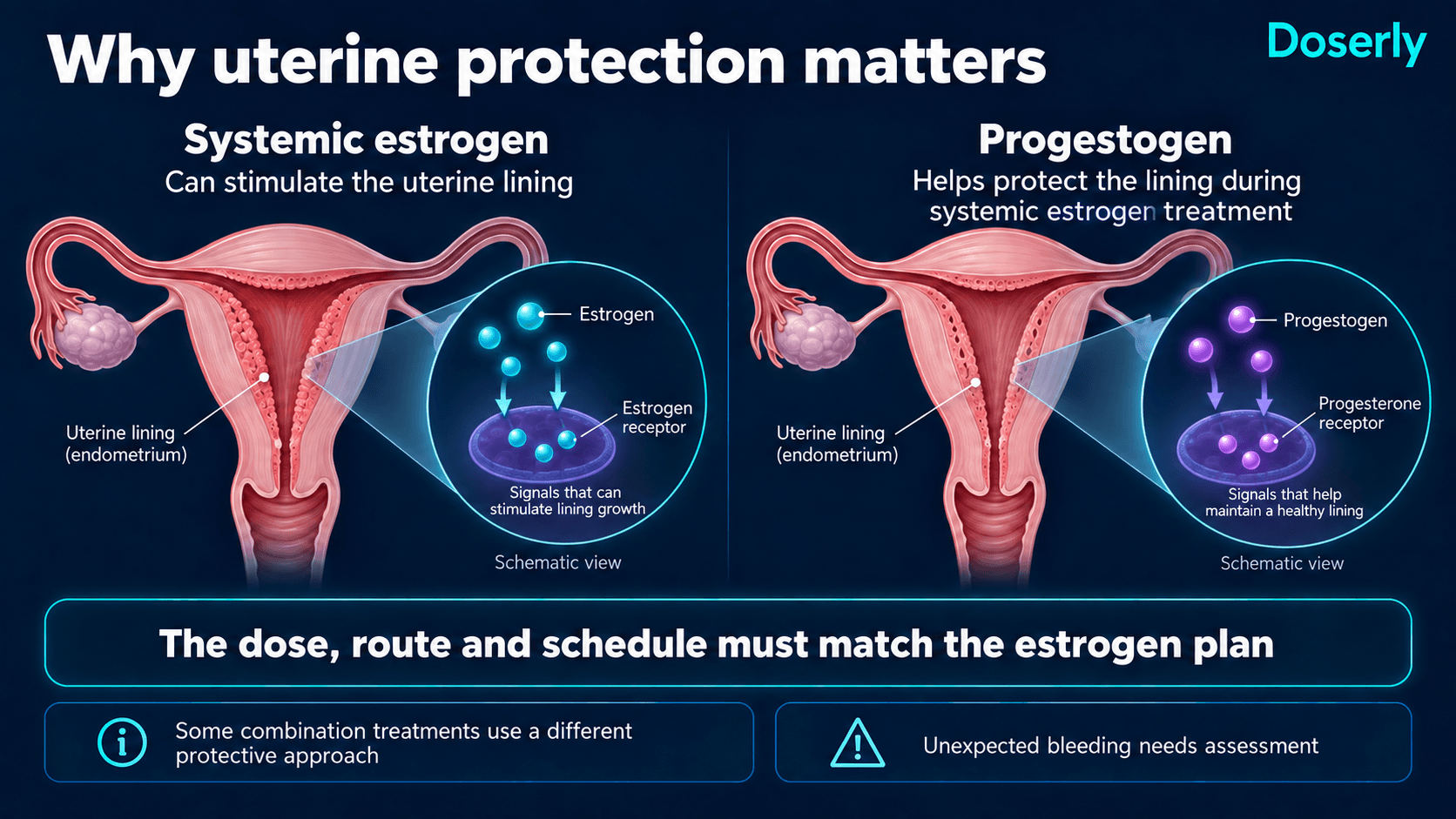
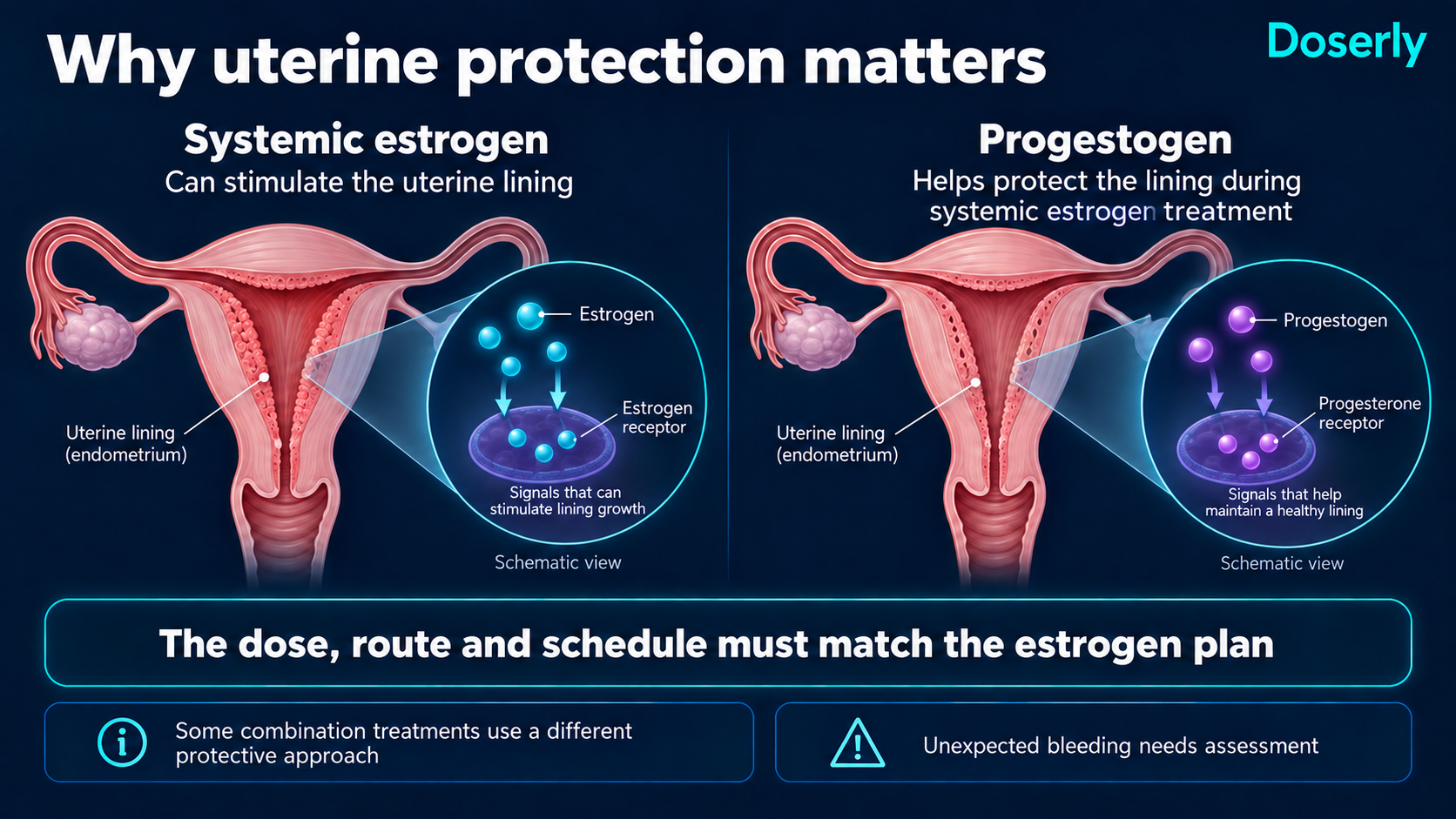
The illustration summarizes endometrial effects, not a dosing schedule or exact receptor structure. Progestogen dose, route and duration must provide protection for the estrogen regimen. Unexpected bleeding requires clinical assessment.
NICE menopause recommendations.
Pharmacokinetics / Hormone Physiology
The Basics
When you take an Activella tablet, both hormones are absorbed through your digestive system, but they behave quite differently once inside your body.
Estradiol is absorbed and then passes through your liver before reaching the rest of your bloodstream. This "first-pass" effect is significant: the liver converts much of the estradiol to estrone (a weaker estrogen), which is why oral estradiol has relatively low bioavailability (about 5%). This liver processing also means oral estradiol stimulates production of certain liver proteins, including clotting factors. This is one reason transdermal estradiol (patches, gels) has a different risk profile for blood clots than oral estradiol.
Norethindrone acetate is a prodrug. Your body quickly converts it to norethindrone, which is the active form. Norethindrone reaches peak blood levels within about 30 to 90 minutes and has a bioavailability of approximately 65%, which is quite good for an oral hormone. Its half-life is 8 to 11 hours, meaning it needs to be taken daily to maintain steady levels.
Both hormones reach steady-state concentrations after about two weeks of daily dosing. This means the full effect of the medication builds over the first two weeks, which is why most clinical trials measure outcomes at four weeks or later.
Taking your tablet at the same time each day matters for maintaining stable hormone levels. Consistency in timing is particularly important for the norethindrone component to maintain effective endometrial suppression and minimize breakthrough bleeding.
The Science
Estradiol Pharmacokinetics:
Parameter
E2 tmax (median)
- Activella 1 mg/0.5 mg (n=24)
- 6.0 h (range 1.0-9.0)
- Activella 0.5 mg/0.1 mg x2 (n=24)
- 6.0 h (range 2.0-9.0)
Parameter
E2 t1/2
- Activella 1 mg/0.5 mg (n=24)
- 10.7 h (44% CV)
- Activella 0.5 mg/0.1 mg x2 (n=24)
- 11.8 h (25% CV)
Oral estradiol undergoes extensive first-pass hepatic metabolism with approximately 5% bioavailability. CYP3A4-mediated conversion produces estrone and estrone sulfate as primary metabolites, resulting in an E2:E1 ratio of approximately 1:4-5 (compared to 1:1 for transdermal delivery) [8]. This first-pass metabolism stimulates increased hepatic synthesis of sex hormone-binding globulin (SHBG), C-reactive protein, clotting factors (factors VII, X, fibrinogen), and angiotensinogen [8][9]. Steady state is achieved within approximately 2 weeks with 33-47% accumulation over baseline [3].
Norethindrone Pharmacokinetics:
Norethindrone acetate is rapidly and completely deacylated to norethindrone. Peak plasma concentration is achieved within 0.5-1.5 hours. Oral bioavailability is approximately 65% [2][8]. Terminal half-life of norethindrone sulfate is 8-11 hours [3][8]. Protein binding is approximately 98%, primarily to SHBG and albumin. Norethindrone is metabolized to 5-alpha-dihydro-norethindrone and tetrahydro-norethindrone, which undergo sulfate or gluconate conjugation and renal excretion [8].
Drug interactions affecting PK: CYP3A4 inducers (rifampin, carbamazepine, phenytoin, St. John's Wort) may decrease estradiol plasma concentrations. CYP3A4 inhibitors (ketoconazole, erythromycin, clarithromycin, grapefruit juice) may increase estradiol concentrations [3].
Knowing the pharmacokinetics is the foundation. Seeing how your own body responds to your specific protocol turns that knowledge into actionable insight. Doserly correlates your dosing schedule with how you feel day to day, helping you and your provider identify whether your current route, timing, and dose are working optimally.
The app's analytics can surface patterns you might not notice on your own, like whether symptoms correlate with the end of a patch cycle or whether splitting an oral dose changes how you feel in the afternoon. Data like this makes dose adjustments more precise and less guesswork.
Research & Clinical Evidence
The Basics
The evidence supporting estradiol/norethindrone acetate for menopause comes from multiple clinical trials spanning more than two decades. The key findings are reassuring for its primary uses: it reliably reduces hot flashes, protects the uterine lining, preserves bone density, and appears to have a more favorable bleeding and lipid profile compared to the most widely studied combination (conjugated estrogens plus medroxyprogesterone acetate).
Clinical trials submitted for FDA approval showed that both Activella strengths significantly reduced the frequency and severity of hot flashes compared to placebo. Improvements were measurable as early as 4 weeks. In one 12-week trial, 85% of women on the standard dose reported adequate relief from moderate to severe hot flashes.
For bone health, the evidence is strong. Multiple studies over 2 years showed lumbar spine bone mineral density increases of approximately 3.8% to 6.9%, which is comparable to, and in some studies superior to, bisphosphonate therapy.
One area that sets Activella apart from the WHI-studied regimen (conjugated estrogens plus medroxyprogesterone) is the bleeding profile. In a head-to-head trial, amenorrhea rates at 6 months were 54.8% with E2/NETA compared to only 17.1% with CEE/MPA. Since breakthrough bleeding is the most common reason women stop HRT, this difference matters practically.
It is important to understand that the large-scale safety data from the Women's Health Initiative (WHI) studied a different hormone combination (conjugated equine estrogens plus medroxyprogesterone acetate in older women, average age 63). Those findings are extrapolated to all combined HRT products by the FDA, but may not perfectly reflect the risk profile of E2/NETA, particularly at lower doses and in younger, recently menopausal women.
The Science
Vasomotor Efficacy:
A 12-week randomized placebo-controlled trial demonstrated that E2/NETA significantly decreased hot flush frequency and severity at weeks 4 and 12. At study conclusion, 85% of women receiving E2 1 mg/NETA 0.5 mg and 71% receiving E2 1 mg/NETA 0.25 mg reported adequate relief of moderate-to-severe vasomotor symptoms [10]. Gambacciani et al. (2003) found significant decreases in hot flush severity, anxiety/fear, depressed mood, and sleep problems compared to placebo in early postmenopausal women [11].
A transdermal E2/NETA study (Adler et al. 2005) reported reduction in mean daily moderate-to-severe hot flashes from 4.1 at week 1 to 0.6 at week 12 (p < 0.0001), with 92.4% patient satisfaction [12].
Bone Mineral Density:
Clinical-study and label data support bone-density preservation with estradiol/norethindrone products, but older Activelle conference abstracts should not be used as the main evidence source. Use the Activella label and peer-reviewed osteoporosis-prevention trials for product-specific counseling [13][14][15][16].
Endometrial Safety:
Kurman et al. (2000) demonstrated NETA doses as low as 0.1 mg effectively opposed estrogen-stimulated hyperplasia: E2 1 mg alone produced 14.6% hyperplasia vs 0.4% with NETA 0.5 mg, 0.4% with NETA 0.25 mg, and 0.8% with NETA 0.1 mg (all p < 0.01) [6]. Wells et al. (2002) followed 398 women on 2 mg E2/1 mg NETA for 5 years with no hyperplasia or malignancy; women with prior complex hyperplasia had normal biopsies at study end [17].
Bleeding Profile (vs CEE/MPA):
Johnson et al. (2002) compared E2/NETA to CEE/MPA in 438 women over 6 months. Amenorrhea was significantly higher with E2/NETA (54.8%) vs CEE/MPA (17.1%). Triglycerides fell 8.5% with E2/NETA vs increased 11.7% with CEE/MPA (p < 0.001) [18].
Cardiovascular:
The PHASE trial (Clark et al. 2002) evaluated transdermal E2/NETA in 255 women with coronary artery disease. HR for primary cardiac endpoint was 1.29 (95% CI 0.84-1.95), showing no cardiovascular benefit for secondary prevention [19]. No E2/NETA-specific primary prevention cardiovascular data exist.
CRP and Inflammation:
Gocer et al. (2021) found that low-dose E2/NETA (1 mg E2/0.5 mg NETA) for 3 months did not significantly alter serum CRP levels (p = 0.708) in 45 postmenopausal women, suggesting a more favorable inflammatory profile at low doses compared to conventional-dose oral estrogen [20].
Clinical context — Bleeding profile comparison.
Benefits & Therapeutic Effects
The Basics
The benefits of estradiol/norethindrone acetate fall into three main categories: symptom relief, bone protection, and practical advantages over some other HRT regimens.
For vasomotor symptoms, this combination reliably reduces both the frequency and intensity of hot flashes and night sweats. Most women notice improvement within 2 to 4 weeks, and clinical trials show significant benefit by week 4. If you are losing sleep to night sweats, this is often the first benefit you will notice.
For bone health, E2/NETA is one of the more effective options available. Clinical trials have shown bone density increases of 3.8% to 6.9% at the lumbar spine over two years, which in some studies exceeded the gains seen with bisphosphonate medications like alendronate. This makes it a particularly valuable option for women who have both menopausal symptoms and osteoporosis risk.
Beyond these primary benefits, E2/NETA has several practical advantages. It has a more favorable bleeding profile than the CEE/MPA combination that was most widely prescribed in the early 2000s: more women achieve amenorrhea, and those who do experience bleeding tend to have lighter episodes. It also has a better triglyceride profile (triglycerides actually decrease, rather than increasing as they do with conjugated estrogens). Studies also suggest it improves quality of life measures across vasomotor, psychosocial, and physical domains.
A single daily tablet can simplify the routine. Tolerability, side effects, cost and personal preferences also influence whether someone continues treatment.
The Science
Vasomotor relief: RCT data demonstrate statistically significant reductions in hot flash frequency and severity at weeks 4 and 12, with 85% of women on standard dose reporting adequate relief [10]. Quality of life improvements documented across vasomotor, psychosocial, and physical symptom domains, with MENQOL total scores decreasing from 67.69 to 38.89 after 3 months of low-dose therapy (p < 0.001) [20].
Bone protection: Activella has product-label evidence for prevention of postmenopausal osteoporosis and peer-reviewed trial support for estradiol/norethindrone effects on bone density. Percent estimates vary by study population and dose, so counsel from the label and the specific trial being discussed [13][14][15][16].
Endometrial protection: Hyperplasia rate <1% across all NETA doses tested (0.1-0.5 mg) [6]. Five-year data showing zero hyperplasia or malignancy in 398 women [17]. Significantly higher rate of atrophic endometrium (73%) compared to CEE/MPA (32%) at 12 months [22].
Favorable bleeding profile: Amenorrhea rate 54.8% vs 17.1% for CEE/MPA at 6 months [18]. Bleeding patterns may affect comfort, but this finding does not establish that one formulation ensures better adherence for everyone.
Lipid effects: Triglycerides decreased 8.5% with E2/NETA vs increased 11.7% with CEE/MPA (p < 0.001) [18]. Favorable total cholesterol and LDL reduction documented across multiple studies.
Cost-effectiveness: Economic analysis found E2/NETA cost-effective at $900/QALY compared to $20,300/QALY for CEE/MPA [24].
Risks, Side Effects & Safety
The Basics
Every medication has risks, and hormone therapy is no exception. Understanding the risks of E2/NETA requires distinguishing between common side effects (usually temporary and manageable), serious risks (rare but important), and risk factors that vary by individual.
Common side effects that many women experience, especially in the first few months, include breast tenderness, headache, nausea, bloating, and breakthrough bleeding or spotting. Most of these improve or resolve as your body adjusts to the hormones. Breast tenderness affects roughly 17-24% of women in clinical trials and typically diminishes within 3 to 6 months.
Serious risks deserve careful attention, though it is important to understand the absolute numbers. The most significant concerns are blood clots, stroke, and breast cancer. These risks are real but relatively small in absolute terms, and they vary significantly depending on your individual profile.
For blood clots, oral estrogen carries a higher risk than transdermal (patches or gels) because it passes through the liver and increases production of clotting factors. The WHI found approximately 18 additional VTE events per 10,000 women per year with oral combined HRT (35 vs 17 per 10,000). Transdermal estrogen does not significantly increase VTE risk.
For breast cancer, the WHI found an additional 8 cases per 10,000 women per year with combined HRT (41 vs 33 per 10,000), with risk increasing after several years of use. The estrogen-alone arm (in women without a uterus) did not show increased breast cancer risk. No long-term breast cancer data exist specifically for E2/NETA; the WHI used CEE/MPA.
For stroke, the WHI found an additional 8 strokes per 10,000 women per year (33 vs 25 per 10,000) with combined therapy. Subgroup analyses suggest this risk may be concentrated in older women and those who started HRT more than 10 years after menopause.
Individual risk factors that increase these risks include: obesity, smoking (dramatically increases clot and cardiovascular risk), personal or family history of blood clots, and older age at initiation. Smoking while taking oral estrogen is particularly concerning and is strongly discouraged.
The Science
Venous Thromboembolism:
The WHI estrogen plus progestin substudy (CEE 0.625 mg/MPA 2.5 mg) reported VTE rates of 35 vs 17 per 10,000 women-years (HR approximately 2.0). DVT: 26 vs 13 per 10,000. PE: 18 vs 8 per 10,000 [3][25]. The PHASE trial reported 2/134 VTE events in the transdermal E2/NETA arm vs 0/121 in placebo [19]. Risk is highest in the first year. Oral estrogen increases hepatic synthesis of clotting factors (VII, X, fibrinogen) via first-pass metabolism; transdermal estrogen avoids this effect [8][9].
Clinical context — VTE risk with oral E2 vs oral CEE.
Stroke:
WHI E+P: 33 vs 25 strokes per 10,000 women-years [3][25]. Subgroup analysis of women 50-59 years showed no increased risk with CE-alone (18 vs 21 per 10,000) [3]. PHASE trial: 5/134 nonfatal strokes in E2/NETA vs 3/121 in placebo (OR 1.50) [19].
Coronary Heart Disease:
WHI E+P: 41 vs 34 CHD events per 10,000 women-years (not statistically significant) [3][25]. Subgroup analysis of women 50-59 within 10 years of menopause suggested possible reduction (8 vs 16 per 10,000) [3]. E2/NETA is not indicated for cardiovascular prevention.
Breast Cancer:
WHI E+P (CEE/MPA): HR 1.24 (95% CI 1.01-1.54), absolute excess of 8 per 10,000 women-years (41 vs 33) [3][25]. Prior HRT users had higher risk (HR 1.86). No prior HRT users: HR 1.09. WHI estrogen-alone: RR 0.80 (decreased risk) [3]. In the 1-year Activella trial (n=1,176), 7 breast cancer cases total; 2 in Activella 1 mg/0.5 mg group (n=295) [3].
Endometrial Cancer:
Unopposed estrogen risk: 2- to 12-fold increase. E2/NETA hyperplasia rate <1%, indicating effective endometrial protection [3][6].
Ovarian Cancer:
WHI E+P: RR 1.58 (95% CI 0.77-3.24), 4 vs 3 per 10,000 women-years (not statistically significant) [3].
Probable Dementia:
WHIMS E+P: RR 2.05 (95% CI 1.21-3.48), 45 vs 22 per 10,000 women-years, in women 65-79 years [3]. Unknown whether this applies to younger postmenopausal women.
Gallbladder Disease:
Estrogen increases the risk of gallbladder disease requiring surgery [3].
Contraindications: Undiagnosed vaginal bleeding, breast cancer or history thereof, estrogen-dependent neoplasia, active or history of DVT/PE, active arterial thromboembolic disease, hepatic impairment, known thrombophilic disorders, hypersensitivity to components [3].
Understanding your personal risk profile isn't a one-time calculation; it evolves as your treatment progresses. Doserly helps you see the bigger picture by analyzing side effect patterns over time, showing whether issues are resolving, persisting, or emerging as your body adjusts to therapy.
The app's analytics can reveal connections between side effects and specific aspects of your protocol, like whether symptoms correlate with a particular point in your patch cycle or a recent dose change. This kind of insight helps you and your provider make informed adjustments based on your actual experience, not just population-level averages.
Dosing & Treatment Protocols
The Basics
Activella is designed for simplicity: one pill, once a day, every day. There are two strengths available, and your healthcare provider will typically start with the lower dose and adjust upward if needed.
The low dose (0.5 mg estradiol / 0.1 mg norethindrone acetate) is appropriate for many women, particularly those early in menopause with moderate symptoms, or those who want the lowest effective dose. It is approved for vasomotor symptom treatment and osteoporosis prevention.
The standard dose (1 mg estradiol / 0.5 mg norethindrone acetate) is used when the low dose provides insufficient symptom relief, or when treatment of vulvovaginal atrophy is a primary goal (only this strength carries the FDA indication for vaginal atrophy). It is also used for vasomotor symptoms and osteoporosis prevention.
The continuous combined regimen means you take the same tablet every day without a break. This is different from sequential regimens where progestogen is added only for part of each month. The continuous approach is designed to achieve amenorrhea (no menstrual bleeding) over time, though some spotting is common in the first 3 to 6 months.
Taking the tablet at the same time each day is important. Inconsistent timing, particularly of the norethindrone component, can lead to breakthrough bleeding. Some women prefer taking it in the morning with breakfast; others take it at bedtime. Neither time is definitively better, but consistency matters more than timing.
If your symptoms are not adequately controlled on either Activella strength, your healthcare provider may consider switching to separate estrogen and progestogen prescriptions, which allows independent dose adjustment of each component.
The Science
Available formulations:
Strength
Low dose
- Estradiol
- 0.5 mg
- NETA
- 0.1 mg
- Indications
- Vasomotor symptoms, osteoporosis prevention
Strength
Standard dose
- Estradiol
- 1 mg
- NETA
- 0.5 mg
- Indications
- Vasomotor symptoms, vulvovaginal atrophy, osteoporosis prevention
Prescribing guidance per FDA label: Use at the lowest effective dose for the shortest duration consistent with treatment goals. Reevaluate periodically to determine whether continued treatment is necessary [3].
Dose-response for endometrial protection: NETA 0.1 mg/day is the minimum dose shown to provide effective endometrial opposition with E2 1 mg/day (hyperplasia 0.8% vs 14.6% with E2 alone) [6]. Higher NETA doses (0.25-0.5 mg) provide slightly more effective opposition (0.4%) [6].
Clinical context — Optimal starting dose.
Regimen type: Continuous combined only. No cyclic or sequential option with this fixed-dose product.
Administration notes: Can be taken with or without food. Grapefruit juice may increase estrogen levels via CYP3A4 inhibition [3]. Consistent daily timing recommended for optimal bleeding control.
Dosing protocols often change over the course of treatment. Starting doses get adjusted, routes get switched, timing gets refined. Doserly maintains a complete history of every protocol change, giving you and your provider a clear picture of what's been tried and how each adjustment affected your symptoms.
The app's adherence analytics show your consistency patterns and can highlight whether missed doses or timing variations correlate with symptom changes. When your provider is considering a dose adjustment, having this data available makes the conversation more productive and the decision more informed.
What to Expect (Timeline)
Days 1-7: Initial adjustment period. You may notice breast tenderness, mild nausea, or bloating as your body responds to the new hormone levels. Some women experience light spotting. Sleep may improve quickly if night sweats were a primary issue.
Weeks 2-4: Vasomotor symptoms typically begin to improve. Hot flash frequency and intensity should start decreasing. The medication reaches steady-state blood levels around week 2. Breast tenderness may persist but often starts settling. Nausea, if present, usually resolves.
Months 1-3: Significant improvement in vasomotor symptoms for most women. Mood stabilization and sleep quality improvements become more consistent. Breakthrough bleeding or spotting is still common and is not a cause for concern in this window. Quality of life scores show statistically significant improvement by 3 months.
Months 3-6: Vasomotor symptoms should be well-controlled. Breakthrough bleeding typically decreases, with more than half of women achieving amenorrhea by 6 months. Vaginal dryness and genitourinary symptoms may begin improving (especially on the 1 mg/0.5 mg dose), though local vaginal estrogen may still be needed for persistent GSM. Bone density stabilization begins.
Ongoing maintenance: Annual review with healthcare provider to assess continued need, monitor side effects, and adjust dose if appropriate. Mammography per age-appropriate guidelines. Endometrial assessment if any abnormal bleeding develops after amenorrhea has been established.
Individual response varies. Some women notice improvement within days; others need 4 to 8 weeks. If symptoms persist after 8 to 12 weeks on the standard dose, discuss alternative formulations or routes with your provider.
Timing Hypothesis & Window of Opportunity
The timing hypothesis proposes that the risks and benefits of HRT depend significantly on when therapy is started relative to menopause onset. Evidence suggests that women who initiate HRT within 10 years of menopause or before age 60 may have a more favorable risk-benefit profile than those who start later.
This hypothesis emerged from reanalysis of the WHI data. The original WHI trial enrolled women with an average age of 63, many of whom were more than 10 years past menopause. When researchers examined younger subgroups (ages 50-59), the cardiovascular risks were substantially attenuated. Women 50-59 in the estrogen-alone arm actually showed a non-significant trend toward reduced coronary events (8 vs 16 per 10,000 women-years) [3].
Supporting evidence comes from the KEEPS trial (Kronos Early Estrogen Prevention Study), which studied low-dose HRT in recently menopausal women (ages 42-58, within 3 years of final menstrual period) and found no increase in carotid atherosclerosis or coronary calcification over 4 years [26]. The ELITE trial (Early vs Late Intervention Trial with Estradiol) demonstrated that oral estradiol slowed carotid intima-media thickness progression when started within 6 years of menopause but not when started 10+ years post-menopause [27].
For E2/NETA specifically, no dedicated timing hypothesis trial exists. The findings from KEEPS and ELITE used different formulations. However, the principle of early initiation for favorable risk-benefit balance is broadly accepted by major menopause societies (NAMS, IMS, Endocrine Society) and applies to all systemic HRT products, including Activella.
The timing hypothesis remains evolving evidence, not settled science. No RCT has been specifically designed and adequately powered to definitively test it. Clinical decisions about timing should be individualized based on symptom severity, risk factors, and time since menopause.
Interactions & Compatibility
Drug-Drug Interactions:
- Thyroid medications (levothyroxine): Estrogen increases thyroid-binding globulin (TBG), which may reduce free thyroid hormone levels. Women on thyroid replacement may need dose adjustment and should have thyroid function monitored after starting E2/NETA [3].
- Lamotrigine: Estrogen can reduce lamotrigine levels significantly, potentially affecting seizure control. Dose adjustment may be needed [28].
- Anticoagulants (warfarin): Estrogen may affect coagulation parameters; INR monitoring recommended [3].
- CYP3A4 inducers (rifampin, carbamazepine, phenytoin, phenobarbital): May decrease estradiol concentrations, potentially reducing efficacy [3].
- CYP3A4 inhibitors (ketoconazole, erythromycin, clarithromycin, ritonavir): May increase estradiol concentrations, potentially increasing side effects [3].
- Fezolinetant (Veozah): Not recommended for concurrent use with estrogen-containing products [28].
- SSRIs/SNRIs: Some SSRIs inhibit CYP enzymes that metabolize estrogen. Generally manageable but worth monitoring. Some SSRIs are used as non-hormonal alternatives for vasomotor symptoms.
- Diabetes medications: Estrogen may affect insulin sensitivity. Blood glucose monitoring may need adjustment.
- Tranexamic acid: Concurrent use not recommended (increased thrombotic risk) [28].
Supplement Interactions:
- St. John's Wort: CYP3A4 inducer that can significantly reduce estradiol levels. Avoid concurrent use [3].
- Calcium and Vitamin D: Complementary to osteoporosis prevention. No negative interaction.
- Black cohosh: May have weak estrogenic effects. Discuss with provider before combining [28].
- Phytoestrogen supplements (soy isoflavones, red clover): Theoretical additive estrogenic effect. Clinical significance uncertain.
Lifestyle Factors:
- Smoking: Dramatically increases VTE and cardiovascular risk with oral estrogen. Strongly discouraged [3].
- Grapefruit juice: Inhibits CYP3A4, may increase estradiol levels. Avoid regular consumption [3].
- Alcohol: Modest interaction with liver metabolism. Moderate consumption is generally acceptable but increases breast cancer risk independently.
Cross-references: Micronized Progesterone | Norethindrone Acetate | Estradiol | Drospirenone
Decision-Making Framework
Choosing whether to start E2/NETA (or any HRT) is a shared decision between you and your healthcare provider. The following framework can help organize the conversation.
Who may be a good candidate:
- Women with a uterus experiencing moderate to severe vasomotor symptoms
- Women within 10 years of menopause or under age 60
- Women who want the convenience of a single daily pill
- Women at risk for osteoporosis who also have menopausal symptoms
- Women who value cost-effectiveness (generics are widely available)
Who may need careful evaluation:
- Women with cardiovascular risk factors (hypertension, diabetes, smoking, obesity)
- Women with personal or family history of blood clots
- Women with personal history of breast cancer (generally contraindicated)
- Women with liver disease
- Women with migraines with aura (transdermal estrogen may be preferred)
- Women with a history of gallbladder disease
Questions to ask your provider:
- "Is the low-dose or standard-dose formulation more appropriate for my symptoms?"
- "Given my risk factors, should I consider transdermal estrogen instead of oral?"
- "How does norethindrone acetate compare to micronized progesterone for my situation?"
- "When should we reassess whether I still need this medication?"
- "What monitoring do I need while on this medication?"
Finding a menopause specialist: If your current provider is unfamiliar with HRT options, the Menopause Society (formerly NAMS) maintains a directory of Certified Menopause Practitioners at menopause.org. The International Society for the Study of Women's Sexual Health (ISSWSH) also maintains a provider directory.
Administration & Practical Guide
Oral tablet administration:
- Take one tablet daily at the same time each day
- Can be taken with or without food
- Swallow whole with water
- If you miss a dose, take it as soon as you remember. If it is almost time for the next dose, skip the missed one. Do not double up.
- Avoid grapefruit and grapefruit juice, which may increase estrogen levels
- Store at room temperature (68-77F / 20-25C) away from moisture, heat, and direct light
Practical tips from clinical guidance:
- Consistency in timing matters more than the specific time of day. Choose a time that fits your routine and stick with it.
- If you experience nausea, try taking the tablet with food or at bedtime.
- Breakthrough bleeding in the first 3-6 months is normal and typically resolves. Notify your provider if bleeding occurs after amenorrhea has been established.
- Do not use if you are pregnant or suspect pregnancy.
- Inform any surgeon or dentist treating you that you are taking this medication. You may need to stop temporarily before surgery requiring prolonged immobilization.
Monitoring & Lab Work
Pre-HRT baseline tests:
- Hormone levels (FSH, estradiol) to confirm menopausal status
- Mammogram (per age-appropriate screening guidelines)
- Lipid panel
- Liver function tests
- Blood pressure
- Thyroid function (TSH), especially if on thyroid replacement
- Bone density (DEXA) if osteoporosis prevention is a treatment goal
- Pelvic exam and cervicovaginal smear
- Endometrial assessment (transvaginal ultrasound) if any baseline irregular bleeding
Initial follow-up (4-12 weeks):
- Symptom assessment: vasomotor symptom frequency and severity
- Side effect evaluation: breast tenderness, nausea, bleeding pattern, mood changes
- Blood pressure check
- Consider thyroid function recheck if on levothyroxine (estrogen increases TBG)
Ongoing monitoring schedule:
- Doctor visits every 3-6 months initially, then annually once stable
- Annual mammography
- Annual clinical breast exam and monthly self-examination
- Lipid panel periodically (especially given oral route effects on triglycerides)
- Liver function tests as clinically indicated
- DEXA scan at baseline and per osteoporosis screening guidelines (typically every 2 years if treating/preventing osteoporosis)
- Endometrial assessment only if abnormal bleeding develops
- Blood pressure monitoring at each visit
Annual review checklist:
- Are menopausal symptoms still present?
- Is the current dose still the lowest effective dose?
- Have any new risk factors developed?
- Mammography results review
- Discussion of continued treatment vs tapering/discontinuation
Complementary Approaches & Lifestyle
Supplements:
- Calcium: 1000-1200 mg daily from diet and supplements for bone health. Complements the osteoporosis prevention benefit of E2/NETA.
- Vitamin D: 800-1000 IU daily minimum. Essential for calcium absorption and bone health.
- Magnesium: May help with sleep quality and muscle relaxation. 200-400 mg daily.
- Omega-3 fatty acids: May support cardiovascular health.
Exercise:
- Weight-bearing exercise: Walking, jogging, dancing, stair climbing for bone health
- Resistance training: Preserves lean muscle mass and supports metabolic health
- Cardiovascular exercise: Supports heart health, which is important given the cardiovascular considerations with HRT
- Balance training: Falls prevention, especially relevant for women taking HRT for osteoporosis
Diet:
- Mediterranean diet pattern: Associated with reduced cardiovascular risk and inflammation
- Calcium-rich foods: Dairy, fortified plant milks, leafy greens, sardines
- Phytoestrogen-rich foods: Soy products, flaxseed (mild estrogenic effect, generally safe to consume alongside HRT)
- Limit alcohol: Independent breast cancer risk factor
Sleep hygiene:
- Cool bedroom temperature (particularly helpful for residual night sweats)
- Consistent sleep schedule
- CBT-I (cognitive behavioral therapy for insomnia) if sleep problems persist despite HRT
Non-hormonal alternatives for persistent symptoms:
- CBT for vasomotor symptoms: Evidence-based approach that reduces hot flash bother
- Pelvic floor therapy: For persistent urinary symptoms or GSM
- Vaginal moisturizers and lubricants: For persistent vaginal dryness
Cross-references: Vitamin D | Calcium | Magnesium | Omega-3
Stopping HRT / Discontinuation
When to consider stopping: There is no mandatory maximum duration for HRT. Current guidelines from the Menopause Society recommend annual reassessment rather than arbitrary time limits. The decision to continue or stop should weigh symptom status, ongoing risk factors, quality of life impact, and individual preference.
Tapering strategies: Two main approaches exist:
- Gradual taper: Reduce from standard dose to low dose (1 mg/0.5 mg to 0.5 mg/0.1 mg) for 3-6 months before discontinuing. Some providers also prescribe every-other-day dosing during the taper.
- Abrupt cessation: Simply stopping the medication. This is safe but may result in more abrupt symptom recurrence.
No strong evidence favors one approach over the other, but many clinicians and patients prefer gradual tapering to minimize symptom rebound.
Symptom recurrence: Approximately 50% of women experience some return of vasomotor symptoms after stopping HRT. Recurrence is more common in women who had severe symptoms before treatment and in those who stop abruptly. Symptoms typically do not worsen beyond pre-treatment levels.
Transition options:
- Low-dose vaginal estrogen: Can be continued for persistent GSM symptoms even after stopping systemic HRT
- Non-hormonal options: Fezolinetant (Veozah), paroxetine low-dose (Brisdelle), gabapentin, or clonidine for persistent hot flashes
- Lifestyle modifications: CBT, exercise, dietary changes
Monitoring during discontinuation: Track symptom recurrence (frequency, severity), monitor bone density if osteoporosis was an indication, reassess cardiovascular risk.
Special Populations & Situations
Premature Ovarian Insufficiency (POI)
Women with POI (ovarian failure before age 40) should receive HRT at least until the typical age of natural menopause (around 51). In this population, E2/NETA is replacement therapy, not supplemental therapy. Higher estrogen doses may be needed. The cardiovascular and bone protection imperative is particularly strong in this group.
Surgical Menopause / Oophorectomy
Women who undergo bilateral oophorectomy experience abrupt hormone loss. E2/NETA can provide the combination therapy needed if the uterus is retained (as in oophorectomy without hysterectomy). Initial doses may need to be higher than for natural menopause. If a hysterectomy was also performed, estrogen-alone therapy is appropriate.
Cardiovascular Disease History
Women with established cardiovascular disease should generally avoid oral HRT for secondary prevention (PHASE trial showed no benefit) [19]. If HRT is needed for quality of life, transdermal estrogen is preferred to avoid first-pass hepatic effects on clotting factors and lipoproteins.
Migraine with Aura
Oral estrogen may not be the preferred route due to fluctuating estrogen levels that can trigger migraines. Transdermal delivery (patches, gels) provides more stable levels. If oral E2/NETA is used, consistent daily timing is essential.
History of VTE
Transdermal estrogen is strongly preferred in women with VTE history, as it avoids the prothrombotic first-pass hepatic effect. Oral E2/NETA is generally not recommended in this population [3].
Type 2 Diabetes
Estrogen may affect insulin sensitivity. Blood glucose should be monitored when starting or changing HRT. The metabolic effects of E2/NETA appear to be neutral to modestly favorable [20].
BRCA Carriers (Without Breast Cancer)
Women with BRCA mutations who undergo risk-reducing salpingo-oophorectomy may use HRT. The evidence suggests that short-term HRT after risk-reducing surgery does not negate the cancer risk reduction benefit. Individual risk assessment is essential.
Regulatory, Insurance & International
United States (FDA):
- Approved 1998 (NDA 020907)
- Boxed warning for cardiovascular disorders, probable dementia, breast cancer, and endometrial cancer
- Generic versions available (Mimvey, Lopreeza, other generics)
- Insurance coverage: Generally covered as a preferred generic. Prior authorization typically not required for generic versions.
- Cost: Generic versions are affordable, often $10-30/month with insurance. GoodRx prices for generics range approximately $15-40 for 28 tablets.
International availability:
- Marketed as Activelle in many international markets
- Available in Europe, Australia, Canada under various regulatory approvals
- International formulations may differ slightly in available strengths
Compounded vs FDA-approved:
- E2/NETA is an FDA-approved, commercially manufactured product. There is no clinical reason to use a compounded version unless a specific allergy to inactive ingredients exists.
- Generic bioequivalence is established per FDA standards.
Frequently Asked Questions
Q: Can I take Activella if I've had a hysterectomy?
A: If you have had a hysterectomy (uterus removed), you do not need the progestogen component. Estrogen-alone therapy is typically prescribed instead. The norethindrone in Activella is specifically included to protect the uterine lining, so it is unnecessary and adds risk without benefit if you no longer have a uterus.
Q: Why are the norethindrone doses inversely related to the estradiol doses?
A: This is a common source of confusion. The low-dose tablet (0.5 mg E2/0.1 mg NETA) has less of both hormones. The standard dose (1 mg E2/0.5 mg NETA) has more of both. The higher NETA dose in the standard formulation provides more robust endometrial opposition for the higher estrogen dose. Both combinations have been shown to adequately protect the endometrium in clinical trials.
Q: How long does it take to work?
A: Most women notice improvement in hot flashes and sleep within 2-4 weeks. Full therapeutic effect typically develops over 2-3 months. Bone density benefits require at least 6-12 months of consistent use.
Q: Is spotting or bleeding normal when starting?
A: Yes, breakthrough bleeding and spotting are common in the first 3-6 months of continuous combined therapy. This typically resolves as the endometrium becomes atrophic. Taking the tablet at a consistent time each day helps minimize breakthrough bleeding. If bleeding occurs after you have been amenorrheic, or if bleeding is heavy, contact your healthcare provider.
Q: Can I switch between the two strengths?
A: Yes, with your healthcare provider's guidance. Switching from the standard to the low dose (or vice versa) is straightforward since both are continuous combined regimens.
Q: Is Activella the same as a birth control pill?
A: No. While both contain estrogen and a progestin, the formulations are different. Activella contains 17-beta estradiol (a natural estrogen) at doses designed for menopausal symptom relief. Oral contraceptives typically use ethinyl estradiol (a synthetic estrogen) at different doses. Activella is not approved for and should not be used as contraception.
Q: Should I take it in the morning or at night?
A: Either is acceptable. The most important factor is consistency. Some women prefer bedtime to minimize awareness of any initial nausea. Others prefer morning with breakfast. Choose whichever time allows the most consistent daily routine.
Q: How does norethindrone compare to micronized progesterone?
A: Both provide effective endometrial protection. Norethindrone is a synthetic progestin with partial androgenic activity. Micronized progesterone is bioidentical and produces sedating neurosteroid metabolites (which can help with sleep). Some women tolerate one better than the other. The E3N French cohort study suggested a more favorable breast cancer profile with micronized progesterone compared to synthetic progestins, though this finding has not been confirmed in a randomized trial.
Q: Can I drink alcohol while taking Activella?
A: Moderate alcohol consumption is not specifically contraindicated. However, alcohol is an independent risk factor for breast cancer, so moderation is advisable. Alcohol also has modest effects on liver metabolism of hormones.
Q: Will Activella cause weight gain?
A: Clinical trials do not show significant weight gain attributable to E2/NETA. Some women experience fluid retention and bloating, particularly early in treatment, which may be perceived as weight gain. Menopause itself is associated with changes in body fat distribution regardless of HRT use.
Myth vs. Fact
Myth: "HRT causes cancer."
Fact: This is an oversimplification. The WHI found a modest increase in breast cancer risk with combined HRT (an additional 8 cases per 10,000 women per year, using CEE/MPA), but the estrogen-alone arm actually showed a non-significant decrease in breast cancer. Risk depends on HRT type, route, and duration. E2/NETA-specific long-term cancer data are limited. Endometrial cancer risk is effectively mitigated by the norethindrone component in Activella (hyperplasia rate <1%) [3][6].
Myth: "Bioidentical hormones are always safer than synthetic."
Fact: Activella contains bioidentical 17-beta estradiol paired with a synthetic progestin (norethindrone acetate). No large randomized trial has directly compared the safety of bioidentical versus synthetic progestogens as part of combined HRT. The E3N cohort study suggested a more favorable breast cancer profile with micronized progesterone compared to synthetic progestins, but this was observational data. Regulatory-approved products (including Activella) undergo rigorous quality control and standardized testing that compounded preparations do not [3].
Myth: "You should only take HRT for 5 years maximum."
Fact: The 5-year rule is outdated. Current Menopause Society guidelines recommend annual individualized reassessment rather than arbitrary duration limits. Some women benefit from extended use, particularly those with persistent symptoms or osteoporosis risk. The decision to continue should balance ongoing benefits against evolving risk [29].
Myth: "Natural remedies are just as effective as HRT for menopause."
Fact: No natural remedy has demonstrated efficacy comparable to estrogen for moderate to severe vasomotor symptoms. Black cohosh, soy isoflavones, and other supplements show modest effects in some studies but consistently fall short of HRT in head-to-head comparisons. They may be appropriate for women with mild symptoms or those who cannot use HRT.
Myth: "All combination HRT pills are the same."
Fact: Different combination products use different estrogen types (estradiol vs conjugated equine estrogens vs ethinyl estradiol), different progestogens (norethindrone vs MPA vs drospirenone vs micronized progesterone), and different dosing regimens. These differences affect bleeding profiles, side effect profiles, lipid effects, and potentially long-term risk. E2/NETA (Activella) has demonstrated a more favorable bleeding and triglyceride profile compared to CEE/MPA (Prempro) [18].
Myth: "HRT causes weight gain."
Fact: Clinical evidence does not support HRT as a cause of significant weight gain. Menopause itself is associated with changes in body composition (increased visceral fat, decreased lean mass) regardless of HRT use. Some HRT products may cause fluid retention initially, which can be mistaken for weight gain. Studies of E2/NETA show stable or slightly decreased body weight [18].
Myth: "Oral HRT is dangerous because of blood clots."
Fact: Oral estrogen does carry a higher VTE risk than transdermal estrogen due to first-pass hepatic metabolism. The absolute risk with oral combined HRT was an additional 18 VTE events per 10,000 women per year in the WHI (using CEE/MPA). For comparison, pregnancy carries a VTE risk of 5-20 per 10,000 women per year, and oral contraceptives carry a risk of 3-9 per 10,000 per year. The risk is highest in the first year and in women with additional risk factors (obesity, smoking, thrombophilia). For women without additional VTE risk factors, oral E2/NETA at low doses remains a reasonable option [3][25].
Myth: "Once you stop HRT, symptoms always come back worse."
Fact: Approximately 50% of women experience some symptom recurrence after stopping HRT, but symptoms typically return at their pre-treatment severity, not worse. Gradual tapering may help reduce the intensity of symptom recurrence.
Sources & References
Clinical Guidelines
[1] “The 2022 Hormone Therapy Position Statement of The North American Menopause Society” Advisory Panel. The 2022 hormone therapy position statement of The North American Menopause Society. Menopause. 2022;29(7):767-794. PubMed: 35797481. DOI: 10.1097/GME.0000000000002028.
[2] Casey CL, Murray CA. HT update: spotlight on estradiol/norethindrone acetate combination therapy. Clin Interv Aging. 2008;3(1):9-16. PubMed: 18488874. DOI: 10.2147/cia.s1663.
Prescribing Information
[3] ACTIVELLA (estradiol/norethindrone acetate) prescribing information. DailyMed. Revised November 2023. NDA 020907. https://dailymed.nlm.nih.gov/dailymed/drugInfo.cfm?setid=d4b0c1dd-aae9-4ca2-958c-71dbe5d0fab0
Clinical Trials and Studies
[4] Freedman RR. Menopausal hot flashes: mechanisms, endocrinology, treatment. J Steroid Biochem Mol Biol. 2014;142:115-20. PubMed: 24012626. DOI: 10.1016/j.jsbmb.2013.08.010.
[5] Riggs BL, Khosla S, Melton LJ 3rd. Sex steroids and the construction and conservation of the adult skeleton. Endocr Rev. 2002;23(3):279-302. PubMed: 12050121. DOI: 10.1210/edrv.23.3.0465.
[6] Kurman RJ, Félix JC, Archer DF, et al. Norethindrone acetate and estradiol-induced endometrial hyperplasia. Obstet Gynecol. 2000;96(3):373-9. PubMed: 10960628. DOI: 10.1016/s0029-7844(00)00944-3.
[7] Sitruk-Ware R. New progestagens for contraceptive use. Hum Reprod Update. 2006;12(2):169-78. PubMed: 16291771. DOI: 10.1093/humupd/dmi046.
[8] Kuhl H. Pharmacology of estrogens and progestogens: influence of different routes of administration. Climacteric. 2005;8 Suppl 1:3-63. PubMed: 16112947. DOI: 10.1080/13697130500148875.
[9] Canonico M, Oger E, Plu-Bureau G, et al. Hormone therapy and venous thromboembolism among postmenopausal women: impact of the route of estrogen administration and progestogens: the ESTHER study. Circulation. 2007;115(7):840-5. PubMed: 17309934. DOI: 10.1161/CIRCULATIONAHA.106.642280.
[10] Baerug U, Winge T, Nordland G, et al. Do combinations of 1 mg estradiol and low doses of NETA effectively control menopausal symptoms?. Climacteric. 1998;1(3):219-28. PubMed: 11907946. DOI: 10.3109/13697139809085544.
[11] Gambacciani M, Ciaponi M, Cappagli B, et al. Effects of low-dose, continuous combined estradiol and noretisterone acetate on menopausal quality of life in early postmenopausal women. Maturitas. 2003;44(2):157-63. PubMed: 12590012. DOI: 10.1016/s0378-5122(02)00327-4.
[12] Adler G, Young D, Galant R, et al. A multicenter, open-label study to evaluate satisfaction and menopausal quality of life in women using transdermal estradiol/norethindrone acetate therapy for the management of menopausal signs and symptoms. Gynecol Obstet Invest. 2005;59(4):212-9. PubMed: 15753617. DOI: 10.1159/000084346.
[13] ACTIVELLA (estradiol/norethindrone acetate) prescribing information, clinical studies/bone mineral density information. DailyMed. Revised November 2023. https://dailymed.nlm.nih.gov/dailymed/drugInfo.cfm?setid=d4b0c1dd-aae9-4ca2-958c-71dbe5d0fab0
[14] Roux C, Pelissier C, Fechtenbaum J, et al. Randomized, double-masked, 2-year comparison of tibolone with 17beta-estradiol and norethindrone acetate in preventing postmenopausal bone loss. Osteoporos Int. 2002;13(3):241-8. PubMed: 11991445. DOI: 10.1007/s001980200021.
[15] Arabi A, Garnero P, Porcher R, et al. Changes in body composition during post-menopausal hormone therapy: a 2 year prospective study. Hum Reprod. 2003;18(8):1747-52. PubMed: 12871894. DOI: 10.1093/humrep/deg331.
[16] Ravn P, Bidstrup M, Wasnich RD, et al. Alendronate and estrogen-progestin in the long-term prevention of bone loss: four-year results from the early postmenopausal intervention cohort study. A randomized, controlled trial. Ann Intern Med. 1999;131(12):935-42. PubMed: 10610644. DOI: 10.7326/0003-4819-131-12-199912210-00005.
[17] Wells M, Sturdee DW, Barlow DH, et al. Effect on endometrium of long term treatment with continuous combined oestrogen-progestogen replacement therapy: follow up study. BMJ. 2002;325(7358):239. PubMed: 12153918. DOI: 10.1136/bmj.325.7358.239.
[18] Johnson JV, Davidson M, Archer D, et al. Postmenopausal uterine bleeding profiles with two forms of continuous combined hormone replacement therapy. Menopause. 2002;9(1):16-22. PubMed: 11791082. DOI: 10.1097/00042192-200201000-00004.
[19] Clarke SC, Kelleher J, Lloyd-Jones H, et al. A study of hormone replacement therapy in postmenopausal women with ischaemic heart disease: the Papworth HRT atherosclerosis study. BJOG. 2002;109(9):1056-62. PubMed: 12269682. DOI: 10.1111/j.1471-0528.2002.01544.x.
[20] Gocer S, Guven S, Sal H, et al. The effect of low-dose combined hormone therapy (oestradiol and norethindrone acetate) on serum C-reactive protein levels and life quality in natural menopause women. Prz Menopauzalny. 2021;20(4):177-183. PubMed: 35069069. DOI: 10.5114/pm.2021.110935.
[21] Christiansen C, Riis BJ. 17 Beta-estradiol and continuous norethisterone: a unique treatment for established osteoporosis in elderly women. J Clin Endocrinol Metab. 1990;71(4):836-41. PubMed: 2205624. DOI: 10.1210/jcem-71-4-836.
[22] Portman DJ, Symons JP, Wilborn W, et al. A randomized, double-blind, placebo-controlled, multicenter study that assessed the endometrial effects of norethindrone acetate plus ethinyl estradiol versus ethinyl estradiol alone. Am J Obstet Gynecol. 2003;188(2):334-42. PubMed: 12592236. DOI: 10.1067/mob.2003.91.
[24] Coyle D, Cranney A, Tugwell P. Economic evaluation of norethisterone acetate/ethinylestradiol (FemHRT) for women with menopausal symptoms. Pharmacoeconomics. 2003;21(9):661-9. PubMed: 12807367. DOI: 10.2165/00019053-200321090-00004.
[25] Rossouw JE, Anderson GL, Prentice RL, et al. Risks and benefits of estrogen plus progestin in healthy postmenopausal women: principal results From the Women's Health Initiative randomized controlled trial. JAMA. 2002;288(3):321-33. PubMed: 12117397. DOI: 10.1001/jama.288.3.321.
[26] Harman SM, Black DM, Naftolin F, et al. Arterial imaging outcomes and cardiovascular risk factors in recently menopausal women: a randomized trial. Ann Intern Med. 2014;161(4):249-60. PubMed: 25069991. DOI: 10.7326/M14-0353.
[27] Hodis HN, Mack WJ, Henderson VW, et al. Vascular Effects of Early versus Late Postmenopausal Treatment with Estradiol. N Engl J Med. 2016;374(13):1221-31. PubMed: 27028912. DOI: 10.1056/NEJMoa1505241.
[28] ACTIVELLA (estradiol/norethindrone acetate) prescribing information. DailyMed. Revised November 2023. See contraindications, warnings, precautions, and drug interactions. https://dailymed.nlm.nih.gov/dailymed/drugInfo.cfm?setid=d4b0c1dd-aae9-4ca2-958c-71dbe5d0fab0
[29] “The 2022 Hormone Therapy Position Statement of The North American Menopause Society” Advisory Panel. The 2022 hormone therapy position statement of The North American Menopause Society. Menopause. 2022;29(7):767-794. PubMed: 35797481. DOI: 10.1097/GME.0000000000002028.
Additional Regulatory and Guideline Sources
[30] DailyMed: ACTIVELLA prescribing information. https://dailymed.nlm.nih.gov/dailymed/search.cfm?query=ACTIVELLA. Accessed September 13, 2026.
[31] FDA menopausal hormone therapy drug-class information. https://www.fda.gov/drugs/information-drug-class/information-menopausal-hormone-therapy. Accessed September 13, 2026.
[32] “The 2022 Hormone Therapy Position Statement of The North American Menopause Society” Advisory Panel. The 2022 hormone therapy position statement of The North American Menopause Society. Menopause. 2022;29(7):767-794. PubMed: 35797481. DOI: 10.1097/GME.0000000000002028.
Related Guides & Cross-Links
Same Category (Combination Products)
- Estradiol + Drospirenone (Angeliq)
- Estradiol + Progesterone (Bijuva)
- Conjugated Estrogens + MPA (Prempro)
- Ethinyl Estradiol + Norethindrone (FemHrt)
- Conjugated Estrogens + Bazedoxifene (Duavee)
Component Medications
Related Treatment Options
- Micronized Progesterone (Prometrium) — Bioidentical progestogen alternative
- Drospirenone — Alternative progestogen with antimineralocorticoid activity
- Transdermal HRT — Alternative delivery route with lower VTE risk
- Fezolinetant (Veozah) — Non-hormonal alternative for vasomotor symptoms