
Duavee: Uses, Dosing, Side Effects and Uterine Protection
On this page
Quick Reference Card
Attribute
Brand Name(s)
- Value
- Duavee (US); Duavive (EU, UK, Canada)
Attribute
Generic Name
- Value
- Conjugated estrogens / bazedoxifene acetate
Attribute
Drug Class / Type
- Value
- Tissue-Selective Estrogen Complex (TSEC): conjugated estrogens + estrogen agonist/antagonist (SERM)
Attribute
FDA-Approved Indications
- Value
- (1) Treatment of moderate-to-severe vasomotor symptoms associated with menopause; (2) Prevention of postmenopausal osteoporosis. Both indications in women with an intact uterus only.
Attribute
Fixed Dose
- Value
- Conjugated estrogens 0.45 mg + bazedoxifene 20 mg per tablet
Attribute
Route of Administration
- Value
- Oral (tablet, swallowed whole)
Attribute
Dosing Schedule
- Value
- One tablet daily, continuous (with or without food)
Attribute
Key Monitoring Requirements
- Value
- Blood pressure; mammography per national guidelines; endometrial evaluation if abnormal bleeding; thyroid function if on thyroid replacement; lipid panel; liver function as clinically indicated
Attribute
Key Distinguishing Feature
- Value
- First and only TSEC: eliminates the need for a separate progestogen by using bazedoxifene (a SERM) for endometrial protection
Overview / What Is Conjugated Estrogens + Bazedoxifene (Duavee)?
The Basics
Duavee is a prescription medication that takes a different approach to menopausal hormone therapy. Rather than pairing estrogen with a progestogen (which is the standard practice for women who still have a uterus), Duavee pairs conjugated estrogens with a selective estrogen receptor modulator called bazedoxifene. This combination is known as a tissue-selective estrogen complex, or TSEC.
The idea behind a TSEC is appealing in its simplicity. Estrogen relieves menopausal symptoms and protects bone, but in women with a uterus, it can cause the uterine lining to grow too thick, raising the risk of endometrial hyperplasia and potentially cancer. Traditionally, a progestogen is added to counteract this. Bazedoxifene accomplishes the same endometrial protection through a different mechanism: it blocks estrogen's effects specifically in the uterus while allowing estrogen to do its beneficial work elsewhere in the body.
For women who struggle with progestogen side effects (mood changes, bloating, breast tenderness, sleep disruption, or breakthrough bleeding), Duavee offers a meaningful alternative. It is FDA-approved for two purposes: treating moderate-to-severe hot flashes and preventing postmenopausal osteoporosis, both in women with an intact uterus. It was approved in the United States in 2013 and is available in Europe, the UK, and Canada under the name Duavive.
As of September 13, 2026, Duavee remains a tissue-selective estrogen complex made from conjugated estrogens plus bazedoxifene, not estrogen plus a progestin; its current product label controls contraindications while FDA menopausal hormone warning language continues to update across products. [16][17]
The Science
Conjugated estrogens/bazedoxifene (CE 0.45 mg/BZA 20 mg) was the first TSEC to receive regulatory approval, granted by the FDA on October 3, 2013, under NDA 022247 [1]. The product was developed by Wyeth Pharmaceuticals (now a subsidiary of Pfizer) and represents a novel therapeutic approach in menopausal hormone therapy.
The TSEC concept emerged from decades of selective estrogen receptor modulator (SERM) research. SERMs exhibit tissue-specific agonist/antagonist activity at estrogen receptors (ER), and bazedoxifene was specifically selected for its superior endometrial antagonist properties compared to other SERMs including raloxifene and lasofoxifene [2]. When paired with conjugated estrogens, bazedoxifene provides endometrial protection without the systemic progestogenic effects associated with traditional combination HRT regimens.
The clinical development program comprised five Phase 3 clinical trials (the SMART program: Selective estrogens, Menopause, And Response to Therapy), enrolling more than 7,500 postmenopausal women and generating extensive safety and efficacy data over treatment periods of 12 weeks to 24 months [3][4]. CE 0.45 mg/BZA 20 mg was identified as the optimal dose combination, with 20 mg being the minimum effective dose of bazedoxifene for adequate endometrial protection [5].
Medical / Chemical Identity
Generic Name: Conjugated estrogens / bazedoxifene acetate
Brand Names by Country/Region:
Country/Region
United States
- Brand Name
- Duavee
- Manufacturer
- Wyeth/Pfizer
Country/Region
European Union
- Brand Name
- Duavive
- Manufacturer
- Pfizer
Country/Region
United Kingdom
- Brand Name
- Duavive
- Manufacturer
- Pfizer
Country/Region
Canada
- Brand Name
- Duavive
- Manufacturer
- Pfizer
Components:
Conjugated Estrogens (CE):
- Source: Purified from pregnant mares' urine
- Composition: Mixture of sodium estrone sulfate, sodium equilin sulfate, and concomitant components (17-alpha-dihydroequilin, 17-alpha-estradiol, 17-beta-dihydroequilin)
- Dose in DUAVEE: 0.45 mg
Bazedoxifene Acetate (BZA):
- Chemical Class: Third-generation selective estrogen receptor modulator (SERM)
- Chemical Name: 1H-Indol-5-ol, 1-[[4-[2-(hexahydro-1H-azepin-1-yl)ethoxy]phenyl]methyl]-2-(4-hydroxyphenyl)-3-methyl-, monoacetate
- Empirical Formula: C30H34N2O3 (free base); salt form C30H34N2O3 * C2H4O2
- Molecular Weight: 530.65 (acetate salt)
- CAS Number: 198481-33-3 (bazedoxifene free base)
- Physical Description: White to tan powder; pH-dependent aqueous solubility (higher at lower pH)
- Dose in DUAVEE: 20 mg (equivalent to 22.6 mg bazedoxifene acetate)
- Not approved as a standalone product in the United States
NDA Number: 022247
FDA Approval Date: October 3, 2013
Original Manufacturer: Wyeth Pharmaceuticals Inc. (now Pfizer)
NDC Code: 0008-1123-12
Tablet Description: Oval, biconvex, pink tablet branded with "0.45/20" in black ink on one side
Storage: Must be used within 60 days of opening the foil pouch
Mechanism of Action
The Basics
Duavee works through a clever division of labor between its two components. The conjugated estrogens provide the menopausal symptom relief and bone protection your body needs. Bazedoxifene, meanwhile, acts as a selective gatekeeper, blocking estrogen's effects specifically in the uterus and breast tissue while allowing its beneficial actions in other areas like bone, brain, and the thermoregulatory system.
Think of it like a filter for estrogen's effects. In bone tissue, bazedoxifene actually cooperates with estrogen, both acting as agonists (helpers) to maintain bone density. In the uterine lining, bazedoxifene acts as an antagonist (blocker), preventing estrogen from stimulating endometrial growth. In breast tissue, preclinical evidence suggests bazedoxifene opposes estrogen-driven cell proliferation as well. This tissue-by-tissue selectivity is why the combination is called a tissue-selective estrogen complex [2][3].
This means Duavee accomplishes what traditional HRT does (estrogen plus endometrial protection), but through a fundamentally different mechanism. Instead of a progestogen counteracting estrogen everywhere in the body, bazedoxifene selectively modulates estrogen's effects only where needed, leaving the beneficial estrogenic actions intact in tissues like bone and the vasomotor system.
The Science
The TSEC mechanism relies on the differential activity of conjugated estrogens and bazedoxifene at estrogen receptors alpha (ER-alpha) and beta (ER-beta), which are expressed in varying proportions across tissues [1][2].
Conjugated Estrogens: CE consists of multiple estrogen components. The B-ring-saturated molecules (classical estrogens) act predominantly on ER-alpha, while B-ring-unsaturated molecules (delta-7, delta-6,8, and delta-8 estrogens) act mainly on ER-beta, producing an intrinsically balanced receptor modulation. All CE components possess antioxidant properties [3].
Bazedoxifene: BZA is a third-generation SERM that binds to both ER-alpha and ER-beta with mixed agonist/antagonist activity that is tissue-dependent [2]:
- Endometrium: BZA functions as an antagonist and facilitates degradation of ER-alpha, producing profound endometrial suppression. It induces stromal decidualization and glandular atrophy while downregulating estrogen receptor expression. Among SERMs tested, BZA demonstrates the strongest endometrial antagonism (BZA > raloxifene > lasofoxifene > tamoxifen) [6].
- Breast: BZA demonstrates inverse agonist activity and blocks CE-induced proliferation in MCF-7 breast cancer cells. In ovariectomized cynomolgus macaques, BZA/CE significantly reduced mammary epithelial density and ductal proliferation compared to CE alone [7].
- Bone: BZA acts as an agonist, preserving bone mass in animal models at doses substantially lower than those required for raloxifene [8].
- Thermoregulatory center: BZA does not antagonize CE's beneficial effect on the hypothalamic thermoneutral zone, allowing hot flash relief [3].
The key distinction from traditional combination HRT is that bazedoxifene achieves endometrial protection through selective estrogen receptor modulation rather than through progestogenic receptor-mediated pathways. This avoids the systemic progestogenic effects (progesterone receptor activation, neurosteroid production via 5-alpha reductase, mineralocorticoid receptor effects) associated with oral progestogens [3][4].
Visual guide
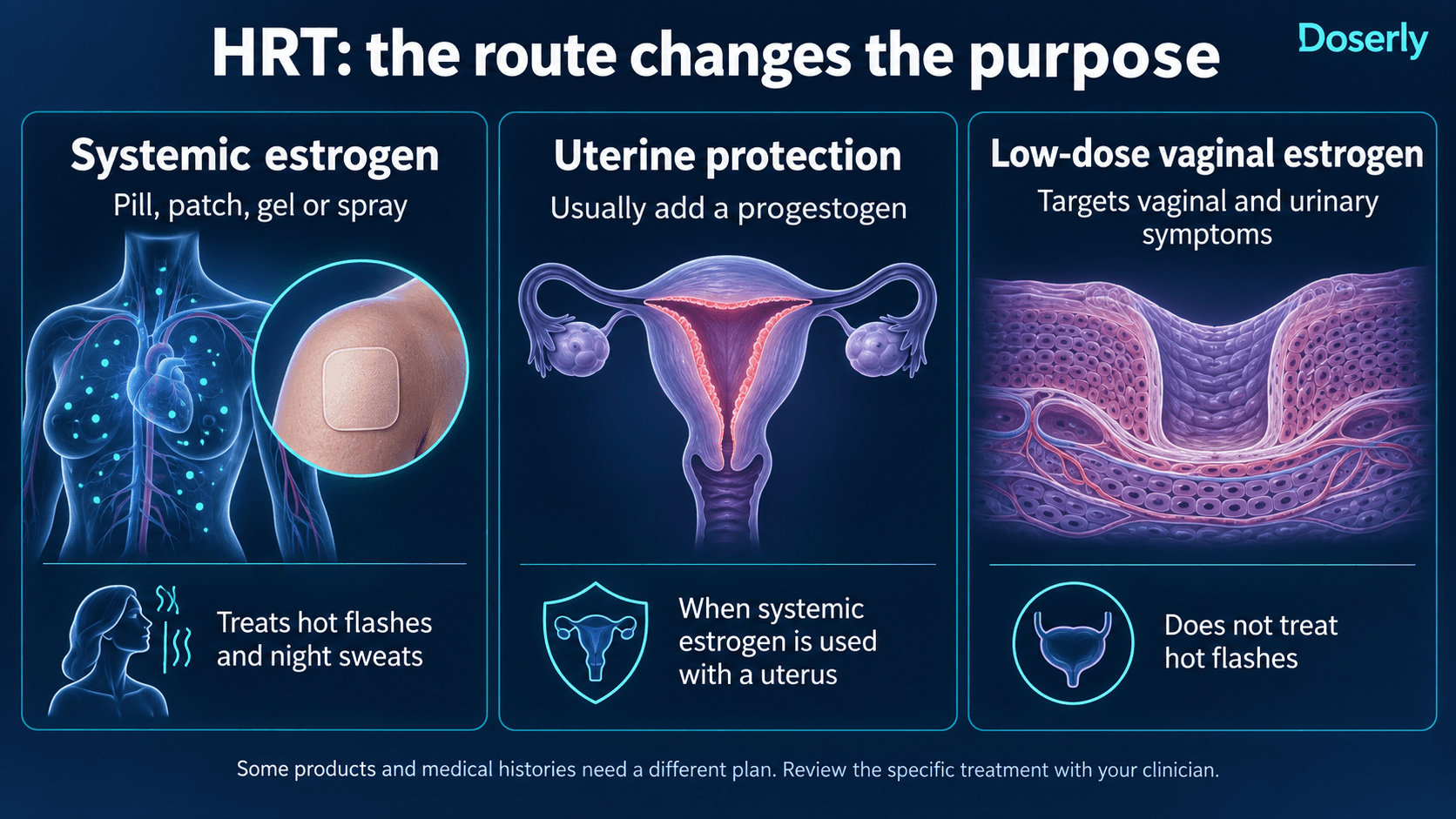
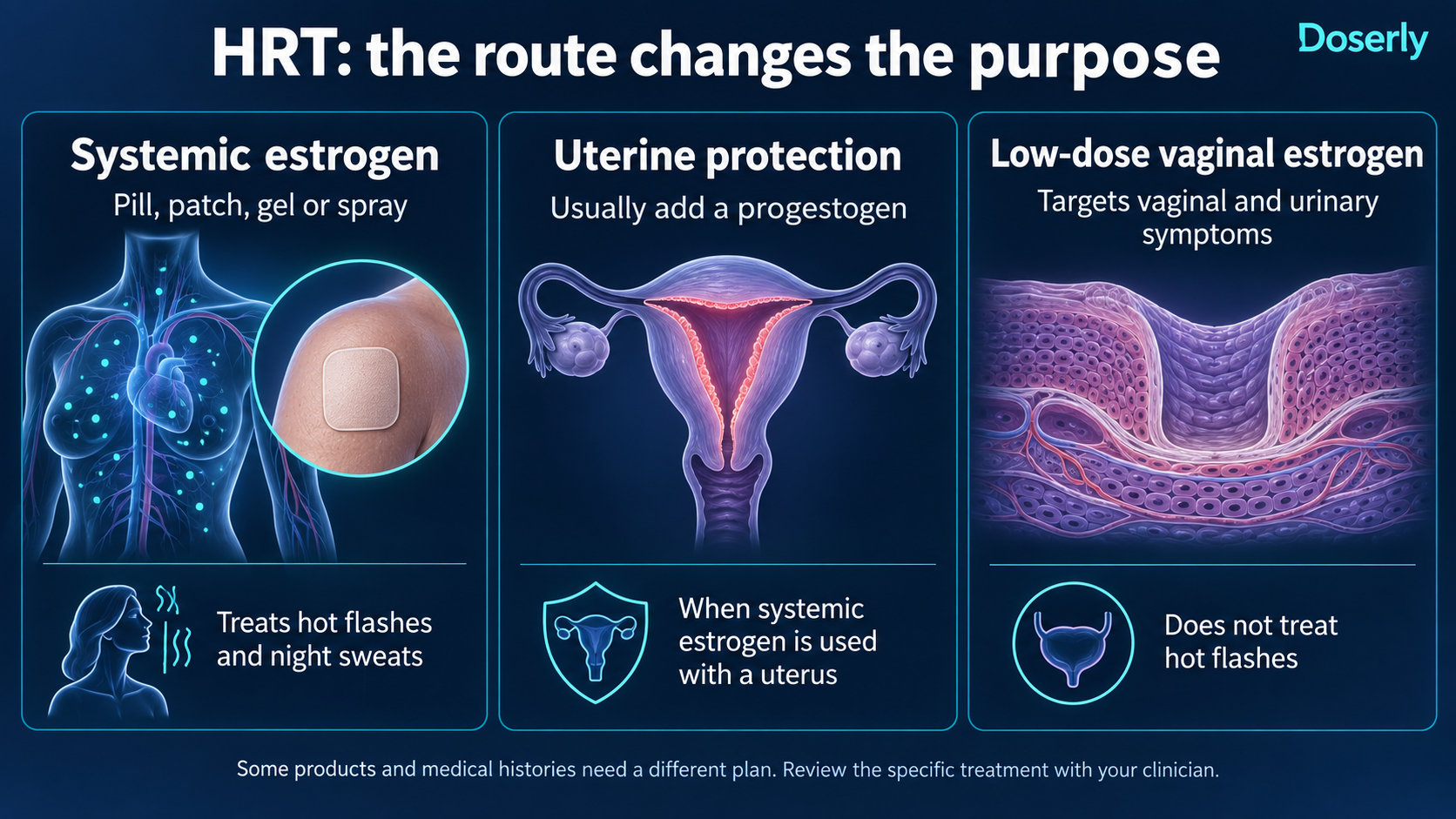
Systemic and low-dose local treatments serve different purposes. Systemic estrogen usually needs endometrial protection when a uterus is present; conjugated estrogens with bazedoxifene and tibolone are distinct approaches described in their guides. Patch placement must follow the specific product label.
NICE menopause recommendations.
Pharmacokinetics / Hormone Physiology
The Basics
Duavee is an oral medication taken once daily. When you swallow the tablet, both components are absorbed through the digestive system and processed by the liver before circulating throughout the body. This liver processing (called first-pass metabolism) is relevant because it means Duavee has similar metabolic characteristics to other oral estrogen products, including effects on liver-produced proteins like clotting factors and thyroid-binding globulin.
Bazedoxifene has notably low oral bioavailability (about 6%), meaning only a small fraction of the swallowed dose reaches systemic circulation. However, this is sufficient for its endometrial protective effect because the dose was specifically calibrated during clinical development. It reaches peak blood levels about 2 hours after taking the tablet and has a long half-life of approximately 30 hours, which supports once-daily dosing [1].
Bazedoxifene is primarily eliminated through the stool (about 85%), not the kidneys. This makes it unsuitable for people with liver disease (where metabolism is impaired, leading to a 4.3-fold increase in drug exposure) but means kidney function is less of a concern for bazedoxifene specifically. However, since Duavee has not been studied in renal impairment, it is not recommended for this population either.
One practical note: the tablet is sensitive to moisture and must be used within 60 days of opening the foil pouch.
The Science
Conjugated Estrogens Pharmacokinetics:
- Absorption: Well absorbed from the GI tract; oral bioavailability subject to extensive first-pass hepatic metabolism
- Distribution: Widely distributed; circulate primarily bound to sex hormone-binding globulin (SHBG) and albumin
- Metabolism: Hepatic, primarily via CYP3A4; estrone is the primary metabolite. Estrone and estrone sulfate undergo enterohepatic recirculation
- Elimination: Primarily renal
Bazedoxifene Pharmacokinetics [1]:
Parameter
Tmax
- Value
- ~2 hours
Parameter
Absolute bioavailability
- Value
- ~6%
Parameter
Volume of distribution
- Value
- ~14.7 L/kg
Parameter
Protein binding
- Value
- 98-99% (albumin, alpha-1 acid glycoprotein)
Parameter
Primary metabolism
- Value
- Glucuronidation by UGT enzymes (GI tract and liver)
Parameter
Major metabolite
- Value
- Bazedoxifene-5-glucuronide (~5x parent plasma concentration)
Parameter
CYP involvement
- Value
- Minimal (CYP-mediated oxidation is very minor pathway)
Parameter
Elimination half-life
- Value
- ~30 hours
Parameter
Excretion
- Value
- Fecal 85%; renal 1%
Special Populations:
- Hepatic impairment: Bazedoxifene AUC increased 4.3-fold (contraindicated) [1]
- Renal impairment: Not studied (not recommended)
- Obesity: Modest exposure differences in obese subjects (estrone 2%, equilin 32%, bazedoxifene 13% difference) [1]
Drug-Drug Interactions (PK-based):
- CYP3A4 inducers (rifampin, phenobarbital, carbamazepine, phenytoin, St. John's Wort) may reduce CE plasma concentrations
- CYP3A4 inhibitors (ketoconazole, itraconazole, erythromycin, ritonavir, grapefruit juice) may increase CE concentrations
- UGT inducers may reduce bazedoxifene exposure; greater reduction in BZA relative to CE may alter the safety profile by reducing endometrial protection
- Atorvastatin AUC increased approximately 10% with coadministration [1]
Understanding how your body absorbs and metabolizes hormones is one thing. Tracking your actual protocol — doses, timing, and route — gives you the data to have more productive conversations with your prescriber. Doserly lets you log every dose with route-specific detail, building a clear record of your hormone protocol over time.
Whether you're on patches, gels, oral tablets, or a combination, the app tracks your schedule and flags when doses are due. When your provider asks how your protocol has been going, you'll have a precise answer instead of a best guess.
Research & Clinical Evidence
The Basics
The evidence behind Duavee comes primarily from the SMART trial program, a series of five large Phase 3 clinical trials that enrolled more than 7,500 postmenopausal women. These trials tested the TSEC across multiple outcomes including hot flash relief, bone density, vaginal health, endometrial safety, breast safety, and quality of life [3][4].
For hot flashes, Duavee reduced the frequency of moderate-to-severe hot flushes by approximately 74% compared to about 51% with placebo over 12 weeks. The improvement was statistically significant as early as week 4 and sustained throughout the study period. For bone health, two years of treatment increased lumbar spine bone mineral density by about 1.5% while the placebo group lost about 1.6%, representing a meaningful clinical difference [4][9].
The safety profile across these trials was generally reassuring. The endometrial hyperplasia rate was less than 1% at 24 months (comparable to placebo), and mammographic breast density actually decreased slightly on Duavee, compared to a significant increase seen with traditional CE plus medroxyprogesterone acetate (MPA). Venous thromboembolism rates were very low (0.0% in the Duavee group), though the trials were not specifically powered to detect rare VTE events [4][10].
It is important to recognize the limitations of the evidence. The longest SMART trial ran for 2 years, meaning long-term data (5-10+ years) are not available from randomized controlled trials. The trials used conjugated estrogens, not bioidentical estradiol, and the oral route, so findings may not extrapolate to other estrogen types or delivery routes. The study populations were generally healthy postmenopausal women with an intact uterus.
The Science
SMART-1 Trial (Vasomotor Symptoms + Bone + Endometrial Safety):
Randomized, multicenter, double-blind, placebo-controlled trial; n=3,397 healthy postmenopausal women aged 40-75 with intact uterus; 24-month treatment period [4][9].
- Vasomotor: BZA 20/CE 0.45 reduced hot flush frequency by 51.7-85.7% versus 17.1% with placebo at week 12 (p < 0.01)
- Bone (Substudy I, n=1,454, >5 years postmenopause, osteopenic): Significant BMD increase at lumbar spine and hip at 6, 12, and 24 months vs placebo (p < 0.01 at each timepoint). Lumbar spine: +1.51% at 24 months vs -1.60% placebo
- Endometrial: Hyperplasia rate <1% at 24 months, not significantly different from placebo [5]
- Vaginal cytology: Significant increase in superficial and intermediate cells, decrease in parabasal cells (p < 0.001 vs placebo)
SMART-2 Trial (Vasomotor Focus):
Randomized, double-blind, placebo-controlled; n=318; 12-week duration; mean age 53 years (range 42-64) [4].
- Statistically significant reduction in hot flush frequency and severity at week 4 (p < 0.001), sustained through week 12
- Sleep improvement: significant improvements in time to fall asleep, sleep disturbance, and sleep adequacy at week 12 (p < 0.05 vs placebo)
SMART-3 Trial (Vulvovaginal Atrophy + QoL):
Randomized, double-blind, placebo-controlled; n=652 (664 total); 12-week duration; women with moderate-to-severe VVA [11].
- Significant increase in superficial cells, decrease in parabasal cells (p < 0.01 vs placebo)
- Significant improvement in vaginal dryness (p < 0.05)
- ASEX Scale: significant improvement in lubrication (p < 0.05)
- MENQOL: significant improvements in vasomotor function, sexual function, and total score (p < 0.001)
SMART-5 Trial (Bone + Breast + Bleeding Comparison):
Randomized, double-blind; n=1,886; 12-month duration; included CE/MPA active comparator arm [10][12].
- Bone: Confirmed BMD improvements at lumbar spine and total hip at 6 and 12 months (p < 0.05 vs placebo)
- Breast density: BZA 20/CE 0.45: -0.38%; placebo: -0.32%; CE 0.45/MPA 1.5: +1.60% (p < 0.001 vs placebo). BZA/CE was noninferior to placebo [10]
- Breast tenderness: Similar to placebo; significantly lower than CE/MPA (p < 0.001)
- Amenorrhea: 83% cumulative rate in first year for BZA/CE (similar to placebo); bleeding-related adverse events: 7% (BZA/CE) vs 22.3% (CE/MPA) (p < 0.001) [12]
- Lipids: LDL decreased -9.33% (BZA/CE) vs -1.08% (placebo); HDL increased +4.59% vs +1.30% [4]
- Breast cancer incidence: BZA 20/CE 0.45: 0.4%; placebo: 0.2%; CE/MPA: 0.5% (no significant differences) [10]
Benefits & Therapeutic Effects
The Basics
Duavee offers several potential benefits that set it apart from traditional combination HRT:
Hot flash relief is the primary reason most women are prescribed Duavee, and the evidence here is strong. In clinical trials, the frequency of moderate-to-severe hot flashes dropped by about 74% within 12 weeks, with noticeable improvement beginning as early as week 4. Many women in the community describe Duavee as effective for hot flashes when other HRT options did not work or caused intolerable side effects.
Bone protection is the second FDA-approved indication. Over two years, women taking Duavee gained bone density at the spine and hip while women on placebo lost bone density. This is an important preventive benefit, though it is worth noting that no fracture prevention data exist specifically for Duavee (bone density is used as a surrogate marker).
No progestogen required is perhaps Duavee's most distinctive advantage. For women who experience difficult side effects from progestogens (mood changes, depression, breast tenderness, bloating, fatigue, or heavy breakthrough bleeding), Duavee eliminates that entire class of side effects. The bazedoxifene component provides endometrial protection through a different mechanism entirely.
Favorable bleeding profile: Approximately 83% of women on Duavee maintained amenorrhea (no bleeding) during the first year, similar to the rate on placebo. By comparison, women on traditional CE plus medroxyprogesterone acetate had significantly more bleeding-related events (22.3% vs 7%).
Breast tissue profile: Unlike CE/MPA, Duavee did not increase mammographic breast density and produced breast tenderness rates similar to placebo. While this does not prove reduced breast cancer risk, the absence of density increase is a favorable signal.
The Science
Vasomotor Efficacy:
The SMART-2 trial demonstrated statistically significant reductions in both frequency and severity of moderate-to-severe hot flushes beginning at week 4 (p < 0.001) and sustained through week 12 [4]. SMART-1 confirmed hot flush reduction of 51.7-85.7% across dose groups versus 17.1% for placebo at 12 weeks (p < 0.01) [9]. The rapidity of onset (4 weeks) is clinically meaningful for patients seeking early symptom relief.
Bone Mineral Density:
In the SMART-1 osteoporosis substudy (n=1,454 osteopenic postmenopausal women >5 years since menopause), BZA 20/CE 0.45 produced significant BMD increases at both lumbar spine (+1.51% at 24 months) and total hip (+0.49% at 24 months) versus significant losses in the placebo group (lumbar spine -1.60%, total hip -1.20%) [9]. Bone turnover markers (osteocalcin, C-telopeptide, procollagen I N-terminal propeptide) were significantly reduced (p < 0.001), consistent with antiresorptive activity.
Endometrial Safety:
The endometrial hyperplasia rate was <1% over 24 months, not statistically different from placebo [5]. BZA 20 mg was confirmed as the minimum effective dose for endometrial protection against CE 0.45-0.625 mg. At the lower BZA dose of 10 mg, increased hyperplasia was observed, confirming dose-dependent endometrial antagonism [5].
Mammographic Density:
BZA 20/CE 0.45 demonstrated noninferiority to placebo in breast density change at 12 months (-0.38% vs -0.32%), while CE 0.45/MPA 1.5 increased density by +1.60% (p < 0.001 vs placebo) [10]. Two-year mammographic data confirmed sustained absence of density increase with BZA/CE [10].
Quality of Life and Sexual Function:
SMART-3 (n=652) showed significant improvements in MENQOL total score, vasomotor function, and sexual function domains (p < 0.001), along with improved lubrication on the ASEX Scale (p < 0.05) and higher treatment satisfaction versus both placebo and BZA monotherapy (p < 0.05 for all comparisons) [11].
Risks, Side Effects & Safety
The Basics
Like all hormone therapies, Duavee carries potential risks that need to be weighed against its benefits for each individual.
Common side effects observed in clinical trials (more often than placebo) include muscle spasms (9% vs 6%), nausea (8% vs 5%), diarrhea (8% vs 5%), dyspepsia (7%), upper abdominal pain (7%), oropharyngeal pain (7%), dizziness (5%), and neck pain (5%). The muscle spasms are notable because they appear to be a class effect of bazedoxifene (SERMs in general can cause musculoskeletal symptoms).
Venous thromboembolism (blood clots): Both estrogens and SERMs individually are known to increase VTE risk. In the Duavee clinical trials, VTE events were very rare (0.0% on Duavee, 0.1% on placebo), but the trials were not large enough to make definitive conclusions about this risk. The WHI estrogen-alone study (which used a higher dose of CE, 0.625 mg) found an additional 8 VTE cases per 10,000 women per year compared to placebo (30 vs 22 per 10,000 women-years). Since Duavee uses a lower CE dose (0.45 mg) and is oral, the VTE risk likely exists but its precise magnitude is not definitively known from Duavee-specific data.
Stroke: The WHI estrogen-alone study found an additional 12 strokes per 10,000 women per year (45 vs 33 per 10,000 women-years) in the overall 50-79 age group. Importantly, in the 50-59 age subgroup (more representative of typical Duavee users), there was no increased stroke risk (18 vs 21 per 10,000 women-years). The WHI used a higher CE dose than Duavee.
Breast cancer: In the Duavee clinical trials (up to 2 years), breast cancer rates were low and not significantly different across treatment groups. BZA 20/CE 0.45: 0.4%; placebo: 0.2%; CE/MPA: 0.5%. The WHI estrogen-alone arm (no progestin) found no increased breast cancer risk (RR 0.80). Since Duavee is progestin-free, its breast risk profile may be more favorable than combined E+P therapy, but long-term data are needed to confirm this.
Endometrial cancer: While unopposed estrogen therapy significantly increases endometrial cancer risk (2-12 fold), Duavee's bazedoxifene component specifically addresses this by reducing endometrial hyperplasia to rates comparable to placebo (<1% at 24 months).
Other risks: Gallbladder disease (2-4 fold increase with oral estrogens), ovarian cancer (small absolute risk increase with HT, meta-analysis RR 1.41), probable dementia (reported in WHI/WHIMS for CE-alone in women 65+, RR 1.49, absolute risk 37 vs 25 per 10,000 women-years; relevance to younger women unknown).
The Science
Adverse Event Profile (Clinical Trials):
Across four Phase 3 trials (N=1,224 DUAVEE, N=1,069 placebo), the overall safety profile was favorable [1]:
- All-cause mortality: 0.0% (DUAVEE) vs 0.2% (placebo)
- Serious adverse reactions: 3.5% vs 4.8%
- Discontinuation due to AEs: 7.5% vs 10.0%
- VTE: 0.0% vs 0.1%
VTE Risk Contextualization:
Comparator
Duavee clinical trials
- VTE Rate (per 10,000 women-years)
- 0 events in 1,224 treated
- Source
- SMART trials [1]
Comparator
WHI CE 0.625 mg alone vs placebo
- VTE Rate (per 10,000 women-years)
- 30 vs 22
- Source
- WHI [1]
Comparator
Bazedoxifene 20 mg monotherapy
- VTE Rate (per 10,000 women-years)
- 21-28
- Source
- Study 3068A1-301 [1]
Comparator
Background VTE risk (age 50-59)
- VTE Rate (per 10,000 women-years)
- ~10-20
- Source
- Population data
Comparator
Oral contraceptives
- VTE Rate (per 10,000 women-years)
- ~30-50
- Source
- General population data
Clinical context — VTE risk with Duavee.
DailyMed/FDA: VTE 0.0% in Duavee trials, but states "it is not possible to conclude that the risk of venous thromboembolism with DUAVEE is different from that seen with other estrogen therapies" due to low event rates
PMC review (Lello et al.): States "the TSEC prevented vertebral and hip bone loss without increasing the risk of venous thromboembolism"
FDA cross-discipline review: Bazedoxifene monotherapy VTE rate 21-28 per 10,000 women-years; VTE risk from combination not definitively characterized
Context: Clinical trial sizes were insufficient to detect rare VTE events. Both estrogen and SERM components individually carry VTE risk. Absence of events in trials is reassuring but not definitive.
Breast Cancer:
WHI CE-alone: RR 0.80 (no increased risk after 7.1 years) [1]. Duavee trial data: breast cancer incidence 0.4% (BZA/CE) vs 0.2% (placebo) vs 0.5% (CE/MPA) over 12-24 months; no significant differences [10]. Mammographic density: decreased on BZA/CE (-0.38%), similar to placebo (-0.32%), while CE/MPA increased density (+1.60%, p < 0.001) [10].
Ovarian Cancer:
Meta-analysis of 52 epidemiologic studies: HT use associated with RR 1.41 (95% CI 1.32-1.50). Effect of Duavee specifically unknown [1].
Dementia:
WHIMS CE-alone: probable dementia RR 1.49 (95% CI 0.83-2.66); absolute risk 37 vs 25 per 10,000 women-years in women 65-79. Applicability to younger postmenopausal women is unknown [1].
Being informed about potential risks is important. Being able to track and document any side effects you actually experience is what turns awareness into safety. Doserly lets you log side effects as they happen, with timestamps and severity ratings, so nothing falls through the cracks between appointments.
If you're experiencing breakthrough bleeding, headaches, breast tenderness, or any other change, having a documented timeline helps your provider distinguish between expected adjustment effects and signals that warrant a protocol change. The app also checks for interactions between your HRT and any other medications or supplements you're taking.
Dosing & Treatment Protocols
The Basics
Duavee has one of the simplest dosing regimens in HRT: one tablet, once daily, every day. There is only one dose strength available (CE 0.45 mg / BZA 20 mg), so there is no dose titration. You take it with or without food, at whatever time of day works best for you, and swallow the tablet whole.
Unlike many HRT regimens, there is no cycling of doses, no "pill-free" weeks, and no separate progestogen to add for part of the month. This simplicity is a genuine advantage for adherence.
A few practical points to keep in mind: if you miss a dose, take it as soon as you remember unless it is almost time for the next dose; do not double up. The foil pouch packaging is moisture-sensitive, so use the tablets within 60 days of opening the pouch. Your healthcare provider may recommend supplemental calcium and vitamin D, especially if you are taking Duavee for osteoporosis prevention.
Duavee is not intended for dose adjustment or combination with other hormonal products. You should not take additional estrogens, progestogens, or other SERMs while on Duavee. If your symptoms are not adequately controlled, a different treatment approach should be discussed with your prescriber rather than adding hormones on top of Duavee.
The Science
Approved dosing [1]:
Indication
Moderate-to-severe vasomotor symptoms
- Dose
- CE 0.45 mg / BZA 20 mg
- Schedule
- One tablet daily, continuous
Indication
Osteoporosis prevention
- Dose
- CE 0.45 mg / BZA 20 mg
- Schedule
- One tablet daily, continuous
Clinical rationale for fixed-dose: BZA 20 mg was determined to be the minimum effective dose for endometrial protection against CE 0.45 mg in the SMART-1 trial. At BZA 10 mg, endometrial hyperplasia rates increased, confirming dose-dependent antagonism [5]. The fixed-dose design eliminates the dosing complexity and compliance challenges of separate estrogen and progestogen regimens.
Duration:
FDA labeling states Duavee should be used "for the shortest duration consistent with treatment goals and risks for the individual woman" [1]. For osteoporosis prevention, therapy should only be considered for women at significant osteoporosis risk, and non-estrogen alternatives should be considered. Postmenopausal women should be re-evaluated periodically.
Clinical context — Duration of use.
FDA labeling: Use for shortest duration consistent with treatment goals; periodic re-evaluation
Context: Long-term RCT data beyond 2 years do not exist for Duavee specifically. Duration decisions are individualized based on benefit-risk assessment.
Populations not studied / not recommended:
- Age 75+: Not studied, not recommended
- Renal impairment: Not studied, not recommended
- Hepatic impairment: Contraindicated (BZA exposure increased 4.3-fold)
- Premenopausal women: No indication, not recommended
- Women without a uterus: Not the target population (no need for endometrial protection)
Combination restrictions:
Women on Duavee should NOT take additional: estrogens, progestogens, or other SERMs/estrogen agonist-antagonists. This restriction exists because (a) additional estrogen could overwhelm BZA's endometrial protection, and (b) additional SERMs could produce unpredictable receptor interactions [1].
Getting the dosing right often takes time and fine-tuning with your provider. Keeping an accurate record of what you're actually taking — doses, timing, and any adjustments — makes that process smoother. Doserly tracks your HRT doses alongside everything else in your health stack, so your full protocol is always in one place.
Never wonder whether you took your morning dose or when you last changed your patch. The app logs every dose with a timestamp and sends reminders when your next one is due, helping you maintain the consistency that makes hormone therapy most effective.
What to Expect (Timeline)
Days 1-7: You may experience some initial GI discomfort (nausea, dyspepsia) as your body adjusts. Hot flashes can fluctuate during early treatment. Muscle spasms or joint stiffness may begin.
Weeks 2-4: Hot flash frequency typically begins to decrease noticeably. Clinical trials showed statistically significant improvement by week 4. Sleep quality may start to improve as night sweats diminish. GI side effects often begin to settle.
Months 1-3: Most women experience significant hot flash reduction by this point (approximately 74% reduction in clinical trials by 12 weeks). Mood improvements and emotional stabilization are commonly reported. Vaginal cytology changes (increased superficial cells) become measurable. Any initial increase in hot flashes from bazedoxifene should have fully resolved.
Months 3-6: Full therapeutic effect for vasomotor symptoms in most women. Bone density stabilization begins (though measurable BMD changes take longer). Sexual function improvements (lubrication, comfort) may become apparent. Joint pain or muscle spasm side effects, if present, are typically established by this point and can be discussed with your provider.
Ongoing maintenance: Annual review recommended. Bone density can be monitored with DEXA scanning per standard guidelines. Mammography continues per national screening recommendations. Reassess periodically whether ongoing treatment is warranted. Supply availability should be confirmed with your pharmacy, as shortages have been reported.
Timing Hypothesis & Window of Opportunity
The timing hypothesis suggests that HRT initiated within 10 years of menopause onset or before age 60 may have a more favorable cardiovascular risk-benefit profile than therapy started later. This concept emerged primarily from reanalyses of WHI data and has been supported by studies including the Kronos Early Estrogen Prevention Study (KEEPS), the Early vs Late Intervention Trial with Estradiol (ELITE), and the Danish Osteoporosis Prevention Study.
For Duavee specifically, this context is relevant because the SMART trials primarily enrolled women with a mean age of 53-56 years, most within the early postmenopausal window. The WHI data referenced in Duavee's FDA labeling used a higher CE dose (0.625 mg) in an older population (mean age 63), and subgroup analyses of women aged 50-59 showed no increased stroke risk and a trend toward reduced coronary events.
It is important to understand that the timing hypothesis remains evolving evidence, not settled science. No randomized controlled trial has been specifically designed and powered to definitively test this hypothesis. However, the consistent pattern across multiple datasets supports the clinical principle of initiating HRT during the early postmenopausal years when benefit is most likely to outweigh risk.
Duavee's labeling recommends use "for the shortest duration consistent with treatment goals," and ongoing treatment decisions should be individualized based on each woman's symptom burden, risk profile, and time since menopause onset, in partnership with her healthcare provider.
Interactions & Compatibility
Drug-Drug Interactions:
- CYP3A4 Inducers (rifampin, phenobarbital, carbamazepine, phenytoin): May decrease conjugated estrogen plasma concentrations, potentially reducing efficacy
- CYP3A4 Inhibitors (ketoconazole, itraconazole, erythromycin, ritonavir, grapefruit juice): May increase CE concentrations, potentially increasing side effects and risks
- UGT Inducers: May decrease bazedoxifene exposure. Critically, if bazedoxifene levels drop more than CE levels, endometrial protection may be compromised
- Thyroid medications (levothyroxine): Estrogen increases thyroid-binding globulin (TBG), potentially requiring thyroid dose adjustment. Monitor TSH in women on thyroid replacement [1]
- Anticoagulants (warfarin): Estrogens affect clotting factors and coagulation tests; monitor INR
- Atorvastatin: Coadministration increases atorvastatin AUC by approximately 10%; generally not clinically significant [1]
- Lamotrigine: Estrogen may reduce lamotrigine levels; monitor for seizure control and adjust dose if needed
Other Hormone Therapy — Absolute Prohibition:
- No additional estrogens (could overwhelm endometrial protection)
- No progestogens (unnecessary and adds side effects; not studied in combination)
- No additional SERMs (raloxifene, ospemifene, tamoxifen; unpredictable receptor interactions)
Supplement Interactions:
- St. John's Wort: CYP3A4 inducer; may significantly reduce CE levels and potentially BZA levels
- Calcium and Vitamin D: Recommended supplementation, particularly for osteoporosis prevention
- Black cohosh: No known pharmacokinetic interaction; some use alongside HRT for residual vasomotor symptoms
- Phytoestrogen supplements (soy isoflavones, red clover): Theoretical estrogenic interaction; clinical significance unclear
Lifestyle Interactions:
- Smoking: Dramatically increases cardiovascular and VTE risk with oral estrogen therapy; strongly discouraged
- Alcohol: Modest interaction with hepatic estrogen metabolism; moderate consumption generally acceptable
- Grapefruit juice: CYP3A4 inhibitor; may increase CE levels with regular consumption
Cross-links to related guides:
- Conjugated Equine Estrogens (Premarin) — the estrogen component of Duavee
- Micronized Progesterone (Prometrium) — the progestogen alternative Duavee avoids
- Medroxyprogesterone Acetate (Provera) — the progestogen used in WHI comparison data
Decision-Making Framework
Choosing whether Duavee is appropriate involves understanding where it fits in the HRT landscape and which clinical scenarios favor its use.
Candidates who may benefit most from Duavee:
- Women with an intact uterus who have moderate-to-severe hot flashes
- Women who have experienced intolerable progestogen side effects (mood changes, depression, breast tenderness, bloating, breakthrough bleeding)
- Women at significant osteoporosis risk who also have vasomotor symptoms
- Women concerned about progestin-associated breast density changes
Duavee may not be the best choice for:
- Women without a uterus (no need for endometrial protection; estrogen-only therapy is simpler)
- Women who prefer bioidentical hormones (Duavee contains conjugated equine estrogens, not estradiol)
- Women who prefer transdermal delivery (Duavee is oral only, with associated first-pass hepatic effects)
- Women with elevated VTE risk who need a transdermal option
- Women with hepatic impairment (contraindicated)
- Women who value the systemic progesterone benefits (sleep, mood via allopregnanolone) that micronized progesterone provides
- Women over 75 (not studied)
Questions to ask your healthcare provider:
- "Given my history with progestogen side effects, is a TSEC like Duavee a good option for me?"
- "How does my personal VTE risk factor into the oral-only delivery of Duavee?"
- "How does Duavee compare to estradiol plus micronized progesterone for my symptom profile?"
- "What is the plan if Duavee supply becomes unavailable?"
- "How long would you recommend I stay on Duavee, and how will we reassess?"
Finding a menopause specialist: The Menopause Society (formerly NAMS) maintains a directory of Certified Menopause Practitioners (CMP) at menopause.org. These clinicians have specialized training in menopausal hormone therapy and can help navigate the choice between different HRT approaches. The International Society for the Study of Women's Sexual Health (ISSWSH) also provides a clinician finder for sexual health concerns.
Administration & Practical Guide
Duavee has a straightforward administration routine:
- Dosing: One tablet daily, taken at the same time each day for consistency
- With food: Can be taken with or without food
- Swallow whole: Do not crush, chew, or split the tablet
- Missed dose: Take as soon as remembered. If it is nearly time for the next dose, skip the missed one. Do not double up.
- Storage: Store at room temperature. The foil pouch is moisture-sensitive; use all tablets within 60 days of opening the pouch.
- Travel: When traveling, keep tablets in their original pouch packaging. If crossing time zones, take at your usual local time.
What NOT to take alongside Duavee:
- No additional estrogen products (patches, gels, rings, creams, oral estrogens)
- No progestogens (oral, vaginal, IUD)
- No other SERMs (raloxifene, ospemifene)
Supplements to discuss with your provider:
- Calcium: 1,000-1,200 mg daily (diet + supplements) recommended for bone health
- Vitamin D: 600-800 IU daily minimum; many providers recommend higher doses based on blood levels
- Both are specifically recommended in the Duavee prescribing information for osteoporosis prevention
Monitoring & Lab Work
Pre-treatment baseline:
- Blood pressure
- Mammogram (per age-appropriate national guidelines)
- Lipid panel
- Liver function tests (Duavee contraindicated in hepatic impairment)
- Thyroid function (TSH, free T4) if on thyroid replacement therapy
- Bone density (DEXA) if being prescribed for osteoporosis prevention
- Pelvic ultrasound or endometrial assessment if any history of abnormal bleeding
Initial follow-up (4-12 weeks):
- Symptom assessment (hot flash frequency and severity, sleep quality, side effects)
- Blood pressure check
- Evaluate for GI side effects (nausea, dyspepsia)
- Evaluate for musculoskeletal effects (muscle spasms, joint pain)
Ongoing monitoring:
- Mammography: Per national screening guidelines. While Duavee did not increase mammographic density in trials, routine screening remains essential.
- Endometrial monitoring: Clinical surveillance for abnormal vaginal bleeding. Endometrial sampling if persistent or recurring abnormal bleeding occurs. Routine ultrasound not required if asymptomatic (hyperplasia rate <1% in trials).
- Bone density (DEXA): Baseline and follow-up per osteoporosis guidelines if prescribed for bone protection
- Thyroid function: Monitor TSH in women on thyroid replacement, as estrogen increases TBG and may necessitate dose adjustments
- Lipid panel: Periodically, particularly given favorable effects on LDL and HDL observed in trials
- Liver function: As clinically indicated; consider periodic monitoring given oral route
- Blood pressure: Regular monitoring
Annual review checklist:
- Reassess symptom control and need for continued therapy
- Review risk factors (VTE, cardiovascular, breast cancer)
- Discuss any new medications or supplements (interaction potential)
- Confirm continued access and supply of Duavee
- Evaluate whether a different HRT approach might be more appropriate as clinical picture evolves
Complementary Approaches & Lifestyle
Supplements:
- Calcium: Essential for bone protection, especially given Duavee's osteoporosis prevention indication. Target 1,000-1,200 mg daily from diet and supplements combined. See Calcium supplement guide for details.
- Vitamin D: Supports calcium absorption and bone health. Test 25-OH vitamin D levels; many providers target 30-50 ng/mL. See Vitamin D guide.
- Magnesium: May support sleep quality and muscle relaxation, potentially helpful for Duavee's muscle spasm side effect
- Omega-3 fatty acids: May support cardiovascular health and reduce inflammation
Exercise:
- Weight-bearing exercise: Walking, jogging, dancing, and stair climbing support bone density alongside Duavee's bone-protective effects
- Resistance training: Preserves lean muscle mass and supports bone mineral density
- Balance training: Important for fall prevention in osteoporosis prevention context
Diet:
- Mediterranean diet pattern: Associated with lower cardiovascular risk and better overall outcomes in menopausal women
- Calcium-rich foods: Dairy, fortified plant milks, leafy greens, sardines
- Phytoestrogen-containing foods: Soy, flaxseed (modest additional estrogenic support; no known adverse interaction with Duavee)
- Limit alcohol: Minimal interaction but general health recommendation
Sleep hygiene: Particularly important given Duavee's vasomotor symptom benefits. Cool bedroom temperature, consistent sleep schedule, limiting caffeine after noon, and screen time management before bed.
Pelvic floor therapy: For genitourinary symptoms not fully addressed by Duavee (which was not approved for VVA). May be combined with local vaginal estrogen if needed (discuss with provider, as this adds an estrogen product).
Stopping HRT / Discontinuation
When to consider stopping:
- Resolution or significant reduction of vasomotor symptoms (some women's symptoms resolve naturally over time)
- Change in risk profile (new VTE event, breast cancer diagnosis, liver disease)
- Unacceptable side effects that cannot be managed
- Recommendation from your healthcare provider during periodic reassessment
Tapering vs abrupt cessation:
Since Duavee comes in only one dose strength, gradual dose reduction within the product is not possible. Options for discontinuation include:
- Abrupt cessation: Simply stopping. Some women experience symptom recurrence.
- Alternate-day dosing: Taking Duavee every other day for 2-4 weeks before stopping entirely (off-label approach; discuss with provider)
- Transition to lower-dose HRT: Switching to a lower-dose estrogen product before discontinuing entirely
Symptom recurrence:
Estimates suggest approximately 50% of women experience some degree of symptom return after stopping HRT. The severity is typically similar to pre-treatment levels rather than worse. Hot flashes and night sweats are the most common symptoms to recur.
After discontinuation:
- Continue calcium and vitamin D supplementation for bone health
- Monitor bone density if stopping long-term osteoporosis prevention therapy
- Consider vaginal estrogen for persistent GSM symptoms (local vaginal estrogen may continue even when systemic HRT stops)
- Non-hormonal options for persistent vasomotor symptoms include fezolinetant (Veozah), paroxetine (Brisdelle), and gabapentin
- Report any abnormal vaginal bleeding to your provider
Special Populations & Situations
Breast Cancer Survivors
Duavee is contraindicated in women with known, suspected, or past history of breast cancer. This is a standard contraindication for systemic estrogen therapy. While the progestin-free TSEC concept is of research interest in this population (PROMISE trial studying Duavee for DCIS), no current evidence supports its use in breast cancer survivors outside of clinical trials.
Premature Ovarian Insufficiency (POI)
Duavee has not been specifically studied in POI. Women with POI typically require hormone replacement until at least the typical age of menopause (around 51). Duavee's lower estrogen dose (CE 0.45 mg) may be insufficient for the more aggressive hormone replacement often needed in younger women with POI. Standard estradiol-based therapy is generally preferred for this population.
Surgical Menopause / Oophorectomy
Women who have undergone bilateral oophorectomy but retain their uterus could theoretically use Duavee. However, the abrupt hormone loss in surgical menopause often requires higher initial estrogen doses than Duavee provides. Additionally, women who have had a hysterectomy with oophorectomy do not need endometrial protection and would benefit from simpler estrogen-only therapy.
History of VTE
Duavee is contraindicated in women with active or past history of VTE. Both its components (CE and bazedoxifene) independently increase VTE risk. Women with a history of blood clots should discuss transdermal estrogen options (which avoid first-pass hepatic effects and have lower VTE risk) with their provider.
Thrombophilic Disorders
Duavee is specifically contraindicated in women with known protein C, protein S, or antithrombin deficiency or other known thrombophilic disorders.
Hepatic Impairment
Contraindicated. Bazedoxifene exposure increases 4.3-fold in hepatic impairment, creating unacceptable risk.
Renal Impairment
Not studied, not recommended.
Progesterone Intolerance
This is the population where Duavee offers the most distinctive value. Women who experience intolerable progestogen side effects (severe mood changes, depression, breast tenderness, fatigue, bloating) may find Duavee to be a viable alternative that provides endometrial protection without progestogenic effects.
Migraine with Aura
Oral estrogen may affect migraine patterns. The stable daily dosing of Duavee avoids the estrogen fluctuations that can trigger hormonal migraines, but the oral route is less favorable than transdermal for migraine management. Individual risk assessment with a provider is essential.
Regulatory, Insurance & International
United States (FDA):
- Brand: Duavee
- NDA: 022247; Approved October 3, 2013
- Manufacturer: Wyeth Pharmaceuticals LLC (Pfizer subsidiary)
- FDA Boxed Warning: Endometrial cancer, cardiovascular disorders, probable dementia
- Supply issues have been reported intermittently; check with pharmacy for availability
- Insurance coverage varies; may require prior authorization. Generic not available.
- Approximate cost without insurance: varies significantly ($200-400+ per month); check current pricing
European Union (EMA):
- Brand: Duavive
- Approved by European Medicines Agency
- Available in multiple EU markets
United Kingdom (MHRA):
- Brand: Duavive
- Available on NHS prescription
- Was temporarily discontinued around 2020 but subsequently returned to market
Canada (Health Canada):
- Brand: Duavive
- Available by prescription
Australia (TGA):
- Not listed on the Pharmaceutical Benefits Scheme (PBS) as of available data
- Availability may be limited
Compounded alternatives:
Duavee is a unique fixed-dose combination product. There is no direct compounded equivalent because bazedoxifene is not available as an individual compounding ingredient. The TSEC concept requires the specific pairing and dosing relationship between CE and BZA that was validated in clinical trials.
Frequently Asked Questions
Q: How is Duavee different from regular HRT (like Premarin + Provera)?
A: Traditional combination HRT pairs an estrogen with a progestogen to protect the uterine lining. Duavee replaces the progestogen with bazedoxifene, a SERM that provides endometrial protection through a different mechanism. This means you get estrogen benefits without progestogen-related side effects like mood changes, breast tenderness, or breakthrough bleeding.
Q: Can I take Duavee if I've had a hysterectomy?
A: Duavee is specifically designed for women with an intact uterus. If you have had a hysterectomy, you do not need the endometrial protection that bazedoxifene provides, and simpler estrogen-only therapy is typically prescribed.
Q: Does Duavee protect against breast cancer?
A: Duavee's progestin-free design and clinical trial data are encouraging (no mammographic density increase, breast cancer rates not different from placebo in 1-2 year studies). However, long-term breast cancer prevention data are not available, and Duavee should not be used with the expectation of breast cancer protection. Clinical trials are investigating this question (PROMISE study).
Q: Why can't I take other hormones while on Duavee?
A: Adding extra estrogen could overwhelm bazedoxifene's endometrial protection, increasing the risk of endometrial hyperplasia. Adding progestogens would negate Duavee's key advantage of being progestin-free. Adding other SERMs could create unpredictable receptor interactions.
Q: What about vaginal dryness? Does Duavee help?
A: Duavee showed some improvement in vaginal health in clinical trials, but it was not approved for the vaginal atrophy indication because the effect was not sufficiently robust. If vaginal dryness is a significant concern, discuss local vaginal estrogen options with your provider, though adding local estrogen requires careful consideration given Duavee's restriction on additional estrogens.
**Q: I'm experiencing joint pain on Duavee. This appears to be a bazedoxifene class effect (SERMs can cause musculoskeletal symptoms). Discuss with your provider whether the symptom is manageable or warrants a medication change.
Q: What happens if Duavee is out of stock?
A: Supply shortages have been reported. If Duavee is unavailable, your provider may temporarily switch you to a traditional estrogen plus progestogen regimen (such as CE plus micronized progesterone, or an estradiol patch plus progesterone). Discuss a backup plan with your prescriber in advance.
Q: Is Duavee a bioidentical hormone?
A: No. Duavee contains conjugated equine estrogens (derived from pregnant mares' urine), not bioidentical 17-beta-estradiol. The bazedoxifene component is a synthetic SERM. Women who specifically want bioidentical hormones typically use estradiol-based products paired with micronized progesterone.
Q: Can I take Duavee long-term?
A: The FDA recommends using Duavee "for the shortest duration consistent with treatment goals." Clinical trial data exist for up to 2 years. Some women have used it for longer periods, but long-term safety data from randomized trials are not available. Duration of use should be reassessed periodically with your healthcare provider.
Q: Should I be worried about the boxed warning?
A: Check the current product label rather than assuming one class rule applies to every estrogen product. The April 2026 Duavee label still has a boxed warning for endometrial cancer, cardiovascular disorders, and probable dementia, with specific warnings not to take additional estrogens and not to use estrogen therapy for prevention of cardiovascular disease or dementia. FDA removed certain boxed-warning risk statements from an initial group of six menopausal hormone therapy labels in February 2026, but Duavee’s current label still carries product-specific boxed-warning language [1][18].
Myth vs. Fact
Myth: Duavee is just another version of Premarin.
Fact: While Duavee does contain conjugated equine estrogens (the same estrogen in Premarin), it fundamentally differs by including bazedoxifene, a SERM that replaces the need for a progestogen. This is a different treatment concept (TSEC) with a different safety and side effect profile than CE alone or CE plus a progestogen.
Myth: Since Duavee doesn't contain a progestogen, it's unsafe for women with a uterus.
Fact: Bazedoxifene provides endometrial protection through selective estrogen receptor antagonism in the uterus. In 24-month clinical trials, the endometrial hyperplasia rate was less than 1%, comparable to placebo, confirming effective endometrial protection without a progestogen [5].
Myth: Duavee causes breast cancer because it contains estrogen.
Fact: The relationship between HRT and breast cancer is nuanced. The WHI estrogen-alone arm (no progestin) found no increased breast cancer risk after 7 years (RR 0.80). In Duavee trials, breast cancer rates were low and not different from placebo. Mammographic density, a breast cancer risk marker, decreased on Duavee while it increased on CE/MPA [10]. Long-term data are still needed.
Myth: All SERMs cause hot flashes, so bazedoxifene must make hot flashes worse.
Fact: Some SERMs like tamoxifen and raloxifene do worsen hot flashes. However, in Duavee, bazedoxifene is combined with estrogen. The estrogen component provides vasomotor relief, and clinical trials showed significant hot flash reduction with the combination. Transient symptom fluctuation can occur during early treatment, but persistent worsening should be reviewed with the prescriber.
Myth: You can just add a progestogen to Duavee if you need more protection.
Fact: You should not take progestogens alongside Duavee. The combination has not been studied, adding a progestogen defeats Duavee's primary advantage, and the interaction between bazedoxifene and progestogens at the endometrial level is not characterized. If progestogenic effects are desired (e.g., for sleep benefits), a different HRT regimen should be chosen.
Myth: Duavee is always safer than traditional HRT because it's progestin-free.
Fact: While the absence of progestin offers advantages for breast density and progestogen-specific side effects, Duavee still carries the risks associated with oral estrogen therapy, including VTE, stroke, and gallbladder disease. The oral route means first-pass hepatic metabolism and associated prothrombotic effects, which transdermal estrogen avoids. Risk assessment should be individualized.
Myth: Natural remedies work just as well as Duavee for hot flashes.
Fact: Clinical trials consistently demonstrate that hormone therapy (including Duavee) is the most effective treatment for moderate-to-severe vasomotor symptoms. While supplements like black cohosh or phytoestrogens may provide modest relief for mild symptoms, the evidence does not support equivalent efficacy to HRT for moderate-to-severe hot flashes. The SMART-2 trial showed 74% hot flash reduction with Duavee versus 51% with placebo [4].
Myth: Once Duavee is discontinued, hot flashes always come back worse than before.
Fact: Symptom recurrence is common after stopping any HRT (estimated 50% of women experience some return of symptoms), but the severity is typically similar to pre-treatment levels, not worse. Some women find that their symptoms have naturally diminished during the treatment period.
Sources & References
Clinical Guidelines
[1] DUAVEE (conjugated estrogens/bazedoxifene) tablets prescribing information. DailyMed. Updated April 28, 2026. https://dailymed.nlm.nih.gov/dailymed/drugInfo.cfm?setid=e1b75458-2e5b-46b9-92c6-fa6daba3770f
Landmark Trials & Reviews
[2] Komm BS, Mirkin S, Jenkins SN. Development of conjugated estrogens/bazedoxifene, the first tissue selective estrogen complex (TSEC) for management of menopausal hot flashes and postmenopausal bone loss. Steroids. 2014;90:71-81. doi:10.1016/j.steroids.2014.06.004
[3] Lello S, Capozzi A, Scambia G. The Tissue-Selective Estrogen Complex (Bazedoxifene/Conjugated Estrogens) for the Treatment of Menopause. Int J Endocrinol. 2017;2017:5064725. PubMed: 29358948. DOI: 10.1155/2017/5064725.
[4] Mirkin S, Komm BS. Tissue-selective estrogen complexes for postmenopausal women. Maturitas. 2013;76(3):213-220. doi:10.1016/j.maturitas.2013.06.003
SMART Trial Publications
[5] Pickar JH, Yeh IT, Bachmann G, Speroff L. Endometrial effects of a tissue selective estrogen complex containing bazedoxifene/conjugated estrogens as a menopausal therapy. Fertil Steril. 2009;92(3):1018-1024. doi:10.1016/j.fertnstert.2009.05.094
[6] Komm BS, Kharode YP, Bodine PV, Harris HA, Miller CP, Lyttle CR. Bazedoxifene acetate: a selective estrogen receptor modulator with improved selectivity. Endocrinology. 2005;146(9):3999-4008. doi:10.1210/en.2005-0030
[7] Ethun KF, Wood CE, Cline JM, et al. Endometrial profile of bazedoxifene acetate alone and in combination with conjugated equine estrogens in a primate model. Menopause. 2013;20(7):777-84. PubMed: 23793168. DOI: 10.1097/GME.0b013e31827ce57a.
[8] Kharode Y, Bodine PV, Miller CP, et al. The pairing of a selective estrogen receptor modulator, bazedoxifene, with conjugated estrogens as a new paradigm for the treatment of menopausal symptoms and osteoporosis prevention. Endocrinology. 2008;149(12):6084-91. PubMed: 18703623. DOI: 10.1210/en.2008-0817.
[9] Lindsay R, Gallagher JC, Kagan R, et al. Efficacy of tissue-selective estrogen complex of bazedoxifene/conjugated estrogens for osteoporosis prevention in at-risk postmenopausal women. Fertil Steril. 2009;92(3):1045-1052. PubMed: 19635616. DOI: 10.1016/j.fertnstert.2009.02.093.
[10] Pinkerton JV, Harvey JA, Lindsay R, et al. Effects of bazedoxifene/conjugated estrogens on the endometrium and bone: a randomized trial. J Clin Endocrinol Metab. 2014;99(2):E189-E198. doi:10.1210/jc.2013-1707
Additional Studies
[11] Kagan R, Williams RS, Pan K, et al. A randomized, placebo- and active-controlled trial of bazedoxifene/conjugated estrogens for treatment of moderate to severe vulvar/vaginal atrophy in postmenopausal women. Menopause. 2010;17(2):281-9. PubMed: 19779382. DOI: 10.1097/GME.0b013e3181b7c65f.
[12] Archer DF, Lewis V, Carr BR, et al. Bazedoxifene/conjugated estrogens (BZA/CE): incidence of uterine bleeding in postmenopausal women. Fertil Steril. 2009;92(3):1039-1044. PubMed: 19635614. DOI: 10.1016/j.fertnstert.2009.05.093.
Government/Institutional Sources
[13] FDA. NDA 022247 Approval Letter. October 3, 2013. https://www.accessdata.fda.gov/drugsatfda_docs/nda/2013/022247Orig1s000Approv.pdf
[14] Rossouw JE, Anderson GL, Prentice RL, et al. Risks and benefits of estrogen plus progestin in healthy postmenopausal women: principal results From the Women's Health Initiative randomized controlled trial. JAMA. 2002;288(3):321-33. PubMed: 12117397. DOI: 10.1001/jama.288.3.321.
[15] Anderson GL, Limacher M, Assaf AR, et al. Effects of conjugated equine estrogen in postmenopausal women with hysterectomy: the Women's Health Initiative randomized controlled trial. JAMA. 2004;291(14):1701-12. PubMed: 15082697. DOI: 10.1001/jama.291.14.1701.
Additional Regulatory and Guideline Sources
[16] DailyMed: DUAVEE prescribing information. https://dailymed.nlm.nih.gov/dailymed/drugInfo.cfm?setid=e1b75458-2e5b-46b9-92c6-fa6daba3770f. Accessed September 13, 2026.
[17] FDA menopausal hormone therapy drug-class information. https://www.fda.gov/drugs/information-drug-class/information-menopausal-hormone-therapy. Accessed September 13, 2026.
[18] FDA. FDA Approves Labeling Changes to Menopausal Hormone Therapy Products. February 12, 2026. https://www.fda.gov/news-events/press-announcements/fda-approves-labeling-changes-menopausal-hormone-therapy-products
[19] “The 2022 Hormone Therapy Position Statement of The North American Menopause Society” Advisory Panel. The 2022 hormone therapy position statement of The North American Menopause Society. Menopause. 2022;29(7):767-794. PubMed: 35797481. DOI: 10.1097/GME.0000000000002028.
Related Guides & Cross-Links
Same Category (Combination Products)
- Estradiol + Norethindrone Acetate (Activella)
- Estradiol + Drospirenone (Angeliq)
- Estradiol + Progesterone (Bijuva)
- Conjugated Estrogens + MPA (Prempro)
- Ethinyl Estradiol + Norethindrone (FemHrt)
Related Treatment Options
- Conjugated Equine Estrogens (Premarin) — the estrogen component used in Duavee
- 17B-Estradiol (Bioidentical) — the bioidentical estrogen alternative
- Micronized Progesterone (Prometrium) — the progestogen Duavee replaces
- Ospemifene (Osphena) — another SERM, approved for vulvovaginal atrophy
Non-Hormonal Alternatives
- Fezolinetant (Veozah) — NK3R antagonist for vasomotor symptoms
- Paroxetine Low-Dose (Brisdelle) — SSRI for hot flashes
- Gabapentin for Menopause — off-label for vasomotor symptoms
Complementary Approaches
Educational Context
- The WHI Study Explained — understanding the data behind HRT safety discussions
- HRT Myths vs Facts — addressing common misconceptions
- Getting Started with HRT — overview of treatment options