
Prempro HRT: Uses, Dosing, Side Effects and WHI Evidence
On this page
Quick Reference Card
Attribute
Brand Name(s)
- Value
- Prempro (US, continuous combined); Premphase (US, sequential); Prempro Low Dose (US)
Attribute
Generic Name
- Value
- Conjugated estrogens + medroxyprogesterone acetate
Attribute
Drug Class / Type
- Value
- Combined estrogen/progestin (conjugated equine estrogens + synthetic progestogen)
Attribute
FDA-Approved Indications
- Value
- Moderate-to-severe vasomotor symptoms due to menopause; moderate-to-severe vulvar and vaginal atrophy due to menopause; prevention of postmenopausal osteoporosis
Attribute
Common Doses
- Value
- 0.3 mg CE/1.5 mg MPA; 0.45 mg CE/1.5 mg MPA; 0.625 mg CE/2.5 mg MPA; 0.625 mg CE/5 mg MPA
Attribute
Route(s) of Administration
- Value
- Oral
Attribute
Dosing Schedule
- Value
- Prempro: continuous combined (one tablet daily); Premphase: sequential (CE days 1-14, CE+MPA days 15-28)
Attribute
Key Monitoring Requirements
- Value
- Mammogram, breast exam, pelvic exam, blood pressure, lipid panel, liver function, thyroid function in women on thyroid replacement; endometrial monitoring for abnormal bleeding
Attribute
Initial FDA Approval
- Value
- 1995 (NDA 020527)
Attribute
Key Differentiator
- Value
- The specific CE+MPA formulation studied in the WHI estrogen-plus-progestin trial (n=16,608); most extensively studied combined HRT product in history
Overview / What Is Conjugated Estrogens + MPA (Prempro)?
The Basics
Prempro is a combination hormone therapy tablet that contains two active ingredients in a single pill: conjugated estrogens (the same estrogen mixture found in Premarin) and medroxyprogesterone acetate (MPA, a synthetic form of progesterone). It is designed for postmenopausal women who have an intact uterus and need both estrogen for symptom relief and a progestogen to protect the uterine lining.
The conjugated estrogens in Prempro are derived from the urine of pregnant mares and contain a mixture of at least ten different estrogenic compounds. The MPA component is a laboratory-made progestogen that mimics some of progesterone's effects on the uterus but differs from natural progesterone in important ways, particularly regarding its effects on mood, sleep, and breast tissue.
First approved by the FDA in 1995, Prempro holds a singular place in HRT history. It was the exact formulation studied in the estrogen-plus-progestin arm of the Women's Health Initiative (WHI), the largest randomized controlled trial of hormone therapy ever conducted. When that arm was stopped early in 2002 due to increased health risks, the results fundamentally changed how the world viewed HRT. The decades since have brought substantial reanalysis and nuance to those initial findings, but Prempro's association with the WHI remains a defining feature of the product.
Today, clinical practice has shifted toward bioidentical estradiol combined with micronized progesterone as a preferred approach for many women starting HRT. Prempro remains a legitimate therapeutic option, particularly for women who prefer the convenience of a single combination tablet, those who have done well on it for years, or in clinical settings where it represents a familiar and well-studied choice. Its unmatched long-term safety data, covering more than 20 years of follow-up, provides a degree of outcome certainty currently unavailable for newer formulations.
As of September 13, 2026, Prempro risk language should stay tied to conjugated equine estrogens plus medroxyprogesterone acetate and the WHI estrogen-plus-progestin regimen, with FDA 2025/2026 warning updates discussed separately from product-specific contraindications. [19][20]
The Science
Prempro (conjugated estrogens/medroxyprogesterone acetate) is a fixed-dose oral combination product comprising conjugated equine estrogens (CEE) and medroxyprogesterone acetate (MPA) co-formulated for continuous combined or sequential administration in postmenopausal women with intact uteri [1].
The estrogen component consists of the sodium salts of water-soluble estrogen sulfates, with sodium estrone sulfate and sodium equilin sulfate as primary constituents, supplemented by at least eight additional estrogenic compounds including 17-alpha-dihydroequilin, 17-alpha-estradiol, 17-beta-dihydroequilin, equilenin, and 17-beta-estradiol [2]. The progestogen component, MPA (6-alpha-methyl-17-alpha-hydroxyprogesterone acetate, C24H34O4, MW 386.5), is a first-generation synthetic progestogen of the pregnane structural class [3].
The rationale for combining estrogen with a progestogen in women with intact uteri was established by the recognition in the 1970s that unopposed estrogen therapy significantly increases the risk of endometrial hyperplasia and carcinoma [4]. MPA effectively transforms estrogen-primed proliferative endometrium into a secretory state, with the continuous combined regimen (CE 0.625 mg + MPA 2.5 mg daily) demonstrating endometrial hyperplasia rates below 1% over 3 years of use, compared to 20-40% with unopposed CEE [3].
Prempro's evidence base is anchored by the WHI estrogen-plus-progestin trial (1993-2002), which randomized 16,608 postmenopausal women with intact uteri (mean age 63.3 years) to daily CE 0.625 mg + MPA 2.5 mg versus placebo. The trial was terminated early at a median of 5.6 years when the global index of risks exceeded benefits. Subsequent reanalyses spanning more than 20 years of cumulative follow-up have substantially refined the interpretation of these findings, distinguishing effects attributable to the specific components, study population characteristics, and timing of initiation relative to menopause onset [5][6].
Medical / Chemical Identity
Property
Generic Name
- Value
- Conjugated estrogens + medroxyprogesterone acetate
Property
Brand Names (US)
- Value
- Prempro (continuous combined), Premphase (sequential)
Property
Brand Names (Canada)
- Value
- Prempro
Property
Manufacturer
- Value
- Wyeth Pharmaceuticals LLC (subsidiary of Pfizer Inc.)
Property
NDA Number
- Value
- 020527
Property
Initial FDA Approval
- Value
- 1995
Property
Most Recent Label Revision
- Value
- April 2025
Property
Drug Class
- Value
- Combined estrogen/progestin
Estrogen Component:
- Conjugated equine estrogens (CEE): mixture of sodium salts of water-soluble estrogen sulfates
- Primary components: sodium estrone sulfate, sodium equilin sulfate
- Additional components: 17-alpha-dihydroequilin, 17-alpha-estradiol, 17-beta-dihydroequilin, equilenin, 17-alpha-dihydroequilenin, 17-beta-dihydroequilenin, delta-8,9-dehydroestrone, 17-beta-estradiol
- CAS Number (conjugated estrogens): 12126-59-9
Progestogen Component:
- Medroxyprogesterone acetate (MPA)
- Chemical name: pregn-4-ene-3,20-dione, 17-(acetyloxy)-6-methyl-, (6-alpha)-
- Molecular formula: C24H34O4
- Molecular weight: 386.52 g/mol
- CAS Number: 71-58-9
- Class: Pregnane derivative (17-alpha-hydroxyprogesterone, acetylated, first-generation)
Available Formulations:
Strength
0.3 mg CE / 1.5 mg MPA
- Tablet Color
- Cream
- Regimen
- Continuous combined
Strength
0.45 mg CE / 1.5 mg MPA
- Tablet Color
- Gold
- Regimen
- Continuous combined
Strength
0.625 mg CE / 2.5 mg MPA
- Tablet Color
- Peach
- Regimen
- Continuous combined
Strength
0.625 mg CE / 5 mg MPA
- Tablet Color
- Light blue
- Regimen
- Continuous combined
Strength
Premphase: 0.625 mg CE (days 1-14) + 0.625 mg CE / 5 mg MPA (days 15-28)
- Tablet Color
- Maroon + Light blue
- Regimen
- Sequential
Mechanism of Action
The Basics
To understand how Prempro works, it helps to think of its two components as doing complementary jobs. The conjugated estrogens replace the estrogen your body has stopped producing in sufficient quantities after menopause, while the MPA protects your uterine lining from the growth-stimulating effects of that estrogen.
The estrogen component works by binding to estrogen receptors throughout your body. These receptors exist not just in reproductive organs but in your brain (affecting mood, body temperature regulation, and cognition), bones (maintaining density), heart and blood vessels, skin, and urinary tract. When estrogen levels drop during menopause, all of these systems are affected. Replacing some of that estrogen helps restore more normal function across these systems.
The MPA component binds to progesterone receptors, primarily in the uterus. Its main job in HRT is to keep the endometrium (uterine lining) from over-growing in response to estrogen. Without this protection, estrogen would stimulate the endometrium to thicken continuously, creating a risk of hyperplasia and potentially cancer.
However, MPA interacts with your body differently from your natural progesterone in several ways. Unlike micronized progesterone, MPA does not break down into calming brain chemicals called neurosteroids (like allopregnanolone) that help with sleep and anxiety. MPA also has some activity at glucocorticoid receptors (the same receptors cortisol uses) and weak androgenic activity. These additional receptor interactions help explain why some women experience different side effects on Prempro compared to regimens using micronized progesterone.
Because Prempro is taken orally, both components pass through the liver before reaching the rest of the body. This "first-pass" processing is why oral estrogen has a different risk profile (particularly for blood clots) compared to transdermal estrogen, which bypasses the liver entirely.
The Science
Estrogen Component (CEE):
The constituent estrogens of CEE mediate effects through two nuclear receptor subtypes: estrogen receptor alpha (ER-alpha) and estrogen receptor beta (ER-beta). ER-alpha predominates in reproductive tissues, bone, liver, and cardiovascular endothelium, while ER-beta is more abundant in brain, lung, and gastrointestinal tissues [7]. Classical genomic signaling involves estrogen binding, receptor dimerization, nuclear translocation, and binding to estrogen response elements (EREs), modulating transcription of target genes.
The ring B unsaturated equine estrogens (equilin, equilenin, and their reduced metabolites) unique to CEE exhibit distinct receptor binding profiles compared to 17-beta-estradiol. In vitro studies demonstrate that equilin and 17-beta-dihydroequilin bind ER-alpha and ER-beta with affinities within an order of magnitude of estradiol, though with distinct transcriptional activation profiles [2]. These unique components have demonstrated antioxidant properties in vitro, including inhibition of LDL and HDL oxidation, though clinical significance remains uncertain [2].
Progestogen Component (MPA):
MPA exerts primary progestational effects through high-affinity binding to the nuclear progesterone receptor (PR-A and PR-B isoforms). Upon ligand binding, PR dimerizes, translocates to the nucleus, and binds progesterone response elements (PREs) to modulate transcription of genes involved in endometrial differentiation and secretory transformation [3].
MPA's receptor binding profile extends beyond PR:
- Glucocorticoid receptor (GR): Significant affinity, acting as partial agonist. GR activation has implications for immune function, inflammation, and potentially breast tissue proliferation [8].
- Androgen receptor (AR): Weak androgenic activity, contributing to potential effects on lipid metabolism and body composition [3].
- Mineralocorticoid receptor: Minimal activity.
- Estrogen receptor: No significant direct estrogenic activity.
Critically, MPA is not metabolized into 5-alpha-dihydroprogesterone or allopregnanolone, the neurosteroid metabolites that act as positive allosteric modulators of the GABA-A receptor [9]. This pharmacological difference is the basis for the divergent neuropsychiatric profiles between MPA-containing and micronized progesterone-containing HRT regimens.
Clinical context — Breast tissue effects: MPA mechanism.
Source: E3N cohort (Fournier et al., 2005): Estrogen + synthetic progestins (including MPA) HR 1.69 for breast cancer vs estrogen + micronized progesterone HR 1.00
Source: WHI (Chlebowski et al., 2003): CEE + MPA HR 1.24 for invasive breast cancer
Source: WHI E-alone arm: CEE alone HR 0.78 for breast cancer at 20-year follow-up
Context: Multiple lines of evidence suggest MPA has a less favorable breast tissue profile than micronized progesterone. The mechanism may involve GR-mediated stimulation of breast cell proliferation. However, no head-to-head RCT directly comparing breast cancer outcomes with MPA vs micronized progesterone exists.
Visual guide
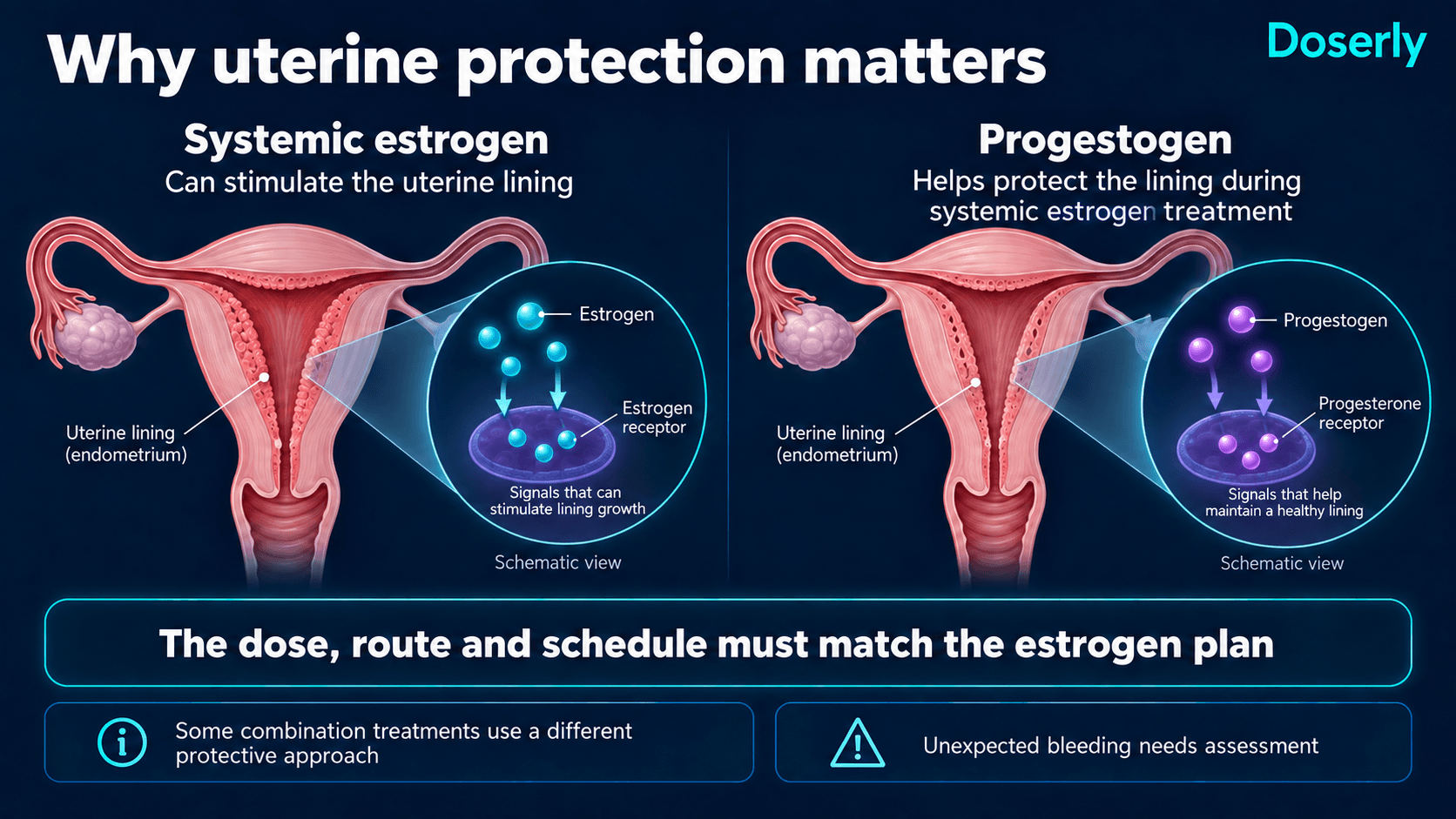
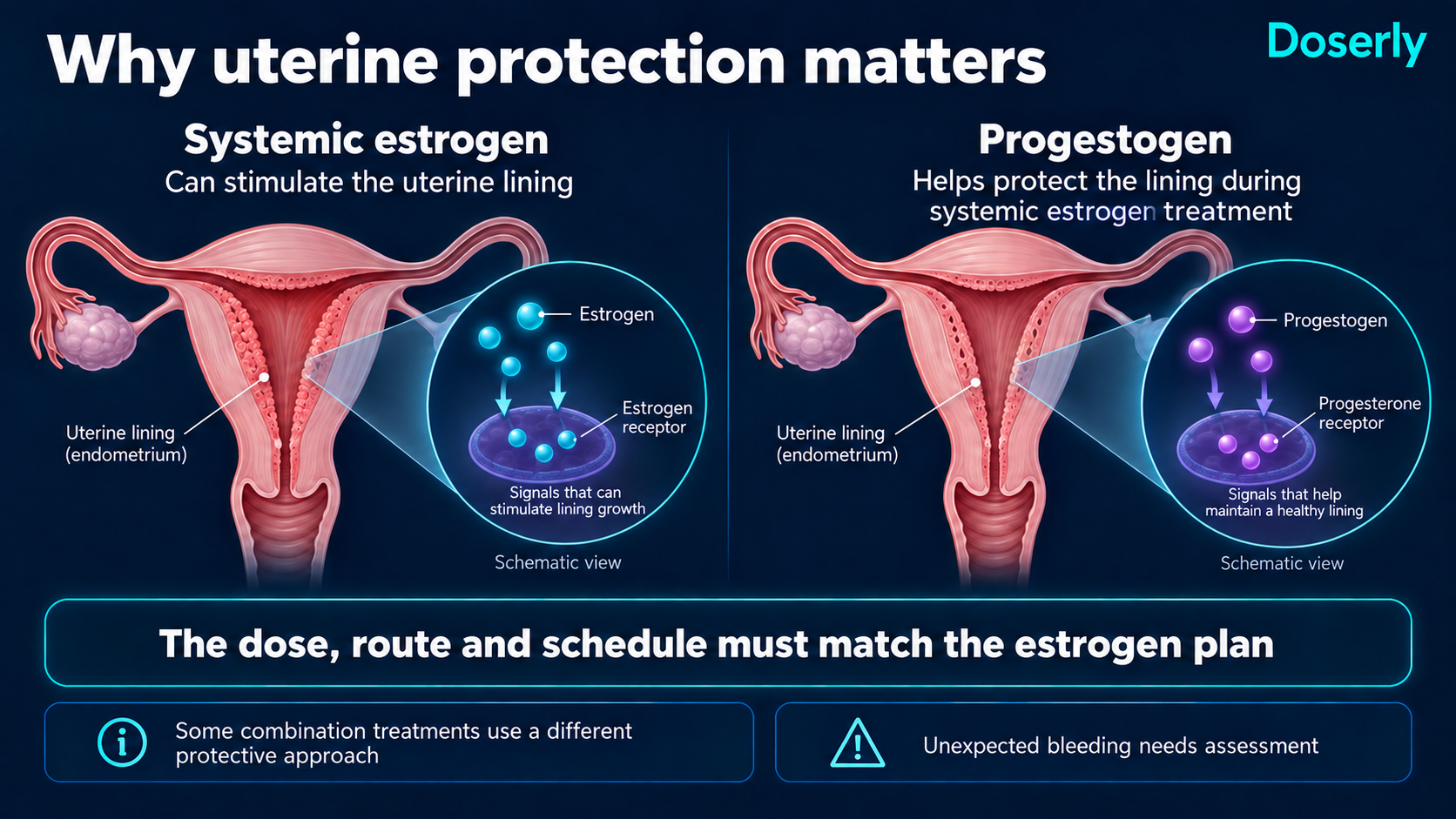
The illustration summarizes endometrial effects, not a dosing schedule or exact receptor structure. Progestogen dose, route and duration must provide protection for the estrogen regimen. Unexpected bleeding requires clinical assessment.
NICE menopause recommendations.
Pharmacokinetics / Hormone Physiology
The Basics
When you take a Prempro tablet, both the estrogen and MPA components are absorbed through the digestive tract. However, before reaching the rest of your body, they first travel through the liver. This "first-pass metabolism" is the main reason oral estrogen has a different side effect profile compared to estrogen delivered through patches or gels.
The liver processes the conjugated estrogens extensively, converting many of the estrogen compounds into other forms and creating additional metabolites. It also responds to the estrogen by producing more of certain proteins, including clotting factors and sex hormone-binding globulin (SHBG). This liver processing is why oral combined HRT carries different cardiovascular and thrombotic risks compared to transdermal estrogen.
The MPA component is absorbed relatively quickly, reaching peak blood levels within about 2-3 hours. However, MPA's bioavailability is quite low (roughly 1-10%), meaning the liver processes most of the drug before it reaches your system. MPA binds primarily to albumin (about 90% protein-bound) and does not bind significantly to SHBG, which distinguishes it from some other progestogens.
The estrogen components circulate bound to proteins (50-80% protein-bound) and are distributed widely throughout the body. The body eliminates them primarily through the kidneys, with some enterohepatic recirculation that effectively extends their duration of action. MPA has a half-life of approximately 12-17 hours, supporting once-daily dosing.
The Science
CE Component Pharmacokinetics (CE 0.625 mg / MPA 2.5 mg formulation):
Parameter
Cmax (pg/mL)
- Estrone
- 149 (35% CV)
- Equilin
- 56.7 (50% CV)
Parameter
tmax (h)
- Estrone
- 8.9 (35%)
- Equilin
- 8.2 (37%)
Parameter
t1/2 (h)
- Estrone
- 37.5 (35%)
- Equilin
- 20.9 (50%)
Parameter
AUC (pg·h/mL)
- Estrone
- 6641 (39%)
- Equilin
- —
Oral CEE undergoes extensive first-pass hepatic metabolism with CYP3A4 as the principal cytochrome P450 enzyme. Key metabolic transformations include desulfation of sulfate conjugates, interconversion of estrone and estradiol via 17-beta-hydroxysteroid dehydrogenase, hydroxylation, and sulfate/glucuronide conjugation for excretion [2]. Enterohepatic recirculation occurs via biliary secretion and intestinal reabsorption.
First-pass hepatic effects of clinical significance: increased synthesis of SHBG, C-reactive protein, clotting factors (VII, X, fibrinogen), angiotensinogen, and triglycerides [10]. These effects underlie the differential thrombotic and cardiovascular risk profiles of oral versus transdermal estrogen.
MPA Component Pharmacokinetics:
Parameter
Tmax
- Oral MPA
- 2-3 hours
Parameter
Cmax
- Oral MPA
- Dose-dependent (approximately 1.8-2.5 ng/mL)
Parameter
Half-life
- Oral MPA
- 12-17 hours
Parameter
Bioavailability
- Oral MPA
- 0.6-10%
Parameter
Protein binding
- Oral MPA
- ~90% (albumin; does not bind SHBG or CBG)
Parameter
Primary metabolism
- Oral MPA
- Hepatic, CYP3A4
Parameter
Excretion
- Oral MPA
- Primarily renal as glucuronide conjugates
MPA pharmacokinetics are dose-proportional across the formulation range. A high-fat meal does not significantly affect CE absorption [1].
Understanding how your body absorbs and metabolizes hormones is one thing. Tracking your actual protocol, doses, timing, and route, gives you the data to have more productive conversations with your prescriber. Doserly lets you log every dose with route-specific detail, building a clear record of your hormone protocol over time.
Whether you're on patches, gels, oral tablets, or a combination, the app tracks your schedule and flags when doses are due. When your provider asks how your protocol has been going, you'll have a precise answer instead of a best guess.
Research & Clinical Evidence
The Basics
Prempro has more long-term clinical trial data than any other combined HRT product, primarily because it was the specific formulation used in the WHI estrogen-plus-progestin trial. This is both its greatest asset (we know more about its long-term effects than any alternative) and the source of much of the controversy surrounding it.
The WHI enrolled over 16,000 postmenopausal women with intact uteri, randomizing them to daily Prempro (CE 0.625 mg + MPA 2.5 mg) or placebo. The trial was stopped early in 2002 after an average of 5.6 years when a pre-specified safety threshold was crossed. The initial findings showed increased risks of heart disease, stroke, blood clots, and breast cancer, and decreased risks of colorectal cancer and hip fractures.
However, the initial interpretation of these findings has been substantially refined over the past two decades. The average age of WHI participants was 63, and most were more than 10 years past menopause onset. Subgroup analyses by age and time since menopause have shown that the risk-benefit profile looks quite different for women who start HRT closer to menopause. For women aged 50-59 who were within 10 years of menopause, the absolute risks were considerably lower, and some outcomes trended toward benefit rather than harm.
It is also critical to understand what the WHI E-alone arm found: when women without a uterus took the same conjugated estrogen without MPA, breast cancer risk actually decreased. This finding has focused considerable attention on MPA's specific role in the breast cancer signal and has driven the clinical shift toward micronized progesterone as the preferred progestogen for many women.
The Science
WHI Estrogen-Plus-Progestin Trial (CE 0.625 mg + MPA 2.5 mg, n=16,608):
Primary outcomes at median 5.6 years follow-up, expressed as absolute risk per 10,000 women-years [5]:
Outcome
CHD events
- CE+MPA
- 37
- Placebo
- 30
- Excess/Fewer
- +7
- HR (95% CI)
- 1.24 (1.00-1.54)
Outcome
Invasive breast cancer
- CE+MPA
- 38
- Placebo
- 30
- Excess/Fewer
- +8
- HR (95% CI)
- 1.24 (1.01-1.54)
Outcome
Stroke
- CE+MPA
- 29
- Placebo
- 21
- Excess/Fewer
- +8
- HR (95% CI)
- 1.31 (1.02-1.68)
Outcome
Pulmonary embolism
- CE+MPA
- 16
- Placebo
- 8
- Excess/Fewer
- +8
- HR (95% CI)
- 2.13 (1.45-3.11)
Outcome
Colorectal cancer
- CE+MPA
- 10
- Placebo
- 16
- Excess/Fewer
- -6
- HR (95% CI)
- 0.56 (0.38-0.81)
Outcome
Hip fracture
- CE+MPA
- 10
- Placebo
- 15
- Excess/Fewer
- -5
- HR (95% CI)
- 0.67 (0.47-0.96)
Outcome
Death (all causes)
- CE+MPA
- 40
- Placebo
- 41
- Excess/Fewer
- -1
- HR (95% CI)
- 0.98 (0.82-1.18)
WHI Age Subgroup Analyses:
Risk-benefit profiles differed substantially by age at randomization [6]:
- Women 50-59: CHD HR 0.93 (not significant), stroke HR 1.13 (not significant), all-cause mortality HR 0.69
- Women 60-69: CHD HR 1.24, stroke HR 1.48
- Women 70-79: CHD HR 1.44, stroke HR 1.46
WHI E-Alone Arm Comparison:
The estrogen-alone arm (CE 0.625 mg without MPA, n=10,739 hysterectomized women) showed:
- Breast cancer: HR 0.78 (95% CI 0.65-0.93) at 20-year follow-up, with reduced breast cancer mortality HR 0.60 (95% CI 0.37-0.97) [11]
- This divergence between the two arms is the strongest evidence that MPA contributes to the breast cancer signal
Vasomotor Symptom Efficacy:
Clinical trials demonstrated significant reduction in moderate-to-severe hot flashes at all Prempro dose levels compared to placebo, with effects typically evident within the first 4 weeks of treatment [1].
Bone Mineral Density:
Prempro 0.625/2.5 demonstrated a +3.5% increase in lumbar spine BMD at 2 years versus placebo. Lower-dose formulations (0.3/1.5 and 0.45/1.5) also showed statistically significant BMD increases [1].
Lipid and Cardiovascular Effects:
A 2025 systematic review and meta-analysis of RCTs found that MPA/CEE has a beneficial impact on atherogenic lipoproteins, including reductions in lipoprotein(a) and apolipoprotein B [12]. The continuous combined regimen maintains beneficial effects of estrogen on LDL cholesterol, though the HDL increase is less pronounced than with estrogen alone due to MPA's partial attenuation of estrogen's HDL-raising effect.
Benefits & Therapeutic Effects
The Basics
For many women, Prempro provides meaningful relief across multiple menopausal symptoms simultaneously. The most consistent benefit is rapid and substantial reduction in hot flashes and night sweats, often noticeable within the first one to two weeks. For women experiencing dozens of hot flashes daily, this relief can feel transformative.
Beyond vasomotor symptoms, many women notice improvements in sleep quality (largely because night sweats resolve), mood stability, vaginal comfort, and overall energy levels. Some women describe a sense of "feeling like myself again" after starting Prempro, reflecting the broad reach of estrogen's effects across multiple body systems.
Prempro also provides documented protection against bone loss. The WHI found that women taking CE+MPA had significantly fewer hip fractures, about 5 fewer per 10,000 women per year compared to placebo. For women at risk of osteoporosis, this is a meaningful benefit, and Prempro carries an FDA-approved indication for osteoporosis prevention.
The convenience of a single daily tablet containing both estrogen and progestogen is a practical advantage that some women value, particularly compared to regimens requiring separate medications taken at different times.
It is important to recognize that benefits vary from person to person. Not every woman responds equally, and some may need dose adjustments or formulation changes to find the right balance of benefit and tolerability. Working with a healthcare provider to find the approach that works for your specific situation is essential.
The Science
Vasomotor symptom relief:
Clinical trials demonstrated statistically significant reductions in moderate-to-severe hot flashes at all Prempro dose levels versus placebo. The 0.625/2.5 formulation reduced hot flash frequency by approximately 80-90% at 12 weeks [1]. Lower doses (0.3/1.5 and 0.45/1.5) also achieved significant reductions, supporting the "lowest effective dose" principle.
Bone protection:
WHI data at median 5.6 years: hip fracture HR 0.67 (95% CI 0.47-0.96), corresponding to approximately 5 fewer fractures per 10,000 women per year. Prempro 0.625/2.5 increased lumbar spine BMD by +3.5% at 2 years versus placebo. The continuous combined regimen demonstrated greater BMD increases than the cyclic regimen of the same hormones [3].
Vulvovaginal atrophy:
FDA-approved for moderate-to-severe vulvar and vaginal atrophy due to menopause. Systemic estrogen improves vaginal epithelial maturation, pH, and moisture. However, for women whose primary concern is genitourinary symptoms, localized vaginal estrogen therapy may be a more targeted approach [1].
Lipid effects:
Beneficial reductions in LDL cholesterol. However, MPA partially attenuates the HDL-cholesterol-raising effect seen with estrogen alone. A 2025 meta-analysis of RCTs found MPA/CEE has beneficial impacts on atherogenic lipoproteins including reductions in lipoprotein(a) and apolipoprotein B [12]. Triglycerides may increase with oral estrogen.
Colorectal cancer:
WHI: HR 0.56 (95% CI 0.38-0.81) for colorectal cancer, corresponding to approximately 6 fewer cases per 10,000 women per year. This protective effect was one of the unexpected beneficial findings of the trial [5].
Risks, Side Effects & Safety
The Basics
Like all hormone therapies, Prempro has both benefits and risks. Understanding these risks in context, with actual numbers rather than vague warnings, is essential for making informed decisions with your healthcare provider.
Common side effects that many women experience, especially in the first weeks to months, include breast tenderness, bloating, headache, nausea, mood changes, and irregular vaginal bleeding or spotting. Most of these settle down within the first one to three months as your body adjusts. Bloating and water retention are particularly common initially but typically resolve by about six weeks.
Serious risks require understanding with proper context. The WHI provided the most detailed data available for these outcomes with this specific combination:
Blood clots (VTE): The WHI found that Prempro increased the risk of pulmonary embolism (PE) by about 8 additional cases per 10,000 women per year, and deep vein thrombosis (DVT) was similarly elevated. This risk is specific to oral estrogen, because the liver processes oral estrogen and increases production of clotting factors. Transdermal estrogen (patches, gels) does not carry this elevated VTE risk because it bypasses the liver. Risk factors like obesity, smoking, immobility, and personal or family history of blood clots further increase individual risk.
Stroke: The WHI found approximately 8 additional strokes per 10,000 women per year on Prempro compared to placebo. This risk was dose-dependent and age-dependent, with women aged 50-59 showing a smaller and non-statistically-significant increase.
Breast cancer: The WHI found approximately 8 additional invasive breast cancer cases per 10,000 women per year with CE+MPA, with increased risk becoming apparent after approximately 4 years of use (HR 1.24, 95% CI 1.01-1.54). Importantly, the estrogen-alone arm of the WHI (without MPA) showed a decreased breast cancer risk (HR 0.78), suggesting MPA contributes to the breast cancer signal. Observational data from the E3N French cohort found no significant breast cancer increase with estrogen plus micronized progesterone (HR 1.00), compared to a significant increase with estrogen plus synthetic progestins including MPA (HR 1.69) [13]. The type of progestogen matters.
Heart disease: The WHI found approximately 7 additional coronary heart disease events per 10,000 women per year overall. However, age subgroup analysis showed a very different picture: women aged 50-59 had a CHD hazard ratio of 0.93 (not statistically significant), while the excess risk was concentrated in women aged 60+ who started HRT more than 10 years after menopause onset. This is central to the timing hypothesis discussed in Section 13.
Probable dementia: The WHIMS ancillary study found increased risk of probable dementia in women 65 and older (HR 2.05), corresponding to approximately 23 additional cases per 10,000 women per year. It is unknown whether this applies to younger women starting HRT closer to menopause.
To put these absolute risks in perspective: the excess risk for most outcomes is in the range of 5-8 additional events per 10,000 women per year. For comparison, obesity alone increases VTE risk by a factor of 2-3, and combined oral contraceptives carry a similar VTE risk profile to oral HRT.
The Science
Venous Thromboembolism:
WHI CE+MPA: DVT HR 1.95 (95% CI 1.43-2.67); PE HR 2.13 (95% CI 1.45-3.11) [5]. The mechanistic basis is first-pass hepatic stimulation of clotting factor synthesis (factors VII, X, fibrinogen) and increased activated protein C resistance by oral estrogen [10]. The ESTHER study (case-control, n=271) found transdermal estrogen had no significant VTE increase (OR 0.9, 95% CI 0.4-2.1), confirming the route-dependent nature of this risk [14]. Neither the WHI nor ESTHER tested transdermal estrogen combined with MPA specifically.
Stroke:
WHI CE+MPA: HR 1.31 (95% CI 1.02-1.68), corresponding to 29 vs 21 per 10,000 women-years [5]. Risk was dose-dependent and appeared primarily with the higher-dose CE 0.625 mg formulation. Age subgroup analysis: women 50-59 HR 1.13 (not significant).
Breast Cancer:
WHI CE+MPA: invasive breast cancer HR 1.24 (95% CI 1.01-1.54) at 5.6 years, with absolute excess of 8 per 10,000 women-years [5]. Risk increase was apparent after approximately 4 years. WHI cumulative follow-up (13 years post-intervention): breast cancer mortality HR 1.44 (95% CI 0.97-2.15) for the CE+MPA group [15].
Contrast with WHI E-alone arm: breast cancer HR 0.78 (95% CI 0.65-0.93) at 20-year follow-up, with breast cancer mortality HR 0.60 (95% CI 0.37-0.97) [11]. The E3N cohort (n=80,377): estrogen + MPA/synthetic progestins HR 1.69 (95% CI 1.50-1.91); estrogen + micronized progesterone HR 1.00 (95% CI 0.83-1.22) [13].
Clinical context — Breast cancer risk: MPA contribution.
Source: WHI E+P arm: HR 1.24 for breast cancer with CE+MPA
Source: WHI E-alone arm: HR 0.78 for breast cancer with CE alone (no MPA)
Source: E3N cohort: HR 1.00 for E+micronized progesterone vs HR 1.69 for E+synthetic progestins
Context: The WHI arms differ in both the progestogen (MPA present vs absent) and the study population (intact uterus vs hysterectomized). The E3N data supports a progestogen-type-specific effect but is observational. No RCT directly compares breast cancer outcomes with MPA vs micronized progesterone.
Coronary Heart Disease:
WHI CE+MPA overall: HR 1.24 (95% CI 1.00-1.54). Age-stratified: 50-59 HR 0.93; 60-69 HR 1.24; 70-79 HR 1.44 [6]. This age gradient supports the timing hypothesis.
Endometrial Cancer:
The MPA component provides effective endometrial protection. Continuous combined CE 0.625/MPA 2.5: endometrial hyperplasia rate <1% over 3 years [3]. The WHI did not show increased endometrial cancer with CE+MPA (HR 0.81, 95% CI 0.48-1.36) [5].
Gallbladder Disease:
WHI CE+MPA: gallbladder disease requiring cholecystectomy was significantly increased. This risk is primarily associated with oral estrogen's hepatic effects [5].
Contraindications (absolute):
- Undiagnosed abnormal genital bleeding
- Breast cancer or history of breast cancer
- Estrogen-dependent neoplasia
- Active DVT, PE, or history
- Active arterial thromboembolic disease or history
- Hepatic impairment or disease
- Known thrombophilic disorders (Protein C, S, or antithrombin deficiency)
- Known anaphylactic reaction to Prempro
Being informed about potential risks is important. Being able to track and document any side effects you actually experience is what turns awareness into safety. Doserly lets you log side effects as they happen, with timestamps and severity ratings, so nothing falls through the cracks between appointments.
If you're experiencing breakthrough bleeding, headaches, breast tenderness, or any other change, having a documented timeline helps your provider distinguish between expected adjustment effects and signals that warrant a protocol change. The app also checks for interactions between your HRT and any other medications or supplements you're taking.
Dosing & Treatment Protocols
The Basics
Prempro is available in two main regimen types, each designed for different clinical situations. Your healthcare provider will select the approach and dose that best fits your needs.
Continuous combined (Prempro): You take one tablet every day containing both estrogen and MPA. This approach delivers a steady dose of both hormones throughout the month. The main advantage is simplicity and the eventual elimination of monthly bleeding in most women. Amenorrhea rates increase from about 52% at the second cycle to about 75% by the eleventh cycle with this approach. The lowest available dose (0.3 mg CE / 1.5 mg MPA) is often recommended as a starting point.
Sequential (Premphase): You take estrogen alone for the first 14 days, then estrogen plus MPA for the remaining 14 days. This more closely mimics a natural menstrual cycle and typically produces a predictable withdrawal bleed. It may be preferred during perimenopause or when transitioning to HRT.
Clinical guidelines consistently recommend starting at the lowest effective dose and titrating upward based on symptom response and tolerability. The principle of using the minimum dose that adequately controls symptoms is a cornerstone of modern HRT prescribing.
All Prempro dosing is by prescription only. The information presented here is for educational reference to support informed conversations with your healthcare provider, not as dosing instructions.
The Science
Available Dose Combinations:
Formulation
Prempro Low Dose
- CE Dose
- 0.3 mg
- MPA Dose
- 1.5 mg
- Regimen
- Continuous combined
- Primary Use
- Starting dose; vasomotor symptoms
Formulation
Prempro Low Dose
- CE Dose
- 0.45 mg
- MPA Dose
- 1.5 mg
- Regimen
- Continuous combined
- Primary Use
- Intermediate dose
Formulation
Prempro Standard
- CE Dose
- 0.625 mg
- MPA Dose
- 2.5 mg
- Regimen
- Continuous combined
- Primary Use
- Standard dose (WHI dose)
Formulation
Prempro High
- CE Dose
- 0.625 mg
- MPA Dose
- 5 mg
- Regimen
- Continuous combined
- Primary Use
- Higher progestogen coverage
Formulation
Premphase
- CE Dose
- 0.625 mg CE / 0.625 mg CE + 5 mg MPA
- MPA Dose
- Sequential
- Regimen
- Sequential (days 1-14 CE only; days 15-28 CE+MPA)
- Primary Use
- Not provided
Clinical Trial Dosing Data:
- All doses demonstrated statistically significant vasomotor symptom reduction vs placebo [1]
- BMD increases were dose-proportional, with 0.625/2.5 showing the greatest increase (+3.5% lumbar spine at 2 years) [1]
- Lower doses (0.3/1.5, 0.45/1.5) demonstrated adequate endometrial protection with lower rates of breakthrough bleeding
Prescribing Principles (per FDA label and guideline consensus):
- Use lowest effective dose for shortest duration consistent with treatment goals [1]
- Re-evaluate periodically (typically annually) to determine if continued treatment is necessary
- For osteoporosis prevention: consider only when significant risk exists and non-estrogen medications have been evaluated
- When prescribing solely for vulvovaginal atrophy: topical vaginal products should be considered first [1]
Clinical context — Starting dose recommendations.
Source: FDA label (2025): Start with lowest available dose; re-evaluate periodically
Source: NAMS 2022 Position Statement: Recommends lowest effective dose; supports use of lower-dose formulations
Source: Clinical practice patterns: Many providers still initiate at 0.625/2.5 (the "standard" WHI dose) rather than starting lower
Context: All authorities agree on the lowest-effective-dose principle, but the practical starting dose varies by provider preference, patient symptom severity, and regional prescribing patterns. The availability of 0.3/1.5 and 0.45/1.5 formulations provides options for lower initiation.
Getting the dosing right often takes time and fine-tuning with your provider. Keeping an accurate record of what you're actually taking, doses, timing, and any adjustments, makes that process smoother. Doserly tracks your HRT doses alongside everything else in your health stack, so your full protocol is always in one place.
Never wonder whether you took your morning dose or when you last changed your patch. The app logs every dose with a timestamp and sends reminders when your next one is due, helping you maintain the consistency that makes hormone therapy most effective.
What to Expect (Timeline)
Days 1-7: Initial adjustment period. Some women notice early improvement in vasomotor symptoms. Common initial side effects include breast tenderness, bloating, nausea, and mild headache. These are normal adjustment responses.
Weeks 2-4: Many women experience significant vasomotor improvement by the second to third week. Hot flash frequency and severity typically decrease noticeably. Bloating and water retention usually begin resolving. Irregular spotting or bleeding may occur, especially with the continuous combined regimen.
Months 1-3: Vasomotor symptoms typically improve substantially. Mood stabilization often becomes apparent. Sleep quality improves as night sweats resolve. Breast tenderness usually settles. Bleeding patterns begin normalizing; with continuous combined Prempro, about 52% of women achieve amenorrhea by the second cycle.
Months 3-6: Full therapeutic effect for most symptoms. Bone density stabilization begins. Genitourinary symptoms (vaginal dryness, comfort) improve progressively. With continuous combined Prempro, amenorrhea rates increase to approximately 75% by cycle 11. Energy levels and overall quality of life typically reach their full improvement.
Ongoing maintenance: Annual review with your healthcare provider to reassess the risk-benefit balance. Dose reassessment based on symptom control and any new risk factors. Continued monitoring (mammography, pelvic exam, blood pressure, lipids as appropriate). Some women continue Prempro for many years; the decision to continue should be individualized.
Individual responses vary considerably. Some women feel improvement within days; others need several weeks. If significant side effects persist beyond 8-12 weeks, or if symptoms are not adequately controlled, discuss alternatives or dose adjustments with your provider.
Timing Hypothesis & Window of Opportunity
The timing hypothesis is one of the most important concepts in modern HRT decision-making. It proposes that HRT initiated within approximately 10 years of menopause onset (or before age 60) has a more favorable risk-benefit profile than HRT started later.
Evidence supporting the timing hypothesis:
The WHI age subgroup analyses provide the most direct evidence. For women aged 50-59 in the CE+MPA arm, the coronary heart disease hazard ratio was 0.93 (not statistically significant, trending toward benefit), compared to HR 1.44 for women aged 70-79. All-cause mortality in the 50-59 age group was HR 0.69, suggesting a net survival benefit for younger initiators [6].
The KEEPS trial (Kronos Early Estrogen Prevention Study) tested lower-dose HRT (oral CE 0.45 mg or transdermal estradiol 50 mcg, both with cyclic micronized progesterone) in recently menopausal women (within 3 years of final menstrual period, mean age 52.7). At 4 years, neither regimen significantly affected carotid artery intima-media thickness, but both improved vasomotor symptoms, bone density, and quality of life with acceptable safety [16].
The ELITE trial (Early Versus Late Intervention Trial with Estradiol) demonstrated that oral estradiol slowed atherosclerosis progression in women less than 6 years past menopause but had no effect in women more than 10 years past menopause [17].
The Danish Osteoporosis Prevention Study followed women who started HRT within 2 years of menopause for 16 years and found reduced all-cause mortality, heart failure, and myocardial infarction without increased risk of cancer, VTE, or stroke [18].
Important limitations: No RCT has been specifically designed and adequately powered to test the timing hypothesis definitively. The subgroup analyses from the WHI, while suggestive, were not the primary endpoint. The observational data is strong but subject to confounding. The timing hypothesis remains evolving evidence, not settled science.
Clinical relevance: The timing hypothesis supports the clinical approach of offering HRT to symptomatic women in the early postmenopausal period (within 10 years of menopause or before age 60) while being more cautious about initiating systemic HRT in women who are older or further from menopause onset. Individual risk assessment remains paramount.
Interactions & Compatibility
Drug-Drug Interactions:
- Thyroid medications (levothyroxine): Oral estrogen increases thyroid-binding globulin (TBG), which may require levothyroxine dose adjustment. Thyroid function should be monitored when starting, stopping, or changing Prempro [1].
- Anticoagulants (warfarin): Estrogen may affect coagulation parameters. INR monitoring may be needed when starting or stopping Prempro.
- Lamotrigine: Estrogen can significantly reduce lamotrigine levels, potentially decreasing seizure control. Dose adjustment may be needed.
- CYP3A4 inducers (rifampin, carbamazepine, phenytoin, phenobarbital): May decrease both CE and MPA levels, reducing effectiveness.
- CYP3A4 inhibitors (ketoconazole, clarithromycin, ritonavir): May increase CE and MPA levels, potentially increasing side effects.
- Aminoglutethimide: Significantly depresses MPA bioavailability when taken concurrently [1].
- Tranexamic acid: Contraindicated (increased thrombotic risk).
- Fezolinetant (Veozah): Contraindicated per Mayo Clinic drug interaction data.
- SSRIs/SNRIs: Generally safe to use concurrently. Some are used as non-hormonal alternatives for vasomotor symptoms. See Paroxetine (Brisdelle).
Supplement Interactions:
- St. John's Wort: CYP3A4 inducer; may reduce estrogen and MPA levels, decreasing Prempro's effectiveness. Avoid concurrent use.
- Black cohosh: No significant pharmacokinetic interaction expected, but concurrent use with HRT has limited safety data.
- Calcium and Vitamin D: Appropriate to take concurrently for bone health. No negative interaction.
- Phytoestrogen supplements (soy isoflavones, red clover): Theoretical additive estrogenic effect; clinical significance uncertain.
Lifestyle Factors:
- Smoking: Dramatically increases cardiovascular and VTE risk when combined with oral estrogen. Smoking with oral HRT is strongly discouraged. If smoking cessation is not achievable, transdermal estrogen is strongly preferred.
- Alcohol: Moderate alcohol consumption may slightly increase estrogen levels due to hepatic effects. No absolute contraindication, but moderation is advised.
- Grapefruit: CYP3A4 inhibitor; may increase estrogen levels. The FDA label recommends avoiding grapefruit and grapefruit juice while taking Prempro [1].
Cross-links to related guides:
- Conjugated Equine Estrogens (Premarin)
- Medroxyprogesterone Acetate (Provera)
- Micronized Progesterone (Prometrium)
- Estradiol + Progesterone (Bijuva)
- Fezolinetant (Veozah)
- Gabapentin for Menopause
Decision-Making Framework
Deciding whether to start, continue, or change HRT is a deeply personal decision that should be made in partnership with a knowledgeable healthcare provider. The following framework is educational, not prescriptive.
Shared decision-making: The best HRT decisions happen when your provider shares their clinical expertise and you share your priorities, concerns, and lived experience. Neither party should dominate the conversation. You have the right to understand your options, ask questions, and be an active participant in your care.
Factors that may favor Prempro specifically:
- Preference for a single daily combination tablet (convenience)
- Established tolerance and satisfaction with current Prempro regimen
- Provider familiarity with the product and its evidence base
- Need for a product with the most extensive long-term safety data available
Factors that may favor alternative formulations:
- Desire for transdermal estrogen to reduce VTE risk (patches, gels)
- Preference for micronized progesterone (potentially better mood/sleep profile, potentially lower breast cancer risk based on observational data)
- Ethical concerns about equine-derived products
- History of VTE, active cardiovascular disease, or significant VTE risk factors
- Need for more flexible dosing (separate components allow independent adjustment)
Questions to consider discussing with your provider:
- "What are the specific risks and benefits of Prempro for someone my age, with my health history?"
- "How does Prempro compare to bioidentical estradiol + micronized progesterone for my situation?"
- "Would a transdermal estrogen option be safer for me?"
- "How long should I plan to stay on this medication, and how will we reassess?"
- "What monitoring do I need while on this medication?"
Finding a menopause specialist: Not all healthcare providers are up to date on current HRT evidence. The Menopause Society (formerly NAMS) maintains a directory of Certified Menopause Practitioners at menopause.org. These providers have demonstrated expertise in menopause management.
Administration & Practical Guide
Oral Tablet Administration:
- Take one tablet by mouth once daily, with or without food
- Take at approximately the same time each day for consistency
- Swallow whole; do not crush, break, or chew (except under specific provider instruction for dose adjustment)
- A high-fat meal does not significantly affect absorption
Prempro (continuous combined):
- Same tablet every day, no breaks between blister cards
- Start a new card on day 29
Premphase (sequential):
- Days 1-14: Take the maroon tablet (CE only)
- Days 15-28: Take the light-blue tablet (CE + MPA)
- Follow the sequence on the blister card carefully
Missed Dose:
- If you miss a dose, take it as soon as you remember
- If it is almost time for your next dose, skip the missed dose
- Do not take two tablets to make up for a missed dose
Storage: Room temperature, away from heat, moisture, and direct light. Keep out of reach of children.
Important notes:
- This section provides general educational information only
- Always follow the specific instructions provided by your prescriber and pharmacist
- Do not change your dose without consulting your healthcare provider
Monitoring & Lab Work
Pre-HRT Baseline Testing:
- Hormone levels (FSH, estradiol) to confirm menopausal status if uncertain
- Mammogram (within current screening guidelines)
- Lipid panel (total cholesterol, LDL, HDL, triglycerides)
- Liver function tests
- Blood pressure
- Pelvic exam
- Thyroid function (TSH, free T4) if on thyroid replacement medication
- Bone density (DEXA) scan if osteoporosis risk factors present
Initial Follow-Up (4-12 weeks):
- Symptom assessment: Are vasomotor symptoms improving?
- Side effect evaluation: Breast tenderness, bloating, bleeding patterns, mood
- Blood pressure check
- Dose adjustment discussion if needed
Ongoing Monitoring Schedule:
- Every 3-6 months initially, then annually: Clinical assessment, blood pressure, symptom review
- Mammography: Per national screening guidelines (typically annually for women on combined HRT)
- Lipid panel: Annually or per cardiovascular risk profile (particularly important with oral HRT, which affects lipids and triglycerides)
- Liver function: As clinically indicated, primarily for oral HRT users
- Thyroid function: Monitor in women on thyroid replacement; estrogen increases TBG and may necessitate levothyroxine dose adjustment
- DEXA scan: Baseline and per osteoporosis screening guidelines (typically every 2 years if at risk)
- Endometrial monitoring: Transvaginal ultrasound if abnormal or unexpected vaginal bleeding occurs. The MPA component provides endometrial protection, but any persistent or unusual bleeding warrants evaluation.
Annual Review Checklist:
- Reassess risk-benefit balance
- Review any new health conditions or risk factors
- Discuss whether continued treatment is appropriate
- Screen for breast cancer risk factors
- Review all concurrent medications for interactions
- Update family health history
Complementary Approaches & Lifestyle
Evidence-based strategies that complement HRT:
Supplements:
- Calcium: 1,000-1,200 mg daily (ideally through diet, supplementing the gap). Essential for bone health alongside HRT's bone-protective effects.
- Vitamin D: 1,000-2,000 IU daily (or as guided by serum 25-OH vitamin D levels). Supports calcium absorption and bone metabolism.
- Magnesium: 300-400 mg daily. May support sleep quality and muscle relaxation.
- Omega-3 fatty acids: May support cardiovascular health and reduce inflammation. Evidence for menopause-specific benefits is moderate.
Exercise:
- Weight-bearing exercise: Walking, jogging, dancing, stair climbing. Critical for bone health alongside HRT.
- Resistance training: 2-3 sessions per week. Preserves lean muscle mass, supports metabolic health, and reduces fracture risk.
- Cardiovascular exercise: 150 minutes moderate-intensity per week per guidelines.
- Balance training: Reduces fall risk, particularly important for older women on HRT for osteoporosis prevention.
Diet:
- Mediterranean dietary pattern: Associated with reduced cardiovascular risk and improved metabolic health.
- Calcium-rich foods: Dairy, fortified plant milks, leafy greens, sardines.
- Phytoestrogen-containing foods: Soy, flaxseed. Modest evidence for supplemental vasomotor benefit; unlikely to interfere with HRT.
- Limit alcohol: Moderate consumption (potential slight increase in breast cancer risk; additive with HRT risk).
Other evidence-based approaches:
- CBT for vasomotor symptoms: Cognitive behavioral therapy has demonstrated efficacy for reducing hot flash severity and impact on quality of life.
- Pelvic floor therapy: For urinary symptoms and GSM. Complementary to HRT.
- Sleep hygiene: Temperature management, consistent schedule, dark/cool sleeping environment.
- Stress management: Mindfulness, yoga, regular physical activity. Chronic stress may worsen vasomotor symptoms.
Stopping HRT / Discontinuation
When to consider stopping:
The duration of HRT should be reassessed at least annually. Common reasons to consider stopping include reaching personal duration goals (many providers suggest re-evaluating at the 3-5 year mark), changing health circumstances (new risk factors), or personal preference. However, there is no universal "maximum duration" rule; the decision should be individualized.
Tapering strategies:
Gradual dose reduction over weeks to months is generally preferred over abrupt cessation to minimize symptom rebound. With Prempro, options include:
- Step down to a lower-dose formulation (e.g., from 0.625/2.5 to 0.45/1.5 to 0.3/1.5) over several months
- Alternate-day dosing for a period before stopping
- Switch to a lower-dose or transdermal formulation before stopping entirely
Symptom recurrence:
An estimated 50% of women experience some degree of vasomotor symptom recurrence after stopping HRT. The severity of recurrence is typically similar to pre-treatment levels, not worse. Joint pain and other symptoms may also re-emerge upon discontinuation.
Transition options:
- Low-dose vaginal estrogen for persistent genitourinary symptoms (can continue even after stopping systemic HRT)
- Non-hormonal alternatives (fezolinetant, paroxetine low-dose, gabapentin) for persistent vasomotor symptoms
- See Non-Hormonal Menopause Treatments
- See Stopping & Tapering HRT
What to monitor during discontinuation:
- Symptom diary to track recurrence
- Bone density follow-up (particularly if osteoporosis prevention was an indication)
- Cardiovascular risk reassessment
Special Populations & Situations
Breast Cancer Survivors
Systemic HRT (including Prempro) is generally contraindicated in women with a history of breast cancer. The WHI data showing increased breast cancer risk with CE+MPA reinforces this caution. Non-hormonal alternatives for vasomotor symptoms should be considered. Vaginal estrogen for GSM may be discussed with an oncologist on a case-by-case basis.
Premature Ovarian Insufficiency (POI)
Women experiencing menopause before age 40 require hormone replacement until at least the typical age of menopause (approximately 51) for cardiovascular, bone, and neurological protection. Prempro is one option, though many providers prefer bioidentical formulations for this population. See Premature Ovarian Insufficiency.
Surgical Menopause / Oophorectomy
Women who have had bilateral oophorectomy experience abrupt hormone loss and typically need higher initial HRT doses. If a hysterectomy was also performed, estrogen-only therapy (without MPA) is appropriate and preferred, as the WHI E-alone arm showed more favorable outcomes. Prempro would only be appropriate if the uterus is intact. See Surgical Menopause.
Cardiovascular Disease History
Women with established cardiovascular disease should generally not initiate Prempro. If HRT is considered for symptom management in women with cardiovascular risk factors, transdermal estrogen is strongly preferred due to its neutral effect on VTE and more favorable hepatic profile.
Type 2 Diabetes
Oral estrogen may affect insulin sensitivity and glucose metabolism. Monitoring of glycemic control is recommended when starting or changing Prempro. Transdermal estrogen may have more neutral metabolic effects.
Migraine with Aura
Oral estrogen may exacerbate migraines and carries theoretical stroke risk in migraine-with-aura. Stable-level transdermal estrogen is generally preferred.
History of VTE
Prempro is contraindicated in women with active or historical VTE. If HRT is considered after thorough risk assessment, transdermal estrogen is strongly preferred (ESTHER study: transdermal OR 0.9 for VTE vs significantly elevated risk for oral).
BRCA Carriers (Without Breast Cancer)
Women who undergo risk-reducing salpingo-oophorectomy before natural menopause need HRT. Prempro would only be relevant if the uterus is retained. The breast cancer risk associated with short-term HRT use (to typical menopause age) in BRCA carriers without cancer is considered acceptable by most guidelines. See appropriate specialist guidance.
Regulatory, Insurance & International
United States (FDA):
- FDA-approved (NDA 020527), 1995
- Black box warning: Cardiovascular disorders, breast cancer, endometrial cancer, probable dementia
- Available as branded Prempro/Premphase (Pfizer) and generic formulations
- Insurance coverage varies. Many insurance plans cover generic conjugated estrogens/MPA. Brand Prempro copays can be high ($130-$230+). Pfizer offers a patient assistance program for qualifying patients.
United Kingdom (MHRA):
- Premarin tablets are available (limited) in the UK, but Prempro as a combination product is not commonly prescribed. UK providers typically prescribe estradiol-based HRT with separate micronized progesterone. NICE NG23 guidelines favor transdermal estradiol + micronized progesterone as the preferred regimen.
Canada (Health Canada):
- Prempro is available in Canada by prescription.
Australia (TGA):
- Premarin is listed on the PBS. Prempro combination availability varies. Australian prescribing has shifted toward bioidentical formulations.
Compounded vs. FDA-Approved:
Prempro is an FDA-approved product with standardized manufacturing, quality controls, and an extensive evidence base. Compounded combination HRT products are custom-prepared by pharmacies and lack the same standardized testing and regulatory oversight. Compounding may be appropriate when a specific dose or formulation is not commercially available, but for most women, FDA-approved products are preferred for quality assurance.
Cost Comparison Note:
Generic conjugated estrogens/MPA tablets are significantly less expensive than brand Prempro. Discuss generic availability with your pharmacist. Separate generic Premarin + generic Provera may also be a cost-effective alternative with the same active ingredients.
Frequently Asked Questions
Q: Is Prempro the same thing that was studied in the WHI?
A: Yes. Prempro (CE 0.625 mg + MPA 2.5 mg) was the specific combination product used in the WHI estrogen-plus-progestin trial. This means we have more long-term outcome data for this particular combination than for any other HRT product. However, the WHI participants averaged 63 years of age and were typically more than 10 years past menopause, which differs from how Prempro is commonly prescribed today.
Q: Is Prempro safe?
A: Safety depends on individual factors including age, time since menopause, personal and family health history, and other risk factors. For symptomatic women starting within 10 years of menopause onset and before age 60, the risk-benefit balance is generally more favorable. Discuss your specific risk profile with your healthcare provider.
Q: How is Prempro different from taking separate estrogen and progesterone pills?
A: Prempro combines conjugated equine estrogens (not bioidentical estradiol) with MPA (a synthetic progestin, not micronized progesterone) in a single tablet. The estrogen source and progestogen type differ from regimens using estradiol + micronized progesterone. These differences may affect the side effect profile, particularly regarding mood, sleep, breast cancer risk, and VTE risk.
Q: Can I switch from Prempro to patches + progesterone?
A: Yes, and many women do. This is a clinical decision to discuss with your provider. Switching typically involves transitioning to transdermal estradiol (patches or gel) plus oral micronized progesterone. The transition can usually be done directly, starting the new regimen when stopping Prempro.
Q: Why do some doctors still prescribe Prempro when "newer" options are available?
A: Prempro remains a legitimate therapeutic option. Some providers are familiar with its extensive evidence base and prescribe it confidently. Others may not be up to date on the differences between progestogen types. If you have questions about whether a different formulation might be better for you, consider seeking a second opinion from a Menopause Society certified practitioner.
Q: Will I gain weight on Prempro?
A: Weight effects are variable. Weight changes vary and are often multifactorial. Clinical trial data does not consistently show weight gain as a direct effect of Prempro. Menopausal changes in body composition (increased visceral fat, decreased lean mass) occur regardless of HRT use and may be conflated with medication effects.
Q: How long can I take Prempro?
A: There is no universal maximum duration. Clinical guidelines recommend annual reassessment of the risk-benefit balance. Some women use Prempro for 5 years or less; others continue for a decade or more. The decision should be individualized based on symptom control, risk factors, and personal preference.
Q: Is Prempro made from horse urine?
A: The conjugated estrogen component (the same formulation as Premarin) is derived from the urine of pregnant mares. The MPA component is synthetic. For women who prefer non-animal-derived products, bioidentical estradiol (plant-derived) combined with micronized progesterone is an alternative.
Q: Does the lower-dose Prempro work as well?
A: Clinical trials demonstrated that lower-dose formulations (0.3/1.5 and 0.45/1.5) significantly reduce vasomotor symptoms and improve bone mineral density compared to placebo. They may not provide identical symptom relief to the higher doses, but they offer a lower starting point with potentially fewer side effects.
Q: Why does Prempro have a black box warning?
A: The black box warning reflects the WHI findings of increased cardiovascular events, breast cancer, and probable dementia with CE+MPA. All systemic estrogen products carry a version of this warning. It is important to read the warning in context: the absolute risks are small (5-8 additional events per 10,000 women per year for most outcomes), and the risk-benefit balance varies by age, timing, and individual factors.
Myth vs. Fact
Myth: "Prempro causes cancer."
Fact: The WHI found that Prempro (CE + MPA) was associated with approximately 8 additional invasive breast cancer cases per 10,000 women per year after about 4 years of use (HR 1.24). This is a small but real increase. Importantly, the WHI also found that estrogen alone (without MPA) actually decreased breast cancer risk (HR 0.78). The type of progestogen matters. Prempro also showed a significant reduction in colorectal cancer risk. The relationship between HRT and cancer is nuanced, not a simple "causes cancer" statement [5][11].
Myth: "The WHI proved that all HRT is dangerous."
Fact: The WHI studied specific formulations (CE 0.625 mg with or without MPA 2.5 mg) in a population averaging 63 years of age, most of whom were more than 10 years past menopause. Subgroup analyses showed that women aged 50-59 had a more favorable risk-benefit profile, including a trend toward reduced all-cause mortality (HR 0.69). The WHI does not apply equally to all HRT formulations, routes, doses, or patient populations [6].
Myth: "You should only take Prempro for 5 years maximum."
Fact: The "5-year rule" is outdated and has been abandoned by most current clinical guidelines. Duration should be individualized based on symptom control, ongoing risk assessment, and patient preference. Some women benefit from extended use, and the decision to continue should be made through shared decision-making with a knowledgeable provider, not by an arbitrary time limit.
Myth: "Bioidentical hormones are always safer than Prempro."
Fact: Observational data (particularly the E3N cohort) suggests that estradiol + micronized progesterone may have a more favorable breast cancer profile than CE + MPA. Transdermal estrogen has a more favorable VTE profile than oral estrogen. However, no randomized trial directly compares the clinical outcomes of bioidentical regimens vs. Prempro. Compounded "bioidentical" products lack the standardized testing and regulatory oversight of FDA-approved products, which introduces different safety concerns [13].
Myth: "Prempro causes blood clots in everyone who takes it."
Fact: The WHI found about 8 additional pulmonary embolism events per 10,000 women per year on Prempro (16 vs 8 per 10,000). The vast majority of women taking Prempro do not develop VTE. Individual risk depends on pre-existing factors (obesity, smoking, immobility, thrombophilic disorders). The VTE risk is specific to oral estrogen's hepatic first-pass effects; transdermal estrogen does not carry the same elevated risk [5][14].
Myth: "Natural remedies work just as well as Prempro for menopause symptoms."
Fact: For moderate-to-severe vasomotor symptoms, HRT (including Prempro) is the most effective treatment available. Black cohosh, soy isoflavones, and other herbal remedies show modest-at-best efficacy in rigorous clinical trials, typically performing only marginally better than placebo. Women with mild symptoms may find some benefit from lifestyle approaches, but those with significant symptoms generally require pharmacological treatment for adequate relief.
Myth: "If you stop Prempro, your symptoms will come back worse than before."
Fact: An estimated 50% of women experience some degree of symptom recurrence after discontinuation. The severity of recurrence is typically similar to pre-treatment levels, not amplified by having been on HRT. Gradual tapering rather than abrupt cessation may help minimize the transition.
Myth: "Prempro causes weight gain."
Fact: Clinical trial data does not consistently demonstrate weight gain as a direct pharmacological effect of Prempro. Menopause itself is associated with changes in body composition (increased visceral fat, decreased lean mass) that occur regardless of HRT use. Bloating or fluid retention can occur early in therapy. Long-term weight effects are variable and multifactorial.
Sources & References
Clinical Guidelines
[1] Prempro/Premphase full prescribing information. Wyeth Pharmaceuticals LLC, a subsidiary of Pfizer Inc. Revised April 2025. NDA 020527. DailyMed. https://dailymed.nlm.nih.gov/dailymed/drugInfo.cfm?setid=fd0c0836-5d23-2183-da81-9dc7f4287052
[2] Bhavnani BR, Stanczyk FZ. Pharmacology of conjugated equine estrogens: efficacy, safety and mechanism of action. J Steroid Biochem Mol Biol. 2014;142:16-29. PubMed: 24176763. DOI: 10.1016/j.jsbmb.2013.10.011.
[3] Stanczyk FZ, Hapgood JP, Winer S, et al. Progestogens used in postmenopausal hormone therapy: differences in their pharmacological properties, intracellular actions, and clinical effects. Endocr Rev. 2013;34(2):171-208. PubMed: 23238854. DOI: 10.1210/er.2012-1008.
Landmark Trials
[4] Smith DC, Prentice R, Thompson DJ, et al. Association of exogenous estrogen and endometrial carcinoma. N Engl J Med. 1975;293(23):1164-7. PubMed: 1186789. DOI: 10.1056/NEJM197512042932302.
[5] Rossouw JE, Anderson GL, Prentice RL, et al. Risks and benefits of estrogen plus progestin in healthy postmenopausal women: principal results From the Women's Health Initiative randomized controlled trial. JAMA. 2002;288(3):321-33. PubMed: 12117397. DOI: 10.1001/jama.288.3.321.
[6] Manson JE, Chlebowski RT, Stefanick ML, et al. Menopausal hormone therapy and health outcomes during the intervention and extended poststopping phases of the Women's Health Initiative randomized trials. JAMA. 2013;310(13):1353-68. PubMed: 24084921. DOI: 10.1001/jama.2013.278040.
Systematic Reviews & Observational Studies
[7] Heldring N, Pike A, Andersson S, et al. Estrogen receptors: how do they signal and what are their targets. Physiol Rev. 2007;87(3):905-31. PubMed: 17615392. DOI: 10.1152/physrev.00026.2006.
[8] Prior JC. Progesterone for the prevention and treatment of osteoporosis in women. Climacteric. 2018;21(4):366-374. PubMed: 29962257. DOI: 10.1080/13697137.2018.1467400.
[9] Compagnone NA, Mellon SH. Neurosteroids: biosynthesis and function of these novel neuromodulators. Front Neuroendocrinol. 2000;21(1):1-56. PubMed: 10662535. DOI: 10.1006/frne.1999.0188.
[10] Canonico M, Oger E, Plu-Bureau G, et al. Hormone therapy and venous thromboembolism among postmenopausal women: impact of the route of estrogen administration and progestogens: the ESTHER study. Circulation. 2007;115(7):840-5. PubMed: 17309934. DOI: 10.1161/CIRCULATIONAHA.106.642280.
[11] Chlebowski RT, Anderson GL, Aragaki AK, et al. Association of Menopausal Hormone Therapy With Breast Cancer Incidence and Mortality During Long-term Follow-up of the Women's Health Initiative Randomized Clinical Trials. JAMA. 2020;324(4):369-380. PubMed: 32721007. DOI: 10.1001/jama.2020.9482.
[12] Han R, Wang Z, Prabahar K, et al. The effect of medroxyprogesterone acetate plus conjugated equine estrogens on lipoprotein(a) and apolipoprotein concentrations in postmenopausal women: a systematic review and meta-analysis of randomized controlled trials. Diabetol Metab Syndr. 2025;17(1):297. PubMed: 40722032. DOI: 10.1186/s13098-025-01788-4.
[13] Fournier A, Berrino F, Clavel-Chapelon F. Unequal risks for breast cancer associated with different hormone replacement therapies: results from the E3N cohort study. Breast Cancer Res Treat. 2008;107(1):103-11. PubMed: 17333341. DOI: 10.1007/s10549-007-9523-x.
Government/Institutional Sources
[14] Canonico M, Oger E, Plu-Bureau G, et al. Hormone therapy and venous thromboembolism among postmenopausal women: impact of the route of estrogen administration and progestogens: the ESTHER study. Circulation. 2007;115(7):840-5. PubMed: 17309934. DOI: 10.1161/CIRCULATIONAHA.106.642280.
[15] Chlebowski RT, Rohan TE, Manson JE, et al. Breast Cancer After Use of Estrogen Plus Progestin and Estrogen Alone: Analyses of Data From 2 Women's Health Initiative Randomized Clinical Trials. JAMA Oncol. 2015;1(3):296-305. PubMed: 26181174. DOI: 10.1001/jamaoncol.2015.0494.
[16] Harman SM, Black DM, Naftolin F, et al. Arterial imaging outcomes and cardiovascular risk factors in recently menopausal women: a randomized trial. Ann Intern Med. 2014;161(4):249-60. PubMed: 25069991. DOI: 10.7326/M14-0353.
[17] Hodis HN, Mack WJ, Henderson VW, et al. Vascular Effects of Early versus Late Postmenopausal Treatment with Estradiol. N Engl J Med. 2016;374(13):1221-31. PubMed: 27028912. DOI: 10.1056/NEJMoa1505241.
[18] Schierbeck LL, Rejnmark L, Tofteng CL, et al. Effect of hormone replacement therapy on cardiovascular events in recently postmenopausal women: randomised trial. BMJ. 2012;345:e6409. PubMed: 23048011. DOI: 10.1136/bmj.e6409.
Additional Regulatory and Guideline Sources
[19] DailyMed: PREMPRO/PREMPHASE prescribing information. https://dailymed.nlm.nih.gov/dailymed/search.cfm?query=PREMPRO. Accessed September 13, 2026.
[20] Rossouw JE, Anderson GL, Prentice RL, et al. Risks and benefits of estrogen plus progestin in healthy postmenopausal women: principal results From the Women's Health Initiative randomized controlled trial. JAMA. 2002;288(3):321-33. PubMed: 12117397. DOI: 10.1001/jama.288.3.321.
[21] FDA menopausal hormone therapy drug-class information. https://www.fda.gov/drugs/information-drug-class/information-menopausal-hormone-therapy. Accessed September 13, 2026.
[22] FDA press announcement on menopausal hormone therapy boxed warning changes. https://www.fda.gov/news-events/press-announcements/fda-asks-companies-remove-black-box-warning-menopausal-hormone-therapy-products. Accessed September 13, 2026.
[23] “The 2022 Hormone Therapy Position Statement of The North American Menopause Society” Advisory Panel. The 2022 hormone therapy position statement of The North American Menopause Society. Menopause. 2022;29(7):767-794. PubMed: 35797481. DOI: 10.1097/GME.0000000000002028.
Related Guides & Cross-Links
Same Category (Combination Products)
- Estradiol + Norethindrone Acetate (Activella)
- Estradiol + Drospirenone (Angeliq)
- Estradiol + Progesterone (Bijuva)
- Ethinyl Estradiol + Norethindrone (FemHrt)
- Conjugated Estrogens + Bazedoxifene (Duavee)
Component Medications
- Conjugated Equine Estrogens (Premarin)
- Medroxyprogesterone Acetate (Provera)
- Micronized Progesterone (Prometrium)
Related Treatment Options
- 17B-Estradiol (Bioidentical)
- Transdermal HRT (Patches, Gels, Sprays)
- Getting Started with HRT
- Compounded & Bioidentical HRT