
In this guide
What is Biest?
Biest is a name used for compounded mixtures of estradiol and estriol. It is not one standardized manufactured medicine with a universal dose, vehicle or application schedule. Different pharmacies can prepare different amounts and forms. The name alone does not say whether a bottle is for skin, vagina or oral use or whether it includes additional hormones. [1], [2]
Compounding can meet a specific need when an appropriate manufactured product is unavailable or an ingredient cannot be tolerated. That is different from claiming routine superiority. ACOG recommends approved menopausal formulations rather than routine custom-compounded therapy when suitable approved options exist. Molecular identity, often called bioidentical, describes the hormone, not proof of the preparation’s quality or safety. [1], [3]
FDA states no estriol-containing medicine is FDA-approved in the US. That does not mean estriol has no approved products overseas, and it does not make every US compound illegal. A custom Biest preparation and a foreign licensed vaginal estriol medicine remain different products with different evidence and oversight. [3], [4]
How should the actual prescription be identified?
| Product / country | Population / indication | Route | Amount | Schedule | Context | Source |
|---|---|---|---|---|---|---|
| Biest · custom skin preparation, if prescribed | Named individual indication; no FDA-approved Biest regimen | Only actual labeled skin route | Pharmacy must specify estradiol and estriol amounts/concentration | Actual prescription; no universal pump or interval | Systemic exposure/protection and device accuracy require review | Sources [1], [2], [3], [5] |
| Biest · another compounded form, if prescribed | Product-specific decision; not a skin-to-vaginal substitution | Actual labeled route only | Exact complete ingredient list and amount per dose | Actual pharmacy instructions | Different vehicle/route changes the evidence question | Sources [1], [2], [3] |
These are preparation-identification rows, not approved or recommended dosing recipes. Before use, obtain the hormone names, each amount per gram or capsule, amount per application, intended site, device instructions, schedule, pharmacy and beyond-use date. A ratio without total concentration and dose cannot tell you the administered amount. [1], [2], [3]
A click or pump is a device instruction, not a universal Biest unit. If a pharmacy changes concentration, vehicle or dispenser, recheck the entire directions. Do not transfer an approved estradiol patch’s delivery rate onto a cream or assume an online ratio creates an equivalent dose. [2], [7]
Doserly
ORIGINAL EXPLANATORY DIAGRAM
The name leaves several questions unanswered
Identify the actual custom preparation before interpreting dose.
Ingredients
Estradiol plus estriol, with each amount named. Check any additional hormone.
Delivery
Concentration, administered quantity, vehicle, route and device are separate information.
Protection
Systemic estrogen with a uterus needs adequate opposition; skin progesterone is not reliable protection.
Sources checked October 2, 2026: Source 1, Source 2, Source 5.
Evidence note: no current universal Biest label exists in this verified source set. The actual custom prescription is essential; no standardized initiation or escalation is invented.
Verification scope
Named primary sources checked October 2, 2026. No standardized full label for this mixture is claimed; instructions depend on the actual prescription and pharmacy. Local stock and reimbursement were not verified.
What treatment goal can reasonably be discussed?
Systemic estrogen can treat disruptive menopausal hot flashes; local products can treat vaginal symptoms under their own evidence. Those class effects do not prove the benefit of every custom Biest formulation. Decide whether the aim is systemic symptom relief, local comfort or another defined clinical problem before judging success. [1], [4], [6]
Claims of universal weight loss, cognitive protection, cardiovascular prevention or an estriol-mediated cancer shield are not verified advantages here. A preparation that improves symptoms can still have risks or inadequate protection. If an approved route and product fit the goal, compare that option explicitly rather than assume a two-estrogen mixture is necessary. [1], [4]
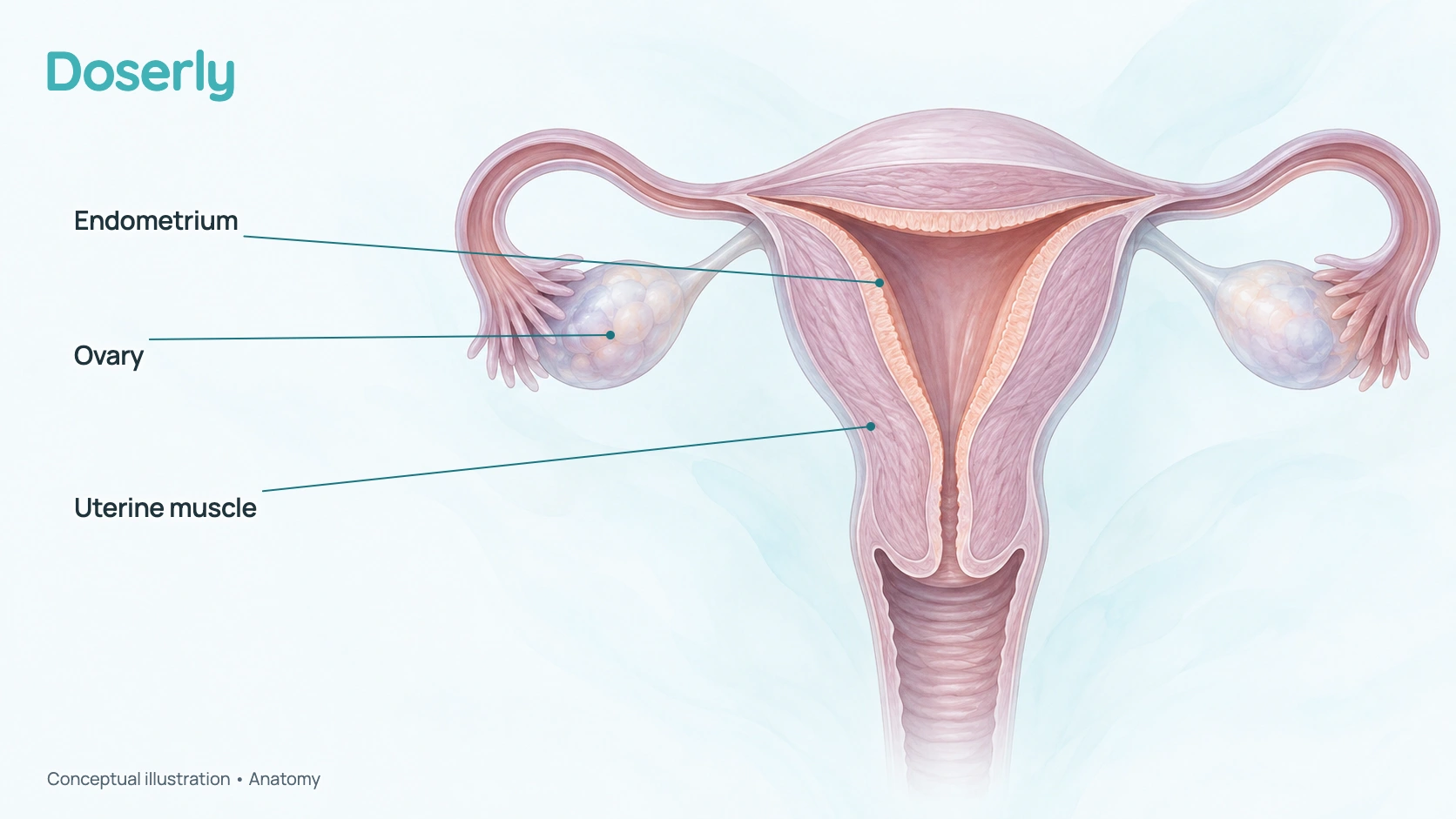
Why do vehicle and application site matter?
A skin cream, vaginal preparation, capsule and troche are different delivery systems. Changing site or route changes absorption and can change risks; a skin-labeled cream is not automatically suitable for vaginal use. Combining skin use with an oral product also creates a new complete regimen. [1], [2]
Ask about residual product, accidental transfer, handwashing, contact with children or partners and applicator accuracy under the actual pharmacy directions. Do not borrow exact drying, bathing, freezing or missed-dose thresholds from a licensed gel, patch or another custom formula. Unclear directions should be clarified with the compounder. [2], [3]
What does the small pharmacokinetic trial show?
The PubMed abstract of Sood and colleagues’ trial describes a blinded 16-day study of 40 postmenopausal women, with 37 analyzable results. The tested compounded Bi-est preparations produced lower estrogen exposure than the named estradiol patch comparator; estriol concentrations stayed low in the studied arms. This argues against assuming that a clinical shorthand for equivalence proves equivalent delivery. [7]
It is an exposure study, not a large long-term test of cancers, clots, fractures or an optimal ratio. The abstract is the accessed level; no hidden full-text methods, exposure threshold or universal conversion is claimed. Its findings apply to the studied preparations, not every pharmacy formula or a guarantee that every patient will fail treatment. [7]
ACOG and the National Academies identify limited high-quality outcome evidence and preparation-quality questions. A favorable personal response or normal blood level cannot fill those gaps. Short-term laboratory measurements and long-term protection are different endpoints. [1], [2]
Doserly
ORIGINAL EXPLANATORY DIAGRAM
Exposure evidence is not a dosing conversion
Accessed PubMed abstract, not unreviewed full-text methods.
Study scope
16 days; 40 postmenopausal participants, 37 analyzable results.
Finding
Tested Bi-est preparations had lower estrogen exposure than the named patch comparator.
Limit
Not a universal recipe, equivalent dose or long-term cancer/clot outcome trial.
Sources checked October 2, 2026: Source 7.
What safety and uterine-protection questions remain?
Estriol is another estrogen, not a progestogen and not proven cancer protection. With systemic estrogen and a uterus, the plan must provide adequate opposition. BMS concludes transdermal micronized progesterone does not provide sufficient endometrial protection; a custom bottle listing progesterone cream is not enough to assume the requirement is met. [4], [5]
Compounding adds quality, stability and potency questions to ordinary estrogen eligibility concerns. Unexplained bleeding, relevant cancer, clot/vascular history or liver disease needs assessment before systemic treatment. Sudden chest pain, breathlessness, painful swollen leg or neurologic symptoms requires urgent care; heavy or concerning bleeding deserves prompt review. [3], [4], [6]
The route evidence for regulated transdermal estradiol cannot automatically certify a custom mixture’s clot risk. Nor does lack of a warning box on a pharmacy label mean no risk. Review actual ingredients and interacting medicines, rather than regard a natural marketing term as a contraindication exemption. [1], [2], [3]
How should symptoms and tests guide review?
Keep the actual formula and pharmacy directions alongside symptom and bleeding notes. Review whether the intended problem improved, use was consistent, concentration changed or another hormone was added. ACOG does not recommend adjunct saliva/urine hormone testing to prescribe or dose compounded menopausal therapy; routine testing should not create an invented optimization target. Clinically indicated tests for other questions remain separate. [1]
NICE recommends review at three months and annually thereafter, earlier for problems. Persistent unscheduled systemic-HRT bleeding beyond six months after starting or three months after a change needs prompt assessment, with earlier evaluation when concerning. Those guideline decisions do not establish the quality or protection of a custom formula. [5], [6]
How should stopping or a regulated replacement be planned?
NICE permits gradual reduction or immediate stopping of MHT, but supplies no validated Biest pump taper. A switch should document the old formula, new product, route, schedule and protection with a uterus. Do not calculate a patch replacement from total compounded-mixture milligrams or keep a cream progestogen by default. [1], [5], [6]
Discuss symptom recurrence and separate local vaginal or bone goals. A planned replacement can address access, tolerability or evidence concerns without portraying the previous user’s benefit as imaginary. Serious suspected reactions need urgent clinical assessment rather than an ordinary gradual-change plan. [3], [6]
Which storage and missed-dose rules can be trusted?
Use the actual pharmacy’s storage conditions and beyond-use date, which is not automatically a manufactured product’s expiry. A cream, capsule or troche can have different stability and packaging needs. Ask about temperature, refrigeration, moisture and what to do after heat or damage; no universal Biest temperature is verified. [2], [3]
Missed-use advice also belongs to the actual formulation and prescription. An approved estradiol leaflet’s threshold cannot be transplanted without checking. Keep the complete labeled container when possible so a pharmacist can identify concentration and preparation rather than guess from a familiar mixture name. [2], [3]
How do approved bioidentical options differ?
Approved estradiol and progesterone products can also be bioidentical. Their molecular identity does not make them compounded; their standardized manufacturing, labels and formulation-specific evidence differ from custom preparations. Choosing an approved skin, oral or local option should match the goal and its own directions, rather than merely remove estriol from a recipe. [1], [4]
If an allergy or unavailable dosage form genuinely requires compounding, document that reason and the quality/protection plan. Extra hormones, convenience or favorable marketing alone do not establish superiority. A transparent comparison acknowledges both a person’s practical experience and the unresolved evidence for the exact custom formulation. [1], [2], [3]
What can the checked public experience actually support?
The newly retrieved public patient article discusses differing perceived response to Biest and estradiol and questions about whether estriol is protective. It contains provider/commercial links and unsupported prevention language. It is one personal article, not a representative survey or clinical authority. Its protection claims are checked against FDA/ACOG rather than carried forward as facts. [1], [4], [8]
The legacy Biest sentiment file had untraceable aggregated thread claims; these are not published as refreshed current sentiment. No identity, score, submitted dose, quote or response timeline is reproduced. Useful discussion questions concern the actual formula, why a mixture was chosen, what improved and whether protection or a regulated alternative was reviewed. [1], [2], [8]
Common questions about Biest
Does Biest name a standardized dose?
No. It identifies a mixture family; the actual amounts, route and schedule require the pharmacy prescription. [1], [2] A familiar mixture name cannot tell you the concentration per unit, the amount dispensed or the delivered exposure. Bring the container and complete prescription to the pharmacist, especially after a refill or change of pharmacy. Do not infer an approved-product replacement from the stated ratio. See identifying the preparation. [1], [2]
Does estriol replace progesterone for uterine protection?
No. Estriol is estrogen. Systemic treatment with a uterus needs adequate opposition; skin progesterone is not reliable protection. [4], [5] Adding an estrogen to the mixture does not supply the endometrial role of a suitable progestogen. The route and amount of the entire regimen matter, including any additional estrogen products. Ask the prescriber to identify the actual protection plan rather than relying on the word natural. See uterine protection and risks. [1], [4], [5]
Does the exposure trial give a patch conversion?
No. Its small 16-day results do not establish an equivalent dose or all-formula outcome comparison. [7] The tested preparations, exposure measurements and limited follow-up are part of that finding. A pharmacokinetic difference cannot by itself predict symptom relief, bleeding or long-term outcomes for a different custom formula. Avoid adjusting a preparation by an assumed conversion. See the study and its limits. [7]
Is saliva testing a validated personalization method here?
ACOG does not recommend adjunct hormone tests for compounded menopausal prescribing/dosing. Evaluate the clinical question and symptoms instead. [1] That recommendation concerns adjunct testing used to select a compounded menopausal dose; it does not prohibit every clinically indicated laboratory investigation. Describe symptoms, treatment use and the specific concern so the clinician can decide what assessment is useful. A hormone result alone is not a quality or protection certificate. See monitoring. [1]
Is a compounded Biest prescription FDA-approved?
No. FDA does not review and approve a custom-compounded prescription as it does an approved finished medicine. This distinction does not establish that every compound is unlawful or that a particular batch has failed. A specific unmet need may justify compounding, but routine superiority is not established. Discuss suitable approved alternatives, the reason for compounding and the actual pharmacy instructions. See the comparison for the difference between molecular identity, regulatory review and formulation evidence. [1], [3], [6]
Glossary
Definitions for interpreting the product, calendar and limitations.
- Estrogen
- A hormone class that includes estradiol, estrone and estriol.
- MHT / HRT
- Menopausal hormone therapy; hormone replacement therapy is a broader term.
- Vasomotor symptoms
- Menopausal hot flashes and night sweats.
- GSM
- Genitourinary syndrome of menopause: symptoms and tissue changes involving genital and urinary areas.
- Systemic treatment
- Medicine delivered through the circulation to act throughout the body.
- Local treatment
- Treatment directed mainly at the tissue where it is applied; some absorption can still occur.
- First-pass metabolism
- Initial liver processing after a swallowed medicine is absorbed from the gut.
- Endometrium
- The lining inside the uterus.
- Endometrial hyperplasia
- Excess growth of uterine lining; some forms can precede cancer.
- Progestogen
- A medicine class including progesterone and synthetic progestins, used for uterine protection in systemic HRT.
- Micronized progesterone
- Progesterone processed into small particles to support absorption; route and schedule remain important.
- Continuous combined
- Estrogen and progestogen taken without planned monthly breaks.
- Sequential
- Progestogen taken during a defined part of an estrogen-treatment cycle.
- Withdrawal bleed
- A planned bleed associated with stopping the progestogen part of a sequential regimen.
- Hysterectomy
- Surgery to remove the uterus; it does not always remove the ovaries.
- VTE
- Venous thromboembolism: a clot in a vein, including leg clots and pulmonary embolism.
- Pulmonary embolism
- A clot blocking an artery in the lungs; a medical emergency.
- Absolute risk
- How often an event occurs in a specified population over a specified time.
- Relative risk
- An event rate in one group compared with another; it needs baseline risk to show practical size.
- Contraindication
- A circumstance in which a medicine should not be used according to its label.
- Compounded product
- A pharmacy-prepared medicine; approval of an ingredient does not approve the finished preparation.
- Estradiol / E2
- An estrogen found in approved products and compounded mixtures.
- Estriol / E3
- Another estrogen; no FDA-approved estriol medicine in the US.
- Bioidentical
- Molecular identity with a naturally occurring hormone, not a quality certification.
- Vehicle
- The cream or other base carrying ingredients and influencing delivery.
- Mixture ratio
- Relative ingredient amounts; incomplete without named order, concentration and administered quantity.
- Beyond-use date
- Pharmacy-defined usable limit for the actual compounded preparation.
- Pharmacokinetics / PK
- How exposure changes with absorption, distribution, metabolism and elimination.
How was this guide researched?
Regulatory and clinical sources define compounding evidence limits. The actual prescription and pharmacy determine the mixture’s ingredients, route and instructions. Marketing records do not prove stock; guidelines inform care without changing authorization. Public accounts remain separate from clinical evidence. Sources identify document revision and access.
How this page was made
This Doserly editorial guide was prepared with AI assistance using public sources checked October 2, 2026. No independent clinician reviewer is claimed. Doserly develops a commercial tracking app. Original figures explain concepts and do not represent trial results. The directory identifies source revisions and access limitations. January 2027 is a review target; new evidence can require an earlier check.
Sources and updates
Numbered public sources checked October 2, 2026.
Showing 8 sources
- 01
Compounded Bioidentical Menopausal Hormone Therapy ↗
Full consensus
Compounding role, unproven superiority, symptom-guided care and tests.
- 02
Compounded Bioidentical Hormone Preparations ↗
Full report chapter
Actual mixture definitions, varying amounts and quality/stability issues.
- 03
Understanding the Risks of Compounded Drugs ↗
Full public statement
Compounded drugs are not FDA-approved; needed exceptions and quality risks.
- 04
Menopause ↗
Full consumer guidance
No approved US estriol medicine or verified compounded safety advantage.
- 05
Progestogens and endometrial protection ↗
Full clinician document
Systemic estrogen protection and limits of transdermal micronized progesterone.
- 06
Menopause: identification and management — Recommendations ↗
Full guideline
Clinical review and bleeding; no authorization of custom mixtures.
- 07
Bioidentical compounded hormones: a pharmacokinetic evaluation in a randomized clinical trial ↗
Abstract accessed
Small short PK study, not definitive symptom or long-term safety comparison.
- 08
Estriol vs Estradiol, is one a better choice for Menopause treatment? An HRT patient’s Review ↗
Full public article
Personal account with commercial links and unsupported protective claims; experience only.
No matching sources
Try a different term or show the full list.