
Angeliq HRT: Uses, Dosing, Potassium and Side Effects
On this page
Quick Reference Card
Attribute
Brand Name(s)
- Value
- Angeliq (US, EU, Australia, Canada)
Attribute
Generic Name
- Value
- Drospirenone + Estradiol (DRSP/E2)
Attribute
Drug Class / Type
- Value
- Combination estrogen + synthetic progestogen (spironolactone-derived)
Attribute
FDA-Approved Indications
- Value
- Treatment of moderate to severe vasomotor symptoms due to menopause; treatment of moderate to severe vulvar and vaginal atrophy symptoms due to menopause (in women with a uterus)
Attribute
Common Doses (US)
- Value
- 0.25 mg DRSP / 0.5 mg E2; 0.5 mg DRSP / 1 mg E2
Attribute
Common Doses (EU/Australia)
- Value
- 2 mg DRSP / 1 mg E2
Attribute
Route(s) of Administration
- Value
- Oral
Attribute
Dosing Schedule
- Value
- Continuous combined (daily, no break)
Attribute
Key Monitoring Requirements
- Value
- Serum potassium (first month in at-risk patients), blood pressure, mammography per guidelines, endometrial assessment if abnormal bleeding
Attribute
Initial FDA Approval
- Value
- 2005 (NDA 021355)
Attribute
Key Differentiator
- Value
- Only HRT progestogen derived from spironolactone; unique antimineralocorticoid activity (lowers blood pressure, prevents fluid retention) and antiandrogenic activity (benefits hair and skin)
Overview / What Is Estradiol + Drospirenone (Angeliq)?
The Basics
Angeliq is a combination hormone therapy tablet that contains two active ingredients: estradiol, the most potent natural form of estrogen, and drospirenone, a synthetic progestogen with properties that set it apart from every other progestogen used in HRT.
Most progestogens are included in HRT for one essential reason: to protect the uterine lining from the overgrowth that estrogen alone can cause. Drospirenone does this, but it also does two additional things that no other HRT progestogen can claim. First, it blocks the effects of aldosterone, a hormone that tells your kidneys to retain salt and water. This means women on Angeliq tend not to experience the bloating and fluid retention that can accompany other hormone therapies, and it can actually lower blood pressure in women with mild hypertension. Second, it blocks androgen receptors, which can help protect against hormone-related hair thinning and skin changes that some women experience during and after menopause.
Angeliq was first approved by the FDA in 2005, manufactured by Bayer HealthCare. It is prescribed to postmenopausal women with a uterus for two indications: relief of moderate to severe hot flashes and night sweats, and treatment of vulvar and vaginal atrophy symptoms. It is taken as a single tablet daily, continuously, with no break between packs.
For women who have struggled with side effects from other progestogens, such as the mood disturbance sometimes associated with medroxyprogesterone acetate or the drowsiness of micronized progesterone, Angeliq represents an important alternative. Its unique receptor profile means it does not produce the sedating neurosteroid metabolites of progesterone, nor does it have the cortisol-like activity of MPA.
As of September 13, 2026, Angeliq safety review should combine oral estradiol’s route-specific estrogen risks with drospirenone’s potassium cautions, while distinguishing broader FDA MHT warning updates from the active product label. [25][26]
The Science
Angeliq combines 17-beta estradiol (E2) with drospirenone (DRSP), a fourth-generation synthetic progestogen structurally derived from 17-alpha spirolactone rather than from the 19-nortestosterone or 17-alpha-hydroxyprogesterone classes that encompass most clinically used progestins [1][2]. This structural origin confers a pharmacological profile more closely aligned with endogenous progesterone than most synthetic progestins, with potent antimineralocorticoid and antiandrogenic activities but without significant estrogenic, androgenic, or glucocorticoid receptor activation [1].
The combination received FDA approval in 2005 (NDA 021355) and is available in two US strengths: 0.25 mg DRSP/0.5 mg E2 and 0.5 mg DRSP/1 mg E2 [3]. In Europe and Australia, a higher-strength formulation (2 mg DRSP/1 mg E2) is available, which in the EU carries an additional indication for osteoporosis prevention in postmenopausal women at high fracture risk who are intolerant of or contraindicated for other osteoporosis treatments [4].
The clinical rationale for combining estradiol with drospirenone extends beyond standard endometrial protection. Drospirenone's antimineralocorticoid activity counteracts the estrogen-induced activation of the renin-angiotensin-aldosterone system (RAAS), which may contribute to fluid retention, weight gain, and blood pressure elevation seen with some estrogen therapies. Multiple randomized controlled trials have demonstrated significant blood pressure reductions in hypertensive postmenopausal women taking DRSP/E2 [5][6]. This property has generated particular clinical interest given the rising prevalence of hypertension in the menopausal transition.
Medical / Chemical Identity
Property
Generic Name
- Value
- Drospirenone + Estradiol
Property
Chemical Class (DRSP)
- Value
- Spironolactone analog; fourth-generation progestogen
Property
Chemical Class (E2)
- Value
- Natural estrogen (17-beta estradiol)
Property
Molecular Formula (DRSP)
- Value
- C24H30O3
Property
Molecular Weight (DRSP)
- Value
- 366.5 g/mol
Property
CAS Number (DRSP)
- Value
- 67392-87-4
Property
Molecular Formula (E2)
- Value
- C18H24O2
Property
Molecular Weight (E2)
- Value
- 272.38 g/mol
Property
FDA Approval Date
- Value
- November 28, 2005
Property
NDA Number
- Value
- 021355
Property
Manufacturer
- Value
- Bayer HealthCare Pharmaceuticals Inc.
Brand Names by Country:
Country
United States
- Brand
- Angeliq
- Formulation(s)
- 0.25 mg DRSP/0.5 mg E2; 0.5 mg DRSP/1 mg E2
Country
European Union
- Brand
- Angeliq
- Formulation(s)
- 2 mg DRSP/1 mg E2
Country
Australia
- Brand
- Angeliq
- Formulation(s)
- 2 mg DRSP/1 mg E2
Country
Canada
- Brand
- Angeliq
- Formulation(s)
- Available
Country
United Kingdom
- Brand
- Angeliq (discontinued)
- Formulation(s)
- Was 2 mg DRSP/1 mg E2
Tablet Appearance:
- 0.25 mg DRSP/0.5 mg E2: round, biconvex, yellow, film-coated, embossed "EL" in hexagon
- 0.5 mg DRSP/1 mg E2: round, biconvex, pink, film-coated, embossed "CK" in hexagon
Key Structural Notes:
- Drospirenone is NOT derived from 19-nortestosterone (unlike norethindrone, levonorgestrel)
- Drospirenone is NOT derived from 17-alpha-hydroxyprogesterone (unlike MPA)
- Derived from spironolactone; structurally unique among HRT progestogens
- Does NOT bind to SHBG or CBG (unlike levonorgestrel and norethindrone)
Mechanism of Action
The Basics
To understand why Angeliq works differently from other combination HRT products, it helps to know that your body has several types of hormone receptors, and different progestogens interact with them in different ways.
Like all progestogens used in HRT, drospirenone binds to progesterone receptors in the uterine lining. This is what provides endometrial protection: it transforms the estrogen-stimulated, actively growing uterine lining into a stable, organized state, preventing the overgrowth that could lead to endometrial hyperplasia or cancer.
What makes drospirenone distinctive is its interaction with two additional receptor types. It blocks the mineralocorticoid receptor, which is the receptor that aldosterone uses to signal your kidneys to hold onto salt and water. When this signal is blocked, your body releases excess fluid instead of retaining it. Think of drospirenone as having a mild diuretic built into the progestogen. Three milligrams of drospirenone is roughly equivalent to 20-25 milligrams of spironolactone in terms of this fluid-balancing effect [7].
Drospirenone also blocks the androgen receptor. Androgens (testosterone and related hormones) can contribute to hair thinning, oily skin, and acne. By blocking androgen activity at the tissue level, drospirenone can help protect against these changes. Its antiandrogenic potency is approximately 30% that of cyproterone acetate, the most potent clinical antiandrogen [1].
Equally important is what drospirenone does not do. It does not activate the glucocorticoid receptor (unlike medroxyprogesterone acetate, which has significant cortisol-like activity). It does not produce sedating neurosteroid metabolites (unlike micronized progesterone). And it does not activate the androgen receptor (unlike some older progestins). This clean receptor profile is a key reason why many women tolerate it well.
The estradiol component works by replacing the estrogen your body is no longer producing in sufficient quantities. Estradiol binds to estrogen receptors throughout the body, restoring the hormonal signals that regulate your internal thermostat, maintain bone density, support vaginal and urinary tract health, and influence mood and cognitive function.
The Science
Drospirenone receptor binding profile [1][2]:
Progesterone receptor (PR): High-affinity binding to PR-A and PR-B isoforms. Induces secretory transformation of estrogen-primed endometrium. Demonstrates antigonadotropic effects and suppresses ovulation at higher doses (3 mg/day) [2].
Mineralocorticoid receptor (MR): Competitive aldosterone antagonist with approximately five-fold greater MR affinity than aldosterone itself [8]. Produces natriuresis, reduces plasma volume, and lowers blood pressure. The antimineralocorticoid activity is comparable to that of endogenous progesterone during the luteal phase [1]. Three milligrams DRSP is equivalent to approximately 20-25 mg spironolactone in MR antagonist capacity [7]. Beyond renal effects, MR antagonism at non-renal mineralocorticoid receptors in vascular tissue may confer cardiovascular protective effects through reduced vascular inflammation [9].
Androgen receptor (AR): Competitive antiandrogenic activity, inhibiting AR-mediated transcription and blocking 5-alpha-reductase in target tissues [1]. Antiandrogenic potency is up to 10-fold greater than endogenous progesterone and approximately 30% that of cyproterone acetate [1]. DRSP does not bind to SHBG [3].
Estrogen receptor (ER-alpha, ER-beta): No relevant binding [1].
Glucocorticoid receptor (GR): Low affinity; no significant GR activation [1]. This is clinically significant compared to MPA, which has partial GR agonist activity implicated in differential breast tissue and metabolic effects [11].
Estradiol mechanism: 17-beta estradiol binds to both ER-alpha and ER-beta. ER-alpha predominates in reproductive tissues, bone, liver, and cardiovascular endothelium. ER-beta is more abundant in brain, lungs, and GI tract [12]. Estradiol exerts effects through genomic pathways (nuclear ER binding to estrogen response elements, modulating gene transcription) and rapid non-genomic signaling (membrane-associated ERs, GPER/GPR30 activating MAPK/ERK and PI3K/Akt pathways) [13].
Visual guide
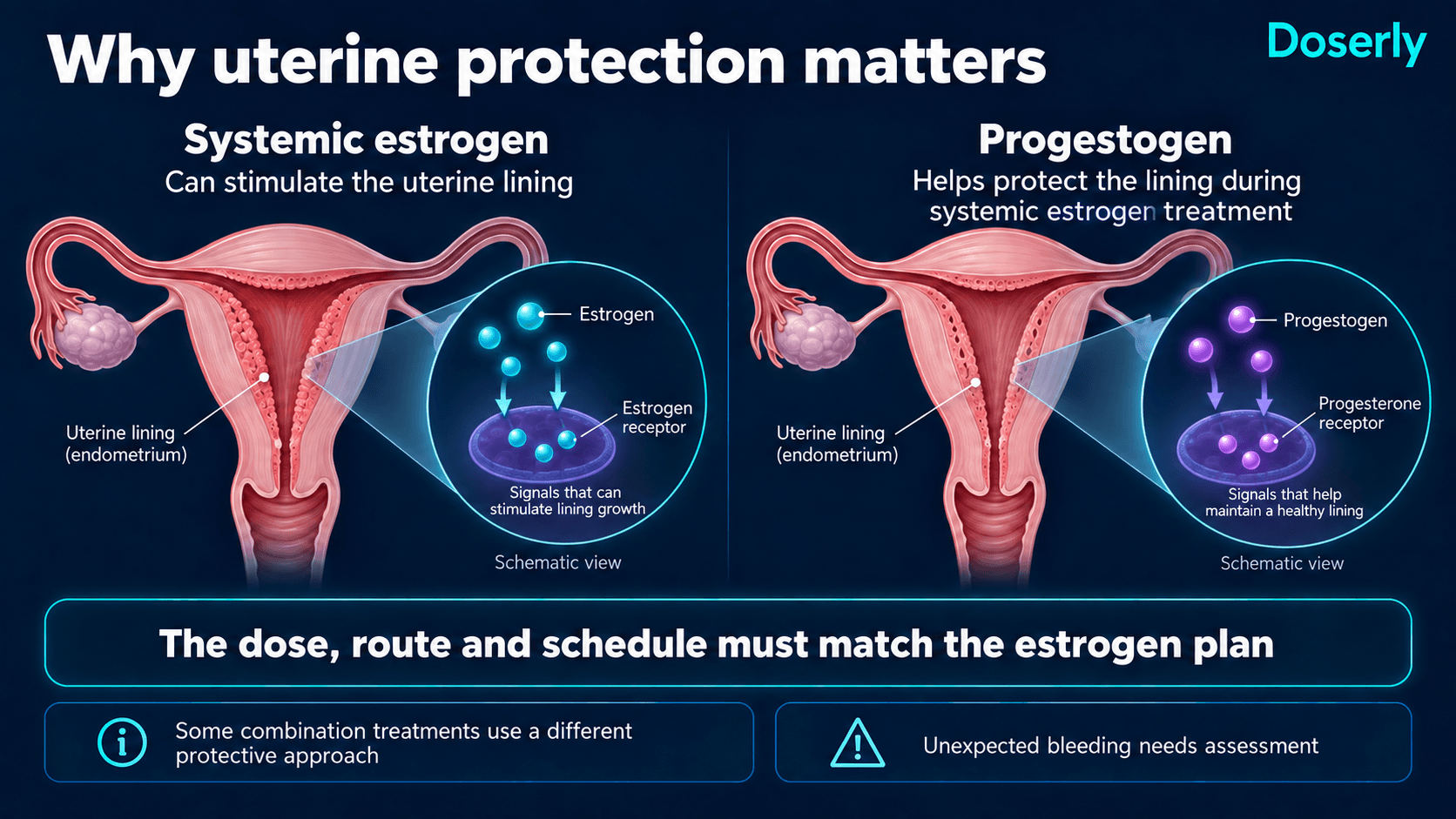
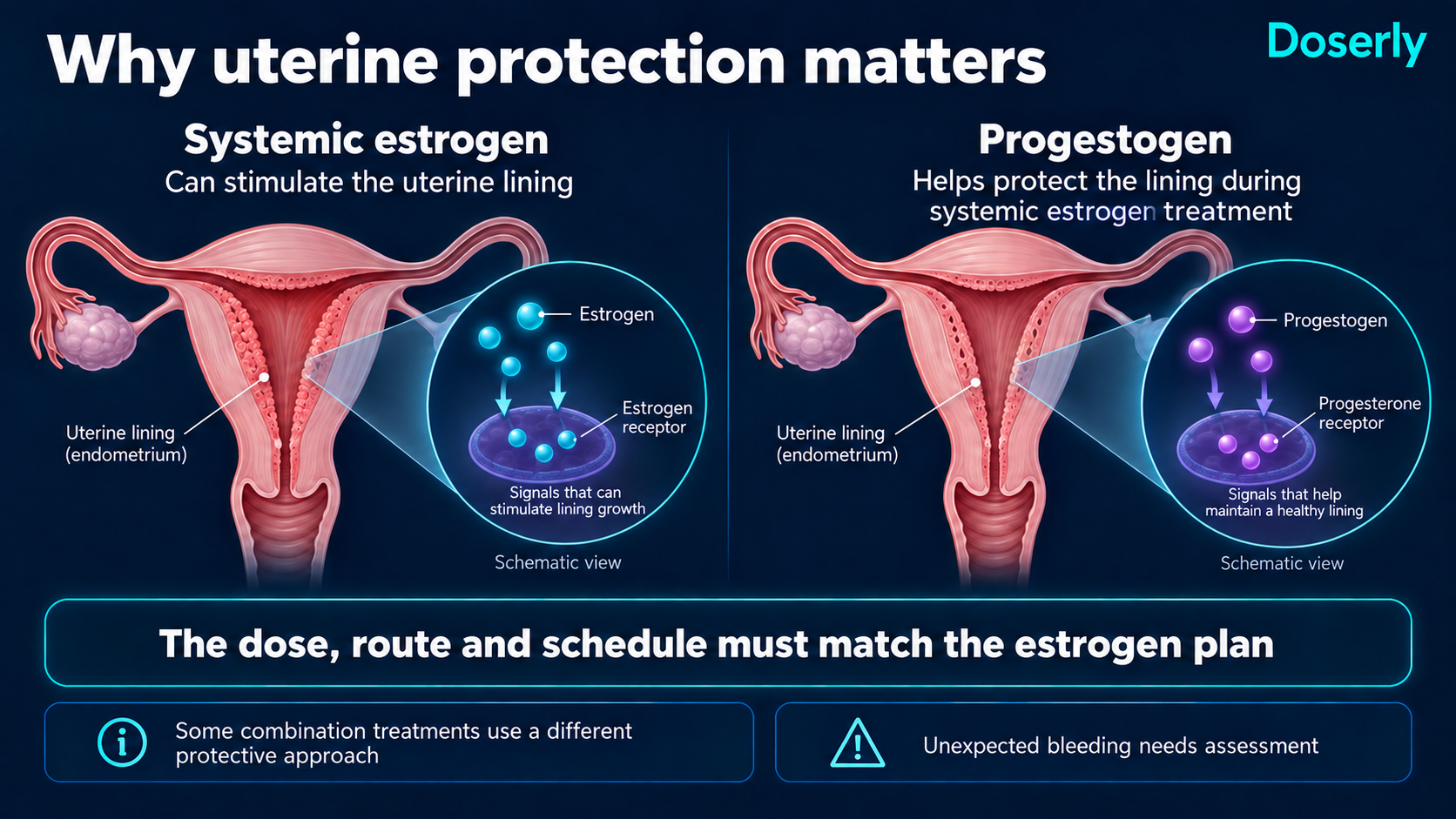
The illustration summarizes endometrial effects, not a dosing schedule or exact receptor structure. Progestogen dose, route and duration must provide protection for the estrogen regimen. Unexpected bleeding requires clinical assessment.
NICE menopause recommendations.
Pharmacokinetics / Hormone Physiology
The Basics
When you take an Angeliq tablet, both hormones are absorbed through your digestive system. Drospirenone has notably good oral bioavailability (76-85%), meaning most of the dose reaches your bloodstream in active form. For comparison, oral micronized progesterone has about 15-20% bioavailability, and oral estradiol only about 5%.
Drospirenone reaches peak blood levels within about 1 hour and has a long half-life of approximately 30 hours. This means it maintains stable blood levels with once-daily dosing. Steady state is achieved after about 10 days of consistent use.
Estradiol, taken orally, undergoes extensive first-pass metabolism in the liver. This means a significant portion is converted to estrone and estrone sulfate before reaching the rest of your body. The first-pass effect is also why oral estradiol stimulates the liver to produce certain proteins (including clotting factors), which is the primary reason oral estrogen carries higher thrombotic risk than transdermal forms.
One practical advantage of Angeliq: food does not significantly affect drospirenone absorption. You can take it with or without food, though taking it at a consistent time each day is recommended for stable hormone levels.
In the blood, drospirenone binds only to albumin (95-97%), not to sex hormone-binding globulin (SHBG) or corticosteroid-binding globulin (CBG). This is unusual among progestogens and means drospirenone does not compete with other hormones for these binding proteins.
Drospirenone is metabolized primarily into two inactive compounds without significant involvement of the CYP450 enzyme system. Only minor CYP3A4 metabolism occurs. This translates to fewer drug interactions than medications heavily dependent on CYP enzymes. However, CYP3A4 inducers and inhibitors can still affect estradiol levels.
The Science
Drospirenone Pharmacokinetics:
Parameter
Oral Bioavailability
- Value
- 76-85% [2]
Parameter
Tmax
- Value
- ~1 hour
Parameter
Terminal Half-Life
- Value
- ~30 hours
Parameter
Steady State
- Value
- ~10 days of daily dosing [3]
Parameter
Volume of Distribution
- Value
- ~4.2 L/kg
Parameter
Protein Binding
- Value
- 95-97% (albumin only; no SHBG or CBG binding) [3]
Parameter
Primary Metabolites
- Value
- Acid form (lactone ring opening) and 4,5-dihydro-DRSP-3-sulfate
Parameter
CYP450 Involvement
- Value
- Minor CYP3A4; primary metabolism is non-CYP-mediated [3]
Parameter
Elimination
- Value
- Renal and fecal, approximately equal; trace unchanged drug
Estradiol Pharmacokinetics (oral):
Parameter
Oral Bioavailability
- Value
- ~5% (extensive first-pass hepatic metabolism)
Parameter
Tmax
- Value
- ~2 hours (range 0.3-10 hours)
Parameter
Terminal Half-Life
- Value
- 14-20 hours
Parameter
Protein Binding
- Value
- 37% SHBG, 61% albumin
Parameter
Metabolism
- Value
- CYP3A4-mediated conversion to estrone and estrone sulfate
Parameter
First-Pass Effect
- Value
- Increases hepatic synthesis of SHBG, CRP, clotting factors, TBG, angiotensinogen [14]
Steady-State Parameters (Angeliq 0.5 mg DRSP/1 mg E2) [3]:
Parameter
Cmax
- Drospirenone
- 9.2 ng/mL
- Estradiol
- 30.7 pg/mL
- Estrone
- 114.8 pg/mL
Parameter
AUC(0-24h)
- Drospirenone
- 80.2 ng·h/mL
- Estradiol
- —
- Estrone
- —
Clinical PK Notes:
- Food does not significantly affect DRSP bioavailability in the E2/DRSP formulation [3]
- Unlike levonorgestrel and norethindrone, DRSP does not bind to SHBG, simplifying dose-response pharmacology
- Ethinyl estradiol (in COC formulations) inhibits CYP3A4, increasing DRSP exposure. Estradiol does not inhibit CYP3A4, so the HRT formulation produces lower DRSP exposure than COC formulations [15]
- The E2:E1 ratio with oral administration is approximately 1:4-5 (unfavorable compared to transdermal which achieves ~1:1), reflecting extensive first-pass conversion
Understanding how your body absorbs and metabolizes hormones is one thing. Tracking your actual protocol — doses, timing, and route — gives you the data to have more productive conversations with your prescriber. Doserly lets you log every dose with route-specific detail, building a clear record of your hormone protocol over time.
Whether you're on patches, gels, oral tablets, or a combination, the app tracks your schedule and flags when doses are due. When your provider asks how your protocol has been going, you'll have a precise answer instead of a best guess.
Research & Clinical Evidence
The Basics
The clinical evidence supporting Angeliq comes from several well-designed studies, including randomized controlled trials comparing it to placebo and to other HRT combinations.
The most compelling evidence is for vasomotor symptom relief. In a 12-week study of 735 postmenopausal women with moderate to severe hot flashes, both Angeliq dose strengths significantly outperformed placebo. Women experienced meaningful reductions in the frequency and severity of their hot flashes, and both doses were also more effective than low-dose estradiol alone [16]. A separate analysis of over 800 women found that responder rates (at least 50% reduction in hot flashes) ranged from 63% to 100% depending on the dose combination, all within 12 weeks [17].
Endometrial safety has been studied in a one-year trial comparing Angeliq to a widely used alternative (norethindrone acetate with estradiol). No cases of endometrial hyperplasia were found in either group, and Angeliq showed a more favorable side effect profile: fewer treatment-related adverse events (18.4% vs 25.6%) and fewer women discontinuing due to side effects (8.4% vs 15.1%). Rates of amenorrhea were high, reaching about 80% by months 10-12, which most women view positively [18].
The blood pressure evidence is particularly notable. A landmark randomized trial of 750 hypertensive postmenopausal women showed that drospirenone combined with estradiol produced dose-related reductions in both clinic and 24-hour ambulatory blood pressure. Importantly, estradiol alone was no different from placebo for blood pressure, confirming that the blood pressure benefit comes specifically from the drospirenone component [5]. A subsequent analysis showed that these reductions extended to early morning blood pressure, a window associated with higher cardiovascular event risk [6].
Recent metabolic data from a 2025 study of 128 menopausal women showed that 12 months of DRSP/E2 therapy produced significant reductions in systolic blood pressure (4.5 to 8.5 mmHg), BMI, apolipoprotein B, and total cholesterol, suggesting favorable cardiovascular risk modification [19].
The Science
Vasomotor Symptom Efficacy:
A 12-week, double-blind, randomized, placebo-controlled trial (n=735) evaluated two low-dose DRSP/E2 combinations (0.25/0.5 mg and 0.5/0.5 mg) versus E2 0.3 mg alone and placebo. All active treatments were significantly more effective than placebo for both co-primary endpoints (mean change in moderate-to-severe hot flush frequency and severity) at weeks 4 and 12 (P < 0.0001 for DRSP/E2 combinations; P < 0.01 for E2 alone). Both DRSP/E2 combinations demonstrated greater efficacy than lower-dose E2 alone. Vaginal pH and maturation index also improved. The Clinical Global Impressions scale confirmed patient satisfaction across active treatment groups [16].
A retrospective analysis of two prospective RCTs (n=832) comparing E2 0.5 mg vs 1.0 mg in combination with varying DRSP doses found responder rates (≥50% reduction in moderate-to-severe hot flushes at 12 weeks) of: 62.7% (E2 0.5/DRSP 0.25), 75.8% (E2 0.5/DRSP 0.5), 86.7% (E2 1/DRSP 1), 100% (E2 1/DRSP 2), and 89.7% (E2 1/DRSP 3) [17].
Endometrial Safety:
A 1-year, double-blind, active-comparator RCT (n=662) compared DRSP 0.25 mg/E2 0.5 mg with NETA 0.5 mg/E2 1.0 mg. No evaluable women in either group developed endometrial hyperplasia or worse. The DRSP/E2 group showed higher amenorrhea rates in months 1-3 (69.0% vs 56.0%), converging to approximately 80% in months 10-12. Treatment-related adverse events were lower in the DRSP/E2 group (18.4% vs 25.6%), as were AE-related discontinuations (8.4% vs 15.1%). No thromboembolic or cardiovascular events occurred in the DRSP/E2 group versus two events in the NETA/E2 group [18].
Clinical context — Endometrial safety comparison methodology.
Blood Pressure Effects:
Pitt et al. conducted a landmark randomized, double-blind trial (n=750) in postmenopausal women with stage 1-2 hypertension evaluating three DRSP doses combined with E2, E2 alone, and placebo over 8 weeks. DRSP/E2 induced dose-related reductions in ambulatory and clinic systolic blood pressure, with significant decreases in 24-hour systolic pressure at DRSP doses of 2 mg and 3 mg combined with E2. E2 alone was not different from placebo, confirming that the antihypertensive effect is attributable to drospirenone's antimineralocorticoid activity. Physiological increases in serum aldosterone (expected with MR antagonism) were observed without significant increases in serum potassium [5].
White et al. demonstrated that DRSP/E2 significantly reduced early morning systolic blood pressure in a dose-dependent manner. Early morning systolic BP reductions were significant at all three DRSP doses (1, 2, and 3 mg) compared to placebo. The rate of rise in systolic BP from sleep nadir to post-awakening plateau was significantly reduced in the 3 mg DRSP group [6].
Metabolic Effects:
Gambacciani et al. demonstrated in a prospective randomized study that E2 1 mg/DRSP 2 mg (vs calcium control) significantly improved vasomotor symptoms and quality of life (WHQ scores), decreased waist circumference (P < 0.001), reduced blood insulin and insulin resistance (HOMA-IR), and lowered blood pressure values [20]. Mandloi et al. (2025, n=128) confirmed these findings at 12 months: systolic BP reduction of 4.5-8.5 mmHg, diastolic reduction of 4-5 mmHg, significant reductions in BMI, apolipoprotein B, and total cholesterol [19].
Benefits & Therapeutic Effects
The Basics
Angeliq offers a range of benefits that can be grouped into two categories: those shared with other combined HRT products (because of the estradiol component) and those unique to Angeliq (because of drospirenone's distinctive properties).
Shared HRT benefits (estradiol-driven):
The most immediate and noticeable benefit for most women is relief from vasomotor symptoms. Hot flashes and night sweats typically begin to improve within the first few weeks, with clinical trials showing significant reduction by week 4. This can improve sleep quality, daytime functioning, and overall wellbeing when night sweats and hot flashes decrease.
Estradiol also supports vaginal and urinary tract health, gradually reversing the tissue thinning and dryness that causes discomfort, pain during intimacy, and recurrent urinary infections. Bone protection is another important benefit, with estrogen being FDA-approved for osteoporosis prevention (and the higher-dose EU formulation carrying this specific indication).
Unique Angeliq benefits (drospirenone-driven):
The blood pressure benefit is the most clinically validated differentiator. In women with mild to moderate hypertension, Angeliq has been shown to lower blood pressure by approximately 4.5-8.5 mmHg systolic. This is notable because other HRT products are typically blood pressure-neutral or may slightly increase it. For the many women who develop hypertension during the menopausal transition, this dual benefit (symptom relief plus blood pressure management) can be particularly valuable.
The antimineralocorticoid effect also prevents the water retention and bloating that some women experience on other HRT combinations. This is one of the most commonly appreciated practical benefits.
Drospirenone's antiandrogenic activity can help protect against hormone-related hair thinning and skin changes.
Metabolic benefits have been observed in clinical studies: improved insulin sensitivity, reduced waist circumference, and favorable changes in lipid profiles, suggesting positive cardiovascular risk modification beyond the blood pressure effect alone.
The Science
Vasomotor Symptom Relief: RCT data demonstrates statistically significant reductions in moderate-to-severe hot flush frequency and severity at both 4 and 12 weeks of treatment. Responder rates (≥50% reduction) at the lowest US dose (DRSP 0.25/E2 0.5) were 62.7%, rising to 75.8% at DRSP 0.5/E2 0.5, and reaching 86.7-100% at higher European doses [16][17].
Blood Pressure Reduction: The antimineralocorticoid mechanism (MR antagonism) produces clinically significant reductions in 24-hour ambulatory and clinic systolic blood pressure in hypertensive postmenopausal women. The effect is dose-dependent and attributable specifically to DRSP, as E2 alone showed no BP effect versus placebo [5][6]. Recent data confirms sustained BP reductions of 4.5-8.5 mmHg systolic and 4-5 mmHg diastolic at 12 months [19].
Endometrial Protection: 1-year RCT data confirms no endometrial hyperplasia with DRSP 0.25/E2 0.5, with a more favorable adverse event profile than NETA/E2 [18].
Metabolic Effects: Prospective data demonstrates significant reductions in fasting insulin, HOMA-IR, waist circumference, BMI, apolipoprotein B, and total cholesterol with E2/DRSP therapy [19][20].
Antiandrogenic Benefits: DRSP's AR antagonism (approximately 30% of cyproterone acetate potency) provides tissue-level antiandrogen effects without systemic testosterone suppression at low HRT doses. Clinical relevance for hair and skin is supported by mechanistic data, though no dedicated RCT has evaluated cosmetic endpoints specifically for the HRT formulation [1].
Risks, Side Effects & Safety
The Basics
Like all hormone therapy, Angeliq carries risks that need to be understood in context. The risks fall into three categories: those common to all combined HRT (estrogen plus progestogen), those specific to oral administration, and those unique to drospirenone.
Common side effects that may occur, especially during the first few months, include breast tenderness or swelling, headache, abdominal discomfort, and spotting or breakthrough bleeding. These typically improve as your body adjusts. In the 1-year clinical trial comparing Angeliq to another HRT combination, treatment-related adverse events occurred in 18.4% of Angeliq users (compared to 25.6% for the comparator), and only 8.4% discontinued due to side effects [18].
Serious risks require careful consideration. All of the following risk data comes primarily from the WHI study, which tested a different estrogen (conjugated equine estrogens) at a higher dose with a different progestogen (MPA) in an older population (average age 63). While the FDA applies this data as class labeling to all E+P products, the actual risk with Angeliq (which uses lower doses of bioidentical estradiol with a different progestogen) may differ.
Blood clots (VTE): In the WHI, oral CE plus MPA roughly doubled VTE risk: 35 events per 10,000 women per year versus 17 with placebo. That means an additional 18 VTE events per 10,000 women per year. Because Angeliq is an oral product, it carries the first-pass liver effect that increases clotting factor production. Transdermal estrogen avoids this effect and has consistently shown no significant VTE risk increase in observational studies.
Stroke: The WHI found 33 strokes per 10,000 women per year with CE+MPA versus 25 with placebo (8 additional strokes per 10,000 women per year). However, in the subgroup of younger women (ages 50-59) on estrogen alone, there was no increased risk.
Breast cancer: After 5.6 years of follow-up, the WHI found 41 invasive breast cancer cases per 10,000 women per year with CE+MPA versus 33 with placebo (8 additional cases per 10,000 women per year). In women who had never previously used HRT, the increase was small and not statistically significant (RR 1.09). In the estrogen-alone arm, breast cancer risk actually decreased (RR 0.80) [3].
Unique to Angeliq (hyperkalemia risk): Because drospirenone blocks aldosterone, it can raise potassium levels in certain high-risk patients. Angeliq is contraindicated in women with kidney disease, liver disease, or adrenal insufficiency. Women taking other medications that increase potassium (ACE inhibitors, ARBs, potassium-sparing diuretics, NSAIDs) need monitoring.
What reduces your individual risk:
- Starting HRT within 10 years of menopause onset or before age 60
- Lower doses (the US doses are already lower than EU doses)
- Shorter duration of use (though individualized reassessment is recommended)
- Being at a healthy weight and not smoking (smoking dramatically amplifies cardiovascular and VTE risk with oral estrogen)
The Science
Venous Thromboembolism: WHI E+P substudy: HR for VTE 2.0 (35 vs 17 per 10,000 women-years). DVT: 26 vs 13 per 10,000; PE: 18 vs 8 per 10,000. WHI E-alone: VTE 30 vs 22 per 10,000 (DVT significant: 23 vs 15). The ESTHER study (observational) found no significant VTE increase with transdermal estrogen (OR 0.9, 95% CI 0.4-2.1) [3][21]. As an oral product, Angeliq carries the first-pass hepatic effect that increases coagulation factor synthesis (factors VII, X, fibrinogen) and reduces antithrombin III activity [3].
Stroke: WHI E+P: 33 vs 25 per 10,000 women-years. WHI E-alone: 45 vs 33 per 10,000. Subgroup 50-59 E-alone: 18 vs 21 per 10,000 (no increase). The risk was dose-dependent and route-dependent in observational data [3].
Coronary Heart Disease: WHI E+P: 41 vs 34 per 10,000 (not statistically significant). Subgroup 50-59 E-alone: trend toward reduction (8 vs 16 per 10,000). HERS/HERS II showed no cardiovascular benefit in women with established CHD [3].
Clinical context — VTE risk applicability to Angeliq.
Breast Cancer: WHI E+P: RR 1.24 (41 vs 33 per 10,000). No prior HT users: RR 1.09 (not significant). WHI E-alone: RR 0.80 (reduced risk). Observational meta-analyses report increased risk dependent on duration and type of progestogen. The E3N cohort (n=80,377) found no increased risk with estrogen plus micronized progesterone (HR 1.00) versus significant increase with synthetic progestins (HR 1.69) [22]. No comparable data exists specifically for drospirenone's breast cancer risk profile at HRT doses.
Ovarian Cancer: WHI E+P: RR 1.58 (not statistically significant). Absolute: 4 vs 3 per 10,000. Meta-analysis: current HRT use RR 1.41 (95% CI 1.32-1.50) [3].
Probable Dementia: WHIMS E+P: RR 2.05 (45 vs 22 per 10,000), women 65-79 years. Unknown applicability to younger women [3].
Hyperkalemia: Unique to drospirenone-containing products. DRSP's MR antagonism creates potential for hyperkalemia in patients with impaired potassium excretion. Contraindicated with renal impairment, hepatic impairment, adrenal insufficiency. Clinical trials in hypertensive women showed no significant increases in serum potassium with DRSP/E2 at standard doses [5].
Contraindications (complete list): Undiagnosed abnormal genital bleeding; breast cancer (current or history); estrogen-dependent neoplasia; active or history of DVT, PE, or arterial thromboembolism; renal impairment; hepatic impairment or disease; adrenal insufficiency; known thrombophilic disorders (protein C, protein S, or antithrombin deficiency); known hypersensitivity to Angeliq [3].
Being informed about potential risks is important. Being able to track and document any side effects you actually experience is what turns awareness into safety. Doserly lets you log side effects as they happen, with timestamps and severity ratings, so nothing falls through the cracks between appointments.
If you're experiencing breakthrough bleeding, headaches, breast tenderness, or any other change, having a documented timeline helps your provider distinguish between expected adjustment effects and signals that warrant a protocol change. The app also checks for interactions between your HRT and any other medications or supplements you're taking.
Dosing & Treatment Protocols
The Basics
Angeliq is taken as one tablet daily, every day, with no break between packs. This is called a continuous combined regimen. Unlike some HRT regimens that include hormone-free days or cycling between estrogen and progestogen, Angeliq provides both hormones every day, which is the approach most likely to achieve amenorrhea (no periods).
The lower-dose tablet (0.25 mg drospirenone / 0.5 mg estradiol, yellow tablet) is the recommended starting point for vasomotor symptoms. If this dose does not provide adequate symptom relief, the higher-dose tablet (0.5 mg drospirenone / 1 mg estradiol, pink tablet) can be tried. For vulvar and vaginal atrophy, the higher-dose tablet is the starting recommendation.
In Europe and Australia, a higher formulation (2 mg drospirenone / 1 mg estradiol) is available. Some women in these regions start with a quarter tablet if they are sensitive to medications.
Practical guidance:
- Take at the same time each day for consistent hormone levels
- Can be taken with or without food (food does not significantly affect drospirenone absorption)
- If you miss a dose by less than 24 hours, take it as soon as you remember. If more than 24 hours, skip the missed dose
- If several tablets are missed, breakthrough bleeding may occur
- Women not currently on HRT can start any day. Women switching from cyclic/sequential HRT should complete their current cycle first
The Science
US Dosing (FDA-approved) [3]:
Indication
Vasomotor symptoms
- Starting Dose
- 0.25 mg DRSP / 0.5 mg E2 daily
- Alternative Dose
- 0.5 mg DRSP / 1 mg E2 daily (if insufficient response)
Indication
Vulvar/vaginal atrophy
- Starting Dose
- 0.5 mg DRSP / 1 mg E2 daily
- Alternative Dose
- —
EU/Australian Dosing:
Formulation
2 mg DRSP / 1 mg E2 daily
- Indication
- Vasomotor symptoms, vulvar/vaginal atrophy, osteoporosis prevention (EU)
Clinical context — Optimal drospirenone dose for HRT.
Progestogen Pairing: Not applicable for Angeliq, as it is a fixed-dose combination. Drospirenone provides the progestogenic opposition required for endometrial protection in women with a uterus.
Prescribing principle: HRT guidelines universally recommend using the lowest effective dose for the shortest duration consistent with treatment goals, with individualized reassessment. Angeliq should be prescribed only for women with an intact uterus; women who have had a hysterectomy do not need the progestogen component and would use estrogen alone.
Getting the dosing right often takes time and fine-tuning with your provider. Keeping an accurate record of what you're actually taking — doses, timing, and any adjustments — makes that process smoother. Doserly tracks your HRT doses alongside everything else in your health stack, so your full protocol is always in one place.
Never wonder whether you took your morning dose or when you last changed your patch. The app logs every dose with a timestamp and sends reminders when your next one is due, helping you maintain the consistency that makes hormone therapy most effective.
What to Expect (Timeline)
Days 1-7: Initial adjustment period. Breast tenderness, mild headache, or abdominal bloating can occur. Spotting or light breakthrough bleeding is normal. Hot flash response timing varies.
Weeks 2-4: Vasomotor symptoms typically begin to improve noticeably. Hot flash frequency and severity decline. Night sweats may improve, leading to better sleep. Breast tenderness, if present, usually begins to settle. Mood and energy can improve secondarily when vasomotor symptoms and sleep disruption improve.
Months 1-3: Significant improvement in vasomotor symptoms for most women. Mood stabilization, better sleep quality, and improved energy levels commonly reported. Breakthrough bleeding or spotting typically decreases over this period. Amenorrhea rates reach approximately 69% by month 3.
Months 3-6: Full therapeutic effect for vasomotor symptoms established. Vaginal and vulvar atrophy symptoms begin to improve with continued use. Blood pressure benefits become established in women with hypertension. Hair improvement (related to drospirenone's antiandrogenic activity) may become noticeable, though this is a slower process. Amenorrhea rates continue to increase.
Months 6-12 and beyond: Amenorrhea rates reach approximately 80% by months 10-12. Bone density stabilization begins (particularly at higher EU doses with osteoporosis prevention indication). Long-term metabolic benefits (lipids, insulin sensitivity, body composition) continue to develop. Annual review with your healthcare provider should assess continued need, symptoms, and any emerging concerns.
Important expectations: Individual response varies considerably. Some women notice improvement within days; others take several weeks. If initial side effects are bothersome, they usually resolve within the first 1-3 months. Dose adjustment may be needed. If symptoms are not adequately controlled after an adequate trial, discuss alternative doses or formulations with your prescriber.
Timing Hypothesis & Window of Opportunity
The timing hypothesis suggests that HRT initiated within 10 years of menopause onset, or before age 60, may have a more favorable risk-benefit profile than HRT started later. This concept is particularly relevant when considering Angeliq or any other combined HRT product.
Supporting evidence: The WHI age subgroup analyses found that women aged 50-59 who received estrogen alone had a trend toward reduced coronary heart disease events (8 vs 16 per 10,000 women-years) and no increased stroke risk (18 vs 21 per 10,000) [3]. The ELITE trial demonstrated that early-initiation estradiol slowed progression of carotid artery intima-media thickness, while late initiation did not. The Danish Osteoporosis Prevention Study found cardiovascular benefit with early HRT initiation over 10 years. The KEEPS trial confirmed that early estradiol (within 3 years of menopause) was safe and improved several cardiovascular risk markers.
Relevance to Angeliq: Because Angeliq is an oral product, the timing consideration is particularly important. Oral estrogen's first-pass hepatic effects (increased clotting factors, SHBG, TBG) are generally better tolerated in younger, healthier women closer to menopause onset. For women who are significantly past the 10-year window or over age 60, the risk-benefit conversation becomes more complex, and transdermal estrogen (which avoids the first-pass effect) may be preferred.
Drospirenone's blood pressure-lowering effect may offer an additional consideration in the timing conversation: for women in the early menopausal transition who are developing hypertension, the combination of symptom relief and blood pressure benefit could be particularly appealing.
Limitations: No RCT has been specifically designed and powered to test the timing hypothesis definitively. The evidence comes from subgroup analyses, secondary endpoints, and surrogate markers. The timing hypothesis should be discussed as evolving evidence, not settled science, and factored into the shared decision-making process between each woman and her healthcare provider.
Interactions & Compatibility
Drug-Drug Interactions:
- Potassium-increasing medications (HIGH PRIORITY for Angeliq): ACE inhibitors (enalapril, lisinopril), ARBs (losartan, valsartan), potassium-sparing diuretics (spironolactone, amiloride, triamterene), potassium supplements, heparin, aldosterone antagonists. Drospirenone's antimineralocorticoid activity combined with these drugs increases hyperkalemia risk. Monitor serum potassium during the first month in at-risk patients [3].
- Thyroid medications: Estrogen increases thyroid-binding globulin (TBG), potentially requiring levothyroxine dose adjustment. Monitor thyroid function [3]. See also: Levothyroxine interactions (if applicable).
- Anticoagulants (warfarin): Estrogen alters coagulation factor concentrations. INR monitoring recommended.
- CYP3A4 inducers (rifampin, phenytoin, carbamazepine, St. John's Wort): May decrease estradiol levels, potentially reducing efficacy.
- CYP3A4 inhibitors (ketoconazole, itraconazole, clarithromycin, HIV protease inhibitors): May increase estradiol levels. Also consider monitoring serum potassium with strong CYP3A4 inhibitors due to DRSP interaction [3].
- Lamotrigine: Estrogen can reduce lamotrigine levels significantly, potentially affecting seizure control.
- SSRIs/SNRIs: No direct pharmacokinetic interaction, but these are sometimes used as non-hormonal alternatives for vasomotor symptoms. Concurrent use is generally safe.
- Diabetes medications: Estrogen may affect insulin sensitivity. Monitor blood glucose if relevant. The DRSP/E2 combination has shown favorable insulin sensitivity effects in clinical studies [19][20].
Supplement Interactions:
- St. John's Wort: CYP3A4 inducer that can reduce estradiol levels. Avoid concurrent use or monitor for reduced HRT efficacy.
- Calcium and Vitamin D: Important complementary supplements for bone health. No adverse interaction with Angeliq.
- Black cohosh: Sometimes used for menopausal symptoms. No known pharmacokinetic interaction, but additive estrogenic effects are theoretically possible.
Lifestyle Factors:
- Smoking: Dramatically increases VTE and cardiovascular risk with oral estrogen. Smoking while taking Angeliq is strongly discouraged.
- Alcohol: Acute alcohol ingestion increases estradiol levels due to effects on hepatic metabolism. No clinically relevant interaction with drospirenone [3]. Moderate consumption should be discussed with your provider.
- Grapefruit: CYP3A4 inhibitor that may increase estradiol levels. The effect on drospirenone is minimal since DRSP is not primarily CYP-metabolized.
Internal Cross-Links:
- Drospirenone (standalone progestogen guide)
- 17B-Estradiol (Bioidentical)
- Micronized Progesterone (Prometrium) — alternative progestogen
- Medroxyprogesterone Acetate (Provera) — alternative progestogen
- Norethindrone Acetate (Aygestin) — alternative progestogen
- Estradiol + Norethindrone Acetate (Activella) — alternative combination product
- Estradiol + Progesterone (Bijuva) — alternative combination product
Decision-Making Framework
Choosing whether Angeliq is right for you is a decision best made with a knowledgeable healthcare provider who can assess your individual risk factors, symptoms, and preferences. Here is a framework for that conversation.
Who may be a good candidate for Angeliq:
- Women with a uterus experiencing moderate to severe vasomotor symptoms or vulvar/vaginal atrophy
- Women who have not tolerated other progestogens (micronized progesterone, MPA, norethindrone)
- Women with mild to moderate hypertension who would benefit from the dual symptom-relief and BP-lowering effect
- Women concerned about fluid retention or bloating on HRT
- Women experiencing hormone-related hair thinning (drospirenone's antiandrogenic activity)
- Women who previously did well on drospirenone-containing contraceptives (Yaz, Yasmin, Slynd)
Who may not be a good candidate:
- Women with kidney disease, liver disease, or adrenal insufficiency (hyperkalemia risk)
- Women on multiple potassium-increasing medications
- Women with a history of or current breast cancer
- Women with a history of blood clots, stroke, or heart attack
- Women who prefer transdermal delivery (Angeliq is oral only)
- Women concerned about low libido (drospirenone's antiandrogenic activity may affect testosterone-dependent desire)
Questions to ask your provider:
- "Is my blood pressure a factor in choosing which HRT to use?"
- "I've had trouble with [progesterone/MPA/norethindrone]. Would drospirenone be a better fit?"
- "Should I be concerned about the potassium-increasing effect given my other medications?"
- "Is the oral route appropriate for my risk profile, or should I consider transdermal estrogen?"
- "Would the lower dose (0.25/0.5) be enough for my symptoms?"
Finding a menopause specialist: Consider seeking a NAMS Certified Menopause Practitioner (find one at menopause.org) or an ISSWSH member if your current provider is unfamiliar with HRT options. Telehealth menopause clinics are expanding access, though Angeliq availability through telehealth platforms varies (some do not carry it on their formulary).
Administration & Practical Guide
Taking Angeliq:
- Swallow one tablet whole with liquid
- Take at the same time every day for consistent hormone levels
- Can be taken with or without food (drospirenone absorption is not affected by food)
- Do not crush, chew, or split the tablet unless the prescriber and product labeling specifically allow it.
Missed dose guidance:
- If less than 24 hours late: take as soon as you remember
- If more than 24 hours late: skip the missed dose, take the next tablet at the usual time
- If several tablets are missed: breakthrough bleeding may occur
- Do not double up doses
Starting Angeliq:
- Women not currently on HRT: can start any day
- Women switching from a continuous combination product: can switch directly
- Women switching from cyclic or sequential HRT: complete the current cycle, then start Angeliq
Storage:
- Store at room temperature, approximately 25 degrees C (77 degrees F)
- Excursions permitted between 15-30 degrees C (59-86 degrees F)
- Keep in original blister pack until use
Tablet identification:
- Yellow tablet (embossed "EL"): lower dose (0.25 mg DRSP / 0.5 mg E2)
- Pink tablet (embossed "CK"): higher dose (0.5 mg DRSP / 1 mg E2)
Monitoring & Lab Work
Pre-HRT Baseline Tests:
- Blood pressure (particularly important for Angeliq given its BP effects)
- Mammogram (per age-appropriate screening guidelines)
- Complete metabolic panel including potassium, renal function, liver function (essential for Angeliq due to hyperkalemia risk and contraindications)
- Lipid panel
- Thyroid function (TSH, free T4)
- Hormone levels: FSH, estradiol (to confirm menopausal status if uncertain)
- Bone density (DEXA) if indicated by risk factors
- Pelvic ultrasound if indicated
Initial Follow-Up (4-12 weeks):
- Symptom assessment (vasomotor, sleep, mood)
- Side effect evaluation (breast tenderness, bleeding, bloating)
- Blood pressure measurement (expect potential improvement if baseline was elevated)
- Serum potassium (particularly if taking other potassium-increasing medications or if there are renal risk factors)
- Dose adjustment consideration if symptoms are not adequately controlled
Ongoing Monitoring Schedule:
- Blood pressure: every visit (benefit of DRSP should be apparent)
- Mammography: per national guidelines (typically annually from age 40-50 depending on jurisdiction)
- DEXA scan: baseline and follow-up per osteoporosis risk assessment
- Lipid panel: annually or per cardiovascular risk profile
- Liver function: periodically for oral HRT users
- Thyroid function: if on thyroid replacement (estrogen increases TBG)
- Endometrial monitoring: transvaginal ultrasound only if abnormal bleeding occurs (amenorrhea is expected with continuous combined regimen)
- Serum potassium: as indicated by concomitant medications or symptoms
Annual Review Checklist:
- Are symptoms adequately controlled?
- Have any new risk factors emerged?
- Are there any side effects that need addressing?
- Is the current dose still appropriate?
- Should HRT be continued, adjusted, or tapered?
- Breast examination and mammography status
- Blood pressure trend
- Any medication changes that could affect potassium levels
Complementary Approaches & Lifestyle
Supplements that complement HRT:
- Vitamin D (2000-4000 IU daily): Essential for calcium absorption and bone health. Many menopausal women are deficient. See: Vitamin D guide
- Calcium (1000-1200 mg daily from food + supplements): Important for bone protection alongside HRT
- Omega-3 fatty acids: May support cardiovascular health and reduce inflammation
- Magnesium: May help with sleep quality and muscle cramps
Exercise:
- Weight-bearing exercise (walking, jogging, dancing): Supports bone density
- Resistance training: Preserves lean muscle mass and supports metabolic health
- Cardiovascular exercise: Complements Angeliq's blood pressure benefits
- Balance training: Reduces fall risk, especially important for bone protection
Diet:
- Mediterranean diet pattern: Associated with cardiovascular benefit and may complement HRT's metabolic effects
- Phytoestrogen-rich foods (soy, flaxseed): Modest supplementary estrogenic effect
- Calcium-rich foods (dairy, leafy greens, fortified foods)
- Limiting alcohol and caffeine: May reduce vasomotor symptom triggers
- Sodium awareness: particularly relevant for Angeliq users, as drospirenone promotes sodium excretion
Sleep hygiene:
- Cool sleeping environment (temperature management helps with residual night sweats)
- Consistent sleep schedule
- CBT-I (cognitive behavioral therapy for insomnia): evidence-based for menopausal sleep disruption
Stress management:
- Mind-body practices (yoga, meditation, deep breathing)
- Regular exercise (also reduces symptom severity)
- CBT for vasomotor symptoms: clinical evidence supports effectiveness
Pelvic floor therapy: Consider if experiencing urinary symptoms or pelvic floor weakness alongside HRT.
Stopping HRT / Discontinuation
When to consider stopping:
- Duration-based review: most guidelines recommend reassessing the need for HRT periodically (typically every 1-2 years), though there is no universal maximum duration
- Changing risk profile (new cardiovascular event, breast cancer diagnosis, VTE)
- Symptom resolution: some women find that symptoms do not return after stopping; others experience recurrence
- Personal preference
Tapering strategies for Angeliq:
- The availability of two dose strengths in the US facilitates step-down: moving from the higher dose (0.5/1) to the lower dose (0.25/0.5) before stopping
- Gradual reduction over weeks to months is generally preferred over abrupt cessation
- Some women transition to low-dose vaginal estrogen for persistent GSM symptoms after stopping systemic HRT
- Non-hormonal alternatives (fezolinetant, low-dose paroxetine, gabapentin) can help manage persistent vasomotor symptoms if HRT is discontinued
Symptom recurrence:
- Estimated 50% of women experience some degree of symptom return after stopping HRT
- Recurrence typically occurs within weeks to months of discontinuation
- Symptom severity on recurrence is generally similar to pre-treatment levels
- Factors that predict recurrence include severity of original symptoms, younger age at menopause, and lower BMI
What to monitor during discontinuation:
- Symptom diary (track vasomotor symptoms, sleep quality, mood)
- Blood pressure (may increase after stopping if DRSP was providing benefit)
- Bone density follow-up (particularly if using EU dose with osteoporosis indication)
- Potassium levels: the antimineralocorticoid effect ceases, so any potassium-lowering that occurred will reverse
Restarting HRT: If symptoms recur and significantly impact quality of life, restarting HRT is an option to discuss with your provider, with fresh risk-benefit assessment at the current age and health status.
Special Populations & Situations
Breast Cancer Survivors
Systemic HRT (including Angeliq) is generally contraindicated in women with a history of breast cancer. Non-hormonal alternatives (fezolinetant/Veozah, low-dose paroxetine/Brisdelle, gabapentin) should be discussed with an oncologist. Low-dose vaginal estrogen may be considered for severe GSM in consultation with the treating oncology team. See: Fezolinetant (Veozah), Paroxetine (Brisdelle).
Premature Ovarian Insufficiency (POI)
Women with POI (menopause before age 40) have a strong indication for HRT as replacement therapy, not supplemental therapy. HRT should typically continue until at least the average age of natural menopause (approximately 51). Angeliq may be particularly suitable for POI patients with hypertension or fluid retention concerns. See: Premature Ovarian Insufficiency.
Surgical Menopause / Oophorectomy
Women who have had both ovaries removed experience abrupt hormone loss and typically need higher initial doses than women with gradual natural menopause. However, if a hysterectomy was also performed, a progestogen is not needed, and estrogen-alone therapy would be used instead of Angeliq. Angeliq is only for women with an intact uterus.
Cardiovascular Disease History
Angeliq may have a nuanced position for women with hypertension but without active cardiovascular disease, given drospirenone's BP-lowering effect. However, Angeliq is contraindicated in women with active or history of arterial thromboembolic disease (stroke, MI). For women with cardiovascular risk factors, transdermal estrogen is generally preferred as it avoids first-pass hepatic effects.
Type 2 Diabetes
The DRSP/E2 combination has shown favorable effects on insulin sensitivity and glucose metabolism in clinical studies [19][20]. However, estrogen may affect blood glucose levels, requiring monitoring of diabetes medications. Discuss with your endocrinologist.
Migraine with Aura
Oral estrogen may increase stroke risk in women with migraine with aura. Transdermal estrogen (which provides more stable estrogen levels) is generally preferred. Angeliq, as an oral product, may not be the optimal choice for this population.
History of VTE
Angeliq is contraindicated in women with active or history of DVT or PE. Transdermal estrogen, which avoids the prothrombotic first-pass hepatic effect, is the preferred route if HRT is considered for women with VTE history.
Women with Mild Hypertension
Hypertension belongs in the overall assessment before HRT. Trials observed blood-pressure reductions with some drospirenone/estradiol doses, but they do not establish fewer heart attacks or strokes [5][6]. Angeliq is prescribed for menopausal symptoms and does not replace hypertension treatment. Route and product selection also depend on cardiovascular, kidney and clotting history [1].
Regulatory, Insurance & International
United States (FDA):
- FDA-approved: NDA 021355, initial approval 2005
- Two strengths available: 0.25 mg DRSP/0.5 mg E2 and 0.5 mg DRSP/1 mg E2
- Class labeling includes boxed warning for cardiovascular disorders, breast cancer, endometrial cancer, and probable dementia
- No generic available as of 2026
- Cost: approximately $195-200 per month (28-day supply) without insurance
- Insurance coverage: variable; often classified as "specialty drug." Multiple reports of requiring prior authorization and appeals for coverage
- Canadian pharmacy importation reported at approximately $40-60 per month
United Kingdom (MHRA):
- Angeliq has been discontinued in the UK market
- Women previously using Angeliq have been transitioned to alternative HRT combinations
Canada (Health Canada):
- Available by prescription
- Reported as a source for US patients seeking lower-cost access
Australia (TGA):
- Available in the 2 mg DRSP/1 mg E2 formulation
European Union (EMA):
- Available as 2 mg DRSP/1 mg E2
- Carries additional indication for osteoporosis prevention in high-risk postmenopausal women intolerant of other treatments
Compounded vs FDA-approved: Angeliq is a patented, FDA-approved fixed-dose combination. Compounding pharmacies may prepare drospirenone and estradiol as separate components, but the quality control, standardized dosing, and clinical trial evidence apply specifically to the manufactured product.
Frequently Asked Questions
Q: What makes Angeliq different from other combination HRT products like Activella or Prempro?
A: Angeliq contains drospirenone, a progestogen derived from spironolactone that has antimineralocorticoid (blood pressure-lowering, anti-bloating) and antiandrogenic (hair and skin-protective) properties that no other HRT progestogen offers. Activella contains norethindrone acetate (a testosterone-derived progestogen), and Prempro contains MPA (which has some cortisol-like activity). Each has a different side effect and benefit profile.
Q: Can Angeliq help with hair thinning?
A: Drospirenone's antiandrogenic activity may help protect against hormone-related hair thinning. However, no dedicated clinical trial has evaluated hair outcomes specifically for the HRT formulation.
Q: Will Angeliq lower my blood pressure?
A: Clinical trials have demonstrated blood pressure reductions of approximately 4.5-8.5 mmHg systolic in hypertensive postmenopausal women. The effect is attributable to drospirenone's antimineralocorticoid activity. If you already have normal blood pressure, the effect is generally modest and not clinically concerning.
Q: Is Angeliq safe for long-term use?
A: Long-term safety data specific to DRSP/E2 at HRT doses is limited. General HRT guidelines recommend periodic reassessment (typically every 1-2 years) to evaluate whether continued use is appropriate based on your individual risk-benefit profile. The decision should be made with your healthcare provider.
Q: Why is Angeliq so expensive in the US?
A: Angeliq is a branded product with no generic equivalent in the US. The typical cost is approximately $195-200 per month without insurance. Insurance coverage varies and may require prior authorization. Some patients access it through Canadian pharmacies at lower cost.
Q: Can I take Angeliq if I've had a hysterectomy?
A: No. Angeliq includes drospirenone (a progestogen) specifically to protect the uterine lining. Women who have had a hysterectomy do not need progestogen and should use estrogen-alone therapy.
Q: Does Angeliq cause weight gain?
A: Clinical evidence suggests the opposite: drospirenone's antimineralocorticoid activity prevents fluid retention that can cause weight gain with some other HRT products. Studies have shown modest reductions in BMI and waist circumference.
Q: Can I drink alcohol while taking Angeliq?
A: There is no clinically relevant interaction between alcohol and drospirenone. However, acute alcohol consumption can increase estradiol levels due to effects on liver metabolism. Moderate alcohol consumption should be discussed with your healthcare provider.
Q: What should I do if I experience breast tenderness on Angeliq?
A: Breast tenderness is a common initial side effect that typically resolves within the first 1-3 months. If it is severe or persistent, discuss with your provider; dose adjustment may help. This is not a sign of breast cancer.
Q: Is Angeliq the same as Yaz or Yasmin?
A: They share the same progestogen (drospirenone), but the estrogen component differs. Yaz and Yasmin contain ethinyl estradiol (a synthetic estrogen used in contraceptives at higher doses), while Angeliq contains 17-beta estradiol (a bioidentical estrogen at lower HRT doses). The pharmacological profile and clinical context are different.
Q: Why was Angeliq discontinued in the UK?
A: The manufacturer withdrew Angeliq from the UK market. The specific reasons are commercial rather than safety-related. Women in the UK previously taking Angeliq have needed to transition to alternative HRT combinations with their prescriber's guidance.
Q: Does drospirenone affect libido?
A: This is an important consideration. Drospirenone has antiandrogenic activity, which could theoretically reduce testosterone-dependent libido. However, the low doses used in HRT (0.25-0.5 mg in the US) have less antiandrogenic impact than the higher doses used in contraception (3 mg). Discuss libido concerns with your provider; supplemental testosterone may be an option if needed.
Myth vs. Fact
Myth: "HRT causes breast cancer."
Fact: This is an oversimplification. The WHI found that combined estrogen plus MPA increased invasive breast cancer risk by 8 additional cases per 10,000 women per year (41 vs 33 per 10,000). That is a small absolute increase. In women who had never used HRT before, the increase was not statistically significant (RR 1.09). Estrogen-alone therapy actually showed a trend toward reduced breast cancer risk (RR 0.80). Risk varies by type of progestogen, route, timing, and duration. No DRSP/E2-specific breast cancer data exists [3].
Myth: "All progestogens are the same."
Fact: Progestogens differ dramatically in their receptor binding profiles and clinical effects. Drospirenone is derived from spironolactone and has antimineralocorticoid and antiandrogenic activity. MPA has partial glucocorticoid activity. Micronized progesterone produces sedating neurosteroid metabolites. Norethindrone has partial androgenic activity. These differences affect side effect profiles, blood pressure, breast cancer risk, metabolic effects, and tolerability [1][2].
Myth: "Bioidentical HRT is always safer than synthetic."
Fact: Angeliq contains bioidentical estradiol combined with a synthetic progestogen (drospirenone). "Bioidentical" refers to molecular identity with human hormones, not inherent safety. Some synthetic progestogens (like drospirenone) may have more favorable profiles for certain outcomes (blood pressure, bloating) than micronized progesterone, depending on the individual. Safety depends on the specific compound, dose, route, and individual risk factors, not on the bioidentical/synthetic label [1].
Myth: "You should only take HRT for 5 years maximum."
Fact: This outdated rule does not reflect current guidelines. NAMS, the Endocrine Society, and other professional organizations recommend individualized duration assessment, considering the severity of symptoms, response to treatment, and evolving risk profile. Many women safely use HRT for longer than 5 years. The decision should be made collaboratively with a healthcare provider through periodic reassessment.
Myth: "Oral HRT is dangerous because of blood clots."
Fact: Oral estrogen does increase VTE risk due to first-pass hepatic metabolism. The WHI found approximately 18 additional VTE events per 10,000 women per year with oral CE+MPA. Transdermal estrogen consistently shows no significant VTE increase. However, the absolute risk even with oral estrogen remains low for most women, and factors like age, BMI, smoking, and thrombophilia have a much larger influence on individual risk. Angeliq's oral route is a consideration, not a prohibition, in the risk-benefit discussion [3][21].
Myth: "Drospirenone will make me lose potassium and become dehydrated."
Fact: The opposite is more accurate. Drospirenone blocks aldosterone, which causes the body to retain salt and water. Blocking aldosterone promotes modest sodium and water excretion, which is why it lowers blood pressure and prevents fluid retention. The concern is actually the reverse: hyperkalemia (too much potassium), not hypokalemia. Clinical trials showed no significant potassium elevations at standard HRT doses, but monitoring is recommended for at-risk patients [5].
Myth: "Natural remedies are just as effective as HRT for menopause symptoms."
Fact: While some complementary approaches (black cohosh, phytoestrogens, CBT) may provide modest relief for mild symptoms, no natural remedy has been shown in large clinical trials to match the efficacy of HRT for moderate to severe vasomotor symptoms. Angeliq clinical trials showed 63-100% responder rates for hot flush reduction, far exceeding what has been demonstrated for any herbal or supplement intervention [16][17].
Myth: "Once you stop HRT, all your symptoms will come back worse than before."
Fact: Approximately 50% of women experience some degree of symptom recurrence after stopping HRT. However, symptom severity on recurrence is generally similar to pre-treatment levels, not worse. Gradual tapering rather than abrupt cessation may help reduce the intensity of returning symptoms.
Sources & References
Clinical Guidelines
[1] Krattenmacher R. Drospirenone: pharmacology and pharmacokinetics of a unique progestogen. Contraception. 2000;62(1):29-38. PubMed: 11024226. DOI: 10.1016/s0010-7824(00)00133-5.
[2] Sitruk-Ware R. Pharmacological profile of progestins. Maturitas. 2008;61(1-2):151-7. PubMed: 19434887. DOI: 10.1016/j.maturitas.2008.11.011.
[3] DailyMed. Angeliq (drospirenone and estradiol) tablets, prescribing information. NDA 021355. Revised March 2026. https://dailymed.nlm.nih.gov/dailymed/drugInfo.cfm?setid=761834c2-6b61-4583-84c2-f1ca4a97c4f2
[4] Angeliq Summary of Product Characteristics / EPAR product information. European Medicines Agency. https://www.ema.europa.eu/en/medicines/human/EPAR/angeliq
Landmark Trials and Clinical Studies
[5] White WB, Hanes V, Chauhan V, et al. Effects of a new hormone therapy, drospirenone and 17-beta-estradiol, in postmenopausal women with hypertension. Hypertension. 2006;48(2):246-53. PubMed: 16801478. DOI: 10.1161/01.HYP.0000232179.60442.84.
[6] White WB, Hanes V, Mallareddy M, et al. Effects of the hormone therapy, drospirenone and 17-beta estradiol, on early morning blood pressure in postmenopausal women with hypertension. J Am Soc Hypertens. 2008;2(1):20-7. PubMed: 20409881. DOI: 10.1016/j.jash.2007.08.004.
[7] Oelkers W, Foidart JM, Dombrovicz N, et al. Effects of a new oral contraceptive containing an antimineralocorticoid progestogen, drospirenone, on the renin-aldosterone system, body weight, blood pressure, glucose tolerance, and lipid metabolism. J Clin Endocrinol Metab. 1995;80(6):1816-21. PubMed: 7775629. DOI: 10.1210/jcem.80.6.7775629.
[8] Muhn P, Fuhrmann U, Fritzemeier KH, et al. Drospirenone: a novel progestogen with antimineralocorticoid and antiandrogenic activity. Ann N Y Acad Sci. 1995;761:311-35. PubMed: 7625729. DOI: 10.1111/j.1749-6632.1995.tb31386.x.
[9] Rocha R, Chander PN, Khanna K, et al. Mineralocorticoid blockade reduces vascular injury in stroke-prone hypertensive rats. Hypertension. 1998;31(1 Pt 2):451-8. PubMed: 9453344. DOI: 10.1161/01.hyp.31.1.451.
[11] Africander D, Verhoog N, Hapgood JP. Molecular mechanisms of steroid receptor-mediated actions by synthetic progestins used in HRT and contraception. Steroids. 2011;76(7):636-52. PubMed: 21414337. DOI: 10.1016/j.steroids.2011.03.001.
[12] Nilsson S, Mäkelä S, Treuter E, et al. Mechanisms of estrogen action. Physiol Rev. 2001;81(4):1535-65. PubMed: 11581496. DOI: 10.1152/physrev.2001.81.4.1535.
[13] Prossnitz ER, Barton M. Estrogen biology: new insights into GPER function and clinical opportunities. Mol Cell Endocrinol. 2014;389(1-2):71-83. PubMed: 24530924. DOI: 10.1016/j.mce.2014.02.002.
[14] Kuhl H. Pharmacology of estrogens and progestogens: influence of different routes of administration. Climacteric. 2005;8 Suppl 1:3-63. PubMed: 16112947. DOI: 10.1080/13697130500148875.
[15] ANGELIQ (drospirenone and estradiol) prescribing information, pharmacokinetics section. DailyMed. Revised March 2026. https://dailymed.nlm.nih.gov/dailymed/drugInfo.cfm?setid=761834c2-6b61-4583-84c2-f1ca4a97c4f2
[16] Archer DF, Schmelter T, Schaefers M, et al. A randomized, double-blind, placebo-controlled study of the lowest effective dose of drospirenone with 17β-estradiol for moderate to severe vasomotor symptoms in postmenopausal women. Menopause. 2014;21(3):227-35. PubMed: 23963307. DOI: 10.1097/GME.0b013e31829c1431.
[17] Gerlinger C, Gude K, Schmelter T, et al. 0.5 vs. 1.0 mg estradiol in combination with drospirenone for the treatment of hot flushes. Climacteric. 2015;18(4):512-7. PubMed: 26000627. DOI: 10.3109/13697137.2015.1036855.
[18] Genazzani AR, Schmelter T, Schaefers M, et al. One-year randomized study of the endometrial safety and bleeding pattern of 0.25 mg drospirenone/0.5 mg 17β-estradiol in postmenopausal women. Climacteric. 2013;16(4):490-8. PubMed: 23531117. DOI: 10.3109/13697137.2013.783797.
[19] Mandloi R, Rajput S, Patel B, et al. Effects of Continuous Use of Oral Drospirenone/Estradiol on Lipid Profile, Body Weight, and BP in Females from Early Menopause. J Pharm Bioallied Sci. 2025;17(Suppl 1):S739-S741. PubMed: 40511186. DOI: 10.4103/jpbs.jpbs_1627_24.
[20] Gambacciani M, Rosano G, Cappagli B, et al. Clinical and metabolic effects of drospirenone-estradiol in menopausal women: a prospective study. Climacteric. 2011;14(1):18-24. PubMed: 20979461. DOI: 10.3109/13697137.2010.520099.
Systematic Reviews & Observational Studies
[21] Canonico M, Oger E, Plu-Bureau G, et al. Hormone therapy and venous thromboembolism among postmenopausal women: impact of the route of estrogen administration and progestogens: the ESTHER study. Circulation. 2007;115(7):840-5. PubMed: 17309934. DOI: 10.1161/CIRCULATIONAHA.106.642280.
[22] Fournier A, Berrino F, Riboli E, et al. Breast cancer risk in relation to different types of hormone replacement therapy in the E3N-EPIC cohort. Int J Cancer. 2005;114(3):448-54. PubMed: 15551359. DOI: 10.1002/ijc.20710.
Government/Institutional Sources
[23] FDA Drugs@FDA. ANGELIQ (drospirenone and estradiol), NDA 021355 approval history and label updates. https://www.accessdata.fda.gov/scripts/cder/daf/index.cfm?event=overview.process&ApplNo=021355
[24] Rossouw JE, Anderson GL, Prentice RL, et al. Risks and benefits of estrogen plus progestin in healthy postmenopausal women: principal results From the Women's Health Initiative randomized controlled trial. JAMA. 2002;288(3):321-33. PubMed: 12117397. DOI: 10.1001/jama.288.3.321.
Additional Regulatory and Guideline Sources
[25] DailyMed: ANGELIQ prescribing information. https://dailymed.nlm.nih.gov/dailymed/search.cfm?query=ANGELIQ. Accessed September 13, 2026.
[26] DailyMed: SLYND drospirenone tablets prescribing information. https://dailymed.nlm.nih.gov/dailymed/drugInfo.cfm?setid=fe28373c-a1ad-4958-a467-e5eb7bf69744. Accessed September 13, 2026.
[27] FDA menopausal hormone therapy drug-class information. https://www.fda.gov/drugs/information-drug-class/information-menopausal-hormone-therapy. Accessed September 13, 2026.
[28] “The 2022 Hormone Therapy Position Statement of The North American Menopause Society” Advisory Panel. The 2022 hormone therapy position statement of The North American Menopause Society. Menopause. 2022;29(7):767-794. PubMed: 35797481. DOI: 10.1097/GME.0000000000002028.
Related Guides & Cross-Links
Same Category (Combination Products)
- Estradiol + Norethindrone Acetate (Activella)
- Estradiol + Progesterone (Bijuva)
- Conjugated Estrogens + MPA (Prempro)
- Ethinyl Estradiol + Norethindrone (FemHrt)
- Conjugated Estrogens + Bazedoxifene (Duavee)
Component Medications
- Drospirenone — standalone progestogen guide
- 17B-Estradiol (Bioidentical) — estrogen component
- Micronized Progesterone (Prometrium) — alternative progestogen
- Medroxyprogesterone Acetate (Provera) — alternative progestogen
- Norethindrone Acetate (Aygestin) — alternative progestogen
Related Treatment Options
- Getting Started with HRT
- Transdermal HRT (Patches, Gels, Sprays) — alternative delivery route
- Non-Hormonal Menopause Treatments
- Fezolinetant (Veozah) — non-hormonal alternative