
Medroxyprogesterone (Provera): HRT Uses, Dosing and Risks
On this page
Quick Reference Card
Attribute
Generic Name
- Value
- Medroxyprogesterone acetate (MPA)
Attribute
Brand Name(s)
- Value
- Provera (US, UK, Australia, Canada); Depo-Provera (injection); Prempro, Premphase (combination with conjugated estrogens)
Attribute
Drug Class / Type
- Value
- Synthetic progestogen (pregnane class, 17alpha-hydroxyprogesterone derivative)
Attribute
FDA-Approved Indications (oral)
- Value
- Secondary amenorrhea; abnormal uterine bleeding due to hormonal imbalance; prevention of endometrial hyperplasia in postmenopausal women receiving estrogen
Attribute
Common Doses (HRT context)
- Value
- 2.5 mg, 5 mg, or 10 mg daily (oral tablet)
Attribute
Route(s) of Administration
- Value
- Oral (for HRT); intramuscular and subcutaneous (for contraception)
Attribute
Dosing Schedule (HRT)
- Value
- Continuous combined: 2.5 mg daily; cyclic/sequential: 5-10 mg for 12-14 days per month
Attribute
Key Monitoring Requirements
- Value
- Endometrial assessment, breast exam, mammogram, blood pressure, lipid panel, liver function
Attribute
Initial FDA Approval
- Value
- 1959
Attribute
Key Differentiator
- Value
- Most extensively studied progestogen in HRT (WHI trial progestin); does NOT produce GABA-active neurosteroid metabolites like micronized progesterone
Overview / What Is Medroxyprogesterone Acetate?
The Basics
Medroxyprogesterone acetate, commonly known by the brand name Provera, is a synthetic version of the hormone progesterone that has been used in medicine since 1959. In the context of hormone replacement therapy, its primary job is to protect the lining of the uterus (endometrium) from the growth-stimulating effects of estrogen. When a postmenopausal woman with an intact uterus takes estrogen therapy, adding a progestogen like MPA prevents the endometrium from becoming dangerously thickened, which could lead to endometrial hyperplasia or cancer.
MPA occupies a complex place in the history of menopause treatment. It was the specific progestogen used in the landmark Women's Health Initiative (WHI) trial, the largest randomized controlled study of hormone therapy ever conducted. When the WHI's combined estrogen-plus-progestin arm (which used conjugated equine estrogens paired with MPA) was stopped early in 2002 due to increased health risks, the results sent shockwaves through the medical community and dramatically reduced HRT prescribing worldwide. In the decades since, researchers have worked to untangle which findings were specific to MPA, which were related to the estrogen component, and which reflected the study population (average age 63, many years past menopause onset).
Today, clinical practice has shifted. Many guidelines now recommend micronized progesterone as the preferred progestogen for most women starting HRT, based on observational data suggesting a more favorable safety profile. However, MPA remains an important option, particularly for women who cannot tolerate micronized progesterone due to gastrointestinal side effects, those who need stronger endometrial protection for persistent bleeding issues, and in regions where micronized progesterone is not readily available.
As of September 13, 2026, MPA safety discussion should be anchored to the WHI CEE+MPA regimen and not generalized to every progestogen, route, or dose. [22][23]
The Science
Medroxyprogesterone acetate (6alpha-methyl-17alpha-hydroxyprogesterone acetate; C24H34O4; molecular weight 386.5) is a first-generation synthetic progestogen derived from 17alpha-hydroxyprogesterone, classified within the pregnane structural group [1]. It was first synthesized in the 1950s and received initial FDA approval in 1959 for gynecological indications. The addition of a 6alpha-methyl group increases oral bioavailability and progestational potency relative to progesterone, while the 17alpha-acetyloxy substitution confers resistance to hepatic metabolism [2].
MPA became the most extensively studied progestogen in menopausal hormone therapy through its inclusion in the Women's Health Initiative (WHI) estrogen plus progestin trial (1993-2002), in which 16,608 postmenopausal women with intact uteri were randomized to daily conjugated equine estrogens (CEE) 0.625 mg plus MPA 2.5 mg or placebo [3]. The trial was terminated early (median 5.6 years) when the global index of risks exceeded benefits. The subsequent decades of reanalysis have substantially refined the interpretation of these findings, distinguishing effects attributable to the progestin component, the estrogen component, the study population characteristics, and the timing of HRT initiation.
A critical distinction in the current evidence landscape is that the WHI estrogen-alone arm (CEE without MPA, in hysterectomized women) showed significantly reduced breast cancer incidence (HR 0.78, 95% CI 0.65-0.93) and mortality (HR 0.60, 95% CI 0.37-0.97) at 20-year follow-up [4]. This divergence between the two WHI arms has focused considerable attention on MPA's role in the breast cancer signal and has driven clinical preference shifts toward micronized progesterone.
Medical / Chemical Identity
Property
Generic Name
- Value
- Medroxyprogesterone acetate (MPA)
Property
IUPAC Name
- Value
- (6S,8R,9S,10R,13S,14S,17R)-17-acetyl-6,10,13-trimethyl-3-oxo-2,6,7,8,9,11,12,14,15,16-decahydro-1H-cyclopenta[a]phenanthren-17-yl acetate
Property
Chemical Name
- Value
- pregn-4-ene-3,20-dione, 17-(acetyloxy)-6-methyl-, (6alpha)-
Property
Molecular Formula
- Value
- C24H34O4
Property
Molecular Weight
- Value
- 386.52 g/mol
Property
CAS Number
- Value
- 71-58-9
Property
Description
- Value
- White to off-white, odorless crystalline powder; melting point 200-210°C; freely soluble in chloroform, sparingly soluble in alcohol, insoluble in water
Property
Drug Class
- Value
- Synthetic progestogen (pregnane / 17alpha-hydroxyprogesterone derivative; first generation)
Property
Initial FDA Approval
- Value
- 1959
Property
NDA Number
- Value
- Various (Provera: NDA 012541)
Property
Manufacturer (Brand)
- Value
- Pfizer (Pharmacia & Upjohn Company LLC)
Property
Brand Name (US)
- Value
- Provera (oral tablets); Depo-Provera, Depo-SubQ Provera 104 (injection)
Property
Brand Name (UK)
- Value
- Provera
Property
Brand Name (Australia)
- Value
- Provera, Ralovera
Property
Brand Name (Canada)
- Value
- Provera
Property
Combination Products
- Value
- Prempro (CE 0.625 mg + MPA 2.5 or 5 mg); Premphase (CE alone days 1-14, CE + MPA 5 mg days 15-28)
Mechanism of Action
The Basics
To understand what MPA does in your body, it helps to know what natural progesterone does. After ovulation each month, your ovaries produce progesterone, which prepares the uterine lining for a possible pregnancy and helps maintain it if pregnancy occurs. Progesterone also sends signals to the brain that influence mood, sleep, and body temperature.
MPA mimics some of progesterone's effects but not all of them. It binds to progesterone receptors throughout the body, and it is particularly effective at transforming the uterine lining from a growing, proliferative state into a stable, secretory state. This is exactly what you want it to do when you are taking estrogen therapy: it keeps the endometrium from over-growing, which is protective against endometrial cancer.
However, MPA interacts with your body differently from natural progesterone in several important ways. Unlike micronized progesterone, MPA does not break down into the calming brain chemicals (neurosteroids like allopregnanolone) that contribute to progesterone's sleep-promoting and anxiety-reducing effects. MPA also has some weak activity at glucocorticoid receptors (the same receptors that cortisol, the stress hormone, uses) and weak androgenic activity. These additional receptor interactions help explain why MPA's side effect profile differs from that of micronized progesterone, particularly regarding mood effects, weight changes, and breast tissue stimulation.
The Science
MPA exerts its primary progestational effects through high-affinity binding to the nuclear progesterone receptor (PR), with both PR-A and PR-B isoforms serving as functional targets. Upon ligand binding, the PR dimerizes and translocates to the nucleus, where it binds progesterone response elements (PREs) and modulates transcription of target genes involved in endometrial differentiation, decidualization, and secretory transformation [5].
In the hypothalamic-pituitary-gonadal axis, MPA suppresses gonadotropin-releasing hormone (GnRH) pulsatility, blunting the midcycle luteinizing hormone (LH) surge and, at pharmacologic doses, inhibiting follicular maturation and ovulation [6]. At the lower doses used for HRT (2.5-10 mg oral), ovulation suppression is variable and not reliably achieved.
Critically, MPA's receptor binding profile extends beyond the progesterone receptor:
- Glucocorticoid receptor (GR): MPA has significant affinity for the GR, acting as a partial agonist. This interaction has implications for immune function, inflammation, and metabolic effects. Studies demonstrate that MPA's breast cancer-promoting effects may be partially mediated through GR activation rather than PR signaling alone [7].
- Androgen receptor (AR): MPA exhibits weak androgenic activity, which contributes to potential effects on lipid metabolism, sebum production, and body composition [2].
- Mineralocorticoid receptor (MR): Minimal activity.
- Estrogen receptor (ER): No significant direct estrogenic activity.
Unlike micronized progesterone, MPA is not metabolized into 5alpha-dihydroprogesterone or allopregnanolone, the neurosteroid metabolites that act as positive allosteric modulators of the GABA-A receptor [1]. This pharmacological difference is hypothesized to explain why micronized progesterone has anxiolytic and sedative properties that MPA lacks, and why some women experience mood deterioration on MPA but not on micronized progesterone.
Clinical context — Breast tissue effects: mechanism.
Source: E3N cohort (Fournier et al., 2005): Estrogen + synthetic progestins (including MPA) HR 1.69 for breast cancer vs estrogen + micronized progesterone HR 1.00
Source: WHI (Chlebowski et al., 2003): CEE + MPA HR 1.24 for invasive breast cancer
Source: Prior (2015, PubMed 26512775): MPA increases breast cancer acting through the glucocorticoid receptor
Context: Multiple lines of evidence converge suggesting MPA has a less favorable breast tissue profile than micronized progesterone. The mechanism may involve GR-mediated stimulation of breast cell proliferation and/or differences in metabolic pathways. However, direct head-to-head RCT data comparing breast cancer outcomes with MPA vs micronized progesterone does not exist.
Visual guide
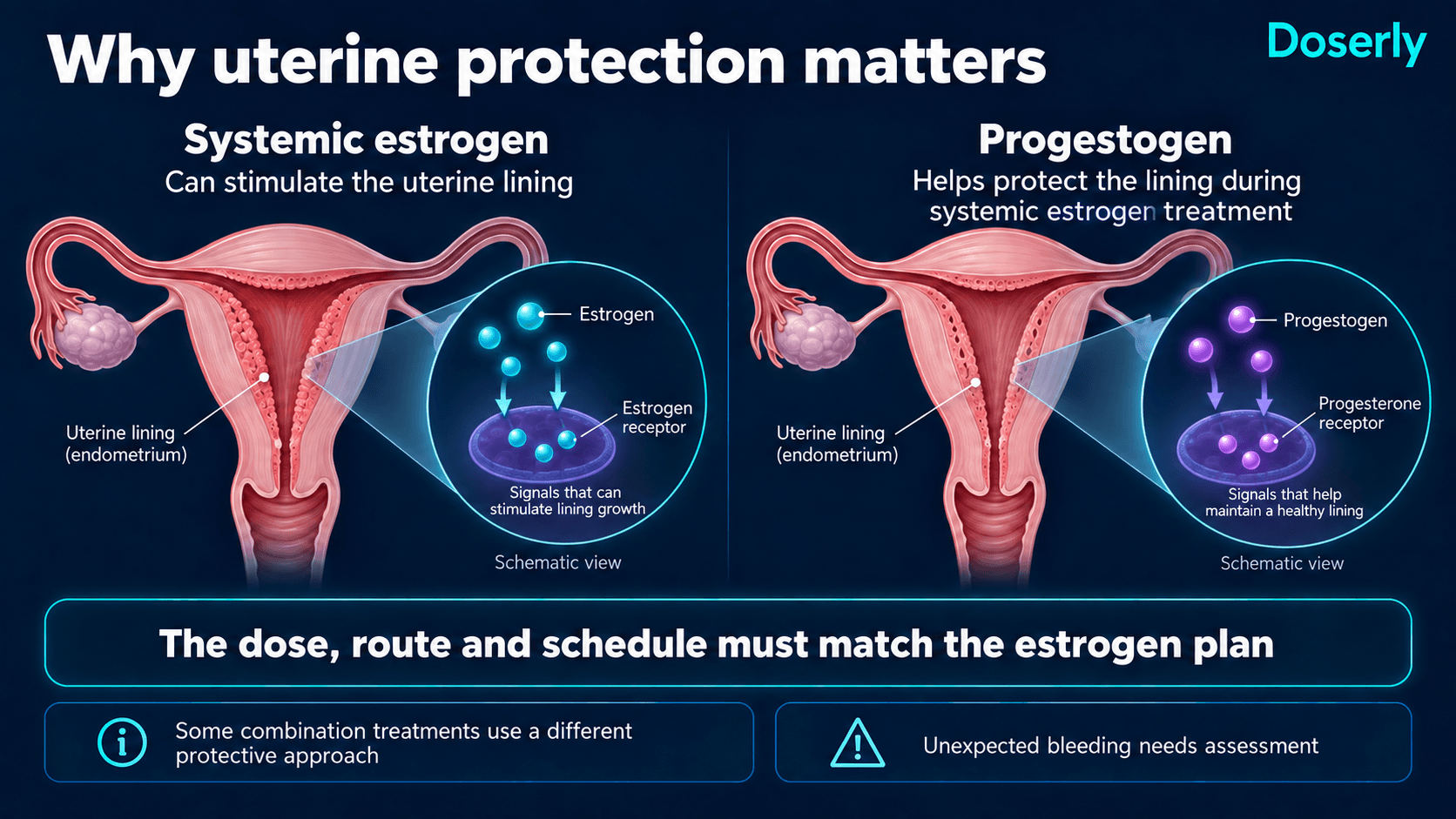
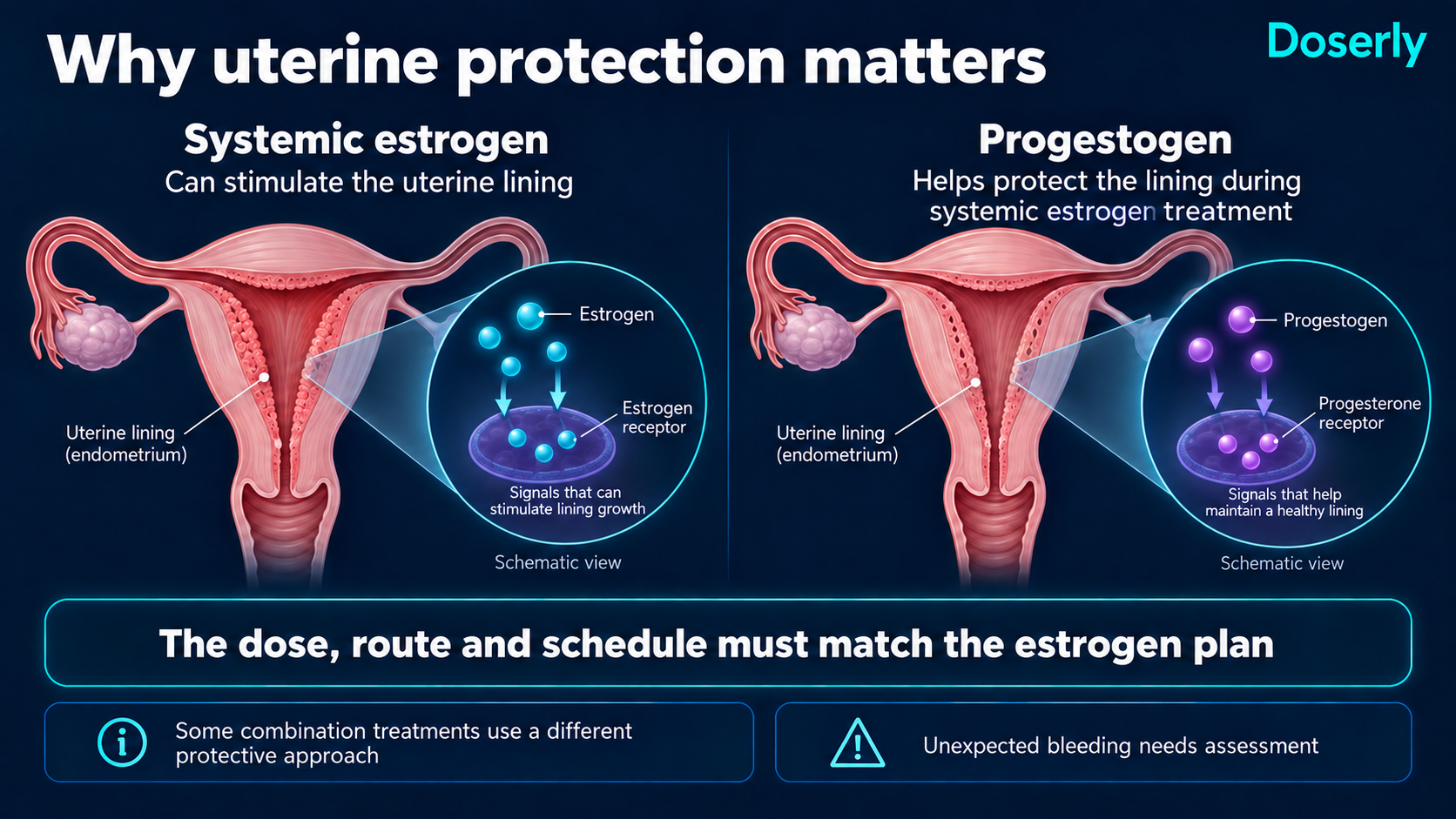
The illustration summarizes endometrial effects, not a dosing schedule or exact receptor structure. Progestogen dose, route and duration must provide protection for the estrogen regimen. Unexpected bleeding requires clinical assessment.
NICE menopause recommendations.
Pharmacokinetics / Hormone Physiology
The Basics
When you take an MPA tablet by mouth, it is absorbed relatively quickly from the digestive tract, though its bioavailability (the percentage that actually reaches your bloodstream in active form) is quite low, ranging from about 1% to 10%. This means the liver processes most of the drug before it reaches your system, and the actual blood levels can vary considerably from person to person.
Once in your bloodstream, MPA binds primarily to a protein called albumin (86-90% protein binding). It does not bind significantly to sex hormone-binding globulin (SHBG), which distinguishes it from some other progestogens.
For HRT purposes, the oral form is the relevant one. After taking a tablet, blood levels peak within 2 to 7 hours. The half-life (how long it takes for half the drug to be cleared from your body) is approximately 12 to 17 hours for oral MPA, which supports once-daily dosing. The drug is broken down in the liver primarily through a process involving the CYP3A4 enzyme, and the breakdown products are eliminated mainly through the kidneys.
One practical implication of MPA being processed by CYP3A4 is that other medications which affect this enzyme system can change how MPA works. Drugs like rifampin, certain anti-seizure medications, and St. John's wort can speed up MPA breakdown and potentially reduce its effectiveness.
The Science
Absorption: Oral MPA is rapidly absorbed from the gastrointestinal tract, with time to peak plasma concentration (Tmax) of 2-7 hours. Absolute oral bioavailability is low (0.6-10%), reflecting significant first-pass hepatic metabolism [9]. For the depot intramuscular formulation (150 mg), Tmax is approximately 3 weeks, achieving Cmax of 1-7 ng/mL, with an elimination half-life of approximately 50 days due to slow absorption from the injection site.
Distribution: Protein binding is 86-90%, predominantly to albumin. MPA does not bind significantly to SHBG or corticosteroid-binding globulin (CBG) [10].
Metabolism: Hepatic, primarily through hydroxylation and conjugation. CYP3A4 is the principal cytochrome P450 enzyme responsible for MPA metabolism in vitro [11]. The 6beta-hydroxylated metabolite is a major metabolite. Unlike micronized progesterone, MPA does not undergo 5alpha-reduction to neurosteroid metabolites.
Elimination: Half-life of 12-17 hours (oral); approximately 50 days (IM depot); approximately 43 days (subcutaneous). Excretion is primarily renal as glucuronide conjugates, with a small amount excreted as sulfates [9].
Parameter
Tmax
- Oral
- 2-7 hours
- IM (Depot)
- ~3 weeks
- Subcutaneous
- ~1 week
Parameter
Cmax
- Oral
- Dose-dependent
- IM (Depot)
- 1-7 ng/mL
- Subcutaneous
- 0.953 ng/mL
Parameter
Half-life
- Oral
- 12-17 hours
- IM (Depot)
- ~50 days
- Subcutaneous
- ~43 days
Parameter
Bioavailability
- Oral
- 0.6-10%
- IM (Depot)
- N/A (depot)
- Subcutaneous
- N/A (depot)
Parameter
Primary metabolism
- Oral
- CYP3A4
- IM (Depot)
- CYP3A4
- Subcutaneous
- CYP3A4
Knowing the pharmacokinetics is the foundation. Seeing how your own body responds to your specific protocol turns that knowledge into actionable insight. Doserly correlates your dosing schedule with how you feel day to day, helping you and your provider identify whether your current route, timing, and dose are working optimally.
The app's analytics can surface patterns you might not notice on your own, like whether symptoms correlate with the end of a patch cycle or whether splitting an oral dose changes how you feel in the afternoon. Data like this makes dose adjustments more precise and less guesswork.
Research & Clinical Evidence
The Basics
MPA is the most studied progestogen in the history of menopause medicine, largely because it was the progestogen chosen for the Women's Health Initiative. Understanding the WHI data is essential to understanding MPA's place in current practice.
The WHI found that taking conjugated estrogens combined with MPA increased the risk of breast cancer, blood clots, stroke, and possibly heart disease compared to placebo. However, when the same study tested estrogen alone (without MPA), breast cancer risk actually decreased. This contrast has led many researchers and clinicians to conclude that MPA specifically contributes to the breast cancer risk seen in the combined therapy arm.
It is important to understand the scale of these risks. The increased breast cancer risk with CEE+MPA amounted to approximately 8 additional cases per 10,000 women per year. For perspective, this means that out of 10,000 women taking the combination for one year, about 38 would develop breast cancer compared to about 30 in the placebo group. This is a meaningful difference, but it is not the dramatic risk that many people imagine based on media coverage.
The WHI study population was older (average age 63) and had been past menopause for many years. Subsequent analyses suggest that for younger women starting HRT closer to menopause onset, the risk-benefit balance may be more favorable.
The Science
WHI Estrogen Plus Progestin Trial (CEE 0.625 mg + MPA 2.5 mg daily):
Primary outcomes at 5.6 years median follow-up (n=16,608) [3]:
- Invasive breast cancer: HR 1.24 (95% CI 1.01-1.54); absolute excess ~8 cases per 10,000 women-years
- CHD: HR 1.24 (95% CI 1.00-1.54); absolute excess 6 per 10,000 women-years
- Stroke: HR 1.31 (95% CI 1.02-1.68); absolute excess 8 per 10,000 women-years
- DVT: HR 1.95 (95% CI 1.43-2.67)
- PE: HR 1.98 (95% CI 1.36-2.87)
- Colorectal cancer: HR 0.56 (95% CI 0.38-0.81) (protective)
- Hip fracture: HR 0.67 (95% CI 0.47-0.96) (protective)
20-year cumulative follow-up [4]:
- Breast cancer incidence: HR 1.28 (95% CI 1.13-1.45)
- No significant difference in breast cancer mortality
CEE-Alone Arm (comparator, hysterectomized women):
- Breast cancer incidence: HR 0.78 (95% CI 0.65-0.93) (protective)
- Breast cancer mortality: HR 0.60 (95% CI 0.37-0.97) (protective)
E3N French Cohort (n=80,377, median 8.1 years follow-up) [12]:
- Estrogen + micronized progesterone: HR 1.00 (95% CI 0.83-1.22) for breast cancer
- Estrogen + synthetic progestins: HR 1.69 (95% CI 1.50-1.91) for breast cancer
Clinical context — Breast cancer risk significance with CEE+MPA.
Source: Chlebowski & Aragaki (2023): CEE+MPA increases breast cancer risk (1 per 1,000 women per year), maintain conclusion of increased risk
Source: Avrum Bluming critical review (PMC10758198, 2023): WHI reported nonsignificant results as meaningful; no increased risk among women without prior HT use; statistical adjustments per protocol showed nonsignificant result
Source: WHI 20-year follow-up: HR 1.28 (95% CI 1.13-1.45) for incidence but no significant increase in breast cancer mortality
Context: The statistical significance of the CEE+MPA breast cancer signal has been contested by some researchers who note the original finding was a secondary endpoint, the result was nonsignificant after protocol-specified multiple comparison adjustments, and the absolute risk increase was small. Others maintain the finding is robust and consistent across follow-up periods. The clinical community generally accepts an increased breast cancer risk with combined CEE+MPA therapy, while acknowledging the modest absolute magnitude.
WHI clinical-outcome context:
CEE+MPA reduced hip fracture and colorectal cancer during the WHI intervention but increased several clinically important risks, including breast cancer, stroke, venous thromboembolism, and coronary events in the overall trial population. Those clinical outcome data are more reliable for patient counseling than unpublished biomarker-conference claims [3][16].
MPA vs micronized progesterone: neurologic context [1]:
MPA and estradiol/MPA combinations have been associated with negative brain effects in preclinical models, whereas estradiol/progesterone combinations show neuroregenerative properties. This difference may relate to MPA's lack of neurosteroid metabolite production and its glucocorticoid receptor activity.
MPA for Vasomotor Symptom Monotherapy:
A systematic review of 7 RCTs (n=601) found that oral MPA at 10-20 mg daily showed some benefit for vasomotor symptoms as monotherapy [15]. This represents a potential option for women with contraindications to estrogen, though evidence is limited and this is an off-label use.
Benefits & Therapeutic Effects
The Basics
MPA's primary benefit in HRT is straightforward: it protects the uterine lining. For any woman with an intact uterus who takes systemic estrogen therapy, some form of progestogen is essential to prevent estrogen from stimulating unchecked endometrial growth. MPA does this job reliably and is one of the most well-proven medications for this purpose.
Beyond endometrial protection, the combination of estrogen with MPA in the WHI trial reduced hip fractures and colorectal cancer during the intervention, while also increasing breast cancer, stroke, venous thromboembolism, and coronary-event risks in the overall trial population. Those tradeoffs are why MPA counseling should emphasize clinical outcomes and individualized risk rather than favorable lipid or glucose-marker changes [3][16].
For women who cannot take micronized progesterone due to GI side effects or inadequate bleeding control, MPA provides a viable alternative with a long clinical track record. MPA may be considered when micronized progesterone is not tolerated or when stronger bleeding suppression is clinically needed.
The Science
Endometrial protection: MPA transforms proliferative endometrium into secretory endometrium through progesterone receptor-mediated gene transcription changes, effectively opposing estrogen-driven endometrial proliferation. The WHI confirmed that MPA abrogated the endometrial cancer risk associated with CEE use [3]. Clinical dosing of 5-10 mg for 12-14 days per month or 2.5 mg daily continuous provides adequate endometrial opposition when paired with standard estrogen doses [16].
Fracture reduction: The WHI CEE+MPA arm demonstrated significant reductions in hip fracture (HR 0.67, 95% CI 0.47-0.96) and total fractures, consistent with the bone-protective effects of combined hormone therapy [3].
Colorectal cancer reduction: HR 0.56 (95% CI 0.38-0.81) in the WHI CEE+MPA arm, representing one of the more robust protective findings [3].
Cardiovascular outcomes: MPA-containing hormone therapy should not be used for cardiovascular prevention. WHI did not show overall clinical cardiovascular protection, and risk/benefit depends strongly on age, timing, baseline risk, estrogen route, and progestogen choice [3][16][19].
Risks, Side Effects & Safety
The Basics
Understanding MPA's risks requires separating common, manageable side effects from serious safety concerns, and placing both in the context of absolute numbers rather than alarming percentages.
Common side effects that many women experience include breast tenderness, bloating, headache, mood changes (particularly depressive symptoms and irritability), weight gain (averaging about 7 pounds, largely from fluid retention), and irregular bleeding or spotting, especially during the first several months. These effects are generally not dangerous but can significantly affect quality of life. If mood effects are severe, discussing a switch to micronized progesterone or another progestogen with your healthcare provider is reasonable.
Serious risks require careful consideration. The WHI data, involving daily oral conjugated estrogens combined with MPA 2.5 mg in women averaging age 63, found:
Blood clots: approximately 18 additional venous thromboembolism events per 10,000 women per year compared to placebo. This risk is associated primarily with the oral estrogen component rather than MPA specifically, as oral estrogens stimulate hepatic production of clotting factors. Transdermal estrogen does not carry this same level of VTE risk.
Breast cancer: approximately 8 additional invasive breast cancer cases per 10,000 women per year compared to placebo. Notably, estrogen alone (without MPA) actually reduced breast cancer incidence, implicating MPA as a contributing factor. The E3N French cohort study found no increased breast cancer risk with estrogen plus micronized progesterone (HR 1.00) but a significant increase with estrogen plus synthetic progestins including MPA (HR 1.69) over 8 years.
Stroke: approximately 8 additional stroke events per 10,000 women per year.
Heart disease: approximately 6 additional coronary heart disease events per 10,000 women per year, though this risk was concentrated in older women who started HRT many years after menopause.
For younger women (50-59) in the WHI, the cardiovascular risk profile was more favorable, and MHT reduced vasomotor symptoms without significantly elevating the overall cardiovascular disease risk.
The Science
Common adverse effects (clinical trial data) [6][17]:
- Menstrual irregularities: 57.3% during first year (decreasing to 30% after 24 months)
- Weight gain: average 3.23 kg (BMI increase 1.61)
- Nervousness: 10.8%
- Headache: 9-16.5%
- Dizziness: 5.6%
- Decreased libido: 5.5%
- Breast pain: 2.8%
- Depression: 1-5%
- Anxiety/irritability: 1-5%
- Acne: 1-5%
- Alopecia: 1.1%
Serious risks with absolute numbers (WHI CEE + MPA 2.5 mg daily) [3][4]:
Risk
DVT
- Hazard Ratio
- 1.95
- 95% CI
- 1.43-2.67
- Absolute Excess per 10,000 Women-Years
- ~13 additional events
Risk
PE
- Hazard Ratio
- 1.98
- 95% CI
- 1.36-2.87
- Absolute Excess per 10,000 Women-Years
- ~8 additional events
Risk
Stroke
- Hazard Ratio
- 1.31
- 95% CI
- 1.02-1.68
- Absolute Excess per 10,000 Women-Years
- ~8 additional events
Risk
CHD
- Hazard Ratio
- 1.24
- 95% CI
- 1.00-1.54
- Absolute Excess per 10,000 Women-Years
- ~6 additional events
Risk
Invasive breast cancer
- Hazard Ratio
- 1.24-1.28
- 95% CI
- Variable
- Absolute Excess per 10,000 Women-Years
- ~8 additional cases
Risk
Probable dementia (65+)
- Hazard Ratio
- 2.05
- 95% CI
- 1.21-3.48
- Absolute Excess per 10,000 Women-Years
- ~23 additional cases
Risk stratification by route, type, and timing:
Route: The WHI tested only oral therapy. Transdermal estrogen avoids first-pass hepatic metabolism and does not carry the same VTE risk as oral estrogen. However, MPA is only available orally for HRT purposes, so route selection pertains to the estrogen component rather than MPA itself.
Progestogen type: The E3N cohort (n=80,377) demonstrated a significant difference in breast cancer risk by progestogen type: estrogen plus micronized progesterone HR 1.00 (95% CI 0.83-1.22) vs estrogen plus synthetic progestins HR 1.69 (95% CI 1.50-1.91) [12]. This observational evidence, while not from an RCT, is consistent with mechanistic data implicating MPA's glucocorticoid receptor activity in breast tissue stimulation.
Timing: The WHI enrolled women averaging age 63, well beyond the recommended "window of opportunity" for HRT initiation. For the 8,833 women aged 50-59, cardiovascular risk was not significantly elevated [4]. The timing hypothesis (see Section Section 13) suggests that the risk-benefit balance is more favorable when HRT is initiated within 10 years of menopause onset.
Duration: Breast cancer risk with CEE+MPA appears to be cumulative, increasing with duration of exposure and persisting for over a decade after discontinuation [4].
Contraindications [6]:
- Known or suspected pregnancy
- Undiagnosed abnormal genital bleeding
- Known or suspected breast cancer or history of breast cancer
- Active DVT, PE, or history of these conditions
- Active or recent arterial thromboembolic disease
- Liver dysfunction or disease
- Known hypersensitivity to MPA
Recent safety signal: Meningioma risk [18]:
A 2024 case-control study found that depot MPA injection (but not oral MPA) was associated with increased odds of meningioma with more than 2 years of use. This association appears specific to the high-dose depot formulation used for contraception and should not be extrapolated to the low oral doses used in HRT without further evidence.
Understanding your personal risk profile is not a one-time calculation; it evolves as your treatment progresses. Doserly helps you see the bigger picture by analyzing side effect patterns over time, showing whether issues are resolving, persisting, or emerging as your body adjusts to therapy.
The app's analytics can reveal connections between side effects and specific aspects of your protocol, like whether symptoms correlate with a particular point in your cycle or a recent dose change. This kind of insight helps you and your provider make informed adjustments based on your actual experience, not just population-level averages.
Dosing & Treatment Protocols
The Basics
MPA is available in oral tablet form in three strengths for HRT use: 2.5 mg, 5 mg, and 10 mg. The appropriate dose and schedule depend on your estrogen regimen, whether you have a uterus, and what symptoms are being addressed.
There are two main dosing patterns used in HRT:
Continuous combined: MPA 2.5 mg taken every day alongside daily estrogen. This approach, used in the Prempro combination product, aims to eliminate monthly withdrawal bleeding entirely. Some women experience irregular spotting during the first 6-12 months, which typically resolves.
Cyclic/sequential: MPA 5-10 mg taken for 12-14 consecutive days each month alongside daily estrogen. This approach triggers a predictable monthly withdrawal bleed, similar to a natural period. Some women prefer this because the regular bleeding pattern provides reassurance that the endometrium is shedding normally.
Current guidelines recommend starting at the lowest effective dose. The prescribing information states that the lowest effective dose of MPA has not been formally determined. Clinical practice typically begins with 2.5 mg daily for continuous combined regimens or 5 mg for cyclic regimens, increasing only if endometrial protection is inadequate (indicated by breakthrough bleeding or abnormal ultrasound findings).
The Science
FDA-approved HRT dosing regimens [6]:
Regimen
Continuous combined
- MPA Dose
- 2.5 mg daily
- Schedule
- Every day
- Estrogen Component
- CE 0.625 mg daily
Regimen
Cyclic/sequential
- MPA Dose
- 5-10 mg daily
- Schedule
- Days 1-12 or 1-14 of each month
- Estrogen Component
- CE 0.625 mg daily
Regimen
Premphase
- MPA Dose
- 5 mg daily
- Schedule
- Days 15-28 of each 28-day cycle
- Estrogen Component
- CE 0.625 mg daily
Clinical context — Optimal MPA dose for endometrial protection.
Source: DailyMed/FDA labeling: "The lowest effective dose of MPA has not been determined"
Source: HOPE study (Utian et al., 2001): Lower doses of CEE (0.45, 0.3 mg) with MPA (2.5, 1.5 mg) provided comparable VMS relief and endometrial protection to standard doses
Source: Gambacciani et al. (2001): Low-dose continuous combined (CE 0.3 mg + MPA 2.5 mg) effective for symptom relief and bone protection with favorable bleeding profile
Context: While MPA 2.5 mg daily is the standard dose for continuous combined therapy with CE 0.625 mg, lower combination doses may be effective. The clinical trend toward "start low, go slow" applies, but endometrial adequacy must be confirmed through appropriate monitoring.
Progestogen pairing principles [16]:
- Women with an intact uterus taking systemic estrogen require progestogen opposition
- Women without a uterus do not need MPA or any progestogen
- Cyclic regimens (12-14 days per month) are associated with predictable withdrawal bleeding
- Continuous combined regimens may cause irregular spotting initially but typically achieve amenorrhea within 6-12 months
- Endometrial monitoring should be considered if bleeding patterns are abnormal
Dosing protocols often change over the course of treatment; starting doses get adjusted, routes get switched, timing gets refined. Doserly maintains a complete history of every protocol change, giving you and your provider a clear picture of what has been tried and how each adjustment affected your symptoms.
The app's adherence analytics show your consistency patterns and can highlight whether missed doses or timing variations correlate with symptom changes. When your provider is considering a dose adjustment, having this data available makes the conversation more productive and the decision more informed.
What to Expect (Timeline)
Days 1-7: Initial adjustment period. Some women experience breast tenderness, bloating, or headache when starting MPA. If taking cyclic MPA, these effects typically begin within the first few days of the progestin phase. Mood effects, if they occur, may begin to emerge during this period.
Weeks 2-4: Side effects may stabilize or intensify. If you are on a cyclic regimen, withdrawal bleeding typically occurs 3-7 days after completing the 12-14 day MPA course. Irregular spotting is common with continuous combined regimens during this early phase.
Months 1-3: For continuous combined regimens, irregular spotting or light bleeding is common during the first 3 months. The endometrium is adjusting to the combination of estrogen and progestogen. If mood effects (depression, irritability, anxiety) persist beyond the first month, this should be discussed with your healthcare provider, as alternative progestogens may be better tolerated.
Months 3-6: Breakthrough bleeding on continuous combined regimens should begin resolving. For cyclic regimens, withdrawal bleeding patterns should be establishing regularity. Endometrial protection is ongoing. Weight changes, if they are going to occur, are typically evident by this point.
Ongoing maintenance: Annual review with your healthcare provider should assess continued need, symptom control, bleeding patterns, and any side effects. Mammography, blood pressure monitoring, and breast exams should follow recommended schedules. Dose reassessment may be appropriate based on symptom response.
Timing Hypothesis & Window of Opportunity
The timing hypothesis is particularly relevant to interpreting WHI data that involved MPA. The WHI enrolled women averaging age 63, many of whom were 10+ years past menopause onset. The timing hypothesis proposes that HRT initiated within 10 years of menopause onset or before age 60 has a more favorable risk-benefit profile than late initiation.
Supporting evidence:
- WHI subgroup analyses showed more favorable cardiovascular outcomes in women aged 50-59 compared to older age groups [4]
- The KEEPS trial (Kronos Early Estrogen Prevention Study) tested HRT in recently menopausal women (average age 52, within 3 years of menopause) and found no adverse effect on carotid artery wall thickness or coronary artery calcium scores over 4 years [19]
- The ELITE trial (Early versus Late Intervention Trial with Estradiol) found that estradiol reduced progression of subclinical atherosclerosis when initiated within 6 years of menopause but not when initiated 10+ years after menopause [20]
- The Danish Osteoporosis Prevention Study showed reduced cardiovascular events and mortality with 10 years of HRT initiated early after menopause, with benefits maintained over 16 years of follow-up [21]
Important limitation: None of these timing hypothesis studies used MPA as the progestogen. KEEPS used oral micronized progesterone and vaginal progesterone gel. ELITE used vaginal progesterone gel. The Danish study used norethisterone acetate. Therefore, while the timing hypothesis is well-supported for HRT generally, its application specifically to MPA-containing regimens rests on the assumption that timing benefits apply regardless of progestogen type.
Clinical relevance: For women and their providers making decisions about MPA use, timing of initiation remains an important factor in the risk-benefit calculation. Starting MPA-containing HRT within the "window of opportunity" (within 10 years of menopause, before age 60) is consistent with current guideline recommendations, though the growing preference for micronized progesterone as the progestogen component reflects an additional layer of risk optimization.
Interactions & Compatibility
Drug-Drug Interactions:
- CYP3A4 inducers (reduce MPA effectiveness): Rifampin, carbamazepine, oxcarbazepine, phenytoin, barbiturates, griseofulvin, bosentan, topiramate [11]
- CYP3A4 inhibitors (may increase MPA levels): Ketoconazole, itraconazole, clarithromycin, ritonavir
- Thyroid medications: Estrogen-progestogen therapy can increase thyroid-binding globulin, total T4, and total T3 levels. Women on levothyroxine may need dose adjustment. TSH should be monitored 6-12 weeks after starting MPA-containing HRT [6]
- Anticoagulants: Warfarin monitoring may need adjustment; estrogen-progestogen therapy affects coagulation parameters
- Lamotrigine: Estrogen reduces lamotrigine levels significantly; dose adjustments may be needed. The progestogen component may partially modulate this effect
- SSRIs/SNRIs: No direct pharmacokinetic interaction, but mood effects of MPA should be monitored. SSRIs/SNRIs are also used as non-hormonal alternatives for vasomotor symptoms (see gabapentin for menopause and paroxetine (Brisdelle))
- HIV antiretrovirals: Significant changes in MPA plasma concentration with protease inhibitors and NNRTIs. Use with caution [6]
- Diabetes medications: Estrogen-progestogen therapy may alter insulin sensitivity; glucose monitoring is important
Supplement Interactions:
- St. John's Wort: CYP3A4 inducer that can significantly reduce MPA levels and effectiveness. Avoid concurrent use or use alternative progestogen [11]
- Calcium and Vitamin D: No interaction; supplementation is recommended during HRT
- Black cohosh: No known direct interaction with MPA; sometimes used as a complementary approach for vasomotor symptoms (see non-hormonal menopause treatments)
Lifestyle Factors:
- Smoking: Dramatically increases cardiovascular and VTE risk when combined with estrogen-progestogen therapy. Smoking cessation is strongly recommended for all women on HRT
- Alcohol: Modest interaction through hepatic metabolism; moderate consumption generally acceptable but discuss with your provider
- Grapefruit: CYP3A4 inhibitor that may modestly increase MPA levels; clinically significant interaction unlikely at typical dietary intake
Cross-References:
- Micronized Progesterone (Prometrium) — The most commonly recommended alternative progestogen
- Norethindrone Acetate (Aygestin) — Another synthetic progestogen option
- Conjugated Equine Estrogens (Premarin) — The estrogen component used with MPA in the WHI and in Prempro/Premphase combination products
- Drospirenone — A newer progestogen option with anti-mineralocorticoid activity
- Levonorgestrel (Mirena IUD) — An intrauterine progestogen delivery option for endometrial protection
Decision-Making Framework
Making informed decisions about progestogen therapy involves weighing your individual risk factors, symptom burden, and treatment preferences with your healthcare provider. MPA is one of several progestogen options, and understanding where it fits relative to alternatives can help guide the conversation.
When MPA may be appropriate:
- When micronized progesterone is not tolerated (GI side effects are common with oral micronized progesterone)
- When stronger endometrial protection is needed for persistent breakthrough bleeding
- When cost is a significant factor (generic MPA is less expensive than brand-name micronized progesterone in some markets)
- When micronized progesterone does not adequately control abnormal uterine bleeding
- When formulation options are limited by local availability
When to consider alternatives to MPA:
- If mood symptoms (depression, anxiety, irritability) emerge or worsen on MPA
- If breast cancer risk is a particular concern (observational data favors micronized progesterone)
- If sleep quality is a treatment priority (MPA does not produce sleep-promoting neurosteroid metabolites)
- If VTE risk is elevated (transdermal estrogen with micronized progesterone may carry lower thrombotic risk based on observational data)
Questions to discuss with your provider:
- "What type of progestogen are you recommending, and why did you choose it over alternatives?"
- "Am I a candidate for micronized progesterone instead of MPA?"
- "How will we monitor my endometrium to ensure adequate protection?"
- "What side effects should I watch for, and at what point should I contact you?"
- "If I experience mood changes, what are the next steps?"
- "How does the progestogen you are prescribing affect my specific risk profile for breast cancer and blood clots?"
Finding a menopause specialist: If your current provider is not comfortable discussing progestogen options in detail, consider seeking a clinician with menopause expertise. The Menopause Society (formerly NAMS) maintains a directory of certified menopause practitioners at menopause.org.
Administration & Practical Guide
Oral tablets (HRT context):
MPA tablets (2.5 mg, 5 mg, and 10 mg) are taken by mouth, with or without food. Tablets can also be taken sublingually. Store at controlled room temperature (20-25°C / 68-77°F).
For continuous combined regimens: Take one tablet at the same time each day, alongside your estrogen medication.
For cyclic regimens: Take the prescribed dose daily for the specified number of days (typically 12-14 days per month), then stop until the next cycle. Your provider will specify which days to take MPA and when to expect withdrawal bleeding.
Missed dose: If you miss a dose, take it as soon as you remember unless it is nearly time for the next dose. Do not double up. If you miss several days during a cyclic regimen, contact your provider, as inadequate endometrial protection may result.
Timing: There is no strict requirement for morning vs evening dosing, but some women prefer taking MPA at bedtime due to potential drowsiness or to minimize awareness of any bloating or mood effects.
This section provides general educational information. Always follow your prescriber's specific instructions regarding dosing, timing, and administration, as they are tailored to your individual clinical situation.
Monitoring & Lab Work
Pre-HRT baseline:
- Mammogram (breast cancer screening)
- Pelvic exam
- Blood pressure
- Lipid panel (total cholesterol, HDL, LDL, triglycerides)
- Thyroid function (TSH, especially if on levothyroxine)
- Liver function tests (MPA is contraindicated with liver disease)
- Endometrial assessment (transvaginal ultrasound if indicated by bleeding history)
- Bone density (DEXA scan) for osteoporosis risk assessment
- Fasting glucose if diabetes risk factors present
Initial follow-up (4-12 weeks):
- Symptom assessment (has the estrogen component improved vasomotor symptoms?)
- Side effect evaluation (mood changes, bleeding patterns, breast tenderness, weight)
- Blood pressure check
- If on thyroid medication, check TSH 6-12 weeks after starting
Ongoing monitoring:
- Breast exam and mammography per national screening guidelines
- Endometrial monitoring if unscheduled bleeding occurs beyond 6 months on continuous combined therapy (transvaginal ultrasound, possibly endometrial biopsy)
- For patients with elevated triglycerides (>200 mg/dL), check triglycerides 2 weeks after initiating therapy
- Blood pressure at each visit
- Lipid panel annually or per cardiovascular risk profile
- Liver function if clinically indicated
Annual review checklist:
- Reassess symptom control and continued need for HRT
- Review bleeding patterns (cyclic: predictable? continuous: amenorrhea achieved?)
- Assess any new risk factors (weight change, family history changes, new diagnoses)
- Discuss duration of therapy and potential dose adjustments
- Confirm appropriate screening tests are current (mammogram, DEXA if indicated)
Complementary Approaches & Lifestyle
Evidence-based strategies that may complement or support HRT:
Supplements:
- Calcium (1,000-1,200 mg/day from diet and supplements) and Vitamin D (600-1,000 IU/day) for bone health (see calcium and vitamin D)
- Omega-3 fatty acids for cardiovascular support
- Magnesium for sleep and muscle relaxation (see magnesium)
Exercise:
- Weight-bearing exercise for bone density maintenance
- Resistance training for body composition and metabolic health
- Cardiovascular exercise for heart health
- Balance training for fall prevention
Diet:
- Mediterranean diet pattern is associated with favorable cardiovascular and metabolic outcomes
- Phytoestrogen-rich foods (soy, flaxseed) may provide modest symptom support
- Calcium-rich foods (dairy, leafy greens, fortified foods)
- Limiting alcohol (reduces breast cancer risk and supports liver function)
Sleep hygiene:
- Cool bedroom environment for vasomotor symptom management
- Consistent sleep schedule
- CBT-I (cognitive behavioral therapy for insomnia) has evidence base for menopause-related sleep disruption
CBT for vasomotor symptoms:
- Evidence supports CBT as effective for reducing the impact of hot flashes (though not necessarily their frequency)
Pelvic floor therapy:
- For urinary symptoms and genitourinary syndrome of menopause
Non-hormonal prescription alternatives:
- For women who cannot tolerate any progestogen or estrogen: fezolinetant (Veozah), paroxetine low-dose (Brisdelle), gabapentin for menopause, clonidine for menopause
Stopping HRT / Discontinuation
When to consider stopping MPA (as part of combined HRT):
- At regular reassessment intervals (typically every 1-2 years after initial stabilization)
- If intolerable side effects persist despite dose adjustment or formulation changes
- If new contraindications develop (diagnosed breast cancer, active thromboembolic disease, liver disease)
- When transitioning to estrogen-only therapy after hysterectomy (MPA is no longer needed)
Tapering strategies:
- There is no established tapering protocol specific to MPA; decisions should be guided by your healthcare provider
- For cyclic regimens, some providers transition to lower doses before stopping
- For continuous combined regimens, abrupt cessation of MPA is generally well-tolerated, though endometrial monitoring should continue if estrogen is continued without progestogen replacement
- Switching from MPA to another progestogen (micronized progesterone, levonorgestrel IUD) is common when side effects are the reason for change
Symptom recurrence:
- If stopping all HRT (both estrogen and MPA), vasomotor symptoms recur in approximately 50% of women
- Symptom recurrence typically becomes apparent within weeks to months of discontinuation
- Severity is usually similar to pre-treatment levels
Transition options:
- Low-dose vaginal estrogen for persistent GSM symptoms (may continue even when systemic HRT stops; does not require progestogen opposition)
- Non-hormonal alternatives for persistent vasomotor symptoms
Special Populations & Situations
Breast Cancer Survivors
MPA-containing HRT is generally contraindicated in women with a personal history of breast cancer. Given the WHI data specifically implicating MPA in increased breast cancer risk, this applies with particular weight to MPA versus other progestogen options. Non-hormonal alternatives should be considered. Vaginal estrogen for GSM may be discussed on a case-by-case basis with the oncology team.
Premature Ovarian Insufficiency (POI)
Women with POI require hormone therapy as replacement for hormones their bodies should still be producing. In this context, HRT is not supplemental but restorative. While micronized progesterone is generally preferred, MPA is acceptable if micronized progesterone is not tolerated. Duration of therapy should continue at least until the typical age of natural menopause (approximately 51).
Surgical Menopause / Oophorectomy
Women who undergo bilateral oophorectomy experience abrupt hormone loss and typically require higher initial estrogen doses. If the uterus is also removed, MPA (or any progestogen) is not needed. If the uterus is retained, progestogen opposition is required.
Cardiovascular Disease History
Women with pre-existing cardiovascular disease require careful risk-benefit assessment before starting MPA-containing HRT. Transdermal estrogen is generally preferred over oral estrogen in this population. The choice of progestogen may also be relevant, as observational data suggests micronized progesterone may have a more favorable cardiovascular profile than MPA.
Type 2 Diabetes
Estrogen-progestogen therapy can affect glucose and lipid markers, but marker changes do not prove cardiovascular benefit. People with diabetes or insulin resistance should have glucose monitoring individualized when HRT is started or changed [16].
Migraine with Aura
Stable estrogen delivery (transdermal) is preferred. Estrogen fluctuations can trigger migraines. The progestogen component (MPA or alternative) does not specifically affect migraine risk, but cyclic regimens that create hormonal fluctuations may be less desirable than continuous combined approaches.
History of VTE
Transdermal estrogen avoids first-pass hepatic metabolism and is preferred for VTE risk reduction. The choice of progestogen in this context is less well-studied; some observational data suggests micronized progesterone may carry lower thrombotic risk than synthetic progestins. Individual risk assessment with a healthcare provider is essential.
BRCA Carriers (without breast cancer)
Women with BRCA mutations who undergo risk-reducing salpingo-oophorectomy require careful HRT decision-making. Given MPA's association with increased breast cancer risk in the WHI, many providers prefer estrogen-only therapy (hysterectomy is often performed concurrently) or, if progestogen is needed, micronized progesterone.
Regulatory, Insurance & International
United States (FDA):
- MPA oral tablets (Provera) are FDA-approved as a generic and brand-name product
- Combination products: Prempro (CE + MPA continuous combined) and Premphase (CE + cyclic MPA) are FDA-approved
- FDA black box warning addresses cardiovascular disorders, breast cancer, and probable dementia (based on WHI data)
- Generic MPA tablets are widely available and typically covered by insurance with low copays
- No prior authorization typically required for generic oral MPA
United Kingdom (MHRA):
- Provera is licensed in the UK
- NICE guidelines (NG23) recommend body-identical (micronized) progesterone as the preferred progestogen, which has shifted prescribing away from MPA
- Available on NHS prescription
Canada (Health Canada):
- Provera is approved and available
- Available as generic and brand-name
- Provincial formulary coverage varies
Australia (TGA):
- Provera (and generic equivalents such as Ralovera) are TGA-approved
- Available on PBS (Pharmaceutical Benefits Scheme) for approved indications
European Union (EMA):
- MPA is available in most EU member states under various brand names
- Prescribing patterns vary by country; Nordic countries and France tend to favor micronized progesterone
Cost considerations:
- Generic oral MPA is among the least expensive progestogen options
- Brand-name Provera costs more but remains affordable
- Micronized progesterone (Prometrium/Utrogestan) is typically more expensive than generic MPA, which may influence progestogen selection in cost-sensitive settings
Frequently Asked Questions
Q: What is the difference between medroxyprogesterone acetate (MPA/Provera) and micronized progesterone (Prometrium)?
A: MPA is a synthetic progestogen, while micronized progesterone is a bioidentical version of the hormone your body produces naturally. They have different metabolic pathways: micronized progesterone produces calming neurosteroid metabolites (allopregnanolone) that MPA does not. Observational data suggests micronized progesterone may have a more favorable breast cancer risk profile. Your healthcare provider can help determine which option is best for your individual situation.
Q: Can I take MPA without estrogen for menopause symptoms?
A: Limited evidence suggests MPA may provide modest relief of vasomotor symptoms as monotherapy. However, this is an off-label use. MPA alone, at the HRT doses (2.5-10 mg), is not FDA-approved for treating menopausal vasomotor symptoms. Discuss options with your healthcare provider.
Q: Does MPA cause weight gain?
A: Weight gain is a commonly reported side effect. Clinical data shows an average weight gain of approximately 3.23 kg (about 7 lbs), largely attributed to fluid retention and metabolic changes. Not all women experience this, and the degree varies. If weight gain is concerning, discuss it with your provider.
Q: Will MPA help me sleep better?
A: Unlike micronized progesterone, MPA does not produce the GABA-active neurosteroid metabolites that contribute to improved sleep. It is not expected to provide the sedative or sleep-promoting effects that many women experience with micronized progesterone.
Q: Is MPA safe long-term?
A: Long-term safety depends on individual risk factors. The WHI found that breast cancer risk with CEE+MPA was cumulative, increasing with duration and persisting after discontinuation. Guidelines recommend using the lowest effective dose for the shortest duration consistent with treatment goals, with regular reassessment. Long-term use decisions should be individualized with your healthcare provider.
Q: Can I switch from MPA to micronized progesterone?
A: Yes, switching progestogens is common and can often be done straightforwardly. Your healthcare provider can guide the transition, which typically involves stopping one progestogen and starting the other without a washout period. Endometrial monitoring may be appropriate during the transition.
Q: Does MPA increase breast cancer risk?
A: The WHI found that the combination of conjugated estrogens plus MPA increased breast cancer incidence by approximately 8 additional cases per 10,000 women per year. Estrogen alone (without MPA) did not increase breast cancer risk. Observational studies suggest micronized progesterone may carry lower breast cancer risk than MPA. However, no direct head-to-head RCT exists comparing breast cancer outcomes between MPA and micronized progesterone.
Q: Why do some doctors still prescribe MPA instead of micronized progesterone?
A: MPA remains prescribed because it is effective for endometrial protection, it has the most extensive clinical trial data of any progestogen (from the WHI), it is less expensive than brand-name micronized progesterone in some markets, and some women tolerate it better than micronized progesterone. Provider familiarity and regional prescribing patterns also play a role.
Q: Can MPA affect my mood?
A: Yes. Depression and mood changes are listed as adverse effects (1-5% in clinical trials). If mood changes occur after starting MPA, contact your healthcare provider to discuss alternatives.
Q: Is the injectable form of MPA (Depo-Provera) the same as the oral tablets used in HRT?
A: They contain the same active ingredient but at very different doses and for different purposes. Depo-Provera (150 mg injection every 3 months) is a contraceptive formulation that achieves much higher and more sustained blood levels than oral MPA tablets (2.5-10 mg daily). The side effect profiles differ accordingly. Bone density loss is a specific concern with depot MPA that is less relevant to the lower oral HRT doses.
Myth vs. Fact
Myth: "MPA and micronized progesterone are basically the same thing."
Fact: While both are progestogens that protect the endometrium, they differ in chemical structure, receptor binding profiles, metabolic pathways, and clinical effects. Micronized progesterone produces neurosteroid metabolites (allopregnanolone) with calming, sleep-promoting properties; MPA does not. Observational data from the E3N cohort (n=80,377) shows no breast cancer increase with estrogen plus micronized progesterone (HR 1.00) compared to a significant increase with estrogen plus synthetic progestins including MPA (HR 1.69) [12].
Myth: "The WHI proved that all HRT causes breast cancer."
Fact: The WHI found that conjugated estrogens alone (without MPA) actually reduced breast cancer incidence by 22% (HR 0.78) and breast cancer mortality by 40% (HR 0.60) over 20 years of follow-up [4]. The breast cancer increase was specific to the combined estrogen-plus-MPA arm, and the absolute risk was approximately 8 additional cases per 10,000 women per year.
Myth: "MPA is dangerous and should never be prescribed."
Fact: MPA has a more complex risk profile than micronized progesterone, but it remains a valid clinical option. It is effective for endometrial protection, it has the most extensive clinical trial data of any progestogen, and some women tolerate it better than alternatives. The key is informed, individualized decision-making with a healthcare provider who understands the full spectrum of progestogen options.
Myth: "If MPA makes me feel bad, all progestogens will make me feel bad."
Fact: Individual responses to different progestogens vary significantly. Some women who experience intolerable mood effects on MPA feel well on micronized progesterone, norethindrone, or drospirenone. A progestogen-releasing IUD (levonorgestrel, such as Mirena) is another option that minimizes systemic progestogen exposure. Trying a different type or route before abandoning progestogen therapy is worth discussing with your provider.
Myth: "The Depo-Provera shot and Provera pills have the same risks."
Fact: While both contain MPA, the doses and blood levels are vastly different. Depo-Provera delivers 150 mg every 3 months, achieving sustained high blood levels. Oral MPA for HRT uses 2.5-10 mg daily with a half-life of 12-17 hours. The bone mineral density loss warning (FDA black box) is specific to the depot injection formulation at contraceptive doses, not the oral HRT formulation.
Myth: "Taking MPA means I'll definitely gain weight."
Fact: While weight gain is a recognized side effect (average ~3.2 kg in studies), it is not universal. Some of the weight change is attributable to fluid retention rather than fat accumulation. Individual responses vary, and some women experience no significant weight change on MPA.
Myth: "HRT should only be taken for 5 years maximum."
Fact: The "5-year rule" is an oversimplification. Current guidelines recommend individualized duration decisions based on ongoing symptom burden, risk profile, and response to therapy. Some women benefit from longer-term HRT, while others may choose shorter courses. The decision should be revisited regularly with a healthcare provider.
Myth: "Natural is always better; compounded bioidentical progesterone is always safer than MPA."
Fact: FDA-approved micronized progesterone (Prometrium, Utrogestan) is bioidentical and has favorable observational safety data. However, compounded "bioidentical" progesterone from compounding pharmacies lacks the quality control, standardized dosing, and FDA oversight of commercially manufactured products. The safety advantage is specific to FDA-approved micronized progesterone, not to all products marketed as "bioidentical."
Sources & References
Clinical Guidelines
[1] Stanczyk FZ, Hapgood JP, Winer S, et al. Progestogens used in postmenopausal hormone therapy: differences in their pharmacological properties, intracellular actions, and clinical effects. Endocr Rev. 2013;34(2):171-208. PubMed: 23238854. DOI: 10.1210/er.2012-1008.
[2] Kuhl H. Pharmacology of estrogens and progestogens: influence of different routes of administration. Climacteric. 2005;8 Suppl 1:3-63. PubMed: 16112947. DOI: 10.1080/13697130500148875.
[3] Rossouw JE, Anderson GL, Prentice RL, et al. Risks and benefits of estrogen plus progestin in healthy postmenopausal women: principal results From the Women's Health Initiative randomized controlled trial. JAMA. 2002;288(3):321-33. PubMed: 12117397. DOI: 10.1001/jama.288.3.321.
[4] Chlebowski RT, Anderson GL, Aragaki AK, et al. Association of Menopausal Hormone Therapy With Breast Cancer Incidence and Mortality During Long-term Follow-up of the Women's Health Initiative Randomized Clinical Trials. JAMA. 2020;324(4):369-380. PubMed: 32721007. DOI: 10.1001/jama.2020.9482.
Landmark Trials
[5] Barra F, Scala C, Ferrero S. Current understanding on pharmacokinetics, clinical efficacy and safety of progestins for treating pain associated to endometriosis. Expert Opin Drug Metab Toxicol. 2018;14(4):399-415. PubMed: 29617576. DOI: 10.1080/17425255.2018.1461840.
[6] Sathe A, Patel P, Gerriets V. Medroxyprogesterone. StatPearls. Updated February 29, 2024. https://www.ncbi.nlm.nih.gov/sites/books/NBK559192/
[7] Prior JC. Progesterone or progestin as menopausal ovarian hormone therapy: recent physiology-based clinical evidence. Curr Opin Endocrinol Diabetes Obes. 2015;22(6):495-501. PubMed: 26512775. DOI: 10.1097/MED.0000000000000205.
Systematic Reviews & Meta-Analyses
[9] Stockdale AD, Rostom AY. Clinical significance of differences in bioavailability of medroxyprogesterone acetate preparations. Clin Pharmacokinet. 1989;16(3):129-33. PubMed: 2524303. DOI: 10.2165/00003088-198916030-00001.
[10] Mishell DR Jr. Pharmacokinetics of depot medroxyprogesterone acetate contraception. J Reprod Med. 1996;41(5 Suppl):381-90. PubMed: 8725700.
[11] Mimura N, Kobayashi K, Nakamura Y, et al. Metabolism of medroxyprogesterone acetate (MPA) via CYP enzymes in vitro and effect of MPA on bleeding time in female rats in dependence on CYP activity in vivo. Life Sci. 2003;73(25):3201-12. PubMed: 14561525. DOI: 10.1016/j.lfs.2003.05.004.
Observational Studies
[12] Fournier A, Berrino F, Clavel-Chapelon F. Unequal risks for breast cancer associated with different hormone replacement therapies: results from the E3N cohort study. Breast Cancer Res Treat. 2008;107(1):103-11. PubMed: 17333341. DOI: 10.1007/s10549-007-9523-x.
[15] Dolitsky SN, Cordeiro Mitchell CN, Stadler SS, et al. Efficacy of progestin-only treatment for the management of menopausal symptoms: a systematic review. Menopause. 2020;28(2):217-224. PubMed: 33109992. DOI: 10.1097/GME.0000000000001676.
Government/Institutional Sources
[16] “The 2022 Hormone Therapy Position Statement of The North American Menopause Society” Advisory Panel. The 2022 hormone therapy position statement of The North American Menopause Society. Menopause. 2022;29(7):767-794. PubMed: 35797481. DOI: 10.1097/GME.0000000000002028.
[17] Bigrigg A, Evans M, Gbolade B, et al. Depo Provera. Position paper on clinical use, effectiveness and side effects. Br J Fam Plann. 1999;25(2):69-76. PubMed: 10454658.
[18] Griffin RL. The Association between Medroxyprogesterone Acetate Exposure and Meningioma. Cancers (Basel). 2024;16(19). PubMed: 39409982. DOI: 10.3390/cancers16193362.
[19] Harman SM, Black DM, Naftolin F, et al. Arterial imaging outcomes and cardiovascular risk factors in recently menopausal women: a randomized trial. Ann Intern Med. 2014;161(4):249-60. PubMed: 25069991. DOI: 10.7326/M14-0353.
[20] Hodis HN, Mack WJ, Henderson VW, et al. Vascular Effects of Early versus Late Postmenopausal Treatment with Estradiol. N Engl J Med. 2016;374(13):1221-31. PubMed: 27028912. DOI: 10.1056/NEJMoa1505241.
[21] Schierbeck LL, Rejnmark L, Tofteng CL, et al. Effect of hormone replacement therapy on cardiovascular events in recently postmenopausal women: randomised trial. BMJ. 2012;345:e6409. PubMed: 23048011. DOI: 10.1136/bmj.e6409.
Clinical context — Progestogen choice recommendations across guidelines.
Source: AACE/ACE 2017: "When the use of progesterone is necessary, micronized progesterone is considered the safer alternative"
Source: NAMS 2022 Position Statement: Acknowledges differential safety data but does not categorically recommend one progestogen over another
Source: NICE NG23 (UK): Recommends body-identical (micronized) progesterone
Context: Clinical guidelines vary in the strength of their preference for micronized progesterone over MPA. Some explicitly recommend micronized progesterone as the safer option, while others leave the choice to individualized clinical judgment. The trend across guidelines is toward favoring micronized progesterone, but MPA remains an acceptable option.
Additional Regulatory and Guideline Sources
[22] DailyMed: medroxyprogesterone acetate tablets labeling. https://dailymed.nlm.nih.gov/dailymed/search.cfm?query=medroxyprogesterone%20acetate%20tablets. Accessed September 13, 2026.
[23] Rossouw JE, Anderson GL, Prentice RL, et al. Risks and benefits of estrogen plus progestin in healthy postmenopausal women: principal results From the Women's Health Initiative randomized controlled trial. JAMA. 2002;288(3):321-33. PubMed: 12117397. DOI: 10.1001/jama.288.3.321.
[24] “The 2022 Hormone Therapy Position Statement of The North American Menopause Society” Advisory Panel. The 2022 hormone therapy position statement of The North American Menopause Society. Menopause. 2022;29(7):767-794. PubMed: 35797481. DOI: 10.1097/GME.0000000000002028.
Related Guides & Cross-Links
Same Category (Progestogens)
- Micronized Progesterone (Prometrium) — The most commonly recommended alternative
- Norethindrone Acetate (Aygestin) — Another synthetic progestogen option
- Drospirenone — Newer progestogen with anti-mineralocorticoid properties
- Dydrogesterone (Duphaston) — A retroprogesterone available in some markets
- Levonorgestrel (Mirena IUD) — Intrauterine progestogen delivery
- Nomegestrol Acetate — A fourth-generation progestogen
Related Treatment Options
- Conjugated Equine Estrogens (Premarin) — The estrogen component used with MPA in the WHI
- CE + MPA (Prempro) — The specific combination product
- Estradiol + Progesterone (Bijuva) — Bioidentical combination alternative
- Getting Started with HRT — Overview guide for HRT newcomers
- The WHI Study Explained — Deep dive into the landmark trial data
Non-Hormonal Alternatives
- Fezolinetant (Veozah)
- Paroxetine Low-Dose (Brisdelle)
- Gabapentin for Menopause
- Non-Hormonal Menopause Treatments
Complementary Approaches
- Magnesium — Sleep and muscle relaxation support
- Vitamin D — Bone health
- Calcium — Bone health
- Omega-3 — Cardiovascular support