
Norethindrone Acetate: HRT Uses, Dosing and Side Effects
On this page
Quick Reference Card
Attribute
Generic Name
- Value
- Norethindrone acetate (NETA)
Attribute
Brand Name(s)
- Value
- Aygestin (US, discontinued; generics available); Primolut-Nor (international); Norlutate (US/Canada); combination products: Activella/Activelle (with E2), FemHRT (with EE), CombiPatch (transdermal, with E2)
Attribute
Drug Class / Type
- Value
- Synthetic progestogen (19-nortestosterone derivative, estrane class; first generation)
Attribute
FDA-Approved Indications (standalone)
- Value
- Secondary amenorrhea; endometriosis; abnormal uterine bleeding due to hormonal imbalance
Attribute
HRT Use
- Value
- Endometrial protection in combination with estrogen (via combination products: Activella, CombiPatch, FemHRT); off-label as standalone progestogen component
Attribute
Common Doses (HRT context)
- Value
- 0.5 mg daily (continuous combined with E2); 1 mg daily (some regimens); 5 mg standalone for gynecological indications
Attribute
Route(s) of Administration
- Value
- Oral (standalone and combinations); transdermal (CombiPatch)
Attribute
Dosing Schedule (HRT)
- Value
- Continuous combined: 0.5 mg daily with estrogen; cyclic/sequential: per prescriber protocol
Attribute
Key Monitoring Requirements
- Value
- Endometrial assessment for abnormal bleeding, breast exam, mammogram, blood pressure, lipid panel, liver function
Attribute
Key Differentiator
- Value
- Unique partial conversion to ethinylestradiol (EE) in the liver; pronounced endometrial effect; does NOT produce GABA-active neurosteroid metabolites like micronized progesterone
Overview / What Is Norethindrone Acetate?
The Basics
Norethindrone acetate is a synthetic progestogen that has been used in medicine since the 1960s. It belongs to a class of hormones designed to mimic some of the effects of progesterone, the hormone your body produces naturally after ovulation each month. In the context of hormone replacement therapy, its primary role is to protect the lining of the uterus (endometrium) from the growth-stimulating effects of estrogen. When a postmenopausal woman with an intact uterus takes estrogen therapy, adding a progestogen like NETA prevents the endometrium from over-growing, which could lead to endometrial hyperplasia or cancer.
NETA has a distinctive place among progestogens because of two unique characteristics. First, it has an exceptionally strong effect on the endometrium, stronger than most other progestogens at comparable doses. Research has shown that 1 mg of NETA produces endometrial atrophy in 73% of women, compared to just 32% with 2.5 mg of medroxyprogesterone acetate (MPA) [1]. This makes it particularly effective at controlling irregular bleeding and providing reliable endometrial protection.
Second, NETA partially converts to ethinylestradiol (EE) in the liver, a feature not shared by any other commonly used progestogen [2][3]. This means that at higher doses, NETA provides some estrogenic activity on top of its progestogenic effects, which contributes to its beneficial effects on bone density but also means it needs special consideration for women at risk of blood clots or who have migraine with aura.
NETA is most commonly encountered in combination products like Activella (estradiol 1 mg + NETA 0.5 mg) and the CombiPatch (transdermal estradiol + NETA). As a standalone medication, it is available as a 5 mg tablet (brand name Aygestin, now discontinued, with generics widely available) primarily for gynecological indications. Some providers prescribe it off-label as the progestogen component of individualized HRT regimens, particularly for women who cannot tolerate micronized progesterone.
As of September 13, 2026, norethindrone acetate should be framed as a progestin component rather than a complete menopause therapy by itself, with risks tied to the exact estrogen/progestin product. [31][32]
The Science
Norethindrone acetate (17-hydroxy-19-nor-17alpha-pregn-4-en-20-yn-3-one acetate; C22H28O3; molecular weight 340.46) is a first-generation synthetic progestogen belonging to the 19-nortestosterone (estrane) structural class [4]. It is the C17-beta acetate ester of norethindrone (NET), the first clinically used synthetic progestogen, which was synthesized by Carl Djerassi in 1951. NETA was patented by Schering AG in 1957 and first marketed as a component of Norlestrin (with ethinylestradiol) in 1964 [5].
NETA functions as a prodrug: upon oral administration, it is completely and rapidly deacetylated to norethindrone by esterases in the intestinal wall and liver, and the systemic pharmacology is indistinguishable from that of orally administered norethindrone [6]. On a weight basis, NETA is approximately twice as potent as norethindrone due to increased bioavailability conferred by the acetate ester [7].
A pharmacologically distinctive feature of NETA is its partial hepatic conversion to ethinylestradiol (EE). Studies by Kuhnz et al. (1997) demonstrated that 1 mg of NETA yields approximately 6 mcg of EE, with the conversion occurring primarily via aromatization in the liver [2]. Chu et al. (2007) confirmed that 10-20 mg of NETA produces EE plasma concentrations equivalent to 20-30 mcg of oral EE, comparable to a combined hormonal contraceptive pill [3]. At the lower doses used for HRT (0.5-1 mg), the resulting EE levels are much smaller but may still be clinically relevant for risk assessment in certain populations.
Norethisterone acetate is the International Nonproprietary Name (INN); norethindrone acetate is the United States Adopted Name (USAN). Both names refer to the same compound and are used interchangeably in clinical literature [5].
Medical / Chemical Identity
Property
Generic Name (USAN)
- Value
- Norethindrone acetate
Property
Generic Name (INN)
- Value
- Norethisterone acetate
Property
Chemical Name
- Value
- 17-hydroxy-19-nor-17alpha-pregn-4-en-20-yn-3-one acetate
Property
Molecular Formula
- Value
- C22H28O3
Property
Molecular Weight
- Value
- 340.46 g/mol
Property
CAS Number
- Value
- 51-98-9
Property
Description
- Value
- White to creamy white, odorless crystalline powder
Property
Drug Class
- Value
- Synthetic progestogen (19-nortestosterone / estrane derivative; first generation)
Property
Active Metabolite
- Value
- Norethindrone (NET); also converts partially to ethinylestradiol (EE)
Property
Initial US Introduction
- Value
- 1964 (as Norlestrin combination)
Property
Standalone Approval
- Value
- Aygestin (NDA/ANDA075951)
Property
Manufacturer (historical)
- Value
- Teva Women's Health (Aygestin); Glenmark Pharmaceuticals (generics)
Property
Brand Name (US)
- Value
- Aygestin (discontinued); generic norethindrone acetate 5 mg tablets
Property
Brand Name (International)
- Value
- Primolut-Nor (major); Norlutate, Gestakadin, Milligynon, Monogest
Property
Combination Products (US)
- Value
- Activella (E2 1mg + NETA 0.5mg, oral); FemHRT (EE 2.5mcg + NETA 0.5mg, oral); CombiPatch (E2 + NETA, transdermal)
Property
Combination Products (International)
- Value
- Activelle, Estalis (transdermal), Kliogest, Trisequens
Mechanism of Action
The Basics
To understand how norethindrone acetate works, it helps to start with what natural progesterone does. After ovulation each month, your ovaries produce progesterone, which transforms the uterine lining from a growing state to a stable, organized state. This prepares the endometrium for pregnancy and, if pregnancy does not occur, allows it to be shed as a period.
NETA mimics this progesterone effect on the uterus, and it does so with notable potency. It binds to progesterone receptors throughout the body and is particularly effective at transforming the endometrial lining from its growth phase to a mature, secretory state. This is exactly what is needed when taking estrogen therapy: NETA keeps the endometrium from over-growing, protecting against hyperplasia and cancer. Its endometrial effect is so pronounced that clinical studies have found it superior to several other progestogens at producing complete endometrial atrophy [1].
What makes NETA different from micronized progesterone in several important ways. First, your body handles it differently: after you swallow the tablet, your liver converts it to norethindrone (its active form), and a small fraction further converts to ethinylestradiol, a synthetic estrogen [2][3]. This estrogenic conversion contributes to NETA's beneficial effects on bone density but also means it requires special attention in women with certain risk factors.
Second, unlike micronized progesterone, NETA does not break down into the calming brain chemicals (neurosteroids like allopregnanolone) that promote sleep and reduce anxiety. This is why micronized progesterone has sedative and mood-calming properties that NETA lacks. For some women, this is a disadvantage; for others who experienced unpleasant drowsiness or mood effects on micronized progesterone, NETA's different profile is actually preferable.
NETA also has mild androgenic activity, meaning it interacts weakly with the body's androgen (testosterone) receptors. This can influence lipid metabolism, and some women may notice effects on skin or hair.
The Science
NETA exerts its primary progestational effects through high-affinity binding to the nuclear progesterone receptor (PR), targeting both PR-A and PR-B isoforms. Upon ligand binding, the PR dimerizes, translocates to the nucleus, and binds to progesterone response elements (PREs), modulating transcription of target genes involved in endometrial differentiation and secretory transformation [8].
The receptor binding profile of norethindrone (the active metabolite of NETA) extends beyond the progesterone receptor:
- Progesterone receptor (PR): High affinity, primary target. Strong progestogenic and antigonadotropic activity.
- Androgen receptor (AR): Weak agonist activity. Contributes to effects on lipid metabolism (HDL lowering), sebum production, and potentially body composition [4].
- Estrogen receptor (ER): Indirect estrogenic activity through hepatic conversion to ethinylestradiol. No significant direct ER binding by norethindrone itself.
- Glucocorticoid receptor (GR): Minimal to no significant activity (distinguishing NETA from MPA, which has notable GR activity) [4].
- Mineralocorticoid receptor (MR): No significant activity (unlike progesterone, which has antimineralocorticoid effects).
A critical pharmacological distinction: norethindrone is NOT metabolized via 5-alpha reduction to allopregnanolone or other GABA-A receptor-modulating neurosteroids [9]. This absence of neurosteroid metabolite production explains why NETA lacks the sedative, anxiolytic, and sleep-promoting properties of oral micronized progesterone, and why mood effects differ between the two agents.
The partial conversion to ethinylestradiol occurs via CYP19 (aromatase)-mediated aromatization in the liver. Kuhnz et al. estimated the conversion rate at approximately 0.4-1% by mass, but the resulting EE concentrations are pharmacologically significant because EE is approximately 100-fold more potent than estradiol at the estrogen receptor [2][3]. At HRT doses (0.5-1 mg NETA), the resulting EE is estimated at 3-6 mcg, well below contraceptive thresholds but potentially relevant for hepatic protein synthesis, thrombotic risk factors, and bone metabolism.
Clinical context — Glucocorticoid receptor activity of NETA.
Source: Schindler et al (2003), classification of progestins: NETA has "no" GR activity
Source: BMJ review (Huvinen 2021): describes androgenic and estrogenic properties but does not attribute significant GR activity to NETA
Source: Some pharmacology references classify 19-nortestosterone derivatives as having variable GR activity depending on specific compound
Context: Unlike MPA (which has well-documented GR activity contributing to breast tissue effects), NETA's GR activity appears minimal to absent. The distinction is clinically relevant because MPA's GR-mediated effects are hypothesized to contribute to its breast cancer risk profile.
Visual guide
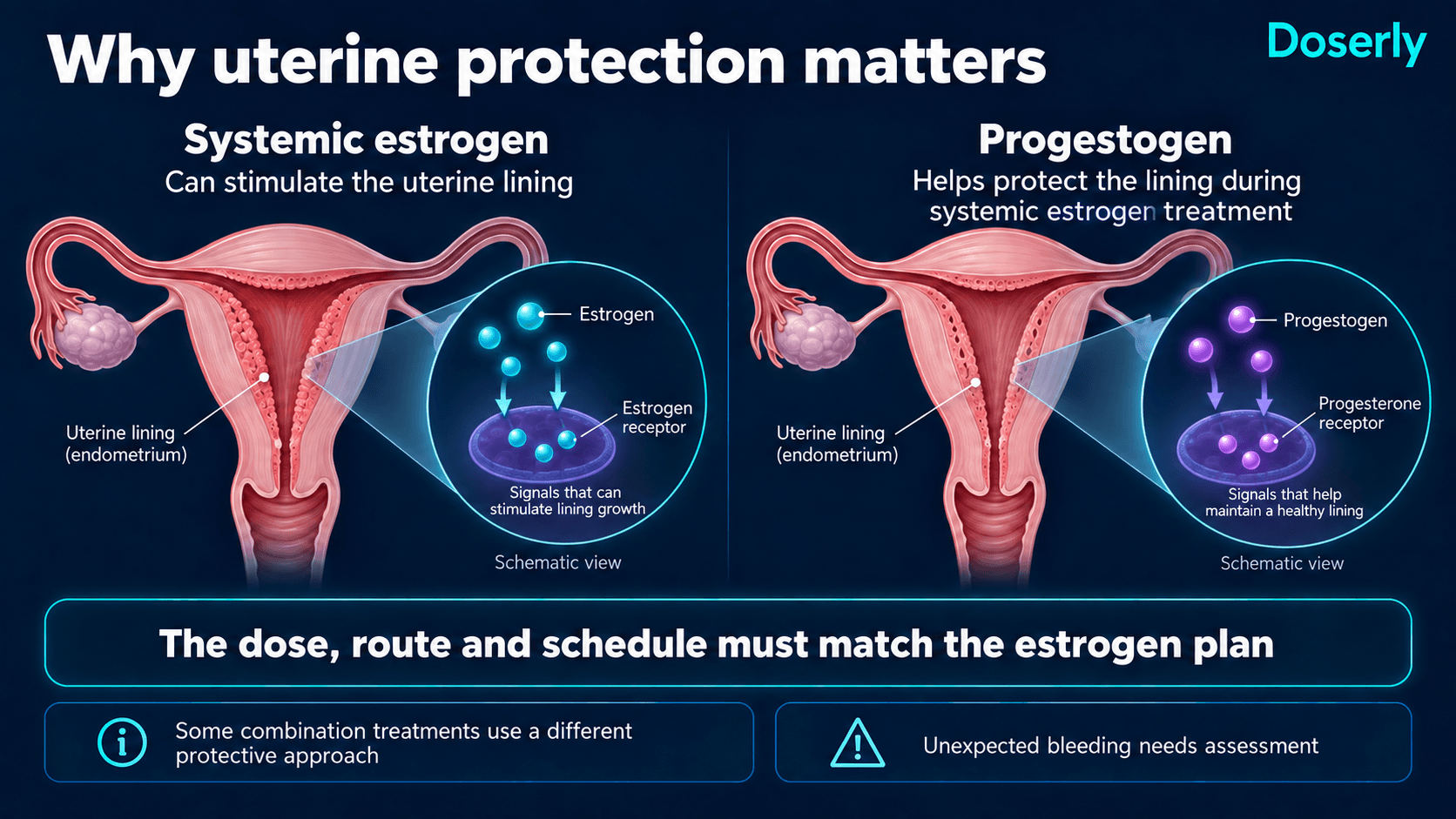
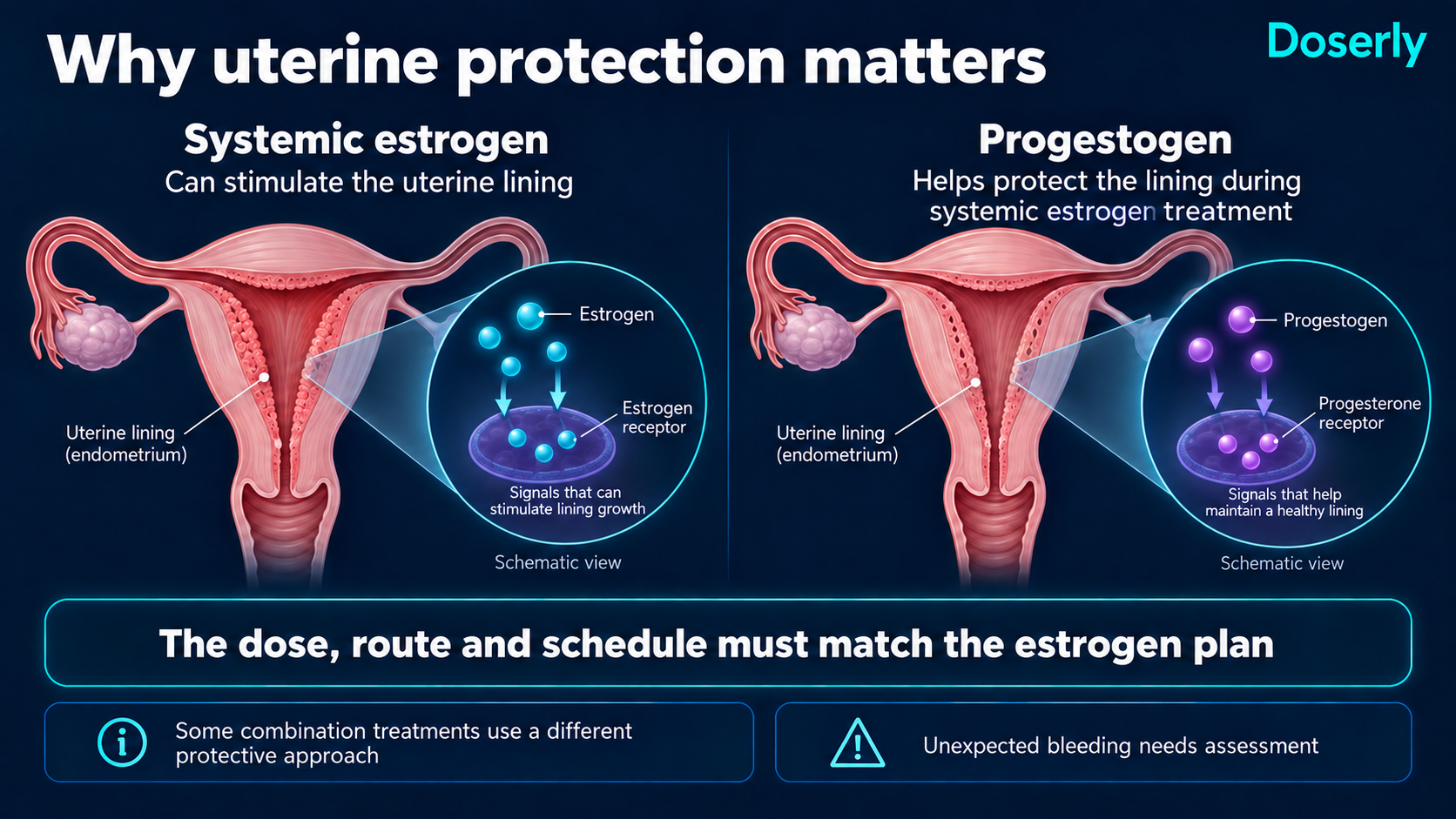
The illustration summarizes endometrial effects, not a dosing schedule or exact receptor structure. Progestogen dose, route and duration must provide protection for the estrogen regimen. Unexpected bleeding requires clinical assessment.
NICE menopause recommendations.
Pharmacokinetics / Hormone Physiology
The Basics
When you take a norethindrone acetate tablet, your body quickly converts it to norethindrone (NET), the active form, by removing the acetate group. This conversion happens so rapidly and completely that the drug behaves identically to taking norethindrone directly, except that the acetate form is about twice as potent because it is absorbed more efficiently.
After swallowing the tablet, blood levels of norethindrone peak within about 2 hours. The drug has a relatively short half-life of approximately 8.5 to 9 hours, which supports once-daily dosing for most indications. In the bloodstream, norethindrone binds primarily to albumin (61%) and to sex hormone-binding globulin (SHBG, 36%), with only about 3-4% circulating as free, active hormone.
The liver processes norethindrone extensively, breaking it down through reduction reactions and then attaching sulfate and glucuronide groups to the breakdown products for elimination. The metabolites are excreted through both urine and feces.
One practical point that distinguishes NETA from many other progestogens: the effect of food on its absorption has not been formally studied for the standalone 5 mg tablet. For combination products like Activella, food effects may differ. Taking NETA consistently with respect to meals is generally advisable for stable blood levels.
The Science
Absorption: NETA is completely and rapidly hydrolyzed to norethindrone (NET) by intestinal and hepatic esterases. Following a single oral dose of 5 mg NETA in 29 healthy women under fasting conditions [6]:
Parameter
AUC (0-inf)
- Value (Mean +/- SD)
- 166.90 +/- 56.28 ng/mL*h
Parameter
Cmax
- Value (Mean +/- SD)
- 26.19 +/- 6.19 ng/mL
Parameter
Tmax
- Value (Mean +/- SD)
- 1.83 +/- 0.58 h
Parameter
t1/2
- Value (Mean +/- SD)
- 8.51 +/- 2.19 h
Note the substantial interindividual variability, particularly in AUC (coefficient of variation ~34%), which partly explains variable clinical responses.
Distribution: NET is 36% bound to SHBG, 61% to albumin, with 3-4% free. Volume of distribution is approximately 4 L/kg [6].
Metabolism: Extensive hepatic biotransformation, primarily via reduction followed by sulfate and glucuronide conjugation. The majority of circulating metabolites are sulfates; glucuronides predominate in urine. Partial conversion to ethinylestradiol occurs via aromatization (CYP19), estimated at 0.4-1% of administered dose [2][3].
Elimination: Plasma clearance approximately 0.4 L/hr/kg. Excretion via both urine and feces as metabolites. Mean terminal half-life approximately 9 hours [6].
Route comparison (combination products):
Parameter
NETA dose
- Oral (Activella)
- 0.5 mg daily
- Transdermal (CombiPatch)
- 0.14-0.25 mg/day
Parameter
E2 dose
- Oral (Activella)
- 1 mg daily
- Transdermal (CombiPatch)
- 0.05 mg/day
Parameter
NETA delivery
- Oral (Activella)
- First-pass hepatic
- Transdermal (CombiPatch)
- Bypasses first-pass
Parameter
EE conversion
- Oral (Activella)
- Expected (hepatic)
- Transdermal (CombiPatch)
- Minimal (bypasses liver)
Parameter
Endometrial protection
- Oral (Activella)
- Well-established
- Transdermal (CombiPatch)
- Established up to 1 year
Understanding how your body absorbs and metabolizes hormones is one thing. Tracking your actual protocol — doses, timing, and route — gives you the data to have more productive conversations with your prescriber. Doserly lets you log every dose with route-specific detail, building a clear record of your hormone protocol over time.
Whether you're on patches, gels, oral tablets, or a combination, the app tracks your schedule and flags when doses are due. When your provider asks how your protocol has been going, you'll have a precise answer instead of a best guess.
Research & Clinical Evidence
The Basics
The research on norethindrone acetate in HRT spans several decades and covers its use both as a standalone progestogen and as a component of combination hormone therapy products. Unlike medroxyprogesterone acetate (MPA), NETA was not the progestogen studied in the Women's Health Initiative (WHI). This means much of what we know about NETA in HRT comes from observational studies, smaller randomized trials, and its extensive use in European and Scandinavian clinical practice.
For its core function of endometrial protection, the evidence is strong. NETA is actually the most frequently studied progestogen in combined menopausal hormone therapy, with more randomized trials evaluating its endometrial effects than any other progestogen [10]. A 2024 systematic review confirmed that oral NETA effectively protects the endometrium for up to two years of continuous combined use, and transdermal NETA provides protection for at least one year [10].
Regarding bone health, NETA appears to have beneficial effects that may go beyond what estrogen alone provides. Studies suggest that the combination of NETA and estradiol increases bone mineral density more than expected, potentially due to NETA's partial conversion to ethinylestradiol providing additional estrogenic support to bone tissue [11][12].
The breast cancer picture is less favorable. Observational data from Finnish and Scandinavian registries suggest that long-term use of NETA in combination with estrogen is associated with a higher breast cancer risk compared to micronized progesterone, and possibly higher than MPA as well [13][14]. However, short-term use (under 5 years) does not appear to carry a significantly elevated risk.
The Science
Endometrial Protection:
The systematic review by Stute et al. (2024) evaluated 84 RCTs and concluded that NETA is the most extensively studied progestogen for endometrial protection in combined MHT [10]. Key findings:
- Oral NETA (0.5-1 mg daily) effectively prevents endometrial hyperplasia for up to 2 years
- Transdermal NETA (170-350 mcg/day continuous, 140-400 mcg/day sequential) effectively protects for up to 1 year
- In a head-to-head RCT, 1 mg NET daily produced endometrial atrophy in 73% vs 32% with 2.5 mg MPA [1]
- Continuous combined NETA regimens result in lower rates of dysfunctional bleeding compared to other progestogens [15]
Bone Health:
Riis et al. (2002) demonstrated that norethisterone acetate in combination with estradiol increased forearm bone mass and spinal bone mineral density in a dose-dependent manner [11]. Onobrakpeya et al. found that NETA 5 mg/day decreased N-telopeptide (bone resorption marker) by 19% and bone-specific alkaline phosphatase by 23%, suggesting effects mediated primarily through the estrogenic pathway [12]. A 2-year comparative study suggested NETA has a more pronounced effect on BMD and fracture protection than MPA [16].
Breast Cancer:
Clinical context — Breast cancer risk: NETA vs other progestogens.
Source: Finnish register study (Lyytinen et al, 2009): SIR 2.03 for NETA users vs 1.64 for MPA users after 5+ years
Source: Collaborative Group on Hormonal Factors in Breast Cancer (Lancet 2019): individual participant meta-analysis confirming progestogen type and timing affect breast cancer risk
Source: PROBES trial (ongoing, NCT05586724): first RCT directly comparing breast safety of MP vs NETA, using mammographic density as primary endpoint
Context: Observational data consistently suggests NETA carries higher breast cancer risk than micronized progesterone and possibly higher than MPA. However, no completed RCT has directly compared breast cancer outcomes between progestogen types. The PROBES trial may provide the first randomized evidence but uses mammographic density as a surrogate marker, not cancer incidence.
The Finnish register-based study (Lyytinen et al., 2009) involving postmenopausal women found no increased breast cancer risk after 3 years of HRT use, but significant increases after 5 years. The standardized incidence ratio was notably higher for NETA users (SIR 2.03) than MPA users (SIR 1.64) [13]. Sequential regimens showed lower risk than continuous progestogen use.
In vitro data from Franke and Vermes (2003) showed that NETA, MPA, and dienogest similarly stimulated breast cancer cell growth, while dydrogesterone, tibolone, and natural progesterone stimulated apoptosis [17]. In vivo fine-needle biopsy data demonstrated a 4-fold increase in breast cell proliferation after 3 months of 1 mg NET combined with 2 mg estradiol [18].
Cardiovascular and Metabolic Effects:
NET lowers both HDL and LDL cholesterol, as well as triglycerides, maintaining the HDL/LDL ratio [19]. This profile is considered neutral to mildly favorable for cardiovascular risk. Effects on glucose metabolism appear neutral [20]. Li et al. (2000) found that combining estrogen with NETA inhibited age-related increases in visceral fat deposition, with no difference compared to MPA-containing regimens [21].
Mood and Cognitive Effects:
Results are mixed. Cagnacci et al. (2004) found that NETA combined with estradiol had no effect on depression in an RCT comparing four progestogens, though dydrogesterone and MPA reduced anxiety [22]. Conversely, Magos et al. (1986) found dose-dependent increases in depression, anxiety, and irritability with NETA and estradiol, reproducing PMS-like symptoms [23]. Li et al. (2000) found that adding NETA to estradiol compromised beneficial effects on sexual desire and emotional well-being compared to estradiol alone [21].
Benefits & Therapeutic Effects
The Basics
Norethindrone acetate brings several meaningful benefits to the table as a progestogen in HRT, though its advantages and limitations differ from those of micronized progesterone in important ways.
The most well-established benefit is endometrial protection. NETA is exceptionally effective at stabilizing the uterine lining when you are taking estrogen therapy, and it does so with a reliability that few other progestogens can match. It is also highly effective at controlling irregular bleeding, which is one of the most common reasons women discontinue HRT. If breakthrough bleeding has been a persistent problem on other progestogen regimens, NETA may offer better control.
Bone health benefits are another area where NETA performs well. When combined with estrogen, NETA appears to enhance bone mineral density increases beyond what estrogen alone provides, likely because of its partial conversion to ethinylestradiol. This dual hormone effect on bone can be particularly valuable for women at higher risk of osteoporosis.
For women who cannot tolerate micronized progesterone, NETA often represents a practical alternative. The side effect profile is different: NETA does not cause the drowsiness, sedation, or cognitive dulling that some women experience with oral micronized progesterone. While this means it also lacks progesterone's sleep-promoting benefits, many women find the tradeoff worthwhile.
The Science
Endometrial protection efficacy:
In a multicenter RCT, oral NETA 1 mg daily produced complete endometrial atrophy in 73% of subjects compared with 32% for MPA 2.5 mg daily [1]. This superior endometrial transformation rate translates to lower rates of breakthrough bleeding on continuous combined regimens. A systematic review of 84 RCTs confirmed NETA's endometrial protective efficacy for up to 2 years of oral use and 1 year of transdermal use [10].
Bone mineral density:
Riis et al. (2002) demonstrated dose-dependent increases in forearm bone mass and lumbar spine BMD with NETA + estradiol. The bone effects were attributed to both the progestogenic component and the additional estrogenic stimulus from EE conversion [11]. Bone resorption markers (N-telopeptide) decreased 19% within 6 weeks of NETA 5 mg/day [12]. A 2-year comparative study reported more pronounced BMD improvements with NETA than MPA when combined with estrogen [16].
Lipid metabolism:
NET lowers both HDL and LDL cholesterol and reduces triglycerides, maintaining the overall HDL/LDL ratio [19]. While micronized progesterone and dydrogesterone have more neutral lipid profiles, NETA's balanced lowering of both atherogenic and protective lipoproteins produces a net cardiovascular risk effect that is considered neutral to mildly favorable.
Vasomotor symptom relief:
In combination with estrogen, NETA contributes to effective vasomotor symptom control. Combination products (Activella, CombiPatch) are FDA-approved for treatment of moderate to severe vasomotor symptoms. Riis et al. confirmed that E2+NETA combinations efficiently alleviate hot flashes [11].
Risks, Side Effects & Safety
The Basics
Every medication carries risks, and understanding the specific risk profile of norethindrone acetate helps you have informed conversations with your healthcare provider about whether it is appropriate for your situation.
The most common side effects of NETA are similar to those of other progestogens: breakthrough bleeding or spotting (especially in the first months), breast tenderness, headaches, mood changes, nausea, and bloating. Many of these effects settle within the first few months of use. Mood effects, including irritability or low mood, can occur with progestogens and may be dose-related. Dose changes should be made only when clinically appropriate.
For serious risks, several areas deserve careful attention. Blood clot risk is particularly important with NETA because of its unique conversion to ethinylestradiol. At therapeutic doses (5-15 mg/day, used for endometriosis), research suggests VTE risk may be comparable to combined hormonal contraceptives, with one WHO collaborative study finding an adjusted odds ratio of 5.9 for VTE with therapeutic progestogen doses [24]. However, at the lower HRT doses (0.5-1 mg/day in combination products), the VTE risk is substantially lower and comparable to other HRT progestogens, particularly when combined with transdermal estrogen, which does not appear to increase VTE risk [25].
Breast cancer risk with NETA appears to be higher than with micronized progesterone based on observational data. A Finnish registry study found a standardized incidence ratio of 2.03 for breast cancer in women using NETA-containing HRT for more than 5 years, compared to 1.64 for MPA [13]. To put this in perspective: for every 10,000 women taking NETA-containing HRT for one year beyond the 5-year mark, approximately 20 additional breast cancer cases might be expected compared to non-users. Risk is lower with sequential regimens (progestogen for 12-14 days per cycle) compared to continuous daily use.
Regarding other risks, NETA is contraindicated in women with active or history of deep vein thrombosis, pulmonary embolism, stroke, myocardial infarction, breast cancer, undiagnosed vaginal bleeding, liver disease, or pregnancy [6].
The Science
Common adverse reactions (from prescribing information) [6]:
Breakthrough bleeding, spotting, amenorrhea, weight changes, edema, breast tenderness/enlargement, headache/migraine, mood swings, clinical depression, nausea, insomnia, acne, melasma, decreased HDL cholesterol, cholestatic jaundice (rare), anaphylactic reactions (rare), thrombotic events (rare).
Venous thromboembolism:
The VTE risk with NETA is dose-dependent and context-dependent:
- Contraceptive doses (0.35 mg/day, progestogen-only): No increased VTE risk [26]
- HRT doses (0.5-1 mg/day with estrogen): When combined with oral estrogen, NET showed slightly higher VTE risk than MPA in one large observational study (Vinogradova et al., BMJ 2019) [25]. Transdermal estrogen + NETA does not elevate VTE risk above baseline.
- Therapeutic doses (5-15 mg/day): WHO collaborative study reported adjusted OR 5.9 for VTE [24]; register-based study reported RR 5.3 (1.5-18.7) [27]
To contextualize: baseline VTE risk in postmenopausal women is approximately 1-2 per 1,000 per year. Oral HRT approximately doubles this to 2-4 per 1,000 per year. The incremental risk from NETA vs other progestogens at HRT doses is small in absolute terms.
Breast cancer:
Finnish register data (Lyytinen et al., 2009; n = postmenopausal women, national cancer registry linkage) [13]:
- No increased risk after 3 years of use
- After 5+ years: SIR 2.03 (95% CI: significant) for NETA
- Comparison: SIR 1.64 for MPA
- Sequential use lower risk than continuous
In vitro: NETA stimulated breast cancer cell growth similarly to MPA and dienogest; progesterone, dydrogesterone, and tibolone stimulated apoptosis [17].
In vivo: 1 mg NET + 2 mg E2 for 3 months produced 4-fold increase in breast cell proliferation on fine-needle aspiration [18].
The Collaborative Group on Hormonal Factors in Breast Cancer (Lancet 2019) meta-analysis of worldwide evidence confirmed that breast cancer risk increases with duration and is influenced by progestogen type, with synthetic progestins carrying higher risk than micronized progesterone [14].
Clinical context — VTE risk magnitude at HRT doses.
Source: Vinogradova et al (BMJ 2019): NET showed slightly higher VTE odds than MPA when combined with oral estrogen in HRT
Source: BMJ SRH review (Huvinen 2021): Transdermal estrogen + progestogens (including NETA) does not elevate VTE risk
Source: WHO collaborative study: Therapeutic (high-dose) progestogen use OR 5.9, but no subgroup analysis by progestogen type
Context: The VTE risk difference between NETA and other progestogens at HRT doses (0.5-1 mg) is likely small and heavily dependent on the estrogen route (oral vs transdermal). At therapeutic doses (5-15 mg), the EE conversion makes VTE risk clinically more significant. Route of estrogen administration appears to be the dominant risk modifier.
Contraindications [6]:
Absolute:
- Known or suspected pregnancy (Category X)
- Undiagnosed vaginal bleeding
- Known, suspected or history of breast cancer
- Active DVT, PE, or history of these conditions
- Active or recent arterial thromboembolic disease
- Impaired liver function or liver disease
- Hypersensitivity to drug components
Special populations requiring caution:
- Migraine with aura (EE conversion may increase stroke risk at therapeutic doses)
- History of depression (may worsen)
- Epilepsy, cardiac or renal dysfunction (fluid retention)
- Hyperlipidemia, diabetes (monitor lipids and glucose)
Being informed about potential risks is important. Being able to track and document any side effects you actually experience is what turns awareness into safety. Doserly lets you log side effects as they happen, with timestamps and severity ratings, so nothing falls through the cracks between appointments.
If you're experiencing breakthrough bleeding, headaches, breast tenderness, or any other change, having a documented timeline helps your provider distinguish between expected adjustment effects and signals that warrant a protocol change. The app also checks for interactions between your HRT and any other medications or supplements you're taking.
Dosing & Treatment Protocols
The Basics
Norethindrone acetate dosing varies significantly depending on the clinical indication. For HRT purposes, the doses are much lower than for standalone gynecological uses like endometriosis. Understanding these different contexts helps clarify why you might hear very different numbers depending on your situation.
For menopausal hormone therapy with an intact uterus, NETA is most commonly prescribed as part of combination products. The standard continuous combined regimen uses 0.5 mg NETA daily with 1 mg estradiol (as in Activella/Activelle). Some regimens use 1 mg NETA with 2 mg estradiol. Sequential regimens, where the progestogen is taken for 12-14 days per month, are also used with NETA at doses of 0.5-1 mg during the progestogen phase.
For standalone NETA (5 mg tablets) used off-label as the progestogen component of an individualized HRT regimen, prescribers typically quarter the tablet (1.25 mg) or halve it (2.5 mg) to achieve appropriate HRT-range doses. This practice is common but requires careful discussion with your prescriber, as the 5 mg tablet is formulated for gynecological indications, not HRT.
For its FDA-approved indications (amenorrhea, abnormal uterine bleeding), doses range from 2.5 to 10 mg daily for 5-10 days. For endometriosis, doses start at 5 mg daily and may increase to 15 mg daily.
The principle of using the minimum effective dose applies to NETA as it does to all HRT components. Starting at a lower dose and adjusting based on symptom response and bleeding patterns is standard practice.
The Science
HRT dosing (combination products, FDA-approved regimens):
Product
Activella 1/0.5
- NETA Dose
- 0.5 mg
- Estrogen Dose
- E2 1 mg
- Route
- Oral
- Schedule
- Continuous combined
Product
Activella 0.5/0.1
- NETA Dose
- 0.1 mg
- Estrogen Dose
- E2 0.5 mg
- Route
- Oral
- Schedule
- Continuous combined
Product
CombiPatch 0.05/0.14
- NETA Dose
- 0.14 mg/day
- Estrogen Dose
- E2 0.05 mg/day
- Route
- Transdermal
- Schedule
- Continuous combined
Product
CombiPatch 0.05/0.25
- NETA Dose
- 0.25 mg/day
- Estrogen Dose
- E2 0.05 mg/day
- Route
- Transdermal
- Schedule
- Continuous combined
Product
FemHRT 1/5
- NETA Dose
- 0.5 mg
- Estrogen Dose
- EE 2.5 mcg
- Route
- Oral
- Schedule
- Continuous combined
Standalone NETA dosing (FDA-approved indications) [6]:
Indication
Secondary amenorrhea
- Dose
- 2.5-10 mg daily
- Duration
- 5-10 days
Indication
Abnormal uterine bleeding
- Dose
- 2.5-10 mg daily
- Duration
- 5-10 days
Indication
Endometriosis
- Dose
- 5 mg daily initially, increase by 2.5 mg q2weeks to 15 mg
- Duration
- 6-9 months
Endometrial protection thresholds:
The minimum oral NETA dose for adequate continuous endometrial protection is 0.5 mg daily when combined with 1 mg estradiol, based on clinical trial data supporting the Activella formulation [28]. For sequential use, 1 mg daily for 12-14 days per cycle provides adequate protection.
Dose-response relationships:
Higher NETA doses are associated with greater endometrial suppression but also increased likelihood of androgenic side effects (HDL lowering, acne) and negative mood effects [23]. The goal is the minimum dose that provides adequate endometrial protection while maintaining tolerability.
Getting the dosing right often takes time and fine-tuning with your provider. Keeping an accurate record of what you're actually taking — doses, timing, and any adjustments — makes that process smoother. Doserly tracks your HRT doses alongside everything else in your health stack, so your full protocol is always in one place.
Never wonder whether you took your morning dose or when you last changed your patch. The app logs every dose with a timestamp and sends reminders when your next one is due, helping you maintain the consistency that makes hormone therapy most effective.
What to Expect (Timeline)
Days 1-7: Initial adjustment period. You may experience breast tenderness, mild bloating, headache, or nausea. If starting a continuous combined regimen, spotting or light breakthrough bleeding is common and expected. Mood changes may occur but are usually mild in the first week.
Weeks 2-4: Breakthrough bleeding often continues during this period but typically becomes lighter. If taking NETA for bleeding control, many women notice a significant reduction in bleeding within the first 2 weeks. Mood changes may become more noticeable during this period.
Months 1-3: Vasomotor symptoms (if taking combination HRT with estrogen) typically improve significantly. Breakthrough bleeding usually settles by month 3 in continuous combined regimens. Side effects like breast tenderness and bloating generally diminish. Mood effects stabilize; if negative mood persists beyond this point, discuss dose adjustment or alternative progestogens with your prescriber.
Months 3-6: Full therapeutic effect for most indications. Endometrial protection is well-established. Bone density stabilization begins. Bleeding control is typically excellent. This is a good time for a follow-up assessment with your provider to evaluate symptom response and tolerability.
Ongoing maintenance: Annual review recommended. Dose reassessment based on symptom control and bleeding patterns. Continued monitoring of breast health, blood pressure, and lipids. Duration of therapy should be individualized based on risk-benefit assessment.
Individual response varies considerably with NETA. Some women notice benefits within the first week, while others need 2-3 months for the full effect. If side effects are problematic, discuss dose adjustment with your provider before discontinuing, as lower doses often retain efficacy with improved tolerability.
Timing Hypothesis & Window of Opportunity
The timing hypothesis proposes that HRT initiated within 10 years of menopause onset or before age 60 has a more favorable risk-benefit profile than late initiation. While the original evidence for the timing hypothesis comes from studies of estrogen (with various progestogens), the principle applies to combination regimens containing NETA.
The KEEPS (Kronos Early Estrogen Prevention Study) and ELITE (Early vs Late Intervention Trial with Estradiol) trials demonstrated that early HRT initiation may be cardioprotective or at least cardiovascularly neutral, while late initiation may increase cardiovascular risk. The WHI age subgroup analyses similarly showed more favorable outcomes in younger women who initiated HRT closer to menopause onset.
For NETA specifically, the timing of initiation may influence both benefit and risk. Early initiation maximizes the bone-protective effects and vasomotor symptom relief. The breast cancer risk associated with NETA-containing HRT increases with duration rather than timing of initiation per se, with the 5-year threshold being the most clinically relevant marker.
This remains evolving evidence. No trial has been specifically designed and powered to test the timing hypothesis definitively. Decisions about when to start and how long to continue NETA-containing HRT should be individualized with your healthcare provider.
Interactions & Compatibility
Drug-drug interactions:
- CYP3A4 inducers (rifampin, carbamazepine, phenytoin, phenobarbital, St. John's Wort): May increase NETA/NET metabolism, potentially reducing efficacy. Monitor for breakthrough bleeding as an indicator of reduced progestogen levels.
- CYP3A4 inhibitors (ketoconazole, itraconazole, erythromycin, grapefruit juice): May increase NET levels. Monitor for increased side effects.
- Thyroid medications: Estrogen (including the EE derived from NETA conversion) increases thyroid-binding globulin (TBG), which may require levothyroxine dose adjustment. Monitor thyroid function when initiating or discontinuing NETA.
- Anticoagulants (warfarin): NETA may alter coagulation factors. Monitor INR when initiating or changing NETA dose.
- Lamotrigine: Estrogen (including EE from NETA conversion) significantly reduces lamotrigine levels. Monitor lamotrigine levels and adjust dose as needed.
- Diabetes medications: NETA may impair glucose metabolism. Monitor blood glucose more frequently when initiating therapy.
Supplement interactions:
- St. John's Wort: CYP3A4 inducer; may reduce NETA effectiveness. Cross-reference: St. John's Wort supplement guide
- Calcium and Vitamin D: No significant interaction; recommended for bone health support
- Black cohosh: No significant pharmacokinetic interaction known; some women use alongside HRT for symptom management
Lifestyle factors:
- Smoking: Dramatically increases cardiovascular and VTE risk with oral hormone therapy. The EE conversion from NETA makes this particularly relevant. Strongly advise smoking cessation before or during NETA therapy.
- Alcohol: Modest hepatic metabolism interaction. Moderate consumption generally acceptable.
- Grapefruit: CYP3A4 inhibitor; may increase NET levels. Consistent moderate consumption is unlikely to cause clinically significant effects at HRT doses.
Cross-references to other Doserly guides:
- Micronized Progesterone (Prometrium) — primary alternative progestogen
- Medroxyprogesterone Acetate (Provera) — another synthetic progestogen comparator
- Estradiol — commonly paired estrogen
- Ethinyl Estradiol — the estrogen NETA partially converts to
- Levonorgestrel IUD — alternative progestogen delivery method
- Estradiol + Norethindrone Acetate (Activella) — most common combination product
Decision-Making Framework
Choosing a progestogen is a personal decision best made in partnership with a knowledgeable healthcare provider. NETA may be worth considering in several situations:
NETA may be a good fit if:
- You need reliable endometrial protection with minimal breakthrough bleeding
- You have had difficulty tolerating micronized progesterone (drowsiness, GI issues, mood effects)
- You are using a combination product like Activella or CombiPatch as prescribed
- You have bone density concerns and want additional skeletal support from your progestogen
- Bleeding control is a primary concern alongside endometrial protection
NETA may warrant caution or alternatives if:
- You have a history of or elevated risk for breast cancer (consider micronized progesterone)
- You have a history of VTE, DVT, or pulmonary embolism
- You experience migraine with aura (the EE conversion raises concern)
- You value the sleep-promoting and anxiety-reducing effects of micronized progesterone
- You are a smoker (the EE conversion amplifies cardiovascular risk with smoking)
Questions to discuss with your provider:
- What progestogen options are available for my specific situation?
- Given my risk factors, how does NETA compare to micronized progesterone for me?
- If I have had mood side effects on other progestogens, is dose adjustment possible with NETA?
- How will you monitor my endometrial health on this regimen?
- What is the plan for reassessing the duration of therapy?
Finding a menopause specialist: NAMS (The Menopause Society) maintains a directory of Certified Menopause Practitioners at menopause.org. The International Society for the Study of Women's Sexual Health (ISSWSH) also lists specialists. If your provider is unfamiliar with progestogen options beyond micronized progesterone, seeking a menopause-focused consultation may be valuable.
Administration & Practical Guide
Oral tablets (standalone NETA 5 mg):
- Take at the same time each day for consistent blood levels
- Can be taken with or without food (food effect not formally studied for this formulation)
- If prescribed a dose lower than 5 mg for HRT, your prescriber may instruct you to split the scored tablet (halves = 2.5 mg; quarters = 1.25 mg)
- Store at 20-25C (68-77F)
- If you miss a dose, take it as soon as you remember. If close to your next dose, skip the missed dose. Do not double up.
Oral combination tablets (Activella):
- Take one tablet daily at the same time each day
- Continuous combined: no breaks or placebo days
- Follow your prescriber's specific instructions
Transdermal patch (CombiPatch):
- Apply to clean, dry skin on the lower abdomen
- Rotate application sites; do not apply to the same spot for consecutive patches
- Replace twice weekly (every 3-4 days)
- If a patch falls off, reapply or apply a new one; do not apply additional patches
- Avoid applying to breasts or waistband area
All administration guidance is general educational information. Always follow the specific instructions from your prescriber and pharmacist for your individual regimen.
Monitoring & Lab Work
Pre-treatment baseline:
- Mammogram (current within 1 year)
- Pelvic exam
- Blood pressure
- Lipid panel (NETA may affect HDL/LDL)
- Liver function tests
- Thyroid function (if on thyroid medication)
- Bone density (DEXA) if indicated
- Endometrial thickness assessment if clinically indicated
Initial follow-up (4-12 weeks):
- Symptom assessment (bleeding pattern, mood, side effects)
- Blood pressure check
- Evaluate tolerability; consider dose adjustment if needed
Ongoing monitoring:
- Mammography: per national guidelines (annually or biennially depending on age and risk)
- Lipid panel: annually (NETA may lower HDL)
- Liver function: periodically, particularly for oral formulations
- Blood pressure: at each visit
- Endometrial monitoring: transvaginal ultrasound for any abnormal bleeding
- Thyroid function: if on concurrent thyroid medication (annually)
- Bone density: per clinical indication (typically every 2 years if osteoporosis concern)
Annual review checklist:
- Reassess symptom control and treatment goals
- Review bleeding pattern (any changes warrant evaluation)
- Breast health assessment
- Blood pressure measurement
- Review medication interactions (any new medications or supplements?)
- Discuss duration of therapy and risk-benefit reassessment
Complementary Approaches & Lifestyle
Evidence-based complementary strategies that can support your health alongside NETA-containing HRT:
Supplements:
- Vitamin D (1000-2000 IU daily): supports bone health; cross-reference: Vitamin D guide
- Calcium (1000-1200 mg daily from diet + supplement): essential for bone density; cross-reference: Calcium guide
- Magnesium: may support sleep and mood; cross-reference: Magnesium guide
- Omega-3 fatty acids: cardiovascular support; cross-reference: Fish Oil guide
Exercise:
- Weight-bearing exercise for bone health (walking, jogging, dancing)
- Resistance training for body composition and metabolic health
- Balance training for fall prevention (particularly important for bone protection)
- Cardiovascular exercise for heart health
Diet:
- Mediterranean diet pattern: associated with reduced cardiovascular risk
- Calcium-rich foods (dairy, leafy greens, fortified foods)
- Phytoestrogen-containing foods (soy, flaxseed) may provide modest additional symptom relief
- Limit alcohol (hepatic metabolism interaction) and caffeine
Sleep hygiene: Since NETA does not provide the sedative neurosteroid effects of micronized progesterone, good sleep hygiene practices are particularly important. Temperature management, consistent sleep schedule, limiting screen time before bed, and CBT-I (cognitive behavioral therapy for insomnia) if needed.
Pelvic floor therapy: For genitourinary symptoms, pelvic floor physical therapy can complement hormonal treatment.
Stress management: Mind-body practices (yoga, meditation, deep breathing) can help manage the psychological transition of menopause alongside hormonal treatment.
Stopping HRT / Discontinuation
When to consider stopping:
- Periodic reassessment (typically every 1-2 years) of whether continued therapy is needed
- If risk factors change (new breast cancer diagnosis, VTE event, liver disease)
- If side effects outweigh benefits despite dose adjustment
- Personal preference after discussion with provider
Tapering strategies:
- Gradual dose reduction is generally preferred over abrupt cessation
- For combination products: step down to a lower-dose formulation (e.g., Activella 1/0.5 to 0.5/0.1) before discontinuing
- For standalone NETA: reduce dose gradually over several weeks
- Switching to lower-dose or vaginal-only estrogen before stopping systemic HRT is an option for persistent GSM symptoms
Symptom recurrence:
- Approximately 50% of women experience some return of vasomotor symptoms after stopping HRT
- Recurrence severity is typically similar to pre-treatment levels, not worse
- Symptoms may be temporary (weeks to months) for some women
Transition options:
- Low-dose vaginal estrogen for persistent GSM symptoms (may continue even when systemic HRT stops)
- Non-hormonal alternatives for persistent vasomotor symptoms (fezolinetant, SSRIs/SNRIs, gabapentin)
Monitoring during discontinuation:
- Symptom diary for 3-6 months after stopping
- Bone density follow-up if osteoporosis was an indication
- Cardiovascular risk reassessment
- Restarting HRT may be appropriate if symptoms are severe; discuss with your provider
Special Populations & Situations
Breast Cancer Survivors
NETA-containing systemic HRT is generally contraindicated for women with a history of breast cancer. Observational data suggests NETA may carry higher breast cancer risk than micronized progesterone. Non-hormonal alternatives for vasomotor symptoms (fezolinetant, SSRIs/SNRIs, gabapentin) should be considered. Low-dose vaginal estrogen may be discussed with an oncologist for severe GSM symptoms on a case-by-case basis.
Premature Ovarian Insufficiency (POI)
Women with POI need hormone replacement until the typical age of menopause (approximately 51) to protect cardiovascular and bone health. NETA can be used as the progestogen component in this context, though many clinicians prefer micronized progesterone for younger women due to its potentially more favorable breast safety profile over longer durations.
Surgical Menopause / Oophorectomy
Women who have had both ovaries removed experience abrupt hormone loss. If the uterus is intact, progestogen is still needed with estrogen. NETA is an option, particularly if bleeding control is a priority. If the uterus was also removed (hysterectomy with bilateral oophorectomy), progestogen is not needed and estrogen-only therapy is appropriate.
Cardiovascular Disease History
Transdermal estrogen is preferred for women with cardiovascular risk factors. The CombiPatch (transdermal E2 + NETA) avoids first-pass hepatic metabolism and is associated with lower VTE risk. Oral NETA's conversion to EE is a consideration for women with cardiovascular concerns, making transdermal delivery preferable.
Migraine with Aura
The conversion of NETA to ethinylestradiol is particularly relevant for women with migraine with aura. At HRT doses (0.5-1 mg), the resulting EE is small, but at therapeutic doses (5-15 mg), EE levels may be clinically significant. Transdermal delivery (CombiPatch) may be preferable as it minimizes hepatic EE conversion. Stable estrogen delivery is important for migraine management.
History of VTE
Transdermal estrogen combined with a progestogen (including NETA via CombiPatch) does not appear to increase VTE risk. Oral estrogen plus NETA carries a slightly higher VTE risk than oral estrogen plus MPA in some observational data. Individual risk assessment is essential.
Type 2 Diabetes
NETA has neutral effects on glucose metabolism in limited studies. Monitor blood glucose when initiating therapy. The lipid effects (lowered HDL) should be weighed against the overall metabolic profile.
Regulatory, Insurance & International
United States (FDA):
- Standalone NETA 5 mg approved for amenorrhea, endometriosis, AUB
- NOT approved as standalone for postmenopausal endometrial protection
- Available in FDA-approved combination HRT products (Activella, CombiPatch, FemHRT)
- Aygestin brand discontinued; generic 5 mg tablets available
- Generic cost approximately $0.79 per tablet (50 tablets ~$39)
- Insurance coverage varies; combination products generally covered under HRT formularies
United Kingdom (MHRA):
- Available as Primolut-Nor
- Used in various combination HRT products
- NHS prescribable with HRT prepayment certificate
- NICE NG23 guidelines include NETA-containing regimens as options
Canada (Health Canada):
- Available as Norlutate and generics
- Used in combination HRT products
Australia (TGA):
- Available as Primolut N
- Used in combination products
European Union (EMA):
- Widely available across EU member states
- NETA/E2 combinations (Activelle, Kliogest, Trisequens) among the most commonly prescribed HRT in Nordic countries
Frequently Asked Questions
Q: Is norethindrone acetate the same as norethindrone?
A: Not exactly. NETA is the acetate ester (prodrug) of norethindrone. After you take it, your body rapidly converts it to norethindrone. NETA is approximately twice as potent as norethindrone on a weight basis because the acetate group improves absorption.
Q: Why does my prescribing information say NETA is not approved for postmenopausal use?
A: The standalone 5 mg NETA tablet (Aygestin/generics) is FDA-approved only for amenorrhea, endometriosis, and AUB. However, NETA at lower doses (0.5-1 mg) is FDA-approved as part of combination HRT products like Activella and CombiPatch. Some providers prescribe standalone NETA off-label at reduced doses for HRT.
Q: How does NETA compare to micronized progesterone?
A: Both provide endometrial protection, but they differ in important ways. NETA has a stronger endometrial effect and better bleeding control. Micronized progesterone produces calming neurosteroid metabolites (sleep, anxiety benefit) that NETA does not. Observational data suggests micronized progesterone may have a more favorable breast cancer risk profile. The choice depends on your individual priorities, tolerability, and risk factors. Discuss with your healthcare provider.
Q: Will NETA help me sleep like micronized progesterone does?
A: Probably not. NETA does not produce the GABA-active neurosteroid metabolites (allopregnanolone) that give micronized progesterone its sedative and sleep-promoting effects. If sleep is a primary concern, discuss whether micronized progesterone or other sleep interventions would be more appropriate.
Q: I had bad mood side effects on NETA. What can I do?
A: Dose reduction is often the first approach. Some women who experience negative mood effects at 5 mg find that 2.5 mg or 1.25 mg is tolerable while still providing adequate endometrial protection (when combined with estrogen). If mood effects persist at lower doses, switching to a different progestogen (micronized progesterone, dydrogesterone, levonorgestrel IUD) should be discussed with your provider.
Q: Does NETA increase blood clot risk?
A: At HRT doses (0.5-1 mg daily), the VTE risk is similar to other oral HRT progestogens and is primarily influenced by the estrogen route (oral vs transdermal). At higher therapeutic doses (5-15 mg), NETA's conversion to ethinylestradiol may increase VTE risk to levels comparable to combined hormonal contraceptives. Transdermal combinations (CombiPatch) minimize this risk.
Q: Is NETA safe for long-term use?
A: The answer depends on your individual risk factors. Short-term use (under 5 years) does not appear to significantly increase breast cancer risk. After 5 years, observational data suggests an increase. Duration decisions should be individualized with your provider, weighing benefits (symptom relief, bone protection) against risks (breast cancer, VTE).
Q: Can I take NETA if I have migraine with aura?
A: This requires careful discussion with your provider. At HRT doses (0.5-1 mg), the resulting ethinylestradiol from NETA conversion is small. At therapeutic doses (5-15 mg), the EE levels may be clinically significant for stroke risk in migraine with aura. Transdermal delivery (CombiPatch) minimizes hepatic EE conversion and may be preferable.
Q: Why is Aygestin discontinued?
A: The Aygestin brand name has been discontinued in the US, but generic norethindrone acetate 5 mg tablets remain widely available. This is a business decision, not a safety withdrawal. The medication itself continues to be manufactured and prescribed.
Q: What combination HRT products contain NETA?
A: In the US, these include Activella (oral E2 + NETA), CombiPatch (transdermal E2 + NETA), and FemHRT (oral EE + NETA). Internationally, additional products include Activelle, Kliogest, Trisequens, and Estalis.
Myth vs. Fact
Myth: "NETA is unsafe because it's synthetic."
Fact: "Synthetic" does not inherently mean unsafe. NETA has been used clinically since the 1960s with an extensive safety record. The relevant question is not whether a progestogen is synthetic or bioidentical but what its specific clinical effects and risks are. NETA has well-documented benefits (endometrial protection, bone health, bleeding control) alongside defined risks that should be discussed with your provider.
Myth: "All progestogens carry the same breast cancer risk."
Fact: Research suggests meaningful differences between progestogens. The E3N cohort found no significant breast cancer increase with micronized progesterone combined with estrogen (RR 1.00), while synthetic progestins showed increased risk (RR 1.69) [29]. Among synthetic progestins, Finnish data suggests NETA may carry slightly higher risk (SIR 2.03) than MPA (SIR 1.64) after 5+ years [13]. These are observational findings; no RCT has directly compared breast cancer outcomes between progestogens.
Myth: "NETA is just progesterone in a different form."
Fact: NETA is a synthetic progestogen with a distinctly different pharmacological profile from micronized progesterone. Key differences include: no neurosteroid metabolite production (no sleep/anxiety benefits), partial conversion to ethinylestradiol (unique among progestogens), mild androgenic activity, and a different breast cancer risk profile. These differences matter clinically and should inform treatment decisions.
Myth: "You should only take HRT for 5 years maximum."
Fact: The outdated "5-year rule" was based on early WHI interpretations. Current guidelines from The Menopause Society and the British Menopause Society recommend individualized duration assessment based on the ongoing benefit-risk balance. Some women appropriately continue HRT for much longer than 5 years, particularly those with premature ovarian insufficiency or severe persistent symptoms. The decision should be revisited annually with your provider.
Myth: "If one progestogen gives you side effects, they all will."
Fact: Different progestogens have different receptor binding profiles and metabolite profiles. Many women who cannot tolerate micronized progesterone find NETA acceptable, and vice versa. Dose adjustment within the same progestogen can also significantly affect tolerability. Other options include dydrogesterone, drospirenone, and the levonorgestrel IUD.
Myth: "Transdermal and oral HRT have the same risks."
Fact: Transdermal estrogen consistently shows no significant VTE risk increase, while oral estrogen approximately doubles VTE risk. For NETA specifically, transdermal delivery (CombiPatch) avoids first-pass hepatic metabolism and minimizes the conversion to ethinylestradiol, potentially reducing thrombotic risk. Route of administration is a meaningful clinical variable.
Myth: "HRT causes weight gain."
Fact: Evidence suggests HRT may actually help prevent the menopause-related redistribution of body fat from peripheral to visceral (abdominal) sites. Studies of NETA-containing regimens found no difference from MPA-containing regimens in their ability to inhibit age-related increases in body fat percentage and visceral adipose tissue [30][21].
Myth: "Natural remedies are just as effective as HRT for menopause symptoms."
Fact: While some complementary approaches (CBT for hot flashes, phytoestrogens, exercise) provide modest symptom relief, no natural remedy matches the efficacy of HRT for vasomotor symptoms. A Cochrane review found that phytoestrogens have small, inconsistent effects on hot flash frequency and severity. HRT remains the most effective treatment for moderate to severe vasomotor symptoms.
Sources & References
Clinical Guidelines
[1] Portman DJ, Symons JP, Wilborn W, et al. A randomized, double-blind, placebo-controlled, multicenter study that assessed the endometrial effects of norethindrone acetate plus ethinyl estradiol versus ethinyl estradiol alone. Am J Obstet Gynecol. 2003;188(2):334-42. PubMed: 12592236. DOI: 10.1067/mob.2003.91.
[2] Kuhnz W, Heuner A, Hümpel M, et al. In vivo conversion of norethisterone and norethisterone acetate to ethinyl etradiol in postmenopausal women. Contraception. 1997;56(6):379-85. PubMed: 9494772. DOI: 10.1016/s0010-7824(97)00174-1.
[3] Chu MC, Zhang X, Gentzschein E, et al. Formation of ethinyl estradiol in women during treatment with norethindrone acetate. J Clin Endocrinol Metab. 2007;92(6):2205-7. PubMed: 17341557. DOI: 10.1210/jc.2007-0044.
[4] Schindler AE, Campagnoli C, Druckmann R, et al. Classification and pharmacology of progestins. Maturitas. 2003;46 Suppl 1:S7-S16. PubMed: 14670641. DOI: 10.1016/j.maturitas.2003.09.014.
[5] Norethisterone acetate. Wikipedia. Available at: https://en.wikipedia.org/wiki/Norethisterone_acetate
[6] DailyMed. Norethindrone acetate tablets, prescribing information. Revised 2025/2026. https://dailymed.nlm.nih.gov/dailymed/drugInfo.cfm?setid=d0a94321-eb60-4aa6-a429-f0156f9f8e01
[7] Stanczyk FZ. All progestins are not created equal. Steroids. 2003;68(10-13):879-90. PubMed: 14667980. DOI: 10.1016/j.steroids.2003.08.003.
Landmark and Key Studies
[8] North American Menopause Society. Role of progestogen in hormone therapy for postmenopausal women: position statement of The North American Menopause Society. Menopause. 2003;10(2):113-32. PubMed: 12627037. DOI: 10.1097/00042192-200310020-00003.
[9] Giatti S, Melcangi RC, Pesaresi M. The other side of progestins: effects in the brain. J Mol Endocrinol. 2016;57(2):R109-26. PubMed: 27339142. DOI: 10.1530/JME-16-0061.
[10] Stute P, Walker LJ, Eicher A, et al. Progestogens for endometrial protection in combined menopausal hormone therapy: A systematic review. Best Pract Res Clin Endocrinol Metab. 2024;38(1):101815. PubMed: 37634998. DOI: 10.1016/j.beem.2023.101815.
[11] Riis BJ, Lehmann HJ, Christiansen C. Norethisterone acetate in combination with estrogen: effects on the skeleton and other organs. A review. Am J Obstet Gynecol. 2002;187(4):1101-16. PubMed: 12389012. DOI: 10.1067/mob.2002.122852.
[12] Onobrakpeya OA, Fall PM, Willard A, et al. Effect of norethindrone acetate on hormone levels and markers of bone turnover in estrogen-treated postmenopausal women. Endocr Res. 2001;27(4):473-80. PubMed: 11794470. DOI: 10.1081/erc-100107870.
Observational Studies
[13] Lyytinen H, Pukkala E, Ylikorkala O. Breast cancer risk in postmenopausal women using estradiol-progestogen therapy. Obstet Gynecol. 2009;113(1):65-73. PubMed: 19104361. DOI: 10.1097/AOG.0b013e31818e8cd6.
[14] Collaborative Group on Hormonal Factors in Breast Cancer. Type and timing of menopausal hormone therapy and breast cancer risk: individual participant meta-analysis of the worldwide epidemiological evidence. Lancet. 2019;394(10204):1159-1168. PubMed: 31474332. DOI: 10.1016/S0140-6736(19)31709-X.
[15] Odmark IS, Jonsson B, Bäckström T. Bleeding patterns in postmenopausal women using continuous combination hormone replacement therapy with conjugated estrogen and medroxyprogesterone acetate or with 17beta-estradiol and norethindrone acetate. Am J Obstet Gynecol. 2001;184(6):1131-8. PubMed: 11349178. DOI: 10.1067/mob.2001.112561.
[16] Ishida Y, Mine T, Taguchi T. Effect of progestins with different glucocorticoid activity on bone metabolism. Clin Endocrinol (Oxf). 2008;68(3):423-8. PubMed: 17973947. DOI: 10.1111/j.1365-2265.2007.03059.x.
In Vitro and Mechanistic Studies
[17] Franke HR, Vermes I. Differential effects of progestogens on breast cancer cell lines. Maturitas. 2003;46 Suppl 1:S55-8. PubMed: 14670646. DOI: 10.1016/j.maturitas.2003.09.019.
[18] Conner P, Söderqvist G, Skoog L, et al. Breast cell proliferation in postmenopausal women during HRT evaluated through fine needle aspiration cytology. Breast Cancer Res Treat. 2003;78(2):159-65. PubMed: 12725416. DOI: 10.1023/a:1022987618445.
Metabolic and Cardiovascular Studies
[19] Jiang Y, Tian W. The effects of progesterones on blood lipids in hormone replacement therapy. Lipids Health Dis. 2017;16(1):219. PubMed: 29157280. DOI: 10.1186/s12944-017-0612-5.
[20] Demir B, Ozturkoglu E, Solaroglu A, et al. The effects of estrogen therapy and estrogen combined with different androgenic progestins on carbohydrate and lipid metabolism in overweight-obese younger postmenopausal women. Gynecol Endocrinol. 2008;24(6):347-53. PubMed: 18584415. DOI: 10.1080/01443610802043066.
[21] Li C, Samsioe G, Wilaman K, et al. Effects of norethisterone acetate addition to estradiol in long term HRT. Maturitas. 2000;36(2):139-52. PubMed: 11006501. DOI: 10.1016/s0378-5122(00)00146-8.
Mood and Cognitive Studies
[22] Cagnacci A, Arangino S, Baldassari F, et al. A comparison of the central effects of different progestins used in hormone replacement therapy. Maturitas. 2004;48(4):456-62. PubMed: 15283939. DOI: 10.1016/j.maturitas.2003.10.003.
[23] Magos AL, Brewster E, Singh R, et al. The effects of norethisterone in postmenopausal women on oestrogen replacement therapy: a model for the premenstrual syndrome. Br J Obstet Gynaecol. 1986;93(12):1290-6. PubMed: 3801360. DOI: 10.1111/j.1471-0528.1986.tb07868.x.
Thrombotic Risk Studies
[24] Poulter NR, Chang CL, Farley TM, et al. Risk of cardiovascular diseases associated with oral progestagen preparations with therapeutic indications. Lancet. 1999;354(9190):1610. PubMed: 10560679. DOI: 10.1016/s0140-6736(99)03132-3.
[25] Vinogradova Y, Coupland C, Hippisley-Cox J. Use of hormone replacement therapy and risk of venous thromboembolism: nested case-control studies using the QResearch and CPRD databases. BMJ. 2019;364:k4810. PubMed: 30626577. DOI: 10.1136/bmj.k4810.
[26] Tepper NK, Whiteman MK, Marchbanks PA, et al. Progestin-only contraception and thromboembolism: A systematic review. Contraception. 2016;94(6):678-700. PubMed: 27153743. DOI: 10.1016/j.contraception.2016.04.014.
[27] Vasilakis C, Jick H, del Mar Melero-Montes M. Risk of idiopathic venous thromboembolism in users of progestagens alone. Lancet. 1999;354(9190):1610-1. PubMed: 10560680. DOI: 10.1016/S0140-6736(99)04394-9.
Combination Product Data
[28] Kurman RJ, Félix JC, Archer DF, et al. Norethindrone acetate and estradiol-induced endometrial hyperplasia. Obstet Gynecol. 2000;96(3):373-9. PubMed: 10960628. DOI: 10.1016/s0029-7844(00)00944-3.
Reviews
[29] Fournier A, Berrino F, Clavel-Chapelon F. Unequal risks for breast cancer associated with different hormone replacement therapies: results from the E3N cohort study. Breast Cancer Res Treat. 2008;107(1):103-11. PubMed: 17333341. DOI: 10.1007/s10549-007-9523-x.
[30] Gambacciani M, Ciaponi M, Cappagli B, et al. Body weight, body fat distribution, and hormonal replacement therapy in early postmenopausal women. J Clin Endocrinol Metab. 1997;82(2):414-7. PubMed: 9024228. DOI: 10.1210/jcem.82.2.3735.
Ongoing Trials
- PROBES (Progesterone Breast Endometrial Safety Study): NCT05586724. Double-blind RCT comparing breast and endometrial safety of micronized progesterone vs NETA in continuous combination with oral estradiol. Expected to provide first randomized data directly comparing these progestogens.
Additional Regulatory and Guideline Sources
[31] DailyMed: norethindrone acetate tablets labeling. https://dailymed.nlm.nih.gov/dailymed/search.cfm?query=norethindrone%20acetate%20tablets. Accessed September 13, 2026.
[32] DailyMed: ACTIVELLA prescribing information. https://dailymed.nlm.nih.gov/dailymed/search.cfm?query=ACTIVELLA. Accessed September 13, 2026.
[33] DailyMed: femhrt / ethinyl estradiol and norethindrone acetate labeling. https://dailymed.nlm.nih.gov/dailymed/drugInfo.cfm?setid=0fece0aa-2b9c-40a3-975e-1ef2c2ef72f2. Accessed September 13, 2026.
[34] “The 2022 Hormone Therapy Position Statement of The North American Menopause Society” Advisory Panel. The 2022 hormone therapy position statement of The North American Menopause Society. Menopause. 2022;29(7):767-794. PubMed: 35797481. DOI: 10.1097/GME.0000000000002028.
Related Guides & Cross-Links
Same Category (Progestogens)
- Micronized Progesterone (Prometrium)
- Medroxyprogesterone Acetate (MPA / Provera)
- Drospirenone
- Dydrogesterone (Duphaston)
- Levonorgestrel (Mirena IUD)
- Nomegestrol Acetate