
Drospirenone in HRT: Uses, Potassium Monitoring and Risks
On this page
Quick Reference Card
Attribute
Brand Name(s)
- Value
- Angeliq (US, EU, Australia); available as E2/DRSP combination
Attribute
Generic Name
- Value
- Drospirenone (DRSP)
Attribute
Drug Class / Type
- Value
- Synthetic progestogen; spironolactone analog with antimineralocorticoid and antiandrogenic activity
Attribute
FDA-Approved Indications (HRT)
- Value
- Treatment of moderate to severe vasomotor symptoms due to menopause; treatment of moderate to severe vulvar and vaginal atrophy symptoms due to menopause (0.5 mg DRSP/1 mg E2 only)
Attribute
Common Doses (HRT)
- Value
- 0.25 mg DRSP/0.5 mg E2; 0.5 mg DRSP/1 mg E2 (US); 2 mg DRSP/1 mg E2 (EU)
Attribute
Route(s) of Administration
- Value
- Oral
Attribute
Dosing Schedule
- Value
- Continuous combined (daily, no break)
Attribute
Key Monitoring Requirements
- Value
- Serum potassium (first treatment cycle in at-risk patients), blood pressure, mammography per guidelines, endometrial assessment if abnormal bleeding
Attribute
Initial FDA Approval
- Value
- 2005 (NDA 021355, as Angeliq)
Attribute
Key Differentiator
- Value
- Only progestogen derived from spironolactone; unique anti-mineralocorticoid activity lowers blood pressure and prevents fluid retention; anti-androgenic activity benefits hair and skin
Overview / What Is Drospirenone?
The Basics
Drospirenone is a synthetic progestogen with a pharmacological profile that sets it apart from every other progestogen used in hormone replacement therapy. While most progestogens are derived from either testosterone or progesterone, drospirenone is derived from spironolactone, a medication traditionally used to treat high blood pressure and fluid retention. This unique origin gives drospirenone two distinctive properties: it blocks the effects of aldosterone (a hormone that causes your body to retain salt and water) and it counteracts the effects of androgens (male-type hormones that can contribute to hair thinning and skin changes).
In practical terms, this means drospirenone provides the endometrial protection that any progestogen must offer when combined with estrogen in women with a uterus, while also offering benefits you will not find with other progestogens. It can help manage blood pressure, prevent the water retention and bloating that some women experience with HRT, and protect against hormone-related hair loss and skin changes.
Drospirenone is available combined with estradiol under the brand name Angeliq. In the United States, it comes in two strengths: a lower dose (0.25 mg drospirenone with 0.5 mg estradiol) and a standard dose (0.5 mg drospirenone with 1 mg estradiol). In Europe and other markets, a higher strength (2 mg drospirenone with 1 mg estradiol) is also available, which carries an additional indication for osteoporosis prevention.
For women who cannot tolerate micronized progesterone or other progestins, drospirenone represents an important alternative. Because it does not produce the sedating neurosteroid metabolites that micronized progesterone generates, and because it lacks the glucocorticoid receptor activity of medroxyprogesterone acetate, many women find it better tolerated from a mood and side effect perspective.
As of September 13, 2026, drospirenone should be treated as a progestin component rather than a stand-alone menopause therapy, with potassium cautions and renal, hepatic, adrenal, and drug-interaction limits taken from product labeling. [29][30]
The Science
Drospirenone (6R,7R,8R,9S,10R,13S,14S,15S,16S,17S)-1,3',4',6,6a,7,8,9,10,11,12,13,14,15,15a,16-hexadecahydro-10,13-dimethylspiro-[17H-dicyclopropa-[6,7:15,16]cyclopenta[a]phenanthrene-17,2'(5'H)-furan]-3,5'(2H)-dione) is a fourth-generation synthetic progestogen structurally derived from 17alpha-spirolactone rather than from 19-nortestosterone or 17alpha-hydroxyprogesterone classes that encompass most other clinically used progestins [1][2]. This structural distinction confers a pharmacological profile more closely aligned with endogenous progesterone than most synthetic progestins, most notably potent antimineralocorticoid and antiandrogenic activities without significant estrogenic, androgenic, or glucocorticoid receptor activation [1].
The compound was first developed by Schering AG (now Bayer) and initially introduced in contraceptive formulations combined with ethinyl estradiol (Yasmin, approved 2001). The HRT formulation (Angeliq), combining drospirenone with 17-beta-estradiol, received FDA approval in 2005 (NDA 021355) [3]. In Europe, the 1 mg E2/2 mg DRSP formulation carries additional indications for osteoporosis prevention in postmenopausal women at high fracture risk who are intolerant of or contraindicated for other osteoporosis treatments [4].
The pharmacological distinction between drospirenone and the two most commonly used progestogens in HRT is clinically significant. Unlike micronized progesterone, drospirenone is not metabolized to allopregnanolone or other neuroactive steroids that modulate GABA-A receptors, which means it lacks the sedative and anxiolytic properties of micronized progesterone but also avoids the drowsiness and mood disturbance some women experience [5]. Unlike medroxyprogesterone acetate (MPA), drospirenone has no significant glucocorticoid receptor agonist activity, avoiding the metabolic and breast tissue effects associated with MPA's GR activation [1][6].
Medical / Chemical Identity
Property
Generic Name
- Value
- Drospirenone (DRSP)
Property
Chemical Class
- Value
- Spironolactone analog; fourth-generation progestogen
Property
Molecular Formula
- Value
- C24H30O3
Property
Molecular Weight
- Value
- 366.5 g/mol
Property
CAS Number
- Value
- 67392-87-4
Property
Drug Class
- Value
- Synthetic progestogen with antimineralocorticoid and antiandrogenic activity
Property
FDA Initial Approval (HRT)
- Value
- 2005 (NDA 021355, as Angeliq)
Property
Manufacturer (Brand)
- Value
- Bayer HealthCare Pharmaceuticals Inc.
Brand Names by Country:
Country
United States
- Brand(s)
- Angeliq
- Formulation
- 0.25 mg DRSP/0.5 mg E2; 0.5 mg DRSP/1 mg E2
Country
European Union
- Brand(s)
- Angeliq
- Formulation
- 2 mg DRSP/1 mg E2
Country
Australia
- Brand(s)
- Angeliq
- Formulation
- 2 mg DRSP/1 mg E2
Country
Canada
- Brand(s)
- Angeliq
- Formulation
- Available
Key Structural Notes:
- NOT derived from 19-nortestosterone (like norethindrone, levonorgestrel)
- NOT derived from 17alpha-hydroxyprogesterone (like MPA)
- Derived from spironolactone; structurally unique among progestogens
- Does NOT bind to sex hormone-binding globulin (SHBG) or corticosteroid-binding globulin (CBG)
Mechanism of Action
The Basics
To understand what makes drospirenone different, it helps to know what happens in your body when certain hormone receptors are activated. Your body has several types of hormone receptors, and different progestogens interact with them in different ways. Drospirenone's uniqueness comes from the combination of receptors it activates and, just as importantly, the receptors it blocks.
First, like all progestogens used in HRT, drospirenone binds to progesterone receptors. This is what provides endometrial protection: it transforms the uterine lining from an estrogen-stimulated growing state into a stable, organized state, preventing the overgrowth that could lead to endometrial hyperplasia or cancer.
Second, drospirenone blocks the mineralocorticoid receptor. This is the receptor that aldosterone (a hormone from your adrenal glands) uses to tell your kidneys to hold onto salt and water. When aldosterone's signal is blocked, your body releases excess sodium and water instead of retaining them. Think of drospirenone as a natural diuretic built into your progestogen. This is why women on drospirenone-containing HRT tend not to experience the bloating and water retention that can occur with other hormone therapy, and why it can actually lower blood pressure in women with mild hypertension. Three milligrams of drospirenone is roughly equivalent to 20-25 milligrams of spironolactone in terms of this water-balancing effect.
Third, drospirenone blocks the androgen receptor. Androgens (testosterone and related hormones) can drive hair thinning, oily skin, and acne. By blocking their action at the tissue level, drospirenone can help protect against these changes. Its antiandrogenic potency is about 30% that of cyproterone acetate, the most potent clinical antiandrogen.
Equally important is what drospirenone does NOT do. It does not activate the glucocorticoid receptor (unlike MPA, which has significant cortisol-like activity). It does not activate the estrogen receptor. And it does not activate the androgen receptor. This clean receptor profile is one reason why its side effect profile differs from other synthetic progestins.
The Science
Drospirenone exerts its biological effects through a distinctive multi-receptor binding profile that has been characterized extensively in vitro and in vivo [1][2]:
Progesterone receptor (PR): High-affinity binding to both PR-A and PR-B isoforms. In the endometrium, DRSP induces secretory transformation and opposes estrogen-stimulated proliferation. DRSP shows antigonadotropic effects and reliably suppresses ovulation at 3 mg/day [2][7].
Mineralocorticoid receptor (MR): DRSP is a competitive aldosterone antagonist at the MR with approximately five-fold greater affinity than aldosterone itself [8]. This antimineralocorticoid activity produces natriuresis, reduces plasma volume, and lowers blood pressure. The anti-MR action of DRSP on the renin-angiotensin-aldosterone system (RAAS) is comparable to the activity of endogenous progesterone during the luteal phase [1][9]. Three milligrams of DRSP is equivalent in antimineralocorticoid capacity to 20-25 mg of spironolactone [10]. Importantly, DRSP's MR antagonism extends beyond renal effects: aldosterone signaling at non-renal MR is associated with vascular inflammation and atherosclerosis, and MR antagonism may have cardiovascular protective effects [11].
Androgen receptor (AR): DRSP exhibits competitive antiandrogenic activity, inhibiting AR-mediated transcriptional processes and blocking 5-alpha-reductase in target tissues [1][12]. The antiandrogenic potency of DRSP is up to 10-fold greater than endogenous progesterone and approximately 30% that of cyproterone acetate in animal models [1]. DRSP does not bind to SHBG [13], which simplifies dose-response pharmacology but also means it does not increase SHBG levels (this is done by the estrogen component when present).
Estrogen receptor (ER-alpha, ER-beta): No relevant binding [1].
Glucocorticoid receptor (GR): Low affinity; does not activate the GR [1]. This is a clinically significant distinction from MPA, which has partial GR agonist activity that has been implicated in its differential breast cancer risk profile and metabolic effects [6][14].
Visual guide
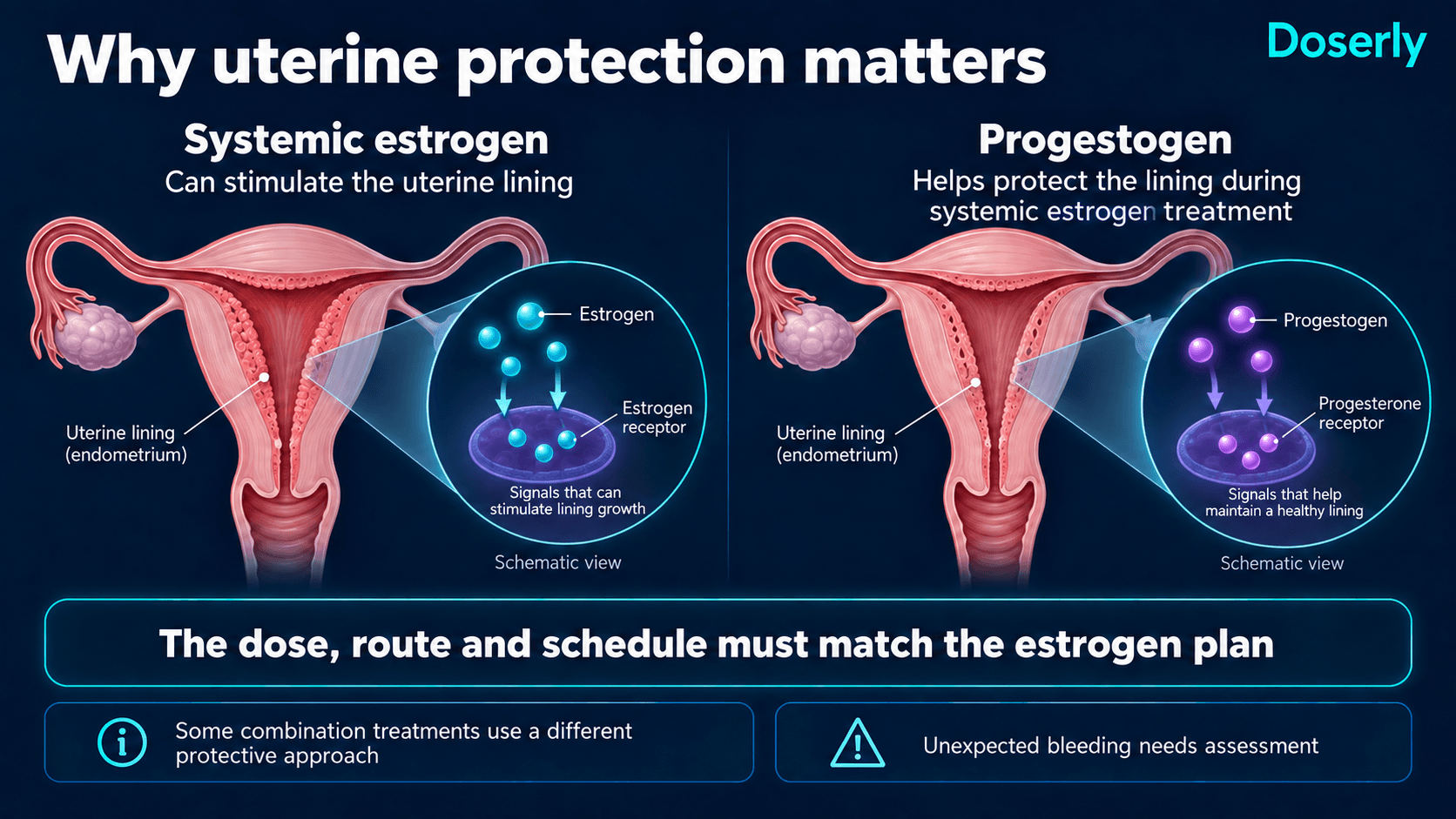
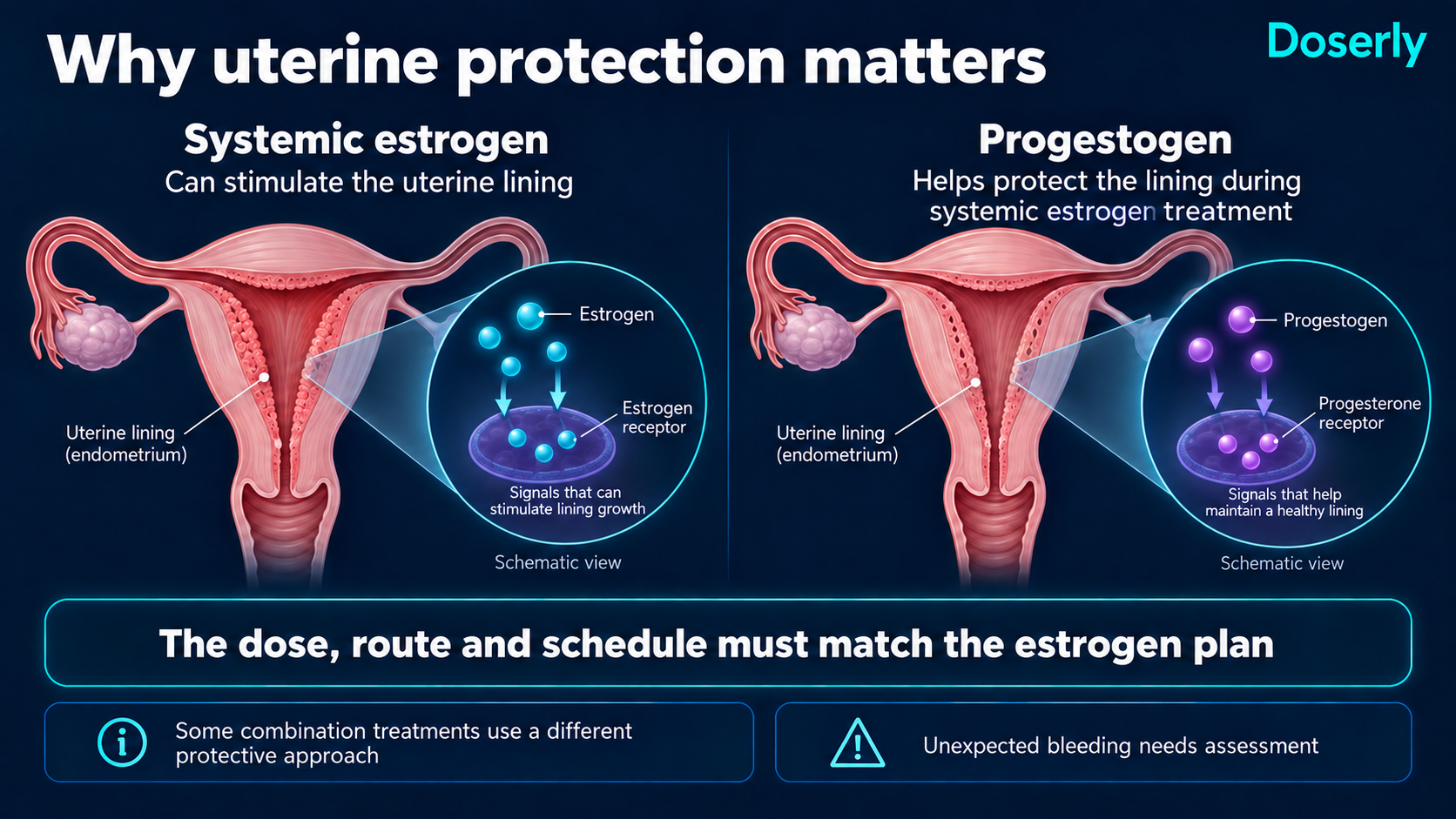
The illustration summarizes endometrial effects, not a dosing schedule or exact receptor structure. Progestogen dose, route and duration must provide protection for the estrogen regimen. Unexpected bleeding requires clinical assessment.
NICE menopause recommendations.
Pharmacokinetics / Hormone Physiology
The Basics
When you take a drospirenone/estradiol tablet, both hormones are absorbed through your digestive system. Drospirenone has notably good oral bioavailability, meaning a large proportion of the dose actually reaches your bloodstream in active form, somewhere around 76-85%. This is substantially better than many other hormones taken by mouth. For context, oral micronized progesterone has about 15-20% bioavailability, and oral estradiol has only about 5%.
Drospirenone reaches its peak blood levels within about 1 hour, which is relatively fast. It then stays in your system for a long time compared to other progestogens: its half-life is approximately 30-32 hours. This long half-life means it maintains stable blood levels with once-daily dosing, which contributes to a consistent therapeutic effect.
One convenient aspect of the drospirenone/estradiol tablet is that food does not significantly affect drospirenone absorption (though it does affect estradiol absorption). You can take it with or without food, though taking it at a consistent time each day is recommended for stability.
In your blood, drospirenone is primarily bound to a protein called albumin (95-97% bound). Unlike many other progestogens, it does not bind to sex hormone-binding globulin (SHBG) or corticosteroid-binding globulin. This matters because it means drospirenone does not compete with other hormones for these binding proteins and does not change their availability.
Drospirenone is broken down primarily into two inactive metabolites: the acid form (from opening of the lactone ring) and 4,5-dihydrodrospirenone-3-sulfate. Notably, these metabolites are formed without significant involvement of the CYP450 enzyme system, with only minor CYP3A4 metabolism. This means fewer drug interactions compared to medications heavily dependent on CYP enzymes, though CYP3A4 inducers and inhibitors can still affect estradiol levels.
The Science
Absorption: Oral drospirenone demonstrates absolute bioavailability of approximately 76-85% [2]. Maximum plasma concentrations (Cmax) are reached within approximately 1 hour. Steady state is achieved after approximately 10 days of daily administration [3]. Food does not significantly affect DRSP bioavailability in the E2/DRSP formulation [4].
Pharmacokinetic parameters at steady state (Angeliq 0.5 mg DRSP/1 mg E2) [3]:
Parameter
Cmax
- Drospirenone
- 9.2 ng/mL
- Estradiol
- 30.7 pg/mL
- Estrone
- 114.8 pg/mL
Parameter
AUC(0-24h)
- Drospirenone
- 80.2 ng*h/mL
- Estradiol
- —
- Estrone
- —
Parameter
Terminal t1/2
- Drospirenone
- ~30 hours
- Estradiol
- 14-20 hours
- Estrone
- —
Distribution: Volume of distribution approximately 4.2 L/kg. Serum protein binding 95-97%, exclusively to albumin. Does not bind to SHBG or CBG [3][13]. This distinguishes DRSP from progestins like levonorgestrel and norethindrone, which bind significantly to SHBG.
Metabolism: The two primary metabolites (acid form and 4,5-dihydro-DRSP-3-sulfate) are formed without significant CYP450 involvement [3]. Minor CYP3A4-mediated metabolism occurs. Importantly, ethinylestradiol (used in COC formulations) inhibits CYP3A4, which increases DRSP exposure when the two are co-administered. Estradiol does not inhibit CYP3A4, so the E2/DRSP HRT formulation produces lower DRSP exposure than EE/DRSP COC formulations [15].
Elimination: Terminal half-life approximately 30-32 hours [3][8], supporting once-daily dosing. Renal excretion of metabolites. The long half-life provides stable plasma levels and reduces fluctuation-related symptom breakthrough.
Knowing the pharmacokinetics is the foundation. Seeing how your own body responds to your specific protocol turns that knowledge into actionable insight. Doserly correlates your dosing schedule with how you feel day to day, helping you and your provider identify whether your current route, timing, and dose are working optimally.
The app's analytics can surface patterns you might not notice on your own, like whether symptoms correlate with the end of a patch cycle or whether splitting an oral dose changes how you feel in the afternoon. Data like this makes dose adjustments more precise and less guesswork.
Research & Clinical Evidence
The Basics
The research on drospirenone/estradiol for menopause comes from several clinical trials and long-term studies. The evidence consistently shows that this combination effectively relieves menopausal symptoms, particularly hot flashes and vaginal atrophy, while offering additional benefits on blood pressure and body weight that other HRT progestogens do not provide.
Clinical trials submitted for FDA approval demonstrated that both doses of Angeliq significantly reduced the frequency and severity of hot flashes compared to placebo. These improvements were evident as early as 4 weeks and sustained through the study periods.
What sets the drospirenone research apart from other progestogens is the cardiovascular and metabolic data. Multiple studies have shown that drospirenone combined with estradiol lowers blood pressure in hypertensive postmenopausal women, a finding confirmed by a systematic review and meta-analysis. This blood pressure lowering effect is attributed to drospirenone's antimineralocorticoid activity and is unique among HRT progestogens.
A randomized controlled trial comparing E2/DRSP to tibolone found that E2/DRSP significantly improved endothelial function (how well blood vessel walls work) and arterial stiffness, while tibolone did not. This suggests potential cardiovascular benefits beyond just blood pressure reduction.
On the metabolic front, studies consistently show favorable lipid changes (lower total cholesterol, lower LDL cholesterol, higher HDL cholesterol, stable or lower triglycerides) and neutral or positive effects on insulin sensitivity and glucose metabolism. Body weight typically decreases slightly or remains stable, in contrast to the weight gain sometimes seen with other progestogens.
The Science
Vasomotor Efficacy:
The pivotal FDA registration trials for Angeliq demonstrated statistically significant reductions in hot flash frequency and severity at both the 0.25 mg DRSP/0.5 mg E2 and 0.5 mg DRSP/1 mg E2 dose levels compared to placebo (p<0.05 at weeks 4 and 12) [3].
Blood Pressure Effects:
White et al. (2006) conducted a study in 750 postmenopausal women with grade 1 or 2 hypertension, finding significant systolic blood pressure (SBP) reduction with E2/DRSP: -9.0 mmHg from baseline (P<0.05) versus -3.7 mmHg with E2 alone in the hypertensive subgroup [16]. A systematic review and meta-analysis by Zhao et al. (2016) confirmed that DRSP/E2 was superior to control in reducing both clinical and 24-hour ambulatory blood pressure, with no significant potassium elevation [17].
Mandloi et al. (2025) studied 128 early menopausal women and reported SBP reductions of -4.50 to -8.50 mmHg and DBP reductions of -4.0 to -5.0 mmHg over 12 months, along with reductions in BMI, apolipoprotein B, and total cholesterol [18].
Vascular and Endothelial Effects:
A randomized controlled trial comparing E2/DRSP to tibolone in normotensive early postmenopausal women found that E2/DRSP significantly improved endothelial function (measured by reactive hyperemia), arterial stiffness (augmentation index), and reduced pro-apoptotic effects on endothelial cells in vitro. Tibolone did not produce these effects [19].
Lipid and Metabolic Effects:
Multiple clinical trials confirm favorable lipid changes with E2/DRSP: decreased total cholesterol and LDL-C, increased HDL-C, and decreased or stable triglyceride levels [4][20]. This profile contrasts with ethinylestradiol-containing formulations, which significantly increase triglycerides. Glucose metabolism and insulin sensitivity effects are neutral to positive [20][21].
Body Weight:
In a 1-year large-scale randomized controlled trial, E2 1 mg/DRSP 2 mg significantly decreased mean body weight by 1.2 kg versus baseline (P<0.001), while patients receiving E2 1 mg alone gained weight [22]. This is attributed to the antimineralocorticoid activity reducing fluid retention.
Bone Health:
Clinical trials have demonstrated increases in lumbar spine, hip, and total body bone mineral density during 24 months of E2/DRSP treatment, with significant decreases in bone turnover markers [23]. The EU formulation (1 mg E2/2 mg DRSP) carries an indication for osteoporosis prevention.
Endometrial Safety:
In a 1-year endometrial safety study, the incidence of endometrial hyperplasia was 0% with Angeliq 0.5 mg DRSP/1 mg E2 [3]. Drospirenone effectively opposes estrogen-stimulated endometrial proliferation at the doses used in HRT.
Benefits & Therapeutic Effects
The Basics
Drospirenone combined with estradiol offers a range of benefits, some shared with other HRT combinations and some unique to this particular progestogen. Understanding which benefits are well-supported by evidence and which are still emerging can help guide conversations with your healthcare provider.
The most clearly established benefit is relief of vasomotor symptoms. Hot flashes and night sweats typically improve significantly within the first few weeks of treatment, and clinical trials confirm statistically significant reductions compared to placebo.
What distinguishes drospirenone from other progestogens is its additional benefits on blood pressure and body weight. If you experience mild hypertension or bloating with other forms of HRT, drospirenone's antimineralocorticoid activity may help. Clinical trials consistently show blood pressure reductions in hypertensive women and either weight stability or modest weight loss, a profile not seen with micronized progesterone or MPA.
The antiandrogenic properties offer another distinctive advantage. If thinning hair, oily skin, or acne are concerns during menopause, drospirenone can provide some protection against these androgen-driven changes. Many women specifically seek out drospirenone for this reason.
Drospirenone also provides effective endometrial protection, the primary reason any progestogen is added to estrogen therapy in women with a uterus. Clinical studies confirm 0% hyperplasia rates with appropriate dosing.
Bone density improvements have been demonstrated in clinical trials lasting 24 months, and the EU formulation carries an indication for osteoporosis prevention.
The Science
FDA-approved benefits: Significant reduction in moderate to severe vasomotor symptoms and vulvar/vaginal atrophy symptoms in women with an intact uterus [3].
Blood pressure reduction: Multiple RCTs and a meta-analysis demonstrate significant SBP reduction of 4.5-9.0 mmHg in hypertensive postmenopausal women, mediated by antimineralocorticoid-induced natriuresis. This effect is unique among HRT progestogens and does not require separate antihypertensive medication [16][17][18].
Body weight management: The antimineralocorticoid-mediated reduction in sodium and water retention produces measurable weight loss (mean -1.2 kg in 1-year RCT) rather than the weight gain seen with some other HRT regimens [22]. This finding has been replicated across multiple studies.
Lipid profile optimization: E2/DRSP consistently produces decreases in total cholesterol, LDL-C, and apolipoprotein B, with increases in HDL-C and stable or decreased triglycerides [4][18][20]. This lipid profile compares favorably to EE-containing formulations that significantly raise triglycerides.
Vascular protection: Improvement in endothelial function and arterial compliance demonstrated in RCT versus tibolone [19]. Reduction in endothelial cell apoptosis in vitro. MR antagonism at non-renal sites may provide additional cardiovascular benefit through anti-inflammatory mechanisms [11].
Anti-androgenic effects: Competitive AR antagonism and 5-alpha-reductase inhibition protect against androgen-driven hair loss, acne, and hirsutism [1][12]. Clinical relevance confirmed in acne treatment studies with drospirenone-containing OCs, though HRT-specific dermatological studies are limited.
Bone density preservation: Significant increases in BMD at lumbar spine, hip, and total body over 24 months, with decreased bone turnover markers [23]. EU osteoporosis prevention indication reflects this evidence.
Risks, Side Effects & Safety
The Basics
Like all hormone therapy, drospirenone/estradiol carries risks that need to be weighed against benefits for each individual. Some risks are shared with all estrogen-progestogen combinations, while others are specific to drospirenone's unique pharmacology.
Common side effects that typically improve over the first few months include breast tenderness and discomfort (reported by about 9% of clinical trial participants), irregular bleeding or spotting (about 7.5%), abdominal discomfort, and headache. These are generally mild and tend to settle as your body adjusts.
The hyperkalemia question is unique to drospirenone. Because drospirenone blocks the mineralocorticoid receptor, it reduces your body's ability to excrete potassium. For most healthy women, this is not a problem. However, if you have kidney disease, adrenal insufficiency, or take other medications that raise potassium (such as ACE inhibitors, ARBs, potassium-sparing diuretics, or certain NSAIDs), your potassium levels could rise to unsafe levels. This is why drospirenone is contraindicated in women with renal or hepatic impairment and why potassium monitoring is recommended during the first treatment cycle in at-risk patients. In clinical trials, hyperkalemia (potassium above 5.5 meq/L) was not observed in the general study population, even with concomitant ACE inhibitor or ARB use.
Serious risks associated with the estrogen component are shared with all combined HRT and include venous thromboembolism, stroke, and breast cancer. It is important to place these in context with absolute numbers.
The Science
Common adverse reactions (from clinical trials, Angeliq 0.5 mg DRSP/1 mg E2) [3]:
Adverse Reaction
Breast pain/discomfort
- Incidence
- 9.4%
Adverse Reaction
Metrorrhagia
- Incidence
- 7.5%
Adverse Reaction
Abdominal pain
- Incidence
- 3.4%
Adverse Reaction
Pain in extremity
- Incidence
- 2.9%
Adverse Reaction
Headache
- Incidence
- >=1%
Adverse Reaction
Gastrointestinal pain
- Incidence
- >=1%
Hyperkalemia risk:
DRSP's antimineralocorticoid activity can elevate serum potassium. Angeliq is contraindicated in renal impairment, hepatic impairment, and adrenal insufficiency [3]. Potassium monitoring during the first treatment cycle is recommended for women on concomitant potassium-increasing medications. In clinical trials, E2/DRSP was not associated with clinically significant hyperkalemia even with concomitant ACE inhibitor, ARB, or NSAID use [22].
Venous thromboembolism (VTE):
Most VTE data for drospirenone comes from the contraceptive context (EE/DRSP), where drospirenone-containing COCs were associated with an estimated VTE incidence of 9-12 cases per 10,000 women-years [24]. However, these findings may not directly apply to the HRT formulation for several reasons: the estrogen component differs (E2 vs EE, with EE being far more hepatically active), and the drospirenone dose is substantially lower in Angeliq (0.25-0.5 mg vs 3 mg in COCs). The drospirenone-only formulation (4 mg DRSP, no estrogen) showed no impact on hemostatic balance and no VTE events in clinical trials with over 25,000 treatment cycles [25], suggesting VTE risk is driven primarily by the estrogen component rather than drospirenone itself.
Clinical context — VTE risk attribution in DRSP-containing products.
Source: EMA assessment (2013): EE/DRSP COCs carry 9-12 VTE cases per 10,000 women-years, higher than LNG-containing COCs
Source: Palacios et al. (2020): DRSP-only 4mg showed no hemostatic changes and zero VTE in >25,000 cycles
Source: FDA Angeliq label: No DRSP-specific VTE data in HRT context; references general WHI E+P findings
Context: VTE risk in EE/DRSP COCs is primarily attributed to the EE component's hepatic effects, not DRSP. The HRT formulation uses E2 (not EE) at much lower doses, but no dedicated epidemiological VTE study exists for E2/DRSP.
For general HRT VTE risk context using WHI data (CE 0.625 mg + MPA 2.5 mg): the WHI reported 18 additional VTE events per 10,000 women-years (26 vs 13 per 10,000 in the E+P arm versus placebo) [3]. Transdermal estrogen consistently shows lower VTE risk than oral estrogen, but drospirenone is currently only available in oral formulations.
Breast cancer:
No DRSP-specific breast cancer data from RCTs exists. The WHI estrogen-plus-progestin arm (which used MPA, not DRSP) found a hazard ratio of 1.24 for invasive breast cancer, corresponding to an absolute excess of approximately 8 additional cases per 10,000 women per year (41 vs 33 per 10,000 women-years) [3]. The WHI estrogen-alone arm showed a non-significant reduction (HR 0.80, 95% CI 0.62-1.04). Since DRSP lacks the glucocorticoid receptor agonist activity that has been implicated in MPA's breast cancer risk (via GR-mediated breast cell proliferation) [6][14], there is theoretical reason to expect a different risk profile, but this remains unconfirmed in clinical trials.
Endometrial cancer: Drospirenone effectively opposes estrogen-stimulated endometrial proliferation. In a 1-year endometrial safety study, hyperplasia incidence was 0% [3].
Stroke and MI: Per WHI data (CE+MPA), additional events per 10,000 women-years: stroke +8 (29 vs 21), CHD +7 (37 vs 30) [3]. These figures apply to oral CE+MPA in women average age 63; relevance to E2+DRSP in younger early-menopausal women is uncertain.
Anti-androgenic effects as a risk: DRSP's antiandrogenic activity can suppress serum testosterone levels, potentially impacting libido, energy, and muscle mass. This should be discussed with prescribers, particularly for women who already have low testosterone.
Contraindications specific to Angeliq [3]:
All standard combined HRT contraindications plus:
- Renal impairment (hyperkalemia risk)
- Hepatic impairment or disease (hyperkalemia risk)
- Adrenal insufficiency (hyperkalemia risk)
- Protein C, protein S, or antithrombin deficiency
Understanding your personal risk profile is not a one-time calculation; it evolves as your treatment progresses. Doserly helps you see the bigger picture by analyzing side effect patterns over time, showing whether issues are resolving, persisting, or emerging as your body adjusts to therapy.
The app's analytics can reveal connections between side effects and specific aspects of your protocol, like whether symptoms correlate with a particular point in your patch cycle or a recent dose change. This kind of insight helps you and your provider make informed adjustments based on your actual experience, not just population-level averages.
Dosing & Treatment Protocols
The Basics
Drospirenone/estradiol is taken as a continuous combined regimen, meaning you take one tablet every day without any breaks. There is no cyclical dosing or hormone-free interval. This continuous approach is designed to prevent the monthly withdrawal bleeds that occur with sequential HRT regimens and to maintain stable hormone levels.
In the United States, your provider will typically start with the lower dose (0.25 mg drospirenone/0.5 mg estradiol) for vasomotor symptoms and adjust based on your response. The higher dose (0.5 mg drospirenone/1 mg estradiol) is available for women who need more symptom relief or who are being treated for vulvar and vaginal atrophy. In Europe and Australia, a higher strength (2 mg drospirenone/1 mg estradiol) is available that also covers osteoporosis prevention.
The tablet should be swallowed whole with liquid and can be taken with or without food. Taking it at the same time each day helps maintain consistent blood levels. If you miss a dose, take it as soon as you remember unless more than 24 hours have passed, in which case skip the missed tablet and continue with the next scheduled dose.
Women who are not currently on estrogen can start Angeliq at any time. Those switching from a sequential or cyclic HRT regimen should finish their current cycle before switching. Your healthcare provider will evaluate whether treatment remains appropriate at regular intervals.
The Science
FDA-approved dosing for vasomotor symptoms [3]:
Strength
Angeliq Low
- DRSP
- 0.25 mg
- E2
- 0.5 mg
- Indication
- Vasomotor symptoms
Strength
Angeliq Standard
- DRSP
- 0.5 mg
- E2
- 1.0 mg
- Indication
- Vasomotor symptoms; vulvar/vaginal atrophy
Strength
Angeliq (EU)
- DRSP
- 2.0 mg
- E2
- 1.0 mg
- Indication
- Vasomotor symptoms; osteoporosis prevention
Clinical context — Optimal DRSP dose for HRT.
Source: US FDA label: Recommends starting at 0.25 mg DRSP/0.5 mg E2 and adjusting based on response
Source: EU SmPC (Angeliq): Standard dose is 2 mg DRSP/1 mg E2 for climacteric symptoms and osteoporosis prevention
Context: Different regulatory jurisdictions approved different doses. The US favors lower starting doses consistent with the "lowest effective dose" principle. The EU dose (2 mg DRSP) provides greater antimineralocorticoid and antiandrogenic effects but is not available in the US.
Regimen type: Continuous combined only. No sequential/cyclic option is marketed for the E2/DRSP combination [3].
Renal/hepatic dosing adjustments: No dose adjustments available. Angeliq is contraindicated in renal impairment and hepatic impairment/disease due to hyperkalemia risk [3].
Important note: Drospirenone dosing in HRT (0.25-2 mg) is substantially lower than in oral contraceptive formulations (3-4 mg). Prescribers accustomed to contraceptive dosing should be aware of this difference. Some women transition from drospirenone-containing OCs (e.g., Yaz, Slynd) to Angeliq; the dose reduction means antimineralocorticoid and antiandrogenic effects will be proportionally less pronounced.
Dosing protocols often change over the course of treatment. Doserly maintains a complete history of every protocol change, giving you and your provider a clear picture of what has been tried and how each adjustment affected your symptoms.
The app's adherence analytics show your consistency patterns and can highlight whether missed doses or timing variations correlate with symptom changes. When your provider is considering a dose adjustment, having this data available makes the conversation more productive and the decision more informed.
What to Expect (Timeline)
Days 1-7: Initial adjustment period. You may experience breast tenderness, mild bloating, or slight nausea as your body adjusts. Some women notice mood changes (positive or negative). Irregular spotting or light bleeding can occur, particularly if transitioning from another HRT regimen. The anti-mineralocorticoid effect begins working, so you may notice slightly increased urination as excess fluid is released.
Weeks 2-4: Hot flashes and night sweats typically begin to improve, often noticeably. Clinical trials show significant reductions in hot flash frequency by week 4. Sleep quality may improve as vasomotor symptoms decrease. Breast tenderness usually begins to settle. Mood and cognitive symptoms may improve as sleep and vasomotor symptoms improve, but these are not primary indications for drospirenone.
Months 1-3: Vasomotor symptoms continue to improve and often stabilize at a significantly reduced level. Mood stabilization becomes more consistent. Any initial spotting or irregular bleeding should begin to resolve. Body weight may decrease slightly as the antimineralocorticoid effect reduces fluid retention. Blood pressure changes, if relevant, become measurable.
Months 3-6: Full therapeutic effect for most symptoms. Vaginal and vulvar atrophy symptoms improve (though this takes longer than vasomotor relief). Hair shedding may slow due to antiandrogenic effects, though new hair growth takes months to become visible. Lipid profile improvements become evident on lab work. Bone density stabilization begins.
Ongoing maintenance: Annual review with your healthcare provider to reassess continued need for therapy, evaluate risk factors, and check monitoring parameters. Dose adjustments based on symptom response and tolerance. Mammography per standard guidelines.
Individual response varies significantly. Some women notice improvement within days, while others require several weeks. If symptoms have not improved after 8-12 weeks at a given dose, your provider may consider dose adjustment.
Timing Hypothesis & Window of Opportunity
The timing hypothesis proposes that HRT initiated within 10 years of menopause onset or before age 60 may have a more favorable cardiovascular risk-benefit profile than HRT started later. While this hypothesis was developed from analyses of WHI data and confirmed by studies such as KEEPS, ELITE, and the Danish Osteoporosis Prevention Study, no trial has specifically examined the timing hypothesis using drospirenone/estradiol.
The available evidence is encouraging, however. The cardiovascular studies showing blood pressure reduction, improved endothelial function, and favorable lipid changes with E2/DRSP were conducted in early postmenopausal women (generally within 10 years of menopause onset, mean ages around 49-55) [16][18][19]. The benefits observed in this population align with the timing hypothesis framework.
Clinical guidelines from the Menopause Society (formerly NAMS), the Endocrine Society, and the International Menopause Society support initiating HRT within 10 years of menopause onset for symptomatic women without contraindications. The cardiovascular benefits observed with drospirenone's antimineralocorticoid activity (blood pressure reduction, vascular protection) may provide an additional rationale for early initiation in women with mild hypertension or cardiovascular risk factors.
It is important to recognize that the timing hypothesis remains evolving evidence, not settled science. No randomized controlled trial has been specifically designed and adequately powered to definitively test this hypothesis. Clinical decisions about HRT timing should be made in consultation with a healthcare provider who can assess individual risk factors.
Interactions & Compatibility
Drug-drug interactions:
- Potassium-increasing medications (CRITICAL for DRSP): ACE inhibitors (lisinopril, enalapril), ARBs (losartan, valsartan), potassium-sparing diuretics (spironolactone, amiloride, triamterene), potassium supplements, heparin, aldosterone antagonists, and chronic NSAID use can all increase potassium when combined with DRSP. Monitor serum potassium during the first treatment cycle [3].
- CYP3A4 inducers (rifampin, phenobarbital, carbamazepine, phenytoin, St. John's Wort): May decrease estradiol levels, reducing therapeutic effect and potentially altering bleeding profile. DRSP metabolism is less CYP3A4-dependent [3].
- CYP3A4 inhibitors (ketoconazole, itraconazole, clarithromycin, erythromycin, ritonavir, grapefruit juice): May increase estradiol levels, potentially increasing side effects [3].
- Thyroid medications: Estrogens increase thyroid-binding globulin (TBG), which may require levothyroxine dose adjustment. Monitor thyroid function [3].
- Lamotrigine: Estrogen can reduce lamotrigine levels significantly, requiring dose monitoring.
- Warfarin: Monitor INR, as estrogen may affect coagulation factor synthesis.
- SSRIs/SNRIs: No direct interaction with DRSP, but these are sometimes used as alternatives or complements for vasomotor symptoms.
- Diabetes medications: Estrogen/progestogen combinations may affect insulin sensitivity; monitor glucose in diabetic patients.
- Spironolactone: Concurrent use with DRSP is pharmacologically redundant (both are MR antagonists) and increases hyperkalemia risk. Generally not recommended together.
Supplement interactions:
- Calcium and Vitamin D: No interaction; recommended for bone health alongside HRT
- Black cohosh: No known interaction, but efficacy for vasomotor symptoms may be limited compared to HRT
- St. John's Wort: CYP3A4 inducer; reduces estradiol levels
- Phytoestrogen supplements: Theoretical interaction; discuss with provider
Lifestyle factors:
- Smoking: Dramatically increases VTE and cardiovascular risk with oral estrogen-containing HRT. This interaction is critical for oral formulations like Angeliq.
- Alcohol: Modest interaction with liver metabolism; moderate intake generally acceptable
- Grapefruit: CYP3A4 inhibition can increase estradiol levels
Cross-references:
- Micronized Progesterone (Prometrium) — alternative progestogen with different receptor profile
- Medroxyprogesterone Acetate (MPA / Provera) — alternative synthetic progestogen
- Estradiol + Drospirenone (Angeliq) — combination product guide
- Norethindrone Acetate (Aygestin) — alternative progestogen
Decision-Making Framework
Choosing whether drospirenone is the right progestogen for your HRT requires a conversation between you and your healthcare provider that weighs your specific symptoms, health history, and preferences against the available options.
Drospirenone may be a particularly good fit if you:
- Cannot tolerate micronized progesterone (mood changes, drowsiness, depression, gastrointestinal side effects)
- Have a history of PMDD and tolerated drospirenone-containing oral contraceptives
- Have mild hypertension (stage 1) that could benefit from DRSP's blood pressure-lowering effect
- Are concerned about fluid retention, bloating, or weight gain on other HRT progestogens
- Are experiencing androgen-driven hair thinning or skin changes
- Prefer a continuous combined oral regimen without a cyclical progestogen phase
Drospirenone may be less suitable if you:
- Have renal impairment (contraindicated)
- Have hepatic impairment or liver disease (contraindicated)
- Have adrenal insufficiency (contraindicated)
- Take multiple medications that increase potassium levels
- Prefer transdermal HRT delivery (DRSP is only available orally)
- Have low testosterone levels or are concerned about libido (DRSP is antiandrogenic)
- Need a progestogen without the theoretical VTE uncertainty associated with oral estrogen formulations
Questions to discuss with your provider:
- "Given my blood pressure history, could drospirenone's antimineralocorticoid activity benefit me compared to other progestogens?"
- "I had difficulty tolerating progesterone; what makes drospirenone different pharmacologically?"
- "My hair has been thinning; would drospirenone's antiandrogenic properties help?"
- "Should my potassium levels be monitored, given my other medications?"
- "What are the options if I want the VTE risk reduction of transdermal estrogen but also want drospirenone's unique properties?"
- "Should I consider monitoring my testosterone levels while on drospirenone?"
Finding a menopause specialist: NAMS Certified Menopause Practitioners (NCMP) can be found through the Menopause Society directory. The International Society for the Study of Women's Sexual Health (ISSWSH) also maintains a provider directory. If your current provider is unfamiliar with drospirenone for HRT, these specialists can offer more tailored guidance.
Administration & Practical Guide
Oral tablet administration:
- Swallow the tablet whole with liquid. Do not crush, break, or chew.
- Take at the same time each day for consistent blood levels.
- Can be taken with or without food (food does not affect drospirenone absorption).
- Treatment is continuous: start the next pack immediately after finishing the previous one, with no break.
Missed doses:
- If you remember within 24 hours: take the missed tablet as soon as possible.
- If more than 24 hours have passed: skip the missed tablet and continue with the next scheduled dose. Do not take two tablets to make up for the missed one.
- If several tablets are forgotten in sequence, breakthrough bleeding may occur.
Storage: Store at room temperature (25°C/77°F). Brief excursions permitted between 15-30°C (59-86°F).
Transitioning from other HRT:
- From continuous combined HRT or no current estrogen: start Angeliq at any time.
- From sequential/cyclic HRT: complete your current cycle before switching.
- From drospirenone-containing OCs (Yaz, Slynd): coordinate with your provider regarding the dose change (OC doses are higher).
Practical tips from clinical experience:
- Set a daily alarm for consistency
- Keep a spare pack in a travel bag to avoid missed doses when away from home
- If you experience significant drowsiness or fatigue, taking the tablet at bedtime may help (though drospirenone does not produce the sedative neurosteroid effects of micronized progesterone)
Monitoring & Lab Work
Pre-HRT baseline tests:
- Comprehensive metabolic panel (includes potassium, renal function, liver function)
- Lipid panel
- Blood pressure
- Hormone levels (FSH, estradiol) if menopausal status is uncertain
- Mammogram
- Bone density scan (DEXA) if risk factors present
- Thyroid function (TSH) if on thyroid replacement
- Pelvic ultrasound if abnormal bleeding present
First treatment cycle (weeks 1-4):
- Serum potassium level: Required for women taking potassium-increasing medications (ACE inhibitors, ARBs, potassium-sparing diuretics, NSAIDs). Recommended for all patients with renal risk factors.
- Blood pressure monitoring
- Symptom diary to track response
Initial follow-up (4-12 weeks):
- Symptom assessment: are vasomotor symptoms improving?
- Side effect evaluation: breast tenderness, bleeding pattern, any mood changes
- Blood pressure check
- Dose adjustment consideration if symptoms persist
Ongoing monitoring:
- Blood pressure: every 3-6 months initially, then annually
- Mammography: per national guidelines (typically annually after age 40-50)
- Lipid panel: annually or per cardiovascular risk profile
- DEXA scan: baseline and follow-up per osteoporosis risk
- Endometrial monitoring: transvaginal ultrasound only if abnormal bleeding occurs (not routine if on appropriate progestogen dose)
- Thyroid function: annually if on thyroid replacement therapy (estrogen increases TBG)
- Potassium: periodic monitoring if risk factors present; not required routinely in healthy women
Annual review checklist:
- Reassess continued need for HRT
- Review current symptoms and quality of life
- Update cardiovascular and breast cancer risk assessment
- Evaluate any new medications that could interact (especially potassium-raising drugs)
- Confirm mammography is current
- Discuss any bleeding changes
Complementary Approaches & Lifestyle
Supplements that may complement drospirenone/estradiol therapy:
- Vitamin D: Essential for bone health; most postmenopausal women benefit from 1000-2000 IU daily
- Calcium: 1000-1200 mg daily from diet and supplements for bone health
- Omega-3 fatty acids: May support cardiovascular health alongside HRT
- Magnesium: May support sleep quality and muscle function
Exercise:
- Weight-bearing exercise: critical for bone health alongside HRT-mediated osteoporosis prevention
- Resistance training: helps maintain lean muscle mass and metabolic health during menopause
- Cardiovascular exercise: supports the cardiovascular benefits seen with E2/DRSP therapy
- Balance training: fall prevention for osteoporosis risk reduction
Diet:
- Mediterranean diet pattern: associated with cardiovascular benefit that complements HRT
- Potassium-rich foods: Be aware of dietary potassium intake if you are at risk for hyperkalemia on DRSP, though dietary potassium is generally not a concern for healthy women
- Phytoestrogen-rich foods (soy, flaxseed): may provide additional modest benefit
- Limiting alcohol and caffeine: supports overall menopausal symptom management
Mind-body practices:
- CBT for vasomotor symptoms has evidence supporting its use alongside or as an alternative to HRT
- Pelvic floor therapy for GSM and urinary symptoms
- Stress management practices may enhance overall HRT response
Non-hormonal alternatives: For women who cannot use HRT, options include fezolinetant (Veozah), low-dose paroxetine (Brisdelle), gabapentin, and clonidine for vasomotor symptoms.
Stopping HRT / Discontinuation
When to consider stopping: Most guidelines recommend reassessing HRT at regular intervals (typically annually) rather than setting a fixed duration. The decision to continue or stop depends on ongoing symptoms, risk factors, and quality of life. There is no arbitrary "5-year rule," though longer duration of combined estrogen-progestogen therapy requires ongoing risk assessment.
Tapering strategies: No specific tapering protocol exists for Angeliq. Options include:
- Gradual dose reduction: switching from the higher dose (0.5 mg DRSP/1 mg E2) to the lower dose (0.25 mg DRSP/0.5 mg E2) for several months before discontinuation
- Alternate-day dosing for a transition period (though this is not formally studied)
- Abrupt cessation, which some women tolerate well while others experience symptom return
Symptom recurrence: Estimates suggest approximately 50% of women experience some return of vasomotor symptoms after stopping HRT. Severity is typically similar to pre-treatment levels, not worse. Factors predicting recurrence include younger age at menopause onset and more severe symptoms before treatment.
Transition options:
- Low-dose vaginal estrogen for persistent GSM symptoms may continue even when systemic HRT is discontinued
- Non-hormonal alternatives (fezolinetant, SSRIs, gabapentin) for persistent vasomotor symptoms
- Lifestyle modifications (exercise, CBT, dietary changes) to support the transition
What to monitor during discontinuation:
- Symptom diary to track any recurrence
- Bone density follow-up (accelerated bone loss can resume)
- Blood pressure monitoring (may increase without DRSP's antimineralocorticoid effect)
- Cardiovascular risk reassessment
Special Populations & Situations
Breast Cancer Survivors
Systemic HRT (including E2/DRSP) is generally contraindicated in women with current or past breast cancer. Vaginal estrogen may be considered for severe GSM on an individual basis with oncologist input. Non-hormonal alternatives should be explored first.
Premature Ovarian Insufficiency (POI)
For women with POI (menopause before age 40), HRT is considered replacement rather than supplemental therapy. Continuation until the typical age of menopause (approximately 51) is generally recommended for cardiovascular, bone, and cognitive protection. Drospirenone's blood pressure and metabolic benefits may be particularly relevant for the longer treatment duration required.
Surgical Menopause / Oophorectomy
Women who have undergone bilateral oophorectomy experience abrupt hormone loss and may initially require higher doses. If a hysterectomy was also performed (no uterus), a progestogen is not required, and estrogen-alone therapy is standard. However, some clinicians prescribe drospirenone for its antiandrogenic and antimineralocorticoid benefits even in hysterectomized women, though this is off-label.
Cardiovascular Disease History
Drospirenone's blood pressure-lowering and vascular protective effects make it an interesting option for women with cardiovascular risk factors, but this population requires careful evaluation. Oral HRT carries VTE risk; transdermal estrogen is generally preferred for cardiovascular safety, but drospirenone is not available transdermally.
Migraine with Aura
Stable estrogen levels are important for women with migraine. Angeliq's continuous combined dosing avoids estrogen withdrawal, which can trigger migraines. However, oral estrogen use in women with migraine with aura requires careful stroke risk assessment.
History of VTE
Transdermal estrogen is preferred for women with VTE history, as it avoids hepatic first-pass effects. Since drospirenone is only available orally combined with oral estradiol, it may not be the first-choice progestogen for this population unless the provider determines the benefits outweigh the oral route risk.
Women with PMDD History
Drospirenone has a well-established track record in PMDD management through Yaz and other OC formulations. Women transitioning from drospirenone-containing OCs to HRT may particularly benefit from continuing with a drospirenone-based regimen for mood stability.
Regulatory, Insurance & International
United States (FDA):
- Angeliq approved 2005 (NDA 021355)
- Two strengths: 0.25 mg DRSP/0.5 mg E2 and 0.5 mg DRSP/1 mg E2
- Boxed warning consistent with all combined HRT products
- No generic equivalent currently available in the US
European Union (EMA):
- Angeliq marketed with 1 mg E2/2 mg DRSP formulation
- Additional indication for osteoporosis prevention
- Generally more accessible and affordable than in the US market
United Kingdom (MHRA):
- Available as Angeliq
- NHS availability varies by local formulary
Australia (TGA):
- Available as Angeliq
- Supply issues have been reported intermittently
Canada (Health Canada):
- Available as Angeliq
Cost and access considerations:
- Angeliq remains a brand-name product without generic alternatives in most markets
- Some US patients source from Canadian pharmacies at lower cost
- Alternative approach: separate prescriptions for drospirenone (e.g., Slynd 4 mg, which is available generically) plus estradiol, though this uses a higher drospirenone dose than the HRT formulation
Frequently Asked Questions
Q: How is drospirenone different from progesterone?
A: Drospirenone is a synthetic progestogen derived from spironolactone, while micronized progesterone is molecularly identical to the progesterone your body produces. The key differences are that drospirenone has antimineralocorticoid activity (helps with blood pressure and fluid retention) and antiandrogenic activity (helps with hair and skin), but lacks the sleep-promoting neurosteroid effects of micronized progesterone. They both provide endometrial protection.
Q: Will drospirenone make me gain weight?
A: Clinical trials consistently show either weight stability or slight weight loss (approximately 1.2 kg in one year-long study) with drospirenone/estradiol, attributable to its diuretic effect. This contrasts with weight gain sometimes reported with other HRT progestogens.
Q: Can I take drospirenone if I have high blood pressure?
A: Drospirenone's antimineralocorticoid activity actually lowers blood pressure in women with mild hypertension, which is unique among HRT progestogens. However, it is contraindicated in women with kidney disease because it can raise potassium. Discuss your specific situation with your healthcare provider.
Q: Is drospirenone safe for my kidneys?
A: Drospirenone is contraindicated in women with renal impairment because its antimineralocorticoid activity can raise potassium to dangerous levels. Women with normal kidney function can use it safely, but those taking other potassium-raising medications should have potassium monitored during the first treatment cycle.
Q: Can drospirenone help with hair loss?
A: The antiandrogenic properties of drospirenone can help counter hormone-related hair thinning by blocking the effects of androgens at the hair follicle. However, drospirenone is not FDA-approved for hair loss; this is an observed secondary benefit.
Q: Does drospirenone affect sex drive?
A: This is an important consideration. Drospirenone's antiandrogenic activity can lower testosterone levels, which may decrease libido in some women. If libido is a concern, discuss testosterone level monitoring with your provider.
Q: Why is Angeliq so expensive in the US?
A: Angeliq remains a brand-name medication without generic alternatives. Insurance coverage varies widely, and some plans classify it as a specialty drug requiring prior authorization. Some patients work with their providers to submit insurance appeals, while others source from Canadian pharmacies at lower cost.
Q: Can I switch from micronized progesterone to drospirenone?
A: Yes, switching progestogens is possible and relatively straightforward under medical supervision. The most common reason for switching is intolerance to micronized progesterone (mood changes, drowsiness, GI side effects). Your provider can guide the transition.
Q: Is drospirenone "bioidentical"?
A: No. Drospirenone is a synthetic progestogen. It is molecularly distinct from endogenous progesterone. However, its pharmacological profile (antimineralocorticoid and antiandrogenic activity) actually mirrors endogenous progesterone more closely than many other synthetic progestins in certain respects.
Q: Can I take drospirenone with spironolactone?
A: Generally not recommended. Both drospirenone and spironolactone are mineralocorticoid receptor antagonists, so combining them is pharmacologically redundant and increases the risk of hyperkalemia. Discuss alternatives with your provider.
Myth vs. Fact
Myth: "Drospirenone is just another synthetic progestin like Provera."
Fact: Drospirenone has a fundamentally different chemical structure and pharmacological profile compared to medroxyprogesterone acetate (MPA/Provera). Unlike MPA, which is derived from 17alpha-hydroxyprogesterone and has glucocorticoid and weak androgenic activity, drospirenone is derived from spironolactone and has antimineralocorticoid and antiandrogenic activity. These differences result in distinct effects on blood pressure, body weight, mood, and potentially breast cancer risk.
Myth: "All HRT progestogens cause weight gain."
Fact: Clinical trial data for drospirenone/estradiol actually shows slight weight loss (mean -1.2 kg over 1 year), attributed to the antimineralocorticoid effect reducing fluid retention. Not all progestogens have the same effect on body weight, and drospirenone's profile is uniquely favorable in this regard.
Myth: "Drospirenone will raise my potassium to dangerous levels."
Fact: In clinical trials, clinically significant hyperkalemia (potassium above 5.5 meq/L) was not observed in the general study population, even among women taking ACE inhibitors, ARBs, or NSAIDs. Potassium monitoring is recommended during the first treatment cycle only for women at elevated risk. The concern is specific to women with renal impairment, adrenal insufficiency, or hepatic disease, in whom Angeliq is contraindicated.
Myth: "The blood clot risk seen with Yaz/Yasmin means drospirenone is dangerous for menopause HRT."
Fact: The elevated VTE risk observed with drospirenone-containing oral contraceptives was primarily attributed to the ethinyl estradiol component, not drospirenone itself. Angeliq uses 17-beta-estradiol (not ethinyl estradiol) at much lower estrogen doses. The drospirenone-only pill (4 mg, no estrogen) showed no hemostatic changes and zero VTE events in over 25,000 treatment cycles, supporting the view that VTE risk is driven by the estrogen, not the progestogen.
Myth: "Natural/bioidentical progesterone is always better than synthetic progestins for HRT."
Fact: Micronized progesterone has advantages in some areas (favorable breast cancer risk data from observational studies, sleep-promoting neurosteroid effects), but drospirenone offers advantages in others (blood pressure reduction, weight management, hair protection, no drowsiness). The "best" progestogen depends on the individual woman's symptoms, risk factors, and tolerance. Some women who cannot tolerate micronized progesterone thrive on drospirenone.
Myth: "HRT should only be taken for 5 years maximum."
Fact: The arbitrary "5-year rule" is outdated. Current guidelines from the Menopause Society, Endocrine Society, and International Menopause Society recommend individualized duration assessment based on ongoing symptoms, quality of life, and evolving risk profile. Some women benefit from extended HRT use, and the decision should be revisited annually rather than limited by a fixed timeline.
Myth: "Drospirenone is the same dose in birth control pills and HRT."
Fact: Drospirenone dosing in HRT (0.25-2 mg) is substantially lower than in oral contraceptives (3-4 mg). The lower HRT doses provide endometrial protection and some antimineralocorticoid/antiandrogenic benefit, but the effects are proportionally less pronounced than at contraceptive doses.
Myth: "If HRT doesn't work in the first week, it's not going to work."
Fact: While some women notice improvement within days, the full therapeutic effect of drospirenone/estradiol develops over weeks to months. Clinical trials measured efficacy at 4 and 12 weeks. Benefits like bone density improvement, lipid changes, and hair quality take months to become apparent. A minimum 8-12 week trial is generally appropriate before concluding a dose is ineffective.
Sources & References
Clinical Guidelines
[1] Fuhrmann U, Krattenmacher R, Slater EP, et al. The novel progestin drospirenone and its natural counterpart progesterone: biochemical profile and antiandrogenic potential. Contraception. 1996;54(4):243-51. PubMed: 8922878. DOI: 10.1016/s0010-7824(96)00195-3.
[2] Krattenmacher R. Drospirenone: pharmacology and pharmacokinetics of a unique progestogen. Contraception. 2000;62(1):29-38. PubMed: 11024226. DOI: 10.1016/s0010-7824(00)00133-5.
Prescribing Information
[3] ANGELIQ (drospirenone and estradiol) tablets prescribing information. DailyMed. Revised March 2026. https://dailymed.nlm.nih.gov/dailymed/drugInfo.cfm?setid=761834c2-6b61-4583-84c2-f1ca4a97c4f2
[4] Angeliq Summary of Product Characteristics / EPAR product information. European Medicines Agency. https://www.ema.europa.eu/en/medicines/human/EPAR/angeliq
Clinical Trials & Studies
[5] “The 2022 Hormone Therapy Position Statement of The North American Menopause Society” Advisory Panel. The 2022 hormone therapy position statement of The North American Menopause Society. Menopause. 2022;29(7):767-794. PubMed: 35797481. DOI: 10.1097/GME.0000000000002028.
[6] Prior JC. Progesterone for the prevention and treatment of osteoporosis in women. Climacteric. 2018;21(4):366-374. PubMed: 29962257. DOI: 10.1080/13697137.2018.1467400.
[7] Rosenbaum P, Schmidt W, Helmerhorst FM, et al. Inhibition of ovulation by a novel progestogen (drospirenone) alone or in combination with ethinylestradiol. Eur J Contracept Reprod Health Care. 2000;5(1):16-24. PubMed: 10836659. DOI: 10.1080/13625180008500376.
[8] Sitruk-Ware R. Pharmacology of different progestogens: the special case of drospirenone. Climacteric. 2005;8 Suppl 3:4-12. PubMed: 16203650. DOI: 10.1080/13697130500330382.
[9] Oelkers W, Helmerhorst FM, Wuttke W, et al. Effect of an oral contraceptive containing drospirenone on the renin-angiotensin-aldosterone system in healthy female volunteers. Gynecol Endocrinol. 2000;14(3):204-13. PubMed: 10923282. DOI: 10.3109/09513590009167683.
[10] Bird ST, Pepe SR, Etminan M, et al. The association between drospirenone and hyperkalemia: a comparative-safety study. BMC Clin Pharmacol. 2011;11:23. PubMed: 22208934. DOI: 10.1186/1472-6904-11-23.
[11] Moss ME, Jaffe IZ. Mineralocorticoid Receptors in the Pathophysiology of Vascular Inflammation and Atherosclerosis. Front Endocrinol (Lausanne). 2015;6:153. PubMed: 26441842. DOI: 10.3389/fendo.2015.00153.
[12] Muhn P, Fuhrmann U, Fritzemeier KH, et al. Drospirenone: a novel progestogen with antimineralocorticoid and antiandrogenic activity. Ann N Y Acad Sci. 1995;761:311-35. PubMed: 7625729. DOI: 10.1111/j.1749-6632.1995.tb31386.x.
[13] Kuhl H. Pharmacology of estrogens and progestogens: influence of different routes of administration. Climacteric. 2005;8 Suppl 1:3-63. PubMed: 16112947. DOI: 10.1080/13697130500148875.
[14] Fournier A, Berrino F, Clavel-Chapelon F. Unequal risks for breast cancer associated with different hormone replacement therapies: results from the E3N cohort study. Breast Cancer Res Treat. 2008;107(1):103-11. PubMed: 17333341. DOI: 10.1007/s10549-007-9523-x.
[15] Wiesinger H, Berse M, Klein S, et al. Pharmacokinetic interaction between the CYP3A4 inhibitor ketoconazole and the hormone drospirenone in combination with ethinylestradiol or estradiol. Br J Clin Pharmacol. 2015;80(6):1399-410. PubMed: 26271371. DOI: 10.1111/bcp.12745.
Blood Pressure & Cardiovascular Studies
[16] White WB, Hanes V, Chauhan V, et al. Effects of a new hormone therapy, drospirenone and 17-beta-estradiol, in postmenopausal women with hypertension. Hypertension. 2006;48(2):246-53. PubMed: 16801478. DOI: 10.1161/01.HYP.0000232179.60442.84.
[17] Zhao X, Zhang XF, Zhao Y, et al. Effect of combined drospirenone with estradiol for hypertensive postmenopausal women: a systemic review and meta-analysis. Gynecol Endocrinol. 2016;32(9):685-689. PubMed: 27176003. DOI: 10.1080/09513590.2016.1183629.
[18] Mandloi R, Rajput S, Patel B, et al. Effects of Continuous Use of Oral Drospirenone/Estradiol on Lipid Profile, Body Weight, and BP in Females from Early Menopause. J Pharm Bioallied Sci. 2025;17(Suppl 1):S739-S741. PubMed: 40511186. DOI: 10.4103/jpbs.jpbs_1627_24.
Vascular & Metabolic Studies
[19] Vitale C, Mammi C, Gambacciani M, et al. Effect of hormone replacement therapy with the anti-mineralocorticoid progestin Drospirenone compared to tibolone on endothelial function and central haemodynamics in post-menopausal women. Int J Cardiol. 2017;227:217-221. PubMed: 27843051. DOI: 10.1016/j.ijcard.2016.11.149.
[20] Gambacciani M, Rosano G, Cappagli B, et al. Clinical and metabolic effects of drospirenone-estradiol in menopausal women: a prospective study. Climacteric. 2011;14(1):18-24. PubMed: 20979461. DOI: 10.3109/13697137.2010.520099.
[21] Paoletti AM, Cagnacci A, Di Carlo C, et al. Clinical effect of hormonal replacement therapy with estradiol associated with noretisterone or drospirenone. A prospective randomized placebo controlled study. Gynecol Endocrinol. 2015;31(5):384-7. PubMed: 25703254. DOI: 10.3109/09513590.2014.1003294.
Body Weight & Safety
[22] Archer DF. Advances in hormone replacement therapy with drospirenone. Climacteric. 2006;9 Suppl 1:17-23. PMID: 16949774 / Archer DF, Thorneycroft IH, Foegh M, et al. Long-term safety of drospirenone-estradiol for hormone therapy. Menopause. 2005;12(6):716-727.
Bone Health
[23] Christiansen C. Effects of drospirenone/estrogen combinations on bone metabolism. Climacteric. 2005;8 Suppl 3:35-41. PubMed: 16203654. DOI: 10.1080/13697130500330283.
VTE & Coagulation
[24] European Medicines Agency. PRAC confirms benefits of all combined hormonal contraceptives continue to outweigh risks. 2013. https://www.ema.europa.eu/en/news/prac-confirms-benefits-all-combined-hormonal-contraceptives-chcs-continue-outweigh-risks
[25] Palacios S, Colli E, Regidor PA. Efficacy and cardiovascular safety of the new estrogen-free contraceptive pill containing 4 mg drospirenone alone in a 24/4 regime. BMC Womens Health. 2020;20(1):218. PubMed: 33008401. DOI: 10.1186/s12905-020-01080-9.
Pharmacology Reviews
[26] Regidor PA, Mueller A, Mayr M. Pharmacological and metabolic effects of drospirenone as a progestin-only pill compared to combined formulations with estrogen. Womens Health (Lond). 2023;19:17455057221147388. PubMed: 36744531. DOI: 10.1177/17455057221147388.
[27] Carranza-Lira S. Safety, efficacy and patient acceptability of drospirenone and estradiol in the treatment of menopausal vasomotor symptoms: a review. Clin Interv Aging. 2009;4:59-62. PubMed: 19503766. DOI: 10.2147/cia.s4117.
WHI Studies
[28] Rossouw JE, Anderson GL, Prentice RL, et al. Risks and benefits of estrogen plus progestin in healthy postmenopausal women: principal results From the Women's Health Initiative randomized controlled trial. JAMA. 2002;288(3):321-33. PubMed: 12117397. DOI: 10.1001/jama.288.3.321.
Additional Regulatory and Guideline Sources
[29] DailyMed: ANGELIQ prescribing information. https://dailymed.nlm.nih.gov/dailymed/search.cfm?query=ANGELIQ. Accessed September 13, 2026.
[30] DailyMed: SLYND drospirenone tablets prescribing information. https://dailymed.nlm.nih.gov/dailymed/drugInfo.cfm?setid=fe28373c-a1ad-4958-a467-e5eb7bf69744. Accessed September 13, 2026.
[31] “The 2022 Hormone Therapy Position Statement of The North American Menopause Society” Advisory Panel. The 2022 hormone therapy position statement of The North American Menopause Society. Menopause. 2022;29(7):767-794. PubMed: 35797481. DOI: 10.1097/GME.0000000000002028.
Related Guides & Cross-Links
Same Category (Progestogens)
- Micronized Progesterone (Prometrium)
- Medroxyprogesterone Acetate (MPA / Provera)
- Norethindrone Acetate (Aygestin)
- Dydrogesterone (Duphaston)
- Levonorgestrel (Mirena IUD)
- Nomegestrol Acetate