
Testosterone Undecanoate Oral (Kyzatrex)
On this page
Quick Reference Card
Attribute
Brand Name(s)
- Value
- Kyzatrex (US)
Attribute
Generic Name
- Value
- Testosterone undecanoate (oral capsule)
Attribute
Drug Class / Type
- Value
- Androgen, oral testosterone undecanoate (SEDDS formulation)
Attribute
DEA Schedule
- Value
- Schedule III (CIII)
Attribute
FDA-Approved Indications
- Value
- Testosterone replacement therapy in adult males with conditions associated with deficiency or absence of endogenous testosterone (primary and hypogonadotropic hypogonadism)
Attribute
Available Strengths
- Value
- 100 mg, 150 mg, 200 mg capsules
Attribute
Common Starting Dose
- Value
- 200 mg orally twice daily (morning and evening)
Attribute
Dose Range
- Value
- 100 mg once daily (morning) to 400 mg twice daily
Attribute
Route of Administration
- Value
- Oral (must be taken with food)
Attribute
Dosing Schedule
- Value
- Twice daily (morning and evening)
Attribute
Absorption
- Value
- Intestinal lymphatic system (bypasses hepatic first-pass metabolism)
Attribute
Key Monitoring Requirements
- Value
- Serum testosterone (3-5 hours post-morning dose), hematocrit, blood pressure, PSA, lipids
Attribute
FDA Approval Date
- Value
- July 27, 2022
Attribute
NDA Number
- Value
- 213953
Attribute
Manufacturer
- Value
- Marius Pharmaceuticals (Raleigh, NC)
Attribute
Unique Considerations
- Value
- NOT a 17-alpha-alkylated androgen (no hepatotoxicity signal); food-dependent absorption; flexible dose titration; not approved for age-related hypogonadism; not substitutable with Jatenzo or Tlando
Overview / What Is Testosterone Undecanoate Oral (Kyzatrex)?
The Basics
Kyzatrex is a prescription oral testosterone capsule approved for men whose bodies cannot produce enough testosterone on their own. If you have been diagnosed with hypogonadism (either primary or secondary), Kyzatrex offers a way to replace testosterone without needles, patches, or gels.
The capsule works through a clever absorption trick. Rather than being processed through your liver like most oral medications, Kyzatrex is absorbed through the lymphatic vessels in your intestinal wall. This matters because older oral testosterone pills (like methyltestosterone from the 1930s) went straight through the liver first, causing serious liver damage in many patients. Kyzatrex sidesteps that problem entirely by taking a different route into your bloodstream.
Kyzatrex was approved by the FDA on July 27, 2022, making it the third oral testosterone undecanoate product available in the United States, following Jatenzo (2019) and Tlando (2022). All three products use different formulations and are not interchangeable, even though they contain the same active ingredient. Your provider should not substitute one for another without adjusting your dose and monitoring.
You take Kyzatrex twice a day with food, once in the morning and once in the evening. It comes in three capsule strengths (100 mg, 150 mg, and 200 mg), and your provider adjusts your dose based on blood tests drawn 3 to 5 hours after your morning dose. The dose range is wide, from as low as 100 mg once daily to a maximum of 400 mg twice daily, which gives your provider significant flexibility to find the right amount for your body.
Like all testosterone products, Kyzatrex is a Schedule III controlled substance. It is indicated specifically for men with confirmed testosterone deficiency due to a structural or genetic cause, not for age-related testosterone decline, which remains an off-label use.
The Science
Kyzatrex (NDA 213953) contains testosterone undecanoate (TU), a fatty-acid ester prodrug of testosterone (C30H48O3, MW 456.7 g/mol). The formulation uses a self-emulsifying drug delivery system (SEDDS) composed of DL-alpha-tocopheryl acetate, phytosterol esters, polyoxyl 40 hydrogenated castor oil, and propylene glycol monolaurate within a gelatin capsule shell [1].
The SEDDS formulation differentiates Kyzatrex from 17-alpha-alkylated oral androgens (methyltestosterone, fluoxymesterone) that dominated oral testosterone therapy through the mid-20th century. Those compounds survived hepatic first-pass metabolism through their alkyl modification at the cost of dose-dependent hepatotoxicity including cholestatic jaundice, peliosis hepatis, and hepatocellular carcinoma [2]. Kyzatrex achieves oral bioavailability via intestinal lymphatic absorption, bypassing the liver entirely.
The drug was developed by Marius Pharmaceuticals and approved through a single pivotal Phase III trial (MRS-TU-2019EXT, NCT04467697). The NDA was submitted December 31, 2020, with approval on July 27, 2022 [3]. A significant label revision in July 2025 removed the boxed warning for blood pressure increases, removed the contraindication for "age-related hypogonadism," and updated the cardiovascular risk warning section, aligning with broader FDA reassessment of testosterone product labeling [1].
Kyzatrex is the third oral TU product to receive FDA approval but offers the widest titration range among the three (100 mg QD to 400 mg BID), compared to Jatenzo (158-396 mg BID) and Tlando (225 mg BID fixed dose) [4].
Medical / Chemical Identity
Property
Generic Name
- Detail
- Testosterone undecanoate
Property
Brand Name(s)
- Detail
- Kyzatrex (US)
Property
Chemical Name
- Detail
- 17beta-hydroxyandrost-4-en-3-one undecanoate
Property
Empirical Formula
- Detail
- C30H48O3
Property
Molecular Weight
- Detail
- 456.7 g/mol
Property
CAS Number
- Detail
- 5949-44-0
Property
Drug Class
- Detail
- Androgen; oral testosterone ester (non-17-alpha-alkylated)
Property
Ester Type
- Detail
- Undecanoate (C11 fatty-acid ester at 17-beta position)
Property
Active Moiety
- Detail
- Testosterone (released via ester hydrolysis)
Property
Physical Form
- Detail
- White to off-white yellow crystalline powder
Property
Formulation Type
- Detail
- Self-emulsifying drug delivery system (SEDDS) in gelatin capsule
Property
DEA Schedule
- Detail
- Schedule III (CIII)
Property
FDA Approval Date
- Detail
- July 27, 2022
Property
NDA Number
- Detail
- 213953
Property
Current Manufacturer
- Detail
- Marius Pharmaceuticals (Raleigh, NC)
Property
NDC Codes
- Detail
- 80603-101-11, 80603-101-22, 80603-103-11, 80603-103-22, 80603-105-11, 80603-105-22, 80603-105-33
Inactive Ingredients
Capsule fill: DL-alpha-tocopheryl acetate (Vitamin E), phytosterol esters, polyoxyl 40 hydrogenated castor oil, propylene glycol monolaurate.
Capsule shell: gelatin, glycerin, purified water, sorbitol, titanium dioxide.
Ester Chemistry
Testosterone undecanoate features an undecanoic acid (11-carbon) ester chain attached to the 17-beta hydroxyl group of testosterone. This long-chain fatty acid ester promotes lipophilicity, enabling incorporation into intestinal chylomicrons during digestion and subsequent lymphatic transport. After lymphatic absorption, non-specific tissue and plasma esterases cleave the undecanoate side chain to release free, bioactive testosterone [1][5].
The undecanoate ester is the same ester used in long-acting injectable formulations (Aveed, Nebido), but the oral and injectable forms have completely different pharmacokinetic profiles due to their different absorption mechanisms. Kyzatrex's SEDDS formulation is specifically designed for intestinal lymphatic uptake, while the injectable oil-based formulation relies on slow release from an intramuscular depot.
Capsule Identification
- 100 mg: oval, opaque, white capsule imprinted with "MP100" in red ink
- 150 mg: oblong, opaque, white capsule imprinted with "MP150" in red ink
- 200 mg: oblong, opaque, white capsule imprinted with "MP200" in red ink
How It Works / Mechanism of Action
The Basics
When you swallow a Kyzatrex capsule with food, the self-emulsifying system in the capsule breaks down in your gut and mixes with the fats from your meal. This combination gets packaged into tiny fat-carrying particles called chylomicrons, which are absorbed through the lymphatic vessels in your intestinal wall instead of going through the liver. This lymphatic absorption pathway is why Kyzatrex avoids the liver damage that gave oral testosterone a bad reputation for decades.
Once the testosterone undecanoate reaches your bloodstream through the lymphatic system, enzymes throughout your body clip off the undecanoate ester chain, releasing free testosterone. This free testosterone then does what testosterone naturally does: it binds to receptors in tissues throughout your body, including muscle, bone, brain, and reproductive organs. Some of it also gets converted to dihydrotestosterone (DHT) by the enzyme 5-alpha reductase, and some gets converted to estradiol by the enzyme aromatase. Both conversions are normal and serve important physiological functions, though the balance between them matters for your symptoms and side effects.
One important characteristic of oral testosterone undecanoate is that the DHT conversion tends to be proportionally higher than with injectable testosterone. This means you may get more DHT-related effects (for better or worse) than you might expect based on your total testosterone level alone. On the flip side, estradiol conversion tends to be lower, which may reduce estrogen-related side effects but also means less of the estrogen that men need for bone health, joint comfort, and mood stability.
Because Kyzatrex relies on the fats in your meal to trigger absorption, taking it on an empty stomach dramatically reduces how much testosterone actually reaches your bloodstream. This is not an optional guideline; it is fundamental to how the drug works.
The Science
Testosterone undecanoate in the SEDDS formulation undergoes intestinal lymphatic absorption via chylomicron incorporation, bypassing hepatic first-pass metabolism. The absorption mechanism involves three key steps: (1) self-emulsification of the lipid-based formulation upon contact with gastrointestinal fluids and dietary fat, (2) solubilization of TU within mixed micelles and subsequent incorporation into chylomicrons during enterocyte processing, and (3) chylomicron transport via intestinal lacteals into the thoracic duct and systemic circulation [5][6].
Following systemic entry, TU undergoes ester hydrolysis by non-specific esterases in plasma and tissues to release free testosterone. Testosterone binds to intracellular androgen receptors (AR), initiating both genomic signaling (nuclear translocation, transcription factor activity at androgen response elements) and non-genomic rapid signaling pathways (MAPK/ERK, PI3K/Akt). Approximately 40% of circulating testosterone is bound to sex hormone-binding globulin (SHBG), with the remainder bound to albumin or circulating as free testosterone [1].
Testosterone metabolism proceeds through two primary enzymatic pathways: 5-alpha reduction to DHT (a more potent androgen with 2-3x greater AR binding affinity) and aromatization to estradiol via CYP19A1 (aromatase). A notable pharmacological characteristic of oral TU is disproportionate DHT elevation relative to testosterone. DHT:T ratios increase approximately 3-fold after oral TU administration compared to baseline, a phenomenon also observed with Jatenzo and other oral TU formulations [6][7]. Concurrently, estradiol levels remain near baseline despite significant testosterone increases, likely because the lymphatic absorption pathway delivers TU to tissues with lower aromatase activity compared to the direct vascular route used by injectable testosterone [7].
Excretion occurs primarily as urinary glucuronide and sulfate conjugates [1].
Pathway & System Visualization
Pharmacokinetics / Hormone Physiology
The Basics
Kyzatrex behaves very differently from injectable testosterone in terms of how it moves through your body. Instead of the slow, steady release from an oil depot in your muscle, Kyzatrex delivers testosterone in a pulsed pattern that rises after each dose and then falls before your next one. This creates a daily rhythm with two peaks (one after your morning dose and one after your evening dose) and two troughs (overnight and mid-afternoon).
Your testosterone levels on Kyzatrex are never constant. They peak around 3 to 5 hours after you take the capsule with food and decline over the following hours. This is why lab timing matters: your blood draw should be 3 to 5 hours after the morning dose, which captures the peak phase and gives your provider a standardized reference point for dose adjustment. This is different from injectable testosterone, where trough levels (drawn just before the next injection) are the standard.
How much fat is in your meal when you take Kyzatrex makes a meaningful difference in absorption. Fat is the trigger that activates the chylomicron pathway; without it, the drug has limited access to the lymphatic system. While the prescribing information does not specify a gram target, clinical data from related oral TU products show that a meal with 30 grams of fat provides significantly better absorption than a low-fat meal.
An important technical detail that many patients and some providers are not aware of: standard blood tubes can overestimate your testosterone level by roughly 15% when you are taking oral TU. This happens because the esterase enzymes in your blood continue converting testosterone undecanoate to testosterone inside the tube after it is drawn. Special enzyme-inhibited tubes (NaF/EDTA plasma) are recommended for accurate measurement. If your provider is not familiar with this, it is worth discussing [8].
The Science
Following oral administration with food, testosterone undecanoate in the Kyzatrex SEDDS formulation is absorbed via intestinal lymphatics with peak plasma testosterone concentrations (Cmax) typically reached 3 to 5 hours post-dose. In the pivotal Phase III trial (MRS-TU-2019EXT), the mean plasma testosterone Cavg (NaF/EDTA) after titration was 393.3 ng/dL (SD 113.6), with mean serum Cavg approximately 452 ng/dL. The discrepancy reflects continued ex vivo ester hydrolysis of TU to testosterone in standard serum tubes [1][3][8].
Absorption is critically food-dependent. Dietary fat modulates chylomicron formation, and fasting administration dramatically reduces bioavailability. Fat content increases AUC by 37-97% compared to fasting conditions for Kyzatrex specifically [4].
FDA Cmax criteria met in pivotal trial [3]:
- 86.8% had Cmax < 1500 ng/dL (threshold: >=85%)
- 1.6% had Cmax 1800-2500 ng/dL (threshold: <=5%)
- 0% had Cmax > 2500 ng/dL (threshold: 0%)
Distribution: Approximately 40% of circulating testosterone bound to SHBG, remainder bound to albumin or free. SHBG levels decreased during treatment [3].
Metabolism: Ester hydrolysis to testosterone by non-specific esterases, followed by 5-alpha reduction to DHT and aromatization to estradiol. DHT:T ratios increase approximately 3-fold with oral TU (class effect). Estradiol levels remain near baseline [6][7].
Comparative pharmacokinetics of oral TU products [4]:
Parameter
Starting Dose
- Kyzatrex
- 200 mg BID
- Jatenzo
- 237 mg BID
- Tlando
- 225 mg BID (fixed)
Parameter
Dose Range
- Kyzatrex
- 100 mg QD to 400 mg BID
- Jatenzo
- 158-396 mg BID
- Tlando
- 225 mg BID (no titration)
Parameter
Mean Cavg (ng/dL)
- Kyzatrex
- 393 (plasma) / 452 (serum)
- Jatenzo
- 403
- Tlando
- 476
Parameter
Titration Lab Timing
- Kyzatrex
- 3-5 hours post-morning dose
- Jatenzo
- 6 hours post-morning dose
- Tlando
- N/A (fixed dose)
Parameter
Food Requirement
- Kyzatrex
- Required; fat significantly affects absorption
- Jatenzo
- Required; fat content affects absorption
- Tlando
- Required
The three oral TU products are NOT bioequivalent and cannot be substituted for one another. Each has unique pharmacokinetics, dosing protocols, and titration requirements [1][4].
Knowing the pharmacokinetics is the foundation. Seeing how your own body responds to your specific ester and injection frequency turns that knowledge into actionable insight. Doserly correlates your dosing schedule with how you feel day to day, helping you and your provider identify whether your current protocol is delivering stable levels or causing peak-and-trough swings.
The app's analytics can surface patterns you might not notice on your own, like whether symptoms correlate with the trough before your next dose or whether adjusting meal timing improved your absorption and energy levels. Data like this makes protocol adjustments more precise and less guesswork.
See how each compound fits into the whole protocol.
Doserly organizes compounds, supplements, peptides, medications, and hormone protocols together so overlapping routines are easier to understand.
Stack view
Connected protocol
Stack views improve organization; they do not determine compatibility.
Research & Clinical Evidence
The Basics
The clinical evidence for Kyzatrex comes primarily from its pivotal Phase III trial, plus a dedicated blood pressure safety study and a growing body of comparative reviews across the three oral TU products.
The pivotal study (MRS-TU-2019EXT) enrolled 155 men with confirmed hypogonadism across 19 clinical sites in the United States. The headline result: 87.8% of all treated participants achieved testosterone levels within the normal range after dose titration, and that number rose to 96.1% among men who completed the full 90 days. These are strong numbers that demonstrate Kyzatrex can reliably restore testosterone to where it belongs [3].
One important limitation: unlike Jatenzo, which has published 24-month extension data, the Kyzatrex pivotal trial lasted only 6 months. This means long-term efficacy and safety data specific to Kyzatrex are more limited. However, because the same active compound (testosterone undecanoate) and absorption pathway (lymphatic) are used, the long-term data from Jatenzo and Andriol (used for decades outside the US) provide reasonable extrapolation.
The blood pressure safety study deserves attention because cardiovascular risk has been a central concern in TRT research. Among the three oral TU products, Kyzatrex showed the smallest ambulatory blood pressure increase: just 1.7 mmHg systolic, compared to 4.9 mmHg for Jatenzo. For men not already on blood pressure medication, the increase was negligible (0.7 mmHg, not statistically significant) [9].
The Science
Pivotal Phase III Trial (MRS-TU-2019EXT) [3]:
Open-label, single-arm, multicenter 180-day study (NCT04467697). 155 hypogonadal men (mean age 51.2 years, 77% White, 19% Black, mean BMI 34.0 kg/m2, 36.1% on antihypertensives, 21.9% with type 2 diabetes). Starting dose 200 mg BID with meals, titrated over two 28-day cycles (100 mg QD to 400 mg BID).
Primary efficacy: 87.8% worst-case eugonadal achievement (plasma Cavg 300-1000 ng/dL); 96.1% of 90-day completers. Mean plasma Cavg = 393.3 ng/dL. All three FDA Cmax thresholds were met [3].
Completion rates: 89% completed Day 120, 82% completed Day 180. Withdrawals: subject withdrawal 5.6%, AEs 1.3%, lost to follow-up 6% [3].
Endocrinology parameter changes: LH decreased (expected HPG axis suppression), FSH decreased, SHBG decreased, DHT increased disproportionately relative to T, estradiol remained near baseline [3].
Ambulatory Blood Pressure Study [9]:
Dedicated FDA-guided BP safety study (same cohort, MRS-TU-2019EXT). Primary endpoint: change in 24-h ambulatory systolic BP.
Day 120: +1.7 mmHg (95% CI: 0.3, 3.1), p = 0.018
Day 180: +1.8 mmHg (95% CI: 0.3, 3.2), p = 0.016
No further BP increase from Day 120 to Day 180 (plateau). Diastolic BP changes were not statistically significant (+0.6 mmHg). No relationship between testosterone concentration and BP changes. Baseline antihypertensive therapy was the strongest predictor of BP increase [9].
TRAVERSE Trial Context [10]:
The TRAVERSE trial (n=5,246) tested testosterone gel vs placebo in men 45-80 with cardiovascular risk factors. Primary MACE composite (cardiovascular death, non-fatal MI, non-fatal stroke): HR 0.96 (95% CI: 0.78-1.17), demonstrating non-inferiority. TRAVERSE tested transdermal gel, not oral TU; direct applicability to oral TU requires qualification. However, secondary findings of increased atrial fibrillation, pulmonary embolism, and acute kidney injury in the testosterone group warrant ongoing monitoring across all testosterone formulations [10].
Comparative Review of Oral TU Products [4]:
A 2025 comparative review assessed Jatenzo, Tlando, and Kyzatrex. Key findings: eugonadal achievement rates comparable across products (80-88%), shared risk profiles (hypertension, polycythemia, lipid changes), differentiated by dosing flexibility, titration requirements, and cost. Kyzatrex offers the widest dose range and flexible titration; Tlando offers fixed-dose simplicity; Jatenzo has the longest-established clinical data [4].
Study limitations: All pivotal trials for oral TU products are open-label, single-arm studies without placebo or active comparator arms. No large RCT has directly compared oral TU to injectable or transdermal testosterone [4].
Evidence & Effectiveness Matrix
Symptom/Outcome Category
Sexual Function & Libido
- Evidence Strength (1-10)
- 5
- Reported Effectiveness (1-10)
- 4
- Summary
- No dedicated psychosexual endpoints in the Kyzatrex trial (unlike Jatenzo's inTUne trial). General TRT evidence supports libido improvement. Community reports are sparse and mixed.
Symptom/Outcome Category
Energy & Vitality
- Evidence Strength (1-10)
- 4
- Reported Effectiveness (1-10)
- 5
- Summary
- No validated energy endpoint. Community reports note initial energy surges post-dose but variable long-term outcomes. Some users report no sustained improvement.
Symptom/Outcome Category
Mood & Emotional Wellbeing
- Evidence Strength (1-10)
- 4
- Reported Effectiveness (1-10)
- 4
- Summary
- No dedicated mood scale in the trial. Community reports are polarized (some improvement, some negative experiences). Low estradiol may impair mood in some users.
Symptom/Outcome Category
Anxiety & Stress Response
- Evidence Strength (1-10)
- 2
- Reported Effectiveness (1-10)
- —
- Summary
- No direct anxiety data. Community data insufficient. Not scored for reported effectiveness.
Symptom/Outcome Category
Cognitive Function
- Evidence Strength (1-10)
- 2
- Reported Effectiveness (1-10)
- —
- Summary
- No cognitive endpoints. Community data absent. Not scored for reported effectiveness.
Symptom/Outcome Category
Muscle Mass & Strength
- Evidence Strength (1-10)
- 4
- Reported Effectiveness (1-10)
- —
- Summary
- Not measured in Kyzatrex trial. Jatenzo data (+3.15 kg lean mass at 12 months) provides class-level evidence. No community data.
Symptom/Outcome Category
Body Fat & Composition
- Evidence Strength (1-10)
- 3
- Reported Effectiveness (1-10)
- —
- Summary
- Not measured in Kyzatrex trial. Class-level evidence supports favorable body composition changes. Not scored for reported effectiveness.
Symptom/Outcome Category
Bone Health
- Evidence Strength (1-10)
- 3
- Reported Effectiveness (1-10)
- —
- Summary
- Not measured in Kyzatrex trial. Jatenzo data showed spine and hip BMD improvement. Class-level evidence applicable.
Symptom/Outcome Category
Cardiovascular Health
- Evidence Strength (1-10)
- 6
- Reported Effectiveness (1-10)
- 5
- Summary
- TRAVERSE trial (gel-based) showed MACE non-inferiority. Kyzatrex specifically showed modest BP increase (+1.7 mmHg SBP). Boxed warning removed July 2025. Community: neutral.
Symptom/Outcome Category
Metabolic Health
- Evidence Strength (1-10)
- 3
- Reported Effectiveness (1-10)
- —
- Summary
- No metabolic endpoints. General TRT evidence supports metabolic improvement in hypogonadal men. Not scored for reported effectiveness.
Symptom/Outcome Category
Sleep Quality
- Evidence Strength (1-10)
- 2
- Reported Effectiveness (1-10)
- —
- Summary
- No sleep endpoints. Sleep apnea remains a monitoring consideration. Not scored.
Symptom/Outcome Category
Fertility & Reproductive
- Evidence Strength (1-10)
- 7
- Reported Effectiveness (1-10)
- 4
- Summary
- Well-established class effect: exogenous testosterone suppresses spermatogenesis. Evidence strength reflects confidence in the suppressive effect. Community interest in oral TU's potential for lesser HPG suppression, but no outcome data yet.
Symptom/Outcome Category
Polycythemia & Hematologic
- Evidence Strength (1-10)
- 7
- Reported Effectiveness (1-10)
- 7
- Summary
- Hematocrit monitoring required. Clinical data shows hemoglobin increase from 14.7 to 15.2 g/dL over 180 days. Community specifically seeks Kyzatrex for hematocrit advantage. Potentially less erythrocytosis than long-acting injectables.
Symptom/Outcome Category
Prostate Health
- Evidence Strength (1-10)
- 4
- Reported Effectiveness (1-10)
- —
- Summary
- PSA monitoring required. No specific prostate cancer signal. Not scored for reported effectiveness.
Symptom/Outcome Category
Skin & Hair
- Evidence Strength (1-10)
- 4
- Reported Effectiveness (1-10)
- 5
- Summary
- DHT elevation (3-fold increase in DHT:T ratio) is a class effect of oral TU. Community warns this may worsen hair loss and acne. Direction is negative (concern-driven).
Symptom/Outcome Category
Gynecomastia & Estrogen
- Evidence Strength (1-10)
- 4
- Reported Effectiveness (1-10)
- 4
- Summary
- Reduced aromatization means lower estradiol, which reduces gynecomastia risk but may cause low-E2 symptoms (joint pain, mood issues). One community report of crashed E2.
Symptom/Outcome Category
Fluid Retention & Edema
- Evidence Strength (1-10)
- 4
- Reported Effectiveness (1-10)
- —
- Summary
- Edema listed as adverse event. Lower estradiol profile may reduce estrogen-mediated retention. Insufficient community data.
Symptom/Outcome Category
Overall Quality of Life
- Evidence Strength (1-10)
- 4
- Reported Effectiveness (1-10)
- 4
- Summary
- Community reports are polarized. Some modest improvement, multiple discontinuations. GI side effects and cost reduce satisfaction. Limited long-term data.
Benefits & Therapeutic Effects
The Basics
For men with confirmed testosterone deficiency, Kyzatrex offers a few distinct advantages alongside the standard benefits of testosterone replacement.
The most obvious benefit is the oral route itself. There are no needles, no injection site reactions, no risk of gel transfer to a partner or child, and no pellet implant procedures. For men who are needle-averse, who travel frequently, or who have experienced problems with other delivery methods, having a pill option is genuinely valuable.
In the clinical trial, nearly 88% of men achieved testosterone levels within the normal range, and 96% of those who completed the full treatment period hit that target. While the trial did not measure body composition, sexual function, or bone density directly (unlike the Jatenzo inTUne trial), general TRT evidence strongly supports benefits across these domains when testosterone levels are normalized.
There are also early signals that oral testosterone may produce less erythrocytosis (excess red blood cell production) than longer-acting injectable formulations. In the Kyzatrex trial, hemoglobin increased modestly from 14.7 to 15.2 g/dL over 6 months, and the blood pressure increase was the smallest reported among the three oral TU products. For men who have struggled with rising hematocrit on injections, this is an appealing possibility, though it requires confirmation in head-to-head comparative studies.
Kyzatrex also offers the widest dose range among the oral TU products: from 100 mg once daily up to 400 mg twice daily. This gives providers significant flexibility to find the minimum effective dose for each patient.
The Science
Documented benefits from the pivotal trial [1][3]:
- Testosterone normalization: 87.8% worst-case eugonadal achievement; 96.1% of 90-day completers
- No hepatotoxicity: No clinically significant liver toxicities; Kyzatrex is not a 17-alpha-alkylated androgen
- Non-injection, non-transdermal route: Eliminates injection-related complications and transference risk
- Modest blood pressure effect: +1.7 mmHg ambulatory SBP, smaller than Jatenzo (+4.9 mmHg) or Xyosted (+3.7 mmHg) [9]
- Flexible titration: Widest dose range (100 mg QD to 400 mg BID) among oral TU products [4]
Potential hematologic advantage:
Hemoglobin increased from 14.7 to 15.2 g/dL over 180 days [3][9]. The shorter-acting pharmacokinetic profile of oral TU (daily cycling rather than sustained supraphysiological peaks from injectable depots) may produce less sustained erythropoietic stimulation. This observation is consistent across oral TU products and supported by clinical commentary, but requires confirmation in comparative trials.
Class-level benefits (from Jatenzo and general TRT data):
- Lean body mass increase (+3.15 kg at 12 months in Jatenzo trial) [4]
- Bone mineral density improvement (spine and hip in Jatenzo trial) [4]
- Sustained psychosexual improvement (Jatenzo inTUne trial through 24 months) [4]
Risks, Side Effects & Safety
The Basics
Like all forms of testosterone therapy, Kyzatrex carries real risks that require ongoing monitoring. The most common side effect in the clinical trial was blood pressure increase, though Kyzatrex showed a smaller increase than the other oral testosterone products.
Blood pressure effects varied significantly by starting condition. Men who were already on blood pressure medication saw an average increase of 3.4 mmHg systolic. Men who were not on blood pressure medication saw essentially no meaningful change (0.7 mmHg, not statistically significant). This distinction matters because it means the blood pressure concern is most relevant for men who already have cardiovascular risk factors [9].
Hematocrit (red blood cell percentage) needs to be checked at baseline and then monitored regularly. Testosterone stimulates red blood cell production, and if hematocrit rises above 54%, your provider should take action, whether that means reducing your dose, switching your delivery method, or scheduling a therapeutic phlebotomy (blood draw to bring levels down). In the Kyzatrex trial, hemoglobin rose modestly, and the increase did not correlate with blood pressure changes [3][9].
A note on the July 2025 label update: the FDA removed the boxed warning for blood pressure increases and removed the contraindication for "age-related hypogonadism." These changes reflect an evolving regulatory assessment, not a determination that these risks no longer exist. Blood pressure monitoring remains a standard part of TRT care.
A side effect that receives less attention but may be significant for some men is the elevated DHT:T ratio with oral testosterone. Because Kyzatrex produces proportionally more DHT than injectable testosterone, androgenic side effects like acne, oily skin, and acceleration of male pattern hair loss may be more pronounced for susceptible individuals [7].
Conversely, the relatively lower estradiol levels on oral TU mean that estrogen-related side effects (gynecomastia, water retention) may be less common. However, if estradiol drops too low, men may experience joint pain, mood instability, decreased libido, and increased bone fracture risk. At least one community report documented estradiol crashing to 3.5 pg/mL on Kyzatrex, which is well below the physiologically necessary range [7].
The Science
Common adverse reactions from the pivotal trial (MRS-TU-2019EXT) [1][3]:
- Hypertension (most common)
- Headache
- Joint or back pain
- Diarrhea
- Nausea
- Upper respiratory tract infections
- Increased hematocrit
- Increased PSA
Blood pressure elevation [9]:
24-h ambulatory systolic BP: +1.7 mmHg (95% CI: 0.3, 3.1) at Day 120, with no further increase at Day 180 (plateau). Diastolic BP changes were not statistically significant.
Subgroup analysis:
- With antihypertensive therapy (n=49): +3.4 mmHg systolic (p < 0.01)
- Without antihypertensive therapy (n=90): +0.7 mmHg systolic (not significant)
- 3.2% of participants started new antihypertensive agents during the study
No correlation between testosterone concentration and BP changes. Baseline BP and antihypertensive status were the only significant predictors [9].
Polycythemia and hematologic effects:
Hemoglobin: 14.7 g/dL (baseline) to 15.1 g/dL (Day 90) to 15.2 g/dL (Day 180) [3][9]. Hematocrit monitoring is mandatory. A hematocrit exceeding 54% requires dose reduction, temporary discontinuation, or therapeutic phlebotomy per labeling and Endocrine Society guidelines [1].
In absolute terms, the 0.5 g/dL hemoglobin increase over 180 days is modest compared to typical increases seen with injectable testosterone (1.0-2.0 g/dL in some studies), supporting the hypothesis that oral TU's shorter-acting PK profile produces less sustained erythropoietic stimulation.
Cardiovascular safety (TRAVERSE context) [10]:
The TRAVERSE trial (n=5,246) demonstrated non-inferiority of testosterone gel vs placebo for the primary MACE composite endpoint (HR 0.96, 95% CI: 0.78-1.17) over 33 months. In absolute terms, the event rate was 7.0% in the testosterone group vs 7.3% in the placebo group (approximately 7 additional cardiovascular events per 1,000 patient-years in the placebo group). TRAVERSE tested transdermal gel, not oral TU, but provides the strongest class-level cardiovascular safety data for TRT [10].
TRAVERSE secondary findings: numerically higher incidence of atrial fibrillation, pulmonary embolism, and acute kidney injury in the testosterone group. These findings warrant continued monitoring across all testosterone formulations.
Venous thromboembolism: DVT and PE have been reported with testosterone products. Mechanism may involve erythrocytosis-related hyperviscosity [1].
Hepatic safety: No clinically significant hepatotoxicity with modern oral TU formulations. Kyzatrex is not 17-alpha-alkylated [1][2].
Spermatogenesis suppression: See Section Section 13.
Understanding your personal risk profile is not a one-time calculation; it evolves as your treatment progresses. Doserly helps you see the bigger picture by analyzing side effect patterns over time, showing whether issues are resolving, persisting, or emerging as your body adjusts to testosterone therapy.
The app's analytics can reveal connections between side effects and specific aspects of your protocol, like whether hematocrit creep correlates with a recent dose increase, or whether adjusting meal timing changed your absorption and symptom profile. This kind of insight helps you and your provider make informed adjustments based on your actual experience, not just population-level averages.
Connect protocol changes to labs and health markers.
Doserly can keep lab results, biomarkers, symptoms, and dose history close together so follow-up conversations have better context.
Insights
Labs and trends
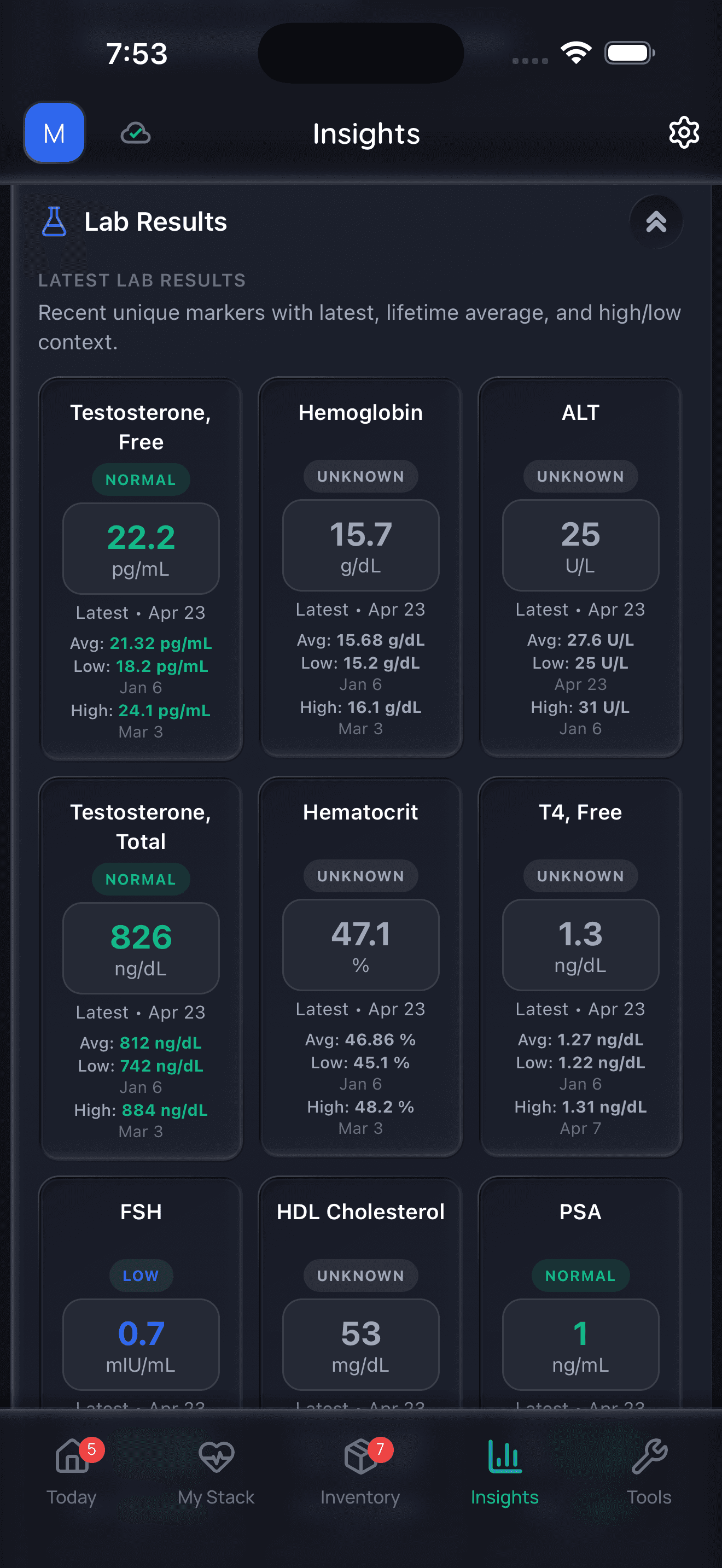
Doserly organizes data; it does not diagnose or interpret labs for you.
Dosing & Treatment Protocols
The Basics
Kyzatrex dosing starts at 200 mg twice daily (morning and evening), always taken with food. After 7 days, your provider should check your testosterone level 3 to 5 hours after the morning dose. Based on that result, they may adjust your dose up or down using a structured titration scheme.
The dose range is the widest among oral TU products: from 100 mg once daily in the morning (minimum) to 400 mg twice daily (maximum). Your provider adjusts the dose to keep your 3-to-5-hour post-dose testosterone level between 460 and 971 ng/dL.
The timing of your blood draw is critical. Unlike injectable testosterone where a trough level (drawn just before your next injection) is standard, Kyzatrex uses a 3-to-5-hour post-morning-dose level that captures the peak-to-declining phase. Drawing blood at the wrong time produces misleading results and can lead to incorrect dose adjustments. Additionally, the blood should ideally be collected in NaF/EDTA plasma tubes rather than standard serum tubes to avoid ex vivo overestimation of testosterone levels [8].
Both the morning and evening doses should be the same strength. Take each dose with a meal that contains dietary fat to ensure adequate absorption. Some men find that taking the capsule with a meal containing peanut butter, eggs, avocado, or other fat sources helps maximize absorption.
The Science
Dose titration protocol (from prescribing information) [1]:
Serum Testosterone (3-5h post-dose)
< 460 ng/dL
- Current Dose
- 100 mg QD (morning)
- New Dose
- 200 mg BID
Serum Testosterone (3-5h post-dose)
Not provided
- Current Dose
- 200 mg BID
- New Dose
- 300 mg BID
Serum Testosterone (3-5h post-dose)
Not provided
- Current Dose
- 300 mg BID
- New Dose
- 400 mg BID
Serum Testosterone (3-5h post-dose)
460-971 ng/dL
- Current Dose
- Any
- New Dose
- No change
Serum Testosterone (3-5h post-dose)
> 971 ng/dL
- Current Dose
- 400 mg BID
- New Dose
- 300 mg BID
Serum Testosterone (3-5h post-dose)
Not provided
- Current Dose
- 300 mg BID
- New Dose
- 200 mg BID
Serum Testosterone (3-5h post-dose)
Not provided
- Current Dose
- 200 mg BID
- New Dose
- 100 mg QD (morning)
Dosage forms: 100 mg, 150 mg, 200 mg capsules (all opaque white, imprinted with respective dose in red ink) [1].
Monitoring schedule [1]:
- Check serum testosterone 7 days after starting treatment or dose adjustment
- Draw blood 3-5 hours after morning dose
- Use NaF/EDTA plasma tubes when available for most accurate measurement [8]
- Periodically monitor thereafter
- Hematocrit: baseline, 3-6 months, then annually
- PSA: per age-appropriate guidelines
- Blood pressure: periodically
- Lipids: periodically
Final dose distribution in pivotal trial [3]:
After titration over two 28-day cycles, patients settled across the full dose range (100 mg QD to 400 mg BID), demonstrating the practical utility of Kyzatrex's wide titration range.
Dosing protocols often change over the course of treatment, as starting doses get adjusted and providers fine-tune based on lab results and symptoms. Doserly maintains a complete history of every protocol change, giving you and your provider a clear picture of what has been tried and how each adjustment affected your symptoms and lab values.
The app's adherence analytics show your consistency patterns and can highlight whether missed doses or timing variations correlate with symptom changes. When your provider is considering a dose adjustment based on your levels, having this data available makes the conversation more productive and the decision more informed.
Turn symptom and safety notes into a clearer timeline.
Doserly helps you log doses, symptoms, and safety observations side by side so patterns are easier to discuss with a qualified clinician.
Pattern view
Logs and observations

Pattern visibility is informational and should be reviewed with a clinician.
What to Expect / Timeline
Days 1-7: Most men will not notice dramatic changes in the first week. Some report a noticeable energy surge 2 to 3 hours after each dose as testosterone peaks, sometimes described as a Red Bull-like feeling. This early surge typically normalizes as the body adjusts over the first few weeks. Your provider should order blood work after Day 7 (3-5 hours post-morning dose) to assess initial response and determine if dose adjustment is needed.
Weeks 2-4: If absorption is adequate, some men begin noticing subtle improvements in energy and mood. Morning erections may begin to return. Some men experience initial side effects such as headache, nausea, GI discomfort, or a metallic taste in the mouth during this period. These are often transient. Dose titration typically occurs during this window.
Months 1-3: Improvements in energy, mood, and sexual function typically become more consistent during this period, though clinical trial data specific to these endpoints was not collected in the Kyzatrex trial. Hematocrit and blood pressure should be checked. Dose titration should be complete or nearly complete by the end of this period.
Months 3-6: Levels should be stable at the final titrated dose. Men with adequate absorption typically report their most noticeable improvements in this window. Body composition changes (increased lean mass, decreased fat mass) begin to become measurable based on class-level TRT data. If testosterone levels remain below target despite maximum dosing (400 mg BID), absorption failure should be considered and alternative delivery methods discussed with your provider.
Months 6-12: Continued gradual improvement in bone mineral density and body composition based on class-level evidence. Ongoing monitoring of hematocrit, PSA, blood pressure, and lipids. Annual review with provider.
Beyond 12 months: Long-term data specific to Kyzatrex extends only to 6 months. Jatenzo's 24-month extension data confirms sustained benefits with continued oral TU use. Ongoing monitoring remains important. Discuss long-term treatment goals at each annual review.
Fertility Preservation & HPG Axis
The Basics
This is one of the most important sections in this guide, especially if you are a man who wants to have children now or in the future.
Exogenous testosterone, regardless of how it enters your body (injection, gel, pill, pellet), sends a signal to your brain that your testosterone levels are adequate. Your brain responds by reducing or stopping the hormonal signals (LH and FSH) that tell your testes to produce both testosterone and sperm. The result: your testes shrink, and sperm production drops dramatically. Approximately 40-60% of men on testosterone therapy reach azoospermia (zero sperm count) within 6 months, with most of the remainder showing severely reduced counts.
This applies to Kyzatrex. The prescribing information explicitly warns that "spermatogenesis may be suppressed through feedback inhibition of pituitary FSH" [1]. Some men and providers have hoped that oral testosterone's shorter-acting pharmacokinetic profile might suppress the HPG axis less completely than long-acting injectables, allowing for some degree of preserved fertility. Marius Pharmaceuticals announced a pilot study exploring this possibility in January 2024, but results have not yet been published. Until data proves otherwise, you should assume that Kyzatrex will suppress your fertility the same way other testosterone products do.
If you want to preserve your fertility options, discuss these strategies with your provider before starting Kyzatrex:
- Sperm banking: The most reliable method. Bank sperm before starting any form of TRT.
- HCG co-administration: Human chorionic gonadotropin maintains intratesticular testosterone and can preserve spermatogenesis in some men on TRT.
- Clomiphene or enclomiphene monotherapy: These medications stimulate your body's own testosterone production without suppressing the HPG axis. They may be appropriate alternatives if your hypogonadism is secondary (pituitary-driven) and you want to avoid HPG axis suppression entirely.
The Science
Exogenous testosterone suppresses the HPG axis via negative feedback on GnRH pulse frequency at the hypothalamus, resulting in decreased LH and FSH secretion from the anterior pituitary. Intratesticular testosterone concentrations, normally maintained at 40-100x serum levels by LH-stimulated Leydig cell production, decline to near-serum levels on exogenous TRT. This leads to impaired Sertoli cell function and spermatogenic arrest [10][11].
In the Kyzatrex pivotal trial, both LH and FSH decreased from baseline during treatment, confirming HPG axis suppression with this formulation [3].
Recovery of spermatogenesis after TRT discontinuation is variable and not guaranteed. Most studies report recovery within 6-24 months, but a subset of men (estimated at 5-10%) may not fully recover. Factors affecting recovery include duration of TRT use, age, pre-TRT spermatogenesis status, and whether adjunctive therapies (HCG, clomiphene) were used during TRT [10][11].
Cross-reference: HCG, Clomiphene, Enclomiphene, Fertility Preservation on TRT
Interactions & Compatibility
Drug-Drug Interactions
SYNERGISTIC (use with appropriate monitoring):
- Insulin and oral hypoglycemics: Testosterone may improve insulin sensitivity and reduce blood glucose. Dose adjustments to diabetes medications may be needed [1].
CAUTION (requires monitoring or dose adjustment):
- Oral anticoagulants (warfarin): Testosterone may alter anticoagulant activity. More frequent INR monitoring is recommended [1].
- Corticosteroids: Concurrent use may enhance fluid retention and edema [1].
- 5-alpha reductase inhibitors (finasteride, dutasteride): These block DHT conversion. Given oral TU's elevated DHT:T ratio, concurrent use may be considered for men experiencing androgenic side effects, though clinical data on this combination with oral TU specifically is limited.
AVOID or use with extreme caution:
- Other androgens or anabolic steroids: Stacking testosterone with additional androgens increases risk of all testosterone-related side effects without established benefit in a TRT context.
Supplement Interactions
- DHEA: May increase total androgen load. Generally unnecessary when on TRT. See DHEA guide.
- Zinc: Supports testosterone production and may have mild aromatase-inhibiting properties. Supplementation at 15-30 mg/day is generally considered compatible with TRT.
- Boron: Limited evidence suggests modest effects on free testosterone and SHBG. See Boron guide.
- Saw palmetto: Natural 5-alpha reductase inhibitor. May be relevant given oral TU's elevated DHT profile. See Saw Palmetto guide.
Lifestyle Interactions
- Alcohol: Excessive alcohol impairs testosterone production and liver function. Moderate consumption does not appear to interfere with oral TU absorption.
- Dietary fat: Critical interaction for Kyzatrex absorption. Low-fat meals significantly reduce bioavailability.
- Exercise: Regular resistance training complements TRT's anabolic effects. No negative interaction.
Decision-Making Framework
Deciding whether Kyzatrex is the right TRT option for you involves several considerations beyond the general decision to start testosterone therapy.
When Kyzatrex may be particularly appropriate:
- You have confirmed hypogonadism and prefer an oral option over injections, gels, or patches
- You have experienced elevated hematocrit on injectable testosterone and want to try a potentially lower-impact delivery method
- You have experienced transference concerns with topical testosterone (gel/cream transfer to partner or children)
- You are needle-averse or have conditions that make self-injection difficult
- You value dosing flexibility (Kyzatrex's 100 mg QD to 400 mg BID range is the widest among oral TU products)
When Kyzatrex may not be the best fit:
- You need consistent testosterone levels throughout the day (Kyzatrex has significant peak-trough variation)
- You have difficulty eating meals containing fat twice daily at consistent times
- You are cost-sensitive and lack insurance coverage (Kyzatrex typically costs $150-200/month out of pocket)
- You need well-established long-term efficacy data (Kyzatrex's published data extends only to 6 months)
- You are concerned about DHT-mediated side effects (hair loss, acne), as oral TU produces proportionally more DHT
Questions to ask your provider:
- Is my hypogonadism primary (testicular) or secondary (pituitary)? Would clomiphene or enclomiphene be appropriate alternatives if I want to preserve fertility?
- Does your clinic use NaF/EDTA tubes for testosterone measurement when monitoring oral TU, or standard serum tubes? (This affects the accuracy of your monitoring.)
- What is your experience prescribing oral testosterone undecanoate specifically?
- Based on my medical history (blood pressure, hematocrit, prostate health, cardiovascular risk), which TRT delivery method carries the best risk-benefit profile for me?
Administration & Practical Guide
Taking Kyzatrex
Oral administration (twice daily):
- Take one capsule in the morning and one in the evening, approximately 12 hours apart
- Always take with a meal containing dietary fat. Good fat sources include eggs, peanut butter, avocado, olive oil, cheese, nuts, or fatty fish
- Swallow the capsule whole; do not crush, chew, or open it
- If your dose requires more than one capsule per administration (e.g., 400 mg = two 200 mg capsules), take both capsules at the same time with the meal
- If you miss a dose, take it as soon as you remember if it is close to your usual time. If it is almost time for your next dose, skip the missed dose. Do not double up.
Storage
- Store at room temperature, 68-77 degrees F (20-25 degrees C)
- Keep in a dry place
- Keep away from children
Travel with Controlled Substances
Kyzatrex is a Schedule III controlled substance. When traveling:
- Keep it in the original prescription bottle with the pharmacy label
- Carry a copy of your prescription or a letter from your provider
- For international travel, check the destination country's regulations regarding testosterone importation. Some countries classify testosterone differently or require advance declaration
- TSA allows prescription medications in carry-on luggage
Common Practical Challenges
Timing consistency: The BID dosing with food requirement is the most commonly cited practical challenge in community discussions. Setting phone alarms for morning and evening doses may help.
GI side effects: Some men report metallic taste, indigestion, or nausea, particularly when the capsule is taken without adequate food. Ensuring a meal with sufficient fat content typically reduces these symptoms.
Absorption variability: If your testosterone levels on lab work do not match your symptom experience, discuss absorption adequacy with your provider. Some men do not absorb oral TU well despite dietary compliance, and switching to an alternative delivery method may be appropriate.
Monitoring & Lab Work
Pre-Treatment Baseline
Before starting Kyzatrex, your provider should obtain:
- Two morning total testosterone measurements on separate days (confirming below-normal levels)
- Free testosterone
- LH and FSH (to distinguish primary from secondary hypogonadism)
- Estradiol
- SHBG
- CBC with hematocrit
- PSA
- Lipid panel
- Metabolic panel (fasting glucose, HbA1c if diabetic)
- Blood pressure
- DEXA scan if osteoporosis risk is present
Monitoring Schedule
Day 7 after initiation or dose change:
- Serum testosterone drawn 3-5 hours post-morning dose
- Use NaF/EDTA plasma tubes when available (standard serum tubes overestimate T by ~15% with oral TU) [8]
- Adjust dose per titration scheme
3-month review:
- Testosterone (3-5 hours post-morning dose)
- Hematocrit (threshold: >54% requires intervention)
- Blood pressure
- Symptom assessment
- PSA
6-month review:
- Repeat 3-month labs
- Lipid panel
- Hepatic function (baseline confirmation of no signal)
- Assess treatment satisfaction and tolerability
Annually thereafter:
- Complete lab panel (testosterone, hematocrit, PSA, lipids, metabolic panel, estradiol if symptomatic)
- Blood pressure
- Symptom reassessment
- Discussion of long-term treatment goals
- DEXA scan if indicated
Critical Lab Interpretation Note for Oral TU
Standard serum testosterone samples overestimate true testosterone levels in men taking oral TU due to continued ex vivo esterase conversion of TU to T in the blood tube. NaF/EDTA (enzyme-inhibited) plasma tubes are recommended for accurate measurement. This is unique to oral TU and does not apply to injectable or transdermal testosterone [8].
If your provider uses standard serum tubes, be aware that your measured testosterone may be approximately 15% higher than your actual circulating level. This can lead to unnecessary dose reductions or a false sense of adequate replacement.
Estrogen Management on TRT
Testosterone aromatizes to estradiol via the aromatase enzyme (CYP19A1). In men, some estradiol is essential for bone health, cardiovascular protection, libido, cognitive function, and joint comfort.
Oral testosterone undecanoate has a distinctive estrogen profile compared to injectable testosterone. Because the lymphatic absorption pathway delivers TU to tissues with lower aromatase activity, estradiol levels tend to remain near baseline even when testosterone increases significantly. This is a pharmacological characteristic of the class, not a side effect [7].
Implications of lower estradiol on oral TU:
- Potentially beneficial: Reduced risk of gynecomastia, less estrogen-mediated water retention, fewer mood effects from high estrogen
- Potentially problematic: Joint pain from low estradiol, mood instability, decreased bone protection, paradoxically decreased libido
At least one community report documented estradiol dropping to 3.5 pg/mL on Kyzatrex, which is well below the physiologically necessary range (typically 20-40 pg/mL is considered optimal for men on TRT). If you experience joint pain, mood instability, or decreased libido on Kyzatrex, ask your provider to check your estradiol level.
Aromatase inhibitors on oral TU: Because oral TU already produces lower estradiol levels compared to injectable testosterone, the need for an aromatase inhibitor (anastrozole) is likely even less common than with other TRT forms. Using an AI on oral TU without confirmed elevated estradiol symptoms and lab values risks crashing estradiol to dangerously low levels. Most clinical guidelines do not recommend routine AI use during TRT regardless of formulation [10].
Cross-reference: Anastrozole, Estrogen Management on TRT
Stopping TRT / Post-Cycle Considerations
If you and your provider decide to discontinue Kyzatrex, understanding what to expect helps manage the transition.
What happens when you stop: Your body's HPG axis has been suppressed by exogenous testosterone. When you stop taking Kyzatrex, your brain needs time to resume sending the hormonal signals (GnRH, LH, FSH) that tell your testes to produce testosterone and sperm. This recovery process is variable and can take anywhere from 3 to 24 months. Some men recover relatively quickly; others may not fully recover, particularly after prolonged use or if they had primary hypogonadism (testicular failure) before starting TRT.
Symptoms during recovery: Expect a return of the symptoms that led you to TRT in the first place: fatigue, low libido, mood changes, loss of muscle mass and strength. These symptoms may be more pronounced initially as your body transitions, even if your ultimate recovery will bring testosterone levels back to your pre-TRT baseline.
HPTA restart protocols: Some providers use medications to accelerate HPG axis recovery:
- HCG taper: Maintains Leydig cell function during the transition
- Clomiphene (Clomid): Stimulates LH and FSH production to restart endogenous testosterone
- Tamoxifen (Nolvadex): Similar mechanism to clomiphene
These protocols have variable evidence quality and are not universally endorsed by clinical guidelines. They are distinct from anabolic steroid "post-cycle therapy" (PCT) protocols found in bodybuilding forums, which may use aggressive dosing that is not appropriate for men discontinuing therapeutic TRT.
When stopping may be appropriate: Desire for fertility (if HCG co-administration was not used), resolution of a reversible cause of hypogonadism (e.g., weight loss restored testosterone levels), intolerable side effects, patient preference.
When stopping may not be advisable: Primary hypogonadism (testicular failure) where recovery is not expected, long-term use with established benefit and stable monitoring.
Cross-reference: Stopping TRT & Post-Cycle Recovery, HCG, Clomiphene
Special Populations & Situations
Young Men (<30)
Thorough diagnostic workup is essential before prescribing Kyzatrex or any TRT to young men. Reversible causes of low testosterone (obesity, sleep apnea, opioid use, pituitary pathology) must be excluded first. Fertility implications are paramount for this population. Consider clomiphene or enclomiphene monotherapy if secondary hypogonadism is the diagnosis.
Older Men (>65)
The TRAVERSE trial enrolled men up to age 80 and provided reassuring cardiovascular safety data. However, polycythemia risk increases with age, and the benefit-risk calculus should be carefully individualized. Kyzatrex's potentially lower hematologic impact compared to injectables may be relevant for older men.
Obesity-Related Hypogonadism
Men with BMI > 30 frequently have low testosterone due to increased aromatase activity in adipose tissue and altered HPG axis signaling. Weight loss may restore testosterone levels without TRT. If TRT is initiated, Kyzatrex may be considered, but absorption variability and the need for consistent fat intake with meals should be discussed. The Kyzatrex trial population had a mean BMI of 34.0, providing relevant safety data for obese men [3].
Type 2 Diabetes
21.9% of the Kyzatrex trial population had type 2 diabetes. Men with diabetes experienced numerically greater (but not statistically significant) BP increases compared to those without. Testosterone may improve insulin sensitivity; monitor blood glucose and adjust diabetes medications accordingly [1][3].
Cardiovascular Disease History
The TRAVERSE trial provides the primary cardiovascular safety data for TRT. Kyzatrex's relatively modest BP effect (+1.7 mmHg) may be relevant for risk stratification, but shared decision-making with a cardiologist is appropriate for men with established cardiovascular disease [10].
Sleep Apnea
Testosterone may worsen obstructive sleep apnea. CPAP compliance should be optimized before and during TRT. Monitor for worsening symptoms [1].
Prostate Cancer History
Historically contraindicated. Emerging evidence suggests TRT may be considered after curative treatment for low-risk prostate cancer, but this requires close collaboration with urology and oncology. PSA monitoring is mandatory [1].
Transgender Men
Oral testosterone may be considered for gender-affirming hormone therapy, though injectable testosterone is more commonly used due to more predictable pharmacokinetics and lower cost. Dosing goals and fertility counseling differ from standard TRT for hypogonadism. Refer to specialized gender-affirming care resources.
Regulatory, Insurance & International
United States (FDA)
- FDA approved July 27, 2022 (NDA 213953)
- DEA Schedule III controlled substance (CIII)
- Not approved for age-related hypogonadism (off-label use)
- July 2025 label update: boxed warning removed, age-related hypogonadism contraindication removed
- Post-marketing requirement: pediatric trial (ages 12-18) in progress, completion expected 2029
- Not substitutable with other oral TU products (Jatenzo, Tlando)
- Insurance coverage is rare for oral testosterone products; most patients pay out of pocket
- Typical self-pay cost: $150-200/month depending on pharmacy and dose
- Controlled substance prescribing limitations apply (no phone-in prescriptions in some states, limited refills)
- Telehealth prescribing: varies by state regulation
United Kingdom (MHRA)
Kyzatrex is not currently approved or marketed in the UK. Oral testosterone undecanoate is available as Andriol Testocaps (40 mg) in some European countries but is not commonly prescribed in the UK, where Sustanon 250 (injectable) and Nebido (injectable) are the primary TRT formulations.
Canada (Health Canada)
Kyzatrex is not currently approved in Canada. Andriol (oral TU, 40 mg) has been available in Canada but with limited uptake due to absorption variability.
Australia (TGA)
Kyzatrex is not listed on the Australian Register of Therapeutic Goods. Reandron (testosterone undecanoate injectable, equivalent to Nebido) is the primary TRT product in Australia.
European Union (EMA)
Kyzatrex is not authorized in the EU. Oral testosterone undecanoate has been available in Europe as Andriol for decades, but newer SEDDS formulations (Jatenzo, Kyzatrex, Tlando) are US-only products as of 2026.
Cost Comparison
Oral TU products are among the most expensive TRT options in the US:
- Kyzatrex: ~$150-200/month (self-pay)
- Jatenzo: ~$500-1000+/month
- Tlando: pricing varies
- Generic testosterone cypionate (injectable): ~$30-60/month
- Compounded testosterone cream: ~$30-80/month
- Testosterone gel (generic AndroGel): ~$50-100/month (with insurance)
FAQ
Q: Is Kyzatrex the same as Jatenzo or Tlando?
A: No. All three contain testosterone undecanoate and use lymphatic absorption, but they have different SEDDS formulations, different pharmacokinetic profiles, different dosing protocols, and different titration requirements. They are not interchangeable. Switching between products requires re-titration and monitoring.
Q: Can I take Kyzatrex without food?
A: Taking Kyzatrex without food dramatically reduces absorption because the drug relies on dietary fat to trigger the chylomicron-mediated lymphatic absorption pathway. Always take it with a meal containing fat.
Q: Will Kyzatrex damage my liver like older oral testosterone pills?
A: No. Kyzatrex is absorbed through the lymphatic system, not the liver. It is NOT a 17-alpha-alkylated androgen (the chemical modification that caused liver toxicity in older oral testosterone products). No clinically significant liver toxicity has been observed with modern oral TU formulations.
Q: Why does my blood test show high testosterone but I don't feel much different?
A: If your lab used standard serum tubes, your testosterone level may be overestimated by approximately 15% due to continued conversion of TU to testosterone in the tube after the blood is drawn. Ask your provider about using NaF/EDTA (enzyme-inhibited) plasma tubes for more accurate measurement.
Q: Will Kyzatrex affect my fertility?
A: Yes. Like all exogenous testosterone, Kyzatrex suppresses the HPG axis, which can lead to severely reduced sperm production or azoospermia. If you want children in the future, discuss fertility preservation strategies (sperm banking, HCG co-administration) with your provider before starting.
Q: Does Kyzatrex cause hair loss?
A: Oral TU produces proportionally more DHT than injectable testosterone (approximately 3-fold increase in DHT:T ratio). DHT is the primary androgen responsible for male pattern hair loss in genetically susceptible individuals. If you are prone to hair loss, this is an important consideration to discuss with your provider.
Q: How does Kyzatrex compare to injections for hematocrit/polycythemia?
A: Early data suggests oral TU may cause less erythrocytosis than long-acting injectables due to its shorter-acting pharmacokinetic profile. In the Kyzatrex trial, hemoglobin increased only 0.5 g/dL over 6 months. However, this has not been confirmed in head-to-head comparative studies. Hematocrit monitoring remains mandatory regardless of delivery method.
Q: Is Kyzatrex covered by insurance?
A: Insurance coverage for oral testosterone products is rare. Most patients pay out of pocket, typically $150-200 per month depending on dose and pharmacy. Some specialty pharmacies offer competitive pricing.
Q: Can I take Kyzatrex once a day instead of twice?
A: The minimum approved dose is 100 mg once daily in the morning. Some community members have experimented with once-daily dosing of higher amounts, but this is off-label and may result in larger peak-trough swings and less consistent testosterone levels. Discuss with your provider.
Q: What if Kyzatrex isn't working for me?
A: If your testosterone levels remain below target despite maximum dosing (400 mg BID) with consistent fat-containing meals, you may be a poor absorber of oral TU. This is not uncommon. Discuss switching to injectable or transdermal testosterone with your provider.
Q: Does Kyzatrex have fewer side effects than testosterone injections?
A: Kyzatrex may have a more favorable blood pressure and hematocrit profile than injectable testosterone, but it produces proportionally more DHT (which can worsen hair loss and acne) and less estradiol (which can cause joint pain and mood issues). The side effect profile is different, not necessarily better or worse overall. The best delivery method depends on your individual priorities and risk factors.
Myth vs. Fact
Myth: "Oral testosterone always causes liver damage."
Fact: This was true for 17-alpha-alkylated oral androgens (methyltestosterone, fluoxymesterone) used from the 1930s through the 1990s. Modern oral testosterone undecanoate products like Kyzatrex bypass the liver entirely via intestinal lymphatic absorption. No clinically significant hepatotoxicity has been observed in clinical trials of Kyzatrex, Jatenzo, or Tlando [1][2].
Myth: "All oral testosterone products are the same."
Fact: Jatenzo, Tlando, and Kyzatrex all contain testosterone undecanoate but use different SEDDS formulations with different pharmacokinetic profiles. They are NOT interchangeable and cannot be substituted without re-titration. Each has different starting doses, titration protocols, and lab timing requirements [1][4].
Myth: "Oral testosterone is weaker than injectable testosterone."
Fact: When properly dosed and absorbed, oral TU achieves eugonadal testosterone levels in 80-88% of patients. The perception of weakness likely stems from absorption variability, which means some men do not absorb oral TU well. For those who do absorb it adequately, the testosterone effects are physiologically equivalent to any other delivery method [3][4].
Myth: "Kyzatrex won't affect my fertility because it's a pill."
Fact: All exogenous testosterone, regardless of delivery route, suppresses the HPG axis and can lead to azoospermia. The oral route does not exempt Kyzatrex from this class effect. Marius Pharmaceuticals is studying Kyzatrex's specific impact on fertility, but until data proves otherwise, assume standard HPG suppression [1][11].
Myth: "TRT causes heart attacks."
Fact: The TRAVERSE trial (n=5,246), the largest cardiovascular outcome trial for TRT, found no increase in major adverse cardiovascular events (MACE) with testosterone gel vs placebo (HR 0.96, 95% CI: 0.78-1.17). In absolute terms, approximately 7 cardiovascular events per 100 men occurred in both groups over 33 months. Earlier observational studies that raised cardiovascular concerns had significant methodological limitations [10].
Myth: "TRT causes prostate cancer."
Fact: Current evidence does not support a causal relationship between testosterone replacement therapy and prostate cancer initiation. The saturation model of androgen receptor activation suggests that the prostate is maximally stimulated at relatively low testosterone levels, and further increases do not proportionally increase prostate cancer risk. However, PSA monitoring remains a standard part of TRT care, and TRT is contraindicated in men with known or suspected prostate cancer [1].
Myth: "Higher testosterone doses always produce better results."
Fact: Testosterone therapy aims to restore levels to the normal physiological range, not to maximize them. Supraphysiological levels increase the risk of polycythemia, cardiovascular events, and other side effects without proportional benefit. Kyzatrex's titration protocol specifically targets the 460-971 ng/dL range [1].
Myth: "You can't get accurate blood work while on Kyzatrex."
Fact: You can, but it requires attention to two details: (1) blood draw timing must be 3-5 hours post-morning dose (not the trough timing used for injectables), and (2) NaF/EDTA plasma tubes are recommended for accurate testosterone measurement because standard serum tubes overestimate levels by approximately 15% [8].
Myth: "Once you start TRT, you can never stop."
Fact: This is an oversimplification. Many men on TRT can discontinue with HPG axis recovery, though the timeline is variable (3-24 months) and full recovery is not guaranteed, particularly after prolonged use or in cases of primary hypogonadism. The decision to continue or discontinue should be made collaboratively with your provider [10].
Sources & References
Regulatory Sources
[1] KYZATREX (testosterone undecanoate) capsules, for oral use, CIII. Full Prescribing Information. Marius Pharmaceuticals, Raleigh, NC. Revised October 2025. DailyMed. https://dailymed.nlm.nih.gov/dailymed/drugInfo.cfm?setid=7f7167a7-2a25-47e2-acf5-33f499fce971
Clinical Practice Guidelines
[2] Nieschlag E, Nieschlag S. ENDOCRINE HISTORY: The history of discovery, synthesis and development of testosterone for clinical use. Eur J Endocrinol. 2019;180(6):R201-R212. doi:10.1530/EJE-19-0071
Clinical Trials
[3] Bernstein JS, Dhingra OP. A phase III, single-arm, 6-month trial of a wide-dose range oral testosterone undecanoate product. Ther Adv Urol. 2024;16:17562872241241864. doi:10.1177/17562872241241864. PMID: 38606384; PMCID: PMC11008350.
Systematic Reviews & Comparative Studies
[4] Comparative Review of Jatenzo, Tlando, and Kyzatrex. Treatment of Symptomatic Male Hypogonadism with New Oral Testosterone Therapies. Published December 2025. PMID: 41562957.
Pharmacokinetic Studies
[5] Shackleford DM, Faassen WA, Houwing N, et al. Contribution of lymphatically transported testosterone undecanoate to the systemic exposure of testosterone after oral administration of two Andriol formulations in conscious lymph duct-cannulated dogs. J Pharmacol Exp Ther. 2003;306(3):925-933.
[6] Yin AY, Htun M, Swerdloff RS, et al. Reexamination of pharmacokinetics of oral testosterone undecanoate in hypogonadal men with a new self-emulsifying formulation. J Androl. 2012;33(2):190-201. PMID: 21474786.
[7] Swerdloff RS, Wang C, White WB, et al. A new oral testosterone undecanoate formulation restores testosterone to normal concentrations in hypogonadal men. J Clin Endocrinol Metab. 2020;105(8):2515-2531. doi:10.1210/clinem/dgaa238. PMCID: PMC7322760.
Laboratory Methodology
[8] Lachance S, Dhingra O, Bernstein J, et al. Importance of measuring testosterone in enzyme-inhibited plasma for oral testosterone undecanoate androgen replacement therapy clinical trials. Future Sci OA. 2015;1(4):FSO55. doi:10.4155/fso.15.55. PMCID: PMC5138010.
Blood Pressure Studies
[9] White WB, Bernstein JS, Rittmaster R, Dhingra O. Effects of the oral testosterone undecanoate Kyzatrex on ambulatory blood pressure in hypogonadal men. J Clin Hypertens (Greenwich). 2021;23(7):1420-1430. doi:10.1111/jch.14297. PMID: 34114726; PMCID: PMC8678838.
Landmark Trials
[10] Lincoff AM, Bhasin S, Flevaris P, et al. Cardiovascular Safety of Testosterone-Replacement Therapy. N Engl J Med. 2023;389(2):107-117. doi:10.1056/NEJMoa2215025. (TRAVERSE Trial)
Fertility & HPG Axis
[11] Bhasin S, Brito JP, Cunningham GR, et al. Testosterone Therapy in Men With Hypogonadism: An Endocrine Society Clinical Practice Guideline. J Clin Endocrinol Metab. 2018;103(5):1715-1744. doi:10.1210/jc.2018-00229.
Related Guides & Cross-Links
Same Category (Oral Testosterone)
- Testosterone Undecanoate Oral (Jatenzo)
- Testosterone Undecanoate Oral (Tlando)
- Testosterone Undecanoate Oral (Andriol)
Related Treatment Options
- Oral Testosterone Guide
- Testosterone Cypionate (Depo-Testosterone)
- Testosterone Enanthate (Delatestryl)
- Testosterone Undecanoate Injectable (Aveed / Nebido)
- Testosterone Gel (AndroGel)
- TRT for Beginners
Fertility & HPG Axis
- Human Chorionic Gonadotropin (HCG)
- Clomiphene Citrate (Clomid)
- Enclomiphene Citrate
- Fertility Preservation on TRT
Estrogen Management
Monitoring & Education
- TRT Blood Work Guide
- The TRAVERSE Trial Explained
- Low Testosterone Master Guide
- Stopping TRT & Post-Cycle Recovery