
Osphena (Ospemifene): Uses, Benefits and Side Effects
On this page
Quick Reference Card
Attribute
Brand Name(s)
- Value
- Osphena (US); Senshio (EU)
Attribute
Generic Name
- Value
- Ospemifene
Attribute
Drug Class / Type
- Value
- Selective Estrogen Receptor Modulator (SERM); estrogen agonist/antagonist
Attribute
FDA-Approved Indications
- Value
- (1) Treatment of moderate-to-severe dyspareunia, a symptom of vulvar and vaginal atrophy (VVA), due to menopause; (2) Treatment of moderate-to-severe vaginal dryness, a symptom of VVA, due to menopause
Attribute
Common Doses
- Value
- 60 mg once daily (only available dose)
Attribute
Route of Administration
- Value
- Oral (tablet, taken with food)
Attribute
Dosing Schedule
- Value
- Continuous, once daily
Attribute
Key Monitoring Requirements
- Value
- Pelvic exam; breast exam; mammography per national guidelines; endometrial evaluation if abnormal vaginal bleeding occurs
Attribute
Black Box Warning
- Value
- Current Osphena label: endometrial cancer and cardiovascular disorders, including label-reported stroke and DVT rates
Attribute
Key Distinguishing Feature
- Value
- First and only oral, non-estrogen SERM approved specifically for GSM symptoms; does not require concurrent progestogen
Overview / What Is Ospemifene (Osphena)?
The Basics
Ospemifene is a prescription medication designed to treat two of the most common and distressing symptoms of genitourinary syndrome of menopause (GSM): painful intercourse (dyspareunia) and vaginal dryness. Unlike vaginal estrogen creams, tablets, or rings, ospemifene is a pill you swallow once a day. And unlike traditional hormone therapy, it is not a hormone. It belongs to a class of medications called selective estrogen receptor modulators, or SERMs, which work like estrogen in some tissues and block estrogen in others.
For many women going through menopause, declining estrogen levels cause the vaginal walls to become thinner, drier, and less elastic. This can make intercourse painful or impossible, affect urinary health, and diminish quality of life in ways that often go unspoken. While vaginal estrogen products are the most common treatment, they involve topical application that some women find messy, inconvenient, or uncomfortable. Others have medical reasons they cannot use estrogen at all.
Ospemifene was developed to fill that gap. It was first approved by the FDA in 2013 for dyspareunia and received an additional indication for vaginal dryness in 2019. In Europe, it is approved under the brand name Senshio for women who are not suitable candidates for local vaginal estrogen therapy. The medication acts like estrogen specifically in vaginal tissue, helping to restore the thickness, moisture, and health of the vaginal lining, while behaving differently in other tissues like the breast and uterus.
As of September 13, 2026, Osphena remains an oral estrogen agonist/antagonist with a boxed warning for endometrial cancer and cardiovascular disorders, not systemic estrogen replacement. [19][20]
The Science
Ospemifene is a third-generation SERM derived from the triphenylethylene family, structurally related to tamoxifen and its metabolite toremifene [1]. It was originally developed by Hormos Medical Ltd (Finland) and subsequently advanced through clinical development by QuatRx Pharmaceuticals and Shionogi Inc. The current U.S. distributor is Duchesnay USA, Inc.
The FDA granted approval under NDA 203505 on February 26, 2013, for the treatment of moderate-to-severe dyspareunia, a symptom of vulvar and vaginal atrophy, due to menopause. A supplemental NDA (sNDA) was approved on January 25, 2019, adding the indication for moderate-to-severe vaginal dryness [2]. The European Medicines Agency (EMA) approved ospemifene (as Senshio) for treatment of moderate-to-severe symptomatic vulvar and vaginal atrophy in postmenopausal women who are not candidates for local vaginal estrogen therapy [3].
The clinical development program encompassed multiple Phase 2 and Phase 3 randomized, double-blind, placebo-controlled trials enrolling more than 4,600 postmenopausal women. Six pivotal RCTs demonstrated consistent efficacy across objective measures (vaginal maturation index, vaginal pH) and subjective patient-reported outcomes (dyspareunia severity, vaginal dryness severity) [4]. Long-term extensions up to 52 weeks confirmed sustained efficacy and an acceptable safety profile [5].
Ospemifene represents the first orally administered, non-estrogen pharmacotherapy approved specifically for GSM symptoms. Its tissue-selective mechanism distinguishes it from both systemic estrogen therapy and local vaginal estrogen, positioning it as an important option in the GSM treatment algorithm, particularly for women who cannot or prefer not to use estrogen-based therapies.
Medical / Chemical Identity
Generic Name: Ospemifene
Brand Names by Country/Region:
Country/Region
United States
- Brand Name
- Osphena
- Manufacturer/Distributor
- Duchesnay USA, Inc.
Country/Region
European Union
- Brand Name
- Senshio
- Manufacturer/Distributor
- Shionogi B.V.
Country/Region
United Kingdom
- Brand Name
- Senshio
- Manufacturer/Distributor
- Shionogi B.V.
Chemical Information:
Property
Chemical Name
- Value
- Z-2-[4-(4-chloro-1,2-diphenylbut-1-enyl)phenoxy]ethanol
Property
Empirical Formula
- Value
- C24H23ClO2
Property
Molecular Weight
- Value
- 378.9 g/mol
Property
Physical Description
- Value
- White to off-white crystalline powder
Property
Drug Class
- Value
- Selective Estrogen Receptor Modulator (SERM)
Property
Related Compounds
- Value
- Structurally related to tamoxifen and toremifene (triphenylethylene family)
Regulatory Information:
Field
NDA Number
- Value
- 203505
Field
FDA Initial Approval
- Value
- February 26, 2013 (dyspareunia indication)
Field
FDA sNDA Approval
- Value
- January 25, 2019 (vaginal dryness indication)
Field
Latest Label Revision
- Value
- February 2025
Field
DEA Schedule
- Value
- None
Field
Marketing Status
- Value
- New Drug Application
Field
NDC Codes
- Value
- 55494-580-18, 55494-580-30, 55494-580-55, 55494-580-90
Field
Manufactured in
- Value
- United Kingdom
Despite this, its current label carries product-specific warnings because ospemifene has estrogen agonist effects in the endometrium and the clinical program reported stroke and DVT event rates that must be considered in individual risk assessment [19].
Mechanism of Action
The Basics
To understand how ospemifene works, it helps to think of estrogen receptors as locks scattered throughout your body, with estrogen as the key that opens them. Different tissues have different types of these locks, and the effects of turning them vary by location. In vaginal tissue, estrogen keeps things moist, thick, and healthy. In breast tissue, estrogen stimulates growth. In the uterine lining, estrogen promotes thickening.
Ospemifene is designed to fit into those same locks but produce different effects depending on which tissue it reaches. In vaginal tissue, it turns the lock in the same direction as estrogen, restoring moisture, thickness, and elasticity. In breast tissue, it turns the lock in the opposite direction, actually blocking estrogen's growth-promoting effects. In the uterine lining, its effect is weak, somewhere between agonist and neutral.
This tissue selectivity is what makes ospemifene valuable. It delivers the vaginal benefits of estrogen without requiring you to apply anything topically, and without the same effects that estrogen has on other tissues. This is particularly relevant for women who have concerns about estrogen exposure in breast tissue or who simply prefer an oral medication over a vaginal one.
The Science
Ospemifene is an estrogen receptor (ER) agonist/antagonist that exerts tissue-selective effects through differential modulation of ER-alpha and ER-beta signaling pathways. Like other SERMs, ospemifene binds to estrogen receptors but recruits different coactivator and corepressor proteins depending on the tissue-specific receptor environment [6].
In vaginal epithelium, ospemifene functions as an ER agonist, promoting cellular maturation and mucification. Preclinical studies in ovariectomized rat models demonstrated that ospemifene (10 mg/kg/day) increased vaginal weight and epithelial height to a degree comparable to 17-alpha-ethinyl estradiol, though the histological pattern differed: ospemifene produced mucified rather than cornified epithelial layers [7]. Vaginal epithelium treated with ospemifene showed upregulation of progesterone receptors in both epithelium and stroma, confirming estrogenic activity at the vaginal level.
In breast tissue, ospemifene demonstrates antagonistic activity. In MCF-7 breast cancer cell lines, ospemifene antagonized estrogen response element (ERE)-mediated transactivation, confirming its anti-estrogenic activity in estrogen-responsive breast cancer cells [7]. Preclinical data, clinical findings, and systematic reviews support an antiestrogenic effect with possible chemoprotective properties in breast tissue [3].
In endometrial tissue, ospemifene has weak agonistic effects. Clinical trial data showed a mean endometrial thickness increase of approximately 0.8 mm over 12 to 15 months, which remained below the clinically significant 4 mm threshold. Network meta-analysis confirmed post-treatment endometrial thickness values of 2.5 to 3.2 mm, compared with 2.1 to 2.3 mm at baseline [8]. No endometrial hyperplasia was reported in clinical trials, and endometrial thickening was reversible within 6 weeks of treatment cessation.
Ospemifene shows similar binding affinity for ER-alpha and ER-beta, but with overall lower affinity than estradiol [7]. Its major metabolite, 4-hydroxyospemifene, retains approximately equal ER affinity, while the minor metabolite 4'-hydroxyospemifene demonstrates approximately 6% higher binding potency [9].
Visual guide
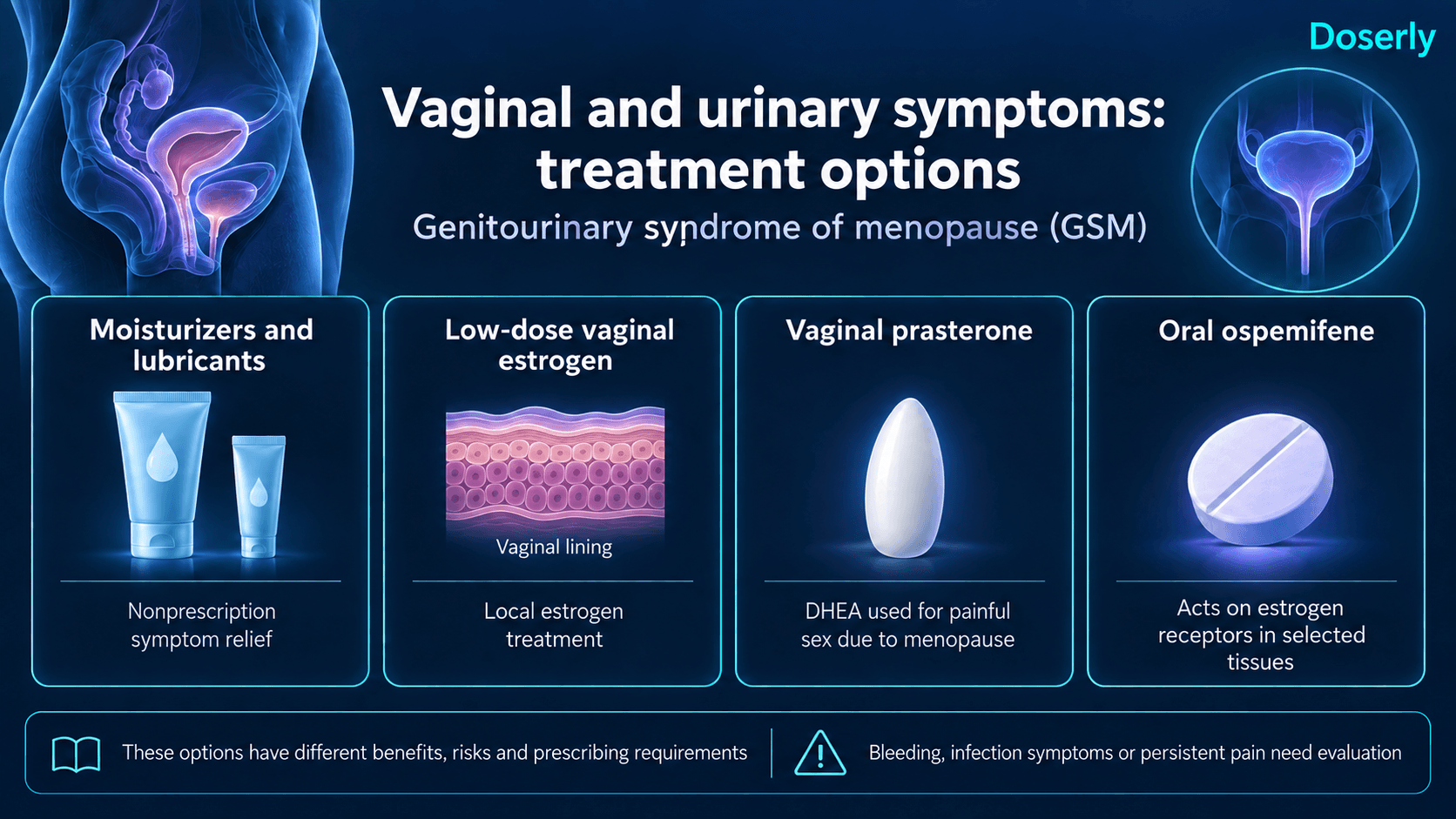
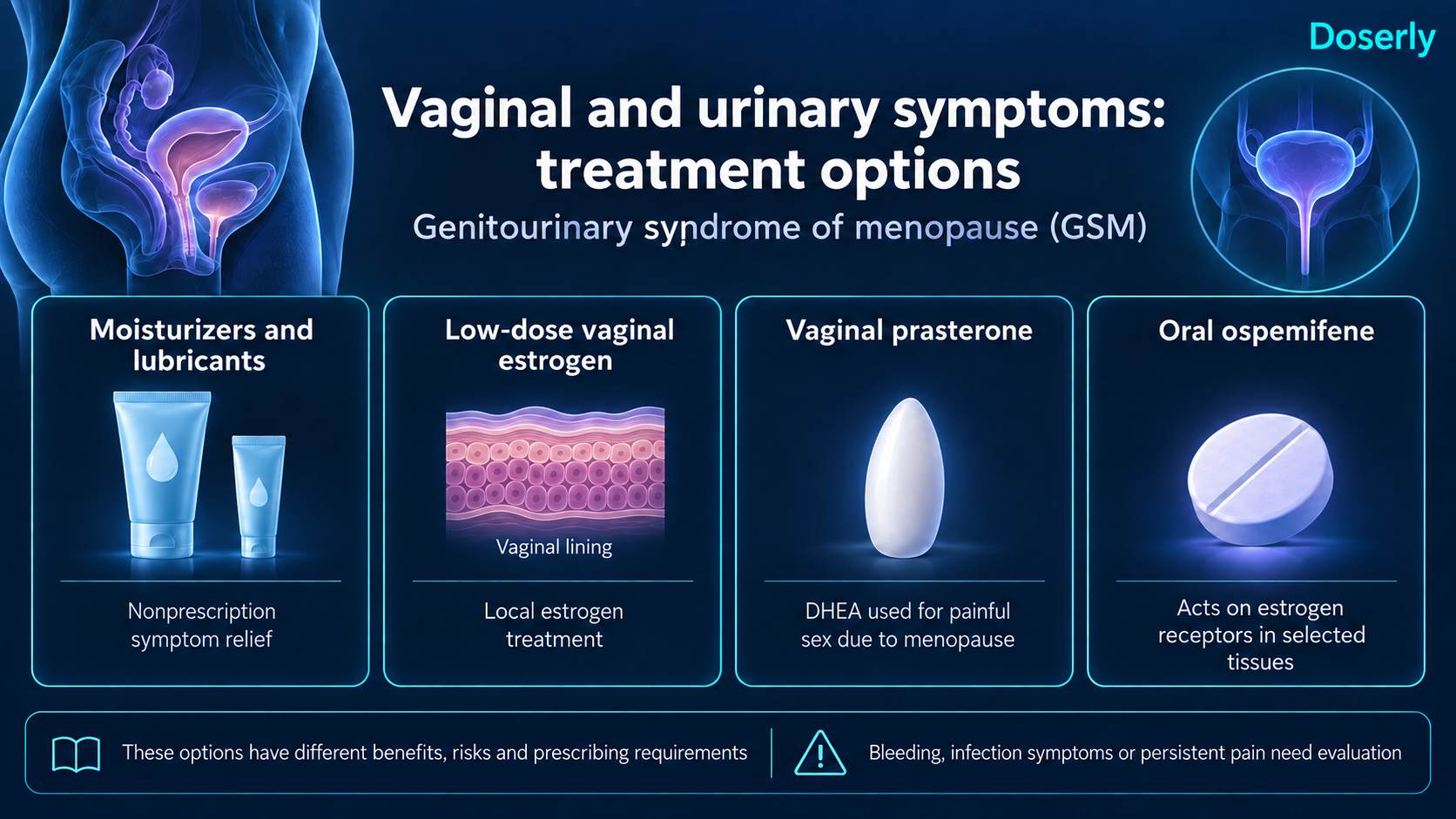
The options differ in indication, evidence and contraindications. Prasterone is a vaginal hormone precursor; ospemifene is an oral estrogen-receptor modulator. The diagram is not a head-to-head efficacy comparison or a recommendation to combine treatments.
Pharmacokinetics / Hormone Physiology
The Basics
Understanding how your body processes ospemifene helps explain why certain instructions matter, particularly the requirement to take it with food.
When you swallow an ospemifene tablet, the medication is absorbed through your digestive system and reaches peak levels in your blood about 2 hours later. Here is the critical detail: taking it with food increases the amount of medication your body absorbs by two to three times compared to taking it on an empty stomach. This is not a minor difference. Without food, the medication may not reach the levels needed to be effective.
Once absorbed, ospemifene circulates in your bloodstream, almost entirely bound to proteins (more than 99%). It is processed by the liver and broken down into metabolites that are also active at estrogen receptors. The medication has a half-life of about 26 hours, which means it takes roughly a day for half of each dose to be cleared. This supports once-daily dosing and means that steady levels are reached within about a week of consistent use.
Most of the medication is eliminated through the digestive system (about 75% in feces), with a small amount exiting through the kidneys (about 7%).
The Science
Absorption: After oral administration of 60 mg with food, ospemifene reaches peak plasma concentrations (Cmax) of approximately 533 ng/mL with an AUC0-inf of 4,165 ng*h/mL. Tmax is approximately 2 hours (range 1.5 to 8 hours). The food effect is clinically significant: coadministration with food increases bioavailability 2- to 3-fold compared to fasting conditions. This necessitates the labeling instruction to take ospemifene with food [9].
Distribution: Ospemifene is greater than 99% bound to serum proteins, primarily albumin. The apparent volume of distribution (Vd/F) is approximately 448 L, indicating extensive tissue distribution. Pharmacokinetics are linear across the 30 to 200 mg dose range studied [1].
Metabolism: Ospemifene undergoes extensive hepatic metabolism, primarily via CYP3A4, CYP2C9, and CYP2C19. The major circulating metabolite is 4-hydroxyospemifene, which retains estrogen receptor binding activity with approximately equal affinity to the parent compound. A minor metabolite, 4'-hydroxyospemifene, demonstrates approximately 6% higher ER binding potency. Steady-state concentrations are achieved in approximately 7 days with daily dosing [1][9].
Elimination: Terminal elimination half-life is approximately 26 hours. Excretion is primarily fecal (75%), with renal elimination accounting for approximately 7% of the administered dose.
Special Populations:
- Renal impairment: Pharmacokinetics in women with severe renal impairment (CrCL less than 30 mL/min) have been studied. No dose adjustment is required for mild-to-moderate renal impairment.
- Hepatic impairment: Ospemifene has not been studied in women with severe hepatic impairment. Use is not recommended in this population.
- Geriatric: No age-related pharmacokinetic differences have been identified that would limit use in elderly patients.
Research & Clinical Evidence
Dyspareunia — The Basics
The strongest evidence for ospemifene comes from its effect on painful intercourse. Multiple large clinical trials, each enrolling hundreds of women, have consistently shown that ospemifene 60 mg taken daily significantly reduces the severity of dyspareunia compared to placebo. Many women in these trials noticed improvement within 4 weeks, with the full effect typically reached by 12 weeks. A meta-analysis combining data from six randomized controlled trials confirmed these findings with high statistical confidence.
Dyspareunia — The Science
A meta-analysis of six RCTs (Di Donato et al., 2019) demonstrated that ospemifene 60 mg significantly improved dyspareunia severity at 12 weeks (SMD: -2.70, 95% CI: -2.88 to -2.52; P < 0.0001). This was accompanied by significant improvements in objective measures: vaginal pH (SMD: -0.96, 95% CI: -1.12 to -0.81; P < 0.0001), parabasal cell percentage (SMD: -36.84, 95% CI: -46.95 to -26.72; P < 0.0001), and superficial cell percentage (SMD: 8.23, 95% CI: 3.73 to 12.74; P = 0.0003) [4].
In the pivotal Phase 3 study (Portman et al., 2013; N=826), ospemifene 60 mg significantly improved all coprimary endpoints versus placebo at 12 weeks (all P < 0.0001 except dyspareunia P = 0.0001) [10]. A subsequent Phase 3 study (Archer et al., 2019; N=631) confirmed these findings for vaginal dryness as the most bothersome symptom, with 31.5% of ospemifene-treated women classified as responders versus 6.0% on placebo (P < 0.0001). The Female Sexual Function Index also significantly improved (P < 0.05) [11].
Vaginal Tissue Restoration — The Basics
Beyond symptom relief, ospemifene actually restores the health of vaginal tissue at a cellular level. Clinical trials measured this by looking at the types of cells in vaginal samples and the acidity of the vaginal environment. In healthy premenopausal women, the vaginal lining is thick with mature cells and maintains an acidic pH that protects against infections. After menopause, the lining thins, immature cells predominate, and pH rises. Ospemifene reverses these changes, shifting the vaginal environment back toward a healthier premenopausal pattern.
Vaginal Tissue Restoration — The Science
Across clinical trials, ospemifene consistently demonstrated significant improvement in the vaginal maturation index. In the Bachmann and Komi (2010) Phase 3 study (N=784), both 30 mg and 60 mg doses significantly increased superficial cell percentages (7.8% and 10.8% vs 2.2% placebo; P < 0.001) and decreased vaginal pH (0.67 and 1.01 vs 0.10 placebo; P < 0.001) at 12 weeks. Significant improvements in maturation index were observed as early as 4 weeks (P < 0.001 for both dose groups) [12].
The Phase 2 study by Rutanen et al. (2003; N=160) demonstrated that ospemifene at doses of 30, 60, and 90 mg produced significant estrogenic effects on vaginal epithelium, as evidenced by increased intermediate and superficial cells on repeat Pap smears. Importantly, the vast majority of participants maintained atrophic endometrium throughout 3 months of treatment, with no hyperplasia or bleeding in any participant at any dose [13].
Comparison with Vaginal Estrogen — The Basics
There are no head-to-head clinical trials directly comparing ospemifene with vaginal estrogen products. Indirect comparison studies, which use statistical methods to compare results from separate trials, suggest that ospemifene has an efficacy and safety profile that is at least equivalent to topical estrogens for GSM symptoms at 12 weeks. The choice between them often comes down to preference for route of administration and individual medical history.
Comparison with Vaginal Estrogen — The Science
A systematic indirect treatment comparison found no statistically significant difference between ospemifene and topical estrogen products for symptom scores at 12 weeks versus placebo. Ospemifene demonstrated comparable or superior improvements in vaginal pH and vaginal maturation index compared to topical estrogens [3]. However, the absence of direct comparison data limits the strength of these conclusions, and indirect comparisons carry inherent methodological limitations including differences in study populations, endpoint definitions, and trial designs.
Benefits & Therapeutic Effects
The Basics
Ospemifene's primary benefit is the relief of two specific, interconnected symptoms: vaginal dryness and painful intercourse. For women dealing with these problems, the impact on quality of life can be profound. Many describe feeling like their bodies have betrayed them, and some avoid intimacy entirely because the pain has become unbearable.
Clinical trials show that ospemifene can meaningfully improve both of these symptoms, with many women noticing changes within the first four weeks and substantial improvement by three months. Beyond symptom relief, the medication actually restores the vaginal tissue itself, shifting the cellular makeup and pH back toward a healthier pattern.
There are also potential secondary benefits. Research suggests ospemifene may improve overactive bladder symptoms, which are part of the broader GSM picture. Small studies have shown reductions in daily voids, urge incontinence episodes, and nocturia after 12 weeks of treatment. Early data also suggests favorable effects on bone turnover markers and lipid profiles, though these are not approved indications.
Perhaps the most significant benefit for certain populations is the breast tissue profile. Unlike estrogen, ospemifene has been shown to have antagonistic (blocking) effects on breast tissue, which has led to its European approval for use specifically in women who are not candidates for vaginal estrogen, including breast cancer survivors.
The Science
FDA-Approved Indications:
Ospemifene is FDA-approved for the treatment of moderate-to-severe dyspareunia and moderate-to-severe vaginal dryness, both symptoms of VVA due to menopause. Phase 3 RCTs demonstrated statistically significant improvement in coprimary endpoints (vaginal parabasal cells, superficial cells, vaginal pH, and most bothersome symptom severity) across all pivotal trials, with treatment effects observed as early as 4 weeks and sustained through 52 weeks [4][10][11][12].
Urinary Tract Benefits:
Three studies have demonstrated improvement in overactive bladder (OAB) parameters with ospemifene. Russo et al. showed that in 40 women with GSM and OAB, 12 weeks of ospemifene 60 mg improved cystometric capacity, bladder compliance, and verbal sensory threshold on urodynamics (all P < 0.0001), with reductions in daily voids, urge incontinence episodes, and nocturia [14]. A study in 25 women with detrusor overactivity and VVA confirmed similar findings [15]. A retrospective analysis of 46 women showed reduction in detrusor overactivity from 39% to 13% (P = 0.04) after 12 weeks [16].
Bone and Metabolic Effects:
Constantine et al. (2016) demonstrated significant positive effects on bone turnover biochemical markers in postmenopausal women treated with ospemifene, suggesting a protective effect on bone health [17]. Pooled analysis of Phase 2 and 3 data (n=2,166) showed improved lipid parameters (decreased total cholesterol, LDL; increased HDL) with no detrimental effect on coagulation parameters compared to placebo over 12 months [18].
Breast Tissue Safety:
Preclinical data demonstrate antiproliferative activity in estrogen-responsive breast cancer cell lines (MCF-7). Clinical data and systematic reviews support an antiestrogenic effect on breast tissue with possible chemoprotective properties [3][7]. Ospemifene is the only non-estrogen oral therapy approved by the EMA specifically for use in women with VVA who are not candidates for local vaginal estrogen therapy, a population that includes breast cancer survivors [3].
Risks, Side Effects & Safety
The Basics
Like all medications, ospemifene comes with potential side effects and risks that need to be weighed against its benefits. Understanding these risks in context is important, because the label carries warnings that can seem alarming if taken at face value without looking at the actual clinical data.
Common side effects that you might experience include hot flashes (the most frequently reported, affecting about 7 to 8 out of every 100 women), vaginal discharge, muscle spasms or leg cramps, and increased sweating. Hot flashes deserve special attention because they are the most common reason women stop taking ospemifene. If you are already struggling with severe hot flashes, this medication may make them worse.
This warning is part of the current Osphena prescribing information, not a reason to dismiss the risk as merely generic. The label states that ospemifene has estrogen agonist effects in the endometrium and reports cerebral thromboembolic, hemorrhagic stroke, and DVT event rates for the 60 mg dose versus placebo [19].
Regarding endometrial effects: In clinical trials lasting up to 15 months, the uterine lining thickened slightly (less than 1 mm on average), but no cases of endometrial hyperplasia (a precancerous change) were found. The thickening reversed within 6 weeks of stopping the medication.
Regarding blood clots and stroke: In the clinical program involving over 1,200 women taking ospemifene 60 mg for 6 to 15 months, the rate of blood clots in the legs (DVT) was 1.45 per 1,000 women per year compared to 1.04 per 1,000 women per year on placebo. For context, the background rate of DVT in postmenopausal women is approximately 1 to 2 per 1,000 women per year. The stroke rate with ospemifene (0.72 per 1,000 women per year for ischemic stroke) was actually lower than in the placebo group (1.04 per 1,000 women per year), though these numbers are based on very small event counts. Real-world studies have not identified a significant increase in VTE among women using ospemifene compared to non-users.
The Science
Common Adverse Reactions (incidence >= 1% and greater than placebo) [9]:
Adverse Reaction
Hot flush
- Ospemifene 60 mg (%)
- 7.5
- Placebo (%)
- 2.6
Adverse Reaction
Vaginal discharge
- Ospemifene 60 mg (%)
- 3.8
- Placebo (%)
- 0.3
Adverse Reaction
Muscle spasms
- Ospemifene 60 mg (%)
- 3.2
- Placebo (%)
- 0.9
Adverse Reaction
Genital discharge
- Ospemifene 60 mg (%)
- 1.3
- Placebo (%)
- 0.1
Adverse Reaction
Hyperhidrosis
- Ospemifene 60 mg (%)
- 1.6
- Placebo (%)
- 0.6
Cardiovascular Events from Clinical Program (N=1,242 ospemifene 60 mg, 6-15 months) [9]:
Event
Cerebral thromboembolic stroke (ischemic)
- Ospemifene (per 1,000 women-years)
- 0.72
- Placebo (per 1,000 women-years)
- 1.04
Event
Hemorrhagic stroke
- Ospemifene (per 1,000 women-years)
- 1.45
- Placebo (per 1,000 women-years)
- 0
Event
DVT
- Ospemifene (per 1,000 women-years)
- 1.45
- Placebo (per 1,000 women-years)
- 1.04
Clinical context — Hemorrhagic stroke.
Endometrial Safety:
In clinical trials up to 15 months, mean endometrial thickness increased from baseline by 0.80 mm [9]. Network meta-analysis confirmed post-treatment endometrial thickness values of 2.5 to 3.2 mm (baseline 2.1 to 2.3 mm), consistently below the recognized clinical threshold of 4 mm for significant risk of endometrial pathology [8]. No endometrial hyperplasia was reported in any ospemifene clinical trial. Endometrial thickening was reversible, returning to baseline within 6 weeks of treatment cessation [9].
Contraindications [9]:
- Undiagnosed abnormal genital bleeding
- Known or suspected estrogen-dependent neoplasia
- Active DVT, pulmonary embolism, or history of these conditions
- Active arterial thromboembolic disease or history (stroke, myocardial infarction)
- Known anaphylactic reaction or angioedema to ospemifene
- Known or suspected pregnancy
- Hypersensitivity to ospemifene or any ingredients
Risk Modifiers:
Ospemifene's risk profile differs from systemic estrogen therapy in important ways. Because it is a SERM rather than an estrogen, it does not increase hepatic production of coagulation factors the way oral estrogen does. Pooled analysis showed no detrimental effect on coagulation parameters versus placebo [18]. However, the FDA requires class labeling warnings, and individual risk assessment with a healthcare provider remains essential.
Being informed about potential risks is important. Being able to track and document any side effects you actually experience is what turns awareness into safety. Doserly lets you log side effects as they happen, with timestamps and severity ratings, so nothing falls through the cracks between appointments.
If you're experiencing breakthrough bleeding, headaches, breast tenderness, or any other change, having a documented timeline helps your provider distinguish between expected adjustment effects and signals that warrant a protocol change. The app also checks for interactions between your HRT and any other medications or supplements you're taking.
Dosing & Treatment Protocols
The Basics
Ospemifene dosing is straightforward: one 60 mg tablet, once a day, taken with food. There is only one available dose, so there is no titration or dose adjustment involved. This simplicity is one of the medication's practical advantages.
The food requirement is not optional. Studies show that taking ospemifene with food increases the amount absorbed by your body two to three times compared to taking it on an empty stomach. Taking it without food may mean the medication does not reach effective levels.
There is no standard recommendation for how long to take ospemifene. Treatment duration should be individualized based on symptom response and tolerability, with periodic reassessment by your healthcare provider. Clinical trial data supports safety and efficacy for at least 52 weeks, and some women in real-world use have taken it for several years.
Unlike combined hormone therapy regimens, ospemifene does not require the addition of a progestogen, even in women who have a uterus. This is because its endometrial effects are weak and clinical trials have shown no endometrial hyperplasia.
The Science
Approved Dosing [9]:
- 60 mg orally once daily with food
- No available alternative doses (30 mg was studied but 60 mg demonstrated superior efficacy [12])
- No dose titration required
- No dose adjustment for mild-to-moderate renal impairment
- Not recommended in severe hepatic impairment (not studied)
Food Effect:
Coadministration with food increases ospemifene bioavailability 2- to 3-fold [9]. This pharmacokinetic interaction is clinically significant and mandatory for therapeutic efficacy.
Duration of Use:
No established maximum duration of use. Clinical trial safety data extends to 52 weeks. The prescribing information recommends using the lowest effective dose for the shortest duration consistent with treatment goals and individual patient risk, with periodic reassessment [9].
Progestogen Supplementation:
Ospemifene does not require concomitant progestogen administration, even in women with an intact uterus. Clinical trial data demonstrated no endometrial hyperplasia over study durations of up to 15 months, and endometrial thickness remained below clinically significant thresholds [8][9].
Clinical context — Progestogen requirement.
Getting the dosing right often takes time and fine-tuning with your provider. Keeping an accurate record of what you're actually taking, doses, timing, and any adjustments, makes that process smoother. Doserly tracks your HRT doses alongside everything else in your health stack, so your full protocol is always in one place.
Never wonder whether you took your morning dose or when you last changed your patch. The app logs every dose with a timestamp and sends reminders when your next one is due, helping you maintain the consistency that makes hormone therapy most effective.
What to Expect (Timeline)
Days 1-7 (First Week):
Most women do not notice immediate changes in vaginal symptoms during the first week. Side effects, particularly hot flashes, may begin during this period. Take the medication consistently with food to build toward steady-state drug levels, which are reached by approximately day 7.
Weeks 2-4:
This is typically when the first measurable changes occur. Clinical trials showed significant improvement in vaginal maturation index and pH as early as 4 weeks. You may notice that dryness is beginning to ease and that the vaginal area feels less irritated. Hot flashes, if they occur, are usually most noticeable during this period as your body adjusts.
Months 1-3:
By 12 weeks, clinical trials demonstrated the full therapeutic effect for most endpoints. Dyspareunia severity was significantly reduced, vaginal pH had normalized substantially, and the cellular composition of vaginal tissue had shifted significantly toward a healthier pattern. If the medication is going to work for you, you should notice meaningful improvement by this point. If you have not noticed any benefit after 3 months of consistent use, discuss this with your healthcare provider.
Months 3-6:
Benefits typically continue to consolidate. The 52-week extension studies confirmed that improvements seen at 12 weeks were sustained with continued use. Side effects that appeared early (hot flashes, muscle spasms) may stabilize or diminish for some women, though for others they persist.
Ongoing Maintenance:
Long-term use requires periodic reassessment by your healthcare provider. There is no established maximum duration of treatment. Benefits persist as long as the medication is continued but are expected to diminish after discontinuation, as the underlying estrogen deficiency remains.
Knowing what to expect is helpful. Documenting your own journey week by week creates something even more valuable: a personal timeline that captures exactly how your treatment is unfolding. Doserly's symptom journal lets you record changes as they happen, building a detailed record from day one.
The early weeks of HRT can feel uncertain. Having a clear log of what's changing, and what hasn't shifted yet, helps you stay grounded in your actual progress rather than relying on memory. When you look back after three months, you'll see how far you've come in ways that are easy to forget without documentation.
Timing Hypothesis & Window of Opportunity
The timing hypothesis, which suggests that HRT initiated within 10 years of menopause onset or before age 60 has a more favorable cardiovascular risk-benefit profile, was primarily established through studies of systemic estrogen therapy (WHI subgroup analyses, KEEPS, ELITE). Its direct applicability to ospemifene is limited because ospemifene is a SERM, not an estrogen, and its primary indication is localized GSM symptoms rather than systemic menopausal symptom management.
However, the timing concept is relevant in one important way: GSM is a progressive condition. Unlike vasomotor symptoms, which may improve over time, vaginal atrophy and its associated symptoms tend to worsen without treatment. The vaginal tissue changes that occur after menopause are cumulative, and earlier intervention may lead to better outcomes because there is more tissue integrity to preserve. Clinical guidelines from NAMS and NICE emphasize that GSM treatment can be initiated at any age when symptoms are present and should not be delayed.
For ospemifene specifically, the pivotal clinical trials enrolled women with established moderate-to-severe VVA symptoms, with mean ages around 59 to 60 years. The medication was effective regardless of time since menopause onset, though no formal subgroup analysis by timing of initiation has been published.
Interactions & Compatibility
Drug-Drug Interactions:
AVOID:
- Rifampin and other potent CYP3A4/CYP2C9 inducers: Rifampin decreases ospemifene Cmax by 67% and AUC by 58%, rendering it likely ineffective. Do not use concomitantly [9].
- Additional estrogens or estrogen agonists/antagonists: Should not be used with ospemifene. This includes systemic estrogen therapy, vaginal estrogen products, tamoxifen, raloxifene, and bazedoxifene [9].
CAUTION:
- Fluconazole (CYP2C9 and CYP3A4 inhibitor): Increases ospemifene Cmax 1.6-fold and AUC 2.7-fold. Use with caution; monitor for increased side effects [9].
- Ketoconazole (CYP3A4 inhibitor): Increases ospemifene Cmax 1.4-fold and AUC 1.4-fold [9].
- Other CYP2C9 inhibitors: Expected to further increase ospemifene exposure. Includes fluconazole, amiodarone, oxandrolone.
- Other CYP3A4 inhibitors: Itraconazole, clarithromycin, ritonavir, grapefruit juice. May increase ospemifene levels.
- Highly protein-bound drugs: Ospemifene is >99% protein-bound. Exercise caution with warfarin and other highly protein-bound medications; monitor anticoagulation parameters [9].
CYP3A4/CYP2C9 Inducers (may reduce ospemifene efficacy):
- Rifabutin, rifapentine, phenytoin, carbamazepine, phenobarbital, St. John's Wort, efavirenz, nevirapine, modafinil, enzalutamide, oxcarbazepine, fosphenytoin, dexamethasone (chronic use)
Supplement Interactions:
- St. John's Wort: CYP3A4 inducer. May significantly reduce ospemifene levels and efficacy. Avoid concurrent use.
- Calcium and Vitamin D: No known interaction. Can be taken concurrently.
- Black cohosh: No documented pharmacokinetic interaction, but as both have estrogenic activity in different tissues, discuss concurrent use with your provider.
- Phytoestrogen supplements (soy isoflavones, red clover): Theoretical interaction due to estrogen receptor activity. Clinical significance unclear.
Lifestyle Interactions:
- Smoking: Smoking is a risk factor for venous thromboembolism and cardiovascular disease. While ospemifene's thrombotic risk profile appears more favorable than oral estrogen, smoking remains an important risk modifier.
- Alcohol: No documented pharmacokinetic interaction. Standard guidance on moderate consumption applies.
- Grapefruit: CYP3A4 inhibitor. May modestly increase ospemifene levels. Occasional consumption is unlikely to be clinically significant, but daily large quantities should be discussed with your provider.
Related Guides:
- Vaginal Estrogen Therapy
- Non-Hormonal Menopause Treatments
- Fezolinetant (Veozah)
- GSM
- DHEA / Prasterone (Intrarosa)
Decision-Making Framework
Deciding whether ospemifene is right for you involves a conversation with your healthcare provider about your specific symptoms, medical history, preferences, and alternative options.
You may be a good candidate for ospemifene if:
- You have moderate-to-severe vaginal dryness or painful intercourse due to menopause
- You prefer an oral medication over vaginal application
- You have a history of breast cancer or are at high risk for breast cancer and cannot use estrogen (European indication specifically addresses this)
- You have tried vaginal moisturizers and lubricants without adequate relief
- You do not want systemic hormone therapy but need treatment for GSM symptoms
- You are not currently experiencing severe hot flashes (as ospemifene may worsen them)
You may not be a good candidate if:
- Severe vasomotor symptoms are your primary concern (ospemifene may worsen hot flashes)
- You have active or history of blood clots, stroke, or heart attack
- You have undiagnosed abnormal vaginal bleeding
- You are taking medications that interact significantly (rifampin, other SERMs, estrogens)
- You have severe liver disease
Questions to ask your provider:
- "Is my vaginal dryness/pain severe enough to warrant prescription treatment?"
- "Am I a candidate for vaginal estrogen, or are there reasons I should consider ospemifene instead?"
- "How will we monitor for endometrial changes while I'm on this medication?"
- "What should I do if I develop hot flashes while taking ospemifene?"
- "How long should I plan to take this medication?"
- "Will my insurance cover ospemifene, and what is the out-of-pocket cost?"
Finding a specialist:
If your primary care provider is not comfortable managing GSM, consider seeking a provider with menopause expertise. The Menopause Society (formerly NAMS) maintains a directory of Certified Menopause Practitioners at menopause.org. The International Society for the Study of Women's Sexual Health (ISSWSH) also maintains a provider directory for sexual health concerns.
Administration & Practical Guide
Taking Ospemifene:
- Swallow one 60 mg tablet whole with food, once daily
- Take at approximately the same time each day for consistency
- The tablet can be taken with any meal; the type of food does not matter, but some food must be present in the stomach
- Do not crush, split, or chew the tablet
If You Miss a Dose:
- Take the missed dose as soon as you remember on the same day
- If it is almost time for your next dose, skip the missed dose and resume your regular schedule
- Do not take two doses on the same day to make up for a missed dose
Storage:
- Store at room temperature between 68 degrees F and 77 degrees F (20 to 25 degrees C)
- Keep in original packaging
- Keep out of reach of children
Travel Considerations:
- Ospemifene does not require refrigeration, making travel straightforward
- Carry in original labeled container when traveling internationally
- Bring enough medication for your trip plus a few extra days
When to Contact Your Provider:
- Any unusual vaginal bleeding (especially postmenopausal bleeding)
- Signs of a blood clot: sudden leg swelling, warmth, or tenderness; chest pain; sudden shortness of breath; vision changes
- Severe or worsening hot flashes that affect quality of life
- Allergic reactions: rash, hives, swelling of face/lips/tongue/throat
Monitoring & Lab Work
Pre-Treatment Baseline:
- Comprehensive medical history including thromboembolic and cancer history
- Pelvic examination
- Breast examination
- Mammography per national screening guidelines
- Endometrial assessment if any history of abnormal bleeding
Initial Follow-Up (4-12 Weeks):
- Symptom assessment: Has vaginal dryness or dyspareunia improved?
- Side effect review: Are hot flashes, discharge, or other symptoms tolerable?
- No routine hormone level testing is required or useful with ospemifene (it is a SERM, not a hormone; serum estrogen levels are not affected)
Ongoing Monitoring:
- Regular clinical follow-up as recommended by your healthcare provider
- Mammography per national guidelines (annually in the US for most women over 40-50)
- Pelvic examination as recommended
- Endometrial evaluation (transvaginal ultrasound) is NOT routinely required, but should be performed promptly if any unexplained vaginal bleeding occurs
- No routine blood work is specifically required for ospemifene monitoring
Annual Review Checklist:
- Reassess symptom control and treatment goals
- Review any new medical conditions or medications for interactions
- Confirm continued appropriateness of treatment
- Discuss whether continued treatment is needed or whether a trial of discontinuation is appropriate
Complementary Approaches & Lifestyle
Non-Prescription Approaches for GSM:
- Vaginal moisturizers: Products containing hyaluronic acid (Revaree, Hyalo Gyn) or polycarbophil (Replens) can supplement ospemifene's effects. Use every 1 to 3 days for maintenance moisture.
- Lubricants: Water-based (Sliquid, Good Clean Love) or silicone-based lubricants during sexual activity can provide additional comfort. Avoid glycerin-containing products if prone to yeast infections.
- Regular sexual activity: The "use it or lose it" principle has some evidence basis. Regular vaginal stimulation (through intercourse or other means) helps maintain tissue flexibility and blood flow.
- Vaginal dilators: May help with introital stenosis. Can be used alongside ospemifene, particularly if atrophy has caused significant narrowing.
Pelvic Floor Therapy:
Pelvic floor physical therapy can address muscle tension, pain patterns, and coordination issues that may contribute to dyspareunia alongside tissue atrophy. Many women with GSM also develop pelvic floor dysfunction as a secondary response to chronic pain.
Supplements (evidence levels noted):
- Vitamin D: Supports overall bone and immune health. Many postmenopausal women are deficient. 1,000 to 2,000 IU daily is commonly recommended.
- Calcium: Important for bone health, particularly relevant given ospemifene's potential bone-protective effects. 1,000 to 1,200 mg daily through diet and supplementation.
- Omega-3 fatty acids: Anti-inflammatory properties may support vaginal tissue health. Evidence is preliminary.
Exercise:
- Weight-bearing exercise for bone health (relevant given ospemifene's positive bone biomarker effects)
- Kegel exercises for pelvic floor strength and urinary symptom management
- Regular cardiovascular exercise for overall health and cardiovascular risk reduction
Diet:
- Mediterranean dietary pattern is associated with reduced menopausal symptom severity in observational studies
- Adequate hydration supports mucosal health throughout the body
- Phytoestrogen-rich foods (soy, flaxseed) may provide modest additional benefit, though clinical evidence is limited
Related Supplement Guides:
Stopping HRT / Discontinuation
When to Consider Stopping:
- Symptoms have adequately resolved and you want to assess whether they recur without medication
- Intolerable side effects (hot flashes, weight changes, muscle spasms) outweigh benefits
- Development of a contraindication (new thromboembolic event, diagnosis of estrogen-dependent cancer, unexplained vaginal bleeding)
- Change in treatment goals or availability of preferred alternatives
How to Stop:
There is no established tapering protocol for ospemifene. Because it is not a hormone and does not suppress endogenous hormone production, abrupt discontinuation is generally considered safe. However, symptoms of GSM are likely to recur after stopping, as the underlying estrogen deficiency persists.
What to Expect After Stopping:
- Endometrial thickening reverses within approximately 6 weeks [9]
- Vaginal tissue benefits are expected to gradually diminish over weeks to months
- GSM symptoms may return to pre-treatment levels
- No withdrawal symptoms or rebound effects have been described in clinical literature
Transition Options:
- Vaginal estrogen (cream, tablet, ring, or insert) if hormonal options are now appropriate
- Vaginal DHEA (prasterone/Intrarosa)
- Continued use of non-prescription moisturizers and lubricants
- Laser therapy for vaginal rejuvenation (evidence is emerging but not yet definitive)
Special Populations & Situations
Breast Cancer Survivors
Ospemifene occupies a unique position for breast cancer survivors with GSM. Preclinical and clinical data demonstrate antiestrogenic effects on breast tissue, and the EMA specifically approved ospemifene (Senshio) for women who are not candidates for local vaginal estrogen therapy, which includes many breast cancer survivors [3]. However, the FDA label does not make this distinction explicitly, and the ACOG Committee Opinion on vaginal estrogen in women with breast cancer history addresses estrogen products rather than SERMs for GSM.
The decision to use ospemifene in a breast cancer survivor should involve the oncology team, as individual risk assessment depends on cancer type, receptor status, and current endocrine therapy. Ospemifene should not be used concurrently with tamoxifen or aromatase inhibitors without oncologist guidance.
Premature Ovarian Insufficiency (POI)
Women with POI typically require systemic hormone replacement rather than a targeted GSM treatment. Ospemifene may have a role as an adjunct for persistent GSM symptoms in POI patients already on systemic HRT, but this represents off-label use and limited data are available.
Surgical Menopause / Oophorectomy
Women who undergo surgical menopause experience abrupt estrogen deprivation and may develop GSM more rapidly and severely. Ospemifene could be considered for GSM in these women, though systemic HRT is often the primary treatment given the breadth of symptoms following surgical menopause.
Cardiovascular Disease History
The boxed warning on ospemifene's label contraindicates use in women with active or history of arterial thromboembolic disease (stroke, MI) and active or history of DVT/PE. While the clinical data for ospemifene itself does not show an increased cardiovascular risk, the class labeling restriction applies. Women with cardiovascular disease history should discuss alternative GSM treatments with their provider.
Type 2 Diabetes
No specific contraindications or dose adjustments are required. The favorable lipid profile changes observed with ospemifene may be of interest in the context of metabolic risk management, though these have not been studied as a primary endpoint.
Migraine with Aura
There are no ospemifene-specific data on migraine. The general caution about estrogen agonist/antagonist medications and stroke risk applies. As ospemifene is an oral SERM (not transdermal estrogen), the usual advice to prefer transdermal delivery for migraine-with-aura patients is not directly applicable.
History of VTE
Ospemifene is contraindicated in women with active DVT, PE, or history of these conditions per the FDA label [9]. While the clinical trial VTE data does not show a clear signal of increased risk with ospemifene, the class-wide contraindication applies.
Regulatory, Insurance & International
United States (FDA)
- Status: FDA-approved (NDA 203505)
- Approved indications: Moderate-to-severe dyspareunia (2013) and vaginal dryness (2019) due to menopausal VVA
- Black box warning: Endometrial cancer risk and cardiovascular disorders (class labeling)
- Generic availability: No generic version currently available
- Cost: Approximately $200 to $300 per month (30-day supply) without insurance. Manufacturer coupons and patient assistance programs may be available through Duchesnay USA.
- Insurance coverage: Varies by plan. Some insurers require prior authorization or step therapy (trial of vaginal estrogen first). Medicare Part D coverage varies by plan.
United Kingdom (MHRA)
- Status: Approved as Senshio
- Indication: Treatment of moderate-to-severe symptomatic VVA in postmenopausal women who are not candidates for local vaginal estrogen therapy
- NICE guidance: NICE CKS (Clinical Knowledge Summaries) recommends consideration of oral ospemifene if low-dose vaginal estrogens are not tolerated or are contraindicated
- NHS availability: Available on NHS prescription
European Union (EMA)
- Status: Approved as Senshio by EMA
- Indication: Treatment of moderate-to-severe symptomatic VVA in postmenopausal women who are not candidates for local vaginal estrogen therapy
- Notable: The European indication specifically addresses the population that cannot use vaginal estrogen, which includes breast cancer survivors
Canada
- Status: Health Canada approved
- CADTH Review: The Canadian Agency for Drugs and Technologies in Health (CADTH) completed a Reimbursement Review for ospemifene. Provincial formulary coverage varies.
Australia (TGA)
Frequently Asked Questions
Q: What is ospemifene (Osphena) and how is it different from vaginal estrogen?
A: Ospemifene is a selective estrogen receptor modulator (SERM) taken as an oral tablet once daily. Unlike vaginal estrogen products (creams, tablets, rings), it does not contain estrogen and does not require vaginal application. It works by activating estrogen receptors specifically in vaginal tissue while having different effects in other tissues. Both approaches treat GSM symptoms, but ospemifene offers the convenience of oral dosing and a different mechanism of action.
Q: Is ospemifene a hormone?
A: No. Ospemifene is NOT a hormone. It is a synthetic medication that interacts with estrogen receptors but is chemically distinct from estrogen. Its prescribing label explicitly states this distinction.
Q: Why does ospemifene have a black box warning if it's not a hormone?
A: The boxed warning is in Osphena’s current prescribing information. It reflects ospemifene’s estrogen agonist effects in the endometrium and the label’s cardiovascular event-rate data, so it should be discussed in the context of your uterus status, bleeding history, stroke/DVT risk, and alternatives [19].
Q: Can I take ospemifene if I've had breast cancer?
A: This is a question for your oncology team. In Europe, ospemifene (Senshio) is specifically approved for women who cannot use vaginal estrogen, which includes many breast cancer survivors. Preclinical and clinical data suggest antiestrogenic effects on breast tissue. However, individual decisions depend on your cancer type, receptor status, and current treatment. The U.S. FDA label does not specifically address breast cancer survivors.
Q: How quickly does ospemifene work?
A: Some women notice improvement within the first week, but clinical trial evidence shows that significant measurable changes typically occur by 4 weeks, with full therapeutic effect by 12 weeks. If you have not noticed any benefit after 3 months of consistent daily use with food, discuss alternative options with your healthcare provider.
Q: Will ospemifene make my hot flashes worse?
A: It might. Hot flashes are the most commonly reported side effect, occurring in about 7 to 8 out of every 100 women in clinical trials. If you already have severe hot flashes, discuss this potential trade-off with your provider before starting.
Q: Do I need to take progesterone with ospemifene?
A: No. Unlike systemic estrogen therapy, ospemifene does not require concurrent progesterone, even if you have a uterus. Clinical trials showed no endometrial hyperplasia with ospemifene use.
Q: Can I use vaginal moisturizers or lubricants while taking ospemifene?
A: Yes. Vaginal moisturizers and lubricants can be used alongside ospemifene and may provide additional comfort, especially in the early weeks before the medication has reached full effect.
Q: Why do I have to take it with food?
A: Taking ospemifene with food increases the amount absorbed by your body two to three times compared to taking it on an empty stomach. Without food, the medication may not reach therapeutic levels. Any meal is sufficient; the specific type of food does not matter.
Q: How much does ospemifene cost?
A: Without insurance, ospemifene costs approximately $200 to $300 per month in the United States. Insurance coverage varies. Manufacturer coupons may be available. In the UK, it is available on NHS prescription. Discuss cost and coverage options with your pharmacist and healthcare provider.
Q: What should I do if I experience side effects?
A: Common side effects like hot flashes and muscle cramps may diminish over time. Contact your healthcare provider if side effects are severe or intolerable, or immediately if you experience signs of a blood clot (leg swelling, chest pain, sudden shortness of breath), unexplained vaginal bleeding, or allergic reactions.
Myth vs. Fact
Myth: "Ospemifene is just another form of estrogen therapy."
Fact: Ospemifene is NOT estrogen. It is a selective estrogen receptor modulator (SERM), which means it is a synthetic compound that interacts with estrogen receptors but has a completely different chemical structure and produces different effects in different tissues. In vaginal tissue, it mimics estrogen's beneficial effects. In breast tissue, it actually blocks estrogen's effects [7].
Myth: "The black box warning means ospemifene is dangerous."
Fact: The boxed warning should not be dismissed as a paperwork artifact. Osphena’s label includes product-specific endometrial and vascular warnings, including stroke and DVT rates from the clinical program. Absolute rates were low, but people with prior stroke, myocardial infarction, DVT, pulmonary embolism, or active arterial/venous thromboembolic disease should not use it [19].
Myth: "If ospemifene causes hot flashes, it must not be working properly."
Fact: Hot flashes are a known side effect of ospemifene, occurring in about 7.5% of users in clinical trials. They result from the medication's SERM activity in the hypothalamic thermoregulatory center, not from treatment failure. Many women experience hot flashes AND significant GSM symptom improvement simultaneously.
Myth: "Vaginal estrogen is always better than ospemifene for vaginal dryness."
Fact: There are no direct head-to-head comparison trials. Indirect comparison data suggests that ospemifene has efficacy comparable to topical estrogens for GSM symptoms [3]. The choice depends on individual circumstances: preference for oral vs. vaginal administration, breast cancer history, tolerance of side effects, and provider recommendation.
Myth: "Ospemifene will increase my risk of breast cancer."
Fact: Available evidence suggests the opposite. Preclinical studies show ospemifene has antagonistic (blocking) effects on breast cancer cells [7]. Clinical data and systematic reviews support an antiestrogenic breast tissue profile [3]. In Europe, ospemifene is the only oral GSM treatment specifically approved for women who cannot use vaginal estrogen, which includes breast cancer survivors.
Myth: "You should only take ospemifene for a short time."
Fact: There is no established maximum duration of treatment. Clinical trial safety data extends to 52 weeks, and real-world use includes women who have taken it for several years [5]. GSM is a chronic, progressive condition, and treatment duration should be individualized based on symptom response and tolerability.
Myth: "Ospemifene causes significant weight gain."
Fact: Clinical trial data did not identify ospemifene as causing significant weight gain compared to placebo. It is difficult to separate medication effects from the natural weight changes that occur during the menopausal transition. If you notice unexplained weight changes, discuss them with your healthcare provider.
Myth: "If you have a uterus, you need to add progesterone when taking ospemifene."
Fact: No. Ospemifene's endometrial effects are weak, and clinical trials found no endometrial hyperplasia over treatment periods up to 15 months [8][9]. Concurrent progesterone is not required.
Sources & References
Clinical Guidelines
[1] Bondi C, Ferrero S, Scala C, et al. Pharmacokinetics, pharmacodynamics and clinical efficacy of ospemifene for the treatment of dyspareunia and genitourinary syndrome of menopause. Expert Opin Drug Metab Toxicol. 2016;12(10):1233-46. PubMed: 27476551. DOI: 10.1080/17425255.2016.1218847.
[2] FDA. NDA 203505/S-015 Approval Letter: Osphena (ospemifene) tablets, 60 mg. January 25, 2019. Available at: https://www.accessdata.fda.gov/drugsatfda_docs/appletter/2019/203505Orig1s015ltr.pdf
[3] Marchetti G, Taithongchai A, Robinson D. Ospemifene for Genitourinary Syndrome of Menopause: Patient Selection. Int J Womens Health. 2024;16:1049-1053. doi:10.2147/IJWH.S431520
Landmark Trials & Meta-Analyses
[4] Di Donato V, Schiavi MC, Iacobelli V, et al. Ospemifene for the treatment of vulvar and vaginal atrophy: A meta-analysis of randomized trials. Part I: Evaluation of efficacy. Maturitas. 2019;121:86-92. PubMed: 30509753. DOI: 10.1016/j.maturitas.2018.11.016.
[5] Goldstein SR, Bachmann GA, Koninckx PR, et al. Ospemifene 12-month safety and efficacy in postmenopausal women with vulvar and vaginal atrophy. Climacteric. 2014;17(2):173-82. PubMed: 23984673. DOI: 10.3109/13697137.2013.834493.
Preclinical & Mechanistic Studies
[6] Archer DF, Carr BR, Pinkerton JV, et al. Effects of ospemifene on the female reproductive and urinary tracts: translation from preclinical models into clinical evidence. Menopause. 2015;22(7):786-96. PubMed: 25423325. DOI: 10.1097/GME.0000000000000365.
[7] Unkila M, Kari S, Yatkin E, et al. Vaginal effects of ospemifene in the ovariectomized rat preclinical model of menopause. J Steroid Biochem Mol Biol. 2013;138:107-15. PubMed: 23665515. DOI: 10.1016/j.jsbmb.2013.04.004.
Safety & Long-term Data
[8] Simon JA, Ferenczy A, Black D, et al. Efficacy, tolerability, and endometrial safety of ospemifene compared with current therapies for the treatment of vulvovaginal atrophy: a systematic literature review and network meta-analysis. Menopause. 2023;30(8):855-866. PubMed: 37369079. DOI: 10.1097/GME.0000000000002211.
Government/Regulatory Sources
[9] DailyMed. OSPHENA (ospemifene) tablets, for oral use. Full Prescribing Information. Revised 02/2025. Available at: https://dailymed.nlm.nih.gov/dailymed/drugInfo.cfm?setid=9accbcc9-78ee-4f84-9b7e-704f2ab1c413
Clinical Trial Data
[10] Portman DJ, Bachmann GA, Simon JA, et al. Ospemifene, a novel selective estrogen receptor modulator for treating dyspareunia associated with postmenopausal vulvar and vaginal atrophy. Menopause. 2013;20(6):623-30. PubMed: 23361170. DOI: 10.1097/gme.0b013e318279ba64.
[11] Archer DF, Goldstein SR, Simon JA, et al. Efficacy and safety of ospemifene in postmenopausal women with moderate-to-severe vaginal dryness: a phase 3, randomized, double-blind, placebo-controlled, multicenter trial. Menopause. 2019;26(6):611-621. PubMed: 30694917. DOI: 10.1097/GME.0000000000001292.
[12] Bachmann GA, Komi JO, Ospemifene Study Group. Ospemifene effectively treats vulvovaginal atrophy in postmenopausal women: results from a pivotal phase 3 study. Menopause. 2010;17(3):480-6. PubMed: 20032798. DOI: 10.1097/gme.0b013e3181c1ac01.
[13] Rutanen EM, Heikkinen J, Halonen K, et al. Effects of ospemifene, a novel SERM, on hormones, genital tract, climacteric symptoms, and quality of life in postmenopausal women: a double-blind, randomized trial. Menopause. 2003;10(5):433-9. PubMed: 14501605. DOI: 10.1097/01.GME.0000063609.62485.27.
Urinary & Additional Benefits
[14] Russo E, Misasi G, Montt-Guevara MM, et al. Effects of ospemifene on overactive bladder in postmenopausal women with vulvovaginal atrophy. Climacteric. 2023;26(3):284-288. PubMed: 36912363. DOI: 10.1080/13697137.2023.2184251.
[15] Novara L, Sgro LG, Mancarella M, et al. Potential effectiveness of Ospemifene on Detrusor Overactivity in patients with vaginal atrophy. Maturitas. 2020;138:58-61. PubMed: 32631589. DOI: 10.1016/j.maturitas.2020.05.001.
[16] Schiavi MC, Zullo MA, Faiano P, et al. Retrospective analysis in 46 women with vulvovaginal atrophy treated with ospemifene for 12 weeks: improvement in overactive bladder symptoms. Gynecol Endocrinol. 2017;33(12):942-945. PubMed: 28490209. DOI: 10.1080/09513590.2017.1323859.
[17] Constantine GD, Kagan R, Miller PD. Effects of ospemifene on bone parameters including clinical biomarkers in postmenopausal women. Menopause. 2016;23(6):638-44. PubMed: 27045700. DOI: 10.1097/GME.0000000000000619.
[18] Archer DF, Altomare C, Jiang W, et al. Ospemifene's effects on lipids and coagulation factors: a post hoc analysis of phase 2 and 3 clinical trial data. Menopause. 2017;24(10):1167-1174. PubMed: 28509812. DOI: 10.1097/GME.0000000000000900.
Additional Regulatory and Guideline Sources
[19] OSPHENA (ospemifene) tablets prescribing information. DailyMed. Updated February 2025. https://dailymed.nlm.nih.gov/dailymed/drugInfo.cfm?setid=9accbcc9-78ee-4f84-9b7e-704f2ab1c413
[20] FDA. FDA Requests Labeling Changes Related to Safety Information to Clarify the Benefit/Risk Considerations for Menopausal Hormone Therapies. November 10, 2025. https://www.fda.gov/drugs/drug-alerts-and-statements/fda-requests-labeling-changes-related-safety-information-clarify-benefitrisk-considerations
Related Guides & Cross-Links
Same Category (Non-Hormonal Prescription)
- Fezolinetant (Veozah)
- Elinzanetant (Lynkuet)
- Paroxetine Low-Dose (Brisdelle)
- Gabapentin for Menopause
- Clonidine for Menopause
- Tibolone (Livial)
Related Treatment Options
- Vaginal Estrogen Therapy
- Non-Hormonal Menopause Treatments
- DHEA / Prasterone (Intrarosa)
- Getting Started with HRT
Related Conditions
- Genitourinary Syndrome of Menopause (GSM)
- Menopause
- Post-Menopause
- Surgical Menopause
- Sexual Health During Menopause