
Tibolone: Menopause Uses, Dosing, Benefits and Risks
On this page
Quick Reference Card
Attribute
Brand Name(s)
- Value
- Livial (UK, EU, Australia, NZ); Tibella (Canada); Tibolone generics available in multiple countries
Attribute
Generic Name
- Value
- Tibolone
Attribute
Drug Class / Type
- Value
- Selective Tissue-Estrogenic-Activity Regulator (STEAR); synthetic steroid with estrogenic, progestogenic, and androgenic metabolites
Attribute
Approved Indications
- Value
- (1) Treatment of oestrogen deficiency symptoms in postmenopausal women (>12 months since last period); (2) Prevention of postmenopausal osteoporosis in women at high risk who are intolerant of or contraindicated for other approved therapies
Attribute
Common Dose
- Value
- 2.5 mg once daily (1.25 mg dose used in LIFT trial)
Attribute
Route of Administration
- Value
- Oral (tablet)
Attribute
Dosing Schedule
- Value
- Continuous daily; no cyclical regimen, no separate progestogen required
Attribute
Key Monitoring Requirements
- Value
- Blood pressure; mammography per national guidelines; endometrial evaluation if abnormal bleeding; lipid panel (HDL monitoring); liver function if clinically indicated
Attribute
Key Distinguishing Feature
- Value
- Not FDA-approved in the United States; approved in 90+ countries worldwide. Unique STEAR mechanism provides estrogenic, progestogenic, and androgenic effects from a single compound without requiring additional progestogen.
Attribute
FDA Status
- Value
- Not approved in the US
Attribute
MHRA Status
- Value
- Approved (PL 00025/0599, first authorised March 1991)
Attribute
ATC Code
- Value
- G03CX01
Overview / What Is Tibolone (Livial)?
The Basics
Tibolone is a unique type of hormone therapy that does not fit neatly into the categories most people are familiar with. It is neither a straightforward estrogen replacement nor a traditional combined HRT. Instead, it is a single tablet that your body converts into three different active substances: two that behave like estrogen and one that behaves like progesterone and testosterone. This means that tibolone addresses menopausal symptoms, protects bone, and supports sexual well-being, all from a single daily pill, without needing a separate progestogen.
Available under the brand name Livial in the UK, Europe, Australia, and many other countries (and as Tibella in Canada), tibolone has been prescribed to postmenopausal women since 1991. It is approved in more than 90 countries worldwide. However, it has never received FDA approval in the United States, which means it is not available by prescription there. This makes it less well-known in US-focused discussions about menopause treatment, despite decades of use internationally.
Tibolone is classified as a STEAR (Selective Tissue-Estrogenic-Activity Regulator), meaning it selectively provides estrogen-like benefits in tissues that need them (bone, brain, vagina) while simultaneously blocking estrogenic effects in tissues where they could be harmful (endometrium, breast). For women who experience intolerable side effects from progesterone-containing HRT, or who have dense breast tissue that makes standard combination therapy a concern, tibolone offers a meaningfully different approach.
As of September 13, 2026, tibolone is a hormonal synthetic steroid with estrogenic, progestogenic, and androgenic activity, and it is not FDA-approved in the United States. [13][14]
The Science
Tibolone (7α,17α-17-hydroxy-7-methyl-19-norpregn-5(10)-en-20-yn-3-one) is a synthetic steroid first developed by Organon (now part of Organon Pharma). It received its first marketing authorisation in the UK in March 1991 (PL 00025/0599) and has since been approved in over 90 countries for the treatment of menopausal symptoms and in 45 countries for osteoporosis prevention [1].
The compound is structurally related to norethynodrel and norethisterone but possesses a distinctive 7α-methyl substituent that fundamentally alters its metabolic fate and pharmacological profile. This structural feature means the Δ4-isomer metabolite is not subject to 5α-reduction, preserving its progestogenic activity in the endometrium for a considerably longer duration than related compounds [2].
Tibolone itself has minimal intrinsic activity. Its pharmacological effects are mediated through its three principal metabolites: 3α-hydroxytibolone and 3β-hydroxytibolone (estrogenic) and the Δ4-isomer (progestogenic and androgenic). The tissue-specific pattern of metabolite generation and the local regulation of steroid-metabolising enzymes (particularly sulfatase and sulfotransferase) create a unique pharmacological profile that has led to tibolone's classification as a STEAR [3][4].
In the United States, an NDA for tibolone was submitted but ultimately not approved by the FDA, in part due to concerns about stroke risk identified in the LIFT trial (Long-Term Intervention on Fractures with Tibolone) in an elderly population [5]. Tibolone remains widely used throughout Europe, the UK, Canada, Australia, Asia, and Latin America.
Medical / Chemical Identity
Generic Name: Tibolone
Brand Names by Country/Region:
Country/Region
United Kingdom
- Brand Name
- Livial
- Manufacturer
- Organon Pharma (UK) Limited
Country/Region
European Union
- Brand Name
- Livial
- Manufacturer
- Organon
Country/Region
Canada
- Brand Name
- Tibella
- Manufacturer
- Various
Country/Region
Australia
- Brand Name
- Livial
- Manufacturer
- Organon Pharma Pty Ltd
Country/Region
New Zealand
- Brand Name
- Livial
- Manufacturer
- Organon
Country/Region
South Africa
- Brand Name
- Livial; Tibolone Dyna
- Manufacturer
- Organon; Dyna
Country/Region
Hong Kong
- Brand Name
- Livial
- Manufacturer
- Organon
Country/Region
United States
- Brand Name
- Not available
- Manufacturer
- —
Chemical Data:
Property
Chemical Name
- Value
- (7α,17α)-17-Hydroxy-7-methyl-19-norpregn-5(10)-en-20-yn-3-one
Property
CAS Registry Number
- Value
- 5630-53-5
Property
Molecular Formula
- Value
- C₂₁H₂₈O₂
Property
Molecular Weight
- Value
- 312.45 g/mol
Property
ATC Code
- Value
- G03CX01
Property
Drug Class
- Value
- Hormonal synthetic steroid; Selective Tissue-Estrogenic-Activity Regulator (STEAR)
Property
Physical Description
- Value
- White to tan powder
Regulatory Status:
- UK (MHRA): Approved March 1991; PL 00025/0599
- EU (EMA): Approved via national procedures in multiple member states
- Australia (TGA): Approved; AUST R 55088
- United States (FDA): Not approved
Available Strengths: 1.25 mg, 2.5 mg tablets
Tablet Description: White, round, flat tablets with bevelled edges, 6 mm diameter, coded "MK" above "2" on one side and "Organon*" on the other (Livial brand)
Excipients: Potato starch, lactose monohydrate (~86.8 mg), ascorbyl palmitate, magnesium stearate
Mechanism of Action
The Basics
Tibolone works differently from any other hormone therapy on the market. Rather than delivering a single hormone directly, it is a prodrug: a compound that your body converts into active substances after you swallow it. Your liver and intestines transform the tibolone tablet into three metabolites, each with distinct effects in different tissues.
Two of these metabolites (called 3α-hydroxytibolone and 3β-hydroxytibolone) act like estrogen. They help relieve hot flashes, protect your bones, improve vaginal health, and support mood and cognitive function. The third metabolite (the Δ4-isomer) acts like progesterone in the uterus and like a mild androgen elsewhere. This androgens-like activity is part of what gives tibolone its distinctive benefits for libido, sexual desire, and energy levels.
What makes tibolone truly unusual is how it manages these effects tissue by tissue. In your bones, brain, and vaginal tissue, the estrogenic metabolites are activated and provide their beneficial effects. In the endometrium (uterine lining), the progestogenic Δ4-isomer takes over, preventing the lining from growing too thick. In breast tissue, tibolone actually inhibits a key enzyme (sulfatase), which prevents the activation of estrogenic compounds locally. This is why tibolone does not increase mammographic density the way conventional HRT typically does.
Think of tibolone as a hormone therapy with a built-in tissue targeting system. Instead of flooding every tissue with the same hormonal signal, it adjusts its effects depending on where it is in the body.
The Science
Tibolone itself has minimal direct receptor activity. Its pharmacological profile is entirely mediated by its three principal metabolites, generated through tissue-specific metabolism [3][4].
Metabolic Pathway:
Following oral administration, tibolone is rapidly and extensively metabolised by hepatic and intestinal 3α-hydroxysteroid dehydrogenase (3α-HSD) and 3β-HSD to produce 3α-hydroxytibolone and 3β-hydroxytibolone. Circulating levels of the 3α-hydroxy metabolite are approximately 4-fold higher than the 3β-hydroxy metabolite. Both have a half-life of approximately 7 hours [2].
The Δ4-isomer is formed directly from tibolone by 3-HSD-isomerase and can also be formed locally in the endometrium from the 3β-hydroxy metabolite. It is rapidly cleared from circulation [2][3].
Approximately 80% of circulating metabolites exist in inactive monosulfated and disulfated forms. Active 3-hydroxy metabolites are continuously regenerated from the sulfated pool via sulfatase enzyme activity, with the rate of regeneration varying by tissue [2].
Receptor Binding Profile:
- 3α-OH and 3β-OH metabolites: Full agonists at ER-alpha and ER-beta (selectivity for ER-alpha over ER-beta). Weaker than estradiol per molecule but achieve full estrogenic response due to high circulating concentrations [6].
- Δ4-isomer: Activates progesterone receptor (higher affinity for PR-B than PR-A) and androgen receptor. Does not activate estrogen receptor [6].
- No metabolites show affinity for the glucocorticoid receptor, and no anti-hormonal activity has been observed at any steroid receptor [6].
Tissue-Specific Effects:
Bone: Oestradiol receptor activation drives bone-preserving effects. Neither progesterone nor androgen receptors are involved. Tibolone prevents bone loss as effectively as conventional estrogens [4].
Brain: Estrogenic metabolites modulate thermoregulation (widening the thermoneutral zone to prevent hot flashes), support mood through β-endorphin and allopregnanolone upregulation, and the androgenic Δ4-isomer may contribute to improvements in motivation and libido [7].
Vagina: Estrogenic metabolites restore vaginal epithelial trophism and lubrication [3].
Endometrium: Local formation of the Δ4-isomer from tibolone and its metabolites provides progestogenic activity. Additionally, tibolone stimulates sulfotransferase (which inactivates estrogens) and inhibits sulfatase (which activates them), creating a net anti-estrogenic environment that prevents endometrial stimulation [3][4].
Breast: Tibolone inhibits sulfatase enzyme activity in breast tissue, preventing conversion of inactive estrone sulfate to active estrone. It also inhibits 17β-hydroxysteroid dehydrogenase type 1, reducing conversion of estrone to the more potent estradiol. The net effect is inhibition of breast cell proliferation and stimulation of apoptosis. Mammographic density does not increase during tibolone use [3][4][8].
Cardiovascular system: Estrogenic metabolites exert direct favourable effects on vascular endothelium. In primate models, despite a reduction in HDL cholesterol, tibolone did not adversely affect arterial cholesterol accumulation [7].
Visual guide
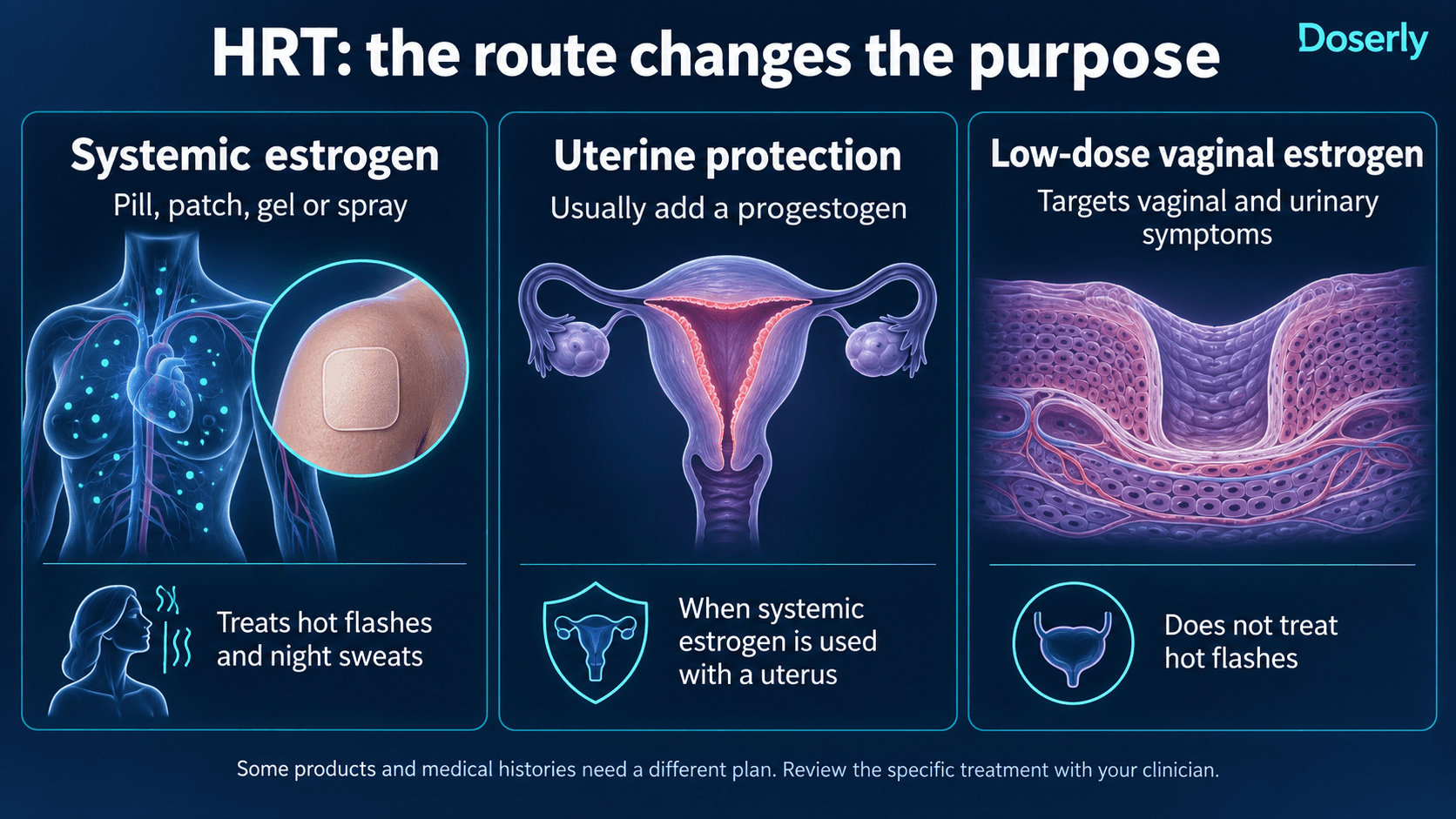
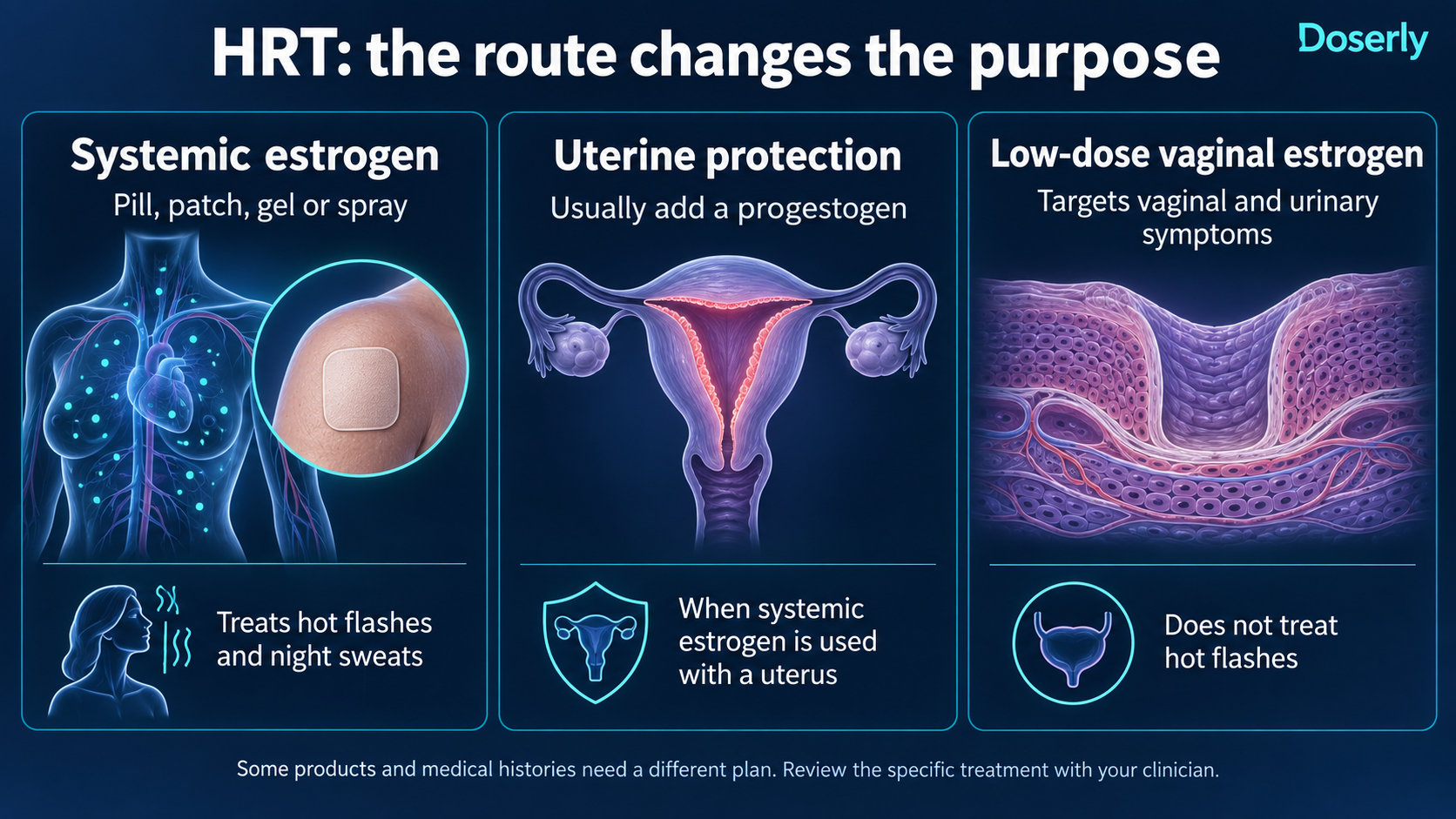
Systemic and low-dose local treatments serve different purposes. Systemic estrogen usually needs endometrial protection when a uterus is present; conjugated estrogens with bazedoxifene and tibolone are distinct approaches described in their guides. Patch placement must follow the specific product label.
NICE menopause recommendations.
Pharmacokinetics / Hormone Physiology
The Basics
When you take a tibolone tablet, it is rapidly absorbed from your digestive system. Your body begins converting it into its active metabolites almost immediately, which is why the parent compound barely shows up in blood tests. The estrogenic metabolites (3α-OH and 3β-OH) reach their peak levels in about an hour and have a half-life of roughly 6 to 8 hours, supporting once-daily dosing.
One important distinction from some other oral HRT medications: tibolone does undergo first-pass liver metabolism, like any oral medication. This means it does have some effects on liver-produced proteins, including a decrease in sex hormone-binding globulin (SHBG) and HDL cholesterol. The SHBG decrease is actually one reason tibolone may improve libido: lower SHBG means more free testosterone is available in your body.
Food does not significantly affect how much tibolone your body absorbs, so you can take it with or without meals. Most of the drug is eliminated through the stool (as sulfated metabolites), with a smaller portion excreted through the kidneys. Age does not appear to change how your body handles tibolone; studies comparing women aged 45 to 55 with those aged 65 to 75 found similar pharmacokinetics [9].
The Science
Absorption: Tibolone is rapidly and extensively absorbed following oral administration. Food has no clinically significant effect on the extent of absorption [1].
Pharmacokinetic Parameters (2.5 mg):
Parameter
Cmax (ng/mL) SD/MD
- Tibolone
- 1.37 / 1.72
- 3α-OH
- 14.23 / 14.15
- 3β-OH
- 3.43 / 3.75
- Δ4-isomer
- 0.47 / 0.43
Parameter
Tmax (h) SD/MD
- Tibolone
- 1.08 / 1.19
- 3α-OH
- 1.21 / 1.15
- 3β-OH
- 1.37 / 1.35
- Δ4-isomer
- 1.64 / 1.65
Parameter
T½ (h) SD/MD
- Tibolone
- —
- 3α-OH
- 5.78 / 7.71
- 3β-OH
- 5.87 / —
- Δ4-isomer
- —
Parameter
Cavg (ng/mL) MD
- Tibolone
- —
- 3α-OH
- 1.88
- 3β-OH
- —
- Δ4-isomer
- —
SD = single dose; MD = multiple dose [1]
Distribution: Metabolites circulate predominantly in sulfated (inactive) form. The 3α-hydroxy sulfated tibolone is the main sulfated metabolite [2].
Metabolism: Extensive first-pass hepatic and intestinal metabolism via 3α/3β-HSD enzymes. CYP3A4 involvement is moderate (demonstrated by interaction with midazolam) [1]. The 7α-methyl group prevents 5α-reduction of the Δ4-isomer, preserving its progestogenic activity in target tissues [2].
Elimination: Primarily in conjugated (sulfated) metabolite form. Most eliminated via faeces; smaller portion via urine. Pharmacokinetics are independent of renal function [1].
Age effects: A comparative study of early (45-55 years) and late (65-75 years) postmenopausal women found no significant age-related differences in the disposition of tibolone or its metabolites [9].
Effects on binding proteins and lipids:
- SHBG: Decreased (increases free testosterone availability) [7]
- TBG: Very minor decrease; total T4 decreased slightly, total T3 unaltered [1]
- CBG and circulating cortisol: Unaffected [1]
- HDL cholesterol: Marked dose-dependent decrease (-16.7% with 1.25 mg; -21.8% with 2.5 mg after 2 years) [1]
- LDL cholesterol: Unchanged [1]
- Total triglycerides and lipoprotein(a): Reduced [1]
Knowing the pharmacokinetics is the foundation. Seeing how your own body responds to your specific protocol turns that knowledge into actionable insight. Doserly correlates your dosing schedule with how you feel day to day, helping you and your provider identify whether your current route, timing, and dose are working optimally.
The app's analytics can surface patterns you might not notice on your own, like whether symptoms correlate with the end of a patch cycle or whether splitting an oral dose changes how you feel in the afternoon. Data like this makes dose adjustments more precise and less guesswork.
Research & Clinical Evidence
The Basics
The most important clinical trial for tibolone is the LIFT study (Long-Term Intervention on Fractures with Tibolone), published in the New England Journal of Medicine in 2008. This large trial enrolled over 4,500 women aged 60 to 85 with osteoporosis and found that tibolone significantly reduced both vertebral and nonvertebral fractures, while also reducing the risk of breast cancer and possibly colon cancer. However, the trial was stopped early because of an increased risk of stroke, particularly in older participants [5].
It is important to understand the context of this finding. The women in the LIFT study were considerably older than the typical woman starting tibolone for menopausal symptoms (the average age was 68). Stroke risk increases substantially with age, so the absolute risk was higher in this older population. For younger postmenopausal women (those in their 50s starting treatment within a few years of menopause), the absolute stroke risk is much lower, though the relative risk increase may still apply.
Several other studies and clinical trials have demonstrated tibolone's effectiveness for treating vasomotor symptoms, improving sexual function and libido, and preventing bone loss. A systematic review of randomised trials found that tibolone was generally effective for menopausal symptoms, with results comparable to conventional estrogen-based HRT for most outcomes [10].
The Science
LIFT Trial (Cummings et al., 2008) [5]:
- Design: Randomised, double-blind, placebo-controlled; n=4,538 women aged 60-85
- Intervention: Tibolone 1.25 mg daily vs placebo
- Median follow-up: 34 months (terminated early)
- Primary endpoint: Vertebral fracture at 3 years
Key results:
- Vertebral fracture: Absolute risk reduction 8.6/1,000 person-years (95% CI: 4.4-12.9; P<0.001); 45% relative reduction
- Nonvertebral fracture: Absolute risk reduction 6.9/1,000 person-years (95% CI: 1.6-12.2; P≤0.01); 26% relative reduction
- Invasive breast cancer: RH 0.32 (95% CI: 0.13-0.80; P=0.02); 0.9 vs 2.8 per 1,000 person-years
- Colon cancer: RH 0.31 (95% CI: 0.10-0.96; P=0.04)
- Stroke: RH 2.19 (95% CI: 1.14-4.23; P=0.02); absolute increase 2.3/1,000 person-years
- No significant differences in coronary heart disease or venous thromboembolism
Clinical context — Stroke Risk Interpretation.
LIFT trial (mean age 68): 2.19-fold increased stroke risk, absolute excess 2.3/1,000 person-years
EMC SmPC (all ages): Age-stratified data shows ages 50-59 baseline 3/1,000 over 5 years with additional 4/1,000 on tibolone; ages 60-69 baseline 11/1,000 with additional 13/1,000
Context: LIFT population was elderly (60-85) with osteoporosis. Risk-benefit in younger postmenopausal women (50-60) starting tibolone for vasomotor symptoms may be more favourable, but no RCT specifically addresses this younger population.
Million Women Study (MWS):
- Breast cancer: Increased risk associated with tibolone use apparent within 3 years, lower than combined estrogen-progestogen HRT [1]
- Ovarian cancer: Relative risk similar to other HRT types; ~1 extra case per 2,500 users over 5 years in women aged 50-54 [1]
Vasomotor Symptoms:
Multiple randomised trials have demonstrated tibolone's efficacy in reducing hot flash frequency and severity. A dose-response analysis found that 2.5 mg provided effective vasomotor symptom relief, with relief generally beginning within the first few weeks of treatment [10].
Bone Mineral Density:
After 2 years of treatment with tibolone 2.5 mg, lumbar spine BMD increased by 2.6 ± 3.8% (76% of women maintained or gained BMD). Hip BMD increased by 0.7-1.3% at the femoral neck and 1.7-2.9% at the total hip [1].
Sexual Function:
A double-blind, placebo-controlled trial demonstrated significant improvement in physiological sexual function, sexual desire, and arousability with tibolone versus placebo. Tibolone improved sexual outcomes to a greater extent than estrogen therapy alone, consistent with the contribution of its androgenic metabolite [7][11].
Mood and Cognition:
Tibolone has been shown to increase β-endorphin and β-lipotropin plasma levels to a greater extent than conjugated equine estrogens at 2 months of treatment. It also increases CNS allopregnanolone content, a neurosteroid with sedative and anxiolytic properties. Clinical trials demonstrate mood improvements comparable to estrogen-based treatments [7].
Benefits & Therapeutic Effects
The Basics
Tibolone offers a broad range of benefits that stem from its unique triple-action profile. The most well-established benefits include:
Relief of menopausal symptoms. Hot flashes, night sweats, and other vasomotor symptoms typically begin to improve within the first few weeks of treatment. Most women experience significant relief by 3 months.
Bone protection. Tibolone is one of the few medications shown to reduce both vertebral and nonvertebral fractures in a large randomised trial. Bone mineral density increases at the spine and hip during treatment, and protection continues for as long as treatment is maintained.
Sexual health and libido. This is where tibolone distinguishes itself from most other HRT options. Because one of its metabolites has mild androgenic (testosterone-like) activity, tibolone can improve sexual desire, arousal, and vaginal lubrication in ways that estrogen-only or combined estrogen-progestogen therapies may not fully achieve. It also reduces SHBG, freeing up more of your body's own testosterone. For women whose primary complaint is loss of libido or sexual satisfaction, tibolone's profile is particularly relevant.
Vaginal health. The estrogenic metabolites improve vaginal dryness, reduce discomfort during intercourse, and help reverse genitourinary atrophy.
Mood and well-being. Clinical studies show improvements in mood scores comparable to conventional HRT. Tibolone's ability to increase β-endorphin levels (the body's natural "feel-good" chemicals) and boost neurosteroids like allopregnanolone (which has calming, anxiolytic properties) may contribute to changes in mood and wellbeing in clinical studies.
Breast density advantage. Unlike conventional combined HRT, tibolone does not increase mammographic density. This is a practical advantage because increased breast density can make mammograms harder to read and may slightly increase breast cancer detection challenges.
The Science
The therapeutic benefits of tibolone are mediated by the distinct receptor activities of its metabolites in target tissues:
Vasomotor: The 3α-OH and 3β-OH estrogenic metabolites act on the hypothalamic thermoregulatory centre, widening the thermoneutral zone that narrows during oestrogen withdrawal [3]. A dose-response study demonstrated that 2.5 mg tibolone effectively reduces climacteric symptoms in highly symptomatic women [10].
Bone: LIFT trial data demonstrate a 45% relative reduction in vertebral fractures (absolute risk reduction 8.6/1,000 person-years) and 26% relative reduction in nonvertebral fractures (absolute risk reduction 6.9/1,000 person-years). After 2 years at 2.5 mg, lumbar spine BMD increased 2.6 ± 3.8% and total hip BMD increased 1.7-2.9% [1][5].
Sexual function: A double-blind, placebo-controlled trial (Laan & van Lunsen, 2001) demonstrated statistically significant improvements in vaginal blood flow, sexual desire, and arousability. Tibolone decreases SHBG levels, increasing free testosterone availability. Unlike estrogen-based therapies, tibolone does not reduce circulating DHEA levels, preserving the androgen milieu [7][11].
Mood: Tibolone increases plasma β-endorphin and β-lipotropin levels more than CEE at 2 months. Increases in CNS allopregnanolone (a GABA-A receptor agonist neurosteroid with anxiolytic and sedative properties) have been demonstrated in both animal and human studies. Clinical trials show mood improvements comparable to estrogen-based treatments [7].
Breast tissue: Tibolone inhibits sulfatase activity in breast tissue, prevents activation of sulfated oestrogen metabolites, inhibits breast cell proliferation, and stimulates apoptosis. Mammographic density does not increase during treatment [3][4][8].
Risks, Side Effects & Safety
The Basics
Like all hormone therapies, tibolone carries risks that need to be weighed against its benefits, and these risks vary depending on your age, health history, and individual risk factors.
Common side effects that typically occur in the first few months and often settle with continued use include: lower abdominal pain, breast tenderness, vaginal discharge, breakthrough bleeding or spotting (especially in the first 3 months), weight increase, and abnormal hair growth. These affect somewhere between 1 in 10 and 1 in 100 women.
Stroke risk is the most significant safety concern associated with tibolone. The LIFT trial found that tibolone approximately doubled the risk of ischaemic stroke compared to placebo. However, the women in that study were considerably older (average age 68) than the typical woman starting tibolone for menopause symptoms. In absolute terms, for women aged 50 to 59, the baseline risk of stroke is approximately 3 per 1,000 over 5 years; tibolone may add approximately 4 additional cases per 1,000 over 5 years. For women aged 60 to 69, the baseline risk is approximately 11 per 1,000, with an estimated additional 13 per 1,000 with tibolone use. Tibolone should generally not be prescribed to women with risk factors for stroke (hypertension, smoking, diabetes, atrial fibrillation) or to elderly women.
Breast cancer risk with tibolone is lower than with combined oestrogen-progestogen HRT but still elevated compared to no HRT use. The LIFT trial actually found a significant reduction in breast cancer risk (68% relative reduction), though this was in an older osteoporosis population. The Million Women Study, an observational study, found an increased risk that became apparent within 3 years of use. These conflicting findings likely reflect differences in study populations, dose (1.25 mg in LIFT vs 2.5 mg in clinical practice), and study design.
Clinical context — Breast Cancer Risk.
LIFT trial (1.25 mg, mean age 68, osteoporosis population): RH 0.32 (68% relative reduction); 0.9 vs 2.8 per 1,000 person-years
Million Women Study (2.5 mg, observational, broader population): Increased risk, lower than combined E+P HRT, apparent within 3 years
Context: Different study designs (RCT vs observational), doses, and populations. LIFT trial's protective finding may reflect lower dose, older population less susceptible to hormonally-driven breast cancer, or random variation given small event numbers.
VTE risk with tibolone appears to be lower than with conventional oral HRT. The LIFT trial found no significant increase in VTE, and UK epidemiological data suggest the VTE risk with tibolone is lower than with conventional HRT. However, a small increase compared to non-use cannot be excluded, and tibolone is contraindicated in women with a history of VTE or known thrombophilic disorders.
Endometrial cancer risk is a concern. Although tibolone's STEAR mechanism provides endometrial protection, observational studies have consistently shown a small increased risk of endometrial cancer with use. The LIFT study identified 4 cases in the tibolone group versus 0 in placebo (approximately 0.8 additional cases per 1,000 women per year). Any unexplained vaginal bleeding on tibolone requires investigation.
HDL cholesterol is reduced by tibolone in a dose-dependent manner (approximately 17% with 1.25 mg and 22% with 2.5 mg after 2 years). The clinical significance of this reduction is uncertain; animal studies suggest it does not translate into adverse cardiovascular outcomes, but long-term human cardiovascular outcome data are limited.
Hepatotoxicity is rare but documented. The LIFT trial found ALT elevations above 3 times the upper limit of normal in 0.9% of tibolone users vs 0.2% of placebo recipients. Isolated cases of clinically apparent liver injury have been reported in Europe, typically arising 6 to 12 months after initiation and resolving after discontinuation [12].
The Science
Stroke:
The LIFT trial (n=4,538, ages 60-85) found a relative hazard for ischaemic stroke of 2.19 (95% CI: 1.14-4.23; P=0.02) with tibolone 1.25 mg versus placebo, corresponding to an absolute increase of 2.3 per 1,000 person-years (95% CI: 0.4-4.2). Among women aged ≥70, stroke rates were 6.6 vs 3.4 per 1,000 person-years; among ages 60-69, 2.8 vs 1.0 per 1,000 person-years. Approximately 80% of strokes were ischaemic [5].
The EMC SmPC provides age-stratified estimates for 5-year use: ages 50-59, approximately 4 additional cases per 1,000; ages 60-69, approximately 13 additional cases per 1,000 [1].
Breast Cancer:
LIFT trial (1.25 mg, mean age 68): RH 0.32 (95% CI: 0.13-0.80; P=0.02) for invasive breast cancer. Absolute rates: tibolone 0.9 vs placebo 2.8 per 1,000 person-years [5].
MWS (observational, 2.5 mg): Increased risk, lower magnitude than combined HRT. Risk apparent within 3 years, increases with duration. After stopping, excess risk diminishes over time [1].
VTE:
LIFT trial: No significant difference between tibolone and placebo groups for VTE. An epidemiological study using a UK database found lower VTE risk with tibolone than with conventional HRT [1].
Endometrial Cancer:
Baseline risk: approximately 5 per 1,000 women with uterus not using HRT. LIFT study: 4 cases in tibolone group (n=1,746) vs 0 in placebo (n=1,773) after 2.9 years, corresponding to approximately 0.8 additional cases per 1,000 women per year. Observational studies consistently show increased risk with increasing duration [1].
Contraindications (absolute): Pregnancy/lactation, known/past/suspected breast cancer, known/suspected oestrogen-dependent malignancy, undiagnosed genital bleeding, untreated endometrial hyperplasia, current/previous VTE, known thrombophilia, history of arterial thromboembolic disease, acute liver disease or history with abnormal LFTs, porphyria [1].
Understanding your personal risk profile is not a one-time calculation; it evolves as your treatment progresses. Doserly helps you see the bigger picture by analyzing side effect patterns over time, showing whether issues are resolving, persisting, or emerging as your body adjusts to therapy.
The app's analytics can reveal connections between side effects and specific aspects of your protocol, like whether symptoms correlate with a particular point in your dosing cycle or a recent dose change. This kind of insight helps you and your provider make informed adjustments based on your actual experience, not just population-level averages.
Dosing & Treatment Protocols
The Basics
Tibolone dosing is straightforward compared to many HRT regimens. The standard dose is one 2.5 mg tablet taken once daily, swallowed whole with water, at the same time each day. No separate progestogen is needed because tibolone's own metabolism provides endometrial protection.
You can take it with or without food, since food does not significantly affect absorption. If you miss a dose and it has been less than 12 hours, take it as soon as you remember. If more than 12 hours have passed, skip the missed dose and take the next one at the usual time. Missing doses can increase the chance of breakthrough bleeding or spotting.
When to start:
- Natural menopause: Wait at least 12 months after your last natural period
- Surgical menopause (ovaries removed): Can start immediately
- GnRH analogue treatment (for endometriosis): Can start immediately
- Switching from sequential HRT: Start the day after completing the prior regimen
- Switching from continuous-combined HRT: Can start at any time
Starting too early (before 12 months post-last-period) increases the likelihood of irregular vaginal bleeding.
The general principle with all HRT applies: use the lowest effective dose for the shortest duration that achieves your treatment goals. Tibolone is commonly taken for 2 to 5 years, with annual review by your prescriber to reassess benefits and risks.
A lower dose of 1.25 mg is available and was used in the LIFT trial. Some prescribers may consider this lower dose, particularly for older women or those primarily interested in bone protection, though it has been less studied for vasomotor symptom relief.
The Science
Standard dose: 2.5 mg once daily, continuous oral administration [1].
Lower dose: 1.25 mg once daily (used in LIFT trial for osteoporosis prevention). The two tablet strengths have been shown to be bioequivalent with respect to extent of absorption [9].
Clinical context — Optimal Dosing.
EMC SmPC: Standard dose 2.5 mg once daily
LIFT trial: Used 1.25 mg dose, demonstrating fracture reduction efficacy
International Tibolone Consensus Group: Recommends 2.5 mg as the standard clinical dose for symptomatic treatment
Context: 1.25 mg dose proved effective for fracture prevention in the LIFT trial but has been less extensively studied for vasomotor symptom relief. Most clinical experience and regulatory approvals are based on the 2.5 mg dose. Lower dose produces less HDL reduction.
Dose adjustment: No dose adjustment required for elderly or for renal impairment (PK independent of renal function). Contraindicated in hepatic impairment [1].
Regimen: Continuous only. No cyclical or sequential regimen is used with tibolone. No additional progestogen is indicated [1].
Duration: Annual review recommended. Common duration 2-5 years, with individualised benefit-risk reassessment [1].
Dosing protocols often change over the course of treatment, from starting doses to adjustments and timing refinements. Doserly maintains a complete history of every protocol change, giving you and your provider a clear picture of what has been tried and how each adjustment affected your symptoms.
The app's adherence analytics show your consistency patterns and can highlight whether missed doses or timing variations correlate with symptom changes. When your provider is considering a dose adjustment, having this data available makes the conversation more productive and the decision more informed.
What to Expect (Timeline)
Days 1-7: Most women do not notice significant changes in the first week. Some may experience mild breast tenderness, bloating, or abdominal discomfort as the body begins to adjust. Breakthrough bleeding or spotting is possible, particularly if starting within 12-18 months of the last menstrual period.
Weeks 2-4: Hot flashes and night sweats often begin to improve. Mood, energy, and wellbeing may change as vasomotor symptoms improve. Breakthrough bleeding may continue but typically lessens.
Months 1-3: Vasomotor symptom relief becomes more established for most women. Vaginal dryness and discomfort typically improve. Mood stabilisation continues. Some women notice improvements in libido and sexual desire. Side effects like breast tenderness usually settle. Breakthrough bleeding occurs in approximately 33% of women during this period but is generally decreasing.
Months 3-6: Full therapeutic effect for most menopausal symptoms. Bone density stabilisation begins. Sexual function improvements may continue to develop. Bleeding settles further (approximately 12% still experiencing spotting at months 11-12). By 12 months, 88% of women achieve amenorrhoea.
Ongoing maintenance: Annual review with prescriber to reassess the benefit-risk balance. Continued mammography screening per national guidelines. Lipid panel monitoring (HDL cholesterol) periodically. Blood pressure monitoring. Report any new or unexplained vaginal bleeding promptly.
Individual response varies. Some women notice improvement within days; others take the full 3 months. If symptoms have not improved meaningfully after 3 months, a discussion with the prescriber about dose adjustment or alternative therapy is appropriate.
Timing Hypothesis & Window of Opportunity
The timing hypothesis (the concept that HRT initiated within 10 years of menopause onset or before age 60 has a more favourable risk-benefit profile) is particularly relevant to tibolone because the largest clinical trial (LIFT) enrolled an older population with a mean age of 68.
The stroke risk signal from the LIFT trial must be interpreted in the context of baseline stroke risk, which rises sharply with age. Among women aged 50 to 59, baseline stroke risk is relatively low (approximately 3 per 1,000 over 5 years), and the additional absolute risk from tibolone is estimated at approximately 4 per 1,000 over 5 years. Among women aged 60 to 69, both the baseline risk and the additional risk are substantially higher.
Supporting evidence from the broader HRT literature (KEEPS, ELITE, WHI age subgroup reanalyses) suggests that early initiation of hormone therapy is associated with more favourable cardiovascular and neurological outcomes. While these studies did not specifically evaluate tibolone, the principle that age and time since menopause modulate risk likely applies to tibolone as it does to other hormonal therapies.
Current clinical practice reflects this: tibolone is most commonly prescribed to women in their late 40s and 50s for menopausal symptom management, a population in which the absolute stroke risk is substantially lower than in the LIFT trial population. The EMC SmPC states that in the over 60s, the decision to prescribe tibolone "should include consideration of the risk of stroke" [1].
No randomised controlled trial has specifically tested the timing hypothesis for tibolone. The evidence for timing-related risk modulation with this specific compound remains indirect, extrapolated from the broader HRT evidence base and from age-stratified analyses of the LIFT trial.
Interactions & Compatibility
Drug-Drug Interactions:
- Anticoagulants (warfarin): Tibolone increases fibrinolytic activity and may enhance the effect of anticoagulants. Dose adjustment of warfarin may be necessary when starting or stopping tibolone. INR monitoring is recommended [1].
- CYP3A4 substrates: Tibolone moderately affects the pharmacokinetics of CYP3A4 substrates (demonstrated with midazolam). Interactions with other CYP3A4 substrates are possible [1].
- CYP3A4 inducers: Barbiturates, carbamazepine, phenytoin (hydantoins), and rifampicin may increase tibolone metabolism and reduce its therapeutic effect [1].
- Thyroid medications: Tibolone causes a very minor decrease in TBG. Unlike oral estradiol, this effect is small and may not require levothyroxine dose adjustment in most patients, but monitoring is prudent.
- Lamotrigine: As with other hormone therapies, potential for interaction. Monitor lamotrigine levels if co-prescribed.
Supplement Interactions:
- St. John's wort (Hypericum perforatum): Induces CYP3A4, potentially reducing tibolone levels and efficacy. One case of vanishing bile duct syndrome has been reported with tibolone + St. John's wort combination [1][12]. Avoid concurrent use.
- Calcium and Vitamin D: No interaction. Recommended as complementary for bone protection. See Calcium and Vitamin D guides.
- Black cohosh: No known pharmacokinetic interaction. One clinical trial compared tibolone with black cohosh and found similar symptom improvement [12].
Lifestyle Factors:
- Smoking: Increases stroke and cardiovascular risk. Given tibolone's stroke risk signal, concurrent smoking amplifies this concern. Smoking cessation should be strongly encouraged.
- Alcohol: Modest interaction with liver metabolism; no specific data for tibolone, but general moderation applies.
Related guides: Fezolinetant (Veozah), Ospemifene (Osphena), Non-Hormonal Menopause Treatments, Getting Started with HRT
Decision-Making Framework
Tibolone may be a particularly good option to discuss with your healthcare provider if:
- You have experienced bothersome side effects from progesterone or progestogens in traditional HRT (mood changes, bloating, breast tenderness, breakthrough bleeding)
- You have dense breast tissue and want an option that does not increase mammographic density
- Low libido or sexual dysfunction is a primary concern, since tibolone's androgenic activity specifically addresses this
- You need bone protection but are intolerant of or contraindicated for bisphosphonates and other osteoporosis medications
- You are looking for a simplified single-tablet regimen without the need for separate estrogen and progestogen components
Tibolone may be less suitable if:
- You are under age 50 and still having periods (tibolone should not be started until 12 months after the last natural period)
- You have risk factors for stroke (hypertension, diabetes, smoking, atrial fibrillation, history of TIA or stroke)
- You are over 60, where the absolute stroke risk associated with tibolone becomes more significant
- You are in the United States, where tibolone is not available
- You have a history of VTE, breast cancer, or liver disease
Questions to ask your provider:
- Given my personal risk factors, how does tibolone's risk profile compare to conventional HRT for me?
- Is tibolone appropriate given my age and time since menopause?
- How will my lipid profile be monitored while on tibolone (given HDL reduction)?
- What signs should I watch for that would warrant contacting you immediately?
- How often should I have breast and endometrial screening while taking tibolone?
Finding a menopause specialist: In the UK, GPs can prescribe tibolone. For complex cases, referral to a menopause clinic or a British Menopause Society-accredited specialist may be appropriate. In Australia, consult a practitioner affiliated with the Australasian Menopause Society. In Canada, your family physician or gynaecologist can prescribe.
Administration & Practical Guide
Tibolone is taken as a single oral tablet once daily. The practical guidance is straightforward:
- Tablet: Swallow whole with water. Do not crush or chew.
- Timing: Take at the same time each day, with or without food. Morning or evening, whatever fits your routine. Consistency of timing helps maintain steady metabolite levels.
- Storage: Store below 25°C. Do not refrigerate. Keep in the original packaging to protect from light and moisture.
- Missed dose: If less than 12 hours since the scheduled time, take immediately. If more than 12 hours, skip and take the next dose at the normal time. Do not double up. Missing doses increases the chance of spotting.
- Shelf life: Check packaging for expiry date.
- Pack format: Typically supplied as blister strips of 28 tablets (1 or 3 strips per box). Calendar markings on some packaging help track daily adherence.
- No separate progestogen: One of tibolone's practical advantages is that no additional progesterone or progestogen is needed, simplifying the regimen.
- Switching from other HRT: If switching from sequential HRT, start tibolone the day after completing the previous regimen. If switching from continuous-combined HRT, start at any time.
Monitoring & Lab Work
Before starting tibolone:
- Complete personal and family medical history
- Physical examination (guided by history)
- Breast examination and mammography per national guidelines
- Blood pressure measurement
- Lipid panel (baseline HDL, LDL, triglycerides)
- Liver function tests
- Endometrial evaluation if any history of undiagnosed abnormal bleeding
- Consider bone density (DEXA) if osteoporosis prevention is an indication
Initial follow-up (4-12 weeks):
- Symptom assessment (vasomotor, mood, sleep, sexual function)
- Side effect evaluation
- Blood pressure check
Ongoing monitoring:
- Annual review: Assessment of symptom control, side effect profile, and benefit-risk balance. Decision on continuation.
- Mammography: Per national screening guidelines. Tibolone does not increase mammographic density, which may facilitate mammogram interpretation.
- Lipid panel: Periodically, especially in the first year. Monitor HDL cholesterol given tibolone's dose-dependent HDL reduction.
- Endometrial monitoring: Any breakthrough bleeding or spotting persisting beyond 6 months, or new onset bleeding after a period of amenorrhoea, should prompt endometrial investigation (likely including transvaginal ultrasound and potentially biopsy) [1].
- Liver function: If clinically indicated, particularly in the first year. The LIFT trial found ALT elevations >3x ULN in 0.9% of tibolone users.
- Blood pressure: Regular monitoring.
- DEXA scan: If bone protection is an indication, follow up per clinical guidelines (typically every 2-3 years).
Complementary Approaches & Lifestyle
Evidence-based strategies that complement tibolone therapy:
Exercise:
- Weight-bearing exercise (walking, jogging, stair climbing) for bone health
- Resistance training to preserve lean muscle mass and support bone density
- Cardiovascular exercise for heart health, particularly relevant given tibolone's HDL reduction
- Balance training for fall prevention (relevant for women taking tibolone for osteoporosis)
Diet:
- Mediterranean diet pattern associated with reduced cardiovascular risk and anti-inflammatory benefits
- Calcium-rich foods (dairy, fortified plant milks, leafy greens) to support bone protection
- Phytoestrogen-rich foods (soy, flaxseed) may provide additional mild estrogenic support
- Limiting alcohol and caffeine may help with vasomotor symptoms and sleep
Supplements:
- Vitamin D: Essential for calcium absorption and bone health. See Vitamin D guide
- Calcium: Recommended alongside tibolone for osteoporosis prevention. See Calcium guide
- Omega-3 fatty acids: May support cardiovascular health
- Magnesium: May support sleep and muscle relaxation. See Magnesium guide
Sleep hygiene: Temperature management (cool bedroom, breathable bedding), consistent sleep schedule, limiting caffeine after midday.
Pelvic floor therapy: For any residual urinary or vaginal symptoms alongside tibolone treatment.
Stress management: Mind-body practices (yoga, meditation, deep breathing) may help with overall symptom management.
Important note on St. John's wort: Avoid St. John's wort while taking tibolone. It induces CYP3A4 and may reduce tibolone efficacy. A case of serious liver injury has been reported with the combination [1][12].
Stopping HRT / Discontinuation
When to consider stopping:
- After 2-5 years of use, review with prescriber whether continuation is appropriate
- If stroke risk factors develop (new diagnosis of hypertension, diabetes, atrial fibrillation)
- If breast cancer is diagnosed (immediate discontinuation required)
- If VTE occurs (immediate discontinuation)
- If unexplained liver function abnormalities develop
- If treatment goals have been met and symptoms have resolved
Tapering strategies:
- The NHS recommends talking to your doctor before stopping; gradual reduction may help prevent symptom recurrence
- Some clinicians reduce to 1.25 mg (where available) before discontinuing
- Others recommend alternate-day dosing as a step-down approach
- Abrupt cessation is not dangerous but may result in symptom recurrence
Symptom recurrence:
- Estimated 50% of women experience some return of symptoms after stopping HRT
- Severity and duration of recurrence varies individually
- Symptoms may be less severe than before treatment began
Transition options:
- Vaginal estrogen for persistent GSM symptoms (can continue even after systemic HRT stops). See Vaginal Estrogen Therapy
- Non-hormonal alternatives for persistent vasomotor symptoms: Fezolinetant (Veozah), Gabapentin for Menopause, Paroxetine (Brisdelle)
Monitoring during discontinuation:
- Symptom diary to track any recurrence
- Bone density follow-up if osteoporosis prevention was an indication
- Blood pressure and lipid panel reassessment
Special Populations & Situations
Breast Cancer Survivors
Tibolone is contraindicated in women with known, past, or suspected breast cancer. A placebo-controlled trial found that tibolone increased breast cancer recurrence risk. However, the LIFT trial paradoxically showed reduced breast cancer incidence in women without prior breast cancer. This does not change the contraindication for survivors [1].
Premature Ovarian Insufficiency (POI)
Evidence for tibolone in POI is limited, but the balance of benefits and risks may be more favourable in younger women due to their low absolute risk. The EMC SmPC notes that in younger women, "the balance of benefits and risks for these women may be more favourable than in older women" [1]. See Premature Ovarian Insufficiency.
Surgical Menopause / Oophorectomy
Tibolone can be started immediately after surgical menopause without the 12-month waiting period required for natural menopause. The androgenic component may be particularly beneficial for women experiencing abrupt testosterone loss following bilateral oophorectomy. See Surgical Menopause.
Endometriosis
Tibolone is used as add-back therapy during GnRH analogue treatment for endometriosis. It alleviates menopausal symptoms induced by GnRH analogues without significantly stimulating endometriotic tissue, though some cases of symptom recurrence have been reported.
Cardiovascular Disease History
Tibolone is contraindicated in women with a history of arterial thromboembolic disease (MI, stroke, TIA, angina). No evidence of protection against MI has been found. HDL reduction is a monitoring concern [1].
Migraine with Aura
Caution is advised. Severe headache is listed as a reason for immediate treatment withdrawal. As an oral medication, tibolone cannot be tailored with the stable serum level advantages that transdermal estrogen offers for migraine management.
History of VTE
Tibolone is contraindicated in women with previous or current VTE and in women with known thrombophilic disorders. Although the VTE risk with tibolone appears lower than with conventional HRT, the contraindication remains [1].
Regulatory, Insurance & International
United States (FDA):
Tibolone is NOT approved by the FDA. An NDA was submitted but not approved, partly due to stroke risk findings from the LIFT trial. Tibolone cannot be obtained by prescription in the US and is not covered by any US insurance plan. There is no FDA-approved generic.
United Kingdom (MHRA):
Approved since March 1991 as Livial (PL 00025/0599). Available on NHS prescription. Subject to the HRT prepayment certificate (PPC), which can reduce costs for women taking HRT. Generic tibolone is also available.
Canada (Health Canada):
Available as Tibella and generic formulations. Provincial coverage varies.
Australia (TGA):
Approved as Livial (AUST R 55088). Available on PBS (Pharmaceutical Benefits Scheme) for eligible patients.
European Union (EMA):
Approved via national procedures in multiple EU member states. Available as Livial and generics throughout Europe. Widely prescribed, particularly in the Netherlands (country of origin for Organon).
International:
Approved in 90+ countries for menopausal symptoms and 45+ countries for osteoporosis prevention. Widely used throughout Asia, Latin America, and Africa.
Cost Considerations:
Generic tibolone is available in many markets, reducing cost compared to the branded Livial product. In countries with universal healthcare coverage (UK NHS, Australian PBS), out-of-pocket costs are typically modest.
Frequently Asked Questions
Is tibolone the same as conventional HRT?
No. Tibolone is classified as a STEAR (Selective Tissue-Estrogenic-Activity Regulator), distinct from both estrogen-only and combined estrogen-progestogen HRT. It is a single compound that the body converts into metabolites with estrogenic, progestogenic, and androgenic activity. It does not require a separate progestogen.
Why is tibolone not available in the United States?
An application was submitted to the FDA but was not approved. Concerns about stroke risk identified in the LIFT trial were a contributing factor. The FDA's risk-benefit assessment differs from regulators in other countries where tibolone has been approved for decades.
Can I take tibolone if I still have periods?
Tibolone should only be started at least 12 months after your last natural period. Starting earlier significantly increases the risk of irregular bleeding. If you have undergone surgical removal of the ovaries, you can start immediately.
Does tibolone cause weight gain?
Weight increase is listed as a common side effect in clinical trials. However, menopause itself is associated with weight redistribution, and it can be difficult to separate medication effects from natural menopausal body composition changes. Individual responses vary.
Will tibolone help with my libido?
Research suggests tibolone can improve sexual desire, arousal, and vaginal lubrication, partly due to its androgenic metabolite and its effect of reducing SHBG (which increases free testosterone). However, individual responses vary, and libido is influenced by many factors beyond hormones.
Does tibolone increase breast cancer risk?
The evidence is mixed. The LIFT trial (in older women with osteoporosis) found a significant reduction in breast cancer risk. The Million Women Study (a large observational study) found a small increase, though lower than with combined HRT. The difference likely reflects study design, dose, and population differences. Your healthcare provider can help you interpret this evidence in the context of your individual risk factors.
How does tibolone compare to estradiol patches or gel?
Tibolone is only available in oral tablet form. Unlike transdermal estradiol, it undergoes first-pass liver metabolism, which contributes to its effects on HDL cholesterol and hepatic protein synthesis. Transdermal estradiol does not have these hepatic effects. However, tibolone does not appear to carry the same VTE risk as oral estrogen, and its androgenic activity provides benefits (libido, mood) that transdermal estradiol alone does not.
Can tibolone be used with vaginal estrogen?
This should be discussed with your healthcare provider. Some providers may prescribe local vaginal estrogen alongside tibolone if GSM symptoms are not adequately controlled by tibolone alone, though the combination is not routinely necessary given tibolone's own estrogenic vaginal effects.
Is tibolone safe for long-term use?
Annual review with your prescriber is recommended. The optimal duration of use depends on individual benefits and risks. Many women use tibolone for 2 to 5 years and then reassess. Some continue longer under medical supervision.
Does tibolone affect hair?
The androgenic metabolite of tibolone can affect hair. Hair thinning, increased hair growth, or hair texture changes can occur depending on androgen sensitivity and genetics. Individual response depends on androgen sensitivity and genetics.
Myth vs. Fact
Myth: Tibolone is just another form of HRT and works the same way as estrogen patches or tablets.
Fact: Tibolone has a fundamentally different mechanism from conventional HRT. It is a prodrug that the body converts into three metabolites with different activities in different tissues (estrogenic, progestogenic, androgenic). It provides tissue-selective estrogen activity while protecting the endometrium and breast through distinct pathways. No other HRT product has this same pharmacological profile [3][4].
Myth: Tibolone doubles your risk of stroke, so it is too dangerous to use.
Fact: The stroke risk finding comes from the LIFT trial, which studied women aged 60 to 85 (average age 68) with osteoporosis. In absolute terms, for women aged 50 to 59, the estimated additional risk is approximately 4 extra strokes per 1,000 women over 5 years, on a baseline of approximately 3 per 1,000. The risk is significantly higher in older women and those with stroke risk factors. For younger postmenopausal women without stroke risk factors, the absolute risk is considerably lower [1][5].
Myth: Tibolone causes breast cancer.
Fact: The evidence is nuanced. The LIFT trial actually found a 68% reduction in invasive breast cancer risk (0.9 vs 2.8 per 1,000 person-years). The Million Women Study (observational design) found an increased risk, though lower than with combined HRT. Tibolone does not increase mammographic density and inhibits breast cell proliferation in laboratory studies. The overall breast cancer risk profile appears more favourable than combined oestrogen-progestogen HRT [1][5][8].
Myth: Tibolone is a synthetic hormone, so it must be less safe than bioidentical hormones.
Fact: "Synthetic" and "bioidentical" are descriptions of molecular origin, not safety profiles. All hormonal therapies (whether derived from plant precursors, animal sources, or synthesised in a lab) have their own distinct benefit-risk profiles. Tibolone's unique tissue-selective mechanism means it has certain safety advantages (lower VTE risk than oral estrogen, no mammographic density increase) alongside specific concerns (stroke risk, HDL reduction). Safety depends on the individual molecule and the individual patient, not the label of "synthetic" or "bioidentical."
Myth: You do not need monitoring while taking tibolone because it is a simple single-tablet therapy.
Fact: Annual medical review is recommended for all women taking tibolone, including blood pressure monitoring, breast screening per national guidelines, lipid panel review (especially HDL), and investigation of any unexplained vaginal bleeding. Tibolone's impact on HDL cholesterol and its endometrial risk signal mean monitoring is important [1].
Myth: Tibolone is only useful for osteoporosis and does not help with menopausal symptoms.
Fact: Tibolone is approved and effective for both menopausal symptom relief and osteoporosis prevention. Clinical trials demonstrate significant improvement in hot flashes, night sweats, vaginal dryness, mood, and sexual function. Its dual indication makes it a versatile treatment option [1][5][10].
Myth: If tibolone is not approved in the US, it must not be safe or effective.
Fact: Tibolone has been approved by regulatory agencies in more than 90 countries and has been in clinical use since 1991. The FDA's decision reflected a specific risk-benefit assessment influenced by the LIFT trial's stroke data in elderly women. Regulatory decisions in different countries involve different frameworks, patient populations, and competitive landscapes. Tibolone's decades of clinical use and extensive safety database in Europe, the UK, Australia, Canada, and Asia are substantial.
Clinical context — Regulatory Status Interpretation.
FDA (US): Not approved (stroke risk concerns from LIFT trial in elderly population)
MHRA (UK): Approved since 1991 with updated SmPC reflecting risks
TGA (Australia): Approved with monitoring recommendations
Context: Different regulators made different risk-benefit assessments. The LIFT trial population (mean age 68, osteoporosis) is not representative of the typical prescribing population (younger postmenopausal women). UK and Australian regulators accept the risk-benefit profile with appropriate patient selection and monitoring.
Myth: Tibolone completely eliminates the need for any other treatment.
Fact: While tibolone addresses many menopausal needs in a single tablet, some women may still benefit from additional interventions. Vaginal estrogen may be needed if GSM symptoms are not fully controlled. Exercise, calcium, and vitamin D remain important for bone health. Some women may find that tibolone does not adequately address all of their symptoms.
Sources & References
Clinical Guidelines
[1] Organon Pharma (UK) Limited. Livial 2.5mg tablets - Summary of Product Characteristics (SmPC). Electronic Medicines Compendium (EMC). Certified November 2025, revised February 2025. Available at: https://www.medicines.org.uk/emc/product/1597/smpc
Landmark Trials
[5] Cummings SR, Ettinger B, Delmas PD, et al. The effects of tibolone in older postmenopausal women. N Engl J Med. 2008;359(7):697-708. PubMed: 18703472. DOI: 10.1056/NEJMoa0800743.
Systematic Reviews & Mechanistic Studies
[2] Genazzani AR, Pluchino N, Bernardi F, et al. Beneficial effect of tibolone on mood, cognition, well-being, and sexuality in menopausal women. Neuropsychiatr Dis Treat. 2006;2(3):299-307. PubMed: 19412477. DOI: 10.2147/nedt.2006.2.3.299.
[3] Kloosterboer HJ. Tissue-selectivity: the mechanism of action of tibolone. Maturitas. 2004;48 Suppl 1:S30-40. PubMed: 15337246. DOI: 10.1016/j.maturitas.2004.02.012.
[4] Kloosterboer HJ. Tibolone: a steroid with a tissue-specific mode of action. J Steroid Biochem Mol Biol. 2001;76(1-5):231-8. PubMed: 11384882. DOI: 10.1016/s0960-0760(01)00044-9.
[6] de Gooyer ME, Deckers GH, Schoonen WG, et al. Receptor profiling and endocrine interactions of tibolone. Steroids. 2003;68(1):21-30. PubMed: 12475720. DOI: 10.1016/s0039-128x(02)00112-5.
[9] Timmer CJ, Verheul HA, Doorstam DP. Pharmacokinetics of tibolone in early and late postmenopausal women. Br J Clin Pharmacol. 2002;54(2):101-6. PubMed: 12207627. DOI: 10.1046/j.1365-2125.2002.01619.x.
[10] Modelska K, Cummings S. Tibolone for postmenopausal women: systematic review of randomized trials. J Clin Endocrinol Metab. 2002;87(1):16-23. PubMed: 11788614. DOI: 10.1210/jcem.87.1.8141.
Observational Studies
[8] Hammar M, Christau S, Nathorst-Böös J, et al. A double-blind, randomised trial comparing the effects of tibolone and continuous combined hormone replacement therapy in postmenopausal women with menopausal symptoms. Br J Obstet Gynaecol. 1998;105(8):904-11. PubMed: 9746385. DOI: 10.1111/j.1471-0528.1998.tb10237.x.
[11] Laan E, van Lunsen RH, Everaerd W. The effects of tibolone on vaginal blood flow, sexual desire and arousability in postmenopausal women. Climacteric. 2001;4(1):28-41. PubMed: 11379375.
Government/Institutional Sources
[12] LiverTox: Clinical and Research Information on Drug-Induced Liver Injury. Bethesda (MD): National Institute of Diabetes and Digestive and Kidney Diseases; 2012-. Tibolone. Updated September 2, 2020. NBK548180. Available at: https://www.ncbi.nlm.nih.gov/books/NBK548180/
[7] Kenemans P, Speroff L, International Tibolone Consensus Group. Tibolone: clinical recommendations and practical guidelines. A report of the International Tibolone Consensus Group. Maturitas. 2005;51(1):21-8. PubMed: 15883105. DOI: 10.1016/j.maturitas.2005.02.011.
Additional Regulatory and Guideline Sources
[13] eMC: Livial 2.5 mg tablets SmPC. https://www.medicines.org.uk/emc/product/1597/smpc. Accessed September 13, 2026.
[14] “The 2022 Hormone Therapy Position Statement of The North American Menopause Society” Advisory Panel. The 2022 hormone therapy position statement of The North American Menopause Society. Menopause. 2022;29(7):767-794. PubMed: 35797481. DOI: 10.1097/GME.0000000000002028.
Related Guides & Cross-Links
Same Category (Non-Hormonal Prescription)
- Fezolinetant (Veozah) — NK3 receptor antagonist for vasomotor symptoms
- Elinzanetant (Lynkuet) — Dual NK1/NK3 receptor antagonist
- Ospemifene (Osphena) — SERM for vulvovaginal atrophy
- Gabapentin for Menopause — Off-label for vasomotor symptoms
- Paroxetine Low-Dose (Brisdelle) — SSRI for hot flashes
- Clonidine for Menopause — Alpha-2 agonist for vasomotor symptoms
Related Treatment Options
- 17β-Estradiol (Bioidentical) — Primary bioidentical estrogen
- Micronized Progesterone (Prometrium) — Body-identical progestogen
- DHEA / Prasterone (Intrarosa) — Intravaginal DHEA for GSM
- Getting Started with HRT — Comprehensive starting guide
- Non-Hormonal Menopause Treatments — Treatment overview
Related Conditions
- Menopause — General menopause guide
- Surgical Menopause — Post-oophorectomy considerations
- Premature Ovarian Insufficiency (POI) — Early menopause
Complementary Approaches
- Vitamin D — Bone health and calcium absorption
- Calcium — Bone density support
- Magnesium — Sleep and muscle relaxation
- Omega-3 — Cardiovascular support