
Mirena and HRT: Uterine Protection, Duration and Risks
On this page
Quick Reference Card
Attribute
Brand Name(s)
- Value
- Mirena (US, UK, EU, Australia, Canada); Liletta (US); Levosert (UK)
Attribute
Generic Name
- Value
- Levonorgestrel-releasing intrauterine system (LNG-IUS)
Attribute
Drug Class / Type
- Value
- Synthetic progestogen (19-nortestosterone derivative); intrauterine delivery system
Attribute
FDA-Approved Indications
- Value
- Contraception (up to 8 years); heavy menstrual bleeding (up to 5 years). Not FDA-approved for HRT endometrial protection, but widely used off-label for this purpose.
Attribute
Total Hormone Content
- Value
- 52 mg levonorgestrel
Attribute
In Vivo Release Rate
- Value
- ~21 mcg/day initially; ~11 mcg/day at 5 years; ~7 mcg/day at 8 years
Attribute
Route of Administration
- Value
- Intrauterine (placed by healthcare provider)
Attribute
Duration for HRT Use
- Value
- Up to 5 years for endometrial protection (BMS, clinical evidence); 4-year UK license for HRT indication
Attribute
Key Monitoring Requirements
- Value
- Follow-up 4-6 weeks post-insertion; ultrasound if strings not visible; endometrial assessment if unscheduled bleeding persists >4-6 months
Overview / What Is Levonorgestrel (Mirena IUD)?
The Basics
The levonorgestrel intrauterine system, best known by the brand name Mirena, is a small T-shaped plastic device placed inside the uterus by a healthcare provider. It slowly releases a synthetic form of progesterone called levonorgestrel directly into the uterine lining. While most people know Mirena as a contraceptive, it plays an increasingly important role in menopausal hormone therapy.
If you are taking systemic estrogen as part of HRT and you still have your uterus, you need an adequate progestogen plan to protect your uterine lining from the overgrowth that unopposed estrogen can cause. The Mirena IUD offers one way to do this: instead of taking a daily pill, the device delivers levonorgestrel directly to the endometrium. This can provide effective endometrial protection with lower, but still measurable, levonorgestrel exposure in the bloodstream compared with oral progestogens [1][2].
For perimenopausal women, Mirena offers particular advantages. It can simultaneously provide contraception (which remains important until menopause is confirmed), control heavy menstrual bleeding (a common perimenopause complaint), and serve as the progestogen component of HRT. That triple function makes it an appealing option for many women navigating the menopausal transition [3].
It is worth understanding what Mirena does not do. Its main effect is local endometrial protection, but levonorgestrel still reaches the bloodstream at low levels. The device does not provide the same systemic progesterone exposure or allopregnanolone pathway that some people experience with oral micronized progesterone for sleep. If those effects are important to you, discuss the trade-offs with your healthcare provider [2][5].
As of September 13, 2026, levonorgestrel IUD use for HRT endometrial protection remains jurisdiction-specific: some non-U.S. labels include the indication, but U.S. Mirena labeling should not be described as FDA-approved for menopausal HRT protection. [16][17]
The Science
The levonorgestrel-releasing intrauterine system (LNG-IUS) was first approved by the FDA in 2000 for contraception and subsequently for the treatment of heavy menstrual bleeding. The 52 mg LNG-IUS (Mirena) releases levonorgestrel at an initial rate of approximately 21 mcg/day, declining to approximately 11 mcg/day at 5 years and 7 mcg/day at 8 years [4][5].
Although the LNG-IUS is not FDA-approved specifically for endometrial protection during menopausal HRT, this application is supported by clinical evidence and endorsed by major clinical guidance. UK product labeling licenses Mirena for endometrial protection during estrogen replacement therapy for 4 years, while BMS/FSRH guidance supports use of a 52 mg LNG-IUD for up to 5 years for this purpose [1][16]. Multiple prospective studies, including 5-year follow-up data, have demonstrated that the LNG-IUS suppresses endometrial proliferation when combined with systemic estrogen, maintaining non-proliferative endometrium in most participants [2][6][7].
The rationale for the LNG-IUS in HRT rests on its ability to deliver progestogen directly to the endometrium while keeping systemic progestin exposure relatively low. Serum levonorgestrel concentrations are approximately 150 ng/L at 6 months, declining toward 100 ng/L by later years of use [5]. These systemic levels are lower than those achieved with oral levonorgestrel regimens, but low exposure does not mean no systemic effects; breast cancer and other long-term outcome questions remain under active investigation [2][8][16].
Medical / Chemical Identity
Generic Name: Levonorgestrel (intrauterine system)
Chemical Name: 13-Ethyl-17-hydroxy-18,19-dinor-17alpha-pregn-4-en-20-yn-3-one
Molecular Formula: C21H28O2
Molecular Weight: 312.45 g/mol
CAS Number: 797-63-7
Physical Description: White or almost white powder. Practically insoluble in water.
Drug Class: Synthetic progestogen (19-nortestosterone derivative, second-generation gonane progestin)
FDA Initial Approval: 2000 (NDA for Mirena)
Brand Names by Country/Region:
Country/Region
United States
- Brand Name(s)
- Mirena (Bayer); Liletta (Medicines360/Allergan)
- Notes
- Both contain 52 mg LNG
Country/Region
United Kingdom
- Brand Name(s)
- Mirena (Bayer); Levosert (Gedeon Richter)
- Notes
- Mirena licensed for 4 years in the HRT context; Levosert is labeled for contraception and heavy menstrual bleeding, not postmenopausal HRT
Country/Region
Canada
- Brand Name(s)
- Mirena (Bayer)
- Notes
- Available
Country/Region
Australia
- Brand Name(s)
- Mirena (Bayer)
- Notes
- PBS listed
Country/Region
European Union
- Brand Name(s)
- Mirena (Bayer); Levosert (various markets)
- Notes
- Available across EU
Manufacturer: Bayer HealthCare Pharmaceuticals Inc. (Mirena); Medicines360/Allergan (Liletta)
NDC Codes (US): 50419-423-01 (Mirena)
Device Components:
- T-shaped polyethylene frame (32 mm x 32 mm)
- Steroid reservoir: 52 mg levonorgestrel dispersed in polydimethylsiloxane
- Barium sulfate for radiopacity
- Monofilament polyethylene removal threads
Important Note: Endometrial-protection evidence and guidance apply to 52 mg LNG-IUD systems, not lower-dose devices. In the UK, Mirena is the product licensed for HRT endometrial protection; FSRH guidance supports any 52 mg LNG-IUD for up to 5 years, but product-specific labeling still matters. Lower-dose LNG-IUS products (Kyleena 19.5 mg, Skyla/Jaydess 13.5 mg) do not have sufficient evidence for this purpose and are not recommended as the sole progestogen component of HRT [1].
Mechanism of Action
The Basics
Levonorgestrel is a synthetic hormone that closely mimics some of the effects of your body's natural progesterone, but with important differences. When the Mirena IUD releases levonorgestrel directly into the uterus, it creates a high local concentration of the hormone right at the uterine lining while keeping the amount circulating in your blood relatively low.
The primary effect in the uterus is profound suppression of the endometrial lining. The levonorgestrel causes the lining to become thin, inactive, and decidualized (a state similar to what happens naturally in the second half of your menstrual cycle, but more sustained). This is exactly the effect needed when you are taking estrogen as part of HRT: the levonorgestrel counteracts estrogen's tendency to make the lining grow, preventing the thickening that could lead to hyperplasia or, over longer periods, endometrial cancer [1][2].
Think of it as targeted delivery: Mirena produces high levonorgestrel levels in the uterus and lower blood levels than oral progestogens. This may reduce some systemic progestogen effects for some people, but hormone-related side effects such as breast tenderness, acne, headache, or mood changes can still occur [2][4][5].
However, because levonorgestrel is a synthetic progestin rather than bioidentical progesterone, it does not produce allopregnanolone, the neurosteroid metabolite responsible for the sleep and calming effects that many people experience with oral micronized progesterone. This is a meaningful trade-off that is worth considering [9].
The Science
Levonorgestrel (LNG) is a synthetic 19-nortestosterone derivative with potent progestogenic activity. It binds to progesterone receptors (PR-A and PR-B) with high affinity, exerting predominantly progestational effects on target tissues. Unlike micronized progesterone, LNG also demonstrates weak androgenic activity and no significant antimineralocorticoid properties [10].
When delivered intrauterine, LNG achieves endometrial tissue concentrations approximately 1000-fold higher than those in serum [4]. This high local concentration drives several key endometrial changes:
- Stromal decidualization: The endometrial stroma undergoes pseudo-decidual transformation, with cells becoming enlarged and rounded, resembling the decidual changes of early pregnancy [6].
- Glandular atrophy: Endometrial glands become inactive and atrophic, with reduced proliferative activity [6].
- Estrogen receptor downregulation: LNG suppresses expression of both estrogen receptor alpha (ER-alpha) and estrogen receptor beta (ER-beta) in the endometrium, reducing the tissue's responsiveness to circulating estrogen [2].
- Local induction of 17-beta-hydroxysteroid dehydrogenase: This enzyme converts potent estradiol to weaker estrone within the endometrium, further reducing local estrogenic stimulation [2].
These combined mechanisms produce profound endometrial suppression that effectively opposes the proliferative effects of systemic estrogen therapy. The suppression is maintained for at least 5 years of continuous use, as demonstrated by endometrial biopsies showing persistent atrophy and decidualization with no cases of hyperplasia in prospective studies [6][7].
Systemically, the relatively low serum LNG levels (~100-150 ng/L) produce limited effects on hepatic protein synthesis, lipid metabolism, and coagulation parameters compared to oral progestogen administration, although they are not entirely without systemic activity [5][8].
Visual guide
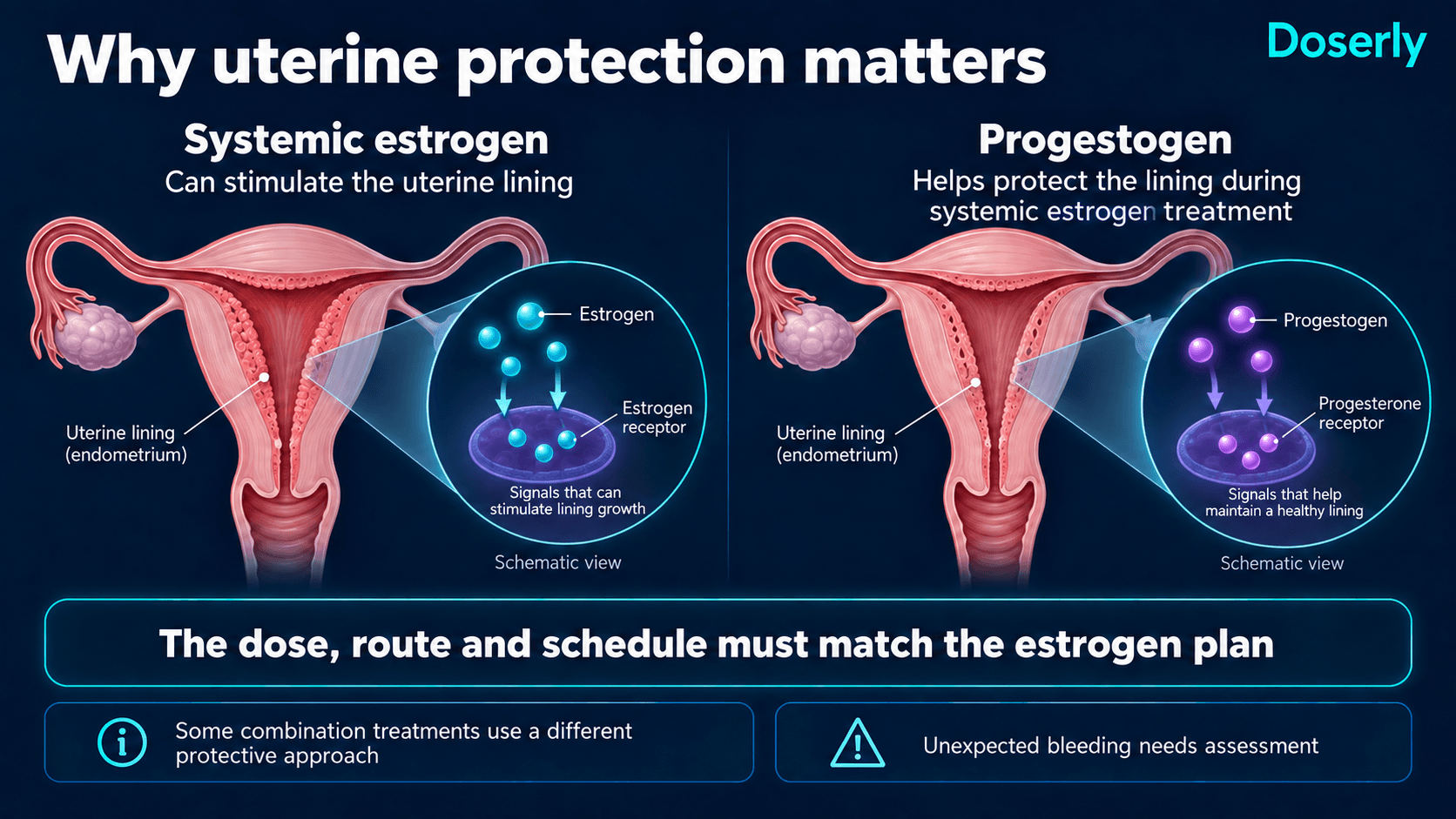
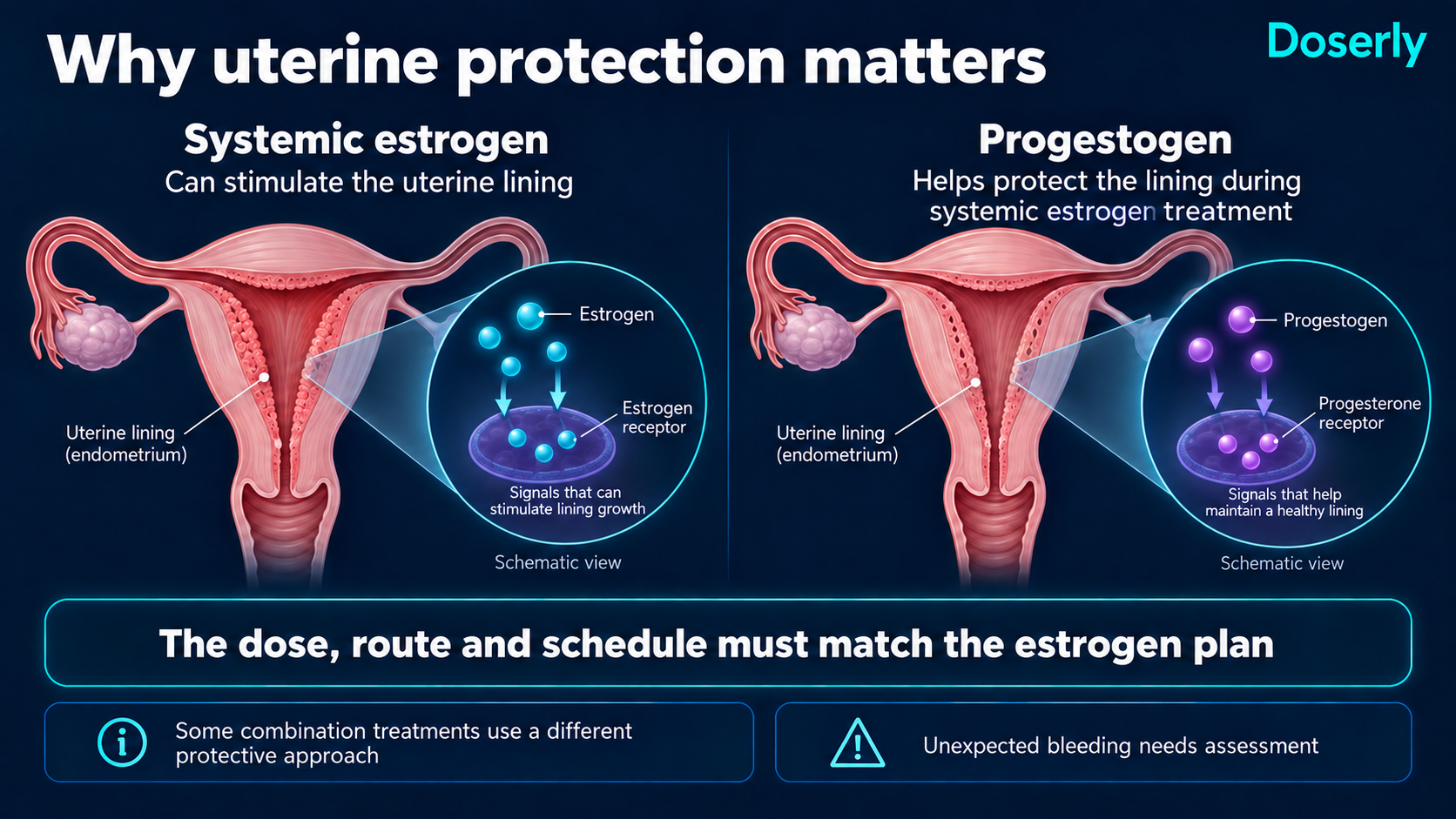
The illustration summarizes endometrial effects, not a dosing schedule or exact receptor structure. Progestogen dose, route and duration must provide protection for the estrogen regimen. Unexpected bleeding requires clinical assessment.
NICE menopause recommendations.
Pharmacokinetics / Hormone Physiology
The Basics
Unlike a pill that you swallow and that travels through your digestive system and liver before reaching the rest of your body, the Mirena IUD releases levonorgestrel directly into the uterine cavity. This makes its pharmacokinetic profile quite different from oral progestogens.
The device starts by releasing about 21 micrograms of levonorgestrel per day. This rate gradually declines over time to about 11 micrograms per day at 5 years and about 7 micrograms per day at 8 years [4][5]. This declining release rate is clinically relevant: for contraceptive purposes, the device remains effective for up to 8 years, but for HRT endometrial protection, the evidence supports use for up to 5 years before replacement is needed [1].
A small amount of levonorgestrel does enter the bloodstream, but the levels are much lower than with oral progestogen. Blood levels peak at around 150 nanograms per liter in the first months and decline to about 100 nanograms per liter by 5 years [5]. For context, these levels are roughly one-quarter to one-third of what you would see with a low-dose oral levonorgestrel tablet.
This lower systemic exposure is a key advantage of intrauterine delivery. It avoids the first-pass hepatic exposure seen with oral progestogens and may have less effect on liver-mediated markers such as coagulation and lipid measures, but levonorgestrel is still systemically absorbed and metabolized. Mirena also does not produce the same neurosteroid metabolites, such as allopregnanolone, that oral micronized progesterone generates [5][9].
The Science
Release kinetics: Population pharmacokinetic modeling from the Mirena Extension Trial (MET) and earlier clinical trials provides well-characterized LNG release and exposure data over 8 years of use [5]:
Time Point
After insertion
- Estimated Release Rate
- ~21 mcg/day
- Mean Serum LNG Concentration
- ~200 ng/L (peak)
Time Point
1 year
- Estimated Release Rate
- ~18 mcg/day
- Mean Serum LNG Concentration
- ~180 ng/L
Time Point
3 years
- Estimated Release Rate
- ~14 mcg/day
- Mean Serum LNG Concentration
- ~140 ng/L
Time Point
5 years
- Estimated Release Rate
- ~11 mcg/day
- Mean Serum LNG Concentration
- ~120 ng/L
Time Point
8 years
- Estimated Release Rate
- ~7 mcg/day
- Mean Serum LNG Concentration
- ~100 ng/L (CV 39.9%)
Absorption and distribution: LNG is released from the polydimethylsiloxane reservoir directly into the uterine cavity, achieving endometrial tissue concentrations approximately 1000-fold higher than serum concentrations. From the endometrium, LNG is absorbed into the systemic circulation. Serum LNG is approximately 97.5-99.7% protein-bound, primarily to sex hormone-binding globulin (SHBG) and albumin [4].
Metabolism: Systemically absorbed LNG is metabolized primarily in the liver via CYP3A4-mediated hydroxylation and reduction, followed by conjugation. The primary metabolites (3-alpha, 5-beta-tetrahydrolevonorgestrel) do not possess significant progestogenic or androgenic activity [4].
Elimination: Terminal half-life is approximately 20 hours. Metabolites are excreted in approximately equal proportions via urine and feces [4].
Comparison with other LNG-IUS products:
Product
Mirena/Liletta (52 mg)
- Total LNG
- 52 mg
- Initial Release
- ~21 mcg/day
- Serum LNG at End of Use
- ~100 ng/L (8 yr)
- FDA Duration
- 8 years (contraception)
Product
Kyleena (19.5 mg)
- Total LNG
- 19.5 mg
- Initial Release
- ~17.5 mcg/day
- Serum LNG at End of Use
- ~85 ng/L (5 yr)
- FDA Duration
- 5 years
Product
Skyla/Jaydess (13.5 mg)
- Total LNG
- 13.5 mg
- Initial Release
- ~14 mcg/day
- Serum LNG at End of Use
- ~58 ng/L (3 yr)
- FDA Duration
- 3 years
Only the 52 mg LNG-IUS has sufficient evidence for HRT endometrial protection. The declining release rate beyond 5 years raises clinical questions about the adequacy of endometrial suppression in the HRT context, which is why the BMS recommends replacement at 5 years when used for this purpose [1][5].
Research & Clinical Evidence
The Basics
The evidence supporting Mirena for endometrial protection during HRT comes primarily from prospective clinical studies rather than large randomized controlled trials. Several studies following women for 5 years and longer have consistently shown that the LNG-IUS effectively prevents endometrial thickening and hyperplasia when combined with systemic estrogen therapy [2][6][7].
In one key study, researchers followed 82 perimenopausal women using the LNG-IUS with conjugated equine estrogen. At annual assessments over 5 years (60 months), 95 to 99% of participants maintained non-proliferative endometrium, and there were zero cases of endometrial hyperplasia [7]. Another study followed 20 women for 5 years using the LNG-IUS with transdermal estradiol gel and found that by 1 year, 80% of women were completely amenorrheic, and by the end of the study, all 12 women who completed follow-up showed endometrial atrophy on biopsy [6].
A systematic review examining 11 studies concluded that the LNG-IUD was equally effective as oral and vaginal forms of progesterone in protecting against endometrial hyperplasia, while offering the added benefit of decreased systemic adverse effects [2].
Regarding breast cancer, the evidence is more complex. Large observational studies of LNG-IUS users, mostly in contraceptive-age populations rather than menopausal HRT cohorts, have reported mixed results. The Danish 2024 study reported a hazard ratio of 1.4 (95% CI, 1.2-1.5) compared with nonusers of hormonal contraceptives and estimated about 14 additional diagnoses per 10,000 users in the 0- to 5-year interval [8][11]. This should be presented as observational contraception-population evidence, not as a proven HRT-specific risk estimate.
The Science
Endometrial Protection Studies:
The PEPI trial established the foundational evidence that unopposed estrogen carries unacceptable endometrial risk: a 62% rate of hyperplasia at 3 years. All progestogen-containing regimens effectively prevented hyperplasia [12].
Specific to the LNG-IUS in HRT:
Hampton et al. (2005) conducted a prospective study of 82 perimenopausal women using LNG-IUS with conjugated equine estrogen 0.625 mg/day for 60 months. Non-proliferative endometrium was maintained in 95.2-98.6% of participants at annual assessments, with zero cases of hyperplasia and progressive amenorrhea rates reaching 80-92.7% by study end [7].
Suvanto-Luukkonen and Kauppila (1999) followed 20 postmenopausal women using LNG-IUS with percutaneous estradiol gel 1.5 mg/day for 5 years. All 12 completers showed endometrial epithelial atrophy with stromal decidualization, and mean endometrial thickness remained ≤3 mm throughout [6].
Varila et al. (2001) confirmed sustained efficacy and safety over 5 years of LNG-IUS use in women receiving HRT [13].
Breast Cancer Risk Data:
Clinical context — Breast cancer risk with LNG-IUS use.
The largest recent study (Mørch et al., 2024) analyzed 78,595 new LNG-IUS users aged 15 to 49 years matched to 78,595 nonusers of hormonal contraception. It found an HR of 1.4 (95% CI, 1.2-1.5), with interval estimates of HR 1.3 for 0-5 years, 1.4 for more than 5-10 years, and 1.8 for more than 10-15 years of use; the test for trend was not statistically significant [8].
In absolute terms, the Danish study estimated 14 (95% CI, 6-23) excess breast cancer diagnoses per 10,000 users in the 0- to 5-year interval, 29 (95% CI, 9-50) in the more-than-5- to 10-year interval, and 71 (95% CI, 15-127) in the more-than-10- to 15-year interval [8]. These numbers should not be applied directly to postmenopausal HRT users because that study excluded previous postmenopausal hormone therapy use and followed a younger contraception population.
Whether the breast cancer risk associated with intrauterine levonorgestrel differs from that of systemic progestogens remains unresolved. The mechanistic argument that local delivery with low systemic levels should confer lower risk is plausible but not yet confirmed by comparative studies in HRT populations.
WHI Context:
The WHI studied oral conjugated equine estrogen plus MPA, not intrauterine levonorgestrel. Direct extrapolation of WHI breast cancer findings to LNG-IUS users is therefore not appropriate. The WHI estrogen-plus-progestin arm found an HR of 1.26 (95% CI, 1.00-1.59) for invasive breast cancer, corresponding to 8 additional cases per 10,000 women per year, while the estrogen-alone arm showed a non-significant reduction (HR 0.77) [14]. The E3N cohort found that micronized progesterone combined with estrogen did not increase breast cancer risk (RR 1.00; 95% CI, 0.83-1.22), raising questions about whether the type of progestogen matters more than the route of delivery [15].
Benefits & Therapeutic Effects
The Basics
The benefits of the levonorgestrel IUD in the context of HRT center on its unique delivery method rather than on the breadth of symptom relief. It is a precision tool for endometrial protection, not a comprehensive symptom treatment.
The most significant benefit is reliable endometrial protection without the need for a daily progestogen pill. For women who forget doses, who experience intolerable side effects from oral progestogens (bloating, mood changes, breast tenderness), or who simply prefer the convenience of a long-acting method, this can be transformative [2].
For perimenopausal women, the dual benefit of contraception and endometrial protection is particularly valuable. Fertility can persist into the late 40s and even early 50s, and accidental pregnancy at this age carries higher risks. The Mirena addresses both concerns simultaneously while allowing estrogen to be added for vasomotor symptoms when needed [3].
Heavy menstrual bleeding, which affects many women during perimenopause, is often dramatically improved. Most users experience significantly lighter periods, and a substantial proportion (35-40% by years 3-8) become amenorrheic entirely. For women whose quality of life is severely affected by flooding and prolonged bleeding, this can be life-changing [4].
The reduced systemic progestin exposure compared with oral regimens may matter for people who have not tolerated systemic progestogens. It should not be described as proof of lower breast cancer or cardiovascular event risk; available evidence is stronger for endometrial protection and bleeding control than for long-term comparative clinical outcomes [2][5][8].
The Science
Endometrial protection: The LNG-IUS demonstrates endometrial suppression equivalent to or exceeding that of oral progestogens. In the systematic review by Clark and Westberg (2019), 11 studies consistently showed effective opposition of estrogen-stimulated endometrial proliferation, with maintenance of endometrial thickness ≤3 mm and histological atrophy/decidualization throughout use [2].
Bleeding control: Amenorrhea rates with the 52 mg LNG-IUS in the HRT population exceed those seen in the general contraceptive population, likely because postmenopausal women have lower endogenous estrogen driving endometrial activity. Rates range from 80% at 1 year [6] to 92.7% at 5 years [7] in HRT studies.
Reduced systemic progestin exposure: Serum LNG levels with intrauterine delivery are approximately 25-30% of those achieved with low-dose oral levonorgestrel, potentially reducing progestin-mediated effects on hepatic protein synthesis, lipid metabolism, and coagulation parameters [5].
Simultaneous contraception: The 52 mg LNG-IUS provides greater than 99% contraceptive efficacy for up to 8 years, with cumulative failure rates of less than 0.68% during years 6-8 [4]. This is relevant for perimenopausal women who may still ovulate sporadically.
Understanding your personal risk profile isn't a one-time calculation; it evolves as your treatment progresses. Doserly helps you see the bigger picture by analyzing side effect patterns over time, showing whether issues are resolving, persisting, or emerging as your body adjusts to therapy.
The app's analytics can reveal connections between side effects and specific aspects of your protocol, like whether symptoms correlate with a particular point in your patch cycle or a recent dose change. This kind of insight helps you and your provider make informed adjustments based on your actual experience, not just population-level averages.
Risks, Side Effects & Safety
The Basics
Like all medications, the levonorgestrel IUD comes with potential risks and side effects. Some are related to the device itself, and others are related to the hormone it releases. Understanding these in context is important for making an informed decision.
Common side effects during the first few months include irregular bleeding or spotting, cramping, and breast tenderness. These are most prominent in the adjustment period and typically improve over 3-6 months. Acne, headaches, and ovarian cysts are recognized adverse reactions in Mirena labeling; ovarian cysts are usually functional and often resolve on their own [4].
Insertion-related risks are uncommon but include perforation (the device pushing through the uterine wall, occurring in approximately 1-2 per 1,000 insertions), infection in the weeks following insertion, and expulsion (the device partially or completely coming out, occurring in about 3-5% of users) [4].
Breast cancer risk remains a subject for individual discussion. The 2024 Danish cohort estimated about 14 additional diagnoses per 10,000 users in the 0- to 5-year interval, but it studied people of contraceptive age and excluded previous postmenopausal HRT use [8]. This observational finding is not a direct estimate of the risk from an LNG-IUS combined with estrogen for menopause.
Mood, energy, or bleeding-pattern changes after IUD removal should be assessed clinically. Evidence is limited, so removal planning should focus on the reason for removal, ongoing need for endometrial protection, and whether another progestogen or contraceptive method is needed [3].
The Science
Procedural risks:
- Uterine perforation: Incidence approximately 0.1-0.2% (1-2 per 1,000 insertions). Risk factors include postpartum timing (especially in lactating women), retroverted uterus, and provider experience [4].
- Pelvic inflammatory disease (PID): Risk is elevated in the first 20 days post-insertion (0.5%), then returns to baseline. Pre-insertion screening for STIs is standard practice [4].
- Expulsion: 3-5% overall; higher in nulliparous women and those with heavy menstrual bleeding [4].
Hormonal side effects:
Breast cancer risk (absolute context):
Clinical context — LNG-IUS breast cancer risk magnitude.
For clinical context, the absolute breast cancer risk with LNG-IUS use must be weighed against:
- Baseline breast cancer risk in the age group (approximately 154 per 100,000 person-years in the Korean cohort)
- VTE risk: The LNG-IUS does not appear to increase VTE risk (CDC data: RR 0.61; 95% CI, 0.24-1.53), an advantage over oral HRT regimens [3]
- Endometrial cancer protection: The LNG-IUS provides significant protection against endometrial hyperplasia and cancer, which is the primary purpose of progestogen in HRT [1]
Contraindications (absolute):
- Pregnancy or suspected pregnancy
- Known or suspected breast cancer or progestin-sensitive cancer
- Active pelvic inflammatory disease or recent PID
- Acute liver disease or liver tumor
- Uterine anomaly that distorts the cavity
- Undiagnosed abnormal uterine bleeding
- Untreated cervicitis [4]
Dosing & Treatment Protocols
The Basics
The "dosing" of the levonorgestrel IUD is fundamentally different from other HRT progestogens because the device itself determines the dose. You do not have a daily decision to make about how much to take or when to take it. The 52 mg reservoir releases levonorgestrel at a rate that gradually declines over years, from about 21 micrograms per day initially to about 7 micrograms per day at 8 years [4][5].
In the HRT context, the clinical evidence supports using the 52 mg LNG-IUS for up to 5 years before replacement. The BMS recommends replacement at 5 years when the device is being used for endometrial protection, even though it remains effective for contraception for up to 8 years. This is because the declining hormone release rate beyond 5 years raises questions about whether endometrial suppression remains adequate when combined with systemic estrogen [1].
The LNG-IUS replaces only the progestogen component of HRT. For symptom relief, systemic estrogen must be prescribed separately. Common combinations include:
- Transdermal estradiol patches (preferred for women with cardiovascular risk factors) plus LNG-IUS
- Estradiol gel plus LNG-IUS
- Oral estradiol (typically 1-2 mg/day) plus LNG-IUS
Your healthcare provider will determine the appropriate estrogen type, dose, and route based on your individual symptoms, risk factors, and preferences. The estrogen dose is titrated independently from the LNG-IUS, which provides a fixed declining dose [1][3].
Clinical context — Duration of LNG-IUS use for HRT endometrial protection.
The Science
Regimen architecture:
The LNG-IUS provides continuous progestogen delivery, effectively functioning as the intrauterine equivalent of a continuous combined HRT regimen. No sequential or cyclic progestogen dosing is required [1].
Estrogen prescribing with LNG-IUS:
Estrogen Option
Estradiol patch
- Typical Starting Dose
- 25-50 mcg/day
- Route
- Transdermal
- Notes
- Preferred for VTE risk reduction; changed 1-2x weekly
Estrogen Option
Estradiol gel
- Typical Starting Dose
- 0.75-1.5 mg/day
- Route
- Transdermal
- Notes
- Applied daily to skin
Estrogen Option
Oral estradiol
- Typical Starting Dose
- 0.5-2 mg/day
- Route
- Oral
- Notes
- Higher first-pass hepatic effect
Estrogen Option
Conjugated equine estrogen
- Typical Starting Dose
- 0.3-0.625 mg/day
- Route
- Oral
- Notes
- Historical option; less commonly prescribed now
Additional oral progestogen is usually not needed when a correctly placed 52 mg LNG-IUS is being used within the recommended HRT protection window. This assumes the device is in date for HRT use, the estrogen dose is within a regimen your clinician considers adequately opposed, and there is no persistent unscheduled bleeding or other concern requiring reassessment. High-dose or off-label estrogen regimens, use beyond 5 years for HRT, uncertain device position, or ongoing bleeding may require individualized progestogen planning [1][3].
Exception: If lower-dose LNG-IUS products (19.5 mg or 13.5 mg) are in place for contraception, the BMS recommends adding supplemental progestogen (e.g., Utrogestan 100 mg daily or 200 mg for 12 days per month) to ensure adequate endometrial protection during estrogen therapy [1].
Replacement timing: Replace the 52 mg LNG-IUS at 5 years when used for HRT endometrial protection. A new device can be inserted immediately at the same appointment as removal [1].
Dosing protocols often change over the course of treatment, and starting doses get adjusted, routes get switched, and timing gets refined. Doserly maintains a complete history of every protocol change, giving you and your provider a clear picture of what has been tried and how each adjustment affected your symptoms.
The app's adherence analytics show your consistency patterns and can highlight whether missed doses or timing variations correlate with symptom changes. When your provider is considering a dose adjustment, having this data available makes the conversation more productive and the decision more informed.
What to Expect (Timeline)
Days 1-7 (Post-Insertion):
Cramping is common and usually resolves within a few days. Some women experience mild cramping similar to menstrual cramps for several days after insertion. Light spotting or irregular bleeding is normal. Take over-the-counter pain relief as recommended by your provider. A follow-up appointment is typically scheduled at 4-6 weeks to check device position.
Weeks 2-4:
Irregular bleeding or spotting may continue. This is the most common complaint in the first month. Bleeding patterns are often different from your pre-insertion pattern. Some women experience breast tenderness, headaches, or mood changes as the body adjusts to local progestin delivery. If you are starting systemic estrogen simultaneously, early vasomotor symptom improvement may begin.
Months 1-3:
Bleeding typically becomes lighter and less frequent. Estrogen-related symptom improvement should be noticeable if systemic estrogen is part of your regimen. Ovarian cysts may develop but are usually asymptomatic and self-resolving. Initial side effects (breast tenderness, bloating) generally settle during this period.
Months 3-6:
Many women achieve amenorrhea or very light, infrequent spotting by this point. If systemic estrogen is adequate, vasomotor symptoms should be well-controlled. The combination of LNG-IUS plus estrogen is typically well-tolerated by this stage. Persistent irregular bleeding beyond 4-6 months warrants clinical assessment to exclude endometrial pathology [1].
Months 6-12 and Beyond:
Amenorrhea rates increase progressively: approximately 20% at 1 year with the LNG-IUS for contraception, higher in the HRT population. By years 3-8, 35-40% of general users are amenorrheic [4]. In HRT-specific studies, amenorrhea rates reach 80-93% by 5 years [6][7]. Annual review with your healthcare provider should include symptom assessment, bleeding pattern review, and consideration of any dose adjustments to estrogen.
At 5 Years (Replacement):
When used for HRT endometrial protection, the 52 mg LNG-IUS should be replaced at 5 years. Replacement can occur at the same appointment as removal. If you wish to continue HRT, a new device is inserted; if you wish to stop, discuss transition planning with your provider.
Timing Hypothesis & Window of Opportunity
The timing hypothesis, which suggests that HRT initiated within 10 years of menopause onset or before age 60 may have a more favorable cardiovascular risk-benefit profile, applies primarily to the systemic estrogen component of HRT rather than to the progestogen delivery method.
The LNG-IUS has relatively low systemic levonorgestrel exposure and has not shown the same VTE signal associated with oral estrogen therapy, but it should not be framed as having no systemic cardiovascular relevance. The timing hypothesis is most relevant when deciding whether and when to start systemic estrogen therapy, while the progestogen choice should be individualized around endometrial protection, bleeding, tolerability, and risk factors [3][14].
That said, the LNG-IUS may offer a practical advantage for the timing hypothesis: because it can be placed during perimenopause (for contraception or bleeding management), it creates a seamless pathway to HRT. A woman who already has a Mirena in place can simply add transdermal estrogen when menopausal symptoms begin, without needing to start a new progestogen regimen. This may reduce the barrier to timely HRT initiation [3].
Key evidence supporting the timing hypothesis (all relating to systemic estrogen):
- KEEPS trial: Early postmenopausal estrogen use (within 6 years of menopause) showed favorable effects on coronary artery calcification progression
- ELITE trial: Estradiol started within 6 years of menopause reduced carotid intima-media thickness progression; started >10 years after menopause, it did not
- WHI age subgroup analyses: Women aged 50-59 had a more favorable benefit-risk profile than those aged 60-69 or 70-79 [14]
- Danish Osteoporosis Prevention Study: Early HRT initiation (average age 50) was associated with reduced cardiovascular events and mortality over 10 years of treatment and 6 years of follow-up
Interactions & Compatibility
Drug-Drug Interactions:
- CYP3A4 inducers (rifampin, phenytoin, carbamazepine, phenobarbital, St. John's Wort): May decrease levonorgestrel serum levels. Clinical significance for intrauterine delivery is debated because the primary effect is local, but monitoring for breakthrough bleeding is advisable [4].
- CYP3A4 inhibitors (ketoconazole, itraconazole, grapefruit juice): May increase levonorgestrel serum levels, though the clinical impact with intrauterine delivery is minimal [4].
- Anticoagulants (warfarin): Progestins may diminish anticoagulant effect. Monitor INR if clinically indicated [4].
- Thyroid medications: Estrogen (when added as the systemic component) increases thyroid-binding globulin (TBG), potentially requiring levothyroxine dose adjustment. The LNG-IUS itself has minimal effect on TBG.
- SSRIs/SNRIs: No significant pharmacokinetic interaction with intrauterine levonorgestrel. These may be used as complementary non-hormonal treatment for vasomotor symptoms.
- Lamotrigine: Estrogen (systemic component) may reduce lamotrigine levels significantly; monitor and adjust lamotrigine dose. The LNG-IUS itself does not significantly affect lamotrigine metabolism.
Supplement Interactions:
- St. John's Wort: CYP3A4 inducer that may reduce levonorgestrel levels. Not recommended with any hormonal therapy. See /supplements/st-johns-wort.
- Calcium and Vitamin D: No interaction. Recommended as part of bone health maintenance alongside HRT.
- Black cohosh: No known interaction with levonorgestrel. See /supplements/black-cohosh.
Lifestyle Factors:
- Smoking: Does not interact directly with intrauterine levonorgestrel. However, smoking dramatically increases cardiovascular and VTE risk with systemic estrogen, particularly oral estrogen. Transdermal estrogen is preferred for smokers.
- Exercise: No restrictions related to the LNG-IUS. Vigorous exercise does not affect device position or hormone release.
Cross-Links:
- Micronized Progesterone (Prometrium) — alternative progestogen for oral/vaginal use
- Medroxyprogesterone Acetate (MPA / Provera) — alternative synthetic progestogen
- Norethindrone Acetate (Aygestin) — alternative synthetic progestogen
- Drospirenone — alternative progestogen with antimineralocorticoid activity
Decision-Making Framework
Choosing between the levonorgestrel IUD and other progestogen options for HRT is a personal decision that depends on individual circumstances, preferences, and priorities.
The LNG-IUS may be a particularly good fit if you:
- Have difficulty remembering daily medication
- Experience intolerable side effects with oral progestogens (bloating, mood changes, breast tenderness)
- Are perimenopausal and need both contraception and endometrial protection
- Have heavy menstrual bleeding that needs management
- Prefer a long-acting, "set it and forget it" approach
- Want to minimize systemic progestogen exposure
You may prefer an oral progestogen instead if you:
- Value the sleep and mood benefits of micronized progesterone (via allopregnanolone)
- Have significant anxiety about insertion procedures
- Have uterine abnormalities that make IUD placement difficult or contraindicated
- Prefer the flexibility to adjust your progestogen dose easily
- Have a history of breast cancer (progestogen-sensitive cancer is a contraindication for the LNG-IUS)
Questions to discuss with your healthcare provider:
- "Given my symptoms and risk factors, what are the advantages and disadvantages of a levonorgestrel IUD versus oral progesterone for my HRT?"
- "How will the LNG-IUS affect my sleep quality compared to micronized progesterone?"
- "How does the breast cancer risk profile of intrauterine levonorgestrel compare to micronized progesterone?"
- "When will the device need to be replaced, and what does that process involve?"
- "If I have the LNG-IUS, can I also take a low dose of oral progesterone at bedtime for sleep?"
Finding a menopause specialist: NAMS-certified menopause practitioners have specific training in managing menopausal symptoms and can discuss all progestogen options including the LNG-IUS. The NAMS provider directory is available at menopause.org. ISSWSH members may also offer specialized guidance.
Administration & Practical Guide
The levonorgestrel IUD must be inserted and removed by a trained healthcare provider. You cannot place or remove it yourself.
Before Insertion:
- Pregnancy must be excluded (urine or serum pregnancy test)
- Screening for sexually transmitted infections, particularly chlamydia and gonorrhea, is recommended
- A pelvic exam confirms uterine position and rules out anomalies
- Some providers prescribe a cervical softening agent (misoprostol) or recommend taking ibuprofen 30-60 minutes before the appointment
- For perimenopausal women, insertion is often easiest during a menstrual period when the cervix is slightly open
- For postmenopausal women, a short course of vaginal estrogen may be used prior to insertion to soften the cervical tissue
During Insertion (typically 5-10 minutes):
- A speculum is placed, and the cervix is cleaned
- The uterine depth is measured with a sound (this step can cause cramping)
- The IUD is loaded into the insertion tube and placed through the cervix into the uterine cavity
- The arms of the T open, and the insertion tube is withdrawn
- The threads are trimmed to extend a few centimeters from the cervix
- Most women describe the experience as involving significant cramping lasting seconds to minutes
After Insertion:
- Mild cramping and spotting are normal for several days
- You can resume normal activities the same day
- Your provider will schedule a follow-up visit at 4-6 weeks to check device position
- Learn to check for the threads periodically by reaching into the vagina; contact your provider if you cannot feel them or if they seem longer or shorter than expected
- Irregular bleeding is common for the first 3-6 months
Removal:
- Removal is typically simpler and faster than insertion
- The provider grasps the threads with forceps and gently pulls; the T-arms fold upward and the device slides out through the cervix
- Brief cramping is common
- A new device can be inserted at the same appointment if desired
- Be aware of "Mirena crash" (symptom changes after removal); discuss transition planning with your provider, especially if you are not replacing the device immediately
Getting the administration routine right can take some experimenting. Doserly tracks not just whether you took your dose, but when and how, building a picture of your actual routine that can reveal opportunities for optimization.
The app's analytics can show whether small timing shifts affect how you feel, whether your adherence is consistent or has gaps on certain days, and how your routine has evolved since you started treatment. When your provider asks about compliance, you will have real data, not an estimate, and when something feels off, you can check whether an administration change might be the reason.
Monitoring & Lab Work
Pre-Insertion Baseline:
- Pelvic exam with bimanual assessment of uterine size and position
- Pap smear if due
- STI screening (chlamydia, gonorrhea)
- Pregnancy test
- For HRT context: baseline hormone levels (FSH, estradiol), lipid panel, liver function tests, mammogram, DEXA scan (if indicated)
Post-Insertion Follow-up (4-6 weeks):
- Thread check and confirmation of device position (may include ultrasound)
- Assessment of bleeding pattern and any side effects
- For HRT context: assessment of estrogen dose adequacy and symptom response
Ongoing Monitoring Schedule:
- Bleeding patterns: Monitor closely for the first 6 months. Unscheduled bleeding persisting beyond 4-6 months despite adequate progestogen should be investigated with transvaginal ultrasound and possibly endometrial biopsy [1]
- Thread check: Periodic self-check or provider check at annual visits
- Mammography: Per national guidelines (annually or biennially based on age and risk). Inform screening facility that you have an LNG-IUS in place.
- Estrogen dose assessment: At each follow-up, assess whether vasomotor symptoms are adequately controlled. Adjust estrogen dose independently of the LNG-IUS.
- DEXA scan: Baseline and follow-up per osteoporosis risk assessment guidelines
- Lipid panel: Annual or per cardiovascular risk profile
- Blood pressure: Regular monitoring at each visit
Annual Review Checklist:
- Symptom assessment (are menopausal symptoms well-controlled?)
- Bleeding pattern review
- Side effect evaluation
- Breast exam and mammography status
- Device position confirmation
- Estrogen dose adequacy
- Assessment of ongoing need for HRT
- Discussion of replacement timing (approaching 5-year mark)
Complementary Approaches & Lifestyle
Because the LNG-IUS addresses only the progestogen component of HRT and does not provide systemic symptom relief on its own, complementary approaches may be particularly relevant for women using this method.
For sleep (not addressed by LNG-IUS):
- Some women combine the LNG-IUS with low-dose oral micronized progesterone (100 mg at bedtime) specifically for its sleep-promoting effects via allopregnanolone. This is an off-label combination that should be discussed with your provider.
- Sleep hygiene practices: cool bedroom temperature, consistent sleep schedule, limiting caffeine after noon
- Cognitive behavioral therapy for insomnia (CBT-I) has strong evidence for improving sleep quality
- Magnesium supplementation may support sleep quality. See /supplements/magnesium.
For bone health:
- Weight-bearing exercise (walking, jogging, dancing, stair climbing)
- Resistance training for bone density and lean muscle mass preservation
- Calcium intake: 1000-1200 mg/day from food sources preferably, with supplementation if dietary intake is insufficient. See /supplements/calcium.
- Vitamin D: 1000-2000 IU/day or per blood level testing. See /supplements/vitamin-d.
For cardiovascular health:
- Mediterranean diet pattern
- Regular aerobic exercise (150 minutes/week moderate intensity)
- Blood pressure monitoring
- Omega-3 fatty acids may support cardiovascular health. See /supplements/omega-3.
For mood and stress management:
- Regular physical activity
- Mind-body practices (yoga, meditation, deep breathing)
- CBT for menopausal mood changes
- Social connection and support
For GSM symptoms (not addressed by LNG-IUS):
- Vaginal estrogen (cream, ring, or tablet) can be used alongside the LNG-IUS for vaginal dryness and atrophy
- Vaginal moisturizers and lubricants
- Pelvic floor therapy for urinary symptoms
Stopping HRT / Discontinuation
When to consider stopping or removing the LNG-IUS:
- At the 5-year mark: reassess whether continued HRT is appropriate, and replace the device if HRT continues
- When HRT is being discontinued: the LNG-IUS should be removed as part of the transition plan
- If side effects are intolerable (persistent mood changes, acne, or other progestogenic effects)
- If breast cancer or other progestin-sensitive cancer is diagnosed (remove immediately)
Transition planning:
Abrupt removal of the LNG-IUS without a transition plan can result in the "Mirena crash," a phenomenon reported in patient communities involving mood disruption, anxiety, fatigue, and return of menopausal symptoms. Although not well-studied clinically, this phenomenon is likely related to sudden withdrawal of local and systemic progestin effects [3].
If you are stopping HRT entirely:
- Consider tapering estrogen before removing the LNG-IUS
- Discuss whether a transitional period of low-dose estrogen after removal might ease the adjustment
- Monitor for symptom recurrence; approximately 50% of women experience some symptom return after stopping HRT
If you are transitioning to a different progestogen:
- Oral micronized progesterone or another progestogen can be started before or at the time of LNG-IUS removal
- This overlap reduces the risk of unprotected endometrium and may ease the transition
Persistent GSM symptoms: Vaginal estrogen can continue even when systemic HRT (including the LNG-IUS) is stopped, as local vaginal estrogen does not carry the same risk profile as systemic therapy.
Special Populations & Situations
Perimenopause
The LNG-IUS is particularly well-suited for perimenopausal women because it addresses multiple needs simultaneously: contraception, heavy bleeding management, and endometrial protection when estrogen is added for vasomotor symptoms. Many providers recommend placing the LNG-IUS during perimenopause as a foundation for future HRT, allowing estrogen to be layered on as symptoms develop [3].
Breast Cancer Survivors
The LNG-IUS is generally contraindicated in women with current breast cancer (Category 4 per CDC Medical Eligibility Criteria). For women with a history of breast cancer who have been disease-free for 5+ years, the decision involves careful individual risk assessment (Category 3: theoretical or proven risks usually outweigh advantages). There is no established non-hormonal substitute that protects the endometrium during systemic estrogen therapy; in breast cancer survivors, clinicians usually prioritize non-hormonal options for menopausal symptoms and involve oncology before any systemic estrogen/progestogen plan [4][8].
Women with Heavy Menstrual Bleeding
FDA-approved for this indication. The LNG-IUS is first-line therapy for heavy menstrual bleeding in many guidelines, making it an ideal starting point for women who later need HRT [4].
Women Intolerant of Oral Progestogens
For women who experience intolerable side effects from oral progestogens, the LNG-IUS may offer endometrial protection with lower systemic levonorgestrel exposure. It is still a hormonal device, so mood changes, breast tenderness, acne, headache, or other hormone-related effects should be assessed rather than dismissed [2][4][5].
Premature Ovarian Insufficiency (POI)
Women with POI usually need estrogen replacement until the average age of natural menopause for bone, cardiovascular, urogenital, and quality-of-life protection. Ovarian function can be intermittent in POI, and spontaneous pregnancy can occur in about 5-10% of cases, so contraception still matters when pregnancy is not desired. A 52 mg LNG-IUS can be considered as the progestogen and contraception component, but POI estrogen dosing may differ from standard menopause dosing and should be individualized with specialist input.
History of VTE
A history of VTE requires assessment of the whole hormone treatment plan. NICE recommends considering transdermal rather than oral estrogen when VTE risk is increased. Having an LNG-IUS does not remove the need for this assessment or establish that the combination is the safest option for every person.
Migraine with Aura
Migraine with aura alone is category 1 for the LNG-IUD under CDC guidance, meaning it does not restrict contraceptive use. That does not automatically establish eligibility for added systemic estrogen: the HRT plan also needs an assessment of migraine and vascular risk.
Regulatory, Insurance & International
United States (FDA):
- Mirena: FDA-approved for contraception (up to 8 years) and heavy menstrual bleeding (up to 5 years). NDA approved 2000.
- Liletta: FDA-approved for contraception (up to 8 years). Lower cost alternative.
- Not FDA-approved specifically for HRT endometrial protection (off-label use).
- Insurance coverage: Generally well-covered under the ACA contraceptive mandate. When prescribed for HRT purposes, coverage may require prior authorization or appeal.
- Average cost without insurance: $800-1,300 (Mirena); $50-75 through Title X clinics (Liletta).
United Kingdom (MHRA):
- Mirena licensed for 4 years for progestogenic opposition of estrogen in HRT. Commonly used for 5 years in clinical practice (off-license but supported by BMS/FSRH guidance) [1].
- Levosert: contains 52 mg LNG and is used in some guidance-supported HRT contexts, but its current UK SmPC lists contraception and heavy menstrual bleeding and states there is no indication for postmenopausal use; treat HRT use as off-label unless local labeling says otherwise.
- NHS: Available on NHS prescription. Included in the HRT prepayment certificate.
Canada (Health Canada):
- Mirena approved for contraception and heavy menstrual bleeding.
- Used off-label for HRT endometrial protection.
- Provincial coverage varies; generally covered for contraceptive indication.
Australia (TGA):
- Mirena registered for contraception and heavy menstrual bleeding.
- PBS listed. Used off-label for HRT endometrial protection.
European Union (EMA):
- Mirena available across EU member states.
- Licensing for HRT indication varies by country.
Frequently Asked Questions
Q: Can I use the Mirena IUD as my only HRT?
A: The Mirena IUD provides only the progestogen component of HRT. If you have menopausal symptoms such as hot flashes, night sweats, or vaginal dryness, you will likely need systemic estrogen (patches, gel, or tablets) in addition to the Mirena. The Mirena protects your uterine lining; estrogen addresses the symptoms.
Q: Do I need to take oral progesterone on top of the Mirena?
A: Usually not, if a correctly placed 52 mg LNG-IUS is still within the recommended HRT protection window and your estrogen dose is appropriately opposed. Extra progestogen may be needed if the device is out of date for HRT use, the device position is uncertain, lower-dose IUDs are being used, estrogen dosing is high or outside standard guidance, or bleeding persists. Some people choose oral micronized progesterone for sleep, but that is a separate clinical decision.
Q: How long does Mirena last for HRT purposes?
A: Clinical evidence and guidelines support using the 52 mg LNG-IUS for up to 5 years for endometrial protection in HRT. This is shorter than its 8-year contraceptive duration because the declining hormone release rate may not provide adequate endometrial suppression beyond 5 years when combined with estrogen therapy.
Q: Will Mirena help with hot flashes?
A: No. Mirena releases levonorgestrel mainly in the uterus, with low systemic absorption, and it does not meaningfully treat the thermoregulatory symptoms of menopause. Systemic estrogen is the hormonal treatment that relieves hot flashes.
Q: Is the Mirena insertion painful?
A: Experiences vary widely. Many women describe significant but brief cramping during the sounding and insertion (lasting seconds to minutes). Some find it minimal, while others find it quite uncomfortable. Discuss pain management options with your provider, including cervical softening agents, local anesthesia, and pre-procedure analgesia.
Q: Can Mirena cause weight gain?
A: Clinical trial data does not show significant weight gain attributable to the LNG-IUS. Individual experiences vary. Weight changes during perimenopause are common regardless of progestogen use.
Q: What is "Mirena crash"?
A: "Mirena crash" is a colloquial term, not a well-defined clinical diagnosis. Some people notice bleeding, mood, or symptom changes after removal, especially if the device was serving as the progestogen component of systemic HRT. If Mirena is removed while estrogen continues, make sure there is another endometrial-protection plan in place.
Q: Is the levonorgestrel in Mirena the same as bioidentical progesterone?
A: No. Levonorgestrel is a synthetic progestin (a 19-nortestosterone derivative), not bioidentical progesterone. It effectively protects the endometrium but has a different receptor binding profile and metabolic pathway. It does not produce allopregnanolone, the neurosteroid metabolite of micronized progesterone that contributes to sleep and mood benefits.
Q: Does Mirena increase breast cancer risk?
A: Several observational studies have found a small increase in breast cancer diagnoses among LNG-IUS users, while other studies have not. The often-cited estimate of about 14 additional cases per 10,000 users over 0-5 years comes from a Danish contraception-age cohort, not from a postmenopausal HRT trial [8]. Whether LNG-IUS breast risk differs from other HRT progestogens remains an open question.
Q: Can I have an MRI with Mirena in place?
A: Yes. The Mirena IUD is MRI-conditional and safe for MRI scanning at 3 Tesla or less.
Q: What if my Mirena falls out?
A: Expulsion occurs in approximately 3-5% of users. If you notice your IUD has partially or completely come out, contact your provider. Do not try to reinsert it yourself. If you are using the LNG-IUS for endometrial protection with estrogen HRT, you will need interim progestogen coverage (oral or vaginal) until a new device is placed.
Myth vs. Fact
Myth: "The Mirena IUD is a form of HRT that replaces all hormones."
Fact: Mirena provides the progestogen component for the uterus and has low but measurable systemic levonorgestrel exposure. It does not provide estrogen, which is the hormone usually used to treat hot flashes and many other menopause symptoms. Women using Mirena for HRT still need a separate estrogen plan if systemic symptom relief is needed [1][2][5].
Myth: "You can't use Mirena past menopause because it's only for younger women."
Fact: A 52 mg LNG-IUS can be used after menopause as the progestogen component of HRT when there is an intact uterus, systemic estrogen is being used, and there are no contraindications. Age alone is not the issue; product labeling, breast cancer history, unexplained bleeding, infection risk, uterine anatomy, and replacement timing all matter [1][3][16].
Myth: "Mirena is safer than oral progesterone because the hormones stay local."
Fact: While intrauterine delivery does result in lower systemic levonorgestrel levels compared to oral progestogens, small amounts do enter the bloodstream. Multiple large studies have found a small but measurable increase in breast cancer risk with LNG-IUS use. "Local" does not mean "zero systemic exposure" [5][8].
Myth: "The lower-dose IUDs (Kyleena, Skyla) work just as well for HRT."
Fact: Endometrial-protection evidence and guidance are for 52 mg LNG-IUD systems. UK Mirena labeling includes the HRT indication for 4 years, and BMS/FSRH guidance supports 52 mg LNG-IUD use for up to 5 years. Lower-dose LNG-IUS products do not have sufficient evidence for this purpose, so additional progestogen is needed if they are used alongside systemic estrogen [1].
Myth: "Mirena helps with sleep and anxiety just like oral progesterone."
Fact: Oral micronized progesterone is metabolized in the liver to allopregnanolone, a neurosteroid that acts on GABA receptors to promote sleep and reduce anxiety. Intrauterine levonorgestrel largely bypasses liver metabolism and does not produce allopregnanolone. The LNG-IUS does not provide these systemic neurosteroid benefits [9].
Myth: "Once you stop HRT, you can just leave the Mirena in indefinitely."
Fact: If you are no longer taking systemic estrogen, the primary HRT indication for the LNG-IUS (endometrial protection against estrogen-induced hyperplasia) no longer applies. However, the device can continue to provide contraception if needed. Discuss with your provider whether removal or replacement is appropriate based on your individual circumstances.
Myth: "HRT with Mirena causes blood clots."
Fact: Clot risk depends on the complete hormone regimen and personal risk factors. NICE recommends considering transdermal therapy when VTE risk is increased. Available evidence does not establish transdermal estrogen plus an LNG-IUS as the safest regimen for everyone.
Myth: "You should wait until menopause is confirmed before getting a Mirena for HRT."
Fact: Many providers recommend placing the LNG-IUS during perimenopause for its dual benefits: it provides contraception (important while ovulation still occurs sporadically), manages heavy bleeding, and serves as a ready-made progestogen platform when systemic estrogen is eventually needed. This approach facilitates a seamless transition to HRT [3].
Sources & References
Clinical Guidelines
[1] British Menopause Society. "Progestogens and Endometrial Protection." BMS Tool for Clinicians. February 2026. https://thebms.org.uk/
[3] Depypere H, Inki P. "The levonorgestrel-releasing intrauterine system for endometrial protection during estrogen replacement therapy: a clinical review." Climacteric. 2015;18(4):470-482. doi:10.3109/13697137.2014.991302
Prescribing Information
[4] Bayer HealthCare Pharmaceuticals Inc. "Mirena (levonorgestrel-releasing intrauterine system) Prescribing Information." DailyMed. Revised 8/2022. https://dailymed.nlm.nih.gov/dailymed/drugInfo.cfm?setid=dcbd6aa2-b3fa-479a-a676-56ea742962fc
Systematic Reviews & Meta-Analyses
[2] Clark K, Westberg SM. Benefits of Levonorgestrel Intrauterine Device Use vs. Oral or Transdermal Progesterone for Postmenopausal Women Using Estrogen Containing Hormone Therapy. Innov Pharm. 2019;10(3). PubMed: 34007573. DOI: 10.24926/iip.v10i3.2002.
Prospective Studies
[6] Suvanto-Luukkonen E, Kauppila A. The levonorgestrel intrauterine system in menopausal hormone replacement therapy: five-year experience. Fertil Steril. 1999;72(1):161-3. PubMed: 10428167. DOI: 10.1016/s0015-0282(99)00162-4.
[7] Hampton NR, Rees MC, Lowe DG, et al. Levonorgestrel intrauterine system (LNG-IUS) with conjugated oral equine estrogen: a successful regimen for HRT in perimenopausal women. Hum Reprod. 2005;20(9):2653-60. PubMed: 15905289. DOI: 10.1093/humrep/dei085.
[13] Varila E, Wahlström T, Rauramo I. A 5-year follow-up study on the use of a levonorgestrel intrauterine system in women receiving hormone replacement therapy. Fertil Steril. 2001;76(5):969-73. PubMed: 11704119. DOI: 10.1016/s0015-0282(01)02846-1.
Pharmacokinetic Studies
[5] Jensen JT, Reinecke I, Post TM, et al. Extended use of levonorgestrel-releasing intrauterine system (LNG-IUS) 52 mg: A population pharmacokinetic approach to estimate in vivo levonorgestrel release rates and systemic exposure including comparison with two other LNG-IUSs. Contraception. 2023;120:109954. PubMed: 36634730. DOI: 10.1016/j.contraception.2023.109954.
Observational Studies
[8] Morch LS, Skovlund CW, Hannaford PC, et al. "Breast Cancer in Users of Levonorgestrel-Releasing Intrauterine Systems." JAMA. 2024. doi:10.1001/jama.2024.18575
[11] Morch LS, Skovlund CW, Hannaford PC, Iversen L, Fielding S, Lidegaard O. "Contemporary hormonal contraception and the risk of breast cancer." N Engl J Med. 2017;377(23):2228-2239. doi:10.1056/NEJMoa1700732
[15] Fournier A, Berrino F, Clavel-Chapelon F. "Unequal risks for breast cancer associated with different hormone replacement therapies: results from the E3N cohort study." Breast Cancer Res Treat. 2008;107(1):103-111. doi:10.1007/s10549-007-9523-x
Landmark Trials
[12] The Writing Group for the PEPI Trial. "Effects of hormone replacement therapy on endometrial histology in postmenopausal women." JAMA. 1996;275(5):370-375. doi:10.1001/jama.1996.03530290040035
[14] Rossouw JE, Anderson GL, Prentice RL, et al. "Risks and benefits of estrogen plus progestin in healthy postmenopausal women." JAMA. 2002;288(3):321-333. doi:10.1001/jama.288.3.321
Government/Institutional Sources
[9] Prior JC. "Progesterone for treatment of symptomatic menopausal women." Climacteric. 2018;21(4):358-365. doi:10.1080/13697137.2018.1472567
[10] Stanczyk FZ, Hapgood JP, Winer S, Mishell DR. "Progestogens used in postmenopausal hormone therapy: differences in their pharmacological properties, intracellular actions, and clinical effects." Endocr Rev. 2013;34(2):171-208. doi:10.1210/er.2012-1008
Additional Regulatory and Guideline Sources
[16] eMC: Mirena 52 mg intrauterine delivery system SmPC. https://www.medicines.org.uk/emc/search?q=Mirena. Accessed September 13, 2026.
[17] DailyMed: MIRENA prescribing information. https://dailymed.nlm.nih.gov/dailymed/drugInfo.cfm?setid=dcbd6aa2-b3fa-479a-a676-56ea742962fc. Accessed September 13, 2026.
[18] “The 2022 Hormone Therapy Position Statement of The North American Menopause Society” Advisory Panel. The 2022 hormone therapy position statement of The North American Menopause Society. Menopause. 2022;29(7):767-794. PubMed: 35797481. DOI: 10.1097/GME.0000000000002028.
Related Guides & Cross-Links
Same Category (Progestogens)
- Micronized Progesterone (Prometrium) — bioidentical progesterone, oral/vaginal
- Medroxyprogesterone Acetate (MPA / Provera) — synthetic progestogen, oral
- Norethindrone Acetate (Aygestin) — synthetic progestogen, oral/transdermal
- Drospirenone — newer progestogen with antimineralocorticoid properties
- Dydrogesterone (Duphaston) — retroprogesterone, oral
- Nomegestrol Acetate — progestogen, used internationally
Related Treatment Options
- Getting Started with HRT — overview of HRT options and decision-making
- Compounded & Bioidentical HRT — bioidentical vs synthetic discussion
- Transdermal HRT (Patches, Gels, Sprays) — estrogen delivery options to pair with LNG-IUS
- Vaginal Estrogen Therapy — local estrogen for GSM, can be used alongside LNG-IUS
Conditions & Stages
- Perimenopause — where LNG-IUS is particularly valuable
- Surgical Menopause — estrogen-only HRT (no progestogen needed after hysterectomy)
- Premature Ovarian Insufficiency (POI) — HRT with progestogen protection
Complementary Approaches
- Magnesium — sleep support
- Vitamin D — bone health
- Calcium — bone health
- Omega-3 — cardiovascular support
Combination Products (Alternative Approaches)
- Estradiol + Progesterone (Bijuva) — oral combination alternative
- Estradiol + Norethindrone Acetate (Activella) — oral combination alternative