
Selank: Complete Research Guide
On this page
Quick Reference Card
Attribute
Also Known As
- Detail
- Selanc, SLANK, PL14736, TP-7, Tuftsin analogue, TKPRPGP
Attribute
Administration
- Detail
- Intranasal spray (primary clinical route), subcutaneous injection
Attribute
Research Status
- Detail
- Registered pharmaceutical in Russia since 2009 for generalized anxiety disorder. Not FDA-approved. Multiple Russian human clinical trials including head-to-head comparisons against benzodiazepines. No Western-format RCTs.
Attribute
Typical Dose Range
- Detail
- 250-500 mcg subcutaneous 1-3x daily; 600-900 mcg intranasal daily split across 2-3 administrations
Attribute
Half-Life
- Detail
- Parent compound: minutes (rapid clearance); active metabolites: 2-4 hours functional duration
Attribute
Cycle Length
- Detail
- 2-4 weeks on, 1-2 weeks off (some protocols use 4 weeks on, 4 weeks off)
Attribute
Storage
- Detail
- Lyophilized: -20°C long-term; Reconstituted: 2-8°C (use within 28 days)
Overview / What Is Selank?
The Basics
Selank is a synthetic peptide that was developed by the Institute of Molecular Genetics at the Russian Academy of Sciences specifically to reduce anxiety without causing sedation, cognitive impairment, or dependence. It is built from tuftsin, a naturally occurring immune-regulating peptide, with additional amino acids added to improve its stability and give it psychoactive properties.
The defining feature that sets Selank apart from virtually every other anxiolytic compound is what it does not do. It does not sedate. It does not impair memory. It does not create dependence. And it does not cause withdrawal symptoms when stopped. Most anti-anxiety medications, particularly benzodiazepines like Xanax and Valium, trade anxiety relief for some combination of drowsiness, cognitive blunting, and addiction risk. Selank sidesteps all of these because it works through a fundamentally different mechanism: rather than forcing the brain's calming system into overdrive, it strengthens the underlying biology that keeps that system stable on its own.
Users consistently describe the experience as "calm but clear." Anxious background noise quiets down, triggers that normally escalate into worry or panic lose their grip, and yet focus, social engagement, and physical performance remain fully intact. It is not a feeling of being medicated. It is closer to a restoration of what calm functioning is supposed to feel like.
Selank has been a registered pharmaceutical in Russia since 2009, available by prescription for generalized anxiety disorder. It has been studied in Russian clinical trials head-to-head against phenazepam (a potent benzodiazepine), where it demonstrated equivalent anxiolytic efficacy with none of the sedation or dependence [1][2]. More recent clinical work has explored its utility in post-COVID cognitive fatigue, SSRI augmentation during the early weeks of antidepressant therapy, and stress-driven eating disorders [3][4][5].
The central limitation is important to acknowledge: the published clinical data is almost entirely Russian, from trials with modest sample sizes, and has not been independently replicated in Western research settings. This reflects pharmaceutical economics (Selank is unpatentable and therefore unattractive to Western pharma companies for large-scale trials) rather than a scientific failure. The mechanistic evidence is solid, the safety profile is clean across two decades of clinical use, and the gap is one of scale and geography rather than credibility.
The Science
Selank (Thr-Lys-Pro-Arg-Pro-Gly-Pro) is a synthetic heptapeptide consisting of the tetrapeptide tuftsin (Thr-Lys-Pro-Arg), an endogenous immunomodulatory peptide derived from the Fc domain of IgG, extended with a Pro-Gly-Pro tripeptide sequence that enhances metabolic stability and central nervous system penetration [1][6].
The peptide was developed at the V.V. Zakusov Research Institute of Pharmacology in collaboration with the Institute of Molecular Genetics of the Russian Academy of Sciences. It was designed as a selective anxiolytic with a novel mechanism distinct from benzodiazepines, and was approved for clinical use in Russia in 2009 for generalized anxiety disorder and neurasthenia [1][2].
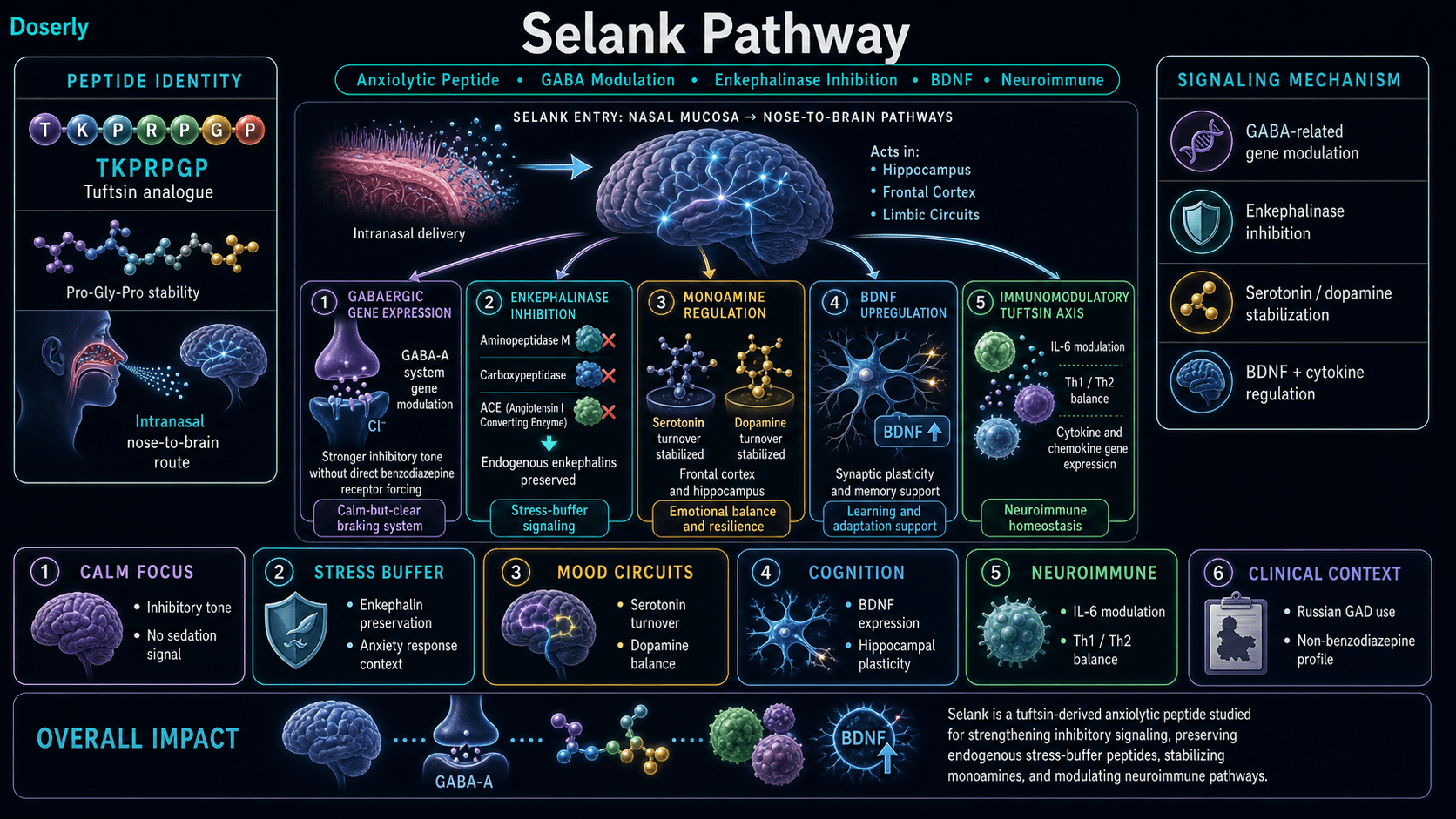
Selank operates through three primary pharmacological axes: GABAergic modulation (enhancing inhibitory tone without direct receptor agonism), monoaminergic regulation (stabilizing serotonin and dopamine turnover), and neurotrophic support (upregulating BDNF expression). An additional immunomodulatory axis, inherited from its tuftsin parent compound, provides cytokine regulation capabilities that are unique among anxiolytic peptides [6][7][8].
The molecular weight is 751.87 Da with the formula C33H57N11O9. Its CAS number is 129954-34-3 (free base) and 2703745-90-6 (acetate salt form). The PubChem CID is 11765600, and the FDA UNII is TS9JR8EP1G [9].
Molecular Identity
Attribute
Common Names
- Detail
- Selank, Selanc, SLANK, PL14736, TP-7, Tuftsin analogue
Attribute
Amino Acid Sequence
- Detail
- H-Thr-Lys-Pro-Arg-Pro-Gly-Pro-OH (TKPRPGP)
Attribute
Molecular Formula
- Detail
- C₃₃H₅₇N₁₁O₉ (free base)
Attribute
Molecular Weight
- Detail
- 751.87 Da (free base); 811.94 Da (acetate salt)
Attribute
CAS Number
- Detail
- 129954-34-3 (free base); 2703745-90-6 (acetate salt)
Attribute
PubChem CID
- Detail
- 11765600
Attribute
FDA UNII
- Detail
- TS9JR8EP1G
Attribute
Structural Type
- Detail
- Linear heptapeptide with free N-terminal amino group and C-terminal carboxylic acid
Attribute
Parent Compound
- Detail
- Tuftsin (Thr-Lys-Pro-Arg), extended with Pro-Gly-Pro
Attribute
Appearance
- Detail
- White lyophilized powder
Attribute
Solubility
- Detail
- PBS (pH 7.2) at 15.0 mg/mL
Attribute
Functional Class
- Detail
- Anxiolytic peptide; nootropic agent; immunomodulatory peptide; neuroprotective agent
Attribute
Target Systems
- Detail
- GABA-A receptor (allosteric modulation), serotonin/dopamine systems, BDNF, enkephalinase, immune cytokines
Mechanism of Action
The Basics
Your brain has a built-in braking system that prevents anxious signals from spiraling out of control. When this system works well, stressful thoughts arise but do not lock into place. You can register a worry, evaluate it, and move on. When it falters, every stressor amplifies: a passing concern becomes a loop, social situations feel threatening, and the physical symptoms of anxiety (tight chest, racing thoughts, restless tension) persist long after the trigger has passed.
Most anti-anxiety drugs work by forcing this braking system harder. Benzodiazepines, for example, directly open the brain's calming channels (GABA receptors), producing immediate relief but also sedation, impaired memory, and eventual dependence as the brain downregulates its own braking capacity in response.
Selank takes a fundamentally different approach. It strengthens the braking system itself rather than forcing it. Three distinct layers work together:
Layer 1: Reinforcing the brain's calming signals. Selank increases the expression of genes that encode GABA receptor components and related inhibitory signaling proteins. Research has shown it affects 52 out of 84 known GABA-related genes, with 7 heavily modulated [6]. The result is that the brain's own calming system becomes more robust, catching anxious signals earlier in the escalation process. This is why Selank produces calm without sedation: it is not overriding the system, it is restoring it.
Layer 2: Preserving the brain's natural stress buffers. Your body produces its own anti-stress molecules called enkephalins, short peptides that regulate pain perception, emotional tone, and the intensity of the stress response. People with anxiety disorders show increased activity of the enzymes that break down these enkephalins, meaning their natural stress buffers are degraded faster than normal [10]. Selank inhibits these enzymes (enkephalinase inhibition), keeping enkephalin levels higher for longer. This contributes to the "calm but clear" quality that distinguishes Selank from sedative approaches.
Layer 3: Stabilizing mood circuits. Selank modulates serotonin and dopamine activity in key brain regions without pushing either system into stimulant territory [8]. This is why Selank does not just reduce anxiety; it also tends to improve mood, reduce emotional fatigue, and support cognitive engagement. The circuits that produce flat affect, apathy, and difficulty concentrating run on the same neurotransmitter systems that anxiety disorders disrupt.
The Science
Selank operates through multiple interconnected pharmacological mechanisms [6][7][8][10]:
GABAergic Gene Expression Modulation: Selank functions as an indirect positive allosteric modulator of the GABA-A receptor. Rather than binding directly to the receptor (as benzodiazepines do), it upregulates the expression of genes encoding GABA receptor subunits and associated inhibitory signaling proteins. Voltage-clamp recordings in rat hippocampal CA1 neurons confirm enhanced inhibitory postsynaptic potentials via interneuron modulation [6]. Of 84 GABA-related genes examined, 52 showed altered expression following Selank administration, with 7 exhibiting heavy modulation and 45 showing measurable changes [6]. This genomic-level mechanism explains the absence of tolerance and dependence observed clinically: the effect operates upstream of receptor occupancy.
Enkephalinase Inhibition: Selank inhibits the serum enzymes (aminopeptidase M, carboxypeptidase, angiotensin-converting enzyme) that degrade endogenous enkephalins [10]. Patients with anxiety and phobic disorders demonstrate elevated enkephalinase activity, resulting in shortened enkephalin half-lives. By protecting these natural anxiolytic peptides from premature degradation, Selank restores a physiological buffer against stress reactivity. This mechanism parallels Semax's enkephalinase inhibition but operates independently through the GABA axis.
Monoaminergic Modulation: Selank alters serotonin, dopamine, and their metabolite concentrations and turnover rates in frontal cortex and hippocampus [8]. Critically, it does not produce a stimulant pattern. The modulation is stabilizing rather than activating: serotonin metabolism is normalized, dopamine receptor gene expression (particularly Drd5, involved in memory formation and synaptic plasticity) is upregulated, and the net effect supports improved mood and cognitive engagement alongside anxiolysis.
BDNF Upregulation: Selank rapidly increases brain-derived neurotrophic factor expression in the hippocampus [7]. BDNF supports neuronal survival, synaptic plasticity, and memory consolidation. This mechanism contributes to Selank's nootropic properties and may explain the cumulative improvement in stress tolerance observed with repeated administration.
Immunomodulatory Axis: As a tuftsin analogue, Selank retains significant immunomodulatory properties. It suppresses IL-6 production selectively in patients with depression or anxiety (leaving healthy controls unaffected), modulates the Th1/Th2 cytokine balance, and influences the expression of 34 genes involved in inflammatory signaling including chemokines, cytokines, and their receptors [7][11]. The BcI6 gene, heavily involved in immune system development, is notably affected. This neuroimmune interface is unique to Selank among anxiolytic peptides and may contribute to its efficacy in conditions where anxiety and immune dysregulation reinforce each other.
Pathway Visualization Image
Pharmacokinetics
The Basics
Selank enters the body quickly and clears quickly, but its effects last much longer than the peptide itself remains in the bloodstream. This seeming contradiction makes sense once you understand how Selank works: it triggers changes in gene expression that continue operating after the molecule is gone.
When administered as a nasal spray (the original clinical route), Selank achieves an exceptional 92.8% absorption through the nasal lining. Detectable blood levels appear within 30 seconds. The peptide travels along olfactory and trigeminal nerves directly into the brain, partially bypassing the blood-brain barrier. This nose-to-brain pathway is why Russian scientists designed Selank as a nasal drug from the beginning, and it is why intranasal delivery actually works for this compound when it fails for most other peptides.
The parent peptide is broken down rapidly by enzymes in the blood, with a detectable half-life as short as a few minutes. However, active metabolites extend the functional duration to 2-4 hours. Effects on anxiety and cognitive function build over days as the gene expression changes accumulate, which is why most protocols use daily administration for 2-4 weeks rather than single-dose use.
Subcutaneous injection provides a different absorption profile: the peptide sits in fat tissue and releases gradually into the bloodstream, producing more sustained exposure and allowing once-daily administration. This route is commonly used for practical convenience despite the fact that all published Russian clinical trials used intranasal delivery.
The Science
Intranasal Pharmacokinetics: Selank achieves 92.8% bioavailability through intranasal administration [12]. The peptide is absorbed through the nasal mucosa via two pathways: systemic absorption through the nasal vasculature, and direct nose-to-brain transport via the olfactory and trigeminal nerve pathways. The latter bypasses first-pass hepatic metabolism and the blood-brain barrier. Tmax is 5-15 minutes. The parent compound (Thr-Lys-Pro-Arg-Pro-Gly-Pro) has a terminal elimination half-life measured in minutes due to rapid peptidase activity, but active metabolites extend the pharmacodynamic window to approximately 2-4 hours [12][13].
Subcutaneous Pharmacokinetics: Subcutaneous injection provides a depot effect with gradual absorption from the adipose tissue. While no formal PK studies specific to subcutaneous Selank have been published, clinical use and community protocols indicate sustained absorption sufficient for once-daily dosing [14]. The subcutaneous route avoids variables that affect intranasal absorption such as nasal congestion, mucosal integrity, and spray technique.
Molecular Properties: The peptide contains three proline residues conferring conformational constraints that influence receptor binding and enzymatic degradation kinetics. The threonine hydroxyl side chain, lysine and arginine positive charges, and proline-rich C-terminus collectively determine membrane permeability and receptor interaction profiles [9]. Melting point: 134-136°C. Density: 1.53 g/cm3. pKa: 3.43 (predicted).
Steady State and Accumulation: With a functional half-life of approximately 4 hours, steady-state conditions with regular dosing are reached within approximately 18-20 hours. However, Selank's primary effects are gene-expression-mediated rather than concentration-dependent, meaning the clinical benefit accumulates over days to weeks of administration as transcriptional changes stabilize [6].
Research & Clinical Evidence
The Basics
Selank has an unusually strong clinical evidence base for a research peptide. Unlike most compounds in the peptide space, which rely primarily on animal data and anecdotal reports, Selank has been tested in multiple human clinical trials in Russia, including head-to-head comparisons against established pharmaceutical anxiolytics.
The most important study compared Selank directly against phenazepam, a potent benzodiazepine. In patients with anxiety disorders, the group that continued Selank after the benzodiazepine was tapered reached a 75% responder rate at day 21, compared to only 30% in patients where the benzodiazepine was simply stopped. Selank showed no sedation, no dependence, and better quality-of-life scores than the benzodiazepine group [2].
Additional clinical trials have demonstrated comparable anxiety reduction to benzodiazepines in generalized anxiety disorder and neurasthenia, with no sedation or withdrawal [1]. A 2024 randomized trial in 64 post-COVID patients showed superior recovery of mental work capacity, anxiety reduction, and fatigue resolution compared to standard care alone [3]. Clinical work on SSRI augmentation found that 70% of patients receiving Selank alongside new antidepressant prescriptions showed meaningful anxiety reduction by day 14, bridging the gap during the vulnerable period before SSRIs reach full efficacy [4].
Beyond anxiety, Selank has shown efficacy in stress-driven eating (reducing binge frequency and high-calorie food consumption over 14 days with effects persisting after discontinuation) [5] and atopic dermatitis (reducing anxiety approximately 2.4-fold versus 1.3-fold with skin therapy alone, while nearly doubling beta-endorphin levels) [15].
The limitations are geographic and economic, not scientific. All published RCTs come from Russian institutions with relatively small sample sizes, and large Western replication studies have not been conducted. Selank is unpatentable, which removes the financial incentive for the multi-million-dollar trials that Western regulatory approval requires.
The Science
Generalized Anxiety Disorder (GAD) and Neurasthenia: Zozulia et al. (2008) conducted clinical trials demonstrating statistically significant reductions in anxiety symptoms with Selank treatment. Anxiolytic effects were comparable to classical benzodiazepines (specifically medazepam) without sedation, cognitive impairment, or dependence formation. The Hamilton Anxiety Rating Scale (HAM-A) served as the primary endpoint [1].
Benzodiazepine Comparison and Taper: Tereshchenko et al. (2014) compared phenazepam monotherapy, Selank monotherapy, and Selank continuation after phenazepam taper in anxiety disorder patients (phobic, hypochondriacal, somatized presentations). At day 21: Selank-continued arm achieved 75% responder rate versus 30% (phenazepam stopped) and 25% (all treatment withdrawn). HAM-A subscale improved approximately 60% with Selank versus approximately 47% with phenazepam. SF-36 quality-of-life scores favored Selank. No sedation, dependence, or cognitive impairment was observed (PMID: 25176261) [2].
Post-COVID Cognitive Fatigue: Pogodina and Nikiforova (2024) randomized 64 patients with post-COVID syndrome (fatigue, reduced mental work capacity, emotional disturbance) to Selank 1.5 mg/day intranasal for 30 days plus standard neuroprotective care, versus standard care alone. The Selank group demonstrated superior recovery of mental work capacity, greater reduction in anxiety and depressive symptoms, and better resolution of fatigue (DOI: 10.29296/25877305-2024-05-12) [3].
SSRI Augmentation: Verbenko and Shakina (2019) evaluated Selank as a bridge during the first 14 days of antidepressant initiation. At day 14, 70% of Selank recipients showed meaningful anxiety reduction. Benefits persisted to day 28, two weeks after Selank discontinuation, suggesting stabilization of the anxiolytic system during the vulnerable early treatment phase [4].
Psychogenic Overeating: Verbenko and Fedorov (2012) studied a 14-day Selank course in adults with ICD-10 F50.4 psychogenic overeating. Outcomes included reduced binge frequency, accelerated satiety, lower high-calorie/carbohydrate/alcohol consumption, and improved anxiety and depressive symptoms. Effects persisted for at least two weeks post-discontinuation [5].
Atopic Dermatitis (Neuroimmune): Verbenko et al. studied 65 adults receiving Selank plus standard dermatologic therapy versus standard therapy alone. The Selank group showed anxiety reduction approximately 2.4-fold versus approximately 1.3-fold in controls, alexithymia reduction approximately 1.2-fold, beta-endorphin increase approximately 1.9-fold, and DLQI quality-of-life improvement approximately 1.7-fold versus approximately 1.2-fold [15].
Preclinical Evidence: Primate studies demonstrated that intranasal Selank eliminated fear and anxiety behaviors with long-term stabilizing effects on neurobehavior [16]. Rodent models confirmed anxiolytic efficacy comparable to classical tranquilizers, synergistic effects with diazepam in chronic mild stress models, and the ability to rescue cognitive function following neurotoxin-induced brain damage [17][18][19].
Biomarker Evidence Matrix
The following biomarker categories reflect the intersection of published research and community-reported outcomes for Selank. Evidence Strength is derived from the quality and volume of source citations. Reported Effectiveness reflects scored community sentiment data.
Category
Anxiety
- Evidence Strength
- 9/10
- Reported Effectiveness
- 9/10
- Confidence
- High
Category
Stress Tolerance
- Evidence Strength
- 7/10
- Reported Effectiveness
- 8/10
- Confidence
- Medium
Category
Mood & Wellbeing
- Evidence Strength
- 7/10
- Reported Effectiveness
- 8/10
- Confidence
- Medium
Category
Focus & Mental Clarity
- Evidence Strength
- 6/10
- Reported Effectiveness
- 7/10
- Confidence
- Medium
Category
Emotional Regulation
- Evidence Strength
- 6/10
- Reported Effectiveness
- 7/10
- Confidence
- Medium
Category
Social Connection
- Evidence Strength
- 5/10
- Reported Effectiveness
- 7/10
- Confidence
- Medium
Category
Memory & Cognition
- Evidence Strength
- 6/10
- Reported Effectiveness
- 6/10
- Confidence
- Low-Medium
Category
Sleep Quality
- Evidence Strength
- 4/10
- Reported Effectiveness
- 6/10
- Confidence
- Medium
Category
Immune Function
- Evidence Strength
- 7/10
- Reported Effectiveness
- 5/10
- Confidence
- Low
Category
Longevity & Neuroprotection
- Evidence Strength
- 6/10
- Reported Effectiveness
- 5/10
- Confidence
- Low
Category
Pain Management
- Evidence Strength
- 5/10
- Reported Effectiveness
- 4/10
- Confidence
- Low
Category
Cravings & Impulse Control
- Evidence Strength
- 5/10
- Reported Effectiveness
- 5/10
- Confidence
- Low
Category
Side Effect Burden
- Evidence Strength
- 8/10
- Reported Effectiveness
- 8/10
- Confidence
- High
Category
Withdrawal Symptoms
- Evidence Strength
- 8/10
- Reported Effectiveness
- 9/10
- Confidence
- High
Category
Daily Functioning
- Evidence Strength
- 5/10
- Reported Effectiveness
- 7/10
- Confidence
- Medium
Categories with insufficient data: Fat Loss, Muscle Growth, Weight Management, Appetite & Satiety, Food Noise, Energy Levels, Libido, Sexual Function, Joint Health, Inflammation, Recovery & Healing, Physical Performance, Gut Health, Digestive Comfort, Nausea & GI Tolerance, Skin Health, Hair Health, Heart Health, Blood Pressure, Heart Rate & Palpitations, Hormonal Symptoms, Temperature Regulation, Fluid Retention, Body Image, Bone Health.
Benefits & Positive Effects
The Basics
Selank's benefit profile centers on anxiety reduction that does not come at the cost of cognitive function. This is a genuinely rare combination. Most compounds that effectively reduce anxiety also impair some dimension of mental performance. Selank appears to do the opposite: by quieting anxious background noise, it often reveals cognitive capacity that was already present but masked by the overhead of chronic worry.
The primary benefits supported by clinical and community data include:
- Anxiety reduction without sedation. The most consistently reported benefit across all sources. Users with generalized anxiety disorder, panic disorder, social anxiety, and PTSD report meaningful reductions in anxious reactivity, with many describing the effect as "life-changing." Clinical trials confirm efficacy comparable to benzodiazepines [1][2].
- Preserved or enhanced cognitive function. Memory, attention, and mental clarity are maintained or improved during use. Research demonstrates BDNF upregulation and changes in hippocampal gene expression that support memory consolidation [7][19].
- Mood stabilization. Serotonin and dopamine modulation produces improved emotional baseline without stimulant qualities [8]. Clinical data in depression-adjacent presentations (neurasthenia, post-COVID fatigue) support this profile [1][3].
- Stress resilience. The ability to handle stressors that previously caused escalation. Both the GABAergic and enkephalin-protective mechanisms contribute to a higher threshold for stress reactivity [6][10].
- Immunomodulation. Cytokine regulation (IL-6 suppression in anxious/depressed patients, Th1/Th2 rebalancing) represents a unique benefit among anxiolytic compounds [7][11].
- No dependence, tolerance, or withdrawal. Two decades of clinical use in Russia with no reports of dependence formation, tolerance development, or withdrawal syndromes upon discontinuation [1][2].
The Science
Anxiolytic Efficacy: Hamilton Anxiety Rating Scale improvements of approximately 60% in the Selank-continued arm versus approximately 47% with phenazepam monotherapy at day 21 [2]. Selank has been classified alongside benzodiazepines in clinical efficacy profiles while maintaining a fundamentally different safety profile [1][20].
Cognitive Enhancement: Selank boosts memory trace stability and enhances memory storage independently of its anxiolytic effects (demonstrated in non-anxious animal models) [19]. It affects expression of 36 hippocampal genes encoding proteins associated with plasma membrane function and ion-dependent processes in learning and memory [21]. Rescued cognitive function has been observed following neurotoxin-induced damage to the catecholamine system [22].
Immunomodulatory Properties: IL-6 suppression is selective to depressed/anxious individuals and does not affect healthy controls [11]. Expression of 34 inflammation-related genes (including BcI6, critical for immune development) is modulated [7]. In rodent social stress models, Selank normalized elevated IL-1beta, IL-6, TNF-alpha, and TGF-beta1 to near-healthy levels [23]. Fragments of Selank alter gene expression for C3, Casp1, Il2rf, and Xcr1 in immune tissue [24].
Side Effects & Safety Profile
The Basics
Selank has one of the cleanest side effect profiles of any anxiolytic compound, whether pharmaceutical or peptide-based. In over two decades of clinical use in Russia, the consistently reported findings are:
- No sedation. Unlike benzodiazepines, Selank does not cause drowsiness or impair alertness. Daytime use does not interfere with work, driving, or exercise.
- No cognitive impairment. Memory, attention, and executive function are preserved or improved, not blunted.
- No dependence or withdrawal. No evidence of tolerance development, physical dependence, or rebound anxiety upon discontinuation in any published study or clinical observation [1][2].
- Minimal reported adverse effects. The most commonly noted side effects are mild and transient: slight headache on initial use (resolves within a day), mild nasal irritation with intranasal use, and occasional injection-site redness with subcutaneous use. These are reported by a minority of users and do not typically require discontinuation.
Rare or atypical reactions: Isolated reports of nausea, hot/cold flashes, or temporarily elevated heart rate have appeared in community discussions. These are uncommon, may be dose-related, and typically resolve quickly. One reported case was likely an overdose or hyper-responder situation.
Contraindications based on available data:
- Known hypersensitivity to tuftsin-derived peptides
- Pregnancy and breastfeeding (insufficient safety data)
- Active nasal infections (for intranasal route)
- Caution with concurrent anxiolytic medications (potential for interaction, though clinical data shows synergistic benefit with benzodiazepines in some protocols) [17]
Monitoring parameters: No standardized laboratory monitoring is required. In research contexts, psychometric scales (HAM-A, MADRS), neurocognitive testing, and cytokine panels have been used [1].
The Science
Clinical Safety Data: A 14-day continuous course was well-tolerated in human trials with no significant adverse events [1]. The benzodiazepine comparison trial reported superior tolerability for Selank across all measured parameters including SF-36 quality-of-life domains [2]. No evidence of hepatotoxicity, nephrotoxicity, or hematological effects has been reported in any published study.
Dependency Assessment: Selank does not produce the GABA-A receptor downregulation that characterizes benzodiazepine dependence, because it modulates gene expression upstream of receptor occupancy rather than directly binding the receptor [6]. Primate studies showed long-term neurobehavioral stabilization without habituation [16].
Wide Therapeutic Range: High-dose applications have been explored preclinically for attenuating opioid withdrawal symptoms, indicating a substantial margin between therapeutic and toxic doses [25].
Side effect profiles are most useful when you can compare them against your own experience in real time. Doserly lets you log symptoms, severity, and timing alongside your dosing data, creating a side-by-side view of your protocol and your body's response.
This kind of systematic tracking catches things that memory alone misses. A subtle mood shift that began three days after a dose increase. Sleep disruption that correlates with evening administration. These patterns become visible when the data is laid out on a timeline, and they give your healthcare provider actionable information rather than vague concerns. Early detection of emerging side effects means earlier intervention.
Connect protocol changes to labs and health markers.
Doserly can keep lab results, biomarkers, symptoms, and dose history close together so follow-up conversations have better context.
Insights
Labs and trends
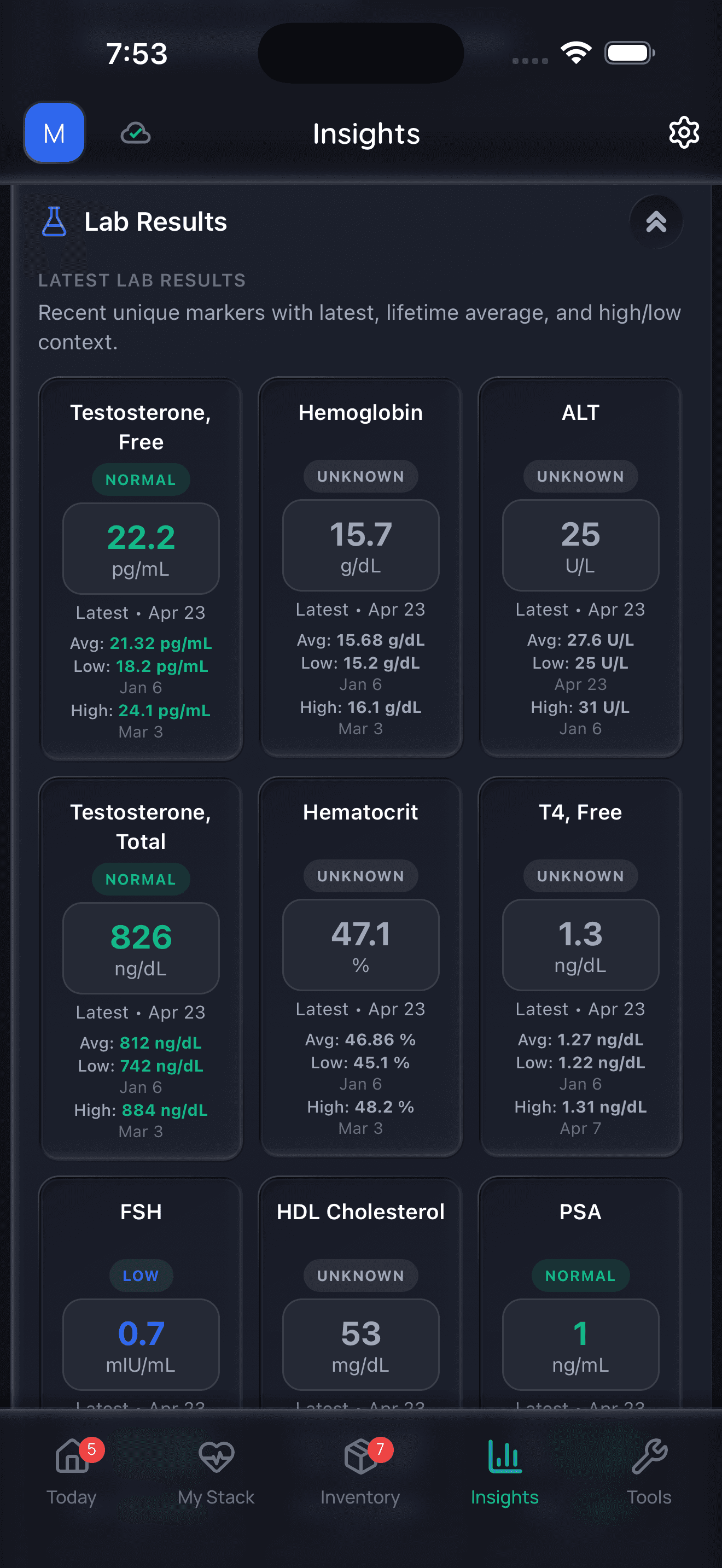
Doserly organizes data; it does not diagnose or interpret labs for you.
Dosing Protocols
The Basics
Selank is administered either as a nasal spray or by subcutaneous injection. Both routes are effective, but they work differently and suit different situations.
Intranasal (nasal spray): This is the original clinical route. All published Russian human trials used intranasal delivery. Selank is one of the few peptides where nasal spray genuinely works well, because its small size allows efficient absorption through the nasal lining and it can travel directly to the brain along olfactory nerve pathways. Typical protocol: 200-300 mcg per spray, 2-3 sprays per day, totaling 600-900 mcg daily. The tradeoff is rapid clearance requiring multiple daily administrations.
Subcutaneous injection: Provides more sustained release from the fat tissue depot, typically allowing once-daily dosing. Typical protocol: 300-500 mcg once daily. Start at 300 mcg for weeks 1-2, increase to 500 mcg for weeks 3-4 if well-tolerated. Some protocols use 250-500 mcg 1-3 times daily for more intensive coverage.
Cycling: Standard protocols recommend 2-4 weeks on, followed by 1-2 weeks off. Some practitioners use 4 weeks on, 4 weeks off. The break is not for safety (Selank produces no dependence or withdrawal) but to maintain receptor sensitivity. Some users use Selank as-needed rather than on a fixed cycle, particularly for situational anxiety.
Timing: Flexible. Daytime use does not interfere with alertness; evening use does not disrupt sleep transitions. Earlier administration is preferred for focus-oriented use. Evening administration can facilitate the transition from anxious wakefulness to natural sleep onset.
Intranasal dose range: Standard protocols cite 600-900 mcg/day, indicates up to 2500 mcg/day maximum with escalation by 250 mcg increments. The guide presents 600-900 mcg as the typical range with acknowledgment of higher-dose protocols in some clinical settings.
The Science
Reconstitution (for subcutaneous injection):
- 5 mg vial: Reconstitute with 3.0 mL bacteriostatic water for approximately 1.67 mg/mL concentration
- 10 mg vial: Reconstitute with 3.0 mL bacteriostatic water for approximately 3.33 mg/mL concentration
- At 3.33 mg/mL, 1 unit on a U-100 insulin syringe equals approximately 33.3 mcg [14]
Dosing Schedule (10mg vial, subcutaneous):
Phase
Weeks 1-2
- Daily Dose
- 300 mcg
- Volume
- 9 units (0.09 mL)
Phase
Weeks 3-4
- Daily Dose
- 500 mcg
- Volume
- 15 units (0.15 mL)
Frequency: Once daily subcutaneous. Some protocols use 5 days on, 2 days off [14].
Intranasal Dosing:
- Regular Selank: 200-300 mcg per administration, 2-3x daily (600-900 mcg total daily)
- N-Acetyl Selank: 200-300 mcg per administration, 2x daily (400-600 mcg total)
- N-Acetyl Selank Amidate: 100-200 mcg per administration, 1-2x daily (200-400 mcg total)
Clinical Trial Dosing: The post-COVID trial used 1.5 mg/day intranasal for 30 days [3]. The GAD trial dosing was within the 600-900 mcg/day intranasal range [1]. The 14-day continuous course in neurasthenia trials was well-tolerated [1].
The dosing protocols above involve numbers that matter: specific microgram amounts, reconstitution ratios, and timing windows. Getting any of these wrong compounds across every subsequent dose from that vial.
Doserly's dose and reconstitution calculators eliminate the guesswork. Enter your vial size, peptide amount, and target dose, and get the exact bacteriostatic water volume, units per tick mark, and doses per vial. The injection site tracker maps your administration history as a visual heat map across your body, flagging areas that need rest and suggesting rotation patterns. Combined with dose reminders that include compound name, amount, and route, every aspect of your daily protocol is handled with the precision it requires.
Track injection timing, draw notes, and site rotation.
Doserly helps keep syringe-related notes, injection site history, reminders, and reconstitution context together for easier review.
Injection log
Site rotation
Injection logs support record-keeping; follow clinician instructions for administration.
What to Expect / Timeline
The Basics
Selank's onset and progression differ depending on whether you are using it for acute situational anxiety or as a course protocol for chronic anxiety patterns.
Days 1-3: Some users notice subtle calming effects within hours of the first dose. The anxious background noise begins to quiet. Effects at this stage are typically mild and may be difficult to distinguish from placebo. Some users report a mild headache on the first day that does not recur.
Days 3-7: The calming effect becomes more noticeable. Many users report that triggers which previously caused anxiety escalation now pass more easily. Social situations feel less threatening. The "tape deck" of anxious rumination begins to slow or stop. Focus improves as cognitive resources are freed from managing anxiety.
Weeks 1-2: Cumulative effects become clearly apparent. GABAergic gene expression changes are stabilizing. Users typically report a consistently lower anxiety baseline, improved stress tolerance, better sleep onset (for those whose insomnia was anxiety-driven), and improved mood. This is when the compound begins to feel "dialed in" for most users.
Weeks 2-4: Full effects achieved. Anxiety threshold is notably higher. Emotional regulation is improved. Cognitive benefits (clarity, memory, focus) are established. The effect plateau means increasing the dose is unlikely to add benefit.
After stopping: Effects do not immediately vanish. The gene expression changes that Selank produces have some persistence. Many users report that benefits continue for days to weeks after the last dose, gradually returning to baseline. There is no withdrawal, rebound anxiety, or discontinuation effect. The system drifts back to its pre-Selank state smoothly.
Important nuance: If your baseline anxiety is mild or your stress levels are already well-managed, the effects of Selank may be subtle. Multiple sources note that users with higher baseline anxiety experience more dramatic benefits, while those with already-calm baselines may "barely feel it."
The Science
Acute Pharmacodynamics: Intranasal onset: 5-15 minutes to peak brain concentrations via olfactory/trigeminal pathways. Receptor modulation and GABA enhancement: 15-60 minutes. Parent compound clearance: minutes. Functional effect via active metabolites: 2-4 hours [12][13].
Subacute Gene Expression Changes: Selank's effects on GABA-related gene expression (52/84 genes modulated) develop over repeated dosing sessions. The seven heavily modulated genes show time-dependent expression changes that stabilize over days [6]. BDNF upregulation in the hippocampus occurs relatively rapidly and supports the progressive improvement in cognitive function observed across the first two weeks [7].
Clinical Timeline Data: In the benzodiazepine comparison trial, the Selank-continued arm showed progressive improvement through day 21 [2]. The post-COVID trial demonstrated measurable benefits over a 30-day course [3]. The SSRI augmentation data showed 70% response by day 14 [4]. Psychogenic overeating benefits were evident within 14 days and persisted for at least two weeks post-discontinuation [5].
Timelines are useful benchmarks, but they mean more when you're tracking your own progress against them. Doserly lets you log daily observations alongside your protocol data, creating a personal timeline that runs parallel to the general expectations above.
When you reach the 4-week or 8-week assessment points, you'll have more than a feeling to work with. You'll have a documented record of how each week progressed, what changed, and when. This makes protocol decisions concrete: whether to extend a cycle, adjust a dose, or try a different approach, the data is there to support the conversation with your healthcare provider rather than relying on recall.
See where a dose, cycle, or change fits in time.
Doserly gives each protocol a timeline so dose changes, pauses, restarts, and observations are easier to compare later.
Timeline
Cycle history
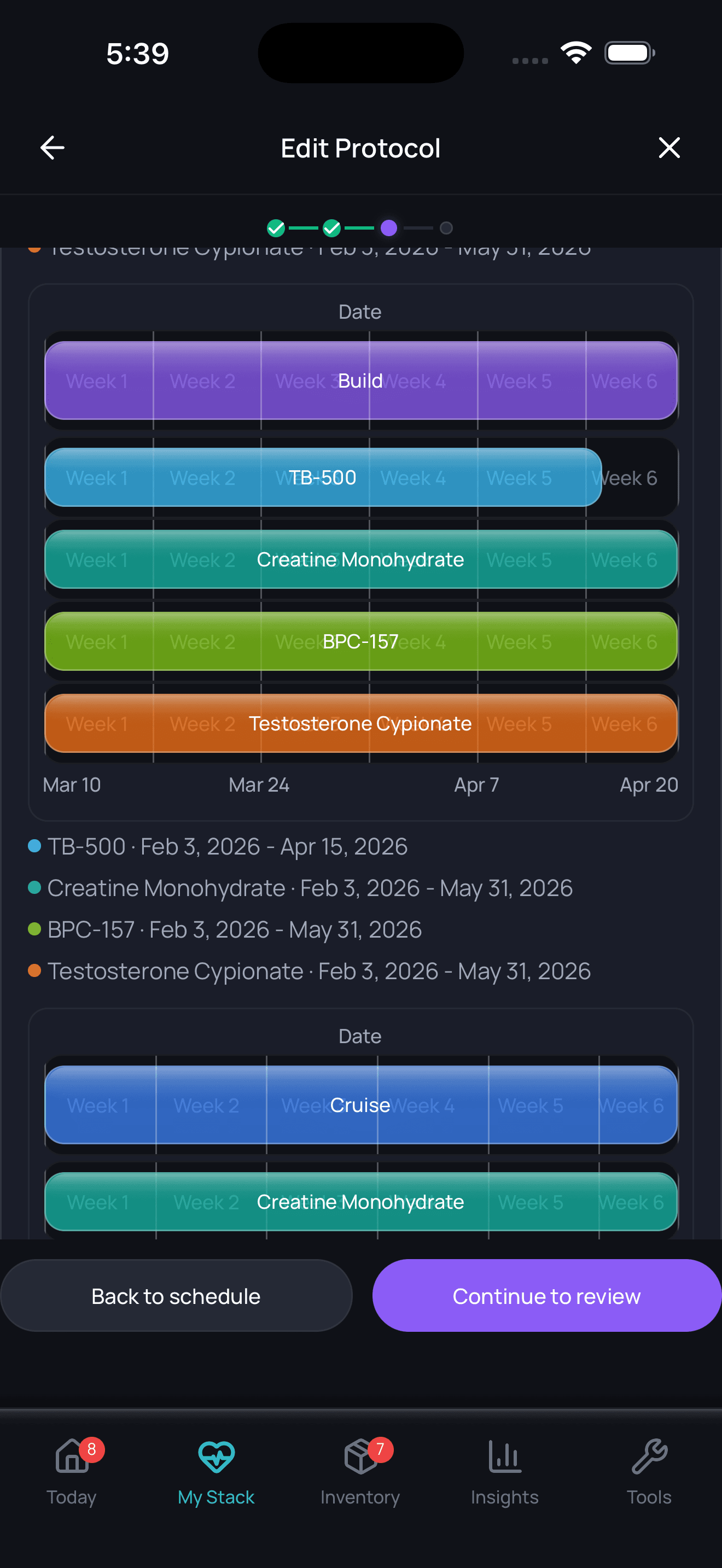
Timeline tracking helps with recall; it is not a treatment recommendation.
Interaction Compatibility
Selank's interaction profile is relatively straightforward due to its peptide nature and non-receptor-agonist mechanism.
Complementary Pairings:
- Semax: The standard companion pairing. Semax provides nootropic drive (BDNF, dopamine activation) while Selank provides anxiolytic grounding (GABA, serotonin stabilization). The two are developed by the same Russian institute and have complementary primary pathways. Semax in the morning, Selank morning or evening is the most common protocol.
- DSIP: For sleep architecture support. Selank opens the anxiety gate for sleep onset; DSIP supports deep sleep architecture. The combination addresses both the psychological barrier to sleep and the physiological quality of sleep.
- NAD+: For circadian and metabolic support when anxiety coexists with fatigue or energy dysregulation.
- BPC-157: In recovery-focused stacks. BPC-157 addresses tissue healing while Selank manages the stress and anxiety component of recovery.
- Thymosin Alpha-1: For immune-focused protocols. Both compounds have immunomodulatory properties working through different pathways.
- KPV: In anti-inflammatory stacks where both immune modulation and anxiety management are goals.
- Epithalon: In longevity-oriented protocols. Selank supports neuroprotection while Epithalon targets telomerase and circadian regulation.
- Pinealon: As companion neuroprotective peptides from the same Russian bioregulation tradition.
- VIP: In circadian reset protocols. VIP anchors the circadian clock while Selank manages the anxiety layer.
- GHK-Cu: In broader recovery stacks.
Potential Interactions Requiring Caution:
- Benzodiazepines: Research shows synergistic anxiolytic effects when Selank is combined with diazepam, and clinical data supports Selank as a benzodiazepine taper aid [2][17]. However, concurrent use should be managed by a healthcare provider due to additive GABAergic effects.
- SSRIs and antidepressants: Clinical data specifically supports Selank as an SSRI augmentation agent [4]. However, both Selank and SSRIs modulate serotonin, so concurrent use should be discussed with a prescribing physician. One community report noted increased irritability when combining Selank with Wellbutrin and Prozac simultaneously.
- Other GABAergic compounds: Phenibut, gabapentin, pregabalin, alcohol. Selank's GABAergic modulation is indirect (gene expression, not receptor binding), but additive inhibitory tone is theoretically possible.
No Known Negative Interactions:
- Growth hormone secretagogues (Ipamorelin, Sermorelin, Tesamorelin)
- Other nootropic peptides (Dihexa)
- GLP-1 receptor agonists (Semaglutide, Tirzepatide, Retatrutide)
Administration Guide
Intranasal Administration:
- Clear nasal passages before administration. Do not use decongestant sprays beforehand, as they constrict blood vessels and reduce absorption.
- Tilt head slightly back during and immediately after spraying.
- Administer to one nostril at a time. Wait at least 1 minute before switching to the other nostril.
- Do not blow your nose for at least 10-15 minutes after administration.
- Store spray bottles in the refrigerator. Clean the nozzle with an alcohol swab before and after each use.
Subcutaneous Injection:
- Wash hands thoroughly. Prepare a clean work surface.
- Clean the vial stopper with an alcohol swab. Allow to dry completely.
- Draw the appropriate volume into a sterile insulin syringe. Remove air bubbles by flicking the syringe and expelling air.
- Clean the injection site with a fresh alcohol swab. Allow skin to dry.
- Pinch a skinfold of subcutaneous tissue. Insert the needle at 90 degrees into the subcutaneous layer.
- Inject slowly and steadily over 3-10 seconds. Hold for 5-10 seconds post-injection.
- Withdraw the needle at the same angle. Apply gentle pressure if minor bleeding occurs.
- Dispose of the used syringe immediately in a sharps container. Never reuse needles or syringes.
Recommended injection sites: Abdomen (at least 2 inches from navel), front/outer thighs, upper arms. Rotate sites systematically to prevent local irritation and tissue changes.
Materials required:
- Bacteriostatic water (0.9% benzyl alcohol) for reconstitution
- Sterile insulin syringes (U-100; consider 30-unit or 50-unit syringes for small volumes under 10 units)
- Alcohol swabs
- Sharps disposal container
Supplies & Planning
Supplies needed depend on protocol length and dosing approach. The following provides general guidance. Consult a healthcare provider for personalized dosing decisions and use the Doserly reconstitution calculator for exact volumes.
For subcutaneous protocols:
- Selank peptide vials (5mg or 10mg sizes are common)
- Bacteriostatic water: approximately 3.0 mL per vial for reconstitution
- Insulin syringes: one per day of protocol (U-100; 30- or 50-unit for small-volume doses)
- Alcohol swabs: two per day (one for vial, one for injection site)
- Sharps container
For intranasal protocols:
- Selank nasal spray device or empty nasal spray bottles with metered pump
- Bacteriostatic water for reconstitution if using lyophilized powder
General supplies:
- Refrigerator storage for reconstituted vials (2-8°C)
- Freezer storage for unreconstituded vials (-20°C for long-term)
Bacteriostatic water note: Multi-use bacteriostatic water vials should be dated upon opening and discarded within 28 days per CDC/USP guidelines.
N-Acetyl Selank Amidate Variant
Selank is available in three forms: regular Selank, N-Acetyl Selank, and N-Acetyl Selank Amidate. The modifications are chemical protections that extend the peptide's active duration without changing its mechanism of action.
N-Acetylation (front-end protection): An acetyl group caps the N-terminus, blocking aminopeptidases that would otherwise begin degrading the peptide from the front end. This extends survival in the bloodstream by approximately 30 minutes and improves bioavailability.
Amidation (back-end protection): An amide group caps the C-terminus, protecting against carboxypeptidase degradation. It also improves membrane permeability and receptor binding affinity.
Property
Duration
- Regular Selank
- 2-4 hours peak effect
- N-Acetyl Selank Amidate
- 4-8 hours reported
Property
Typical Dose (SubQ)
- Regular Selank
- 250-500 mcg
- N-Acetyl Selank Amidate
- 200-400 mcg
Property
Typical Dose (Intranasal)
- Regular Selank
- 200-300 mcg per spray, 2-3x daily
- N-Acetyl Selank Amidate
- 100-200 mcg per spray, 1-2x daily
Property
Dosing Frequency
- Regular Selank
- 1-3x daily
- N-Acetyl Selank Amidate
- 1-2x daily
Property
Clinical Evidence
- Regular Selank
- All published RCTs
- N-Acetyl Selank Amidate
- No direct clinical trials (standard bioavailability modification)
Property
Best For
- Regular Selank
- Users who want the form with the strongest evidence base
- N-Acetyl Selank Amidate
- Users who want longer duration and fewer daily doses
Recommendation for new users: Start with regular Selank if evidence purity is the priority. Choose N-Acetyl Selank Amidate if practical convenience (fewer doses, longer coverage) is more important.
Lifestyle & Optimization Factors
The following lifestyle factors can significantly influence Selank's efficacy:
Sleep: Aim for 7-9 hours of quality sleep. Selank supports the anxiety-reduction component of sleep onset, but it is not a sleep aid. If insomnia is anxiety-driven, Selank may help. If it is circadian or environmental, address those factors directly.
Exercise: Both aerobic and resistance training support the neurotransmitter systems that Selank modulates. Regular exercise enhances serotonin and dopamine signaling, BDNF expression, and stress resilience. Selank does not impair physical performance and can be used before training without concern.
Stress management practices: Mindfulness, meditation, breathwork, and cognitive behavioral techniques complement Selank's pharmacological effects. The peptide lowers the floor of anxiety reactivity; active stress management practices build the skills to capitalize on that lower floor.
Nutrition: Adequate protein intake supports amino acid availability for neurotransmitter synthesis. Omega-3 fatty acids support neuronal membrane integrity and anti-inflammatory pathways. Magnesium (particularly glycinate) supports GABAergic function and is commonly paired with Selank in community protocols.
Substances to minimize: Alcohol directly affects GABA receptors and can interfere with Selank's stabilizing effects. Excessive caffeine increases sympathetic nervous system activation, working against Selank's calming mechanism. Stimulant use (prescription or otherwise) may benefit from Selank's calming complement, but the interaction should be discussed with a healthcare provider.
Tracking recommendations: Daily subjective ratings of calm/focus (1-10 scale), sleep quality, and task completion rate can help document Selank's effects over time. Optional: morning HRV trend and resting heart rate monitoring.
Regulatory Status
Selank occupies a unique regulatory position. It is one of the few research peptides that has achieved formal pharmaceutical approval in any country.
Russia: Registered pharmaceutical since 2009. Available by prescription for generalized anxiety disorder. Listed on the Russian List of Vital and Essential Drugs. Multiple approved formulations including 0.15% intranasal drops (Selank nasal drops).
United States: Not FDA-approved. Not scheduled as a controlled substance. Available as a research compound. Not available through standard pharmacies. Compounding pharmacies may prepare Selank formulations.
WADA (World Anti-Doping Agency): Status varies by variant. N-Acetyl Selank has been noted as WADA-prohibited. Athletes subject to doping controls should verify current WADA status before use.
European Union: Not approved by the EMA. Available as a research compound in most member states.
FAQ
Is Selank addictive?
No. Selank has been used clinically in Russia since 2009 with no reports of dependence, tolerance, or withdrawal. This is because it works by modulating gene expression rather than directly occupying receptors, avoiding the receptor downregulation that drives dependence with benzodiazepines [1][2].
Can Selank replace my benzodiazepine prescription?
Clinical data suggests Selank can effectively bridge anxiety during benzodiazepine tapering, with patients reaching a 75% responder rate when Selank was continued after phenazepam withdrawal [2]. However, benzodiazepine discontinuation should always be managed by a healthcare provider due to the serious risks of unsupervised withdrawal. Selank is not a substitute for acute panic intervention, as its onset is not fast enough to abort a crisis.
Does Selank work for social anxiety?
Community reports consistently describe improved social functioning, including the ability to engage in conversations, speak publicly, and participate in social activities without the anxious interference that previously made these situations difficult. The mechanism (reduced anxious reactivity while preserving cognitive clarity) is well-suited to social anxiety presentations.
How quickly does Selank work?
Some users notice subtle calming effects within hours of the first dose. The deeper effects on anxiety threshold and stress tolerance build over days to weeks as gene expression changes accumulate. Most users report the compound feeling "dialed in" by week 2. Unlike SSRIs, which require 4-6 weeks for full effect, Selank's benefits are typically apparent within the first week.
Should I use nasal spray or subcutaneous injection?
Nasal spray is the clinically validated route with the strongest evidence base and delivers the peptide directly to the brain. It requires 2-3 daily administrations due to rapid clearance. Subcutaneous injection provides more sustained release, allows once-daily dosing, and eliminates variables like nasal congestion. For most practical purposes, subcutaneous is the default community choice; nasal spray is preferred when rapid, brain-targeted onset is the priority.
Can I use Selank with SSRIs?
Clinical data specifically supports Selank as an SSRI augmentation tool, particularly during the first 2 weeks of antidepressant initiation [4]. The combination appears complementary. However, both modulate serotonin pathways, so concurrent use should be discussed with the prescribing physician.
What is the difference between Selank and Semax?
Both were developed at the same Russian research institutes, but they serve different roles. Selank is primarily anxiolytic (GABA modulation, serotonin stabilization). Semax is primarily nootropic and mildly activating (BDNF upregulation, dopamine activation). They are commonly paired together: Semax provides cognitive drive, Selank smooths the emotional edge that Semax can sometimes sharpen.
Does Selank help with sleep?
Selank is not a sedative and does not directly induce sleep. However, it can facilitate sleep onset by lowering the anxiety threshold that prevents falling asleep. Users who lie awake due to anxious rumination, rather than lack of sleepiness, are the ones most likely to notice a sleep benefit. Evening use does not disrupt natural sleep transitions.
Sources & References
- Zozulia AA, et al. "Efficacy and possible mechanisms of action of a new peptide anxiolytic selank in the therapy of generalized anxiety disorders and neurasthenia." Zh Nevrol Psikhiatr Im S S Korsakova. 2008;108(4):38-48. PMID: 18466072
- Tereshchenko ON, et al. in Medvedev VE, et al. "Selank in anxiety disorders in general medical practice." Zh Nevrol Psikhiatr Im S S Korsakova. 2014. PMID: 25176261
- Pogodina MG, Nikiforova EYu. "Selank in post-COVID cognitive fatigue." Vrach. 2024. DOI: 10.29296/25877305-2024-05-12
- Verbenko VA, Shakina TA. "SSRI augmentation with Selank in anxiety-depressive disorders." 2019.
- Verbenko VA, Fedorov VN. "Selank in psychogenic overeating." Vrach. 2012.
- Volkova A, et al. "Selank Administration Affects the Expression of Some Genes Involved in GABAergic Neurotransmission." Front Pharmacol. 2016;7:31. PMC4757669
- Kolomin T, et al. "Expression of inflammation-related genes in mouse spleen under tuftsin analog Selank." Regul Pept. 2011;170(1-3):18-23. PMID: 21616097
- Seredenin SB, et al. "Effects of Selank on neurotransmitter metabolism." Neurosci Behav Physiol. 2008. PMID: 18454096
- PubChem CID: 11765600. National Center for Biotechnology Information.
- Zozulya AA, et al. "The inhibitory effect of Selank on enkephalin-degrading enzymes as a possible mechanism of its anxiolytic activity." Bull Exp Biol Med. 2001;131(4):315-317. PMID: 11550013
- Uchakina ON, et al. "Immunomodulatory effects of selank in patients with anxiety-asthenic disorders." Zh Nevrol Psikhiatr. 2008;108(5):71-75. PMID: 18577961
- Community and clinical protocol data on intranasal Selank absorption (92.8% bioavailability). Referenced in multiple Russian pharmacokinetic publications.
- Pharmacokinetic data from clinical and reference sources: Tmax 5-15 min intranasal; parent t1/2 minutes; active metabolites 2-4 hours.
- Subcutaneous reconstitution and dosing schedules derived from clinical protocol references.
- Verbenko VA, et al. "Selank in atopic dermatitis." Referenced in OBDN Russian literature synthesis.
- Springer. "Primate studies: intranasal Selank eliminates anxiety behaviors with long-term effects." Preclinical.
- Kasian A, et al. "Peptide Selank Enhances the Effect of Diazepam in Reducing Anxiety in Unpredictable Chronic Mild Stress Conditions in Rats." Behavioural Neurology. 2017. DOI: 10.1155/2017/5091027
- Sokolov OY, et al. "Effects of Selank on behavioral reactions and activities of plasma enkephalin-degrading enzymes in mice." Bull Exp Biol Med.
- Semenova TP, et al. "Experimental optimization of learning and memory processes by selank." Eksp Klin Farmakol. 2010;73(8):2-5. PMID: 21049679
- PubMed. "Clinical similarity of Selank and classical benzodiazepines." 2010. PMID: 20484013
- Kolomin TA, et al. "Transcriptomic analysis of hippocampal gene expression following intranasal selank administration." Zh Vyssh Nerv Deiat. 2013;63(3):365-374.
- Semenova TP, et al. "Effect of selank on cognitive processes after damage to cerebral catecholamine system during early ontogeny." Bull Exp Biol Med. 2007;144.
- PubMed. "The Influence of Selank on the Level of Cytokines Under Conditions of Social Stress." 2020. PMID: 32621722
- Kolomin T, et al. Expression of inflammation-related genes in mouse spleen under Selank. Regul Pept. 2011.
- Springer. "Selank attenuates opioid withdrawal symptoms in animal models." Preclinical dosing study.
- Kolik LG, et al. "Neuroprotective effects of Selank peptide." CNS Neurol Disord Drug Targets. 2017. PMID: 29098180
- Zozulya AA, et al. "Selank: a novel anxiolytic peptide with unusual mechanisms of action." Neurosci Behav Physiol. 2009. PMID: 19149820
- Kolik LG, et al. "N-acetyl selank: an enhanced nootropic peptide." Neurochem J. 2016. PMID: 25897652
- MDPI. "Antistress Action of Selank Associated with Correction of Gene Expression." Int J Mol Sci. 2021;22(18):10054.
Related Peptide Guides
- Semax — Companion nootropic peptide from the same Russian research tradition; the standard pairing with Selank for balanced focus and calm
- DSIP — Delta sleep-inducing peptide for sleep architecture support; pairs with Selank for anxiety-to-sleep transition protocols
- Pinealon — Neuroprotective bioregulator peptide from the Russian peptide research program
- Epithalon — Telomerase-activating peptide for longevity protocols; complementary neuroprotective target
- NAD+ — Cellular energy and circadian support; complements Selank in fatigue-with-anxiety presentations
- BPC-157 — Tissue healing peptide; commonly included in recovery stacks alongside Selank for stress management
- TB-500 — Thymosin beta-4 fragment for tissue repair; recovery stack companion
- VIP — Vasoactive intestinal peptide for circadian and immune protocols
- KPV — Anti-inflammatory tripeptide; pairs with Selank in immune-anxiety intersection protocols
- Thymosin Alpha-1 — Immune modulator with complementary immunomodulatory pathway
- Dihexa — Nootropic peptide for cognitive enhancement protocols
- Semaglutide — GLP-1 agonist where Selank can smooth the emotional baseline during caloric restriction
- Retatrutide — Triple agonist GLP-1 compound; Selank addresses anxiety associated with aggressive metabolic protocols
- Tirzepatide — Dual GIP/GLP-1 agonist; same anxiety-management rationale as semaglutide pairing
Need the reconstitution math for Selank: Complete Research Guide?
Open the calculator with Selank: Complete Research Guide prefilled to estimate concentration, draw volume, and related measurement math from the reconstitution details you already have.