
Epithalon: Complete Research Guide
On this page
Quick Reference Card
Attribute
Also Known As
- Detail
- Epitalon, Epithalone, Epithalamin (natural precursor), AEDG peptide, Ala-Glu-Asp-Gly
Attribute
Administration
- Detail
- Injectable (subcutaneous, intramuscular)
Attribute
Research Status
- Detail
- Research Compound. FDA Category 2 (cannot be legally compounded in the US as of September 2024). No FDA approval. Epithalamin approved in Russia; synthetic Epithalon remains experimental.
Attribute
Typical Dose Range
- Detail
- 5-10 mg/day for 10-20 consecutive days, cycled 2-4 times per year
Attribute
Half-Life
- Detail
- 1-4 hours (estimates vary; see Pharmacokinetics section)
Attribute
Cycle Length
- Detail
- 10-20 days on, 4-6 months off
Attribute
Storage
- Detail
- Lyophilized: -20°C long-term or 2-8°C short-term; Reconstituted: 2-8°C (use within 2-4 weeks)
Overview / What Is Epithalon?
The Basics
Epithalon is one of the most studied peptides in the longevity space, and also one of the most debated. It is a small synthetic molecule made of just four amino acids that was developed from research on the pineal gland, the pea-sized structure in your brain that controls your sleep-wake cycle.
The interest in Epithalon comes down to two things. First, it may activate telomerase, the enzyme that rebuilds the protective caps on the ends of your chromosomes. These caps, called telomeres, shorten every time your cells divide. When they get too short, your cells stop working properly. If Epithalon can slow or reverse this shortening, it could address one of the fundamental mechanisms of aging at the cellular level.
Second, Epithalon appears to restore the pineal gland's ability to produce melatonin, the hormone that governs your sleep and circadian rhythm. Unlike taking a melatonin supplement, which provides melatonin from outside your body, Epithalon reportedly helps your own gland make more of it. This is why improved sleep is the most commonly reported effect among people who use it.
The compound was developed by Russian gerontologist Vladimir Khavinson, who spent over 40 years studying it at the St. Petersburg Institute of Bioregulation and Gerontology. His research spans more than 775 publications, but the extraordinary claims (including a reported 4.1-fold reduction in mortality) have never been independently replicated outside his institute. This is the central tension with Epithalon: the mechanisms appear real, but the most ambitious claims about human longevity remain unverified.
The Science
Epithalon (Ala-Glu-Asp-Gly, also designated AEDG) is a synthetic tetrapeptide (molecular weight 390.35 Da) developed as an analog of Epithalamin, a polypeptide extract from the bovine pineal gland first studied in 1973 [1]. It was synthesized and patented by Professor Vladimir Khavinson (1946-2024) at the St. Petersburg Institute of Bioregulation and Gerontology in 2000.
The compound is classified as a peptide bioregulator, a category of short peptides that influence gene expression through direct DNA interaction rather than classical receptor-mediated signaling. Epithalon's small size allows it to cross cellular membranes and enter the nucleus, where it binds DNA at specific sequences (ATTTC) in telomerase gene promoter regions [2][3].
Two primary mechanisms have been documented. The first is telomerase activation through upregulation of hTERT (human telomerase reverse transcriptase) gene expression, with reported increases of 4- to 26-fold in cell culture systems [3][5]. The second is restoration of pineal gland function through stimulation of aralkylamine N-acetyltransferase (AANAT) and pCREB transcription factor expression, the rate-limiting steps in endogenous melatonin biosynthesis [4].
The research body is extensive within a single institution. The Alzheimer's Drug Discovery Foundation (ADDF) has noted that every preclinical and clinical study on Epithalon originated from Khavinson's group in Russia, with no independent confirmation of the human findings as of their review [6]. In 2025, researchers at Brunel University London published the first Western independent validation of the telomerase mechanism in cell culture, confirming the cellular effects while revealing a novel dual mechanism in cancer cells [5].
Molecular Identity
Attribute
Common Names
- Detail
- Epithalon, Epitalon, Epithalone, AEDG peptide
Attribute
Natural Precursor
- Detail
- Epithalamin (bovine pineal extract)
Attribute
Amino Acid Sequence
- Detail
- Ala-Glu-Asp-Gly (AEDG)
Attribute
Molecular Formula
- Detail
- C₁₄H₂₂N₄O₉
Attribute
Molecular Weight
- Detail
- 390.35 Da
Attribute
CAS Number
- Detail
- 307297-39-8
Attribute
PubChem CID
- Detail
- 219042
Attribute
Structural Type
- Detail
- Linear tetrapeptide
Attribute
Solubility
- Detail
- Water-soluble
Attribute
Target Receptors
- Detail
- Telomerase activation / Pineal gland (non-receptor-mediated; direct DNA binding)
Attribute
Functional Class
- Detail
- Peptide bioregulator; telomerase activator; geroprotective agent
Mechanism of Action
The Basics
Think of your chromosomes as shoelaces, and telomeres as the plastic tips that prevent them from fraying. Every time your cells divide, those protective tips get a little shorter. When they get too short, the cell either stops dividing (becoming a "zombie cell" that leaks inflammatory signals), or it dies. This gradual shortening is one of the core drivers of aging.
Your body actually has an enzyme, telomerase, that can rebuild these protective tips. The problem is that most adult cells have this enzyme switched off, probably as a built-in cancer prevention mechanism. Epithalon reportedly switches telomerase back on, allowing your cells to maintain their protective caps and continue dividing normally for longer.
The second part of what Epithalon does involves your pineal gland and sleep. This small gland in your brain produces melatonin, the hormone that tells your body when to sleep and when to wake up. As you age, your pineal gland produces less and less melatonin. Your circadian rhythm weakens, your sleep quality drops, and a cascade of other problems follows. Epithalon appears to stimulate the pineal gland to produce more of its own melatonin, restoring the natural rhythm rather than just supplementing from outside.
These two effects are not separate. Your circadian clock actually controls when your cells repair themselves. When your clock is disrupted, DNA repair becomes less efficient, oxidative damage accumulates faster, and aging accelerates. By restoring both the telomere maintenance system and the circadian clock simultaneously, Epithalon may address aging from two complementary angles.
The Science
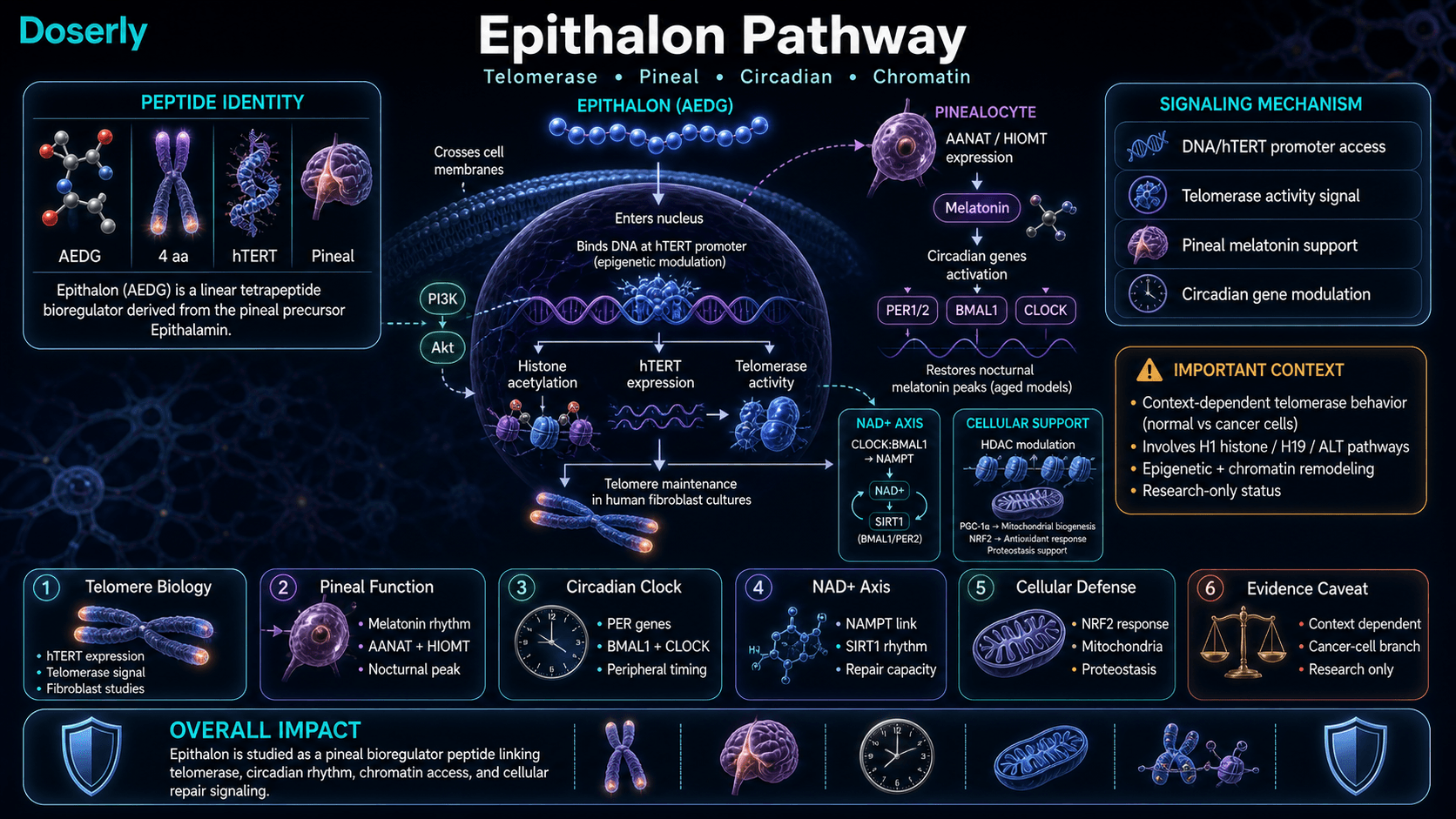
Epithalon's primary mechanism involves direct DNA binding and epigenetic modulation rather than classical receptor-ligand interactions. At approximately 400 Daltons, the peptide crosses cellular membranes and enters the nucleus, where its mechanisms unfold through several documented pathways [2][3].
Telomerase Activation: Epithalon binds to specific DNA sequences at the hTERT gene promoter region, inducing epigenetic modifications including altered histone acetylation patterns that enhance transcriptional accessibility [2]. This results in upregulation of hTERT expression, with measured increases of 4- to 26-fold in treated cell lines [5]. Downstream, the PI3K/AKT signaling pathway is engaged, activating transcription factors that bind to E-box sequences within the hTERT promoter [2]. In human fibroblast cultures, this produced a 33% increase in telomerase activity, with effects persisting 72-96 hours post-administration [1][7]. Treated cells extended beyond the normal Hayflick limit, reaching 44+ population doublings versus 34 in controls [1].
Pineal Function and Circadian Biology: Epithalon stimulates melatonin synthesis in pinealocytes by modulating AANAT (aralkylamine N-acetyltransferase) and HIOMT (hydroxyindole-O-methyltransferase) expression [4]. Studies in aged primate models demonstrate restoration of nocturnal melatonin peaks with 40-60% increases in peak concentrations [4]. The peptide also influences core circadian gene expression (PER1/2, BMAL1, CLOCK), enhancing amplitude and precision of circadian oscillations extending beyond the suprachiasmatic nucleus to peripheral tissues [2].
The NAD+ Connection: Circadian clock proteins (CLOCK:BMAL1) regulate NAMPT, the rate-limiting enzyme for NAD+ production via the salvage pathway. SIRT1 deacetylates BMAL1 and PER2 in a circadian fashion, and NAD+ itself cycles with a 24-hour rhythm [8]. Epithalon's restoration of circadian gene expression may indirectly support the NAD+-sirtuin axis, creating a positive feedback loop between circadian restoration and cellular repair capacity.
Chromatin Remodeling: Beyond telomeric regions, Epithalon modulates histone deacetylase (HDAC) activity, shifting the balance toward increased acetylation states associated with active transcription. This affects genes involved in mitochondrial biogenesis (PGC-1alpha upregulation with 20-35% increases in mitochondrial DNA content), antioxidant response (NRF2 activation increasing SOD2, catalase, and glutathione peroxidase expression), and proteostasis maintenance [2][9].
2025 Dual Mechanism Discovery: The Brunel University study revealed that Epithalon behaves differently in normal versus cancer cells. In normal cells, it activates telomerase through hTERT upregulation. In cancer cells (which have lower baseline H1 histone levels), it binds H1 histones, de-represses H19, and actually inhibits telomerase, with compensation occurring through the Alternative Lengthening of Telomeres (ALT) pathway [5]. This context-dependent behavior may explain the reduced tumor incidence observed in animal studies despite telomerase activation.
Pathway Visualization Image
Pharmacokinetics
The Basics
Epithalon works differently from most peptides when it comes to timing. It is typically injected under the skin, where it is absorbed quickly, peaks in your blood within about an hour, and clears out within a few hours. But the effects last much longer than you would expect from something that leaves your system so quickly.
This is because Epithalon does not work by staying present in your bloodstream. Instead, it triggers changes in how your genes are expressed, changes that persist after the peptide itself is gone. Think of it like flipping a light switch rather than holding down a button. Once the gene expression changes are made, they continue operating on their own for weeks to months. This is why the compound is used in short courses (10-20 days) rather than taken daily indefinitely.
Evening administration is most commonly cited because of the compound's effect on melatonin production. Aligning the dose with your body's natural nighttime rhythm may optimize the circadian restoration effect.
The Science
Epithalon demonstrates pharmacokinetic properties typical of small peptides, with some important distinctions related to its epigenetic mechanism of action [2].
Absorption: Following subcutaneous administration, bioavailability approaches 95-100% with peak plasma concentrations (Tmax) reached within 45-90 minutes [2]. The peptide's relatively small molecular weight (390.35 Da) facilitates rapid absorption from the injection depot. Oral bioavailability is limited due to enzymatic degradation in the gastrointestinal tract.
Distribution: Rapid distribution to peripheral tissues occurs with particular accumulation in the pineal gland, hypothalamic regions, and lymphoid tissues [2]. The peptide crosses the blood-brain barrier, enabling central nervous system effects. Moderate albumin binding (estimated 40-60%) has been reported [2].
Metabolism and Elimination: Primary metabolism occurs through enzymatic hydrolysis by plasma and tissue peptidases, generating constituent amino acids that enter normal metabolic pathways. Reported plasma elimination half-life ranges from 1 to 4 hours depending on the source and measurement approach, with most references citing 2-3 hours for subcutaneous administration [2]. Renal clearance is the primary elimination route, with minimal hepatic involvement (no cytochrome P450 substrate characteristics) [2].
Dose-Response Characteristics: Cell culture studies demonstrate optimal activity at approximately 10 ng/mL (roughly 25 nM), with higher concentrations showing no additional benefit [5]. This inverse dose-response pattern is consistent with an epigenetic signaling mechanism rather than direct enzyme inhibition, and supports the clinical approach of short, intensive courses rather than continuous administration.
Research & Clinical Evidence
Telomere Biology and Cellular Aging
The Basics
The most compelling data for Epithalon comes from laboratory cell studies. When human cells are treated with Epithalon in a dish, they can divide more times than they normally would before reaching their limit. This suggests the telomere-rebuilding mechanism is genuinely active. One study showed cells continuing to divide past the point where untreated cells had stopped, providing direct evidence that telomerase activation translates to extended cellular lifespan.
The first independent confirmation of this mechanism outside of Russia came in 2025 from Brunel University in London. Their study not only confirmed that Epithalon activates telomerase in normal cells, but also discovered that it behaves differently in cancer cells, where it actually suppresses telomerase and activates an alternative pathway instead. This finding is significant because it addresses the primary safety concern about telomerase activation.
The Science
In human fetal fibroblast cultures, Epithalon induced telomerase activity and elongated telomeres, extending replicative lifespan beyond the Hayflick limit (44+ passages vs. 34 in controls) with no observed cytotoxicity [1]. A 2025 independent study at Brunel University confirmed telomerase activation with 4-26 fold hTERT upregulation in normal cell lines and additionally discovered context-dependent ALT pathway activation in cancer cells [5].
Animal Longevity Studies
The Basics
Animal studies paint an encouraging picture, though with important limitations. Mice and rats treated with Epithalon have lived longer than untreated animals in several studies, with the most notable finding being a 12-13% increase in maximum lifespan for the longest-lived animals. The compound also reduced spontaneous cancer development by six-fold in one mouse study. Fruit flies showed a 52% reduction in mortality.
These are genuinely impressive numbers for an animal study. But they all come from a single research group, which means they await independent confirmation.
The Science
Multiple animal models demonstrate geroprotective effects. In SHR mice, Epithalon increased maximum lifespan by 12-13% for the longest-lived 10th percentile (mean lifespan was unaffected), reduced spontaneous leukemia development 6-fold, and decreased chromosome aberrations in bone marrow cells by 17.1% [10]. In fruit flies and rats, epithalamin decreased mortality by up to 52% [11]. In HER-2/neu transgenic mice, Epithalon decelerated aging and suppressed development of breast adenocarcinomas [12]. Female rats exposed to different illumination regimes showed reduced tumor development and extended lifespan with chronic Epithalon administration [13].
Human Clinical Evidence
The Basics
The human evidence is where the story becomes complicated. Several long-term studies in elderly patients report remarkable results: 28% lower mortality over 12 years, improved cardiovascular health, restored melatonin production, and better immune function. One study even claimed a 4.1-fold reduction in mortality when Epithalon was combined with Thymalin.
If these results are accurate, they would be unprecedented in medical history. No drug, supplement, or intervention has ever achieved a four-fold mortality reduction in humans. This extraordinary magnitude, combined with the fact that every study comes from a single institute with commercial interests in the compound, means these claims require independent verification before they can be accepted as established science.
The most consistently documented human effect is restoration of melatonin production. Studies in elderly subjects and aged primates show Epithalon normalizes nocturnal melatonin peaks to levels approaching those of younger individuals, a finding that aligns with the widely reported sleep improvements among users.
The Science
Clinical evidence derives primarily from longitudinal studies conducted at the St. Petersburg Institute. A Kiev 15-year study (n=79) reported 28% lower all-cause mortality and approximately 50% lower cardiovascular mortality in epithalamin-treated coronary patients versus controls over 12 years of follow-up [14]. A combined therapy study (n=266) using Thymalin plus Epithalamin over 6 years reported a 4.1-fold mortality reduction [15]. A retinitis pigmentosa study (n=162) using parabulbar injection reported positive clinical effects in approximately 90% of patients [4].
Neuroendocrine effects include normalization of cortisol circadian rhythms, improved lipid metabolism profiles, and enhanced melatonin production with 1.6-fold increases in nocturnal melatonin in elderly subjects [4]. T-cell receptor excision circles (TRECs) showed increases consistent with enhanced thymopoiesis [2].
No registered trials appear on ClinicalTrials.gov. Approximately 50% of publications are available only in Russian, limiting international peer review and evaluation [6]. The ADDF assessment explicitly notes the absence of independent confirmation [6]. A 2025 systematic review in the International Journal of Molecular Sciences stated that "information regarding critical issues about this peptide's safety is missing" [16].
Eye Health
The Basics
One of the more specific findings from the research involves eye health. In a study of patients with retinitis pigmentosa, a degenerative eye condition, Epithalon improved outcomes in about 90% of participants. The peptide appeared to help preserve normal eye structure while boosting the electrical function of the retina needed for vision.
The Science
A clinical study involving 162 patients with retinitis pigmentosa administered Epithalon via parabulbar injection (5.0 mcg, 10-day courses). Results showed positive clinical effects in approximately 90% of cases, with preservation of retinal structure and improved bioelectric function [17]. Animal models suggest potential benefits in age-related macular degeneration through antioxidative and anti-apoptotic effects [2].
Biomarker Evidence Matrix
Category
Sleep Quality
- Evidence Strength
- 6/10
- Reported Effectiveness
- 7/10
- Summary
- Most consistently reported subjective benefit. Melatonin restoration documented in primate and human studies. Community reports show clear improvement in most users, with a notable minority reporting disrupted sleep at higher doses.
Category
Longevity & Neuroprotection
- Evidence Strength
- 5/10
- Reported Effectiveness
- 6/10
- Summary
- Telomerase activation confirmed in cell culture (including independent 2025 replication). Animal lifespan extension documented but from single research group. One documented case of telomere lengthening in a self-experimenter. Longevity is inherently not subjectively measurable.
Category
Immune Function
- Evidence Strength
- 4/10
- Reported Effectiveness
- 5/10
- Summary
- Animal studies show thymic restoration and enhanced T-cell production. Human studies report improved immune markers. Practitioner communities discuss immune benefits extensively, but user-reported immune improvements are essentially absent.
Category
Energy Levels
- Evidence Strength
- 3/10
- Reported Effectiveness
- 5/10
- Summary
- Limited direct evidence. Community reports are mixed: some report improved vitality after cycles, others report initial fatigue during active dosing. Likely secondary to sleep improvement rather than direct mechanism.
Category
Mood & Wellbeing
- Evidence Strength
- 3/10
- Reported Effectiveness
- 6/10
- Summary
- No targeted research. Community anecdotes describe improved calm and patience during cycles. Low volume but consistently positive when mentioned. Possible secondary effect of circadian restoration and improved sleep.
Category
Skin Health
- Evidence Strength
- 4/10
- Reported Effectiveness
- 4/10
- Summary
- Animal studies show 30-45% increase in fibroblast activation and MMP2 regulation. Users generally report no visible skin changes, creating a gap between preclinical data and lived experience.
Category
Heart Health
- Evidence Strength
- 5/10
- Reported Effectiveness
- 4/10
- Summary
- Human studies claim 50% lower cardiovascular mortality over 12 years, but from a single unreplicated institute. No community members report subjective cardiovascular improvements.
Category
Eye Health
- Evidence Strength
- 5/10
- Reported Effectiveness
- N/A
- Summary
- Single clinical study in retinitis pigmentosa (n=162) with 90% positive effects. No community discussion of eye benefits.
Category
Side Effect Burden
- Evidence Strength
- 5/10
- Reported Effectiveness
- 8/10
- Summary
- Consistently described as very well tolerated across all sources. 15-year follow-up showed favorable safety profile. Mild, transient side effects when present.
Category
Recovery & Healing
- Evidence Strength
- 3/10
- Reported Effectiveness
- 5/10
- Summary
- Limited evidence. A few community reports of improved exercise recovery, likely secondary to improved sleep quality.
Category
Focus & Mental Clarity
- Evidence Strength
- 3/10
- Reported Effectiveness
- 4/10
- Summary
- Mixed community reports. Some describe brain fog during cycles; others report feeling mentally sharp. Gene expression studies show neurogenesis-related effects but no cognitive-specific human data.
Category
Stress Tolerance
- Evidence Strength
- 3/10
- Reported Effectiveness
- 5/10
- Summary
- Theoretical benefit through cortisol rhythm normalization. One detailed anecdote of improved emotional regulation. Insufficient data for confident scoring.
Benefits & Potential Effects
The Basics
Epithalon's benefits cluster around two central themes: cellular maintenance and circadian restoration.
The most reliably experienced benefit is improved sleep. People who use Epithalon commonly report falling asleep more easily, sleeping more deeply, and waking up feeling more refreshed. These changes typically appear within the first one to two weeks of a cycle and, in many cases, persist for months after the cycle ends. This makes sense given the compound's direct effect on melatonin production.
Beyond sleep, Epithalon is used primarily as a longevity compound. The telomere-related benefits are not something you can feel day to day. They represent an investment in long-term cellular health, maintaining the capacity of your cells to continue dividing properly as you age. Some users track their telomere length through laboratory testing before and after cycles, though commercial telomere tests have significant measurement variability.
Other benefits reported in the research literature include antioxidant effects (your cells produce less damaging waste), improved immune function (particularly relevant as immune capacity declines with age), and potential anti-tumor effects. Most of these are documented in animal studies and have not been confirmed through rigorous human trials.
The Science
Documented and proposed benefits span multiple physiological systems [1][2][4][9]:
Telomere Maintenance: Telomerase activation leading to telomere elongation in somatic cells, extending replicative capacity and potentially reducing the accumulation of senescent cells [1][5].
Circadian Restoration: Normalized melatonin synthesis and circadian gene expression (PER1/2, BMAL1, CLOCK), with downstream effects on sleep architecture, hormonal rhythms, and repair timing [4][8].
Antioxidant Enhancement: Upregulation of antioxidant enzymes (SOD, catalase, glutathione peroxidase) through NRF2 pathway activation. Pineal peptide preparations have demonstrated antioxidant properties exceeding those of exogenous melatonin in some assays [9].
Immune Modulation: Partial restoration of thymic architecture and thymopoiesis in aged models. Enhanced T-cell function, increased interferon gamma expression in aging lymphocytes, and improved IL-2 signaling [2][18].
Gene Expression Regulation: Direct interactions with promoter regions of CD5 (immune cell differentiation), IL-2 (white blood cell regulation), MMP2 (extracellular matrix maintenance), and Tram1 (protein production) [19].
Potential Anti-Tumor Effects: Reduced spontaneous tumor incidence in animal models. Activation of PER1 gene expression, which sensitizes cells to radiation therapy. The 2025 Brunel study suggests a safety mechanism where Epithalon suppresses telomerase in cancer cells while activating it in normal cells [5][12][13].
Side Effects & Safety Considerations
The Basics
Epithalon has a favorable safety profile based on the available data. In studies spanning up to 15 years, no significant adverse effects have been reported. The most common side effects are mild and temporary: slight discomfort at the injection site, occasional headache, drowsiness or fatigue during the first few days, and vivid dreams.
One counterintuitive finding deserves attention: while most people report improved sleep, a subset of users actually experience disrupted sleep, particularly at higher doses or with evening administration. Some of these users found that switching to morning dosing or reducing the dose resolved the issue. If sleep disruption occurs, adjusting timing before concluding the compound is not working may be worthwhile to discuss with a healthcare provider.
The primary theoretical safety concern is cancer risk. Since Epithalon activates telomerase, and cancer cells also use telomerase to achieve unlimited growth, there has been concern that the compound could promote cancer. However, animal studies actually showed reduced cancer incidence, and the 2025 Brunel University study revealed that Epithalon behaves differently in cancer cells (suppressing rather than activating telomerase). This is reassuring but not definitive.
The FDA has specifically identified Epithalon among peptides that may pose immunogenicity risks (meaning it could potentially trigger immune reactions), which was cited as a concern in their Category 2 classification. Long-term immunogenicity data in humans has not been systematically studied.
The Science
Observed side effects in clinical literature and community reports:
Side Effect
Injection site reactions
- Frequency
- Common
- Notes
- Mild redness, swelling; resolves spontaneously
Side Effect
Fatigue/drowsiness
- Frequency
- Occasional
- Notes
- Typically first 2-3 days of cycle; transient
Side Effect
Mild headache
- Frequency
- Occasional
- Notes
- Usually resolves within 24-48 hours
Side Effect
Sleep pattern disruption
- Frequency
- Uncommon
- Notes
- Paradoxical insomnia reported by minority of users, especially at higher doses
Side Effect
Vivid dreams
- Frequency
- Occasional
- Notes
- Generally considered positive (REM enhancement)
Side Effect
Mild nausea
- Frequency
- Rare
- Notes
- Reported infrequently
Long-term safety data: A 15-year follow-up study of coronary patients receiving biannual epithalamin courses showed no adverse effects and improved cardiovascular outcomes versus controls [14]. A 2025 systematic review noted that "information regarding critical issues about this peptide's safety is missing," specifically citing gaps in long-term safety data, immunogenicity assessment, and drug interaction characterization [16].
Cancer risk assessment: 12-year follow-up documented cancer incidence of 8.2% in treated groups versus 12.7% in controls [2]. Animal studies consistently show reduced tumor incidence [10][12][13]. The dual mechanism discovery (telomerase activation in normal cells, ALT pathway in cancer cells) provides a potential mechanistic explanation for the apparent safety [5].
Contraindications:
- Active malignancy or history of cancer within 5 years (telomerase activation remains a theoretical concern despite favorable preclinical data)
- Pregnancy and breastfeeding (no safety data)
- Autoimmune conditions (unknown immune modulation effects)
- Children and adolescents (not studied)
- Concurrent immunosuppressant use (potential for immune interaction)
Dosing Protocols
The Basics
Epithalon uses a fundamentally different dosing approach from most peptides. Instead of daily doses taken indefinitely, it is used in short, intensive courses (typically 10-20 days) followed by long rest periods of 4-6 months. Most practitioners suggest running 2-4 cycles per year.
This cycling pattern aligns with how the compound works. Since Epithalon triggers lasting changes in gene expression rather than providing a continuous effect that requires its presence, the short course is like flipping a switch that stays on for months after the peptide clears your system. More frequent dosing does not appear to provide additional benefit.
The most commonly cited dose range across the literature is 5-10 mg per day administered subcutaneously, with evening dosing preferred due to the compound's effect on melatonin production. However, there is active debate within the community about whether these doses are higher than necessary.
Several named protocols have been published:
Protocol
Standard
- Dose
- 5 mg/day subcutaneous
- Schedule
- Daily for 20 consecutive days
- Cycling
- Every 4-6 months
Protocol
Alternative Standard
- Dose
- 10 mg/day subcutaneous
- Schedule
- Daily for 10 consecutive days
- Cycling
- Every 4-6 months
Protocol
Original Khavinson
- Dose
- 10 mg intramuscular
- Schedule
- Every 3rd day, 5 injections (50 mg total)
- Cycling
- Every 6 months
Both standard protocols deliver approximately the same total cycle dose of 100 mg, just distributed differently. Some practitioners prefer the 20-day course at a lower daily dose for a more gradual effect, while others favor the higher-dose, shorter-duration approach.
Evening administration is recommended by most sources, ideally 1-2 hours before bed, to align with the compound's melatonin-stimulating mechanism. However, users who experience sleep disruption at this timing have reported success with afternoon or morning administration.
There is no established consensus on an optimal dose. Individuals interested in using Epithalon should consult a healthcare professional to determine the most appropriate approach for their situation.
The Science
Published clinical protocols utilized subcutaneous or intramuscular administration at 1-10 mg per cycle day, with biannual cycling over observation periods of 6-12 years [14][15]. The standard research protocol involves daily administration of 5-10 mg subcutaneously for 10-20 consecutive days, followed by 4-6 month rest periods [1][2].
Cell culture studies demonstrate optimal telomerase activation at approximately 10 ng/mL (25 nM), with higher concentrations showing plateau or no additional benefit [5]. This suggests the compound operates through an epigenetic threshold mechanism where exceeding the activation concentration does not proportionally increase effect.
No dose-ranging studies in humans have been published. The existing protocols were developed empirically within the Khavinson research program. Animal studies used doses of 0.1-1.0 mcg/kg/day, which translate to human equivalent doses (HED) of approximately 0.5-1.5 mg/day, lower than the commonly cited 5-10 mg/day range used in human protocols [2].
Consistency is the difference between a protocol that delivers results and one that wastes time and money. Doserly was built for exactly this: keeping you on track with the precision your protocol demands.
The built-in calculators handle the math you shouldn't be doing in your head. The reconstitution calculator tells you exactly how much bacteriostatic water to add for your target concentration. The dose calculator converts between units, milligrams, and syringe markings so you draw the right amount every time. The injection site heat map tracks where you've administered and when, helping you rotate sites systematically to reduce tissue damage, scarring, and absorption inconsistencies from overusing the same area. Pair that with smart reminders tuned to your protocol's timing requirements, and you build the kind of daily consistency that separates optimized protocols from haphazard ones.
Build reminders around the routine, not just the compound.
Doserly can keep timing, skipped doses, and schedule changes organized so the plan you read about becomes easier to follow and review.
Today view
Upcoming reminders

Reminder tracking supports consistency; it does not select a protocol for you.
What to Expect
For most people, the first noticeable change with Epithalon is sleep. Beyond that, the compound's effects are primarily long-term and not directly perceptible, which can make it feel like nothing is happening even when the underlying mechanisms may be active.
Days 1-3: Some users report mild fatigue, drowsiness, or brain fog as the compound begins influencing circadian signaling. This typically resolves within the first few days. A small number of users experience disrupted sleep during this adjustment period, particularly at higher doses.
Days 4-10: Sleep improvements become more apparent for most users. Reports commonly describe falling asleep more naturally, sleeping more deeply, and waking up feeling more rested. Some users notice subtle improvements in energy levels, exercise recovery, and general sense of wellbeing during this window.
Days 10-20 (if running a 20-day cycle): Sleep improvements often stabilize and become the new baseline. One user reported "uncanny patience" and emotional calm during this period. Vivid dreams are occasionally reported. The telomere-related and gene expression effects are occurring at the cellular level but are not subjectively perceptible.
Post-cycle (weeks to months): Many users report that sleep improvements persist for weeks to months after the cycle ends. The epigenetic changes triggered by Epithalon appear to have lasting effects beyond the compound's presence in the body. This persistence is the rationale for the cycling approach.
What you will NOT likely notice: Visible anti-aging changes (skin, hair), dramatic energy shifts, cognitive enhancement, or any immediate sense of "feeling younger." Users who enter with these expectations are commonly disappointed. As one experienced user noted: "I experienced better sleep and improved recovery. I have not noticed a younger appearance." The telomere maintenance effects, if occurring, operate on a timescale of years, not weeks.
Non-responders exist. Some users complete full protocols with no subjective changes whatsoever. Whether this reflects individual biology, product quality variation, or the absence of a deficiency that Epithalon could correct is unknown. The compound may be more relevant for individuals with age-related decline in pineal function or measurably short telomeres than for younger, healthy individuals whose systems are already functioning normally.
The week-by-week expectations above are drawn from research and community reports, but your experience will be uniquely yours. Doserly's biomarker tracking transforms those general timelines into personal data points you can actually see and measure.
Log the specific markers relevant to this compound, whether that's pain levels, energy, sleep quality, body composition, recovery time, or mood, and watch your own trend lines emerge over weeks and months. Did your key markers start shifting in week three, like the research suggests? Is your experience tracking with what the community reports, or diverging? Over time, this creates something more valuable than any guide: an evidence-based picture of how your body responds to this specific compound, at your specific dose, within your specific health context.
Turn symptom and safety notes into a clearer timeline.
Doserly helps you log doses, symptoms, and safety observations side by side so patterns are easier to discuss with a qualified clinician.
Pattern view
Logs and observations
Pattern visibility is informational and should be reviewed with a clinician.
Interaction Compatibility
Good With (Synergistic Compounds)
- NAD+ — Epithalon restores circadian gene expression (CLOCK, BMAL1), which regulates NAMPT, the rate-limiting enzyme for NAD+ salvage pathway production. The two compounds address the same circadian-NAD+-sirtuin axis from different entry points, creating theoretical synergy [8].
- MOTS-C — Epithalon addresses circadian timing; MOTS-C addresses mitochondrial metabolic efficiency. Together they may support complementary aspects of cellular health and aging [2].
- SS-31 — Mitochondrial membrane integrity (SS-31) combined with circadian regulation and telomere maintenance (Epithalon) covers multiple hallmarks of aging simultaneously [2].
- Thymosin Alpha-1 — The original Khavinson longevity protocol combined Epithalamin with Thymalin (related to Thymosin Alpha-1) for immune and longevity synergy. The combined therapy study reported the strongest mortality reduction [15].
- Pinealon — Companion neuroprotective peptide from the same bioregulator research program. Shares pineal gland and circadian targets [2].
- DSIP — Delta Sleep-Inducing Peptide addresses sleep architecture through a different mechanism (delta wave enhancement) than Epithalon's melatonin restoration. Some users cycle between the two [2].
Not Good With (Exercise Caution)
- Active cancer or cancer history — Telomerase activation is a theoretical concern despite favorable preclinical data showing reduced tumor incidence.
- Immunosuppressants — Epithalon's immune-modulating effects (enhanced T-cell function, thymic restoration) could interfere with immunosuppressive therapy.
- Exogenous melatonin supplementation — Potential redundancy. Epithalon aims to restore endogenous melatonin production; concurrent supplementation may confound this mechanism.
Administration Guide
Materials required:
- Insulin syringes (U-100, 27-30 gauge)
- Alcohol swabs (for vial stopper and injection site)
- Bacteriostatic water for reconstitution
- Sharps disposal container
Recommended reconstitution solution: Bacteriostatic water. For a 10 mg vial, adding 2.0 mL of bacteriostatic water yields a concentration of 5 mg/mL, allowing straightforward measurement with a U-100 insulin syringe (1 unit = 0.01 mL = 50 mcg at this concentration).
Timing considerations: Most sources recommend evening administration, 1-2 hours before bed, to align with the compound's melatonin-stimulating mechanism. This timing synchronizes with the natural circadian upswing in melatonin production. Users experiencing disrupted sleep with evening dosing have reported success with afternoon administration instead.
Post-administration care: Monitor for injection site reactions (mild redness or swelling is common and typically resolves within hours). Track sleep patterns from the start of the cycle, as sleep quality changes are the earliest and most reliable subjective indicator that the compound is active. Be aware that mild fatigue or drowsiness may occur during the first 2-3 days.
Supplies & Planning
The following materials are generally associated with Epithalon protocols:
- Peptide vials: Epithalon is commonly available in 10 mg lyophilized vials
- Bacteriostatic water: Standard reconstitution solution (typically 10 mL bottles)
- Insulin syringes: U-100 insulin syringes (27-30 gauge) for subcutaneous administration
- Alcohol swabs: For sterilizing vial stoppers and injection sites
- Sharps container: For proper disposal of used syringes
- Refrigerator storage: Required for reconstituted vials (2-8°C)
- Freezer storage: Recommended for long-term lyophilized vial storage (-20°C)
Specific quantities depend on individual protocol parameters (dose, cycle length, number of cycles per year). Consult with a healthcare provider to determine the appropriate protocol and calculate material requirements. Doserly's reconstitution calculator can assist with concentration and syringe measurement calculations.
Storage & Handling
Proper storage directly affects peptide integrity and potency.
Lyophilized (powder form):
- Long-term storage: -20°C (-4°F) for stability exceeding 3 years
- Short-term storage: 2-8°C (35.6-46.4°F) for up to 6-12 months
- Keep in a cool, dark place; protect from light and moisture
- Allow vials to reach room temperature before opening to reduce condensation uptake
Reconstituted (liquid form):
- Refrigerate at 2-8°C (35.6-46.4°F)
- Use within 2-4 weeks
- Do not freeze after reconstitution; avoid repeated freeze-thaw cycles
- Reconstitute one vial at a time to keep solutions fresh (every 2 days for a 10 mg vial yielding 2 doses at 5 mg each)
- Protect from light
Handling best practices:
- Do not shake reconstituted vials; gently swirl or roll to dissolve
- Inject reconstitution solution slowly down the vial wall to avoid foaming
- Use sterile technique when drawing from vials
- Discard any vial showing visible particulates, discoloration, or cloudiness
Lifestyle Factors
The effectiveness of Epithalon is closely linked to the lifestyle factors that influence the same biological systems it targets. Circadian rhythm, sleep quality, oxidative stress, and immune function are all modifiable through daily habits.
Sleep hygiene: Since Epithalon's most immediately perceptible effect involves sleep, supporting your sleep environment and habits maximizes this benefit. Maintain consistent sleep-wake schedules, minimize blue light exposure in the evening hours, and keep your sleeping environment cool and dark. These practices reinforce the circadian restoration that Epithalon promotes.
Physical activity: Regular exercise supports cardiovascular adaptations, mitochondrial function, and metabolic health, all areas where Epithalon's research shows potential benefit. Exercise also independently promotes telomere maintenance through its own biological pathways.
Nutrition: An antioxidant-rich diet supports the oxidative stress reduction that Epithalon may promote through NRF2 pathway activation. Adequate protein intake supports the cellular repair processes that depend on the circadian timing Epithalon helps regulate.
Stress management: Chronic stress disrupts cortisol rhythms and accelerates telomere shortening, working against the processes Epithalon aims to support. Mindfulness practices, relaxation techniques, and stress reduction strategies complement the neuroendocrine regulatory effects of the compound.
Monitoring: Tracking sleep quality, energy levels, and overall wellbeing throughout Epithalon cycles provides the subjective data needed to assess whether the compound is producing meaningful effects. Some practitioners recommend baseline telomere length testing and periodic retesting, though commercial telomere assays have significant measurement variability.
Peptide protocols don't exist in a vacuum. Your nutrition, exercise, sleep, stress, and the rest of your health stack all influence outcomes. Doserly tracks your entire health picture in one place: peptides, supplements, medications, TRT/HRT, and the lifestyle factors that determine whether your protocol reaches its potential.
This holistic view reveals correlations that compartmentalized tracking misses. You might discover that your recovery improvements stall during weeks with poor sleep, or that adding a specific supplement amplified a benefit you were already seeing. Doserly's cross-category visibility helps you understand which lifestyle factors are pulling the most weight in your results, turning health optimization from guesswork into a data-informed practice.
See how each compound fits into the whole protocol.
Doserly organizes compounds, supplements, peptides, medications, and hormone protocols together so overlapping routines are easier to understand.
Stack view
Connected protocol
Stack views improve organization; they do not determine compatibility.
Regulatory Status & Research Classification
United States (FDA): As of September 2024, Epithalon is classified as a Category 2 Bulk Drug Substance, meaning it "may present significant safety risks" and cannot be legally compounded by 503A pharmacies. The FDA specifically cited immunogenicity as a concern. Unlike Ipamorelin and CJC-1295 (which were removed from Category 2 in late 2024), Epithalon remains restricted. No FDA-approved therapeutic products contain Epithalon. No registered trials appear on ClinicalTrials.gov.
Russia: Epithalamin (the natural extract precursor) has received approval. The synthetic tetrapeptide Epithalon remains classified as experimental. Six peptide-based pharmaceuticals and 64 peptide food supplements from Khavinson's research program have been introduced into clinical practice in Russia.
European Union (EMA): Not recognized as a medicinal product. No marketing authorization.
Canada (Health Canada): Unapproved new substance. Not available through regulated channels.
Australia (TGA): Unapproved new substance.
WADA Status: Not currently on the World Anti-Doping Agency prohibited list.
In practice, only research-grade products labeled "not for human use" are available in Western markets. This creates quality control concerns, as purity varies significantly between suppliers.
Regulatory status changes frequently. Always verify the current legal status of any compound in your specific country or jurisdiction before making any decisions.
FAQ
What is Epithalon and what is it used for?
Epithalon is a synthetic tetrapeptide (four amino acids: Ala-Glu-Asp-Gly) that was developed from research on the pineal gland. It has been studied primarily for its potential effects on telomere maintenance and circadian rhythm restoration. Most people who explore Epithalon do so as part of a longevity-oriented protocol, though improved sleep quality is the most commonly reported near-term benefit.
How long does it take for Epithalon to work?
Based on available community reports, sleep improvements are commonly noticed within the first 1-2 weeks of a cycle. The telomere-related effects operate on a much longer timescale and are not subjectively perceptible. Some users notice no changes at all, which may reflect individual biology, product quality, or the absence of a deficiency that Epithalon could address.
Does Epithalon need to be cycled?
Yes. The standard approach involves short courses of 10-20 days followed by rest periods of 4-6 months. This cycling pattern reflects the compound's proposed mechanism of triggering epigenetic changes that persist after the peptide clears the body. Continuous daily use has not been studied and is not commonly practiced. Most sources suggest 2-4 cycles per year.
What are the most common dosing ranges reported in the literature?
Based on available data, commonly cited ranges include 5-10 mg per day administered subcutaneously for 10-20 consecutive days. Some protocols use 10 mg every third day for 5 injections (50 mg total per cycle). There is active discussion in the community about whether lower doses (100-500 mcg/day) may be equally effective. Consult a healthcare professional for guidance on individual dosing decisions.
Can Epithalon cause cancer?
This is the primary theoretical safety concern. Since Epithalon activates telomerase, and cancer cells also use telomerase, there is a theoretical risk. However, animal studies spanning decades have consistently shown reduced cancer incidence in Epithalon-treated groups. A 2025 independent study found that Epithalon behaves differently in cancer cells (suppressing telomerase rather than activating it), providing a potential mechanistic explanation for the apparent safety. Long-term cancer surveillance data in humans remains limited.
Is Epithalon legal?
In the United States, Epithalon is FDA Category 2 and cannot be legally compounded by pharmacies. Only research chemicals labeled "not for human use" are available. Purchasing and possessing research chemicals is generally legal, but using them is legally gray and medically unsupervised. In Russia, the natural precursor Epithalamin is approved; synthetic Epithalon is experimental. In the EU, Canada, and Australia, it is an unapproved substance. Always verify current regulations in your jurisdiction.
Why does most Epithalon research come from a single institute?
Vladimir Khavinson developed Epithalon at the St. Petersburg Institute of Bioregulation and Gerontology, held 196 patents on bioregulator peptides, and was associated with commercial entities selling these products. Over 40 years and 775+ publications, no independent laboratory replicated the human findings. The ADDF flagged this pattern explicitly. Approximately half the publications are in Russian only, limiting international evaluation. The 2025 Brunel University cell study represents the first Western independent confirmation of the cellular mechanism.
How does Epithalon compare to taking melatonin supplements?
The key conceptual difference is that Epithalon reportedly restores the pineal gland's own melatonin production capacity rather than providing exogenous melatonin. Taking melatonin supplements provides a bolus of the hormone but may suppress endogenous production over time. Epithalon theoretically supports the gland's own function, which could provide more sustainable circadian restoration. This distinction, while appealing, has not been validated in comparative studies.
Sources & References
[1] Khavinson VKh, Bondarev IE, Butyugov AA. "Epithalon peptide induces telomerase activity and telomere elongation in human somatic cells." Bull Exp Biol Med. 2003;135(6):590-592. PMID: 12937682.
[2] Khavinson VK, Linkova NS, et al. "Epithalon and telomerase activation: implications for longevity." Adv Gerontol. 2018. PMID: 30651057.
[3] Khavinson VK, Tarnovskaya SI, Linkova NS, et al. "Short cell-penetrating peptides: a model of interactions with gene promoter sites." Bull Exp Biol Med. 2013;154(3):403-410. PMID: 23486579.
[4] Korkushko OV, et al. "Normalizing effect of the pineal gland peptides on the daily melatonin rhythm in old monkeys and elderly people." Adv Gerontol. 2007;20(1):74-85. PMID: 18390082.
[5] Brunel University London (2025). "Dual mechanism of Epithalon in normal vs cancer cells: telomerase activation and ALT pathway." PMC12411320.
[6] Alzheimer's Drug Discovery Foundation. "Epithalamin/Epithalon Cognitive Vitality Report." ADDF Report. Available at: https://www.alzdiscovery.org/
[7] Khavinson VK, Bondarev IE, Butyugov AA. "Peptide promotes telomere elongation and telomerase activity in cultured human cells." Bull Exp Biol Med. 2003. PMID: 12937225.
[8] Nakahata Y, et al. "Circadian control of the NAD+ salvage pathway by CLOCK-SIRT1." Science. 2009;324(5927):654-657. PMC2948667.
[9] Kozina LS, Arutjunyan AV, Khavinson VKh. "Antioxidant properties of geroprotective peptides of the pineal gland." Archives of Gerontology and Geriatrics. 2007. PMID: 17317455. DOI: 10.1016/j.archger.2007.01.029.
[10] Anisimov VN, et al. "Effect of Epitalon on biomarkers of aging, life span and spontaneous tumor incidence in female Swiss-derived SHR mice." Biogerontology. 2003;4(4):193-202. PMID: 14501183.
[11] Anisimov VN, Mylnikov SV, Khavinson VK. "Pineal peptide preparation epithalamin increases the lifespan of fruit flies, mice and rats." Mech Ageing Dev. 1998;103(2):123-132. PubMed.
[12] Anisimov VN, et al. "Inhibitory effect of the peptide epitalon on the development of spontaneous mammary tumors in HER-2/neu transgenic mice." Int J Cancer. 2002;101(1):7-10. PubMed.
[13] Vinogradova IA, et al. "Effect of Ala-Glu-Asp-Gly peptide on life span and development of spontaneous tumors in female rats exposed to different illumination regimes." Bull Exp Biol Med. 2007;144(6):825-830. PMID: 18856211.
[14] Korkushko OV, et al. "15-year follow-up of epithalamin in coronary patients." (Randomized comparative study with 39 treated vs 40 control coronary patients). Published in Adv Gerontol/Bull Exp Biol Med series.
[15] Khavinson VK, Morozov VG. "Peptides of pineal gland and thymus prolong human life." Neuro Endocrinol Lett. 2003;24(3-4):233-240. (n=266, 6-year combined Thymalin + Epithalamin therapy).
[16] Araj SK, Brzezik J, Madra-Gackowska K. "Overview of Epitalon: Highly Bioactive Pineal Tetrapeptide with Promising Properties." Int J Mol Sci. 2025 Mar 17. PMID: 40141333. PMC11943447.
[17] Khavinson V, Razumovsky M, Trofimova S, Grigorian R, Razumovskaya A. "Pineal-regulating tetrapeptide epitalon improves eye retina condition in retinitis pigmentosa." Neuro Endocrinol Lett. 2002;23(4):365-368. PMID: 12195243.
[18] Lin'kova NS, Kuznik BI, Khavinson VK. "Peptide Ala-Glu-Asp-Gly and interferon gamma: their role in immune response during aging." Adv Gerontol. 2012;25(3):478-482. PubMed.
[19] Khavinson V, Diomede F, Mironova E. "AEDG Peptide (Epitalon) Stimulates Gene Expression and Protein Synthesis during Neurogenesis: Possible Epigenetic Mechanism." Molecules. 2020. PMID: 32019204.
Related Peptide Guides
- NAD+ — Cellular energy and NAD+ salvage pathway; circadian-NAD+ axis synergy with Epithalon
- MOTS-C — Mitochondrial-derived peptide for metabolic efficiency; complements Epithalon's circadian restoration
- SS-31 — Mitochondrial membrane integrity peptide; multi-hallmark aging stack with Epithalon
- Thymosin Alpha-1 — Immune modulation; original Khavinson longevity stack partner
- Pinealon — Neuroprotective bioregulator from the same research program
- DSIP — Delta Sleep-Inducing Peptide; alternative sleep architecture approach
- GHK-Cu — Copper peptide for tissue regeneration; potential combination for skin and healing
- BPC-157 — Tissue repair peptide; suggested combination in emerging research
- Vilon — Immune bioregulator from the Khavinson peptide family
- Humanin — Mitochondrial-derived peptide for cellular protection and longevity
- FOXO4-DRI — Senolytic peptide; contrasting approach to aging (see longevity stack discussion)
Need the reconstitution math for Epithalon: Complete Research Guide?
Open the calculator with Epithalon: Complete Research Guide prefilled to estimate concentration, draw volume, and related measurement math from the reconstitution details you already have.