For informational and research purposes only.

Medical DisclaimerTerms of Use

Nootropics / Cognitive Support

Pinealon: Complete Research Guide

By Doserly Editorial Team
On this page

Quick Reference Card

Attribute

Also Known As

Detail
EDR peptide, Glu-Asp-Arg, Glutamylaspartylarginine, T-33 peptide

Attribute

Administration

Detail
Injectable (subcutaneous), oral capsules, sublingual drops, intranasal spray

Attribute

Research Status

Detail
Research Compound. Not FDA-approved. Not WADA-prohibited. All primary research from a single Russian institute (Khavinson group). No independent human clinical trials.

Attribute

Typical Dose Range

Detail
100 mcg to 2 mg/day subcutaneous; 0.2 mg twice daily oral; 5-6 drops 3-4 times daily sublingual

Attribute

Half-Life

Detail
1-2 hours (estimated)

Attribute

Cycle Length

Detail
10-20 days on (extendable to 28-30 days), 3-6 months off

Attribute

Storage

Detail
Lyophilized: -20°C long-term; Reconstituted: 2-8°C (use within 28 days)

Overview / What Is Pinealon?

The Basics

Pinealon is a tiny molecule made of just three amino acids that was developed to protect brain cells from the kind of damage that accumulates with age and stress. Where most nootropics work by increasing neurotransmitter levels to make you feel sharper in the moment, Pinealon takes a completely different approach. It reportedly enters the nucleus of your brain cells and interacts directly with your DNA, adjusting which protective genes are active and which are silent.

Think of it as maintenance for your brain's cellular machinery rather than a performance booster. You probably will not feel dramatically different on any given day. Instead, the proposed value is long-term: keeping neurons healthier, supporting antioxidant defenses, and potentially slowing the gradual oxidative wear that contributes to cognitive decline over years and decades.

Pinealon emerged from the same Russian bioregulation research program that produced Epithalon, led by Vladimir Khavinson at the St. Petersburg Institute of Bioregulation and Gerontology. While Epithalon targets the pineal gland for telomere and circadian rhythm support, Pinealon works specifically at the neuron level, upregulating antioxidant enzymes and modulating stress-response pathways. Despite its name, Pinealon was actually isolated from brain cortex extract research (Cortexin), not pineal tissue. The two are companion peptides that address brain aging from different directions.

The central limitation is worth stating plainly: all published research on Pinealon originates from a single research group with substantial commercial interests (196 patents on bioregulator peptides). There are no registered trials on ClinicalTrials.gov, no independent laboratory replication, and no Western human clinical data. The cellular mechanisms are biologically plausible, but the level of evidence remains preliminary.

The Science

Pinealon (Glu-Asp-Arg, also designated EDR) is a synthetic bioregulatory tripeptide with a molecular weight of 418.40 Da, developed as part of Professor Vladimir Khavinson's peptide bioregulation program at the St. Petersburg Institute of Bioregulation and Gerontology [1][2]. It belongs to the class of short peptides (2-4 amino acids) that are proposed to regulate gene expression through direct DNA interaction rather than classical receptor-mediated signaling.

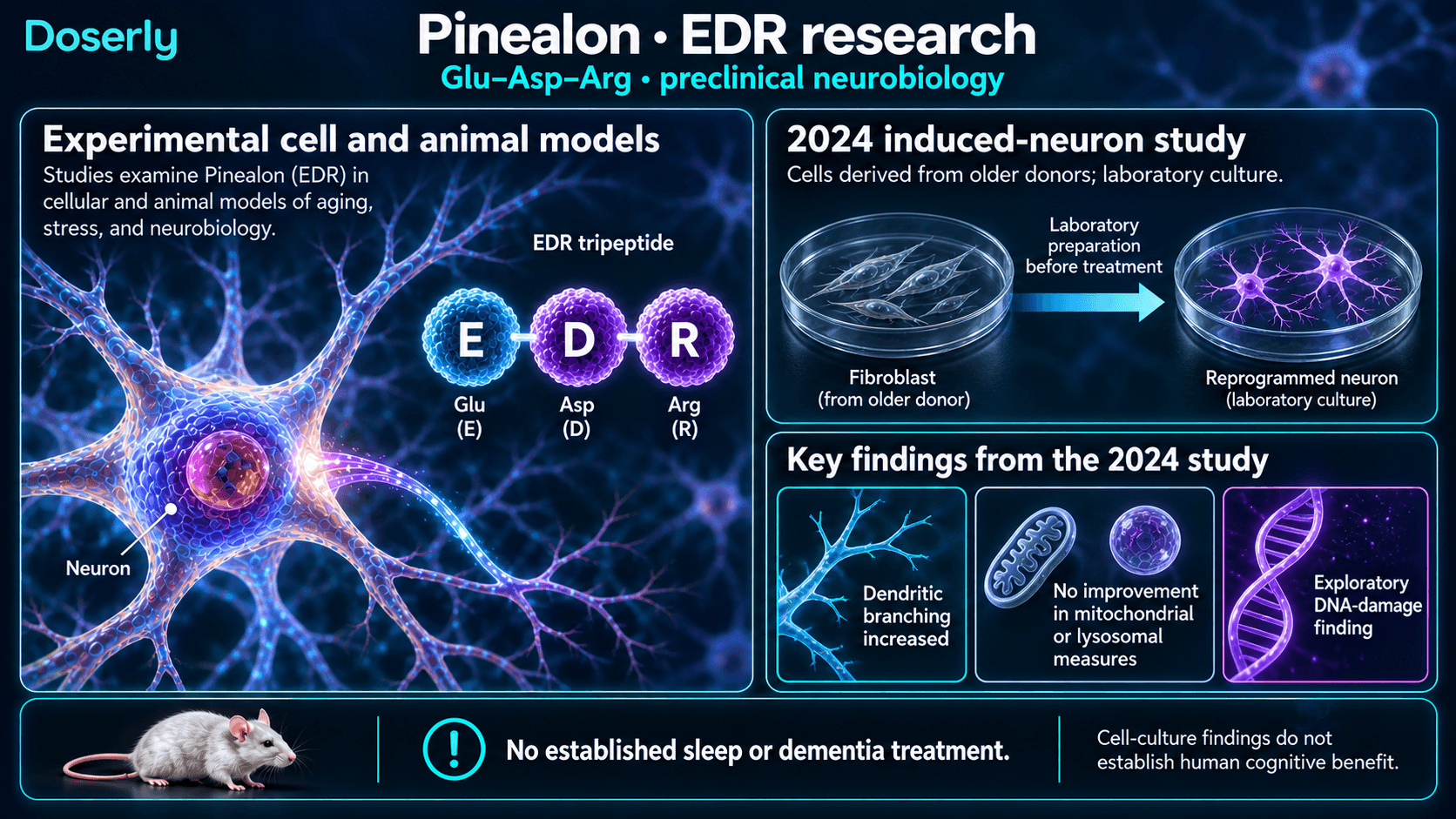
The peptide consists of three amino acids: glutamic acid (acidic, negatively charged), aspartic acid (acidic, negatively charged), and arginine (basic, positively charged). This charge distribution is functionally significant; the arginine residue's positive charge is believed to facilitate nuclear penetration by interacting with negatively charged nuclear pore complexes and chromatin [3]. Fluorescence-labeled peptide studies in HeLa cell cultures have confirmed that EDR crosses both the cellular membrane and nuclear envelope to interact directly with DNA [3].

Pinealon is classified as a neuroprotective bioregulator and geroprotective agent. Its primary function centers on modulating gene expression in neuronal tissue, with documented effects on antioxidant enzyme systems, serotonin synthesis pathways, and apoptotic signaling cascades [1][2][4]. The compound is distinct from Epithalon (AEDG, a tetrapeptide) which targets telomerase activation and pineal/circadian pathways, though both emerge from the same research program and share the general mechanism of epigenetic modulation through DNA binding [5].

Molecular Identity

Attribute

Common Names

Detail
Pinealon, EDR peptide, Glu-Asp-Arg, Glutamylaspartylarginine, T-33 peptide

Attribute

Amino Acid Sequence

Detail
H-Glu-Asp-Arg-OH (EDR)

Attribute

Molecular Formula

Detail
C₁₅H₂₆N₆O₈

Attribute

Molecular Weight

Detail
418.40 Da

Attribute

CAS Number

Detail
175175-23-2

Attribute

PubChem CID

Detail
10273502 / 18220191

Attribute

ChEBI

Detail
CHEBI:156374

Attribute

Structural Type

Detail
Linear tripeptide with free N-terminal amino group and C-terminal carboxylic acid

Attribute

Appearance

Detail
White to off-white lyophilized powder

Attribute

Solubility

Detail
Water-soluble

Attribute

Functional Class

Detail
Peptide bioregulator; neuroprotective agent; geroprotector; gene expression regulator

Attribute

Target Mechanism

Detail
Non-receptor-mediated; direct DNA binding at promoter regions (epigenetic modulation)

Mechanism of Action

The Basics

Your brain faces a unique problem. It makes up about 2% of your body weight but burns roughly 20% of all the oxygen you consume. That intense metabolic activity generates reactive oxygen species (ROS), molecules that damage cellular components if not neutralized. The brain is especially vulnerable because it has limited antioxidant reserves compared to other organs, its neurons are largely irreplaceable, and its neural membranes are rich in fats that are easily damaged by oxidation.

Over time, this oxidative burden contributes to the gradual decline in cognitive function that many people experience with age: slower processing, difficulty concentrating, brain fog, and eventually the more serious neurodegeneration seen in conditions like Alzheimer's and Parkinson's disease.

Pinealon is proposed to address this by working at the genetic level. Rather than supplying antioxidants from outside (like vitamin C or glutathione do), it reportedly enters the nucleus of your neurons and adjusts which genes are active. Specifically, it appears to increase production of your cells' own antioxidant enzymes, including superoxide dismutase (SOD) and glutathione peroxidase (GPx). It also influences the MAPK/ERK stress-response pathway in a way that favors cell survival over cell death when neurons encounter stress.

A useful analogy: if antioxidant supplements are like calling the fire department after a fire starts, Pinealon is more like upgrading the building's fire suppression system so fires are less likely to spread in the first place.

Additionally, Pinealon appears to modulate caspase-3, an enzyme that executes programmed cell death (apoptosis). By reducing caspase-3 activity, it may protect neurons that would otherwise be eliminated during periods of oxidative stress or reduced blood flow. The peptide also upregulates tryptophan hydroxylase-2 (TPH2), the rate-limiting enzyme for serotonin production in the brain, which connects to its reported mood-stabilizing properties.

The Science

Pinealon operates through several interconnected mechanisms centered on epigenetic modulation rather than classical receptor-ligand pharmacology [1][2][3]:

DNA Binding and Chromatin Remodeling: At 418 Da, Pinealon is small enough to cross lipid bilayers, passing through both the cellular and nuclear membranes. Studies using fluorescence-labeled EDR peptide in HeLa cells confirmed direct penetration to the nucleus and interaction with DNA [3]. The peptide binds to specific DNA sequences in the promoter regions of genes related to neuronal function and antioxidant defense, inducing chromatin remodeling that makes these genes more accessible for transcription [1][2].

Antioxidant Gene Upregulation: Pinealon upregulates endogenous antioxidant enzyme systems including SOD2 (superoxide dismutase), GPx1 (glutathione peroxidase), and catalase [4][6]. This occurs at the transcriptional level, increasing the cell's own capacity to neutralize reactive oxygen species. In cell culture studies, Pinealon-treated neurons achieved antioxidant enzyme levels comparable to those found in hypoxia-resistant organisms [6].

MAPK/ERK Pathway Modulation: Pinealon delays ERK1/2 (extracellular signal-regulated kinase) activation from approximately 2.5 minutes to approximately 20 minutes under oxidative stress conditions [6]. This temporal shift is functionally significant: rapid ERK activation typically triggers apoptotic cascades, while slower, sustained activation favors survival signaling. The delayed kinetics allow neurons time to mount a protective response rather than defaulting to programmed cell death.

Caspase-3 Inhibition: In rat models of ischemic stroke, Pinealon reduced caspase-3 activity in neuronal tissue [7]. Caspase-3 is the primary executioner enzyme in the apoptotic cascade. By suppressing this pathway while enhancing antioxidant defense, Pinealon creates a dual protective effect. This caspase-3 modulation has also been documented in cardiac tissue and skin cells [2][8].

Serotonin Synthesis Modulation: Pinealon induces expression of tryptophan hydroxylase-2 (TPH2) via epigenetic changes in brain cortex cell cultures [9]. TPH2 is the rate-limiting enzyme for serotonin biosynthesis in the central nervous system. This mechanism is distinct from SSRIs (which block serotonin reuptake) and 5-HTP supplementation (which provides precursors); Pinealon upregulates the neuron's endogenous capacity for serotonin production.

Additional Targets: The Nrf2 antioxidant pathway is activated, BDNF/TrkB receptor signaling is modulated, clock genes (BMAL1/CLOCK) are upregulated, and melatonin synthesis pathways are influenced through AANAT (arylalkylamine N-acetyltransferase) induction [1]. These effects position Pinealon at the intersection of neuroprotection, circadian regulation, and cellular longevity.

Pathway Visualization Image

Pharmacokinetics

The Basics

Pinealon has a short half-life of approximately 1-2 hours, meaning it clears from your bloodstream relatively quickly after administration. However, similar to Epithalon, the effects are believed to persist much longer than the peptide itself remains present. This is because Pinealon works by changing which genes are active in your neurons, and those gene expression changes continue operating after the peptide is gone.

This "flip the switch" mechanism is why the compound is used in short, intensive cycles (10-20 days) rather than taken continuously. The idea is that a brief exposure triggers regulatory changes at the DNA level that sustain themselves for months, similar to how a software update continues working long after the download process finishes.

One notable feature is that Pinealon has documented oral bioavailability. Most peptides are destroyed by stomach acid and digestive enzymes before they can be absorbed, making injection the only viable route. Pinealon's extremely small size (just three amino acids) allows it to survive oral delivery. A study using 0.2 mg twice daily orally for 20-30 days in 72 patients with traumatic brain injury reported cognitive improvements [4]. Subcutaneous injection remains the most direct route, but oral, sublingual, and intranasal delivery are all used in practice.

The onset time after subcutaneous injection is estimated at 30-60 minutes, with effects potentially lasting 12-24 hours at the functional level. Morning administration is commonly recommended to align with peak brain activity and natural circadian rhythms.

The Science

Pinealon's pharmacokinetic profile reflects its tripeptide structure and epigenetic mechanism of action [1][2]:

Absorption: Subcutaneous bioavailability is estimated at approximately 95% [1]. Oral bioavailability is lower but clinically relevant, demonstrated in a human study using 0.2 mg oral capsules twice daily [4]. The peptide's small molecular weight (418 Da) and structural simplicity enable survival through the gastrointestinal tract at sufficient levels for pharmacological activity. Intranasal and sublingual routes offer intermediate bioavailability.

Distribution: At 418 Da, Pinealon readily crosses the blood-brain barrier, consistent with its primary neurological targets. Nuclear penetration has been confirmed through fluorescence-labeled peptide studies showing accumulation in both cytoplasm and nucleus [3].

Metabolism and Elimination: Plasma half-life is estimated at 1-2 hours [1]. As a tripeptide composed entirely of proteinogenic amino acids, Pinealon is degraded by standard peptidases into its constituent amino acids (glutamic acid, aspartic acid, arginine), which enter normal amino acid metabolism.

Biological Effect Duration: The disconnect between short plasma half-life and prolonged biological activity is characteristic of epigenetic modulators. Gene expression changes induced by promoter-region binding persist beyond peptide clearance. This supports the cycled dosing approach (10-20 day intensive courses) used in research protocols [2][10].

Food Interaction: When administered orally or sublingually, best taken away from meals to minimize enzymatic breakdown in the gastrointestinal tract [1].

Research & Clinical Evidence

The Basics

The research on Pinealon tells a story of promising mechanisms with significant gaps in validation. In laboratory settings, the peptide consistently demonstrates neuroprotective effects: brain cells treated with Pinealon survive oxidative stress better, maintain healthier antioxidant levels, and resist programmed cell death more effectively than untreated cells. In aged rodent models, the compound preserves learning and memory on behavioral testing.

However, the human evidence is extremely thin. One study treated 72 patients with traumatic brain injury consequences using oral Pinealon (0.2 mg twice daily for 20-30 days) and reported improvements in memory, attention, and cognitive function [4]. Another study treated 32 patients with chronic polymorbidity and organic brain syndrome with 10-day courses of Pinealon and measured decreases in biological age markers by 5-7 years [10]. These are the most substantive human data points available.

The critical limitation across all Pinealon research is the single-source problem. Every published study originates from the Khavinson group at the St. Petersburg Institute, which holds 196 patents on bioregulator peptides and has commercial entities selling them. Approximately half the publications are in Russian only. No independent laboratory anywhere in the world has attempted to replicate the findings, and no trials are registered on ClinicalTrials.gov. This does not mean the research is wrong, but it means the standard scientific process of independent verification has not occurred.

For context, Epithalon (Pinealon's companion peptide from the same program) recently received its first independent Western validation at Brunel University London in 2025, confirming the telomerase mechanism in cell culture [5]. No equivalent independent study exists for Pinealon.

The Science

Cell Culture Studies:

Pinealon has been extensively studied in neuronal cell culture models with consistent neuroprotective findings [1][2][4][6]:

  • Cortical neuron and hippocampal cell cultures exposed to oxidative stress showed increased cell viability and reduced apoptotic markers (caspase-3, p53) with Pinealon treatment [4][6]
  • Antioxidant gene expression (SOD, glutathione-related enzymes) was upregulated at the transcriptional level [6]
  • ERK1/2 activation timing was shifted from 2.5 to ~20 minutes under stress conditions, favoring survival signaling [6]
  • Protection against excitotoxic damage from NMDA receptor overactivation was demonstrated [2][11]
  • Tryptophan hydroxylase-2 induction in brain cortex cells increased serotonin synthesis capacity [9]

Animal Studies:

  • Aged rodent models demonstrated preserved learning and memory on behavioral testing (Morris water maze, spatial orientation tasks) with chronic Pinealon administration [4][12]
  • Prenatal rats exposed to hyperhomocysteinemia showed neuroprotection with decreased reactive oxygen species accumulation and necrotic cell death [8]
  • Ischemic stroke models showed reduced caspase-3 activity and improved neuronal survival in brain tissue [7]
  • Irisin expression was modulated in muscle cells, with implications for telomere protection and anti-aging effects beyond the central nervous system [13][14]
  • Rhesus monkey studies demonstrated improved spatial orientation, attention, and 1.5x increased learning speed [12]

Human Studies:

  • 72 patients with traumatic brain injury consequences received oral Pinealon (0.2 mg twice daily for 20-30 days) and showed improvements in memory, attention, cognitive function, and emotional stability [4]
  • 32 patients (ages 41-83) with chronic polymorbidity and organic brain syndrome received 10-day Pinealon courses, with biological age markers decreasing by 5-7 years and improvements in cell metabolism (ATP production) [10]
  • Professional truck drivers with neurotic disorders showed improvements with peptide bioregulator intervention [15]

Evidence Limitations:

All published research originates from the Khavinson group (St. Petersburg Institute of Bioregulation and Gerontology). A 2025 systematic review of related peptide bioregulators noted: "Information regarding critical issues about this peptide's safety is missing" [16]. No registered trials on ClinicalTrials.gov. No independent replication in any Western or non-affiliated laboratory.

Biomarker Evidence Matrix

Category

Focus & Mental Clarity

Evidence Strength
5/10
Reported Effectiveness
7/10
Notes
Consistent community reports of reduced brain fog and clearer thinking. Cell/animal data supports mechanism. Confounded by polypharmacy in most reports.

Category

Memory & Cognition

Evidence Strength
6/10
Reported Effectiveness
7/10
Notes
Most frequently cited community benefit. Supported by animal behavioral data and limited human TBI study. Post-cycle retention of gains reported.

Category

Sleep Quality

Evidence Strength
5/10
Reported Effectiveness
5/10
Notes
Polarized community reports. Some report significant improvement; others report disrupted sleep and insomnia, especially at higher doses. Dose and timing appear critical.

Category

Mood & Wellbeing

Evidence Strength
4/10
Reported Effectiveness
6/10
Notes
TPH2/serotonin mechanism is documented in cell culture. Community reports are positive but sparse.

Category

Anxiety

Evidence Strength
3/10
Reported Effectiveness
5/10
Notes
Limited community data. One TBI user reported improvement. Rare paradoxical anxiety noted as a possible side effect in reference literature.

Category

Stress Tolerance

Evidence Strength
4/10
Reported Effectiveness
6/10
Notes
Consistent directional reports of improved resilience to mental fatigue. Mechanistic support through antioxidant/MAPK pathways.

Category

Energy Levels

Evidence Strength
3/10
Reported Effectiveness
4/10
Notes
Sparse and contradictory reports. Not the compound's intended target.

Category

Longevity & Neuroprotection

Evidence Strength
6/10
Reported Effectiveness
6/10
Notes
Core proposed mechanism. Strong cell culture and animal evidence for neuroprotection. Community discusses aspirationally but cannot objectively verify.

Category

Recovery & Healing

Evidence Strength
4/10
Reported Effectiveness
6/10
Notes
TBI recovery is a notable community use case with positive but uncontrolled reports. Supported by limited human data.

Category

Side Effect Burden

Evidence Strength
5/10
Reported Effectiveness
7/10
Notes
Consistently described as well-tolerated. Sleep disruption is dose-dependent. No significant adverse effects reported.

Category

Treatment Adherence

Evidence Strength
N/A
Reported Effectiveness
6/10
Notes
Short cycles and multiple administration routes support ease of use.

Category

Appetite & Satiety

Evidence Strength
2/10
Reported Effectiveness
4/10
Notes
Two community reports of increased appetite. Very thin data.

Category

Skin Health

Evidence Strength
2/10
Reported Effectiveness
N/A
Notes
Caspase-3 suppression in skin cells documented in animal research but no community reports.

Category

Heart Health

Evidence Strength
2/10
Reported Effectiveness
4/10
Notes
Caspase-3 reduction in cardiac models documented. One ambiguous HRV report in community.

Categories with no meaningful data: Fat Loss, Muscle Growth, Weight Management, Food Noise, Libido, Sexual Function, Joint Health, Inflammation, Pain Management, Physical Performance, Gut Health, Digestive Comfort, Nausea & GI Tolerance, Hair Health, Blood Pressure, Heart Rate & Palpitations, Hormonal Symptoms, Temperature Regulation, Fluid Retention, Body Image, Immune Function, Bone Health, Cravings & Impulse Control, Social Connection, Withdrawal Symptoms, Daily Functioning, Motivation & Drive, Emotional Aliveness, Emotional Regulation.

Benefits & Potential Applications

The Basics

Pinealon's proposed benefits center on brain protection rather than brain enhancement. This distinction matters. If you are looking for a compound that makes you feel sharper or more focused in the short term, Semax or Dihexa are more appropriate tools. If you are looking for something that may help protect your neurons from the slow accumulation of oxidative damage over years, Pinealon is what the research points to.

The most consistently reported benefits from community users include clearer thinking and reduced brain fog (particularly in people with pre-existing cognitive challenges like traumatic brain injury or ME/CFS), subtle improvements in memory recall and processing speed, better emotional stability and mood, and improved resilience to mental fatigue during demanding periods.

Sleep effects are notably mixed. While the research suggests Pinealon should support circadian rhythm regulation, community experience is split: some users report significantly better sleep quality, while others experience disrupted sleep and increased mental activity at night, especially at higher doses. This appears to be dose-dependent and may relate to the timing of administration.

A unique practical advantage is Pinealon's oral bioavailability. Most peptides must be injected because stomach acid destroys them. Pinealon is small enough to survive oral delivery, making it accessible to people who prefer capsules or sublingual drops over injections.

The Science

Based on documented research and community-reported outcomes, Pinealon's potential applications include [1][2][4][6][7]:

Neuroprotection (Primary Application): Upregulation of SOD, GPx, and catalase provides enhanced antioxidant defense in neurons. Protection against excitotoxicity through NMDA receptor modulation. Caspase-3 inhibition reduces apoptotic cell loss during oxidative or ischemic stress [4][6][7].

Cognitive Support: Improvements in memory, attention, and processing speed observed in animal models and limited human studies. Effects are attributed to enhanced synaptic plasticity through BDNF/TrkB modulation and CREB transcription factor activation, combined with reduced oxidative interference with neuronal signaling [4][12].

Mood Regulation: TPH2 induction increases endogenous serotonin synthesis capacity in brain cortex cells [9]. This represents a mechanistically distinct approach from SSRI pharmacology, which blocks serotonin reuptake rather than increasing production.

Circadian Rhythm Support: Influence on clock genes (BMAL1/CLOCK) and melatonin synthesis pathway through AANAT induction [1]. However, community evidence for sleep improvement is mixed, with dose-dependent disruption reported at higher doses.

Anti-Aging / Geroprotective: Biological age marker reductions documented in human study of chronic polymorbidity patients [10]. Irisin expression modulation connects to telomere protection mechanisms [13][14]. Anabolic effects on brain tissue documented in aging models [10].

TBI and Neurological Recovery: Human study data, though limited, suggests benefits for cognitive function, attention, and emotional stability in patients with traumatic brain injury consequences [4].

The benefits outlined above span multiple body systems, and your experience will be uniquely yours. Rather than guessing which effects are attributable to this compound versus other factors in your life, Doserly helps you log specific outcomes alongside your protocol details, building a clear picture of what's changing and when.

Over weeks and months, this creates something more useful than any anecdotal report: your own evidence-based record of how this compound affects you personally, at your specific dose, within the context of your full health protocol. When it's time to decide whether to continue, adjust, or discontinue, you have real data to inform that conversation with your healthcare provider.

Private by design

Keep sensitive protocol records in a purpose-built app.

Doserly is designed for private health tracking with structured records, offline-ready workflows, and exportable history when you need it.

Private recordsOffline-readyExport history

Privacy

Health records

Local access
Ready
Export
Available
Delete controls
Included

Privacy controls help you manage records; keep clinical records where required.

Side Effects & Safety Profile

The Basics

Pinealon has a favorable safety profile based on available data, though that data has limitations. The compound has been used in elderly and pediatric research settings in Russia without major reported issues. Most users describe it as very well tolerated.

The most commonly reported side effect is sleep disruption, which appears to be dose-dependent. At doses above 1 mg/day, some users experience increased mental activity at night, difficulty falling asleep, or fragmented sleep. This typically resolves as soon as the peptide is discontinued. Other reported effects include mild headaches (occasional, usually transient), vivid dreams (generally neutral or positive), a brief "buzzy" sensation in the head (reported by some users, resolves quickly), and mild increase in appetite (reported by a small number of users).

One important nuance involves the caspase-3 suppression mechanism. While reducing programmed cell death is generally protective for healthy neurons under stress, caspase-3 also plays a role in eliminating damaged or pre-cancerous cells. Suppressing this pathway could theoretically allow cells that should be removed to survive. This has not been studied specifically for Pinealon, and no safety concerns have materialized in available research, but it represents a theoretical consideration worth awareness.

Pinealon is specifically noted as contraindicated in seizure disorders. It should also be avoided during pregnancy and breastfeeding (no safety data exists), and used with caution in active neurological conditions.

The Science

Documented Side Effects:

Side Effect

Sleep disruption / insomnia

Frequency
Common at higher doses
Notes
Dose-dependent; clustered above 1 mg/day; resolves upon discontinuation [community]

Side Effect

Mild headaches

Frequency
Occasional
Notes
Usually transient, resolves within days

Side Effect

Vivid dreams

Frequency
Occasional
Notes
Generally neutral to positive

Side Effect

Nausea

Frequency
Uncommon
Notes
More common at higher doses

Side Effect

Mild anxiety

Frequency
Rare
Notes
Paradoxical; discontinue if persistent

Side Effect

Injection site reactions

Frequency
Common (subcutaneous route)
Notes
Mild redness, minor swelling

Side Effect

Increased appetite

Frequency
Rare
Notes
Reported by two community users concurrently on semaglutide

Safety Considerations:

The caspase-3 inhibition mechanism, while neuroprotective, warrants theoretical caution. Caspase-3 is a dual-function enzyme: it eliminates damaged cells (protective) but its suppression could theoretically allow pre-cancerous cells to survive (harmful in specific contexts) [2]. No oncogenic effects have been documented in Pinealon research, but long-term safety data addressing this concern does not exist.

A 2025 systematic review of related peptide bioregulators stated: "Information regarding critical issues about this peptide's safety is missing" [16].

Contraindications:

  • Seizure disorders (specifically noted for Pinealon)
  • Known hypersensitivity to peptides
  • Pregnancy or breastfeeding (no safety data)
  • Active neurological conditions (insufficient data)

Drug Interactions: Not systematically characterized. Exercise caution with compounds affecting neurological function, antioxidant systems, or gene expression.

FDA Status: Not approved. Research compound only.
WADA Status: Not prohibited.

Dosing Protocols

The Basics

Pinealon dosing varies more than most peptides, with reported ranges spanning from 100 micrograms to several milligrams per day. This lack of consensus reflects the absence of proper dose-finding clinical trials.

The compound is used in short, intensive cycles rather than continuously. A typical cycle runs 10-20 days, with some protocols extending to 28-30 days. After a cycle, users take 3-6 months off before repeating. This approach is based on the epigenetic mechanism: the gene expression changes triggered during the cycle are proposed to persist after the peptide clears the system.

Multiple administration routes are available, which is unusual for a peptide:

Subcutaneous Injection: The most direct route. Common starting doses range from 200-500 mcg daily, with some protocols titrating up to 1-2 mg daily. Inject in the morning or early afternoon.

Oral Capsules: Documented in the TBI study at 0.2 mg twice daily. Lower bioavailability than injection, but clinically demonstrated efficacy.

Sublingual Drops: 5-6 drops held under the tongue for 30-60 seconds, 3-4 times daily for one month.

Intranasal Spray: Used by some community members. Delivers peptide directly to nasal mucosa near the brain.

The Science

Protocol Comparison from Available Sources:

Protocol

Conservative Research

Daily Dose
100-300 mcg
Duration
10-20 days
Cycling
Every 3-6 months
Route
Subcutaneous

Protocol

Moderate Research

Daily Dose
200-500 mcg
Duration
8-12 weeks
Cycling
Titrate weekly
Route
Subcutaneous

Protocol

Higher Protocol

Daily Dose
1.0-2.0 mg (titrated)
Duration
10-20 days (up to 28)
Cycling
Every 2-3 months
Route
Subcutaneous

Protocol

Oral (TBI Study)

Daily Dose
0.2 mg twice daily
Duration
20-30 days
Cycling
As needed
Route
Oral capsule

Protocol

Sublingual

Daily Dose
5-6 drops, 3-4x daily
Duration
30 days
Cycling
As needed
Route
Sublingual

Reconstitution (20 mg vial):

  • Add 3.0 mL bacteriostatic water for a final concentration of approximately 6.67 mg/mL
  • At this concentration: 1 unit on a U-100 insulin syringe = 0.01 mL = approximately 66.7 mcg
  • Gently swirl to dissolve; do not shake
  • Store reconstituted vial at 2-8°C; use within 28 days

Timing Considerations: Morning administration is commonly recommended for cognitive support, aligning with peak brain activity periods. Evening administration has been suggested for sleep-focused goals, though community reports indicate this may worsen sleep disruption in some individuals. Consistent daily timing is recommended throughout a cycle [1][2].

Cycle Rationale: The short-cycle approach (10-20 days on, months off) is based on the proposed epigenetic mechanism. Brief exposure is believed to trigger gene expression changes that self-sustain after peptide clearance. Effects reportedly become noticeable after 10-14 days of consistent administration [2].

The dosing protocols above involve numbers that matter: specific microgram amounts, reconstitution ratios, and timing windows. Getting any of these wrong compounds across every subsequent dose from that vial.

Doserly's dose and reconstitution calculators eliminate the guesswork. Enter your vial size, peptide amount, and target dose, and get the exact bacteriostatic water volume, units per tick mark, and doses per vial. The injection site tracker maps your administration history as a visual heat map across your body, flagging areas that need rest and suggesting rotation patterns. Combined with dose reminders that include compound name, amount, and route, every aspect of your daily protocol is handled with the precision it requires.

Log first, look for patterns

Turn symptom and safety notes into a clearer timeline.

Doserly helps you log doses, symptoms, and safety observations side by side so patterns are easier to discuss with a qualified clinician.

Dose historySymptom timelineSafety notes

Pattern view

Logs and observations

Dose entry
Time-stamped
Symptom note
Logged
Safety flag
Visible

Pattern visibility is informational and should be reviewed with a clinician.

What to Expect: Timeline

The Basics

Pinealon is not a compound that announces its arrival. The effects are subtle, protective, and build gradually. Many users report feeling nothing obvious during the first week, with noticeable shifts emerging around days 10-14.

Days 1-5: Minimal perceptible effects for most users. Some report a brief "buzzy" or "pressure" sensation in the head during the first few doses, which typically resolves quickly. Sleep may be slightly affected (more mental activity at night). This is the assessment phase.

Days 5-14: If effects emerge, this is when most users begin noticing them. Commonly reported: slightly clearer thinking, reduced brain fog, improved verbal fluency or word recall. Some users describe it as a subtle "lifting of a veil" rather than a dramatic shift. Sleep may normalize, improve, or continue to be disrupted depending on dose.

Days 14-30: Effects reportedly compound over this period. Users tracking cognitive performance (reaction time, memory tests) may see measurable improvements. Mood stabilization becomes more apparent. The TBI and ME/CFS subgroups tend to report the most noticeable benefits in this timeframe.

Post-Cycle (Months 1-6): The proposed advantage of Pinealon's epigenetic mechanism is that benefits persist after the cycle ends. Several community users report sustained cognitive improvements for months post-cycle. One user described feeling "I don't get mentally fatigued like before after long days at work" months after completing a cycle. Sleep disruption, if present during the cycle, typically resolves immediately upon discontinuation.

Non-Responders: A significant portion of users report no subjective effects. This could reflect protective activity below perception threshold, individual variation, product quality issues, or the compound simply not producing noticeable effects in certain individuals. Pinealon is positioned as protective infrastructure rather than a performance tool, so the absence of subjective effects does not necessarily mean absence of biological activity.

The Science

Pinealon's timeline profile reflects its epigenetic mechanism of action [1][2]:

Acute Phase (Days 1-5): Gene expression modulation begins at the transcriptional level. Antioxidant enzyme induction (SOD, GPx) requires protein synthesis following gene activation, with measurable changes in enzyme levels expected within 48-72 hours of initiation. The "buzzy" sensation reported by some users may correlate with increased cerebral oxygenation and blood flow documented in preclinical models.

Accumulation Phase (Days 5-20): Cumulative gene expression changes reach functionally significant levels. Antioxidant capacity builds progressively. BDNF/TrkB signaling modulation supports synaptic plasticity changes underlying cognitive improvements. Serotonin synthesis capacity increases through TPH2 induction [9].

Post-Cycle Persistence: Epigenetic modifications (chromatin remodeling at promoter regions) are proposed to maintain altered gene expression patterns for weeks to months beyond peptide clearance. This is consistent with the general mechanism of epigenetic programming, though the specific duration of Pinealon's effects has not been precisely characterized in controlled studies.

Timelines are useful benchmarks, but they mean more when you're tracking your own progress against them. Doserly lets you log daily observations alongside your protocol data, creating a personal timeline that runs parallel to the general expectations above.

When you reach the 4-week or 8-week assessment points, you'll have more than a feeling to work with. You'll have a documented record of how each week progressed, what changed, and when. This makes protocol decisions concrete: whether to extend a cycle, adjust a dose, or try a different approach, the data is there to support the conversation with your healthcare provider rather than relying on recall.

Reminder engine

Build reminders around the routine, not just the compound.

Doserly can keep timing, skipped doses, and schedule changes organized so the plan you read about becomes easier to follow and review.

Dose timingSkipped-dose notesRoutine changes

Today view

Upcoming reminders

Morning dose
Due
Schedule change
Saved
Adherence streak
Visible

Reminder tracking supports consistency; it does not select a protocol for you.

Interaction Compatibility

Pinealon is commonly discussed alongside several other peptides in the bioregulator and cognitive enhancement categories:

Complementary Pairings (frequently stacked):

Compound

Epithalon

Rationale
Companion peptide from the same research program. Epithalon targets circadian rhythm and telomere maintenance (upstream); Pinealon targets neuronal protection (downstream). Together they address brain aging from two complementary angles.
Notes
Most commonly cited pairing in community and research literature.

Compound

Semax

Rationale
Acute cognitive enhancement (BDNF, dopamine modulation) paired with long-term neuroprotection. Semax provides noticeable sharpness; Pinealon provides protective infrastructure.
Notes
Different mechanism and timeline profiles; considered complementary rather than redundant.

Compound

Selank

Rationale
Anxiolytic support alongside neuroprotection. Selank targets GABA modulation for calm; Pinealon provides oxidative stress defense.
Notes
Addresses mood from different angles.

Compound

DSIP

Rationale
If sleep improvement is a primary goal, DSIP targets delta sleep architecture directly, while Pinealon's sleep effects are indirect and variable.
Notes
Multiple community users mention transitioning to DSIP for sleep if Pinealon causes disruption.

Compound

SS-31

Rationale
Mitochondrial protection synergy. SS-31 targets mitochondrial membranes directly; Pinealon upregulates mitochondrial antioxidant genes.
Notes
Both target cellular energy systems from different angles.

Compound

MOTS-C

Rationale
Metabolic and mitochondrial synergy.
Notes
Mentioned in stacking contexts with neuroprotective protocols.

Compound

NAD+

Rationale
Cellular energy and DNA repair support. NAD+ fuels sirtuins and PARP enzymes; Pinealon modulates gene expression.
Notes
Complementary longevity mechanisms.

Caution Pairings:

Compound

Other serotonergic compounds

Concern
TPH2 induction increases serotonin synthesis; theoretical risk of excessive serotonergic activity when combined with SSRIs, 5-HTP, or high-dose tryptophan. Consult healthcare provider.

Administration Guide

Available Routes:

  1. Subcutaneous Injection: Most direct route with highest bioavailability (~95%). Inject into subcutaneous tissue of the abdomen (2+ inches from navel), outer thigh, or upper arm. Use a U-100 insulin syringe (29-31G, 5/16-1/2 inch needle).
  2. Oral Capsules: Clinically documented route. Take on an empty stomach to minimize enzymatic breakdown. Lower bioavailability than injection but demonstrated efficacy in TBI study.
  3. Sublingual Drops: Hold 5-6 drops under the tongue for 30-60 seconds before swallowing. Repeat 3-4 times daily. Bypasses first-pass metabolism for better absorption than swallowed capsules.
  4. Intranasal Spray: Community-reported route. Delivers peptide to nasal mucosa near the brain. Some users report this as their preferred method.

Reconstitution (for injectable):

  • Draw 3.0 mL bacteriostatic water with a sterile syringe
  • Inject slowly along the vial wall to avoid foaming
  • Gently swirl or roll the vial until dissolved (do not shake)
  • Label with the reconstitution date
  • Refrigerate at 2-8°C, protected from light

Timing: Morning or early afternoon administration is recommended for cognitive support. Consistent daily timing throughout the cycle.

Post-Administration: Gentle pressure at the injection site if bleeding occurs. Do not massage the site. Document dose, route, site, and time for protocol tracking.

Supplies & Planning

For Injectable Protocols:

  • Pinealon vials (typically 20 mg lyophilized powder)
  • Bacteriostatic water (10 mL bottle; use 3.0 mL per vial for ~6.67 mg/mL concentration)
  • U-100 insulin syringes (29-31G, 5/16-1/2 inch; one per daily injection)
  • Alcohol swabs (two per day: one for vial stopper, one for injection site)
  • Sharps disposal container

For Oral/Sublingual Protocols:

  • Pre-made oral capsules or sublingual drop preparations from research-grade suppliers

Storage Requirements:

  • Lyophilized (powder): Store at -20°C for long-term storage; 2-8°C acceptable for shorter periods
  • Reconstituted (liquid): Refrigerate at 2-8°C; use within 28 days
  • Do not freeze reconstituted solution
  • Protect from light
  • Allow vials to reach room temperature before opening to prevent condensation

Consult a healthcare provider and use the Doserly reconstitution calculator for precise calculations based on your specific vial size, target dose, and cycle length.

Community Insights

Community discussion of Pinealon is growing but remains relatively small compared to more established peptides like BPC-157, Semax, or Epithalon. The following themes emerge from aggregated community sources:

Cognitive Benefits Are the Strongest Signal: Users most consistently report improved mental clarity, reduced brain fog, better verbal fluency, and faster processing speed. The ME/CFS community and TBI recovery users report the most dramatic improvements, though these populations are often on multiple interventions simultaneously.

Sleep Is Polarizing: Despite Pinealon's association with the pineal gland and circadian regulation, sleep outcomes are split. Higher doses and evening timing are associated with sleep disruption. Lower doses (under 1 mg) with morning timing appear better tolerated for sleep-sensitive individuals.

Effects Are Subtle: The most common complaint is not side effects but rather the difficulty in perceiving any effect at all. Users coming from more noticeable compounds like Semax describe Pinealon as "subtle," "hard to distinguish from baseline," or requiring weeks to notice. This is consistent with its proposed neuroprotective (rather than enhancing) mechanism.

Route Preferences Vary: The community is notably split on administration route. Some prefer subcutaneous injection for precision, others prefer nasal spray for convenience, and several users report oral capsules as more effective than expected. This variety of viable routes is considered a practical advantage.

Dosing Confusion: The extreme range of community-reported doses (100 mcg to 10 mg/day) creates confusion. Sleep disruption reports cluster at higher doses, suggesting conservative starting doses with gradual titration.

Lifestyle & Optimization Factors

To support Pinealon's proposed neuroprotective mechanisms, the following lifestyle factors are relevant:

Nutrition: A nutrient-dense diet rich in B-vitamins and minerals supports neuronal health and the biochemical pathways Pinealon modulates. Antioxidant-rich foods (berries, leafy greens, nuts) complement the compound's endogenous antioxidant upregulation rather than replacing it.

Physical Activity: Regular exercise boosts brain-derived neurotrophic factor (BDNF) and irisin levels, both of which interact with Pinealon's mechanisms. Exercise also increases cerebral blood flow, potentially improving peptide delivery to the central nervous system.

Sleep: Prioritize 7-9 hours of quality sleep. If Pinealon disrupts sleep at your current dose, consider reducing the dose or shifting administration to earlier in the day. Sleep is fundamental to the neuronal repair and circadian regulation Pinealon targets.

Cognitive Stimulation: Active learning, problem-solving, and cognitive challenges during a Pinealon cycle may enhance the synaptic plasticity effects the compound promotes.

Stress Management: Chronic stress increases oxidative burden on the brain, which is precisely what Pinealon is proposed to counteract. Reducing stress inputs during a cycle may improve outcomes.

Avoid Neurotoxic Agents: Minimize alcohol, recreational drugs, and environmental toxin exposure during a cycle to give the neuroprotective mechanisms the best environment to operate in.

Jurisdiction

FDA (United States)

Status
Not approved. Not regulated as a pharmaceutical. Available as a research compound.

Jurisdiction

WADA

Status
Not prohibited.

Jurisdiction

Russia

Status
Used in clinical research settings. Included in geroprotective peptide programs. Not equivalent to FDA pharmaceutical approval.

Jurisdiction

General

Status
Unregulated in most jurisdictions. Available through research peptide suppliers. Quality and purity vary significantly between sources.

Frequently Asked Questions

What is Pinealon and how does it work?
Pinealon is a synthetic tripeptide (three amino acids: Glu-Asp-Arg) classified as a peptide bioregulator. Rather than binding to cell surface receptors like most drugs, it is proposed to cross into the nucleus of neurons and interact directly with DNA, modulating which genes are active. Specifically, it appears to upregulate genes involved in antioxidant defense, serotonin production, and neuronal survival. Think of it as reprogramming your brain cells' maintenance schedule rather than boosting their performance output.

Does Pinealon help with sleep?
The evidence is mixed. Research data suggests Pinealon influences circadian rhythm pathways and melatonin synthesis. However, community experience is polarized: some users report significantly better sleep quality, while others experience sleep disruption, especially at higher doses (above 1 mg/day). If sleep improvement is your primary goal, discuss options like DSIP or Epithalon with your healthcare provider as potentially more targeted alternatives.

Can Pinealon be taken orally?
Yes, and this is a genuine differentiator from most peptides. Pinealon's small size (just three amino acids) allows it to survive oral delivery. A clinical study used 0.2 mg oral capsules twice daily with reported cognitive improvements. Sublingual delivery (drops held under the tongue) may offer better absorption than swallowed capsules. Injectable protocols remain the most direct route but are not the only option.

How is Pinealon different from Epithalon?
Both come from the same Russian research program (Khavinson group), but they target different aspects of brain aging. Epithalon (AEDG, a tetrapeptide) works upstream at the pineal gland, targeting telomerase activation and circadian rhythm restoration. Pinealon (EDR, a tripeptide) works downstream at the neuron itself, targeting antioxidant defense and stress-response pathways. They are often used together as companion compounds.

How is Pinealon different from Semax?
Semax is a nootropic that provides noticeable cognitive enhancement through BDNF upregulation and dopamine modulation. Pinealon is a neuroprotectant that works through antioxidant gene upregulation and is generally sub-perceptual. Semax is for performance; Pinealon is for protection. Some protocols combine both for complementary effects.

How reliable is the research on Pinealon?
All published Pinealon research originates from a single group (the Khavinson Institute in St. Petersburg, Russia), which holds 196 patents on bioregulator peptides. Approximately half of publications are in Russian only. No independent laboratory has replicated any finding, and no trials appear on ClinicalTrials.gov. The cellular mechanisms are biologically plausible and consistently reported within that body of work, but the standard scientific process of independent verification has not occurred.

What dose should I start with?
Consult with a healthcare provider for personalized guidance. Based on available data, commonly reported starting ranges are 100-500 mcg/day subcutaneously for conservative protocols, with some sources recommending titration up to 1-2 mg/day. Community reports suggest that sleep disruption is less common at lower doses.

Sources & References

  1. Khavinson VK, et al. "Pinealon increases cell viability by suppression of free radical levels and activating proliferative processes." Rejuvenation Research. 2011;14(5):535-541. PubMed: 21978084
  2. Khavinson VK, et al. "Peptide Bioregulation of Aging: Results of 40-Year Research." Biogerontology. 2003. PubMed: 19830583
  3. Fedoreyeva LI, et al. "Penetration of short fluorescence-labeled peptides into the nucleus in HeLa cells and in vitro specific interaction of the peptides with deoxyribooligonucleotides and DNA." Biochemistry (Moscow). 2011;76(11):1210-1219. PubMed: 22132899
  4. Khavinson VK, et al. "Neuroprotective effects of short peptides and their molecular mechanisms." PMC. PMC7795577
  5. Zia A, et al. "Epithalon dual mechanism in normal and cancer cells." Brunel University London. 2025. (First independent Western validation of Khavinson peptide mechanisms)
  6. Kozina LS. "Investigation of antihypoxic properties of short peptides." Advances in Gerontology. 2008;21(1):61-67. PubMed: 18546834
  7. Mendzheritskii AM, et al. "Regulation of content of cytokines in blood serum and of caspase-3 activity in brains of old rats in model of sharp hypoxic hypoxia with Cortexin and Pinealon." Advances in Gerontology. 2014;27(1):94-97. PubMed: 25051764
  8. Arutjunyan A, et al. "Pinealon protects the rat offspring from prenatal hyperhomocysteinemia." International Journal of Clinical and Experimental Medicine. 2012;5(2):179-185. PMC3342713
  9. Khavinson VK, et al. "Short peptides stimulate serotonin expression in cells of brain cortex." Bulletin of Experimental Biology and Medicine. 2014;157(1):77-80. PubMed: 24909725
  10. Meshchaninov VN, et al. "Effect of synthetic peptides on aging of patients with chronic polymorbidity and organic brain syndrome of the central nervous system in remission." Advances in Gerontology. 2015;28(1):62-67. PubMed: 26390612
  11. Mendzheritsky AM, et al. "Pinealon and Cortexin influence on behavior and neurochemical processes in 18-month aged rats within hypoxia and hypothermia." Advances in Gerontology. 2015.
  12. Khavinson VK, et al. "Effects of peptide bioregulators on cognitive function in aging primate models." St. Petersburg Institute of Bioregulation and Gerontology research series.
  13. Khavinson VK, et al. "Short Peptides and Telomere Length Regulator Hormone Irisin." Bulletin of Experimental Biology and Medicine. 2016;160(3):347-349. PubMed: 26762006
  14. Rana KS, et al. "Plasma irisin levels predict telomere length in healthy adults." Age. 2014;36(2):995-1001. PubMed: 24469890
  15. Bashkireva AS, Artamonova VG. "The peptide correction of neurotic disorders among professional truck-drivers." Advances in Gerontology. 2012;25(4):718-728.
  16. Related peptide bioregulator review. 2025. PMC11943447
  • Epithalon - Companion longevity peptide targeting telomerase and circadian rhythm
  • Semax - Nootropic peptide for acute cognitive enhancement (BDNF upregulation)
  • Selank - Anxiolytic peptide for stress and anxiety without sedation
  • DSIP - Delta sleep-inducing peptide for sleep architecture support
  • Dihexa - Potent nootropic peptide for neurogenesis and memory
  • SS-31 - Mitochondrial-targeting peptide for cellular energy optimization
  • MOTS-C - Mitochondrial-derived peptide for metabolic health
  • NAD+ - Essential coenzyme for cellular energy and DNA repair
  • BPC-157 - Tissue healing peptide (mentioned in community stacking contexts)
  • TB-500 - Recovery peptide (mentioned in community stacking contexts)
  • GHK-Cu - Copper peptide for regeneration (mentioned in stacking contexts)
  • KPV - Anti-inflammatory peptide (mentioned in community stacking contexts)
  • Cardiogen - Cardiac bioregulator from same Khavinson program
  • Cartalax - Cartilage bioregulator from same Khavinson program
  • Crystagen - Immune bioregulator from same Khavinson program
  • Bronchogen - Pulmonary bioregulator from same Khavinson program
  • Pancragen - Pancreatic bioregulator from same Khavinson program
  • Vilon - Immune bioregulator from same Khavinson program

Need the reconstitution math for Pinealon: Complete Research Guide?

Open the calculator with Pinealon: Complete Research Guide prefilled to estimate concentration, draw volume, and related measurement math from the reconstitution details you already have.