
Beta-Alanine: The Complete Supplement Guide
On this page
Quick Reference Card
Attribute
Common Name
- Detail
- Beta-Alanine
Attribute
Other Names / Aliases
- Detail
- beta-Alanine, 3-aminopropanoic acid, beta-amino acid
Attribute
Category
- Detail
- Non-Proteogenic Amino Acid
Attribute
Primary Forms & Variants
- Detail
- Instant-release powder (most common); sustained-release tablets (CarnoSyn SR); encapsulated powder
Attribute
Typical Dose Range
- Detail
- 3.2-6.4 g per day in divided doses (loading); 1.2 g per day (maintenance)
Attribute
RDA / AI / UL
- Detail
- No RDA, AI, or UL established. Not classified as an essential nutrient.
Attribute
Common Delivery Forms
- Detail
- Powder, capsules, tablets (sustained-release), pre-workout blends
Attribute
Best Taken With / Without Food
- Detail
- Taking with meals may enhance muscle carnosine loading. Food does not affect safety.
Attribute
Key Cofactors
- Detail
- L-Histidine (required for carnosine synthesis); sodium bicarbonate (may provide additive buffering); creatine (commonly co-supplemented for performance)
Attribute
Storage Notes
- Detail
- Store in a cool, dry place away from direct sunlight and moisture. Powder is hygroscopic; keep sealed when not in use.
Overview
The Basics
Beta-alanine is one of those supplements that does exactly one thing, but does it well: it feeds your muscles a compound called carnosine, which helps them handle the acid buildup that causes that burning sensation during intense exercise. If you have ever pushed through a hard set of squats, a sprint on the bike, or the final minutes of a competitive match and felt your muscles scream at you to stop, that is partially the result of hydrogen ions accumulating faster than your body can clear them. More carnosine in your muscles means a bigger buffer against that acid, which means you can sustain high-intensity effort a little longer before fatigue forces you to slow down.
Your body makes beta-alanine on its own in the liver, and you also get small amounts from eating meat, poultry, and fish. Vegans get essentially none from their diet [1]. But regardless of dietary intake, supplemental beta-alanine has been consistently shown to raise muscle carnosine levels significantly, typically by 40 to 80% over four to ten weeks of daily supplementation [2][3].
Here is the important nuance: the performance benefit is real but modest, and it is specific to a particular type of exercise. Beta-alanine is most helpful during efforts lasting roughly one to ten minutes, the kind of high-intensity work where acid buildup is a limiting factor. For activities shorter than about 60 seconds or longer than about 25 minutes, the evidence for benefit is much weaker [4][5]. This makes it a solid tool for middle-distance runners, rowers, CrossFit athletes, swimmers, and anyone doing repeated high-intensity intervals. It is less compelling for powerlifters doing brief maximal efforts or marathon runners working at lower intensities.
One more thing worth knowing up front: beta-alanine causes a harmless but distinctive tingling sensation called paresthesia, usually felt in the face, neck, and hands within about 15 to 20 minutes of taking it. This is the single most discussed characteristic of this supplement, and it is entirely benign. It can be reduced by splitting doses or using a sustained-release formulation [2].
The Science
Beta-alanine (3-aminopropanoic acid) is a non-proteogenic amino acid synthesized endogenously in the liver via the degradation of uracil and thymine, and obtained exogenously through the consumption of carnosine-containing foods (primarily skeletal muscle tissue of animals) [1][2]. Estimated dietary intakes range from negligible in vegans to approximately 1 g/day in heavy meat consumers [1].
Beta-alanine serves as the rate-limiting substrate for the intracellular synthesis of carnosine (beta-alanyl-L-histidine) via the enzyme carnosine synthetase (CARNS1). Carnosine is a histidine-containing dipeptide predominantly stored in type I and type II skeletal muscle fibers at concentrations typically ranging from 10 to 40 mmol/kg dry weight, with higher concentrations in fast-twitch (type II) fibers [2][6]. Carnosinase, the enzyme responsible for carnosine hydrolysis, is present in human serum and various tissues but is notably absent in skeletal muscle, allowing intramuscular carnosine to accumulate and persist [2].
Supplementation with 4 to 6 g/day of beta-alanine increases muscle carnosine concentrations by up to 64% after 4 weeks and up to 80% after 10 weeks, with considerable inter-individual variability [3][7]. High responders demonstrate approximately 55% increases while low responders show approximately 15% increases, a difference partially attributable to baseline carnosine content and muscle fiber type distribution [7]. No upper limit for muscle carnosine accumulation has been identified [2].
Carnosine's primary ergogenic role is as an intracellular pH buffer. With a pKa of 6.83, carnosine operates effectively within the exercise-induced intramuscular pH transit range (approximately 7.0 to 6.5), contributing an estimated 7 to 10% of total intracellular buffering capacity in skeletal muscle [2][8]. Beyond pH buffering, carnosine demonstrates antioxidant properties (reactive oxygen species scavenging, metal ion chelation), anti-glycation activity (advanced glycation end product inhibition), calcium sensitivity modulation, and neuroprotective effects [9][10].
Chemical & Nutritional Identity
Property
Chemical Name
- Value
- 3-aminopropanoic acid
Property
Molecular Formula
- Value
- C₃H₇NO₂
Property
Molecular Weight
- Value
- 89.09 g/mol
Property
CAS Number
- Value
- 107-95-9
Property
PubChem CID
- Value
- 239
Property
Category
- Value
- Non-proteogenic amino acid (beta-amino acid)
Property
RDA / AI / UL
- Value
- Not established. Not an essential nutrient.
Beta-alanine is a positional isomer of alpha-alanine (L-alanine), differing in that the amino group is attached to the beta-carbon rather than the alpha-carbon. Unlike alpha-alanine, beta-alanine is not incorporated into proteins and does not participate in standard protein synthesis [2].
Common supplement forms include:
- Instant-release powder: Most affordable and widely available form. Typically causes noticeable paresthesia at doses above 800 mg. Commonly included in pre-workout blends.
- Sustained-release tablets (e.g., CarnoSyn SR): Designed to slow absorption and reduce paresthesia while maintaining equivalent muscle carnosine loading efficacy. Studies confirm similar increases in muscle carnosine with reduced tingling compared to instant-release [11].
- Capsules: Convenient for daily dosing. Dose per capsule is typically lower (750-1000 mg), requiring multiple capsules to reach effective daily doses.
The primary branded form used in clinical research is CarnoSyn (instant-release) and SR CarnoSyn (sustained-release), both manufactured by Natural Alternatives International (NAI). Many pre-workout supplements contain unbranded beta-alanine of varying quality.
Mechanism of Action
The Basics
When you exercise at high intensity, your muscles produce energy rapidly through a process that generates hydrogen ions as a byproduct. As these hydrogen ions accumulate, the pH inside your muscle cells drops, making the environment more acidic. This acidity interferes with the chemical machinery that makes your muscles contract, which is a major reason why intense exercise eventually forces you to slow down or stop.
Carnosine acts as a sponge for those hydrogen ions. It soaks them up, temporarily preventing the pH drop from reaching levels that impair muscle function. Think of it as extending the runway: you can keep running at high intensity a bit longer before the acid buildup becomes overwhelming.
Beta-alanine itself does not do this work directly. It is simply the building block your body needs to make more carnosine. Your muscles are generally not short on histidine (the other amino acid needed), so beta-alanine availability is what determines how much carnosine your muscles can produce and store [2].
Beyond the buffering role, carnosine also acts as a cellular protector. It scavenges free radicals that can damage cells, binds to metal ions that would otherwise promote oxidative stress, and interferes with the formation of advanced glycation end products (AGEs), which are implicated in aging and chronic disease. These properties have generated interest in carnosine's potential relevance beyond athletic performance [9][10].
The Science
The primary ergogenic mechanism of beta-alanine supplementation operates through augmentation of intramuscular carnosine stores. Carnosine (beta-alanyl-L-histidine) is synthesized by carnosine synthase 1 (CARNS1, EC 6.3.2.11) from beta-alanine and L-histidine in an ATP-dependent reaction [2]. Beta-alanine is the rate-limiting substrate; L-histidine is generally present in sufficient quantities from dietary protein intake [1][2].
The intracellular pH buffering capacity of carnosine is attributable to the imidazole ring of its histidine moiety, which has a pKa of 6.83. During high-intensity exercise, intramuscular pH may decline from approximately 7.0 at rest to as low as 6.5. Carnosine contributes an estimated 7-10% of total buffering capacity within this physiologically relevant pH range [2][8]. The contribution is proportional to carnosine concentration; therefore, supplementation-induced increases in carnosine stores directly enhance buffering capacity.
Additional carnosine functions with demonstrated biological activity include [9][10][12]:
- Antioxidant activity: Direct scavenging of reactive oxygen species (ROS) and reactive nitrogen species (RNS), including superoxide anion, hydroxyl radical, and singlet oxygen. Chelation of redox-active transition metals (Cu²⁺, Zn²⁺, Fe²⁺)
- Anti-glycation: Inhibition of advanced glycation end product (AGE) formation through carbonyl scavenging. Carnosine reacts with reactive aldehydes such as methylglyoxal, 4-hydroxynonenal, and acrolein
- Calcium regulation: Modulation of calcium sensitivity and sarcoplasmic reticulum calcium release in skeletal muscle fibers, potentially influencing excitation-contraction coupling [2]
- Neuroprotection: Carnosine and its precursor beta-alanine have demonstrated protective effects in neuronal cells under ischemic conditions via multiple pharmacological mechanisms [12]
- Anti-inflammatory effects: Reduction of pro-inflammatory markers including IL-6, TNF-alpha, and iNOS expression, along with enhancement of antioxidant enzyme activity (glutathione peroxidase, superoxide dismutase) [10]
Absorption & Bioavailability
The Basics
Beta-alanine is well absorbed from the gut when taken orally. After you swallow it, it enters your bloodstream relatively quickly, and from there it is transported into muscle cells via a specific transporter protein. The rate at which beta-alanine enters your muscles is the bottleneck, not how well you absorb it from your stomach.
This is why loading takes weeks rather than hours. Your muscles can only take up beta-alanine at a limited rate, so it is a process of gradual accumulation rather than a single large dose flooding your system. Taking beta-alanine with a meal, particularly one containing carbohydrates and protein, may enhance the rate of muscle uptake, though the total carnosine increase over time appears to be similar regardless of meal timing [2][13].
The tingling sensation (paresthesia) is caused by beta-alanine activating sensory neurons through a specific receptor. It happens when blood levels of beta-alanine spike quickly, which is why large single doses cause more tingling than smaller divided doses or sustained-release formulations. The receptor involved (MrgprD) is completely separate from the carnosine synthesis pathway, so the tingling tells you nothing about whether beta-alanine is actually working to build carnosine in your muscles [2].
The Science
Oral beta-alanine is absorbed in the small intestine and appears in plasma within approximately 30 minutes, with peak plasma concentrations reached at approximately 30-45 minutes post-ingestion [3]. The pharmacokinetics are dose-dependent: higher single doses produce higher peak plasma concentrations but also greater paresthesia.
Transport into skeletal muscle is mediated primarily by the beta-alanine transporter TauT (SLC6A6), a sodium- and chloride-dependent transporter shared with taurine. Muscle uptake follows saturation kinetics, explaining the gradual nature of carnosine loading [2][7].
Co-ingestion with meals has been shown to enhance muscle carnosine loading. Stegen et al. (2013) demonstrated that meal co-ingestion with beta-alanine resulted in greater muscle carnosine increases compared to beta-alanine taken in a fasted state, likely through insulin-mediated enhancement of TauT transporter activity [13].
Sustained-release formulations achieve equivalent muscle carnosine loading while reducing peak plasma beta-alanine concentrations by approximately 50%, proportionally reducing paresthesia severity [11]. Comparison studies between sustained-release (SR) and instant-release (IR) formulations show no significant difference in muscle carnosine augmentation at equivalent total daily doses [11].
Paresthesia is mediated by activation of Mas-related G-protein coupled receptor member D (MrgprD) on sensory neurons. This receptor is functionally distinct from carnosine synthesis pathways. Paresthesia onset typically occurs within 15-20 minutes of ingestion, peaks at 30-45 minutes, and resolves within 60-90 minutes. The threshold for clinically noticeable paresthesia is approximately 800 mg or 10 mg/kg body mass in a single dose [2].
After cessation of supplementation, muscle carnosine concentrations decline at a rate of approximately 2-4% per week, returning to baseline over approximately 6-20 weeks depending on individual factors including muscle fiber type distribution and habitual diet [2][7].
Research & Clinical Evidence
The Basics
The research picture for beta-alanine is unusually clear compared to many supplements. There is strong, consistent evidence that supplementing with beta-alanine increases muscle carnosine levels. Whether that translates into meaningful performance improvements depends heavily on what type of exercise you do.
High-intensity exercise (1-10 minutes): This is where beta-alanine has its strongest case. Meta-analyses encompassing thousands of participants consistently show a small but statistically significant benefit for exercise lasting roughly one to four minutes, with some benefit extending to ten minutes [4][5][14]. Think rowing sprints, middle-distance running, swimming events, high-intensity interval training, and CrossFit-style workouts.
Short bursts (less than 60 seconds): Benefits are minimal to absent. Activities like a single heavy lift, a 100-meter sprint, or a brief maximal effort are limited more by the phosphocreatine and glycolytic systems than by acid accumulation, so carnosine's buffering role is less relevant [4][5].
Endurance exercise (beyond 25 minutes): Evidence is limited and generally does not support a meaningful benefit. Sustained aerobic exercise operates at intensities below the threshold where acid buffering becomes a limiting factor [2].
Neuromuscular fatigue in older adults: Preliminary research suggests that beta-alanine may attenuate neuromuscular fatigue in elderly populations, which is an interesting extension beyond traditional sports applications [2].
Anti-aging and neuroprotection: Emerging research on carnosine (the product of beta-alanine supplementation) has identified potential anti-aging, antioxidant, anti-glycation, and neuroprotective properties. These findings are largely preclinical and should be considered preliminary [9][10][12].
The Science
Meta-Analytic Evidence:
Hobson et al. (2012) conducted the first comprehensive meta-analysis of beta-alanine supplementation and exercise performance. Across 15 manuscripts (360 participants, 57 exercise measures), beta-alanine significantly improved exercise outcomes compared to placebo (P = 0.002). Subgroup analysis revealed significant improvement for exercise capacity (P = 0.001) but not exercise performance (P = 0.204). Exercise lasting 60-240 seconds showed the most robust improvement (P = 0.001), with exercise exceeding 240 seconds also improved (P = 0.046). Exercise shorter than 60 seconds showed no benefit (P = 0.312). The median improvement was 2.85% (-0.37 to 10.49%) [4].
Saunders et al. (2017) expanded this analysis substantially (40 studies, 1,461 participants, 65 exercise protocols). The overall effect size was 0.18 (95% CI 0.08 to 0.28, significant). Within the 0.5-10 minute exercise window, exercise capacity showed an effect size of 0.50 (95% CI 0.246 to 0.753), while exercise performance showed a non-significant 0.11 (95% CI -0.201 to 0.416). Exercise duration was a significant moderator (P = 0.004). Neither training status (P = 0.559) nor total beta-alanine ingested (P = 0.438) moderated the effect. Co-supplementation with sodium bicarbonate produced the largest effect size (0.43, 95% CI 0.22 to 0.64) [5].
Georgiou et al. (2024) focused specifically on trained young males (18 studies, 331 participants). The overall effect size was 0.39 (95% CI 0.09 to 0.69, P = 0.01), with significant effects at 4 weeks of supplementation (ES = 0.34, P = 0.04), during 4-10 minutes of maximal effort (ES = 0.55, P = 0.03), and at high dosage of 5.6-6.4 g/day (ES = 0.35, P = 0.009) [14].
Carnosine Beyond Performance:
A comprehensive review in Naunyn-Schmiedeberg's Archives of Pharmacology (2024) summarized carnosine's biological properties beyond pH buffering: antioxidant activity, anti-inflammatory effects, enhancement of cognitive function, immunomodulation, and anti-aging effects. Clinical evidence supports potential roles in sarcopenia prevention, cognitive preservation in neurodegenerative disorders, and improvement of diabetes mellitus parameters [9][10]. However, most of this evidence comes from carnosine supplementation directly rather than beta-alanine, and much of it remains preclinical.
Safety Evidence:
A 2023 narrative review of beta-alanine safety in humans concluded that no adverse events beyond paresthesia have been reported. The International Society of Sports Nutrition (ISSN) and the Australian Institute of Sport (AIS, Grade A classification) both recognize beta-alanine as safe at recommended doses [2][15].
Evidence & Effectiveness Matrix
Category
Physical Performance
- Evidence Strength
- 8/10
- Reported Effectiveness
- 6/10
- Summary
- Strong meta-analytic evidence for exercise capacity improvement in 1-10 min range. Community reports are modestly positive, consistently placing beta-alanine below creatine in perceived importance.
Category
Energy Levels
- Evidence Strength
- 3/10
- Reported Effectiveness
- 4/10
- Summary
- Limited evidence for direct energy effects. Community reports are sparse and confounded by multi-ingredient pre-workout use.
Category
Recovery & Healing
- Evidence Strength
- 4/10
- Reported Effectiveness
- 5/10
- Summary
- Some evidence for reduced exercise-induced oxidative stress. Community reports describe slightly faster between-set recovery.
Category
Muscle Growth
- Evidence Strength
- 3/10
- Reported Effectiveness
- 3/10
- Summary
- No direct evidence for hypertrophy. May support indirectly via increased training volume. Community does not report muscle growth effects.
Category
Side Effect Burden
- Evidence Strength
- 8/10
- Reported Effectiveness
- 3/10
- Summary
- Paresthesia is extremely well-documented and universally reported. Score reflects high prevalence of this side effect, though it is harmless.
Category
Treatment Adherence
- Evidence Strength
- 5/10
- Reported Effectiveness
- 4/10
- Summary
- Loading protocol requires 4+ weeks of daily dosing, which is a documented barrier. Community frequently discusses difficulty with consistent loading.
Category
Nausea & GI Tolerance
- Evidence Strength
- 4/10
- Reported Effectiveness
- 5/10
- Summary
- Generally well-tolerated; occasional nausea at high single doses. Community reports are sparse.
Category
Longevity & Neuroprotection
- Evidence Strength
- 5/10
- Reported Effectiveness
- Not Scored
- Summary
- Preclinical evidence for carnosine's neuroprotective and anti-aging properties is growing. No community data for this use case.
Categories not scored (insufficient data): Fat Loss, Weight Management, Appetite & Satiety, Food Noise, Sleep Quality, Focus & Mental Clarity, Memory & Cognition, Mood & Wellbeing, Anxiety, Stress Tolerance, Motivation & Drive, Emotional Aliveness, Emotional Regulation, Libido, Sexual Function, Joint Health, Inflammation, Pain Management, Gut Health, Digestive Comfort, Skin Health, Hair Health, Heart Health, Blood Pressure, Heart Rate & Palpitations, Hormonal Symptoms, Temperature Regulation, Fluid Retention, Body Image, Immune Function, Bone Health, Cravings & Impulse Control, Social Connection, Withdrawal Symptoms, Daily Functioning
Benefits & Potential Effects
The Basics
The primary benefit of beta-alanine is straightforward: it helps you sustain high-intensity exercise a little longer. If your training involves repeated sprints, high-rep sets, competitive events lasting a few minutes, or any activity where the burning sensation in your muscles is a limiting factor, beta-alanine supplementation may provide a small but real edge.
The size of that edge is worth being honest about. Meta-analyses suggest a median improvement of roughly 2.85% in exercise measures, with some individuals seeing more and others less [4]. For competitive athletes where fractions of a percent matter, this can be meaningful. For recreational exercisers, the benefit may be hard to notice subjectively.
Beyond exercise, the emerging research on carnosine's antioxidant, anti-glycation, and anti-inflammatory properties is interesting but still early-stage in humans. There is some preliminary evidence that beta-alanine supplementation may benefit older adults by reducing neuromuscular fatigue, which could have implications for maintaining physical function with aging [2].
The Science
Established benefits with strong evidence:
- High-intensity exercise capacity (1-10 min): Consistent meta-analytic support. Effect size 0.18-0.50 depending on exercise type and population [4][5][14]
- Muscle carnosine augmentation: Reliable 40-80% increase in intramuscular carnosine with 4-10 weeks of loading at 4-6 g/day [2][3][7]
- Neuromuscular fatigue attenuation in elderly: Preliminary but promising RCT evidence for improved physical working capacity at fatigue threshold in older adults (60-80 years) [2]
Emerging benefits with preliminary evidence:
- Antioxidant protection: Carnosine scavenges reactive oxygen and nitrogen species and chelates transition metals. In vitro and animal model evidence is strong; human supplementation data is limited [9][10]
- Anti-glycation: Carnosine reduces formation of advanced glycation end products (AGEs), a contributor to aging and metabolic disease. Primarily demonstrated in vitro and in animal models [9][10]
- Neuroprotection: Carnosine and beta-alanine show protective effects on neurons under ischemic and oxidative stress conditions. Brain carnosine/homocarnosine levels may be influenced by beta-alanine supplementation, though brain-specific effects in humans are poorly characterized [10][12]
- Tactical performance: Preliminary evidence from military studies suggests beta-alanine may improve performance during sustained combat-relevant physical tasks [2]
Side Effects & Safety
The Basics
Beta-alanine has one of the simplest safety profiles of any supplement: it has essentially one side effect, and that side effect is harmless.
Paresthesia, a tingling, prickling, or itching sensation, is by far the most commonly reported experience. It typically affects the face, scalp, neck, back of the hands, and upper trunk. It starts about 15 to 20 minutes after taking a dose, peaks around 30 to 45 minutes, and resolves completely within about 60 to 90 minutes. The sensation can range from barely noticeable to quite intense depending on the dose size. Larger single doses (above about 800 mg) produce more tingling. Splitting your daily dose into smaller portions of 1.6 g or less, or using a sustained-release formulation, significantly reduces or eliminates it [2][15].
Some people find the tingling mildly pleasant, like a workout buzz. Others find it distracting or uncomfortable. Neither reaction is wrong; it is simply a sensory phenomenon caused by beta-alanine activating a specific type of nerve receptor (MrgprD) in the skin. It has nothing to do with allergic reactions, nerve damage, or toxicity [2].
Beyond paresthesia, no adverse events have been reported in clinical trials at doses of 1.6 to 6.4 g/day for up to 8 weeks. One safety review found no adverse effects up to 24 weeks at 3.2 g/day [15]. Occasional nausea has been reported anecdotally, primarily at higher single doses or on an empty stomach.
The Science
Paresthesia:
Paresthesia is mediated by activation of Mas-related G-protein coupled receptor member D (MrgprD), expressed on small-diameter dorsal root ganglion neurons (sensory C-fibers). Beta-alanine acts as an agonist at this receptor, producing a dose-dependent sensory response. The threshold for clinically perceptible paresthesia is approximately 800 mg (or >10 mg/kg body mass) in a single dose [2]. Sustained-release formulations reduce peak plasma beta-alanine concentrations by approximately 50%, proportionally reducing paresthesia without compromising muscle carnosine loading [11].
Safety data:
- No adverse events beyond paresthesia in doses of 1.6-6.4 g/day for up to 8 weeks [1][2]
- No adverse effects reported at 3.2 g/day for up to 24 weeks [15]
- The ISSN classifies beta-alanine as safe in healthy populations at recommended doses [2]
- The Australian Institute of Sport classifies beta-alanine as Grade A (strong scientific evidence supporting use and safety) [15]
- No established UL from IOM or EFSA
- Long-term safety beyond 24 weeks has not been formally evaluated in controlled trials [15]
Populations requiring caution:
- Pregnant and lactating women: Insufficient safety data
- Children and adolescents: Limited study data; one study used beta-alanine in adolescent runners (15-19 years) without adverse events [14]
- Individuals on medications metabolized by the same transport systems (taurine transporter TauT/SLC6A6): Theoretical interaction potential, though no clinical interactions have been reported
Knowing the possible side effects is the first step. Catching them early in your own experience is what keeps a supplement routine safe. Doserly lets you log any symptoms as they arise, tagging them with severity, timing relative to your dose, and whether they resolve on their own or persist.
The app's interaction checker cross-references everything in your stack, supplements and medications alike, flagging known interactions before they become a problem. It also monitors your total intake against established upper limits, alerting you if your combined sources of a nutrient are approaching thresholds where risk increases. Think of it as a safety net that works quietly in the background while you focus on the benefits.
Capture changes while they are still fresh.
Log symptoms, energy, sleep, mood, and other observations alongside protocol events so patterns do not live only in memory.
Trend view
Symptom timeline
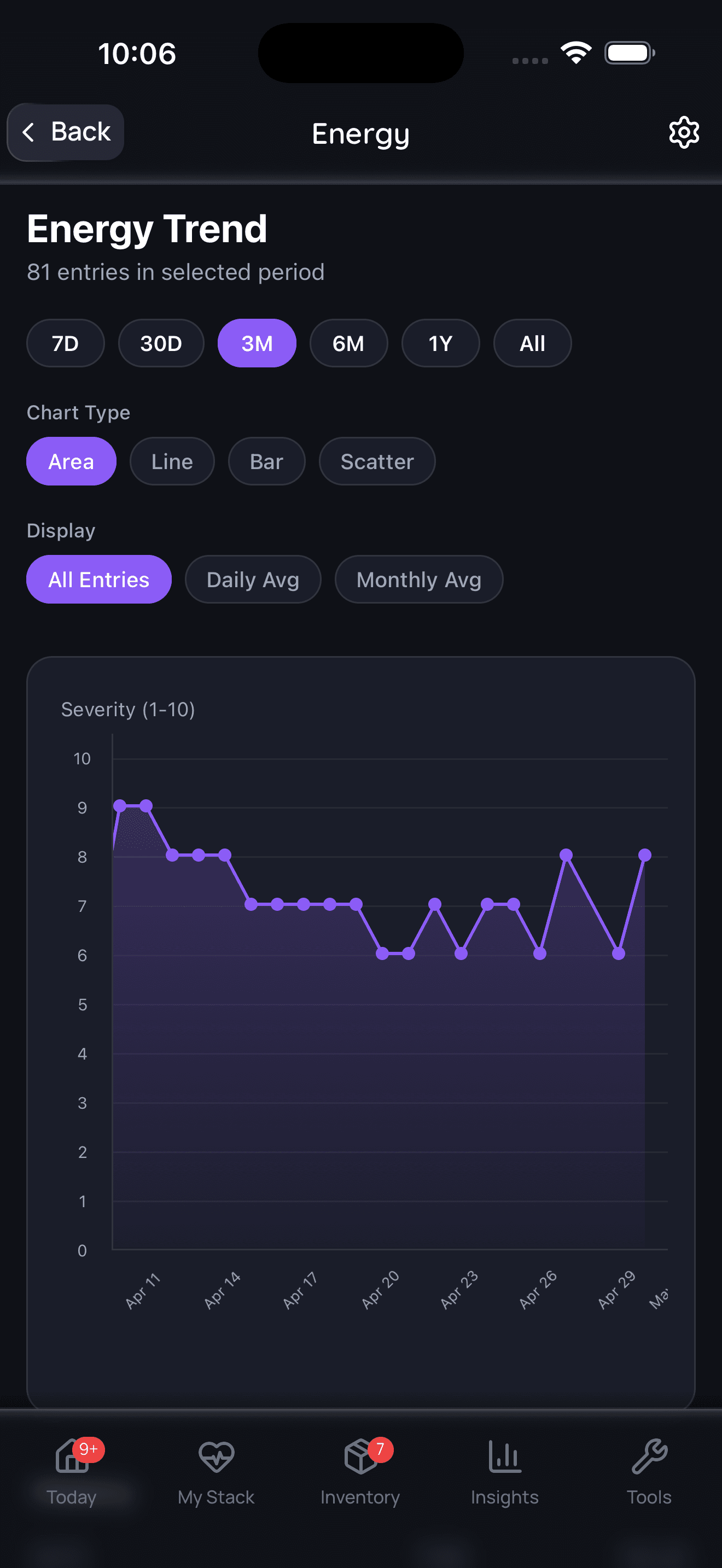
Symptom tracking is informational and should be interpreted with a qualified clinician.
Dosing & Usage Protocols
The Basics
Beta-alanine dosing is all about patience and consistency. Unlike supplements that work acutely (like caffeine), beta-alanine needs to build up in your muscles over weeks. Taking it once before a workout does essentially nothing; you need to load your muscles with carnosine through daily supplementation.
Most research uses a loading protocol of 4 to 6 g per day, divided into smaller doses of about 1.6 to 2 g each, spread throughout the day. This loading phase typically runs for at least 4 weeks, at which point muscle carnosine increases by roughly 40 to 60%. Continuing for 10 weeks can push increases to around 80% [2][3].
After the loading phase, a maintenance dose of approximately 1.2 g per day may be sufficient to keep elevated carnosine levels, though this is based on limited data. Without continued supplementation, carnosine levels decline gradually, losing about 2 to 4% per week, returning to baseline over 6 to 20 weeks [2].
Taking it with food, especially meals containing carbohydrates and protein, may enhance muscle carnosine loading [13]. Timing relative to exercise does not matter because beta-alanine works by building up carnosine stores over time, not by providing an acute effect. Whether you take it in the morning, with lunch, or before bed makes no practical difference as long as you take it consistently [2].
The Science
Loading protocols studied in clinical trials:
Protocol
Standard loading
- Duration
- 4 weeks
- Daily Dose
- 4-6 g/day (divided 2g doses)
- Carnosine Increase
- 40-64%
- Source
- Harris et al. (2006) [3]
Protocol
Extended loading
- Duration
- 10 weeks
- Daily Dose
- 4-6 g/day
- Carnosine Increase
- Up to 80%
- Source
- Hill et al. (2007) [7]
Protocol
Maintenance
- Duration
- Ongoing
- Daily Dose
- 1.2 g/day
- Carnosine Increase
- Maintains elevated levels
- Source
- Stegen et al. (2014) [2]
Protocol
Washout (no supplementation)
- Duration
- 6-20 weeks
- Daily Dose
- 0
- Carnosine Increase
- Returns to baseline
- Source
- Baguet et al. (2009) [7]
Dose-splitting rationale:
Single doses exceeding 1.6 g (or >10 mg/kg body mass) produce clinically significant paresthesia. Dividing the daily dose into portions of 1.6 g or less reduces peak plasma concentrations and proportionally reduces paresthesia without compromising total daily absorption [2][11].
Sustained-release dosing:
Sustained-release formulations (e.g., SR CarnoSyn) achieve equivalent muscle carnosine loading at the same total daily dose while reducing paresthesia. Church et al. (2017) compared two dosing protocols and confirmed that the total daily dose, rather than the specific timing or release profile, drives muscle carnosine accumulation [11].
Co-ingestion factors:
Stegen et al. (2013) demonstrated enhanced muscle carnosine loading when beta-alanine was consumed with meals versus fasting, likely mediated by postprandial insulin augmenting TauT transporter activity [13].
Getting the dose right matters more than most people realize. Too little may be ineffective, too much wastes money or introduces risk, and inconsistency undermines both. Doserly tracks every dose you take, across every form, giving you a clear record of what you're actually consuming versus what you planned.
The app helps you compare RDA recommendations against therapeutic ranges discussed in the research, so you can see exactly where your intake falls. If you switch forms, say from a standard capsule to a liposomal liquid, Doserly adjusts your tracking to account for different bioavailabilities. Pair that with smart reminders that keep your timing consistent, and the precision that makes a real difference in outcomes becomes effortless.
Track injection timing, draw notes, and site rotation.
Doserly helps keep syringe-related notes, injection site history, reminders, and reconstitution context together for easier review.
Injection log
Site rotation
Injection logs support record-keeping; follow clinician instructions for administration.
What to Expect (Timeline)
Weeks 1-2: During the initial loading phase (4-6 g/day in divided doses), the most noticeable effect is paresthesia. Tingling typically begins within 15-20 minutes of each dose and subsides within 60-90 minutes. Some users report that the intensity decreases as they acclimate. Muscle carnosine levels begin increasing but are unlikely to have reached concentrations sufficient for measurable performance effects. Some sources suggest modest performance improvements may begin at this stage, though 4 weeks is a more commonly cited threshold for meaningful benefit [2][3].
Weeks 3-4: Muscle carnosine concentrations are now approximately 40-60% above baseline in most individuals [3]. Performance benefits, if they are going to manifest, typically become noticeable during this window, particularly in high-intensity exercise lasting 1-4 minutes. Users may notice they can sustain hard efforts slightly longer before fatigue sets in, or that the "burn" during intense training feels marginally more manageable. Paresthesia from each dose should be stable or decreasing if using divided doses or sustained-release [2].
Weeks 5-10: Continued loading drives further increases in muscle carnosine, potentially reaching 60-80% above baseline by week 10 [7]. Performance effects should plateau during this period. This is when users who are going to notice a subjective difference typically can identify it. The effect is subtle for most; do not expect dramatic performance transformations.
Weeks 10+: Muscle carnosine appears to continue accumulating with ongoing supplementation, with no identified upper limit [2]. At this stage, transitioning to a maintenance dose of approximately 1.2 g/day may be sufficient to preserve elevated carnosine stores, though the evidence base for long-term maintenance dosing is limited.
After stopping: Muscle carnosine declines at roughly 2-4% per week. Full return to baseline takes approximately 6-20 weeks depending on individual factors. There are no withdrawal symptoms or rebound effects associated with discontinuation [2][7].
Timelines in the research give you a general idea of when to expect results, but your body has its own schedule. Doserly tracks your progress against those benchmarks, letting you see whether your experience aligns with typical response curves or whether something in your protocol might need adjusting.
By logging biomarkers and subjective outcomes alongside your supplement intake, you build a personal timeline that shows exactly when changes started appearing and how they've progressed. The app's trend analysis highlights inflection points, weeks where things shifted for better or worse, so you have concrete data when deciding whether to continue, adjust your dose, or try a different form.
Connect protocol changes to labs and health markers.
Doserly can keep lab results, biomarkers, symptoms, and dose history close together so follow-up conversations have better context.
Insights
Labs and trends
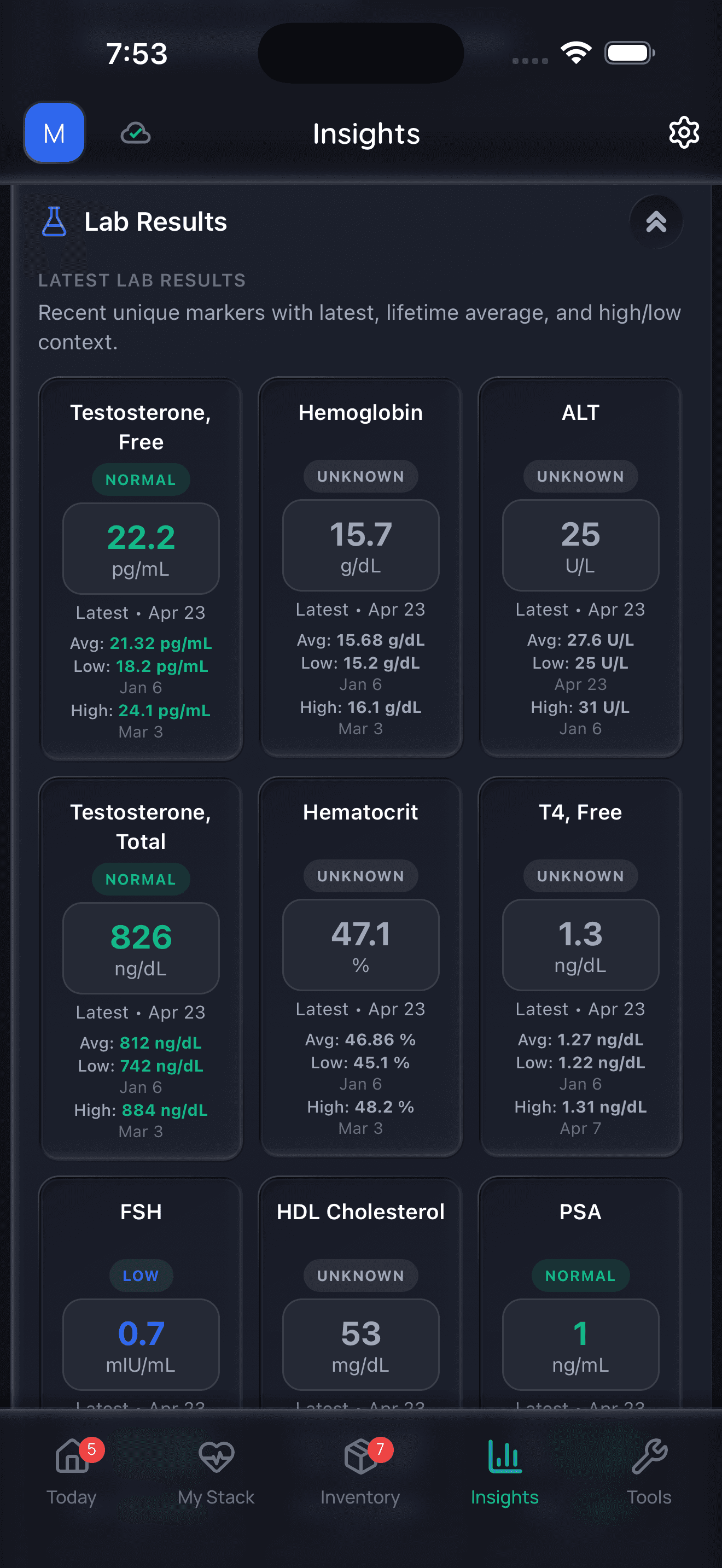
Doserly organizes data; it does not diagnose or interpret labs for you.
Interactions & Compatibility
Synergistic
- Creatine Monohydrate: The most commonly co-supplemented compound with beta-alanine. Creatine enhances phosphocreatine resynthesis for short-burst energy while beta-alanine enhances acid buffering for sustained high-intensity efforts. Mechanistically complementary through separate energy and buffering systems. Some evidence suggests additive effects on body composition and exercise performance when supplemented together [2].
- Sodium Bicarbonate: Extracellular pH buffer that complements carnosine's intracellular buffering. Meta-analysis data show the largest beta-alanine effect sizes when co-supplemented with sodium bicarbonate (ES = 0.43, 95% CI 0.22-0.64). Typical acute dosing of SB is 0.3 g/kg body weight 60-90 minutes before exercise [5].
- L-Histidine: Co-substrate for carnosine synthesis. While histidine is generally not rate-limiting, ensuring adequate dietary protein intake supports carnosine synthesis. Not typically supplemented alongside beta-alanine unless on a very low-protein diet.
- Taurine: Shares the TauT transporter with beta-alanine. Some competitive inhibition is theoretically possible, but practical interaction at typical supplemental doses has not been demonstrated to be problematic. Both are commonly included in pre-workout formulations.
Caution / Avoid
- Taurine (high-dose concurrent supplementation): At high supplemental doses of both taurine and beta-alanine, competitive inhibition at the TauT transporter (SLC6A6) could theoretically reduce uptake of one or both compounds. Separating doses by several hours is a reasonable precaution if supplementing both at high doses, though clinical evidence of a meaningful interaction is lacking [2].
- Medications affecting sensory neurons: Beta-alanine's activation of MrgprD receptors could theoretically interact with medications that affect sensory nerve function, though no clinical interactions have been reported.
How to Take / Administration Guide
Recommended forms: Instant-release powder is most cost-effective for daily loading. Sustained-release tablets are preferred for individuals sensitive to paresthesia. Capsules offer convenience for those who dislike the taste of powder.
Timing considerations: Timing relative to exercise is irrelevant; beta-alanine works through chronic carnosine loading, not acute effects. Take it whenever fits your routine. Splitting the daily dose into 2-3 portions taken with meals is commonly recommended to enhance loading and reduce paresthesia [2][13].
Practical dosing approach:
- Start with 3.2 g/day split into two 1.6 g doses for the first week
- Increase to 4.8-6.4 g/day split into 3-4 doses of 1.6 g or less
- Continue loading for at least 4 weeks (preferably 8-10 weeks)
- Consider transitioning to a maintenance dose of 1.2 g/day after the loading phase
- If paresthesia is bothersome, reduce individual dose size or switch to sustained-release
Stacking guidance: Beta-alanine can be taken at the same time as creatine, protein, and most other supplements without issue. If also supplementing with taurine at high doses, separating intake by 2-3 hours is a reasonable precaution.
Cycling guidance: Cycling is not strictly necessary. However, because carnosine levels decline only gradually after cessation (2-4% per week), some athletes choose to supplement during training blocks with high-intensity work and discontinue during lower-intensity phases, re-loading before the next high-intensity block [2].
Powder mixing: Beta-alanine powder dissolves reasonably well in water. It has a slightly sour, mildly sweet taste. Can be mixed into pre-workout drinks, protein shakes, or juice. Some users experience a gritty texture that does not fully dissolve; stir or shake vigorously.
Choosing a Quality Product
Third-party certifications to look for:
- NSF Certified for Sport (critical for competitive athletes)
- Informed Sport certification
- USP Verified Mark
- GMP (Good Manufacturing Practice) certified facility
Branded vs. generic:
CarnoSyn and SR CarnoSyn are the branded beta-alanine forms used in the majority of clinical research. Products bearing the CarnoSyn logo have undergone specific quality testing through Natural Alternatives International. However, unbranded beta-alanine from reputable manufacturers with third-party testing can be equivalent in quality and often costs less.
Red flags to watch for:
- Proprietary blends that hide the actual beta-alanine dose (common in pre-workout formulas)
- Claims of "enhanced" or "supercharged" beta-alanine with undisclosed additives
- Products combining beta-alanine with excessive stimulants at doses that make paresthesia indistinguishable from stimulant side effects
- No Certificate of Analysis (COA) available upon request
- Doses below 3.2 g/day being marketed as effective standalone beta-alanine products
Form-specific quality markers:
- Powder: Should be fine-grained, white to off-white, with minimal clumping. Hygroscopic, so look for moisture-protective packaging.
- Sustained-release tablets: Should specify the release profile and reference equivalent carnosine loading to instant-release.
- Pre-workout blends: Check that the beta-alanine dose per serving is at least 1.6 g (many under-dose it to include more ingredients).
Storage & Handling
Store beta-alanine in a cool, dry place at room temperature, away from direct sunlight. Beta-alanine powder is hygroscopic (it absorbs moisture from the air), so keeping the container tightly sealed between uses is important to prevent clumping and degradation. Exposure to humidity can cause caking without necessarily reducing potency, but severely clumped product may be difficult to dose accurately.
Sustained-release tablets and capsules are generally more resistant to humidity than powder. No refrigeration is required for any form. Shelf life is typically 2-3 years when stored properly, though individual product expiration dates should be followed.
Lifestyle & Supporting Factors
Dietary considerations: Individuals consuming high amounts of meat, poultry, and fish have higher baseline carnosine levels due to dietary beta-alanine and carnosine intake (estimated 24-145 mg carnosine equivalent per day from an omnivorous diet versus negligible amounts from a vegan diet) [1]. Vegetarians and vegans may see relatively larger increases in muscle carnosine from supplementation due to lower starting levels [2].
Exercise: Beta-alanine supplementation is most relevant for individuals regularly engaging in high-intensity exercise lasting 1-10 minutes. Athletes in sports such as rowing, swimming (200m-400m events), cycling (track events, time trials), CrossFit, combat sports, middle-distance running, and high-intensity interval training are the most likely to benefit.
Protein intake: Adequate dietary protein ensures sufficient L-histidine availability for carnosine synthesis. Since histidine is found in most protein sources, individuals consuming at least 1.2 g/kg/day protein are unlikely to be histidine-limited.
Age: Muscle carnosine concentrations tend to decline with age. Preliminary research suggests beta-alanine supplementation may benefit older adults by improving physical working capacity and attenuating neuromuscular fatigue [2].
Monitoring: Tracking training performance metrics (time to exhaustion, total work done, repeat sprint ability) provides the most meaningful feedback on whether beta-alanine supplementation is contributing to your training outcomes.
Regulatory Status & Standards
United States (FDA): Beta-alanine is classified as a dietary supplement under DSHEA. It has self-affirmed GRAS (Generally Recognized As Safe) status for use in foods and dietary supplements. It is not regulated as a drug and does not require FDA approval for sale.
Canada (Health Canada): Available as a Natural Health Product. Products containing beta-alanine may require a Natural Product Number (NPN) for legal sale.
European Union (EFSA): Beta-alanine is available as a food supplement in EU member states. No authorized health claims have been established by EFSA specifically for beta-alanine.
Australia (TGA): The Australian Institute of Sport classifies beta-alanine as a Group A supplement (strong scientific evidence for use in specific situations, safe when used appropriately). Available as a listed medicine or dietary supplement.
Athlete & Sports Regulatory Status:
- WADA: Beta-alanine is NOT on the World Anti-Doping Agency Prohibited List. It is permitted for use both in-competition and out-of-competition.
- National Anti-Doping Agencies: No major national anti-doping organization (USADA, UKAD, Sport Integrity Canada, Sport Integrity Australia, NADA Germany) has issued restrictions or specific alerts about beta-alanine itself.
- Professional Sports Leagues: Beta-alanine is not banned by the NFL, NBA, MLB, NHL, MLS, or NCAA. However, athletes should be aware that some pre-workout products containing beta-alanine may also contain banned ingredients.
- NCAA: Beta-alanine is not on the NCAA banned substance list. The NCAA requires that supplements provided by athletic departments carry NSF Certified for Sport or Informed Sport certification, which applies to the product as a whole, not to beta-alanine specifically.
- Athlete Certification Programs: Certified beta-alanine products are available through Informed Sport (sport.wetestyoutrust.com), NSF Certified for Sport (nsfsport.com), and Cologne List (koelnerliste.com). Athletes should select certified products to minimize contamination risk.
- GlobalDRO: Athletes can verify beta-alanine's status at GlobalDRO.com across the US, UK, Canada, Australia, Japan, Switzerland, and New Zealand.
Regulatory status and prohibited substance classifications change frequently. Athletes should always verify the current status of any supplement with their sport's governing body, their national anti-doping agency, and a qualified sports medicine professional before use. Third-party certification (Informed Sport, NSF Certified for Sport) reduces but does not eliminate the risk of contamination with prohibited substances.
Frequently Asked Questions
Does beta-alanine actually work?
Based on multiple meta-analyses encompassing over 1,400 participants, beta-alanine supplementation produces a statistically significant but modest improvement in exercise capacity, particularly during high-intensity efforts lasting 1-10 minutes. The median improvement is approximately 2.85%. Whether this constitutes "working" depends on individual expectations and training context. For competitive athletes in appropriate sports, even small improvements can be meaningful [4][5].
Why does beta-alanine make me tingle?
The tingling (paresthesia) is caused by beta-alanine activating MrgprD receptors on sensory neurons in the skin. It is a dose-dependent sensory response that begins within 15-20 minutes of ingestion and resolves within 60-90 minutes. It is completely harmless and unrelated to the carnosine-building mechanism. Reducing individual dose size to 1.6 g or less, or using sustained-release formulations, significantly reduces or eliminates the sensation [2].
How long does it take for beta-alanine to start working?
Muscle carnosine levels begin increasing within days, but meaningful performance improvements typically require at least 4 weeks of consistent daily supplementation at 4-6 g/day. Benefits continue to accrue through 10 weeks. Taking beta-alanine only as an occasional pre-workout ingredient, without consistent daily dosing, is unlikely to meaningfully increase muscle carnosine stores [2][3].
Is beta-alanine safe?
Based on available clinical data, beta-alanine appears to be safe at doses of 1.6-6.4 g/day for up to 8 weeks, and at 3.2 g/day for up to 24 weeks. The only reported side effect is paresthesia. Both the ISSN and the Australian Institute of Sport classify it as safe at recommended doses. Long-term safety beyond 24 weeks has not been formally evaluated [2][15].
Should I take beta-alanine every day or just before workouts?
Based on the available data, daily supplementation is recommended rather than workout-only dosing. Beta-alanine works by gradually increasing muscle carnosine stores over weeks. Taking it only before workouts provides insufficient total intake for meaningful carnosine loading. Timing relative to workouts is not important; consistency of total daily intake is what matters [2].
Can I take beta-alanine with creatine?
Based on available evidence, yes. Beta-alanine and creatine work through entirely different mechanisms (acid buffering vs. phosphocreatine resynthesis) and are commonly co-supplemented. Some research suggests they may have additive effects on body composition and performance outcomes. There are no known adverse interactions between the two [2].
Is beta-alanine worth it if I already take creatine?
This depends on individual training goals. The research positions creatine and beta-alanine as mechanistically complementary: creatine primarily benefits very short, maximal efforts (under 30 seconds), while beta-alanine primarily benefits slightly longer high-intensity efforts (1-10 minutes). Athletes whose training spans both time domains may benefit from both. For most recreational exercisers, creatine alone is generally considered the higher-priority supplement [2][4][5].
Does the tingling go away over time?
Paresthesia intensity is dose-dependent and occurs with each dose regardless of how long you have been supplementing. It does not diminish with chronic use. However, many users report subjective habituation (less psychological distraction from the sensation over time, even if the physical intensity remains similar). Using divided doses or sustained-release formulations is the most reliable way to reduce it [2][11].
Is beta-alanine banned in sports?
Beta-alanine is not on the WADA Prohibited List and is not banned by any major professional sports league or the NCAA. It is permitted for use in and out of competition. However, pre-workout supplements containing beta-alanine may also contain banned substances, so athletes should choose products with third-party certification (NSF Certified for Sport, Informed Sport) [2].
Can vegetarians and vegans take beta-alanine?
Yes, and they may benefit more than omnivores. Vegetarians and vegans have lower baseline muscle carnosine levels due to minimal dietary beta-alanine and carnosine intake. Supplementation has been shown to increase carnosine levels in both vegetarians and omnivores, with vegetarians showing greater relative increases [2].
Myth vs. Fact
Myth: Beta-alanine works immediately as a pre-workout supplement.
Fact: Beta-alanine does not provide acute performance benefits. The tingling sensation may create a perceived "kick," but the actual mechanism (increased muscle carnosine) requires weeks of consistent daily supplementation. Taking it only before workouts, without daily loading, is unlikely to raise carnosine levels meaningfully [2][3].
Myth: The tingling means beta-alanine is "working" or "activating your muscles."
Fact: Paresthesia is caused by beta-alanine activating MrgprD sensory nerve receptors in the skin. It has no functional relationship to carnosine synthesis or muscle buffering. A sustained-release formulation that produces zero tingling can be equally effective at building muscle carnosine [2][11].
Myth: Beta-alanine is a powerful fat burner.
Fact: There is no meaningful evidence that beta-alanine supplementation directly promotes fat loss. Any indirect effect on body composition would come through the ability to perform more high-intensity training volume, not through metabolic changes. Beta-alanine should not be taken with fat-loss expectations [2][4].
Myth: More beta-alanine means more performance benefit.
Fact: The dose-response relationship is not straightforward. While higher doses (5.6-6.4 g/day) may produce faster or greater carnosine loading, the Saunders et al. (2017) meta-analysis found no moderating effect of total beta-alanine ingested on performance outcomes (P = 0.438). Individual variability in response appears to be a stronger predictor than dose magnitude [5].
Myth: Beta-alanine is harmful to your nervous system.
Fact: Despite anecdotal claims circulating online, there is no evidence of neurotoxicity from beta-alanine supplementation at recommended doses. The paresthesia it causes is a benign sensory phenomenon, not a sign of nerve damage. Safety reviews and the ISSN position stand confirm no adverse neurological events in clinical trials [2][15].
Myth: Beta-alanine is only useful for bodybuilders and strength athletes.
Fact: The strongest evidence for beta-alanine actually favors endurance-type high-intensity efforts (1-10 minutes), not maximal strength. Sports like rowing, swimming, cycling time trials, middle-distance running, and combat sports are better aligned with beta-alanine's mechanism than traditional powerlifting or bodybuilding where sets are typically under 60 seconds [4][5][14].
Myth: You need to cycle on and off beta-alanine.
Fact: There is no established need to cycle beta-alanine. Muscle carnosine continues to accumulate with ongoing supplementation, and no upper limit has been identified. However, because carnosine washout is slow (2-4% per week), some athletes choose to supplement during high-intensity training phases and discontinue during lower-intensity blocks as a practical strategy [2].
Sources & References
Position Stands & Systematic Reviews
[1] NIH Office of Dietary Supplements. "Dietary Supplements for Exercise and Athletic Performance." Health Professional Fact Sheet. https://ods.od.nih.gov/factsheets/ExerciseAndAthleticPerformance-HealthProfessional/
[2] Trexler ET, Smith-Ryan AE, Stout JR, et al. "International society of sports nutrition position stand: Beta-Alanine." J Int Soc Sports Nutr. 2015;12:30. PMID: 26175657. https://pmc.ncbi.nlm.nih.gov/articles/PMC4501114/
Clinical Trials & RCTs
[3] Harris RC, Tallon MJ, Dunnett M, et al. "The absorption of orally supplied beta-alanine and its effect on muscle carnosine synthesis in human vastus lateralis." Amino Acids. 2006;30(3):279-289.
[7] Hill CA, Harris RC, Kim HJ, et al. "Influence of beta-alanine supplementation on skeletal muscle carnosine concentrations and high intensity cycling capacity." Amino Acids. 2007;32(2):225-233.
[11] Church DD, Hoffman JR, Varanoske AN, et al. "Comparison of Two Beta-Alanine Dosing Protocols on Muscle Carnosine Elevations." J Am Coll Nutr. 2017;36(8):608-616.
[13] Stegen S, Blancquaert L, Everaert I, et al. "Meal and beta-alanine coingestion enhances muscle carnosine loading." Med Sci Sports Exerc. 2013;45(8):1478-1485.
Systematic Reviews & Meta-Analyses
[4] Hobson RM, Saunders B, Ball G, et al. "Effects of beta-alanine supplementation on exercise performance: a meta-analysis." Amino Acids. 2012;43(1):25-37. PMID: 22270875.
[5] Saunders B, Elliott-Sale K, Artioli GG, et al. "Beta-alanine supplementation to improve exercise capacity and performance: a systematic review and meta-analysis." Br J Sports Med. 2017;51(8):658-669. PMID: 27797728.
[14] Georgiou GD, Prokopidis K, Christodoulides E, et al. "Effect of Beta-Alanine Supplementation on Maximal Intensity Exercise in Trained Young Male Individuals: A Systematic Review and Meta-Analysis." Int J Sport Nutr Exerc Metab. 2024;34(6):397-412.
Review Articles
[6] Perim P, Marticorena FM, Ribeiro F, et al. "Can the Skeletal Muscle Carnosine Response to Beta-Alanine Supplementation Be Optimized?" Front Nutr. 2019;6:135.
[8] Baguet A, Reyngoudt H, Pottier A, et al. "Carnosine loading and washout in human skeletal muscle." J Appl Physiol. 2009;106(3):837-842.
[9] Rathor R, et al. "A comprehensive review on physiological and biological activities of carnosine: turning from preclinical facts to potential clinical applications." Naunyn-Schmiedeberg's Arch Pharmacol. 2024. https://doi.org/10.1007/s00210-024-03427-7
[10] Solana-Manrique C, Sanz FJ, Martinez-Carrion G, Paricio N. "Antioxidant and Neuroprotective Effects of Carnosine: Therapeutic Implications in Neurodegenerative Diseases." Antioxidants. 2022;11(5):848. PMID: 35624713.
[12] Barbati SA, et al. "Preclinical evidence and therapeutic perspectives on carnosine for the treatment of neurodegenerative disorders." AIMS Neuroscience. 2025;12(4):444-513.
[15] de Oliveira EP, Artioli GG, Burini RC. "Safety of beta-alanine supplementation in humans: a narrative review." Sport Sci Health. 2023;19:757-763.
Government & Institutional Sources
[1] NIH Office of Dietary Supplements. "Dietary Supplements for Exercise and Athletic Performance." (referenced above)
Related Supplement Guides
Same Category
Common Stacks / Pairings
- Creatine Monohydrate (complementary ergogenic mechanisms)
- Caffeine (commonly combined in pre-workout formulations)
- L-Citrulline (nitric oxide and blood flow support)
- Electrolyte Powders (hydration during high-intensity training)
Related Health Goal
- BCAAs (muscle recovery and endurance)
- L-Carnitine (fatty acid metabolism and exercise recovery)
- CoQ10 (mitochondrial energy production)
- Sodium Bicarbonate / Electrolyte Formulas (pH buffering)