
L-Citrulline: The Complete Supplement Guide
On this page
Quick Reference Card
Attribute
Common Name
- Detail
- L-Citrulline
Attribute
Other Names / Aliases
- Detail
- Citrulline, L-Cit, Citrulline Malate (when paired with malic acid), 2-Amino-5-(carbamoylamino)pentanoic acid
Attribute
Category
- Detail
- Non-Essential Amino Acid
Attribute
Primary Forms & Variants
- Detail
- L-Citrulline (free-form, pure); Citrulline Malate (2:1 ratio of citrulline to malic acid, most studied for exercise); Citrulline DL-Malate (1:1 ratio, less common)
Attribute
Typical Dose Range
- Detail
- 3,000-6,000 mg/day L-Citrulline (general/cardiovascular); 6,000-8,000 mg citrulline malate (exercise performance); up to 6,000 mg/day split across 3 doses (circulatory health)
Attribute
RDA / AI / UL
- Detail
- No formal RDA, AI, or UL established. Not classified as essential. Acute doses up to 15g have been well-tolerated without GI distress in clinical studies.
Attribute
Common Delivery Forms
- Detail
- Powder, capsules, tablets
Attribute
Best Taken With / Without Food
- Detail
- Can be taken with or without food. Does not require food for absorption.
Attribute
Key Cofactors
- Detail
- Glutathione (may extend NO half-life); Vitamin C and E (antioxidant support for NO preservation); L-Arginine (complementary NO pathway); Tetrahydrobiopterin (BH4, NOS cofactor)
Attribute
Storage Notes
- Detail
- Store in a cool, dry place away from direct sunlight and moisture. No refrigeration required. Powder form should be sealed tightly after use.
Overview
The Basics
L-Citrulline is a non-essential amino acid named after watermelon (Citrullus vulgaris), its richest natural source. Your body uses it primarily as a precursor to L-arginine, the amino acid that produces nitric oxide (NO), a molecule that relaxes blood vessels and improves blood flow throughout the body.
Here is the key insight that makes citrulline interesting: your body actually converts citrulline into arginine more efficiently than it can use arginine supplements directly. When you swallow arginine, much of it gets broken down in the gut and liver before it ever reaches your bloodstream. Citrulline bypasses this bottleneck entirely. It travels through the intestines largely intact, reaches the kidneys, and gets converted to arginine there, resulting in higher and more sustained arginine levels in the blood [1][2].
This pharmacokinetic advantage is why citrulline has gained popularity as a "better arginine." It is widely used in the fitness community as a pre-workout supplement for improved blood flow and reduced fatigue, and is increasingly studied for cardiovascular health, blood pressure support, and erectile function. Unlike arginine, which commonly causes gastrointestinal distress at higher doses, citrulline is tolerated well even at 15 grams without intestinal upset [1][3].
The Science
L-Citrulline (2-amino-5-(carbamoylamino)pentanoic acid) is a non-protein amino acid that participates in the urea cycle and the nitric oxide cycle. It is not incorporated into structural proteins and is not one of the 20 standard amino acids used in protein synthesis [1].
Endogenous citrulline production occurs via two primary pathways. The dominant pathway (approximately 90% of circulating citrulline) involves conversion from glutamine in enterocytes, where the enzyme Ornithine transcarbamylase uses ornithine and carbamoyl phosphate as substrates. The remaining 10% is produced as a byproduct when nitric oxide synthase (NOS) converts L-arginine to nitric oxide and L-citrulline [1].
Supplemental citrulline is absorbed in the small intestine via sodium-dependent amino acid transporters and is subsequently taken up by the kidneys (approximately 83% of absorbed citrulline), where it is converted to L-arginine via the enzymes arginosuccinate synthase and arginosuccinate lyase in proximal renal tubular cells. This renal conversion accounts for 5-15% of circulating arginine but approximately 60% of total non-protein-bound arginine, making it a quantitatively significant pathway [1][2].
Resting plasma citrulline concentrations range from 22.4 to 27 micromol/L. The conversion of citrulline to arginine appears to be driven primarily by plasma citrulline concentration, with linear dose-response characteristics up to approximately 5-10g, beyond which kidney conversion capacity appears to become rate-limiting [1].
Chemical & Nutritional Identity
Property
Chemical Name
- Value
- 2-amino-5-(carbamoylamino)pentanoic acid
Property
Synonyms
- Value
- L-Citrulline, Cit, L-Cit
Property
Molecular Formula
- Value
- C₆H₁₃N₃O₃
Property
Molecular Weight
- Value
- 175.19 g/mol
Property
CAS Number
- Value
- 372-75-8
Property
PubChem CID
- Value
- 9750
Property
Category
- Value
- Non-essential amino acid (urea cycle intermediate)
Property
RDA / AI / UL
- Value
- Not formally established
L-Citrulline is a neutral, non-protein alpha-amino acid with an ureido (carbamoylamino) group on its side chain. Unlike most common amino acids, citrulline is not coded for by DNA and is not incorporated into proteins during translation [1].
Common supplement forms include:
- L-Citrulline (free-form): Pure citrulline without additional compounds. The form most studied for cardiovascular and erectile function endpoints.
- Citrulline Malate (2:1): Two parts citrulline bound to one part malic acid (malate). The form with the most exercise performance research. Malate may independently contribute to aerobic energy production via the Krebs cycle. To get an equivalent dose of citrulline, multiply the desired citrulline dose by 1.76 [1].
- Citrulline Malate (1:1): Equal parts citrulline and malate. Less common in supplements.
No formal Dietary Reference Intakes (DRIs) have been established for citrulline. Dietary intake from a standard diet is minimal, as citrulline is not widely present in most foods. Watermelon is the richest dietary source at approximately 2.1mg/g wet weight [1].
Mechanism of Action
The Basics
L-Citrulline works primarily by serving as a roundabout delivery system for L-arginine, the amino acid your body converts into nitric oxide (NO). Think of citrulline as a protected courier. When you take arginine directly, much of it gets intercepted and broken down by enzymes in the gut and liver before reaching its destination. Citrulline slips past these checkpoints, arrives at the kidneys intact, and is then converted into arginine where it can be distributed throughout the body [1][2].
Once this arginine is produced, nitric oxide synthase (NOS) enzymes convert it into nitric oxide and, as a byproduct, citrulline. This creates a recycling loop: citrulline becomes arginine, arginine produces NO and citrulline, and the cycle continues. More available citrulline means more fuel for this cycle, which translates to better blood flow, lower blood pressure, and improved delivery of oxygen and nutrients to tissues [1].
Beyond its role in nitric oxide production, citrulline participates in the urea cycle, the body's primary system for eliminating ammonia, a toxic waste product of protein metabolism. By supporting ammonia clearance, citrulline supplementation may help reduce the fatigue that accumulates during intense or prolonged exercise [1].
The Science
L-Citrulline's primary bioactivity is secondary to its conversion to L-arginine in the renal proximal tubules. The arginine produced then serves as the exclusive substrate for the three isoforms of nitric oxide synthase (eNOS, nNOS, iNOS), which catalyze the oxidation of the guanidinium group of arginine to yield NO and L-citrulline [1][2].
The citrulline-arginine-NO recycling pathway (also called the citrulline-NO cycle) is distinct from the urea cycle, though both involve citrulline as an intermediate. In the NO cycle, arginine is directly converted to citrulline by NOS (releasing NO), whereas in the urea cycle, arginine is converted to ornithine by arginase (releasing urea). The balance between these two pathways determines the proportion of arginine directed toward NO production versus ammonia detoxification [1].
Citrulline's influence on ammonia metabolism is relevant to exercise performance. Citrulline stimulates hepatic ureagenesis, promoting the sequestration of ammonia into urea for renal excretion. Ammonia accumulation during prolonged exercise inhibits the conversion of pyruvate to acetyl-CoA (via activating phosphofructokinase), which impairs muscle contractility. By buffering ammonia, citrulline may delay the onset of peripheral fatigue [1].
Additional documented effects include modulation of muscle energy metabolism. Citrulline malate supplementation has been shown to increase ATP production efficiency, attenuate phosphocreatine depletion by 28%, and accelerate phosphocreatine replenishment rate during rest by 20% in human studies [1].
Citrulline has also demonstrated effects on muscle protein synthesis via the mTORc1 pathway. While citrulline is not a direct activator of mTOR like leucine, it appears to restore suppressed mTOR signaling during states of malnutrition or food restriction [1].
Absorption & Bioavailability
The Basics
One of L-Citrulline's greatest strengths is how well your body absorbs it compared to arginine. When you take citrulline by mouth, it passes through the gut largely intact because the enzymes that break down arginine in the intestinal wall do not significantly affect citrulline. It then travels to the kidneys, where it is efficiently converted to arginine [1][2].
The practical implications are significant. In a head-to-head comparison at the same 3-gram dose, citrulline produced about 49% more total arginine exposure over time than taking arginine directly. The peak blood levels of arginine were similar, but citrulline maintained elevated arginine levels for longer because it avoids the rapid breakdown that arginine experiences [2].
Perhaps most importantly from a user experience standpoint, citrulline does not cause the gastrointestinal problems that plague arginine at higher doses. Arginine at 10 grams or more commonly triggers osmotic diarrhea because it overwhelms intestinal transport capacity. Citrulline at 15 grams, by contrast, causes no intestinal distress. This GI tolerance advantage means you can take higher effective doses of citrulline without digestive consequences [1][3].
The Science
L-Citrulline is absorbed in the small intestine via multiple sodium-dependent amino acid transporters. Unlike L-arginine, citrulline is not significantly metabolized by enterocytes (intestinal epithelial cells), which express high levels of arginase that consume a substantial portion of ingested arginine before it reaches the systemic circulation. This resistance to first-pass intestinal metabolism is the primary driver of citrulline's pharmacokinetic superiority [1][2].
Pharmacokinetic comparison (Schwedhelm et al., 2008; Br J Clin Pharmacol):
- At 3g oral doses, L-citrulline and L-arginine produce comparable arginine Cmax values (79+/-8 micromol/L vs. 84+/-9 micromol/L, respectively)
- L-Citrulline produces 48.7% greater arginine AUC (area under the curve, total exposure)
- L-Citrulline shows no renal elimination upregulation even at doses up to 15g [2]
Dose-response characteristics:
- At 0.18g/kg: doubles plasma arginine alongside a 6-11 fold increase in plasma citrulline [1]
- Arginine increases follow linear dose-response up to 5-10g citrulline (Cmax 1314-2756 micromol/L) [1]
- Above 10g: less-than-expected arginine increases, suggesting a rate-limiting step in renal conversion [1]
GI tolerance comparison with arginine:
- L-Citrulline 15g acute dose: no diarrhea or intestinal upset [1]
- L-Arginine 10g+ acute dose: frequently causes osmotic diarrhea via NO-mediated water secretion [1]
- This critical difference is attributable to citrulline's use of different intestinal transport systems and its resistance to the arginase pathway that causes arginine's osmolytic effects
Research & Clinical Evidence
The Basics
The strongest evidence for L-Citrulline centers on blood pressure reduction, with growing data for exercise performance (particularly resistance training fatigue), erectile function, and vascular health. Compared to its precursor-relationship with arginine, citrulline has a smaller but growing body of direct clinical trial evidence.
Blood pressure has the most meta-analytic support. Multiple systematic reviews and meta-analyses of randomized controlled trials have found that L-citrulline supplementation can reduce systolic blood pressure by approximately 4 to 5 mmHg. The effects appear to be most pronounced in people with elevated blood pressure, during physical or cold stress rather than at rest, and with doses of 6 grams or more per day [4][5][6].
Exercise performance results are more nuanced. For resistance training, citrulline malate at 8 grams has been shown to increase the number of reps performed during fatigue-accumulating protocols by up to 53%, particularly in later sets. Muscle soreness was reduced by approximately 40% after training [1]. For aerobic/endurance exercise, however, a meta-analysis of 10 studies found no significant benefit for time to exhaustion, VO2 kinetics, or perceived exertion [7]. This suggests citrulline's performance benefits may be specific to high-volume resistance training rather than endurance activities.
Erectile function has promising preliminary evidence. A pilot study found that 1.5 grams daily for one month improved erection hardness in 50% of men with mild erectile dysfunction, compared to 8.3% with placebo [8]. A second study found that L-citrulline (800mg) combined with transresveratrol (300mg) improved sexual function scores in men already using PDE5 inhibitors [9]. These results are encouraging but come from small pilot studies rather than large definitive trials.
The Science
Blood pressure: A 2020 meta-analysis by Wan et al. (Clinical Nutrition, 12 RCTs) demonstrated significant reductions in brachial SBP (-4.490 mmHg; 95% CI: -7.332 to -1.648; P = 0.002) and brachial DBP (-3.629 mmHg; 95% CI: -5.825 to -1.434; P = 0.001) with L-citrulline supplementation. Aortic SBP was also significantly reduced (-5.765 mmHg; P = 0.002). Notably, the reducing effects appeared stronger for non-resting (exercise/cold-pressor) than resting brachial SBP (P for difference = 0.044), suggesting citrulline may be more effective at blunting BP spikes during stress than lowering baseline resting BP [5].
A 2025 meta-analysis (Luo et al., 15 RCTs in middle-aged/elderly) confirmed significant reductions in SBP (-4.02 mmHg; P = 0.002) and DBP (-2.54 mmHg; P = 0.004). Subgroup analysis showed the combination of L-citrulline and L-arginine produced even larger reductions (SBP -10.44 mmHg, P < 0.00001) [4].
A separate 2018 meta-analysis (Amir Hossein et al., 5 interventions) found no significant effects, attributed to smaller study count and population heterogeneity [6]. One influential 2019 meta-analysis (Mahboobi et al.) reporting larger effect sizes was retracted in 2021 and should not be cited [10].
Resistance exercise performance: Perez-Guisado and Jakeman (2010, J Strength Cond Res) demonstrated that 8g citrulline malate increased total reps from 10.48% (set 3) to 52.92% (set 8) versus placebo during an 8-set bench press protocol, with 39.74% reduction in muscle soreness at 24 hours and 41.79% at 48 hours [1].
Aerobic exercise performance: A 2022 systematic review and meta-analysis (Vega-Cabello et al., 10 studies) found no significant effect of citrulline supplementation on aerobic performance (SMD = 0.15; p = 0.08), RPE, VO2 kinetics, or blood lactate [7]. A 2025 RCT (Francis et al.) using 100mg/kg/day for 10 days also found no improvement in time to exhaustion [11].
Erectile dysfunction: Cormio et al. (2011, Urology) found that 1.5g/day L-citrulline for 1 month improved EHS from 3 to 4 in 50% of 24 men with mild ED (vs 8.3% placebo; P < 0.01), with no adverse events [8]. Shirai et al. (2018, Sex Med) found that L-citrulline 800mg/day combined with transresveratrol 300mg/day significantly improved SHIM scores in men with ED despite PDE5i use (10.96 vs 8.31 placebo; P < 0.05) [9].
Vascular function: Figueroa et al. (2025) demonstrated that 4 weeks of L-citrulline improved brachial artery endothelial function (FMD), reduced leg arterial stiffness, lowered aortic SBP, and improved blood glucose in middle-aged and older adults with type 2 diabetes [12]. A 2025 meta-analysis confirmed significant improvements in FMD and reductions in brachial-ankle pulse wave velocity [13].
Cardiac effects: In heart failure patients with preserved ejection fraction, 3g citrulline reduced pulmonary artery pressure by 16% and improved right ventricular ejection fraction. L-Arginine was equally effective but required 8g to achieve the same result [1].
Evidence & Effectiveness Matrix
Category
Blood Pressure
- Evidence Strength
- 7/10
- Reported Effectiveness
- 5/10
- Summary
- Multiple meta-analyses show SBP reduction of ~4-5 mmHg. Effects most reliable during stress/exercise rather than at rest. Community reports are limited.
Category
Physical Performance
- Evidence Strength
- 5/10
- Reported Effectiveness
- 5/10
- Summary
- Resistance training benefits (fatigue reduction, more reps in later sets) supported; aerobic performance not supported by meta-analysis. Community reports "better pump" but rarely more reps.
Category
Sexual Function
- Evidence Strength
- 5/10
- Reported Effectiveness
- 7/10
- Summary
- Two small pilot studies show improvement in mild ED. Community reports consistently positive for erection quality, especially pre-activity dosing.
Category
Libido
- Evidence Strength
- 2/10
- Reported Effectiveness
- 4/10
- Summary
- No direct evidence. Community reports secondary desire improvement from better function.
Category
Heart Health
- Evidence Strength
- 5/10
- Reported Effectiveness
- 4/10
- Summary
- Vascular function improvements documented. Cardiac tissue benefits in heart failure. Limited community data.
Category
Focus & Mental Clarity
- Evidence Strength
- 2/10
- Reported Effectiveness
- 6/10
- Summary
- No clinical evidence for citrulline specifically. One highly-engaged community thread reports marked cognitive improvement; plausible via improved cerebral blood flow but unvalidated.
Category
Energy Levels
- Evidence Strength
- 3/10
- Reported Effectiveness
- 5/10
- Summary
- Some evidence for improved ATP efficiency and fatigue reduction. Mixed community reports.
Category
Mood & Wellbeing
- Evidence Strength
- 1/10
- Reported Effectiveness
- 5/10
- Summary
- No clinical evidence. Positive community reports concentrated in a single thread.
Category
Sleep Quality
- Evidence Strength
- 1/10
- Reported Effectiveness
- 3/10
- Summary
- No clinical evidence. Rare community mention of improved sleep with nighttime dosing.
Category
Side Effect Burden
- Evidence Strength
- N/A
- Reported Effectiveness
- 8/10
- Summary
- Exceptionally well tolerated. No GI distress at 15g. Community strongly agrees citrulline is better tolerated than arginine.
Category
Treatment Adherence
- Evidence Strength
- N/A
- Reported Effectiveness
- 7/10
- Summary
- Good compliance profile. Reasonable cost, mild taste in powder form, available as capsules. Multiple users report taking for months to years.
Category
Nausea & GI Tolerance
- Evidence Strength
- N/A
- Reported Effectiveness
- 8/10
- Summary
- Superior GI tolerance to arginine is citrulline's most consistently validated advantage, both clinically and in community reports.
Categories scored: 12
Categories with community data: 12
Categories not scored (insufficient data): Fat Loss, Muscle Growth, Weight Management, Appetite & Satiety, Food Noise, Memory & Cognition, Anxiety, Stress Tolerance, Motivation & Drive, Emotional Aliveness, Emotional Regulation, Joint Health, Inflammation, Pain Management, Recovery & Healing, Gut Health, Digestive Comfort, Skin Health, Hair Health, Heart Rate & Palpitations, Hormonal Symptoms, Temperature Regulation, Fluid Retention, Body Image, Immune Function, Bone Health, Longevity & Neuroprotection, Cravings & Impulse Control, Social Connection, Withdrawal Symptoms, Daily Functioning
Benefits & Potential Effects
The Basics
L-Citrulline's benefits flow from its ability to increase nitric oxide production more efficiently than direct arginine supplementation. The most consistently supported benefits include:
Cardiovascular support. By raising arginine levels and increasing nitric oxide production, L-Citrulline helps blood vessels relax and widen. Multiple meta-analyses have found systolic blood pressure reductions of approximately 4-5 mmHg, with effects appearing strongest during physical stress or in those with elevated baseline blood pressure [4][5].
Exercise performance and recovery. For people who do high-volume resistance training, citrulline malate at 8 grams before exercise has been shown to reduce the rate of fatigue accumulation across multiple sets and decrease muscle soreness by approximately 40% in the days following training [1]. The benefit is not about lifting heavier on your first set; rather, it is about maintaining performance deeper into your workout.
Erectile function. As a more efficient producer of the nitric oxide that drives penile blood flow, citrulline has shown early promise for mild erectile dysfunction. It works through the same NO/cGMP pathway that medications like sildenafil (Viagra) target, though with a much more modest effect [8][9].
Vascular health. Beyond simple blood pressure numbers, citrulline has been shown to improve endothelial function (how well the lining of blood vessels responds to changes in blood flow), reduce arterial stiffness, and improve blood flow in older adults and those with type 2 diabetes [12][13].
The Science
Vasodilation and endothelial function: L-Citrulline supplementation increases NO bioavailability as demonstrated by elevated urinary nitrate/nitrite, improved flow-mediated dilation, and reduced peripheral vascular resistance. A 2025 meta-analysis of RCTs in middle-aged and older adults confirmed significant improvements in FMD (flow-mediated dilation) and significant reductions in brachial-ankle pulse wave velocity [13]. Four weeks of citrulline supplementation improved FMD, reduced leg arterial stiffness, and lowered aortic SBP in patients with type 2 diabetes [12].
Ammonia buffering and fatigue reduction: Citrulline stimulates hepatic ureagenesis, promoting ammonia clearance during exercise. Ammonia accumulation inhibits muscle contractility by activating phosphofructokinase and disrupting pyruvate-to-acetyl-CoA conversion. In human studies, 6,000mg citrulline for 3 days attenuated phosphocreatine depletion by 28% and accelerated phosphocreatine replenishment by 20% [1].
Insulin and glucose metabolism: Citrulline at physiologically relevant concentrations (0.1mM) increases insulin secretion from pancreatic beta-cells and augments glucose-stimulated insulin release via NO-mediated mechanisms. Supplementation has improved fasting glucose and vascular function during acute hyperglycemia in middle-aged and older adults with type 2 diabetes [1][12].
Reading about potential benefits gives you a framework. Seeing whether those benefits are showing up in your own body turns knowledge into confidence. Doserly lets you track the specific health markers relevant to this supplement, building a personal dataset that captures what's actually changing week over week.
The app's AI analytics go further than simple logging. By correlating your supplement intake with the biomarkers and health outcomes you're tracking, Doserly surfaces patterns you might miss on your own, like whether a dose adjustment three weeks ago corresponds to the improvement you're noticing now. When it's time to evaluate whether a supplement is earning its place in your stack, you have your own data to guide the decision.
Keep sensitive protocol records in a purpose-built app.
Doserly is designed for private health tracking with structured records, offline-ready workflows, and exportable history when you need it.
Privacy
Health records
Privacy controls help you manage records; keep clinical records where required.
Side Effects & Safety
The Basics
L-Citrulline has an exceptionally favorable safety profile, particularly when compared to other amino acid supplements. In clinical studies, doses up to 15 grams taken in a single sitting have not caused diarrhea or intestinal upset. This stands in sharp contrast to L-arginine, which commonly triggers osmotic diarrhea at doses above 10 grams [1].
Reported side effects are rare and generally mild. Some users have noted:
- Mild headache, particularly in the first few days of use (potentially related to changes in blood flow)
- Occasional stomach discomfort when taken on an empty stomach first thing in the morning
- Very rare reports of drowsiness or fatigue at higher doses (these are outlier reports without supporting clinical evidence)
There are no known serious safety signals equivalent to the VINTAGE MI trial warning that exists for L-arginine. No deaths or serious adverse events have been attributed to L-citrulline supplementation in the published literature [1].
Important precautions:
- People taking blood pressure medications should monitor for additive hypotensive effects
- Those using PDE5 inhibitors (sildenafil, tadalafil) should use citrulline cautiously, as both enhance nitric oxide signaling and may cause excessive blood pressure reduction
- People with a history of herpes simplex virus should be aware that citrulline converts to arginine, which HSV requires for replication, though this effect is less direct than with arginine supplementation itself
The Science
L-Citrulline's superior GI safety profile compared to L-arginine is mechanistically explained by its distinct intestinal absorption pathways. L-Arginine's osmotic diarrhea is caused by NO-mediated release of water and electrolytes into the gut lumen when intestinal transport capacity is overwhelmed. L-Citrulline uses different sodium-dependent transporters and is not converted to NO in the gut, preventing this osmolytic mechanism [1].
The safety profile in animal models is reassuring: citrulline appears well-tolerated in rats at doses up to 3g/kg bodyweight (human equivalent approximately 480mg/kg or approximately 34g for a 70kg adult) [1].
A dose-response study in humans administering 2-15g citrulline acutely found no significant adverse effects at any dose level. Urinary nitrogen in the fasted state was not acutely affected, suggesting no significant disruption to nitrogen homeostasis [1].
Citrulline's effect on the herpes simplex virus is indirect but worth noting. Since citrulline is converted to arginine systemically, sustained elevated arginine levels could theoretically promote HSV reactivation in carriers. The clinical significance of this is less established for citrulline than for direct arginine supplementation, as the gradual conversion avoids the acute spikes in arginine that may be more relevant to viral activation [1].
Dosing & Usage Protocols
The Basics
L-Citrulline dosing depends on the intended purpose and the form you choose (pure L-citrulline or citrulline malate). The key distinction between forms matters for dosing: citrulline malate is approximately 56% citrulline by weight (2:1 ratio), so you need roughly 1.76 grams of citrulline malate for every 1 gram of pure L-citrulline [1].
For cardiovascular health and blood pressure support, the most studied approach is 2,000 mg of L-citrulline three times daily (6,000 mg total), based on the dosing protocols used in blood pressure trials. This can be taken with or without food [1][4].
For exercise performance (resistance training), the most studied dose is 6,000 to 8,000 mg of citrulline malate (providing approximately 3,400-4,500 mg of citrulline) taken about 60 minutes before exercise. The fatigue-reduction benefits appear most reliably at these higher doses during high-volume training sessions [1].
For erectile function, research has used a range from 1,500 mg to 6,000 mg daily. The pilot study showing the clearest benefit used 1,500 mg/day for one month [8].
Single doses above 10 grams of L-citrulline produce diminishing returns in arginine elevation due to kidney conversion capacity becoming rate-limiting. For most purposes, 3-6 grams per day of pure L-citrulline or 6-8 grams of citrulline malate represents the practical sweet spot [1].
The Science
Pharmacokinetic constraints inform dosing strategy. Plasma citrulline follows linear dose-response patterns up to at least 15g, but conversion to arginine follows a dose-response plateau at 5-10g, suggesting that renal arginosuccinate synthase and arginosuccinate lyase become rate-limiting above this threshold [1].
Evidence-based dosing by condition:
- Blood pressure: 6g/day L-citrulline in divided doses (3 x 2g). Significant DBP reduction observed at doses >= 6g/day [4][5][6]
- Exercise performance (resistance): 6-8g citrulline malate, 60 minutes pre-exercise [1]
- Exercise performance (aerobic): Not reliably effective at any dose [7]
- Erectile dysfunction: 1,500 mg/day L-citrulline (Cormio, 2011); 800mg/day L-citrulline + 300mg transresveratrol (Shirai, 2018) [8][9]
- Heart failure: 3g L-citrulline (comparable to 8g L-arginine for cardiac effects) [1]
- Vascular function in T2DM: 6g/day for 4+ weeks [12]
Unlike L-arginine, citrulline's lack of a GI absorption ceiling means there is no practical upper dosing limit based on tolerance. The limiting factor is instead the kidney's capacity to convert citrulline to arginine [1][2].
Getting the dose right matters more than most people realize. Too little may be ineffective, too much wastes money or introduces risk, and inconsistency undermines both. Doserly tracks every dose you take, across every form, giving you a clear record of what you're actually consuming versus what you planned.
The app helps you compare RDA recommendations against therapeutic ranges discussed in the research, so you can see exactly where your intake falls. If you switch forms, say from a standard capsule to a liposomal liquid, Doserly adjusts your tracking to account for different bioavailabilities. Pair that with smart reminders that keep your timing consistent, and the precision that makes a real difference in outcomes becomes effortless.
Turn symptom and safety notes into a clearer timeline.
Doserly helps you log doses, symptoms, and safety observations side by side so patterns are easier to discuss with a qualified clinician.
Pattern view
Logs and observations

Pattern visibility is informational and should be reviewed with a clinician.
What to Expect (Timeline)
Days 1-3: Acute effects on blood flow may be noticeable within 1-2 hours of each dose. Some users report enhanced vascularity, warmth in extremities, or an improved "pump" during exercise from the very first dose. Others notice nothing subjective. Plasma arginine levels will double relative to baseline within this period [1].
Weeks 1-2: If using citrulline for pre-workout purposes, the fatigue-reduction benefit during high-volume training should be apparent by now. The bench press study showing up to 53% more reps in later sets used a single acute dose [1]. For those using citrulline daily for cardiovascular health, blood pressure effects are not yet expected; most trials showing BP reduction used protocols of 4 weeks or longer.
Weeks 3-4: Blood pressure reduction, if it is going to occur, typically begins to manifest within this window. Meta-analytic data suggest that studies with durations of 4 weeks or longer show more consistent BP effects [4][5]. Users taking citrulline for erectile function may notice some improvement, though the clearest trial data used a full month of supplementation [8].
Weeks 5-8: This represents the window where vascular function improvements are most consistently observed. A study in type 2 diabetic patients demonstrated improved endothelial function (FMD), reduced arterial stiffness, and improved glucose levels after 4 weeks of supplementation [12]. Blood pressure effects, particularly for non-resting BP (stress responses), should be established by this point.
Months 2+: Unlike L-arginine, which showed potential deterioration in long-term PAD studies, L-citrulline does not have evidence of tolerance development or adverse vascular remodeling with continued use. Long-term supplementation appears to maintain benefits without requiring cycling [1].
Timelines in the research give you a general idea of when to expect results, but your body has its own schedule. Doserly tracks your progress against those benchmarks, letting you see whether your experience aligns with typical response curves or whether something in your protocol might need adjusting.
By logging biomarkers and subjective outcomes alongside your supplement intake, you build a personal timeline that shows exactly when changes started appearing and how they've progressed. The app's trend analysis highlights inflection points, weeks where things shifted for better or worse, so you have concrete data when deciding whether to continue, adjust your dose, or try a different form.
Capture changes while they are still fresh.
Log symptoms, energy, sleep, mood, and other observations alongside protocol events so patterns do not live only in memory.
Trend view
Symptom timeline
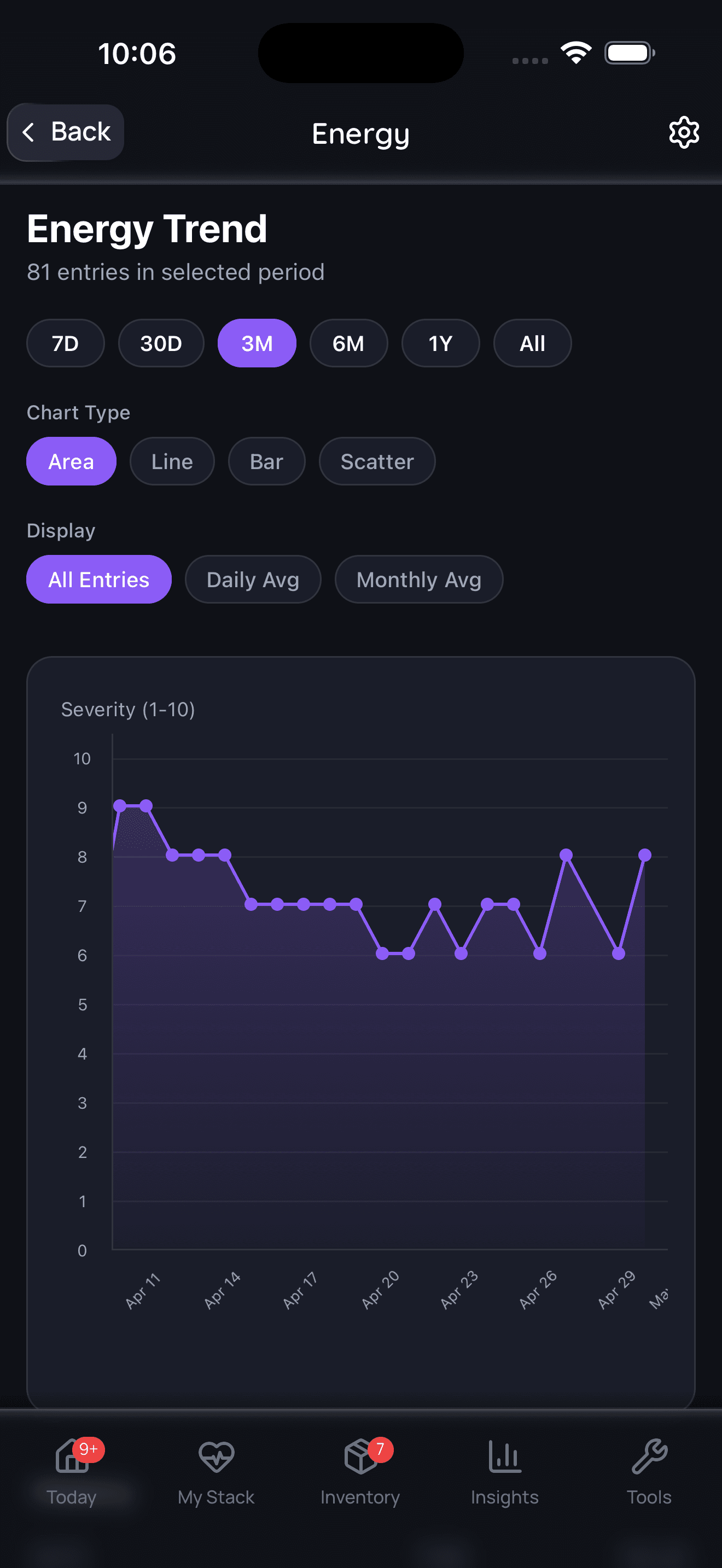
Symptom tracking is informational and should be interpreted with a qualified clinician.
Interactions & Compatibility
SYNERGISTIC
- L-Arginine: Complementary NO pathway. Citrulline provides sustained arginine elevation while direct arginine may offer a faster peak. A 2025 meta-analysis found the combination produced larger BP reductions than either alone (SBP -10.44 mmHg vs -4.02 mmHg for citrulline alone) [4]. They compete for the same renal conversion pathway, so combined doses should be monitored.
- Glutathione (Reduced, GSH): Combining L-citrulline (2g/day) with GSH (200mg/day) for 7 days resulted in significantly higher nitrite and NO levels 30 minutes after exercise versus citrulline alone. GSH may extend the half-life of NO by protecting it from oxidative degradation [1].
- Creatine: Complementary performance mechanisms. Creatine supports phosphocreatine resynthesis and short-burst power; citrulline supports NO-mediated blood flow and ammonia clearance. Community widely stacks these two. Different energy system targets make the combination logical [1].
- Beetroot/Nitrate: Citrulline malate increased serum nitrite during exercise, suggesting additive NO effects with dietary nitrate from beetroot juice. Both act on the NO pathway through different mechanisms [1].
- Vitamin C and E: Antioxidants that may help preserve NO from oxidative degradation, potentially extending the duration of citrulline's vasodilatory effects.
- Taurine: Community reports and preliminary data suggest cardiovascular synergy, particularly for heart rhythm support. The combination of taurine and arginine/citrulline has been documented in case reports for PVC elimination [14].
CAUTION / AVOID
- PDE5 inhibitors (Sildenafil, Tadalafil, Vardenafil): Both citrulline (via NO) and PDE5 inhibitors (via cGMP preservation) promote vasodilation. Combining may cause excessive blood pressure reduction. One clinical study intentionally combined them (low-dose citrulline + PDE5i) and found enhanced efficacy, but this should only occur under medical supervision [9].
- Nitrates (Nitroglycerin, Isosorbide): Additive hypotensive effect. Combining L-citrulline with nitrate medications may cause dangerously low blood pressure.
- Antihypertensive medications: Additive blood pressure lowering. Dose adjustments may be necessary. Monitor blood pressure closely if combining.
- Anticoagulants and anti-platelet drugs (Warfarin, Aspirin): L-citrulline may have indirect anti-platelet effects via NO-mediated inhibition of platelet activation, potentially increasing bleeding risk.
- L-Lysine: Because citrulline converts to arginine, and arginine promotes HSV replication while lysine inhibits it, citrulline supplementation in HSV carriers should be balanced with adequate lysine intake.
- Statins: Potentially synergistic rather than antagonistic. Statins increase eNOS expression, which could amplify citrulline's NO-producing effects. This is theoretically beneficial but the combination has not been directly tested in living systems [1].
How to Take / Administration Guide
Recommended forms: For cardiovascular health and erectile function, pure L-Citrulline is the studied form and allows precise dosing. For exercise performance, citrulline malate (2:1) has the most research support, with malate potentially contributing independently to energy metabolism. Both forms are well absorbed.
Timing considerations: For pre-exercise use, take citrulline malate 45-60 minutes before training. For cardiovascular and erectile function support, consistent daily dosing matters more than timing. Splitting the daily dose into 2-3 portions throughout the day may maintain more stable arginine elevation, given that renal conversion is continuous when substrate is available.
Food pairing: L-Citrulline can be taken with or without food. Unlike arginine, it does not require an empty stomach for absorption and does not cause the GI problems that make fasting arginine challenging.
Powder form: L-Citrulline powder has a mildly sour taste, described by many users as more palatable than arginine's intensely bitter taste. It mixes readily in water and can be combined with juice or a pre-workout drink. Citrulline malate has a slightly more tart, acidic flavor due to the malic acid component.
Stacking guidance: L-Citrulline stacks well with creatine monohydrate (different energy system targets), beta-alanine (complementary fatigue-buffering via carnosine), and beetroot/nitrate (additive NO effects). For maximum NO benefit, combining with reduced glutathione (200mg) has shown synergistic effects [1]. If stacking with L-Arginine, be aware that both ultimately produce arginine and there may be diminishing returns from very high combined doses.
Cycling: There is no evidence establishing the need for cycling L-Citrulline. Unlike some supplements that show tolerance development, citrulline's mechanism (substrate provision for enzymatic conversion) does not have a known tolerance pathway. Long-term continuous use appears to maintain benefits.
Choosing a Quality Product
Third-party certifications: Look for products certified by USP (United States Pharmacopeia), NSF International, or tested by ConsumerLab. For athletes, Informed Sport or NSF Certified for Sport certifications provide additional assurance against contamination with banned substances.
Active vs. cheap forms: Pure L-Citrulline (free-form) and citrulline malate (2:1) are both acceptable, but understand what you are getting. Citrulline malate is only approximately 56% citrulline by weight, so a "6g citrulline malate" serving provides roughly 3.4g of actual citrulline. Some manufacturers label poorly, making it unclear whether the stated dose is total weight or citrulline content. Look for products that specify the ratio and the citrulline content separately.
Red flags:
- Products claiming citrulline will produce dramatic muscle growth or act as a "natural Viagra" are overstating the evidence
- Pre-workout formulas using proprietary blends that may contain trivially small amounts of citrulline (clinical doses are 6-8g of citrulline malate, far more than most proprietary blends contain)
- Products listing "citrulline malate" without specifying the ratio (2:1, 1:1, or other)
- Extremely low-cost powders from unverified suppliers without certificates of analysis
Excipient/filler considerations: Capsule forms should ideally contain minimal fillers. Powder forms are typically purer. Check for common allergens (gluten, soy, dairy) if relevant.
Supplement-specific quality markers: Kyowa Quality is a recognized Japanese manufacturer of fermentation-derived L-citrulline used by several premium brands. Look for products specifying "L-Citrulline" (the biologically active L-form) rather than unspecified "citrulline." Certificate of Analysis (COA) availability indicates transparency.
Storage & Handling
L-Citrulline supplements should be stored in a cool, dry place at room temperature, away from direct sunlight and excessive heat. No refrigeration is required for any standard form (capsules, tablets, or powder).
Powder form should be sealed tightly after each use to prevent moisture absorption. A silica gel desiccant packet inside the container can help maintain dryness.
Shelf life is typically 2-3 years from the date of manufacture for properly stored products. Check expiration dates and discard products that show signs of discoloration, unusual odor, or excessive clumping.
L-Citrulline is stable in most standard supplement formulations and does not require special handling beyond general supplement storage practices.
Lifestyle & Supporting Factors
Dietary sources: Watermelon is the richest natural source of L-Citrulline at approximately 2.1mg/g wet weight. Consuming roughly 3.3kg of watermelon is equivalent to approximately 10g of supplemental L-arginine. Other cucurbit family members (muskmelons, bitter melons, squashes, gourds, cucumbers, pumpkins) contain smaller amounts. Unlike essential amino acids, citrulline is not widely distributed across protein-rich foods [1].
Signs of deficiency or increased need: True citrulline deficiency is not a recognized clinical condition in healthy individuals, as the body synthesizes citrulline endogenously from glutamine. However, populations with elevated arginase activity (type 2 diabetics), impaired endothelial function (cardiovascular disease), or increased NO demand (athletes engaged in high-volume training) may benefit from supplementation as a strategy to increase arginine availability beyond what the body can produce [1].
Exercise: Regular cardiovascular exercise independently increases eNOS expression and NO production. Combining exercise with citrulline supplementation may be complementary for cardiovascular health. For resistance training, citrulline appears most beneficial during high-volume, fatigue-accumulating protocols rather than low-rep strength work [1].
Hydration: Adequate hydration supports the enzymatic processes involved in citrulline-to-arginine conversion in the kidneys. Water intake should be maintained, particularly when using citrulline for exercise performance.
Monitoring: For individuals using citrulline for blood pressure management, regular blood pressure monitoring is advisable, particularly if combining with antihypertensive medications. The BP effects are modest (approximately 4-5 mmHg SBP) and may not be subjectively noticeable without measurement [4][5].
Regulatory Status & Standards
United States (FDA): L-Citrulline is regulated as a dietary supplement under DSHEA. It is available without prescription. No formal GRAS determination has been published specifically for L-citrulline as a supplement ingredient, though it occurs naturally in food.
Canada (Health Canada): L-Citrulline is available as a Natural Health Product (NHP). Products carry a Natural Product Number (NPN).
European Union (EFSA): L-Citrulline is permitted as a food supplement ingredient. EFSA has not established specific maximum permitted levels or approved health claims for citrulline supplementation.
Australia (TGA): L-Citrulline is available as a Listed Medicine (AUST L number) for oral use.
Athlete & Sports Regulatory Status:
- WADA: L-Citrulline is NOT on the WADA Prohibited List. It is a permitted nutritional supplement for athletes at all times, both in-competition and out-of-competition.
- National Anti-Doping Agencies: No major NADOs (USADA, UKAD, Sport Integrity Canada, Sport Integrity Australia, NADA Germany) have issued restrictions regarding L-Citrulline.
- NCAA: L-Citrulline is not on the NCAA banned substance list. However, pre-workout supplements containing citrulline may also contain banned stimulants, so athletes should verify entire formulations. NCAA rules require supplements provided by athletic departments to carry NSF Certified for Sport or Informed Sport certification.
- Professional Sports Leagues: L-Citrulline is permitted across NFL, NBA, MLB, NHL, and MLS. No league-specific restrictions exist.
- GlobalDRO: Athletes can verify L-Citrulline's permitted status across US, UK, Canada, Australia, Japan, Switzerland, and New Zealand via GlobalDRO.com.
- Third-party certification programs: Informed Sport, NSF Certified for Sport, Cologne List, and BSCG-certified L-Citrulline products are available for athletes seeking additional contamination assurance.
Regulatory status and prohibited substance classifications change frequently. Athletes should always verify the current status of any supplement with their sport's governing body, their national anti-doping agency, and a qualified sports medicine professional before use. Third-party certification (Informed Sport, NSF Certified for Sport) reduces but does not eliminate the risk of contamination with prohibited substances.
Frequently Asked Questions
Is L-Citrulline better than L-Arginine?
For most supplementation purposes, L-Citrulline appears to be the more practical choice. At equal doses, citrulline produces approximately 49% more total arginine exposure than direct arginine supplementation, primarily because citrulline avoids the extensive first-pass metabolism that breaks down arginine in the gut and liver. Citrulline also does not cause the gastrointestinal distress that arginine commonly triggers at doses above 10 grams [1][2].
What is the difference between L-Citrulline and citrulline malate?
L-Citrulline is the pure amino acid. Citrulline malate is a compound of citrulline bound to malic acid, typically in a 2:1 ratio. Citrulline malate is only about 56% citrulline by weight, so you need approximately 1.76 grams of citrulline malate for every gram of pure L-citrulline. Citrulline malate has more exercise performance research, and the malate component may independently contribute to aerobic energy metabolism [1].
Does L-Citrulline lower blood pressure?
Meta-analytic data from multiple randomized controlled trials suggest that L-Citrulline supplementation at doses of 6 grams or more per day may reduce systolic blood pressure by approximately 4-5 mmHg. The effects appear most reliable during physical or cold stress rather than at rest, and in those with elevated baseline blood pressure. Individual responses vary [4][5].
Can L-Citrulline help with erectile dysfunction?
Preliminary clinical evidence suggests that L-Citrulline may improve erection quality in men with mild erectile dysfunction. A pilot study found that 1.5 grams daily for one month improved erection hardness in 50% of participants versus 8.3% with placebo. While less potent than PDE5 inhibitors, citrulline is well tolerated and available without prescription. Consulting a healthcare provider is recommended for any erectile concerns [8][9].
How much L-Citrulline should I take for exercise?
For resistance training performance, the most studied dose is 6,000-8,000 mg of citrulline malate (equivalent to approximately 3,400-4,500 mg of pure L-citrulline) taken 45-60 minutes before exercise. Benefits appear most reliably during high-volume, fatigue-accumulating protocols rather than low-rep strength work [1].
Are there any side effects?
L-Citrulline has an exceptionally favorable safety profile. Doses up to 15 grams in a single sitting have not caused diarrhea or intestinal upset in clinical studies. Rare reported side effects include mild headache and occasional stomach discomfort when taken on an empty stomach. There are no serious safety signals comparable to the post-heart-attack warning that exists for L-arginine [1].
Can L-Citrulline trigger herpes outbreaks?
Because citrulline is converted to arginine in the body, and HSV requires arginine for replication, there is a theoretical concern. However, citrulline's gradual conversion to arginine avoids the acute spikes that direct arginine supplementation produces. People with a history of herpes simplex may want to ensure adequate lysine intake alongside citrulline use [1].
Does L-Citrulline need to be cycled?
There is no evidence establishing the need for cycling L-Citrulline. Its mechanism (providing substrate for enzymatic conversion) does not have a known tolerance pathway, and long-term supplementation appears to maintain benefits without requiring breaks [1].
Does L-Citrulline improve muscle pump?
Many users report an enhanced "pump" (increased muscle fullness and vascularity during exercise) with citrulline, consistent with its role in increasing NO-mediated vasodilation. However, it is worth noting that the pump sensation does not necessarily correlate with improved performance outcomes. Clinical evidence shows fatigue reduction benefits rather than acute strength or power enhancement [1].
Can I get enough citrulline from watermelon?
Watermelon contains approximately 2.1mg of citrulline per gram of wet weight. To obtain 3 grams of supplemental citrulline, you would need to consume approximately 1.4 kg of watermelon. While watermelon is the richest dietary source, supplementation provides a more practical way to achieve therapeutic doses [1].
Myth vs. Fact
Myth: L-Citrulline is just another form of arginine and does the same thing.
Fact: While citrulline's primary bioactivity comes through its conversion to arginine, the pharmacokinetics are substantially different. Citrulline avoids first-pass metabolism in the gut and liver, produces 49% more total arginine exposure at equivalent doses, and does not cause the gastrointestinal distress that limits arginine dosing. These differences make citrulline a functionally superior delivery system for arginine, not merely a different form of the same supplement [1][2].
Myth: Citrulline will dramatically improve your workout performance.
Fact: The exercise performance evidence is more nuanced than marketing suggests. A meta-analysis of 10 studies found no significant benefit for aerobic exercise performance [7]. Benefits appear specific to high-volume resistance training where fatigue accumulates across many sets. The most cited study showed reps increased by 10-53%, but only in sets 3-8, not in the first two sets. For aerobic exercise, endurance, or acute strength, citrulline's effects are not reliably supported [1][7].
Myth: You need 10+ grams of citrulline for it to work.
Fact: Effective doses in clinical research range from 1.5g (erectile function) to 6-8g citrulline malate (exercise performance). Blood pressure benefits have been observed at doses of 3-6g/day. The kidney's conversion of citrulline to arginine reaches a practical plateau around 5-10g, meaning doses above 10g produce diminishing returns. More is not necessarily better; consistent dosing at evidence-supported levels is more effective than occasional mega-dosing [1][4].
Myth: Citrulline malate is always better than pure L-citrulline.
Fact: The two forms serve different purposes. Citrulline malate has more exercise performance research, and malate may independently support aerobic energy metabolism. However, for cardiovascular health, blood pressure, and erectile function, the research has primarily used pure L-citrulline. The "better" form depends on the goal. Additionally, citrulline malate is only about 56% citrulline by weight, so users often underdose when they do not account for this ratio [1].
Myth: L-Citrulline causes kidney damage.
Fact: The kidneys are the primary site of citrulline-to-arginine conversion, which has led to occasional concerns about kidney stress. However, no clinical evidence supports this concern. Citrulline has been studied at doses up to 15g acutely and 6g/day chronically without evidence of renal impairment. Rare anecdotal reports of kidney discomfort exist in online communities but have not been reproduced in controlled settings [1].
Myth: The "pump" from citrulline means it is building muscle.
Fact: The enhanced muscle pump (increased blood flow and muscle fullness) that many users experience with citrulline is a vasodilation effect, not a direct muscle-building signal. While citrulline has been shown to interact with the mTOR pathway under conditions of food restriction, it is not a direct activator of muscle protein synthesis like leucine. The pump is a blood flow phenomenon, not an indicator of hypertrophy [1].
Sources & References
Clinical Trials & RCTs
[1] Neri L, Lopez G, et al. Research Breakdown on Citrulline. Examine.com. Updated February 23, 2026. (Compiled research review with extensive primary source citations)
[2] Schwedhelm E, Maas R, Freese R, et al. Pharmacokinetic and pharmacodynamic properties of oral L-citrulline and L-arginine: impact on nitric oxide metabolism. Br J Clin Pharmacol. 2008;65(1):51-59. doi:10.1111/j.1365-2125.2007.02990.x
[3] McNeal CJ, Meininger CJ, Wilborn CD, Tekwe CD, Wu G. Safety and effectiveness of arginine in adults. J Nutr. 2016;146(12):2587S-2593S. doi:10.3945/jn.116.234740
Systematic Reviews & Meta-Analyses
[4] Luo P, Li Z, Liu K, et al. Does l-citrulline supplementation and watermelon intake reduce blood pressure in middle-aged and older adults? A systematic review and meta-analysis of randomized controlled trials. 2025.
[5] Wan Y, Tian W, Yang Q, et al. Effect of oral L-citrulline on brachial and aortic blood pressure defined by resting status: evidence from randomized controlled trials. Clin Nutr. 2020;39(12):3571-3580. doi:10.1016/j.clnu.2020.03.019
[6] Mirenayat MS, Moradi S, Mohammadi H, Rouhani M. Effect of L-Citrulline supplementation on blood pressure: a systematic review and meta-analysis of clinical trials. Curr Hypertens Rep. 2019;20(11):98.
[7] Vega-Cabello V, Sanchez-Gomez A, Alonso-Feliciano A, et al. Effects of Citrulline Supplementation on Different Aerobic Exercise Performance Outcomes: A Systematic Review and Meta-Analysis. Nutrients. 2022;14(17):3590. doi:10.3390/nu14173590
Observational Studies & Trials
[8] Cormio L, De Siati M, Lorusso F, et al. Oral L-citrulline supplementation improves erection hardness in men with mild erectile dysfunction. Urology. 2011;77(1):119-122. doi:10.1016/j.urology.2010.08.028
[9] Shirai M, Hiramatsu I, Aoki Y, et al. Oral L-citrulline and Transresveratrol Supplementation Improves Erectile Function in Men With Phosphodiesterase 5 Inhibitors: A Randomized, Double-Blind, Placebo-Controlled Crossover Pilot Study. Sex Med. 2018;6(4):291-296. doi:10.1016/j.esxm.2018.07.001
[10] Mahboobi S, Tsang C, Rezaei S, Jafarnejad S. [RETRACTED] Effect of L-citrulline supplementation on blood pressure: a systematic review and meta-analysis. J Hum Hypertens. 2019;33(1):10-21. Retraction in: J Hum Hypertens. 2021;35(4):381.
[11] Francis L, Zimmermann P, et al. Ergogenic effects of a 10-day L-citrulline supplementation on time to exhaustion. Front Sports Act Living. 2025;doi:10.3389/fspor.2025.1627743
[12] Figueroa A, et al. Effects of L-Citrulline Supplementation on Endothelial Function, Arterial Stiffness, and Blood Glucose Level in Type 2 Diabetes. Nutrients. 2025;17(23):3739. doi:10.3390/nu17233739
[13] Luo P, Li Z, Liu K, et al. Effects of L-citrulline supplementation and watermelon intake on arterial stiffness and endothelial function in middle-aged and older adults: a systematic review and meta-analysis of RCTs. Front Nutr. 2025;12. doi:10.3389/fnut.2025.1632952
Government/Institutional Sources
[14] Eby GA, Eby KL. Elimination of cardiac arrhythmias using oral taurine with l-arginine with case histories. Med Hypotheses. 2006;67(5):1200-1204.
[15] Allerton TD, Proctor DN, Stephens JM, Dugas TR, Spielmann G, Irving BA. L-Citrulline supplementation: Impact on cardiometabolic health. Nutrients. 2018;10(7):921. doi:10.3390/nu10070921
[16] Gonzalez AM, Trexler ET. Effects of citrulline supplementation on exercise performance in humans: A review of the current literature. J Strength Cond Res. 2020;34(5):1480-1495.
Related Supplement Guides
Same Category
- L-Arginine — Direct NO precursor; citrulline converts to arginine in the kidneys; pharmacokinetically inferior but faster-acting
- L-Ornithine — Urea cycle intermediate; ammonia detoxification; produced from arginine
- L-Glutamine — Major precursor for endogenous citrulline synthesis (90% of circulating citrulline derives from glutamine)
Common Stacks / Pairings
- Creatine — Complementary energy system support; citrulline for blood flow and fatigue buffering, creatine for phosphocreatine resynthesis
- Beta-Alanine — Complementary fatigue buffering via carnosine; commonly stacked in pre-workout protocols
- L-Lysine — Relevant for HSV carriers using citrulline; lysine counters arginine's promotion of viral replication
Related Health Goal
- L-Arginine — Alternative NO precursor for cardiovascular and erectile function support
- Taurine — Synergistic cardiovascular effects; community reports of enhanced heart rhythm support when combined
- Magnesium — Complementary cardiovascular support; involved in endothelial function and blood pressure regulation