
CoQ10/Ubiquinol: The Complete Supplement Guide
On this page
Quick Reference Card
Attribute
Common Name
- Detail
- Coenzyme Q10 (CoQ10)
Attribute
Other Names / Aliases
- Detail
- Ubiquinone, Ubiquinol, Ubidecarenone, CoQ, Coenzyme Q, Vitamin Q10
Attribute
Category
- Detail
- Endogenous Antioxidant / Mitochondrial Cofactor
Attribute
Primary Forms & Variants
- Detail
- Ubiquinone (oxidized form, conventional); Ubiquinol (reduced form, marketed as more bioavailable); Crystal-free soft gel formulations; Nano-emulsion and liposomal formulations
Attribute
Typical Dose Range
- Detail
- 100-300 mg/day for general supplementation; up to 600 mg/day for specific conditions in clinical studies; doses up to 1200 mg/day studied in research
Attribute
RDA / AI / UL
- Detail
- No RDA, AI, or UL established. Not classified as an essential nutrient since the body synthesizes it endogenously
Attribute
Common Delivery Forms
- Detail
- Soft gel capsule (most common), hard capsule, chewable tablet, liquid syrup, powder
Attribute
Best Taken With / Without Food
- Detail
- Best absorbed with a meal containing dietary fat due to high lipophilicity. Absorption significantly reduced when taken on an empty stomach
Attribute
Key Cofactors
- Detail
- Selenium (synergistic cardiovascular benefits per KiSel-10 study), Vitamin E (synergistic antioxidant network), L-Carnitine (complementary mitochondrial support), Alpha-Lipoic Acid (antioxidant recycling)
Attribute
Storage Notes
- Detail
- Store in a cool, dry place away from direct sunlight. Soft gels are generally stable at room temperature. Ubiquinol formulations may be more susceptible to oxidation than ubiquinone
Overview
The Basics
Coenzyme Q10 is a compound your body naturally produces and uses in virtually every cell. It plays two critical roles: helping your cells generate energy and protecting them from oxidative damage. You can think of CoQ10 as both the spark plug and the shield inside your cellular power plants (mitochondria), keeping energy production running smoothly while preventing the machinery from wearing down.
Your body makes its own CoQ10, which is why it is not classified as a vitamin or essential nutrient. However, production peaks around age 20 and declines steadily after that. By middle age, CoQ10 levels in the heart can drop by as much as 25-30%, and the decline continues with aging. Certain medications, particularly statins used to lower cholesterol, can further reduce CoQ10 levels because statins block the same biochemical pathway your body uses to make both cholesterol and CoQ10.
CoQ10 is found in small amounts in foods like organ meats (especially heart and liver), fatty fish (sardines, mackerel), beef, peanuts, and spinach. However, dietary intake typically provides only about 5 mg per day, a small fraction of the estimated 500 mg daily requirement that your body meets mostly through its own production [1][2]. This is why supplementation has become popular, particularly among older adults, statin users, and those interested in cardiovascular and mitochondrial health.
The Science
Coenzyme Q10 (2,3-dimethoxy-5-methyl-6-decaprenyl-1,4-benzoquinone) is an endogenous lipophilic quinone present in virtually all biological membranes. Structurally, it consists of a benzoquinone ring conjugated to a polyisoprenoid side chain of 10 isoprenoid units (hence Q10, the predominant form in humans) [1]. It exists in two interconvertible redox states: ubiquinone (fully oxidized) and ubiquinol (fully reduced), with the semiquinone radical as an intermediate [1][2].
CoQ10 is synthesized endogenously via the mevalonate pathway, sharing the biosynthetic route with cholesterol up to the farnesyl pyrophosphate branch point. HMG-CoA reductase catalyzes the rate-limiting step of this shared pathway, which is the pharmacological target of statin drugs [3]. Consequently, statin therapy can reduce endogenous CoQ10 synthesis alongside cholesterol production, though the clinical significance of this reduction remains debated [4].
CoQ10 concentrations are highest in tissues with the greatest metabolic demand: heart, liver, kidney, and pancreas [1]. Total body CoQ10 content in a healthy adult is estimated at approximately 0.5-1.5 g, with endogenous biosynthesis contributing the majority and dietary intake providing roughly 5 mg/day [2]. Plasma concentrations in unsupplemented adults typically range from 0.4 to 1.0 mcg/mL.
Chemical & Nutritional Identity
Property
Chemical Name
- Value
- 2,3-dimethoxy-5-methyl-6-decaprenyl-1,4-benzoquinone
Property
Synonyms
- Value
- Ubiquinone-10, Ubidecarenone, Coenzyme Q, CoQ10
Property
Molecular Formula
- Value
- C59H90O4
Property
Molecular Weight
- Value
- 863.34 g/mol
Property
CAS Number
- Value
- 303-98-0 (ubiquinone-10)
Property
PubChem CID
- Value
- 5281915
Property
Category
- Value
- Lipophilic quinone; endogenous antioxidant; mitochondrial cofactor
Property
Oxidized Form
- Value
- Ubiquinone (CoQ10)
Property
Reduced Form
- Value
- Ubiquinol (CoQ10H2, QH2)
Property
RDA / AI / UL
- Value
- None established (endogenously synthesized)
Property
Estimated Total Body Content
- Value
- 0.5-1.5 g
Property
Estimated Daily Requirement
- Value
- ~500 mg (mostly met by endogenous synthesis)
Property
Dietary Intake
- Value
- ~5 mg/day from food
CoQ10's isoprenoid side chain of 10 repeating units distinguishes it from shorter-chain analogs found in other species (e.g., CoQ9 in rodents). The benzoquinone head group undergoes reversible two-electron reduction, cycling between ubiquinone and ubiquinol. This redox chemistry underpins both its role in the electron transport chain and its antioxidant function [1].
Commercial supplements are available as ubiquinone (oxidized form) or ubiquinol (reduced form). In the body, both forms are interconverted by cellular redox enzymes. Approximately 95% of circulating CoQ10 exists in the ubiquinol (reduced) form in healthy individuals [2].
Mechanism of Action
The Basics
CoQ10 works in two main ways. First, it acts as an essential shuttle in your cellular energy factories (mitochondria). Every cell in your body generates its energy currency, ATP, through a process that requires CoQ10 to carry electrons between different protein complexes. Without sufficient CoQ10, this energy production chain slows down, and your cells produce less usable energy. This is why tissues with the highest energy demands, like the heart, are most affected when CoQ10 levels drop.
Second, CoQ10 serves as one of your body's built-in antioxidants. In its reduced form (ubiquinol), it patrols cell membranes and neutralizes free radicals before they can damage the fatty components of your cells. It also works in partnership with other antioxidants like vitamin E and vitamin C, recycling them back into their active forms after they have neutralized free radicals. This teamwork makes CoQ10 part of a larger protective network rather than a standalone defense.
Beyond energy and antioxidant roles, emerging research suggests CoQ10 influences inflammation pathways, cell signaling, and gene expression, expanding its recognized importance well beyond the mitochondria.
The Science
CoQ10 serves as a mobile electron carrier in the mitochondrial inner membrane, transferring electrons from Complex I (NADH-ubiquinone oxidoreductase) and Complex II (succinate-ubiquinone oxidoreductase) to Complex III (ubiquinol-cytochrome c reductase) [1][2]. This electron shuttle function is indispensable for oxidative phosphorylation and ATP synthesis. CoQ10 also accepts electrons from other mitochondrial dehydrogenases, including those involved in fatty acid beta-oxidation and pyrimidine biosynthesis [1].
As a lipophilic antioxidant, ubiquinol (QH2) protects membrane phospholipids, lipoproteins (particularly LDL), and mitochondrial DNA from peroxidative damage. It terminates lipid peroxidation chain reactions by donating hydrogen atoms to peroxyl radicals, analogous to alpha-tocopherol (vitamin E) but operating independently in membranes. Ubiquinol also regenerates alpha-tocopherol from its oxidized alpha-tocopheroxyl radical form, functioning synergistically within the cellular antioxidant network [1][5].
Additional established mechanisms include:
- Direct regulatory role on succinyl dehydrogenase and NADH dehydrogenase activity [2]
- Membrane stabilization and prevention of metabolite depletion required for ATP resynthesis during ischemic episodes [2]
- Maintenance of myocardial calcium ion channel integrity during ischemia [6]
- Suppression of age-related inflammatory reactions and osteoclast differentiation via oxidative stress inhibition [7]
- Inhibition of protein kinase C-dependent pathways involved in smooth muscle cell proliferation [1]
- Modulation of NF-kB signaling and anti-inflammatory gene expression through redox regulation [8]
- Upregulation of endothelial nitric oxide synthase (eNOS) and heme oxygenase via AMP-activated protein kinase (AMPK) pathway [9]
Pathway
CoQ10 sits at the intersection of mitochondrial energy production and redox defense. After oral intake, the compound is absorbed with dietary fat, packaged into lipoproteins, and delivered through circulation. Inside cells, it cycles between ubiquinone and ubiquinol states as part of the electron transport chain, where it helps shuttle electrons toward ATP generation [1][2][10].
That same redox cycling also supports membrane antioxidant protection. In practice, the pathway story is why CoQ10 is discussed in conditions involving high energy demand, oxidative stress, and statin exposure. The compound is not acting like a stimulant. It is supporting the machinery that keeps mitochondrial energy transfer and antioxidant recycling running efficiently over time [1][5][8].
Absorption & Bioavailability
The Basics
CoQ10 is a large, fat-loving molecule, and getting it from a supplement into your bloodstream is one of the biggest challenges with this compound. On its own, CoQ10 dissolves poorly in water, which means your body cannot absorb it efficiently without help. Taking CoQ10 with a meal that contains some fat significantly improves absorption, sometimes doubling or tripling the amount that reaches your blood.
The form of CoQ10 also matters. Ubiquinol (the reduced, active form) generally shows higher absorption than standard ubiquinone powder, particularly in older adults. However, both forms are converted back and forth in the body, so the practical difference may be smaller than marketing suggests. What matters more than the label (ubiquinone vs ubiquinol) is the formulation technology: soft gel capsules with carrier oils absorb substantially better than dry powder in hard capsules.
After you swallow a CoQ10 supplement, it takes about 5 to 10 hours to reach peak levels in your blood, and it has a relatively long half-life of approximately 33 hours. This means consistent daily dosing builds up steady levels over days to weeks, and effects persist even if you miss a dose occasionally.
The Science
Oral bioavailability of CoQ10 is inherently limited by its high molecular weight (863 g/mol), extreme lipophilicity (log P ~19.4), and negligible aqueous solubility [1][10]. Absorption occurs primarily in the small intestine via passive diffusion, following the same pathway as dietary lipids and requiring bile salt-mediated micellar solubilization [10].
Key pharmacokinetic parameters:
- Tmax: 5-10 hours post-dose [11]
- Elimination half-life: Approximately 33 hours [11]
- Bioavailability enhancers: Dietary fat (required), grapefruit juice (P-glycoprotein inhibitor), lipophilic carrier formulations
- Bioavailability inhibitors: P-glycoprotein mediated efflux in intestinal epithelium [11]
- Novel formulation strategies: Nano-emulsions, liposomal delivery, cyclodextrin complexes, and crystal-free soft gel capsules can enhance bioavailability 2-8x compared to conventional crystalline ubiquinone powder [10]
- Tissue distribution: After absorption, CoQ10 is incorporated into lipoproteins in the liver and redistributed. However, all cells synthesize their own CoQ10, and there is no significant redistribution between organs through the blood under normal conditions [2]
Supplementation typically increases plasma CoQ10 concentrations 2-5 fold at standard doses (100-300 mg/day), with a plateau effect observed at higher doses suggesting saturable absorption [10].
Understanding how your body absorbs a supplement is only useful if you can act on it. Doserly lets you log exactly when you take each form, whether it's a capsule with a meal, a sublingual tablet on an empty stomach, or a liquid taken with a cofactor, so you can see how timing and form choices affect your results over time.
The app also tracks cofactor pairings that influence absorption. If a supplement works better alongside vitamin C, fat, or black pepper extract, Doserly reminds you to take them together and logs both. Over weeks, your personal data reveals whether those pairing strategies are translating into measurable differences in the biomarkers you're tracking.
Turn symptom and safety notes into a clearer timeline.
Doserly helps you log doses, symptoms, and safety observations side by side so patterns are easier to discuss with a qualified clinician.
Pattern view
Logs and observations

Pattern visibility is informational and should be reviewed with a clinician.
Research & Clinical Evidence
The Basics
The most robust research on CoQ10 centers on cardiovascular health. One of the most influential studies, known as Q-SYMBIO, followed 420 people with chronic heart failure for two years. Those taking 300 mg of CoQ10 daily experienced roughly half as many major cardiovascular events compared to placebo, including a 43% reduction in cardiovascular death. Another landmark study from Sweden (KiSel-10) found that combining CoQ10 with selenium in elderly adults reduced cardiovascular mortality, with benefits persisting even 12 years after the supplementation period ended [12][13][14].
For migraines, research suggests CoQ10 at 300 mg/day may reduce how often migraines occur and how long they last, though results in children have been less convincing. Most practitioners note that three months of consistent use appears necessary before benefits emerge [15][16].
Despite early promise, large well-designed studies found that even high doses of CoQ10 did not improve symptoms of Parkinson's disease or Huntington's disease [17][18]. This was one of the more notable disappointments in CoQ10 research, as earlier small studies had generated significant optimism.
For blood pressure, a 2025 meta-analysis pooling 45 clinical trials found CoQ10 reduced systolic blood pressure by about 3.4 mmHg on average, which is modest but potentially meaningful for those with mildly elevated readings [19].
The Science
Heart Failure:
The Q-SYMBIO trial (Mortensen et al., 2014) remains the most cited interventional study. This multicenter, randomized, double-blind trial (n=420) administered 300 mg/day CoQ10 or placebo for 2 years to patients with moderate-to-severe chronic heart failure. The primary endpoint (MACE: cardiovascular death, hospitalization for heart failure, mechanical assist device implantation, or urgent transplant) showed significant reduction (HR 0.50, 95% CI: 0.32-0.80, p=0.003). Cardiovascular mortality was reduced by 43% [12]. A prior meta-analysis (Fotino et al., 2013) corroborated benefits for ejection fraction and exercise capacity in heart failure [20].
However, a 2018 systematic review concluded that current evidence does not support routine CoQ10 supplementation in patients with coronary heart disease, and the American Heart Association has stated that large-scale randomized trials are still needed [21][22].
Selenium-CoQ10 Combination:
The KiSel-10 study (Alehagen et al., 2013, 2018, 2021) demonstrated that combined supplementation with selenium (200 mcg/day) and CoQ10 (200 mg/day) significantly reduced cardiovascular mortality in elderly Swedish citizens, with benefits sustained at 5-year, 10-year, and 12-year follow-ups [13][14].
Blood Pressure:
A 2025 meta-analysis of 45 RCTs (48 effect sizes) found CoQ10 significantly reduced systolic BP (WMD: -3.44 mmHg, 95% CI: -5.13 to -1.55, p<0.01). No significant effects were observed for diastolic BP or heart rate. Subgroup analysis suggested doses below 200 mg/day and longer treatment durations were most effective [19].
Inflammation:
A GRADE-assessed meta-analysis (Hou et al., 2023; 31 RCTs, 1517 subjects) found CoQ10 supplementation significantly reduced CRP (SMD: -0.40), IL-6 (SMD: -0.67), and TNF-alpha (SMD: -1.06), with optimal anti-inflammatory effects at 300-400 mg/day [8].
Fatigue:
A meta-analysis (Tsai et al., 2022; 13 RCTs, 602 participants in CoQ10 groups) found significant fatigue reduction, with dose and duration both positively correlated with effect size. Only one adverse event (gastrointestinal) was reported among 602 participants [23].
Statin-Induced Myopathy:
Data remain inconclusive. A meta-analysis (Qu et al., 2018) found some evidence for modest improvement in statin-related muscle symptoms, but other studies showed no benefit [4][24].
Neurodegenerative Disease:
A large NINDS-funded RCT (Beal et al., 2014; JAMA Neurology) found no evidence of benefit from high-dose CoQ10 (1200-2400 mg/day) in early Parkinson's disease [17]. Similarly, CoQ10 showed no benefit in Huntington's disease (McGarry et al., 2017) [18]. However, adjuvant CoQ10 improved depressive symptoms in bipolar disorder in a smaller trial [25].
Fertility:
Preliminary evidence suggests CoQ10 may improve sperm motility in men with idiopathic asthenozoospermia [26] and modulate insulin, lipid, and inflammatory markers in women with PCOS [27].
Evidence & Effectiveness Matrix
Category
Heart Health
- Evidence Strength
- 8/10
- Reported Effectiveness
- 7/10
- Summary
- Strong RCT evidence from Q-SYMBIO and KiSel-10 for heart failure and cardiovascular mortality. Community reports consistently positive for cardiovascular support.
Category
Energy Levels
- Evidence Strength
- 6/10
- Reported Effectiveness
- 7/10
- Summary
- Meta-analysis supports fatigue reduction; mechanism well-established through ATP production. High community enthusiasm, especially among CFS patients and statin users.
Category
Inflammation
- Evidence Strength
- 7/10
- Reported Effectiveness
- 6/10
- Summary
- GRADE-assessed meta-analysis shows significant reduction in CRP, IL-6, TNF-alpha at 300-400 mg/day. Community reports align but are largely indirect.
Category
Blood Pressure
- Evidence Strength
- 7/10
- Reported Effectiveness
- —
- Summary
- 2025 meta-analysis of 45 RCTs shows -3.44 mmHg systolic BP reduction. Community data not yet collected for this specific outcome.
Category
Hormonal Symptoms
- Evidence Strength
- 5/10
- Reported Effectiveness
- 7/10
- Summary
- Preliminary fertility evidence (sperm motility, PCOS markers). Very strong positive community sentiment from IVF/fertility populations, though heavily confounded.
Category
Sleep Quality
- Evidence Strength
- 4/10
- Reported Effectiveness
- 5/10
- Summary
- Limited clinical evidence. Community reports genuinely mixed: some improved sleep, others insomnia as side effect.
Category
Focus & Mental Clarity
- Evidence Strength
- 3/10
- Reported Effectiveness
- 5/10
- Summary
- Minimal clinical evidence for cognitive effects in healthy populations. Community reports split between improved and worsened clarity.
Category
Recovery & Healing
- Evidence Strength
- 5/10
- Reported Effectiveness
- 6/10
- Summary
- Some evidence for reduced exercise-induced muscle damage. CFS patients report reduced post-exertional malaise.
Category
Pain Management
- Evidence Strength
- 3/10
- Reported Effectiveness
- 5/10
- Summary
- Limited clinical data. Some fibromyalgia/CFS patients report pain reduction.
Category
Physical Performance
- Evidence Strength
- 4/10
- Reported Effectiveness
- 4/10
- Summary
- Inconclusive clinical evidence for exercise performance. Community discussion limited.
Category
Longevity & Neuroprotection
- Evidence Strength
- 5/10
- Reported Effectiveness
- 5/10
- Summary
- Mechanistic basis strong (antioxidant, mitochondrial support), but Parkinson's/Huntington's trials negative. Longevity community positive but theoretical.
Category
Side Effect Burden
- Evidence Strength
- —
- Reported Effectiveness
- 5/10
- Summary
- Generally well tolerated. Notable minority experience insomnia, GI issues, or palpitations. Form-dependent side effect profiles.
Category
Nausea & GI Tolerance
- Evidence Strength
- —
- Reported Effectiveness
- 4/10
- Summary
- GI side effects (nausea, diarrhea, appetite loss) consistently reported, though typically mild. Taking with food reduces incidence.
Category
Heart Rate & Palpitations
- Evidence Strength
- —
- Reported Effectiveness
- 4/10
- Summary
- Reports of heart racing with ubiquinone form. POTS patients report paradoxically improved heart rate regulation.
Benefits & Potential Effects
The Basics
The most well-supported benefit of CoQ10 is cardiovascular protection. For people with heart failure, research suggests it may reduce the risk of serious cardiac events and improve the heart's ability to pump blood effectively. This makes sense given that the heart is one of the most energy-hungry organs in the body and contains the highest concentrations of CoQ10.
Energy and fatigue represent the second major benefit area. People who are depleted in CoQ10 (whether from aging, statin use, or chronic health conditions) often report meaningful improvements in daily energy and reduced fatigue when they start supplementing. The effects tend to be most noticeable in those who were deficient to begin with; healthy young adults with normal CoQ10 levels may notice little difference.
Other potential benefits include migraine prevention (at higher doses around 300 mg/day, typically requiring several months of consistent use), modest blood pressure reduction, reduced inflammatory markers, and potential support for fertility. However, the evidence base narrows considerably beyond cardiovascular and energy-related outcomes.
The Science
Well-supported benefits based on clinical evidence:
- Cardiovascular mortality reduction in heart failure patients (Q-SYMBIO: HR 0.50 for MACE at 300 mg/day over 2 years) [12]
- Long-term cardiovascular protection when combined with selenium in elderly populations (KiSel-10: sustained mortality reduction at 12-year follow-up) [13][14]
- Systolic blood pressure reduction of approximately 3.4 mmHg (meta-analysis of 45 RCTs, most effective at <200 mg/day) [19]
- Anti-inflammatory effects with significant reductions in CRP, IL-6, and TNF-alpha at 300-400 mg/day (GRADE-assessed meta-analysis, 31 RCTs) [8]
- Fatigue reduction across multiple populations (meta-analysis of 13 RCTs, dose-dependent effect) [23]
Emerging or preliminary benefits:
- Improved markers in PCOS and male fertility [26][27]
- Potential migraine frequency reduction at 300 mg/day [15][16]
- Reduced markers of exercise-induced muscle damage [28]
- Possible benefits for statin-induced myopathy (inconclusive) [4]
Reading about potential benefits gives you a framework. Seeing whether those benefits are showing up in your own body turns knowledge into confidence. Doserly lets you track the specific health markers relevant to this supplement, building a personal dataset that captures what's actually changing week over week.
The app's AI analytics go further than simple logging. By correlating your supplement intake with the biomarkers and health outcomes you're tracking, Doserly surfaces patterns you might miss on your own, like whether a dose adjustment three weeks ago corresponds to the improvement you're noticing now. When it's time to evaluate whether a supplement is earning its place in your stack, you have your own data to guide the decision.
Capture changes while they are still fresh.
Log symptoms, energy, sleep, mood, and other observations alongside protocol events so patterns do not live only in memory.
Trend view
Symptom timeline
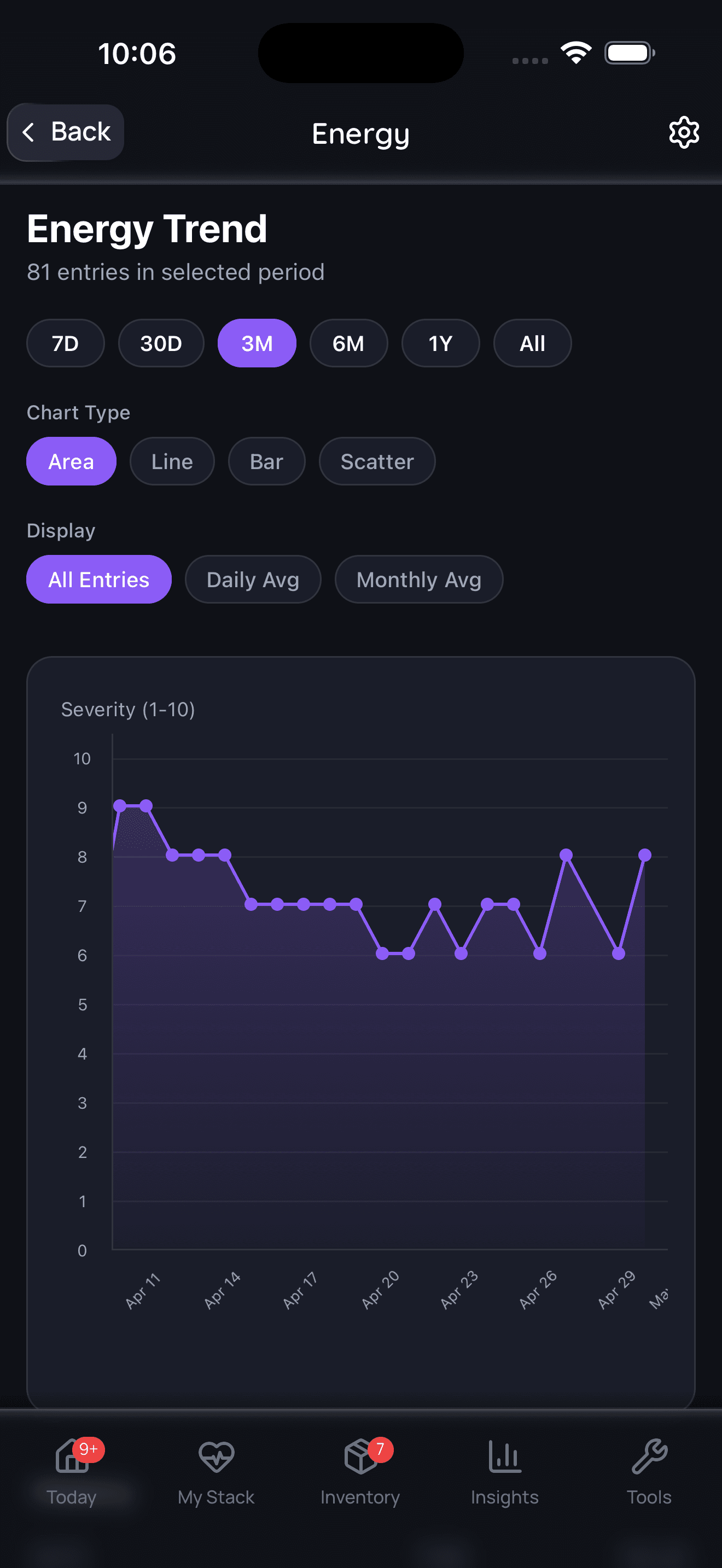
Symptom tracking is informational and should be interpreted with a qualified clinician.
Side Effects & Safety
The Basics
CoQ10 has an excellent safety record overall. Most people tolerate it well, and serious side effects are rare. The most commonly reported issues are mild digestive complaints: nausea, diarrhea, loss of appetite, and upper stomach discomfort. These tend to be more frequent at higher doses and are often reduced by taking CoQ10 with food.
One side effect that deserves special mention is insomnia. While some people find CoQ10 improves their sleep, others experience difficulty falling or staying asleep, particularly at doses above 100-200 mg. Community reports suggest this may be more common with ubiquinone than ubiquinol, though individual variation is significant. If sleep disruption occurs, reducing the dose or taking CoQ10 in the morning rather than the evening may help.
Other less common side effects include dizziness, headaches, skin rash, irritability, and a feeling of being "wired." A small number of users report heart racing or palpitations, which appears more associated with ubiquinone form. There is no established upper tolerable intake level for CoQ10, and doses up to 1200 mg/day have been used in clinical trials without major safety signals.
Safety during pregnancy and breastfeeding has not been established, so most healthcare professionals advise caution.
The Science
CoQ10 demonstrates a favorable safety profile across clinical trials, with adverse event rates generally comparable to placebo [1][23]. The most frequently reported adverse effects are gastrointestinal in nature: nausea, diarrhea, and appetite suppression, occurring infrequently even at doses of 300-600 mg/day [2][29].
No Tolerable Upper Intake Level (UL) has been established by the Institute of Medicine or EFSA for CoQ10. The observed safe level has been assessed at 1200 mg/day based on clinical trial data, though most supplementation studies use 100-400 mg/day [1].
Specific safety considerations:
- Cancer patients: Antioxidant supplementation including CoQ10 before and during chemotherapy was associated with an increased hazard of recurrence in breast cancer patients (SWOG S0221 trial) [30]. CoQ10 may reduce the effectiveness of chemotherapy and radiation therapy due to its antioxidant properties [2][29]. This is a critical consideration.
- Pregnancy/lactation: Safety not established; insufficient human data.
- Radiation therapy: In a murine model of non-small cell lung cancer, ubiquinone intake appeared to reduce the effects of radiation therapy [29].
Dosing & Usage Protocols
The Basics
For general wellness and antioxidant support, most sources reference doses in the range of 100 to 200 mg per day. For specific health goals, higher doses are commonly studied: 300 mg per day for migraine prevention and cardiovascular support, and some clinical trials have used up to 600-1200 mg per day for conditions like heart failure and neurodegenerative disease.
Because CoQ10 has no established upper limit, the dosing conversation is more about finding what works for you than staying below a safety threshold. Most practitioners suggest starting at the lower end (100 mg/day) and increasing gradually if needed, paying attention to how your body responds. The long half-life of approximately 33 hours means that once-daily dosing is sufficient for most people, though some split their dose to reduce the chance of digestive discomfort.
The Science
Dosing recommendations from clinical literature, organized by application:
Application
General antioxidant support
- Dose Range Studied
- 100-200 mg/day
- Duration
- Ongoing
- Key Trial(s)
- Multiple observational studies
Application
Heart failure
- Dose Range Studied
- 300 mg/day
- Duration
- 2 years
- Key Trial(s)
- Q-SYMBIO (n=420) [12]
Application
Cardiovascular + selenium
- Dose Range Studied
- 200 mg CoQ10 + 200 mcg Se/day
- Duration
- 4 years
- Key Trial(s)
- KiSel-10 [13][14]
Application
Migraine prevention
- Dose Range Studied
- 300 mg/day
- Duration
- 3+ months
- Key Trial(s)
- Multiple small RCTs [15][16]
Application
Anti-inflammatory
- Dose Range Studied
- 300-400 mg/day
- Duration
- 8-12 weeks
- Key Trial(s)
- Meta-analysis of 31 RCTs [8]
Application
Fatigue reduction
- Dose Range Studied
- 100-300 mg/day
- Duration
- 4-12 weeks
- Key Trial(s)
- Meta-analysis of 13 RCTs [23]
Application
Blood pressure
- Dose Range Studied
- <200 mg/day
- Duration
- 8+ weeks
- Key Trial(s)
- Meta-analysis of 45 RCTs [19]
Application
Parkinson's disease
- Dose Range Studied
- 1200-2400 mg/day
- Duration
- 16 months
- Key Trial(s)
- NINDS trial (negative result) [17]
Application
Fertility (male)
- Dose Range Studied
- 200-300 mg/day
- Duration
- 3-6 months
- Key Trial(s)
- Small RCTs [26]
CoQ10 is not water-soluble and requires lipid co-ingestion for meaningful absorption. Pharmacokinetic data show Tmax of 5-10 hours and an elimination half-life of approximately 33 hours, supporting once-daily administration [11].
What to Expect (Timeline)
Weeks 1-2:
Most people notice no dramatic changes in the first two weeks. CoQ10 is building up in your system during this period. Some individuals, particularly those who are significantly depleted (statin users, those with mitochondrial conditions), may notice subtle improvements in energy within the first few days. Mild digestive adjustment is possible.
Weeks 3-4:
Plasma CoQ10 levels have typically reached a new steady state by this point. Some users begin reporting improved energy levels, reduced fatigue, and in some cases, better sleep quality. Others continue to notice nothing, which does not necessarily mean CoQ10 is not working; many of its benefits operate at a cellular level below conscious awareness.
Months 1-3:
This is the window where most measurable benefits begin to emerge. Cardiovascular markers, blood pressure, and inflammatory indicators may start to shift. For migraine prevention, most studies indicate that a minimum of three months of consistent supplementation is typically needed before frequency reduction becomes apparent [15]. Fertility benefits also operate on this timeline, aligning with the egg maturation cycle of approximately 90 days.
Months 3-12+:
Long-term benefits become more pronounced. The Q-SYMBIO trial measured outcomes over 2 years, and the KiSel-10 study showed benefits accumulating over 4 years of supplementation with cardiovascular mortality reduction persisting 12 years later [12][13][14]. CoQ10 appears to be a compound where patience and consistency are rewarded over months and years rather than days and weeks.
Important note: If insomnia, GI disturbance, or palpitations occur, they typically appear within the first 1-2 weeks and may resolve with dose adjustment, form switching (ubiquinone to ubiquinol or vice versa), or timing changes.
Timelines in the research give you a general idea of when to expect results, but your body has its own schedule. Doserly tracks your progress against those benchmarks, letting you see whether your experience aligns with typical response curves or whether something in your protocol might need adjusting.
By logging biomarkers and subjective outcomes alongside your supplement intake, you build a personal timeline that shows exactly when changes started appearing and how they've progressed. The app's trend analysis highlights inflection points, weeks where things shifted for better or worse, so you have concrete data when deciding whether to continue, adjust your dose, or try a different form.
Keep sensitive protocol records in a purpose-built app.
Doserly is designed for private health tracking with structured records, offline-ready workflows, and exportable history when you need it.
Privacy
Health records
Privacy controls help you manage records; keep clinical records where required.
Interactions & Compatibility
Synergistic
- Selenium: The KiSel-10 study demonstrated significant cardiovascular mortality reduction when CoQ10 (200 mg/day) was combined with selenium (200 mcg/day) in elderly adults, with benefits persisting 12 years post-supplementation [13][14].
- Vitamin E: Ubiquinol regenerates oxidized alpha-tocopherol (vitamin E), and the two work synergistically within the cellular antioxidant network [1][5].
- Vitamin C: Ascorbic acid regenerates ubiquinol from its semiquinone radical form, supporting the antioxidant recycling cascade [1].
- L-Carnitine: Complementary mitochondrial support; L-carnitine transports fatty acids into mitochondria for beta-oxidation, while CoQ10 shuttles electrons in the electron transport chain. Commonly stacked in CFS/ME and cardiac rehabilitation protocols.
- Alpha-Lipoic Acid: Another mitochondrial antioxidant that complements CoQ10's activity. Both participate in the cellular antioxidant recycling network.
- PQQ (Pyrroloquinoline Quinone): May support mitochondrial biogenesis (creation of new mitochondria), complementing CoQ10's role in existing mitochondrial function.
Caution / Avoid
- Warfarin (Coumadin): CoQ10 is structurally similar to vitamin K and may antagonize the anticoagulant effects of warfarin. Some reports also suggest increased bleeding risk. Patients on warfarin should consult their healthcare provider before supplementing and monitor INR closely [2][29].
- Statins (HMG-CoA reductase inhibitors): Statins reduce endogenous CoQ10 synthesis via the shared mevalonate pathway. While CoQ10 supplementation is often recommended alongside statins, evidence that it resolves statin-related muscle symptoms is inconclusive [4][24].
- Theophylline (Theolair): CoQ10 delays theophylline clearance, potentially causing persistent vomiting, cardiac arrhythmia, and seizures [29].
- Chemotherapy and radiation therapy: CoQ10's antioxidant properties may reduce the effectiveness of treatments that rely on generating oxidative stress to kill cancer cells [2][29][30]. Cancer patients should discuss any supplement use with their oncologist.
- Antihypertensive medications: CoQ10 may have a modest blood pressure-lowering effect. Combined use could theoretically produce additive effects; blood pressure monitoring is advisable [19].
How to Take / Administration Guide
Recommended forms: Soft gel capsules with carrier oil (such as soybean oil, medium-chain triglycerides, or olive oil) provide the best absorption. Dry powder capsules and tablets have substantially lower bioavailability. Both ubiquinone and ubiquinol forms are effective; ubiquinol may offer a modest absorption advantage, particularly in older adults.
Timing considerations: CoQ10 should be taken with a fat-containing meal. Breakfast or lunch is often suggested over dinner to minimize any potential sleep-disrupting effects in sensitive individuals. The 33-hour half-life supports once-daily dosing for most people. Those taking higher doses (300+ mg/day) may benefit from splitting the dose across two meals to reduce GI discomfort and improve absorption.
Stacking guidance: CoQ10 pairs well with selenium, L-carnitine, alpha-lipoic acid, and PQQ for mitochondrial support protocols. Space CoQ10 away from iron supplements, as both compete for similar absorption pathways. If taking with statin medications, CoQ10 can be taken at the same time.
Cycling guidance: Most clinical trials administered CoQ10 continuously without cycling. There is no established need to cycle CoQ10, and the long-term safety profile supports indefinite use. Some practitioners suggest periodic breaks (e.g., one month off after every three months), but this is based on general supplementation philosophy rather than CoQ10-specific evidence.
Choosing a Quality Product
Third-party certifications: Look for products bearing USP Verified, NSF Certified for Sport, or other independent third-party testing marks. These indicate that the product contains what the label claims in the stated amounts and has been screened for contaminants.
Active vs. cheap forms: Ubiquinol (reduced form) is generally more expensive than ubiquinone (oxidized form). Both are effective, but formulation matters more than the redox form. A well-formulated ubiquinone soft gel with carrier oil may outperform a poorly formulated ubiquinol product. Avoid dry powder CoQ10 in hard capsules, as bioavailability is significantly lower.
Red flags:
- Mega-doses without clinical justification (e.g., 1000+ mg single capsules marketed for general wellness)
- Products claiming CoQ10 "cures" or "treats" specific diseases
- Proprietary blends that combine CoQ10 with other ingredients without disclosing individual amounts
- Extremely low-cost products that may use inferior crystalline powder formulations
Excipient/filler considerations: Minimal fillers are preferred. CoQ10 soft gels typically contain a carrier oil (soybean oil, MCT oil, or rice bran oil), gelatin or vegetarian capsule material, and sometimes vitamin E as a preservative. These are generally acceptable. Avoid products with excessive artificial colors, flavors, or fillers.
Supplement-specific quality markers:
- Look for "Kaneka Ubiquinol" or "Kaneka Q10" on the label, indicating the raw material comes from the dominant global manufacturer known for quality fermentation-based CoQ10
- For ubiquinol: orange or amber colored soft gels (ubiquinol is naturally orange; white or clear capsules may indicate ubiquinone mislabeled as ubiquinol)
- For ubiquinone: yellow to orange powder inside the capsule
Storage & Handling
Store CoQ10 in a cool, dry place away from direct sunlight. Room temperature (59-77 degrees F / 15-25 degrees C) is appropriate for most formulations. Soft gel capsules are generally stable and do not require refrigeration.
Ubiquinol is more susceptible to oxidation than ubiquinone due to its reduced chemical state. Ubiquinol products may benefit from being stored in a dark location and consumed within the shelf life indicated. If ubiquinol soft gels change from orange to a darker brown or appear to have leaked, the product may have degraded.
Liquid formulations should be kept tightly sealed and used promptly after opening. Do not expose CoQ10 supplements to sustained heat (above 86 degrees F / 30 degrees C) or high humidity.
Lifestyle & Supporting Factors
Diet: Foods naturally rich in CoQ10 include organ meats (heart, liver, kidney), fatty fish (sardines, mackerel, herring, trout), beef, pork, chicken, soybeans, peanuts, spinach, broccoli, and cauliflower. While dietary intake averages only about 5 mg/day, a diet emphasizing these foods provides a baseline of CoQ10 alongside other important nutrients.
Exercise: Regular physical activity supports mitochondrial function and may complement CoQ10 supplementation. However, intense exercise also increases oxidative stress, which CoQ10 helps mitigate as an antioxidant. Some evidence suggests CoQ10 may reduce markers of exercise-induced muscle damage [28].
Sleep: Given that CoQ10 can either improve or disrupt sleep depending on the individual, monitoring sleep quality after starting supplementation is advisable. Taking CoQ10 earlier in the day rather than at bedtime may minimize sleep disruption for those sensitive to its energizing effects.
Hydration and general health: CoQ10 production relies on adequate nutritional status, including B vitamins (particularly B6), magnesium, and various trace minerals involved in the mevalonate pathway. Addressing foundational nutritional needs supports the body's own CoQ10 production.
Monitoring: Serum CoQ10 levels can be tested via blood draw. Normal reference ranges for unsupplemented adults are approximately 0.4-1.0 mcg/mL. Supplemented levels of 2.0-4.0 mcg/mL are commonly seen and generally considered appropriate. Monitoring may be particularly useful for statin users and those with heart failure.
Regulatory Status & Standards
United States (FDA): CoQ10 is classified as a dietary supplement under DSHEA. It is not an approved drug for any indication. It has GRAS (Generally Recognized As Safe) status when used in food products. No New Dietary Ingredient (NDI) notification is required as CoQ10 was marketed prior to the 1994 DSHEA cutoff date.
Canada (Health Canada): CoQ10 is available as a Natural Health Product (NHP) with assigned NPN numbers. Monograph compliance is required for product claims.
European Union (EFSA): CoQ10 is permitted as a food supplement. EFSA has evaluated and rejected several proposed health claims for CoQ10 due to insufficient evidence of cause-and-effect relationships in healthy populations.
Australia (TGA): CoQ10 is listed as a complementary medicine ingredient and available in over-the-counter products.
Japan: CoQ10 was reclassified from pharmaceutical to food supplement ingredient in 2001, leading to widespread consumer availability.
Athlete & Sports Regulatory Status:
- WADA: CoQ10 is NOT on the WADA Prohibited List. It is permitted both in-competition and out-of-competition.
- USADA, UKAD, Sport Integrity Canada, Sport Integrity Australia, NADA Germany: No specific restrictions or alerts regarding CoQ10.
- NCAA: CoQ10 is not on the NCAA banned substance list. However, athletes using supplements provided by athletic departments should verify products carry NSF Certified for Sport or Informed Sport certification.
- Professional leagues (NFL, NBA, MLB, NHL, MLS): No known restrictions on CoQ10 across major professional sports leagues.
- Athlete certification programs: Informed Sport, NSF Certified for Sport, Cologne List, and BSCG all include CoQ10 products in their certified databases. Athletes can check GlobalDRO.com for multi-country supplement status verification.
Regulatory status and prohibited substance classifications change frequently. Athletes should always verify the current status of any supplement with their sport's governing body, their national anti-doping agency, and a qualified sports medicine professional before use. Third-party certification (Informed Sport, NSF Certified for Sport) reduces but does not eliminate the risk of contamination with prohibited substances.
FAQ
What is the difference between ubiquinone and ubiquinol?
Ubiquinone is the oxidized form of CoQ10, and ubiquinol is the reduced (active) form. In the body, both forms are constantly interconverted by cellular enzymes. Ubiquinol is marketed as more bioavailable, and some research supports higher absorption in older adults. However, formulation technology (soft gel with carrier oil vs. dry powder) may matter as much or more than the redox form. Approximately 95% of circulating CoQ10 exists as ubiquinol in healthy individuals.
Can CoQ10 help with statin side effects?
The rationale is sound: statins block the same biochemical pathway used to produce both cholesterol and CoQ10, potentially depleting cellular CoQ10 levels. However, clinical evidence that CoQ10 supplementation reliably resolves statin-induced muscle symptoms is inconclusive. Some studies show modest benefit, while others show none. Many healthcare professionals still recommend it as a reasonable adjunct given the favorable safety profile.
How long does it take for CoQ10 to work?
This depends heavily on the outcome being measured. Plasma CoQ10 levels reach a new steady state within about 2-4 weeks of consistent dosing. Subjective energy improvements are sometimes reported within the first few weeks, particularly in depleted individuals. Cardiovascular and anti-inflammatory benefits typically require 2-3 months of consistent use. Migraine prevention studies suggest a minimum of 3 months. The landmark heart failure studies measured outcomes over 2-4 years.
Should I take CoQ10 with food?
Yes. CoQ10 is a fat-soluble compound with very low water solubility. Taking it with a meal containing dietary fat significantly improves absorption. Taking CoQ10 on an empty stomach substantially reduces the amount your body absorbs.
Is CoQ10 safe for long-term use?
Clinical trials have used CoQ10 for up to 4 years continuously (KiSel-10 study) without significant safety concerns. Follow-up studies tracked benefits for 12 years. No tolerable upper intake level has been established, and the observed safe level from clinical data is 1200 mg/day. Most healthcare professionals consider long-term CoQ10 supplementation safe.
Why does CoQ10 cause insomnia in some people?
CoQ10 supports mitochondrial energy production (ATP synthesis). In some individuals, this energizing effect can interfere with sleep onset, particularly at higher doses or when taken later in the day. The mechanism is not fully understood but may relate to individual variation in mitochondrial responsiveness. Taking CoQ10 in the morning and starting at a lower dose may help. Some users report better sleep tolerance with ubiquinol than ubiquinone.
Does CoQ10 interact with blood thinners?
Yes. CoQ10 is structurally similar to vitamin K and may reduce the effectiveness of warfarin (Coumadin). Patients on warfarin should inform their healthcare provider before starting CoQ10 and monitor their INR closely. Some case reports also suggest potential for increased bleeding risk.
Who benefits most from CoQ10 supplementation?
Based on available research, those most likely to benefit include people with heart failure, statin users, older adults (given declining endogenous production), people with chronic fatigue conditions, those with documented CoQ10 deficiency, and potentially those seeking fertility support. Healthy young adults with normal CoQ10 levels and no specific health conditions may derive less noticeable benefit.
Can I get enough CoQ10 from food alone?
Dietary intake typically provides only about 5 mg/day, which is a very small fraction of the body's estimated daily requirement of approximately 500 mg. The vast majority is produced endogenously. While a diet rich in organ meats, fatty fish, and nuts contributes to CoQ10 status, supplementation is needed to achieve the doses used in clinical research (100-600 mg/day).
Myth vs. Fact
Myth: Ubiquinol is always superior to ubiquinone.
Fact: Ubiquinol (reduced form) generally shows higher absorption than crystalline ubiquinone powder, particularly in older adults. However, the body readily interconverts both forms, and a well-formulated ubiquinone soft gel with carrier oil can achieve absorption comparable to ubiquinol. Formulation quality matters at least as much as the redox form. Choosing solely based on "ubiquinol" on the label without considering the formulation may not deliver expected benefits [1][10].
Myth: CoQ10 is a proven treatment for statin-induced muscle pain.
Fact: While the biochemical rationale is compelling (statins reduce CoQ10 synthesis), meta-analyses show inconsistent results. Some studies demonstrate modest benefit, while others show no improvement. Most medical organizations describe the evidence as inconclusive. CoQ10 supplementation alongside statins is reasonable given the safety profile, but guaranteed relief of muscle symptoms should not be expected [4][24].
Myth: Higher doses of CoQ10 always produce better results.
Fact: Clinical evidence suggests diminishing returns at higher doses, likely due to saturable absorption. A meta-analysis on blood pressure found doses below 200 mg/day actually showed the best results. For anti-inflammatory effects, 300-400 mg/day appeared optimal. Taking 1000+ mg/day for general wellness is unsupported by current evidence and may simply increase cost and side effect risk without additional benefit [8][19].
Myth: CoQ10 can cure or prevent cancer.
Fact: CoQ10 has been investigated in cancer contexts with mixed and concerning results. While some preliminary studies explored its use for cancer-related fatigue, a clinical trial found that antioxidant supplementation including CoQ10 before and during treatment was actually associated with an increased hazard of breast cancer recurrence. Cancer patients should not supplement with CoQ10 without explicit guidance from their oncologist [29][30].
Myth: You don't need CoQ10 if you eat a healthy diet.
Fact: Dietary CoQ10 intake averages only about 5 mg/day, even with an excellent diet rich in organ meats and fatty fish. The body's estimated daily requirement is approximately 500 mg, almost entirely met by endogenous synthesis. While a healthy diet supports overall CoQ10 status, it cannot replace the decline in endogenous production that occurs with aging or statin use, nor can it achieve the therapeutic doses (100-600 mg/day) studied in clinical trials [1][2].
Myth: CoQ10 supplements need to be cycled.
Fact: No clinical evidence supports the need to cycle CoQ10. The longest clinical trials administered CoQ10 continuously for up to 4 years, and follow-up studies tracked participants for 12 years with sustained benefits. CoQ10 does not appear to cause tolerance, dependence, or diminishing returns with long-term use [12][13][14].
Sources & References
Clinical Trials & RCTs
[12] Mortensen SA, Rosenfeldt F, Kumar A, et al. The effect of coenzyme Q10 on morbidity and mortality in chronic heart failure: results from Q-SYMBIO: a randomized double-blind trial. JACC Heart Fail. 2014;2(6):641-649.
[17] Beal MF, Oakes D, Shoulson I, et al. A randomized clinical trial of high-dosage coenzyme Q10 in early Parkinson disease: no evidence of benefit. JAMA Neurol. 2014;71(5):543-552.
[18] McGarry A, McDermott M, Kieburtz K, et al. A randomized, double-blind, placebo-controlled trial of coenzyme Q10 in Huntington disease. Neurology. 2017;88(2):152-159.
[25] Mehrpooya M, Yasrebifar F, Haghighi M, et al. Evaluating the effect of coenzyme Q10 augmentation on treatment of bipolar depression. J Clin Psychopharmacol. 2018;38(5):460-466.
[26] Balercia G, Buldreghini E, Vignini A, et al. Coenzyme Q10 treatment in infertile men with idiopathic asthenozoospermia: a placebo-controlled, double-blind randomized trial. Fertil Steril. 2009;91(5):1785-1792.
[30] Ambrosone CB, Zirpoli GR, Hutson AD, et al. Dietary supplement use during chemotherapy and survival outcomes of patients with breast cancer enrolled in a cooperative group clinical trial (SWOG S0221). J Clin Oncol. 2020;38(8):804-814.
Systematic Reviews & Meta-Analyses
[8] Hou S, Tian Z, Zhao D, et al. Efficacy and optimal dose of coenzyme Q10 supplementation on inflammation-related biomarkers: a GRADE-assessed systematic review and updated meta-analysis of randomized controlled trials. Mol Nutr Food Res. 2023;67(13):e2200800.
[19] Effects of coenzyme Q10 administration on blood pressure and heart rate: a meta-analysis of randomized controlled trials. Clin Nutr ESPEN. 2025. [45 RCTs, 48 effect sizes].
[20] Fotino AD, Thompson-Paul AM, Bazzano LA. Effect of coenzyme Q10 supplementation on heart failure: a meta-analysis. Am J Clin Nutr. 2013;97(2):268-275.
[4] Qu H, Guo M, Chai H, et al. Effects of coenzyme Q10 on statin-induced myopathy: an updated meta-analysis of randomized controlled trials. J Am Heart Assoc. 2018;7(19):e009835.
[23] Tsai IC, Hsu CW, Chang CH, et al. Effectiveness of coenzyme Q10 supplementation for reducing fatigue: a systematic review and meta-analysis of randomized controlled trials. Front Pharmacol. 2022;13:883251.
[15] Zeng Z, Li Y, Lu S, et al. Efficacy of CoQ10 as supplementation for migraine: a meta-analysis. Acta Neurol Scand. 2019;139(3):284-293.
Observational Studies & Long-Term Follow-Up
[13] Alehagen U, Johansson P, Bjornstedt M, et al. Cardiovascular mortality and N-terminal-proBNP reduced after combined selenium and coenzyme Q10 supplementation: a 5-year prospective randomized double-blind placebo-controlled trial among elderly Swedish citizens. Int J Cardiol. 2013;167(5):1860-1866.
[14] Alehagen U, Aaseth J, Alexander J, Johansson P. Still reduced cardiovascular mortality 12 years after supplementation with selenium and coenzyme Q10 for four years: a validation of previous 10-year follow-up results. PLoS One. 2018;13(4):e0193120.
[24] Bookstaver DA, Burkhalter NA, Hatzigeorgiou C. Effect of coenzyme Q10 supplementation on statin-induced myalgias. Am J Cardiol. 2012;110(4):526-529.
Government / Institutional Sources
[22] Chow SL, Bozkurt B, Baker WL, et al. Complementary and alternative medicines in the management of heart failure: a scientific statement from the American Heart Association. Circulation. 2023;147(2):e4-e30.
[21] Ayers J, Cook J, Koenig RA, et al. Recent developments in the role of coenzyme Q10 for coronary heart disease: a systematic review. Curr Atheroscler Rep. 2018;20(6):29.
Reviews & Monographs
[1] Cirilli I, Damiani E, Dludla PV, et al. Role of coenzyme Q10 in health and disease: an update on the last 10 years (2010-2020). Antioxidants. 2021;10(8):1325.
[2] Memorial Sloan Kettering Cancer Center. Coenzyme Q10 monograph. About Herbs database. Updated September 5, 2024.
[3] Dallner G, Sindelar PJ. Regulation of ubiquinone metabolism. Free Radic Biol Med. 2000;29:285-294.
[5] Fuke C, Krikorian SA, Couris RR. Coenzyme Q10: a review of essential functions and clinical trials. US Pharmacist. 2000;25:28-41.
[6] Greenberg S, Frishman WH. Co-enzyme Q10: a new drug for cardiovascular disease. J Clin Pharmacol. 1990;30:596-608.
[7] Yoneda T, Tomofuji T, Ekuni D, et al. Anti-aging effects of co-enzyme Q10 on periodontal tissues. J Dent Res. 2013;92(8):735-739.
[9] Tsai HY, Lin CP, Huang PH, et al. Coenzyme Q10 attenuates high glucose-induced endothelial progenitor cell dysfunction through AMP-activated protein kinase pathways. J Diabetes Res. 2016;2016:6384759.
[10] Bhagavan HN, Chopra RK. Plasma coenzyme Q10 response to oral ingestion of coenzyme Q10 formulations. Mitochondrion. 2007;7(Suppl):S78-S88.
[11] Hosoe K, Kitano M, Kishida H, et al. Study on safety and bioavailability of ubiquinol after single and 4-week multiple oral administration to healthy volunteers. Regul Toxicol Pharmacol. 2007;47(1):19-28.
[16] Hershey AD, Powers SW, Vockell AL, et al. Coenzyme Q10 deficiency and response to supplementation in pediatric and adolescent migraine. Headache. 2007;47(1):73-80.
[27] Rahmani E, Jamilian M, Samimi M, et al. The effects of coenzyme Q10 supplementation on gene expression related to insulin, lipid and inflammation in patients with polycystic ovary syndrome. Gynecol Endocrinol. 2017;Sep 26:1-6.
[28] Talebi S, Pourgharib Shahi MH, et al. The effects of coenzyme Q10 supplementation on biomarkers of exercise-induced muscle damage, physical performance, and oxidative stress: a GRADE-assessed systematic review and dose-response meta-analysis of randomized controlled trials. Clin Nutr ESPEN. 2024;60:122-134.
[29] Memorial Sloan Kettering Cancer Center. Coenzyme Q10 herb-drug interactions and contraindications. About Herbs database. Updated September 5, 2024.
Related Supplement Guides
Same Category (Longevity & Antioxidant)
- NMN (Nicotinamide Mononucleotide)
- NR (Nicotinamide Riboside)
- PQQ (Pyrroloquinoline Quinone)
- Alpha-Lipoic Acid
- Pterostilbene
- Fisetin
- Resveratrol
- L-Glutathione
Common Stacks / Pairings
- Selenium (KiSel-10 cardiovascular protocol)
- L-Carnitine (mitochondrial support stack)
- Vitamin E (synergistic antioxidant network)
- Vitamin C (antioxidant recycling)
- Fish Oil (EPA/DHA) (cardiovascular stack)
- Magnesium (mitochondrial cofactor, cardiovascular)
Related Health Goal
- Vitamin K2 (cardiovascular health)
- NAC (N-Acetyl Cysteine) (antioxidant support)
- Taurine (cardiovascular and energy support)
- Creatine (cellular energy)