
Pterostilbene: The Complete Supplement Guide
On this page
Quick Reference Card
Attribute
Common Name
- Detail
- Pterostilbene
Attribute
Other Names / Aliases
- Detail
- 3,5-dimethoxy-4'-hydroxystilbene, trans-pterostilbene
Attribute
Category
- Detail
- Polyphenol / stilbenoid longevity compound
Attribute
Primary Forms & Variants
- Detail
- Standard oral capsules, powders, combination formulas with grape extract or NAD-focused stacks
Attribute
Typical Dose Range
- Detail
- Commonly studied human doses: 50-250 mg/day; many commercial products use 50-150 mg/day
Attribute
RDA / AI / UL
- Detail
- No RDA, AI, or UL established
Attribute
Common Delivery Forms
- Detail
- Capsule, softgel, powder, multi-ingredient longevity blends
Attribute
Best Taken With / Without Food
- Detail
- Common practice varies. Many products are taken with meals to improve routine consistency and tolerability
Attribute
Key Cofactors
- Detail
- No essential cofactors established. Common stack partners include Resveratrol, NMN, NR, CoQ10, and Quercetin
Attribute
Storage Notes
- Detail
- Store in a cool, dry place away from heat, moisture, and direct light
Overview
The Basics
Pterostilbene is a plant polyphenol that gets marketed as a better-absorbed cousin of resveratrol. If resveratrol is the better-known name from red wine and longevity headlines, pterostilbene is the newer compound that gets pitched as the upgraded version. The main reason is simple: its chemical structure makes it more fat-soluble, which helps it survive digestion and move through the body more easily.
That sounds promising, but better absorption is not the same thing as proven benefit. The real-world evidence for pterostilbene is still quite limited in humans. The strongest direct human data comes from a short trial in adults with elevated cholesterol, where the supplement looked generally well tolerated but also raised LDL cholesterol when used on its own at certain doses [2][3].
So the most honest overview is this: pterostilbene is interesting, biologically plausible, and heavily marketed, but its human evidence base is still small. People usually reach for it because they want an antioxidant or longevity-oriented compound that appears more bioavailable than resveratrol, not because there is a long track record of clearly proven clinical benefit.
The Science
Pterostilbene is a naturally occurring stilbenoid and dimethoxylated analog of resveratrol. Structurally, the methoxy substitutions make it more lipophilic than resveratrol, which is the main biochemical reason it is often described as a compound with better oral exposure [1][4]. Like other stilbenes, it has been studied for antioxidant, anti-inflammatory, metabolic, and signaling effects in preclinical systems [4][5].
Direct human evidence is sparse. The main controlled human data comes from a randomized, placebo-controlled trial in adults with hypercholesterolemia, along with a companion safety analysis derived from the same study population [2][3]. These papers support short-term tolerability and suggest mixed cardiometabolic effects, including a rise in LDL cholesterol with pterostilbene monotherapy and reductions in blood pressure in the higher-dose arm [2][3]. That mix of biologic plausibility and limited, non-uniform human data defines the current evidence landscape.
Chemical & Nutritional Identity
Property
Chemical Name
- Value
- Pterostilbene
Property
IUPAC-style shorthand
- Value
- 3,5-dimethoxy-4'-hydroxystilbene
Property
Molecular Formula
- Value
- C16H16O3
Property
PubChem CID
- Value
- 5281727
Property
Category
- Value
- Stilbenoid polyphenol
Property
Natural Context
- Value
- Plant phytoalexin found in low amounts in blueberries and related plants
Property
Nutrient Status
- Value
- Not an essential nutrient
Property
RDA / AI / UL
- Value
- None established
Pterostilbene is not a vitamin, mineral, or amino acid. It is a plant-derived polyphenol in the same broader family as resveratrol [1]. That matters because the way people talk about it often makes it sound like a standard nutritional requirement or a deficiency-correction tool. It is neither. There is no established daily requirement and no accepted deficiency syndrome.
Commercial pterostilbene is usually sold as a standalone capsule or included in longevity blends. The relevant distinction in practice is not between many official salt forms, but between pure pterostilbene products and mixed formulas that pair it with grape extract, NAD precursors, or other antioxidant compounds.
Mechanism of Action
The Basics
Pterostilbene is usually described as working through signaling and stress-response pathways rather than by acting like a simple nutrient replacement. A helpful way to think about it is as a cellular messaging compound. It may nudge how your body handles oxidative stress, inflammation, and fat metabolism, but that does not mean those pathway effects automatically turn into meaningful clinical results for every person who takes it.
One of the more discussed ideas is that pterostilbene may affect how the body handles lipids through a receptor called PPAR-alpha. That is part of why the compound keeps showing up in cardiometabolic and longevity conversations. The complication is that pathway logic and real human outcomes do not line up neatly here.
The Science
Preclinical work suggests pterostilbene can activate PPAR-alpha signaling, a nuclear receptor pathway involved in lipid handling and metabolic regulation [5]. In the often-cited mechanistic study, pterostilbene showed stronger endogenous PPAR-alpha activation than the other tested stilbenes in the experimental cell system, and hamster data suggested favorable lipid effects in that model [5].
This mechanism is biologically plausible, but it does not resolve the human outcome question. The human metabolic trial later reported an LDL increase with pterostilbene monotherapy despite the compound’s proposed lipid-regulatory mechanism [3]. That mismatch does not invalidate the mechanism paper, but it does mean the guide has to distinguish clearly between pathway activity and clinically dependable benefit.
Pathway
The broad pathway story is straightforward. After oral intake, pterostilbene is absorbed, distributed, and metabolized into sulfate and glucuronide conjugates, with greater systemic exposure than resveratrol in animal pharmacokinetic work [4]. From there, the compound is discussed in relation to oxidative-stress regulation, inflammatory signaling, and metabolic pathways such as PPAR-alpha [4][5].
The practical implication is more modest than the pathway diagram looks. Better systemic exposure than resveratrol may help explain why pterostilbene remains interesting, but it does not by itself establish a reliable human longevity or cardiometabolic benefit. For this supplement, pathway confidence is higher than clinical-outcome confidence.
Absorption & Bioavailability
The Basics
Absorption is the main reason people talk about pterostilbene at all. Compared with resveratrol, it appears to be absorbed more efficiently and to stay around longer in the body. That better exposure is the supplement’s core selling point.
What that means in practice is that pterostilbene may give you more systemic presence per milligram than resveratrol. What it does not mean is that it has clearly proven better real-world health effects in humans. That gap between better absorption and uncertain clinical payoff is the single most important framing detail in this guide.
The Science
In the comparative pharmacokinetic study, oral pterostilbene showed markedly greater bioavailability and higher parent-compound exposure than resveratrol in rats [4]. The paper also described higher plasma levels of pterostilbene and its sulfate metabolite, consistent with greater metabolic stability and improved oral exposure relative to resveratrol [4].
Those data strongly support the “better absorbed than resveratrol” claim at the preclinical PK level. They do not, however, establish a direct human superiority claim for clinical outcomes. The human trial program is too limited and too mixed for that leap.
Understanding how your body absorbs a supplement is only useful if you can act on it. Doserly lets you log exactly when you take each form, whether it's a capsule with a meal, a sublingual tablet on an empty stomach, or a liquid taken with a cofactor, so you can see how timing and form choices affect your results over time.
The app also tracks cofactor pairings that influence absorption. If a supplement works better alongside vitamin C, fat, or black pepper extract, Doserly reminds you to take them together and logs both. Over weeks, your personal data reveals whether those pairing strategies are translating into measurable differences in the biomarkers you're tracking.
Track injection timing, draw notes, and site rotation.
Doserly helps keep syringe-related notes, injection site history, reminders, and reconstitution context together for easier review.
Injection log
Site rotation
Injection logs support record-keeping; follow clinician instructions for administration.
Research & Clinical Evidence
The Basics
The direct human research on pterostilbene is much smaller than the marketing around it. The clearest controlled evidence comes from one clinical program in adults with elevated cholesterol. In that research, pterostilbene appeared generally well tolerated over 6 to 8 weeks, but the outcome story was mixed rather than cleanly positive [2][3].
On the positive side, the higher-dose arm showed lower blood pressure. On the caution side, pterostilbene used on its own increased LDL cholesterol. That makes pterostilbene a poor fit for simple “heart-health antioxidant” messaging. It is better understood as an experimental supplement with some interesting signals and some nontrivial uncertainty [3].
The Science
The safety analysis from the randomized clinical trial reported no significant hepatic, renal, glucose, or major subjective adverse-safety signals over the study window, supporting short-term tolerability up to 250 mg/day [2]. The metabolic companion paper, however, showed that pterostilbene monotherapy increased LDL cholesterol, while the higher-dose arm reduced systolic and diastolic blood pressure [3].
That mixed pattern is the most important human-evidence result for this supplement. Preclinical and mechanistic studies often suggest favorable lipid or metabolic signaling, including PPAR-alpha activation and better bioavailability than resveratrol [4][5]. The human data does not confirm a straightforward net cardiometabolic benefit.
Evidence & Effectiveness Matrix
Category
Longevity & Neuroprotection
- Evidence Strength
- 3/10
- Reported Effectiveness
- 5/10
- Summary
- The conceptual interest is strong, but direct human evidence is limited and mostly indirect. Community interest exceeds the published outcome data.
Category
Energy Levels
- Evidence Strength
- 2/10
- Reported Effectiveness
- 5/10
- Summary
- Community reports occasionally describe more energy or a subtle boost, but controlled human evidence is weak.
Category
Memory & Cognition
- Evidence Strength
- 2/10
- Reported Effectiveness
- 4/10
- Summary
- Human cognition-specific evidence is thin, and community reports are stack-confounded.
Category
Heart Health
- Evidence Strength
- 4/10
- Reported Effectiveness
- 4/10
- Summary
- Human evidence is mixed because LDL rose with monotherapy while blood pressure fell in the higher-dose arm.
Category
Side Effect Burden
- Evidence Strength
- 6/10
- Reported Effectiveness
- 6/10
- Summary
- Short-term human tolerability looks acceptable, and community complaints are not dominant.
Category
Treatment Adherence
- Evidence Strength
- 3/10
- Reported Effectiveness
- 5/10
- Summary
- Community interest exists, but cost skepticism and uncertain benefit often limit long-term enthusiasm.
Benefits & Potential Effects
The Basics
The most realistic way to talk about pterostilbene benefits is to separate theory from proof. Theoretical benefits include antioxidant support, inflammation modulation, metabolic support, and possibly better exposure than resveratrol. Proven human benefits are much more limited.
The main human study suggests there may be some blood-pressure benefit in one dosing pattern, but that finding sits next to an LDL increase in the same research program [3]. That means the best current use-case language is cautious and experimental. This is not a supplement with a broad, stable human evidence base for everyday health improvement.
Reading about potential benefits gives you a framework. Seeing whether those benefits are showing up in your own body turns knowledge into confidence. Doserly lets you track the specific health markers relevant to this supplement, building a personal dataset that captures what's actually changing week over week.
The app's AI analytics go further than simple logging. By correlating your supplement intake with the biomarkers and health outcomes you're tracking, Doserly surfaces patterns you might miss on your own, like whether a dose adjustment three weeks ago corresponds to the improvement you're noticing now. When it's time to evaluate whether a supplement is earning its place in your stack, you have your own data to guide the decision.
Connect protocol changes to labs and health markers.
Doserly can keep lab results, biomarkers, symptoms, and dose history close together so follow-up conversations have better context.
Insights
Labs and trends
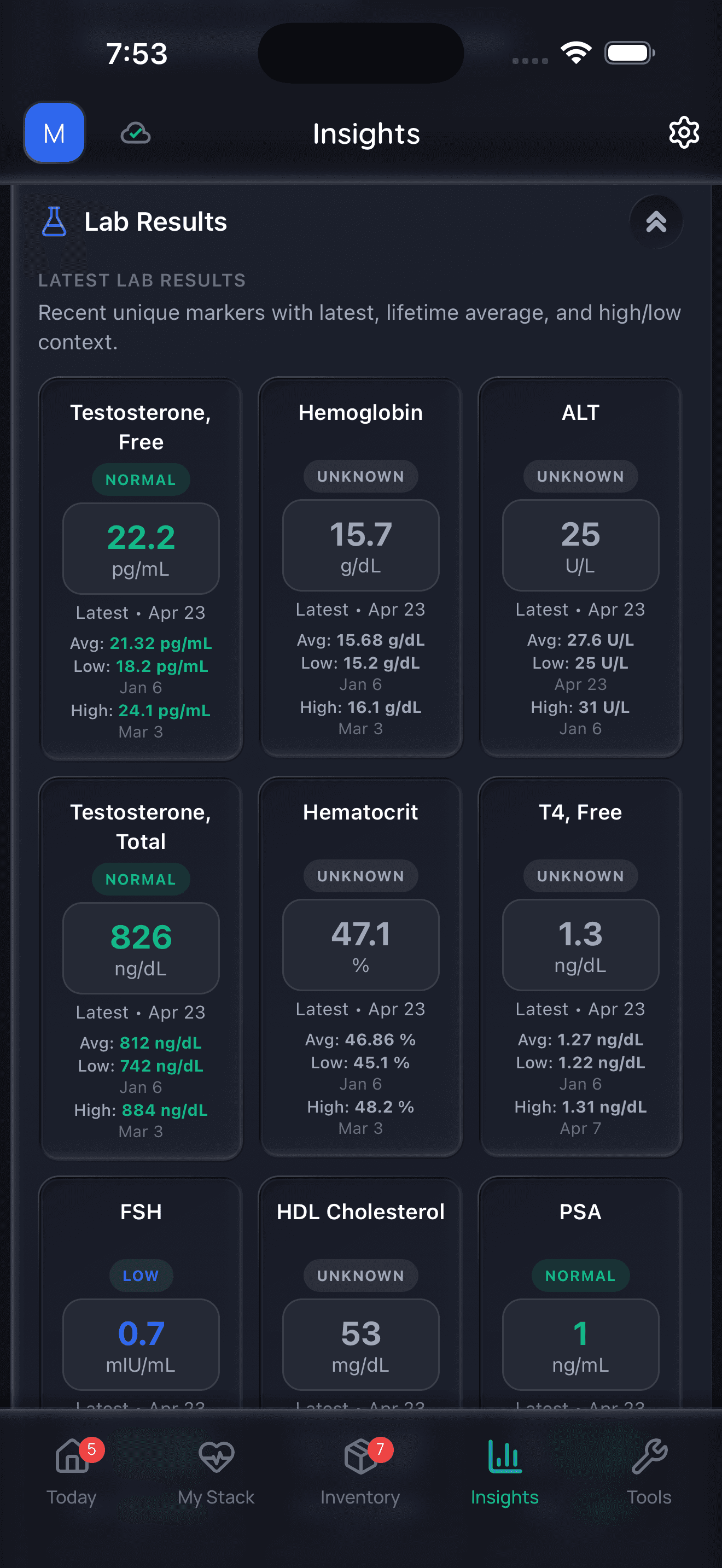
Doserly organizes data; it does not diagnose or interpret labs for you.
The Science
Preclinical literature attributes broad antioxidant, anti-inflammatory, and metabolic signaling to pterostilbene [4][5]. The strongest human outcome data is narrower. In the randomized trial, the higher-dose arm reduced blood pressure and some participants not on cholesterol medication showed minor weight loss, but the monotherapy arms also produced an LDL increase [3].
That means any benefit section has to stay tightly calibrated. Based on available human data, the defensible claims are limited to short-term tolerability plus mixed cardiometabolic signals. The more expansive claims around anti-aging, cognition, and disease modification remain hypothesis-level or preclinical.
Side Effects & Safety
The Basics
Pterostilbene does not currently look like a supplement with a heavy short-term side-effect burden. In the main human study, it appeared generally well tolerated over 6 to 8 weeks [2]. That is the good news.
The less comfortable point is that “well tolerated” is not the same thing as “risk free.” For pterostilbene, the most important caution is not obvious stomach upset or headache. It is the possibility that the supplement may worsen LDL cholesterol in some contexts [3]. That matters much more than a generic claim that the compound is antioxidant or natural.
Knowing the possible side effects is the first step. Catching them early in your own experience is what keeps a supplement routine safe. Doserly lets you log any symptoms as they arise, tagging them with severity, timing relative to your dose, and whether they resolve on their own or persist.
The app's interaction checker cross-references everything in your stack, supplements and medications alike, flagging known interactions before they become a problem. It also monitors your total intake against established upper limits where they exist. Think of it as a safety net that works quietly in the background while you focus on the benefits.
Capture changes while they are still fresh.
Log symptoms, energy, sleep, mood, and other observations alongside protocol events so patterns do not live only in memory.
Trend view
Symptom timeline
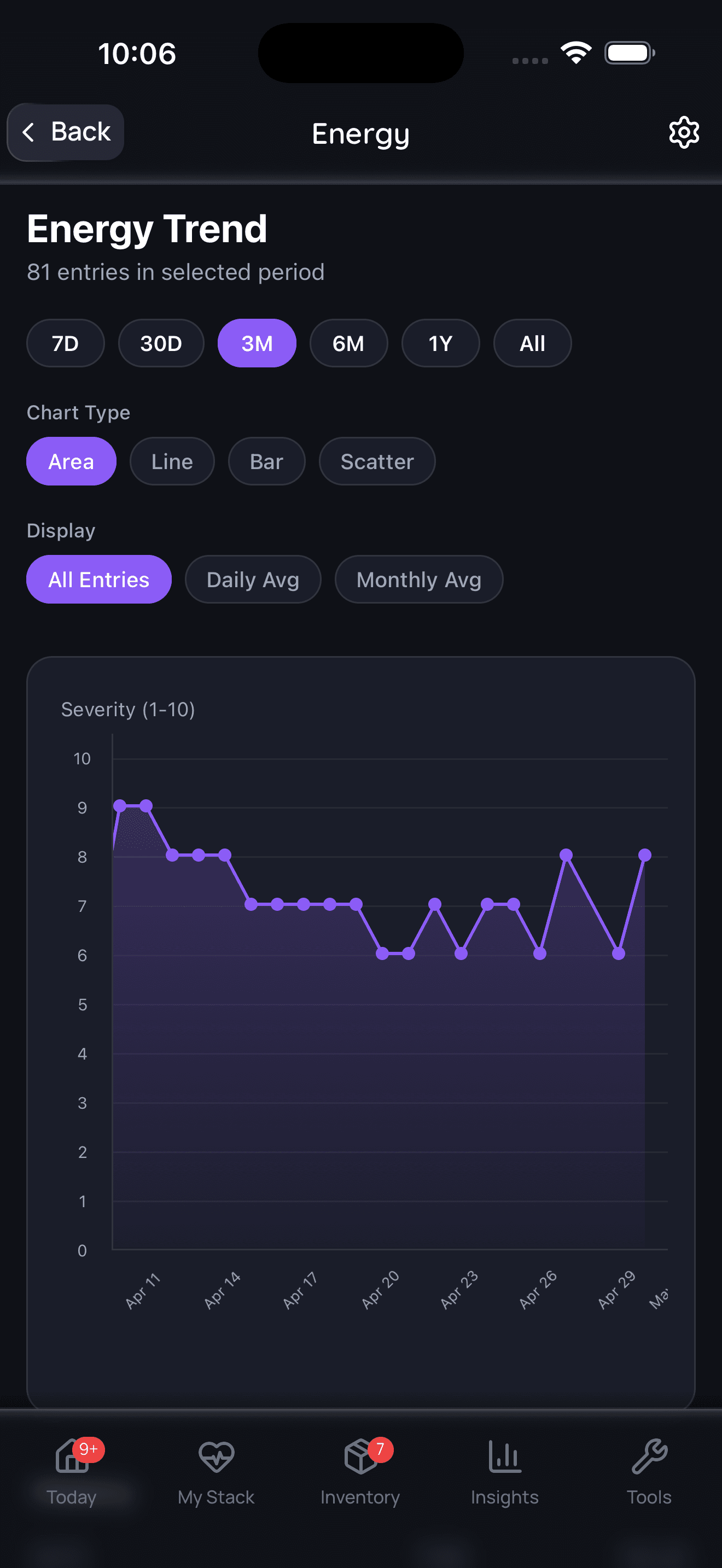
Symptom tracking is informational and should be interpreted with a qualified clinician.
The Science
The human safety trial found no significant adverse changes in liver markers, kidney markers, glucose markers, or major self-reported adverse reactions at doses up to 250 mg/day over 6 to 8 weeks [2]. That supports short-term tolerability, not long-term safety certainty.
The more important safety issue comes from the metabolic trial, where pterostilbene monotherapy increased LDL cholesterol [3]. Even if the blood-pressure signal was favorable, the LDL result materially changes the risk conversation. For readers with cardiovascular-risk concerns, that finding should stay prominent rather than buried in a footnote.
Dosing & Usage Protocols
The Basics
The commonly studied range in direct human pterostilbene research is 50 to 250 mg/day, usually split into twice-daily dosing in the main trial program [2][3]. That is the best evidence-based anchor available right now.
There is no established standard dose for general wellness, no official daily requirement, and no high-quality human evidence showing that higher doses create a better longevity outcome. The practical summary is that pterostilbene dosing in the supplement market is driven more by limited trial precedent and product positioning than by a mature consensus.
The Science
The main controlled human data used 50 mg twice daily and 125 mg twice daily, with an additional 50 mg plus grape extract arm [2][3]. Those dose levels provide the clearest frame for “commonly studied ranges.” The short-term safety trial supports tolerability at those exposures in the studied population [2].
At the same time, the metabolic trial shows that more exposure is not obviously better, since the higher-dose arm was associated with blood-pressure improvements while monotherapy was linked with LDL increases [3]. This is a high-conflict dosing area because the dose-response story is not straightforwardly positive.
What to Expect (Timeline)
Pterostilbene is not a supplement with a clear and well-established “you will notice X by week Y” story in humans. Most of the reliable data comes from a 6 to 8 week clinical window [2][3], which suggests a fair expectation framework:
- Week 1 to 2: Most people are unlikely to notice a clear subjective change.
- Week 3 to 4: Some users report subtle energy or wellness changes, but community signal is inconsistent and low-confidence.
- Week 5 to 8: This is the period where the main human trial measured blood pressure, LDL, and weight-related changes [3].
- Beyond 8 weeks: There is not enough strong human data to describe a dependable long-term timeline.
The realistic expectation is subtlety, not a dramatic felt effect. This is one reason the community signal is so mixed.
Interactions & Compatibility
SYNERGISTIC
- Resveratrol: Often discussed as a comparator or stack partner because both are stilbenes, though pterostilbene is usually marketed as the more bioavailable option.
- NMN: Commonly paired in longevity stacks despite limited direct evidence for the combination.
- NR: Another common longevity-stack partner for people pursuing NAD-focused regimens.
- Quercetin: Frequently appears in broader polyphenol or senolytic-themed supplement stacks.
- CoQ10: Sometimes used alongside pterostilbene in cardiovascular or mitochondrial wellness routines.
CAUTION / AVOID
- Cholesterol-lowering medications: The human LDL finding makes independent clinician review important before layering this supplement onto active lipid management [3].
- Other aggressive longevity stacks: The biggest issue is not a proven toxic interaction, but attribution failure. If multiple experimental compounds change at once, it becomes difficult to identify what is helping or harming.
- Products with unclear stimulant or proprietary-blend labeling: This is mainly a quality and contamination issue for athletes and risk-sensitive users [8][9].
How to Take / Administration Guide
Pterostilbene is usually sold as a straightforward oral capsule or powder. The real decision points are not exotic administration techniques. They are product quality, whether the formula is standalone or blended, and whether the timing is consistent enough to evaluate.
Many users place it in a morning or daytime longevity stack, especially when it is paired with resveratrol, NMN, or NR. That is a habit pattern rather than a clinically proven timing rule. In practical terms, consistency probably matters more than any specific clock-time theory.
If the goal is to evaluate response honestly, it makes sense to avoid changing many overlapping compounds at once. That is especially relevant for pterostilbene because its felt effects are often described as subtle or uncertain in community discussion.
Choosing a Quality Product
This is a category where quality matters a lot. Pterostilbene is not a supplement with a giant body of consumer-protection literature, so the usual quality signals matter even more:
- Prefer products with clear per-capsule dosing and no proprietary blend opacity.
- For athlete-facing use, third-party certification matters because supplement contamination risk is the main anti-doping issue, not a specific named pterostilbene ban [8][9].
- Be cautious with formulas that layer many “longevity” actives without transparent amounts.
- Brand transparency around lot testing and manufacturing quality is more useful than vague antioxidant marketing.
Storage & Handling
Store pterostilbene in a cool, dry place away from heat, light, and moisture. For most consumers, this means standard supplement storage rather than refrigeration. The main practical handling concern is keeping the capsules or powder away from humidity and heat degradation.
Lifestyle & Supporting Factors
Pterostilbene gets discussed most often in the context of longevity, cardiometabolic support, and oxidative-stress reduction. That makes lifestyle context especially important:
- Diet quality matters more than adding one more polyphenol to a poor baseline diet.
- If the goal is lipid support, the human LDL signal means dietary pattern and formal lipid monitoring matter more than supplement optimism [3].
- If the goal is healthy aging, sleep, training, body composition, and cardiometabolic basics will usually have stronger evidence than pterostilbene itself.
This is a supplement where lifestyle fundamentals do not just support the intervention. They also help determine whether the intervention is worth taking seriously at all.
Regulatory Status & Standards
In the United States, pterostilbene is sold as a dietary supplement rather than an FDA-approved drug. FDA’s NDI background guidance is relevant because compounds without a clear pre-1994 market history can fall into new-dietary-ingredient discussions, and FDA emphasizes that manufacturers are responsible for demonstrating reasonable safety under intended conditions of use [7].
For athletes, the most important regulatory point is contamination risk. USADA repeatedly emphasizes that supplements may contain hidden or mislabeled substances and recommends third-party certification, particularly NSF Certified for Sport, for athletes who choose to use supplements despite the risk [8].
WADA’s current Prohibited List framework does not surface pterostilbene as a headline named prohibited substance in the official materials reviewed here [9]. That does not equal blanket safety in sport. Global DRO explicitly states that it does not evaluate dietary supplements, only medications [9].
FAQ
Is pterostilbene just a better version of resveratrol?
Based on available data, pterostilbene appears better absorbed than resveratrol in preclinical pharmacokinetic work, but that does not prove it is clinically better in humans [4].
Does pterostilbene lower cholesterol?
Not reliably based on current human evidence. The main randomized trial found an LDL increase with pterostilbene monotherapy [3].
Is pterostilbene safe?
Short-term human trial data suggests it was generally well tolerated up to 250 mg/day over 6 to 8 weeks, but that does not settle long-term safety or cardiometabolic suitability for every person [2].
Does pterostilbene help with longevity?
The idea is popular, but the direct human evidence is limited. Most longevity enthusiasm is still driven by mechanism and preclinical work rather than robust human outcome trials.
Does pterostilbene raise NAD?
That is not the main established claim. Pterostilbene is often used in stacks with NAD precursors, but it is not itself an NAD precursor like NMN or NR.
How much pterostilbene has been studied in humans?
Based on available trial data, commonly studied doses have included 50 mg twice daily and 125 mg twice daily [2][3]. Readers should discuss dosing interpretation with a qualified healthcare professional.
Is pterostilbene banned in sports?
Current athlete guidance suggests the bigger issue is supplement contamination and product quality control, not that pterostilbene is a widely flagged named banned substance [8][9].
Why do some people say pterostilbene is overhyped?
Because the marketing story is bigger than the direct human evidence. Better absorption and promising mechanisms have not yet translated into a large, consistent human benefit story.
Myth vs. Fact
Myth
Pterostilbene is proven to be a better resveratrol in humans.
- Fact
- It appears better absorbed in preclinical PK work, but that does not equal proven superior human outcomes [4].
Myth
If a supplement is antioxidant, it must be heart-protective.
- Fact
- The main human pterostilbene trial found a mixed cardiometabolic picture, including an LDL increase with monotherapy [3].
Myth
Better bioavailability guarantees better results.
- Fact
- Better exposure can matter, but it does not automatically deliver favorable clinical benefit [3][4].
Myth
Natural polyphenols are basically risk free.
- Fact
- Short-term tolerability may be acceptable, but pterostilbene still carries uncertainty, especially around lipid effects [2][3].
Myth
Pterostilbene is a longevity staple with strong human proof.
- Fact
- Human proof remains limited. The strongest case today is biological plausibility plus early, mixed evidence, not established anti-aging benefit.
Sources & References
- PubChem. Pterostilbene, CID 5281727. U.S. National Library of Medicine. https://pubchem.ncbi.nlm.nih.gov/compound/5281727
- Riche DM, McEwen CL, Riche KD, et al. Analysis of safety from a human clinical trial with pterostilbene. J Toxicol. 2013;2013:463595. https://pubmed.ncbi.nlm.nih.gov/23431291/
- Riche DM, Riche KD, Blackshear CT, et al. Pterostilbene on metabolic parameters: a randomized, double-blind, and placebo-controlled trial. Evid Based Complement Alternat Med. 2014;2014:459165. https://pubmed.ncbi.nlm.nih.gov/25057276/
- Kapetanovic IM, Muzzio M, Huang Z, Thompson TN, McCormick DL. Pharmacokinetics, oral bioavailability, and metabolic profile of resveratrol and its dimethylether analog, pterostilbene, in rats. Cancer Chemother Pharmacol. 2011;68(3):593-601. https://pmc.ncbi.nlm.nih.gov/articles/PMC3090701/
- Rimando AM, Nagmani R, Feller DR, Yokoyama W. Pterostilbene, a new agonist for the peroxisome proliferator-activated receptor alpha-isoform, lowers plasma lipoproteins and cholesterol in hypercholesterolemic hamsters. J Agric Food Chem. 2005;53(9):3403-3407. https://pubmed.ncbi.nlm.nih.gov/15853379/
- U.S. Food and Drug Administration. New Dietary Ingredients in Dietary Supplements - Background for Industry. https://www.fda.gov/food/new-dietary-ingredient-ndi-notification-process/new-dietary-ingredients-dietary-supplements-background-industry
- U.S. Anti-Doping Agency. Reduce Your Supplement Risk with NSF Certified for Sport. https://www.usada.org/athletes/substances/supplement-connect/reduce-risk-testing-positive-experiencing-adverse-health-effects/
- World Anti-Doping Agency. Prohibited List. https://www.wada-ama.org/en/resources/world-anti-doping-code-and-international-standards/prohibited-list
- Global DRO. Home and search information pages. https://www.globaldro.com/