
NMN (Nicotinamide Mononucleotide): The Complete Supplement Guide
On this page
Quick Reference Card
Attribute
Common Name
- Detail
- NMN (Nicotinamide Mononucleotide)
Attribute
Other Names / Aliases
- Detail
- Beta-nicotinamide mononucleotide, beta-NMN, nicotinamide-1-ium-1-beta-D-ribofuranoside 5'-phosphate
Attribute
Category
- Detail
- NAD+ Precursor / Longevity Compound (related to Vitamin B3 family)
Attribute
Primary Forms & Variants
- Detail
- NMN powder (standard oral form), NMN capsules (enteric-coated variants available for improved intestinal absorption), sublingual NMN (bypasses GI degradation), liposomal NMN
Attribute
Typical Dose Range
- Detail
- 250-1,200 mg/day in clinical trials; most common doses studied: 250-600 mg/day
Attribute
RDA / AI / UL
- Detail
- No RDA, AI, or UL established for NMN specifically. NMN is not classified as a niacin source by regulatory bodies
Attribute
Common Delivery Forms
- Detail
- Capsule, powder, sublingual tablet, liposomal liquid
Attribute
Best Taken With / Without Food
- Detail
- Can be taken with or without food. Some evidence suggests morning dosing is preferable to minimize potential sleep disruption
Attribute
Key Cofactors
- Detail
- TMG (trimethylglycine, for methylation support), resveratrol (sirtuin activation synergy), vitamin B12 and folate (methylation cofactors)
Attribute
Storage Notes
- Detail
- Store in a cool, dry place away from heat, moisture, and direct light. NMN is sensitive to degradation from heat and humidity. Some manufacturers recommend refrigeration for long-term storage
Overview
The Basics
NMN, short for nicotinamide mononucleotide, is a molecule your body naturally produces as part of the process for making NAD+ (nicotinamide adenine dinucleotide). NAD+ is one of the most important molecules in every cell of your body. Think of it as the fuel that keeps your cellular machinery running: it helps convert food into energy, repairs damaged DNA, and regulates hundreds of biological processes.
Here is why NMN has generated so much attention: NAD+ levels decline as you age. By middle age, many people have significantly lower NAD+ levels than they did in their twenties. This decline has been linked to reduced energy, slower recovery, and many of the hallmarks of aging. The idea behind NMN supplementation is straightforward: by providing your body with more of the raw material it needs, you can help restore NAD+ levels to something closer to youthful levels.
NMN is found naturally in tiny amounts in foods like broccoli, cabbage, cucumber, edamame, and avocado, but dietary intake is estimated at less than 2 mg per day. Supplemental doses used in research range from 250 mg to 1,200 mg per day, orders of magnitude higher than what food provides.
The compound has had an unusual regulatory journey. In 2022, the FDA ruled that NMN could not be sold as a dietary supplement in the United States because it was being investigated as a pharmaceutical drug. After legal challenges from the supplement industry, the FDA reversed this decision in late 2025, confirming that NMN is a lawful dietary supplement ingredient.
The Science
Nicotinamide mononucleotide (NMN) is a nucleotide composed of a nicotinamide group, a ribose sugar, and a phosphate group. It is a key intermediate in the biosynthesis of nicotinamide adenine dinucleotide (NAD+) via the salvage pathway, which is the predominant route for NAD+ production in mammalian cells [1].
The NAD+ salvage pathway converts nicotinamide (NAM) to NMN via the rate-limiting enzyme nicotinamide phosphoribosyltransferase (NAMPT), and then NMN is converted to NAD+ by nicotinamide mononucleotide adenylyltransferases (NMNATs) [2]. NAD+ serves as a redox cofactor for over 400 enzymatic reactions and as a substrate for three major classes of NAD+-consuming enzymes: sirtuins (SIRT1-7), poly(ADP-ribose) polymerases (PARPs), and CD38/CD157 ectoenzymes [3].
NAD+ levels decline with age across multiple tissues, a phenomenon attributed to several converging mechanisms: increased NAD+ consumption by CD38 (which is upregulated by chronic inflammation), reduced NAMPT expression, increased DNA damage activating PARP enzymes, and mitochondrial dysfunction [4][5]. This age-related NAD+ decline has been implicated in metabolic dysfunction, neurodegeneration, cardiovascular disease, and impaired DNA repair capacity [3].
In preclinical models, long-term NMN administration mitigated age-associated physiological decline in mice, improving energy metabolism, physical activity, insulin sensitivity, plasma lipid profiles, eye function, bone density, and immune function without observable toxic effects [6]. These dramatic animal findings provided the rationale for human clinical trials, which began in earnest around 2020.
Chemical & Nutritional Identity
Property
Chemical Name
- Value
- Nicotinamide-1-ium-1-beta-D-ribofuranoside 5'-phosphate
Property
Synonyms
- Value
- Beta-nicotinamide mononucleotide, beta-NMN, NMN
Property
Molecular Formula
- Value
- C11H15N2O8P
Property
Molecular Weight
- Value
- 334.22 g/mol
Property
CAS Number
- Value
- 1094-61-7
Property
PubChem CID
- Value
- 14180
Property
Category
- Value
- NAD+ precursor; nucleotide; related to vitamin B3 family
Property
Active Form
- Value
- Converted to NAD+ (nicotinamide adenine dinucleotide) in vivo
Property
RDA (IOM)
- Value
- Not established
Property
AI (IOM)
- Value
- Not established
Property
UL (IOM)
- Value
- Not established
NMN is a nucleotide consisting of nicotinamide, ribose, and phosphate moieties. It exists as the beta isomer (beta-NMN), which is the biologically active form. NMN is structurally related to nicotinamide (niacinamide), nicotinamide riboside (NR), and nicotinic acid (niacin), all of which are forms of vitamin B3 that serve as NAD+ precursors. However, NMN is not marketed or classified as a niacin source, and no Dietary Reference Intake values have been established specifically for NMN.
NMN supplements are available in several forms: standard capsules and powders (most common), enteric-coated capsules (designed to resist stomach acid degradation and release in the small intestine for improved absorption), sublingual tablets or powders (dissolved under the tongue to bypass GI degradation), and liposomal formulations. Bioavailability data comparing these delivery forms in humans is limited. A pharmaceutical-grade microcrystalline polymorph formulation (MIB-626) has been developed by Metro International Biotech for clinical trials [7].
Mechanism of Action
The Basics
To understand how NMN works, imagine your cells as tiny factories. Every factory needs electricity to run. In your cells, that electricity is provided by a molecule called NAD+. Every single cell in your body uses NAD+ to produce energy, repair damage, and communicate with other cells.
Your body makes NAD+ through several pathways, but the most commonly used one recycles it from a molecule called nicotinamide. NMN is the crucial intermediate step in that recycling process. When you take NMN as a supplement, you are essentially giving your cells a shortcut, delivering a molecule that is just one step away from becoming NAD+.
Why does this matter? As people age, NAD+ levels drop. This decline affects everything from how efficiently your cells produce energy to how well your body repairs DNA damage. Lower NAD+ means less fuel for the cellular repair crews (called sirtuins) and the DNA repair teams (called PARPs). NMN supplementation aims to counteract this decline by boosting the supply of NAD+ precursor material.
The Science
NMN enters cells and is converted to NAD+ via nicotinamide mononucleotide adenylyltransferase (NMNAT) enzymes, of which three isoforms (NMNAT1-3) exist in distinct cellular compartments: NMNAT1 in the nucleus, NMNAT2 in the cytoplasm and Golgi, and NMNAT3 in the mitochondria [2][8].
The primary mechanism by which NMN exerts its biological effects is through replenishment of the intracellular NAD+ pool, which activates multiple downstream pathways:
- Sirtuin activation: NAD+ is an obligate co-substrate for the sirtuin family of deacetylases (SIRT1-7). SIRT1 and SIRT3 are particularly relevant: SIRT1 regulates gene expression related to metabolism, inflammation, and stress resistance; SIRT3 maintains mitochondrial function and reduces oxidative stress [3][9].
- PARP function: Poly(ADP-ribose) polymerases consume NAD+ during DNA repair. Adequate NAD+ supply ensures efficient DNA damage response. However, excessive PARP activation (as occurs with aging and chronic inflammation) can deplete NAD+ stores [10].
- CD38 modulation: CD38 is an NAD+ glycohydrolase that increases expression with aging and inflammation. It is the major NAD+-consuming enzyme in aged tissues and a key driver of age-related NAD+ decline [5].
- Mitochondrial bioenergetics: NAD+ serves as an electron carrier in the mitochondrial electron transport chain (Complexes I and III), essential for oxidative phosphorylation and ATP production [1].
In the Yoshino et al. (2021) human trial, NMN supplementation (250 mg/day for 10 weeks) increased insulin-stimulated glucose disposal and skeletal muscle insulin signaling (phosphorylation of AKT and mTOR) in prediabetic women, though steady-state muscle NAD+ levels were not detectably changed, suggesting increased NAD+ turnover rather than accumulation [11].
Absorption & Bioavailability
The Basics
When you take NMN by mouth, your body needs to absorb it and convert it into NAD+. How well this works depends on the form you take, when you take it, and individual factors.
Standard NMN in capsule or powder form is absorbed through the small intestine. There is some debate about how much survives the stomach intact, since NMN can break down in acidic conditions. This is why enteric-coated capsules (which are designed to dissolve in the small intestine rather than the stomach) and sublingual forms (dissolved under the tongue to enter the bloodstream directly) have become popular alternatives.
Human studies consistently show that oral NMN supplementation raises blood NAD+ levels within days to weeks, with measurable increases typically apparent by the 2-4 week mark. In one study, 250 mg/day for 12 weeks significantly increased whole blood NAD+ levels [12]. Higher doses (600-900 mg/day) produced even greater increases, though the relationship is not strictly linear [13].
Interestingly, when researchers measured NMN itself in the blood after supplementation, they found very little. Instead, they found elevated levels of NAD+ and a related metabolite called NAMN (nicotinic acid mononucleotide). This suggests NMN is rapidly converted after absorption rather than circulating in its original form [12].
The Science
The oral bioavailability of NMN has been the subject of considerable investigation. Early concerns centered on whether NMN could survive gastric acid and intestinal enzymatic degradation to be absorbed intact. Research has identified a specific transporter, Slc12a8, on the apical membrane of small intestinal epithelial cells that directly transports NMN into cells [14]. However, NMN may also be dephosphorylated to nicotinamide riboside (NR) by CD73 in the intestinal lumen, with NR subsequently absorbed and phosphorylated back to NMN intracellularly [15].
In the Okabe et al. (2022) clinical trial, 250 mg/day oral NMN for 12 weeks produced significant increases in whole blood NAD+ (p < 0.001 at weeks 4, 8, and 12) and nicotinic acid mononucleotide (NAMN) levels, but NMN itself did not accumulate in blood, suggesting rapid metabolic conversion [12]. The increased amount of NAD+ correlated with baseline pulse rate, suggesting individual metabolic rate may influence response.
In the Yi et al. (2023) dose-response trial, blood NAD concentrations were significantly increased in all NMN-treated groups (300, 600, 900 mg/day) compared to placebo at day 30 and day 60 (all p ≤ 0.001). NAD concentrations were highest in the 600 mg and 900 mg groups, suggesting a dose-response plateau effect above 600 mg/day [13].
Understanding how your body absorbs a supplement is only useful if you can act on it. Doserly lets you log exactly when you take each form, whether it's a capsule with a meal, a sublingual tablet on an empty stomach, or a liquid taken with a cofactor, so you can see how timing and form choices affect your results over time.
The app also tracks cofactor pairings that influence absorption. If a supplement works better alongside vitamin C, fat, or black pepper extract, Doserly reminds you to take them together and logs both. Over weeks, your personal data reveals whether those pairing strategies are translating into measurable differences in the biomarkers you're tracking.
Track injection timing, draw notes, and site rotation.
Doserly helps keep syringe-related notes, injection site history, reminders, and reconstitution context together for easier review.
Injection log
Site rotation
Injection logs support record-keeping; follow clinician instructions for administration.
Research & Clinical Evidence
The Basics
NMN research in humans is still in its early stages, but the pace has accelerated significantly since 2020. Most studies have been relatively small (11 to 80 participants) and short (2 to 12 weeks), conducted in generally healthy middle-aged adults.
The most widely cited study was published in the journal Science in 2021 by researchers at Washington University. They gave 250 mg/day of NMN to overweight or obese postmenopausal women with prediabetes for 10 weeks and found that NMN improved how their muscles responded to insulin. This improvement was comparable to what you might see after losing about 10% of body weight, a meaningful clinical finding [11].
Other trials have found that NMN consistently raises NAD+ levels in the blood and is well tolerated. Some have reported improvements in physical performance metrics like walking distance and general health scores. However, when researchers pooled results from multiple studies, the picture became more nuanced: a 2024 meta-analysis of 12 trials (513 participants) found that while NMN did raise NAD+ levels, it did not significantly improve fasting glucose, cholesterol, or triglyceride levels [16].
Another 2024 meta-analysis focusing on muscle and liver function was more encouraging. It found modest but statistically significant improvements in gait speed and liver enzyme levels (ALT) among middle-aged and elderly participants [17].
The bottom line is that NMN clearly raises NAD+ levels in humans, appears safe in the short term, and shows some promising signals for insulin sensitivity and muscle function. But the dramatic anti-aging effects observed in animal studies have not yet been convincingly replicated in human trials, and much larger, longer studies are needed.
The Science
Insulin Sensitivity and Glucose Metabolism
The landmark Yoshino et al. (2021) randomized, placebo-controlled trial (n=25 postmenopausal women with prediabetes) demonstrated that 250 mg/day NMN for 10 weeks increased insulin-stimulated glucose disposal rate by approximately 25% (assessed by hyperinsulinemic-euglycemic clamp), increased skeletal muscle AKT and mTOR phosphorylation, and upregulated PDGFR-beta expression and muscle remodeling genes [11]. This improvement in muscle insulin sensitivity is clinically comparable to that achieved by ~10% weight loss.
A separate open-label trial in 11 healthy middle-aged Japanese men (250 mg/day for 8 weeks) found that NMN modestly attenuated postprandial hyperinsulinemia in a subset of participants with insulin oversecretion (n=3) [18].
However, two independent meta-analyses (2024) of 8-12 RCTs found no statistically significant effects of NMN on fasting glucose, fasting insulin, HbA1c, HOMA-IR, or lipid profiles in pooled analyses [16][19]. The Chen et al. meta-analysis noted: "short-term supplementation of NMN of 250-2000 mg/d did not show significantly positive impacts on glucose control and lipid profile" in mainly healthy adults [19].
Physical Performance
The Yi et al. (2023) dose-response trial (n=80) found statistically significant increases in 6-minute walking distance across all NMN dose groups (300, 600, 900 mg) compared to placebo at days 30 and 60 (all p < 0.01), with longest distances in the 600 and 900 mg groups [13]. A meta-analysis of 9 RCTs (n=412) confirmed significant effects on gait speed (SMD: 0.34, 95% CI [0.03, 0.66], p=0.033) [17].
NAD+ Biomarker Response
All published human trials consistently demonstrate that oral NMN supplementation increases blood NAD+ levels. The 2024 meta-analysis of 12 studies confirmed an "overall significant effect of NMN supplementation in elevating blood NAD levels" [16]. The magnitude of increase appears dose-dependent, with 600 mg/day showing optimal NAD+ elevation in the Yi et al. trial [13].
Safety
Across all published human trials, NMN has been well tolerated with no serious adverse events reported at doses up to 900 mg/day for 60 days [13], 250 mg/day for 12 weeks [12], and 2 g/day for 14 days in hospitalized COVID-19 patients [7].
Limitations of Current Evidence
The 2024 meta-analysis by the systematic review authors noted "an exaggeration of the benefits of NMN supplementation may exist in the field," citing that 5 of 12 included studies had high risk of bias and many had industry conflicts of interest [16]. Most trials enrolled healthy participants where dramatic improvements may be difficult to detect. Longer-term, larger, independent trials are needed to clarify the clinical significance of NMN supplementation.
Evidence & Effectiveness Matrix
Category
Energy Levels
- Evidence Strength (1-10)
- 5
- Reported Effectiveness (1-10)
- 7
- Summary
- One dose-response trial showed improved walking distance and SF-36 health scores. Community reports of improved energy are the most consistent finding, particularly in users over 40.
Category
Focus & Mental Clarity
- Evidence Strength (1-10)
- 3
- Reported Effectiveness (1-10)
- 6
- Summary
- No dedicated human trials on cognition. Community reports of reduced brain fog are common but confounded by concurrent supplement use.
Category
Sleep Quality
- Evidence Strength (1-10)
- 2
- Reported Effectiveness (1-10)
- 4
- Summary
- No clinical trials specifically measuring sleep endpoints. Community reports are mixed, with some reporting improved and others reporting disrupted sleep.
Category
Mood & Wellbeing
- Evidence Strength (1-10)
- 3
- Reported Effectiveness (1-10)
- 6
- Summary
- SF-36 quality of life improvements in one trial. Moderate community reports of improved mood, especially in older adults.
Category
Physical Performance
- Evidence Strength (1-10)
- 6
- Reported Effectiveness (1-10)
- 6
- Summary
- Meta-analysis confirmed significant gait speed improvements. Dose-response trial showed improved 6-minute walk test. Community reports of better exercise performance.
Category
Longevity & Neuroprotection
- Evidence Strength (1-10)
- 4
- Reported Effectiveness (1-10)
- 5
- Summary
- Strong preclinical data (mice); human evidence limited to surrogate markers (NAD+ levels, biological age scores). No long-term human longevity data.
Category
Skin Health
- Evidence Strength (1-10)
- 2
- Reported Effectiveness (1-10)
- 5
- Summary
- No dedicated human trials. Scattered community reports of improved skin quality.
Category
Hair Health
- Evidence Strength (1-10)
- 2
- Reported Effectiveness (1-10)
- 4
- Summary
- One small study (n=12 women) showed increased hair growth activity. Mixed community reports.
Category
Heart Health
- Evidence Strength (1-10)
- 3
- Reported Effectiveness (1-10)
- 4
- Summary
- One trial showed trend toward reduced arterial stiffness (not significant). Community HRV improvements reported but contradictory.
Category
Weight Management
- Evidence Strength (1-10)
- 3
- Reported Effectiveness (1-10)
- 4
- Summary
- Insulin sensitivity improvement in one trial. Some community reports of easier weight management.
Category
Immune Function
- Evidence Strength (1-10)
- 2
- Reported Effectiveness (1-10)
- 5
- Summary
- No dedicated trials. Scattered community reports of reduced illness frequency.
Category
Joint Health
- Evidence Strength (1-10)
- 1
- Reported Effectiveness (1-10)
- 4
- Summary
- No clinical data. Isolated community reports, both positive and negative.
Categories scored: 12
Categories with community data: 14
Categories not scored (insufficient data): Fat Loss, Muscle Growth, Appetite & Satiety, Food Noise, Memory & Cognition, Anxiety, Stress Tolerance, Motivation & Drive, Emotional Aliveness, Emotional Regulation, Libido, Sexual Function, Inflammation, Pain Management, Recovery & Healing, Gut Health, Digestive Comfort, Nausea & GI Tolerance, Blood Pressure, Heart Rate & Palpitations, Hormonal Symptoms, Temperature Regulation, Fluid Retention, Body Image, Bone Health, Cravings & Impulse Control, Social Connection, Side Effect Burden, Treatment Adherence, Withdrawal Symptoms, Daily Functioning
Benefits & Potential Effects
The Basics
The potential benefits of NMN supplementation center on what happens when you raise NAD+ levels in your body. Because NAD+ is involved in so many processes, the effects can touch multiple systems.
The most consistently reported benefit, both in research and from people taking NMN, is improved energy and reduced fatigue. This makes intuitive sense: NAD+ plays a central role in how your cells produce energy from food. When NAD+ levels are higher, cellular energy production runs more efficiently.
There is also credible evidence that NMN may improve how your body responds to insulin, potentially helping with blood sugar management. The strongest evidence comes from a study in women with prediabetes, where NMN supplementation improved muscle insulin sensitivity to a degree comparable with significant weight loss [11].
Physical performance improvements have been reported in research, particularly in measures of walking endurance and gait speed in middle-aged and older adults. Several community users report better exercise tolerance and faster recovery.
Other potential benefits, including improved skin and hair quality, better cardiovascular markers, and enhanced immune function, are based on limited research or community reports and should be viewed as preliminary.
It is worth noting that age appears to be a significant factor. Younger, healthy individuals may notice fewer obvious effects because their NAD+ levels have not yet declined substantially. People over 40, and especially those over 50, tend to report more noticeable changes.
The Science
NAD+ Restoration: All published human trials confirm that NMN supplementation effectively elevates blood NAD+ levels in a dose-dependent manner. Blood NAD concentrations increased significantly in all NMN-treated groups compared to placebo and baseline in the Yi et al. (2023) trial (all p ≤ 0.001) [13]. The Okabe et al. (2022) trial confirmed sustained NAD+ elevation over 12 weeks of supplementation [12].
Insulin Sensitivity: NMN supplementation (250 mg/day for 10 weeks) increased insulin-stimulated glucose disposal by ~25% and increased skeletal muscle insulin signaling (AKT/mTOR phosphorylation) in prediabetic postmenopausal women [11]. This represents the strongest clinical evidence for a metabolic benefit of NMN in humans. However, pooled meta-analyses have not confirmed glucose or insulin benefits across mainly healthy populations [16][19].
Physical Function: A meta-analysis of 9 RCTs (412 participants) found significant NMN effects on gait speed (SMD: 0.34, p=0.033) and ALT levels (SMD: -0.29, p=0.028), with subgroup analysis showing low-dose NMN had the most prominent impact on HOMA-IR [17].
Biological Age Markers: In the Yi et al. trial, blood biological age (Aging.Ai 3.0 calculator) increased in the placebo group but remained unchanged in all NMN-treated groups at day 60, resulting in a significant between-group difference (all p < 0.05) [13]. While intriguing, biological age calculators remain experimental tools.
Side Effects & Safety
The Basics
Based on published clinical trials, NMN appears to be well tolerated with no serious adverse effects reported at any dose tested in humans. Doses up to 900 mg per day for 60 days and up to 2 grams per day for 14 days have been used without safety concerns [7][13].
That said, community experience provides additional insights into potential side effects that may not appear in short-term clinical trials. The most commonly reported issue is sleep disruption, particularly at higher doses or when taken later in the day. Many users find this resolves by taking NMN in the morning. Some individuals report emotional instability or irritability at higher doses (500 mg and above), which may be related to individual methylation capacity.
There is a widespread community practice of taking NMN alongside TMG (trimethylglycine), based on the rationale that NMN metabolism consumes methyl groups. While this practice is common, it lacks direct clinical trial evidence specifically for NMN supplementation.
A theoretical concern exists regarding the potential for elevated NAD+ to fuel senescent cells or cancer cells, which also rely on NAD+ for survival. This remains an area of active research without conclusive human data [20].
No established Upper Tolerable Intake Level (UL) exists for NMN. The niacin UL of 35 mg/day for supplemental forms does not apply to NMN, which is not classified as a niacin supplement.
The Science
Clinical Trial Safety Data: Across all published human trials (cumulative n > 300 participants), no serious adverse events have been attributed to NMN supplementation. The Yi et al. (2023) multicenter trial (n=80) found "no safety issues, based on monitoring adverse events (AEs), laboratory and clinical measures" at doses up to 900 mg/day for 60 days [13]. The Okabe et al. (2022) trial confirmed "no abnormalities in physiological and laboratory tests, and no obvious adverse effects" at 250 mg/day for 12 weeks, including comprehensive hematological and biochemical panels [12]. The Pencina et al. (2025) trial demonstrated safety at 2 g/day for 14 days in acutely ill COVID-19 patients with AKI [7].
Methylation Concerns: NMN metabolism generates nicotinamide (NAM) as a byproduct of NAD+ cycling. NAM is methylated by nicotinamide N-methyltransferase (NNMT) to N-methyl-nicotinamide, consuming S-adenosylmethionine (SAMe) in the process. At high NMN doses, this may theoretically strain methyl donor reserves, particularly in individuals with methylation pathway variants (e.g., MTHFR polymorphisms) [21]. Clinical evidence specific to NMN-induced methylation depletion in humans is lacking.
Cancer Risk Theoretical Concern: NAD+ is required by all cells, including cancer cells. Some preclinical data suggest that elevated NAD+ could theoretically support tumor cell survival or proliferation. A 2025 study (Case Western Reserve) cautioned that over-supplementation of NAD+ precursors could raise NAD+ to "dangerously high levels that promote cancer" in experimental models [20]. However, no human data supports this concern at supplemental doses, and the authors' compound (P7C3-A20) modulates NAD+ balance differently than precursor supplementation.
Dosing & Usage Protocols
The Basics
NMN dosing in human studies has ranged from 250 mg to 2,000 mg per day. Based on the available evidence, the most commonly studied and generally recommended range is 250 to 600 mg per day.
In the dose-response trial that tested three different levels, 600 mg per day appeared to be a sweet spot where NAD+ elevation and physical performance benefits reached their peak. Going higher to 900 mg did not produce substantially better results [13].
For people just starting NMN, many practitioners suggest beginning at 250 mg per day and gradually increasing if desired. Some community members report that lower doses (250-300 mg) provide the best balance of benefits and minimal side effects, while others prefer higher doses (500-1,000 mg) after their body has adjusted.
The timing of NMN intake seems to matter for some people. Taking NMN in the morning is the most common practice, both in clinical trials and among regular users, because it aligns with the body's natural energy cycles and minimizes the risk of sleep disruption. Some users prefer sublingual administration for faster absorption.
The Science
Dose-Response Relationship: The Yi et al. (2023) multicenter trial directly compared placebo, 300, 600, and 900 mg/day NMN for 60 days. Blood NAD concentrations were significantly elevated in all NMN groups (p ≤ 0.001 vs. placebo), with highest concentrations in the 600 mg and 900 mg groups. Six-minute walking distance was significantly improved in all groups (p < 0.01 vs. placebo), with longest distances in the 600 and 900 mg groups. The authors concluded that "clinical efficacy expressed by blood NAD concentration and physical performance reaches highest at a dose of 600 mg daily" [13].
Low-Dose Efficacy: The Yoshino et al. (2021) trial demonstrated clinically meaningful improvements in muscle insulin sensitivity at only 250 mg/day [11]. The Okabe et al. (2022) trial confirmed significant NAD+ elevation at 250 mg/day [12]. This suggests that lower doses may be sufficient for specific endpoints, particularly in metabolically compromised populations.
Duration: Most trials have lasted 4-12 weeks. The Okabe et al. trial showed sustained NAD+ elevation across the full 12-week supplementation period without tachyphylaxis [12]. No long-term studies exceeding 12 weeks have been published.
Administration Form: No head-to-head trials comparing oral capsule, enteric-coated, sublingual, or liposomal NMN formulations have been published. Sublingual and enteric-coated forms are marketed with claims of superior bioavailability but lack comparative human pharmacokinetic data.
Getting the dose right matters more than most people realize. Too little may be ineffective, too much wastes money or introduces risk, and inconsistency undermines both. Doserly tracks every dose you take, across every form, giving you a clear record of what you're actually consuming versus what you planned.
The app helps you compare RDA recommendations against therapeutic ranges discussed in the research, so you can see exactly where your intake falls. If you switch forms, say from a standard capsule to a liposomal liquid, Doserly adjusts your tracking to account for different bioavailabilities. Pair that with smart reminders that keep your timing consistent, and the precision that makes a real difference in outcomes becomes effortless.
Turn symptom and safety notes into a clearer timeline.
Doserly helps you log doses, symptoms, and safety observations side by side so patterns are easier to discuss with a qualified clinician.
Pattern view
Logs and observations

Pattern visibility is informational and should be reviewed with a clinician.
What to Expect (Timeline)
NMN supplementation does not produce overnight results for most people. Based on clinical trial data and community experience, here is a general timeline of what users commonly report.
Weeks 1-2: Most people notice little or nothing during the first two weeks. Some report a subtle increase in energy or alertness, which may fade after the initial days. A small number of users, particularly those who may have been significantly NAD+-depleted, report noticeable energy improvements within the first few days. Sleep disruption, if it occurs, typically appears early and may resolve as the body adjusts.
Weeks 3-4: Blood NAD+ levels are measurably elevated by this point in clinical studies [12]. Some users begin to notice more consistent energy throughout the day, reduced afternoon slumps, and slightly improved mental clarity. These effects tend to be subtle rather than dramatic.
Weeks 5-8: Physical performance improvements begin to appear in clinical data. The Yi et al. trial showed significant increases in 6-minute walking distance by day 30 [13]. Users who exercise regularly may notice improved endurance, faster recovery, or better workout tolerance. Some report improved skin texture, stronger nails, and faster hair growth in this window.
Weeks 8-12: Metabolic benefits, such as improved insulin sensitivity, were documented at the 10-week mark in the Yoshino et al. trial [11]. NAD+ levels continue to be elevated throughout the supplementation period without diminishing effect [12]. Users who have been consistent often describe a general sense of improved vitality, though the changes may be difficult to pinpoint to a single factor.
Beyond 12 weeks: Long-term data in humans is limited. Community reports from users taking NMN for 6-24+ months suggest sustained benefits without tolerance development, though controlled evidence for this timeframe does not exist. Some community members report that effects become most apparent around the 6-month mark, particularly for systemic benefits like joint comfort, skin quality, and body composition.
It is important to maintain realistic expectations. NMN is not a stimulant and does not produce acute, noticeable effects in most healthy individuals. Benefits tend to be gradual and cumulative, and may be most apparent in retrospect or when supplementation is temporarily discontinued.
Timelines in the research give you a general idea of when to expect results, but your body has its own schedule. Doserly tracks your progress against those benchmarks, letting you see whether your experience aligns with typical response curves or whether something in your protocol might need adjusting.
By logging biomarkers and subjective outcomes alongside your supplement intake, you build a personal timeline that shows exactly when changes started appearing and how they've progressed. The app's trend analysis highlights inflection points, weeks where things shifted for better or worse, so you have concrete data when deciding whether to continue, adjust your dose, or try a different form.
Capture changes while they are still fresh.
Log symptoms, energy, sleep, mood, and other observations alongside protocol events so patterns do not live only in memory.
Trend view
Symptom timeline
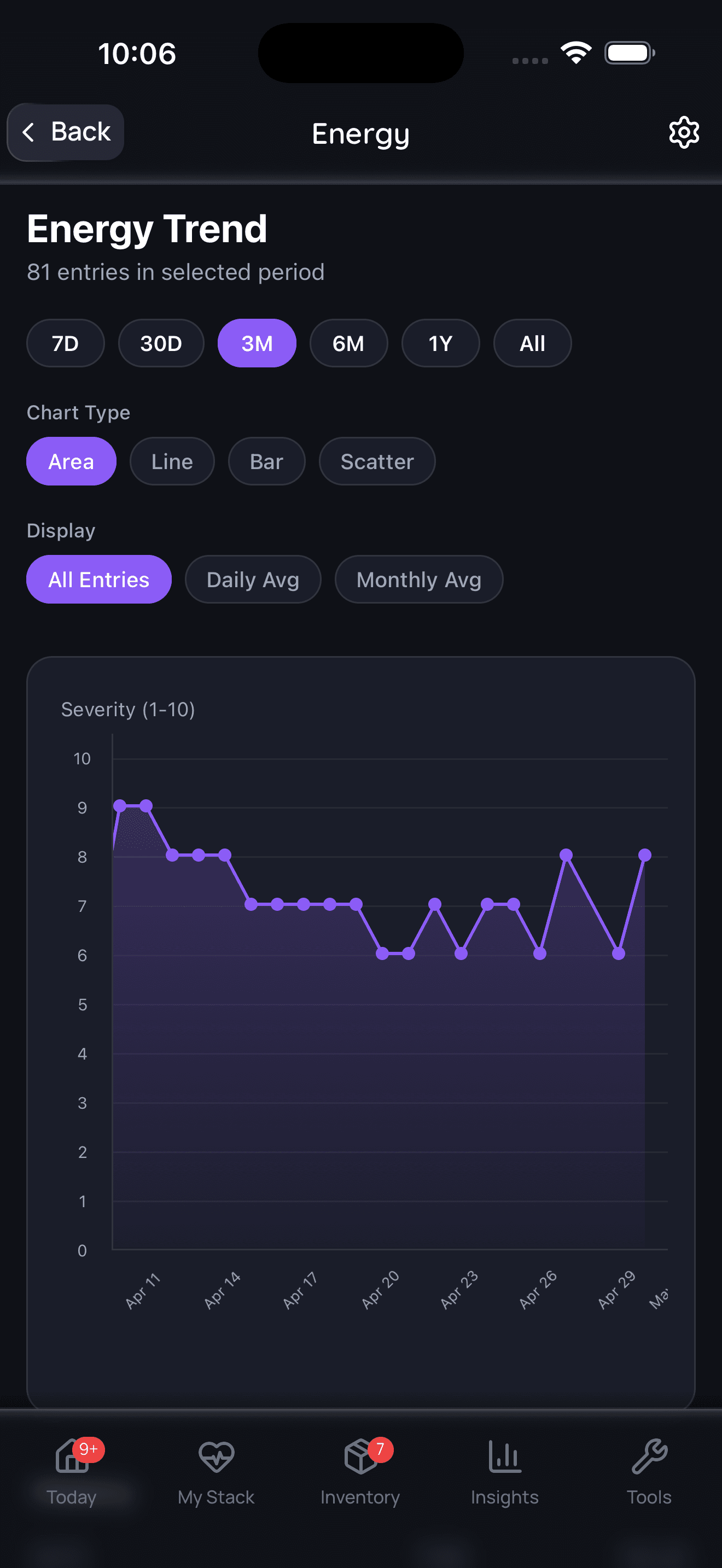
Symptom tracking is informational and should be interpreted with a qualified clinician.
Interactions & Compatibility
Synergistic
- Resveratrol: Frequently paired with NMN. Resveratrol activates SIRT1 (a sirtuin enzyme), while NMN provides the NAD+ substrate sirtuins require. The combination may enhance sirtuin-mediated benefits beyond either compound alone. This is a common longevity stack inspired by preclinical research.
- TMG (Trimethylglycine): TMG serves as a methyl donor that supports the methylation pathway. NMN metabolism generates nicotinamide that requires methylation for clearance. Co-supplementation may help maintain methyl donor balance, particularly at higher NMN doses or in individuals with MTHFR variants.
- Vitamin B12: Supports methylation as a cofactor for methionine synthase. May help maintain methylation capacity alongside NMN supplementation.
- Vitamin B9 (Folate): Another key methylation cofactor. Combined with B12 and TMG, may support the methylation cycle during NMN supplementation.
- NR (Nicotinamide Riboside): Another NAD+ precursor that enters the NAD+ biosynthetic pathway at a slightly different point. Some users combine NMN and NR, though clinical evidence supporting the combination over either alone is lacking.
- Alpha-Ketoglutarate (AKG): Sometimes paired with NMN in longevity stacks. AKG is involved in the TCA cycle and may support cellular energy metabolism through a complementary pathway.
Caution / Avoid
- Chemotherapy agents: Elevated NAD+ could theoretically protect cancer cells from chemotherapy-induced apoptosis. Individuals undergoing cancer treatment should discuss NMN use with their oncologist before supplementing [20].
- Immunosuppressants: NMN may modulate immune function through sirtuin and CD38 pathways. Potential interactions with immunosuppressive medications have not been studied.
- Niacin (Nicotinic Acid): Taking NMN alongside high-dose niacin could theoretically result in excessive NAD+ precursor load. The niacin UL of 35 mg/day (supplemental) does not account for concurrent NMN use.
- PARP inhibitors: Used in cancer therapy, PARP inhibitors work by blocking NAD+-dependent DNA repair in cancer cells. NMN supplementation could theoretically counteract this mechanism. Contraindicated during PARP inhibitor therapy.
How to Take / Administration Guide
Recommended forms: Standard capsules and powders are the most commonly used and studied forms. Enteric-coated capsules and sublingual formulations are marketed for improved bioavailability, though head-to-head human comparisons are not yet available. The pharmaceutical-grade MIB-626 formulation used in clinical trials is not commercially available.
Timing considerations: Most clinical trials administer NMN once daily before breakfast. Morning dosing is widely preferred in community practice to minimize potential sleep disruption. Some users take NMN on an empty stomach for faster absorption, while others take it with food without apparent differences in efficacy.
Stacking guidance: NMN is commonly taken alongside TMG (trimethylglycine) for methylation support, with a common ratio of 1:1 (e.g., 500 mg NMN + 500 mg TMG). Resveratrol is another frequent pairing. If combining NMN with other B vitamins, take them together. Avoid taking NMN close to bedtime if you are sensitive to its energizing effects.
Sublingual administration: Some users dissolve NMN powder under the tongue and hold for 30-60 seconds before swallowing. This approach bypasses gastric degradation and may provide faster entry into the bloodstream. The taste can be mildly bitter.
Cycling guidance: No established cycling protocols exist for NMN. Most clinical trials used continuous daily dosing without breaks. Some community members follow 5-days-on, 2-days-off protocols, though this practice is not evidence-based. There is no published evidence of tolerance development with continuous use up to 12 weeks.
Choosing a Quality Product
Third-party certifications: Look for products that provide Certificates of Analysis (COA) from independent testing labs verifying purity, identity, and potency. USP Verified and NSF Certified products are rare for NMN. Some specialized testing labs offer NMN-specific purity analysis.
Active vs. cheap forms: Ensure the product contains beta-NMN (the biologically active isomer). Some lower-quality products may contain alpha-NMN or substituted nicotinamide (NAM) instead of genuine NMN. Third-party testing that specifically identifies beta-NMN content is an important quality marker.
Red flags: Products claiming more than 99.9% purity without third-party verification should be viewed skeptically. Extremely low prices relative to market average may indicate adulteration. NMN supplements should not be labeled as "vitamin B3" or "niacin." Community reports suggest that counterfeit NMN products are common, particularly through marketplace platforms.
Excipient/filler considerations: NMN capsules should contain minimal fillers. Some products add flow agents like magnesium stearate or silicon dioxide. Liposomal formulations use lipid carriers. For individuals with sensitivities, pure NMN powder in capsules with minimal excipients is preferred.
Stability concerns: NMN is sensitive to heat and moisture, which can cause degradation. Products with desiccant packets, opaque packaging, and storage recommendations indicating temperature sensitivity suggest better quality control. Some manufacturers recommend refrigeration after opening.
Brand transparency indicators: Brands that publish batch-specific COAs, disclose manufacturing location and process (enzymatic biosynthesis vs. chemical synthesis), and provide lot-traceable testing are generally more reliable.
Storage & Handling
NMN is more sensitive to degradation than many supplements. Store NMN products in a cool, dry place away from direct sunlight, heat, and moisture. Room temperature storage is acceptable for sealed products, but once opened, some manufacturers recommend refrigeration to extend shelf life.
NMN can degrade when exposed to humidity, which is why many quality products include desiccant packets in the packaging. Keep the container tightly sealed after each use. Do not transfer NMN to containers without proper sealing.
Bulk NMN powder should ideally be stored in an airtight container in the refrigerator or freezer. Avoid repeated freeze-thaw cycles. When using powder, use a clean, dry scoop to prevent moisture introduction.
Typical shelf life for properly stored NMN products is 12-24 months from manufacture date. Check expiration dates and discard products that have changed color (NMN powder should be white to off-white), developed an unusual odor, or been stored in poor conditions.
Lifestyle & Supporting Factors
Diet: While NMN is found naturally in foods like broccoli, cabbage, cucumber, edamame, and avocado, dietary amounts are negligible compared to supplemental doses (less than 2 mg/day from food vs. 250-600 mg from supplements). A balanced diet rich in whole foods supports overall NAD+ metabolism and provides the cofactors (B vitamins, folate, zinc) needed for efficient NAD+ biosynthesis.
Exercise: Regular physical activity is itself one of the most potent stimulators of NAD+ production. Some research suggests that exercise at moderate intensity for approximately one hour per day can maintain NAD+ levels at youthful levels. NMN supplementation may complement an exercise program by supporting the NAD+ demands of active muscles.
Sleep: Adequate sleep supports the body's circadian regulation of NAD+ levels and SIRT1 activity. NAD+ levels naturally fluctuate with circadian rhythm. Poor sleep may accelerate NAD+ depletion. If NMN causes sleep disruption, taking it earlier in the day (morning) is recommended.
Caloric restriction and fasting: Caloric restriction and intermittent fasting have been shown to increase NAD+ levels and activate sirtuins independently. Some users combine NMN with time-restricted eating protocols, though clinical evidence for the combination is limited.
Monitoring: Users interested in tracking their NMN response can test blood NAD+ levels through specialized labs. Other useful biomarkers include HRV (heart rate variability), fasting glucose and insulin, liver enzymes (ALT, AST), and comprehensive metabolic panels. Wearable devices can track subjective outcomes like energy, sleep quality, and exercise performance.
Regulatory Status & Standards
United States (FDA)
NMN's regulatory history in the United States has been uniquely turbulent. In November 2022, the FDA ruled that NMN could not be legally marketed as a dietary supplement because it had been "authorized for investigation as a new drug" by Metro International Biotech for their MIB-626 formulation. Under the Federal Food, Drug, and Cosmetic Act, this exclusion provision prevents substances under investigation as drugs from being marketed as supplements.
The Natural Products Association (NPA) and multiple ingredient suppliers challenged this decision legally. In September 2025, the FDA reversed its position, concluding that NMN is not excluded from the dietary supplement definition. In December 2025, the FDA officially reinstated NMN's New Dietary Ingredient (NDI) status, confirming it is a lawful dietary supplement ingredient in the US.
NMN does not have GRAS (Generally Recognized as Safe) status. It is marketed as a New Dietary Ingredient (NDI), requiring NDI notifications to the FDA.
Canada (Health Canada)
NMN's status as a Natural Health Product (NHP) ingredient is not clearly established. NPN numbers for NMN products are not widely issued.
European Union (EFSA)
NMN is generally considered a novel food ingredient in the EU, requiring authorization under the Novel Food Regulation (EU) 2015/2283 before it can be legally marketed in food or supplement products.
Australia (TGA)
NMN is not specifically listed in the Australian Register of Therapeutic Goods. It would likely fall under complementary medicine regulations.
China
Chinese authorities have declared that the use of NMN in food is illegal. NMN is not on the approved novel food or supplement ingredient list in China.
Athlete & Sports Regulatory Status
WADA: NMN is NOT on the current WADA Prohibited List. As a form of vitamin B3 metabolite / NAD+ precursor, it is not considered a prohibited substance in or out of competition.
National Anti-Doping Agencies: No major national anti-doping agencies (USADA, UKAD, Sport Integrity Canada, Sport Integrity Australia, NADA Germany) have issued specific guidance or alerts about NMN.
NCAA: NMN is not on the NCAA banned substance list.
Athlete Certification Programs: Informed Sport, NSF Certified for Sport, and Cologne List-certified NMN products are limited. Athletes should seek products with third-party banned substance testing.
GlobalDRO: Athletes can check NMN status at GlobalDRO.com for US, UK, Canada, Australia, Japan, Switzerland, and New Zealand.
Regulatory status and prohibited substance classifications change frequently. Athletes should always verify the current status of any supplement with their sport's governing body, their national anti-doping agency, and a qualified sports medicine professional before use. Third-party certification (Informed Sport, NSF Certified for Sport) reduces but does not eliminate the risk of contamination with prohibited substances.
Frequently Asked Questions
Is NMN the same as niacin or vitamin B3?
NMN is related to niacin (vitamin B3) but is not the same compound. Both are precursors to NAD+, but they enter the NAD+ biosynthetic pathway at different points and have different pharmacological properties. NMN is not marketed or classified as a source of niacin, and does not cause the flushing associated with nicotinic acid.
How is NMN different from NR (nicotinamide riboside)?
NMN and NR are both NAD+ precursors. NR is one step earlier in the biosynthetic pathway (NR is phosphorylated to become NMN, which is then converted to NAD+). Both have been shown to raise NAD+ levels in humans. The clinical evidence base for NR is slightly more mature, but NMN has been gaining ground rapidly. No head-to-head human trials comparing NMN and NR have been published.
Should I take TMG with NMN?
Many NMN users take TMG (trimethylglycine) alongside NMN to support methylation. The rationale is that NMN metabolism generates nicotinamide, which requires methylation for clearance, potentially depleting methyl donor reserves. While this is biologically plausible, there are no clinical trials specifically demonstrating that TMG co-supplementation is necessary or beneficial when taking NMN. Individuals with known MTHFR variants may benefit most from methylation support.
At what age should someone consider NMN?
Based on available research and community experience, NAD+ levels begin declining meaningfully in the 30s and 40s. Most NMN clinical trials have enrolled participants aged 40-65. Community users consistently report that noticeable effects are more pronounced in those over 40. Younger, healthy individuals may not experience as many subjective benefits because their NAD+ levels are less depleted.
Can NMN promote cancer?
This is an area of active research. NAD+ is required by all cells, including cancer cells. Some preclinical data suggest that very high NAD+ levels could theoretically support tumor cell survival. However, no human studies have demonstrated a cancer risk from NMN supplementation at typical doses. Individuals with active cancer or a cancer history should discuss NMN use with their oncologist.
Is NMN legal to buy in the United States?
Yes, as of December 2025. The FDA officially reinstated NMN's New Dietary Ingredient (NDI) status after reversing its 2022 decision that had excluded NMN from the dietary supplement category. NMN is now lawfully marketed as a dietary supplement in the US.
How long does it take to feel effects from NMN?
Based on clinical data, blood NAD+ levels increase within 2-4 weeks of supplementation. Subjective effects like improved energy are commonly reported beginning around weeks 3-4, though some users notice changes within the first week and others require 2-3 months. The timeline appears to depend on age, baseline NAD+ status, dose, and product quality.
What is the best form of NMN to take?
Standard capsules and powders are the most commonly studied forms. Enteric-coated capsules and sublingual formulations are marketed as having improved bioavailability, but no head-to-head human comparisons have been published. Product quality (purity, proper storage, third-party testing) is likely more important than delivery form.
Does NMN affect sleep?
Sleep disruption is the most commonly reported side effect in community experience, particularly at higher doses (500 mg+). Taking NMN in the morning appears to mitigate this issue for most users. Clinical trials have not specifically measured sleep outcomes.
Can I take NMN with other supplements?
NMN is commonly stacked with TMG, resveratrol, alpha-ketoglutarate (AKG), and other B vitamins. There are no known dangerous interactions with common supplements. However, individuals on prescription medications, especially chemotherapy drugs or PARP inhibitors, should consult their healthcare provider before adding NMN to their regimen.
Myth vs. Fact
Myth: NMN is a proven anti-aging supplement that reverses aging in humans.
Fact: While NMN has shown dramatic anti-aging effects in mouse studies, including improved energy metabolism, physical activity, insulin sensitivity, and lifespan extension, human evidence is still in early stages. Multiple meta-analyses have found that NMN raises NAD+ levels but does not significantly improve most metabolic markers in healthy adults. The claim that NMN "reverses aging" in humans is not supported by current clinical evidence [6][16].
Myth: Higher doses of NMN are always better.
Fact: The dose-response trial by Yi et al. (2023) found that 600 mg/day produced optimal results for NAD+ elevation and physical performance, with 900 mg/day offering only marginal additional benefit. Community reports also suggest that lower doses (250-300 mg) may be sufficient for many people. More is not necessarily better, and some individuals report more side effects at higher doses [13].
Myth: NMN and NR are the same thing.
Fact: NMN and NR are both NAD+ precursors, but they are different molecules that enter the biosynthetic pathway at different points. NR (nicotinamide riboside) is converted to NMN, which is then converted to NAD+. They may have different bioavailability profiles and cellular uptake mechanisms. No head-to-head human trials have determined whether one is superior to the other [2].
Myth: You must take TMG with NMN or you will deplete your methyl donors.
Fact: The TMG co-supplementation practice is widespread in the NMN community but lacks clinical trial validation. While it is biologically plausible that high-dose NMN metabolism could strain methylation capacity, no studies have demonstrated methyl donor depletion in NMN users. Many people in clinical trials took NMN without TMG for up to 12 weeks with no adverse effects [12][13].
Myth: NMN was banned by the FDA because it is dangerous.
Fact: The FDA's 2022 exclusion of NMN from the dietary supplement category was based on a legal technicality (drug investigation preclusion clause), not on safety concerns. The FDA reversed this decision in 2025, reinstating NMN as a lawful dietary supplement ingredient. All published human trials have found NMN to be well tolerated with no serious adverse events.
Myth: NMN supplements are all the same quality.
Fact: Product quality varies significantly in the NMN market. Community reports and independent testing have found that some products contain less NMN than labeled, contain substituted ingredients (such as nicotinamide instead of NMN), or have degraded due to improper storage. Third-party tested products with published Certificates of Analysis from reputable labs are recommended.
Myth: Young, healthy people benefit as much from NMN as older adults.
Fact: NAD+ levels decline significantly with age. Younger, healthy individuals with robust NAD+ levels may not experience noticeable benefits from NMN supplementation. Clinical trial participants have been predominantly middle-aged (40-65), and community reports consistently indicate that older users experience more pronounced effects. The human trial data also suggests that metabolically compromised populations (e.g., prediabetic individuals) may respond more strongly [11][13].
Sources & References
Clinical Trials & RCTs
[1] Yoshino J, Baur JA, Imai SI. NAD+ Intermediates: The Biology and Therapeutic Potential of NMN and NR. Cell Metab. 2018;27(3):513-528. doi:10.1016/j.cmet.2018.02.011. Review of NAD+ biology and NMN/NR therapeutic potential.
[2] Verdin E. NAD+ in aging, metabolism, and neurodegeneration. Science. 2015;350(6265):1208-1213. doi:10.1126/science.aac4854. Overview of NAD+ decline with aging and implications.
[3] Imai SI, Guarente L. NAD+ and sirtuins in aging and disease. Trends Cell Biol. 2014;24(8):464-471. doi:10.1016/j.tcb.2014.04.002. Sirtuin biology and NAD+ dependency.
[4] Camacho-Pereira J, Tarragó MG, Chini CCS, et al. CD38 dictates age-related NAD decline and mitochondrial dysfunction through an SIRT3-dependent mechanism. Cell Metab. 2016;23(6):1127-1139. doi:10.1016/j.cmet.2016.05.006. CD38 as a major driver of age-related NAD+ decline.
[5] Chini CCS, Peclat TR, Warner GM, et al. CD38 ecto-enzyme in immune cells is induced during aging and regulates NAD+ and NMN levels. Nat Metab. 2020;2(11):1284-1304. CD38 and NAD+ metabolism in aging.
[6] Mills KF, Yoshida S, Stein LR, et al. Long-term administration of nicotinamide mononucleotide mitigates age-associated physiological decline in mice. Cell Metab. 2016;24(6):795-806. doi:10.1016/j.cmet.2016.09.013. Landmark mouse study on NMN and aging.
[7] Pencina KM, Leaf DE, Valderrabano RJ, et al. Oral MIB-626 (beta-nicotinamide mononucleotide) safely raises blood NAD+ levels in patients hospitalized with COVID-19. FASEB Bioadv. 2025;7(8):e70011. Safety at 2 g/day in COVID-19 patients.
[8] Berger F, Lau C, Dahlmann M, Ziegler M. Subcellular compartmentation and differential catalytic properties of the three human nicotinamide mononucleotide adenylyltransferase isoforms. J Biol Chem. 2005;280(43):36334-36341. NMNAT isoform localization and function.
[9] Haigis MC, Sinclair DA. Mammalian sirtuins: biological insights and disease relevance. Annu Rev Pathol. 2010;5:253-295. Comprehensive sirtuin review.
[10] Bai P, Cantó C. The role of PARP-1 and PARP-2 enzymes in metabolic regulation and disease. Cell Metab. 2012;16(3):290-295. PARP enzymes and NAD+ consumption.
Systematic Reviews & Meta-Analyses
[11] Yoshino M, Yoshino J, Kayser BD, et al. Nicotinamide mononucleotide increases muscle insulin sensitivity in prediabetic women. Science. 2021;372(6547):1224-1229. doi:10.1126/science.abe9985. Landmark human RCT showing insulin sensitivity improvement. PMID: 33888596.
[12] Okabe K, Yaku K, Uchida Y, et al. Oral Administration of Nicotinamide Mononucleotide Is Safe and Efficiently Increases Blood Nicotinamide Adenine Dinucleotide Levels in Healthy Subjects. Front Nutr. 2022;9:868640. doi:10.3389/fnut.2022.868640. Safety and NAD+ elevation at 250 mg/day for 12 weeks. PMID: 35479740.
[13] Yi L, Maier AB, Tao R, et al. The efficacy and safety of beta-nicotinamide mononucleotide (NMN) supplementation in healthy middle-aged adults: a randomized, multicenter, double-blind, placebo-controlled, parallel-group, dose-dependent clinical trial. GeroScience. 2023;45(1):29-43. doi:10.1007/s11357-022-00705-1. Dose-response trial (300/600/900 mg). PMID: 36482258.
[14] Grozio A, Mills KF, Yoshino J, et al. Slc12a8 is a nicotinamide mononucleotide transporter. Nat Metab. 2019;1(1):47-57. NMN-specific intestinal transporter identification.
[15] Ratajczak J, Joffraud M, Trammell SA, et al. NRK1 controls nicotinamide mononucleotide and nicotinamide riboside metabolism in mammalian cells. Nat Commun. 2016;7:13103. NMN metabolism via NR intermediate.
[16] Systematic review of NMN on glucose and lipid metabolism. 2024. 12 RCTs, 513 participants. NMN raises NAD+ but no significant metabolic benefits in healthy adults. PMID: 39116016.
[17] Meta-analysis of NMN on muscle and liver functions. 2024. 9 RCTs, 412 participants. Significant effects on gait speed and ALT. PMID: 39185644.
[18] Irie J, et al. Safety and efficacy of long-term nicotinamide mononucleotide supplementation on metabolism, sleep, and nicotinamide adenine dinucleotide content in healthy, middle-aged Japanese men. Endocr J. 2024. Open-label trial, 11 men, 250 mg/day for 8 weeks. PMID: 38191197.
[19] Chen F, Zhou D, Kong APS, et al. Effects of Nicotinamide Mononucleotide on Glucose and Lipid Metabolism in Adults: A Systematic Review and Meta-analysis of Randomised Controlled Trials. Curr Diab Rep. 2025;25:4. 8 RCTs, 342 participants, no significant metabolic benefits.
Government/Institutional Sources
[20] U.S. Food and Drug Administration. NDI 1259 – B-Nicotinamide Mononucleotide (NMN). 2022. FDA regulatory decision and subsequent reversal (2025).
[21] NIH Office of Dietary Supplements. Niacin: Fact Sheet for Health Professionals. Updated November 18, 2022. https://ods.od.nih.gov/factsheets/Niacin-HealthProfessional/
Related Supplement Guides
Same Category
- NR (Nicotinamide Riboside) — Fellow NAD+ precursor, closely related mechanism
- Vitamin B3 (Niacin, Niacinamide) — Parent vitamin family
- Vitamin B12 — B vitamin with methylation cofactor role
Common Stacks / Pairings
- Resveratrol — Commonly paired for sirtuin activation synergy
- TMG (Trimethylglycine) — Methylation support, frequently co-supplemented
- Alpha-Ketoglutarate — Longevity stack component
- CoQ10 — Mitochondrial support complement
- Alpha-GPC — Nootropic stack pairing
Related Health Goal
- Vitamin D3 — Longevity and metabolic health
- Magnesium — Cellular energy metabolism cofactor
- Creatine — Cellular energy support
- Omega-3 Fish Oil — Anti-inflammatory and cardiovascular support