
In this guide
What is resveratrol?
Resveratrol is a plant stilbenoid polyphenol found in grapes, Japanese knotweed, berries and peanuts. Supplements usually emphasize trans-resveratrol, the isomer used in most human protocols. It is marketed for healthy aging, metabolism, circulation, cognition and inflammation, but it is not a vitamin and has no established intake requirement.
The human literature is large and uneven. A 2024 systematic review found almost 200 purified-resveratrol clinical studies across at least 24 indications and concluded that no conclusive evidence supports recommending it in a healthcare setting. Recurrent signals in inflammation and dysregulated metabolism remain research findings rather than a general longevity indication. [1]
Oral exposure
The capsule is not the tissue concentration
Conceptual pharmacology map. It does not depict measured concentrations or prove that enhanced-delivery labels improve outcomes.
Typical Resveratrol Protocols
| Study and population | Product | Amount each administration | Daily total | Frequency and duration | Main interpretation |
|---|---|---|---|---|---|
| Timmers 2011 · 11 generally healthy men with obesity | resVida trans-resveratrol | 150 mg | 150 mg | Once daily for 30 days; randomized crossover | Selected metabolic, mitochondrial and blood-pressure signals; very small sample |
| Poulsen 2013 · 24 generally healthy men with obesity | High-dose resveratrol | 500 mg | 1,500 mg | Three times daily for 4 weeks; parallel trial | No improvement in insulin sensitivity, blood pressure, energy expenditure, fat or broad biomarkers |
| Thaung Zaw 2021 · 125 postmenopausal women aged 45–85 | trans-resveratrol | 75 mg | 150 mg | Twice daily for 12 months, then crossover for another 12 months | Selected cognition and cerebrovascular outcomes favored resveratrol; population-specific crossover study |
Timmers measured more than symptoms: insulin sensitivity, energy expenditure, muscle mitochondrial markers, liver fat and blood pressure were included. Several changed after 30 days, but the crossover included only 11 men and the branded ingredient was provided by industry. [2]
Poulsen tested ten times the daily amount in a separate 24-person sample and found no benefit across the primary clamp-measured insulin-sensitivity endpoint or the broader metabolic panel. Different studies cannot establish a reverse dose-response, but the contrast refutes the idea that more resveratrol must work better. [3]
Thaung Zaw’s long trial evaluated 75 mg twice daily in postmenopausal women. Its selected cognition and cerebrovascular results are relevant to that population and formulation; they do not establish dementia prevention or a general anti-aging effect. [4]
- Isomer and amount
- Record trans-resveratrol mass, not only total extract or Japanese knotweed mass.
- Study question
- Metabolic, vascular, cognitive and longevity outcomes are not interchangeable.
- Co-ingredients
- Separate purified resveratrol research from multi-ingredient longevity formulas.
What is resveratrol commonly used for?
Metabolic and inflammatory markers
Clinical studies frequently target glucose, insulin sensitivity, blood pressure, lipids and inflammatory markers. Positive signals cluster in some populations with metabolic dysfunction, while other well-controlled trials are null. NCCIH’s diabetes evidence digest characterizes the small Cochrane evidence as very low certainty and notes neutral HbA1c and insulin-resistance results despite selected blood-pressure or fasting-glucose signals. [5]
Vascular and cognitive outcomes
The 24-month crossover program in postmenopausal women reported changes in cognition and cerebrovascular responsiveness. These outcomes are more informative than a mechanism-only claim, yet they remain one population and do not demonstrate prevention of stroke, dementia or disability. [4]
Longevity
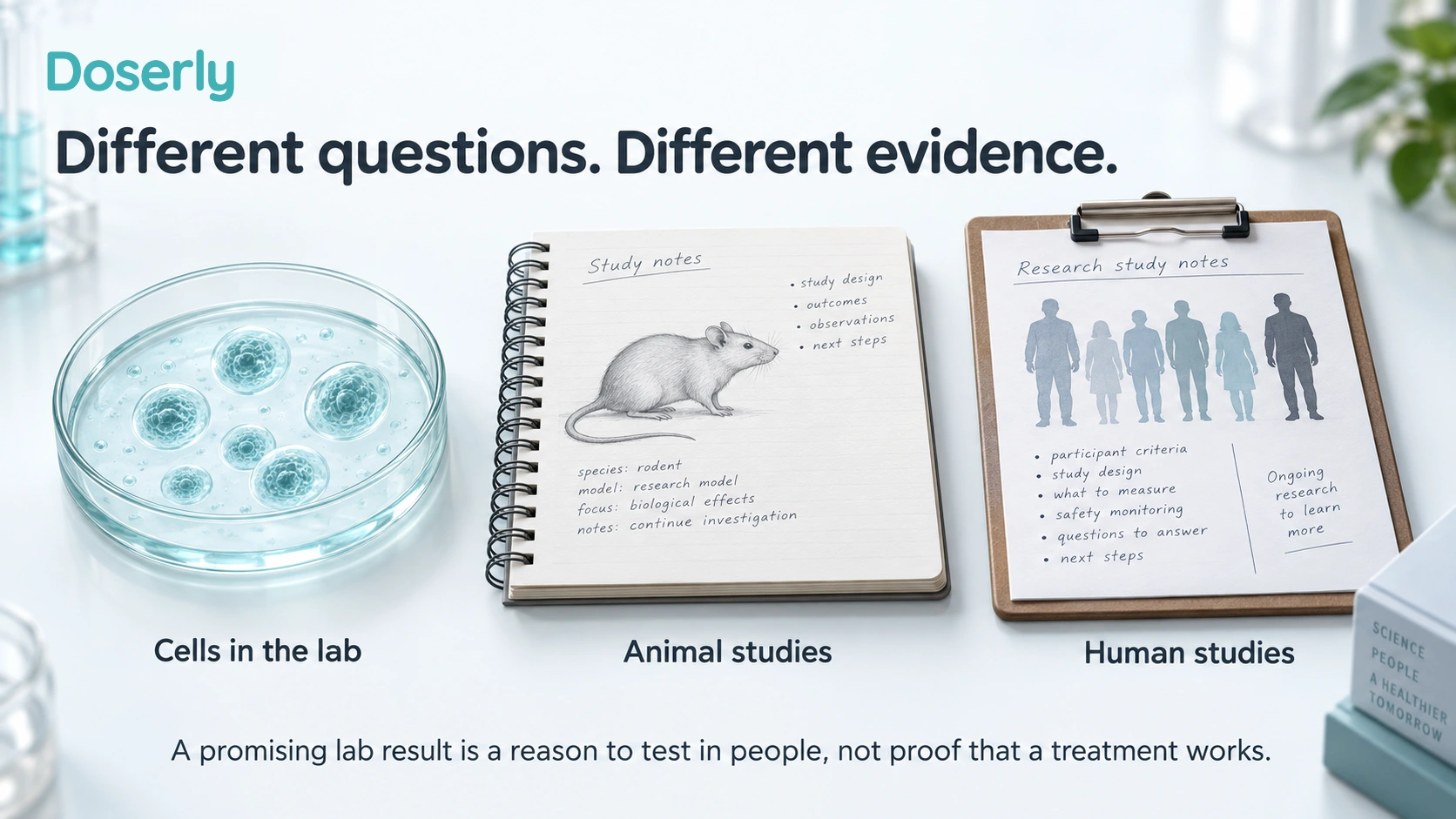
Animal and cellular results drove resveratrol’s reputation as a calorie-restriction mimetic. Human trials have not shown longer life. A change in SIRT1, AMPK, blood pressure or a cognitive score cannot be converted into years of lifespan.
Two obesity trials
A higher daily amount did not produce a stronger metabolic result
Different samples and study designs prevent a dose comparison. The contrast shows why dose alone cannot predict benefit.
How do forms and labels differ?
Look for the actual trans-resveratrol amount per serving. A label that lists only Japanese knotweed extract does not disclose how much resveratrol it provides. Cis-resveratrol, total polyphenols and whole extract mass should not be counted as equivalent trans-resveratrol.
Micronized, liposomal and other “enhanced bioavailability” claims need finished-product human comparisons. Rapid glucuronide and sulfate metabolism means higher absorption or blood exposure may still not produce a better clinical outcome. Proprietary longevity blends also prevent matching the product to purified-resveratrol trials. [1]
Food sources contain much smaller and more variable amounts than supplements. Red wine is not a dosing strategy; alcohol introduces separate risks and does not reproduce a purified trans-resveratrol protocol.
How should resveratrol be stored?
Keep the finished product sealed, dry and protected from heat and direct light. Follow the labeled temperature and expiry. Do not use capsules with moisture, odor changes or damaged packaging. Record the lot when product identity or third-party testing matters.
What does the human evidence show?
| Question | Evidence | Finding | Boundary |
|---|---|---|---|
| Is there one established clinical use? | 2024 systematic review | No conclusive recommendation across indications | Nearly 200 heterogeneous studies |
| Did 150 mg/day change metabolism? | 11-person crossover | Several selected markers changed | Tiny sample and 30-day exposure |
| Did 1,500 mg/day improve metabolic health? | 24-person parallel trial | Broad null result | Four weeks in men with obesity |
| Can longer use change cognitive or vascular measures? | 125-woman crossover | Selected outcomes favored resveratrol | Postmenopausal population; no dementia outcome |
The literature supports biological activity, but not one reliable consumer promise. Study populations range from healthy adults to people with diabetes, obesity, cancer or neurodegenerative disease. Products, doses, durations and primary endpoints vary so widely that a positive subgroup cannot validate the whole category. [1]
The 2024 review says doses up to 1 g/day were generally well tolerated in the collected studies, while also noting inconsistent adverse-event reporting and more GI effects at higher amounts. That is a review of studied exposures, not a universal safe ceiling. [1]
What are the risks and interactions?
The most common dose-related complaints are nausea, abdominal discomfort, gas and diarrhea. Headache or dizziness can occur. Stop and seek urgent care for severe allergy, fainting, marked bleeding, black stools or persistent vomiting.
Resveratrol can affect platelet activity in laboratory settings and may interact with anticoagulant or antiplatelet medicines and supplements. NCCIH specifically flags this interaction context. A clinician should review resveratrol before surgery, with bleeding disorders, warfarin or other blood thinners, cancer treatment, liver disease, or medicines with narrow therapeutic margins. [5]
Resveratrol also has phytoestrogenic activity. Pregnancy, breastfeeding, hormone-sensitive conditions and endocrine therapy lack a universal safety rule and warrant professional review. Product extracts can add constituents beyond purified resveratrol.
What is the legal and regulatory status?
In the United States, resveratrol products are generally sold as dietary supplements; FDA does not preapprove them as effective anti-aging treatments. Disease-treatment claims can change the regulatory issue. In Canada, an authorized natural health product should carry a matching NPN or DIN-HM and follow licensed conditions. Neither status proves efficacy for longevity, diabetes or dementia.
What happens when you stop?
Resveratrol has no established withdrawal syndrome and does not require an invented taper. Any marker or subjective change may move back toward baseline after exposure ends, but the timing depends on the outcome and study. Persistent symptoms should be assessed on their own merits.
What should you monitor?
Record product, trans-resveratrol amount, extract source, lot, amount per administration, daily total, timing and co-ingredients. Choose one outcome and a review window before starting. For blood pressure or glucose, use a clinician-agreed method and do not change medication from a supplement log alone.
Monitor GI symptoms, headache, dizziness, bruising or bleeding and any change after a new lot. Medication changes, diet, alcohol, exercise and sleep can alter the same outcomes and should remain visible.
What does community experience add?
Public reports can surface GI intolerance, headaches, cost, capsule burden and confusion over extract labels. They cannot confirm purity, detect interactions or separate resveratrol from an NMN, quercetin or multi-ingredient stack. No systematic current community sample was assembled, so this guide reports no consensus brand, dose, cycle or responder rate.
How does resveratrol compare with related options?
| Option | Practical distinction | Evidence boundary |
|---|---|---|
| Purified trans-resveratrol | Best match to most cited trials | Outcomes remain population-specific |
| Japanese knotweed extract | Botanical matrix with variable resveratrol content | Extract mass is not active amount |
| Pterostilbene | Related stilbenoid with different pharmacology | Cannot inherit resveratrol results |
| Grapes or berries | Foods with broader nutrient matrices | Do not reproduce capsule protocols |
| Red wine | Contains variable resveratrol plus alcohol | Alcohol risk makes it a poor supplement analogue |
Common questions
Does resveratrol slow aging?
No human trial has shown longer life or broad reversal of aging. Mechanistic and animal findings do not establish a human longevity benefit. [1]
Is a higher dose more effective?
Not reliably. A 1,500 mg/day trial was broadly null while a separate 150 mg/day trial reported selected signals. Different designs prevent a direct dose comparison. [2], [3]
Should resveratrol be taken with fat?
Meal composition can change pharmacokinetics, but no universal food rule has proven superior clinical outcomes across formulations. Follow the tested or labeled product instructions.
Is trans-resveratrol the same as Japanese knotweed extract?
No. Trans-resveratrol is a defined molecule. An extract can contain variable resveratrol plus other constituents.
Can resveratrol replace diabetes treatment?
No. NCCIH characterizes the diabetes evidence as low or very low certainty, with inconsistent endpoints. Do not change glucose-lowering treatment based on supplement use. [5]
Does it increase bleeding risk?
The clinical size of the risk is uncertain, but platelet effects and interaction concerns justify review with anticoagulant or antiplatelet therapy and before surgery. [5]
Is pterostilbene a better-absorbed replacement?
Different pharmacokinetics do not prove better clinical outcomes. It needs its own human evidence and safety assessment.
Glossary
Plain explanations of resveratrol terms.
- Stilbenoid
- A class of plant polyphenols that includes resveratrol and pterostilbene.
- trans-Resveratrol
- The geometric isomer most often specified in purified human supplement trials.
- Conjugation
- Metabolic attachment of groups such as glucuronide or sulfate that changes circulation and elimination.
- SIRT1
- A signalling protein often discussed in resveratrol mechanism research.
- Crossover trial
- A design in which participants receive more than one intervention in separate periods.
- Phytoestrogen
- A plant-derived compound with potential estrogen-receptor activity.
How this guide was researched
Live PubMed and PMC records were matched to each cited trial title, author and identifier. Protocol fields were checked against primary reports. Positive and null obesity trials were kept side by side, and the long postmenopausal trial was not generalized to dementia prevention or lifespan.
Research record · checked October 9, 2026
Fresh reads: the 2024 clinical-trial systematic review, three primary randomized trial records and current NCCIH evidence guidance.
Identity verification: PMID 38255828, PMID 22055504, PMID 23193181 and PMID 32900519 were matched to displayed titles and authors.
Protocol extraction: purified form, amount per administration, daily total, frequency, duration and crossover design remain separate.
Negative findings: the high-dose metabolic null result, inconsistent indications and absent human longevity outcome remain visible.
Safety boundary: review-level tolerability was not converted into a universal upper limit.
Explore the sources
A clinical-trial review, primary randomized protocols and official interaction guidance.
Showing 5 sources
- 01
Resveratrol for the Management of Human Health: How Far Have We Come? A Systematic Review of Resveratrol Clinical Trials to Highlight Gaps and Opportunities. ↗
Systematic review of clinical trials
Nearly 200 purified-form studies, indication heterogeneity, safety reporting and lack of a conclusive clinical recommendation.
- 02
Calorie restriction-like effects of 30 days of resveratrol supplementation on energy metabolism and metabolic profile in obese humans. ↗
Randomized crossover trial
Exact 150 mg/day product, selected metabolic findings and very small sample.
- 03
High-dose resveratrol supplementation in obese men: an investigator-initiated, randomized, placebo-controlled clinical trial of substrate metabolism, insulin sensitivity, and body composition. ↗
Randomized controlled trial
Exact 500 mg three-times-daily protocol (1,500 mg/day total) and broad null metabolic findings.
- 04
Long-term effects of resveratrol on cognition, cerebrovascular function and cardio-metabolic markers in postmenopausal women: A 24-month randomised, double-blind, placebo-controlled, crossover study. ↗
Randomized crossover trial
Twenty-four-month 75 mg twice-daily protocol and population-specific cognitive and vascular outcomes.
- 05
Type 2 Diabetes and Dietary Supplements: What the Science Says ↗
Official evidence digest
Low-certainty diabetes evidence and anticoagulant or antiplatelet interaction caution.
No matching sources
Try a different term or show the full list.
Editorial note
This guide keeps molecule identity, oral exposure, pathway biology, measured human outcomes and longevity claims separate.