
MOTS-C: Complete Research Guide
On this page
Quick Reference Card
Attribute
Also Known As
- Detail
- MOTS-c, Mitochondrial Open Reading Frame of the 12S rRNA Type-C, MDP-c, Mitokine
Attribute
Administration
- Detail
- Injectable (subcutaneous)
Attribute
Research Status
- Detail
- Research Compound. No FDA approval. No completed human therapeutic trials. WADA-prohibited since January 2025 (S4: Hormone and Metabolic Modulators). Analog CB4211 completed Phase 1a/1b (NCT03998514).
Attribute
Typical Dose Range
- Detail
- 200 mcg to 10 mg per day (daily low-dose protocols) or 5-10 mg 1-3x per week (intermittent protocols). Wide variation across sources.
Attribute
Half-Life
- Detail
- Approximately 2-4 hours (estimated from preclinical data); circulating levels ~1.5-2 hours, biological activity may persist longer
Attribute
Cycle Length
- Detail
- 4-12 weeks on, 2-4 weeks off (cycling recommended)
Attribute
Storage
- Detail
- Lyophilized: -20°C or below; Reconstituted: 2-8°C, use within 7 days for optimal potency
Overview / What Is MOTS-C?
The Basics
MOTS-C is a small signaling peptide, just 16 amino acids long, that your mitochondria naturally produce. If that term sounds unfamiliar, mitochondria are the tiny power generators inside nearly every cell in your body. They convert food into the energy currency (ATP) that keeps everything running, from muscle contractions to brain function.
What makes MOTS-C unusual is where it comes from. Most peptides and hormones in your body are encoded by DNA in the cell's nucleus. MOTS-C is encoded by mitochondrial DNA instead, making it part of a newly discovered class of molecules called mitochondrial-derived peptides (MDPs). First identified by researchers at the University of Southern California in 2015, MOTS-C has drawn significant attention because it appears to mimic some of the metabolic benefits of exercise at the cellular level [1].
When your body detects increased energy demands, whether from physical activity, caloric restriction, or other metabolic stress, mitochondria release MOTS-C. The peptide then travels to the cell's nucleus where it changes how genes are expressed, nudging the cell toward more efficient energy use: burning fat more readily, handling glucose better, and building new mitochondria. This is why researchers often describe MOTS-C as an "exercise mimetic." It activates many of the same pathways that regular physical activity does, though it does not replace the mechanical, cardiovascular, or neurological benefits of actual exercise.
MOTS-C levels decline naturally with age. Research on Okinawan centenarians found a specific mitochondrial DNA variant (m.1382A>C) that produces a functional MOTS-C polymorphism, suggesting this peptide may play a role in exceptional human longevity [2]. This age-related decline, combined with the peptide's broad metabolic effects, has generated interest in MOTS-C as a potential tool for addressing metabolic dysfunction, age-related physical decline, and mitochondrial health.
It is important to emphasize that MOTS-C remains an investigational compound. No human therapeutic clinical trials have been completed for MOTS-C itself. The closest human data comes from CB4211, a modified analog developed by CohBar Inc., which completed Phase 1a/1b trials for non-alcoholic fatty liver disease before development was discontinued due to formulation challenges [3].
The Science
MOTS-C (Mitochondrial Open Reading Frame of the Twelve S rRNA type-c) is a 16-amino acid peptide (sequence: MRWQEMGYIFYPRKLR) encoded within the 12S rRNA gene (MT-RNR1) of mitochondrial DNA [1]. It belongs to the mitochondrial-derived peptide (MDP) class, which also includes humanin and SHLP1-6, peptides encoded by short open reading frames within mitochondrial ribosomal RNA genes.
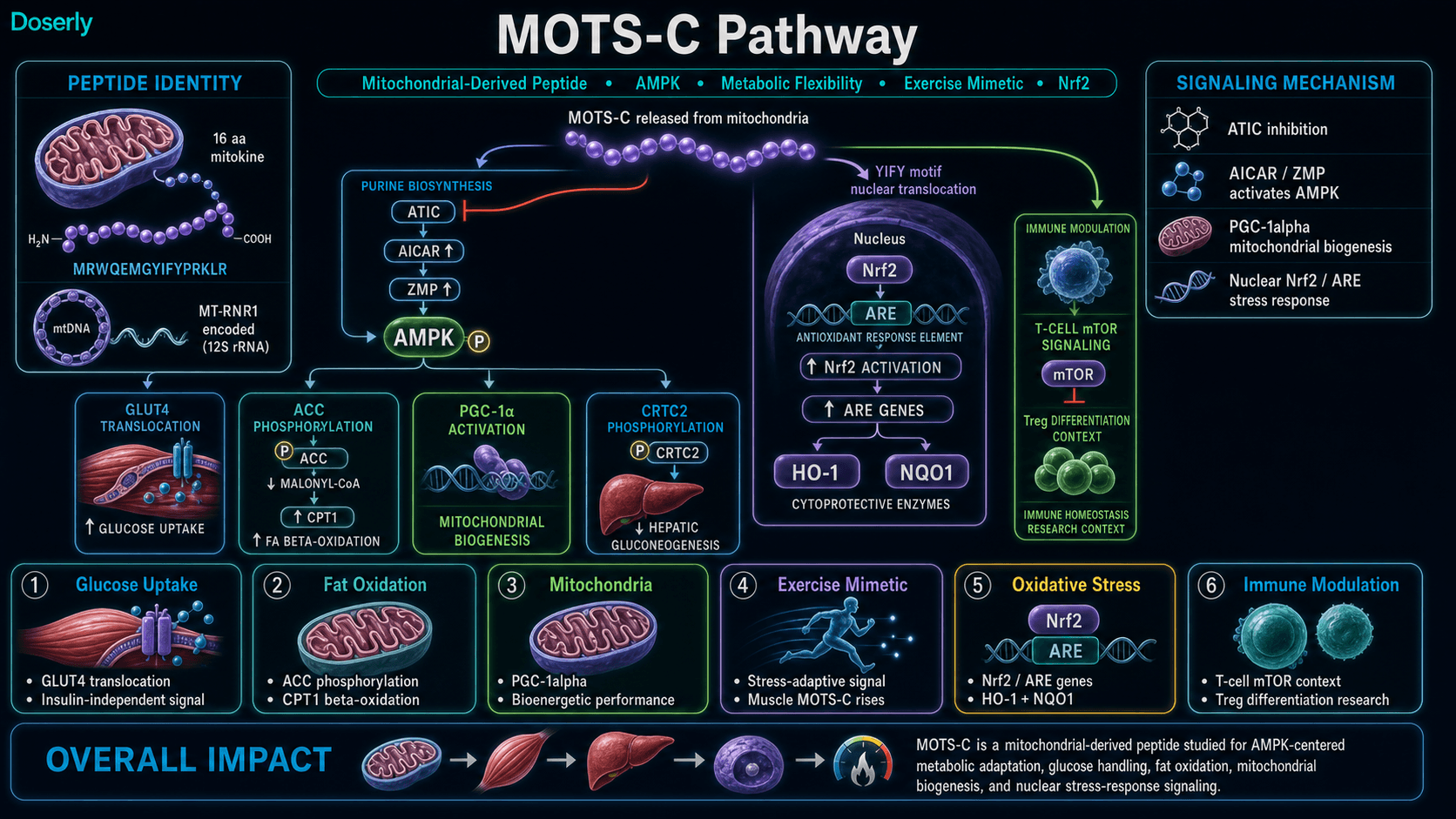
The primary mechanism involves inhibition of the folate-methionine cycle by targeting AICAR transformylase/IMP cyclohydrolase (ATIC). This inhibition causes accumulation of 5-aminoimidazole-4-carboxamide ribonucleotide (AICAR), an endogenous activator of AMP-activated protein kinase (AMPK) [1][4]. AMPK activation initiates a cascade of metabolic adaptations:
- Upregulation of glucose transporter GLUT4 translocation, enhancing insulin-independent glucose uptake in skeletal muscle [1]
- Phosphorylation and inactivation of acetyl-CoA carboxylase (ACC), promoting fatty acid beta-oxidation [1]
- Activation of PGC-1alpha, driving mitochondrial biogenesis and oxidative metabolism [5]
- Downregulation of hepatic gluconeogenesis, reducing endogenous glucose production [1]
Under metabolic stress, MOTS-C translocates from the cytoplasm to the nucleus via its hydrophobic core motif (8YIFY11), where it interacts with antioxidant response element (ARE)-containing genes and activates Nrf2 transcription factor signaling. This nuclear translocation represents a form of retrograde signaling from mitochondria to nucleus, enabling the organelle to directly influence nuclear gene expression in response to metabolic conditions [4][6].
MOTS-C is highly conserved across at least 14 mammalian species, with 11 of 16 amino acids showing conservation, suggesting fundamental biological importance [1]. Circulating MOTS-C levels increase approximately 12-fold in skeletal muscle following acute exercise and remain elevated for 4-6 weeks even after training cessation [5]. In skeletal muscle, expression is highest in slow-twitch (type I) fibers, consistent with their greater mitochondrial density [5].
Molecular Identity
Attribute
Amino Acid Sequence
- Detail
- MRWQEMGYIFYPRKLR (16 amino acids)
Attribute
Molecular Formula
- Detail
- C101H152N28O22S2
Attribute
Molecular Weight
- Detail
- 2,174.62 Da
Attribute
CAS Number
- Detail
- 1627580-64-6
Attribute
PubChem CID
- Detail
- 146675088
Attribute
FDA UNII
- Detail
- A5CV6JFB78
Attribute
Structure Type
- Detail
- Linear, non-glycosylated peptide
Attribute
Encoding Gene
- Detail
- MT-RNR1 (mitochondrial 12S rRNA)
Attribute
Conservation
- Detail
- 11/16 amino acids conserved across 14 mammalian species
Attribute
Solubility
- Detail
- Sterile water, bacteriostatic water
Mechanism of Action
The Basics
Think of your cells as factories with power plants (mitochondria) inside them. When the factory gets busy, whether because you are exercising, fasting, or under metabolic stress, the power plants send out a messenger. That messenger is MOTS-C.
MOTS-C's primary job is to flip a cellular switch called AMPK. You can think of AMPK as a fuel gauge. When energy is low, AMPK turns on and tells the cell to shift into efficiency mode: stop storing fat, start burning it, pull glucose out of the blood without needing extra insulin, and build more power plants to handle the workload going forward.
The way MOTS-C triggers this switch is through a chain reaction. It blocks a specific enzyme involved in producing building blocks for DNA (purine biosynthesis). When that enzyme gets blocked, a molecule called AICAR builds up. AICAR is the natural "on" switch for AMPK. So MOTS-C does not activate AMPK directly; instead, it causes a buildup of the molecule that does.
Beyond the AMPK switch, MOTS-C can also move into the cell's control center (the nucleus) when conditions are stressful. Once there, it turns on protective genes that help the cell handle oxidative damage and clean up metabolic waste. This dual action, both the metabolic efficiency shift and the stress protection, is why MOTS-C is compared to exercise. Regular physical activity triggers both of these same responses.
The Science
MOTS-C exerts its metabolic effects primarily through a pharmacological pathway distinct from direct receptor agonism. The peptide targets AICAR transformylase/IMP cyclohydrolase (ATIC), a bifunctional enzyme in the de novo purine biosynthesis pathway. Inhibition of ATIC causes intracellular accumulation of AICAR (5-aminoimidazole-4-carboxamide ribonucleotide), which is phosphorylated to ZMP, a mimetic of AMP that allosterically activates AMPK [1][4].
Activated AMPK initiates multiple downstream effects:
- Glucose metabolism: Enhanced GLUT4 translocation to the plasma membrane in skeletal muscle, increasing glucose uptake independent of insulin signaling. Simultaneously, hepatic gluconeogenesis is suppressed through phosphorylation of CREB-regulated transcription coactivator 2 (CRTC2) [1].
- Lipid metabolism: Phosphorylation and inactivation of acetyl-CoA carboxylase (ACC) removes the rate-limiting step of fatty acid synthesis while simultaneously promoting CPT1-mediated fatty acid transport into mitochondria for beta-oxidation [1].
- Mitochondrial biogenesis: AMPK-dependent activation of PGC-1alpha (peroxisome proliferator-activated receptor gamma coactivator 1-alpha) promotes mitochondrial DNA replication, transcription, and the assembly of new respiratory chain complexes. A 2026 study demonstrated that MOTS-C enhances intrinsic muscle mitochondrial bioenergetic performance in a PGC-1alpha/AMPK-dependent manner, reducing mitochondrial reactive oxygen species emission and oxidative protein damage [7].
- Nuclear translocation and gene regulation: Under metabolic stress, MOTS-C translocates to the nucleus through its hydrophobic core domain (amino acids 8-11: YIFY). Nuclear MOTS-C interacts with ARE (antioxidant response element) sequences, activating Nrf2-dependent transcription of cytoprotective enzymes including heme oxygenase-1 (HO-1) and NAD(P)H quinone dehydrogenase 1 (NQO1) [4][6].
- Immune modulation: MOTS-C regulates T-cell receptor mTOR complex signaling, influencing CD4+/CD25+/FOXP3+ regulatory T-cell differentiation. In a non-obese diabetic (NOD) mouse model, MOTS-C administration prevented autoimmune pancreatic beta-cell destruction and significantly reduced diabetes incidence [8].
Pathway Visualization
Pharmacokinetics
The Basics
MOTS-C has a relatively short active window. After injection, it reaches peak concentration in the blood within about 30 to 60 minutes and is largely cleared within 2 to 4 hours. However, the effects it triggers, particularly the AMPK activation cascade and mitochondrial adaptations, persist well beyond the time the peptide itself is detectable.
This is an important distinction. The peptide acts as a trigger, not a sustained-release medication. Once MOTS-C flips the AMPK switch and initiates gene expression changes in the nucleus, those downstream processes continue even after the peptide has been broken down. This is why some practitioners describe MOTS-C as acting "over hours, not weeks" for the acute signal, while the metabolic adaptations (more mitochondria, better fuel selection) accumulate over the course of a multi-week cycle.
The peptide shows preferential uptake by metabolically active tissues, particularly skeletal muscle, adipose tissue, and liver. In exercising muscle, MOTS-C levels can increase approximately 12-fold and remain elevated for weeks after exercise cessation, suggesting that the peptide accumulates in tissue reservoirs rather than relying solely on circulating levels [5].
The Science
Pharmacokinetic characterization of MOTS-C in humans is incomplete, and much of the available data derives from preclinical models and extrapolation.
Absorption: Following subcutaneous administration, MOTS-C distributes systemically to metabolic target tissues. Peak concentrations (Tmax) are estimated at 30-60 minutes post-injection [3].
Distribution: Preferential uptake occurs in skeletal muscle (particularly slow-twitch fibers with high mitochondrial density), adipose tissue, and hepatocytes. Interstitial MOTS-C levels increase in exercised muscle, though arteriovenous difference data from human one-legged knee extensor exercise suggests skeletal muscle may not be the primary site of MOTS-C clearance [7].
Metabolism: MOTS-C undergoes proteolytic degradation. The estimated plasma half-life ranges from approximately 1.5 to 4 hours depending on the measurement approach. The shorter estimate reflects circulating peptide clearance, while the longer estimate incorporates tissue-level biological activity [3][9].
Pharmacodynamic persistence: The AMPK activation cascade initiated by MOTS-C produces effects (gene expression changes, mitochondrial biogenesis signaling) that outlast the peptide's plasma presence. Studies in mice demonstrate that exercise-induced increases in intramuscular MOTS-C protein persist for 4 to 6 weeks after training cessation [5].
Stability concerns: Unverified reports in community forums suggest rapid degradation after reconstitution (50% at 2 hours, 90% at 3 hours at room temperature), though this claim lacks scientific validation. One source reports approximately 25% activity loss after 24 hours at 4°C for the reconstituted peptide [9]. Refrigerated storage and prompt use after reconstitution are recommended.
The half-life and clearance data above tells you how long the compound stays active, but what does that mean for your daily schedule? Doserly's pharmacokinetic tools let you plug in your dose and frequency to see a projected concentration timeline, helping you understand when you're at peak levels and when the compound has largely cleared.
This becomes especially useful when titrating. If you're increasing your dose gradually, the estimator shows how each step changes your projected peak and trough levels, giving you and your healthcare provider concrete data to discuss at check-ins rather than relying on subjective feel alone.
See where a dose, cycle, or change fits in time.
Doserly gives each protocol a timeline so dose changes, pauses, restarts, and observations are easier to compare later.
Timeline
Cycle history
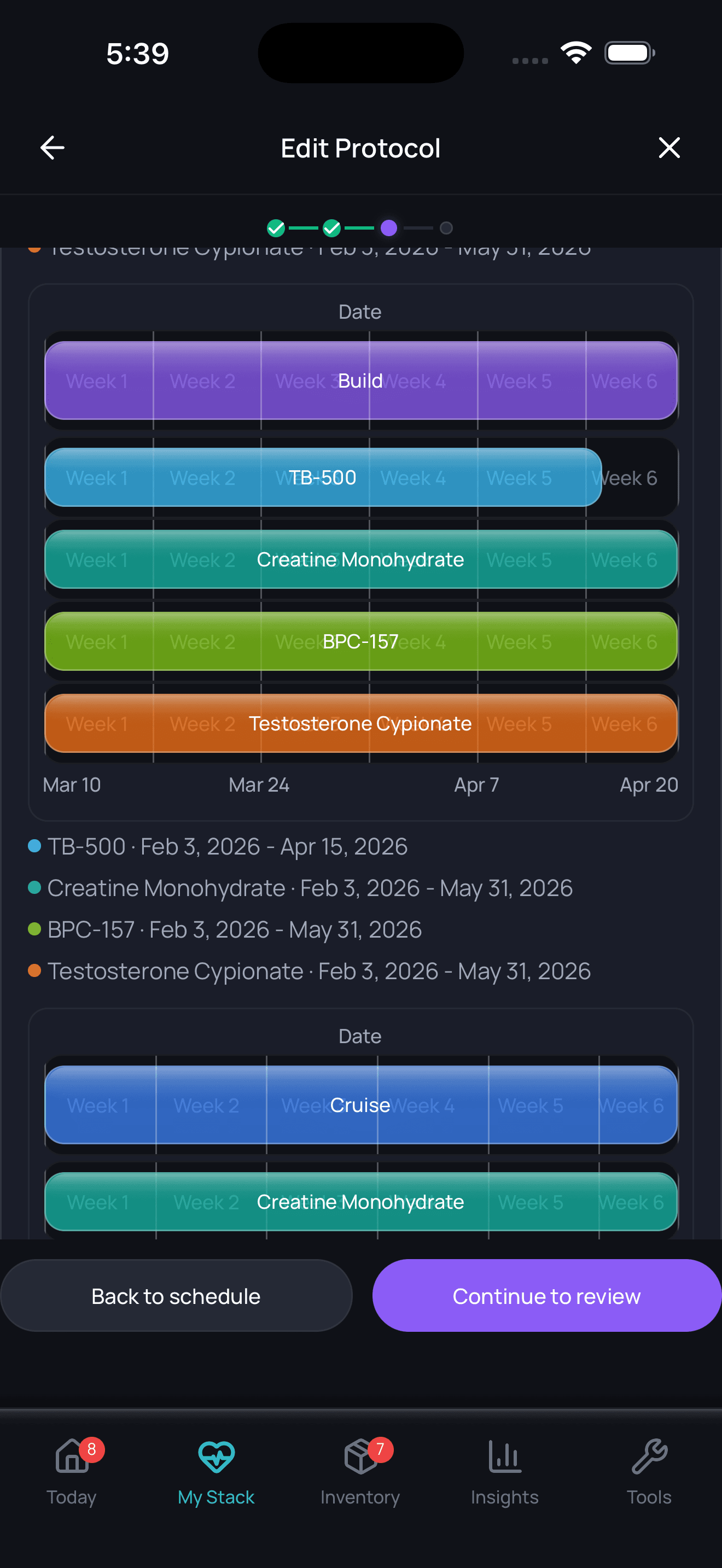
Timeline tracking helps with recall; it is not a treatment recommendation.
Research & Clinical Evidence
MOTS-C and Metabolic Health
The Basics
The most established area of MOTS-C research is metabolic health, particularly glucose management and fat metabolism. In animal studies, MOTS-C has consistently improved how the body handles sugar and fat, even in animals fed unhealthy diets. Mice given MOTS-C while on a high-fat diet gained significantly less weight (up to 40% less body fat in some studies) and showed reversal of fatty liver changes, with inflammatory markers dropping substantially [10].
The compound also appears to restore insulin sensitivity. In aged mice that had become insulin-resistant (a common feature of aging), short courses of MOTS-C returned insulin sensitivity to levels typically seen in younger animals [1]. For context, declining insulin sensitivity is one of the hallmarks of metabolic aging and a precursor to type 2 diabetes.
In human observational studies, lower circulating MOTS-C levels have been independently associated with reduced insulin sensitivity in obese adults and with the presence of coronary artery disease [11][12]. These are correlational findings, not proof that supplementing MOTS-C would reverse these conditions, but they suggest a meaningful biological relationship.
The Science
Lee et al. (2015) demonstrated that systemic MOTS-C administration (5 mg/kg/day intraperitoneal) in mice on a high-fat diet prevented obesity and insulin resistance. Treated animals showed a 30-50% reduction in fasting glucose and insulin levels, with improved glucose tolerance test results. The mechanism was traced to AMPK-dependent enhancement of skeletal muscle glucose uptake and hepatic gluconeogenesis suppression [1].
A subsequent study showed MOTS-C prevented ovariectomy-induced metabolic dysfunction in female mice, mitigating menopause-related fat gain and insulin resistance [13]. This finding has relevance for post-menopausal metabolic health, though human data is lacking.
The CB4211 analog (a modified MOTS-C with improved stability and half-life) completed Phase 1a/1b clinical trials (NCT03998514) for NAFLD. The Phase 1a portion demonstrated safety and tolerability in healthy adults over 7 days. Development was discontinued due to formulation challenges, not safety concerns [3].
Human observational data includes: MOTS-C levels inversely correlating with insulin resistance in obese subjects (p < 0.05) [11], and lower circulating MOTS-C independently predicting coronary artery disease (p < 0.01) [12].
MOTS-C and Exercise Performance
The Basics
MOTS-C is often called an "exercise mimetic" because it activates many of the same cellular pathways that physical activity does. In practical terms, animal studies show that giving MOTS-C to untrained subjects improves their exercise capacity in measurable ways. A single dose of 15 mg/kg in untrained mice improved running time by 12% and distance by 15% during a treadmill test [5].
Perhaps more remarkably, when MOTS-C was given to very old mice (the equivalent of roughly 70 human years), it increased their physical capacity and improved markers of healthspan. Aged mice treated with MOTS-C ran twice as long and covered more than twice the distance compared to untreated aged mice on treadmill tests [14].
The relationship works both ways. Exercise itself increases MOTS-C production. Skeletal muscle MOTS-C levels rise approximately 12-fold after acute exercise in humans, and this increase persists for weeks even after training stops [5]. This suggests MOTS-C is part of the molecular machinery through which exercise produces its metabolic benefits.
The Science
Reynolds et al. (2021) published in Nature Communications that MOTS-C functions as an exercise-induced mitochondrial-encoded regulator of age-dependent physical decline. Key findings: (a) a single 15 mg/kg dose improved acute exercise performance (12% running time, 15% distance) in untrained mice; (b) 4-8 weeks of voluntary running increased intramuscular MOTS-C protein 1.5- to 5-fold; (c) exercise-induced MOTS-C elevations persisted 4-6 weeks into detraining; and (d) late-life treatment (initiated at 23.5 months) improved physical capacity and healthspan markers [5].
A 2026 study confirmed that MOTS-C enhances intrinsic skeletal muscle mitochondrial bioenergetic performance through PGC-1alpha/AMPK-dependent pathways, with concomitant reduction in mitochondrial ROS emission and oxidative protein damage [7].
Elite athletes demonstrate higher baseline MOTS-C levels and greater exercise-responsive MOTS-C increases compared to untrained individuals [15].
MOTS-C and Cardiovascular Health
The Basics
Research suggests MOTS-C may have protective effects on the heart. In animal models where researchers surgically created high-pressure conditions (simulating uncontrolled high blood pressure), MOTS-C treatment reduced the resulting heart damage. Specifically, it attenuated the thickening of heart muscle walls, reduced the buildup of scar tissue (fibrosis), decreased cell death, and improved the inflammatory profile within heart tissue.
While these findings are preliminary and come from animal models, they suggest MOTS-C's anti-inflammatory and antioxidant properties may extend to cardiovascular protection. Human observational data showing that lower MOTS-C levels predict coronary artery disease supports this direction of inquiry [12].
The Science
Li et al. (2022) demonstrated that MOTS-C administration (5 mg/kg/day subcutaneous via osmotic pump) attenuated cardiac structural and functional deterioration following transverse aortic constriction (TAC) surgery in mice. Treatment improved left ventricular ejection fraction (from ~38% to ~41%), reduced left ventricular internal diastolic diameter expansion, decreased interstitial fibrosis, and reduced cardiomyocyte apoptosis. The mechanism involved downregulation of pro-inflammatory cytokines (TNF-alpha, IL-6) and upregulation of antioxidant gene expression [16].
MOTS-C and Immune Modulation / Type 1 Diabetes
The Basics
One of the most striking MOTS-C findings involves its ability to influence the immune system. In a study using mice genetically prone to developing type 1 diabetes (an autoimmune condition where the immune system destroys insulin-producing cells), MOTS-C treatment dramatically reduced the incidence of diabetes. The peptide appeared to work by modifying how immune cells (specifically T-cells) behaved, shifting them away from the destructive pattern that causes autoimmune damage [8].
When researchers took immune cells from MOTS-C-treated mice and transferred them to immune-compromised mice, the recipients also showed reduced diabetes incidence. This confirmed that MOTS-C had fundamentally changed the immune cell behavior, not just suppressed it temporarily. Additionally, human type 1 diabetes patients were found to have lower circulating MOTS-C levels than healthy controls [8].
The Science
D'Souza et al. (2021) demonstrated that MOTS-C (0.5 mg/kg/day intraperitoneal for 18 weeks) prevented autoimmune beta-cell destruction in non-obese diabetic (NOD) mice with high statistical significance (p < 0.0001). The mechanism involved regulation of T-cell receptor mTOR complex signaling, promoting CD4+/CD25+/FOXP3+ regulatory T-cell differentiation while reducing effector T-cell activity. Transfer of T-cells from MOTS-C-treated mice to SCID (severe combined immunodeficiency) mice recapitulated the protective effect. Human T1D patients showed significantly lower serum MOTS-C levels compared to healthy controls [8].
MOTS-C and Bone Health
The Basics
Early research suggests MOTS-C may support bone health by promoting the activity of bone-building cells (osteoblasts) while inhibiting bone-resorbing cells (osteoclasts). This dual action could be relevant for conditions like osteoporosis, though the evidence is currently limited to cell and animal studies.
The Science
Yi et al. (2023) reviewed evidence that MOTS-C promotes osteoblast proliferation and inhibits osteoclast formation through AMPK-dependent pathways, suggesting potential applications in osteoporosis prevention and treatment [17].
Biomarker Evidence Matrix
Category
Energy Levels
- Evidence Strength
- 6/10
- Reported Effectiveness
- 7/10
- Summary
- Strong preclinical evidence for metabolic efficiency and mitochondrial biogenesis. Community consistently reports energy improvements, though responses are variable.
Category
Physical Performance
- Evidence Strength
- 7/10
- Reported Effectiveness
- 7/10
- Summary
- Multiple animal studies demonstrate improved exercise capacity across age groups. Community reports improved gym performance and endurance.
Category
Fat Loss
- Evidence Strength
- 6/10
- Reported Effectiveness
- 5/10
- Summary
- Robust preclinical fat reduction data (up to 40% less fat gain in HFD models). Community evidence is thin and heavily confounded.
Category
Weight Management
- Evidence Strength
- 5/10
- Reported Effectiveness
- 5/10
- Summary
- Animal studies show obesity prevention. Limited distinct community data for weight management specifically.
Category
Inflammation
- Evidence Strength
- 6/10
- Reported Effectiveness
- 6/10
- Summary
- Preclinical evidence for anti-inflammatory effects across multiple models. One detailed community report of reduced inflammatory markers.
Category
Heart Health
- Evidence Strength
- 5/10
- Reported Effectiveness
- 5/10
- Summary
- Preclinical cardioprotection in pressure-overload models. Human observational correlation with CAD risk. No community experience data.
Category
Immune Function
- Evidence Strength
- 5/10
- Reported Effectiveness
- 5/10
- Summary
- Strong preclinical immunomodulation data (T1D prevention in NOD mice). Minimal community discussion.
Category
Muscle Growth
- Evidence Strength
- 4/10
- Reported Effectiveness
- 4/10
- Summary
- MOTS-C reduces myostatin signaling in preclinical models. Community notes AMPK activation may counteract anabolic environments at higher doses.
Category
Recovery & Healing
- Evidence Strength
- 4/10
- Reported Effectiveness
- 5/10
- Summary
- Indirect evidence through mitochondrial biogenesis and oxidative stress reduction. Limited community reports.
Category
Bone Health
- Evidence Strength
- 4/10
- Reported Effectiveness
- N/A
- Summary
- Preclinical evidence for osteoblast promotion and osteoclast inhibition. Community data not yet collected.
Category
Longevity & Neuroprotection
- Evidence Strength
- 5/10
- Reported Effectiveness
- 5/10
- Summary
- Okinawan centenarian MOTS-C variant, age-related decline correlation, lifespan extension in animal models. Community interest is high but experiential data is absent.
Category
Mood & Wellbeing
- Evidence Strength
- 3/10
- Reported Effectiveness
- 6/10
- Summary
- No direct preclinical mood studies. Community reports positive wellbeing, likely secondary to energy improvements.
Category
Side Effect Burden
- Evidence Strength
- 5/10
- Reported Effectiveness
- 4/10
- Summary
- Well-tolerated in preclinical and analog Phase 1 data. Community reports significant injection-site reactions as main tolerability issue.
Category
Fluid Retention
- Evidence Strength
- 2/10
- Reported Effectiveness
- 6/10
- Summary
- No direct preclinical evidence. One detailed community report of reduced puffiness/bloat/lymphedema.
Benefits & Potential Effects
The Basics
MOTS-C's potential benefits revolve around its core function as a metabolic optimizer and exercise mimetic. Rather than targeting a single symptom or organ system, it works at the cellular level to improve how your body generates and uses energy. This broad mechanism explains why the reported benefits span several body systems.
The most consistently noted benefit is improved energy and physical capacity. Because MOTS-C promotes the growth of new mitochondria and helps existing ones work more efficiently, people who are metabolically compromised, sedentary, or aging may notice the most pronounced effects. Those who are already metabolically optimized through regular exercise and a healthy lifestyle may see less dramatic changes, since their bodies are already producing MOTS-C naturally through physical activity.
Metabolic improvements, including better blood sugar management and enhanced fat burning, represent the strongest area of preclinical evidence. In animal models, MOTS-C has consistently improved insulin sensitivity, reduced visceral fat accumulation, and prevented diet-induced metabolic dysfunction. These effects are thought to be mediated through the same AMPK pathway that medications like metformin target, though through a different upstream mechanism.
Other areas of interest include cardiovascular protection, immune modulation, and potential longevity benefits, though evidence in these areas remains largely preclinical and should be interpreted cautiously.
The Science
MOTS-C's benefit profile can be organized by the strength of available evidence:
Tier 1 (Robust preclinical, limited human observational):
- Insulin sensitization and glucose homeostasis improvement (multiple mouse models, human correlational data) [1][11]
- Fat oxidation enhancement and obesity prevention (HFD models, AMPK/ACC pathway) [1][10]
- Exercise capacity improvement across age groups (single-dose and chronic administration studies) [5][14]
Tier 2 (Moderate preclinical):
- Cardioprotection through anti-inflammatory and antioxidant mechanisms (TAC model) [16]
- Immune modulation and autoimmune disease prevention (NOD mouse T1D model) [8]
- Mitochondrial biogenesis and bioenergetic enhancement (PGC-1alpha-dependent, 2026 confirmation) [7]
- Myostatin reduction and muscle atrophy signaling suppression [18]
Tier 3 (Emerging/observational):
- Longevity association (Okinawan centenarian MOTS-C polymorphism) [2]
- Bone health promotion (osteoblast/osteoclast modulation) [17]
- Neuroprotective effects (BDNF elevation in animal models) [14]
- Post-menopausal metabolic protection (ovariectomized mouse model) [13]
The benefits outlined above span multiple body systems, and your experience will be uniquely yours. Rather than guessing which effects are attributable to this compound versus other factors in your life, Doserly helps you log specific outcomes alongside your protocol details, building a clear picture of what's changing and when.
Over weeks and months, this creates something more useful than any anecdotal report: your own evidence-based record of how this compound affects you personally, at your specific dose, within the context of your full health protocol. When it's time to decide whether to continue, adjust, or discontinue, you have real data to inform that conversation with your healthcare provider.
Connect protocol changes to labs and health markers.
Doserly can keep lab results, biomarkers, symptoms, and dose history close together so follow-up conversations have better context.
Insights
Labs and trends
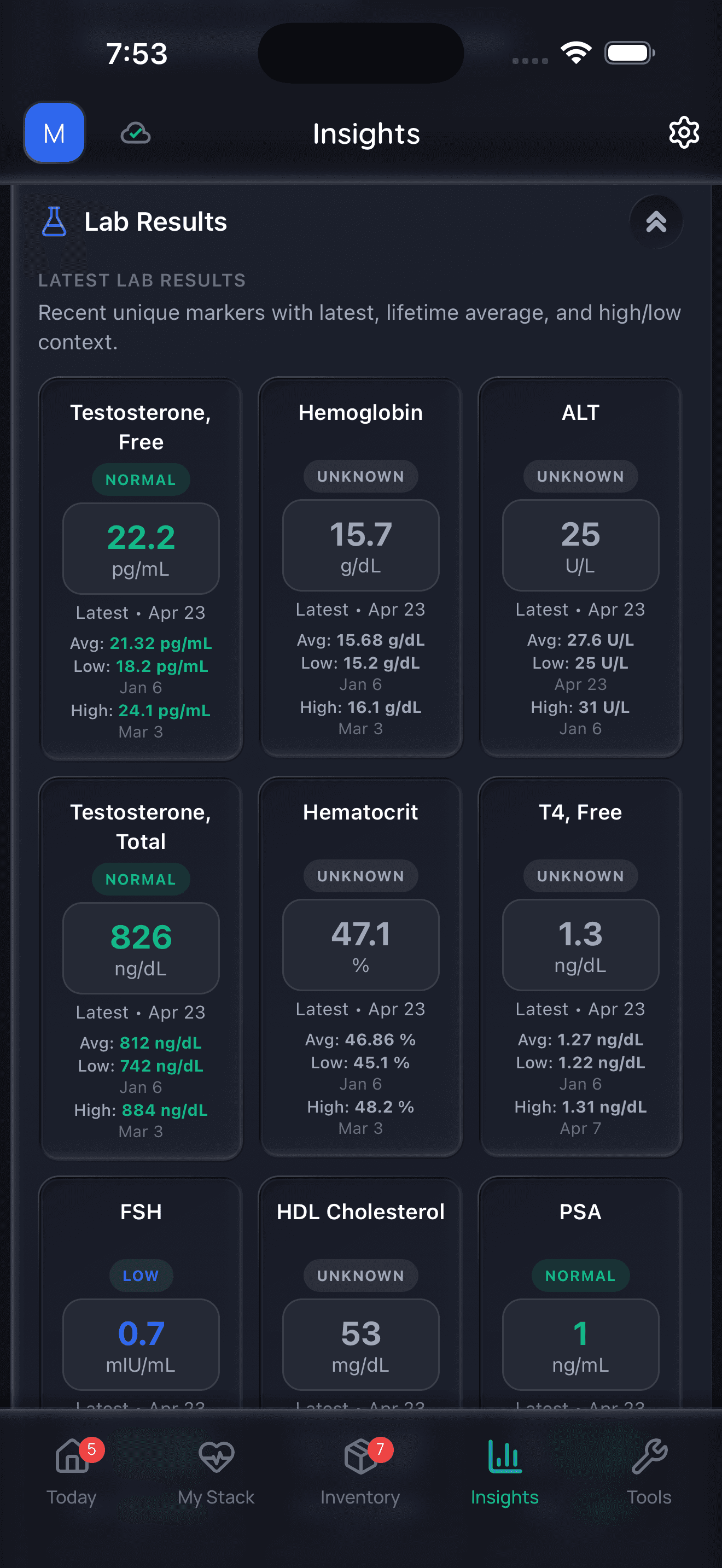
Doserly organizes data; it does not diagnose or interpret labs for you.
Side Effects & Safety Considerations
The Basics
MOTS-C is generally considered well-tolerated based on available preclinical data and the Phase 1 results from its analog CB4211. No serious adverse events have been reported in published literature. However, human safety data is limited, and long-term effects are unknown.
The most commonly reported issue in community use is injection-site reactions: burning, redness, welts, and lumps at the injection site that can last for hours. This is nearly universal when MOTS-C is reconstituted with standard bacteriostatic water. The community-identified solution is to use isotonic bacteriostatic water (containing sodium chloride) instead of plain bacteriostatic water. Standard BAC water is hypotonic, causing local cell lysis and tissue irritation. Isotonic reconstitution matches tissue osmolality and largely eliminates the reaction.
Some users report initial fatigue or energy "crashes" during the first few doses. This may reflect the metabolic shift taking place as cells adapt their fuel preference. Individuals with MTHFR gene variants affecting folate metabolism may be particularly susceptible to this effect, since MOTS-C directly inhibits the folate cycle as part of its mechanism of action. Supplementing with methylated B vitamins has been suggested as a potential mitigation strategy, though this is based on theoretical reasoning rather than clinical evidence.
MOTS-C should not be mixed in the same syringe with GLP-1 agonists (semaglutide, tirzepatide, retatrutide), as this causes precipitation.
The Science
Preclinical safety: Young healthy mice showed no adverse effects at doses up to 250 mg/kg/day for 7 days. The CB4211 analog demonstrated safety and tolerability in Phase 1a trials in healthy human adults over a 7-day period [3].
Injection-site reactions: The mast cell activation mechanism has been proposed as a contributor to injection-site reactions, consistent with histamine-mediated local responses. The isotonic reconstitution solution addresses the osmolality-driven component of the reaction [9].
Folate metabolism interaction: MOTS-C's primary mechanism involves inhibition of ATIC in the de novo purine biosynthesis pathway, which intersects with the folate-methionine cycle. Individuals with reduced MTHFR enzyme activity (C677T and A1298C polymorphisms) may experience exaggerated metabolic effects or adverse responses due to impaired folate cycling capacity [4].
Contraindications noted in preclinical literature:
- Type 1 diabetes (may affect insulin requirements; paradoxically, preclinical data also shows potential therapeutic benefit)
- Hypoglycemia risk with concurrent diabetes medications or AMPK activators (metformin)
- Pregnancy and breastfeeding (no safety data)
- Active malignancy (AMPK activation has complex, context-dependent effects on tumor biology) [3]
Drug interactions: Potential interaction with other AMPK-activating compounds (metformin, berberine). May interact with serotonergic medications; community reports flag SSRI interaction concerns, though no published pharmacological data confirms this [9].
Dosing Protocols
The Basics
Dosing for MOTS-C is not standardized, and sources vary widely in their recommendations. This reflects the absence of completed human clinical trials establishing optimal doses. What follows is a summary of the ranges and approaches reported across available sources, not a recommendation.
Two general approaches appear in the literature and community:
Daily low-dose approach: Starting at approximately 200 mcg per day and titrating upward over several weeks, reaching 500-1000 mcg per day by weeks 5-10. This approach is based on human equivalent dose calculations from mouse studies and aims for steady-state metabolic effects.
Intermittent higher-dose approach: Doses of 5-10 mg administered 1 to 3 times per week, for cycles of 4 to 6 weeks followed by 2 to 4 weeks off. This approach comes from practitioner protocols and community experience. Proponents suggest that MOTS-C's acute signaling mechanism favors pulsed rather than continuous exposure.
A third perspective, from one community source, recommends starting at 0.5-1 mg per day and notes that the peptide's short half-life (roughly 4 hours) favors smaller, more frequent administrations over large infrequent doses. This source argues that steady-state levels from daily low-dose administration will outperform weekly boluses for most goals, while acknowledging that higher intermittent dosing may be more appropriate for endurance-focused applications.
Most sources agree on cycling rather than continuous use, with on-periods of 4 to 12 weeks and off-periods of 2 to 4 weeks. Morning dosing, particularly 60-90 minutes before aerobic exercise, aligns with the peptide's exercise-mimetic mechanism and natural circadian MOTS-C production patterns.
Higher doses may not produce proportionally better metabolic effects, and at least one community source notes that excessive AMPK activation from high doses can work against muscle-building (anabolic) goals. Conservative dosing is generally recommended for those pursuing body composition goals that include muscle retention.
The Science
No human dose-finding study has been completed for MOTS-C. Available dosing data derives from:
Preclinical dosing (mouse): Most published studies used 0.5-15 mg/kg/day intraperitoneally (IP). Key studies: Lee et al. 2015 used 5 mg/kg/day IP; Reynolds et al. 2021 used 15 mg/kg acute dose; NOD diabetes study used 0.5 mg/kg/day IP for 18 weeks [1][5][8].
Human equivalent dose (HED) calculation: Using FDA body surface area normalization (mouse Km = 3, human Km = 37), the conversion factor is 0.081. Applying this to the 0.5-15 mg/kg mouse range with subcutaneous bioavailability correction (estimated 60-80% for peptides) yields a theoretical HED range of approximately 0.05-5 mg/kg, with conservative starting doses of 0.5-1 mg/day for a 70 kg adult [3].
CB4211 analog data: Phase 1a/1b used daily dosing for 7-28 days, establishing short-term safety. This provides the closest human dosing precedent, though CB4211 is a modified analog with different pharmacokinetic properties [3].
Practitioner-reported protocols:
Source
Seeds
- Dose
- 5 mg
- Frequency
- 3x/week, then 1x/week
- Duration
- 4-6 weeks
Source
Greenfield
- Dose
- 10 mg
- Frequency
- 1x weekly
- Duration
- Up to 10 weeks
Source
Kominiarek
- Dose
- 10 mg
- Frequency
- 1x weekly
- Duration
- 4 weeks
Source
Community consensus
- Dose
- 2-5 mg
- Frequency
- Every 3rd day to weekly
- Duration
- Variable
Source
Daily titration protocol
- Dose
- 200-1000 mcg
- Frequency
- Daily
- Duration
- 8-12 weeks
What to Expect
MOTS-C does not produce dramatic overnight changes in the way that appetite-suppressing GLP-1 agonists or pain-relieving peptides like BPC-157 might. Its effects are metabolic and cumulative, building over weeks as mitochondrial adaptations take hold. The timeline below reflects a synthesis of available preclinical data and community reports.
Week 1-2: Initial signals. Some users report energy changes within hours of the first dose, particularly if taken before morning exercise. This is the acute AMPK activation effect. Others notice nothing initially, or experience mild fatigue as metabolic fuel preferences shift. Injection-site reactions are typically most noticeable during this period as the body adjusts (or until reconstitution approach is optimized with isotonic BAC water).
Week 3-4: Metabolic adaptation. This is when the accumulated signaling begins to produce noticeable changes for most users. Improved exercise tolerance, steadier energy between meals, and potentially subtle shifts in body composition. AMPK-driven mitochondrial biogenesis is underway but not yet at peak effect.
Week 5-8: Peak effects. By this point, new mitochondria have been built and metabolic flexibility should be measurably improved. Preclinical data suggests insulin sensitivity improvements are well-established by this timeframe. Users who respond to MOTS-C typically report their strongest effects during weeks 5 through 8 of a cycle.
Post-cycle: Exercise-induced MOTS-C elevations persist for 4-6 weeks after training cessation in published data [5]. Some community users report that benefits gradually diminish over the off-cycle period, while others maintain improvements, particularly if they continue regular exercise (which produces endogenous MOTS-C). Body composition changes may reverse more quickly if the exercise and dietary habits that complement MOTS-C are not maintained.
Who responds best: Community and practitioner consensus suggests MOTS-C produces the most noticeable effects in metabolically compromised individuals, older adults with declining mitochondrial function, sedentary individuals, and those experiencing GLP-1-induced fatigue. Those who are already lean and metabolically optimized through regular exercise may experience minimal subjective benefit, as their endogenous MOTS-C production is already elevated.
Interaction Compatibility
Good With (Synergistic)
- SS-31 (Elamipretide): Complementary mitochondrial support. SS-31 repairs mitochondrial membrane structure (the hardware); MOTS-C activates metabolic reprogramming (the software). Together they form the core of the "Mito Stack." Separate by 4-6 hours or alternate days, as both affect mitochondrial signaling through different mechanisms.
- NAD+: Essential cofactor for the metabolic pathways MOTS-C activates. Beta-oxidation, the electron transport chain, and sirtuin enzymes all consume NAD+. Injectable NAD+ (IM or IV) provides rapid bioavailability that can be timed with MOTS-C dosing.
- 5-Amino-1MQ: NAD+ preservation in adipose tissue. Complements MOTS-C's fat oxidation effects by maintaining the cofactor supply needed for metabolic processes.
- Semaglutide / Tirzepatide / Retatrutide: MOTS-C may help address the fatigue common with GLP-1 agonists by building mitochondrial capacity to handle increased fat oxidation demands. Do NOT mix in the same syringe.
- Tesamorelin: GH-axis support for body recomposition alongside MOTS-C's metabolic effects.
- L-Carnitine: Transports mobilized fatty acids into mitochondria for oxidation, complementing MOTS-C's role in programming mitochondria to prefer fat as fuel.
- Humanin: Fellow mitochondrial-derived peptide with cytoprotective properties. Different mechanism (anti-apoptotic) may complement MOTS-C's metabolic effects.
Not Good With (Exercise Caution)
- Metformin: Both activate AMPK. Concurrent use may cause excessive AMPK activation, increasing risk of hypoglycemia or lactic acidosis. Monitor glucose closely and consult a healthcare provider.
- Insulin and sulfonylureas: MOTS-C improves glucose uptake through insulin-independent pathways. Combined with insulin-increasing medications, this could cause hypoglycemia.
- High-dose growth hormone secretagogues in anabolic contexts: High AMPK activation from MOTS-C may counteract the anabolic (muscle-building) effects of growth hormone signaling through mTOR suppression. Consider timing separation or lower MOTS-C doses when prioritizing muscle growth.
Administration Guide
MOTS-C is administered via subcutaneous injection. The following outlines the general materials, preparation considerations, and timing approaches reported in available sources.
Materials typically required:
- MOTS-C lyophilized powder (commonly available in 5 mg or 10 mg vials)
- Isotonic bacteriostatic water (with 0.9% sodium chloride), strongly recommended over plain bacteriostatic water to minimize injection-site reactions
- U-100 insulin syringes (29-31 gauge, 1/2" needle)
- Alcohol swabs
- Sharps disposal container
Reconstitution considerations: Sources consistently recommend reconstituting with isotonic bacteriostatic water rather than standard bacteriostatic water. The hypotonic nature of plain BAC water causes local cell lysis and tissue irritation, producing the burning, welts, and redness that are nearly universally reported with standard reconstitution. Isotonic BAC water (containing sodium chloride to match tissue osmolality) largely eliminates this issue.
Common reconstitution volumes:
- 5 mg vial: 3.0 mL BAC water yields ~1.67 mg/mL
- 10 mg vial: 3.0 mL BAC water yields ~3.33 mg/mL
Timing considerations: Morning administration is most commonly recommended, ideally 60-90 minutes before aerobic exercise when possible. This timing aligns with the peptide's exercise-mimetic mechanism and allows the acute AMPK activation to coincide with physical activity. Some sources suggest fasted administration may enhance effects through synergy with the fasting-induced AMPK pathway.
For twice-daily protocols (splitting a daily dose), morning and early afternoon administrations are suggested, taking advantage of the short half-life to maintain more consistent signaling throughout the day.
Post-administration care: Monitor for injection-site reactions, particularly during the first week. If welts or burning occur, switching to isotonic BAC water typically resolves the issue. Track any changes in energy levels, blood glucose (if monitoring), and general wellbeing. Report any concerning symptoms to a healthcare provider.
Supplies & Planning
Peptide vials: MOTS-C is commonly available in 5 mg and 10 mg vial sizes. The number of vials needed depends on the chosen protocol and dose level. Consult with a healthcare provider to determine appropriate quantities based on individual circumstances.
Reconstitution solution: Isotonic bacteriostatic water (with 0.9% sodium chloride) is strongly recommended. Standard BAC water is an alternative but is associated with significant injection-site reactions. Common brands include Hospira for standard BAC water; isotonic formulations may require sourcing from specialty suppliers.
Syringes: U-100 insulin syringes (1 mL capacity, 29-31 gauge, 1/2" length). For very small volume injections (under 10 units / 0.10 mL), consider 30-unit or 50-unit insulin syringes for improved measurement accuracy.
Alcohol swabs: Two per injection session (one for vial stopper, one for injection site).
Sharps container: Required for safe disposal of used needles and syringes.
Storage supplies: Refrigerator space for reconstituted vials. Freezer space (-20°C or below) for long-term storage of lyophilized powder.
For specific reconstitution volumes and unit calculations based on your vial size and target dose, use the reconstitution calculator.
Storage & Handling
Lyophilized (powder) form:
- Optimal: -20°C (-4°F) or below, in dark, dry conditions
- Short-term: Refrigeration at 2-8°C is acceptable for weeks to months
- Room temperature: Acceptable only for brief periods (days); not recommended for extended storage
- Include desiccant packets to minimize moisture exposure
- Allow vials to reach room temperature before opening to prevent condensation
Reconstituted (liquid) form:
- Refrigerate at 2-8°C immediately after reconstitution
- Use within 7 days for optimal potency; one source suggests approximately 25% activity loss after 24 hours at 4°C [9]
- Do not freeze reconstituted solutions
- Protect from light (wrap vials in foil or use opaque containers)
- Mark reconstitution date on each vial
- Inspect for clarity before each use; discard if cloudy, discolored, or particulate matter is visible
Handling best practices:
- Use aseptic technique: swab vial stopper with alcohol, use sterile needles for each draw
- Never reuse needles or syringes
- When reconstituting, inject water slowly against the vial wall to minimize foaming
- Gently swirl or roll the vial to dissolve; never shake vigorously
- Avoid repeated freeze-thaw cycles for lyophilized powder; if long-term storage of reconstituted peptide is needed, prepare single-use aliquots
Lifestyle Factors
MOTS-C works synergistically with the same lifestyle factors that promote endogenous MOTS-C production. Because the peptide mimics exercise-induced metabolic signaling, the lifestyle choices that complement exercise also complement MOTS-C supplementation.
Exercise: Both resistance training and aerobic exercise are recommended during a MOTS-C cycle. Aerobic exercise in particular synergizes with MOTS-C's mechanism, as both activate AMPK and promote mitochondrial biogenesis through PGC-1alpha. Zone-2 cardio (moderate-intensity, conversational pace) is frequently cited as the ideal complement, as it preferentially engages the aerobic energy systems that MOTS-C is designed to enhance. Timing MOTS-C 60-90 minutes before cardio may maximize the synergistic effect.
Nutrition: A high-protein, balanced diet supports the metabolic shifts MOTS-C promotes. Intermittent fasting or caloric restriction may amplify effects through complementary AMPK activation. Adequate protein intake is particularly important for preserving lean mass during periods of enhanced fat oxidation.
Sleep: 7-9 hours of quality sleep supports mitochondrial repair, ATP production, and the systemic metabolic restoration processes that MOTS-C initiates during waking hours. Poor sleep directly impairs mitochondrial function and may blunt the peptide's effects.
Supplementation considerations: Given MOTS-C's inhibition of the folate cycle, individuals with MTHFR variants or suboptimal B-vitamin status may benefit from methylated B-vitamin supplementation (methylfolate, methylcobalamin) during a MOTS-C cycle. NAD+ precursors (NMN, NR) or injectable NAD+ support the cofactor demands of the metabolic pathways MOTS-C activates.
Stress management: Chronic psychological stress impairs mitochondrial function through sustained cortisol elevation. Stress management practices support the cellular environment MOTS-C is designed to optimize.
The lifestyle factors above, nutrition, exercise, sleep, stress management, are not just nice-to-haves alongside a peptide protocol. They're force multipliers. Doserly lets you track these inputs alongside your compounds, building a complete picture of what your body is receiving and how it's responding.
When everything lives in one dashboard, patterns emerge. You can see whether training days correlate with better biomarker trends, whether your sleep scores predict next-day recovery quality, or whether stress spikes derail your progress in measurable ways. This kind of integrated tracking turns the lifestyle recommendations in this section from abstract advice into actionable, personalized insight.
Keep sensitive protocol records in a purpose-built app.
Doserly is designed for private health tracking with structured records, offline-ready workflows, and exportable history when you need it.
Privacy
Health records

Privacy controls help you manage records; keep clinical records where required.
Regulatory Status & Research Classification
United States (FDA): MOTS-C is not FDA-approved for any indication. It is classified as a research compound. No NDA or IND has been filed for MOTS-C itself. The analog CB4211 (developed by CohBar Inc.) had an active IND and completed Phase 1a/1b trials (NCT03998514) for non-alcoholic fatty liver disease before development was discontinued due to formulation challenges [3]. MOTS-C is available through research peptide suppliers and select compounding pharmacies. Its endogenous, mitochondrial DNA-encoded nature makes it non-patentable, which creates a structural barrier to pharmaceutical development: no commercial entity can secure patent protection to recoup the investment required for Phase 3 trials.
Canada (Health Canada): Not approved. No DIN or NPN. Available through research channels.
United Kingdom (MHRA): Not approved. Not classified as a medicine. Available through research suppliers.
Australia (TGA): Not approved. No scheduling determination. Available through research channels.
European Union (EMA): No marketing authorization. Available through research channels.
WADA Status: As of January 1, 2025, MOTS-C is classified as prohibited under category S4 (Hormone and Metabolic Modulators). Athletes subject to drug testing should avoid MOTS-C [19].
Active clinical trials: No active therapeutic trials for MOTS-C as of 2026. The CB4211 Phase 1a/1b trial (NCT03998514) is the most recent human clinical data point, completed in 2021.
Regulatory status changes frequently. Always verify the current legal status of any compound in your specific country or jurisdiction before making any decisions.
FAQ
What is MOTS-C?
MOTS-C is a 16-amino-acid peptide encoded in mitochondrial DNA that functions as a metabolic signaling molecule. It belongs to a class called mitochondrial-derived peptides (MDPs). When cells detect metabolic stress or exercise, they release MOTS-C to coordinate adaptive metabolic changes including improved glucose handling, enhanced fat oxidation, and new mitochondria construction. It was first discovered in 2015 at the University of Southern California.
How does MOTS-C differ from other peptides?
Most peptides are encoded by nuclear DNA and work through receptor binding. MOTS-C is encoded by mitochondrial DNA and works primarily by inhibiting an enzyme in the folate cycle, causing buildup of a molecule (AICAR) that activates the AMPK metabolic pathway. This makes it mechanistically distinct from growth hormone secretagogues, GLP-1 agonists, or tissue repair peptides.
What dose ranges are reported in the available research?
Based on available sources, commonly reported ranges include 200-1000 mcg per day in daily titration protocols and 5-10 mg one to three times per week in intermittent protocols. No human dose-finding trial has been completed, and practitioner opinions vary substantially. Most sources recommend starting at the lower end and adjusting based on individual response in consultation with a healthcare professional.
Does MOTS-C replace exercise?
No. MOTS-C activates some of the same cellular pathways as exercise (primarily AMPK), but it does not replace the mechanical loading, cardiovascular conditioning, neurological adaptations, or psychological benefits of actual physical activity. It is described as an exercise mimetic in that it produces exercise-like metabolic signals, but it functions as a complement to training, not a substitute.
Why does MOTS-C burn at the injection site?
The burning and welts commonly reported with MOTS-C injections appear related to the reconstitution solution rather than the peptide itself. Standard bacteriostatic water is hypotonic (lower salt concentration than body tissues), causing local cell lysis and tissue irritation. Isotonic bacteriostatic water (with 0.9% sodium chloride) matches tissue osmolality and largely eliminates the reaction based on community reports.
Can MOTS-C be used with GLP-1 medications?
Based on available discussion, MOTS-C may help address the fatigue commonly experienced with GLP-1 agonists (semaglutide, tirzepatide, retatrutide) by building mitochondrial capacity to handle increased fat oxidation demands. However, the two should never be mixed in the same syringe, as this causes precipitation. They should be injected separately at different sites.
Is MOTS-C safe?
Published preclinical data and Phase 1 data from the CB4211 analog show no significant adverse signals. MOTS-C is endogenously produced by human mitochondria. However, long-term human safety data is not available, and it remains an investigational compound. Individuals should discuss potential risks with a qualified healthcare provider before making any decisions.
Does MOTS-C need to be cycled?
Most available protocols recommend cycling, typically 4-12 weeks on followed by 2-4 weeks off. This pattern is thought to preserve receptor responsiveness and mimics the natural fluctuation of endogenous MOTS-C, which rises with exercise and falls during rest. Some practitioners use lower-frequency dosing (once weekly) for longer durations as an alternative.
Sources & References
Discovery & Mechanism
[1] Lee C, Zeng J, Drew BG, et al. The mitochondrial-derived peptide MOTS-c promotes metabolic homeostasis and reduces obesity and insulin resistance. Cell Metabolism. 2015;21(3):443-454. DOI: 10.1016/j.cmet.2015.02.009. PubMed: 25738459
[2] Fuku N, Pareja-Galeano H, Zempo H, et al. The mitochondrial-derived peptide MOTS-c: a player in exceptional longevity? Aging Cell. 2015;14(6):921-927. DOI: 10.1111/acel.12389
[3] CohBar Inc. CB4211 Phase 1a/1b trial for NAFLD. ClinicalTrials.gov: NCT03998514. Results: Phase 1a demonstrated safety and tolerability in healthy adults.
Exercise & Physical Performance
[4] Kim KH, Son JM, Benayoun BA, Lee C. The mitochondrial-encoded peptide MOTS-c translocates to the nucleus to regulate nuclear gene expression in response to metabolic stress. Cell Metabolism. 2018;28(3):516-524. DOI: 10.1016/j.cmet.2018.06.008
[5] Reynolds JC, Lai RW, Woodhead JST, et al. MOTS-c is an exercise-induced mitochondrial-encoded regulator of age-dependent physical decline and muscle homeostasis. Nature Communications. 2021;12(1):470. DOI: 10.1038/s41467-020-20790-0. PubMed: 34473953
Reviews & Comprehensive Analysis
[6] Wan W, Zhang L, Lin Y, et al. Mitochondria-derived peptide MOTS-c: effects and mechanisms related to stress, metabolism and aging. Journal of Translational Medicine. 2023;21(1):36. DOI: 10.1186/s12967-023-03885-2
[7] MOTS-c improves intrinsic muscle mitochondrial bioenergetic health and efficiency in a PGC-1alpha/AMPK dependent manner. Science Direct. 2026.
Immune & Autoimmune
[8] D'Souza R, et al. MOTS-c functionally prevents metabolic disorders through regulatory T-cell modulation. Cell Reports. 2021. DOI: 10.1016/j.celrep.2021.109740
Metabolic & Obesity
[9] MOTS-C dosage protocol and practical administration guide. Lifestyle factors, storage, and reconstitution data compiled from preclinical references and practitioner protocols.
[10] Kong BS, Lee C, Cho YM. Mitochondrial-encoded peptide MOTS-c, diabetes, and aging-related diseases. Diabetes & Metabolism Journal. 2023;47(3):315-324.
Human Observational
[11] Du C, et al. MOTS-c and insulin sensitivity in obese adults. Journal of Investigative Medicine. 2018.
[12] Gao Y, et al. Circulating MOTS-c and coronary artery disease. European Review for Medical and Pharmacological Sciences. 2022.
Metabolic Protection
[13] Lu H, Wei M, Zhai Y, et al. MOTS-c peptide regulates adipose homeostasis to prevent ovariectomy-induced metabolic dysfunction. Journal of Molecular Medicine. 2019;97(4):473-485.
[14] Gao Y, Wei X, Wei P, et al. MOTS-c reduces myostatin and muscle atrophy signaling. American Journal of Physiology - Endocrinology and Metabolism. 2021;320(2):E295-E305. DOI: 10.1152/ajpendo.00275.2020
Cardiovascular
[15] Qin Q, et al. Higher baseline MOTS-c in elite athletes. Reviews in Cardiovascular Medicine. 2022.
[16] Li S, Wang M, Ma J, et al. MOTS-c and exercise restore cardiac function. Journal of Cellular and Molecular Medicine. 2022;26(5):1563-1572. DOI: 10.1111/jcmm.17551
Bone Health
[17] Yi X, Hu G, Yang Y, et al. Role of MOTS-c in the regulation of bone metabolism. Frontiers in Physiology. 2023.
Muscle Atrophy
[18] Kumagai H, Coelho AR, Wan J, et al. MOTS-c reduces myostatin and muscle atrophy signaling. American Journal of Physiology. 2021.
Regulatory
[19] WADA Prohibited List 2025. Category S4: Hormone and Metabolic Modulators. MOTS-C classified as prohibited effective January 1, 2025.
Related Peptide Guides
- SS-31 (Elamipretide) - Mitochondrial membrane stabilizer; pairs with MOTS-C in the "Mito Stack"
- NAD+ - Essential cofactor for MOTS-C-activated metabolic pathways
- 5-Amino-1MQ - NAD+ preservation in adipose tissue; supports fat oxidation
- Humanin - Fellow mitochondrial-derived peptide with cytoprotective properties
- Semaglutide - GLP-1 agonist; MOTS-C may address associated fatigue
- Tirzepatide - Dual-agonist GLP-1; MOTS-C supports mitochondrial demands
- Retatrutide - Triple-agonist with highest mitochondrial demand
- Tesamorelin - GH-axis support for body recomposition
- SLU-PP-332 - Exercise mimetic through ERR pathway (different mechanism)
- BAM15 - Mitochondrial uncoupler for metabolic optimization
- [Metformin / Berberine] - AMPK activators with potential interaction (not peptides; mentioned for awareness)
Need the reconstitution math for MOTS-C: Complete Research Guide?
Open the calculator with MOTS-C: Complete Research Guide prefilled to estimate concentration, draw volume, and related measurement math from the reconstitution details you already have.