
Vilon: Complete Research Guide
On this page
Quick Reference Card
Attribute
Also Known As
- Detail
- Vilon, KE, L-Lys-L-Glu, Lysylglutamic acid, Normophthal, Peptide KE, H-Lys-Glu-OH
Attribute
Administration
- Detail
- Subcutaneous injection (primary); nasal spray (reported in some protocols)
Attribute
Research Status
- Detail
- Research Compound; not FDA approved. Approved in Russia as immunomodulatory agent. Limited human clinical data.
Attribute
Typical Dose Range
- Detail
- 67-667 mcg daily during 5-day pulsed cycles
Attribute
Half-Life
- Detail
- Not formally characterized; ultra-short dipeptide suggests rapid clearance
Attribute
Cycle Length
- Detail
- 5 days on, 23 days off (4-week cycle); 2-4 cycles per course; courses repeated every 3-6 months
Attribute
Storage
- Detail
- Lyophilized: -20C or below. Reconstituted: 2-8C, use within 1 week.
Overview / What Is Vilon?
The Basics
Vilon is the shortest peptide known to have biological activity. It consists of just two amino acids, lysine and glutamic acid, making it a dipeptide with a molecular weight of roughly 275 daltons. Despite being remarkably small, Vilon has been the subject of decades of research, primarily out of Russian gerontology programs led by Professor Vladimir Khavinson at the St. Petersburg Institute of Bioregulation and Gerontology.
Vilon belongs to a class of compounds called peptide bioregulators, which are short-chain peptides derived from or modeled after naturally occurring regulatory molecules found in specific organs. Vilon is derived from the thymus, the gland behind your sternum where immune cells (particularly T-cells) mature. The thymus shrinks significantly with age, a process called thymic involution, and this decline is closely linked to the weakening of immune function that comes with aging.
The core idea behind Vilon is that it can help restore gene expression patterns that become silenced as cells age. Rather than forcing a dramatic drug-like response, it appears to gently "retune" the immune system and support cellular housekeeping processes that naturally decline over time.
The Science
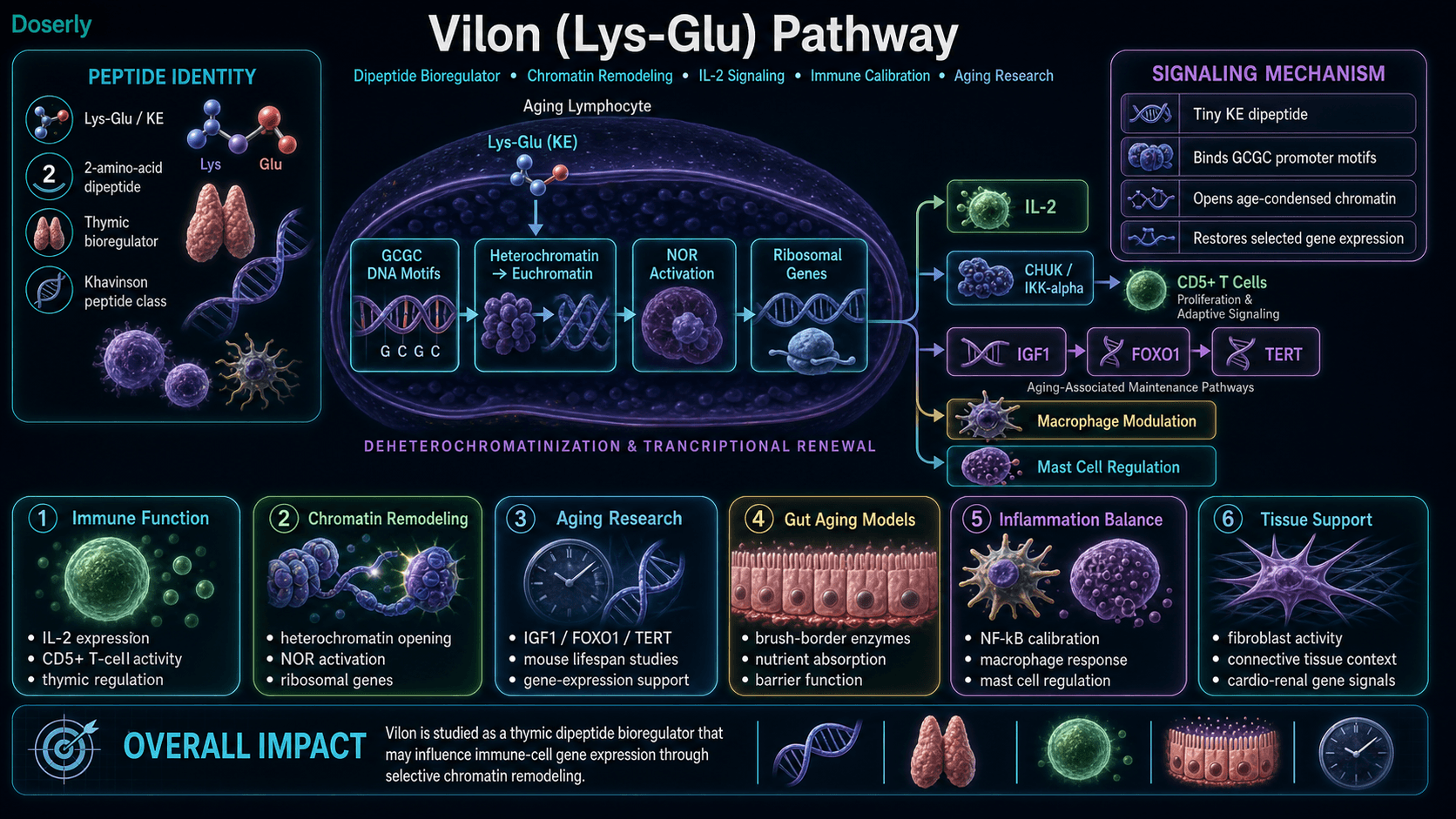
Vilon (L-Lys-L-Glu) is a synthetic dipeptide belonging to the Khavinson peptide bioregulator class, originally isolated from thymic tissue extracts. Its primary documented mechanism involves selective chromatin remodeling through deheterochromatinization, the process of converting transcriptionally silent heterochromatin to transcriptionally active euchromatin in aged cells [1][2].
Studies in human lymphocytes from elderly donors demonstrate that Vilon induces progressive activation of facultative heterochromatin, reactivates nucleolar organizer regions (NORs), and increases ribosomal gene expression, collectively supporting renewed protein synthesis capacity in aging immune cells [2]. Notably, Vilon selectively reactivates genes that have been silenced through age-related chromatin condensation without activating genes that would be inappropriate for the cell type, suggesting a tissue-specific regulatory mechanism rather than a broad epigenetic perturbation [1][3].
A key downstream effect is the upregulation of interleukin-2 (IL-2) gene expression in splenic lymphocytes, providing a direct mechanism for enhanced T-cell proliferation and activation [4]. Molecular studies indicate that the KE dipeptide binds directly to double-stranded DNA at GCGC sequences found in 642 gene promoters, with particular relevance to the CHUK gene encoding NF-kB signaling pathway components, as well as aging-associated genes including IGF1, FOXO1, TERT, and NFkB [5].
Molecular Identity
Attribute
Common Names
- Detail
- Vilon, KE, L-Lys-L-Glu, Lysylglutamic acid, Normophthal, H-Lys-Glu-OH, Lysyl glutamate, Peptide KE
Attribute
Amino Acid Sequence
- Detail
- Lys-Glu (2 amino acids)
Attribute
Molecular Formula
- Detail
- C11H21N3O5
Attribute
Molecular Weight
- Detail
- 275.3 Da
Attribute
CAS Number
- Detail
- 45234-02-4
Attribute
PubChem CID
- Detail
- 7010502
Attribute
Structural Class
- Detail
- Linear dipeptide; thymic bioregulator
Attribute
Charge Profile
- Detail
- One positively charged residue (lysine) + one negatively charged residue (glutamic acid); near-neutral net charge at physiological pH
Attribute
Isoelectric Point
- Detail
- Approximately 7.0-7.5
Attribute
Appearance
- Detail
- White to off-white crystalline powder
Attribute
Solubility
- Detail
- Highly soluble in aqueous solutions and standard biological buffers
Attribute
Salt Forms
- Detail
- Free base (H-Lys-Glu-OH), hydrochloride salt, acetate salt
Mechanism of Action
The Basics
As you age, your cells gradually "shut down" certain genes by tightly winding the DNA around proteins, making those genetic instructions inaccessible. Think of it like pages in a book being glued together: the information is still there, but your cells can no longer read it. This process is called chromatin condensation, and it contributes to declining immune function, slower healing, and reduced cellular maintenance with age.
Vilon works by gently un-gluing those pages. It helps open up the tightly wound DNA in aging cells, allowing the cell to once again read and use genes that had been silenced. This is particularly relevant in immune cells, where Vilon has been shown to boost the activity of IL-2, a critical signaling molecule that helps T-cells communicate and coordinate the immune response.
What makes Vilon unusual is that it appears to be selective. It does not randomly turn on genes across the board. Instead, it seems to specifically reactivate genes that were appropriately active in younger, healthier cells. In other words, it restores a more youthful gene expression pattern rather than creating chaos in the cell's genetic programming.
The Science
Vilon's mechanism centers on selective chromatin remodeling in aging cells. The dipeptide induces deheterochromatinization of facultative heterochromatin, converting transcriptionally silent regions to accessible euchromatin. This process reactivates nucleolar organizer regions (NORs) responsible for ribosomal RNA synthesis, effectively restoring the cell's protein production capacity [1][2].
At the molecular level, the KE dipeptide interacts directly with DNA, binding at GCGC sequences present in approximately 642 gene promoters [5]. This binding modulates transcription of several aging-associated genes:
- CHUK gene: Encodes IKK-alpha, a component of the NF-kB signaling pathway involved in inflammatory regulation [5]
- IGF1 and FOXO1: Involved in growth signaling and cellular stress resistance pathways [5]
- TERT: The telomerase reverse transcriptase gene, relevant to cellular longevity [5]
- NFkB: Master regulator of inflammatory and immune gene expression [5]
In immune tissue specifically, Vilon upregulates IL-2 gene expression in splenic lymphocytes [4], increases CD5+ T-cell proliferation in thymic cell cultures (CD5 marks both mature T-helper and cytotoxic CD8+ T-cells) [6], and modulates macrophage proliferative activity and inflammatory responses [7]. The combined effect is characterized as immunomodulatory rather than immunostimulatory: Vilon appears to calibrate the immune system toward appropriate responsiveness rather than simply amplifying immune activity [3].
Mast cell regulation has also been documented, with Vilon reducing inappropriate mast cell activation while preserving normal immune surveillance function, contributing to an anti-inflammatory profile across tissue types [3].
Pathway Visualization Image
Pharmacokinetics
The Basics
Formal pharmacokinetic data for Vilon is not available in the published literature. As a dipeptide with just two amino acids, Vilon is among the smallest peptide molecules studied. Its compact size (roughly 275 daltons) means it can cross cell membranes readily and is absorbed efficiently when administered subcutaneously.
The trade-off is that small peptides are generally broken down quickly by enzymes in the body. This likely gives Vilon a short presence in the bloodstream, which is one reason why some protocols use daily dosing during active cycle days. However, Vilon's effects may persist longer than its physical presence suggests, because it appears to work by triggering changes at the gene expression level rather than by occupying a receptor. Once a gene is "unlocked," the downstream effects can continue after the peptide itself has been cleared.
This distinction between how long the molecule is present and how long its effects last is important for understanding why a short pulsed protocol (5 days per month) may still produce meaningful results.
The Science
No formal pharmacokinetic parameters (Tmax, elimination half-life, AUC, clearance) have been published for Vilon. Given its dipeptide structure (MW 275.3 Da), rapid enzymatic degradation by ubiquitous peptidases is expected, suggesting a short plasma half-life likely measured in minutes rather than hours.
Key physicochemical properties relevant to pharmacokinetics:
Parameter
Molecular Weight
- Estimated Value
- 275.3 Da
Parameter
Charge at pH 7.4
- Estimated Value
- Near-neutral (lysine + glutamic acid)
Parameter
Solubility
- Estimated Value
- High in aqueous solutions
Parameter
Route
- Estimated Value
- Subcutaneous (primary); nasal spray (some protocols)
Parameter
Expected Bioavailability (SC)
- Estimated Value
- High (small dipeptide)
Parameter
Expected Half-Life
- Estimated Value
- Not characterized; likely minutes (based on dipeptide class)
The compound's balanced charge profile (one basic and one acidic residue) contributes to solubility and cellular compatibility. Its small size falls well below the 3 kDa threshold associated with superior subcutaneous absorption for peptides.
Research & Clinical Evidence
Immune Function and Thymic Regulation
The Basics
Vilon's strongest research profile is in immune function. Studies show it can boost the activity of key immune cells, particularly T-cells, which are the coordinators and soldiers of your adaptive immune system. In laboratory settings, Vilon increased the numbers and activity of CD5+ T-cells, a marker found on both helper T-cells (which coordinate immune responses) and cytotoxic T-cells (which directly attack threats).
What is particularly interesting is that Vilon does not simply "turn up the volume" on immunity. It appears to support a balanced immune response, simultaneously improving the body's ability to fight infections while reducing the tendency toward autoimmune overreaction. This regulatory quality distinguishes it from compounds that stimulate the immune system in a one-directional way.
The Science
In human and animal thymus cell cultures, Vilon demonstrates dose-dependent increases in CD5+ lymphocyte proliferation, a marker of both mature T-helper cells and cytotoxic CD8+ T-cells [6]. In splenocyte preparations, the dipeptide significantly upregulates IL-2 mRNA expression in a concentration- and time-dependent manner [4]. IL-2 is the primary autocrine/paracrine growth factor for T-cell expansion and a critical component of adaptive immune signaling.
Human macrophage studies show Vilon modulates proliferative activity and inflammatory responses, indicating effects beyond adaptive immunity into innate immune regulation [7]. In elderly patients with type I diabetes mellitus, Vilon administration improved immune status parameters alongside coagulation hemostasis optimization [8].
Longevity and Anti-Aging
The Basics
In mouse studies, Vilon administered chronically from mid-life increased lifespan. Treated mice showed greater physical activity, better endurance, and lower rates of spontaneous tumors. No adverse effects were noted even with long-term use.
One notable finding from the research is that earlier administration appears to produce stronger effects. Mice given Vilon at younger ages showed greater lifespan extension than those starting later in life. The researchers suggest this is because Vilon can protect cells from age-related silencing but cannot recover cells that have already been lost to apoptosis.
The Science
In female CBA mice, chronic subcutaneous Vilon administration initiated at mid-life increased mean lifespan, elevated physical activity and endurance, decreased basal body temperature, and reduced spontaneous tumor incidence, with no developmental adverse effects over the full course of treatment [9][10]. The magnitude of lifespan extension and the dose-response relationship suggest that early and sustained administration produces the greatest geroprotective effect.
Mechanistically, the longevity signal is attributed to the compound's chromatin remodeling activity: restoration of euchromatin proportions in aging cells reactivates repair and maintenance genes that progressive heterochromatinization silences with age [1][2]. Gene expression analysis reveals regulation of key aging-associated pathways including IGF1, FOXO1, TERT, and NFkB [5].
Gastrointestinal Function in Aging
The Basics
Research in aging rats shows that Vilon can improve digestive function by boosting the activity of enzymes in the intestinal lining. Older animals treated with Vilon showed increased activity of maltase, invertase, and alkaline phosphatase, enzymes that are essential for breaking down and absorbing nutrients. The peptide also improved the absorption of glucose and glycine in the small intestine, effectively narrowing the gap between young and old animals.
Additionally, Vilon appears to strengthen the intestinal barrier, reducing "leaky gut" in older animals. A healthy intestinal barrier is crucial for preventing unwanted substances from entering the bloodstream and for maintaining overall gut health.
The Science
In aged rats, Vilon increased brush-border enzyme activities (maltase, invertase, alkaline phosphatase) in both epithelial and subepithelial layers of the small intestine [11][12]. Studies measuring glucose and glycine absorption across various regions of the small intestine showed improved transport characteristics in Vilon-treated aged rats compared to untreated age-matched controls, with values approaching those of younger animals [11].
These findings suggest that Vilon's chromatin remodeling mechanism extends to intestinal epithelial cells, reactivating age-silenced genes involved in digestive enzyme production and nutrient transport machinery.
Cardiovascular and Renal Effects
The Basics
Vilon has shown effects on the cardiovascular system, though this area is less extensively studied. Research found that Vilon altered the expression of more than 36 genes in the heart. When combined with Epithalon (another bioregulator peptide), this number rose to 144 genes. In kidney models, Vilon reduced levels of transforming growth factor-beta, a molecule involved in scarring and fibrosis, and improved the integrity of small blood vessels.
In elderly patients with diabetes, Vilon helped optimize blood clotting by increasing natural anticoagulant levels (antithrombin III and protein C) while stimulating the breakdown of clots. This resulted in fewer clotting events in a population particularly vulnerable to them.
The Science
DNA microarray analysis of mouse cardiac tissue revealed that Vilon modulates the expression of 36+ genes, a number that increases to 144 genes when co-administered with Epithalon, suggesting significant transcriptional effects on the cardiovascular system [13]. In experimental chronic renal failure models, Vilon decreased transforming growth factor-beta1 (TGF-beta1) concentrations and reduced microvessel permeability, improving hemostasis during kidney failure [14]. In elderly patients with diabetes mellitus, Vilon administration optimized coagulation hemostasis by increasing antithrombin III and protein C levels while stimulating fibrinolysis [8].
Anti-Tumor Research
The Basics
Several animal studies suggest Vilon may help the body resist tumor development. In mice, chronic Vilon administration reduced the rate of spontaneous tumor formation. In a bladder cancer prevention study, rats treated with Vilon developed tumors at a rate of 56% compared to 75% in untreated controls. Vilon also showed the ability to slow the growth of existing tumors in some models by promoting cancer cell death (apoptosis) and disrupting tumor blood vessel formation.
However, the picture is not entirely straightforward. At least one study found that combining Vilon with platinum-based chemotherapy drugs was problematic rather than helpful. While Vilon may support cancer prevention through immune enhancement, its role as a treatment adjunct requires further research.
The Science
In female CBA mice, Vilon inhibited spontaneous tumor growth and extended lifespan [10]. In a chemically-induced bladder cancer model, Vilon reduced tumor incidence from 75% to 56% and decreased pre-cancerous changes [15]. In aged rats with transplanted sarcoma tumors, Vilon enhanced apoptosis, reduced tumor growth rate, and altered intratumoral vasculature [16].
A study in elderly colorectal cancer patients receiving surgery, radiation, and chemotherapy reported that adjunctive Vilon improved 2-year survival, reduced recurrence, and improved quality of life markers [17].
Biomarker Evidence Matrix
Category
Immune Function
- Evidence Strength
- 6/10
- Reported Effectiveness
- 7/10
- Summary
- Strong preclinical evidence for IL-2 upregulation and T-cell modulation; one human study in elderly diabetic patients. Community consistently reports immune support as primary perceived benefit.
Category
Longevity & Neuroprotection
- Evidence Strength
- 5/10
- Reported Effectiveness
- 6/10
- Summary
- Animal lifespan extension in CBA mice with reduced tumor incidence. Community discusses in context of anti-aging protocols. No human longevity data.
Category
Gut Health
- Evidence Strength
- 5/10
- Reported Effectiveness
- 5/10
- Summary
- Animal data showing improved brush-border enzymes and barrier function in aged rats. No direct human or community gut-specific reports.
Category
Recovery & Healing
- Evidence Strength
- 4/10
- Reported Effectiveness
- 5/10
- Summary
- Mechanistic data on fibroblast activation and connective tissue support. Limited community reports of healing benefits.
Category
Energy Levels
- Evidence Strength
- 2/10
- Reported Effectiveness
- 5/10
- Summary
- No direct preclinical evidence for energy outcomes. Mixed community reports: some note subtle energy improvements, others no change.
Category
Heart Health
- Evidence Strength
- 4/10
- Reported Effectiveness
- N/A
- Summary
- Gene expression changes in cardiac tissue (36+ genes). Improved hemostasis in renal and diabetic models. No community reports on cardiovascular outcomes.
Category
Skin Health
- Evidence Strength
- 3/10
- Reported Effectiveness
- 4/10
- Summary
- Mechanistic basis through fibroblast activation and collagen production. No direct skin-focused research or community reports.
Category
Sleep Quality
- Evidence Strength
- 1/10
- Reported Effectiveness
- 4/10
- Summary
- No preclinical evidence. Sparse community reports of modest sleep improvements.
Category
Stress Tolerance
- Evidence Strength
- 1/10
- Reported Effectiveness
- 4/10
- Summary
- No preclinical evidence. Sparse community reports of mild calming effects.
Category
Side Effect Burden
- Evidence Strength
- 6/10
- Reported Effectiveness
- 8/10
- Summary
- Preclinical studies report no adverse effects with long-term use. Community unanimously reports good tolerability.
Category
Inflammation
- Evidence Strength
- 5/10
- Reported Effectiveness
- N/A
- Summary
- Mast cell regulation, TGF-beta1 modulation, NF-kB pathway effects documented in preclinical models. No community reports specific to inflammation.
Note: Community data for Vilon is extremely limited (fewer than 15 distinct experience reports across all sources). Reported Effectiveness scores should be interpreted with low confidence.
Benefits & Potential Effects
The Basics
Vilon's reported benefits center on immune system support. Most people who explore Vilon are interested in it for one of three reasons: immune health maintenance as they age, general anti-aging support, or as part of a broader bioregulator peptide protocol targeting multiple body systems.
The immune benefits are the most tangible. Community members report that Vilon seems to help them get through cold and flu seasons more easily, and some immunocompromised individuals describe it as a well-tolerated option when stronger immune peptides prove too stimulating. These effects tend to be subtle and cumulative rather than immediate and dramatic.
Beyond immunity, Vilon has research backing for gut health in aging (improved enzyme activity and barrier function), cardiovascular support (gene expression changes in cardiac tissue, improved blood vessel integrity), and connective tissue maintenance (fibroblast activation and collagen support). These are areas where the research is promising but where community-reported experiences are minimal or absent.
One honest observation: Vilon is not a peptide that most people will "feel" working. Its effects operate at the level of gene expression and cellular function, which translates to gradual, systemic improvements rather than noticeable day-to-day changes.
The Science
The primary documented benefits of Vilon span multiple biological systems, unified by the compound's chromatin remodeling mechanism:
- Immunomodulation: IL-2 upregulation, CD5+ T-cell expansion, macrophage inflammatory response modulation, mast cell regulation [3][4][6][7]
- Geroprotection: Lifespan extension in CBA mice, reduced spontaneous tumor incidence, restored gene expression patterns in aging cells [9][10]
- Gastrointestinal restoration: Improved brush-border enzyme activities, enhanced nutrient absorption, strengthened intestinal barrier in aged subjects [11][12]
- Cardiovascular support: Cardiac gene expression modulation, TGF-beta1 reduction in renal models, hemostasis optimization in elderly diabetic patients [8][13][14]
- Connective tissue: Fibroblast activation and extracellular matrix component production support [3]
- Anti-tumor: Reduced tumor incidence, enhanced apoptosis in existing tumors, improved survival in one human adjunctive study [10][15][16][17]
Reading about potential benefits is the starting point. Knowing whether you're actually experiencing them is where real value begins. Doserly lets you track the specific health markers that matter for your protocol, from body composition and energy levels to sleep quality, mood, and recovery time, building a personal dataset that goes beyond subjective impressions.
The app's proactive monitoring doesn't wait for you to notice a problem. It surfaces patterns in your logged data that might suggest suboptimal timing, flags potential interactions with other items in your health stack, and helps you identify which benefits are tracking with what the research suggests and which aren't materializing. Think of it as a second set of eyes on your protocol, always watching the trends.
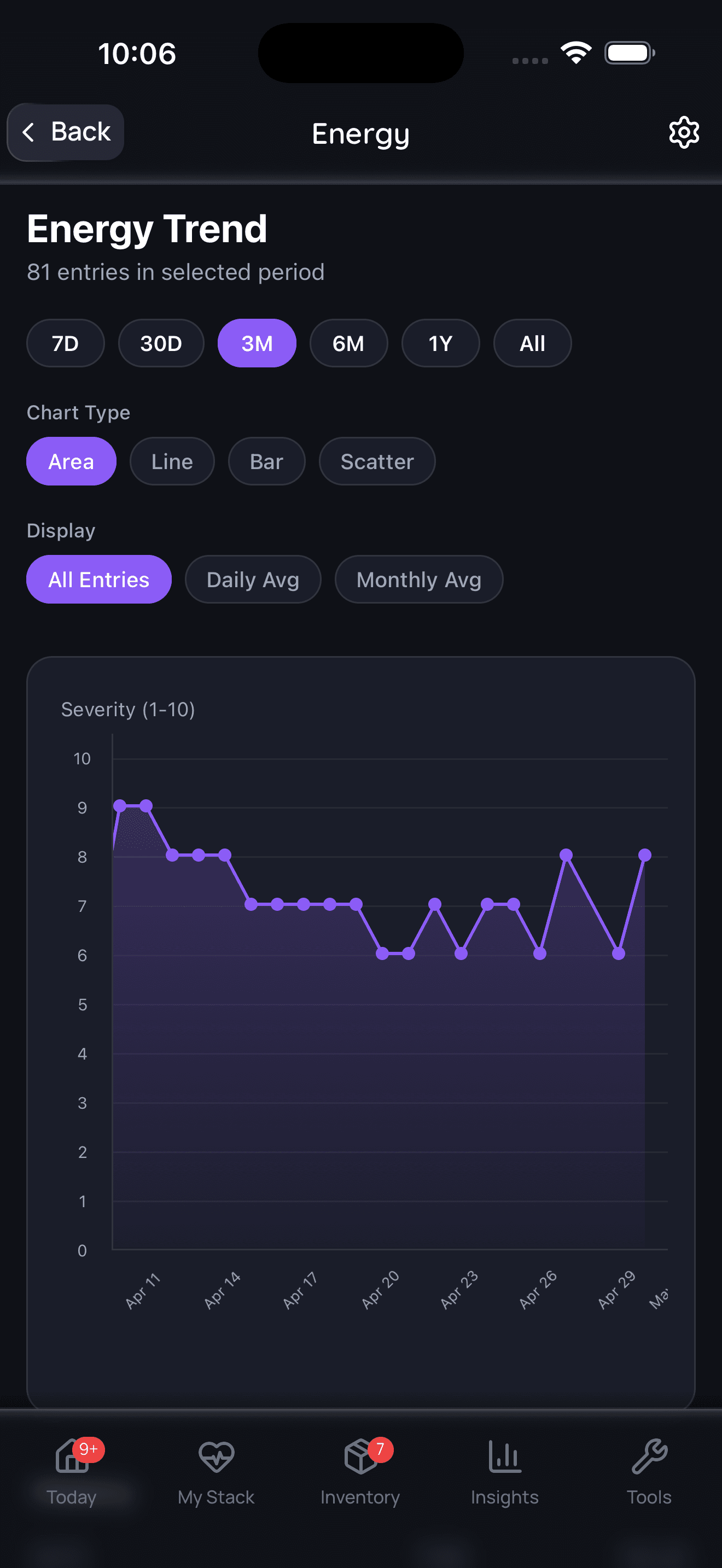
Capture changes while they are still fresh.
Log symptoms, energy, sleep, mood, and other observations alongside protocol events so patterns do not live only in memory.
Trend view
Symptom timeline
Symptom tracking is informational and should be interpreted with a qualified clinician.
Side Effects & Safety Considerations
The Basics
Vilon has a notably clean safety profile based on the available evidence. In animal studies involving long-term administration, no adverse developmental effects were observed. In human use, the reported side effects are limited to occasional mild injection-site reactions such as redness or itching, which is common with any subcutaneous injection.
One community member who found stronger immune peptides like Thymosin Alpha-1 and Thymogen to be "too much" specifically chose Vilon because it supports immune function "without being overly stimulating." This regulatory quality, where the compound calibrates rather than amplifies, appears to contribute to its tolerability.
There is one notable caution from the research: while Vilon has been shown to prevent tumor formation and inhibit tumor growth in several studies, one study suggested that combining Vilon with platinum-based chemotherapy could be counterproductive. Anyone with an active cancer diagnosis should approach Vilon with particular caution and only under medical supervision.
The Science
Preclinical safety data is favorable. Chronic subcutaneous Vilon administration in CBA mice produced no adverse developmental effects over the full experimental period [9]. In human clinical settings, Vilon has been used in elderly patients with diabetes mellitus and in elderly cancer patients without reported adverse events beyond mild injection-site reactions [8][17].
The immunomodulatory rather than immunostimulatory profile suggests lower risk of immune overactivation compared to compounds like Thymosin Alpha-1 or interferon-based therapies. Mast cell regulation contributes to reduced allergic and inflammatory reactivity.
Known cautions:
- Potential contraindication with platinum-based chemotherapy agents (one preclinical study) [18]
- Theoretical concern regarding any immunomodulatory compound in the setting of active malignancy, particularly hormone-sensitive cancers
- Limited human safety data; most safety evidence derives from animal models and Russian clinical programs
Dosing Protocols
The Basics
Vilon uses an unusual dosing approach that differs from most peptides. Rather than daily dosing over weeks or months, Vilon follows a pulsed protocol: 5 consecutive days of injections, then approximately 3 weeks off, repeated for 2 to 4 monthly cycles. This pulsed approach is analogized from related short peptide protocols in the Khavinson bioregulator class.
The first cycle uses a step-up approach, starting at a very low dose on Day 1 and gradually increasing each day. This allows the body to adjust to the compound and helps identify individual tolerance. By Cycle 2 and beyond, most protocols use a consistent dose throughout the 5-day pulse.
Sources consistently report a dose range of 67 to 667 mcg daily, with 333 to 667 mcg being the most commonly cited maintenance range for subsequent cycles.
The Science
Pulsed subcutaneous protocol (most commonly reported):
Phase
Cycle 1, Day 1
- Daily Dose
- 67 mcg
- Notes
- Starting dose
Phase
Cycle 1, Day 2
- Daily Dose
- 133 mcg
- Notes
- Step-up
Phase
Cycle 1, Day 3
- Daily Dose
- 200 mcg
- Notes
- Step-up
Phase
Cycle 1, Day 4
- Daily Dose
- 267 mcg
- Notes
- Step-up
Phase
Cycle 1, Day 5
- Daily Dose
- 333 mcg
- Notes
- Initial cycle target
Phase
Cycle 2+, Days 1-5
- Daily Dose
- 333-667 mcg
- Notes
- Maintenance range
- Schedule: 5 consecutive days per 4-week cycle
- Total cycles: 2-4 cycles per course
- Course frequency: Courses repeated every 3-6 months
- Administration: Subcutaneous injection, consistent timing daily, rotate injection sites
- Reconstitution: 20 mg vial + 3.0 mL bacteriostatic water = ~6.67 mg/mL
Some community members also report nasal spray administration at 250 mcg twice daily, though subcutaneous injection is the more widely documented route.
Consistency is the difference between a protocol that delivers results and one that wastes time and money. Doserly was built for exactly this: keeping you on track with the precision your protocol demands.
The built-in calculators handle the math you shouldn't be doing in your head. The reconstitution calculator tells you exactly how much bacteriostatic water to add for your target concentration. The dose calculator converts between units, milligrams, and syringe markings so you draw the right amount every time. The injection site heat map tracks where you've administered and when, helping you rotate sites systematically to reduce tissue damage, scarring, and absorption inconsistencies from overusing the same area. Pair that with smart reminders tuned to your protocol's timing requirements, and you build the kind of daily consistency that separates optimized protocols from haphazard ones.
Track injection timing, draw notes, and site rotation.
Doserly helps keep syringe-related notes, injection site history, reminders, and reconstitution context together for easier review.
Injection log
Site rotation
Injection logs support record-keeping; follow clinician instructions for administration.
What to Expect
Vilon is not a peptide that produces dramatic, overnight effects for most people. Community reports and the research literature both suggest a gradual, cumulative response pattern:
Cycle 1 (Days 1-5 and the following weeks):
Most users report little to nothing during the first cycle. The step-up titration is primarily about tolerability assessment. Some people note subtle improvements in general wellbeing or a slightly steadier energy baseline, but many report no perceptible change. This is consistent with the compound's mechanism: gene expression changes at the chromatin level take time to translate into measurable outcomes.
Cycles 2-3 (Weeks 5-12):
Users who continue report the most commonly noticed effects during this window: slightly fewer colds or quicker recovery from minor illnesses, a sense of greater resilience, and in some cases improved sleep quality and stress tolerance. One community member described the experience as "subtle, not dramatic... a slightly steadier baseline on good weeks."
Cycles 3-4 and beyond (Months 3-6+):
The intended benefits of Vilon, such as improved immune function, better digestive capacity, and anti-aging gene expression support, are not the kind of changes most people can feel day to day. They manifest over longer timescales and are best assessed through objective measures like immune panel bloodwork (lymphocyte subsets, CD4/CD8 ratio), digestive function markers, or general illness frequency over seasons.
After discontinuation:
One community report from a user with ME/CFS who experienced initial dramatic improvement with a VIP/Vilon combination noted that the effect was "not durable" and eventually faded. This aligns with the bioregulator concept: periodic courses are expected to maintain benefits rather than a single course providing permanent change.
What to track:
- Illness frequency and recovery time
- Energy levels and stress tolerance (daily subjective ratings)
- Sleep quality
- Any immune panel markers if available through your healthcare provider
The week-by-week expectations above are drawn from research and community reports, but your experience will be uniquely yours. Doserly's biomarker tracking transforms those general timelines into personal data points you can actually see and measure.
Log the specific markers relevant to this compound, whether that's pain levels, energy, sleep quality, body composition, recovery time, or mood, and watch your own trend lines emerge over weeks and months. Did your key markers start shifting in week three, like the research suggests? Is your experience tracking with what the community reports, or diverging? Over time, this creates something more valuable than any guide: an evidence-based picture of how your body responds to this specific compound, at your specific dose, within your specific health context.
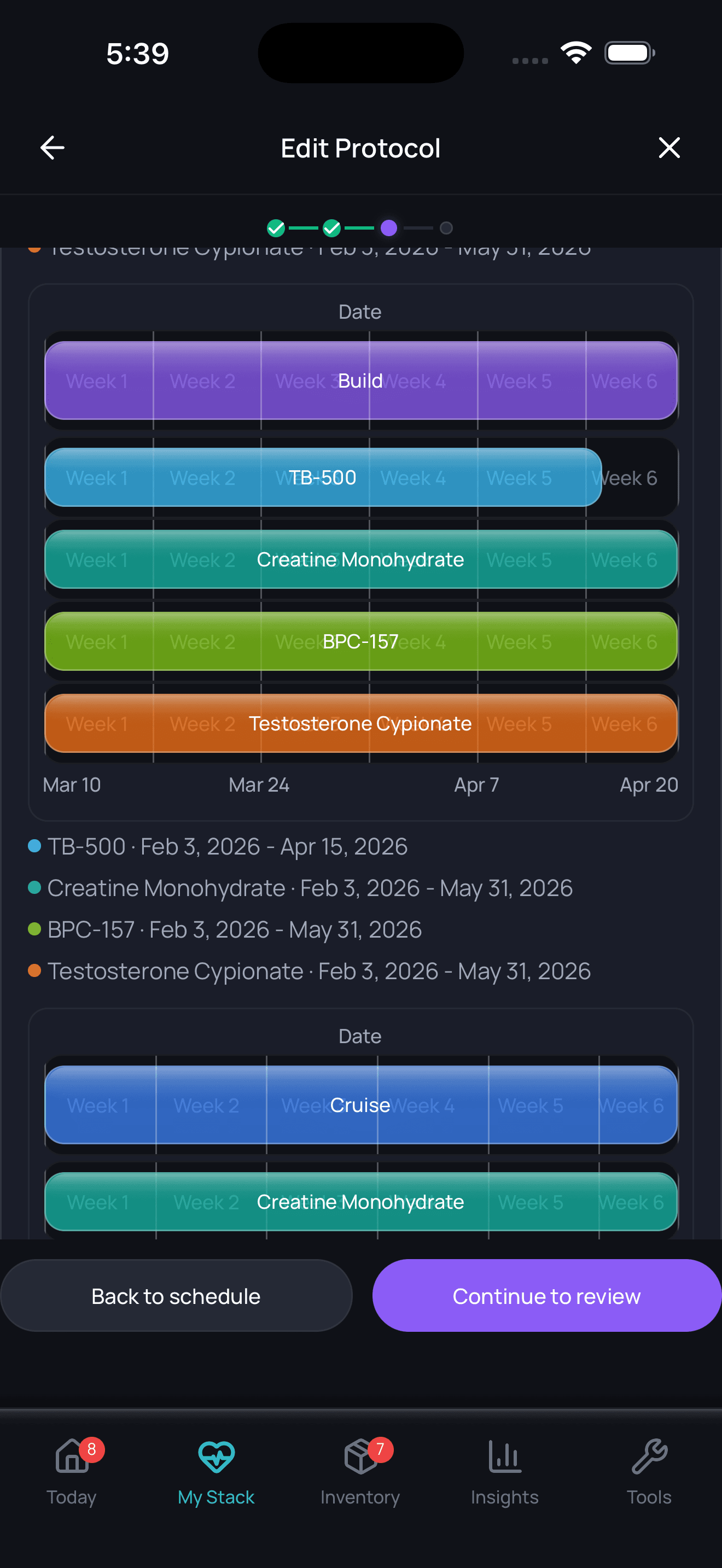
See where a dose, cycle, or change fits in time.
Doserly gives each protocol a timeline so dose changes, pauses, restarts, and observations are easier to compare later.
Timeline
Cycle history
Timeline tracking helps with recall; it is not a treatment recommendation.
Interaction Compatibility
Good With (Commonly Reported Synergistic Combinations)
- Epithalon - The most frequently cited pairing. Vilon (immune/chromatin remodeling) + Epithalon (telomerase activation/circadian support) addresses complementary hallmarks of aging. Research shows combined cardiac gene expression changes (144 genes vs. 36 for Vilon alone) [13].
- Thymosin Alpha-1 - Multi-pathway immune support. TA-1 provides broader thymic peptide activity while Vilon adds chromatin-level immune gene reactivation.
- BPC-157 and TB-500 - Tissue repair peptides that complement Vilon's connective tissue and immune support mechanisms. Community members report positive stacking experiences.
- Pinealon - Neurological bioregulator peptide; combined with Vilon for comprehensive Khavinson protocol addressing immune + neurological aging.
- Cartalax - Cartilage/connective tissue bioregulator; paired with Vilon for structural and immune system support.
- Crystagen - Another thymic bioregulator; some protocols combine for layered immune support.
Not Good With (Cautions)
- Platinum-based chemotherapy agents - One study found problematic rather than synergistic effects when combining Vilon with platinum-based chemotherapy [18]. Medical supervision essential.
- Active malignancy - While Vilon shows tumor-preventive properties, its immunomodulatory effects and potential for gene expression activation warrant caution in the setting of active cancer, particularly hormone-sensitive cancers.
Administration Guide
Materials required:
- Vilon lyophilized powder (typically 20 mg vials)
- Bacteriostatic water (10 mL bottles)
- U-100 insulin syringes (30- or 50-unit preferred for low-volume accuracy)
- Alcohol swabs
- Sharps disposal container
Recommended reconstitution solution:
Bacteriostatic water is the standard reconstitution solvent. For a 20 mg vial, adding 3.0 mL of bacteriostatic water produces a concentration of approximately 6.67 mg/mL. At this concentration, 1 unit on a U-100 insulin syringe equals approximately 66.7 mcg, making dose measurement straightforward for the titration protocol. For readers who need help with preparation math, the reconstitution calculator can assist.
Timing considerations:
Sources indicate any consistent daily time is acceptable. No specific fasting requirements have been documented for Vilon. Some protocols note morning administration on an empty stomach may align with circadian gene expression peaks and maximize absorption before proteolytic exposure from meals.
Post-administration care:
Monitor injection sites for redness, swelling, or itching. These reactions are generally mild and self-resolving. Rotate injection sites systematically (abdomen, thighs, upper arms) across the 5-day cycle to minimize local irritation.
Supplies & Planning
Peptide vials:
Vilon is typically supplied as 20 mg lyophilized powder per vial. A single 20 mg vial is generally sufficient for 2-4 complete cycles (10-20 injection days) at typical maintenance doses of 333-667 mcg per day.
Syringes:
U-100 insulin syringes, preferably 30-unit or 50-unit capacity for improved readability at the low injection volumes used with Vilon (typically 0.01-0.10 mL per injection).
Reconstitution solution:
Bacteriostatic water (0.9% benzyl alcohol preserved). Use 3.0 mL per 20 mg vial. One 10 mL bottle of bacteriostatic water is sufficient for multiple vials.
Alcohol swabs:
Two per injection day (one for vial stopper, one for injection site). A 100-count box covers multiple complete courses.
Storage supplies:
Appropriate refrigeration for reconstituted solution. Consider single-use aliquot vials if extending reconstituted solution beyond one week.
Specific quantities depend on individual dosing decisions made in consultation with a healthcare provider. The reconstitution calculator can help with preparation planning.
Storage & Handling
Lyophilized (powder) form:
- Short-term: -20C (-4F) in a dry, dark location
- Long-term: -80C (-112F) for maximum stability
- Allow vials to reach room temperature before opening to prevent condensation uptake
- Keep in original sealed packaging with desiccant to minimize moisture exposure
Reconstituted (liquid) form:
- Refrigerate immediately at 2-8C (35.6-46.4F)
- Use within approximately 1 week for optimal stability
- For longer storage, prepare single-use aliquots and freeze; thaw each aliquot only once
- Do not freeze reconstituted solution in the original vial (repeated freeze-thaw degrades peptides)
- Protect from light; wrap vials in foil or store in opaque containers
Handling best practices:
- Inject reconstitution solution slowly down the vial wall to avoid foaming
- Gently swirl or roll to dissolve; do not shake
- Inspect reconstituted solution before each use: should be clear and colorless with no particles or cloudiness
- Use aseptic technique throughout (alcohol swab vial stopper, sterile syringe per use)
- Label reconstituted vials with date and concentration
Lifestyle Factors
Diet: Follow a nutrient-dense, balanced diet rich in protein and micronutrients to support immune function and the cellular repair processes Vilon targets. Adequate zinc, vitamin D, and vitamin C are particularly relevant for immune health. Antioxidant-rich foods support the cellular environment in which Vilon's gene expression effects occur.
Exercise: Regular moderate physical activity promotes systemic circulation, facilitating delivery of the dipeptide to target tissues. Exercise also independently supports thymic health and immune function. Avoid extreme overtraining, which can suppress immune function and potentially counteract Vilon's immunomodulatory effects.
Sleep: Prioritize 7-9 hours of quality sleep per night. Sleep is when the body performs much of its immune surveillance and cellular repair. Poor sleep can accelerate thymic involution and impair the very processes Vilon aims to support.
Stress management: Chronic elevated cortisol can drive premature thymic involution and suppress immune function. Consistent stress management practices (meditation, breathwork, adequate recovery time) help maintain the thymic environment that Vilon targets.
Monitoring: Consider baseline and periodic immune panel bloodwork (complete blood count with differential, lymphocyte subsets, CD4/CD8 ratio) to objectively assess immune function changes over time. These markers provide more reliable feedback than subjective assessment for a compound with subtle, systemic effects.
Regulatory Status & Research Classification
United States (FDA):
Vilon is not approved by the FDA for any indication. It is available only as a research compound through specialty peptide vendors. No Investigational New Drug (IND) applications or registered clinical trials for Vilon appear in ClinicalTrials.gov as of 2026.
Russia:
Vilon has been approved and used clinically as an immunomodulatory agent. It is included in combination products marketed for immune support. The primary research program was conducted at the St. Petersburg Institute of Bioregulation and Gerontology under Professor Vladimir Khavinson.
European Union (EMA):
Not approved as a pharmaceutical. Available as a research peptide.
Canada (Health Canada), United Kingdom (MHRA), Australia (TGA):
No specific regulatory status identified. Not approved for therapeutic use in any of these jurisdictions.
WADA status:
No specific WADA classification identified for Vilon.
Active clinical trials:
No registered clinical trials identified in Western clinical trial databases as of 2026. The published research base consists primarily of preclinical studies and clinical work from Russian institutions.
Regulatory status changes frequently. Always verify the current legal status of any compound in your specific country or jurisdiction before making any decisions.
FAQ
What is Vilon?
Vilon is a synthetic dipeptide composed of lysine and glutamic acid (Lys-Glu). It is the shortest known peptide with demonstrated biological activity. Developed by Professor Vladimir Khavinson's research group in Russia, it is classified as a thymic bioregulator that has been studied for immune modulation, anti-aging effects, and cellular gene expression regulation.
How does Vilon work?
Based on available research, Vilon appears to work primarily through chromatin remodeling. It helps "unlock" genes that become silenced as cells age by converting tightly packed heterochromatin back to transcriptionally active euchromatin. This process reactivates immune signaling pathways (particularly IL-2 expression) and supports cellular repair mechanisms.
Is Vilon the same as KE?
Yes. "KE" is the single-letter amino acid code for the Lys-Glu (lysine-glutamic acid) dipeptide that is Vilon. The names are used interchangeably in the bioregulator literature.
How is Vilon different from Epithalon?
Vilon (Lys-Glu) and Epithalon (Ala-Glu-Asp-Gly) are both Khavinson bioregulator peptides but target different pathways. Vilon focuses on immune function and chromatin remodeling, while Epithalon primarily activates telomerase and supports circadian rhythm function. They are often considered complementary in longevity-focused protocols.
Does Vilon increase lifespan?
In female CBA mice, chronic low-dose Vilon administration from mid-life extended lifespan and reduced spontaneous tumor formation. However, human longevity data is not available. The animal findings are promising but cannot be directly extrapolated to human outcomes.
What does Vilon feel like?
Based on community reports, most people describe Vilon's effects as subtle. Commonly cited observations include a slightly steadier energy baseline, fewer seasonal illnesses, and a general sense of resilience. Vilon is not a peptide that produces dramatic or immediate subjective effects for most users.
Is Vilon safe?
Preclinical data suggests a favorable safety profile, with no adverse effects noted even with long-term administration in animal models. In limited human use (elderly patients with diabetes, elderly cancer patients), no significant adverse events have been reported. However, human safety data remains limited, and Vilon should be used only under appropriate medical supervision.
Can Vilon be taken orally?
Some community protocols describe nasal spray and oral capsule administration. Research sources note that Vilon has "low oral bioavailability" in mice, suggesting subcutaneous injection is the more reliable route. Oral bioregulator capsule products are available in some markets (primarily Russia and Eastern Europe).
How often should Vilon cycles be repeated?
Based on available sources, commonly reported protocols involve 5-day pulsed cycles repeated monthly for 2-4 months, with entire courses repeated every 3-6 months. The periodic dosing approach aligns with the bioregulator philosophy that short courses can trigger lasting gene expression changes.
Sources & References
Clinical Studies
- Lezhava T, Monaselidze J, Kadotani T, Dvalishvili N, Buadze T. Anti-aging peptide bioregulators induce reactivation of chromatin. Georgian Med News. 2006;(133):111-115. PubMed
- Lezhava T, Khavinson V, Monaselidze J, et al. Bioregulator Vilon-induced reactivation of chromatin in cultured lymphocytes from old people. Biogerontology. 2004;5(2):73-79. PubMed
- Sevostianova NN, Linkova NS, Polyakova VO, et al. Immunomodulating effects of Vilon and its analogue in the culture of human and animal thymus cells. Bull Exp Biol Med. 2013;154(4):562-565. PubMed
- Kazakova TB, Barabanova SV, Khavinson VK, et al. In vitro effect of short peptides on expression of interleukin-2 gene in splenocytes. Bull Exp Biol Med. 2002;133(6):614-616. PubMed
- Khavinson VK, Linkova NS, Kvetnoy IM, et al. Short peptides modulate the effect of endonucleases of wheat seedling. Bull Exp Biol Med. 2013;154(6):800-803. (Gene expression and GCGC binding data)
- Sevostianova NN, et al. Immunomodulating effects of Vilon and its analogue in the culture of human and animal thymus cells. Bull Exp Biol Med. 2013;154(4):562-565. PubMed
- Avolio F, et al. Peptides regulating proliferative activity and inflammatory pathways in THP-1 macrophages. Int J Mol Sci. 2022. PubMed
- Kuznik BI, Isakova NV, Kliuchereva NN, Maleeva NV, Pinelis IS. Effect of vilon on the immunity status and coagulation hemostasis in patients of different age with diabetes mellitus. Adv Gerontol. 2007;20(2):106-115. PubMed
- Anisimov VN, Loktionov AS, Khavinson VK, Morozov VG. Effect of low molecular-weight factors of thymus and pineal gland on life span and spontaneous tumour development in female mice of different age. Mech Ageing Dev. 1989;49(3):245-257. PubMed
- Khavinson VK, Anisimov VN. A synthetic dipeptide vilon (L-Lys-L-Glu) inhibits growth of spontaneous tumors and increases life span of mice. Dokl Biol Sci. 2000;372:261-263. PubMed
Animal Studies
- Khavinson VK, Egorova VV, Timofeeva NM, Malinin VV, Gordova LA, Gromova LV. Effect of Vilon and Epithalon on glucose and glycine absorption in various regions of small intestine in aged rats. Bull Exp Biol Med. 2002;133(5):494-496. PubMed
- Khavinson VK, Timofeeva NM, Malinin VV, Gordova LA, Nikitina AA. Effect of vilon and epithalon on activity of enzymes in epithelial and subepithelial layers in small intestine of old rats. Bull Exp Biol Med. 2002;134(6). PubMed
- Anisimov SV, Bokheler KR, Khavinson VK, Anisimov VN. Studies of the effects of Vilon and Epithalon on gene expression in mouse heart using DNA microarray technology. Bull Exp Biol Med. 2002;133(3):293-299. PubMed
- Gavrisheva NA, Malinin VV, Ses TP, Kozlov KL, Panchenko AV, Titkov AY. Effect of peptide Vilon on the content of transforming growth factor-beta and permeability of microvessels during experimental chronic renal failure. Bull Exp Biol Med. 2005;139(1):24-26. PubMed
- Anisimov VN, Khavinson VK. The use of peptide bioregulators for cancer prevention: results of 35 years of research experience and perspectives. Vopr Onkol. 2009;55(3):291-304. PubMed
- Khavinson VK, et al. Effect of vilon on biological age and lifespan in mice. Bull Exp Biol Med. 2000;130(7):687-690. PubMed
- Clinical study of Vilon in elderly colorectal cancer patients. PubMed
- Barykina OP, Iuzhakov VV, Chalisova NI, Kvetnoĭ IM, Konovalov SS. Combined effect of vilon and cyclophosphane on tumor transplants and lymphoid tissue explants in mice and rats of various age. Adv Gerontol. 2003;12:128-131. PubMed
Related Peptide Guides
- Epithalon - Complementary bioregulator targeting telomerase activation and circadian support
- Thymosin Alpha-1 - Multi-pathway immune support peptide
- BPC-157 - Tissue repair and healing peptide
- TB-500 - Systemic cell migration and tissue repair
- Crystagen - Thymic bioregulator peptide
- Cartalax - Cartilage and connective tissue bioregulator
- Pinealon - Neurological bioregulator peptide
- FOXO4-DRI - Senolytic peptide for aging research
- Glutathione - Master antioxidant with immune support
- MOTS-C - Mitochondrial-derived peptide for metabolic health
- Humanin - Mitochondrial-derived cytoprotective peptide
Need the reconstitution math for Vilon: Complete Research Guide?
Open the calculator with Vilon: Complete Research Guide prefilled to estimate concentration, draw volume, and related measurement math from the reconstitution details you already have.