
Silicon: The Complete Supplement Guide
On this page
Quick Reference Card
Attribute
Common Name
- Detail
- Silicon
Attribute
Other Names / Aliases
- Detail
- Silica, Silicon Dioxide (SiO2), Orthosilicic Acid (OSA), Silicic Acid, Si
Attribute
Category
- Detail
- Trace Mineral
Attribute
Primary Forms & Variants
- Detail
- Orthosilicic acid (most bioavailable); Choline-stabilized orthosilicic acid (ch-OSA, most studied supplement form); Colloidal silica; Bamboo extract (up to 70% silica); Horsetail extract (Equisetum arvense, 5-8% silica); Silicon dioxide (food-grade); Monomethylsilanetriol (MMST)
Attribute
Typical Dose Range
- Detail
- 5-20 mg elemental silicon/day in supplement form; dietary intake averages 20-50 mg/day in Western populations
Attribute
RDA / AI / UL
- Detail
- No RDA, AI, or UL established by IOM (2001) or EFSA. Suggested adequate intake for bone benefit: ~25 mg Si/day (extrapolated from observational data). EFSA NOAEL-derived safe upper level: ~1,750 mg/day for 70 kg adult.
Attribute
Common Delivery Forms
- Detail
- Liquid drops, capsule, tablet, powder, gel
Attribute
Best Taken With / Without Food
- Detail
- Can be taken with or without food; liquid forms may be taken in water on an empty stomach for convenience
Attribute
Key Cofactors
- Detail
- Vitamin C (supports collagen synthesis); Calcium and Vitamin D3 (studied in combination for bone health); Collagen peptides (complementary connective tissue support)
Attribute
Storage Notes
- Detail
- Store in a cool, dry place away from moisture and direct sunlight. Liquid forms should be kept sealed. Standard shelf-stable supplement.
Overview
The Basics
Silicon is the second most abundant element in the Earth's crust after oxygen, and it is present in trace amounts throughout the human body. It is found at relatively high concentrations in connective tissues, including bone, skin, hair, nails, tendons, and blood vessel walls. Despite being everywhere around us (sand is largely silicon dioxide), silicon as a nutrient has been largely overlooked until relatively recently.
The interest in silicon supplementation centers on its proposed role in building and maintaining the body's structural framework. Think of silicon as a kind of architectural reinforcement for your connective tissues. It appears to be involved in the process of making collagen and in the formation of the "mortar" that holds your bones, skin, and other connective tissues together. When researchers restricted silicon in the diets of laboratory animals, the animals developed abnormalities in their bones, cartilage, and connective tissue [1][2].
Most people get silicon from their diet without thinking about it. Whole grains, bananas, green beans, beer, and mineral water are among the richest sources. The typical Western diet provides about 20 to 50 mg of silicon per day, with men generally consuming more than women due to higher beer and grain intake [3]. Whether most people get enough from diet alone, and whether supplementing provides additional benefits, remain open questions.
The Science
Silicon (Si, atomic number 14) is a metalloid element that occurs biologically almost exclusively in oxidized forms, primarily as silicon dioxide (SiO2, silica) and silicic acids. In biological systems, the most relevant form is orthosilicic acid (H4SiO4, also written Si(OH)4), a monomeric, water-soluble species that represents the primary bioavailable form of silicon for human absorption [1][4].
In the human body, silicon concentrations are highest in connective and mineralized tissues: the aorta, trachea, tendon, bone, epidermis, and the epicuticle of hair [1][5]. Serum silicon circulates almost exclusively as silicic acid in an unbound state (not protein-bound), at concentrations of approximately 21 micromol/L in healthy subjects [3]. Silicon concentrations in the body decrease with aging, a pattern that has led some researchers to hypothesize a link between declining silicon status and age-related deterioration of bone and connective tissue [5].
The biological essentiality of silicon for humans has not been definitively established. The Institute of Medicine (IOM) reviewed silicon in 2001 as part of the DRI report covering trace elements but concluded that the evidence was insufficient to establish a Dietary Reference Intake [6]. EFSA similarly has not established intake recommendations. Despite this, accumulating evidence from epidemiological data and animal models supports a functional role for silicon in collagen synthesis, glycosaminoglycan formation, and bone mineralization [1][2][3].
Chemical & Nutritional Identity
Property
Chemical Name
- Value
- Silicon
Property
Symbol
- Value
- Si
Property
Atomic Number
- Value
- 14
Property
Atomic Weight
- Value
- 28.086 g/mol
Property
CAS Number
- Value
- 7440-21-3 (elemental silicon)
Property
Category
- Value
- Trace mineral / Metalloid
Property
Bioavailable Form
- Value
- Orthosilicic acid, H4SiO4 (Si(OH)4)
Property
Silicon Dioxide Formula
- Value
- SiO2
Property
Silicon Dioxide CAS
- Value
- 7631-86-9
Property
RDA
- Value
- Not established
Property
AI
- Value
- Not established (suggested ~25 mg Si/day for bone, extrapolated)
Property
UL
- Value
- Not established (EFSA: no evidence of oral toxicity; NOAEL-derived safe limit ~1,750 mg/day)
Property
FDA Daily Value
- Value
- Not established
Property
IOM Position (2001)
- Value
- Reviewed but insufficient evidence for DRI
Property
EFSA Position
- Value
- No intake recommendations; unlikely that high dietary intake causes adverse effects
Common supplement forms and their characteristics:
- Choline-stabilized orthosilicic acid (ch-OSA): Most studied supplement form in clinical trials. Provides silicon as orthosilicic acid stabilized with choline chloride to prevent polymerization. Typical doses: 6-12 mg elemental Si/day.
- Bamboo extract (Bambusa vulgaris): Plant-based source containing up to 70% silica by weight. The most concentrated plant source. Must be hydrolyzed to orthosilicic acid in the GI tract.
- Horsetail extract (Equisetum arvense): Traditional plant source containing 5-8% silica. Long history of use in European herbal medicine.
- Colloidal silica: Microscopic silica particles suspended in liquid. Moderate absorption.
- Monomethylsilanetriol (MMST): An organic silicon compound studied in a small trial for safety and bioavailability in premenopausal women [7].
- Silicon dioxide (food-grade): Inorganic form with very low bioavailability. Used primarily as an anti-caking agent in food processing (E551).
Mechanism of Action
The Basics
Silicon appears to work in the body primarily as a building material for connective tissues. Picture your bones, skin, tendons, and blood vessels as structures made of collagen (a protein that provides flexibility) reinforced with minerals (which provide rigidity). Silicon seems to help at the junction between these two components.
One of silicon's most studied roles is in collagen production. Your body constantly produces collagen to maintain and repair skin, bones, cartilage, and other tissues. Silicon appears to be involved in the enzymes that cross-link collagen fibers, essentially helping to "glue" them together into strong, functional structures [1][2]. This is why silicon has been investigated for both bone health and cosmetic benefits like skin firmness and hair strength.
In bone specifically, early research by Carlisle in the 1970s found that silicon was highly concentrated in the areas of bone that were actively growing and mineralizing. As bone matured, silicon levels dropped, suggesting it plays a role in the early stages of bone formation rather than in maintaining existing bone [2][8]. This is consistent with a role as a catalyst or facilitator of the initial mineralization process.
Silicon may also interact with aluminum metabolism. Higher silicon intake from drinking water has been associated with reduced risk of aluminum-related cognitive decline in elderly populations, possibly because silicic acid can bind aluminum in the gut and reduce its absorption [4][9].
The Science
The precise biochemical mechanisms of silicon in human biology remain incompletely characterized, though several lines of evidence support functional roles in connective tissue biology:
Collagen and glycosaminoglycan synthesis: Silicon is linked to glycosaminoglycans (GAGs) and plays a role in the formation of cross-links between collagen and proteoglycans [1][2]. In vitro studies demonstrate that orthosilicic acid at physiological concentrations (5-50 micromol/L) stimulates collagen type I synthesis and osteoblastic differentiation in human osteoblast-like cells, assessed by alkaline phosphatase and osteocalcin levels [10]. Silicon increases the formation of mineralization nodules in mature osteoblast cultures [11].
Bone mineralization: Carlisle's quantitative studies in the 1970s demonstrated that silicon was highly concentrated in immature osteoid tissue but progressively reduced with maturation of the bone mineral component, indicating a role as a promoter of mineralization and calcification in preosseous tissue [8]. Silicon deprivation in chicks produced significant growth retardation, increased fracture susceptibility, and thinner cortical bone [2].
Prolylhydroxylase activity: Silicon has been proposed to contribute to prolylhydroxylase activity, an enzyme critical for collagen hydroxylation and proper collagen folding. This is a vitamin C-dependent pathway, which may explain the observed synergy between silicon and vitamin C supplementation in community reports [6].
Aluminum interaction: Epidemiological data suggest that high silica concentrations in drinking water ameliorate the negative cognitive effects of high aluminum exposure in elderly populations. The proposed mechanism involves silicic acid binding aluminum ions in the gastrointestinal tract, forming hydroxyaluminosilicate species that reduce aluminum bioavailability [4][9].
Absorption & Bioavailability
The Basics
How much silicon your body actually absorbs depends heavily on the form you take. This is one of the supplements where the form matters more than most. The body absorbs silicon primarily as orthosilicic acid, the water-soluble form found naturally in drinking water and beer. When you eat silicon from solid foods like grains and vegetables, your digestive system has to break it down into orthosilicic acid first, and this conversion is not always efficient.
Overall, absorption rates for silicon range widely. From liquid sources like mineral water and beer, absorption tends to be relatively good because the silicon is already in the orthosilicic acid form. From solid foods, the bioavailability varies depending on the food matrix and how the silicon is bound. Studies estimate that up to 50% of silicon from the total diet is excreted in the urine, suggesting a reasonable overall absorption rate when dietary sources are combined [3].
Among supplement forms, choline-stabilized orthosilicic acid (ch-OSA) has the most clinical trial data supporting its bioavailability. Liquid orthosilicic acid supplements generally show absorption rates in the range of 27-35% based on urinary excretion studies [12]. The form sold as tablets or capsules of silicon dioxide, by contrast, has very low bioavailability because the silicon is locked in an insoluble crystalline structure.
Your kidneys handle the elimination side: absorbed silicon is filtered and largely excreted in urine within hours, with minimal reabsorption by the renal tubules [3]. This rapid turnover means consistent daily intake is more important than large single doses.
The Science
Orthosilicic acid (OSA, Si(OH)4) is the primary bioavailable form of silicon in humans. At concentrations below approximately 2 mmol/L, OSA remains in monomeric form and is readily absorbed in the gastrointestinal tract. Above this concentration, polymerization occurs, forming oligomeric and polymeric species with reduced bioavailability [4][5].
Absorption occurs primarily in the small intestine through mechanisms that are not fully characterized. Unlike many minerals, silicon in the blood is not protein-bound; it circulates as free silicic acid [3].
Form-dependent bioavailability:
- Orthosilicic acid (liquid supplements): Boqué et al. (2021) compared three OSA formulations at 21.6 mg Si dose in a randomized crossover study. Urinary excretion over 6 hours: G7 Aloe (OSA + aloe vera) 34.6%, G5 Siliplant (OSA + Equisetum/Rosmarinus) 32.4%, Orgono Powder (OSA + maltodextrin) 27.2%. All three showed highly bioavailable silicon with equivalent relative absorption [12].
- Choline-stabilized orthosilicic acid (ch-OSA): The stabilized form prevents polymerization, maintaining monomeric OSA delivery. Serum silicon concentration was significantly higher after 20-week supplementation with ch-OSA compared to placebo [13].
- Plant-derived silica (bamboo, horsetail): Must undergo hydrolysis in the GI tract to release OSA. Bioavailability is variable and generally lower than liquid OSA forms.
- Silicon dioxide (SiO2, food-grade): Very low bioavailability due to crystalline structure requiring dissolution and hydrolysis. Primarily used as a food additive/anti-caking agent.
Elimination: Renal excretion is the primary route. Silicon is largely filtered at the glomerulus with minimal tubular reabsorption. Serum silicon concentrations are significantly elevated in patients with chronic renal failure (46 micromol/L vs. 21 micromol/L in healthy subjects), indicating that renal function is a key determinant of silicon homeostasis [3].
Understanding how your body absorbs a supplement is only useful if you can act on it. Doserly lets you log exactly when you take each form, whether it's a capsule with a meal, a sublingual tablet on an empty stomach, or a liquid taken with a cofactor, so you can see how timing and form choices affect your results over time.
The app also tracks cofactor pairings that influence absorption. If a supplement works better alongside vitamin C, fat, or black pepper extract, Doserly reminds you to take them together and logs both. Over weeks, your personal data reveals whether those pairing strategies are translating into measurable differences in the biomarkers you're tracking.
Turn symptom and safety notes into a clearer timeline.
Doserly helps you log doses, symptoms, and safety observations side by side so patterns are easier to discuss with a qualified clinician.
Pattern view
Logs and observations

Pattern visibility is informational and should be reviewed with a clinician.
Research & Clinical Evidence
Bone Health
The Basics
The strongest body of evidence for silicon supplementation relates to bone health, though it is important to understand what "strongest" means in this context. The evidence comes mainly from observational studies showing associations between dietary silicon intake and bone density, along with a handful of clinical trials using specific supplement forms.
The landmark study in this area looked at over 2,800 participants from the Framingham Offspring cohort and found that people who consumed the most silicon from their diet (more than 40 mg per day) had bone mineral density up to 10% higher than those who consumed the least (less than 14 mg per day) [14]. This association was significant for men and premenopausal women but, notably, was not found in postmenopausal women.
When it comes to supplements, the most rigorous trial tested choline-stabilized orthosilicic acid (ch-OSA) alongside calcium and vitamin D in osteopenic women over 12 months. The combination showed a benefit on one specific bone formation marker (a marker of new collagen being built), but did not produce dramatic improvements in bone density itself [15]. This suggests silicon may help with the quality of bone formation rather than rapidly increasing bone mass.
The Science
Observational evidence: Jugdaohsingh et al. (2004) examined 2,847 participants (1,251 men, 1,596 pre- and postmenopausal women, ages 30-87) from the Framingham Offspring cohort. Dietary silicon intake correlated positively and significantly with BMD at all four hip sites in men and premenopausal women (p < 0.05), but not in postmenopausal women or at the lumbar spine in any group. The difference between the highest and lowest quintiles of silicon intake represented up to 10% difference in BMD [14].
Macdonald et al. (2012) followed 3,198 postmenopausal Scottish women over 2 years and found higher dietary silicon intake was associated with higher bone turnover markers but did not significantly correlate with BMD changes [16]. Kim et al. (2009) found positive associations between dietary silicon and lumbar spine BMD in 184 postmenopausal Korean women [3].
Supplementation evidence: Spector et al. (2008) conducted a 12-month RCT in 136 osteopenic women (T-score spine < -1.5) receiving 1000 mg calcium + 20 mcg vitamin D3 daily, with ch-OSA at 3, 6, or 12 mg Si/day or placebo. The marker for type I collagen formation (PINP) was significantly increased at 12 months for the 6 and 12 mg Si doses versus placebo (p < 0.05), without a clear dose-response. A trend for increased femoral neck BMD was observed at the 6 mg dose. No adverse events related to ch-OSA were observed [15].
Skin Health
The Basics
Silicon has become increasingly popular in beauty supplements, with several clinical trials examining its effects on skin quality. One study gave women with sun-damaged skin 10 mg of silicon per day (as ch-OSA) for 20 weeks and found measurable improvements in skin roughness and mechanical properties compared to placebo [13]. The researchers measured specific physical characteristics of the skin surface and found that while skin roughness increased in the placebo group over 5 months, it decreased in the silicon group.
These are real, measurable changes, though they are modest in scale. Silicon supplementation is not going to reverse years of sun damage or replace dedicated skincare. What it may do, based on the available evidence, is provide the raw material your body needs to maintain skin collagen more effectively over time.
The Science
Barel et al. (2005) conducted a randomized, double-blind, placebo-controlled trial in 50 women with photodamaged skin. Participants received 10 mg Si/day as ch-OSA or placebo for 20 weeks. Skin roughness parameters increased in the placebo group (Rt: +8%; Rm: +11%; Rz: +6%) but decreased in the ch-OSA group (Rt: -16%; Rm: -19%; Rz: -8%). The difference between groups was statistically significant for Rt and Rm (p < 0.05). Shear propagation measurements also improved, suggesting enhanced skin isotropy [13].
A smaller RCT (n=22) testing ortho-silicic acid stabilized by hydrolyzed collagen (600 mg/day for 90 days) found clinically superior improvements in skin texture, firmness, and hydration versus placebo, with no adverse effects [17].
Hair Health
The Basics
The evidence for silicon and hair health comes primarily from one well-designed clinical trial. Women with fine hair who took 10 mg of silicon daily as ch-OSA for 9 months had measurably thicker hair compared to their starting point, and their hair was stronger and more elastic than the hair of women taking a placebo. The placebo group actually lost hair strength over the same period, making the comparison even more striking [18].
This aligns with the fact that silicon is naturally present in hair at concentrations of 1-10 parts per million, and its concentration there, like in other tissues, tends to decrease with age [5].
The Science
Wickett et al. (2007) conducted a randomized, double-blind, placebo-controlled trial in 48 women with fine hair receiving 10 mg Si/day as ch-OSA beadlets or placebo for 9 months. The elastic gradient decreased in both groups, but the change was significantly smaller in the ch-OSA group (-4.52%) compared to placebo (-11.9%, p < 0.05). Break load decreased significantly in the placebo group (-10.8%) but not in the ch-OSA group (-2.20%). Hair cross-sectional area increased significantly from baseline in the ch-OSA group (p < 0.05) but not in placebo. Urinary silicon excretion correlated significantly with change in cross-sectional area [18].
Evidence & Effectiveness Matrix
Category
Bone Health
- Evidence Strength
- 5/10
- Reported Effectiveness
- 5/10
- Summary
- Large observational study (Framingham, n=2,847) shows up to 10% BMD difference by silicon intake quintile. One RCT shows improved collagen marker but not dramatic BMD gains. Positive in men and premenopausal women, not postmenopausal.
Category
Skin Health
- Evidence Strength
- 5/10
- Reported Effectiveness
- 6/10
- Summary
- Two small RCTs show measurable improvements in skin roughness, texture, and firmness with ch-OSA or OSA/collagen. Community reports positive but modest.
Category
Hair Health
- Evidence Strength
- 6/10
- Reported Effectiveness
- 7/10
- Summary
- One well-designed RCT (n=48, 9 months) shows increased hair thickness and strength with ch-OSA. Community consistently reports hair improvements as the most noticeable benefit.
Category
Joint Health
- Evidence Strength
- 3/10
- Reported Effectiveness
- 6/10
- Summary
- No dedicated human joint health trials. Mechanism plausible via connective tissue/collagen support. Community reports of tendon and joint improvement, but low volume.
Category
Recovery & Healing
- Evidence Strength
- 2/10
- Reported Effectiveness
- 6/10
- Summary
- No clinical trial data specific to recovery. Single detailed community report of tendon recovery. Mechanistically plausible through collagen synthesis support.
Category
Side Effect Burden
- Evidence Strength
- 6/10
- Reported Effectiveness
- 8/10
- Summary
- Multiple RCTs report no adverse events. EFSA states high dietary intake unlikely to cause adverse effects. Community reports excellent tolerability.
Category
Treatment Adherence
- Evidence Strength
- 4/10
- Reported Effectiveness
- 7/10
- Summary
- Liquid forms described as convenient. Multiple users report sustained long-term use. Some forms (liquid OSA) can be expensive.
Category
Energy Levels
- Evidence Strength
- 1/10
- Reported Effectiveness
- 4/10
- Summary
- No clinical evidence. Minimal community discussion.
Benefits & Potential Effects
The Basics
Silicon's potential benefits cluster around three main areas: bone health, beauty (skin, hair, nails), and general connective tissue support. Unlike many supplements that claim to do everything, silicon's proposed benefits all trace back to a single underlying mechanism: its role in building and maintaining the collagen-rich structures throughout your body.
For bone health, the available data suggests that people who get more silicon in their diets tend to have denser bones, at least during the years when bone is still being actively built and maintained. The practical takeaway is that silicon may be most relevant for supporting bone health proactively, before significant bone loss has occurred, rather than as a treatment after osteoporosis has developed [3][14][15].
For skin, hair, and nails, the clinical trial data is limited but consistently positive. The studies that have been done show modest improvements in skin smoothness, hair thickness, and nail strength with silicon supplementation over several months [13][18]. These are not overnight transformations, but gradual, measurable changes in the structural integrity of these tissues.
One area worth noting is the potential interaction between silicon and aluminum. Research has suggested that higher silicon intake may reduce the body's absorption of aluminum, a metal that has been associated with neurological concerns in high-exposure scenarios [4][9]. This is preliminary and should not be overstated, but it represents an interesting avenue of ongoing research.
The Science
The evidence base for silicon's benefits is characterized by strong mechanistic rationale, supportive observational data, but limited interventional trial data. Key supported and emerging benefits include:
Well-supported by evidence:
- Positive association between dietary silicon intake and BMD in men and premenopausal women (Framingham Offspring, n=2,847) [14]
- Stimulation of collagen type I synthesis and osteoblastic differentiation in vitro [10]
- Improved skin surface properties and reduced roughness (RCT, n=50, 20 weeks) [13]
- Increased hair cross-sectional area and improved tensile strength (RCT, n=48, 9 months) [18]
- Reduced nail brittleness (RCT, n=50, 20 weeks) [13]
Emerging evidence (limited data):
- Enhanced bone formation markers (PINP) when ch-OSA is added to calcium/vitamin D therapy in osteopenic women [15]
- Potential reduction in aluminum bioavailability via formation of hydroxyaluminosilicate complexes [4][9]
- Possible cardiovascular relevance through aortic and vascular connective tissue support [5]
Reading about potential benefits gives you a framework. Seeing whether those benefits are showing up in your own body turns knowledge into confidence. Doserly lets you track the specific health markers relevant to this supplement, building a personal dataset that captures what's actually changing week over week.
The app's AI analytics go further than simple logging. By correlating your supplement intake with the biomarkers and health outcomes you're tracking, Doserly surfaces patterns you might miss on your own, like whether a dose adjustment three weeks ago corresponds to the improvement you're noticing now. When it's time to evaluate whether a supplement is earning its place in your stack, you have your own data to guide the decision.
Capture changes while they are still fresh.
Log symptoms, energy, sleep, mood, and other observations alongside protocol events so patterns do not live only in memory.
Trend view
Symptom timeline
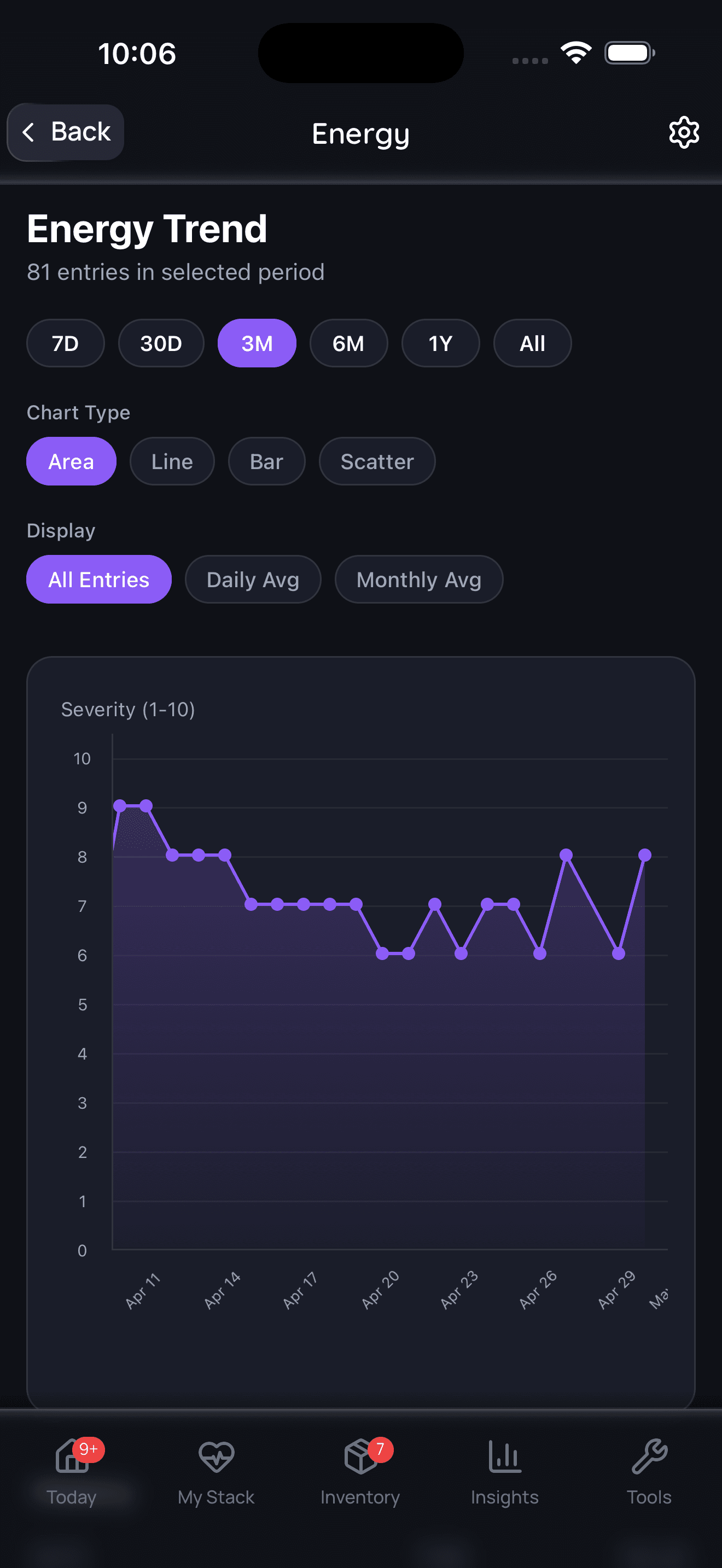
Symptom tracking is informational and should be interpreted with a qualified clinician.
Side Effects & Safety
The Basics
Silicon has one of the most favorable safety profiles of any supplement. No tolerable upper intake level (UL) has been established by either the IOM or EFSA, not because it has not been studied, but because no evidence of toxicity from oral silicon intake has been identified at levels typical for supplementation or even substantially above them [3][6].
In clinical trials using choline-stabilized orthosilicic acid (ch-OSA) at doses of 3-12 mg elemental silicon per day for up to 12 months, no adverse events related to the supplement were observed [15]. Community reports similarly describe excellent tolerability with minimal to no side effects.
The primary population that should exercise caution is people with impaired kidney function. Because silicon is eliminated through the kidneys, individuals with chronic kidney disease accumulate higher serum silicon levels (roughly double normal concentrations) and should consult a healthcare provider before supplementing [3].
It is essential to distinguish dietary and supplemental silicon (orthosilicic acid, amorphous silica) from crystalline silica dust (the industrial form responsible for silicosis). These are entirely different exposure scenarios. Eating or drinking silicon-containing foods and supplements poses no risk of the lung disease associated with inhaling crystalline silica particles in mining or construction environments.
The Science
Safety data for oral silicon supplementation:
Clinical trial safety: Spector et al. (2008) reported no ch-OSA-related adverse events in 136 osteopenic women supplemented for 12 months at doses up to 12 mg Si/day [15]. Barel et al. (2005) reported no adverse effects at 10 mg Si/day for 20 weeks [13]. Wickett et al. (2007) reported no adverse effects at 10 mg Si/day for 9 months [18].
Regulatory safety assessment: EFSA concluded that no tolerable upper intake level could be established due to the absence of data indicating toxic effects of oral silicon intake [3]. A NOAEL of 50,000 ppm in rodent feeding studies was used to calculate a safe upper level of approximately 1,750 mg/day for a 70 kg adult, demonstrating an extremely wide safety margin relative to typical supplement doses of 5-20 mg/day [3].
Renal considerations: Serum silicon concentrations are significantly elevated in patients with chronic renal failure (46 micromol/L) compared to healthy subjects (21 micromol/L), reflecting reduced clearance. Supplementation in this population should be approached with caution [3].
Distinction from crystalline silica: The health hazards of crystalline silica (quartz dust) resulting in silicosis and increased cancer risk are specific to the inhalation route of fibrous crystalline forms, not to oral consumption of amorphous silica or orthosilicic acid [4].
Dosing & Usage Protocols
The Basics
Because no official recommended daily intake has been established for silicon, dosing guidance comes from clinical trial protocols and dietary intake data rather than government standards.
From dietary data, the average intake in Western populations is about 20 to 50 mg per day, with men typically consuming more than women [3]. One research group has suggested that an intake of around 25 mg of silicon per day may be beneficial for bone health, based on extrapolations from both animal and human observational studies [3].
In clinical trials studying specific health outcomes, supplement doses have ranged from 6 to 12 mg of elemental silicon per day (as ch-OSA) for bone-related outcomes, and 10 mg per day for skin and hair benefits [13][15][18]. These are the doses with the most supporting evidence.
When reading supplement labels, pay attention to whether the dose listed refers to elemental silicon or to the total weight of the silicon compound. A capsule containing 500 mg of bamboo extract might provide only 35 mg of elemental silicon, while a liquid ch-OSA supplement might clearly list 6 mg of elemental silicon. These are very different amounts of the active ingredient.
The Science
Dosing from clinical evidence:
Goal
Bone formation markers
- Dose (Elemental Si)
- 6-12 mg/day
- Form
- ch-OSA (with Ca/VitD3)
- Duration
- 12 months
- Source
- Spector et al. 2008 [15]
Goal
Skin roughness/firmness
- Dose (Elemental Si)
- 10 mg/day
- Form
- ch-OSA
- Duration
- 20 weeks
- Source
- Barel et al. 2005 [13]
Goal
Hair thickness/strength
- Dose (Elemental Si)
- 10 mg/day
- Form
- ch-OSA
- Duration
- 9 months
- Source
- Wickett et al. 2007 [18]
Goal
Bioavailability study
- Dose (Elemental Si)
- 21.6 mg single dose
- Form
- Various OSA forms
- Duration
- Single dose
- Source
- Boqué et al. 2021 [12]
Goal
Safety/body pool increase
- Dose (Elemental Si)
- 6 mg/day
- Form
- MMST
- Duration
- 4 weeks
- Source
- Jugdaohsingh et al. 2013 [7]
Dietary intake context: Mean dietary silicon intake in Western populations: men 30-40 mg/day, women 19-25 mg/day (Framingham data). Intake decreases by approximately 0.1 mg per additional year of age [3]. Asian populations consuming more plant-based diets may achieve 2-fold higher intakes [3].
No loading protocol or cycling has been studied or established for silicon supplementation.
What to Expect (Timeline)
Weeks 1-2: Most users report no noticeable changes in the first two weeks. Silicon is not a fast-acting supplement, and its effects on connective tissue require time to manifest through new tissue synthesis.
Weeks 3-4: Some community reports describe initial improvements in nail growth speed and skin hydration emerging in this window. Clinical trial participants at this point showed increased urinary silicon excretion, confirming absorption and body pool changes [7].
Weeks 5-12: This is where many users begin to notice changes in nail strength and reduced brittleness. Skin texture improvements observed in clinical trials were measured at the 20-week mark but may begin to develop earlier [13].
Months 3-6: Hair changes typically require the longest timeframe. The clinical trial showing increased hair thickness and strength ran for 9 months, and significant differences from placebo were measured at this endpoint [18]. Skin roughness improvements were statistically significant at 20 weeks [13].
Months 6-12+: Bone-related effects, if they occur, require the longest supplementation periods. The ch-OSA + Ca/VitD3 trial measured bone formation marker changes at 12 months [15]. Ongoing supplementation appears to maintain benefits for the duration of use.
Interactions & Compatibility
Synergistic
- Vitamin C: Supports prolylhydroxylase activity, the enzyme pathway through which silicon contributes to collagen synthesis. Taking silicon with vitamin C may enhance collagen production. Community reports frequently describe taking these together for skin and hair benefits.
- Calcium: Studied in combination with silicon and vitamin D3 for bone health. The primary ch-OSA bone health RCT used ch-OSA as an adjunct to calcium/vitamin D3 therapy [15].
- Vitamin D3: Used alongside calcium and silicon in bone health research. Silicon may support the mineralization process that vitamin D and calcium initiate [15].
- Vitamin K2: Complementary bone health support through different mechanisms (K2 directs calcium to bone; silicon supports collagen matrix formation).
- Collagen: Complementary approach: collagen provides the protein building blocks while silicon may support the cross-linking and structural integrity of collagen fibers.
- Biotin: Commonly stacked for hair and nail support. Different mechanisms (biotin supports keratin infrastructure; silicon supports connective tissue).
Caution / Avoid
- Individuals with chronic kidney disease: Silicon is eliminated renally. Impaired kidney function leads to elevated serum silicon levels. Consult a healthcare provider before supplementing [3].
- Aluminum-containing antacids: While silicon may actually reduce aluminum absorption, the interaction has not been fully characterized in the context of supplementation. If taking aluminum-containing medications, consult a healthcare provider.
- No significant known drug interactions have been documented for silicon supplementation at typical doses.
How to Take / Administration Guide
Recommended forms: Based on available clinical evidence, liquid orthosilicic acid and choline-stabilized orthosilicic acid (ch-OSA) are the forms with the most bioavailability data and clinical trial support. Plant-based options like bamboo extract provide high silica content but require GI hydrolysis.
Timing considerations: Silicon supplements can generally be taken at any time of day. Liquid forms are commonly taken in the morning mixed with water. No strong evidence suggests that taking silicon with or without food significantly affects absorption for liquid OSA forms, though plant-derived forms (bamboo, horsetail) may benefit from being taken with food to support hydrolysis.
Stacking guidance: Silicon is commonly taken alongside vitamin C (to support collagen synthesis), and in bone health protocols, alongside calcium and vitamin D3. These can typically be taken at the same time. If taking iron supplements, consider separating by a few hours as a general precaution with mineral supplements, though no specific silicon-iron interaction has been documented.
Cycling guidance: No evidence supports a need for cycling silicon supplements. Clinical trials have used continuous daily supplementation for up to 12 months without adverse effects or apparent tolerance [15].
Choosing a Quality Product
Third-party certifications: Look for products carrying USP Verified, NSF Certified for Sport, or GMP certification marks. These verify identity, purity, and potency. As a niche supplement, silicon/silica products may have fewer third-party certifications available compared to mainstream supplements.
Active vs. cheap forms: The form of silicon matters significantly for bioavailability:
- Best evidence: Choline-stabilized orthosilicic acid (ch-OSA), liquid orthosilicic acid formulations
- Good plant-based options: Bamboo extract (high silica content, ~70%), horsetail extract (5-8% silica)
- Low bioavailability: Silicon dioxide tablets/capsules (the same compound used as an anti-caking agent)
Red flags:
- Products listing only "silica" or "silicon dioxide" without specifying the bioavailable form
- Mega-doses far exceeding clinical trial levels (the effective range is 6-12 mg elemental silicon, not hundreds)
- Claims of being "essential" when no official essentiality designation exists
- Marketing that conflates silicon supplement benefits with collagen or other distinct supplements
Elemental vs. compound weight: Always check whether the label lists elemental silicon or total compound weight. A 500 mg horsetail extract capsule standardized to 7% silica provides approximately 35 mg of silica (SiO2), which contains approximately 16 mg of elemental silicon.
Brand transparency indicators: Prefer products that provide Certificate of Analysis (COA) access, list the specific silicon form used, and specify elemental silicon content per serving.
Storage & Handling
Store silicon supplements in a cool, dry place away from direct sunlight. Liquid orthosilicic acid products should be kept tightly sealed to prevent evaporation and contamination. Once opened, liquid products generally have a shelf life of several months to one year depending on the formulation.
Tablet and capsule forms are standard shelf-stable supplements with no special storage requirements beyond standard supplement storage practices.
Bamboo extract and horsetail extract capsules are similarly stable under normal conditions. No refrigeration is required for any commonly available form.
Lifestyle & Supporting Factors
Dietary sources matter: For silicon, dietary intake is significant and can rival or exceed supplement doses. The richest food sources include:
- Whole grains: Oats (260 mg Si/100g for oat soup), whole wheat bread (3.5 mg/100g), rice, cereals
- Beer: 9-39 mg silicon/L (one of the highest bioavailable dietary sources)
- Mineral water: Variable, 0-36 mg/L depending on source
- Bananas: 5.4 mg Si/100g
- Green beans, leafy vegetables: Significant contributors
- Tea and coffee: Moderate sources
People following low-carbohydrate diets (keto, paleo) that restrict grains, or those who avoid alcohol, may have meaningfully lower silicon intake than the population average. Community reports support this concern, with keto dieters describing bone and joint issues that resolved with silicon supplementation.
Exercise: Weight-bearing exercise is the primary stimulus for bone formation. Silicon's proposed role in collagen and bone matrix formation may complement the effects of physical activity on bone density, though this interaction has not been studied directly.
Hydration: Drinking mineral water can contribute meaningfully to silicon intake. Water sources vary widely in silicon content.
Signs that silicon intake may be relevant: Brittle nails, thinning hair, poor skin elasticity with aging, and reduced bone density may all reflect connective tissue support needs. These symptoms have many potential causes, but silicon status is rarely evaluated clinically because no standard biomarker test is widely available.
Monitoring: No standard clinical test for silicon status is in routine use. Serum silicon can be measured but is not a reliable indicator of tissue stores. The best practical approach is to track outcomes (nail strength, hair quality, skin texture, bone density via DEXA scan) over time.
The lifestyle factors above, nutrition, exercise, sleep, stress, are not just nice-to-haves alongside a supplement routine. They're the foundation that determines whether a supplement can do its job effectively. Doserly lets you track these inputs alongside every supplement in your stack, building a complete picture of what your body is receiving and how it's responding.
With AI-powered health analytics, the app surfaces correlations that are nearly impossible to spot on your own. You might discover that your supplement delivers noticeably better results during weeks when your sleep is consistent, or that exercise timing amplifies the benefits you're tracking. That kind of insight transforms general lifestyle advice into specific, actionable intelligence tailored to your body.
Keep sensitive protocol records in a purpose-built app.
Doserly is designed for private health tracking with structured records, offline-ready workflows, and exportable history when you need it.
Privacy
Health records

Privacy controls help you manage records; keep clinical records where required.
Regulatory Status & Standards
United States (FDA): Silicon is not classified as an essential nutrient by the FDA. Silicon dioxide is approved as a Generally Recognized as Safe (GRAS) food additive (used as an anti-caking agent). Silicon supplements are regulated as dietary supplements under DSHEA. No specific health claims have been authorized by the FDA for silicon. No Daily Value has been established.
IOM/FNB (2001): The Institute of Medicine included silicon in its 2001 DRI report ("Dietary Reference Intakes for Vitamin A, Vitamin K, Arsenic, Boron, Chromium, Copper, Iodine, Iron, Manganese, Molybdenum, Nickel, Silicon, Vanadium, and Zinc") but concluded that evidence was insufficient to establish a DRI (RDA or AI) [6].
Canada (Health Canada): Silicon is available in natural health products. No specific monograph for silicon supplementation exists.
European Union (EFSA): EFSA has evaluated silicon and concluded there is insufficient evidence to establish intake recommendations or confirm essentiality. EFSA has authorized choline-stabilized orthosilicic acid as a novel food ingredient for use in food supplements. No tolerable upper intake level has been set [3].
Australia (TGA): Silicon is available as a complementary medicine ingredient. Listed in the Australian Register of Therapeutic Goods under complementary medicine regulations.
WADA and Athlete Status: Silicon is not listed on the WADA Prohibited List. It is not a banned substance in any major professional sports league (NFL, NBA, MLB, NHL, NCAA) or by any national anti-doping organization (USADA, UKAD, etc.). No specific athlete certification requirements apply, though athletes should still choose products with third-party testing (Informed Sport, NSF Certified for Sport) to avoid contamination risk with prohibited substances. Athletes can verify the status of silicon supplements via GlobalDRO.com.
Regulatory status and prohibited substance classifications change frequently. Athletes should always verify the current status of any supplement with their sport's governing body, their national anti-doping agency, and a qualified sports medicine professional before use. Third-party certification (Informed Sport, NSF Certified for Sport) reduces but does not eliminate the risk of contamination with prohibited substances.
Frequently Asked Questions
Is silicon an essential mineral?
The question remains scientifically unresolved. The IOM reviewed silicon in 2001 but did not classify it as essential due to insufficient evidence. EFSA similarly has not confirmed essentiality. Animal studies show clear deficiency symptoms when silicon is restricted, and it is present throughout human connective tissues, but a definitive biological function in humans has not been identified. Many researchers consider it "probably essential" or "conditionally important" rather than definitively essential [1][4][6].
What is the difference between silica and silicon?
Silicon (Si) is the chemical element. Silica (SiO2, silicon dioxide) is silicon combined with oxygen and is the most common form found in nature. Orthosilicic acid (Si(OH)4) is the water-soluble, bioavailable form. In supplements, these terms are sometimes used interchangeably but refer to different chemical forms with different bioavailabilities.
Is silicon the same as silicone?
No. Silicon is a natural element. Silicone is a synthetic polymer made from silicon, oxygen, carbon, and hydrogen. Silicones are used in personal care products, medical devices, and cooking utensils. They are chemically distinct from the dietary silicon found in foods and supplements.
How much silicon should I take?
Based on available research, clinical trials have used 6-12 mg of elemental silicon per day (as ch-OSA) for bone and beauty outcomes. One review group has suggested approximately 25 mg Si/day as adequate for bone health benefits when combining dietary and supplemental sources. Most people consuming a Western diet already get 20-50 mg/day from food. Consulting a healthcare provider for personalized guidance is recommended [3][15].
Which form of silicon supplement is best absorbed?
Liquid orthosilicic acid and choline-stabilized orthosilicic acid (ch-OSA) have the most bioavailability data. Urinary excretion studies show 27-35% absorption from liquid OSA supplements [12]. Bamboo extract provides high silica content but requires GI hydrolysis. Silicon dioxide tablets have very low bioavailability.
Can silicon help with hair loss?
One randomized controlled trial (n=48, 9 months) found that ch-OSA supplementation resulted in thicker hair with improved tensile strength compared to placebo in women with fine hair [18]. Community reports also frequently cite hair improvements as the most noticeable benefit. Silicon is not a treatment for hair loss conditions such as androgenetic alopecia, but it may support hair structural integrity.
Does silicon interact with any medications?
No significant drug interactions have been documented for silicon at typical supplement doses. Individuals with chronic kidney disease should consult their healthcare provider, as silicon is cleared renally and may accumulate with impaired kidney function [3].
Can I get enough silicon from my diet?
Most people following a varied diet that includes whole grains, fruits, and vegetables likely consume adequate silicon from food (20-50 mg/day). Those on restricted diets (low-carb, keto, highly processed food diets) may have lower intake. Beer and mineral water are significant dietary sources. Whether supplementation provides benefits beyond dietary intake is an area of active research [3].
Is silicon safe during pregnancy and breastfeeding?
There are no clinical trials of silicon supplementation specifically in pregnant or breastfeeding women. While dietary silicon from food is generally considered safe, supplementation during pregnancy and breastfeeding should be discussed with a healthcare provider.
How long does it take for silicon to work?
Nail and skin changes may become noticeable within 3-5 months based on clinical trial timelines. Hair thickness improvements were measured at 9 months in one trial [18]. Bone-related effects, if any, require 12 months or more of consistent supplementation [15]. Silicon is not a fast-acting supplement.
Myth vs. Fact
Myth: Silicon is the same as silicone, and taking silicon supplements is like ingesting the material in breast implants.
Fact: Silicon (Si) is a natural element found in food, water, and the human body. Silicone is a synthetic polymer. They share a naming origin but are completely different substances. Dietary silicon is a trace mineral, not a synthetic material [4].
Myth: Silicon is toxic because silica dust causes silicosis.
Fact: Silicosis is caused by inhaling fine crystalline silica particles in industrial settings (mining, construction), which scar the lungs. Oral consumption of silicon from food and supplements involves entirely different forms (amorphous silica, orthosilicic acid) and routes of exposure. EFSA has stated that even high dietary intake is unlikely to cause adverse effects [3][4].
Myth: All silicon supplements are equally effective.
Fact: Bioavailability varies dramatically between forms. Liquid orthosilicic acid and ch-OSA are well absorbed (27-35% urinary excretion), while silicon dioxide tablets have very low bioavailability because the silicon is locked in an insoluble structure. The form you choose substantially affects how much silicon your body can actually use [4][12].
Myth: Silicon supplements can reverse osteoporosis.
Fact: No clinical trial has demonstrated that silicon supplementation reverses established osteoporosis. The Framingham observational study found higher dietary silicon associated with better BMD, but the effect was not observed in postmenopausal women (the group most affected by osteoporosis). One RCT showed improved collagen markers but not significant BMD increases. Silicon may support bone health proactively but is not a treatment for osteoporosis [14][15].
Myth: You need mega-doses of silicon for any benefit.
Fact: Clinical trials showing positive results used just 6-12 mg of elemental silicon per day. This is a very small amount. The emphasis should be on choosing a bioavailable form rather than increasing the dose of a poorly absorbed form [13][15][18].
Myth: Silicon is definitively essential for human health.
Fact: Neither the IOM nor EFSA has classified silicon as an essential nutrient for humans. Animal studies show clear deficiency effects, and silicon is present throughout human connective tissues, but a specific essential biological function has not been definitively identified. The 2001 IOM DRI report reviewed silicon but did not establish a Dietary Reference Intake [6].
Sources & References
Clinical Trials & RCTs
[7] Jugdaohsingh R, Hui M, Anderson SH, et al. The silicon supplement 'monomethylsilanetriol' is safe and increases the body pool of silicon in healthy pre-menopausal women. Nutr Metab. 2013;10:37. https://pubmed.ncbi.nlm.nih.gov/23631468/
[12] Boqué N, et al. Relative absorption of silicon from different formulations of dietary supplements: a pilot randomized, double-blind, crossover post-prandial study. Nutrients. 2021;13(8):2839. https://pubmed.ncbi.nlm.nih.gov/34389753/
[13] Barel A, Calomme M, Timchenko A, et al. Effect of oral intake of choline-stabilized orthosilicic acid on skin, nails and hair in women with photodamaged skin. Arch Dermatol Res. 2005;297(4):147-153. https://pubmed.ncbi.nlm.nih.gov/16205932/
[15] Spector TD, Calomme MR, Anderson SH, et al. Choline-stabilized orthosilicic acid supplementation as an adjunct to calcium/vitamin D3 stimulates markers of bone formation in osteopenic females: a randomized, placebo-controlled trial. BMC Musculoskelet Disord. 2008;9:85. https://pubmed.ncbi.nlm.nih.gov/18547426/
[17] Evaluation of cutaneous rejuvenation associated with the use of ortho-silicic acid stabilized by hydrolyzed marine collagen. J Cosmet Dermatol. 2018;17(5):814-820. https://pubmed.ncbi.nlm.nih.gov/28941141/
[18] Wickett RR, Kossmann E, Barel A, et al. Effect of oral intake of choline-stabilized orthosilicic acid on hair tensile strength and morphology in women with fine hair. Arch Dermatol Res. 2007;299(10):499-505. https://pubmed.ncbi.nlm.nih.gov/17960402/
Systematic Reviews & Meta-Analyses
[1] Martin KR. Silicon: the health benefits of a metalloid. Met Ions Life Sci. 2013;13:451-473. https://pubmed.ncbi.nlm.nih.gov/24470100/
[2] Jugdaohsingh R. Silicon and bone health. J Nutr Health Aging. 2007;11(2):99-110. https://pubmed.ncbi.nlm.nih.gov/17435952/
[3] Rondanelli M, Faliva MA, Peroni G, et al. Silicon: a neglected micronutrient essential for bone health. Exp Biol Med. 2021;246(13):1500-1511. https://pubmed.ncbi.nlm.nih.gov/33715532/
[4] Pavelić K, et al. Biological and therapeutic effects of ortho-silicic acid and some ortho-silicic acid-releasing compounds: new perspectives for therapy. Nutr Metab. 2013;10:2. https://nutritionandmetabolism.biomedcentral.com/articles/10.1186/1743-7075-10-2
Observational Studies
[14] Jugdaohsingh R, Tucker KL, Qiao N, et al. Dietary silicon intake is positively associated with bone mineral density in men and premenopausal women of the Framingham Offspring cohort. J Bone Miner Res. 2004;19(2):297-307. https://pubmed.ncbi.nlm.nih.gov/14969400/
[16] Macdonald HM, Hardcastle AC, Jugdaohsingh R, et al. Dietary silicon interacts with oestrogen to influence bone health: evidence from the Aberdeen Prospective Osteoporosis Screening Study. Bone. 2012;50(3):681-687.
Government/Institutional Sources
[5] Carlisle EM. Silicon as a trace nutrient. Sci Total Environ. 1988;73(1-2):95-106.
[6] Institute of Medicine. Dietary Reference Intakes for Vitamin A, Vitamin K, Arsenic, Boron, Chromium, Copper, Iodine, Iron, Manganese, Molybdenum, Nickel, Silicon, Vanadium, and Zinc. Washington, DC: National Academy Press; 2001.
[8] Carlisle EM. Silicon: a possible factor in bone calcification. Science. 1970;167(3916):279-280.
[9] Exley C, et al. Silicon, aluminium and Alzheimer's disease. Lancet. 2000;355(9219):1900.
In Vitro Studies
[10] Reffitt DM, Ogston N, Jugdaohsingh R, et al. Orthosilicic acid stimulates collagen type 1 synthesis and osteoblastic differentiation in human osteoblast-like cells in vitro. Bone. 2003;32(2):127-135.
[11] Kim EJ, Bu SY, Sung MK, Choi MK. Effects of silicon on osteoblast activity and bone mineralization of MC3T3-E1 cells. Biol Trace Elem Res. 2009.
Related Supplement Guides
Same Category (Trace Minerals)
Common Stacks / Pairings
Related Health Goal
- Magnesium — bone and connective tissue support
- Vitamin D2 — bone health
- Phosphorus — bone mineralization