
Humanin: Complete Research Guide
On this page
Quick Reference Card
Attribute
Also Known As
- Detail
- HN, Humanin peptide, HNG (S14G-Humanin analog), HNGF6A (potent analog)
Attribute
Administration
- Detail
- Injectable (subcutaneous)
Attribute
Research Status
- Detail
- Research compound. No FDA approval. No human clinical trials for therapeutic use completed. All evidence from preclinical (in vitro, animal) models and observational human data.
Attribute
Typical Dose Range
- Detail
- Highly variable and unestablished. Community-reported ranges: 200 mcg to 5 mg subcutaneously. Frequency: daily to 2-3 times per week. See Dosing Protocols section for details.
Attribute
Half-Life
- Detail
- Short (estimated minutes to hours for plasma clearance; biological activity duration unknown)
Attribute
Cycle Length
- Detail
- Commonly reported: 4-8 weeks on, 2-4 weeks off. No established cycling protocol.
Attribute
Storage
- Detail
- Lyophilized: -20°C or below, protected from light; Reconstituted: 2-8°C, use within 14-28 days
Overview / What Is Humanin?
The Basics
Humanin is a small peptide, just 24 amino acids long, that your own body produces. What makes it remarkable is where it comes from: not from your main DNA in the cell nucleus, but from the separate, small genome inside your mitochondria, the energy-producing structures in every cell.
Think of mitochondria as your cells' power plants. For decades, scientists assumed they only made energy. Then in 2001, Japanese researchers studying Alzheimer's disease discovered that mitochondria were also sending out distress signals, small peptides that told the rest of the cell how to respond to stress. Humanin was the first of these signals ever identified, and it was named "humanin" because it kept human brain cells alive under conditions that would normally kill them.
Here is what caught the longevity community's attention: humanin levels decline as you age. Short-lived animals like mice lose about 40% of their humanin in the first 18 months. Long-lived species like the naked mole-rat, which lives over 30 years with virtually no cancer, maintain stable humanin throughout their lifespan. And centenarians, people who live past 100, have significantly higher circulating humanin than age-matched controls. Their children do too, even decades before reaching old age themselves.
Humanin acts as a cellular protection signal. It tells cells under stress to survive rather than self-destruct, improves how the body handles blood sugar, protects brain cells from multiple types of damage, and dials down chronic inflammation. As its levels drop with age, the same stressors that would have been handled start causing real damage.
Important context: all of the therapeutic evidence for humanin comes from cell cultures, animal studies, and human correlational data. No one has completed a clinical trial testing whether giving humanin to people improves health outcomes. It remains a research compound, and anyone considering it is working without an established safety profile.
The Science
Humanin (HN) is a 24-amino acid mitochondrial-derived peptide (MDP) encoded within the 16S ribosomal RNA region of mitochondrial DNA. It was first identified in 2001 by Hashimoto et al. through a functional screen for factors that protect neurons from amyloid-beta (Abeta)-induced apoptosis associated with Alzheimer's disease pathology [1][2].
Humanin is the founding member of a novel class of bioactive peptides, the mitochondrial-derived peptides, which also includes MOTS-c and the six small humanin-like peptides (SHLP1-6). These peptides represent a paradigm shift in understanding mitochondrial biology: rather than serving solely as energy-generating organelles, mitochondria function as active signaling platforms through retrograde communication with the nucleus and other cellular compartments [3].
The humanin gene is found as a small open reading frame (smORF) within the 16S rRNA gene of the mitochondrial genome. It is highly conserved across vertebrate species, with evidence of positive selection maintaining its amino acid sequence, confirming biological importance rather than genomic coincidence [4].
Circulating humanin levels decline with age across multiple species. In mice, levels drop approximately 40% within 18 months. In contrast, the naked mole-rat (Heterocephalus glaber), a model of negligible senescence, maintains stable humanin levels throughout a 30+ year lifespan. Rhesus macaques show humanin decline between ages 19-25 [5]. In a landmark observational study, children of centenarians demonstrated significantly elevated circulating humanin compared to age-matched controls, independent of other longevity-associated biomarkers [5].
The amino acid sequence of native humanin is MAPRGFSCLLLLTSEIDLPVKRRA. Several synthetic analogs have been developed with enhanced potency, most notably HNG (S14G-humanin), which carries a serine-to-glycine substitution at position 14, conferring approximately 1,000-fold increased activity, and HNGF6A, which features an additional phenylalanine substitution [3][5].
Molecular Identity
Attribute
Common Names
- Detail
- Humanin, HN, Mitochondrial-derived peptide humanin
Attribute
Molecular Formula
- Detail
- C₁₁₉H₂₀₄N₃₄O₃₂S₂
Attribute
Molecular Weight
- Detail
- 2,687.21 g/mol
Attribute
Amino Acid Sequence
- Detail
- MAPRGFSCLLLLTSEIDLPVKRRA (24 amino acids)
Attribute
CAS Number
- Detail
- 330936-70-4 (HNG analog)
Attribute
PubChem CID
- Detail
- 16131438 (HNG)
Attribute
Encoding Region
- Detail
- 16S ribosomal RNA gene, mitochondrial DNA
Attribute
Key Analogs
- Detail
- HNG (S14G-Humanin, ~1000x potent), HNGF6A (~1000x potent), Colivelin (fusion peptide with humanin fragment)
Attribute
Discovery
- Detail
- Hashimoto et al., 2001, Neuropathology Department, Tokyo Metropolitan Institute for Neuroscience
Mechanism of Action
The Basics
Humanin works through several protective mechanisms that converge on a simple outcome: keeping cells alive and functioning under stress.
The most direct effect is preventing programmed cell death. When cells are damaged or stressed, they can trigger an internal self-destruct sequence called apoptosis. Under normal conditions, this is healthy, it removes damaged cells. But under chronic stress, aging, or disease, apoptosis can be triggered inappropriately, killing cells that could have been saved. Humanin blocks this process by physically binding to the proteins that initiate the death signal, essentially intercepting the self-destruct order before it executes.
Second, humanin improves how cells respond to insulin. It activates the same downstream pathways that insulin uses, but through its own receptor, essentially providing an independent backup system for blood sugar regulation. This matters because insulin resistance is one of the most consistent features of aging.
Third, humanin protects brain cells specifically. It was originally discovered through its ability to shield neurons from the toxic effects of amyloid-beta, the protein that accumulates in Alzheimer's disease. It also protects against damage from reduced blood flow, oxidative stress, and mitochondrial dysfunction.
Finally, humanin reduces chronic inflammation by blocking the assembly of a key inflammatory complex in cells. Chronic, low-grade inflammation (sometimes called "inflammaging") accelerates tissue damage across every organ system as people age.
The Science
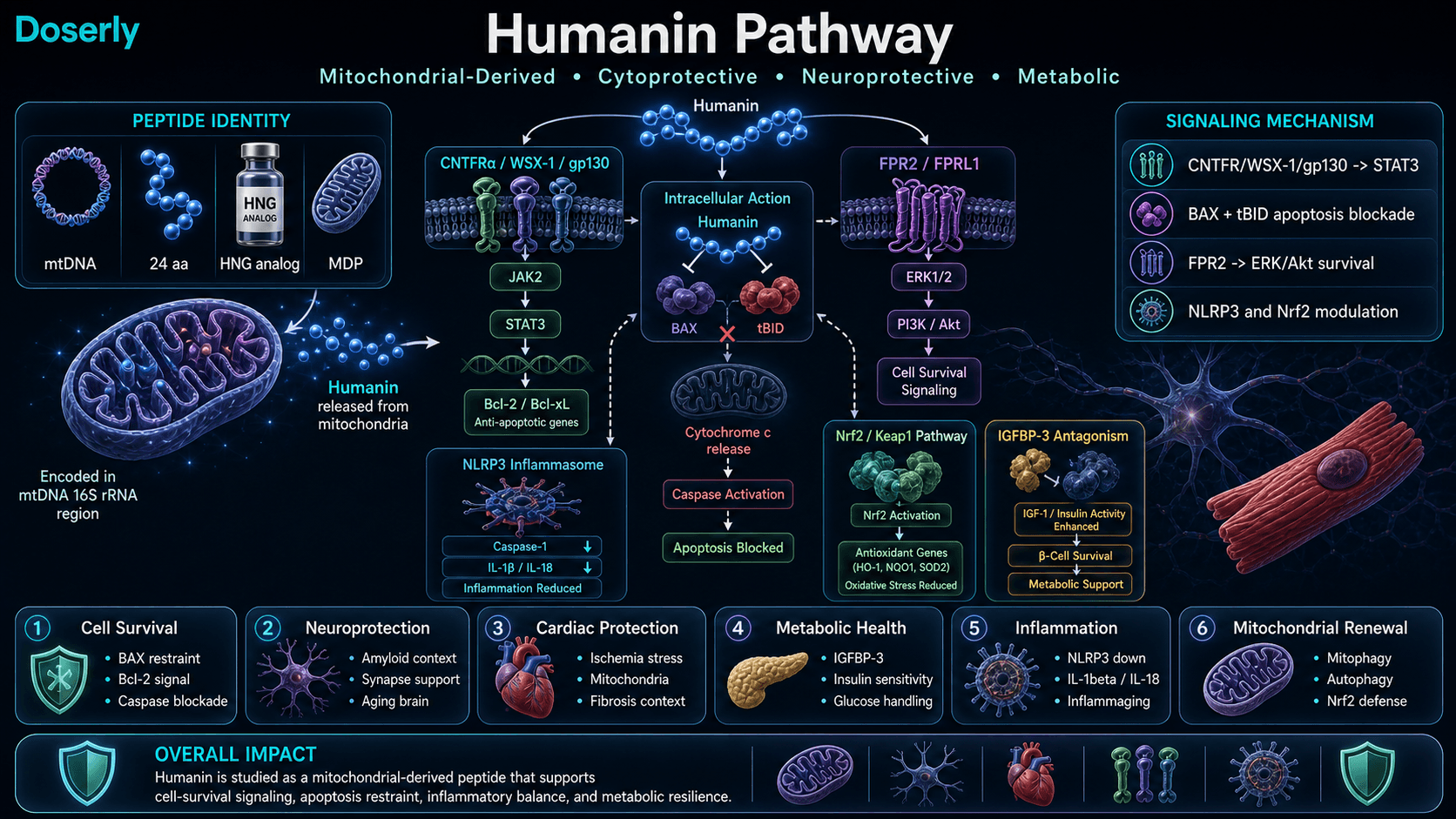
Humanin exerts its cytoprotective effects through multiple distinct signaling pathways [1][2][3][6][7]:
STAT3/JAK2 Signaling: Humanin binds to a heterotrimeric cell surface receptor complex consisting of CNTFR-alpha, WSX-1 (IL-27Ralpha), and gp130. This triggers JAK2 phosphorylation and subsequent STAT3 activation, promoting transcription of anti-apoptotic genes including Bcl-2 and Bcl-xL [6].
BAX Inhibition: A critical intracellular mechanism involves direct binding to and inhibition of the pro-apoptotic protein BAX (Bcl-2-associated X protein). Humanin prevents BAX translocation to the outer mitochondrial membrane, blocking cytochrome c release and subsequent caspase activation through the intrinsic apoptosis pathway. It also binds tBID, preventing its interaction with BAX [2][6].
IGFBP-3 Antagonism: Humanin competitively binds IGFBP-3 (insulin-like growth factor binding protein 3), attenuating IGFBP-3-mediated apoptosis and modulating insulin/IGF-1 signaling cascades that influence peripheral insulin sensitivity and pancreatic beta-cell survival [3][5].
FPR2/FPRL1 Signaling: Humanin acts as an agonist of the formyl peptide receptor-like 1 (FPRL1/FPR2), a G-protein coupled receptor that activates ERK1/2 and Akt/PI3K survival pathways, contributing to cell survival and anti-inflammatory signaling [6].
NLRP3 Inflammasome Inhibition: Humanin inhibits the assembly of the NLRP3 inflammasome complex, reducing caspase-1 activation and downstream secretion of the pro-inflammatory cytokines IL-1beta and IL-18. This mechanism is particularly relevant to inflammaging and chronic disease pathogenesis [6].
Nrf2/Keap1 Pathway Modulation: In cardiovascular models, humanin activates the Keap1/Nrf2 antioxidant response pathway, upregulating expression of endogenous antioxidant enzymes and reducing oxidative stress in cardiomyocytes, endothelial cells, and fibroblasts [7].
Autophagy Enhancement: Humanin administration in aged mice has been shown to increase autophagy, particularly targeting damaged mitochondria for recycling (mitophagy). Enhanced autophagy is a conserved mechanism associated with lifespan extension across multiple model organisms [8].
Pathway Visualization Image
Pharmacokinetics
The Basics
Humanin is a small peptide with a very short life in the bloodstream. Once injected, it is quickly broken down by enzymes in the blood, which is typical for peptides this size. The window of time it remains detectable in plasma is likely measured in minutes rather than hours.
However, there is an important distinction between how long the peptide is measurable in the blood and how long its biological effects last. Humanin triggers intracellular signaling cascades and gene expression changes that persist well beyond the peptide's plasma half-life. The downstream effects on anti-apoptotic gene transcription, insulin sensitization, and inflammatory pathway modulation may last for hours or longer.
Humanin has zero oral bioavailability because digestive enzymes break it down before absorption. Subcutaneous injection is the standard route. Morning administration is commonly recommended to align with metabolic circadian rhythms.
The synthetic analog HNG (S14G-humanin) was developed specifically to improve stability and potency, approximately 1,000 times more potent than native humanin. Most research and community protocols use HNG rather than native humanin for this reason.
The Science
Limited pharmacokinetic data is available for humanin in humans. Available data from preclinical models establishes the following parameters [3][5][6]:
Absorption: Subcutaneous injection is the established administration route. Oral bioavailability is effectively 0% due to rapid degradation by gastrointestinal peptidases [6].
Distribution: As a circulating peptide, humanin is detected in human plasma, cerebrospinal fluid, and multiple tissue types. Endogenous humanin localizes to tissues with high metabolic rates, including brain, liver, heart, and skeletal muscle [3][5].
Metabolism: Humanin undergoes rapid enzymatic degradation by plasma peptidases. The short plasma half-life prompted development of the HNG analog (S14G substitution), which confers enhanced resistance to proteolytic degradation alongside increased receptor binding affinity [5][6].
Half-Life: Native humanin has a short plasma half-life, likely in the range of minutes. Biological activity duration extends beyond plasma clearance due to intracellular signaling persistence [6].
Cycling: Standard peptide cycling protocols (4 weeks on, 2 weeks off) are commonly applied by community members, though no evidence-based cycling protocol has been established for humanin [6].
Research & Clinical Evidence
Humanin and Longevity
The Basics
The longevity connection is what sets humanin apart from most research peptides. The data comes from an elegant observation: across multiple species, the ones that live longest maintain the highest humanin levels. Centenarians have more of it than their age-matched peers. Their children have more of it too, even decades before reaching old age. The naked mole-rat, an animal that practically ignores aging, keeps its humanin levels stable for over 30 years while mice lose nearly half their supply in under two years.
When researchers directly tested whether humanin could extend lifespan, the results were encouraging. In the simple roundworm C. elegans, overexpressing humanin increased lifespan by about 7%. In middle-aged mice, twice-weekly injections of the potent analog HNG improved multiple metabolic health markers and reduced inflammatory biomarkers.
The honest caveat: the lifespan extension in mice came with trade-offs. Treated mice had reduced body weight, less fat mass, and decreased reproductive output. Whether this reflects a genuine biological cost or simply the mechanics of caloric restriction-like effects remains debated.
The Science
The landmark study by Yen et al. (2020) in Aging provided the first comprehensive evidence linking humanin to lifespan and healthspan across species [5]:
C. elegans: Humanin overexpression increased mean lifespan from 17.7 to 19.0 days (7.3% extension), dependent on daf-16/FOXO signaling.
Mouse models: 18-month-old female C57BL/6N mice received bi-weekly intraperitoneal HNG (4 mg/kg). Treated mice showed significant body weight reduction, improved metabolic parameters (glucose tolerance, insulin sensitivity), and reduced inflammatory markers compared to vehicle controls.
Naked mole-rats: Humanin levels remained remarkably stable throughout the 30+ year lifespan of Heterocephalus glaber, contrasting sharply with the 40% decline observed in mice within 18 months.
Human centenarians: Circulating humanin levels were significantly elevated in children of centenarians compared to age-matched controls, suggesting a heritable component to humanin expression linked to exceptional longevity.
MELAS patients: Individuals with the mitochondrial disease MELAS (Mitochondrial Encephalopathy, Lactic Acidosis, and Stroke-like episodes) showed reduced humanin levels, further linking humanin to mitochondrial health and disease susceptibility [5].
Humanin and Neurodegeneration
The Basics
Humanin was literally discovered through its ability to keep brain cells alive when exposed to the toxic proteins associated with Alzheimer's disease. In laboratory studies, humanin protects neurons from amyloid-beta damage, reduces brain swelling after injury, and decreases the amount of cell death in damaged brain tissue.
In aged mice, humanin treatment improved cognitive function and memory performance. The mechanism appears to involve clearing out damaged cellular material through a process called autophagy, essentially helping the brain take out its own garbage more efficiently.
The significant limitation: all of this evidence comes from cell cultures and animal models. No clinical trial has tested humanin in human patients with Alzheimer's or any other neurodegenerative condition.
The Science
Humanin was identified through a functional screen for neuroprotective factors against amyloid-beta (Abeta) toxicity. Subsequent studies have expanded its neuroprotective profile [1][2][8]:
In vitro, humanin protects neurons from death induced by Abeta(1-43), Abeta(25-35), presenilin-1 and presenilin-2 mutants, and APP (amyloid precursor protein) overexpression [1][2].
HNG treatment in aged mice (bi-weekly injections, 252 mcg/kg) delayed cognitive decline as measured by Morris water maze and novel object recognition tests [8].
In models of cerebral ischemia, HNG (252 mcg/kg during ischemic period) decreased brain edema, neuronal cell death, and injury volume while improving neurological outcomes [9].
Zarate et al. (2019) demonstrated that astrocytes both express and secrete humanin, and that humanin prevents synapse loss in hippocampal neurons. Expression declines with age and is modulated by ovarian hormones [10].
Humanin and Cardiovascular Disease
The Basics
Heart cells, like brain cells, cannot be easily replaced once lost. Humanin protects cardiac muscle cells from the type of damage caused by reduced blood flow (ischemia) and the subsequent flood of damaging molecules when blood flow returns (reperfusion injury). In animal studies, humanin treatment reduced the size of heart attacks, decreased dangerous heart rhythm disturbances, and prevented the age-related stiffening and scarring of heart tissue called fibrosis.
The Science
Cai et al. (2021) reviewed humanin's protective mechanisms in aging-related cardiovascular diseases, including atherosclerosis, myocardial infarction, and heart failure [7].
In a rat model of cardiac ischemia-reperfusion injury, HNG (252 mcg/kg IP) administered during the ischemic period significantly decreased cardiac arrhythmia, myocardial infarct size, cardiac mitochondrial dysfunction, and left ventricular dysfunction. Benefits were mediated through attenuation of cardiac mitochondrial dysfunction [9].
Chronic humanin treatment in aged mice prevented age-related cardiac fibrosis (40-50% reduction) and improved cardiac function parameters [5].
Humanin and Metabolic Health
The Basics
Humanin improves how the body responds to insulin and processes blood sugar. In animal studies, humanin treatment improved glucose tolerance, reduced fasting insulin levels, and protected against the metabolic damage caused by high-fat diets. This is particularly relevant because declining insulin sensitivity is one of the most consistent features of aging and is a risk factor for diabetes, cardiovascular disease, and cognitive decline.
The Science
Humanin improves peripheral insulin sensitivity and glucose homeostasis through activation of STAT3 signaling and modulation of the IGF-1/IGFBP-3 axis. In mouse models, exogenous HNG improved glucose tolerance tests, reduced fasting insulin levels, and protected against diet-induced metabolic dysfunction [3][5].
The insulin-sensitizing activity of humanin operates in parallel with, but independently of, direct insulin receptor signaling, effectively providing a redundant pro-metabolic signal [3].
Related MDPs SHLP2 and SHLP3 have also demonstrated anti-diabetic activity and insulin-sensitizing effects, suggesting this is a conserved property of the mitochondrial-derived peptide family [4].
Biomarker Evidence Matrix
Categories are scored from 1-10 based on available evidence. Evidence Strength reflects quality of research data. Reported Effectiveness reflects community sentiment data.
Category
Longevity & Neuroprotection
- Evidence Strength
- 7/10
- Reported Effectiveness
- 7/10
- Summary
- Strong preclinical evidence across species. Centenarian correlation data is compelling but observational. Community interest is high but experiential data is minimal.
Category
Memory & Cognition
- Evidence Strength
- 6/10
- Reported Effectiveness
- 6/10
- Summary
- Neuroprotective effects demonstrated in multiple animal models of Alzheimer's and age-related cognitive decline. No human cognitive trial data.
Category
Heart Health
- Evidence Strength
- 6/10
- Reported Effectiveness
- 6/10
- Summary
- Cardioprotective effects in ischemia-reperfusion models and age-related cardiac fibrosis. Mechanistic evidence is strong; clinical translation absent.
Category
Inflammation
- Evidence Strength
- 6/10
- Reported Effectiveness
- 5/10
- Summary
- NLRP3 inflammasome inhibition and NF-kB pathway modulation documented in multiple models. No human anti-inflammatory outcome data.
Category
Energy Levels
- Evidence Strength
- 4/10
- Reported Effectiveness
- 5/10
- Summary
- Indirect evidence through mitochondrial function improvement. Community reports confounded with MOTS-c and SS-31 in stack discussions.
Category
Mood & Wellbeing
- Evidence Strength
- 3/10
- Reported Effectiveness
- 4/10
- Summary
- Minimal evidence. One community report of anxiety reduction (self-flagged as possible placebo).
Category
Focus & Mental Clarity
- Evidence Strength
- 4/10
- Reported Effectiveness
- 4/10
- Summary
- Cognitive improvement in aged mice. No acute nootropic effects reported.
Category
Weight Management
- Evidence Strength
- 5/10
- Reported Effectiveness
- 4/10
- Summary
- Body weight reduction in animal models during chronic HNG treatment. No human weight data.
Category
Immune Function
- Evidence Strength
- 5/10
- Reported Effectiveness
- N/A
- Summary
- NLRP3 inflammasome modulation and immune signaling through gp130 receptor complex suggest immune-modulatory potential. Community data not yet collected for this category.
Category
Bone Health
- Evidence Strength
- 4/10
- Reported Effectiveness
- N/A
- Summary
- Pathway-level evidence through STAT3 and IGFBP-3 modulation. Community data not yet collected.
Categories scored: 10
Categories with community data: 8
Categories not scored (insufficient data): Fat Loss, Muscle Growth, Appetite & Satiety, Food Noise, Sleep Quality, Anxiety, Stress Tolerance, Motivation & Drive, Emotional Aliveness, Emotional Regulation, Libido, Sexual Function, Joint Health, Pain Management, Recovery & Healing, Physical Performance, Gut Health, Digestive Comfort, Nausea & GI Tolerance, Skin Health, Hair Health, Blood Pressure, Heart Rate & Palpitations, Hormonal Symptoms, Temperature Regulation, Fluid Retention, Body Image, Cravings & Impulse Control, Social Connection, Side Effect Burden, Treatment Adherence, Withdrawal Symptoms, Daily Functioning
Benefits & Potential Effects
The Basics
Humanin's benefits center on cellular protection and metabolic health rather than performance enhancement. It is not a peptide that produces dramatic, fast-acting changes. Its value lies in supporting the body's resilience systems that weaken with age.
The most consistent effects observed in research include protection of brain cells from multiple types of damage, improvement in how the body processes blood sugar, protection of heart cells during periods of reduced blood flow, reduction in chronic low-grade inflammation, and support for cellular cleanup processes (autophagy) that decline with aging.
Community members who track humanin typically focus on long-term biomarker trends rather than day-to-day subjective effects. Most practitioners describe it as a "quiet" compound, one that works at a level you cannot feel directly but that may show up in blood work and biological age testing over months to years.
The Science
The therapeutic potential of humanin spans multiple disease-relevant pathways [1][2][3][5][6][7]:
Neuroprotection: Protection against amyloid-beta toxicity, ischemic brain injury, oxidative neuronal damage, and age-related cognitive decline through BAX inhibition, STAT3 activation, and autophagy enhancement [1][2][8].
Cardioprotection: Reduction of ischemia-reperfusion injury, cardiac fibrosis, and arrhythmia through Nrf2/Keap1 antioxidant activation and mitochondrial function preservation [7][9].
Insulin Sensitization: Improvement of peripheral insulin sensitivity and glucose homeostasis through STAT3 signaling and IGFBP-3 modulation, independent of direct insulin receptor activation [3][5].
Anti-Inflammatory Activity: Inhibition of NLRP3 inflammasome assembly and reduction of systemic inflammatory cytokines (IL-1beta, IL-18), relevant to the inflammaging phenotype of biological aging [6].
Cytoprotection: Broad anti-apoptotic activity through BAX/tBID binding, protecting multiple cell types (neurons, cardiomyocytes, endothelial cells, pancreatic beta-cells) from stress-induced death [2][6].
Lifespan Extension: Demonstrated lifespan extension in C. elegans (7.3% via daf-16/FOXO) and healthspan improvement in aged mice, with correlational evidence linking higher humanin levels to exceptional human longevity [5].
Reading about potential benefits is the starting point. Knowing whether you're actually experiencing them is where real value begins. Doserly lets you track the specific health markers that matter for your protocol, from body composition and energy levels to sleep quality, mood, and recovery time, building a personal dataset that goes beyond subjective impressions.
The app's proactive monitoring doesn't wait for you to notice a problem. It surfaces patterns in your logged data that might suggest suboptimal timing, flags potential interactions with other items in your health stack, and helps you identify which benefits are tracking with what the research suggests and which aren't materializing. Think of it as a second set of eyes on your protocol, always watching the trends.
Capture changes while they are still fresh.
Log symptoms, energy, sleep, mood, and other observations alongside protocol events so patterns do not live only in memory.
Trend view
Symptom timeline
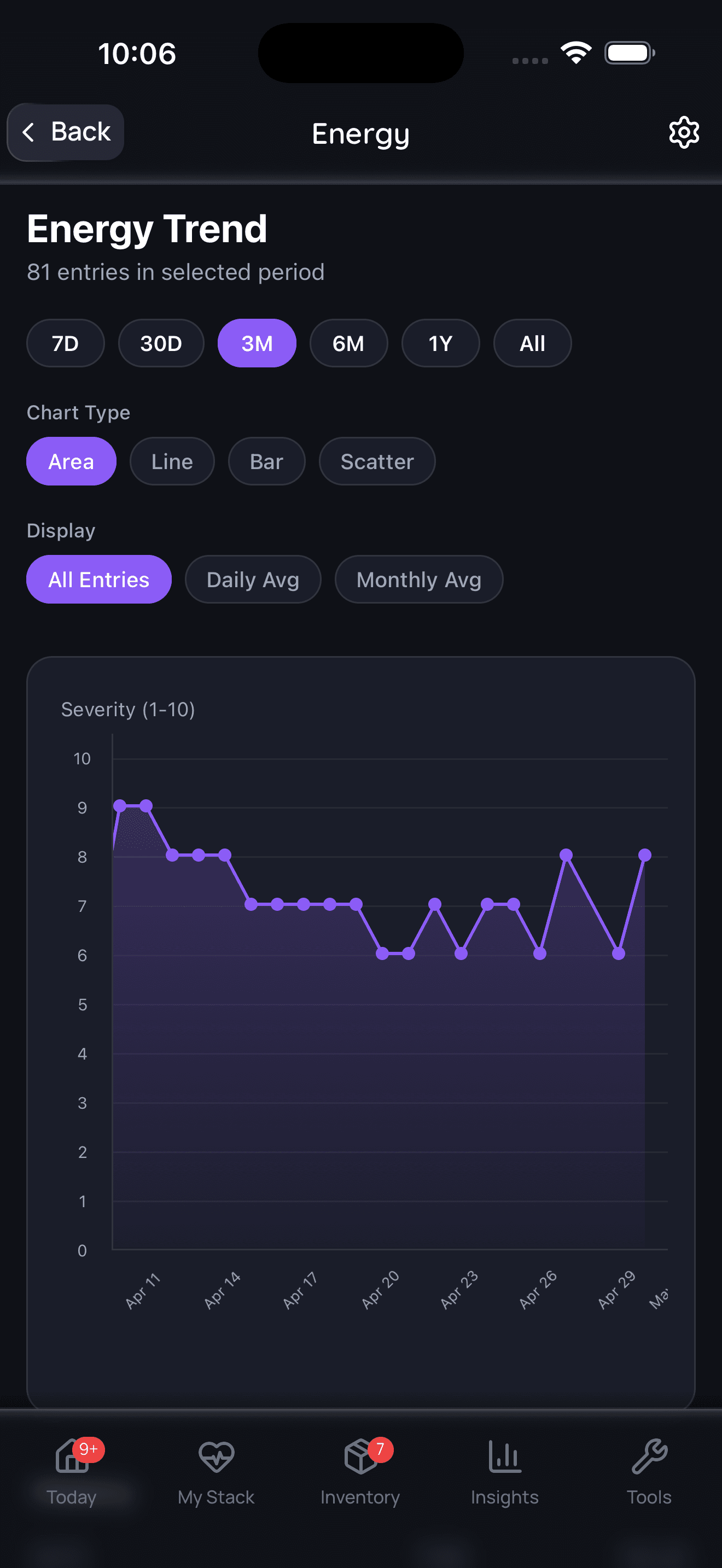
Symptom tracking is informational and should be interpreted with a qualified clinician.
Side Effects & Safety Considerations
The Basics
Humanin has a limited safety profile because so few people have used it and no formal human clinical trials have been conducted. From the available data, it appears to be well tolerated. The most commonly mentioned concerns in community discussions are injection site reactions (redness, mild swelling) and the unknown long-term effects of supplementing an endogenous peptide.
One finding from animal research deserves mention: in studies where humanin overexpression extended lifespan, treated animals also showed reduced body weight, lower fat mass, and decreased reproductive output. Whether this represents a genuine trade-off or simply reflects caloric restriction-like metabolic shifts is not yet clear.
The biggest safety consideration is uncertainty itself. Humanin modulates fundamental cellular survival pathways, including apoptosis. Apoptosis is not inherently harmful; it is how the body eliminates damaged or potentially cancerous cells. Blocking apoptosis broadly could theoretically promote survival of cells that should be cleared. However, published preclinical data has not shown increased cancer incidence in humanin-treated animals [5].
The Science
Known side effects from preclinical data:
- Injection site reactions (common with subcutaneous peptide administration)
- Reduced body weight and fat mass during chronic administration in mice [5]
- Decreased reproductive output in animal lifespan studies [5]
Theoretical concerns:
- Anti-apoptotic activity could theoretically promote survival of pre-cancerous cells, though this has not been observed in published studies [5]
- Modulation of IGF-1/IGFBP-3 signaling has complex implications for both aging and cancer biology [3]
- Long-term effects of exogenous humanin supplementation on endogenous production are unknown
Safety data gaps:
- No human pharmacokinetic studies
- No dose-response safety data in humans
- No long-term safety data beyond chronic animal studies
- No established maximum tolerated dose
- No data on drug-peptide interactions
The side effects and contraindications above give you a map of what to watch for. Doserly turns that map into a daily practice. Log the specific biomarkers and symptoms associated with this compound's known risk profile, and the app builds a timeline of how your body is responding across your cycle.
Trending in the wrong direction on a key marker? Noticing a pattern that started two weeks into your protocol? Doserly connects the dots between your protocol timeline and your logged data, making it easier to spot emerging issues early and have informed, data-backed conversations with your healthcare provider about what's working and what needs attention.
Keep side effects, flags, and follow-up notes visible.
Doserly helps you document safety observations, side effects, medication changes, and follow-up questions so important context is not scattered.
Safety log
Flags and notes
Safety notes are not emergency guidance; seek medical help when appropriate.
Dosing Protocols
The Basics
Dosing humanin is one of the least settled areas in its profile. There is no established therapeutic dose for humans, and the range of doses people report using varies enormously, from as low as 25 micrograms daily to as high as 5 milligrams several times per week.
The most detailed community dosing reference comes from practitioner guides suggesting 2 to 5 mg per dose, administered subcutaneously 2 to 3 times per week, with morning administration preferred. However, some community members reference much lower doses based on animal-to-human dose conversions from published research, arriving at approximately 0.04 mg per kilogram of body weight per day (roughly 3 mg for a 75 kg person).
Most community members who use humanin use the HNG (S14G-humanin) analog rather than native humanin, because it is approximately 1,000 times more potent and more resistant to degradation. If using HNG, doses are typically at the lower end of reported ranges.
There is genuine disagreement about whether to dose daily or intermittently. Some researchers favor a 2-3 times weekly protocol to mimic the pulsatile nature of endogenous peptide signaling. Others use daily administration. No head-to-head comparison exists.
The Science
No human dose-ranging or dose-finding studies have been published for humanin or its analogs. Available dosing data derives from preclinical studies [5][9]:
Animal studies:
- C. elegans: Genetic overexpression (not exogenous dosing)
- Mice (Yen et al., 2020): HNG 4 mg/kg IP, twice weekly in 18-month-old females [5]
- Rats (cardiac ischemia model): HNG 252 mcg/kg IP during ischemic period [9]
Allometric dose conversion: Using standard FDA guidance for body surface area conversion (rat to human factor of ~6.2), 252 mcg/kg in rats translates to approximately 0.04 mg/kg in humans, or roughly 2.8 to 3.2 mg for a 70-80 kg adult [9].
Community-reported protocols:
- Low dose: 200-500 mcg subcutaneous, daily
- Moderate dose: 1-3 mg subcutaneous, 2-3 times weekly
- Higher dose: 5 mg subcutaneous, 1-3 times weekly
- Timing: Morning administration commonly cited to align with circadian metabolic rhythms
- Cycling: 4-8 weeks on, 2-4 weeks off (standard peptide cycling convention, not evidence-based for humanin)
What to Expect
Humanin is not a compound that produces dramatic day-to-day changes. Most community members and researchers describe it as working at a subclinical level, meaning its effects are measurable through biomarkers rather than subjective feelings.
Weeks 1-2: Little to no perceptible change is the norm. One r/Peptides user reported "no perceptible effects in the short or medium term." This is expected given humanin's mechanism of cellular protection rather than performance enhancement.
Weeks 3-4: Some users in longevity communities report subtle improvements in baseline energy and general sense of wellbeing during this period, though it is difficult to distinguish from placebo effects at this timeframe.
Weeks 5-8: Community reports suggest this is the earliest timeframe where metabolic parameter shifts might become detectable through blood work (fasting glucose, insulin sensitivity markers, inflammatory markers like CRP or IL-6).
Months 3-6+: The theoretical value of humanin lies in cumulative protective effects over extended periods. Given the centenarian data showing lifelong elevated levels, some researchers consider humanin a compound where benefits accrue over months to years rather than weeks.
Setting realistic expectations: If you are young and healthy with robust endogenous humanin production, the effects of supplementation will likely be minimal. The compound appears most relevant for those whose mitochondrial function has already begun declining, typically adults over 50 or individuals with conditions associated with mitochondrial dysfunction.
Interaction Compatibility
Good With (Potentially Synergistic)
- MOTS-c — Fellow mitochondrial-derived peptide with complementary mechanisms. MOTS-c targets metabolic regulation through AMPK activation while humanin targets cytoprotection through STAT3/BAX pathways. Different genomic origins (12S rRNA vs. 16S rRNA).
- SS-31 — Targets the inner mitochondrial membrane directly (cardiolipin stabilization), complementing humanin's signaling-based mitochondrial support. Addresses different aspects of mitochondrial dysfunction.
- Epithalon — Targets telomerase and circadian rhythm while humanin targets cellular survival signaling. Complementary longevity mechanisms.
- NAD+ — Supports mitochondrial energy production (electron transport chain cofactor) and sirtuin activation. Humanin supports mitochondrial signaling. Mechanistically complementary.
- Pinealon — Neuroprotective bioregulator peptide targeting antioxidant gene expression. Complementary neuroprotective mechanisms alongside humanin's anti-apoptotic pathway.
Use Caution With
- Compounds with strong pro-apoptotic effects — Humanin's anti-apoptotic mechanism could theoretically antagonize senolytic compounds like FOXO4-DRI that work by promoting apoptosis in senescent cells. Timing separation or sequential cycling may be advisable rather than concurrent use.
- Exogenous growth hormone or potent GH secretagogues — Some research suggests an inverse relationship between GH/IGF-1 signaling and humanin levels. The implications of combining exogenous humanin with GH-axis stimulation are not understood.
Administration Guide
Humanin is administered via subcutaneous injection. No other administration route has demonstrated efficacy due to the peptide's complete degradation in the gastrointestinal tract (0% oral bioavailability).
Materials required:
- Insulin syringes (29-31 gauge, 0.5 mL or 1 mL)
- Alcohol swabs
- Bacteriostatic water for reconstitution
- Sharps disposal container
Recommended reconstitution solution: Bacteriostatic water (0.9% benzyl alcohol) is standard for multi-dose use. Sterile water may be used for single-dose preparation but does not support multi-dose vial stability.
Timing considerations: Morning administration is commonly recommended to align with circadian metabolic activity. Some practitioners recommend administration on an empty stomach, though no pharmacokinetic data supports or refutes fasting requirements for humanin specifically.
Post-administration care: Monitor injection site for redness, swelling, or irritation. These reactions are typically mild and resolve within hours. No compound-specific post-administration monitoring requirements have been established.
For reconstitution calculations, readers who need help with preparation math can use the reconstitution calculator.
Supplies & Planning
Vial sizes available: Humanin and HNG are typically supplied in 5 mg or 10 mg lyophilized vials by research peptide suppliers.
Syringes: U-100 insulin syringes (29-31 gauge) for subcutaneous injection. Quantity depends on dosing frequency determined in consultation with a healthcare provider.
Reconstitution solution: Bacteriostatic water (BAC water). Volume added determines concentration. For example, adding 2 mL BAC water to a 5 mg vial yields a concentration of 2.5 mg/mL.
Storage containers: Original vials are sufficient. No additional storage containers needed beyond standard refrigeration.
Additional supplies: Alcohol swabs for vial top and injection site preparation. Sharps container for used syringes.
Specific quantities of vials and syringes depend on the dosing protocol determined by your healthcare provider. Use the reconstitution calculator for preparation math based on your specific vial size and target dose.
Storage & Handling
Lyophilized (powder form):
- Store at -20°C or below for long-term storage
- Protect from light and moisture
- Shelf life: typically 12-24 months when stored properly
- Can tolerate brief periods at room temperature during shipping without significant degradation
Reconstituted (solution):
- Refrigerate at 2-8°C immediately after reconstitution
- Use within 14-28 days
- Do not freeze reconstituted solution
- Protect from light
- Mark vial with reconstitution date for tracking
Handling best practices:
- Use bacteriostatic water (not sterile water) if accessing the vial multiple times
- Swirl gently to dissolve; never shake
- Solution should be clear and colorless; discard if cloudy or discolored
- Use a new syringe for each injection to maintain sterility
- Avoid repeated freeze-thaw cycles of lyophilized powder
Lifestyle Factors
Humanin's effects are influenced by the same lifestyle factors that affect mitochondrial function broadly. Since humanin is a mitochondrial-derived peptide whose levels naturally decline with age and metabolic stress, supporting mitochondrial health through lifestyle choices may complement any supplementation protocol.
Exercise: Regular aerobic exercise is one of the most potent stimuli for mitochondrial biogenesis. Resistance training also supports mitochondrial health in skeletal muscle. Exercise has been shown to modulate levels of mitochondrial-derived peptides including MOTS-c, and may influence humanin expression as well.
Diet: Diets associated with improved mitochondrial function (Mediterranean, caloric restriction, time-restricted eating) align mechanistically with humanin's metabolic pathways. Adequate intake of mitochondrial cofactors (CoQ10, B vitamins, magnesium, alpha-lipoic acid) supports the organelle that produces humanin.
Sleep: Circadian rhythm disruption impairs mitochondrial function. Humanin levels show diurnal variation, with morning administration protocols reflecting this biology. Prioritizing consistent sleep schedules supports the circadian context in which humanin operates.
Stress management: Chronic psychological stress elevates cortisol and inflammatory markers, both of which are associated with accelerated mitochondrial decline. Stress reduction practices may support the anti-inflammatory mechanisms humanin engages.
Monitoring: Given humanin's subclinical mechanisms, the most relevant monitoring includes periodic blood work for metabolic markers (fasting glucose, insulin, HbA1c), inflammatory markers (CRP, IL-6), and biological age testing (epigenetic clocks such as GrimAge or PhenoAge) for those pursuing long-term longevity protocols.
Peptide protocols don't exist in a vacuum. Your nutrition, exercise, sleep, stress, and the rest of your health stack all influence outcomes. Doserly tracks your entire health picture in one place: peptides, supplements, medications, TRT/HRT, and the lifestyle factors that determine whether your protocol reaches its potential.
This holistic view reveals correlations that compartmentalized tracking misses. You might discover that your recovery improvements stall during weeks with poor sleep, or that adding a specific supplement amplified a benefit you were already seeing. Doserly's cross-category visibility helps you understand which lifestyle factors are pulling the most weight in your results, turning health optimization from guesswork into a data-informed practice.
See how each compound fits into the whole protocol.
Doserly organizes compounds, supplements, peptides, medications, and hormone protocols together so overlapping routines are easier to understand.
Stack view
Connected protocol
Stack views improve organization; they do not determine compatibility.
Regulatory Status & Research Classification
United States (FDA): Humanin is classified as an investigational research compound. It is not approved by the FDA for any therapeutic indication. No IND (Investigational New Drug) application for humanin has been publicly disclosed as of 2026. It is available from research peptide suppliers for in vitro and research purposes only.
Canada (Health Canada): Not approved. No DIN or NPN classification. Available as a research chemical.
United Kingdom (MHRA): Not approved. No marketing authorization. Research use only.
Australia (TGA): Not scheduled. Not approved for therapeutic use. Research compound status.
European Union (EMA): No marketing authorization. Research compound.
WADA Status: Humanin is not currently on the World Anti-Doping Agency prohibited list.
Active clinical trials: As of 2026, no registered clinical trials on ClinicalTrials.gov are specifically testing exogenous humanin administration in humans for any therapeutic indication. Observational studies measuring endogenous humanin levels in various patient populations are ongoing.
Regulatory status changes frequently. Always verify the current legal status of any compound in your specific country or jurisdiction before making any decisions.
FAQ
What is humanin?
Humanin is a 24-amino acid peptide encoded in mitochondrial DNA, discovered in 2001 through its ability to protect neurons from Alzheimer's-associated toxicity. It is the founding member of the mitochondrial-derived peptide (MDP) family.
What is the difference between humanin and HNG?
HNG (S14G-humanin) is a synthetic analog of humanin with a single amino acid change (serine to glycine at position 14) that makes it approximately 1,000 times more potent than native humanin. Most research protocols and community users employ HNG rather than native humanin.
What dose of humanin do people typically use?
Based on available sources, commonly reported ranges include 200 mcg to 5 mg subcutaneously, administered daily to 2-3 times per week. There is no established optimal dose. Consultation with a healthcare professional is essential before considering any protocol.
Does humanin cross the blood-brain barrier?
Endogenous humanin is detected in cerebrospinal fluid, suggesting it does cross the blood-brain barrier or is produced locally in the CNS. Whether exogenously administered humanin achieves therapeutically relevant brain concentrations is not established.
Is humanin safe?
No formal human safety data exists. Preclinical studies show a generally favorable tolerance profile with no major adverse events reported. However, long-term safety of exogenous supplementation is unknown. The compound modulates fundamental cellular pathways (apoptosis, insulin signaling), and the implications of chronic modulation require further investigation.
How does humanin relate to MOTS-c and SS-31?
All three are associated with mitochondrial function but through different mechanisms. Humanin is a signaling peptide produced by mitochondrial DNA that protects cells from apoptosis. MOTS-c is another mitochondrial-derived peptide (from the 12S rRNA gene) that primarily targets metabolic regulation through AMPK activation. SS-31 (elamipretide) is a synthetic peptide that stabilizes cardiolipin in the inner mitochondrial membrane to optimize electron transport chain efficiency.
Why do centenarians have higher humanin levels?
The precise cause is not established. Higher humanin may reflect better-preserved mitochondrial function (a consequence of longevity-promoting genetics), or humanin may actively contribute to longevity through its cytoprotective effects. Likely both factors play a role, consistent with a positive feedback loop between mitochondrial health and humanin production.
Sources & References
Reviews and Systematic Analyses:
[1] Hashimoto Y, Ito Y, Niikura T, et al. "Mechanisms of neuroprotection by a novel rescue factor humanin from Swedish mutant amyloid precursor protein." Biochem Biophys Res Commun. 2001;283(2):460-468. PMID: 11327724
[2] Karachaliou CE, Livaniou E. "Neuroprotective Action of Humanin and Humanin Analogues: Research Findings and Perspectives." Biology (Basel). 2023;12(12):1534. doi: 10.3390/biology12121534. PMID: 38132360
[3] Arockiaraj J et al. "A Review on Mitochondrial Derived Peptide Humanin and Small Humanin-Like Peptides and Their Therapeutic Strategies." Int J Pept Res Ther. 2023;29:86. doi: 10.1007/s10989-023-10558-7
[4] Coradduzza D, Congiargiu A, Chen Z, et al. "Humanin and Its Pathophysiological Roles in Aging: A Systematic Review." Biology (Basel). 2023;12(4):558. doi: 10.3390/biology12040558
Lifespan and Healthspan Studies:
[5] Yen K, Mehta HH, Kim SJ, et al. "The mitochondrial derived peptide humanin is a regulator of lifespan and healthspan." Aging (Albany NY). 2020;12(12):11185-11199. doi: 10.18632/aging.103534. PMID: 32575074
Mechanism of Action and Receptor Studies:
[6] Neemio substance database. "HNG Peptide (human)/HNGS14G." Data accessed 2026-03-21. CAS: 330936-70-4. Health scores and biological target data.
Cardiovascular Protection:
[7] Cai H, Liu Y, Men H, Zheng Y. "Protective Mechanism of Humanin Against Oxidative Stress in Aging-Related Cardiovascular Diseases." Front Endocrinol (Lausanne). 2021;12:683151. doi: 10.3389/fendo.2021.683151. PMID: 34177809
Neuroprotection and Cognition:
[8] Yen K et al. "Humanin Improves Cognition in Aged Mice." Referenced in Nature Scientific Reports. 2018. doi: 10.1038/s41598-018-32616-7
Cardiac Ischemia Model:
[9] Referenced via LongeCity/PubMed: HNG cardioprotection study in rats. Tremblay dose conversion: 252 mcg/kg rat = ~0.04 mg/kg human. PMID: 29376862
Astrocyte Expression:
[10] Zarate SC, Traetta ME, Codagnone MG, Seilicovich A, Reines AG. "Humanin, a Mitochondrial-Derived Peptide Released by Astrocytes, Prevents Synapse Loss in Hippocampal Neurons." Front Aging Neurosci. 2019;11:123. doi: 10.3389/fnagi.2019.00123
Stress Resistance Review:
[11] "The emerging role of the mitochondrial-derived peptide humanin in stress resistance." J Mol Endocrinol. 2013;50(1):R11-R19.
Related Peptide Guides
- MOTS-c — Mitochondrial-derived peptide for metabolic health and exercise performance
- SS-31 (Elamipretide) — Mitochondrial membrane-targeting peptide
- Epithalon — Telomerase-activating tetrapeptide for longevity
- NAD+ — Essential coenzyme for cellular energy and DNA repair
- Pinealon — Brain bioregulator peptide for neuroprotection
- FOXO4-DRI — Senolytic peptide (note: mechanistic antagonism with humanin's anti-apoptotic effects)
- Dihexa — Cognitive-enhancing peptide with HGF mimetic activity
- Methylene Blue — Mitochondrial electron carrier with neuroprotective effects
Need the reconstitution math for Humanin: Complete Research Guide?
Open the calculator with Humanin: Complete Research Guide prefilled to estimate concentration, draw volume, and related measurement math from the reconstitution details you already have.