
5-Amino-1MQ: Complete Research Guide
On this page
Quick Reference Card
Attribute
Also Known As
- Detail
- 5-amino-1-methylquinolinium, NNMTi, 5A-1MQ, 5-AMQ, Compound 1k
Attribute
Administration
- Detail
- Oral (capsules/powder), Subcutaneous injection
Attribute
Research Status
- Detail
- Research Compound — No FDA Approval
Attribute
Typical Dose Range
- Detail
- Oral: 50-100 mg/day; SubQ: 2.5-5 mg/day
Attribute
Half-Life
- Detail
- ~6-8 hours (oral); ~3.8 hours (IV, rat data)
Attribute
Cycle Length
- Detail
- 8-12 weeks on, 2-4 weeks off
Attribute
Storage
- Detail
- Lyophilized: -20°C long-term; Reconstituted: 2-8°C, use within 28 days; Oral capsules: room temperature, cool and dry
Overview / What Is 5-Amino-1MQ?
The Basics
5-Amino-1MQ is a small synthetic molecule that targets your body's fat metabolism at the cellular level. Unlike traditional weight loss compounds that suppress appetite or speed up your heart rate, this one works by blocking a specific enzyme called NNMT that normally slows your metabolism and encourages fat storage.
Think of NNMT as a metabolic brake. In people who carry excess weight, this brake is often pressed down hard, especially in fat tissue. 5-Amino-1MQ releases that brake, allowing your cells to burn fat more efficiently and produce more energy. The compound also boosts levels of NAD+, a molecule your cells need for energy production, DNA repair, and many other essential functions that decline as you age.
What makes 5-Amino-1MQ unusual in the peptide and research compound space is that it is not actually a peptide at all. It is a quinolinium derivative, a small organic molecule that can be taken orally as a capsule or injected subcutaneously. It gained popularity in metabolic health and longevity communities for its potential to support fat loss, increase energy, and enhance cellular function. However, all dosing data in humans is extrapolated from animal studies, and no human clinical trials have been published as of early 2026.
The Science
5-Amino-1-methylquinolinium (5-Amino-1MQ) is a cell-permeable, selective small-molecule inhibitor of nicotinamide N-methyltransferase (NNMT), with an IC50 of approximately 30 nM [1]. Despite being widely categorized alongside peptides in commercial literature, 5-Amino-1MQ is structurally a heterocyclic aromatic organic compound, a quinolinium derivative with a methyl group at the nitrogen-1 position and a primary amine at the 5-position [2].
NNMT catalyzes the methylation of nicotinamide (vitamin B3) using S-adenosylmethionine (SAM) as a methyl donor, producing 1-methylnicotinamide (MNA). This reaction depletes both nicotinamide (a precursor for NAD+ biosynthesis via the salvage pathway) and SAM (the universal methyl donor). NNMT is overexpressed in adipose tissue during obesity, creating a metabolic environment that promotes lipogenesis and insulin resistance [3].
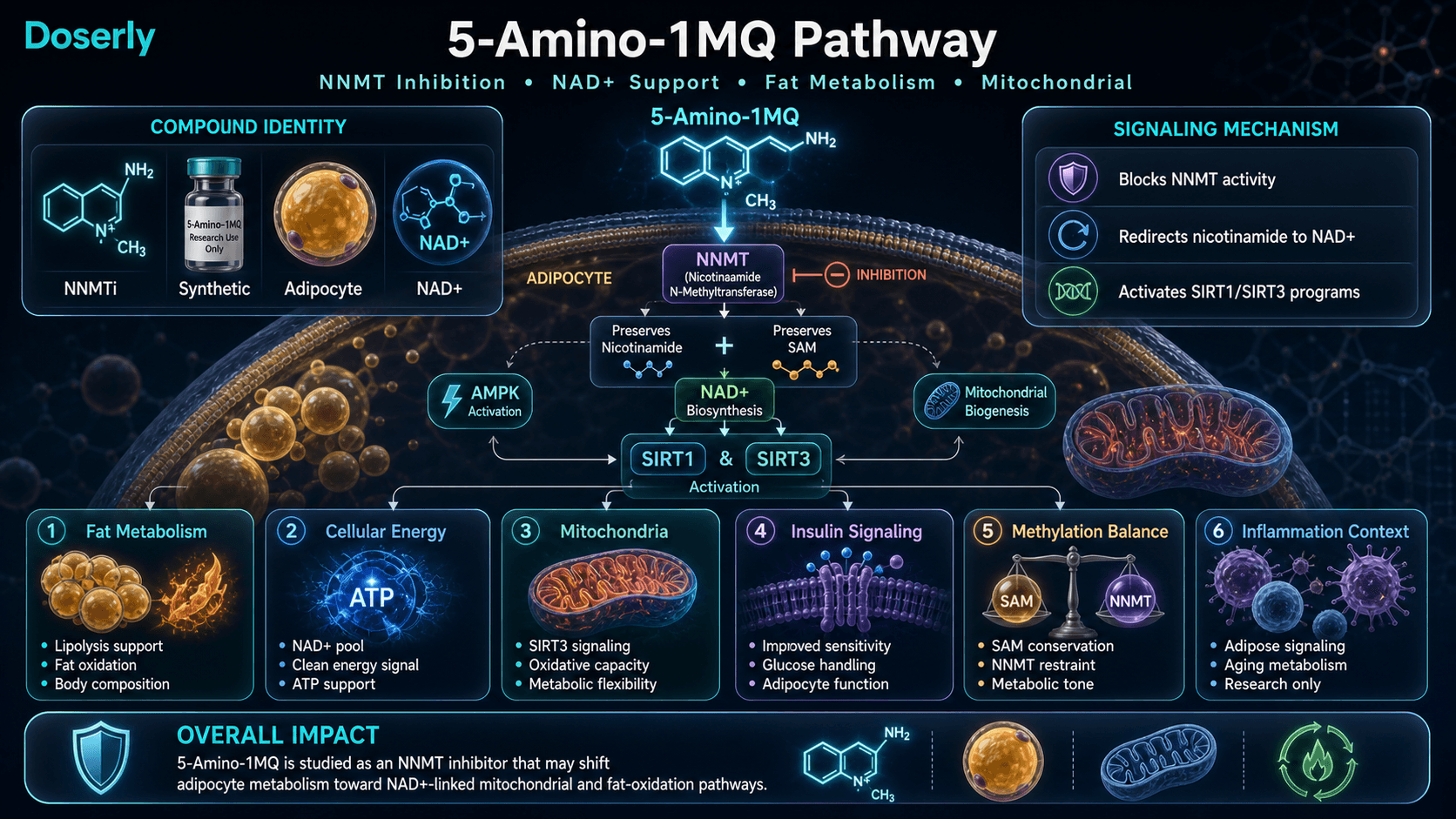
By competitively inhibiting NNMT at its nicotinamide binding site, 5-Amino-1MQ preserves intracellular nicotinamide for NAMPT-mediated NAD+ synthesis. The resulting elevation of the NAD+/NADH ratio activates NAD+-dependent deacetylases, particularly SIRT1 and SIRT3, which in turn upregulate AMPK and PGC-1alpha [1]. This signaling cascade shifts adipocyte metabolism from lipogenesis toward beta-oxidation.
The compound was first described in the context of selective NNMT inhibition in a 2018 study demonstrating that diet-induced obese mice treated with 5-Amino-1MQ showed significant weight loss and adipocyte size reduction without changes in food intake [4].
Molecular Identity
Attribute
Common Names
- Detail
- 5-Amino-1MQ, 5-amino-1-methylquinolinium, NNMTi, 5A-1MQ
Attribute
Molecular Formula (free cation)
- Detail
- C10H11N2+
Attribute
Molecular Formula (iodide salt)
- Detail
- C10H11IN2
Attribute
Molecular Formula (chloride salt)
- Detail
- C10H11ClN2
Attribute
Molecular Weight (free cation)
- Detail
- 159.21 g/mol
Attribute
Molecular Weight (iodide salt)
- Detail
- 286.11 g/mol
Attribute
CAS Number
- Detail
- 42464-96-0
Attribute
PubChem CID (free cation)
- Detail
- 950107
Attribute
PubChem CID (iodide salt)
- Detail
- 66522933
Attribute
Structural Class
- Detail
- Quinolinium derivative; heterocyclic aromatic compound
Attribute
Source
- Detail
- Synthetically designed and manufactured via organic chemical synthesis
Attribute
Appearance
- Detail
- Reddish-brown to red-brown powder (salt forms)
Attribute
Solubility
- Detail
- Soluble in water and organic solvents including DMSO (100 mM) and methanol
Attribute
Melting Point
- Detail
- 213-214°C (iodide salt)
Attribute
Membrane Permeability
- Detail
- High (confirmed by PAMPA and Caco-2 bidirectional permeability assays)
Note: 5-Amino-1MQ is commonly mischaracterized as a "peptide" in commercial and non-scientific literature. It is a small molecule enzyme inhibitor synthesized through organic chemistry methods, not peptide synthesis. Peptides are chains of amino acids linked by peptide bonds, while 5-Amino-1MQ is a quinolinium derivative.
Mechanism of Action
The Basics
Your body has an enzyme called NNMT that acts like a metabolic governor, especially in fat cells. When NNMT is overactive (which tends to happen with excess weight and aging), it drains two important cellular resources: nicotinamide, which your body uses to make NAD+ (a critical molecule for energy production), and SAM, which your cells need for hundreds of chemical reactions.
5-Amino-1MQ blocks this enzyme. By shutting down NNMT, it allows your cells to redirect nicotinamide toward making more NAD+. With more NAD+ available, your cells activate longevity-related proteins called sirtuins (particularly SIRT1 and SIRT3), which act like master switches for cellular health. These sirtuins tell your cells to burn fat instead of storing it, improve how your body handles insulin, and support mitochondrial function, the energy-producing machinery inside every cell.
What is notable about this mechanism is that the weight loss observed in animal studies happened without any reduction in food intake. The animals ate the same amount but lost fat because their cells had shifted from a fat-storing mode to a fat-burning mode. This distinguishes 5-Amino-1MQ from appetite-suppressing compounds like GLP-1 agonists.
The Science
5-Amino-1MQ exerts its effects through selective inhibition of nicotinamide N-methyltransferase (NNMT) with an IC50 of approximately 30 nM [1]. NNMT catalyzes the transfer of a methyl group from S-adenosylmethionine (SAM) to nicotinamide (NAM), producing 1-methylnicotinamide (MNA) and S-adenosylhomocysteine (SAH). This enzymatic activity has dual metabolic consequences: it depletes the NAM pool available for NAD+ biosynthesis via the NAMPT-mediated salvage pathway, and it consumes SAM, the principal cellular methyl donor [3].
In adipose tissue, NNMT expression is significantly upregulated in obese states, creating a metabolic environment characterized by reduced NAD+ availability and impaired sirtuin activity [3]. By competitively inhibiting NNMT at its nicotinamide binding site, 5-Amino-1MQ restores NAM availability for NAD+ synthesis.
The downstream signaling cascade involves:
- NAD+ elevation activating SIRT1 and SIRT3 deacetylase activity [1]
- SIRT1 activation upregulating AMPK and PGC-1alpha, promoting mitochondrial biogenesis and fatty acid oxidation [1]
- AMPK activation shifting adipocyte metabolism from lipogenesis to beta-oxidation [4]
- GLUT4 translocation improving insulin-mediated glucose uptake [1]
In the foundational 2018 study, diet-induced obese mice treated with 5-Amino-1MQ at 20 mg/kg three times daily for 11 days showed a 5.1% reduction in body weight with a 30% reduction in adipocyte size, without any change in food intake [4]. Notably, the compound selectively reduced 1-methylnicotinamide (MNA) levels and increased intracellular NAD+ in treated adipocytes [4].
Additional mechanistic studies have demonstrated enhanced muscle stem cell activation and regeneration in aged skeletal muscle following NNMT inhibition, with treated mice showing a doubling of muscle fiber cross-sectional area and 70% greater force production compared to untreated controls [5].
Pathway Visualization
Pharmacokinetics
The Basics
5-Amino-1MQ has been studied most extensively as an oral compound, and one of its advantages over many research peptides is that it can be taken by mouth. In rat studies, about 38% of an oral dose makes it into the bloodstream, which is considered good for this type of molecule. It reaches its peak concentration in about 2 hours after oral dosing.
The compound stays active for roughly 7-8 hours when taken orally, which is why most protocols suggest morning dosing, once or twice per day. Taking it too late in the day may interfere with sleep, a side effect reported by multiple users.
For injectable use, the half-life is shorter (around 4 hours), which means more frequent injections would theoretically be needed to maintain steady levels. The compound is membrane-permeable, meaning it can cross into cells efficiently, which is important for reaching NNMT inside fat cells and other tissues.
No formal human pharmacokinetic studies have been published. All PK data comes from animal models, primarily rats, so the numbers should be treated as approximations of what happens in humans.
The Science
Pharmacokinetic data for 5-Amino-1MQ derives exclusively from preclinical animal models. A validated LC-MS/MS assay study in rats established the following parameters [6]:
Parameter
Half-life
- Oral
- 6.9 hours
- Intravenous
- 3.8 hours
Parameter
Oral Bioavailability
- Oral
- 38.4%
- Intravenous
- —
Parameter
Time to Peak (Tmax)
- Oral
- ~2 hours
- Intravenous
- —
Parameter
Clearance Duration
- Oral
- ~1.7 days
- Intravenous
- —
The compound demonstrates high passive membrane diffusion and active transport permeability, confirmed by PAMPA (Parallel Artificial Membrane Permeability Assay) and Caco-2 bidirectional permeability assays [2]. This membrane permeability is attributed to its quinolinium scaffold with primary amine substitution at the 5-position.
The genotoxicity profile was assessed as part of the PK study, with no evidence of DNA damage in bacterial reverse mutation assays, human lymphocyte chromosomal aberration assays, or in vivo mouse bone marrow micronucleus tests [6].
Onset of measurable biological effects (metabolic activation) is estimated at 1-2 hours post-dose, with a duration of pharmacodynamic activity of approximately 8-12 hours, which is longer than the plasma half-life. This discrepancy may reflect the distinction between circulating drug levels and downstream biological effects mediated through NAD+/sirtuin pathways.
Research & Clinical Evidence
Obesity and Fat Metabolism
The Basics
The most robust area of research for 5-Amino-1MQ involves its effects on fat metabolism. In the key 2018 mouse study, obese mice given this compound lost weight and had smaller fat cells without eating less food. The fat loss happened because the compound shifted how fat cells handle energy, moving from storing fat to burning it.
What makes this particularly interesting is the mechanism. Rather than forcing the body to burn more calories through stimulation (like caffeine or ephedrine) or reducing appetite (like GLP-1 drugs), 5-Amino-1MQ appears to recalibrate the metabolic machinery inside fat cells. This raised hopes that it could address the root cause of metabolic dysfunction in some individuals, not just the symptoms.
However, it is essential to note that these are mouse studies at doses that translate to roughly 340-440 mg/day in a human, which is significantly higher than what most people take. The gap between the animal evidence and common human dosing protocols is one of the most important uncertainties around this compound.
The Science
Neelakantan et al. (2018) demonstrated that diet-induced obese (DIO) mice treated with 5-Amino-1MQ at 20 mg/kg administered three times daily (60 mg/kg/day total) for 11 days showed a statistically significant 5.1% reduction in body weight compared to controls, with a 30% reduction in mean adipocyte size [4]. Critically, food intake was not affected, indicating the weight loss was mediated by metabolic rather than appetite-driven mechanisms.
The human equivalent dose (HED), calculated using FDA allometric body surface area scaling, is approximately 5 mg/kg/day, or 340-440 mg/day for a 70-90 kg individual [4].
A follow-up study by Dimet-Wiley et al. (2022) combined NNMT inhibition with reduced-calorie diet in DIO mice, demonstrating that the combination produced greater metabolic improvement than either intervention alone and established a distinct gut microbiome profile [7].
Muscle Function and Aging
The Basics
Research in aged mice has shown that blocking NNMT can help older muscles recover from injury more effectively. When treated with an NNMT inhibitor, aged mice developed muscle fibers that were twice as large as those in untreated mice, and their muscles were 70% stronger after injury recovery. The compound appeared to activate dormant muscle stem cells, which normally become less responsive with age.
Even more interesting was a 2024 study showing that aged mice given an NNMT inhibitor improved their grip strength by 40% when sedentary and by 60% when combined with exercise. This suggests the compound may work synergistically with physical activity, not as a replacement for it.
The Science
NNMT inhibition has been shown to enhance satellite cell activation and regenerative capacity in aged skeletal muscle. In a mouse model, NNMT knockdown resulted in a twofold increase in myofiber cross-sectional area, reduced proportion of small-diameter fibers, and 70% greater specific force production post-injury compared to age-matched controls [5]. The mechanism involves improved muscle stem cell function through elevated NAD+ and enhanced SIRT1 activity in the satellite cell niche.
A subsequent 2024 study examined the effects of 5-Amino-1MQ at 10 mg/kg/day administered subcutaneously for 8 weeks in aged mice [8]. Sedentary mice showed a 40% improvement in grip strength, while mice combining NNMT inhibition with exercise demonstrated a 60% improvement. No adverse effects were observed during the 8-week treatment period.
Anti-Cancer Activity
The Basics
In laboratory studies using cancer cells grown in dishes, 5-Amino-1MQ slowed the growth of cervical cancer cells in a way that depended on both dose and duration. Importantly, it did not significantly harm normal cells in these experiments. This early research suggests that NNMT, the same enzyme involved in fat metabolism, may also play a role in cancer cell growth and survival, particularly in obesity-associated cancers where NNMT is often overexpressed.
This is very preliminary work. Cells in a dish do not behave like tumors in a living body, and no animal cancer studies or human trials have been conducted.
The Science
Akar et al. (2021) demonstrated that 5-Amino-1MQ exhibited dose- and time-dependent anti-proliferative activity in HeLa cells (cervical cancer cell line) through NNMT inhibition [9]. The compound disrupted cancer cell metabolic and detoxification systems without significant cytotoxicity to normal cells. No DNA damage was detected in Ames tests, human lymphocyte assays, or in vivo micronucleus assays [9].
The rationale for NNMT as a cancer target stems from its overexpression in multiple tumor types, where elevated NNMT activity supports cancer cell metabolism and epigenetic dysregulation through SAM depletion [9]. Adipose tissue overproduction of NNMT may create a link between obesity and cancer susceptibility.
Metabolic Syndrome and Insulin Sensitivity
The Basics
Beyond direct fat loss, 5-Amino-1MQ's effects on NNMT have implications for broader metabolic health. By restoring NAD+ levels and activating AMPK, the compound may improve how the body handles blood sugar and insulin. NNMT overactivity in obese individuals is associated with insulin resistance, and blocking this enzyme appears to reverse some of those metabolic problems in animal models.
The Science
NNMT knockdown has been shown to protect against diet-induced obesity and improve metabolic parameters in mouse models [3]. The metabolic improvements include enhanced insulin sensitivity via GLUT4 translocation, reduced lipogenesis in adipose tissue, and improved glucose homeostasis [1]. AMPK activation by the SIRT1/NAD+ pathway further supports metabolic flexibility by promoting mitochondrial biogenesis through PGC-1alpha [1].
Kraus et al. (2014) established NNMT as a master regulator of energy metabolism in adipose tissue, demonstrating that genetic knockdown of NNMT in mice conferred protection against diet-induced obesity through increased cellular energy expenditure [3].
Biomarker Evidence Matrix
The following table summarizes the available evidence for 5-Amino-1MQ across relevant biomarker categories. Evidence Strength reflects the quality and volume of research data. Reported Effectiveness reflects community sentiment where available.
Category
Fat Loss
- Evidence Strength (1-10)
- 7
- Reported Effectiveness (1-10)
- 5
- Summary
- Strong preclinical evidence from multiple mouse studies showing significant fat mass reduction without appetite changes. Community reports are deeply inconsistent, with many users reporting no effect while positive reports are confounded by multi-compound stacks.
Category
Energy Levels
- Evidence Strength (1-10)
- 4
- Reported Effectiveness (1-10)
- 6
- Summary
- Mechanistic support through NAD+/SIRT1/mitochondrial pathways, but no direct energy-focused studies. Community reports are the most consistently positive outcome, with "clean energy" described by multiple users and a notable "quiet compound" pattern where the benefit is noticed most upon discontinuation.
Category
Weight Management
- Evidence Strength (1-10)
- 6
- Reported Effectiveness (1-10)
- 5
- Summary
- Preclinical data shows weight loss without reduced food intake. Community perception positions it as a supporting agent rather than a primary driver, well below GLP-1 agonists in perceived effectiveness.
Category
Muscle Growth
- Evidence Strength (1-10)
- 5
- Reported Effectiveness (1-10)
- 4
- Summary
- Preclinical evidence of muscle stem cell activation and regeneration in aged mice, with 40-60% grip strength improvement. Community reports are sparse, mostly describing "recomp" or "preservation" rather than growth, and heavily confounded by concurrent compound use.
Category
Physical Performance
- Evidence Strength (1-10)
- 4
- Reported Effectiveness (1-10)
- 5
- Summary
- Preclinical grip strength data in aged mice suggests performance benefit. Community reports are inconsistent, with some users reporting enhanced endurance but others noting unchanged performance. Difficult to separate from general energy category.
Category
Focus & Mental Clarity
- Evidence Strength (1-10)
- 3
- Reported Effectiveness (1-10)
- 5
- Summary
- No direct cognitive studies. Small cluster of community reports describe "cognitive clarity," "heightened mental acuity," and "sustainable alertness," but volume is too low for high confidence and may be downstream of energy improvement.
Category
Sleep Quality
- Evidence Strength (1-10)
- 2
- Reported Effectiveness (1-10)
- 3
- Summary
- No sleep-focused research. Sleep disruption is the most consistently reported negative outcome in community data, including insomnia, fragmented sleep, and difficulty falling asleep, particularly with late-day dosing or higher doses. Score of 3 indicates community reports are negative.
Category
Appetite & Satiety
- Evidence Strength (1-10)
- 4
- Reported Effectiveness (1-10)
- 4
- Summary
- Preclinical data explicitly shows fat loss without appetite changes. Most community reports confirm no meaningful appetite effect, though a few users reported increased hunger. The compound does not appear to function as an appetite suppressant.
Category
Side Effect Burden
- Evidence Strength (1-10)
- 3
- Reported Effectiveness (1-10)
- 4
- Summary
- Limited safety data from preclinical studies only. Community reports a moderate side effect profile: generally well-tolerated, but with real adverse effects (insomnia, GI issues, headaches) in a meaningful minority, particularly at higher doses.
Category
Treatment Adherence
- Evidence Strength (1-10)
- N/A
- Reported Effectiveness (1-10)
- 4
- Summary
- No research data. Community reports significant barriers: high cost relative to perceived subtlety of effects, dosing confusion between oral and injectable protocols, and difficulty determining if the compound is working.
Categories scored: 10
Categories with community data: 10
Categories not scored (insufficient data): Food Noise, Mood & Wellbeing, Anxiety, Stress Tolerance, Motivation & Drive, Emotional Aliveness, Emotional Regulation, Libido, Sexual Function, Joint Health, Inflammation, Pain Management, Recovery & Healing, Gut Health, Digestive Comfort, Nausea & GI Tolerance, Skin Health, Hair Health, Heart Health, Blood Pressure, Heart Rate & Palpitations, Hormonal Symptoms, Temperature Regulation, Fluid Retention, Body Image, Immune Function, Bone Health, Longevity & Neuroprotection, Cravings & Impulse Control, Social Connection, Withdrawal Symptoms, Daily Functioning, Memory & Cognition, Other
Benefits & Potential Effects
The Basics
The potential benefits of 5-Amino-1MQ center on metabolic health and cellular energy. The most commonly discussed benefits include:
Fat metabolism support. In animal studies, the compound shifted fat cells from storing fat to burning it. Community members who report positive outcomes most often describe gradual changes in body composition, particularly around the midsection. However, results are inconsistent across users, and the compound is widely described as "subtle" even by those who consider it beneficial. Some experienced users report that effects become more noticeable at lower body fat percentages.
Cellular energy enhancement. By boosting NAD+ levels, 5-Amino-1MQ may support mitochondrial function and overall cellular energy production. Many community members describe a "clean energy" feeling, distinct from stimulant-based energy. This is the most consistently reported positive outcome, and several users noted they only realized the energy benefit after stopping the compound and feeling the difference.
Metabolic flexibility. The AMPK and SIRT1 activation pathways suggest the compound may improve how cells switch between fuel sources, potentially benefiting insulin sensitivity and blood sugar regulation.
Muscle preservation and recovery. Preclinical data shows NNMT inhibition enhanced muscle stem cell function and improved grip strength in aged mice, particularly when combined with exercise. Community reports occasionally mention body recomposition, though isolating this effect from concurrent compounds and training is difficult.
Longevity pathway activation. The NAD+/sirtuin pathway activated by 5-Amino-1MQ is one of the most studied axes in longevity research. While no lifespan studies specific to this compound exist, the mechanistic overlap with established longevity pathways drives significant interest in the biohacking community.
It is important to note that no human clinical trials have been published for 5-Amino-1MQ. All benefit claims derive from preclinical animal studies and anecdotal community reports. The gap between the strong mechanistic rationale and the mixed real-world experiences is one of the defining characteristics of this compound.
The Science
The preclinical evidence base for 5-Amino-1MQ supports the following benefit areas:
Adipose tissue remodeling: NNMT inhibition selectively reduces lipogenesis in mature adipocytes, decreasing MNA production and increasing intracellular NAD+ levels. In DIO mice, 11 days of treatment produced a 5.1% body weight reduction and 30% adipocyte size reduction without affecting food intake [4]. The SIRT1/AMPK/PGC-1alpha cascade shifts metabolic programming from energy storage to oxidation [1].
Mitochondrial biogenesis: PGC-1alpha upregulation through the NAD+/SIRT1 axis promotes mitochondrial biogenesis and improved oxidative phosphorylation. This is consistent with the energy enhancement reported by users and with the broader literature on NAD+ augmentation strategies [1].
Skeletal muscle regeneration: NNMT inhibition enhances satellite cell activation in aged skeletal muscle, producing twofold increases in myofiber cross-sectional area and 70% greater specific force post-injury [5]. Combined with exercise, grip strength improvement in aged mice reached 60% [8].
Insulin sensitization: NNMT inhibition promotes GLUT4 translocation and improves insulin-mediated glucose uptake [1]. Kraus et al. (2014) demonstrated that NNMT knockdown conferred protection against metabolic syndrome features in mouse models [3].
Epigenetic regulation: By preserving SAM pools (preventing NNMT-mediated SAM depletion), 5-Amino-1MQ may indirectly support methylation-dependent epigenetic processes, though this effect has not been directly measured [3].
Reading about potential benefits is the starting point. Knowing whether you're actually experiencing them is where real value begins. Doserly lets you track the specific health markers that matter for your protocol, from body composition and energy levels to sleep quality, mood, and recovery time, building a personal dataset that goes beyond subjective impressions.
The app's proactive monitoring doesn't wait for you to notice a problem. It surfaces patterns in your logged data that might suggest suboptimal timing, flags potential interactions with other items in your health stack, and helps you identify which benefits are tracking with what the research suggests and which aren't materializing. Think of it as a second set of eyes on your protocol, always watching the trends.
Connect protocol changes to labs and health markers.
Doserly can keep lab results, biomarkers, symptoms, and dose history close together so follow-up conversations have better context.
Insights
Labs and trends
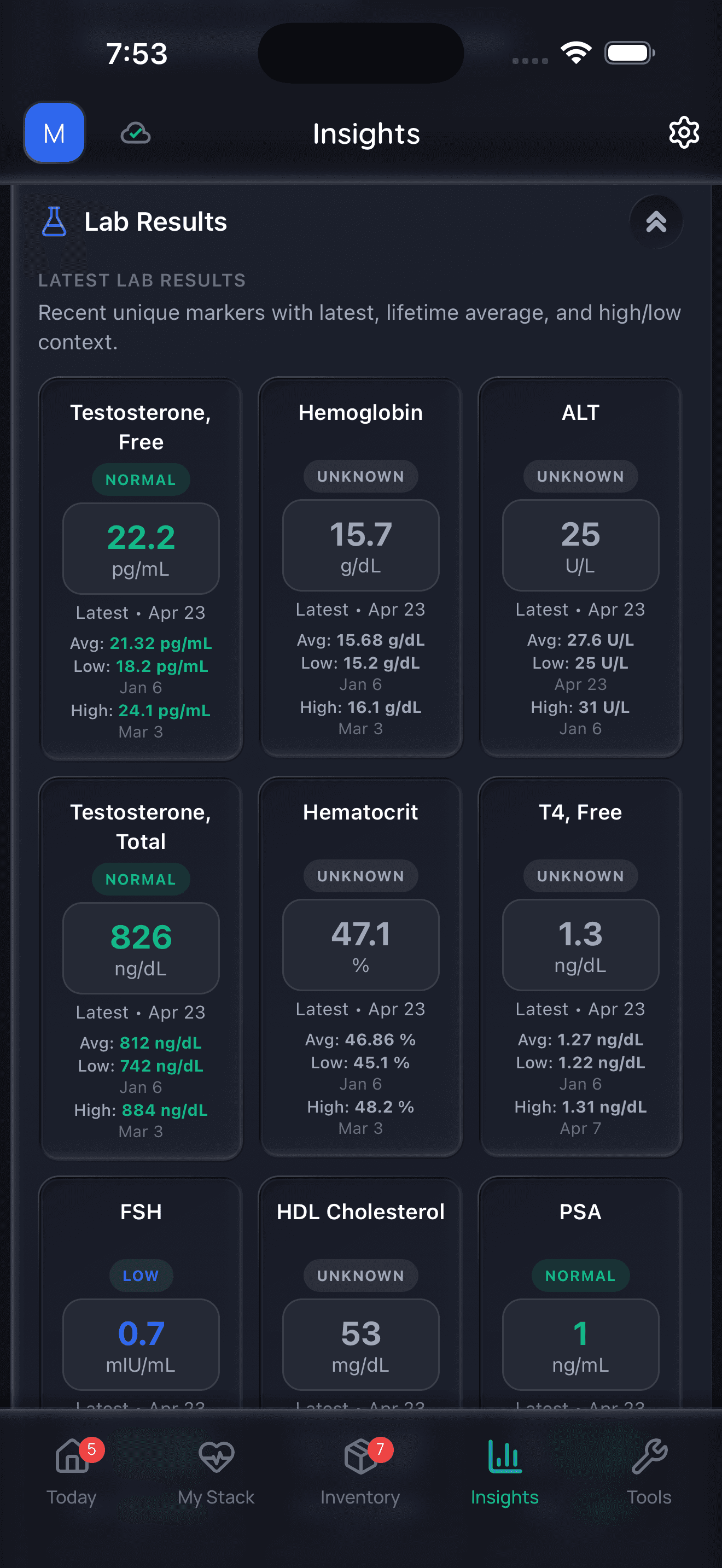
Doserly organizes data; it does not diagnose or interpret labs for you.
Side Effects & Safety Considerations
The Basics
5-Amino-1MQ is generally considered well-tolerated based on limited preclinical safety data and community reports. However, several side effects have been reported consistently enough to warrant awareness:
Sleep disruption. This is the most reliably reported negative effect. Multiple users across different communities describe insomnia, difficulty falling asleep, fragmented sleep, or early waking. The issue appears to be dose-dependent and time-of-day dependent. Morning dosing is widely recommended to minimize sleep interference.
Gastrointestinal discomfort. Mild GI effects including nausea (especially when taken without food), stomach discomfort, and loose stools have been reported. Taking the oral form with food appears to reduce these effects.
Headaches. Some users report headaches, particularly at higher oral doses (100 mg and above). This is more commonly noted in the early days of use.
Potential jitteriness or anxiety. A small number of users describe transient jitteriness or anxiety during the initial adjustment period. This typically resolves within the first week.
Emotional blunting. One detailed community report described a muted emotional affect at higher doses. While this is a single report, it is notable for its specificity.
Long-term safety is unknown. No human clinical trials have been conducted. All safety data comes from short-term animal studies and anecdotal community reports. Theoretical concerns include potential methyl donor imbalance through disruption of the SAM/SAH ratio, though this has not been demonstrated.
The Science
The preclinical safety profile of 5-Amino-1MQ is limited but favorable based on available data:
Genotoxicity: The compound showed no evidence of DNA damage across three standard assays: bacterial reverse mutation (Ames test), human lymphocyte chromosomal aberration, and in vivo mouse bone marrow micronucleus [6]. This is a reassuring finding for a compound under consideration for chronic use.
Tolerability in animal models: The 2024 aged mouse study using 10 mg/kg/day subcutaneously for 8 weeks reported no adverse effects [8]. The 2018 DIO mouse study using 60 mg/kg/day for 11 days similarly reported no significant adverse outcomes [4].
Theoretical safety concerns:
- SAM/SAH ratio disruption: NNMT inhibition blocks a SAM-consuming reaction, which could theoretically alter cellular methylation dynamics. The clinical significance of this is unknown [1].
- Methyl donor imbalance: Chronic NNMT inhibition could affect the broader methylation cycle. This is a theoretical concern that cycling protocols (8-12 weeks on, 2-4 weeks off) are designed to mitigate.
- Sleep architecture effects: The community-reported insomnia is consistent with the compound's metabolic stimulatory effects. NAD+ elevation and SIRT1 activation influence circadian metabolic pathways, which may explain the dose-dependent sleep disruption.
No human safety data exists. The long-term safety profile in humans is entirely unknown. The absence of published human trials represents a significant gap in the safety evaluation of this compound.
The side effects and contraindications above give you a map of what to watch for. Doserly turns that map into a daily practice. Log the specific biomarkers and symptoms associated with this compound's known risk profile, and the app builds a timeline of how your body is responding across your cycle.
Trending in the wrong direction on a key marker? Noticing a pattern that started two weeks into your protocol? Doserly connects the dots between your protocol timeline and your logged data, making it easier to spot emerging issues early and have informed, data-backed conversations with your healthcare provider about what's working and what needs attention.
Capture changes while they are still fresh.
Log symptoms, energy, sleep, mood, and other observations alongside protocol events so patterns do not live only in memory.
Trend view
Symptom timeline
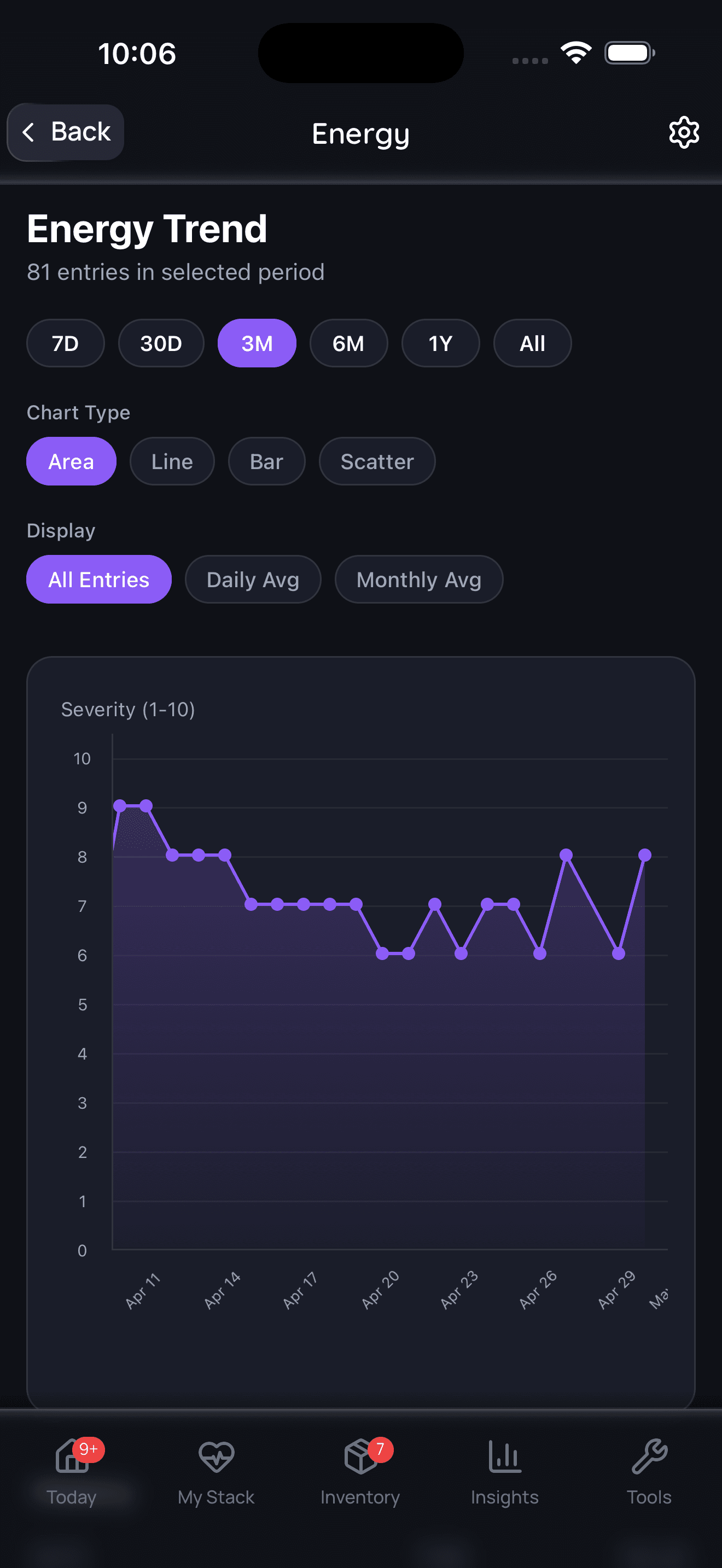
Symptom tracking is informational and should be interpreted with a qualified clinician.
Dosing Protocols
The Basics
Dosing 5-Amino-1MQ is one of the more confusing areas for this compound. There are two distinct administration routes (oral and injectable), and within the injectable category, there are two very different dosing schools of thought that differ by a factor of roughly 100x. Understanding which protocol you are reading about is critical.
Oral dosing is the more common approach. Commonly reported ranges start at 25-50 mg per day for beginners and go up to 75-100 mg per day as a typical maintenance dose. Some sources suggest split dosing (50 mg twice daily) for more sustained effects. Oral capsules or powder are taken with food to improve absorption and reduce GI discomfort.
Subcutaneous injection uses much lower absolute doses due to avoiding first-pass metabolism. The most commonly cited injectable protocol uses 2.5-5 mg per day, with a tolerance-testing approach of starting at 2.5 mg for the first two days before increasing to 5 mg. Some protocols suggest twice-daily injections (2.5 mg each) for more consistent NNMT inhibition throughout the day.
It is important to note that the human equivalent dose calculated from the foundational mouse study is approximately 340-440 mg per day, which is significantly higher than what most oral protocols recommend and vastly higher than the low-dose injectable protocols. This dosing gap raises questions about whether common protocols deliver therapeutically relevant NNMT inhibition.
All dosing is extrapolated from animal data. No human dose-finding studies have been published. Individuals considering any protocol should consult with a healthcare provider.
The Science
No human dose-finding or pharmacodynamic studies have been published for 5-Amino-1MQ. All dosing recommendations derive from preclinical data extrapolation and community protocols.
Preclinical dosing reference points:
Study
Neelakantan et al. (2018) [4]
- Species
- Mouse (DIO)
- Dose
- 20 mg/kg TID (60 mg/kg/day)
- Route
- SubQ
- Duration
- 11 days
- Key Finding
- 5.1% body weight reduction, 30% adipocyte size reduction
Study
2024 aged muscle study [8]
- Species
- Mouse
- Dose
- 10 mg/kg/day
- Route
- SubQ
- Duration
- 8 weeks
- Key Finding
- 40% grip strength improvement (sedentary), 60% with exercise
Study
HED calculation [4]
- Species
- Human (theoretical)
- Dose
- ~5 mg/kg/day (~340-440 mg for 70-90 kg)
- Route
- —
- Duration
- —
- Key Finding
- FDA allometric scaling from mouse data
Commonly reported oral protocols:
Approach
Conservative start
- Dose
- 25 mg
- Frequency
- Once daily with food
- Notes
- Assessment period
Approach
Standard
- Dose
- 50 mg
- Frequency
- Once daily with food
- Notes
- Most commonly cited starting dose
Approach
Maintenance
- Dose
- 75 mg
- Frequency
- Once daily with food
- Notes
- Typical maintenance
Approach
Upper range
- Dose
- 100 mg
- Frequency
- Once daily with food
- Notes
- Maximum commonly cited
Approach
Split dosing
- Dose
- 50 mg
- Frequency
- Twice daily with meals
- Notes
- For sustained inhibition
Commonly reported subcutaneous protocols:
Approach
Tolerance test
- Dose
- 2.5 mg
- Frequency
- Once daily, days 1-2
- Notes
- Initial assessment
Approach
Standard
- Dose
- 5 mg
- Frequency
- Once daily
- Notes
- Most commonly cited
Approach
BID option
- Dose
- 2.5 mg
- Frequency
- Twice daily
- Notes
- For sustained NNMT inhibition
Cycling: Most sources recommend 8-12 weeks on, followed by 2-4 weeks off. The rationale is to prevent potential adaptation of NNMT expression, maintain metabolic efficacy, and allow monitoring of methylation status.
What to Expect
The following timeline represents commonly reported experiences from community sources. Individual responses vary significantly based on dose, administration route, baseline metabolic health, body composition, and concurrent compounds. These are not guaranteed outcomes.
Weeks 1-2: Adjustment Period
Most users report a gradual increase in energy levels and mental clarity during the first one to two weeks. Some describe this as a subtle, "clean" energy rather than a stimulant-like boost. GI adjustment (mild nausea or stomach discomfort) may occur, particularly if taken without food. Sleep disruption can emerge during this period, especially with late-day dosing. Those experiencing insomnia typically find that strict morning dosing resolves or reduces the issue.
Weeks 2-4: Early Effects
Users who respond to the compound typically report enhanced exercise performance and faster recovery during this window. Some users begin to notice modest changes in body composition, though many report no visible changes at this point. Energy effects tend to stabilize. Any initial side effects (GI, headaches) generally resolve.
Weeks 4-8: Primary Response Window
This is the period where metabolic and body composition changes are most commonly reported by those who respond positively. Improvements in metabolic markers (if being monitored through blood work) may begin to appear. However, a significant proportion of users report no noticeable effects even at this stage, and the compound is frequently described as "subtle" even by users who consider it beneficial.
Weeks 8-12: Sustained Use and Reassessment
Users who continue through a full cycle report either sustained benefits or plateau. This is when most protocols recommend reassessing outcomes and beginning the off-cycle period (2-4 weeks). Some users report that they only fully appreciate the compound's effects after discontinuation, when they notice the absence of the energy and metabolic support.
Important context: Community data shows highly inconsistent results. The sentiment analysis identifies pervasive confounding from stacking (most positive reports involve simultaneous use of other compounds) and dosing inconsistency as major factors in the variable outcomes. Many users report no noticeable effects at commonly used doses.
Interaction Compatibility
Synergistic / Compatible
- NAD+ Precursors (NMN, NR) — May work synergistically by preventing NAD+ breakdown (via NNMT inhibition) while NMN/NR support NAD+ production through different pathway entry points. NAD+
- Resveratrol — Both support longevity pathways; resveratrol activates sirtuins directly while 5-Amino-1MQ provides increased NAD+ substrate for sirtuin activity.
- BPC-157 — No known interactions; different mechanisms of action with potential complementary benefits for tissue repair.
- SLU-PP-332 — Commonly stacked in metabolic optimization protocols. SLU-PP-332 activates ERR pathways while 5-Amino-1MQ targets the NNMT/NAD+ axis. See also SLU-PP-332 + 5-Amino blend. Community reports of this combination are common, though individual contribution is difficult to isolate.
- MOTS-C — Both target metabolic pathways through different mechanisms (MOTS-C via AMPK activation through mitochondrial signaling). Frequently combined in longevity-focused stacks.
Monitor / Use Caution
- Metformin — Both affect metabolic pathways (AMPK activation). Combination may enhance metabolic effects but requires careful monitoring for potential hypoglycemia or excessive metabolic stress. [Metformin is not listed in the peptide registry]
- Berberine — Both affect metabolic pathways; potential additive effects on glucose metabolism. Monitor blood sugar if combining.
- Blood Thinners / Anticoagulants — Limited interaction data available. Consult a healthcare provider before combining.
Not Recommended / Unknown
- No specific contraindicated compound interactions have been identified in the literature. However, the absence of human interaction studies means that unknown interactions remain possible. Individuals on any medication should consult a healthcare provider before adding 5-Amino-1MQ to their protocol.
Administration Guide
Primary route: Oral capsules or powder is the most common and convenient administration method.
Materials required (oral):
- 5-Amino-1MQ capsules or measured powder
- Milligram-accurate scale (if using powder)
- Empty capsules (if encapsulating from powder)
- Food (to improve absorption and reduce GI effects)
Materials required (injectable):
- 5-Amino-1MQ lyophilized powder vial (verify size: 5 mg, 10 mg, 50 mg, or 200 mg)
- Bacteriostatic water
- Insulin syringes (U-100)
- Alcohol swabs
- Sharps disposal container
Recommended reconstitution solution: Bacteriostatic water (0.9% benzyl alcohol). For a 50 mg vial, 4.0 mL of bacteriostatic water yields a concentration of 12.5 mg/mL.
Timing considerations:
- Morning dosing is widely recommended to minimize sleep interference
- Take oral doses with food to improve absorption and reduce GI discomfort
- If using twice-daily dosing, split between morning and early afternoon
- Avoid evening dosing, as the compound's metabolic stimulatory effects may disrupt sleep
- Consistent daily timing helps maintain steady NAD+ levels
Post-administration care:
- For injectable administration, a mild stinging sensation at the injection site may occur due to the quinolinium structure
- Monitor for GI discomfort (oral), headache, or sleep changes during the first week
- If sleep disruption occurs, adjust timing to earlier in the day or consider dose reduction
- If GI effects persist despite taking with food, consider reducing the dose temporarily
Supplies & Planning
The following materials are generally associated with 5-Amino-1MQ use. Do not calculate specific quantities based on assumed doses or cycle lengths. Consult a healthcare provider and use the reconstitution calculator for preparation specifics.
Oral Administration
- 5-Amino-1MQ capsules or powder — Available in various quantities. Pre-made capsules offer convenience and dosing accuracy.
- Milligram scale — Required only if measuring from bulk powder. Look for 0.001g (1mg) accuracy.
- Empty gelatin or HPMC capsules — Size 3 or 4, if encapsulating powder.
- Storage container — Airtight, light-protected, for room temperature storage.
Injectable Administration
- 5-Amino-1MQ lyophilized powder — Common vial sizes: 10 mg, 50 mg, 200 mg. Verify the vial size and units carefully before preparing.
- Bacteriostatic water (BAC water) — Available in 10 mL or 30 mL bottles. Used for reconstitution.
- Insulin syringes (U-100) — 0.5 mL or 1.0 mL capacity with 29-31 gauge needle. One per injection.
- Alcohol swabs — Two per injection session (one for vial stopper, one for injection site).
- Sharps container — For safe disposal of used syringes.
Quality Indicators
Signs of good quality:
- White to off-white capsules (oral) with uniform color and size
- Orange to amber-colored powder (injectable) with consistent batch coloring
- Third-party Certificate of Analysis (COA) showing greater than 98% purity and heavy metal testing
- Proper pharmaceutical packaging with sealed bottles, moisture protection, and clear expiration dates
Signs of poor quality:
- Moisture damage, clumping, or sticky capsules
- Unusual or strong chemical odors (should be relatively odorless)
- Persistent cloudiness or particles after reconstitution (may indicate degradation or contamination)
Storage & Handling
Lyophilized Powder (Unreconstituted)
- Long-term storage: -20°C (-4°F) in freezer, in dry and dark conditions. Stable for up to 24 months under these conditions.
- Short-term storage: 2-8°C (35.6-46.4°F) for weeks to months.
- Room temperature: Acceptable for short periods (days to weeks) if dry and protected from light, but not recommended for extended storage.
- Key practices: Store in original sealed packaging with desiccant. Minimize moisture exposure (peptides are hygroscopic and light-sensitive). Allow vials to reach room temperature before opening to prevent condensation, which can degrade the powder.
Reconstituted Solution (Injectable)
- Storage: 2-8°C (35.6-46.4°F), refrigerated immediately after reconstitution.
- Shelf life: Use within 28 days (4 weeks) when reconstituted with bacteriostatic water.
- Do not freeze reconstituted solutions. Freeze-thaw cycles cause irreversible degradation.
- Protect from light. Keep vials in a dark location or wrap in foil.
Oral Form (Capsules)
- Storage: Room temperature in a cool, dry place away from light and moisture.
- Container: Keep in tightly sealed original packaging.
Lifestyle Factors
The effectiveness of 5-Amino-1MQ, based on preclinical data and community experience, appears to be significantly influenced by lifestyle factors. The compound works through metabolic pathways that are themselves modulated by diet, exercise, and sleep.
Diet. A balanced, protein-forward diet tailored to energy needs supports the metabolic pathways activated by NNMT inhibition. The compound's mechanism promotes fat oxidation, and providing adequate protein helps preserve lean mass during any body composition changes. Some community members suggest that the effects of 5-Amino-1MQ are most noticeable when combined with a moderate caloric deficit, though the animal studies showed effects even without dietary restriction.
Exercise. Preclinical data specifically suggests synergy between NNMT inhibition and exercise. The 2024 aged mouse study showed a 60% grip strength improvement with the combination of 5-Amino-1MQ and exercise, compared to 40% with the compound alone [8]. Combining both resistance training and aerobic activity may amplify the compound's potential metabolic and body composition effects.
Sleep. Ensuring 7-9 hours of quality sleep is important for two reasons: first, NAD+/sirtuin pathways interact with circadian metabolic processes, and adequate sleep supports these pathways. Second, the compound itself can disrupt sleep if dosed too late in the day, so morning dosing and sleep hygiene practices are recommended.
NAD+ precursor stacking. Some community protocols combine 5-Amino-1MQ with NAD+ precursors such as NMN or NR. The theoretical rationale is that while 5-Amino-1MQ prevents NAD+ breakdown (by blocking NNMT), NMN/NR provides additional substrate for NAD+ production, potentially creating a synergistic effect on cellular NAD+ levels.
Monitoring. Given the compound's subtle effects and the community's difficulty distinguishing its contribution from other variables, keeping detailed logs of body composition, energy levels, sleep quality, and exercise performance can help determine individual response. Blood work monitoring (metabolic panels, NAD+ levels if available) provides more objective data.
Peptide protocols don't exist in a vacuum. Your nutrition, exercise, sleep, stress, and the rest of your health stack all influence outcomes. Doserly tracks your entire health picture in one place: peptides, supplements, medications, TRT/HRT, and the lifestyle factors that determine whether your protocol reaches its potential.
This holistic view reveals correlations that compartmentalized tracking misses. You might discover that your recovery improvements stall during weeks with poor sleep, or that adding a specific supplement amplified a benefit you were already seeing. Doserly's cross-category visibility helps you understand which lifestyle factors are pulling the most weight in your results, turning health optimization from guesswork into a data-informed practice.
Keep sensitive protocol records in a purpose-built app.
Doserly is designed for private health tracking with structured records, offline-ready workflows, and exportable history when you need it.
Privacy
Health records

Privacy controls help you manage records; keep clinical records where required.
Regulatory Status & Research Classification
United States (FDA)
5-Amino-1MQ is not approved by the FDA for any therapeutic use. It is classified as a research compound and is available only for research purposes. No Investigational New Drug (IND) application has been publicly reported.
WADA Status
5-Amino-1MQ is not currently listed on the World Anti-Doping Agency (WADA) Prohibited List. However, athletes should verify current WADA classifications independently, as lists are updated regularly.
Clinical Trials
No registered human clinical trials for 5-Amino-1MQ were identified on ClinicalTrials.gov as of early 2026. All existing evidence derives from preclinical studies (in vitro and animal models).
Other Jurisdictions
No specific regulatory approvals or restrictions have been identified for 5-Amino-1MQ in Canada (Health Canada), the United Kingdom (MHRA), Australia (TGA), or the European Union (EMA). The compound is generally available for research purposes in most jurisdictions where it is not explicitly regulated.
Regulatory status changes frequently. Always verify the current legal status of any compound in your specific country or jurisdiction before making any decisions.
FAQ
What is 5-Amino-1MQ and how does it differ from peptides?
5-Amino-1MQ is a small synthetic molecule that inhibits the enzyme NNMT. Despite being commonly marketed alongside peptides, it is not a peptide. Peptides are chains of amino acids linked by peptide bonds, while 5-Amino-1MQ is a quinolinium derivative produced through organic chemical synthesis. Its primary research interest lies in metabolic regulation, fat loss, and NAD+ enhancement.
Is 5-Amino-1MQ available in oral form?
Yes. Unlike most injectable research compounds, 5-Amino-1MQ can be taken orally as capsules or powder. It demonstrates approximately 38.4% oral bioavailability in rat models. Oral dosing is the most common administration route reported in the community.
How long does it take to notice effects?
Based on community reports, some users notice increased energy within the first 1-2 weeks. Body composition changes, when reported, typically emerge over 4-8 weeks. However, a significant number of users report no noticeable effects even after a full cycle. The compound is frequently described as "subtle," and some users only recognize its contribution after discontinuation.
Can 5-Amino-1MQ cause insomnia?
Sleep disruption is the most consistently reported side effect in community data. Multiple users describe insomnia, difficulty falling asleep, or fragmented sleep. This appears to be dose-dependent and is generally managed by dosing strictly in the morning and avoiding late-day administration.
Should I take 5-Amino-1MQ with food?
Based on available sources, taking the oral form with food is commonly recommended to improve absorption and reduce potential GI side effects such as nausea and stomach discomfort.
What is the difference between oral and injectable dosing?
Oral protocols commonly cite 50-100 mg per day, while subcutaneous injectable protocols commonly cite 2.5-5 mg per day. The large difference reflects the fact that injected compounds bypass first-pass metabolism, resulting in higher bioavailability at lower doses. Sources caution about the importance of verifying units (mg vs. mcg) when comparing protocols, as some sources list injectable doses in micrograms rather than milligrams, creating a 100-200x discrepancy.
Do I need to cycle 5-Amino-1MQ?
Most sources recommend cycling, typically 8-12 weeks on followed by 2-4 weeks off. The rationale includes preventing potential adaptation of NNMT expression, maintaining metabolic efficacy, and allowing time to monitor methylation status. Some community members have reported continuous use, but long-term safety data is not available.
Can 5-Amino-1MQ replace GLP-1 agonists for weight loss?
Based on available community data, 5-Amino-1MQ is not considered comparable to GLP-1 agonists (such as semaglutide or tirzepatide) for weight loss. Community consensus positions it as a supporting or complementary agent rather than a primary weight loss compound. Unlike GLP-1 agonists, it does not appear to meaningfully suppress appetite.
Sources & References
Foundational Studies
[1] Neelakantan H, Wang HY, Vance V, et al. "Selective and membrane-permeable small molecule inhibitors of nicotinamide N-methyltransferase reverse high fat diet-induced obesity in mice." Biochemical Pharmacology. 2018;147:141-152. https://pmc.ncbi.nlm.nih.gov/articles/PMC5826726/ — Foundational study demonstrating 5-Amino-1MQ's effects on adiposity in DIO mice.
[2] PubChem Compound Summary: 5-amino-1-methylquinolinium (CID 950107). National Center for Biotechnology Information. https://pubchem.ncbi.nlm.nih.gov/compound/950107 — Molecular identity and chemical property reference.
[3] Kraus D, Yang Q, Kong D, et al. "Nicotinamide N-methyltransferase knockdown protects against diet-induced obesity." Nature. 2014;508(7495):258-262. https://pubmed.ncbi.nlm.nih.gov/24711542/ — Established NNMT as a master regulator of energy metabolism in adipose tissue.
Animal and Preclinical Studies
[4] Neelakantan H, et al. "Selective and membrane-permeable small molecule inhibitors of nicotinamide N-methyltransferase reverse high fat diet-induced obesity in mice." Biochemical Pharmacology. 2018. https://pmc.ncbi.nlm.nih.gov/articles/PMC6004905/ — 11-day DIO mouse study showing 5.1% weight loss and 30% adipocyte size reduction.
[5] "NNMT inhibition enhances muscle stem cell function and regeneration in aged skeletal muscle." ResearchGate. 2022. https://researchgate.net/publication/358133575 — Demonstrated doubled myofiber size and 70% greater force production in aged mice.
[6] Srinivasan B, Bastarrachea RA, et al. "Development and validation of LC-MS/MS assay for 5-amino-1-methylquinolinium in rat plasma and urine: pharmacokinetic and oral bioavailability study." Journal of Pharmaceutical and Biomedical Analysis. 2021. https://pubmed.ncbi.nlm.nih.gov/34304009/ — Established PK parameters: 38.4% oral bioavailability, 6.9-hour oral half-life, genotoxicity safety profile.
[7] Dimet-Wiley A, Wu Q, Wiley JT. "Reduced calorie diet combined with NNMT inhibition establishes a distinct microbiome in DIO mice." Scientific Reports. 2022. https://pubmed.ncbi.nlm.nih.gov/35013352/ — Combination of NNMT inhibition and caloric restriction produced superior metabolic outcomes and distinct microbiome changes.
[8] "Nicotinamide N-methyltransferase inhibition improves muscle function in aged mice." Scientific Reports. 2024. https://www.nature.com/articles/s41598-024-66034-9 — 8-week study showing 40% grip strength improvement (sedentary), 60% with exercise, no adverse effects.
In Vitro Studies
[9] Akar S, Duran T, Azzawri AA. "Small molecule inhibitor of nicotinamide N-methyltransferase shows anti-proliferative activity in HeLa cells." Journal of Obstetrics and Gynaecology. 2021. https://pubmed.ncbi.nlm.nih.gov/33645410/ — Demonstrated dose- and time-dependent anti-cancer activity without genotoxicity.
Review Articles and Mechanistic Studies
[10] "NNMT: a novel therapeutic target for metabolic syndrome." Frontiers in Pharmacology. 2024. — Review of NNMT as a drug target across metabolic conditions.
[11] "NNMT: a bad actor in fat makes good in liver." PMC. — Review of tissue-specific NNMT roles.
Related Peptide Guides
- SLU-PP-332 — ERR pathway activator commonly stacked with 5-Amino-1MQ for metabolic optimization
- SLU-PP-332 + 5-Amino blend — Pre-formulated combination blend
- MOTS-C — Mitochondrial-derived peptide targeting AMPK, frequently combined in longevity stacks
- NAD+ — NAD+ precursor that may synergize with 5-Amino-1MQ's mechanism of preserving NAD+ levels
- BPC-157 — Tissue repair peptide listed as compatible with 5-Amino-1MQ
- BAM15 — Mitochondrial uncoupler studied for metabolic effects
- AOD-9604 — Fat metabolism peptide fragment
- Tesofensine — Metabolic compound targeting a different mechanism
- Semaglutide — GLP-1 agonist frequently compared to 5-Amino-1MQ in community discussions
- Retatrutide — Triple agonist frequently stacked with 5-Amino-1MQ in community protocols
- Tirzepatide — Dual agonist also compared in community fat loss discussions
- Epithalon — Longevity peptide targeting telomere biology, complementary longevity pathway
- SS-31 — Mitochondria-targeted peptide with complementary cellular energy mechanisms
Need the reconstitution math for 5-Amino-1MQ: Complete Research Guide?
Open the calculator with 5-Amino-1MQ: Complete Research Guide prefilled to estimate concentration, draw volume, and related measurement math from the reconstitution details you already have.