
Metformin (Research-Context): The Complete Supplement Guide
On this page
Quick Reference Card
Attribute
Common Name
- Detail
- Metformin
Attribute
Other Names / Aliases
- Detail
- Metformin hydrochloride, dimethylbiguanide, Glucophage, Glucophage XR, Fortamet, Glumetza, Riomet ER
Attribute
Category
- Detail
- Biguanide antihyperglycemic drug / research-context metabolic longevity compound
Attribute
Primary Forms & Variants
- Detail
- Immediate-release tablets, extended-release tablets, extended-release oral suspension; extended-release forms are often used when GI tolerance is a limiting factor [1]
Attribute
Typical Dose Range
- Detail
- Standard diabetes labeling starts at 500 mg once or twice daily and can scale to 2000 mg/day extended release or 2550 mg/day immediate release; prevention and aging-adjacent studies often used about 1700 mg/day to 2000 mg/day in divided doses [1][3][5][6]
Attribute
RDA / AI / UL
- Detail
- No RDA, AI, or UL established
Attribute
Common Delivery Forms
- Detail
- Oral tablet, oral extended-release tablet, oral suspension
Attribute
Best Taken With / Without Food
- Detail
- Commonly taken with meals, especially immediate-release formulations, because food can improve tolerability [1]
Attribute
Key Cofactors
- Detail
- No essential cofactor required for activity; vitamin B12 status and, in some cases, calcium status matter because long-term use can impair B12 absorption [1][4]
Attribute
Storage Notes
- Detail
- Store in a dry room-temperature setting. Extended-release tablets should not be crushed or chewed [1]
Overview
The Basics
Metformin is not a supplement in the normal sense. It is a long-established prescription drug used mainly for type 2 diabetes, and it is one of the most studied metabolic medications in the world [1][2]. People are interested in it for three very different reasons: blood-sugar control, prediabetes prevention, and the possibility that it might influence aging-related biology.
That last part is what pushes metformin into research-context territory. The anti-aging story is not built on a dramatic "feel it tomorrow" effect. It comes from a mix of animal data, metabolic studies, observational work, and human trials looking at glucose control, inflammation, tissue signaling, and age-related disease patterns [6][7][8]. That makes metformin more interesting than a random longevity fad, but it does not make it a proven general-purpose healthspan pill.
The honest big-picture framing is this: metformin is clinically real, metabolically meaningful, and scientifically interesting. It is also easy to oversell. The evidence is strongest for diabetes and diabetes prevention, more speculative for healthy-user longevity, and very mixed when people try to use it as a catch-all anti-aging hack [3][5][7][8].
The Science
Metformin hydrochloride is a synthetic biguanide with established regulatory approval for glycemic management in type 2 diabetes mellitus [1]. Unlike most supplements covered on Doserly, it is not correcting a nutrient deficiency or supplying a naturally required dietary factor. It is a pharmacologic agent that reduces hepatic glucose production, decreases intestinal glucose absorption, and improves peripheral insulin sensitivity [1][2].
Its modern longevity reputation comes from converging but incomplete evidence streams. These include lower diabetes incidence in high-risk adults, favorable transcriptomic and metabolic changes in older adults, observational associations with reduced age-related disease burden, and mechanistic overlap with pathways such as AMPK, mTOR, oxidative stress, and inflammation [3][5][6][7][8]. None of that is the same as definitive proof that metformin extends maximal human lifespan. It does, however, justify why the compound keeps appearing in geroscience conversations.
Chemical & Nutritional Identity (Molecular Identity)
Property
Chemical Name
- Value
- N,N-dimethylimidodicarbonimidic diamide hydrochloride [1]
Property
Molecular Formula
- Value
- C4H11N5.HCl [1]
Property
Molecular Weight
- Value
- 165.63 g/mol [1]
Property
CAS Number
- Value
- 1115-70-4
Property
PubChem CID
- Value
- 4091
Property
Category
- Value
- Biguanide antihyperglycemic agent [1]
Property
Nutritional Status
- Value
- Not an essential nutrient
Property
RDA / AI / UL
- Value
- None established
Property
Common Clinical Forms
- Value
- Immediate-release oral tablet, extended-release tablet, extended-release oral suspension [1]
Property
Core Form Distinction
- Value
- Immediate-release forms are more flexible for divided dosing; extended-release forms are often favored when GI tolerance is the main barrier [1]
Metformin sits outside the usual supplement framework. There is no dietary target intake, no nutrient deficiency syndrome that maps neatly onto it, and no meaningful food-source section beyond its historical relationship to plant-derived biguanide chemistry [2][8]. For practical purposes, it behaves like a prescription metabolic drug that later became a candidate for repurposing into prevention and aging research.
Mechanism of Action
The Basics
The simplest way to think about metformin is that it makes the body less wasteful with glucose. It pushes the liver to release less glucose, helps tissues respond better to insulin, and seems to do a lot of its work in the gut as well as in the liver [1][2].
That does not mean it has one neat on-off switch. Metformin is more like a systems-level pressure shift than a single receptor trick. It changes how cells handle energy stress, how the gut participates in glucose control, and how strongly some growth and nutrient-sensing pathways are activated. That is one reason people talk about it in both diabetes clinics and longevity forums.
The Science
The 2017 mechanism review argues that metformin's effects are distributed across both AMPK-dependent and AMPK-independent pathways [2]. Proposed mechanisms include partial inhibition of mitochondrial complex I, altered cellular energy charge with increases in AMP:ATP and ADP:ATP ratios, suppression of hepatic gluconeogenesis, downstream effects on cAMP signaling, and meaningful gut-mediated actions involving intestinal glucose utilization, GLP-1 signaling, and possibly gut-brain-liver crosstalk [2].
The FDA label presents the clinically accepted mechanism more conservatively: decreased hepatic glucose production, decreased intestinal absorption of glucose, and increased peripheral glucose uptake and utilization [1]. The aging literature layers additional interpretation onto that base, linking metformin with lower insulin and IGF-1 signaling, AMPK activation, mTOR modulation, reduced oxidative stress, and altered inflammatory tone [7][8]. The mechanistic picture is plausible and broad, but the breadth of the mechanism is still larger than the certainty of the long-term healthy-aging outcome data.
Pathway Visualization
Metformin enters a pathway that starts in the gut and quickly branches to the liver, kidneys, and peripheral tissues. After oral dosing, a meaningful portion of the drug remains concentrated in the gastrointestinal tract, where it can influence intestinal glucose handling and incretin signaling. What is absorbed then accumulates preferentially in organs relevant to glucose regulation and elimination, especially liver and kidney [1][2].
Downstream, the practical pathway effect is reduced hepatic glucose output plus improved insulin sensitivity. The research-context extension is that this metabolic shift also touches nutrient-sensing and stress-response biology, including AMPK, mTOR-adjacent signaling, mitochondrial energetics, and inflammation-linked pathways [2][7][8]. That is why metformin keeps getting framed as more than a glucose drug, even though its best-proven outputs still live in metabolic disease prevention and treatment.
Absorption & Bioavailability (Pharmacokinetics)
The Basics
Metformin is absorbed orally, but not completely. Roughly half to a bit more than half of an immediate-release dose becomes systemically available, and the rest stays in the gut or passes through [1]. That partial absorption is not just a limitation. It is part of why the gut matters so much to how the drug works and why GI side effects are so common.
Form matters mostly for tolerability and release pattern, not because one form unlocks a secret high-bioavailability effect. Immediate-release products are more flexible for divided dosing. Extended-release products are often easier on the stomach, but they do not turn metformin into a different compound [1].
The Science
Following immediate-release dosing, oral bioavailability is about 50% to 60% according to the FDA label [1]. The 2017 Diabetologia review reports approximately 70% small-intestinal absorption for immediate-release dosing, with substantial drug concentration in the intestine, liver, kidneys, and bladder, and with the remainder passing into the colon before fecal excretion [2]. The apparent discrepancy is best understood as a measurement-context difference rather than a contradiction in basic pharmacology. The operational point is that metformin is neither completely absorbed nor minimally active in the gut.
Unlike many lipophilic longevity compounds, metformin is not metabolized into a complex family of active byproducts. It is excreted unchanged in urine [1][2]. Renal function therefore matters directly for accumulation risk. This is one reason metformin's otherwise favorable safety reputation changes quickly in the setting of severe renal impairment or acute events that can reduce renal clearance [1].
Research & Clinical Evidence
Diabetes prevention and metabolic durability
The Basics
This is where metformin looks strongest. In people already trending toward diabetes, metformin clearly lowers the chance of progressing to type 2 diabetes, although lifestyle intervention still performs better overall [3][5]. That does not make metformin unimportant. It makes it useful, but not magic.
Long follow-up is also part of the story. The benefit is not just a short-term glucose tweak seen for a few months and then gone. Prevention benefits can persist over many years, which is one reason the drug remains so central in prediabetes discussions [5].
The Science
In the original Diabetes Prevention Program, metformin 850 mg twice daily reduced incident diabetes by 31% compared with placebo over 2.8 years, while intensive lifestyle intervention reduced it by 58% [3]. Longer follow-up through DPPOS showed sustained reductions in cumulative diabetes incidence over 21 years, again with lifestyle outperforming metformin, but with metformin still preserving a meaningful protective effect relative to original placebo assignment [5].
This is a clinically important distinction for guide readers. Metformin has strong evidence as a metabolic-risk modifier in prediabetes, but that benefit should not be confused with proof of broad anti-aging efficacy in already healthy people.
Aging biology and geroscience signaling
The Basics
The aging case for metformin is intriguing, but it is not settled. It looks promising enough to justify serious trials and enough skepticism to avoid treating it like a solved longevity intervention [6][7][8].
The most credible human aging-adjacent data so far comes from biomarker and tissue studies, not from a clean demonstration that healthy people live longer because they took metformin. That keeps the excitement real, but bounded.
The Science
The MILES trial showed that 6 weeks of metformin in older adults with impaired glucose tolerance altered hundreds of genes in skeletal muscle and adipose tissue, including pathways tied to pyruvate metabolism, DNA repair, lipid handling, collagen remodeling, and mitochondrial biology [6]. The Barzilai perspective argues that these kinds of findings, combined with observational signals across cardiovascular disease, cancer, cognition, and mortality, justify the TAME program as a test of whether aging biology can be targeted clinically [7].
The critical review sharpens the caution. It concludes that metformin may improve healthspan indirectly through metabolic and vascular protection, while the evidence for actual lifespan extension in humans remains unresolved [8]. That is likely the fairest scientific position right now.
Safety surveillance and long-term tradeoffs
The Basics
Metformin's safety story is good by prescription-drug standards, not by "casual wellness add-on" standards. It has decades of clinical use behind it, but it also has real renal-function restrictions, a boxed lactic-acidosis warning, and a stubborn GI reputation [1][8].
The long-term nutrient issue that matters most is vitamin B12. This is not an obscure theoretical footnote. It is a repeated enough finding that monitoring has become part of responsible long-term use framing [1][4].
The Science
The FDA label documents B12 lowering and recommends periodic assessment [1]. In DPPOS follow-up, low or borderline-low B12 levels were more common in metformin users, and each additional year of metformin use increased deficiency risk; neuropathy prevalence was also higher among metformin users with low B12 levels [4]. That combination makes B12 depletion one of the more clinically meaningful long-term surveillance issues in this dossier.
Evidence & Effectiveness Matrix (Biomarker Evidence Matrix)
Category
Weight Management
- Evidence Strength
- 6/10
- Reported Effectiveness
- 7/10
- Summary
- Community users often report easier weight loss or maintenance, while formal evidence mainly supports indirect metabolic benefit rather than guaranteed fat-loss effects [3][5][8].
Category
Appetite & Satiety
- Evidence Strength
- 4/10
- Reported Effectiveness
- 6/10
- Summary
- Reduced hunger is a common community theme, but the clinical dossier supports this more as a secondary effect than a primary indication.
Category
Cravings & Impulse Control
- Evidence Strength
- 3/10
- Reported Effectiveness
- 5/10
- Summary
- Some users describe fewer carb-heavy cravings, but the signal is inconsistent and often weaker than with GLP-1 agents.
Category
Hormonal Symptoms
- Evidence Strength
- 3/10
- Reported Effectiveness
- 7/10
- Summary
- Community enthusiasm is strong in PCOS-related use cases, but this KB run has lighter primary-source coverage for hormone-specific outcomes.
Category
Side Effect Burden
- Evidence Strength
- 8/10
- Reported Effectiveness
- 3/10
- Summary
- The evidence and community data agree that tolerability is a central issue, especially early in treatment [1][8].
Category
Nausea & GI Tolerance
- Evidence Strength
- 8/10
- Reported Effectiveness
- 2/10
- Summary
- GI complaints are the clearest negative community signal and are also explicitly acknowledged in both clinical and review literature [1][2][8].
Category
Treatment Adherence
- Evidence Strength
- 5/10
- Reported Effectiveness
- 4/10
- Summary
- Long-term adherence is possible, but early GI effects clearly undermine persistence for many users [1][8].
Category
Energy Levels
- Evidence Strength
- 3/10
- Reported Effectiveness
- 4/10
- Summary
- Some users feel steadier or more energetic as glucose control improves, while others feel weaker or more fatigued.
Category
Focus & Mental Clarity
- Evidence Strength
- 2/10
- Reported Effectiveness
- 4/10
- Summary
- Brain-fog reports move in both directions, and the lived-experience signal is too inconsistent for a stronger score.
Category
Longevity & Neuroprotection
- Evidence Strength
- 4/10
- Reported Effectiveness
- 4/10
- Summary
- The aging narrative is scientifically interesting but remains more theoretical and trial-driven than experientially convincing [6][7][8].
Benefits & Potential Effects
The Basics
The most defensible benefits of metformin are metabolic, not mystical. In the clearest evidence base, it lowers the risk of progression to type 2 diabetes in high-risk people and improves glycemic control in people who already have type 2 diabetes [1][3][5]. Beyond that, it may help some people with weight management, insulin resistance, and certain hormone-related metabolic patterns, but the effect size and tolerability vary a lot.
The anti-aging case is more cautious. Metformin may influence pathways that matter for aging, and that is a legitimate scientific reason it remains under study. What it does not currently justify is a blanket claim that healthy people should expect a meaningful, felt longevity dividend from taking it [6][7][8].
The Science
The best-supported human benefits in this dossier include reduced diabetes incidence in prediabetes, favorable changes in glucose and insulin handling, and transcriptomic signals consistent with altered aging-related biology in older adults [3][5][6]. Observational and review literature also discuss cardiometabolic, cancer-related, and cognition-related signals, but those data are more heterogeneous and more vulnerable to confounding than the prevention-trial evidence [7][8].
The community data adds a practical layer. Many users report less hunger, easier weight management, and better control over insulin-resistance symptoms, especially in PCOS and prediabetes contexts. At the same time, a large share of users conclude that any benefit has to be weighed against GI burden. That makes metformin look less like a high-upside wellness enhancer and more like a conditional tradeoff that pays off best when metabolic dysfunction is already part of the picture.
When you're taking multiple supplements, it's hard to know which one is doing the heavy lifting. The benefits described above may overlap with effects from other items in your stack, lifestyle changes, or seasonal variation. Doserly helps you untangle that by keeping everything in one place, with timestamps, doses, and outcomes logged together.
Over time, this builds something more valuable than any product review: your personal evidence record. You can see exactly when you started this compound, what else was in your routine at the time, and how your tracked health markers responded. That clarity makes the difference between guessing and knowing, whether you're talking to a healthcare provider or simply deciding if it still deserves a place in your routine.
Connect protocol changes to labs and health markers.
Doserly can keep lab results, biomarkers, symptoms, and dose history close together so follow-up conversations have better context.
Insights
Labs and trends
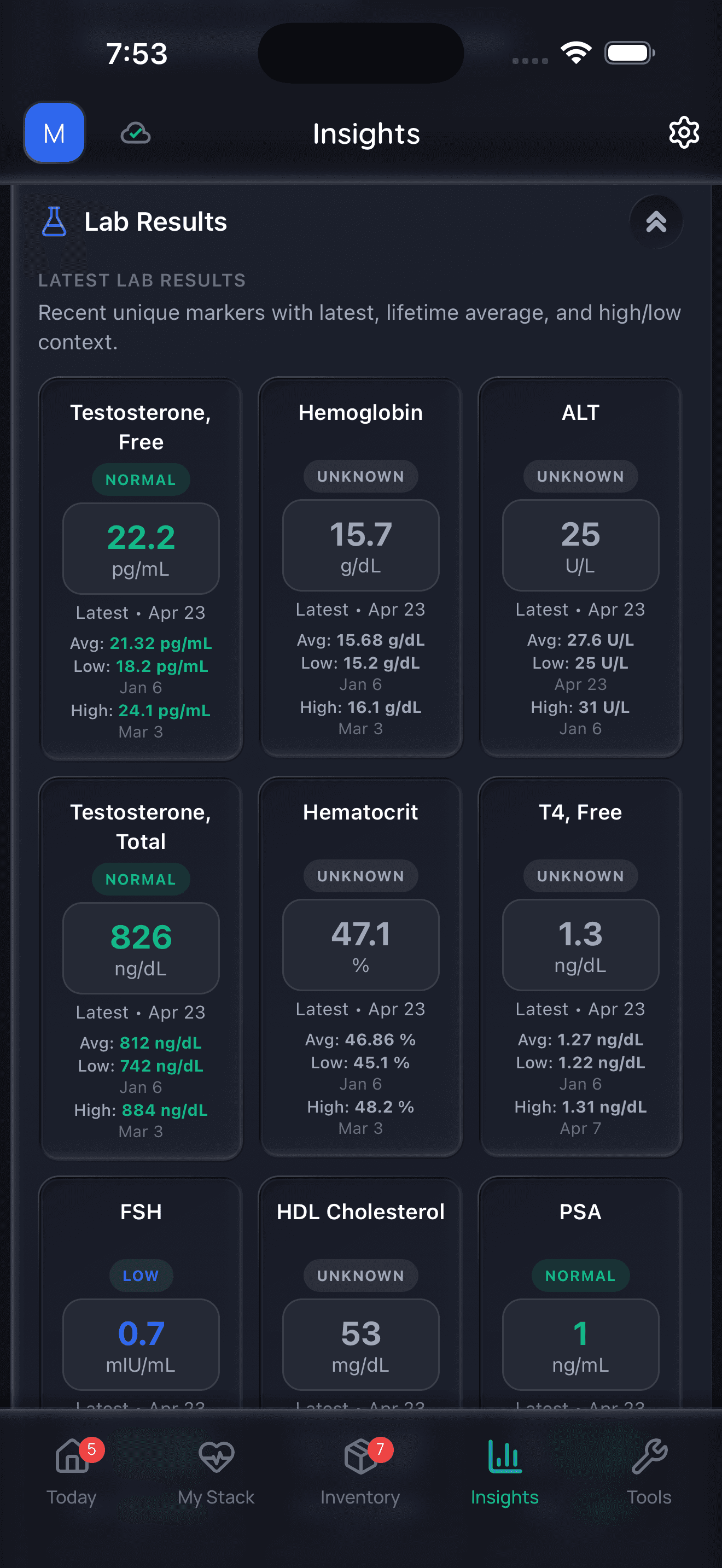
Doserly organizes data; it does not diagnose or interpret labs for you.
Side Effects & Safety
The Basics
If metformin has one community reputation that refuses to go away, it is the stomach issue reputation. Diarrhea, nausea, urgency, cramps, bloating, and general GI misery show up over and over, especially early in use [1][2][8]. Some people adapt. Some switch to extended-release. Some stop.
That is only the visible part of the safety story. The higher-stakes issues are the ones that do not always announce themselves early: impaired renal clearance, rare lactic acidosis in the wrong clinical setting, and long-term vitamin B12 depletion [1][4]. This is one reason metformin belongs in research-context rather than casual-supplement territory.
The Science
The FDA label carries a boxed warning for metformin-associated lactic acidosis and identifies renal impairment, contrast procedures, hypoxic states, hepatic impairment, excessive alcohol intake, and advanced age as major risk amplifiers [1]. The same label also documents B12 lowering and recommends periodic B12 assessment [1]. DPPOS follow-up strengthened the practical relevance of that point by linking longer use to higher odds of biochemical deficiency and more neuropathy in the low-B12 subgroup [4].
Community sentiment aligns tightly with the formal safety literature on GI tolerance. Structured review platforms consistently show that digestive side effects dominate real-world complaints, even in users who otherwise think the drug works well. That consistency matters. It suggests the GI reputation is not forum mythology. It is part of the core lived-experience profile.
Managing side effect risks across a multi-compound stack can feel overwhelming, especially when interactions between prescriptions, supplements, and foods add layers of complexity. Doserly brings all of that into a single safety view so nothing falls through the cracks.
Rather than researching every possible interaction yourself, the app checks your full stack automatically and flags prescription-drug and supplement-drug combinations that warrant attention. If you do experience something unexpected, logging it takes seconds, and over time the app helps you spot patterns: whether symptoms correlate with specific doses, timing, or combinations. One place for the safety picture that matters most when your stack gets complicated.
Capture changes while they are still fresh.
Log symptoms, energy, sleep, mood, and other observations alongside protocol events so patterns do not live only in memory.
Trend view
Symptom timeline
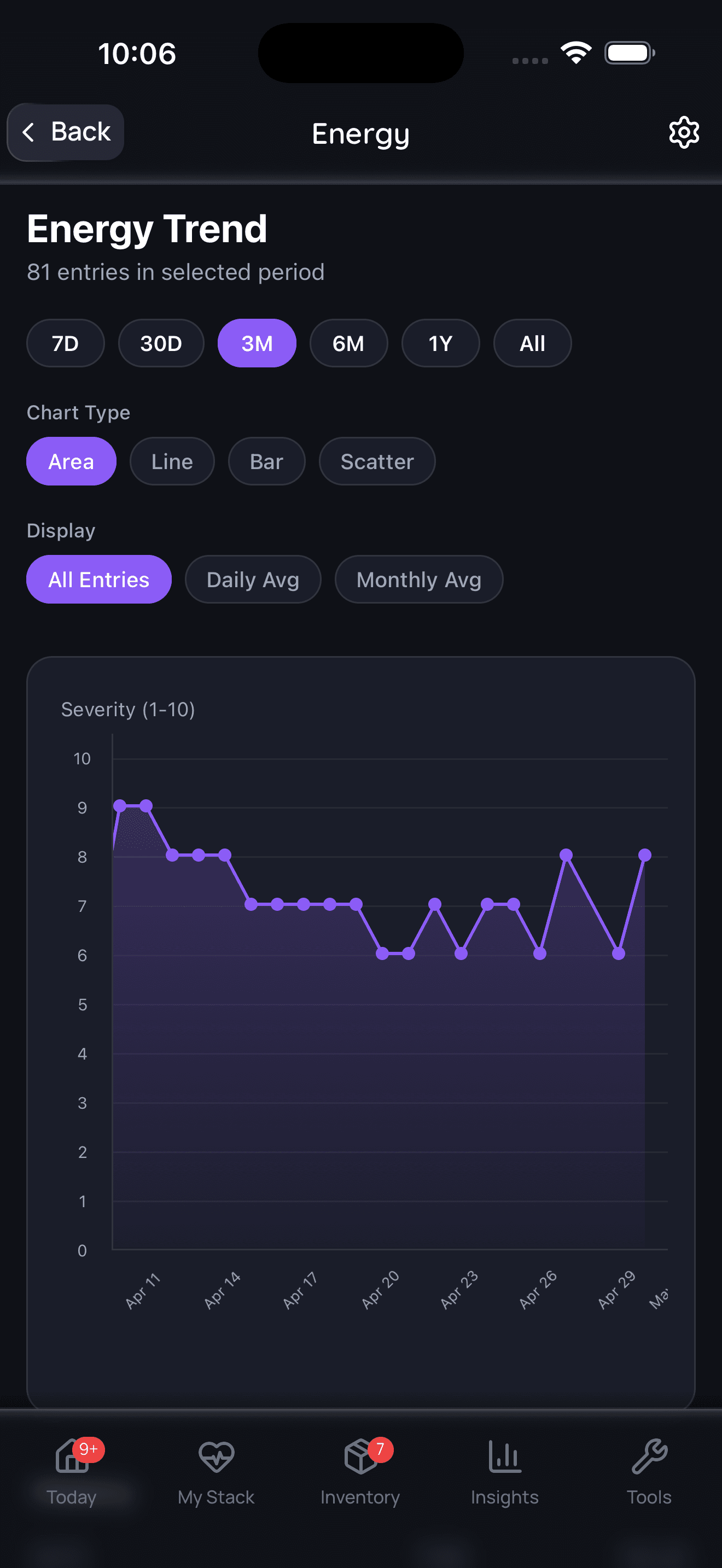
Symptom tracking is informational and should be interpreted with a qualified clinician.
Dosing & Usage Protocols (Dosing Protocol)
The Basics
Metformin dosing changes a lot depending on the goal and the context. Standard diabetes labeling, diabetes-prevention trials, and aging-adjacent studies do not all use the same structure [1][3][5][6]. That is not unusual, but it does mean there is no honest one-size-fits-all answer.
The most solidly established ranges come from the FDA label and the diabetes-prevention trials. Once people start talking about longevity-only use in otherwise healthy adults, the evidence gets much thinner. Community experimentation ranges from low once-daily dosing to 2 g/day, but those anecdotes are not the same thing as validated protocol guidance.
The Science
Labeled adult dosing for immediate-release metformin commonly starts at 500 mg twice daily or 850 mg once daily with meals, with titration up to 2550 mg/day in divided doses; extended-release dosing commonly starts at 500 mg once daily with the evening meal and can scale to 2000 mg/day [1]. In the original DPP, the studied prevention dose was 850 mg twice daily [3]. In MILES, older adults received approximately 1700 mg/day over 6 weeks [6]. Long-term DPPOS follow-up continued the same 850 mg twice-daily frame in the metformin-assigned group after unmasking [5].
That range matters because it shows the difference between clinically standardized metabolic use and the weaker evidence around healthy-user geroscience dosing. There is still no validated "anti-aging dose" supported by hard outcome data. Readers should treat any off-label longevity range as experimental framing, not settled practice.
When your routine includes multiple compounds, each with its own dose, form, and timing demands, the logistics alone can derail consistency. Doserly consolidates all of it into one protocol view, so every dose across your routine is accounted for without spreadsheets or guesswork.
The app also tracks cumulative exposures and context. If one compound is adjusted at the same time another is added, Doserly helps keep that history visible instead of forcing you to reconstruct it from memory. Managing a thoughtful protocol should not require a wall calendar and a stack of notes.
Track injection timing, draw notes, and site rotation.
Doserly helps keep syringe-related notes, injection site history, reminders, and reconstitution context together for easier review.
Injection log
Site rotation
Injection logs support record-keeping; follow clinician instructions for administration.
What to Expect (Timeline)
The first thing many users notice is not a dramatic metabolic transformation. It is whether the gut accepts the drug. Over the first days to 2 weeks, community reports most often mention nausea, urgency, diarrhea, bloating, or a frustrating adjustment period. Some users stabilize after that window. Others decide the tradeoff is not worth it [1][8].
Across the first 4 to 12 weeks, the more positive reports tend to involve better glucose numbers, modest appetite reduction, and gradual weight change rather than a dramatic subjective shift [3][6]. In PCOS or insulin-resistance contexts, community users sometimes describe more regular cycles or broader symptom stabilization over months rather than days.
Longer-term expectations need the most realism. If the goal is diabetes prevention or durable metabolic-risk reduction, the relevant timeline is measured in months to years, not weekends [5]. If the goal is anti-aging, there is no reliable short-term felt marker that proves it is "working." That is exactly why so much of the metformin aging conversation depends on biomarkers, trial endpoints, and patient tracking rather than obvious day-to-day sensations.
Interactions & Compatibility (Interaction Compatibility)
SYNERGISTIC
- Vitamin B12: Not a performance synergy, but a practical compatibility pairing. Long-term metformin use can lower B12 status, so B12 monitoring or repletion often becomes part of the broader management picture [1][4].
- Inositol: Often discussed in insulin-resistance or PCOS settings because the metabolic goals overlap. Combination use raises monitoring complexity more than it guarantees additive benefit.
- Chromium: Sometimes paired in glucose-management routines because both are used in insulin-sensitivity conversations. The evidence standard is uneven, so this pairing is more common in protocol design than in definitive proof.
CAUTION / AVOID
- Berberine, Banaba Leaf, and Alpha-Lipoic Acid: These are common metabolic-stack additions, but additive glucose-lowering effects and overlapping GI issues can make interpretation harder and safety monitoring more important.
- Insulin and insulin secretagogues: The FDA label specifically notes increased hypoglycemia risk when metformin is combined with agents that independently lower glucose [1].
- Alcohol: Excess intake increases concern around lactate handling and is explicitly flagged in the label [1].
- Iodinated contrast procedures: Metformin may need to be held around contrast exposure in higher-risk settings because acute renal-function shifts can change safety quickly [1].
- Renal stress and acute illness states: Shock, sepsis, severe dehydration, or acute heart-failure physiology are part of the label's lactic-acidosis risk framework [1].
How to Take / Administration Guide
For standard clinical use, metformin is commonly introduced with meals and titrated gradually because tolerability often improves when the gut is given time to adapt [1]. Immediate-release and extended-release versions serve slightly different practical needs. Immediate-release is easier to split across the day. Extended-release is often chosen when GI burden is the main limiting factor.
Administration details matter with modified-release products. The FDA label specifically notes that extended-release tablets should be swallowed whole rather than crushed or chewed [1]. The broader practical takeaway is that formulation integrity matters more here than it does with many general supplements. A modified-release tablet is doing delivery work, not just carrying ingredient mass.
For physically active users, the exercise question is unresolved enough that timing becomes a judgment call rather than a settled rule. Some forum users intentionally separate metformin from training windows because they worry about blunted adaptation, while others report no noticeable downside. The clinical literature is not mature enough to reduce that into a universal playbook [8].
Choosing a Quality Product
This section looks different for metformin than for a typical supplement. The main quality question is not which "premium" branded bottle wins. It is whether the product comes through a legitimate regulated medication channel with clear labeling, predictable release characteristics, and pharmacy-level oversight.
Practical quality markers include:
- Dispensing through a licensed pharmacy rather than gray-market anti-aging channels
- Clear formulation identity, especially immediate-release versus extended-release
- Consistent manufacturer labeling and lot traceability
- Intact tablets without altered release properties
- Avoidance of imported or repackaged products with unclear storage history
Traditional supplement certification language such as USP Verified, NSF, or Informed Sport is less central here than prescription-supply-chain integrity. For metformin, the red flags are usually not underdosed herbal extracts or filler-heavy proprietary blends. They are sourcing opacity, inappropriate off-label procurement, and misuse of a prescription drug as if it were a casual wellness add-on.
Storage & Handling
Metformin is generally stored at standard room temperature in a dry environment away from excess humidity [1]. That sounds ordinary, but the handling point that matters most is formulation protection. Extended-release products should stay intact, and tablets should not be modified unless a specific formulation is designed for that use.
Because metformin is commonly part of long-term daily therapy, routine storage discipline matters more than special conditions. Keeping it dry, original-packaged when possible, and clearly separated from other routine medications or supplements helps reduce dosing confusion.
Lifestyle & Supporting Factors
Metformin works best in a lifestyle context, not in place of one. The strongest human evidence in this dossier comes from prediabetes prevention, where lifestyle change outperformed metformin even while metformin still showed benefit [3][5]. That is a useful reality check for anyone treating the drug like an all-purpose substitute for diet quality, sleep, and activity.
Nutrition still matters. Many users who report positive outcomes also describe meaningful food changes, lower refined-carbohydrate intake, or more structured routines. That makes the community experience harder to isolate, but it also reflects real life. Metformin is often layered onto a behavior change effort, not taken in a vacuum.
Exercise adds nuance rather than a simple thumbs-up. Controlled literature and community discussion both raise the possibility that metformin may blunt some training adaptations in at least some settings, especially in older adults and resistance-training contexts [8]. That does not mean exercise stops working. It means the combination is not automatically synergistic for every goal.
Regulatory Status & Standards (FDA and Global Status)
Metformin is an approved prescription drug in the United States for type 2 diabetes management. It is not a dietary supplement under DSHEA and should not be framed as one [1]. Similar prescription-drug treatment applies across other major jurisdictions, which is one reason this guide uses the research-context label rather than pretending metformin belongs in the same regulatory bucket as magnesium or fish oil.
From a geroscience perspective, the regulatory interest is different. ClinicalTrials.gov records and related literature show that metformin has been or is being studied in longevity- and autophagy-adjacent research settings such as MILES and other aging-focused metabolic studies. That does not confer a general anti-aging approval. It simply means the hypothesis is being tested in formal human research [6][7].
For athletes, the current 2026 WADA materials reviewed for this KB do not specifically name metformin as a prohibited substance on the Prohibited List [9]. That is reassuring, but not a free pass. Anti-doping rules evolve, and contaminated gray-market sourcing remains a separate risk from the molecule's formal status. Athletes still need current verification through their governing body, anti-doping resources, and a clinician who understands medication documentation in sport.
FAQ / Frequently Asked Questions
Is metformin actually a supplement?
No. Metformin is a prescription biguanide drug, not a dietary supplement. It shows up in longevity discussions because of research interest, not because it belongs in the normal supplement category [1][7].
Does metformin help with weight loss?
Based on available data and community reporting, some people lose weight or maintain weight more easily on metformin, especially when insulin resistance or prediabetes is part of the picture. It is not reliably a dramatic weight-loss drug, and outcomes vary a lot [3][5][8].
How long does metformin take to "work"?
That depends on the outcome being discussed. GI effects can appear within days. Blood-glucose improvements can emerge over weeks. Prevention and aging-related questions require months to years of follow-up rather than a fast subjective signal [1][3][5].
Why does metformin cause diarrhea so often?
The best current explanation is that metformin has a major gut site of action and reaches high intestinal concentrations, which likely contributes to both efficacy and intolerance [1][2]. Community data strongly supports this as a real-world issue rather than a rare exception.
Can healthy people take metformin for longevity?
People do, but the evidence is not settled enough to present that as a straightforward best practice. The aging literature supports serious research interest, while also stressing that hard human lifespan proof is still missing [7][8].
Does metformin blunt exercise gains?
Some published work and many community discussions suggest that it may blunt certain exercise adaptations in some settings, especially in older adults. That does not prove a universal effect in every user, but it is a real enough concern to weigh carefully [8].
Does metformin cause vitamin B12 deficiency?
Long-term use can lower B12 levels, and follow-up data from DPPOS suggests the risk rises with more years of use. That is why periodic B12 monitoring is commonly discussed in the clinical literature [1][4].
Is metformin banned in sport?
The WADA 2026 Prohibited List reviewed for this KB does not specifically list metformin as a prohibited substance [9]. Athletes still need current sport-specific verification because anti-doping interpretation can shift and sourcing quality matters.
Can metformin be paired with berberine or inositol?
These combinations are commonly discussed in metabolic or PCOS-oriented routines, but combining glucose-active compounds increases complexity and can muddy attribution. Based on available data, that kind of stack is better treated as a monitoring-heavy decision than a casual add-on.
Is there an anti-aging dose of metformin that everyone agrees on?
No. There are well-defined clinical doses for diabetes care and prevention trials, but no universally accepted dose for healthy-user anti-aging use. Claims to the contrary usually outrun the evidence [1][3][6][7].
Myth vs. Fact
Myth: Metformin is just another over-the-counter longevity supplement.Fact: Metformin is a prescription biguanide drug with formal contraindications, renal-function limits, and monitoring issues. Its research-context interest does not change its regulatory status [1][7].
Myth: If metformin helps with aging pathways, it must obviously extend lifespan in healthy people.Fact: The aging literature is more cautious than that. Human lifespan extension remains controversial, and much of the support is indirect through disease-risk modification rather than direct proof [7][8].
Myth: Metformin is basically a weight-loss drug.Fact: Some users lose weight, especially in insulin-resistance or prediabetes settings, but the effect is variable and not reliable enough to frame as a simple weight-loss guarantee [3][5][8].
Myth: GI side effects are overblown internet drama.Fact: GI distress is one of the most consistent signals in both the clinical literature and community data. For many users, it is the main reason to hesitate or stop [1][2][8].
Myth: If metformin is not on the WADA banned list, athletes have nothing to worry about.Fact: Formal prohibition status is only one part of the risk picture. Current verification, documentation, and contamination-aware sourcing still matter [9].
Myth: If metformin lowers glucose, taking more should produce more longevity benefit.Fact: Clinical dosing has guardrails, and higher-dose logic is not a substitute for outcome evidence. The maturity of diabetes dosing guidance does not automatically translate to healthy-user longevity dosing [1][7][8].
Sources & References
Clinical Trials & RCTs
[3] Knowler WC, Barrett-Connor E, Fowler SE, et al. Reduction in the incidence of type 2 diabetes with lifestyle intervention or metformin. N Engl J Med. 2002;346(6):393-403. https://pubmed.ncbi.nlm.nih.gov/11832527/
[4] Aroda VR, Edelstein SL, Goldberg RB, et al. Long-term Metformin Use and Vitamin B12 Deficiency in the Diabetes Prevention Program Outcomes Study. J Clin Endocrinol Metab. 2016. https://pubmed.ncbi.nlm.nih.gov/26900641/
[5] Knowler WC, et al. Long-term effects and effect heterogeneity of lifestyle and metformin interventions on type 2 diabetes incidence over 21 years in the US Diabetes Prevention Program randomised clinical trial. Lancet Diabetes Endocrinol. 2025. https://pubmed.ncbi.nlm.nih.gov/40311647/
[6] Kulkarni AS, Brutsaert EF, Anghel V, et al. Metformin regulates metabolic and nonmetabolic pathways in skeletal muscle and subcutaneous adipose tissues of older adults. Aging Cell. 2018;17:e12723. https://pmc.ncbi.nlm.nih.gov/articles/PMC5847877/
Systematic Reviews & Perspectives
[2] Rena GR, Hardie DG, Pearson ER. The mechanisms of action of metformin. Diabetologia. 2017;60(9):1577-1585. https://pmc.ncbi.nlm.nih.gov/articles/PMC5552828/
[7] Barzilai N, Crandall JP, Kritchevsky SB, Espeland MA. Metformin as a Tool to Target Aging. Cell Metab. 2016;23(6):1060-1065. https://pmc.ncbi.nlm.nih.gov/articles/PMC5943638/
[8] Mohammed I, Hollenberg MD, Ding H, Triggle CR. A Critical Review of the Evidence That Metformin Is a Putative Anti-Aging Drug That Enhances Healthspan and Extends Lifespan. Front Endocrinol (Lausanne). 2021;12:718942. https://pmc.ncbi.nlm.nih.gov/articles/PMC8374068/
Government / Institutional Sources
[1] U.S. Food and Drug Administration. GLUCOPHAGE / GLUCOPHAGE XR prescribing information. Revised 2018. https://www.accessdata.fda.gov/drugsatfda_docs/label/2018/020357s034,021202s018lbl.pdf
[9] World Anti-Doping Agency. 2026 Prohibited List and official Prohibited List resource page. Effective January 1, 2026. https://www.wada-ama.org/en/resources/world-anti-doping-code-and-international-standards/prohibited-list