
Berberine: The Complete Supplement Guide
On this page
Quick Reference Card
Attribute
Common Name
- Detail
- Berberine
Attribute
Other Names / Aliases
- Detail
- Berberine HCl, Berberine Hydrochloride, Berberine Sulfate, Berberine Chloride, Daruharidra
Attribute
Category
- Detail
- Plant Alkaloid (Isoquinoline Alkaloid) / Herbal Extract
Attribute
Primary Forms & Variants
- Detail
- Berberine Hydrochloride (most common supplement form); Dihydroberberine (DHB, improved bioavailability prodrug); Berberine Phytosome (enhanced absorption formulation). Found naturally in Barberry (Berberis vulgaris), Goldenseal (Hydrastis canadensis), Chinese Goldthread (Coptis chinensis), Tree Turmeric (Berberis aristata), Oregon Grape (Berberis aquifolium).
Attribute
Typical Dose Range
- Detail
- 900-1,500 mg/day, divided into 2-3 doses with meals. Some studies use up to 2,000 mg/day.
Attribute
RDA / AI / UL
- Detail
- Not established. Berberine is not an essential nutrient; no RDA, AI, or UL has been set by the IOM/NASEM or EFSA.
Attribute
Common Delivery Forms
- Detail
- Capsule, tablet
Attribute
Best Taken With / Without Food
- Detail
- Best taken with meals or shortly after eating, to coincide with postprandial glucose and lipid spikes and to reduce GI side effects.
Attribute
Key Cofactors
- Detail
- No established cofactors. Probiotics may have synergistic effects on lipid metabolism. Milk thistle (silymarin) is sometimes combined for liver support.
Attribute
Storage Notes
- Detail
- Store at room temperature, away from light and moisture. No refrigeration required.
Overview
The Basics
Berberine is a bright yellow compound found in the roots and bark of several plants, including goldenseal, barberry, and Chinese goldthread. It has been used for thousands of years in traditional Chinese medicine and Ayurvedic medicine, primarily for digestive issues and infections. In recent years, berberine has gained significant attention in the supplement world for its effects on blood sugar and cholesterol, with some studies comparing its blood sugar-lowering ability to the prescription drug metformin.
What makes berberine interesting is that it appears to work through a master metabolic switch in your cells called AMPK. When this switch is activated, it tells your body to pull more sugar and fat out of the bloodstream and use them for energy. This is why berberine has attracted interest from people managing blood sugar levels, cholesterol, and metabolic health in general.
Berberine is not a vitamin or mineral. It is a plant alkaloid, meaning your body does not require it to function, and there is no daily recommended intake. It is taken purely as a supplemental compound for its pharmacological effects. One important limitation is that berberine has very poor oral bioavailability, less than 1% of what you swallow actually reaches your bloodstream. Despite this, clinical trials have still demonstrated measurable effects, which researchers believe may partly involve berberine's interactions with gut bacteria and direct effects on the intestinal lining [1][2].
The Science
Berberine (C20H18NO4+) is a quaternary ammonium isoquinoline alkaloid with a molecular weight of 336.36 g/mol (as the free base). It is classified as a protoberberine alkaloid and is extracted primarily from the rhizomes and roots of plants in the Berberidaceae, Ranunculaceae, and Papaveraceae families [1][2].
The compound has been the subject of 54 systematic reviews encompassing 70 health outcomes across 9 disease categories, according to a 2025 umbrella review. This body of evidence, while largely composed of low to moderate quality studies, consistently identifies associations between berberine supplementation and improvements in glycemic control, lipid profiles, and several markers of metabolic health. Specifically, 92.6% of type 2 diabetes outcomes, 78% of cardiovascular disease outcomes, and 100% of dyslipidemia outcomes showed improvement in the analyzed systematic reviews [1].
The primary pharmacological interest in berberine centers on its activation of AMP-activated protein kinase (AMPK), a cellular energy sensor that plays a central role in glucose and lipid metabolism. Additional mechanisms include upregulation of hepatic LDL receptors, reduction of PCSK9 expression, anti-inflammatory effects via the AMPK/mTOR pathway, and modulation of the gut microbiota [1][2][3].
Chemical & Nutritional Identity
Property
Chemical Name
- Value
- 5,6-Dihydro-9,10-dimethoxybenzo[g]-1,3-benzodioxolo[5,6-a]quinolizinium
Property
Molecular Formula
- Value
- C20H18NO4+ (free base)
Property
Molecular Weight
- Value
- 336.36 g/mol (free base); 371.81 g/mol (as hydrochloride salt)
Property
CAS Number
- Value
- 2086-83-1 (free base); 633-65-8 (hydrochloride)
Property
PubChem CID
- Value
- 2353
Property
Category
- Value
- Isoquinoline alkaloid; Protoberberine
Property
RDA / AI / UL
- Value
- Not established (not an essential nutrient)
Berberine is most commonly available as berberine hydrochloride (HCl) in supplements. The hydrochloride salt form improves water solubility compared to the free base. Dihydroberberine (DHB), a reduced form, has emerged as an alternative with reportedly superior intestinal absorption and bioavailability. DHB is converted back to berberine in the intestinal wall, effectively functioning as a prodrug [4].
Berberine has a deep yellow color with fluorescent properties and has historically been used as a textile dye. Its bitter taste is characteristic of alkaloid compounds. The compound is structurally related to other isoquinoline alkaloids such as palmatine and jatrorrhizine, which are also found in berberine-containing plants [2].
Mechanism of Action
The Basics
Berberine works primarily by flipping on your body's metabolic energy switch, a protein called AMPK. Think of AMPK as a fuel gauge that senses when your cells need more energy. When berberine activates AMPK, it triggers a cascade of effects: your cells start pulling more sugar out of the bloodstream, your liver produces less new sugar, and your body begins burning more fat for fuel. This is the same pathway that the diabetes drug metformin activates, which is why the two are frequently compared.
Beyond the metabolic switch, berberine appears to help with cholesterol through a different mechanism. It increases the number of LDL receptors on your liver cells. These receptors act like docking stations that grab "bad" cholesterol particles from your blood and clear them. Berberine also reduces a protein called PCSK9 that normally breaks down these receptors, so more receptors stay active and more cholesterol gets cleared [2][3].
There is also growing evidence that berberine significantly interacts with the bacteria living in your gut. Some researchers believe that berberine's effects on gut bacteria may actually explain a significant portion of its metabolic benefits, since the vast majority of berberine stays in the digestive tract rather than being absorbed into the bloodstream [1].
The Science
Berberine exerts its pharmacological effects through multiple molecular targets and signaling pathways:
AMPK Activation: Berberine directly activates AMP-activated protein kinase (AMPK), a central metabolic sensor. AMPK activation leads to increased glucose transporter (GLUT4) translocation to the cell membrane, enhanced glucose uptake, suppression of hepatic gluconeogenesis, and stimulation of fatty acid oxidation. This mechanism is structurally and functionally analogous to metformin's primary mechanism, though berberine and metformin activate AMPK through different upstream pathways [1][3].
Lipid Metabolism: Atheroprotective effects are mediated through increased expression of hepatic low-density lipoprotein receptor (LDLR), reduced expression of the LDLR modulator proprotein convertase subtilisin/kexin type 9 (PCSK9), and improvements in endothelial dysfunction. In animal models, berberine exhibited statin-like effects by reducing LDL and total cholesterol levels as well as aortic lesions [2][3].
Anti-inflammatory Pathways: In patients with acute coronary syndrome, berberine adjunctive to standard care reduced inflammatory markers including matrix metalloproteinase (MMP)-9, intercellular adhesion molecule (ICAM)-1, and vascular cell adhesion molecule (VCAM)-1. Cardioprotective effects are partly attributed to reduced myocardial autophagy and apoptosis via the AMPK/mTOR pathway [2][5].
Gut Microbiota Modulation: Berberine demonstrates significant interactions with the gut microbiome, including antimicrobial effects against pathogenic bacteria and modulation of microbial composition. The synergistic hypolipidemic effect observed when berberine is combined with probiotics supports the gut microbiota as a key mediator of berberine's systemic effects [1][6].
Hepatic Metabolism: Berberine alters hepatic metabolism-related gene expression. Improvements in non-alcoholic fatty liver disease (NAFLD) are facilitated by decreased levels of circulating ceramides [2][7].
Absorption & Bioavailability
The Basics
Here is the paradox of berberine: it works in clinical trials, but less than 1% of what you swallow actually reaches your bloodstream. This is remarkably low compared to most supplements. The reasons include poor water solubility, the intestinal wall actively pumping berberine back out (through something called P-glycoprotein efflux), and extensive metabolism by the liver and intestines before it ever reaches general circulation.
This does not mean berberine is ineffective. A significant portion stays in the digestive tract, where it directly interacts with gut bacteria and the intestinal lining. Researchers believe these local effects in the gut may account for much of berberine's observed metabolic benefits. Still, the low bioavailability has driven the development of newer forms designed to get more berberine into the bloodstream.
Dihydroberberine (DHB) is the most notable advancement. DHB is absorbed more efficiently through the intestinal wall and then converted back into active berberine inside the body. Some users and researchers report that DHB delivers equivalent or superior effects at lower doses, though head-to-head clinical trials are still limited. Taking berberine with a meal is recommended to improve absorption and reduce stomach discomfort [1][4].
The Science
Berberine's oral bioavailability is estimated at less than 1%, representing a significant pharmacokinetic limitation. Multiple factors contribute to this poor systemic availability [1][4]:
Solubility and Permeability: Berberine HCl has limited aqueous solubility and low intestinal permeability, restricting passive diffusion across the intestinal epithelium.
P-glycoprotein (P-gp) Efflux: Berberine is a substrate for P-glycoprotein, an efflux transporter in the intestinal epithelium that actively pumps absorbed berberine back into the intestinal lumen. This efflux mechanism substantially reduces net absorption.
First-Pass Metabolism: Extensive hepatic and intestinal first-pass metabolism further reduces circulating berberine concentrations. Berberine undergoes Phase I metabolism via CYP2D6, CYP1A2, and CYP3A4, and Phase II metabolism through glucuronidation and sulfation [4][8].
Bioavailability Enhancement Strategies:
- Dihydroberberine (DHB): A reduced form with approximately 5-fold higher intestinal absorption. DHB is oxidized back to berberine in the intestinal wall, effectively serving as a prodrug [4].
- Absorption enhancers and P-gp inhibitors (e.g., piperine/black pepper extract)
- Nanoparticle formulations and liposomal delivery systems
- Berberine phytosomes (phospholipid complexes)
- Berberine salts and cocrystals with improved solubility profiles
Despite poor systemic bioavailability, berberine achieves clinically meaningful effects, likely through a combination of high local concentrations in the intestinal lumen (affecting gut microbiota and intestinal epithelium), enterohepatic circulation, and the biological potency of even small systemic concentrations at target receptors [1][4].
Understanding how your body absorbs a supplement is only useful if you can act on it. Doserly lets you log exactly when you take each form, whether it's a capsule with a meal, a sublingual tablet on an empty stomach, or a liquid taken with a cofactor, so you can see how timing and form choices affect your results over time.
The app also tracks cofactor pairings that influence absorption. If a supplement works better alongside vitamin C, fat, or black pepper extract, Doserly reminds you to take them together and logs both. Over weeks, your personal data reveals whether those pairing strategies are translating into measurable differences in the biomarkers you're tracking.
Build reminders around the routine, not just the compound.
Doserly can keep timing, skipped doses, and schedule changes organized so the plan you read about becomes easier to follow and review.
Today view
Upcoming reminders

Reminder tracking supports consistency; it does not select a protocol for you.
Research & Clinical Evidence
The Basics
The research on berberine is extensive but comes with an important caveat: while there are many studies, most of them are not of the highest quality. A 2025 umbrella review that analyzed 54 systematic reviews found that only one was rated as high quality, with the majority rated as very low quality. That said, the sheer volume and consistency of positive findings across multiple disease categories makes berberine one of the more evidence-backed herbal supplements available.
The strongest evidence supports berberine for blood sugar management. Multiple meta-analyses show that berberine can reduce fasting blood glucose, HbA1c (a measure of long-term blood sugar control), and markers of insulin resistance. The comparison to metformin is not just marketing hype: several trials have directly compared the two and found similar reductions in blood sugar levels, though berberine tends to have a stronger effect on cholesterol while metformin has a longer track record and better-quality evidence base.
For cholesterol, berberine appears to modestly reduce LDL ("bad") cholesterol, total cholesterol, and triglycerides. An international panel of lipid experts has acknowledged that berberine may have benefit for prevention in patients with mild high cholesterol who cannot tolerate statin drugs or who have metabolic syndrome. The panel was careful to note, however, that berberine is not a substitute for statins in people who need aggressive cholesterol management [2][3].
The Science
Type 2 Diabetes Mellitus: The 2025 umbrella review found that berberine improved 92.6% (25/27) of type 2 diabetes outcomes across analyzed systematic reviews. Outcomes with demonstrated improvement include fasting blood glucose (FBG), 2-hour postprandial blood glucose (2hPBG), HbA1c, HOMA-IR, fasting insulin, total cholesterol, triglycerides, and LDL-C. One meta-analysis suggested greater benefit in younger patients or with short-term treatment [1][9].
Dyslipidemia: 100% (6/6) of dyslipidemia outcomes improved. Meta-analyses evaluating berberine for dyslipidemia suggest improved lipid profiles, though many studies were heterogeneous, of low quality, or had a high risk of bias. The magnitude of LDL reduction has been characterized as small in at least one systematic review [1][2][10].
Cardiovascular Disease: 78% (25/32) of cardiovascular outcomes improved. An international lipid expert panel consensus supports berberine as potentially beneficial for prevention in patients with mild hypercholesterolemia who are statin-intolerant or have metabolic syndrome [2][11].
Non-Alcoholic Fatty Liver Disease (NAFLD): 86.7% (13/15) of NAFLD outcomes improved. Berberine reduced hepatic fat content and improved metabolic and lipid profiles in patients with NAFLD and non-alcoholic steatohepatitis (NASH) [1][2][7].
Gastrointestinal Disorders: 94.7% (18/19) of GI outcomes improved. Preliminary data suggest benefit for patients with diarrhea-predominant irritable bowel syndrome [1][2][12].
Polycystic Ovary Syndrome (PCOS): 72.2% (13/18) of PCOS outcomes improved. Berberine may improve metabolic and endocrine markers in women with PCOS [1][2][13].
Colorectal Adenoma Prevention: A multicenter, double-blinded RCT published in The Lancet Gastroenterology & Hepatology demonstrated that berberine lowered the risk of recurrence of colorectal adenoma, suggesting potential chemopreventive utility following polypectomy [2][14].
Evidence Quality: Only 1 of 54 systematic reviews was rated as high quality by AMSTAR-2. Eight outcomes achieved high-quality GRADE evidence ratings, 22 achieved moderate quality, and 110 were rated as low quality [1].
Evidence & Effectiveness Matrix
Category
Fat Loss
- Evidence Strength
- 4/10
- Reported Effectiveness
- 6/10
- Summary
- Modest anthropometric improvements in clinical trials (57% of obesity outcomes improved). Community reports positive but confounded by lifestyle changes.
Category
Appetite & Satiety
- Evidence Strength
- 3/10
- Reported Effectiveness
- 7/10
- Summary
- Limited clinical evidence but strong and consistent community reports of reduced appetite and food noise.
Category
Food Noise
- Evidence Strength
- 2/10
- Reported Effectiveness
- 7/10
- Summary
- Not formally studied as an endpoint. Community reports are surprisingly specific and consistent.
Category
Energy Levels
- Evidence Strength
- 3/10
- Reported Effectiveness
- 4/10
- Summary
- Mixed community reports. Some report improved energy; others report dips and fatigue, possibly related to blood sugar lowering.
Category
Mood & Wellbeing
- Evidence Strength
- 3/10
- Reported Effectiveness
- 5/10
- Summary
- Preclinical evidence of mood effects. Community reports polarized: some report mood improvement, others report depression.
Category
Heart Health
- Evidence Strength
- 7/10
- Reported Effectiveness
- 5/10
- Summary
- Strong clinical evidence for lipid improvement. Community reports mixed due to palpitation concerns.
Category
Blood Pressure
- Evidence Strength
- 5/10
- Reported Effectiveness
- 6/10
- Summary
- Some clinical support. Several positive community reports with measured results.
Category
Digestive Comfort
- Evidence Strength
- 5/10
- Reported Effectiveness
- 4/10
- Summary
- IBS benefit demonstrated in trials. Community reports mixed: some improved, many report GI side effects.
Category
Nausea & GI Tolerance
- Evidence Strength
- 6/10
- Reported Effectiveness
- 4/10
- Summary
- Well-documented dose-dependent GI side effects in clinical trials and community reports.
Category
Gut Health
- Evidence Strength
- 4/10
- Reported Effectiveness
- 5/10
- Summary
- Antimicrobial properties and microbiome modulation demonstrated. Community signals mixed.
Category
Hormonal Symptoms
- Evidence Strength
- 5/10
- Reported Effectiveness
- 6/10
- Summary
- PCOS clinical evidence moderate. Strong positive community signal from PCOS populations.
Category
Cravings & Impulse Control
- Evidence Strength
- 2/10
- Reported Effectiveness
- 7/10
- Summary
- Very limited formal study. Strong consistent community reports of reduced sugar cravings.
Category
Side Effect Burden
- Evidence Strength
- 6/10
- Reported Effectiveness
- 5/10
- Summary
- Well-characterized in trials (primarily GI). Rare but severe adverse events reported in community.
Category
Treatment Adherence
- Evidence Strength
- 4/10
- Reported Effectiveness
- 5/10
- Summary
- Multiple daily dosing required. GI side effects can challenge adherence. Cycling protocols common.
Categories scored: 14
Categories with community data: 14
Categories not scored (insufficient data): Weight Management, Muscle Growth, Sleep Quality, Focus & Mental Clarity, Memory & Cognition, Anxiety, Stress Tolerance, Motivation & Drive, Emotional Aliveness, Emotional Regulation, Libido, Sexual Function, Joint Health, Inflammation, Pain Management, Recovery & Healing, Physical Performance, Skin Health, Hair Health, Heart Rate & Palpitations, Temperature Regulation, Fluid Retention, Body Image, Immune Function, Bone Health, Longevity & Neuroprotection, Social Connection, Withdrawal Symptoms, Daily Functioning
Benefits & Potential Effects
The Basics
Berberine's most well-supported benefit is its ability to lower blood sugar levels. People with type 2 diabetes or prediabetes who take berberine often report lower fasting glucose, reduced blood sugar spikes after meals, and improved HbA1c values. The comparison to metformin is grounded in real data, though the quality of that data is still catching up to metformin's decades-long research track record.
Cholesterol improvement is the second most supported benefit. Berberine appears to reduce LDL cholesterol, total cholesterol, and triglycerides. An international panel of lipid experts has specifically acknowledged berberine's potential for people with mild high cholesterol who either cannot tolerate statins or have metabolic syndrome. The effect size is modest compared to prescription statins, but it may be meaningful for people at lower cardiovascular risk who prefer natural approaches [2][3].
For women with PCOS, berberine has shown promise in improving metabolic and hormonal markers. Community reports from women with PCOS are particularly enthusiastic, with many describing improved menstrual regularity, reduced insulin resistance symptoms, and weight management benefits.
Additional areas of emerging interest include liver health (reducing fat accumulation in NAFLD), digestive health (benefit for IBS), and colorectal adenoma prevention. These applications have less robust evidence but represent active areas of research [1][2].
The Science
Glycemic Control: Berberine supplementation has been associated with statistically significant reductions in fasting blood glucose, 2-hour postprandial glucose, HbA1c, fasting insulin, and HOMA-IR across multiple systematic reviews. The magnitude of HbA1c reduction in some studies approaches that observed with metformin monotherapy, though direct comparison trials are limited in quality [1][9].
Lipid Modification: Meta-analyses demonstrate reductions in total cholesterol, LDL-C, and triglycerides. The mechanism involves dual action through LDLR upregulation and PCSK9 suppression. HDL-C effects are inconsistent, with some studies showing no significant change. The consensus of an international lipid expert panel characterizes the evidence as limited but potentially beneficial for specific populations [2][3][10][11].
PCOS: Clinical trials demonstrate improvement in metabolic and endocrine parameters in women with PCOS, including improvements in insulin sensitivity, androgen levels, and lipid profiles. Some trials have compared berberine favorably to metformin in this population [2][13].
Hepatoprotective Effects: In patients with NAFLD and NASH, berberine reduced hepatic fat content and improved metabolic and lipid profiles. Lipid profiling reveals that these improvements are facilitated by decreased levels of circulating ceramides [2][7].
Gastrointestinal Function: A randomized clinical trial demonstrated benefit in diarrhea-predominant IBS. The antimicrobial properties of berberine contribute to its traditional use for infectious diarrhea [2][12].
Chemopreventive Potential: A multicenter, double-blinded, randomized controlled study demonstrated berberine reduced the risk of colorectal adenoma recurrence following polypectomy [14].
Side Effects & Safety
The Basics
Berberine is generally well tolerated in clinical trials, but it is not without risks. The most common side effects are gastrointestinal: stomach upset, diarrhea, constipation, nausea, cramping, and loss of appetite. These effects are dose-dependent, meaning they are more likely when you take too much at once. This is why most practitioners and experienced users recommend splitting the daily dose into two or three smaller doses taken with meals.
There are several important safety considerations. First, berberine should not be taken during pregnancy or breastfeeding. It may worsen jaundice in newborns and can potentially cause kernicterus, a serious condition where high bilirubin levels damage the brain. This is a well-established contraindication [2].
Second, berberine can lower blood sugar significantly. If you are already taking diabetes medications, combining them with berberine could cause blood sugar to drop too low. Some community members have reported needing to reduce their diabetes medication dosage after starting berberine.
Third, berberine affects the same liver enzymes that process many medications. It inhibits CYP2D6, CYP2C9, and CYP3A4 enzymes, which means it can change how your body processes other drugs, potentially increasing their concentration in the blood to unsafe levels. This interaction profile is broad and should be discussed with a healthcare provider before starting berberine [2][8].
A rare but noteworthy concern that appears in community reports is mood changes. While uncommon, some users have reported significant depression and, in rare cases, suicidal ideation after starting berberine. These reports are not well-documented in the clinical literature but are serious enough to warrant awareness.
The Science
Common Adverse Reactions: Anorexia, upset stomach, diarrhea, constipation, rash. These are generally mild and dose-dependent. In clinical trials, berberine is otherwise generally well tolerated [2][12].
Contraindications:
- Pregnancy and breastfeeding: Berberine may worsen neonatal jaundice or result in kernicterus through bilirubin displacement [2]
- Concomitant use with strong CYP2D6, CYP2C9, or CYP3A4 substrate drugs without medical supervision [8]
Drug Interactions (Documented):
- Tacrolimus: Clinically relevant increases in tacrolimus concentrations and renal toxicity in a pediatric case report [2]
- Cyclosporin: Increased cyclosporin blood concentrations in renal transplant adults [2]
- CYP450 substrates: Repeated oral intake of berberine significantly decreased CYP2D6, CYP2C9, and CYP3A4 activities in human studies [8]
- Sulfonylureas: In vitro evidence suggests mutual metabolic interference; clinical relevance undetermined [2]
- Bosutinib: Pharmacokinetic modeling predicts a moderate 1.3-fold increase in systemic exposure [2]
Hypoglycemia Risk: When combined with antidiabetic medications, berberine's glucose-lowering effect may result in clinically significant hypoglycemia. Dose adjustment of concurrent medications may be necessary under medical supervision.
Long-term Safety: Long-term safety data beyond 24 weeks is limited. Community members frequently discuss cycling protocols (e.g., 2 months on, 1 month off) due to uncertainty about long-term effects, though this practice is not well-supported by clinical evidence.
Iron Depletion: Some community reports suggest berberine may deplete iron with long-term use. This is biologically plausible given berberine's antimicrobial effects on gut flora that contribute to iron absorption, but clinical evidence is limited.
Knowing the possible side effects is the first step. Catching them early in your own experience is what keeps a supplement routine safe. Doserly lets you log any symptoms as they arise, tagging them with severity, timing relative to your dose, and whether they resolve on their own or persist.
The app's interaction checker cross-references everything in your stack, supplements and medications alike, flagging known interactions before they become a problem. It also monitors your total intake against established upper limits, alerting you if your combined sources of a nutrient are approaching thresholds where risk increases. Think of it as a safety net that works quietly in the background while you focus on the benefits.
Connect protocol changes to labs and health markers.
Doserly can keep lab results, biomarkers, symptoms, and dose history close together so follow-up conversations have better context.
Insights
Labs and trends
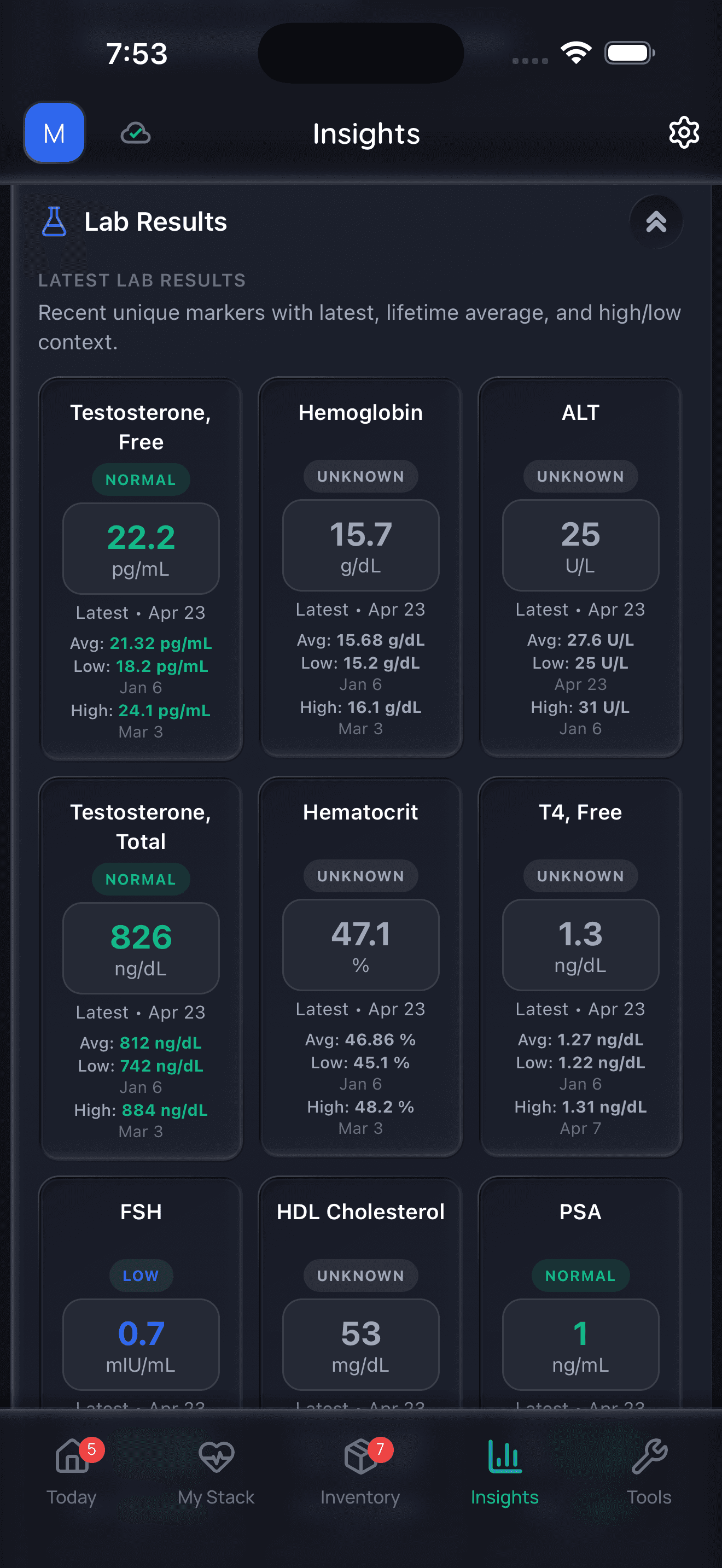
Doserly organizes data; it does not diagnose or interpret labs for you.
Dosing & Usage Protocols
The Basics
The most commonly studied dose range for berberine is 900 to 1,500 mg per day, divided into two or three doses taken with meals. Taking it with food serves two purposes: it reduces the stomach upset that berberine commonly causes, and it times the supplement to coincide with the blood sugar and lipid spikes that occur after eating.
Starting at a lower dose and gradually increasing is a common approach. Many experienced users and practitioners suggest beginning with 500 mg once daily for the first week, then adding a second dose in week two, and potentially a third in week three if well tolerated. This titration helps your body adjust to the GI effects that are most pronounced when starting out.
If you are using dihydroberberine (DHB) instead of standard berberine HCl, the dose is typically lower because DHB is absorbed more efficiently. Community reports and some preliminary data suggest that 100-200 mg of DHB may provide effects comparable to 500 mg of standard berberine, though direct comparison studies are limited.
There is no established protocol for cycling berberine (taking breaks), but it is a common practice in the community. Some users follow a pattern of 8 weeks on and 4 weeks off, citing concerns about long-term effects on the gut microbiome. The clinical literature does not specifically recommend or warn against cycling.
The Science
Clinical Trial Dosing:
- Most RCTs employed 900-1,500 mg/day of berberine hydrochloride
- Standard division: 300-500 mg taken 2-3 times daily with meals
- Duration in clinical trials ranged from 4 to 24 weeks, with most studies running 8-16 weeks
- Some studies used doses up to 2,000 mg/day, though higher doses were associated with increased GI adverse events [1][2]
Dose-Response Relationship: The glucose-lowering and lipid-modifying effects of berberine appear to follow a dose-response curve up to approximately 1,500 mg/day. Evidence for additional benefit beyond this dose is limited and the risk of GI side effects increases substantially [1][9].
Form-Specific Dosing:
- Berberine HCl: 500 mg 2-3 times daily with meals
- Dihydroberberine (DHB): Typically dosed at 100-200 mg 1-2 times daily (enhanced bioavailability means lower effective dose)
- Berberine phytosome: Manufacturer-recommended doses vary; typically lower than standard berberine HCl
Timing Considerations: Prandial dosing (with meals) is recommended for two reasons: (1) coinciding with postprandial glucose and lipid spikes maximizes the acute metabolic effects, and (2) food in the stomach reduces the incidence and severity of GI side effects [3].
Combination Therapy: In healthy subjects, berberine did not increase side effects when used in combination with simvastatin or fenofibrate. However, berberine combined with metformin requires caution due to additive hypoglycemic risk. Berberine plus probiotics has shown synergistic hypolipidemic effects in type 2 diabetic patients [2][6].
Getting the dose right matters more than most people realize. Too little may be ineffective, too much wastes money or introduces risk, and inconsistency undermines both. Doserly tracks every dose you take, across every form, giving you a clear record of what you're actually consuming versus what you planned.
The app helps you compare RDA recommendations against therapeutic ranges discussed in the research, so you can see exactly where your intake falls. If you switch forms, say from a standard capsule to a liposomal liquid, Doserly adjusts your tracking to account for different bioavailabilities. Pair that with smart reminders that keep your timing consistent, and the precision that makes a real difference in outcomes becomes effortless.
Turn symptom and safety notes into a clearer timeline.
Doserly helps you log doses, symptoms, and safety observations side by side so patterns are easier to discuss with a qualified clinician.
Pattern view
Logs and observations
Pattern visibility is informational and should be reviewed with a clinician.
What to Expect (Timeline)
Weeks 1-2: Most users report the onset of GI side effects within the first few days. These typically include mild stomach discomfort, changes in bowel habits, and increased gas. Some users report noticeable appetite reduction within the first week. Blood glucose effects can begin to appear, particularly visible on continuous glucose monitors as reduced postprandial spikes. Starting at a lower dose and titrating up can minimize initial GI discomfort.
Weeks 3-4: GI side effects often diminish as the body adapts. Appetite changes become more consistent. Users monitoring blood glucose typically see more stable fasting numbers. Some community members report reduced food noise and cravings becoming more apparent around this time. Weight changes, if any, begin to appear but are usually modest (1-3 lbs).
Weeks 5-8: This is when most clinical trials begin to show measurable changes in blood biomarkers. Fasting blood glucose, HbA1c, and lipid panels may begin to reflect berberine's effects. Some meta-analyses suggest that benefits may be more pronounced with short-term treatment. Weight loss, for those who experience it, is typically gradual and modest.
Weeks 8-12+: Lipid panel changes become more established. HbA1c improvements require at least 3 months to be reliably measured (since HbA1c reflects a 2-3 month average). Users in the PCOS community report hormonal improvements (menstrual regularity) typically becoming apparent within 2-3 months of consistent use. Long-term users often discuss cycling protocols at this point, though clinical guidance on cycling is absent.
Important Note: Individual responses to berberine vary considerably. Some users report no noticeable effects, while others describe dramatic improvements. Factors that influence response include baseline metabolic health, the form of berberine used, concurrent lifestyle changes, and individual gut microbiome composition. Lab testing (fasting glucose, HbA1c, lipid panel) provides the most reliable assessment of whether berberine is working.
Interactions & Compatibility
Synergistic
- Probiotics ([Probiotics are not in the registry]): Clinical evidence supports synergistic hypolipidemic effects when berberine is combined with probiotics in type 2 diabetic patients [6].
- Chromium: Both support glucose metabolism through different mechanisms. Some community reports describe enhanced blood sugar management when combined.
- Inositol: Frequently combined in PCOS management. Different mechanisms of action (berberine via AMPK, inositol via insulin signaling) may complement each other.
- Milk Thistle (Silymarin): Often combined for liver support. Some formulations include both compounds for enhanced hepatoprotection. Available as Milk Thistle.
- Vitamin D3: Supporting general metabolic health. No specific interaction, but both are commonly used in metabolic syndrome management.
Caution / Avoid
- Metformin: Both lower blood sugar through overlapping mechanisms. Combining them significantly increases hypoglycemia risk. Some users have reported blood sugar dropping too low. Requires medical supervision and potential dose adjustment.
- Statins (simvastatin, atorvastatin, etc.): Berberine inhibits CYP3A4, which metabolizes many statins. While one study showed no increased side effects with simvastatin, the CYP interaction warrants caution. Consult a healthcare provider.
- Sulfonylureas (glipizide, glyburide, etc.): In vitro evidence suggests metabolic interference between berberine and sulfonylureas. Clinical relevance undetermined but caution is warranted [2].
- Immunosuppressants (tacrolimus, cyclosporin): Documented interactions. Berberine increased cyclosporin blood concentrations in renal transplant adults and caused tacrolimus toxicity in a case report [2].
- CYP2D6, CYP2C9, CYP3A4 substrates: Berberine inhibits these major drug-metabolizing enzymes. This affects a wide range of medications including antidepressants, blood thinners, and cardiovascular drugs [8].
- Bosutinib: Pharmacokinetic modeling predicts a 1.3-fold increase in systemic exposure [2].
- Anticoagulants/Blood thinners: Theoretical interaction through CYP enzyme inhibition. Caution advised.
How to Take / Administration Guide
Recommended Forms: Berberine hydrochloride (HCl) is the most widely studied and available form. Dihydroberberine (DHB) offers improved bioavailability at lower doses and may be better tolerated. Berberine phytosome formulations are also available but have less clinical data.
Timing Considerations: Berberine is most commonly taken immediately before or with meals. Prandial timing serves a dual purpose: it maximizes the postprandial glucose-lowering effect and reduces GI side effects. For users taking berberine primarily for blood sugar management, timing each dose with a meal is considered optimal.
Dose Splitting: Sources consistently recommend dividing the daily dose into 2-3 administrations rather than taking the full amount at once. Single large doses are more likely to cause GI distress and may not provide sustained blood levels throughout the day.
Titration: Starting with a lower dose (500 mg/day for the first week) and gradually increasing allows the GI tract to adapt. Many users find that initial GI side effects subside within 1-2 weeks of consistent use.
Cycling: Community practice includes cycling protocols such as 8 weeks on, 4 weeks off, or 2 months on, 1 month off. While not supported by specific clinical evidence, this approach is used to give the gut microbiome a recovery period given berberine's antimicrobial properties.
Powder Reconstitution: Berberine has an intensely bitter taste. Capsule forms are strongly preferred over loose powder for this reason.
Concurrent Use Caution: If taking medications that are CYP450 substrates, berberine should be discussed with a prescribing physician before initiation. If taking antidiabetic medications, glucose monitoring is recommended when starting berberine.
Choosing a Quality Product
Third-Party Certifications: Look for products tested by USP, NSF International, ConsumerLab, or other independent testing organizations. Third-party verification is particularly important for berberine because the alkaloid content of botanical supplements can vary significantly between manufacturers.
Active Forms:
- Berberine Hydrochloride (HCl): The standard and most studied form. Most clinical trials use this salt form.
- Dihydroberberine (DHB): Enhanced bioavailability form. Fewer products available but growing in popularity.
- Berberine Phytosome: Lipid-complexed berberine for improved absorption. Limited clinical data.
Red Flags:
- Proprietary blends that do not disclose the amount of berberine per serving
- Products making disease treatment claims (e.g., "cures diabetes," "replaces statins")
- Products marketed as "nature's Ozempic" with exaggerated weight loss claims
- Extremely low-priced products from unverified manufacturers
- Products combining berberine with multiple active ingredients without clear dosing of each
Excipient Considerations: Berberine supplements are generally simple formulations. Common excipients include vegetable cellulose (capsule), rice flour (filler), and magnesium stearate (flow agent). These are standard and generally well-tolerated. Allergen-free certifications (gluten-free, soy-free, dairy-free) are available from most major supplement brands.
Source Plant Variation: Berberine content varies by plant source. Berberis aristata (tree turmeric) and Coptis chinensis (Chinese goldthread) are the most common commercial sources. The alkaloid content should be standardized and listed on the label (typically 97-98% berberine HCl).
Storage & Handling
Berberine supplements should be stored at room temperature (15-25C / 59-77F), away from direct light, heat, and moisture. No refrigeration is required. Berberine HCl is reasonably stable under normal storage conditions.
Keep the container tightly sealed when not in use. Moisture can degrade berberine and affect tablet/capsule integrity. If using capsules, avoid transferring them to pill organizers for extended periods in humid environments.
The deep yellow color of berberine can stain surfaces, clothing, and skin. Handle with reasonable care when opening capsules or using powder forms. Berberine has historically been used as a textile dye.
Shelf life is typically 2-3 years from the manufacture date when stored properly. Check the expiration date on the label and discard expired products.
Lifestyle & Supporting Factors
Diet: Berberine's blood sugar and lipid benefits are complementary to, not a substitute for, dietary improvements. Research consistently shows that berberine works best as an adjunct to healthy eating patterns. A diet rich in fiber, healthy fats, and lean protein while limiting refined carbohydrates and added sugars supports the metabolic pathways that berberine targets.
Exercise: Physical activity independently activates AMPK, the same metabolic switch that berberine targets. Combining berberine with regular exercise may produce additive or synergistic metabolic benefits. Both aerobic and resistance training improve insulin sensitivity.
Blood Sugar Monitoring: Continuous glucose monitors (CGMs) or regular blood glucose testing can provide objective feedback on berberine's effects. Many community members describe CGM data as the most compelling evidence that berberine is working for them.
Hydration: Adequate water intake supports GI tolerance. Berberine's GI side effects, particularly constipation, may be exacerbated by inadequate hydration.
Lab Testing: Periodic blood work (fasting glucose, HbA1c, lipid panel, liver function tests, iron levels) provides the most reliable assessment of berberine's metabolic effects and safety profile. Liver function monitoring is prudent given berberine's hepatic metabolism.
Signs That May Indicate a Need: Elevated fasting glucose (90-125 mg/dL), elevated HbA1c (5.7-6.4%), unfavorable lipid profiles, or metabolic syndrome markers. These should be evaluated by a healthcare professional before and during supplementation.
Regulatory Status & Standards
United States (FDA): Berberine is sold as a dietary supplement under DSHEA. It is not approved by the FDA for the treatment, cure, or prevention of any disease. It is not classified as GRAS (Generally Recognized as Safe) as a food additive, but it is available without prescription as a dietary supplement. The FDA has not issued specific warnings against berberine supplements, though general supplement regulations apply.
Canada (Health Canada): Berberine-containing products may be available as Natural Health Products (NHPs) with an NPN number. Goldenseal and barberry products containing berberine have established Canadian monographs.
European Union (EFSA): The regulatory status of berberine in the EU varies by member state. Some countries have restricted berberine supplement sales or set maximum daily intake limits. Italy, for example, has set a maximum daily intake of 500 mg of berberine from supplements.
Australia (TGA): Berberine and berberine-containing botanicals are available as complementary medicines.
Clinical Trials: Multiple registered trials on ClinicalTrials.gov investigating berberine for type 2 diabetes, dyslipidemia, NAFLD, PCOS, and colorectal cancer prevention. A Phase 2 trial of berberine ursodeoxycholate for NASH has been published with positive results [7].
Athlete & Sports Regulatory Status:
Berberine is not currently listed on the World Anti-Doping Agency (WADA) Prohibited List. It is not a stimulant, hormone, or metabolic modulator in the regulatory sense relevant to anti-doping authorities. However, as with any supplement, athletes should exercise caution regarding third-party testing and contamination risk.
- WADA: Not prohibited (as of current list)
- National Anti-Doping Agencies (USADA, UKAD, etc.): No specific guidance or alerts issued regarding berberine
- NCAA: Berberine is not on the NCAA banned substance list. However, NCAA regulations require that supplements provided by athletic departments be NSF Certified for Sport or Informed Sport certified.
- Athlete Certification Programs: Informed Sport and NSF Certified for Sport products containing berberine are available, though selection is limited compared to vitamins and minerals.
- GlobalDRO: Athletes can verify berberine's status at GlobalDRO.com across US, UK, Canada, Australia, Japan, Switzerland, and New Zealand.
Regulatory status and prohibited substance classifications change frequently. Athletes should always verify the current status of any supplement with their sport's governing body, their national anti-doping agency, and a qualified sports medicine professional before use. Third-party certification (Informed Sport, NSF Certified for Sport) reduces but does not eliminate the risk of contamination with prohibited substances.
Frequently Asked Questions
Is berberine really "nature's Ozempic"?
This comparison is misleading. Berberine and GLP-1 receptor agonists like semaglutide (Ozempic) work through entirely different mechanisms. Berberine primarily activates AMPK and improves glucose metabolism, while GLP-1 drugs mimic a gut hormone that dramatically reduces appetite and slows gastric emptying. Based on available data, berberine's effects on weight loss are modest compared to GLP-1 drugs. Some users do report appetite reduction and reduced food noise, but these effects are inconsistent and the magnitude is far less than what GLP-1 medications typically produce.
Can berberine replace metformin?
Based on available research, berberine has shown glucose-lowering effects comparable to metformin in some clinical trials. However, metformin has decades of safety data, higher-quality evidence, and is a well-standardized pharmaceutical product. Any decision to use berberine instead of, or alongside, a prescribed medication should be made in consultation with a healthcare provider. Combining the two increases hypoglycemia risk.
How long does berberine take to work?
Based on community reports and clinical trial timelines, some effects (appetite changes, GI side effects, acute blood sugar effects visible on CGMs) may appear within the first week. Meaningful changes in blood biomarkers (fasting glucose, HbA1c, lipid panels) typically require 4-12 weeks of consistent use. HbA1c specifically reflects a 2-3 month average and cannot show improvement in less time.
Should I cycle berberine?
Many community members follow cycling protocols (e.g., 8 weeks on, 4 weeks off), primarily out of concern about berberine's antimicrobial effects on gut bacteria with long-term continuous use. The clinical literature does not specifically recommend or advise against cycling. This is an area where individual practice has outpaced the evidence.
What's the difference between berberine and dihydroberberine?
Dihydroberberine (DHB) is a reduced form of berberine that is absorbed more efficiently through the intestinal wall. Once absorbed, it is converted back into active berberine in the body. Community reports and limited preliminary data suggest DHB may deliver comparable effects at lower doses (100-200 mg vs. 500 mg) with fewer GI side effects. Head-to-head clinical trials are still limited.
Can I take berberine with statins?
Berberine inhibits CYP3A4, which is involved in the metabolism of several statins. One study in healthy subjects showed no increased side effects when berberine was combined with simvastatin or fenofibrate, but the interaction potential exists and should be discussed with a prescribing physician [2].
Does berberine affect the liver?
Some community members report changes in liver enzyme levels (ALT) when taking berberine. Clinical trials have generally shown berberine to be hepatoprotective (reducing liver fat in NAFLD), but individual responses may vary. Periodic liver function testing is advisable during use.
Is berberine safe during pregnancy?
No. Berberine should be avoided during pregnancy and breastfeeding. It may worsen neonatal jaundice and can potentially cause kernicterus, a serious and irreversible condition [2].
Does berberine deplete iron?
Some community reports suggest long-term berberine use may contribute to iron depletion. This is biologically plausible given berberine's antimicrobial effects on gut bacteria involved in iron absorption. Periodic monitoring of iron levels is advisable for long-term users.
What time of day should I take berberine?
Based on available data, berberine is most commonly taken with meals, divided into 2-3 doses throughout the day. There is no strong evidence favoring morning, afternoon, or evening dosing specifically, but timing with meals is consistently recommended for both efficacy and GI tolerance.
Myth vs. Fact
Myth: Berberine is "nature's Ozempic" and produces similar weight loss results.
Fact: Berberine and GLP-1 receptor agonists work through fundamentally different mechanisms. Clinical trials show berberine's effects on obesity outcomes are modest (57% of obesity outcomes improved vs. 92% of diabetes outcomes). GLP-1 drugs like semaglutide typically produce 10-15% body weight loss, while berberine studies show much smaller effects. The comparison is a marketing oversimplification [1].
Myth: Berberine works just as well as metformin and can directly replace it.
Fact: While some clinical trials have shown comparable glucose-lowering effects, metformin has vastly more evidence (thousands of studies vs. dozens for berberine), higher-quality trials, standardized pharmaceutical manufacturing, and decades of long-term safety data. The comparison has a factual basis but omits critical context about evidence quality and clinical validation [1][2][9].
Myth: Berberine is completely natural and therefore safe for everyone.
Fact: Berberine has a significant drug interaction profile, inhibiting CYP2D6, CYP2C9, and CYP3A4 enzymes. It is contraindicated in pregnancy and breastfeeding. It has documented interactions with immunosuppressants, and rare but serious mood-related adverse effects have been reported. "Natural" does not mean universally safe [2][8].
Myth: Higher doses of berberine produce better results.
Fact: Clinical evidence suggests diminishing returns above approximately 1,500 mg/day, with significantly increased GI side effects at higher doses. Most positive clinical trial results were achieved in the 900-1,500 mg/day range [1][9].
Myth: All berberine supplements are the same.
Fact: Berberine content varies by plant source, extraction method, and form (HCl vs. DHB vs. phytosome). Dihydroberberine has significantly different pharmacokinetics than standard berberine HCl. Third-party testing is important because alkaloid content can vary between manufacturers [4].
Myth: Berberine has no side effects because it's an herb.
Fact: GI side effects (diarrhea, cramping, nausea, constipation) are well-documented and common. Dose-dependent GI distress is the primary reason for split dosing protocols. Rare but severe adverse events (mood changes, potential iron depletion, kidney effects) have been reported in community settings [2].
Myth: You can stop your prescribed medications and take berberine instead.
Fact: Berberine is a supplement, not a pharmaceutical. Self-discontinuing prescribed medications (particularly diabetes drugs and statins) in favor of berberine without medical guidance is potentially dangerous and is not supported by the current evidence base, which the evidence overview characterizes as largely low quality [1][2].
Sources & References
Systematic Reviews & Meta-Analyses
[1] Shi L, Wang W, Jing C, Hu J, Liao X. Berberine and health outcomes: an overview of systematic reviews. BMC Complement Med Ther. 2025;25:147. doi:10.1186/s12906-025-04872-4. https://pmc.ncbi.nlm.nih.gov/articles/PMC12016319/
[9] Liang Y, Xu X, Yin M, et al. Effects of berberine on blood glucose in patients with type 2 diabetes mellitus: a systematic literature review and a meta-analysis. Endocr J. 2019;66(1):51-63.
[10] Ju J, Li J, Lin Q, et al. Efficacy and safety of berberine for dyslipidaemias: A systematic review and meta-analysis of randomized clinical trials. Phytomedicine. 2018;50:25-34.
[15] Asbaghi O, Ghanbari N, Shekari M, et al. The effect of berberine supplementation on obesity parameters, inflammation and liver function enzymes: A systematic review and meta-analysis of randomized controlled trials. Clin Nutr ESPEN. 2020;38:43-49.
Clinical Trials & RCTs
[6] Wang S, Ren H, Zhong H, et al. Combined berberine and probiotic treatment as an effective regimen for improving postprandial hyperlipidemia in type 2 diabetes patients: a double blinded placebo controlled randomized study. Gut Microbes. 2022;14(1):2003176.
[7] Harrison SA, Gunn N, Neff GW, et al. A phase 2, proof of concept, randomised controlled trial of berberine ursodeoxycholate in patients with presumed non-alcoholic steatohepatitis and type 2 diabetes. Nat Commun. 2021;12(1):5503.
[12] Chen C, Tao C, Liu Z, et al. A Randomized Clinical Trial of Berberine Hydrochloride in Patients with Diarrhea-Predominant Irritable Bowel Syndrome. Phytother Res. 2015;29(11):1822-1827.
[13] Wei W, Zhao H, Wang A, et al. A clinical study on the short-term effect of berberine in comparison to metformin on the metabolic characteristics of women with polycystic ovary syndrome. Eur J Endocrinol. 2012;166(1):99-105.
[14] Chen YX, Gao QY, Zou TH, et al. Berberine versus placebo for the prevention of recurrence of colorectal adenoma: a multicentre, double-blinded, randomised controlled study. Lancet Gastroenterol Hepatol. 2020;5(3):267-275.
Pharmacological Reviews
[2] Neag MA, Mocan A, Echeverria J, et al. Berberine: Botanical Occurrence, Traditional Uses, Extraction Methods, and Relevance in Cardiovascular, Metabolic, Hepatic, and Renal Disorders. Front Pharmacol. 2018;9:557.
[3] Pirillo A, Catapano AL. Berberine, a plant alkaloid with lipid- and glucose-lowering properties: From in vitro evidence to clinical studies. Atherosclerosis. 2015;243(2):449-461.
[4] Liu CS, Zheng YR, Zhang YF, et al. Research progress on berberine with a special focus on its oral bioavailability. Fitoterapia. 2016;109:274-282.
[5] Meng S, Wang LS, Huang ZQ, et al. Berberine ameliorates inflammation in patients with acute coronary syndrome following percutaneous coronary intervention. Clin Exp Pharmacol Physiol. 2012;39(5):406-411.
Drug Interaction Studies
[8] Guo Y, Chen Y, Tan ZR, et al. Repeated administration of berberine inhibits cytochromes P450 in humans. Eur J Clin Pharmacol. 2012;68(2):213-217.
Government/Institutional Sources
[11] Cicero AFG, Colletti A, Bajraktari G, et al. Lipid-lowering nutraceuticals in clinical practice: position paper from an International Lipid Expert Panel. Nutr Rev. 2017;75(9):731-767.
Related Supplement Guides
Same Category (Plant Alkaloids / Herbal Extracts)
- Milk Thistle — Frequently combined with berberine for liver support
- Turmeric / Curcumin — Anti-inflammatory botanical with metabolic benefits
Common Stacks / Pairings
- Chromium — Blood sugar management synergy
- Inositol — Combined in PCOS management protocols
- Vitamin D3 — General metabolic health support
- Magnesium — Insulin sensitivity and metabolic support
- Alpha-Lipoic Acid — Antioxidant and blood sugar support
Related Health Goal
- Cinnamon — Blood sugar management
- Omega-3 / Fish Oil — Cardiovascular and lipid support
- CoQ10 — Sometimes combined in cardiovascular nutraceutical formulas
- Red Yeast Rice — Lipid management (frequently studied in combination with berberine)